
Ecology and risks of the global plastisphere as a newly expanding microbial habitat
-
GRAPHICAL ABSTRACT

 DownLoad:
Full size image
DownLoad:
Full size image
-
PUBLIC SUMMARY
- ■ The plastisphere selectively assembles a microbiome distinct from that of natural habitats.
- ■ New microbial coexistence patterns are yielded in the plastisphere.
- ■ Altered microbial functions in the plastisphere threaten natural ecosystem functioning.
- ■ Enrichment of pathogens in the plastisphere poses a critical challenge to "One Health".
-
ABSTRACT
Plastic offers a new niche for microorganisms, the plastisphere. The everincreasing emission of plastic waste makes it critical to understand the microbial ecology of the plastisphere and associated effects. Here, we present a global fingerprint of the plastisphere, analyzing samples collected from freshwater, seawater, and terrestrial ecosystems. The plastisphere assembles a distinct microbial community that has a clearly higher heterogeneity and a more deterministically dominated assembly compared to natural habitats. New coexistence patterns—loose and fragile networks with mostly specialist linkages among microorganisms that are rarely found in natural habitats—are seen in the plastisphere. Plastisphere microbiomes generally have a great potential to metabolize organic compounds, which could accelerate carbon turnover. Microorganisms involved in the nitrogen cycle are also altered in the plastisphere, especially in freshwater plastispheres, where a high abundance of denitrifiers may increase the release of nitrite (aquatic toxicant) and nitrous oxide (greenhouse gas). Enrichment of animal, plant, and human pathogens means that the plastisphere could become an increasingly mobile reservoir of harmful microorganisms. Our findings highlight that if the trajectory of plastic emissions is not reversed, the expanding plastisphere could pose critical planetary health challenges. -

-
REFERENCES
[1] Zalasiewicz, J., Waters, C.N., Ivar do Sul, J.A., et al. (2016). The geological cycle of plastics and their use as a stratigraphic indicator of the Anthropocene. Anthropocene 13, 4–17. [2] Law, K.L. (2017). Plastics in the marine environment. Ann. Rev. Mar. Sci 9, 205–229. [3] MacLeod, M., Arp, H.P.H., Tekman, M.B., et al. (2021). The global threat from plastic pollution. Science 373, 61–65. [4] Stubbins, A., Law, K.L., Muñoz, S.E., et al. (2021). Plastics in the Earth system. Science 373, 51–55. [5] Long, Z., Pan, Z., Jin, X., et al. (2022). Anthropocene microplastic stratigraphy of Xiamen Bay, China: A history of plastic production and waste management. Water Res. 226, 119215. [6] PlasticsEurope (2022). Plastics-the Facts 2022: An Analysis of European Plastics Production, Demand and Waste Data. [7] Geyer, R., Jambeck, J.R., and Law, K.L. (2017). Production, use, and fate of all plastics ever made. Sci. Adv. 3, e1700782. [8] Lebreton, L., Slat, B., Ferrari, F., et al. (2018). Evidence that the Great Pacific Garbage Patch is rapidly accumulating plastic. Sci. Rep. 8, 4666. [9] Sun, X.-D., Yuan, X.-Z., Jia, Y., et al. (2020). Differentially charged nanoplastics demonstrate distinct accumulation in Arabidopsis thaliana. Nat. Nanotechnol. 15, 755–760. [10] Li, L., Luo, Y., Li, R., et al. (2020). Effective uptake of submicrometre plastics by crop plants via a crack-entry mode. Nat. Sustain. 3, 929–937. [11] Luo, Y., Li, L., Feng, Y., et al. (2022). Quantitative tracing of uptake and transport of submicrometre plastics in crop plants using lanthanide chelates as a dual-functional tracer. Nat. Nanotechnol. 17, 424–431. [12] D'Souza, J.M., Windsor, F.M., Santillo, D., et al. (2020). Food web transfer of plastics to an apex riverine predator. Global Change Biol. 26, 3846–3857. [13] Li, B., Liang, W., Liu, Q.-X., et al. (2021). Fish ingest microplastics unintentionally. Environ. Sci. Technol. 55, 10471–10479. [14] Yan, Z., Liu, Y., Zhang, T., et al. (2022). Analysis of microplastics in human feces reveals a correlation between fecal microplastics and inflammatory bowel disease status. Environ. Sci. Technol. 56, 414–421. [15] Zhang, J., Wang, L., Trasande, L., et al. (2021). Occurrence of polyethylene terephthalate and polycarbonate microplastics in infant and adult feces. Environ. Sci. Technol. Lett. 8, 989–994. [16] Ragusa, A., Svelato, A., Santacroce, C., et al. (2021). Plasticenta: First evidence of microplastics in human placenta. Environ. Int. 146, 106274. [17] Sardon, H., and Dove, A.P. (2018). Plastics recycling with a difference. Science 360, 380–381. [18] Wilcox, C., Van Sebille, E., and Hardesty, B.D. (2015). Threat of plastic pollution to seabirds is global, pervasive, and increasing. Proc. Natl. Acad. Sci. USA 112, 11899–11904. [19] Amaral-Zettler, L.A., Zettler, E.R., and Mincer, T.J. (2020). Ecology of the plastisphere. Nat. Rev. Microbiol. 18, 139–151. [20] Li, C., Wang, L., Ji, S., et al. (2021). The ecology of the plastisphere: Microbial composition, function, assembly, and network in the freshwater and seawater ecosystems. Water Res. 202, 117428. [21] Wright, R.J., Erni-Cassola, G., Zadjelovic, V., et al. (2020). Marine plastic debris: A new surface for microbial colonization. Environ. Sci. Technol. 54, 11657–11672. [22] Zettler, E.R., Mincer, T.J., and Amaral-Zettler, L.A. (2013). Life in the "Plastisphere": Microbial communities on plastic marine debris. Environ. Sci. Technol. 47, 7137–7146. [23] Mincer, T.J., Zettler, E.R., and Amaral-Zettler, L.A. (2016). Biofilms on plastic debris and their influence on marine nutrient cycling, productivity, and hazardous chemical mobility. In Hazardous Chemicals Associated with Plastics in the Marine Environment, H. Takada and H.K. Karapanagioti, eds. (Springer International Publishing), pp. 221–233. [24] van Sebille, E., Wilcox, C., Lebreton, L., et al. (2015). A global inventory of small floating plastic debris. Environ. Res. Lett. 10, 124006. [25] Sunagawa, S., Coelho, L.P., Chaffron, S., et al. (2015). Structure and function of the global ocean microbiome. Science 348, 1261359. [26] Shu, W.-S., and Huang, L.-N. (2022). Microbial diversity in extreme environments. Nat. Rev. Microbiol. 20, 219–235. [27] Gillings, M.R., and Paulsen, I.T. (2014). Microbiology of the Anthropocene. Anthropocene 5, 1–8. [28] Bowley, J., Baker-Austin, C., Porter, A., et al. (2021). Oceanic hitchhikers – Assessing pathogen risks from marine microplastic. Trends Microbiol. 29, 107–116. [29] Zhang, X.-X., Liu, J.-S., Han, L.-F., et al. (2022). One Health: new evaluation framework launched. Nature 604, 625. [30] Shenhav, L., Thompson, M., Joseph, T.A., et al. (2019). FEAST: fast expectation-maximization for microbial source tracking. Nat. Methods 16, 627–632. [31] Louca, S., Parfrey, L.W., and Doebeli, M. (2016). Decoupling function and taxonomy in the global ocean microbiome. Science 353, 1272–1277. [32] Gambarini, V., Pantos, O., Kingsbury, J.M., et al. (2022). PlasticDB: a database of microorganisms and proteins linked to plastic biodegradation. Database 2022, baac008. [33] Ngara, T.R., Zeng, P., and Zhang, H. (2022). mibPOPdb: An online database for microbial biodegradation of persistent organic pollutants. iMeta 1, e45. [34] Yang, X., Jiang, G., Zhang, Y., et al. (2023). MBPD: A multiple bacterial pathogen detection pipeline for One Health practices. iMeta 2, e82. [35] Miao, J., Han, N., Qiang, Y., et al. (2017). 16SPIP: a comprehensive analysis pipeline for rapid pathogen detection in clinical samples based on 16S metagenomic sequencing. BMC Bioinf. 18, 568. [36] Zhao, J., Jin, L., Wu, D., et al. (2022). Global airborne bacterial community—interactions with Earth's microbiomes and anthropogenic activities. Proc. Natl. Acad. Sci. USA 119, e2204465119. [37] Li, D., Van De Werfhorst, L.C., Dunne, T., et al. (2020). Surf zone microbiological water quality following emergency beach nourishment using sediments from a catastrophic debris flow. Water Res. 176, 115733. [38] Li, D., Van De Werfhorst, L.C., Rugh, M.B., et al. (2021). Limited bacterial removal in full-scale stormwater biofilters as evidenced by community sequencing analysis. Environ. Sci. Technol. 55, 9199–9208. [39] Drønen, K., Roalkvam, I., Tungland, K., et al. (2023). How to define fish pathogen relatives from a 16S rRNA sequence library and Pearson correlation analysis between defined OTUs from the library: Supplementary data to the research article "Presence and habitats of bacterial fish pathogen relatives in a marine salmon post-smolt RAS". Data Brief 46, 108846. [40] Rillig, M.C., and Lehmann, A. (2020). Microplastic in terrestrial ecosystems. Science 368, 1430–1431. [41] Rillig, M.C., Leifheit, E., and Lehmann, J. (2021). Microplastic effects on carbon cycling processes in soils. PLoS Biol. 19, e3001130. [42] Gong, J., Kong, T., Li, Y., et al. (2018). Biodegradation of microplastic derived from poly(ethylene terephthalate) with bacterial whole-cell biocatalysts. Polymers 10, 1326. [43] Hahladakis, J.N., Velis, C.A., Weber, R., et al. (2018). An overview of chemical additives present in plastics: Migration, release, fate and environmental impact during their use, disposal and recycling. J. Hazard Mater. 344, 179–199. [44] Tetu, S.G., Sarker, I., Schrameyer, V., et al. (2019). Plastic leachates impair growth and oxygen production in Prochlorococcus, the ocean's most abundant photosynthetic bacteria. Commun. Biol. 2, 184. [45] Velzeboer, I., Kwadijk, C.J.A.F., and Koelmans, A.A. (2014). Strong sorption of PCBs to nanoplastics, microplastics, carbon nanotubes, and fullerenes. Environ. Sci. Technol. 48, 4869–4876. [46] Sørensen, L., Rogers, E., Altin, D., et al. (2020). Sørption of PAHs to microplastic and their bioavailability and toxicity to marine copepods under co-exposure conditions. Environ. Pollut. 258, 113844. [47] Wang, J., Qin, X., Guo, J., et al. (2020). Evidence of selective enrichment of bacterial assemblages and antibiotic resistant genes by microplastics in urban rivers. Water Res. 183, 116113. [48] Rochman, C.M., and Hoellein, T. (2020). The global odyssey of plastic pollution. Science 368, 1184–1185. [49] Bank, M.S., and Hansson, S.V. (2019). The plastic cycle: A novel and holistic paradigm for the Anthropocene. Environ. Sci. Technol. 53, 7177–7179. [50] Song, J., Beule, L., Jongmans-Hochschulz, E., et al. (2022). The travelling particles: community dynamics of biofilms on microplastics transferred along a salinity gradient. ISME Commun. 2, 35. [51] Amaral-Zettler, L.A., Zettler, E.R., Slikas, B., et al. (2015). The biogeography of the Plastisphere: implications for policy. Front. Ecol. Environ. 13, 541–546. [52] Li, C., Gan, Y., Zhang, C., et al. (2021). "Microplastic communities" in different environments: Differences, links, and role of diversity index in source analysis. Water Res. 188, 116574. [53] Jiao, S., Yang, Y., Xu, Y., et al. (2020). Balance between community assembly processes mediates species coexistence in agricultural soil microbiomes across eastern China. ISME J. 14, 202–216. [54] Feng, M., Tripathi, B.M., Shi, Y., et al. (2019). Interpreting distance-decay pattern of soil bacteria via quantifying the assembly processes at multiple spatial scales. MicrobiologyOpen 8, e00851. [55] Zhu, D., Ma, J., Li, G., et al. (2022). Soil plastispheres as hotspots of antibiotic resistance genes and potential pathogens. ISME J. 16, 521–532. [56] Bhagwat, G., Zhu, Q., O'Connor, W., et al. (2021). Exploring the composition and functions of plastic microbiome using whole-genome sequencing. Environ. Sci. Technol. 55, 4899–4913. [57] Yuan, W., Christie-Oleza, J.A., Xu, E.G., et al. (2022). Environmental fate of microplastics in the world's third-largest river: Basin-wide investigation and microplastic community analysis. Water Res. 210, 118002. [58] Guo, Z., Boeing, W.J., Xu, Y., et al. (2021). Global meta-analysis of microplastic contamination in reservoirs with a novel framework. Water Res. 207, 117828. [59] Zhou, J., Deng, Y., Luo, F., et al. (2010). Functional molecular ecological networks. mBio 1, e00169-10. [60] Toju, H., Yamamichi, M., Guimarães, P.R., et al. (2017). Species-rich networks and eco-evolutionary synthesis at the metacommunity level. Nat. Ecol. Evol. 1, 0024. [61] Raimundo, R.L.G., Guimarães, P.R., Jr., and Evans, D.M. (2018). Adaptive networks for restoration ecology. Trends Ecol. Evol. 33, 664–675. [62] Li, C., Jin, L., Zhang, C., et al. (2023). Destabilized microbial networks with distinct performances of abundant and rare biospheres in maintaining networks under increasing salinity stress. iMeta 2, e79. [63] Shi, S., Nuccio, E.E., Shi, Z.J., et al. (2016). The interconnected rhizosphere: High network complexity dominates rhizosphere assemblages. Ecol. Lett. 19, 926–936. [64] Zhou, J., Deng, Y., Luo, F., et al. (2011). Phylogenetic molecular ecological network of soil microbial communities in response to elevated CO2. mBio 2, e00122-11. [65] Hernandez, D.J., David, A.S., Menges, E.S., et al. (2021). Environmental stress destabilizes microbial networks. ISME J 15, 1722–1734. [66] Goberna, M., Montesinos-Navarro, A., Valiente-Banuet, A., et al. (2019). Incorporating phylogenetic metrics to microbial co-occurrence networks based on amplicon sequences to discern community assembly processes. Mol. Ecol. Resour. 19, 1552–1564. [67] Yuan, M.M., Guo, X., Wu, L., et al. (2021). Climate warming enhances microbial network complexity and stability. Nat. Clim. Change 11, 343–348. [68] Chen, B., Zhang, Z., Wang, T., et al. (2023). Global distribution of marine microplastics and potential for biodegradation. J. Hazard Mater. 451, 131198. [69] Zhang, D., Ng, E.L., Hu, W., et al. (2020). Plastic pollution in croplands threatens long-term food security. Glob. Chang. Biol. 26, 3356–3367. [70] Zhang, J., Ren, S., Xu, W., et al. (2022). Effects of plastic residues and microplastics on soil ecosystems: A global meta-analysis. J. Hazard Mater. 435, 129065. [71] Kuypers, M.M.M., Marchant, H.K., and Kartal, B. (2018). The microbial nitrogen-cycling network. Nat. Rev. Microbiol. 16, 263–276. [72] Repo, M.E., Susiluoto, S., Lind, S.E., et al. (2009). Large N2O emissions from cryoturbated peat soil in tundra. Nat. Geosci. 2, 189–192. [73] Camargo, J.A., and Alonso, Á. (2006). Ecological and toxicological effects of inorganic nitrogen pollution in aquatic ecosystems: A global assessment. Environ. Int. 32, 831–849. [74] Seeley, M.E., Song, B., Passie, R., et al. (2020). Microplastics affect sedimentary microbial communities and nitrogen cycling. Nat. Commun. 11, 2372. [75] Yu, Y., Li, X., Feng, Z., et al. (2022). Polyethylene microplastics alter the microbial functional gene abundances and increase nitrous oxide emissions from paddy soils. J. Hazard Mater. 432, 128721. [76] Su, X., Yang, L., Yang, K., et al. (2022). Estuarine plastisphere as an overlooked source of N2O production. Nat. Commun. 13, 3884. [77] Jacob, H., Besson, M., Swarzenski, P.W., et al. (2020). Effects of virgin micro- and nanoplastics on fish: Trends, meta-analysis, and perspectives. Environ. Sci. Technol. 54, 4733–4745. [78] Jack, J.C., Gonet, J., Mease, A., et al. (2020). Traditional knowledge underlies One Health. Science 369, 1576. -
ABOUT THIS ARTICLE
Cite this article:
Changchao Li, Michael R. Gillings, Chao Zhang, Qinglin Chen, Dong Zhu, Jie Wang, Kankan Zhao, Qicheng Xu, Polly Hangmei Leung, Xiangdong Li, Jian Liu, Ling Jin. Ecology and risks of the global plastisphere as a newly expanding microbial habitat[J]. The Innovation, 2024, 5(1). https://doi.org/10.1016/j.xinn.2023.100543
Welcome!
To request copyright permission to republish or share portions of our works, please visit Copyright Clearance Center's (CCC) Marketplace website at marketplace.copyright.com.

Export File
Citation
Changchao Li, Michael R. Gillings, Chao Zhang, Qinglin Chen, Dong Zhu, Jie Wang, Kankan Zhao, Qicheng Xu, Polly Hangmei Leung, Xiangdong Li, Jian Liu, Ling Jin. Ecology and risks of the global plastisphere as a newly expanding microbial habitat[J]. The Innovation, 2024, 5(1). https://doi.org/10.1016/j.xinn.2023.100543

Format
Content


-
Figure 1.
A distinct community assembles in the plastisphere from natural environments
-
Figure 2.
Microbial ecological networks in the plastisphere and the natural environment
-
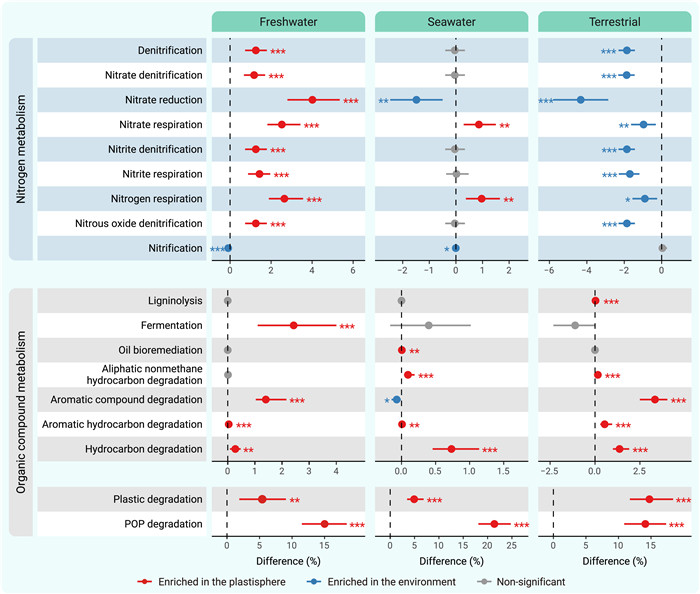
Figure 3.
Differences in ecologically relevant functions between the plastisphere and the natural environment
-
Figure 4.
Animal, plant, and zoonotic pathogens in the plastisphere and the natural environment
-
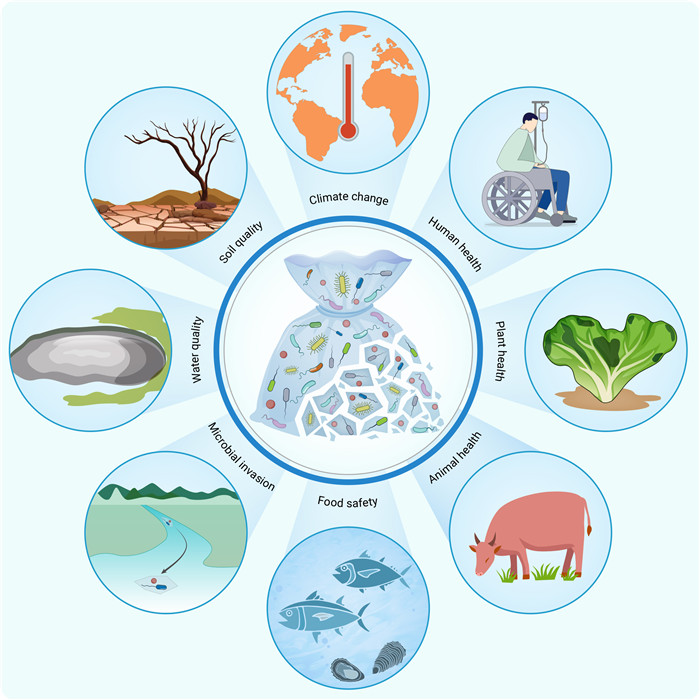
Figure 5.
Schematic diagram showing potential plastisphere threats
