
Alzheimer's disease early diagnostic and staging biomarkers revealed by large-scale cerebrospinal fluid and serum proteomic profiling
-
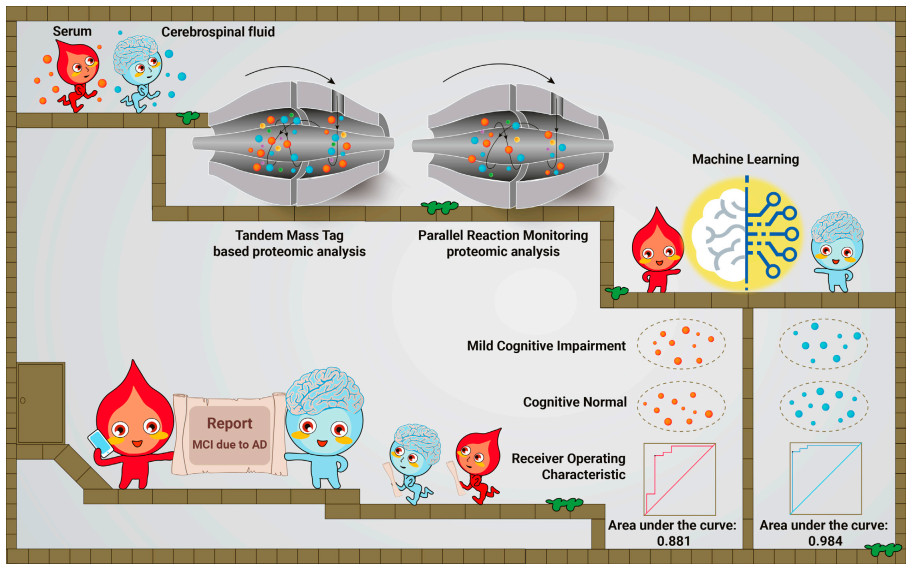
GRAPHICAL ABSTRACT
 DownLoad:
Full size image
DownLoad:
Full size image
-
PUBLIC SUMMARY
- ■ In-depth proteomics workflow for profiling paired cerebrospinal fluid (CSF) and serum proteomes.
- ■ Independent multicenter set combined with multiple methods for validation.
- ■ Development of 19 CSF- and 8 serum-protein panels for early of Alzheimer disease (AD) diagnosis.
- ■ Twenty-one CSF and 18 serum proteins dysregulated in different AD stages.
- ■ Groundwork laid for AD blood tests in clinical screening and staging.
-
ABSTRACT
Amyloid-β, tau pathology, and biomarkers of neurodegeneration make up the core diagnostic biomarkers of Alzheimer disease (AD). However, these proteins represent only a fraction of the complex biological processes underlying AD, and individuals with other brain diseases in which AD pathology is a comorbidity also test positive for these diagnostic biomarkers. More AD-specific early diagnostic and disease staging biomarkers are needed. In this study, we performed tandem mass tag proteomic analysis of paired cerebrospinal fluid (CSF) and serum samples in a discovery cohort comprising 98 participants. Candidate biomarkers were validated by parallel reaction monitoring–based targeted proteomic assays in an independent multicenter cohort comprising 288 participants. We quantified 3,238 CSF and 1,702 serum proteins in the discovery cohort, identifying 171 and 860 CSF proteins and 37 and 323 serum proteins as potential early diagnostic and staging biomarkers, respectively. In the validation cohort, 58 and 21 CSF proteins, as well as 12 and 18 serum proteins, were verified as early diagnostic and staging biomarkers, respectively. Separate 19-protein CSF and an 8-protein serum biomarker panels were built by machine learning to accurately classify mild cognitive impairment (MCI) due to AD from normal cognition with areas under the curve of 0.984 and 0.881, respectively. The 19-protein CSF biomarker panel also effectively discriminated patients with MCI due to AD from patients with other neurodegenerative diseases. Moreover, we identified 21 CSF and 18 serum stage-associated proteins reflecting AD stages. Our findings provide a foundation for developing blood-based tests for AD screening and staging in clinical practice. -

-
REFERENCES
[1] Scheltens, P., De Strooper, B., Kivipelto, M., et al. (2021). Alzheimer's disease. Lancet 397, 1577–1590. [2] Wang, H., Dey, K.K., Chen, P.C., et al. (2020). Integrated analysis of ultra-deep proteomes in cortex, cerebrospinal fluid and serum reveals a mitochondrial signature in Alzheimer's disease. Mol. Neurodegener. 15, 43. [3] Palmqvist, S., Insel, P.S., Stomrud, E., et al. (2019). Cerebrospinal fluid and plasma biomarker trajectories with increasing amyloid deposition in Alzheimer's disease. EMBO Mol. Med. 11, e11170. [4] Panyard, D.J., McKetney, J., Deming, Y.K., et al. (2023). Large-scale proteome and metabolome analysis of CSF implicates altered glucose and carbon metabolism and succinylcarnitine in Alzheimer's disease. Alzheimers Dement. [5] Jack, C.R., Jr., Bennett, D.A., Blennow, K., et al. (2018). NIA-AA Research Framework: Toward a biological definition of Alzheimer's disease. Alzheimers Dement. 14, 535–562. [6] Dubois, B., Villain, N., Frisoni, G.B., et al. (2021). Clinical diagnosis of Alzheimer's disease: recommendations of the International Working Group. Lancet Neurol. 20, 484–496. [7] Teunissen, C.E., Verberk, I.M.W., Thijssen, E.H., et al. (2022). Blood-based biomarkers for Alzheimer's disease: towards clinical implementation. Lancet Neurol. 21, 66–77. [8] Oeckl, P., Anderl-Straub, S., Von Arnim, C.A.F., et al. (2022). Serum GFAP differentiates Alzheimer's disease from frontotemporal dementia and predicts MCI-to-dementia conversion. J. Neurol. Neurosurg. Psychiatry 93, 659–667. [9] Palmqvist, S., Janelidze, S., Quiroz, Y.T., et al. (2020). Discriminative Accuracy of Plasma Phospho-tau217 for Alzheimer Disease vs Other Neurodegenerative Disorders. JAMA 324, 772–781. [10] Egan, M.F., Kost, J., Voss, T., et al. (2019). Randomized Trial of Verubecestat for Prodromal Alzheimer's Disease. N. Engl. J. Med. 380, 1408–1420. [11] Long, J.M., and Holtzman, D.M. (2019). Alzheimer Disease: An Update on Pathobiology and Treatment Strategies. Cell 179, 312–339. [12] Shen, B., Yi, X., Sun, Y., et al. (2020). Proteomic and Metabolomic Characterization of COVID-19 Patient Sera. Cell 182, 59–72.e15. [13] Bai, B., Vanderwall, D., Li, Y., et al. (2021). Proteomic landscape of Alzheimer's Disease: novel insights into pathogenesis and biomarker discovery. Mol. Neurodegener. 16, 55. [14] Johnson, E.C.B., Dammer, E.B., Duong, D.M., et al. (2020). Large-scale proteomic analysis of Alzheimer's disease brain and cerebrospinal fluid reveals early changes in energy metabolism associated with microglia and astrocyte activation. Nat. Med. 26, 769–780. [15] Chen, M., and Xia, W. (2020). Proteomic Profiling of Plasma and Brain Tissue from Alzheimer's Disease Patients Reveals Candidate Network of Plasma Biomarkers. J. Alzheimers Dis. 76, 349–368. [16] Ehtewish, H., Mesleh, A., Ponirakis, G., et al. (2023). Blood-Based Proteomic Profiling Identifies Potential Biomarker Candidates and Pathogenic Pathways in Dementia. Int. J. Mol. Sci. 24, 8117. [17] Kumar, L., and E Futschik, M. (2007). Mfuzz: a software package for soft clustering of microarray data. Bioinformation 2, 5–7. [18] Liu, J., Huang, Y., Li, T., et al. (2021). The role of the Golgi apparatus in disease (Review). Int. J. Mol. Med. 47, 38. [19] Wang, H., Williams, D., Griffin, J., et al. (2017). Time-course global proteome analyses reveal an inverse correlation between Abeta burden and immunoglobulin M levels in the APPNL-F mouse model of Alzheimer disease. PLoS One 12, e0182844. [20] Leuzy, A., Cullen, N.C., Mattsson-Carlgren, N., et al. (2021). Current advances in plasma and cerebrospinal fluid biomarkers in Alzheimer's disease. Curr. Opin. Neurol. 34, 266–274. [21] Muenchhoff, J., Poljak, A., Thalamuthu, A., et al. (2016). Changes in the plasma proteome at asymptomatic and symptomatic stages of autosomal dominant Alzheimer's disease. Sci. Rep. 6, 29078. [22] Steinacker, P., Aitken, A., and Otto, M. (2011). 14-3-3 proteins in neurodegeneration. Semin. Cell Dev. Biol. 22, 696–704. [23] Bader, J.M., Geyer, P.E., Müller, J.B., et al. (2020). Proteome profiling in cerebrospinal fluid reveals novel biomarkers of Alzheimer's disease. Mol. Syst. Biol. 16, e9356. [24] Morgan, B.P. (2018). Complement in the pathogenesis of Alzheimer's disease. Semin. Immunopathol. 40, 113–124. [25] Whelan, C.D., Mattsson, N., Nagle, M.W., et al. (2019). Multiplex proteomics identifies novel CSF and plasma biomarkers of early Alzheimer's disease. Acta Neuropathol. Commun. 7, 169. [26] Jiang, Y., Zhou, X., Ip, F.C., et al. (2022). Large-scale plasma proteomic profiling identifies a high-performance biomarker panel for Alzheimer's disease screening and staging. Alzheimers Dement. 18, 88–102. [27] Kinney, J.W., Bemiller, S.M., Murtishaw, A.S., et al. (2018). Inflammation as a central mechanism in Alzheimer's disease. Alzheimers Dement. (N Y) 4, 575–590. [28] Ismail, R., Parbo, P., Madsen, L.S., et al. (2020). The relationships between neuroinflammation, beta-amyloid and tau deposition in Alzheimer's disease: a longitudinal PET study. J. Neuroinflammation 17, 151. [29] Ramachandran, A.K., Das, S., Joseph, A., et al. (2021). Neurodegenerative Pathways in Alzheimer's Disease: A Review. Curr. Neuropharmacol. 19, 679–692. [30] Sun, Y., Xu, S., Jiang, M., et al. (2021). Role of the Extracellular Matrix in Alzheimer's Disease. Front. Aging Neurosci. 13, 707466. [31] Montagne, A., Nation, D.A., Sagare, A.P., et al. (2020). APOE4 leads to blood-brain barrier dysfunction predicting cognitive decline. Nature 581, 71–76. [32] Nation, D.A., Sweeney, M.D., Montagne, A., et al. (2019). Blood-brain barrier breakdown is an early biomarker of human cognitive dysfunction. Nat. Med. 25, 270–276. [33] Bai, B., Wang, X., Li, Y., et al. (2020). Deep Multilayer Brain Proteomics Identifies Molecular Networks in Alzheimer's Disease Progression. Neuron 106, 700. [34] Higginbotham, L., Ping, L., Dammer, E.B., et al. (2020). Integrated proteomics reveals brainbased cerebrospinal fluid biomarkers in asymptomatic and symptomatic Alzheimer's disease. Sci. Adv. 6, eaaz9360. [35] Brooks, B.R., Miller, R.G., Swash, M., et al. (2000). El Escorial revisited: revised criteria for the diagnosis of amyotrophic lateral sclerosis. Amyotroph. Lateral Scler. Other Motor Neuron Disord. 1, 293–299. [36] Li, H.L., Li, X.Y., Dong, Y., et al. (2019). Clinical and Genetic Profiles in Chinese Patients with Huntington's Disease: A Ten-year Multicenter Study in China. Aging Dis. 10, 1003–1011. [37] Boeve, B.F., Boxer, A.L., Kumfor, F., et al. (2022). Advances and controversies in frontotemporal dementia: diagnosis, biomarkers, and therapeutic considerations. Lancet Neurol. 21, 258–272. [38] Ye, L.Q., Gao, P.R., Zhang, Y.B., et al. (2021). Application of Cerebrospinal Fluid AT(N) Framework on the Diagnosis of AD and Related Cognitive Disorders in Chinese Han Population. Clin. Interv. Aging 16, 311–323. [39] Parker, S.J., Rost, H., Rosenberger, G., et al. (2015). Identification of a Set of Conserved Eukaryotic Internal Retention Time Standards for Data-independent Acquisition Mass Spectrometry. Mol. Cell. Proteomics 14, 2800–2813. [40] Zhu, T., Zhu, Y., Xuan, Y., et al. (2020). DPHL: A DIA Pan-human Protein Mass Spectrometry Library for Robust Biomarker Discovery. Dev. Reprod. Biol. 18, 104–119. [41] MacLean, B., Tomazela, D.M., Shulman, N., et al. (2010). Skyline: an open source document editor for creating and analyzing targeted proteomics experiments. Bioinformatics 26, 966–968. [42] Zhu, T., Chen, H., Yan, X., et al. (2021). ProteomeExpert: a Docker image-based web server for exploring, modeling, visualizing and mining quantitative proteomic datasets. Bioinformatics 37, 273–275. -
ABOUT THIS ARTICLE
Cite this article:
Qing-Qing Tao, Xue Cai, Yan-Yan Xue, Weigang Ge, Liang Yue, Xiao-Yan Li, Rong-Rong Lin, Guo-Ping Peng, Wenhao Jiang, Sainan Li, Kun-Mu Zheng, Bin Jiang, Jian-Ping Jia, Tiannan Guo, Zhi-Ying Wu. Alzheimer's disease early diagnostic and staging biomarkers revealed by large-scale cerebrospinal fluid and serum proteomic profiling[J]. The Innovation, 2024, 5(1). https://doi.org/10.1016/j.xinn.2023.100544
Welcome!
To request copyright permission to republish or share portions of our works, please visit Copyright Clearance Center's (CCC) Marketplace website at marketplace.copyright.com.
Export File
Citation
Qing-Qing Tao, Xue Cai, Yan-Yan Xue, Weigang Ge, Liang Yue, Xiao-Yan Li, Rong-Rong Lin, Guo-Ping Peng, Wenhao Jiang, Sainan Li, Kun-Mu Zheng, Bin Jiang, Jian-Ping Jia, Tiannan Guo, Zhi-Ying Wu. Alzheimer's disease early diagnostic and staging biomarkers revealed by large-scale cerebrospinal fluid and serum proteomic profiling[J]. The Innovation, 2024, 5(1). https://doi.org/10.1016/j.xinn.2023.100544

Format
Content
-
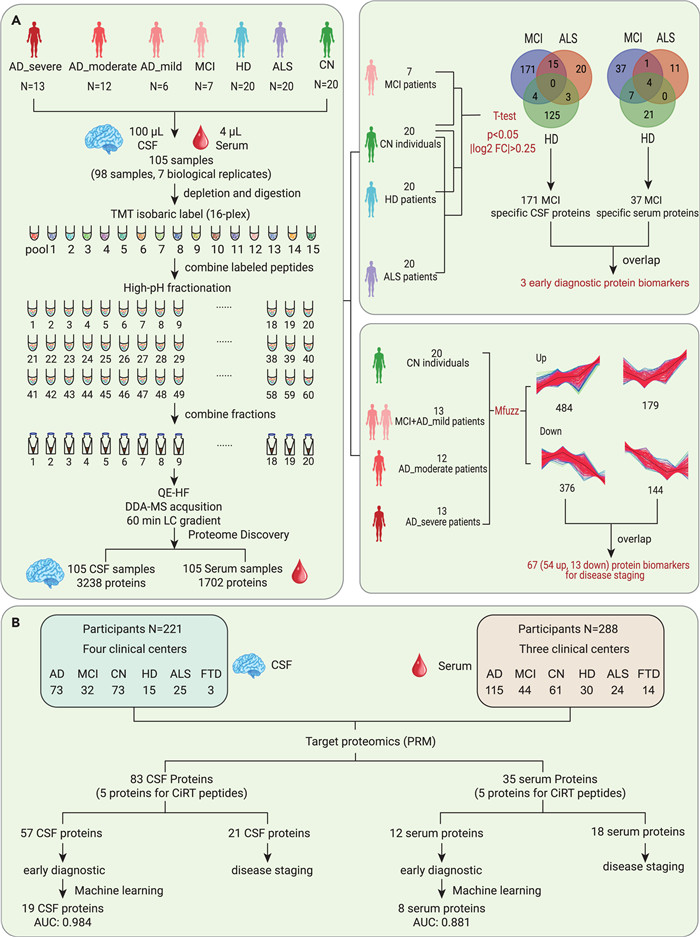
Figure 1.
Overview of the study populations and schematic of the proteomic workflow
-
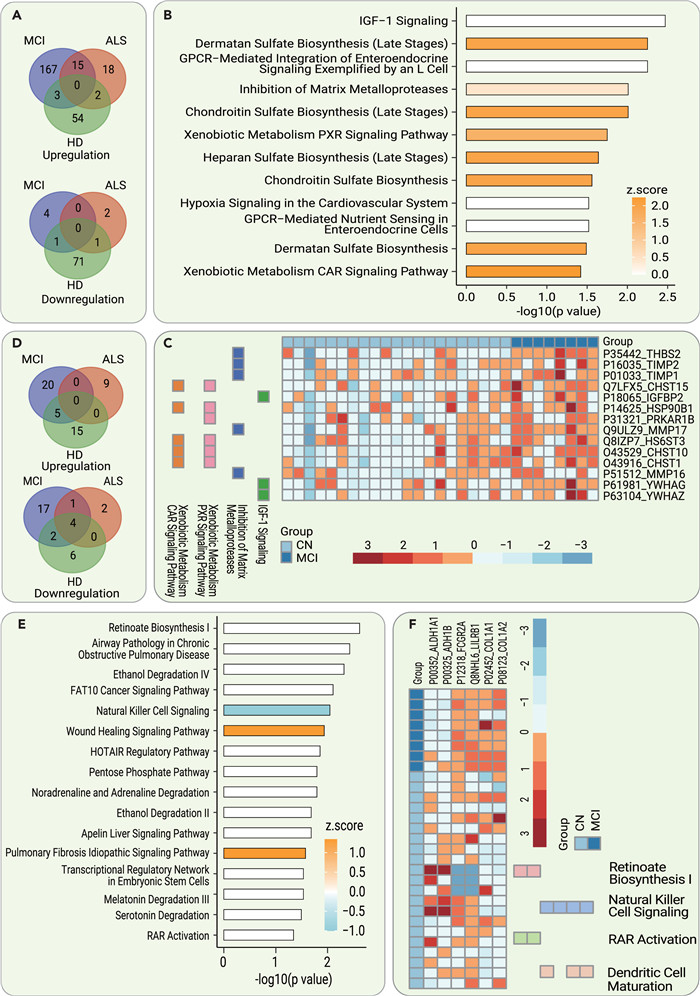
Figure 2.
Dysregulated CSF and serum proteins and pathways in the diagnosis of early AD
-
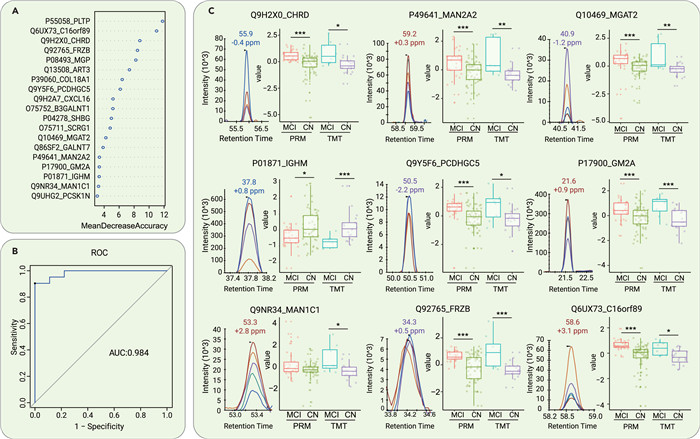
Figure 3.
Differentiation of MCI due to AD and CN subjects by machine learning of CSF proteomic features
-
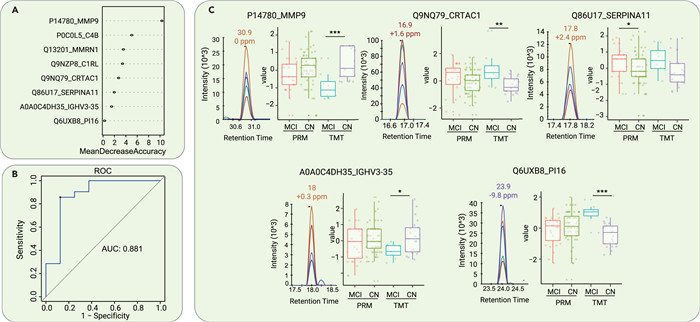
Figure 4.
Differentiation of MCI due to AD and CN by machine learning of serum proteomic features
-
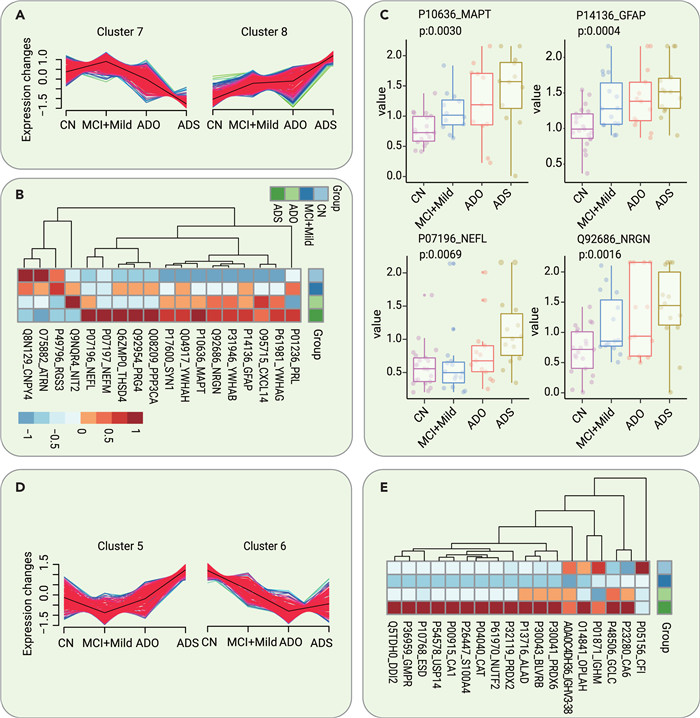
Figure 5.
Dysregulated CSF and serum proteins as potential biomarkers for AD staging
-
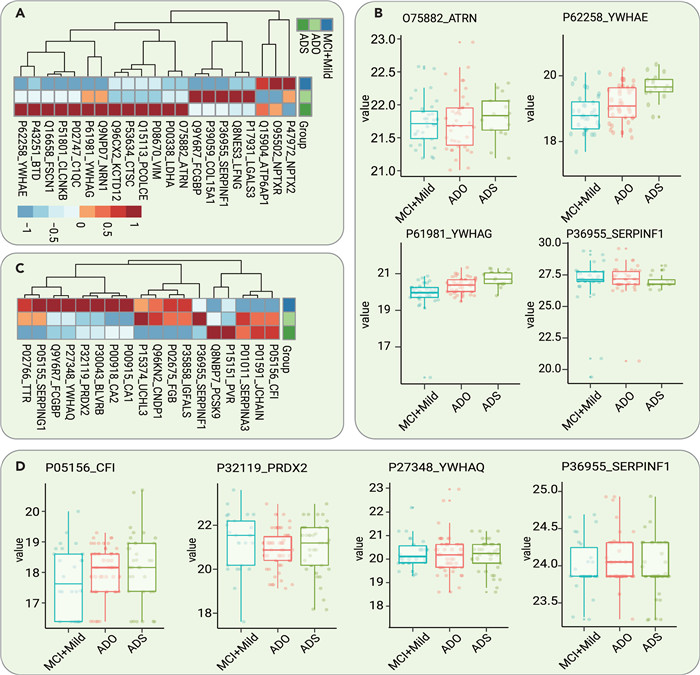
Figure 6.
Verification of AD stage-dependent dysregulated proteins in the validation cohort
