
Sahara’s surface transformation forced an abrupt hydroclimate decline and Neolithic culture transition in northern China
-
GRAPHICAL ABSTRACT
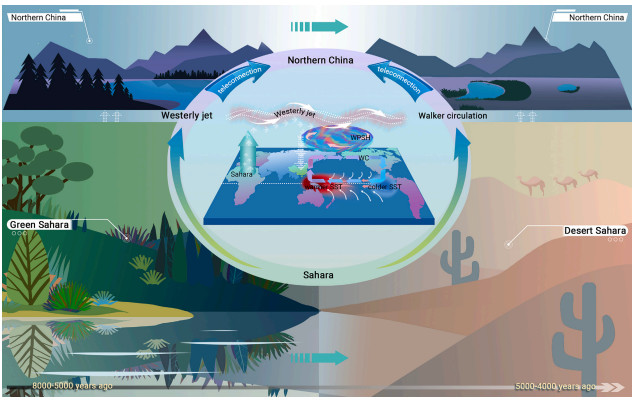
 DownLoad:
Full size image
DownLoad:
Full size image
-
PUBLIC SUMMARY
- ■ Holocene rainfall variations were quantified with energy balance model on lake-levels.
- ■ An abrupt hydroclimate decline in northern China occurred 5,000–4,000 years ago.
- ■ This abrupt change event may trigger shifts in Neolithic cultures in northern China.
- ■ Simulations suggest the impact of the end of Green Sahara on rainfalls of East Asia.
-
ABSTRACT
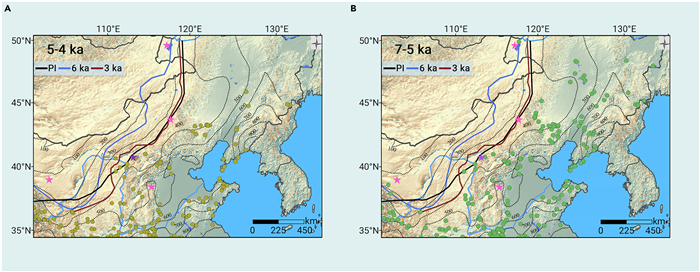
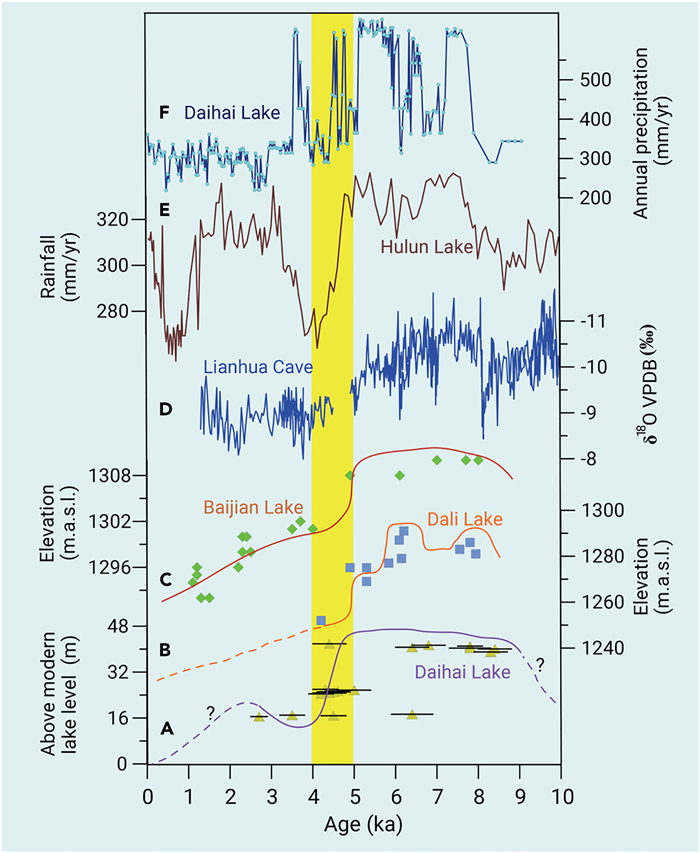
The remote forcing from land surface changes in the Sahara is hypothesized to play a pivotal role in modulating the intensity of the East Asian summer monsoon (EASM) through ocean-atmospheric teleconnections. This modulation has far-reaching consequences, particularly in facilitating societal shifts documented in northern China. Here, we present a well-dated lake-level record from the Daihai Lake Basin in northern China, providing quantitative assessments of Holocene monsoonal precipitation and the consequent migrations of the northern boundary of the EASM. Our reconstruction, informed by a water-and-energy balance model, indicates that annual precipitation reached ~700 mm during 8–5 ka, followed by a rapid decline to ~550 mm between 5 and 4 ka. This shift coherently aligns with a significant ~300 km northwestward movement of the EASMnorthern boundary during the Middle Holocene (MH), in contrast to its current position. Our findings underscore that these changes cannot be entirely attributed to orbital forcing, as corroborated by simulation tests. Climate model simulations deployed in our study suggest that the presence of the Green Sahara during the MH significantly strengthened the EASM and led to a northward shift of the monsoon rainfall belt. Conversely, the Sahara’s reversion to a desert landscape in the late Holocene was accompanied by a corresponding southward retraction of monsoon influence. These dramatic hydroclimate changes during ~5–4 ka likely triggered or at least contributed to a shift in Neolithic cultures and societal transformation in northern China. With decreasing agricultural productivity, communities transitioned from millet farming to a mixed rainfed agriculture and animal husbandry system. Thus, our findings elucidate not only the variability of the EASM but also the profound implications of a remote forcing, such as surface transformations of the Sahara, on climatic changes and cultural evolution in northern China. -

-
REFERENCES
[1] Yang, X., Scuderi, L.A., Wang, X., et al. (2015). Groundwater sapping as the cause of irreversible desertification of Hunshandake Sandy Lands, Inner Mongolia, northern China. Proc. Natl. Acad. Sci. USA 112, 702–706. [2] Yang, B., Qin, C., Bräuning, A., et al. (2021). Long-term decrease in Asian monsoon rainfall and abrupt climate change events over the past 6,700 years. Proc. Natl. Acad. Sci. USA 118, e2102007118. [3] Griffiths, M.L., Johnson, K.R., Pausata, F.S.R., et al. (2020). End of Green Sahara amplified mid- to late Holocene megadroughts in mainland Southeast Asia. Nat. Commun. 11, 4204. [4] Wang, Z., Fu, Z., Liu, B., et al. (2022). Northward migration of the East Asian summer monsoon northern boundary during the twenty-first century. Sci. Rep. 12, 10066. [5] Wang, B., Liu, J., Kim, H.J., et al. (2012). Recent change of the global monsoon precipitation (1979–2008). Clim. Dyn. 39, 1123–1135. [6] Chen, J., Zhang, Q., Huang, W., et al. (2021). Northwestward shift of the northern boundary of the East Asian summer monsoon during the mid-Holocene caused by orbital forcing and vegetation feedbacks. Quat. Sci. Rev. 268, 107136. [7] Goldsmith, Y., Broecker, W.S., Xu, H., et al. (2017). Northward extent of East Asian monsoon covaries with intensity on orbital and millennial timescales. Proc. Natl. Acad. Sci. USA 114, 1817–1821. [8] Zhang, P., Cheng, H., Edwards, R.L., et al. (2008). A test of climate, sun, and culture relationships from an 1810-year Chinese cave record. Science 322, 940–942. [9] Xu, D., Lu, H., Chu, G., et al. (2019). Synchronous 500-year oscillations of monsoon climate and human activity in Northeast Asia. Nat. Commun. 10, 4105. [10] Chen, F., Chen, S., Zhang, X., et al. (2020). Asian dust-storm activity dominated by Chinese dynasty changes since 2000 BP. Nat. Commun. 11, 992. [11] Li, X.W. (2008). Development of Social Complexity in the Liaoxi Area, Northeast China (Archaeopress). [12] Wang, C., Lu, H., Zhang, J., et al. (2014). Prehistoric demographic fluctuations in China inferred from radiocarbon data and their linkage with climate change over the past 50,000 years. Quat. Sci. Rev. 98, 45–59. [13] Leipe, C., Long, T., Sergusheva, E.A., et al. (2019). Discontinuous spread of millet agriculture in eastern Asia and prehistoric population dynamics. Sci. Adv. 5, eaax6225. [14] Dong, G., Li, R., Lu, M., et al. (2020). Evolution of human–environmental interactions in China from the late Paleolithic to the Bronze age. Prog. Phys. Geogr. 44, 233–250. [15] Piao, J., Chen, W., Wang, L., et al. (2020). Northward extension of the East Asian summer monsoon during the mid-Holocene. Glob. Planet. Change 184, 103046. [16] Wu, B., Lang, X., and Jiang, D. (2021). Migration of the northern boundary of the East Asian summer monsoon over the last 21,000 years. JGR. Atmospheres 126, e2021JD035078. [17] Chen, J., Huang, W., Jin, L., et al. (2018). A climatological northern boundary index for the East Asian summer and its interannual variability. Sci. China Earth Sci. 61, 13–22. [18] Cheng, H., Edwards, R.L., Sinha, A., et al. (2016). The Asian monsoon over the past 640,000 years and ice age terminations. Nature 534, 640–646. [19] Yang, S., Ding, Z., Li, Y., et al. (2015). Warming-induced northwestward migration of the East Asian monsoon rain belt from the last glacial maximum to the mid-Holocene. Proc. Natl. Acad. Sci. USA 112, 13178–13183. [20] Huang, X., Yang, S., Haywood, A., et al. (2021). Warming-induced northwestward migration of the Asian summer monsoon in the geological past: Evidence from climate simulations and geological reconstructions. JGR. Atmospheres 126, e2021JD035190. [21] McGee, D., deMenocal, P., Winckler, G., et al. (2013). The magnitude, timing and abruptness of changes in North African dust deposition over the last 20,000 yr. Earth Planet Sci. Lett. 371–372, 163–176. [22] Fu, B.S. (1981). On the calculation of the evaporation from land surface. Scientia Atmos. Sinica 5, 23–31. [23] Zhang, L., Hickel, K., Dawes, W.R., et al. (2004). A rational function approach for estimating mean annual evapotranspiration. Water Resour. Res. 40, W02502. [24] Xiao, J., Xu, Q., Nakamura, T., et al. (2004). Holocene vegetation variation in the Daihai Lake region of north-central China: a direct indication of the Asian monsoon climatic history. Quat. Sci. Rev. 23, 1669–1679. [25] Sun, Q., Wang, S., Zhou, J., et al. (2009). Lake surface fluctuations since the late glaciation at Lake Daihai, North central China: A direct indicator of hydrological process response to East Asian monsoon climate. Quat. Int. 194, 45–54. [26] Xu, Q., Xiao, J., Li, Y., et al. (2010). Pollen-based quantitative reconstruction of Holocene climate changes in the Daihai Lake area, Inner Mongolia, China. J. Clim. 23, 2856–2868. [27] Xiao, J., Zhang, S., Fan, J., et al. (2019). The 4.2 ka event and its resulting cultural interruption in the Daihai Lake basin at the East Asian summer monsoon margin. Quat. Int. 527, 87–93. [28] Long, H., Lai, Z., Fuchs, M., et al. (2012). Timing of Late Quaternary palaeolake evolution in Tengger Desert of northern China and its possible forcing mechanisms. Glob. Planet. Change 92–93, 119–129. [29] Wen, R., Xiao, J., Chang, Z., et al. (2010). Holocene precipitation and temperature variations in the East Asian monsoonal margin from pollen data from Hulun Lake in northeastern Inner Mongolia, China. Boreas 39, 262–272. [30] Dong, J., Shen, C.C., Kong, X., et al. (2015). Reconciliation of hydroclimate sequences from the Chinese loess plateau and low-latitude East Asian Summer Monsoon regions over the past 14,500 years. Palaeogeogr. Palaeoclimatol. Palaeoecol. 435, 127–135. [31] Drysdale, R., Zanchetta, G., Hellstrom, J., et al. (2006). Late Holocene drought responsible for the collapse of Old World civilizations is recorded in an Italian cave flowstone. Geol. 34, 101–104. [32] DeMenocal, P., Ortiz, J., Guilderson, T., et al. (2000). Abrupt onset and termination of the African Humid Period: rapid climate responses to gradual insolation forcing. Quat. Sci. Rev. 19, 347–361. [33] Thompson, L.G., Mosley-Thompson, E., Davis, M.E., et al. (2002). Kilimanjaro ice core records: evidence of Holocene climate change in tropical Africa. Science 298, 589–593. [34] Pennington, B.T., Hamdan, M.A., Pears, B.R., , et al. Sameh, H.I. (2019). Aridification of the Egyptian Sahara 5000–4000 cal BP revealed from x-ray fluorescence analysis of Nile Delta sediments at Kom al-Ahmer/Kom Wasit. Quat. Int. 514, 108–118. [35] Tierney, J.E., Russell, J.M., Sinninghe Damsté, J.S., et al. (2011). Late Quaternary behavior of the East African monsoon and the importance of the Congo Air Boundary. Quat. Sci. Rev. 30, 798–807. [36] Tierney, J.E., and deMenocal, P.B. (2013). Abrupt shifts in Horn of Africa hydroclimate since the Last Glacial Maximum. Science 342, 843–846. [37] Sun, W., Wang, B., Zhang, Q., et al. (2019). Northern Hemisphere land monsoon precipitation increased by the green Sahara during middle Holocene. Geophys. Res. Lett. 46, 9870–9879. [38] Pausata, F.S., Messori, G., and Zhang, Q. (2016). Impacts of dust reduction on the northward expansion of the African monsoon during the Green Sahara period. Earth Planet Sci. Lett. 434, 298–307. [39] Pausata, F.S.R., Zhang, Q., Muschitiello, F., et al. (2017). Greening of the Sahara suppressed ENSO activity during the mid-Holocene. Nat. Commun. 8, 16020. [40] Rodríguez-Fonseca, B., Polo, I., García-Serrano, J., et al. (2009). Are Atlantic Niños enhancing Pacifc ENSO events in recent decades? Geophys. Res. Lett. 36, L20705. [41] Li, X., Xie, S.P., Gille, S.T., et al. (2016). Atlantic-induced pan-tropical climate change over the past three decades. Nat. Clim. Chang. 6, 275–279. [42] Pausata, F.S.R., Messori, G., Yun, J., et al. (2021). The remote response of the South Asian Monsoon to reduced dust emissions and Sahara greening during the middle Holocene. Clim. Past 17, 1243–1271. [43] Sun, Y., Clemens, S.C., Morrill, C., et al. (2012). Influence of Atlantic Meridional overturning circulation on the East Asian winter monsoon. Nat. Geosci. 5, 46–49. [44] Berry, G., and Reeder, M.J. (2014). Objective identification of the intertropical convergence zone: Climatology and trends from the ERA-Interim. J. Clim. 27, 1894–1909. [45] Zhang, H., Griffiths, M.L., Chiang, J.C.H., et al. (2018). East Asian hydroclimate modulated by the position of the westerlies during Termination I. Science 362, 580–583. [46] Chiang, J.C., Fung, I.Y., Wu, C.H., et al. (2015). Role of seasonal transitions and westerly jets in East Asian paleoclimate. Quat. Sci. Rev. 108, 111–129. [47] Chiang, J.C., Lee, S.Y., Putnam, A.E., et al. (2014). South Pacific Split Jet, ITCZ shifts, and atmospheric North-South linkages during abrupt climate changes of the last glacial period. Earth Planet Sci. Lett. 406, 233–246. [48] Zhang, M., Liu, Y., Zhang, J., et al. (2021). AMOC and Climate Responses to Dust Reduction and Greening of the Sahara during the Mid-Holocene. J. Clim. 34, 4893–4912. [49] Herzschuh, U., Cao, X., Laepple, T., et al. (2019). Position and orientation of the westerly jet determined Holocene rainfall patterns in China. Nat. Commun. 10, 2376. [50] Guo, L., Xiong, S., Ding, Z., et al. (2018). Role of the mid-Holocene environmental transition in the decline of late Neolithic cultures in the deserts of NE China. Quat. Sci. Rev. 190, 98–113. [51] Tian, G.J., and Akiyama, S. (2001). Archaeological Excavations at Daihai (Ⅱ) – A Collection of Sino-Japanese Reports and Papers on Sites in Daihai (Science Press). (in Chinese). [52] Tian, G.J. (2000). The relationships between archaeological culture and ecological environment in Daihai Lake area. In Research of Environmental Archaeology (Part 2), K.S. Zhou and Y.Q. Song, eds. (Science Press), pp. 72–80. (in Chinese). [53] Fang, X.Q., and Sun, N. (1998). Cold event: a possible cause of the interruption of the Laohushan Culture. Hum. Geogr. 13, 71–76. [54] Tarasov, P., Jin, G., and Wagner, M. (2006). Mid-Holocene environmental and human dynamics in northeastern China reconstructed from pollen and archaeological data. Palaeogeogr. Palaeoclimatol. Palaeoecol. 241, 284–300. [55] Huang, Y.P. (2003). Miaozigou yu Dabagou yizhi dongwu yihai jianding baogao. In Wenwu Kaogu Yanjiusuo, Neimenggu, Y.D. Miaozigou, ed. (Encyclopedia of China Publishing House), pp. 599–611. [56] Liu, F., and Feng, Z. (2012). A dramatic climatic transition at similar to 4000 cal. yr BP and its cultural responses in Chinese cultural domains. Holocene 22, 1181–1197. [57] Heilongjiang Institute of Cultural Relics and Archaeology (2020). Archaeological Excavations at Honghe Site–A Site Report on Ang’angxi Culture. Archaeology 7, 20–33. [58] Liu, L., and Chen, X.C. (2012). The Archaeology of China: From the Late Paleolithic to the Early Bronze Age (Cambridge University Press). [59] Drennan, R.D., Peterson, C.E., Lu, X.M., et al. (2017). Hongshan households and communities in Neolithic northeastern China. J. Anthropol. Archaeol. 47, 50–71. [60] Anderson, D.C. (2012). Hongshan Jade Treasures: The Art, Iconography and Authentication of Carvings from China’s Finest Neolithic Culture (Tau Publishing, Fraz. Pian diPorto). [61] Mo, D.W., Wang, H., and Li, S.C. (2003). Effects of Holocene environmental changes on the development of archaeological cultures in different regions of North China. Quat. Sci. 23, 200–210. [62] Zan, M., Zhou, Y., Ju, W., et al. (2018). Performance of a two-leaf light use efficiency model for mapping gross primary productivity against remotely sensed sun-induced chlorophyll fluorescence data. Sci. Total Environ. 613–614, 977–989. [63] Sinha, A., Kathayat, G., Weiss, H., et al. (2019). Role of climate in the rise and fall of the neo-Assyrian empire. Sci. Adv. 5, eaax6656. [64] Smith, B., Wårlind, D., Arneth, A., et al. (2014). Implications of incorporating N cycling and N limitations on primary production in an individual-based dynamic vegetation model. Biogeosciences 11, 2027–2054. [65] Cheng, Y., Liu, H., Dong, Z., et al. (2020). East Asian summer monsoon and topography co-determine the Holocene migration of forest-steppe ecotone in northern China. Glob. Planet. Change 187, 103135. [66] Jia, X., Sun, Y., Wang, L., et al. (2016). The transition of human subsistence strategies in relation to climate change during the Bronze Age in the West Liao River Basin, Northeast China. Holocene 26, 781–789. [67] Hosner, D., Wagner, M., Tarasov, P.E., et al. (2016). Spatiotemporal distribution patterns of archaeological sites in China during the Neolithic and Bronze Age: An overview. Holocene 26, 1576–1593. [68] Wang, J., Zhou, X., Xu, H., et al. (2021). Relationship between C4 biomass and C4 agriculture during the Holocene and its implications for millet domestication in Northeast China. Geophys. Res. Lett. 48, e2020GL089566. [69] Deng, H. (1997). The change of then man-land relationship in the northern Yanshan Mountain in region during megathermal. Acta Geograph. Sin. 52, 163–171. [70] Shelach-Lavi, G., Teng, M., Goldsmith, Y., et al. (2016). Human adaptation and socioeconomic change in northeast China: results of the Fuxin regional survey. J. Field Archaeol. 41, 467–485. [71] Sun, Q., Liu, Y., Wünnemann, B., et al. (2019). Climate as a factor for Neolithic cultural collapses approximately 4000 years BP in China. Earth Sci. Rev. 197, 102915. [72] Zhang, Y., Zhang, Y., Hu, S., et al. (2021). Pastoralism and millet cultivation during the Bronze Age in the temperate steppe region of Northern China. Front. Earth Sci. 9, 748327. [73] Tan, L., Dong, G., An, Z., et al. (2021). Megadrought and cultural exchange along the proto-silk road. Sci. Bull. 66, 603–611. [74] Huang, X., Zhang, J., Ren, L., et al. (2021). Intensification and Driving Forces of Pastoralism in Northern China 5.7 ka Ago. Geophys. Res. Lett. 48, e2020GL092288. [75] Dodson, J., Dodson, E., Banati, R., et al. (2014). Oldest Directly Dated Remains of Sheep in China. Sci. Rep. 4, 7170. [76] Hu, S.M. (2021). The Development of Animal Husbandry from the Perspective of Archaeology in Yulin Area-Based on the Animal Archaeology and the Latest Dating Data from 5000-4000 Years Ago in Yulin Area (Chinese Journal of Social Science Special issue of National Social Science Foundation). [77] Yang, Y., Ren, L., Dong, G., et al. (2019). Economic Change in the Prehistoric Hexi Corridor (4800-2200 BP), Northwest China. Archaeometry 61, 957–976. [78] Smith, B., Prentice, I.C., and Sykes, M.T. (2001). Representation of vegetation dynamics in the modelling of terrestrial ecosystems: comparing two contrasting approaches within European climate space. Glob. Ecol. Biogeogr. 10, 621–637. [79] Lu, Z., Miller, P.A., Zhang, Q., et al. (2018). Dynamic vegetation simulations of the mid-Holocene Green Sahara. Geophys. Res. Lett. 45, 8294–8303. [80] Kukla, T., Ahlström, A., Maezumi, S.Y., et al. (2021). The resilience of Amazon tree cover to past and present drying. Glob. Planet. Change 202, 103520. [81] Lu, Z., Miller, P.A., Zhang, Q., et al. (2019). Vegetation pattern and terrestrial carbon variation in past warm and cold climates. Geophys. Res. Lett. 46, 8133–8143. [82] Hazeleger, W., Wang, X., Severijns, C., et al. (2012). EC-Earth V2. 2: description and validation of a new seamless earth system prediction model. Clim. Dyn. 39, 2611–2629. [83] Claussen, M., Dallmeyer, A., and Bader, J. (2017). Theory and modeling of the African humid period and the green Sahara. In Oxford Research Encyclopedia of Climate Science. -
ABOUT THIS ARTICLE
Cite this article:
Yandong Hou, Hao Long, Sumiko Tsukamoto, Zhengyao Lu, Jie Chen, Daniel E. Ibarra, Toru Tamura, Qiong Zhang, Weiyi Sun, Jingran Zhang, Lei Gao, Manfred Frechen, Ji Shen. Sahara’s surface transformation forced an abrupt hydroclimate decline and Neolithic culture transition in northern China[J]. The Innovation, 2024, 5(1). https://doi.org/10.1016/j.xinn.2023.100550
Welcome!
To request copyright permission to republish or share portions of our works, please visit Copyright Clearance Center's (CCC) Marketplace website at marketplace.copyright.com.
Export File
Citation
Yandong Hou, Hao Long, Sumiko Tsukamoto, Zhengyao Lu, Jie Chen, Daniel E. Ibarra, Toru Tamura, Qiong Zhang, Weiyi Sun, Jingran Zhang, Lei Gao, Manfred Frechen, Ji Shen. Sahara’s surface transformation forced an abrupt hydroclimate decline and Neolithic culture transition in northern China[J]. The Innovation, 2024, 5(1). https://doi.org/10.1016/j.xinn.2023.100550

Format
Content
-
Figure 1.
Locations of Daihai Lake, Hulun Lake, Daili Lake, and Baijian Lake and spatiotemporal distribution of archaeological sites in northern China
-
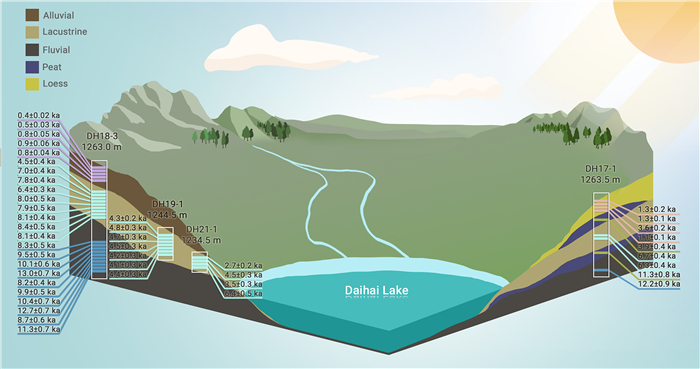
Figure 2.
Stratigraphy and chronology of sampling sections in Daihai Lake Basin
-
Figure 3.
A widespread weakening of EASM in northern China at 5–4 ka
-
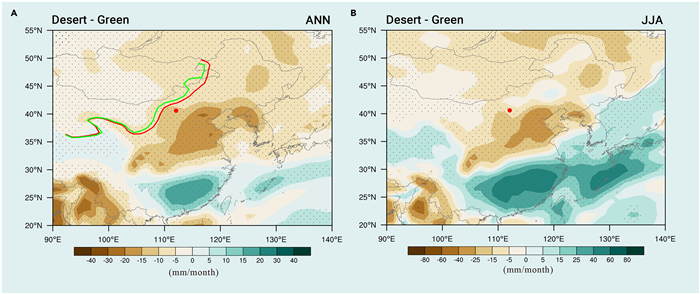
Figure 4.
Numerical simulation of precipitation in northern China
-
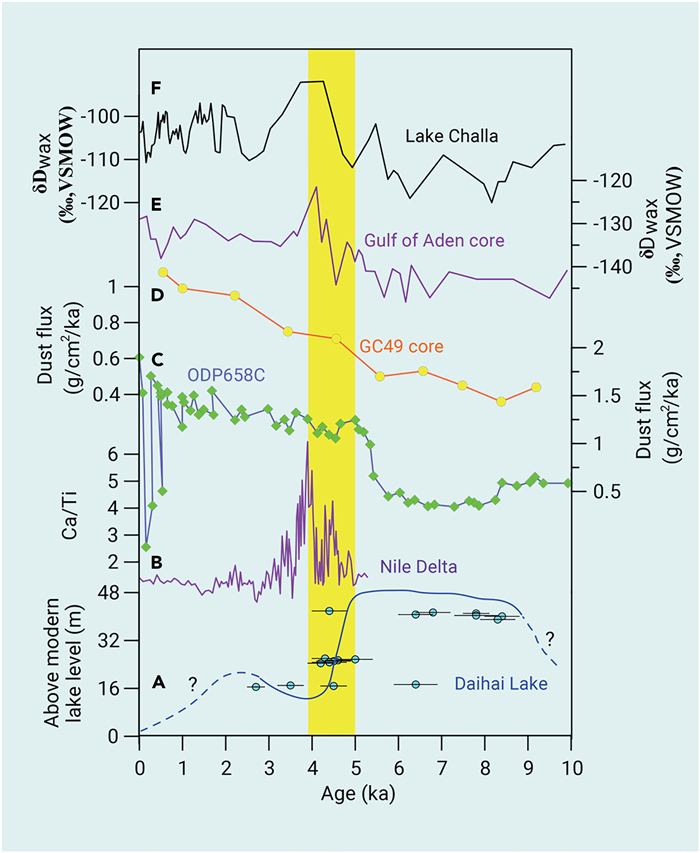
Figure 5.
Comparison of the lake-level changes of Daihai Lake with the end of the Green Sahara
-
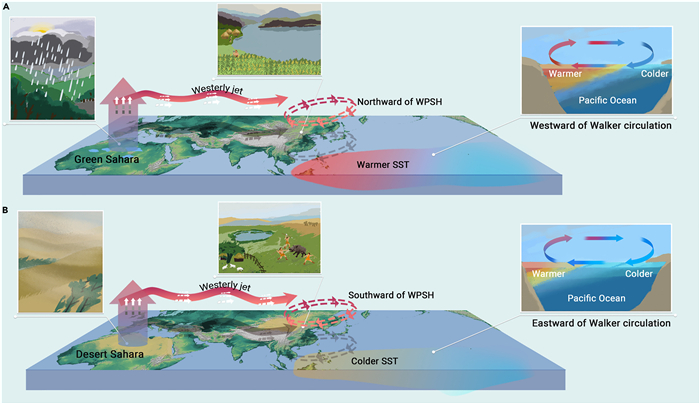
Figure 6.
Schematic representation of the mechanisms behind the changes in EASM variability
-
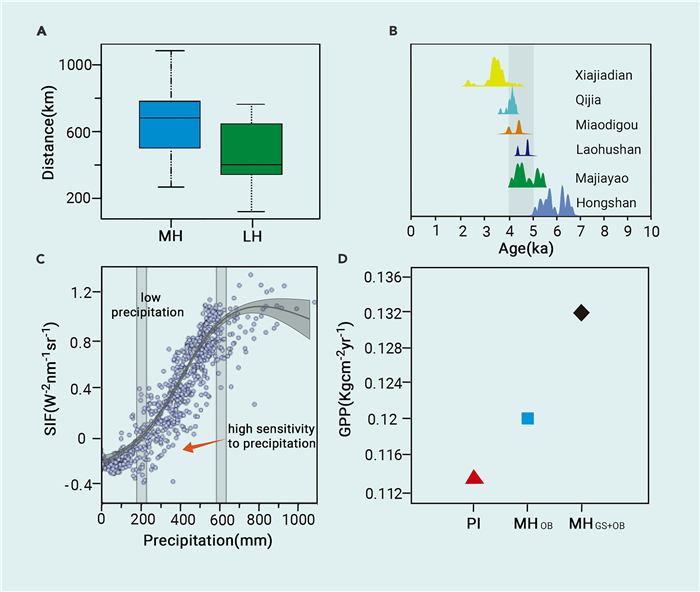
Figure 7.
The possible effect of climate change on the late Neolithic culture in northern China
-
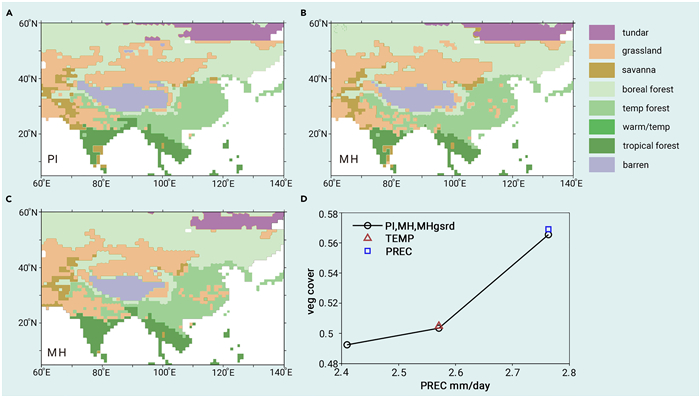
Figure 8.
Vegetation distributions and types in simulations
