
Helicobacter pylori and immunotherapy for gastrointestinal cancer
-
GRAPHICAL ABSTRACT
 DownLoad:
Full size image
DownLoad:
Full size image
-
PUBLIC SUMMARY
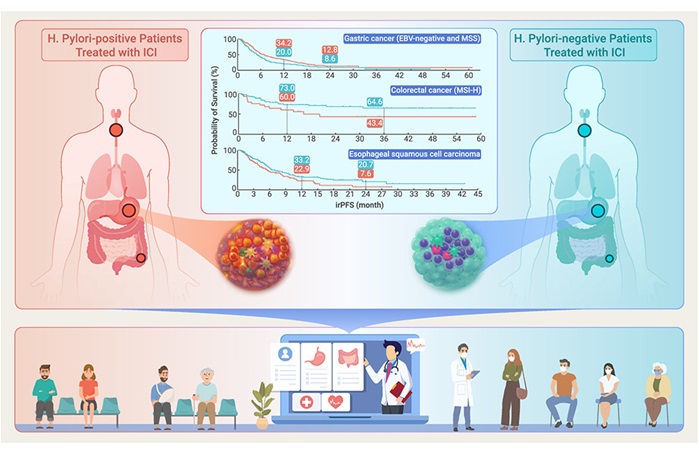
- ■ Helicobacter pylori infection is a favorable factor for gastric cancer immunotherapy by shaping the "hot" tumor microenvironment.
- ■ H. pylori infection is unfavorable for immunotherapy in DNA mismatch repair-deficient/microsatellite instability-high colon adenocarcinoma and esophageal squamous cell cancer.
- ■ This study highlights the importance of the test for H. pylori infection in cancer patients treated with immunotherapy.
-
ABSTRACT
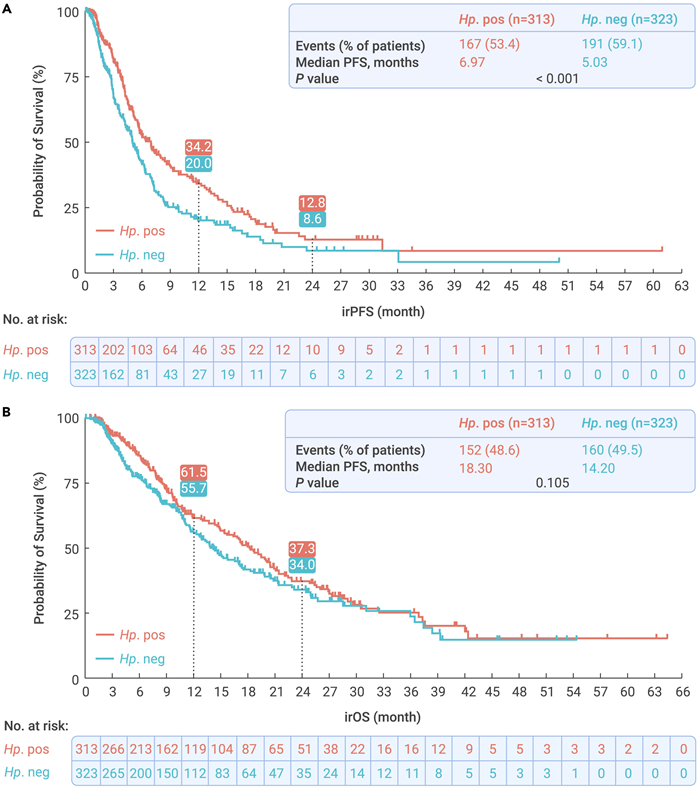
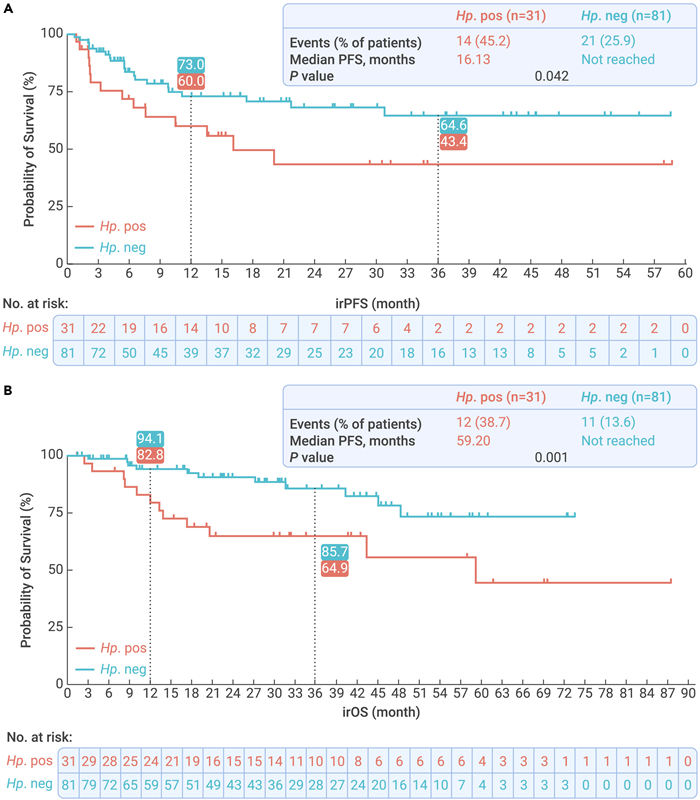
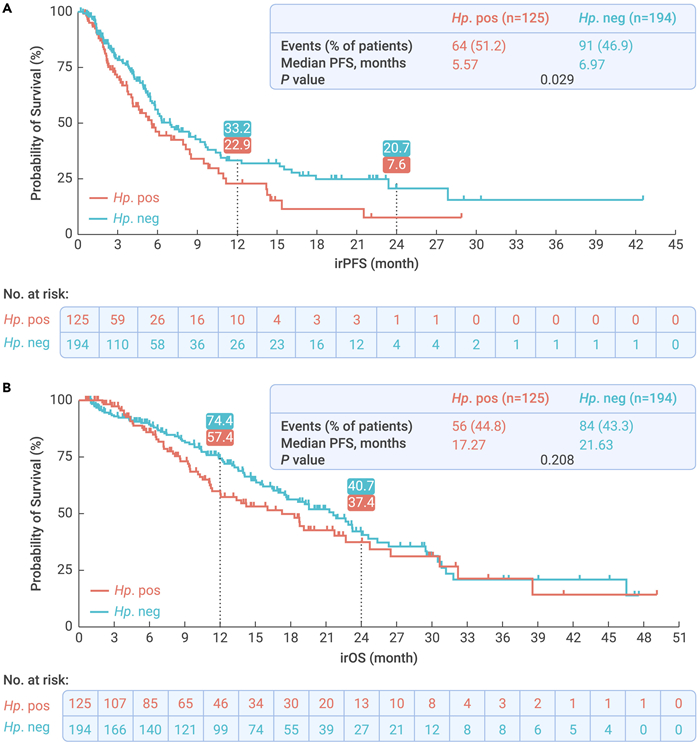
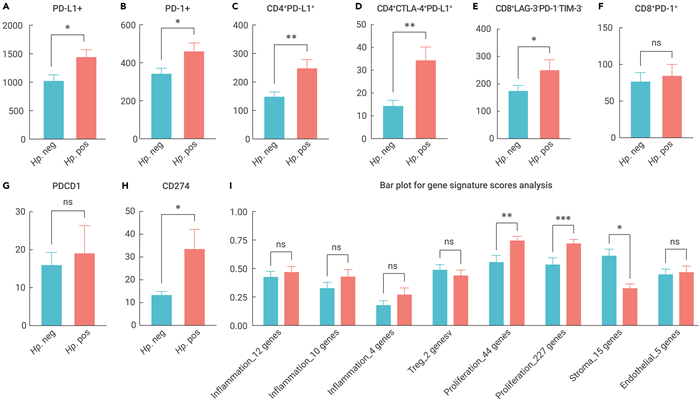
Helicobacter pylori infection is associated with the risk of gastrointestinal (GI) cancers; however, its impact on immunotherapy for GI cancers remains uncertain. In this study, we included 10,122 patients who underwent 13C-urea breath tests. Among 636 patients with Epstein-Barr virus–negative microsatellite-stable gastric cancer (GC) who were treated with anti-PD-1/PD-L1 therapy, H. pylori–positive patients exhibited significantly longer immune-related progression-free survival (irPFS) compared with H. pylori–negative patients (6.97 months versus 5.03 months, p < 0.001, hazard ratio [HR] 0.76, 95% confidence interval [CI] 0.62–0.95, p = 0.015). Moreover, the H. pylori–positive group demonstrated a trend of 4 months longer median immune-related overall survival (irOS) than the H. pylori–negative group. H. pylori–positive GC displayed higher densities of PD-L1+ cells and nonexhausted CD8+ T cells, indicative of a "hot" tumor microenvironment. Transcriptomic analysis revealed that H. pylori–positive GC shared molecular characteristics similar to those of immunotherapy-sensitive GC. However, H. pylori–positive patients with DNA mismatch repair–deficient (dMMR)/microsatellite instability–high (MSI-H) colorectal adenocarcinoma and esophageal squamous cell carcinoma (ESCC) had shorter irPFS compared with H. pylori–negative patients (16.13 months versus not reached, p = 0.042, HR 2.26, 95% CI 1.13–4.50, p = 0.021 and 5.57 months versus 6.97 months, p = 0.029, HR 1.59, 95% CI 1.14–2.23, p = 0.006, respectively). The difference in irOS between H. pylori–positive and –negative patients had the same trend as that between dMMR/MSI-H colorectal adenocarcinoma and ESCC patients. We also identified a trend of shorter irPFS and irOS in H. pylori–positive liver cancer and pancreatic cancer patients. In summary, our findings supported that H. pylori infection is a beneficial factor for GC immunotherapy by shaping hot tumor microenvironments. However, in dMMR/MSI-H colorectal adenocarcinoma and ESCC patients, H. pylori adversely affects the efficacy of immunotherapy. -

-
REFERENCES
[1] Li, Y., Choi, H., Leung, K., et al. (2023). Global prevalence of Helicobacter pylori infection between 1980 and 2022: a systematic review and meta-analysis. Lancet. Gastroenterol. Hepatol. 8: 553–564. https://doi.org/10.1016/S2468-1253(23)00070-5. [2] Nomura, A., Stemmermann, G.N., Chyou, P.H., et al. (1991). Helicobacter pylori infection and gastric carcinoma among Japanese Americans in Hawaii. N. Engl. J. Med. 325: 1132–1136. https://doi.org/10.1056/NEJM199110173251604. [3] Parsonnet, J., Friedman, G.D., Vandersteen, D.P., et al. (1991). Helicobacter pylori infection and the risk of gastric carcinoma. N. Engl. J. Med. 325: 1127–1131. https://doi.org/10.1056/NEJM199110173251603. [4] Xi, S., Jing, L., Lili, W., et al. (2022). Magnetic controlled capsule endoscope (MCCE)'s diagnostic performance for H. pylori infection status based on the Kyoto classification of gastritis. BMC Gastroenterol. 22: 502. https://doi.org/10.1186/s12876-022-02589-z. [5] Ağagündüz, D., Cocozza, E., Cemali, Ö., et al. (2023). Understanding the role of the gut microbiome in gastrointestinal cancer: A review. Front. Pharmacol. 14: 1130562. https://doi.org/10.3389/fphar.2023.1130562. [6] Öztekin, M., Yılmaz, B., Ağagündüz, D., et al. (2021). Overview of Helicobacter pylori Infection: Clinical Features, Treatment, and Nutritional Aspects. Diseases 9: 66. https://doi.org/10.3390/diseases9040066. [7] Ralser, A., Dietl, A., Jarosch, S., et al. (2023). Helicobacter pylori promotes colorectal carcinogenesis by deregulating intestinal immunity and inducing a mucus-degrading microbiota signature. Gut 72: 1258–1270. https://doi.org/10.1136/gutjnl-2022-328075. [8] Liu, I.L., Tsai, C.H., Hsu, C.H., et al. (2019). Helicobacter pylori infection and the risk of colorectal cancer: a nationwide population-based cohort study. QJM 112: 787–792. https://doi.org/10.1093/qjmed/hcz157. [9] Amieva, M., and Peek, R.M., Jr. (2016). Pathobiology of Helicobacter pylori-Induced Gastric Cancer. Gastroenterology 150: 64–78. https://doi.org/10.1053/j.gastro.2015.09.004. [10] Xie, F.J., Zhang, Y.P., Zheng, Q.Q., et al. (2013). Helicobacter pylori infection and esophageal cancer risk: an updated meta-analysis. World J. Gastroenterol. 19: 6098–6107. https://doi.org/10.3748/wjg.v19.i36.6098. [11] Rokkas, T., Pistiolas, D., Sechopoulos, P., et al. (2007). Relationship between Helicobacter pylori infection and esophageal neoplasia: a meta-analysis. Clin. Gastroenterol. Hepatol. 5: 1413-7–1417.e1-2. https://doi.org/10.1016/j.cgh.2007.08.010. [12] You, W.C., Brown, L.M., Zhang, L., et al. (2006). Randomized double-blind factorial trial of three treatments to reduce the prevalence of precancerous gastric lesions. J. Natl. Cancer Inst. 98: 974–983. https://doi.org/10.1093/jnci/djj264. [13] Choi, I.J., Kook, M.C., Kim, Y.I., et al. (2018). Helicobacter pylori Therapy for the Prevention of Metachronous Gastric Cancer. N. Engl. J. Med. 378: 1085–1095. https://doi.org/10.1056/NEJMoa1708423. [14] Choi, I.J., Kim, C.G., Lee, J.Y., et al. (2020). Family History of Gastric Cancer and Helicobacter pylori Treatment. N. Engl. J. Med. 382: 427–436. https://doi.org/10.1056/NEJMoa1909666. [15] Li, W.Q., Zhang, J.Y., Ma, J.L., et al. (2019). Effects of Helicobacter pylori treatment and vitamin and garlic supplementation on gastric cancer incidence and mortality: follow-up of a randomized intervention trial. BMJ 366: l5016. https://doi.org/10.1136/bmj.l5016. [16] Ye, Y., Zhang, Y., Yang, N., et al. (2022). Profiling of immune features to predict immunotherapy efficacy. Innovation 3: 100194. https://doi.org/10.1016/j.xinn.2021.100194. [17] Lu, Z., Peng, Z., Liu, C., et al. (2020). Current Status and Future Perspective of Immunotherapy in Gastrointestinal Cancers. Innovation 1: 100041. https://doi.org/10.1016/j.xinn.2020.100041. [18] Kang, Y.K., Chen, L.T., Ryu, M.H., et al. (2022). Nivolumab plus chemotherapy versus placebo plus chemotherapy in patients with HER2-negative, untreated, unresectable advanced or recurrent gastric or gastro-oesophageal junction cancer (ATTRACTION-4): a randomised, multicentre, double-blind, placebo-controlled, phase 3 trial. Lancet Oncol. 23: 234–247. https://doi.org/10.1016/S1470-2045(21)00692-6. [19] Janjigian, Y.Y., Shitara, K., Moehler, M., et al. (2021). First-line nivolumab plus chemotherapy versus chemotherapy alone for advanced gastric, gastro-oesophageal junction, and oesophageal adenocarcinoma (CheckMate 649): a randomised, open-label, phase 3 trial. Lancet 398: 27–40. https://doi.org/10.1016/S0140-6736(21)00797-2. [20] Lu, Z., Wang, J., Shu, Y., et al. (2022). Sintilimab versus placebo in combination with chemotherapy as first line treatment for locally advanced or metastatic oesophageal squamous cell carcinoma (ORIENT-15): multicentre, randomised, double blind, phase 3 trial. BMJ 377: e068714. https://doi.org/10.1136/bmj-2021-068714. [21] Li, J., Deng, Y., Zhang, W., et al. (2021). Subcutaneous envafolimab monotherapy in patients with advanced defective mismatch repair/microsatellite instability high solid tumors. J. Hematol. Oncol. 14: 95. https://doi.org/10.1186/s13045-021-01095-1. [22] Yuan, J., Bao, P., Chen, Z., et al. (2023). Advanced prompting as a catalyst: Empowering large language models in the management of gastrointestinal cancers. Innovat. Med. 1: 100019. https://doi.org/10.59717/j.xinn-med.2023.100019. [23] Lee, J., Nebozhyn, M., et al. (2015). Molecular analysis of gastric cancer identifies subtypes associated with distinct clinical outcomes. Nat. Med. 21: 449–456. https://doi.org/10.1038/nm.3850. [24] Le, D.T., Kim, T.W., Van Cutsem, E., et al. (2020). Phase Ⅱ Open-Label Study of Pembrolizumab in Treatment-Refractory, Microsatellite Instability-High/Mismatch Repair-Deficient Metastatic Colorectal Cancer: KEYNOTE-164. J. Clin. Oncol. 38: 11–19. https://doi.org/10.1200/JCO.19.02107. [25] Maio, M., Ascierto, P.A., Manzyuk, L., et al. (2022). Pembrolizumab in microsatellite instability high or mismatch repair deficient cancers: updated analysis from the phase Ⅱ KEYNOTE-158 study. Ann. Oncol. 33: 929–938. https://doi.org/10.1016/j.annonc.2022.05.519. [26] Naseem, M., Barzi, A., Brezden-Masley, C., et al. (2018). Outlooks on Epstein-Barr virus associated gastric cancer. Cancer Treat Rev. 66: 15–22. https://doi.org/10.1016/j.ctrv.2018. 03.006. [27] Chen, Y., Jia, K., Sun, Y., et al. (2022). Predicting response to immunotherapy in gastric cancer via multi-dimensional analyses of the tumour immune microenvironment. Nat. Commun. 13: 4851. https://doi.org/10.1038/s41467-022-32570-z. [28] Wang, J., Ge, J., Wang, Y., et al. (2022). EBV miRNAs BART11 and BART17-3p promote immune escape through the enhancer-mediated transcription of PD-L1. Nat. Commun. 13: 866. https://doi.org/10.1038/s41467-022-28479-2. [29] Zhu, Y., Zhu, F., Ba, H., et al. (2023). Helicobacter pylori infection and PD-L1 expression in gastric cancer: A meta-analysis. Eur. J. Clin. Invest. 53: e13880. https://doi.org/10.1111/eci.13880. [30] Derks, S., de Klerk, L.K., Xu, X., et al. (2020). Characterizing diversity in the tumor-immune microenvironment of distinct subclasses of gastroesophageal adenocarcinomas. Ann. Oncol. 31: 1011–1020. https://doi.org/10.1016/j.annonc.2020.04.011. [31] André, T., Shiu, K.K., Kim, T.W., et al. (2020). Pembrolizumab in Microsatellite-Instability-High Advanced Colorectal Cancer. N. Engl. J. Med. 383: 2207–2218. https://doi.org/10.1056/NEJMoa2017699. [32] Joensuu, H., Hohenberger, P., and Corless, C.L. (2013). Gastrointestinal stromal tumour. Lancet 382: 973–983. https://doi.org/10.1016/S0140-6736(13)60106-3. [33] Rindi, G., Mete, O., Uccella, S., et al. (2022). Overview of the 2022 WHO Classification of Neuroendocrine Neoplasms. Endocr. Pathol. 33: 115–154. https://doi.org/10.1007/s12022-022-09708-2. [34] Oster, P., Vaillant, L., Riva, E., et al. (2022). Helicobacter pylori infection has a detrimental impact on the efficacy of cancer immunotherapies. Gut 71: 457–466. https://doi.org/10.1136/gutjnl-2020-323392. [35] Janjigian, Y.Y., Shitara, K., Ajani, J., et al. (2023). Abstract CT037: Nivolumab plus ipilimumab vs chemotherapy as first-line treatment for advanced gastric cancer/gastroesophageal junction cancer/esophageal adenocarcinoma: CheckMate 649 biomarker analyses. Cancer Res. 83: CT037. https://doi.org/10.1158/1538-7445.AM2023-CT037. [36] Kim, T.K., Vandsemb, E.N., Herbst, R.S., and Chen, L. (2022). Adaptive immune resistance at the tumour site: mechanisms and therapeutic opportunities. Nat. Rev. Drug Discov. 21: 529–540. https://doi.org/10.1038/s41573-022-00493-5. [37] Gerard, C.L., Delyon, J., Wicky, A., et al. (2021). Turning tumors from cold to inflamed to improve immunotherapy response. Cancer Treat Rev. 101: 102227. https://doi.org/10.1016/j.ctrv.2021.102227. [38] Fu, L., and Xie, C. (2019). A lucid review of Helicobacter pylori-induced DNA damage in gastric cancer. Helicobacter 24: e12631. https://doi.org/10.1111/hel.12631. [39] Baj, J., Korona-Głowniak, I., Forma, A., et al. (2020). Mechanisms of the Epithelial-Mesenchymal Transition and Tumor Microenvironment in Helicobacter pylori-Induced Gastric Cancer. Cells 9: 1055. https://doi.org/10.3390/cells9041055. [40] Krzysiek-Maczka, G., Targosz, A., Szczyrk, U., et al. (2018). Role of Helicobacter pylori infection in cancer-associated fibroblast-induced epithelial-mesenchymal transition in vitro. Helicobacter 23: e12538. https://doi.org/10.1111/hel.12538. [41] Gao, J.J., Zhang, Y., Gerhard, M., et al. (2018). Association Between Gut Microbiota and Helicobacter pylori-Related Gastric Lesions in a High-Risk Population of Gastric Cancer. Front. Cell. Infect. Microbiol. 8: 202. https://doi.org/10.3389/fcimb.2018.00202. [42] Zhu, L., Huang, Y., Li, H., and Shao, S. (2022). Helicobacter pylori promotes gastric cancer progression through the tumor microenvironment. Appl. Microbiol. Biotechnol. 106: 4375–4385. https://doi.org/10.1007/s00253-022-12011-z. [43] Schenkel, J.M., and Pauken, K.E. (2023). Localization, tissue biology and T cell state - implications for cancer immunotherapy. Nat. Rev. Immunol. 23: 807–823. https://doi.org/10.1038/s41577-023-00884-8. [44] Banchereau, R., Chitre, A.S., Scherl, A., et al. (2021). Intratumoral CD103+ CD8+ T cells predict response to PD-L1 blockade. J. Immunother. Cancer 9: e002231. https://doi.org/10.1136/jitc-2020-002231. [45] Pabla, S., Conroy, J.M., Nesline, M.K., et al. (2019). Proliferative potential and resistance to immune checkpoint blockade in lung cancer patients. J. Immunother. Cancer 7: 27. https://doi.org/10.1186/s40425-019-0506-3. [46] Buechler, M.B., Pradhan, R.N., Krishnamurty, A.T., et al. (2021). Cross-tissue organization of the fibroblast lineage. Nature 593: 575–579. https://doi.org/10.1038/s41586-021-03549-5. [47] Chen, Y., McAndrews, K.M., and Kalluri, R. (2021). Clinical and therapeutic relevance of cancer-associated fibroblasts. Nat. Rev. Clin. Oncol. 18: 792–804. https://doi.org/10.1038/s41571-021-00546-5. [48] Ganesh, K., Stadler, Z.K., Cercek, A., et al. (2019). Immunotherapy in colorectal cancer: rationale, challenges and potential. Nat. Rev. Gastroenterol. Hepatol. 16: 361–375. https://doi.org/10.1038/s41575-019-0126-x. [49] Diaz, L.A., Jr., Shiu, K.K., Kim, T.W., et al. (2022). Pembrolizumab versus chemotherapy for microsatellite instability-high or mismatch repair-deficient metastatic colorectal cancer (KEYNOTE-177): final analysis of a randomised, open-label, phase 3 study. Lancet Oncol. 23: 659–670. https://doi.org/10.1016/S1470-2045(22)00197-8. [50] Chen, C.C., Liou, J.M., Lee, Y.C., et al. (2021). The interplay between Helicobacter pylori and gastrointestinal microbiota. Gut Microb. 13: 1–22. https://doi.org/10.1080/19490976.2021.1909459. [51] Hänzelmann, S., Castelo, R., and Guinney, J. (2013). GSVA: gene set variation analysis for microarray and RNA-seq data. BMC Bioinf. 14: 7. https://doi.org/10.1186/1471-2105-14-7. [52] R Core Team, R. (2013). R: A Language and Environment for Statistical Computing (Scientific Research Publishing). -
ABOUT THIS ARTICLE
Cite this article:
Keren Jia, Yang Chen, Yi Xie, Xicheng Wang, Yajie Hu, Yu Sun, Yanshuo Cao, Liyan Zhang, Yakun Wang, Zhenghang Wang, Zhihao Lu, Jian Li, Xiaotian Zhang, Lin Shen. Helicobacter pylori and immunotherapy for gastrointestinal cancer[J]. The Innovation, 2024, 5(2). https://doi.org/10.1016/j.xinn.2023.100561
Welcome!
To request copyright permission to republish or share portions of our works, please visit Copyright Clearance Center's (CCC) Marketplace website at marketplace.copyright.com.
Export File
Citation
Keren Jia, Yang Chen, Yi Xie, Xicheng Wang, Yajie Hu, Yu Sun, Yanshuo Cao, Liyan Zhang, Yakun Wang, Zhenghang Wang, Zhihao Lu, Jian Li, Xiaotian Zhang, Lin Shen. Helicobacter pylori and immunotherapy for gastrointestinal cancer[J]. The Innovation, 2024, 5(2). https://doi.org/10.1016/j.xinn.2023.100561

Format
Content
-
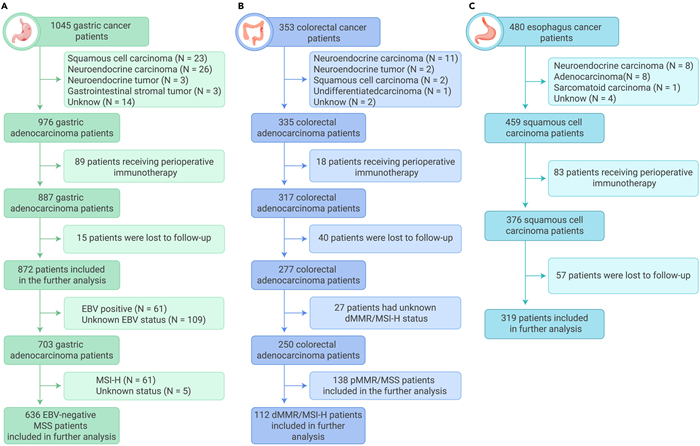
Figure 1.
The inclusion and exclusion procedures for main hypotheses
-
Figure 2.
Survival curves of EBV-negative MSS gastric adenocarcinoma patients
-
Figure 3.
Survival curves of dMMR/MSI-H colorectal adenocarcinoma patients
-
Figure 4.
Survival curves of ESCC patients
-
Figure 5.
The molecular characteristics of the TME of H. pylori–positive and H. pylori–negative gastric adenocarcinoma.
