
Catalytic conversion of mixed polyolefins under mild atmospheric pressure
-
GRAPHICAL ABSTRACT

 DownLoad:
Full size image
DownLoad:
Full size image
-
PUBLIC SUMMARY
- ■ Under atmospheric pressure and mild conditions with O2 or air as the oxidant.
- ■ Compatible with HDPE, LDPE, PS, PP, and mixed polyolefins.
- ■ Economical and recoverable metal catalyst.
-
ABSTRACT
The chemical recycling of polyolefin presents a considerable challenge, especially as upcycling methods struggle with the reality that plastic wastes typically consist of mixtures of polyethylene (PE), polystyrene (PS), and polypropylene (PP). We report a catalytic aerobic oxidative approach for polyolefins upcycling with the corresponding carboxylic acids as the product. This method encompasses three key innovations. First, it operates under atmospheric pressure and mild conditions, using O2 or air as the oxidant. Second, it is compatible with high-density polyethylene, low-density polyethylene, PS, PP, and their blends. Third, it uses an economical and recoverable metal catalyst. It has been demonstrated that this approach can efficiently degrade mixed wastes of plastic bags, bottles, masks, and foam boxes. -

-
REFERENCES
[1] Geyer, R., Jambeck, J.R., and Law, K.L. (2017). Production, use, and fate of all plastics ever made. Sci. Adv. 3(7): e1700782. https://doi.org/10.1126/sciadv.1700782. [2] Nicholson, S.R., Rorrer, N.A., Carpenter, A.C., et al. (2021). Manufacturing energy and greenhouse gas emissions associated with plastics consumption. Joul. 5(3): 673–686. https://doi.org/10.1016/j.joule.2020.12.027. [3] Chamas, A., Moon, H., Zheng, J., et al. (2020). Degradation rates of plastics in the environment. ACS Sustain. Chem. Eng. 8(9): 3494–3511. https://doi.org/10.1021/acssuschemeng.9b06635. [4] Patrício Silva, A.L., Prata, J.C., Walker, T.R., et al. (2021). Increased plastic pollution due to COVID-19 pandemic: challenges and recommendations. Chem. Eng. J. 405: 126683. https://doi.org/10.1016/j.cej.2020.126683. [5] MacLeod, M., Arp, H.P.H., Tekman, M.B., et al. (2021). The global threat from plastic pollution. Scienc. 373(6550): 61–65. https://doi.org/10.1126/science.abg5433. [6] Moens, E.K.C., De Smit, K., Marien, Y.W., et al. (2020). Progress in reaction mechanisms and reactor technologies for thermochemical recycling of poly(methyl methacrylate). Polymer. 12(8): 1667. https://doi.org/10.3390/polym12081667. [7] De Smit, K., Wieme, T., Marien, Y.W., et al. (2022). Multi-scale reactive extrusion modelling approaches to design polymer synthesis, modification and mechanical recycling. React. Chem. Eng. 7(2): 245–263. https://doi.org/10.1039/D1RE00556A. [8] Ceretti, D.V.A., Edeleva, M., Cardon, L., et al. (2023). Molecular pathways for polymer degradation during conventional processing, additive manufacturing, and mechanical recycling. Molecule. 28(5): 2344. https://doi.org/10.3390/molecules28052344. [9] Ellis, L.D., Rorrer, N.A., Sullivan, K.P., et al. (2021). Chemical and biological catalysis for plastics recycling and upcycling. Nat. Catal. 4(7): 539–556. https://doi.org/10.1038/s41929-021-00648-4. [10] Korley, L.T.J., Epps, T.H., Helms, B.A., et al. (2021). Toward polymer upcycling—adding value and tackling circularity. Scienc. 373(6550): 66–69. https://doi.org/10.1126/science.abg4503. [11] Kosloski-Oh, S.C., Wood, Z.A., Manjarrez, Y., et al. (2021). Catalytic methods for chemical recycling or upcycling of commercial polymers. Mater. Horiz. 8(4): 1084–1129. https://doi.org/10.1039/D0MH01286F. [12] Jehanno, C., Alty, J.W., Roosen, M., et al. (2022). Critical advances and future opportunities in upcycling commodity polymers. Natur. 603(7903): 803–814. https://doi.org/10.1038/s41586-021-04350-0. [13] Zhang, M.-Q., Wang, M., Sun, B., et al. (2022). Catalytic strategies for upvaluing plastic wastes. Che. 8(11): 2912–2923. https://doi.org/10.1016/j.chempr.2022.08.004. [14] Partenheimer, W. (2003). Valuable oxygenates by aerobic oxidation of polymers using metal/bromide homogeneous catalysts. Catal. Toda. 81(2): 117–135. https://doi.org/10. 1016/S0920-5861(03)00124-X. [15] Jing, Y., Wang, Y., Furukawa, S., et al. (2021). Towards the circular economy: converting aromatic plastic waste back to arenes over a Ru/Nb2O5 catalyst. Angew. Chem. Int. Ed. 60(10): 5527–5535. https://doi.org/10.1002/anie.202011063. [16] Pifer, A. and Sen, A. (1998). Chemical recycling of plastics to useful organic compounds by oxidative degradation. Angew. Chem. Int. Ed. 37(23): 3306–3308. https://doi.org/10.1002/(SICI)1521-3773(19981217)37:23<3306::AID-ANIE3306>3.0.CO;2-B. [17] Bäckström, E., Odelius, K., and Hakkarainen, M. (2017). Trash to treasure: microwave-assis- € ted conversion of polyethylene to functional chemicals. Ind. Eng. Chem. Res. 56(50): 14814–14821. https://doi.org/10.1021/acs.iecr.7b04091. [18] Bäckström, E., Odelius, K., and Hakkarainen, M. (2019). Designed from recycled: turning poly- € ethylene waste to covalently attached polylactide plasticizers. ACS Sustain. Chem. Eng. 7(12): 11004–11013. https://doi.org/10.1021/acssuschemeng.9b02092. [19] Xu, Z., Munyaneza, N.E., Zhang, Q., et al. (2023). Chemical upcycling of polyethylene, polypropylene, and mixtures to high-value surfactants. Scienc. 381(6658): 666–671. https://doi.org/10.1126/science.adh0993. [20] Anuar Sharuddin, S.D., Abnisa, F., Wan Daud, W.M.A., et al. (2016). A review on pyrolysis of plastic wastes. Energy Convers. Manag. 115: 308–326. https://doi.org/10.1016/j.enconman.2016.02.037. [21] Al-Salem, S.M., Antelava, A., Constantinou, A., et al. (2017). A review on thermal and catalytic pyrolysis of plastic solid waste (PSW). J. Environ. Manag. 197: 177–198. https://doi.org/10.1016/j.jenvman.2017.03.084. [22] Munir, D., Irfan, M.F., and Usman, M.R. (2018). Hydrocracking of virgin and waste plastics: A detailed review. Renew. Sustain. Energy Rev. 90: 490–515. https://doi.org/10.1016/j.rser.2018.03.034. [23] Liu, S., Kots, P.A., Vance, B.C., et al. (2021). Plastic waste to fuels by hydrocracking at mild conditions. Sci. Adv. 7(17): eabf8283. https://doi.org/10.1126/sciadv.abf8283. [24] Hackler, R.A., Lamb, J.V., Peczak, I.L., et al. (2022). Effect of macro- and microstructures on catalytic hydrogenolysis of polyolefins. Macromolecule. 55(15): 6801–6810. https://doi.org/10.1021/acs.macromol.2c00805. [25] Chen, S., Tennakoon, A., You, K.-E., et al. (2023). Ultrasmall amorphous zirconia nanoparticles catalyse polyolefin hydrogenolysis. Nat. Catal. 6(2): 161–173. https://doi.org/10.1038/s41929-023-00910-x. [26] Lee, W.-T., Bobbink, F.D., van Muyden, A.P., et al. (2021). Catalytic hydrocracking of synthetic polymers into grid-compatible gas streams. Cell Rep. Phys. Sci. 2(2): 100332. https://doi.org/10.1016/j.xcrp.2021.100332. [27] Wu, X., Tennakoon, A., Yappert, R., et al. (2022). Size-controlled nanopticles embedded in a mesoporous architecture leading to efficient and selective hydrogenolysis of polyolefins. J. Am. Chem. Soc. 144(12): 5323–5334. https://doi.org/10.1021/jacs.1c11694. [28] Zichittella, G., Ebrahim, A.M., Zhu, J., et al. (2022). Hydrogenolysis of polyethylene and polypropylene into propane over cobalt-based catalysts. JACS A. 2(10): 2259–2268. https://doi.org/10.1021/jacsau.2c00402. [29] Tennakoon, A., Wu, X., Paterson, A.L., et al. (2020). Catalytic upcycling of high-density polyethylene via a processive mechanism. Nat. Catal. 3(11): 893–901. https://doi.org/10.1038/s41929-020-00519-4. [30] Wang, K., Jia, R., Cheng, P., et al. (2023). Highly selective catalytic oxi-upcycling of polyethylene to aliphatic dicarboxylic acid under a mild hydrogen-free process. Angew. Chem. Int. Ed. 62(29): e202301340. https://doi.org/10.1002/anie.202301340. [31] Jia, X., Qin, C., Friedberger, T., et al. (2016). Efficient and selective degradation of polyethylenes into liquid fuels and waxes under mild conditions. Sci. Adv. 2(6): e1501591. https://doi.org/10.1126/sciadv.1501591. [32] Ellis, L.D., Orski, S.V., Kenlaw, G.A., et al. (2021). Tandem heterogeneous catalysis for polyethylene depolymerization via an olefin-intermediate process. ACS Sustain. Chem. Eng. 9(2): 623–628. https://doi.org/10.1021/acssuschemeng.0c07612. [33] Zhang, F., Zeng, M., Yappert, R.D., et al. (2020). Polyethylene upcycling to long-chain alkylaromatics by tandem hydrogenolysis/aromatization. Scienc. 370(6515): 437–441. https://doi.org/10.1126/science.abc5441. [34] Li, H., Wu, J., Jiang, Z., et al. (2023). Hydroformylation of pyrolysis oils to aldehydes andalcohols from polyolefin waste. Scienc. 381(6658): 660–666. https://doi.org/10.1126/science.adh1853. [35] Kanbur, U., Zang, G., Paterson, A.L., et al. (2021). Catalytic carbon-carbon bond cleavage and carbon-element bond formation give new life for polyolefins as biodegradable surfactants. Che. 7(5): 1347–1362. https://doi.org/10.1016/j.chempr.2021.03.007. [36] Fazekas, T.J., Alty, J.W., Neidhart, E.K., et al. (2022). Diversification of aliphatic C–H bonds in small molecules and polyolefins through radical chain transfer. Scienc. 375(6580): 545–550. https://doi.org/10.1126/science.abh4308. [37] Conk, R.J., Hanna, S., Shi, J.X., et al. (2022). Catalytic deconstruction of waste polyethylene with ethylene to form propylene. Scienc. 377(6614): 1561–1566. https://doi.org/10.1126/science.add1088. [38] Wang, N.M., Strong, G., DaSilva, V., et al. (2022). Chemical recycling of polyethylene by tandem catalytic conversion to propylene. J. Am. Chem. Soc. 144(40): 18526–18531. https://doi.org/10.1021/jacs.2c07781. [39] Jie, X., Li, W., Slocombe, D., et al. (2020). Microwave-initiated catalytic deconstruction of plastic waste into hydrogen and high-value carbons. Nat. Catal. 3(11): 902–912. https:c.org/10.1038/s41929-020-00518-5. [40] Jiao, X., Zheng, K., Chen, Q., et al. (2020). Photocatalytic conversion of waste plastics into C2 fuels under simulated natural environment conditions. Angew. Chem. Int. Ed. 59(36): 15497–15501. https://doi.org/10.1002/anie.201915766. [41] Rabot, C., Chen, Y., Bijlani, S., et al. (2023). Conversion rate of polyethylenes into fungal secondary metabolites. Angew. Chem. Int. Ed. 62(4): e202214609. https://doi.org/10.1002/anie.202214609. [42] Oh, S. and Stache, E.E. (2022). Chemical upcycling of commercial polystyrene via catalystcontrolled photooxidation. J. Am. Chem. Soc. 144(13): 5745–5749. https://doi.org/10. 1021/jacs.2c01411. [43] Huang, Z., Shanmugam, M., Liu, Z., et al. (2022). Chemical recycling of polystyrene to valuable chemicals via selective acid-catalyzed aerobic oxidation under visible light. J. Am. Chem. Soc. 144(14): 6532–6542. https://doi.org/10.1021/jacs.2c01410. [44] Li, T., Vijeta, A., Casadevall, C., et al. (2022). Bridging plastic recycling and organic catalysis: photocatalytic deconstruction of polystyrene via a C–H oxidation pathway. ACS Catal. 12(14): 8155–8163. https://doi.org/10.1021/acscatal.2c02292. [45] Qin, Y., Zhang, T., Ching, H.V., et al. (2022). Integrated strategy for the synthesis of aromatic building blocks via upcycling of real-life plastic wastes. Che. 8(9): 2472–2484. https://doi.org/10.1016/j.chempr.2022.06.002. [46] Cao, R., Zhang, M.-Q., Hu, C., et al. (2022). Catalytic oxidation of polystyrene to aromatic oxygenates over a graphitic carbon nitride catalyst. Nat. Commun. 13(1): 4809. https://doi.org/10.1038/s41467-022-32510-x. [47] Zhang, G., Zhang, Z., and Zeng, R. (2021). Photoinduced FeCl3-catalyzed alkyl aromatics oxidation toward degradation of polystyrene at room temperature. Chin. J. Chem. 39(12): 3225–3230. https://doi.org/10.1002/cjoc.202100420. [48] Wang, M., Wen, J., Huang, Y., et al. (2021). Selective degradation of styrene-related plastics catalyzed by iron under visible light. ChemSusChe. 14(22): 5049–5056. https://doi.org/10.1002/cssc.202101762. [49] Meng, J., Zhou, Y., Li, D., et al. (2023). Degradation of plastic wastes to commercial chemicals and monomers under visible light. Sci. Bull. 68(14): 1522–1530. https://doi.org/10. 1016/j.scib.2023.06.024. [50] Urgoitia, G., Herrero, M.T., and SanMartin, R. (2022). Metal-catalyzed, photo-assisted selective transformation of tertiary alkylbenzenes and polystyrenes into carbonyl compounds. ChemSusChe. 15(17): e202200940. https://doi.org/10.1002/cssc.202200940. [51] Zhang, W., Kim, S., Wahl, L., et al. (2023). Low-temperature upcycling of polyolefins into liquid alkanes via tandem cracking-alkylation. Scienc. 379(6634): 807–811. https://doi.org/10. 1126/science.ade7485. [52] Sullivan, K.P., Werner, A.Z., Ramirez, K.J., et al. (2022). Mixed plastics waste valorization through tandem chemical oxidation and biological funneling. Scienc. 378(6616): 207–211. https://doi.org/10.1126/science.abo4626. [53] Qiu, X., Sang, Y., Wu, H., et al. (2021). Cleaving arene rings for acyclic alkenylnitrile synthesis. Natur. 597(7874): 64–69. https://doi.org/10.1038/s41586-021-03801-y. [54] Liu, M., Zhang, Z., Yan, J., et al. (2020). Aerobic oxidative cleavage and esterification of C(OH)–C bonds. Che. 6(12): 3288–3296. https://doi.org/10.1016/j.chempr.2020.09.006. [55] Smaligo, A.J., Swain, M., Quintana, J.C., et al. (2019). Hydrodealkenylative C(sp3)–C(sp2) bond fragmentation. Scienc. 364(6441): 681–685. https://doi.org/10.1126/science.aaw4212. [56] Roque, J.B., Kuroda, Y., Göttemann, L.T., et al. (2018). Deconstructive fluorination of cyclic amines by carbon-carbon cleavage. Scienc. 361(6398): 171–174. https://doi.org/10.1126/science.aat6365. [57] Reisenbauer, J.C., Green, O., Franchino, A., et al. (2022). Late-stage diversification of indole skeletons through nitrogen atom insertion. Scienc. 377(6610): 1104–1109. https://doi.org/10.1126/science.add1383. [58] Xu, Y., Qi, X., Zheng, P., et al. (2019). Deacylative transformations of ketones via aromatization-promoted C–C bond activation. Natur. 567(7748): 373–378. https://doi.org/10.1038/ s41586-019-0926-8. [59] Woo, J., Christian, A.H., Burgess, S.A., et al. (2022). Scaffold hopping by net photochemical carbon deletion of azaarenes. Scienc. 376(6592): 527–532. https://doi.org/10.1126/science.abo4282. [60] Rahimi, A., Ulbrich, A., Coon, J.J., et al. (2014). Formic-acid-induced depolymerization of oxidized lignin to aromatics. Natur. 515(7526): 249–252. https://doi.org/10.1038/nature13867. [61] Hahladakis, J.N., Velis, C.A., Weber, R., et al. (2018). An overview of chemical additives present in plastics: migration, release, fate and environmental impact during their use, disposal and recycling. J. Hazard Mater. 344: 179–199. https://doi.org/10.1016/j.jhazmat.2017.10.014. [62] Ilton, E.S., Post, J.E., Heaney, P.J., et al. (2016). XPS determination of Mn oxidation states in Mn (hydr)oxides. Appl. Surf. Sci. 366: 475–485. https://doi.org/10.1016/j.apsusc.2015.12.159. [63] Biesinger, M.C., Payne, B.P., Grosvenor, A.P., et al. (2011). Resolving surface chemical states in XPS analysis of first row transition metals, oxides and hydroxides: Cr, Mn, Fe, Co and Ni. Appl. Surf. Sci. 257(7): 2717–2730. https://doi.org/10.1016/j.apsusc.2010.10.051. [64] Xu, T., Li, G., and Zhao, L. (2018). Ni-Co-S/Co(OH)2 nanocomposite for high energy density all-solid-state asymmetric supercapacitors. Chem. Eng. J. 336: 602–611. https://doi.org/10.1016/j.cej.2017.12.065. [65] Reed, G.H., Leigh, J.S., Jr., et al. (1971). Electron paramagnetic relaxation and EPR line shapes of manganous ion complexes in aqueous solutions. Frequency and ligand dependence. J. Chem. Phys. 55(7): 3311–3316. https://doi.org/10.1063/1.1676582. [66] Partenheimer, W. (2001). The structure of metal/bromide catalysts in acetic acid/water mixtures and its significance in autoxidation. J. Mol. Catal. A-Chem. 174(1): 29–33. https://doi.org/10.1016/S1381-1169(01)00169-8. [67] Partenheimer, W. (1995). Methodology and scope of metal/bromide autoxidation of hydrocarbons. Catal. Toda. 23(2): 69–158. https://doi.org/10.1016/0920-5861(94)00138-R. [68] Maity, A., Hyun, S.-M., and Powers, D.C. (2018). Oxidase catalysis via aerobically generated hypervalent iodine intermediates. Nat. Chem. 10(2): 200–204. https://doi.org/10.1038/ nchem.2873. [69] Larkin, D.R. (1990). The role of catalysts in the air oxidation of aliphatic aldehydes. J. Org. Chem. 55(5): 1563–1568. https://doi.org/10.1021/jo00292a035. -
ABOUT THIS ARTICLE
Cite this article:
Binzhi Zhao, Hui Tan, Jie Yang, Xiaohui Zhang, Zidi Yu, Hanli Sun, Jialiang Wei, Xinyi Zhao, Yufeng Zhang, Lili Chen, Dali Yang, Jin Deng, Yao Fu, Zheng Huang, Ning Jiao. Catalytic conversion of mixed polyolefins under mild atmospheric pressure[J]. The Innovation, 2024, 5(2). https://doi.org/10.1016/j.xinn.2024.100586
Welcome!
To request copyright permission to republish or share portions of our works, please visit Copyright Clearance Center's (CCC) Marketplace website at marketplace.copyright.com.
Export File
Citation
Binzhi Zhao, Hui Tan, Jie Yang, Xiaohui Zhang, Zidi Yu, Hanli Sun, Jialiang Wei, Xinyi Zhao, Yufeng Zhang, Lili Chen, Dali Yang, Jin Deng, Yao Fu, Zheng Huang, Ning Jiao. Catalytic conversion of mixed polyolefins under mild atmospheric pressure[J]. The Innovation, 2024, 5(2). https://doi.org/10.1016/j.xinn.2024.100586

Format
Content

-
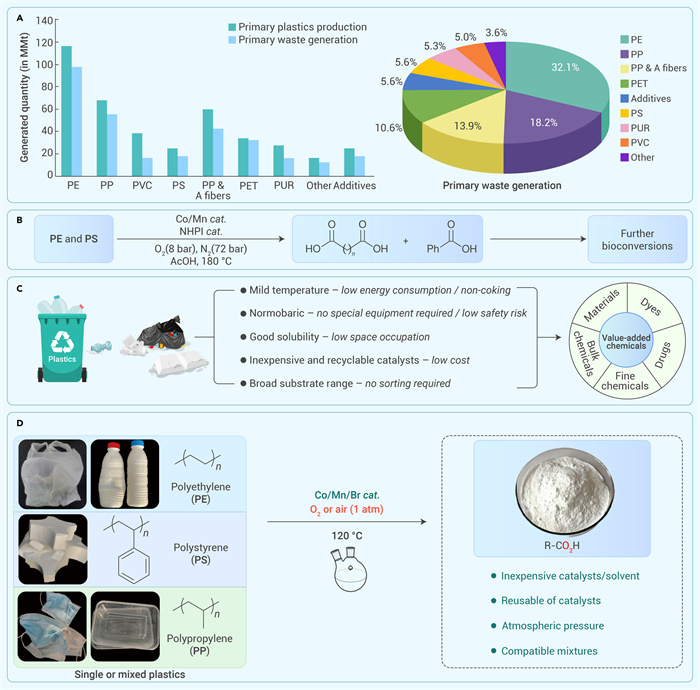
Figure 1.
Current situation of plastics and degradation strategies
-
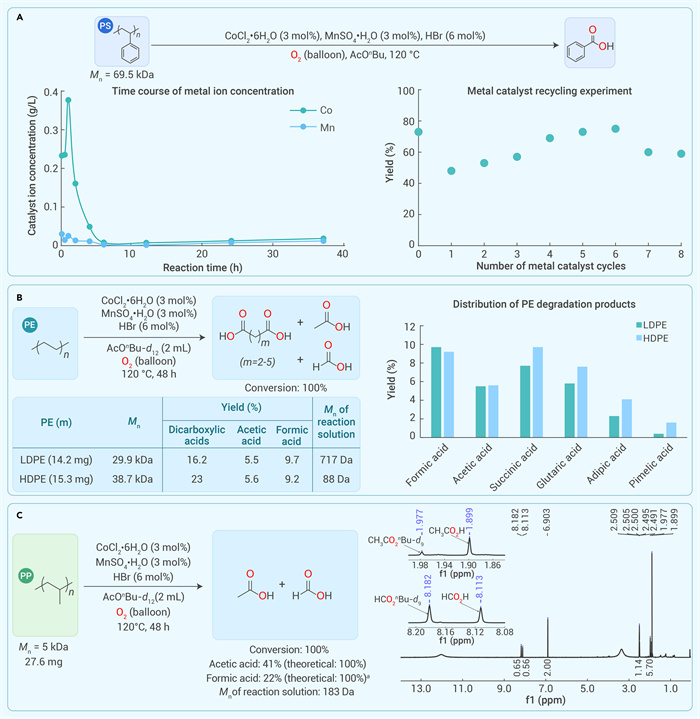
Figure 2.
Degradation of polyolefins
-
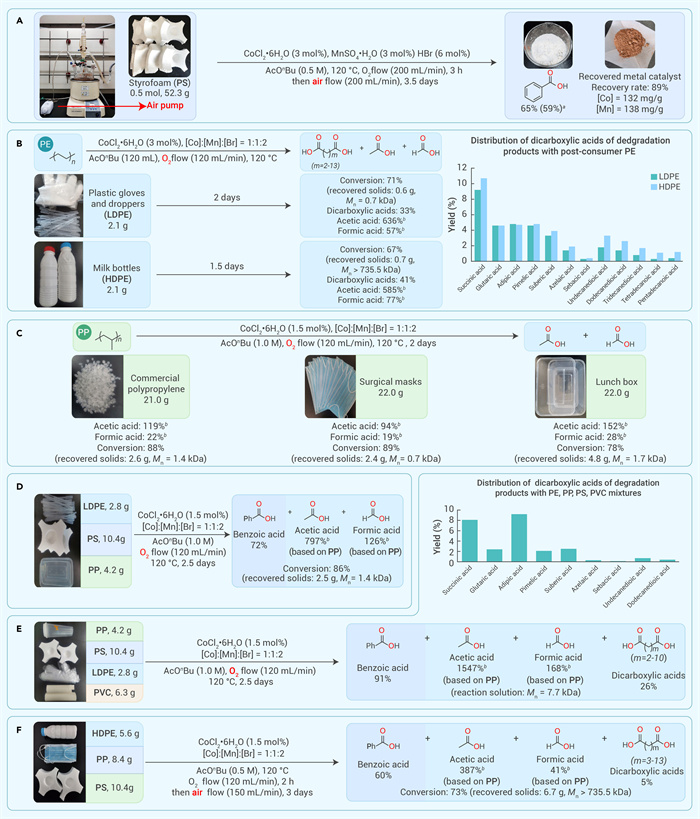
Figure 3.
Practical application (gram scale)
-
Figure 4.
Recovered metal catalyst characterization
-
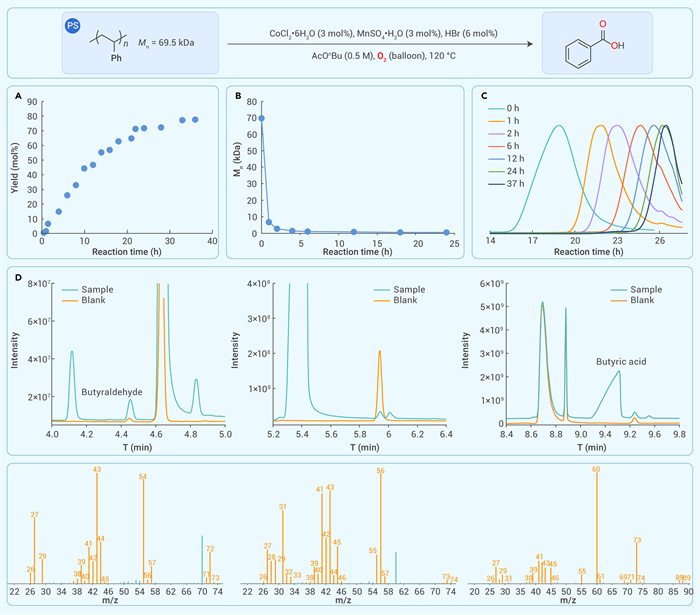
Figure 5.
Reaction process investigation
