
A Model-Based EV Driving Range Assessment with Genetic-Algorithm-Optimized Motor Waste Heat Recovery Strategies
-
GRAPHICAL ABSTRACT
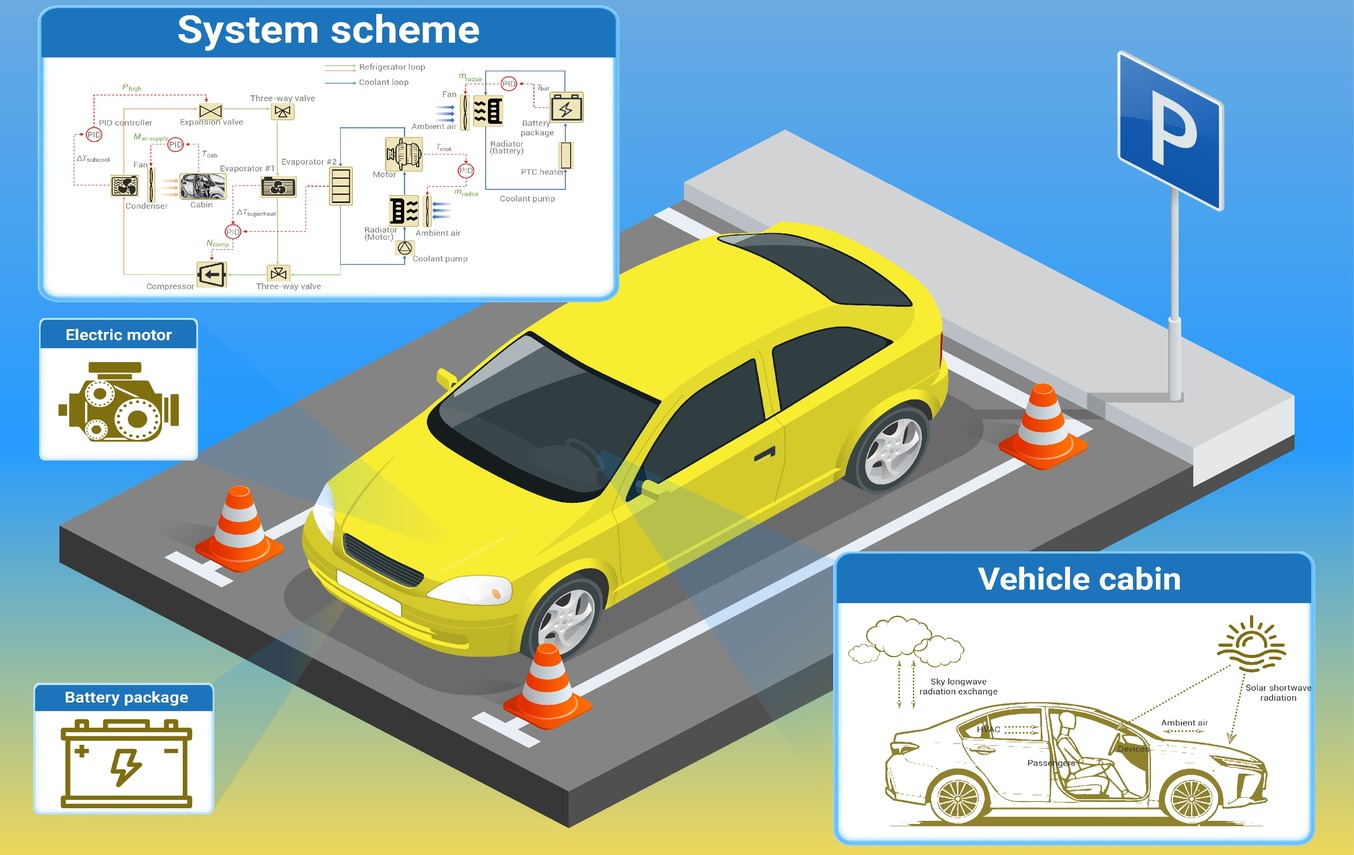
 DownLoad:
Full size image
DownLoad:
Full size image
-
PUBLIC SUMMARY
-
A plug-and-play vehicle-thermal co-simulation platform assesses TMS impacts.
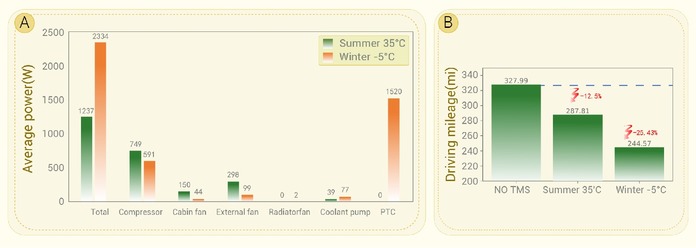
TMS (Thermal Management System) cuts EV range 12–16% in summer, 25–31% in winter.
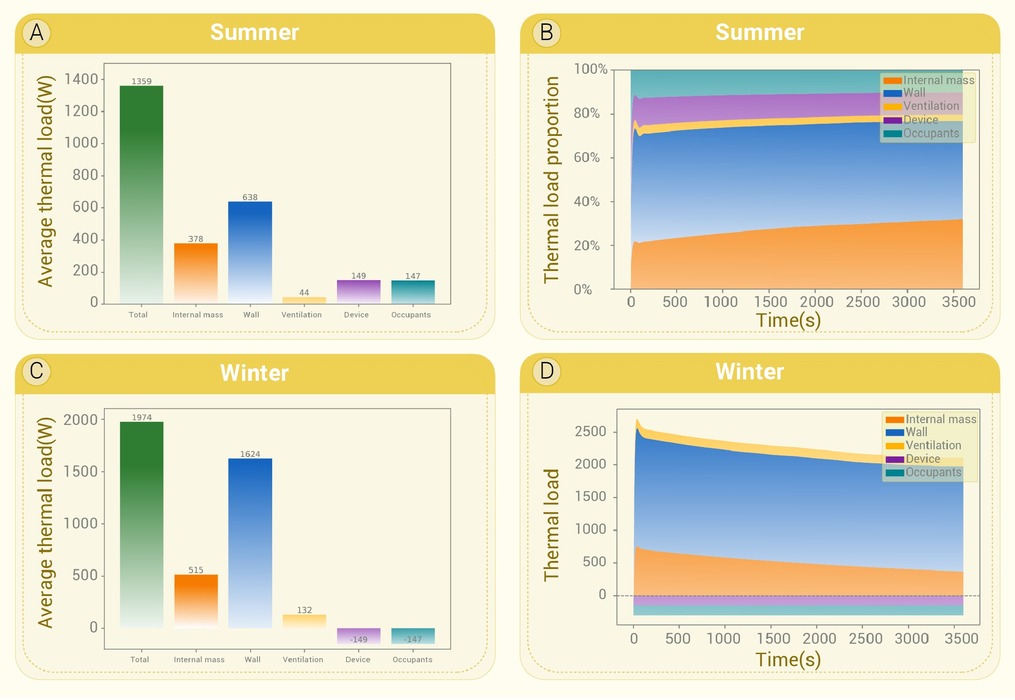
Cabin shell heat load dominates year-round; >80% in winter drives heat pump use.
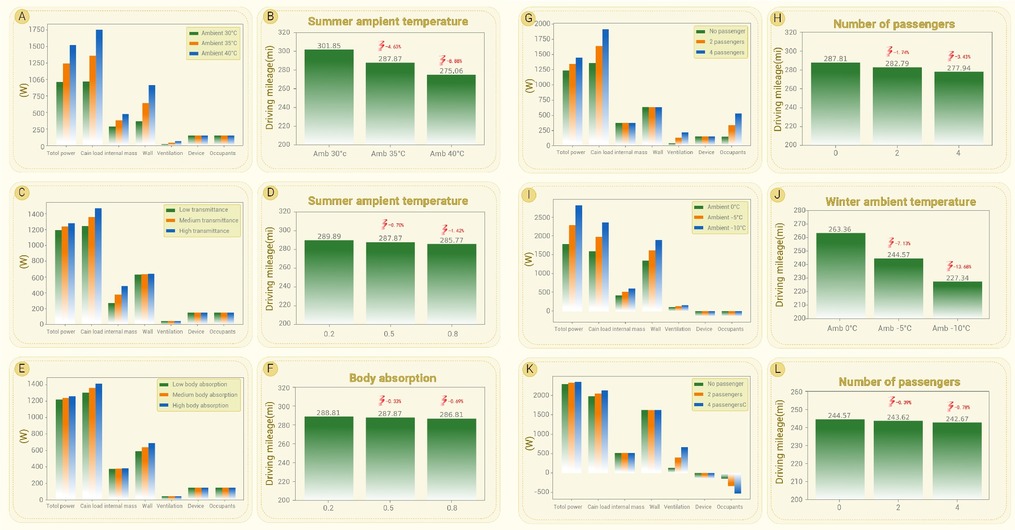
Range varies near-linearly with ambient, occupants, absorptivity, transmittivity.
WHR (Waste Heat Recovery) saves more in steady state; S1 outperforms S2; GA guides tuning.
-
-
ABSTRACT
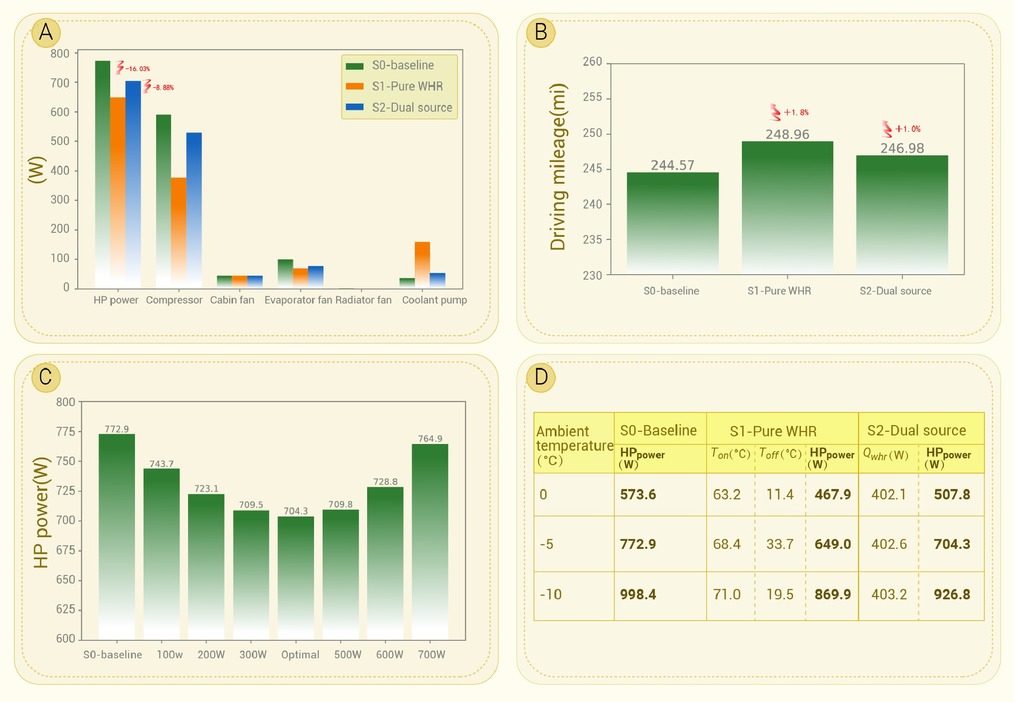
This study develops a coupled vehicle-thermal management simulation platform integrating FASTSim dynamics, reduced-order thermal models, and an R134a air-source heat pump (ASHP) to evaluate the impact of thermal management system (TMS) on EV energy consumption and optimize motor waste heat recovery (WHR) in winter. Simulation results under the WLTP cycle show that TMS activation reduces driving range by 12% to 16% in summer and 25% to 31% in winter, with cabin envelope heat load being the dominant factor (>80% in winter) and ambient temperature the most influential external parameter. Three heating modes are compared: S0 (pure ASHP), S1 (on-off WHR controlled by Ton/Toff), and S2 (dual-source WHR regulated by Qwhr). Using genetic algorithm (GA) to minimize average TMS power under hard constraints, optimal S1 and S2 strategies at −5°C reduce heat pump energy consumption (excluding battery PTC) by 16% and 9% respectively versus S0, corresponding to range gains of 1.8% and 1.0%. Immediate heat recovery after cold start is suboptimal; S1 requires delayed activation with sufficient hysteresis, while S2 exhibits a clear Qwhr trade-off. Overall winter energy savings are constrained by dominant battery PTC consumption during warm-up, becoming more significant during steady-state operation. These findings provide quantitative insights for WHR parameter tuning and strategy mapping based on operational conditions. -

-
REFERENCES
[1] Liu W., Placke T. and Chau K.T. (2022). Overview of batteries and battery management for electric vehicles. Energy Rep. 8:4058−4084. DOI:10.1016/j.egyr.2022.03.019 [2] Li Y., Li X. and Jenn A. (2022). Evaluating the emission benefits of shared autonomous electric vehicle fleets: A case study in California. Appl. Energy 323:119638. DOI:10.1016/j.apenergy.2022.119638 [3] Xu Y., Zhang H., Yang Y., et al. (2023). Optimization of energy management strategy for extended range electric vehicles using multi-island genetic algorithm. J. Energy Storage 61:106802. DOI:10.1016/j.est.2023.106802 [4] Zhang G., Zou H., Qin F., et al. (2017). Investigation on an improved heat pump AC system with the view of return air utilization and anti-fogging for electric vehicles. Appl. Therm. Eng. 115:726−735. DOI:10.1016/j.applthermaleng.2016.12.138 [5] Vaz W., Nandi A.K.R., Landers R.G., et al. (2015). Electric vehicle range prediction for constant speed trip using multi-objective optimization. J. Power Sources 275:435−446. DOI:10.1016/j.jpowsour.2014.11.093 [6] Vatanparvar K., Faezi S., Burago I., et al. (2018). Extended range electric vehicle with driving behavior estimation in energy management. IEEE Trans. Smart Grid 10:2959−2968. DOI:10.1109/TSG.2018.2799264 [7] Zhao Y., Dan D., Zheng S., et al. (2023). A two-stage eco-cooling control strategy for electric vehicle thermal management system considering multi-source information fusion. Energy 267:126606. DOI:10.1016/j.energy.2023.126606 [8] Lahlou A., Ossart F., Boudard E., et al. (2018). A dynamic programming approach for thermal comfort control in electric vehicles. IEEE Veh. Power Propuls. Conf. (VPPC):1–6. DOI:10.1109/VPPC.2018.8605022 [9] Marshall G.J., Mahony C.P., Rhodes M.J., et al. (2019). Thermal management of vehicle cabins, external surfaces, and onboard electronics: An overview. Engineering 5:954−969. DOI:10.1016/j.eng.2019.02.009 [10] Zhou X., Lai D. and Chen Q. (2019). Experimental investigation of thermal comfort in a passenger car under driving conditions. Build. Environ. 149:109−119. DOI:10.1016/j.buildenv.2018.12.022 [11] Tsutsumi H., Hoda Y., Tanabe S.I., et al. (2007). Effect of car cabin environment on driver’s comfort and fatigue. SAE Trans.:335–346. DOI:10.4271/2007-01-0444 [12] Lei S., Xin S. and Liu S. (2022). Separate and integrated thermal management solutions for electric vehicles: A review. J. Power Sources 550:232133. DOI:10.1016/j.jpowsour.2022.232133 [13] Zhang Z., Wang J., Feng X., et al. (2018). The solutions to electric vehicle air conditioning systems: A review. Renew. Sustain. Energy Rev. 91:443−463. DOI:10.1016/j.rser.2018.04.005 [14] Qin X., Zhang Y., Wang D., et al. (2022). System development and simulation investigation on a novel compression/ejection transcritical CO2 heat pump system for simultaneous cooling and heating. Energy Convers. Manag. 259:115579. DOI:10.1016/j.enconman.2022.115579 [15] Ibrahim S. and Mehta R.C. (2018). An investigation of air flow and thermal comfort of modified conventional car cabin using computational fluid dynamics. J. Appl. Fluid Mech. 11:141−150. DOI:10.29252/jafm.11.01.27935 [16] Rugh J. and Farrington R. (2007). Vehicle ancillary load reduction project close-out report: An overview of the task and a compilation of the research results. NREL Tech. Rep. 540:42454. DOI:10.2172/922542 [17] Shelly T.J., Weibel J.A., Ziviani D., et al. (2021). Comparative analysis of battery electric vehicle thermal management systems under long-range drive cycles. Appl. Therm. Eng. 198:117506. DOI:10.1016/j.applthermaleng.2021.11750 [18] Mao Y., Wang J. and Li J. (2018). Experimental and numerical study of air flow and temperature variations in an electric vehicle cabin during cooling and heating. Appl. Therm. Eng. 137:356−367. DOI:10.1016/j.applthermaleng.2018.03.091 [19] Zhang H., Dai L., Xu G., et al. (2009). Studies of air-flow and temperature fields inside a passenger compartment for improving thermal comfort and saving energy Part I: Test/numerical model and validation. Appl. Therm. Eng. 29:2022−2027. DOI:10.1016/j.applthermaleng.2008.10.018 [20] Dadour I.R., Almanjahie I., Fowkes N.D., et al. (2011). Temperature variations in a parked vehicle. Forensic Sci. Int. 207:205−211. DOI:10.1016/j.forsciint.2010.10.009 [21] Warey A., Kaushik S., Khalighi B., et al. (2020). Data-driven prediction of vehicle cabin thermal comfort: Using machine learning and high-fidelity simulation results. Int. J. Heat Mass Transf. 148:119083. DOI:10.1016/j.ijheatmasstransfer.2019.119083 [22] Lee H., Hwang Y., Song I., et al. (2015). Transient thermal model of passenger car’s cabin and implementation to saturation cycle with alternative working fluids. Energy 90:1859−1868. DOI:10.1016/j.energy.2015.06.121 [23] Horrein L., Bouscayrol A., Lhomme W., et al. (2017). Impact of heating system on the range of an electric vehicle. IEEE Trans. Veh. Technol. 66:4668−4677. DOI:10.1109/TVT.2016.2615095 [24] Penning A.K. and Weibel J.A. (2023). Assessing the influence of glass properties on cabin solar heating and range of an electric vehicle using a comprehensive system model. Appl. Energy 339:120973. DOI:10.1016/j.apenergy.2022.120973 [25] Xu B. and Arjmandzadeh Z. (2023). Parametric study on thermal management system for the range of full (Tesla Model S)/compact-size (Tesla Model 3) electric vehicles. Energy Convers. Manag. 278:116753. DOI:10.1016/j.enconman.2022.116753 [26] Brooker A., Gonder J., Wang L., et al. (2015). FASTSim: A model to estimate vehicle efficiency, cost and performance. SAE Tech. Pap. 1:0973. DOI:10.4271/2015-01-0973 [27] Tian Z., Gu B., Gao W., et al. (2020). Performance evaluation of an electric vehicle thermal management system with waste heat recovery. Appl. Therm. Eng. 169:114976. DOI:10.1016/j.applthermaleng.2020.114976 [28] Lee S., Chung Y., Kim S., et al. (2023). Predictive optimization method for the waste heat recovery strategy in an electric vehicle heat pump system. Appl. Energy 333:120572. DOI:10.1016/j.apenergy.2022.120572 [29] Liu X., Zhang F., Zhang Z., et al. (2024). A three-heat source segmented heating control strategy based on waste heat recovery technology for electric vehicles. Energy Convers. Manag. 300:117932. DOI:10.1016/j.enconman.2024.117932 [30] Xue Q., Li J., Ji H., et al. (2024). Sectionalized heating strategy for electric vehicles based on multi-heat-source integrated thermal management system in cold environments. Appl. Therm. Eng. 257:124451. DOI:10.1016/j.applthermaleng.2024.124451 [31] Lambora A., Gupta K. and Chopra K. (2019). Genetic algorithm—a literature review. 2019 Int. Conf. Mach. Learn. Big Data Cloud Parallel Comput.:380–384. DOI:10.1109/COMITCon.2019.8862255 [32] Torregrosa-Jaime B., Bjurling F., Corberán J.M., et al. (2015). Transient thermal model of a vehicle’s cabin validated under variable ambient conditions. Appl. Therm. Eng. 75:45−53. DOI:10.1016/j.applthermaleng.2014.12.041 [33] Wu J., Jiang F., Song H., et al. (2017). Analysis and validation of transient thermal model for automobile cabin. Appl. Therm. Eng. 122:91−102. DOI:10.1016/j.applthermaleng.2017.04.048 [34] Kolhe M., Adhikari S.K. and Muneer T. (2019). Parked electric car’s cabin heat management using photovoltaic powered ventilation system. Appl. Energy 233:403−411. DOI:10.1016/j.apenergy.2018.10.012 [35] Marcos D., Pino F.J., Bordons C., et al. (2014). The development and validation of a thermal model for the cabin of a vehicle. Appl. Therm. Eng. 66:646−656. DOI:10.1016/j.applthermaleng.2014.02.054 [36] Deng L., Li S., Tang X., et al. (2023). Battery thermal- and cabin comfort-aware collaborative energy management for plug-in fuel cell electric vehicles based on the soft actor-critic algorithm. Energy Convers. Manag. 283:116889. DOI:10.1016/j.enconman.2023.116889 [37] Chang T., Sheu J., Huang J., et al. (2018). Development of a CFD model for simulating vehicle cabin indoor air quality. Transp. Res. Part D Transp. Environ. 62:433−440. DOI:10.1016/j.trd.2018.03.014 [38] Ank M., Sommer A., Abo Gamra K., et al. (2023). Lithium-ion cells in automotive applications: Tesla 4680 cylindrical cell teardown and characterization. J. Electrochem. Soc. 170:120536. DOI:10.1149/1945-7111/ad14d0 [39] Wang Z., Ma J. and Zhang L. (2017). Finite element thermal model and simulation for a cylindrical Li-ion battery. IEEE Access 5:15372−15379. DOI:10.1109/ACCESS.2017.2737480 [40] Han U., Kang H., Song J., et al. (2021). Development of dynamic battery thermal model integrated with driving cycles for EV applications. Energy Convers. Manag. 250:114882. DOI:10.1016/j.enconman.2021.114882 [41] Pozzato G., Allam A., Pulvirenti L., et al. (2023). Analysis and key findings from real-world electric vehicle field data. Joule 7:2035−2053. DOI:10.1016/j.joule.2023.07.009 [42] Kuang X., Li K., Xie Y., et al. (2020). Research on control strategy for a battery thermal management system for electric vehicles based on secondary loop cooling. IEEE Access 8:73475−73493. DOI:10.1109/ACCESS.2020.2987885 -
ABOUT THIS ARTICLE
Cite this article:
Zhao L., Mohebi P. and Wang Z. (2025). A Model-Based EV Driving Range Assessment with Genetic-Algorithm-Optimized Motor Waste Heat Recovery Strategies. Energy Use 1:100005. https://doi.org/10.59717/ipj.energy-use.2025.100005
Welcome!
To request copyright permission to republish or share portions of our works, please visit Copyright Clearance Center's (CCC) Marketplace website at marketplace.copyright.com.

Article Metrics
Relative Articles
Cited by
Export File
Citation
Zhao L., Mohebi P. and Wang Z. (2025). A Model-Based EV Driving Range Assessment with Genetic-Algorithm-Optimized Motor Waste Heat Recovery Strategies. Energy Use 1:100005. https://doi.org/10.59717/ipj.energy-use.2025.100005

Format
Content

-
Figure 1.
Overview of cabin thermal model.
-
Figure 2.
Cabin model validation.
-
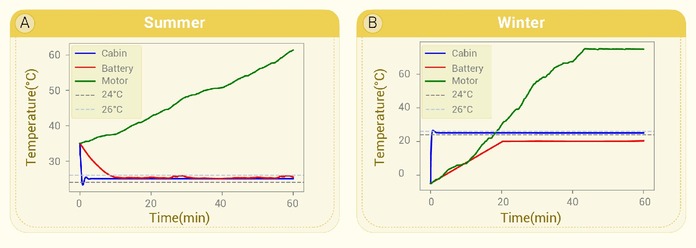
Figure 3.
Temperature simulation results.
-
Figure 4.
Thermal load.
-
Figure 5.
System power simulation results.
-
Figure 6.
Sensitivity analysis of total power consumption, thermal load and driving mileage in summer and winter.
-
Figure 7.
Optimized WHR model.