
Reconfiguring China’s Transmission Framework with Dynamic Storage Sharing for Spatial Power Balance
-
GRAPHICAL ABSTRACT
 DownLoad:
Full size image
DownLoad:
Full size image
-
ABSTRACT
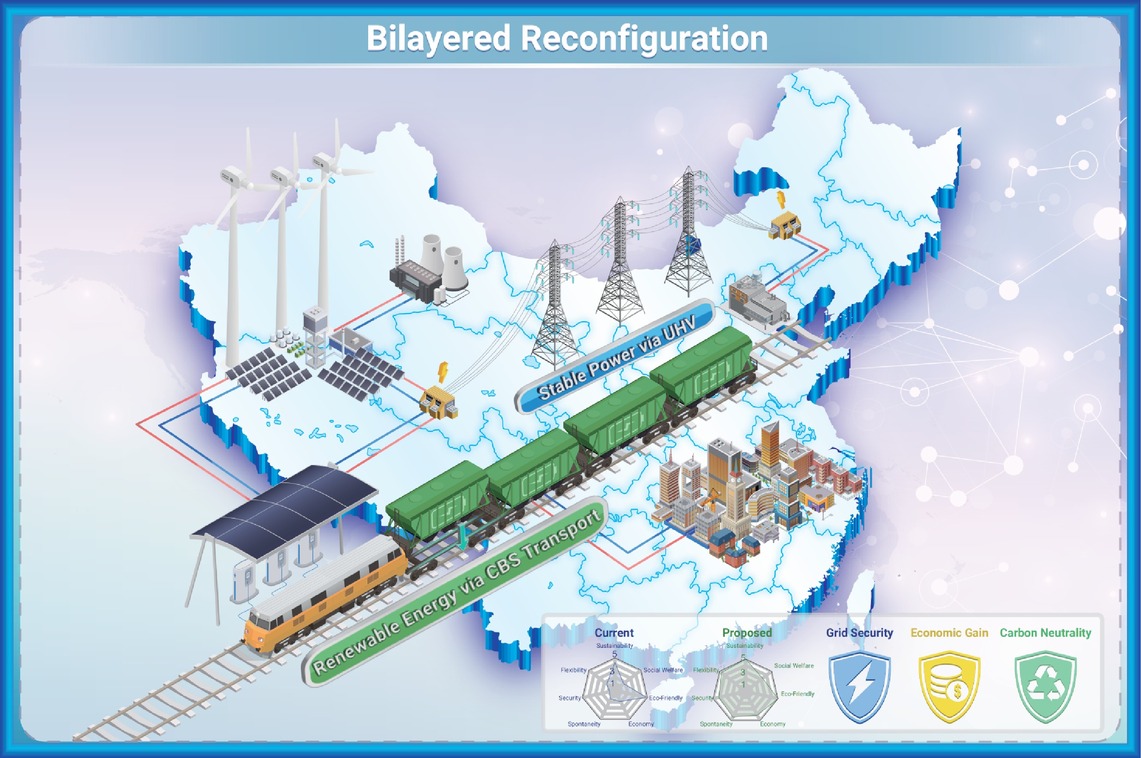
Achieving carbon neutrality has been a demanding task for China, especially with the renewable-induced spatial power mismatch across provinces. Current solutions including storage co-deployment and Ultra-high-voltage (UHV) line construction impose exorbitant costs while still being insufficient in capacity, casting doubts on its long-term sustainability. Herein, we propose a bilayered reconfiguration of the current transmission framework. On the lower layer, stable power is scheduled for transmission via existing UHV lines; on the upper layer, renewable energy is physically stored and scheduled for ground transportation across the provinces via dynamic CBS sharing. CBSs relieve the transmission capacity shortage by 65.6% while achieving full renewable accommodation, meanwhile addressing renewable stochasticity and intermittency. The framework is also economic to all participants, while contributing to environmental protection, social welfare and security. Our proposal sheds light on addressing spatial power imbalance imposed by heavy renewable penetrations, and may enlighten other countries with bulk power transmission needs. -

-
REFERENCES
[1] National Bureau of Statistics of China. China Energy Statistical Yearbook 2023 (China Statistics Press, 2023). [2] China Energy Transformation Outlook 2023 (Energy Research Institute of Chinese Academy of Macroeconomic Research, 2023); https://www.cet.energy/2022/11/12/ china-energy-transformation-outlook-2023-special-report-for-cop27/ [3] He J., Li Z., Zhang X., et al. (2022). Towards carbon neutrality: a study on China's long-term low-carbon transition pathways and strategies. Environ. Sci. Ecotech. 9:100134. DOI:10.1016/j.ese.2021.100134 [4] Wang Y., Guo C., Chen X., et al. (2021). Carbon peak and carbon neutrality in China: Goals, implementation path and prospects. China Geol. 4:720−746. DOI:10.31035/cg2021083 [5] Huang W., Zhang S., Lu X., et al. (2022). Residual coal distribution in China and adaptability evaluation of its resource conditions to underground coal gasification. Sustain. Energy Technol. Assess. 49:101654. DOI:10.1016/j.seta.2021.101654 [6] Yang Q., Huang T., Wang S., et al. (2019). A GIS-based high spatial resolution assessment of large-scale PV generation potential in China. Appl. Energy 247:254−269. DOI:10.1016/j.apenergy.2019.04.005 [7] The power of the new energy systems should be stronger (Xinhua Net, 2023); http://www.xinhuanet.com/energy/20230215/c77384be1bf240979bfd4f2c7d7adcbb/c.html [8] Shu Y. and Chen W. (2018). Research and application of UHV power transmission in China. High Volt. 3:1−13. DOI:10.1049/hve.2018.0003 [9] China's State Grid to invest $22 bln in ultra high voltage power lines -report (Reuters, 2022). [10] Hung D.C., Shah M.R., and Mithulananthan N. (2016). Technical Challenges, Security and Risk in Grid Integration of Renewable Energy. (Jayaweera, D. eds) Springer Cham. DOI:10.1007/978-3-319-30427-4_6. [11] Chawda G.S., Shaik A.G., Shaik M., et al. (2020). Comprehensive review on detection and classification of power quality disturbances in utility grid with renewable energy penetration. IEEE Access 8:146807−146830. DOI:10.1109/ACCESS.2020.3014732 [12] Zhang J., Du K., Liu J., et al. (2023). The economic impact of energy storage co-deployment on renewable energy in China. J. Renew. Sustain. Energy 15:035905. DOI:10.1063/5.0149718 [13] Cole W., Frazier A. W., and Augustine C. (2021). Cost projections for utility-scale battery storage: 2021 update. OSTI. DOI:10.2172/1786976. [14] China on course to hit wind and solar power target five years ahead of time (The Guardian, 2022). https://www.theguardian.com/world/2023/jsun/29/china-wind-solar-power-global-renewable-energy-leader. [15] Yin G. and Duan M. (2022). Pricing the deep peak regulation service of coal-fired power plants to promote renewable energy integration. Appl. Energy 321:119391. DOI:10.1016/j.apenergy.2022.119391 [16] Zhao H.R., Guo S. and Fu L.W. (2014). Review on the costs and benefits of renewable energy power subsidy in China. Renew. Sustain. Energy. Rev. 37:538−549. DOI:10.1016/j.rser.2014.05.061 [17] Yu H., Duan J., Du W., et al. (2017). China's energy storage industry: Develop status, existing problems and countermeasures. Renew. Sustain. Energy. Rev. 71:767−784. DOI:10.1016/j.rser.2016.12.103 [18] Pan G., Gu W., Lu Y., et al. (2020). Optimal planning for electricity-hydrogen integrated energy system considering power to hydrogen and heat and seasonal storage. IEEE Trans. Sustain. Energy 11:2662−2676. DOI:10.1109/TSTE.2020.2970078 [19] Yilmaz H. Ü., Kimbrough S. O., van Dinther C., et al. (2022). Power-to-gas: Decarbonization of the European electricity system with synthetic methane. Appl. Energy 323:119538. DOI:10.1016/j.apenergy.2022.119538 [20] CATL unveils ‘five-year zero degradation’ BESS with 6.25MWh per container (Energy Storage, 2024); https://www.energy-storage.news/catl-unveils-five-year-zero-degradation-bess-with-6-25mwh-per-container/ [21] Introducing Elementa 2: Trina Storage unveils advanced energy storage system powered by Trina's in-house battery cells (Trina Solar, 2024); https://www.trinasolar.com/us/resources/newsroom/introducing_elementa_2 [22] Sunwoda Energy unveils 4.17MWh/5MWh liquid cooling BESS NoahX 2.0 at RE+2023 (Sunwoda Energy, 2023); https://www.sunwodaenergy.com/company-news/sunwoda-energy-unveils-liquid-cooling-bess-noahx-2-0-at-re-2023.html [23] China’s batteries are now cheap enough to power huge shifts (Bloomberg; 2024); https://www.bloomberg.com/news/newsletters/2024-07-09/china-s-batteries-are-now-cheap-enough-to-power-huge-shifts [24] Zhang D., Peng Y., Xu Y., et al. (2022). A high-speed railway network dataset from train operation records and weather data. Sci. Data 9:244. DOI:10.1038/s41597-022-01349-8 [25] Gong T., Li D., Liu Y., et al. (2019). Analysis of marketing strategy of electricity selling companies in the new situation. J. Phys. Conf. Ser. 1187:022043. DOI:10.1088/1742-6596/1187/2/022043 [26] Xie P., Sun F., Wang L., et al. A review on China's energy storage industry under the “Internet Plus” initiative. Int. J. Energy Res. 43:717-741. DOI:10.1002/er.4234. [27] Sun Y., Li Z., Shahidehpour M., et al. (2015). Battery-based energy storage transportation for enhancing power system economics and security. IEEE Trans. Smart Grid 6:2395−2402. DOI:10.1109/TSG.2015.2390211 [28] Pulazza G., Zhang N., Kang C., et al. (2021). Transmission planning with battery-based energy storage transportation for power systems with high penetration of renewable energy. IEEE Trans. Power Syst. 36:4928−4940. DOI:10.1109/TPWRS.2021.3069649 [29] Liu S., Yan J., Yan Y., et al. (2024). Joint operation of mobile battery, power system, and transportation system for improving the renewable energy penetration rate. Appl. Energy 357:122455. DOI:10.1016/j.apenergy.2023.122455 [30] Saboori H. and Jadid S. (2020). Optimal scheduling of mobile utility-scale battery energy storage systems in electric power distribution networks. J. Energy Storage 31:101615. DOI:10.1016/j.est.2020.101615 [31] Moraski J.W., Popovich N.D. and Phadke A.A. (2023). Leveraging rail-based mobile energy storage to increase grid reliability in the face of climate uncertainty. Nat. Energy 8:1−11. DOI:10.1038/s41560-023-01276-x [32] Saboori H., Mehrjerdi H. and Jadid S.Ω. (2022). Mobile battery storage modeling and normal-emergency operation in coupled distribution-transportation networks. IEEE Trans. Sustain. Energy 13:2226−2238. DOI:10.1109/TSTE.2022.3189838 [33] Bai J., Ding T., Jia W., et al. (2024). Battery Charging and Swapping System Involved in Demand Response for Joint Power and Transportation Networks. IEEE Trans. Intell. Transp. Syst. 25:6836−6847. DOI:10.1109/TITS.2023.3346403 [34] National Bureau of Statistics (2023). https://www.stats.gov.cn/gk/. [35] Explainer: The power crunch in China's Sichuan and why it matters (Reuters, 2022); https://www.reuters.com/world/china/power-crunch-chinas-sichuan-why-it-matters-2022-08-26/ [36] Liu C., Xie W., Lao T., et al. (2021). Application of a novel grey forecasting model with time power term to predict China's GDP. Grey Syst. Theory and Appl. 11:343−357. DOI:10.1108/GS-05-2020-0065 [37] Duffner F., Mauler L., Wentker M., et al. (2021). Large-scale automotive battery cell manufacturing: Analyzing strategic and operational effects on manufacturing costs. Int. J. Prod. Econ. 232:107982. DOI:10.1016/j.ijpe.2020.107982 [38] Gonzalez-Salazar M. A., Kirsten T. and Prchlik L. (2018). Review of the operational flexibility and emissions of gas-and coal-fired power plants in a future with growing renewables. Renew. Sustain. Energy. Rev. 82:1497−1513. DOI:10.1016/j.rser.2017.05.278 [39] Wastes from the combustion of coal by electric utility power plants (United States Environmental Protection Agency, 1988); https://www.epa.gov/sites/default/files/2015 -08/documents/coal-rtc.pdf. [40] Han S., Chen H., Long R., et al. (2018). Peak coal in China: A literature review. Resour. Conserv. Recycl. 129:293−306. DOI:10.1016/j.resconrec.2016.08.012 [41] Deng Y., Feng C., E. J., et al. (2018). Effects of different coolants and cooling strategies on the cooling performance of the power lithium ion battery system: A review. Appl. Therm. Eng. 142:10−29. DOI:10.1016/j.applthermaleng.2018.06.043 [42] Commuting by public transportation in the United States: 2019 (American Community Survey Reports, 2019); https://www.census.gov/content/dam/Census/library/publications/2021/acs/acs-48.pdf [43] Yudhistira G., Firdaus M. I. and Agushinta L. (2015). Transportation system in Japan: A literature study. J. Transp. Logist. Manag. JMTranslog. 2:333−352. DOI:10.25292/j.mtl.v2i3.108 [44] Buehler R. and Pucher J. (2012). Demand for public transport in Germany and the USA: An analysis of rider characteristics. Transp. Rev. 32:541−567. DOI:10.1080/01441647.2012.707695 [45] National transmission needs study (United States Department of Energy, 2023); https://www.energy.gov/gdo/national-transmission-needs-study [46] Xu P., Adebayo T.S., Khan K.A., et al. (2024). United States’ 2050 carbon neutrality: Myth or reality. Evaluating the impact of high-tech industries and green electricity. J. Clean. Prod. 440:140855. DOI:10.1016/j.jclepro.2024.140855 [47] Lopez A., Roberts B., Heimiller D., et al. (2012). U.S. renewable energy technical potentials: A GIS-based analysis. Nation. Renew. Energy Lab. https://www.nrel.gov/docs/fy12osti/51946.pdf [48] Freight rail in your state (Association of American Railroads, 2021); https://www.aar.org/data-center/railroads-states/#! [49] Power play: China’s ultra-high voltage technology and global standards (Argonne National Laboratory, 2015); https://www.paulsoninstitute.org/wp-content/uploads/2017/01/PPS_UHV_English_R.pdf. [50] Gurobi Optimizer Reference Manual (Gurobi Optimization, LLC, 2024); https://www.gurobi.com [51] BJ Energy Intl’s Tongliao 2.38 million kW wind power base project kicked off (BJ Energy Intl, 2023); https://www.bjei.com/show-2829.html. [52] NDRC’s announcement on adjusting railway freight costs and improving price mechanisms (National Railway Administration of China, 2015); https://www.nra.gov.cn/xxgk/gkml/ztjg/gfzd/gfxw/zuti/other/201701/t20170105_327715.shtml -
ABOUT THIS ARTICLE
Cite this article:
Liu H., Ding Y. and Hu Q. (2025). Reconfiguring China’s Transmission Framework with Dynamic Storage Sharing for Spatial Power Balance. Energy Use 1:100018. https://doi.org/10.59717/ipj.energy-use.2025.100018
Welcome!
To request copyright permission to republish or share portions of our works, please visit Copyright Clearance Center's (CCC) Marketplace website at marketplace.copyright.com.
Figures(5)
Article Metrics
Relative Articles
Cited by
Export File
Citation
Liu H., Ding Y. and Hu Q. (2025). Reconfiguring China’s Transmission Framework with Dynamic Storage Sharing for Spatial Power Balance. Energy Use 1:100018. https://doi.org/10.59717/ipj.energy-use.2025.100018

Format
Content
-
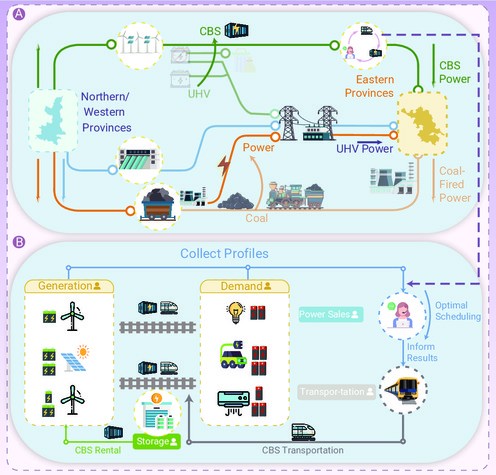
Figure 1.
Reconfiguration of the national power transmission framework for China
-
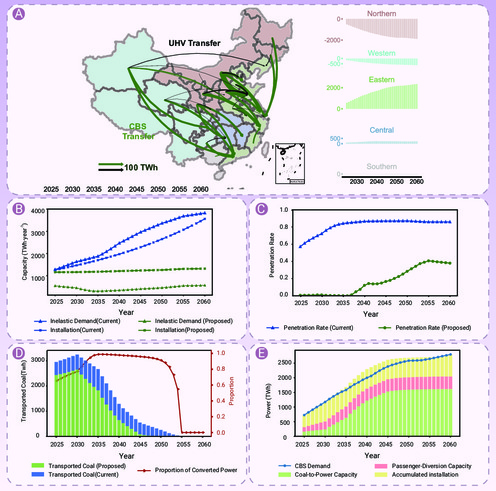
Figure 2.
Changes in the dynamics of cross-provincial power transmission as per the proposed framework
-
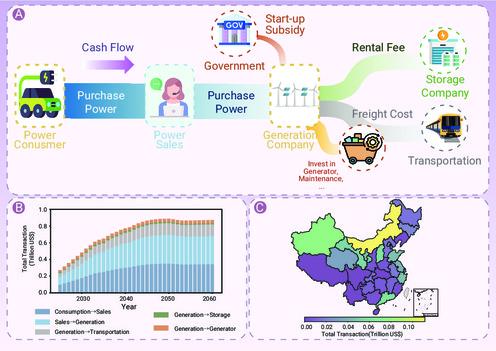
Figure 3.
Details on the proposed business model embedded in the upper layer of the reconfigured framework
-
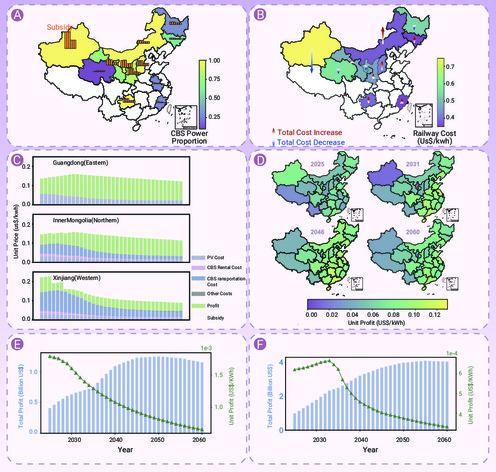
Figure 4.
Economic evaluations of the reconfigured framework across provinces and years
-
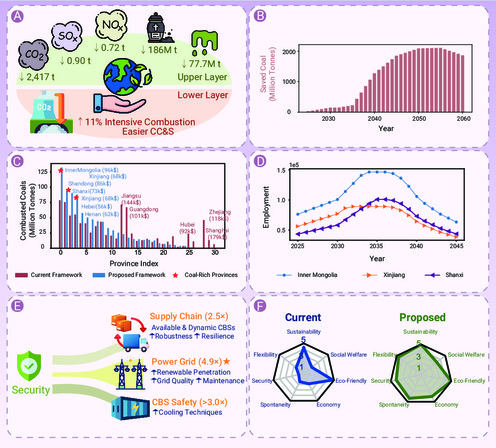
Figure 5.
Evaluations of the proposed power transmission framework, particularly in terms of its contributions to the society