
Data-Driven Methods for Building Solar Potential Evaluation: A Review Across Rooftops and Facades
-
GRAPHICAL ABSTRACT
 DownLoad:
Full size image
DownLoad:
Full size image
-
PUBLIC SUMMARY
-
Building solar potential assessment has evolved from statistical models to physics-deep learning hybrids.
Facades offer solar potential comparable to rooftops but remain significantly understudied.
Several studies achieved either large spatial scale or good temporal/spatial detail, but rarely all simultaneously.
Validation data, benchmark datasets, and scalable high-resolution methods remain critical gaps.
-
-

-
REFERENCES
[1] International Energy Agency. (2024). Energy Efficiency 2024. International Energy Agency. [2] United Nations Environment Programme. (2022). 2022 Global Status Report for Buildings and Construction. United Nations Environment Programme. DOI:10.59327/uneptd.2022.buildings [3] United Nations. (2019). World Urbanization Prospects: The 2018 Revision. UN Department of Economic and Social Affairs. DOI:10.18356/9789211483516 [4] International Energy Agency. (2024). World Energy Outlook 2024. International Energy Agency. DOI:10.1787/weo-2024-en [5] International Energy Agency. (2021). Net Zero by 2050: A Roadmap for the Global Energy Sector. International Energy Agency. DOI:10.1787/9789264364044-en [6] International Energy Agency. (2021). Net Zero by 2050: A Roadmap for the Global Energy Sector. International Energy Agency. DOI:10.1787/9789264364044-en; International Energy Agency. (2024). World Energy Outlook 2024. International Energy Agency. DOI:10.1787/weo-2024-en [7] European Commission. (2022). EU Solar Energy Strategy. COM(2022) 221 final. European Commission. [8] Karteris M., Slini T., Papadopoulos A.M. (2013). Urban solar energy potential in Greece: A statistical calculation model of suitable built roof areas for photovoltaics. Energy Build. 62:459−468. DOI:10.1016/j.enbuild.2013.03.022 [9] Assouline D., Mohajeri N., Scartezzini J.L. (2017). Quantifying rooftop photovoltaic solar energy potential: A machine learning approach. Sol. Energy 141:278−296. DOI:10.1016/j.solener.2016.12.022 [10] Walch A., Castello R., Mohajeri N., Scartezzini J.L. (2020). Big data mining for the estimation of hourly rooftop photovoltaic potential and its uncertainty. Appl. Energy 262:114404. DOI:10.1016/j.apenergy.2020.114404 [11] Molnar G., Cabeza L.F., Chatterjee S., Urge-Vorsatz D. (2024). Modelling the building-related photovoltaic power production potential in the light of the EU's Solar Rooftop Initiative. Appl. Energy 360:122708. DOI:10.1016/j.apenergy.2024.122708 [12] Liu Z., Liu X., Zhang H., Yan D. (2023). Integrated physical approach to assessing urban-scale building photovoltaic potential at high spatiotemporal resolution. J. Clean. Prod. 388:135979. DOI:10.1016/j.jclepro.2023.135979 [13] Yu Q., Dong K., Guo Z., Xu J., Li J., Tan H., et al. (2025). Global estimation of building-integrated facade and rooftop photovoltaic potential by integrating 3D building footprint and spatio-temporal datasets. Nexus 2:100060. DOI:10.1016/j.nexus.2025.100060 [14] Duran A., Waibel C., Schlueter A. (2023). Estimating surface utilization factors for BIPV applications using pix2pix on street captured facade images. J. Phys.: Conf. Ser. 2600:042005. DOI:10.1088/1742-6594/2600/4/042005 [15] Hao C.J., Stouffs R. (2024). A rapid prediction model for building facade solar radiation. In: Proceedings of the 57th International Conference of the Architectural Science Association, pp:320–327. [16] Chatzipoulka C., Compagnon R., Nikolopoulou M. (2016). Urban geometry and solar availability on facades and ground of real urban forms: using London as a case study. Sol. Energy 138:53−66. DOI:10.1016/j.solener.2016.08.031 [17] Mohajeri N., Upadhyay G., Gudmundsson A., Assouline D., Kampf J., Scartezzini J.L. (2016). Effects of urban compactness on solar energy potential. Renew. Energy 93:469−482. DOI:10.1016/j.renene.2016.03.037 [18] Ren H., Xu C., Ma Z., Sun Y. (2022). A novel 3D-geographic information system and deep learning integrated approach for high-accuracy building rooftop solar energy potential characterization of high-density cities. Appl. Energy 306:117985. DOI:10.1016/j.apenergy.2022.117985 [19] Tao L., Wang M., Xiang C. (2024). Assessing urban morphology's impact on high-rise facades in Hong Kong using machine learning: An application for FIPV optimization. Sustain. Cities Soc. 117:105978. DOI:10.1016/j.scs.2024.105978 [20] Sarralde J.J., Quinn D.J., Wiesmann D., Steemers K. (2015). Solar energy and urban morphology: Scenarios for increasing the renewable energy potential of neighbourhoods in London. Renew. Energy 73:10−17. DOI:10.1016/j.renene.2014.10.012 [21] Zhu D., Song D., Shi J., Fang J., Zhou Y. (2020). The effect of morphology on solar potential of high-density residential area: A case study of Shanghai. Energies 13:2215. DOI:10.3390/en13092215 [22] Ward G., Shakespeare R. (1998). Rendering with Radiance. Morgan Kaufmann. DOI:. [23] Roudsari M.S., Pak M. (2013). Ladybug: a parametric environmental plugin for Grasshopper. In: Proceedings of the 13th International IBPSA Conference, pp:3128–3135. [24] Robinson D., Haldi F., Kampf J., Leroux P., Perez D., Rasheed A., et al. (2009). CitySim: Comprehensive micro-simulation of resource flows for sustainable urban planning. In: Proceedings of Building Simulation 2009, pp:1083–1090. DOI:. [25] Gueymard C.A. (2014). A review of validation methodologies and statistical performance indicators for modeled solar radiation data: Towards a better bankability of solar projects. Renew. Sustain. Energy Rev. 39:1024−1034. DOI:10.1016/j.rser.2014.07.017 [26] Bredemeier D., Schinke C., Gewohn T., Wagner-Mohnsen H., Niepelt R., Brendel R. (2021). Fast evaluation of rooftop and facade PV potentials using backward ray tracing and machine learning. In: 48th IEEE Photovoltaic Specialists Conference (PVSC), pp:294–299. DOI:10.1109/PVSC45898.2021.9585340. [27] Jakubiec J.A., Reinhart C.F. (2012). Towards validated urban photovoltaic potential and solar radiation maps based on LiDAR measurements, GIS data, and hourly DAYSIM simulations. In: SimBuild 2012. [28] Desthieux G., Carneiro C., Camponovo R., Ineichen P., Morello E., Boulmier A., et al. (2018). Solar energy potential assessment on rooftops and facades in large built environments based on LiDAR data, image processing, and cloud computing. Methodological background, application, and validation in Geneva (solar cadaster). Front. Built Environ. 4:14. DOI:10.3389/fbuil.2018.00014 [29] Zhuang X., Lv G., Zhao Z., Caldas L. (2025). Rapid assessment of solar potential for building surfaces in complex urban morphologies. Sol. Energy 294:113482. DOI:10.1016/j.solener.2025.113482 [30] Boccalatte A., Chanussot J. (2025). Quantifying urban solar potential losses from rooftop superstructures via aerial imagery and Convolutional Neural Networks. Renew. Energy 249:123088. DOI:10.1016/j.renene.2025.123088 [31] Asif M., Sharieff R., Olawale M., Khan M.I. (2025). Unlocking the potential of unregulated rooftops for solar PV on residential buildings: Identifying and addressing key challenges. Energy Nexus 18:100447. DOI:10.1016/j.nexus.2025.100447 [32] Szczesniak J.T., Ang Y.Q., Letellier-Duchesne, Reinhart C.F. (2022). A method for using street view imagery to auto-extract window-to-wall ratios and its relevance for urban-level daylighting and energy simulations. Build. Environ. 207:108108. DOI:10.1016/j.buildenv.2022.108108 [33] Gagnon P., Margolis R., Melius J., Phillips C., Elmore R. (2016). Rooftop solar photovoltaic technical potential in the United States. NREL Technical Report NREL/TP-6A20-65298. DOI:10.2172/13348. [34] Ghimire S., Deo R.C., Casillas-Perez D., Salcedo-Sanz S. (2022). Boosting solar radiation predictions with global climate models, observational predictors and hybrid deep-machine learning algorithms. Appl. Energy 316:119063. DOI:10.1016/j.apenergy.2022.119063 [35] Tehrani A.A., Veisi O., Fakhr B.V., Du D. (2024). Predicting solar radiation in the urban area: A data-driven analysis for sustainable city planning using artificial neural networking. Sustain. Cities Soc. 100:105042. DOI:10.1016/j.scs.2024.105042 [36] Vahdatikhaki F., Barus M.V., Shen Q., Voordijk H., Hammad A. (2023). Surrogate modelling of solar radiation potential for the design of PV module layout on tall buildings. Energy Build. 286:112958. DOI:10.1016/j.enbuild.2023.112958 [37] Lee S., Iyengar S., Feng M., Shenoy P., Maji S. (2019). DeepRoof: A data-driven approach for solar potential estimation using rooftop imagery. In: 25th ACM SIGKDD International Conference on Knowledge Discovery and Data Mining, pp:2105–2113. DOI:10.1145/3292500.3330947. [38] Huang Z., Mendis T., Xu S. (2019). Urban solar utilization potential mapping via deep learning technology: A case study of Wuhan, China. Appl. Energy 250:283−291. DOI:10.1016/j.apenergy.2019.112241 [39] Lan H., Gou Z., Hou C. (2022). Understanding the relationship between urban morphology and solar potential in mixed-use neighborhoods using machine learning algorithms. Sustain. Cities Soc. 87:104225. DOI:10.1016/j.scs.2022.104225 [40] Yue Y., Yan Z., Ni P., Lei F., Qin G. (2024). Promoting solar energy utilization: Prediction, analysis and evaluation of solar radiation on building surfaces at city scale. Energy Build. 319:114561. DOI:10.1016/j.enbuild.2024.114561 [41] Izquierdo S., Rodrigues M., Fueyo N. (2008). A method for estimating the geographical distribution of the available roof surface area for large-scale photovoltaic energy-potential evaluations. Sol. Energy 82:929−939. DOI:10.1016/j.solener.2008.04.010 [42] Gagnon P., Margolis R., Melius J., Phillips C., Elmore R. (2018). Estimating rooftop solar technical potential across the US using a combination of GIS-based methods, lidar data, and statistical modeling. Environ. Res. Lett. 13:024027. DOI:10.1088/1748-9326/aaa56f [43] Zhong T., Zhang Z., Chen M., Zhang K., Zhou Z., Zhu R., et al. (2021). A city-scale estimation of rooftop solar photovoltaic potential based on deep learning. Appl. Energy 298:117132. DOI:10.1016/j.apenergy.2021.117132 [44] Sun T., Shan M., Rong X., Yang X. (2022). Estimating the spatial distribution of solar photovoltaic power generation potential on different types of rural rooftops using a deep learning network applied to satellite images. Appl. Energy 315:119025. DOI:10.1016/j.apenergy.2022.119025 [45] Zhang Y., Schlueter A., Waibel C. (2023). SolarGAN: Synthetic annual solar irradiance time series on urban building facades via Deep Generative Networks. Energy AI 12:100223. DOI:10.1016/j.egyai.2023.100223 [46] Tan H., Guo Z., Lin Z., Chen Y., Huang D., Yuan W., et al. (2024). General generative AI-based image augmentation method for robust rooftop PV segmentation. Appl. Energy 368:123554. DOI:10.1016/j.apenergy.2024.123554 [47] Li Z., Ma J., Qiu W., Li X., Jiang F. (2025). MLGA-GNN: Assessing horizontal and vertical heterogeneity in the photovoltaic potential of urban-scale building facades. Energy Build. 347:116255. DOI:10.1016/j.enbuild.2025.116255 [48] Li G., Wang G., Luo T., Hu Y., Wu S., Gong C., et al. (2024). SolarSAM: Building-scale photovoltaic potential assessment based on Segment Anything Model and remote sensing. Renew. Energy 237:121560. DOI:10.1016/j.renene.2024.121560 [49] Tian J., Ooka R., Lee D. (2023). Multi-scale solar radiation and photovoltaic power forecasting with machine learning algorithms: A state-of-the-art review. J. Clean. Prod. 426:139040. DOI:10.1016/j.jclepro.2023.139040 [50] Wang M., Xiang C. (2025). Machine learning for power forecasting in BIPV and BAPV Systems: A review. J. Build. Eng. 113:114117. DOI:10.1016/j.jobe.2025.114117 [51] Irmak Koker N., Manni M., Giorio M., Jelle B.P., Di Sabatino M., Lobaccaro G. (2025). Defining challenges of solar irradiance modeling on facades in urban environments: A systematic review. Energy Build. 347:116137. DOI:10.1016/j.enbuild.2025.116137 [52] Yang Y., Liu X., Wu Y. (2026). Review of solar spectral irradiance modelling at ground level: Current methods and machine learning opportunities. Energy 344:139967. DOI:10.1016/j.energy.2026.139967 [53] Chatzipoulka C., Compagnon R., Kaempf J., Nikolopoulou M. (2018). Sky view factor as predictor of solar availability on building facades. Sol. Energy 170:1026−1038. DOI:10.1016/j.solener.2018.10.044 [54] Martins T.A.L., Adolphe L., Bastos L.E.G. (2014). From solar constraints to urban design opportunities: Optimization of built form typologies in a Brazilian tropical city. Energy Build. 76:43−56. DOI:10.1016/j.enbuild.2014.02.011 [55] Revesz M., Oswald S.M., Trimmel H., Weihs P., Zamini S. (2018). Potential increase of solar irradiation and its influence on PV facades inside an urban canyon by increasing the ground-albedo. Sol. Energy 174:7−15. DOI:10.1016/j.solener.2018.08.066 [56] Perez R., Ineichen P., Seals R., Michalsky J., Stewart R. (1990). Modeling daylight availability and irradiance components from direct and global irradiance. Sol. Energy 44:271−289. DOI:10.1016/0038-092X(90)90056-H [57] Luque A., Hegedus S. (Eds). (2011). Handbook of Photovoltaic Science and Engineering, 2nd ed. Wiley. DOI:10.1002/9780470689822. [58] Skoplaki E., Palyvos J.A. (2009). On the temperature dependence of photovoltaic module electrical performance: A review of efficiency/power correlations. Sol. Energy 83:614−624. DOI:10.1016/j.solener.2008.12.009 [59] Huld T., Muller R., Gambardella A. (2012). A new solar radiation database for estimating PV performance in Europe and Africa. Sol. Energy 86:1803−1815. DOI:10.1016/j.solener.2012.06.018 [60] Reich N.H., Mueller B., Armbruster A., van Sark W.G.J.H., Kiefer K., Reise C. (2012). Performance ratio revisited: is PR > 90% realistic. Prog. Photovolt.: Res. Appl. 20:717−726. DOI:10.1002/pip.1146 [61] Mohajeri N., Assouline D., Guiboud B., Bill A., Gudmundsson A., Scartezzini J.L. (2018). A city-scale roof shape classification using machine learning for solar energy applications. Renew. Energy 121:81−93. DOI:10.1016/j.renene.2017.12.042 [62] Nasrallah H., Samhat A.E., Shi Y., Zhu X.X., Faour G., Ghandour A.J. (2022). Lebanon solar rooftop potential assessment using buildings segmentation from aerial images. IEEE J. Sel. Top. Appl. Earth Obs. Remote Sens. 15:4909−4918. DOI:10.1109/JSTARS.2022.3192230 [63] Li Q., Krapf S., Mou L., Shi Y., Zhu X.X. (2024). Deep learning-based framework for city-scale rooftop solar potential estimation by considering roof superstructures. Appl. Energy 374:123839. DOI:10.1016/j.apenergy.2024.123839 [64] Yu X., Zou Z., Ergan S. (2023). Extracting principal building variables from automatically collected urban scale facade images for energy conservation through deep transfer learning. Appl. Energy 344:121228. DOI:10.1016/j.apenergy.2023.121228 [65] 无完整文献信息,无法规范著录,建议补充作者、年份、期刊 / 会议 / 标题 [66] Pan D., Bai Y., Chang M., Wang X., Wang W. (2022). The technical and economic potential of urban rooftop photovoltaic systems for power generation in Guangzhou, China. Energy Build. 277:112591. DOI:10.1016/j.enbuild.2022.112591 [67] Yang Y., Campana P.E., Stridh B., Yan J. (2020). Potential analysis of roof-mounted solar photovoltaics in Sweden. Appl. Energy 279:115786. DOI:10.1016/j.apenergy.2020.115786 [68] Lee K.S., Lee J.W., Lee J.S. (2016). Feasibility study on the relation between housing density and solar accessibility and potential uses. Renew. Energy 85:749−758. DOI:10.1016/j.renene.2015.10.063 [69] Xu S., Li Z., Zhang C., Huang Z., Tian J., Luo H., et al. (2021). A method of calculating urban-scale solar potential by evaluating and quantifying the relationship between urban block typology and occlusion coefficient: A case study of Wuhan in Central China. Sustain. Cities Soc. 64:102451. DOI:10.1016/j.scs.2021.102451 [70] Calcabrini A., Ziar H., Isabella O., Zeman M. (2019). A simplified skyline-based method for estimating the annual solar energy potential in urban environments. Nat. Energy 4:206−215. DOI:10.1038/s41560-019-0464-3 [71] Joshi S., Mittal S., Holloway P., Shukla P.R., Gallachoir B.O., Glynn J. (2021). High resolution global spatiotemporal assessment of rooftop solar photovoltaics potential. Nat. Commun. 12:5738. DOI:10.1038/s41467-021-25976 [72] Renno C., Petito F., Gatto A. (2016). ANN model for predicting the direct normal irradiance and the global radiation for a residential building. J. Clean. Prod. 135:1298−1316. DOI:10.1016/j.jclepro.2016.06.140 [73] Alammar A., Jabi W., Lannon S. (2021). Predicting incident solar radiation on building's envelope using machine learning. In: Proceedings of the 12th Symposium on Simulation for Architecture and Urban Design. DOI:. [74] Lila A.M.H., Jabi W., Lannon S. (2021). Predicting solar radiation with artificial neural network based on urban geometrical classification. In: 17th IBPSA Conference, Bruges. [75] Zhao Z., Shi Y., Zhu X., Zhong Y. (2026). Rapid estimation of city-scale PV potential via 3D morphology and multi-source data fusion. All Earth 38:2634388. DOI:. DOI:10.1080/27669645.2026.2634388 [76] Wan P., He Y., Zheng C., Wen J., Gu Z. (2025). Estimation of solar diffuse radiation in Chongqing based on random forest. Energies 18:836. DOI:10.3390/en18040836 [77] Koker N.I., Manni M., Giorio M., Lobaccaro G., Desthieux G., Gallinelli P., et al. (2025). Clustering-based machine learning algorithm to detect shadows and solar reflections in urban environments. J. Phys.: Conf. Ser. 3140:032003. DOI:10.1088/1742-6596/3140/3/032003 [78] Duran A. (2022). A data-driven approach for predicting solar energy potential of buildings in urban fabric. MSc Thesis, Middle East Technical University. DOI:. [79] Liu J., Wu Q., Lin Z., Shi H., Wen S., Wu Q., et al. (2023). A novel approach for assessing rooftop-and-facade solar photovoltaic potential in rural areas using three-dimensional (3D) building models constructed with GIS. Energy 282:128920. DOI:10.1016/j.energy.2023.128920 [80] Zhang C., Li Z., Jiang H., Luo Y., Xu S. (2021). Deep learning method for evaluating photovoltaic potential of urban land-use: A case study of Wuhan, China. Appl. Energy 283:116329. DOI:10.1016/j.apenergy.2021.116329 [81] Lodhi M.K., Tan Y., Wang X., Masum S., Nouman K., Ullah N. (2024). Harnessing rooftop solar photovoltaic potential in Islamabad, Pakistan: A remote sensing and deep learning approach. Energy 304:132256. DOI:10.1016/j.energy.2024.132256 [82] Zhang Y., He W., Hu J., Zhou C., Ren B., Luo H., et al. (2025). Assessment of urban rooftop photovoltaic potential based on deep learning: A case study of Wuhan central urban area. Buildings 15:2607. DOI:10.3390/buildings15092607 [83] Ren H., Ma Z., Chan A.B., Sun Y. (2023). Optimal planning of municipal-scale distributed rooftop photovoltaic systems with maximized solar energy generation under constraints. Energy 263A:125686. DOI:10.1016/j.energy.2023.125686. [84] Ren H., Sun Y., Tse C.F., Fan C. (2023). Optimal packing and planning for large-scale distributed rooftop photovoltaic systems under complex shading effects. Energy 274:127280. DOI:10.1016/j.energy.2023.127280 [85] Zhang Y., Shao J., Wang Q., Liu H., Wu S., Chen H., et al. (2026). An attention-enhanced DeepLabv3+ framework for provincial-scale photovoltaic potential assessment of diverse rooftops. Energy Build. 352:116765. DOI:10.1016/j.enbuild.2026.116765 [86] Zhang B., Li Z., Peng S., Xiong S., Zhong T., Muller J.P. (2025). Megalopolitan-scale rooftop solar photovoltaic potential estimation of the Greater Bay Area in China on 3D buildings with deep learning. Int. J. Appl. Earth Obs. Geoinf. 142:104752. DOI:10.1016/j.jag.2025.104752 [87] Chen D., Xiang G., Peethambaran J., Zhang L., Li J., Hu F. (2021). AFGL-Net: Attentive fusion of global and local deep features for building facades parsing. Remote Sens. 13:5039. DOI:10.3390/rs13245039 [88] Xu C., Chen S., Ren H., Xu C., Li T., Sun Y. (2025). A novel deep learning and GIS integrated method for accurate city-scale assessment of building facade solar energy potential. Appl. Energy 387:125600. DOI:10.1016/j.apenergy.2025.125600 [89] Yan L., Zhu R., Kwan M.P., Luo W., Wang D., Zhang S., et al. (2023). Estimation of urban-scale photovoltaic potential: A deep learning-based approach for constructing three-dimensional building models from optical remote sensing imagery. Sustain. Cities Soc. 93:104515. DOI:10.1016/j.scs.2023.104515 [90] Geng X., Cai S., Gou Z. (2025). Assessing building-integrated photovoltaic potential in dense urban areas using a multi-channel single-dimensional convolutional neural network model. Appl. Energy 377:124716. DOI:10.1016/j.apenergy.2025.124716 [91] Cui W., Peng X., Yang J., Yuan H., Lai L.L. (2023). Evaluation of rooftop photovoltaic power generation potential based on deep learning and high-definition map. Energies 16:6563. DOI:10.3390/en16136563 [92] Qing X., Niu Y. (2018). Hourly day-ahead solar irradiance prediction using LSTM. Energy 148:461−468. DOI:10.1016/j.energy.2018.06.081 [93] Li Z., Ma J., Wang Q., Wang M., Jiang F. (2025). Geospatial graph attention network for high-resolution building facade photovoltaic potential prediction. In: Proceedings of the 6th International Conference on Civil and Building Engineering Informatics, pp:647–655. [94] Li Z., Ma J., Q. Wang, M. Wang, F. Jiang. (2025). Enhancing urban solar irradiation prediction with shadow-attention graph neural networks: Implications for net-zero energy buildings in New York City. Sustain. Cities Soc. 120:106133. DOI:10.1016/j.scs.2025.106133 [95] Hu Y., Cheng X., Wang S., Chen J., Zhao T., Dai E. (2022). Times series forecasting for urban building energy consumption based on graph convolutional network. Appl. Energy 307:118231. DOI:10.1016/j.apenergy.2022.118231 [96] Yang C., Li S., Gou Z. (2025). Spatiotemporal prediction of urban building rooftop photovoltaic potential based on GCN-LSTM. Energy Build. 334:115522. DOI:10.1016/j.enbuild.2025.115522 [97] Sadeq M., Muhammad-Sukki F., Ullah Z., Sellami N. (2026). AI-powered automated building facade segmentation and BIPV system potential prediction using CycleGAN. Energy Build. 354:117020. DOI:10.1016/j.enbuild.2026.117020 [98] Omar K.S., Moreira G., Hodczak D., Hosseini M., Colaninno M., Lage, et al. (2025). Deep Umbra: A generative approach for sunlight access computation in urban spaces. IEEE Trans. Big Data 11:388−401. DOI:10.1109/TBDATA.2024.3412968 [99] Ni H., Wang D., Zhao W., Jiang W., Mingze E., Huang C., et al. (2024). Enhancing rooftop solar energy potential evaluation in high-density cities: A Deep Learning and GIS based approach. Energy Build. 309:113743. DOI:10.1016/j.enbuild.2024.113743 [100] Li G., Wang Z., Xu C., Li T., Gao J., Mao Q., et al. (2024). A district-scale spatial distribution evaluation method of rooftop solar energy potential based on deep learning. Sol. Energy 268:112282. DOI:10.1016/j.solener.2024.112282 [101] Dong K., Yu Q., Guo Z., Xu J., Yan J. (2026). Data-driven prediction of fine-grained facade solar irradiance for urban PV potential assessment. Appl. Energy 403:127009. DOI:10.1016/j.apenergy.2026.127009 [102] Chen X., Tu W., Yu J., Cao R., Yi S., Li Q. (2024). LCZ-based city-wide solar radiation potential analysis by coupling physical modeling, machine learning, and 3D buildings. Comput. Environ. Urban Syst. 113:102176. DOI:10.1016/j.compenvurbsys.2024.102176 [103] Chai X., Chen J., Li C., Shen P., Wang Y., Wan Y., et al. (2025). Integrated physics-machine learning for real-time urban photovoltaic mapping. Sustain. Cities Soc. 135:107010. DOI:10.1016/j.scs.2025.107010 [104] Zhao K., Gou Z. (2023). Influence of urban morphology on facade solar potential in mixed-use neighborhoods: Block prototypes and design benchmark. Energy Build. 297:113446. DOI:10.1016/j.enbuild.2023.113446 [105] Han J.M., Choi E.S., Malkawi A. (2022). CoolVox: Advanced 3D convolutional neural network models for predicting solar radiation on building facades. Build. Simul. 15:755−768. DOI:10.1007/s12273-022-01367-7 [106] Zhao H. (2024). Energy, economic and environmental performances of BIPV facade in urban environment: A machine learning based urban morphology method. PhD Thesis, RMIT University. [107] Dong K., Yu Q., Guo Z., Xu J., Tan H., Zhang H., et al. (2025). Advancing building facade solar potential assessment through AIoT, GIS, and meteorology synergy. Adv. Appl. Energy 17:100212. DOI:10.1016/j.adapen.2025.100212 [108] Yang J., Wu J., Lu X., Peng H., Lai L.L. (2024). A novel method for assessment rooftop PV potential based on remote sensing images. Renew. Energy 237:121810. DOI:10.1016/j.renene.2024.121810 [109] Zech M., Tetens H., Ranalli J. (2024). Toward global rooftop PV detection with Deep Active Learning. Adv. Appl. Energy 16:100191. DOI:10.1016/j.adapen.2024.100191 [110] Chen Z., Yang B., Zhu R., Dong Z. (2024). City-scale solar PV potential estimation on 3D buildings using multi-source RS data. Appl. Energy 359:122720. DOI:10.1016/j.apenergy.2024.122720 [111] Dong K., Yu Q., Guo Z., Xu J., Liu X., Yan J. (2026). Instantaneous urban facade PV potential assessment: An end-to-end deep learning framework. Appl. Energy 409:127357. DOI:10.1016/j.apenergy.2026.127357 [112] Liu R., Zhuang D., Abate A.G., Nielsen P.S., Wang B., Liu X., et al. (2026). Automated building facade PV potential assessment via semantic perception and spatial reasoning. Energy Build. DOI:10.1016/j.enbuild.2026.117228 [113] Nakhaee A., Paydar A. (2023). DeepRadiation: An intelligent augmented reality platform for predicting urban energy performance just through 360 panoramic streetscape images. Build. Simul. 16:499−510. DOI:10.1007/s12273-023-01562-1 [114] Jiang H., Yao L., Qin J., Zhao W., Liu T., Zhu R., et al. (2026). Building façade photovoltaics enhance global climate resilience. Nat. Clim. Change 16:566−574. DOI:10.1038/s41558-026-00482 -
ABOUT THIS ARTICLE
Cite this article:
Ren H., Huang Z., Yang J., et al. (2026). Data-Driven Methods for Building Solar Potential Evaluation: A Review Across Rooftops and Facades. Energy Use 2:100057. https://doi.org/10.59717/ipj.energy-use.2026.100057
Welcome!
To request copyright permission to republish or share portions of our works, please visit Copyright Clearance Center's (CCC) Marketplace website at marketplace.copyright.com.
Export File
Citation
Ren H., Huang Z., Yang J., et al. (2026). Data-Driven Methods for Building Solar Potential Evaluation: A Review Across Rooftops and Facades. Energy Use 2:100057. https://doi.org/10.59717/ipj.energy-use.2026.100057

Format
Content
-
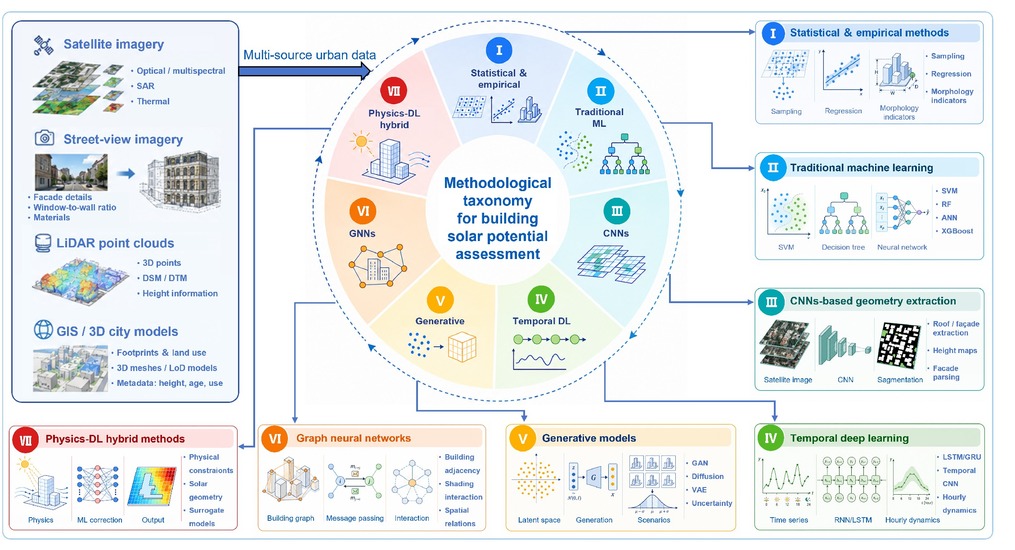
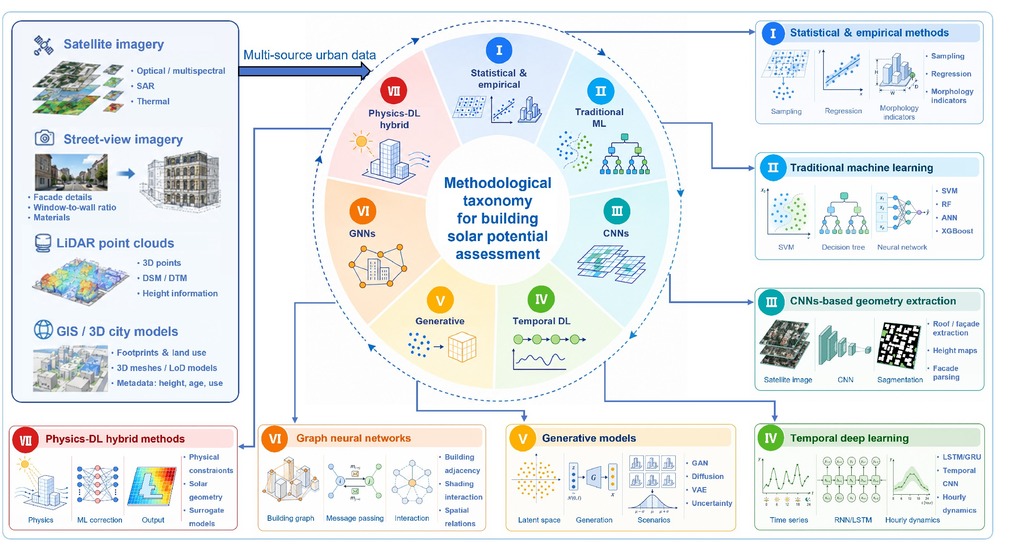
Figure 1.
Overview of data-driven methods for building solar potential evaluation.
-
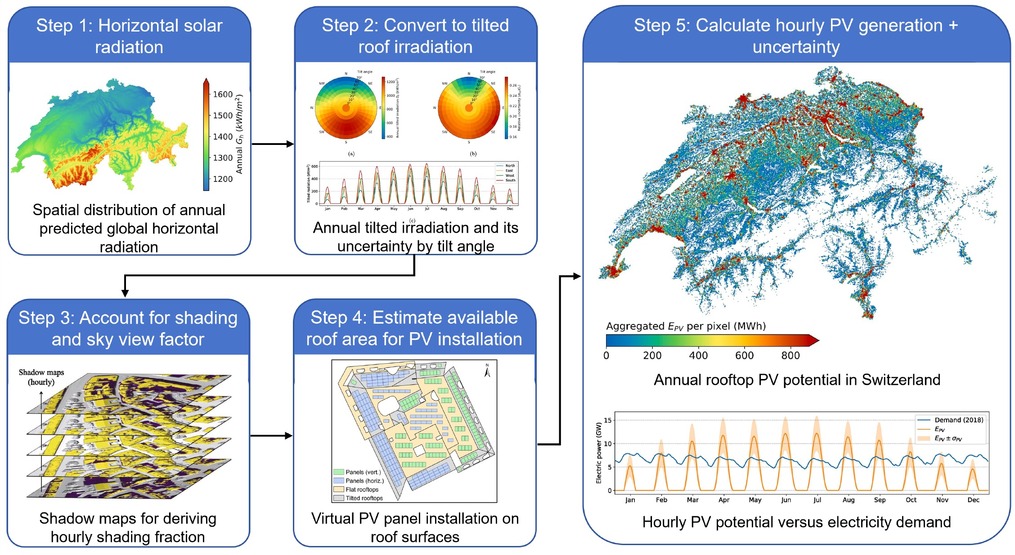
Figure 2.
National scale rooftop solar potential evaluation.10
-
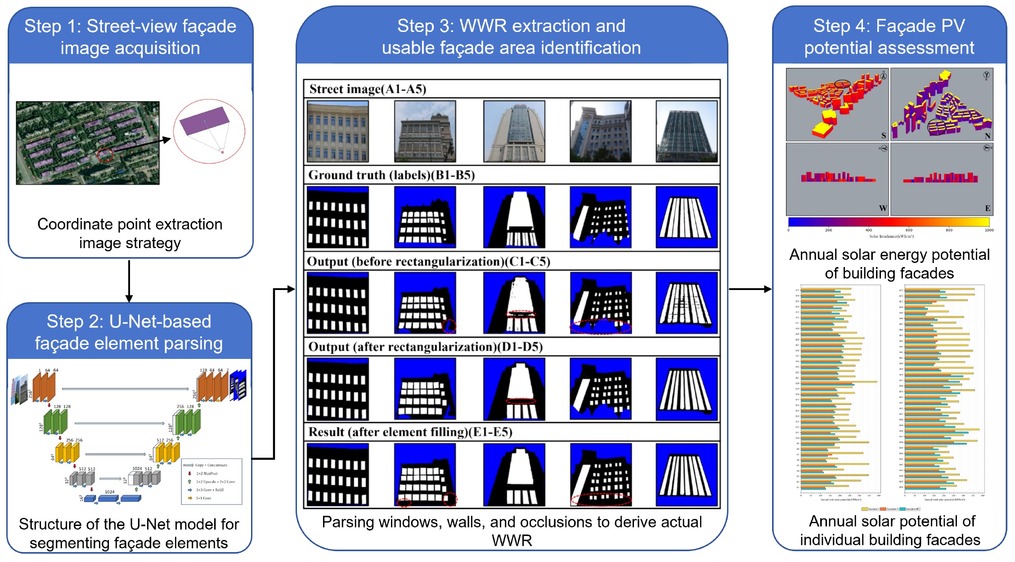
Figure 3.
Extracting available facade area from street-view images.88
-
Figure 4.
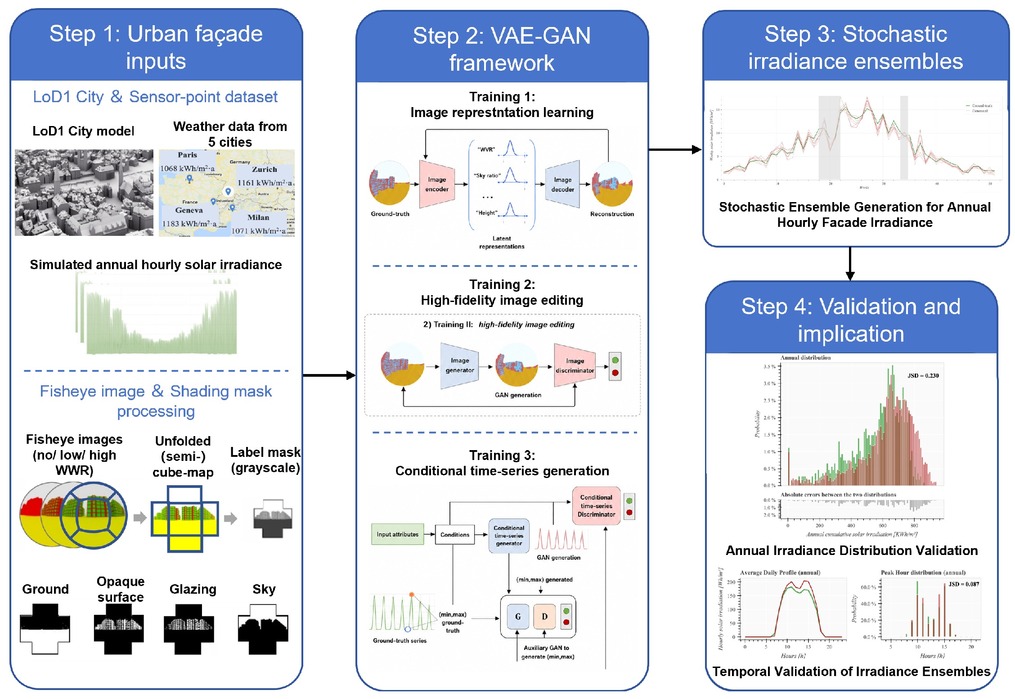
Generative model SolarGAN to predict facade irradiance.45
-
Figure 5.
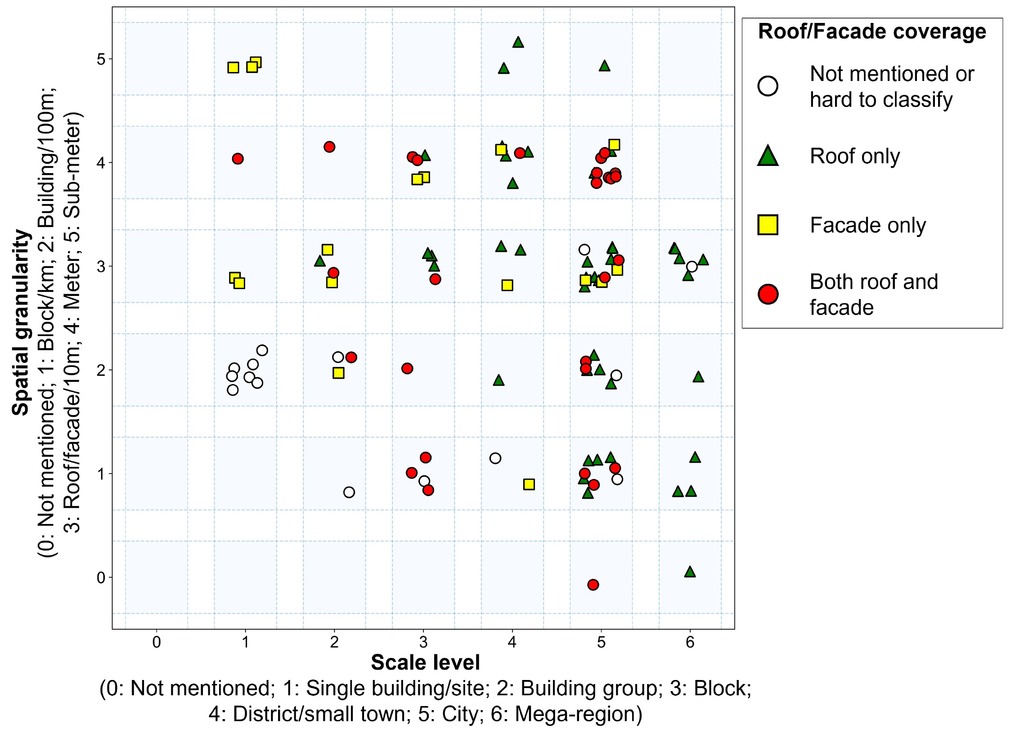
Spatial scale and spatial granularity of individual studies listed in Appendix A (where each point is manually and randomly offset from its actual level for better visualization).
-
Figure 6.
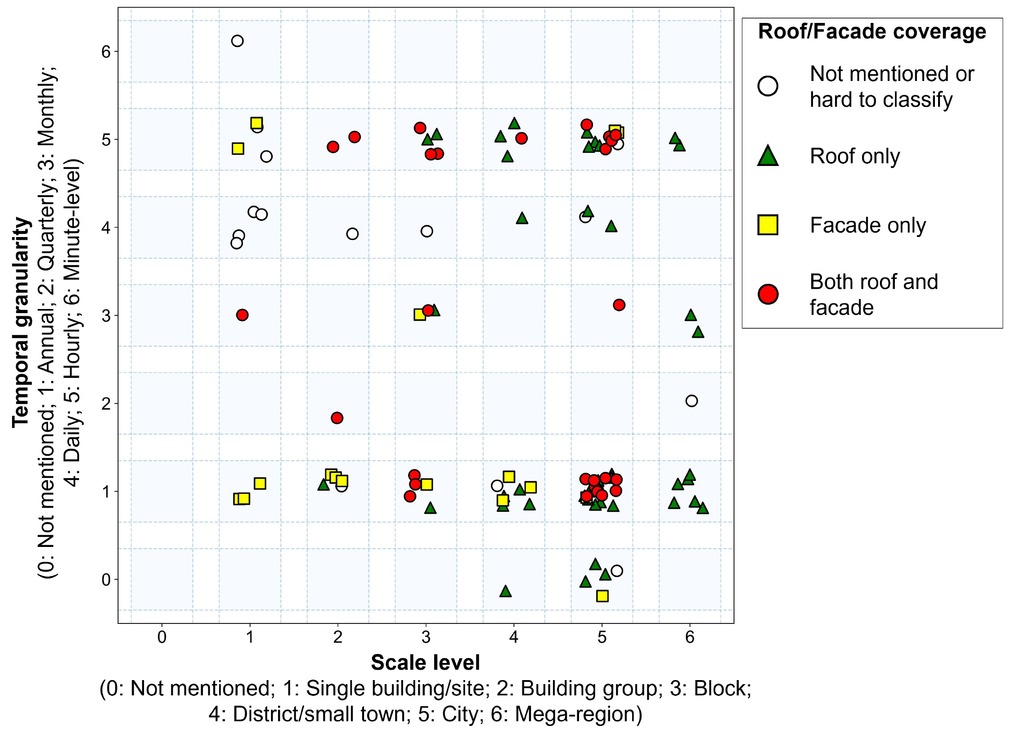
Spatial scale and temporal granularity of individual studies listed in Appendix A (where each point is manually and randomly offset from its actual level for better visualization).