
Development and characterization of OralAge: An integrated microbiome-clinical phenotype of oral aging
-
GRAPHICAL ABSTRACT
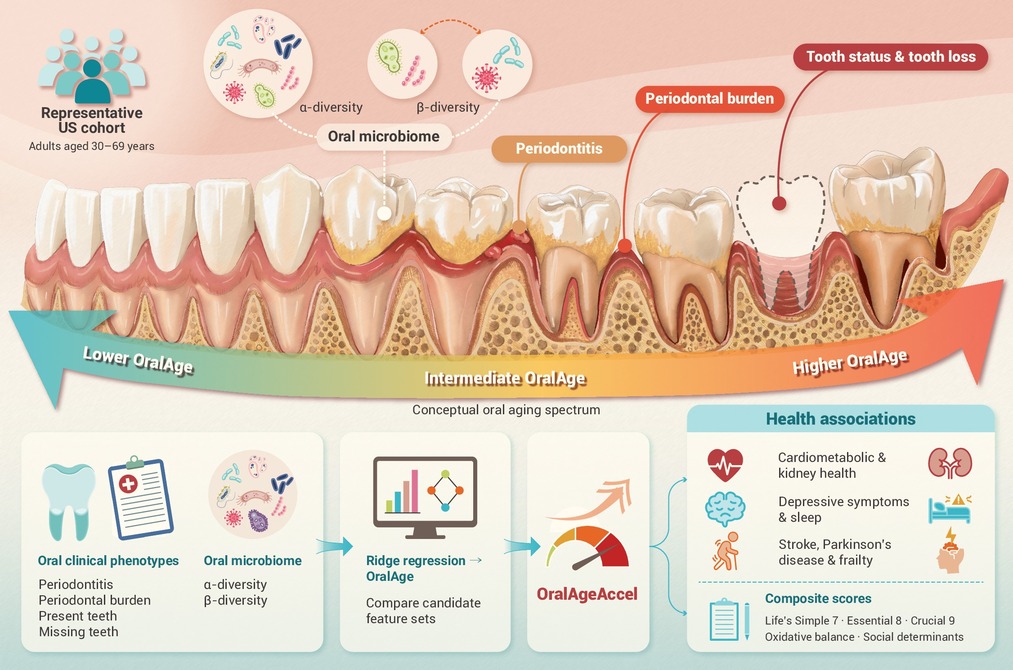
 DownLoad:
Full size image
-
PUBLIC SUMMARY
-
Oral health age (OralAge) combines oral microbiome, gum, and tooth data.
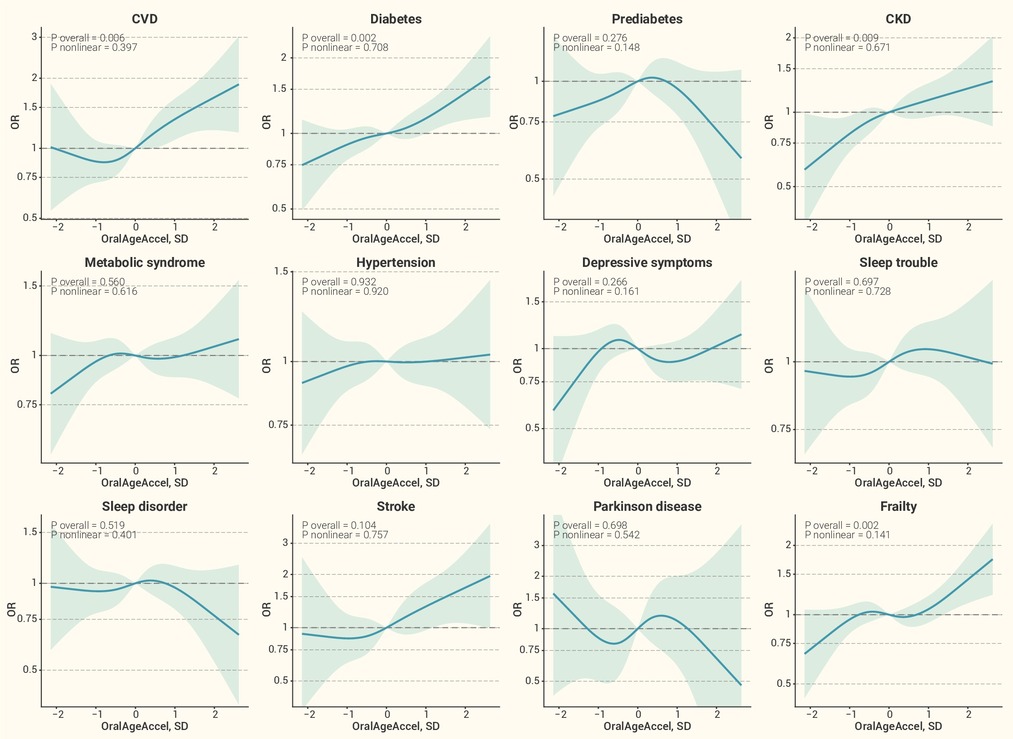
Older-than-expected oral profiles were linked to heart disease, diabetes, chronic kidney disease, and stroke.
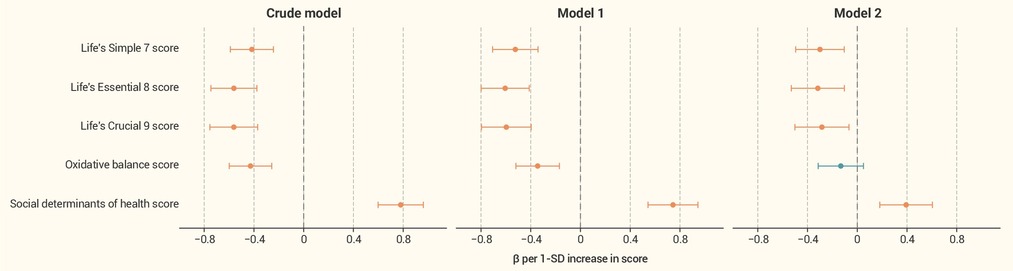
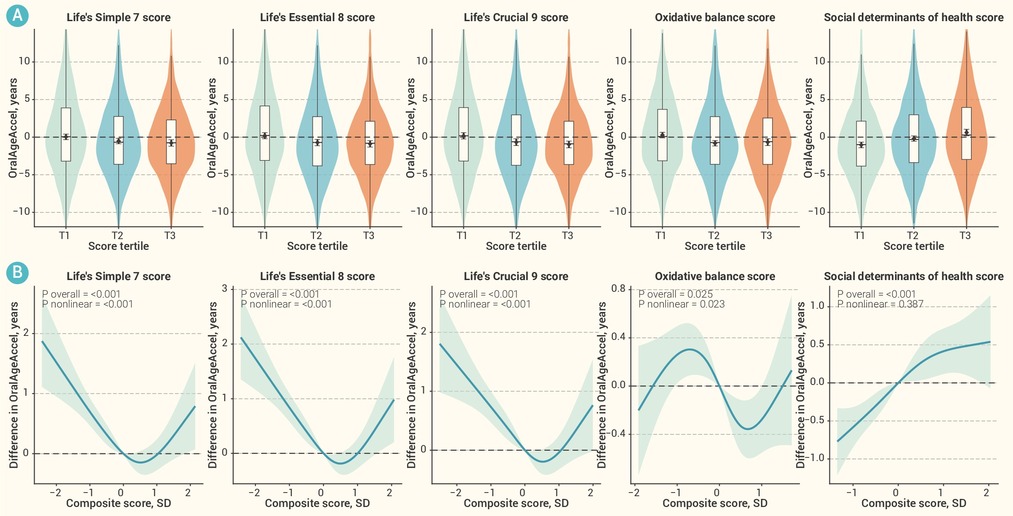
Better cardiovascular health was linked to younger oral profiles.
Greater social disadvantage was linked to older oral profiles.
-
-
ABSTRACT
This study aims to develop an oral health age phenotype, OralAge, and examine whether OralAge acceleration is associated with oral deterioration, chronic disease burden, and composite health profiles. It included 5,323 US adults aged 30–69 years with complete oral microbiome, periodontal, and tooth-status information. Ridge regression was used to estimate OralAge from oral alpha-diversity and beta-diversity measures, periodontal indicators, and tooth-level status variables. OralAge acceleration was defined as the residual of predicted OralAge after adjustment for chronological age. Survey-weighted regression models evaluated associations with chronic diseases, disease-domain burden, disease counts, and composite health scores. OralAge acceleration was higher among participants with periodontitis and was greater among those with more missing teeth. Each 1-SD higher OralAge acceleration was associated with higher odds of cardiovascular disease, diabetes, chronic kidney disease, and stroke, as well as greater cardiometabolic, renal, core chronic, and extended disease burden. Higher Life’s Simple 7, Life’s Essential 8, and Life’s Crucial 9 scores were associated with lower OralAge acceleration, whereas greater social disadvantage was associated with higher acceleration. OralAge acceleration may capture age-independent oral deterioration and health burden. OralAge is an internally evaluated research phenotype for characterizing heterogeneity in oral ageing and oral-systemic health profiles. Independent and longitudinal validation is required before clinical application.-
Keywords:
- oral health /
- biological ageing /
- age acceleration /
- oral microbiome /
- periodontitis /
- chronic disease burden
-

-
REFERENCES
[1] Peres M. A., Macpherson L. M. D., Weyant R. J., et al. (2019). Oral diseases: A global public health challenge. Lancet 394:249−260. DOI:10.1016/S0140-6736(19)31146-8 [2] GBD 2021 Oral Disorders Collaborators. (2025). Trends in the global, regional, and national burden of oral conditions from 1990 to 2021: A systematic analysis for the Global Burden of Disease Study 2021. Lancet 405:897−910. DOI:10.1016/S0140-6736(24)02811-3 [3] Baker J. L., Mark Welch J. L., Kauffman K. M., et al. (2024). The oral microbiome: Diversity, biogeography and human health. Nat. Rev. Microbiol. 22:89−104. DOI:10.1038/s41579-023-00963-6 [4] Lamont R. J., Koo H. and Hajishengallis G. (2018). The oral microbiota: Dynamic communities and host interactions. Nat. Rev. Microbiol. 16:745−759. DOI:10.1038/s41579-018-0089-x [5] Sedghi L., DiMassa V., Harrington A., et al. (2021). The oral microbiome: Role of key organisms and complex networks in oral health and disease. Periodontol 2000 87:107-131. DOI:10.1111/prd.12393 [6] Hajishengallis G. and Chavakis T. (2021). Local and systemic mechanisms linking periodontal disease and inflammatory comorbidities. Nat. Rev. Immunol. 21:426−440. DOI:10.1038/s41577-020-00488-6 [7] Sanz M., Marco Del Castillo A., Jepsen S., et al. (2020). Periodontitis and cardiovascular diseases: Consensus report. J. Clin. Periodontol. 47:268−288. DOI:10.1111/jcpe.13189 [8] Sanz M., Ceriello A., Buysschaert M., et al. (2018). Scientific evidence on the links between periodontal diseases and diabetes: Consensus report and guidelines of the joint workshop on periodontal diseases and diabetes by the International diabetes Federation and the European Federation of Periodontology. Diabetes Res. Clin. Pract. 137:231−241. DOI:10.1016/j.diabres.2017.12.001 [9] Kapellas K., Singh A., Bertotti M., et al. (2019). Periodontal and chronic kidney disease association: A systematic review and meta-analysis. Nephrology (Carlton) 24:202−212. DOI:10.1111/nep.13225 [10] Zemedikun D. T., Chandan J. S., Raindi D., et al. (2021). Burden of chronic diseases associated with periodontal diseases: A retrospective cohort study using UK primary care data. BMJ Open 11:e048296. DOI:10.1136/bmjopen-2020-048296 [11] Beukers N., Su N., Loos B. G., et al. (2021). Lower number of teeth is related to higher risks for ACVD and death-systematic review and meta-analyses of survival data. Front. Cardiovasc Med. 8:621626. DOI:10.3389/fcvm.2021.621626 [12] Huang S., Haiminen N., Carrieri A. P., et al. (2020). Human skin, oral, and gut microbiomes predict chronological age. mSystems 5. DOI:10.1128/mSystems.00630-19 [13] DeClercq V., Wright R. J., Nearing J. T., et al. (2024). Oral microbial signatures associated with age and frailty in Canadian adults. Sci. Rep. 14:9685. DOI:10.1038/s41598-024-60409-8 [14] Rutledge J., Oh H. and Wyss-Coray T. (2022). Measuring biological age using omics data. Nat. Rev. Genet. 23:715−727. DOI:10.1038/s41576-022-00511-7 [15] Curtin L. R., Mohadjer L. K., Dohrmann S. M., et al. (2013). National health and nutrition examination survey: Sample design, 2007-2010. Vital. Health Stat. 2:1−23 [16] Johnson C. L., Dohrmann S. M., Burt V. L., et al. (2014). National health and nutrition examination survey: Sample design, 2011-2014. Vital Health Stat. 2:1−33 [17] Chaturvedi A. K., Vogtmann E., Shi J., et al. (2025). Oral Microbiome Profile of the US Population. JAMA Netw Open 8:e258283. DOI:10.1001/jamanetworkopen.2025.8283 [18] Caporaso J. G., Lauber C. L., Walters W. A., et al. (2012). Ultra-high-throughput microbial community analysis on the Illumina HiSeq and MiSeq platforms. ISME J. 6:1621−1624. DOI:10.1038/ismej.2012.8 [19] Callahan B. J., McMurdie P. J., Rosen M. J., et al. (2016). DADA2: High-resolution sample inference from Illumina amplicon data. Nat. Methods 13:581−583. DOI:10.1038/nmeth.3869 [20] Lozupone C. and Knight R. (2005). UniFrac: A new phylogenetic method for comparing microbial communities. Appl. Environ. Microbiol. 71:8228−8235. DOI:10.1128/AEM.71.12.8228-8235.2005 [21] You Y., Cui Y., Zheng K., et al. (2026). Oral microbiome diversity shapes the association between leisure-time physical activity and cognitive function among older adults. iScience 29:115086. DOI:10.1016/j.isci.2026.115086 [22] Zhao J. J., Hu M., Li S., et al. (2026). Oral microbiome signatures predict biological age and host health. Nat. Commun. 17. DOI:10.1038/s41467-026-72096-2 [23] Eke P. I., Dye B. A., Wei L., et al. (2012). Prevalence of periodontitis in adults in the United States: 2009 and 2010. J. Dent. Res. 91:914−920. DOI:10.1177/0022034512457373 [24] Eke P. I., Page R. C., Wei L., et al. (2012). Update of the case definitions for population-based surveillance of periodontitis. J. Periodontol. 83:1449−1454. DOI:10.1902/jop.2012.110664 [25] Friedman J., Hastie T. and Tibshirani R. (2010). Regularization Paths for Generalized Linear Models via Coordinate Descent. J. Stat. Softw. 33:1−22 [26] Horvath S. (2013). DNA methylation age of human tissues and cell types. Genome Biol. 14:R115. DOI:10.1186/gb-2013-14-10-r115 [27] American Diabetes A. (2014). Standards of medical care in diabetes--2014. Diabetes Care 37 Suppl 1:S14-80. DOI:10.2337/dc14-S014 [28] Chobanian A. V., Bakris G. L., Black H. R., et al. (2003). The seventh report of the joint national committee on prevention, detection, evaluation, and treatment of high blood pressure: The JNC 7 report. JAMA 289:2560−2572. DOI:10.1001/jama.289.19.2560 [29] Levey A. S., Eckardt K. U., Tsukamoto Y., et al. (2005). Definition and classification of chronic kidney disease: A position statement from Kidney Disease: Improving Global Outcomes (KDIGO). Kidney Int 67:2089−2100. DOI:10.1111/j.1523-1755.2005.00365.x [30] Alberti K. G., Eckel R. H., Grundy S. M., et al. (2009). Harmonizing the metabolic syndrome: A joint interim statement of the International Diabetes Federation Task Force on Epidemiology and Prevention; National Heart, Lung, and Blood Institute; American Heart Association; World Heart Federation; International Atherosclerosis Society; and International Association for the Study of Obesity. Circulation 120:1640−1645. DOI:10.1161/CIRCULATIONAHA.109.192644 [31] Kroenke K., Spitzer R. L. and Williams J. B. (2001). The PHQ-9: Validity of a brief depression severity measure. J. Gen. Intern. Med. 16:606−613. DOI:10.1046/j.1525-1497.2001.016009606.x [32] Searle S. D., Mitnitski A., Gahbauer E. A., et al. (2008). A standard procedure for creating a frailty index. BMC Geriatr 8:24. DOI:10.1186/1471-2318-8-24 [33] Lloyd-Jones D. M., Hong Y., Labarthe D., et al. (2010). Defining and setting national goals for cardiovascular health promotion and disease reduction: The American Heart Association's strategic Impact Goal through 2020 and beyond. Circulation 121:586−613. DOI:10.1161/CIRCULATIONAHA.109.192703 [34] Lloyd-Jones D. M., Allen N. B., Anderson C. A. M., et al. (2022). Life's Essential 8: Updating and Enhancing the American Heart Association's Construct of Cardiovascular Health: A Presidential Advisory From the American Heart Association. Circulation 146:e18−e43. DOI:10.1161/CIR.0000000000001078 [35] You Y., Zheng K., Ablitip A., et al. (2025). Life's Essential 8 and Depression: A National Cross-Sectional Analysis in US Emerging Adults. J. Adolesc Health 77:84−93. DOI:10.1016/j.jadohealth.2025.03.023 [36] Ge J., Peng W. and Lu J. (2024). Predictive Value of Life's Crucial 9 for Cardiovascular and All-Cause Mortality: A Prospective Cohort Study From the NHANES 2007 to 2018. J. Am. Heart Assoc. 13:e036669. DOI:10.1161/JAHA.124.036669 [37] Liu X., Liu X., Wang Y., et al. (2023). Association between depression and oxidative balance score: National Health and Nutrition Examination Survey (NHANES) 2005-2018. J. Affect Disord 337:57−65. DOI:10.1016/j.jad.2023.05.071 [38] Palacio A., Mansi R., Seo D., et al. (2020). Social determinants of health score: Does it help identify those at higher cardiovascular risk. Am J. Manag. Care 26:e312−e318. DOI:10.37765/ajmc.2020.88504 [39] You Y., Li J., Zhang Y., et al. (2026). Exploring the role of beta2-microglobulin in the relationship between physical activity and DNAm-predicted PhenoAge: Evidence from a population-based and mice single-cell RNA-sequencing study. J. Adv. Res. 86:743−755. DOI:10.1016/j.jare.2025.11.047 [40] You Y. (2024). Accelerometer-measured physical activity and sedentary behaviour are associated with C-reactive protein in US adults who get insufficient sleep: A threshold and isotemporal substitution effect analysis. J. Sports Sci. 42:527−536. DOI:10.1080/02640414.2024.2348906 [41] Desquilbet L. and Mariotti F. (2010). Dose-response analyses using restricted cubic spline functions in public health research. Stat Med. 29:1037−1057. DOI:10.1002/sim.3841 [42] You Y., Cui Y., Chen Y., et al. (2026). Biological age in the meta omics era: Integrating physical activity, sleep, and diet to reshape paths of healthy ageing. iMetaOmics 3. DOI:10.1002/imo2.70127 [43] Levine M. E., Lu A. T., Quach A., et al. (2018). An epigenetic biomarker of aging for lifespan and healthspan. Aging (Albany NY) 10:573−591. DOI:10.18632/aging.101414 [44] Belsky D. W., Caspi A., Corcoran D. L., et al. (2022). DunedinPACE, a DNA methylation biomarker of the pace of aging. Elife 11. DOI:10.7554/eLife.73420 [45] Kinane D. F., Stathopoulou P. G. and Papapanou P. N. (2017). Periodontal diseases. Nat. Rev. Dis. Primers 3:17038. DOI:10.1038/nrdp.2017.38 [46] Papapanou P. N., Sanz M., Buduneli N., et al. (2018). Periodontitis: Consensus report of workgroup 2 of the 2017 World Workshop on the Classification of Periodontal and Peri-Implant Diseases and Conditions. J. Periodontol 89 Suppl 1:S173-S182. DOI:10.1002/JPER.17-0721 [47] Tonetti M. S., Bottenberg P., Conrads G., et al. (2017). Dental caries and periodontal diseases in the ageing population: call to action to protect and enhance oral health and well-being as an essential component of healthy ageing - Consensus report of group 4 of the joint EFP/ORCA workshop on the boundaries between caries and periodontal diseases. J. Clin. Periodontol 44 Suppl 18:S135-S144. DOI:10.1111/jcpe.12681 [48] Li Y., Zhu M., Liu Y., et al. (2022). The oral microbiota and cardiometabolic health: A comprehensive review and emerging insights. Front. Immunol 13:1010368. DOI:10.3389/fimmu.2022.1010368 [49] Kitamoto S., Nagao-Kitamoto H., Hein R., et al. (2020). The Bacterial Connection between the Oral Cavity and the Gut Diseases. J. Dent Res. 99:1021−1029. DOI:10.1177/0022034520924633 [50] Simpson T. C., Clarkson J. E., Worthington H. V., et al. (2022). Treatment of periodontitis for glycaemic control in people with diabetes mellitus. Cochrane Database Syst. Rev. 4:CD004714. DOI:10.1002/14651858.CD004714.pub4 [51] Sharma P., Dietrich T., Ferro C. J., et al. (2016). Association between periodontitis and mortality in stages 3-5 chronic kidney disease: NHANES III and linked mortality study. J. Clin. Periodontol 43:104−113. DOI:10.1111/jcpe.12502 [52] Fagundes N. C. F., Almeida A., Vilhena K. F. B., et al. (2019). Periodontitis as a risk factor for stroke: A systematic review and meta-analysis. Vasc Health Risk Manag 15:519−532. DOI:10.2147/VHRM.S204097 [53] Huang W., Huang J., Kuang N., et al. (2026). Mitochondrial homeostasis dysregulation: Potential mechanisms of Alzheimer's disease mediated by TDP-43. Ageing Res. Rev. 121:103290. DOI:10.1016/j.arr.2026.103290 [54] Tanaka T., Takahashi K., Hirano H., et al. (2018). Oral frailty as a risk factor for physical frailty and mortality in community-dwelling elderly. J. Gerontol A Biol. Sci. Med. Sci. 73:1661−1667. DOI:10.1093/gerona/glx225 [55] Zhu S. R., Wei L. Y., Jia K., et al. (2024). Prevalence and unfavourable outcome of oral frailty in older adult: A systematic review and meta-analysis. Front. Public Health 12:1501793. DOI:10.3389/fpubh.2024.1501793 [56] You Y., Chen Y., Ding H., et al. (2025). Relationship between physical activity and DNA methylation-predicted epigenetic clocks. NPJ Aging 11:27. DOI:10.1038/s41514-025-00217-0 [57] You Y., Wang D., Ding H., et al. (2025). Mediation role of telomere length in the relationship between physical activity and PhenoAge: A population-based study. J. Exerc Sci. Fit. 23:149−156. DOI:10.1016/j.jesf.2025.03.004 [58] Chen X., Sun J., Zeng C., et al. (2024). Association between life's essential 8 and periodontitis: A population-based study. BMC Oral Health 24:19. DOI:10.1186/s12903-023-03816-z [59] Hou K., Zhang H., Song W., et al. (2024). Association between life's essential 8 and periodontitis: A study based on NHANES 2009-2014. Front. Med. (Lausanne) 11:1342792. DOI:10.3389/fmed.2024.1342792 [60] Obeidat R., Heaton L. J., Tranby E. P., et al. (2024). Social determinants of health linked with oral health in a representative sample of U. S. adults. BMC Oral Health 24:1518. DOI:10.1186/s12903-024-05257-8 [61] Vujkovic-Cvijin I., Sklar J., Jiang L., et al. (2020). Host variables confound gut microbiota studies of human disease. Nature 587:448−454. DOI:10.1038/s41586-020-2881-9 [62] Kuang N., Liu Z., Yu G., et al. (2023). Neurodevelopmental risk and adaptation as a model for comorbidity among internalizing and externalizing disorders: Genomics and cell-specific expression enriched morphometric study. BMC Med. 21:291. DOI:10.1186/s12916-023-02920-9 [63] Huang K., Tian J., Zhao W., et al. (2026). Strategies and mechanisms of precision genome engineering: From gene editing to genome writing. iMetaOmics 3. DOI:10.1002/imo2.70115. -
ABOUT THIS ARTICLE
Cite this article:
You Y. (2026). Development and characterization of OralAge: An integrated microbiome-clinical phenotype of oral aging. The Innovation Insights 1:100019. https://doi.org/10.59717/j.tiis.2026.100019
Welcome!
To request copyright permission to republish or share portions of our works, please visit Copyright Clearance Center's (CCC) Marketplace website at marketplace.copyright.com.
Export File
Citation
You Y. (2026). Development and characterization of OralAge: An integrated microbiome-clinical phenotype of oral aging. The Innovation Insights 1:100019. https://doi.org/10.59717/j.tiis.2026.100019

Format
Content
-
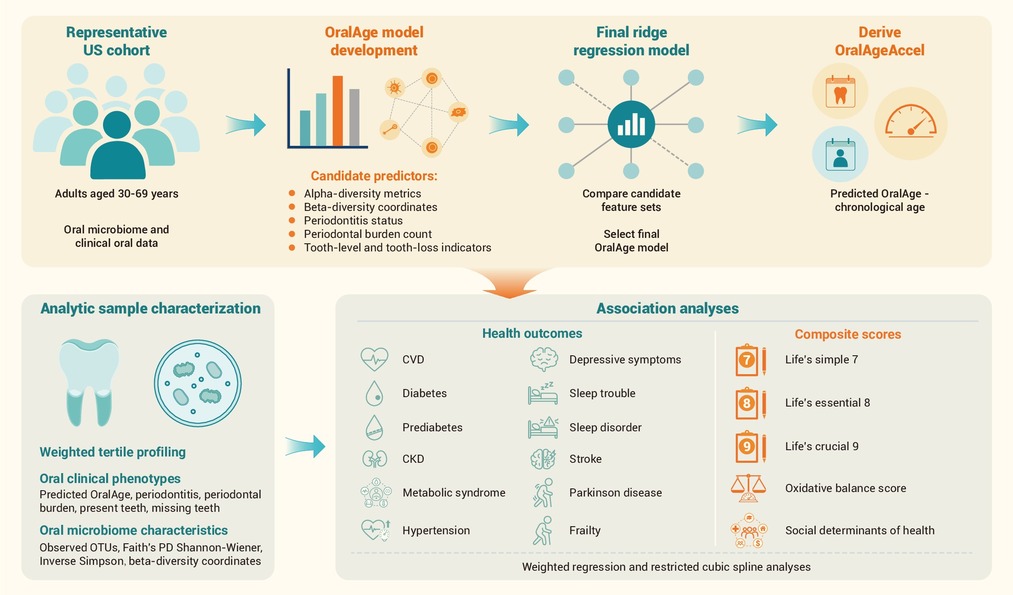
Figure 1.
Study design and analytical workflow of the OralAge study
-
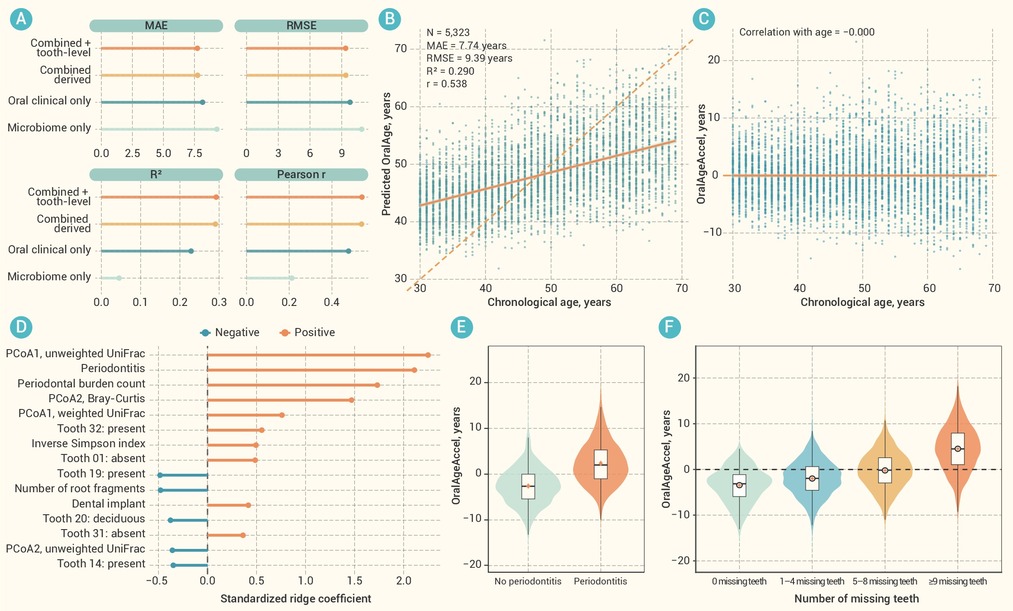
Figure 2.
Development, performance, and clinical characterization of OralAge
-
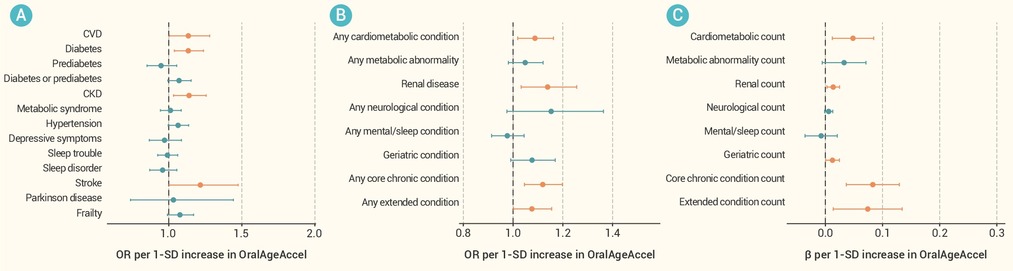
Figure 3.
Associations of OralAgeAccel with chronic disease burden
-
Figure 4.
Restricted cubic spline associations between OralAgeAccel and individual diseases
-
Figure 5.
Associations of composite health scores with OralAgeAccel
-
Figure 6.
Distributions and dose–response associations of OralAgeAccel across composite health scores
