
Breaking the transport trade-off in Bi2Te3 films via interface reconstruction and magnetic coupling
-
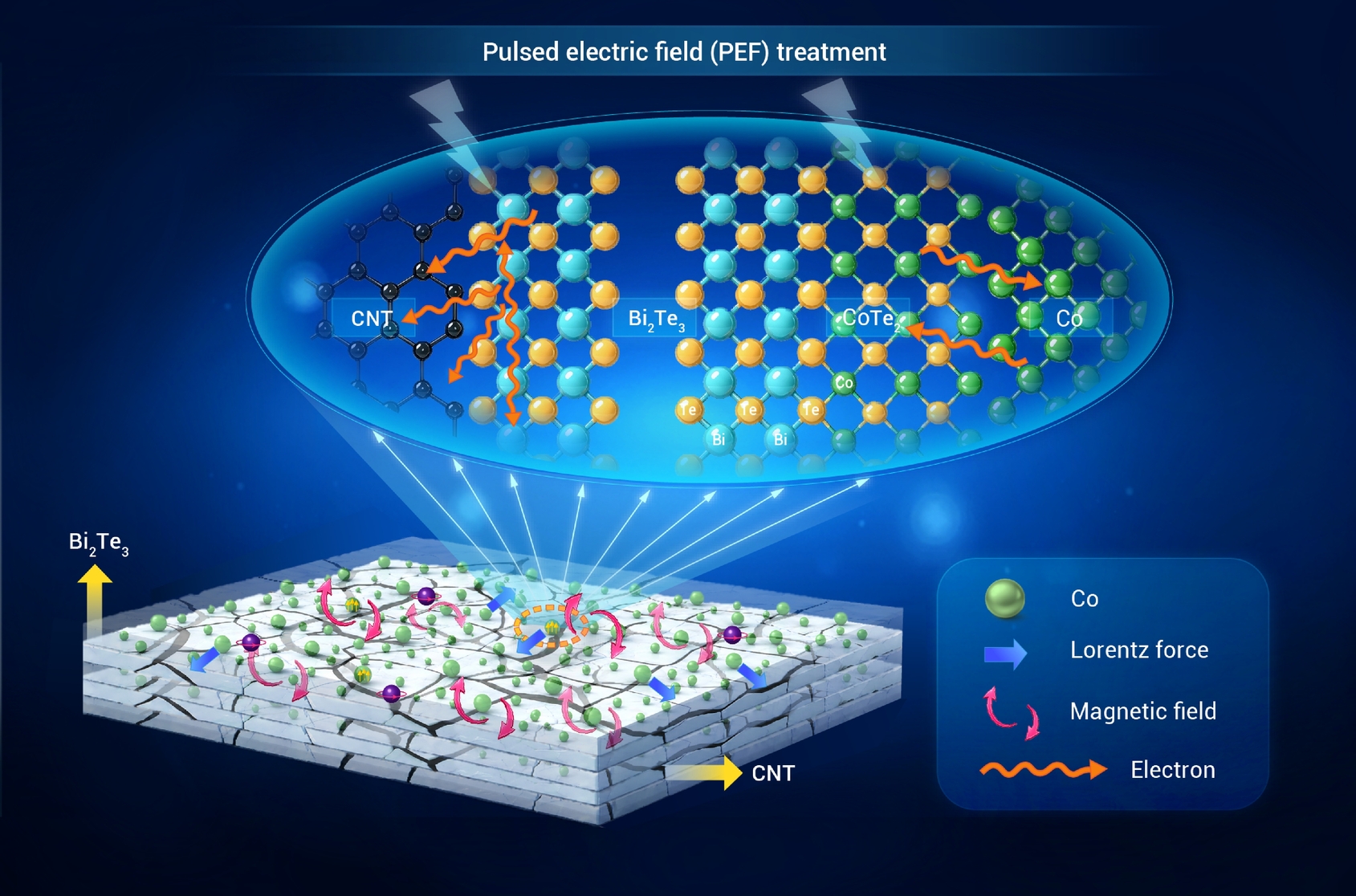
GRAPHICAL ABSTRACT
 DownLoad:
Full size image
-
PUBLIC SUMMARY
-
Bi2Te3 films are promising for compact thermoelectric generators and light detectors.
PEF treatment crystallizes key interfaces and reduces carrier scattering.
Magnetic Co nanoparticles tune carrier transport through magnetoelectric interaction.
The optimized film improves thermoelectric output and ultraviolet photodetection.
-
-
ABSTRACT
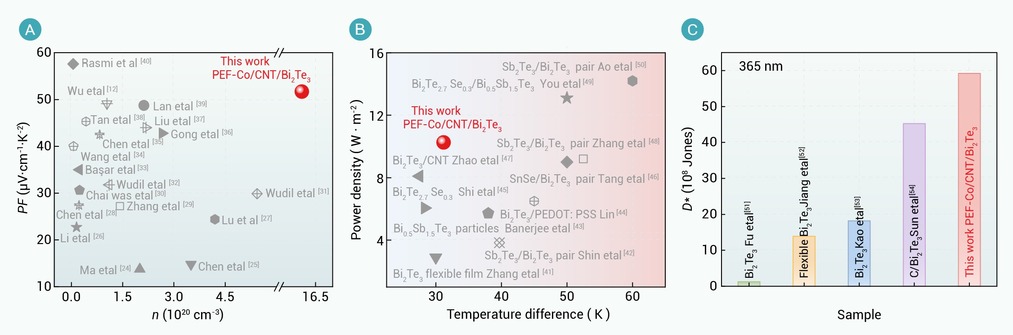
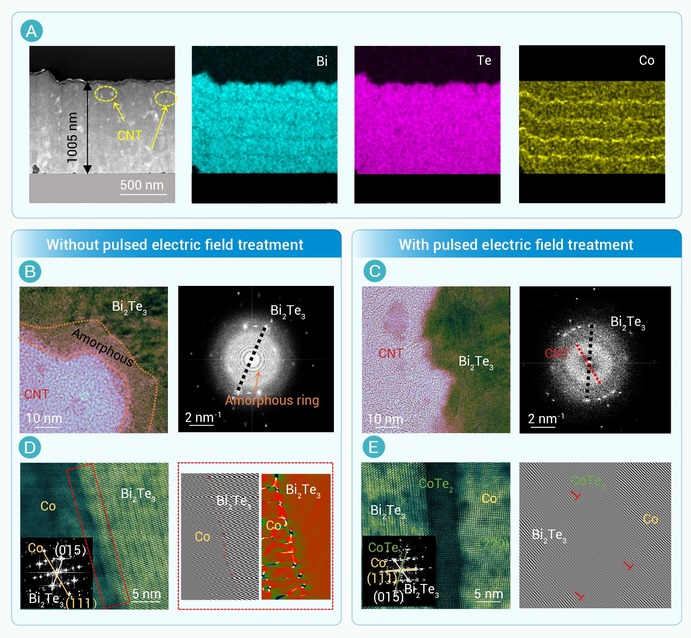
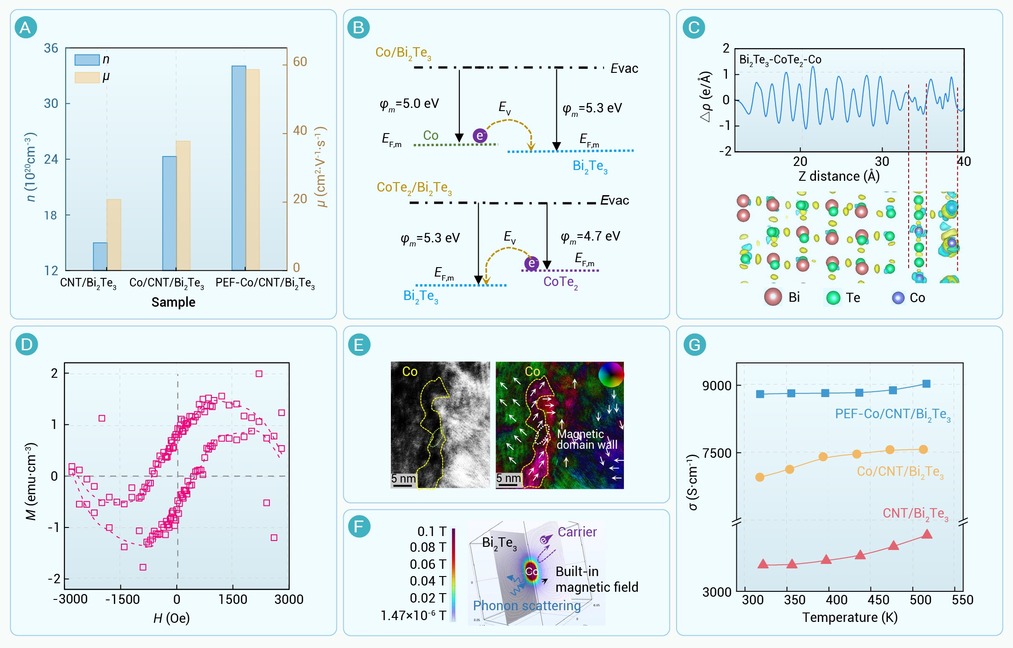
Bi2Te3 films play a pivotal role in semiconductor applications, particularly for thermoelectric and photo-thermoelectric energy conversion. Doping is the primary method to regulate their functional properties, yet parameter trade-offs cap the achievable power factor and detectivity. Here, we introduce a synergistic strategy combining pulsed electric field (PEF) treatment with magnetic nanoparticle incorporation to achieve the decoupling of electrical transport parameters. PEF treatment facilitates the crystallization of the carbon nanotube (CNT)/Bi2Te3 interface and the formation of a coherent Co/CoTe2/Bi2Te3 interface, which increases carrier transport pathways while reducing carrier scattering, significantly enhancing carrier mobility. Magnetic Co nanoparticle incorporation induces magnetoelectric interaction, boosting the density-of-states effective mass, while both Co nanoparticles induce carrier injection, increasing the carrier concentration. Consequently, a synergistic enhancement of carrier mobility, density-of-states effective mass, and carrier concentration is realized in Bi2Te3 film. Furthermore, we fabricated single-leg thermoelectric and optoelectronic devices that achieve high output power density of 10.26 W m−2 at a temperature difference of 39 K and excellent detectivity of 5.95×10⁹ Jones at 365 nm light illumination, respectively. This work highlights the significant role of interface modulation and magnetoelectric interaction in regulating electrical transport properties. -

-
REFERENCES
[1] Wong W., Elsa G., Mustafa M., et al. (2025) Bismuth telluride-based thermoelectric generators: advances in synthesis, performance enhancement, and device applications. J. Power Sources 653:237722. DOI:10.1016/j.jpowsour.2025.237722. [2] Li Z., Deng T., Qiu P., et al. (2025). Plasticity of Bi2Te3-family thermoelectric crystals. Nat. Commun. 16:5190. DOI:10.1038/s41467-025-60465-2 [3] Tang X., Li Z., Liu W., et al. (2022). A comprehensive review on Bi2Te3-based thin films: Thermoelectrics and beyond. InfoMat 4:e12209. DOI:10.1002/inf2.12209 [4] Zheng Z.H., Shi X.L., Ao D.W., et al. (2023). Harvesting waste heat with flexible Bi2Te3 thermoelectric thin film. Nat. Sustain. 6:180−191. DOI:10.1038/s41893-022-01003-6 [5] Chen Y.X., Zhang J.-Z., Nisar M., et al. (2023). Realizing high thermoelectric performance in n-type Bi2Te3-based thin films via post-selenization diffusion. J. Materiomics 9:1068−1076. DOI:10.1016/j.jmat.2023.01.003 [6] Das S., Supriya S., Alagarasan D., et al. (2024). Investigating the temperature-dependent Raman spectroscopy of Se/Bi2Te3 thin films and its enhanced photoresponse for optoelectronic applications. J. Appl. Phys. 136:065302. DOI:10.1063/5.0216795 [7] Zhu J., Zhang X., Guo M., et al. (2021). Restructured single parabolic band model for quick analysis in thermoelectricity. npj Comput. Mater. 7:116. DOI:10.1038/s41524-021-00587-5 [8] Tang L., Fu J., Chen Y., et al. (2024). An in-situ online method for extracting Seebeck coefficient of thermopile infrared sensors across a wide temperature range (300-600 K). Measurement 226:114101. DOI:10.1016/j.measurement.2023.114101 [9] Wei P.C., Li Z., Chen X., et al. (2019). Enhancing thermoelectric performance by Fermi level tuning and thermal conductivity reduction in weakly degenerate p-type GeTe by Bi doping. Sci. Rep. 9:10227. DOI:10.1038/s41598-019-45071-9 [10] Cha J., Zhou C., Cho S.-P., et al. (2019). Ultrahigh power factor and electron mobility in n-type Bi2Te3-x%Cu stabilized under excess Te condition. ACS Appl. Mater. Interfaces 11:30999−31008. DOI:10.1021/acsami.9b10394 [11] Zhang H., Momand J., Levinsky J., et al. (2022). Nanostructure and thermal power of highly-textured and single-crystal-like Bi2Te3 thin films. Nano Res. 15:2382−2390. DOI:10.1007/s12274-021-3743-y [12] Wu Z., Mu E., Che Z., et al. (2020). Nanoporous (00l)-oriented Bi2Te3 nanoplate film for improved thermoelectric performance. J. Alloys Compd. 828:154239. DOI:10.1016/j.jallcom.2020.154239 [13] Kianwimol S., Sakdanuphab R., Chanlek N., et al. (2020). Effect of annealing temperature on thermoelectric properties of bismuth telluride thick film deposited by DC magnetron sputtering. Surf. Coat. Technol. 393:125808. DOI:10.1016/j.surfcoat.2020.125808 [14] He Z., Chen Y.X., Zheng Z., et al. (2020). Enhancement of thermoelectric performance of N-type Bi2Te3 based thin films via in situ annealing during magnetron sputtering. Ceram. Int. 46:13365−13371. DOI:10.1016/j.ceramint.2020.02.117 [15] Chen M., Mao Z., Ji Y. et al., (2024). Bi2Te3-based flexible thermoelectrics. Mater. Today Phys. 49:101972. DOI:10.1016/j.mtphys.2024.101972. [16] Huang H., Cui H., Lu X., et al. (2009). Influence of annealing on thermoelectric properties of bismuth telluride films grown via radio frequency magnetron sputtering. Thin Solid Films 517:3731−3734. DOI:10.1016/j.tsf.2009.01.015 [17] Poudel B., Hao Q., Ma Y., et al. (2008). High-thermoelectric performance of nanostructured bismuth antimony telluride bulk alloys. Science 320:634−638. DOI:10.1126/science.1156446 [18] Jin Q., Jiang S., Zhao Y., et al. (2019). Flexible layer-structured Bi2Te3 thermoelectric on a carbon nanotube scaffold. Nat. Mater. 18:62−68. DOI:10.1038/s41563-018-0217-z [19] Nunna R., Qiu P., Yin M., et al. (2017). Ultrahigh thermoelectric performance in Cu2Se-based hybrid materials with highly dispersed molecular CNTs. Energy Environ. Sci. 10:1928−1935. DOI:10.1039/c7ee01737e [20] Zhao W., Liu Z., Sun Z., et al. (2017). Superparamagnetic enhancement of thermoelectric performance. Nature 549:247−251. DOI:10.1038/nature23667 [21] Liu S., Chen M., Fu C., et al. (2023). The interplay of magnetism and thermoelectricity: A review. Adv. Phys. Res. e202300015. DOI:10.1002/apxr.202300015. [22] Zhao W., Liu Z., Wei P., et al. (2017). Magnetoelectric interaction and transport behaviors in magnetic nanocomposite thermoelectric materials. Nat. Commun. 8:15070. DOI:10.1038/ncomms15070 [23] Fortulan R., Li S., Reece M.J., et al. (2024). Enhanced thermoelectric performance of p-type BiSbTe through incorporation of magnetic CrSb. Appl. Phys. Lett. 125:203903. DOI:10.1063/5.0235499 [24] Ma F., Liu X., Liu M., et al. (2025). Trace doping leads to texture engineering and boosts thermoelectric performance of Bi0.5Sb1.5Te3-based flexible thin films. Chem. Eng. J. 522:167341. DOI:10.1016/j.cej.2025.167341. [25] Chen N., Yang D., Zhang Z.L., et al. (2025). Simultaneous enhancement of thermoelectric performance and mechanical flexibility in S-doped Bi2Te3 thin films. Appl. Surf. Sci. 713:164306. DOI:10.1016/j.apsusc.2025.164306 [26] Li H., Ke S., Yu X., et al. (2025). Ultrasonically induced liquid-phase exfoliation boosts excellent performance of Bi0.5Sb1.5Te3/PVDF thermoelectric films. J. Mater. Chem. A 13:7149. DOI:10.1039/d4ta08211g. [27] Lu F., Liu S., Dai M., et al. (2025). Spin-coating co-reduction method to prepare Bi2Te3 films and its tunable thermoelectric properties. J. Alloys Compd. 1018:179183. DOI:10.1016/j.jallcom.2025.179183 [28] Chen Y., Nie X., Sun C., et al. (2022). Realizing high-performance BiSbTe magnetic flexible films via acceleration movement and hopping migration of carriers. Adv. Funct. Mater. 32:2111373. DOI:10.1002/adfm.202111373 [29] Zhang C., Chen Z., Bai H., et al. (2023). Manipulating the interfacial band bending for enhancing the thermoelectric properties of 1T′-MoTe2/Bi2Te3 superlattice films. Small 19:2300745. DOI:10.1002/smll.202300745 [30] Chaiwas S., Kasayapanand N., Vora-ud A., et al. (2024). Enhanced thermoelectric power factor of magnetron Co-sputtered Pd-added Bi2Te3 thin films. Vacuum 230:113696. DOI:10.1016/j.vacuum.2024.113696 [31] Wudil Y.S., Gondal M.A., Rao S.G., et al. (2020). Improved thermoelectric performance of ternary Cu/Ni/Bi2Te2.7Se0.3 nanocomposite prepared by pulsed laser deposition. Mater. Chem. Phys. 253:123321. DOI:10.1016/j.matchemphys.2020.123321. [32] Wudil Y.S., Gondal M.A., Rao S.G., et al. (2020). Substrate temperature-dependent thermoelectric figure of merit of nanocrystalline Bi2Te3 and Bi2Te2.7Se0.3 prepared using pulsed laser deposition supported by DFT study. Ceram. Int. 46:24162-24171. DOI:10.1016/j.ceramint.2020.06.196. [33] Boz R.B., Sevik C. and Turan S. (2025). The effect of spark plasma sintering parameters on the microstructure and thermoelectric properties of p-type Bi0.5Sb1.5Te3 alloys. J. Solid State Chem. 348:125395. DOI:10.1016/j.jssc.2025.125395. [34] Wang Y.L., Chen T.H., Giri K., et al. (2022). Periodic DLC interlayer-functionalized Bi-Sb-Te-based nanostructures: a novel concept for building heterogenized superarchitectures with enhanced thermoelectric performance. ACS Appl. Mater. Interfaces 14:9307−9317. DOI:10.1021/acsami.1c23206 [35] Chen Y.F., Wei F., Wang H., et al. (2021). Structural control for high performance Bi2Te3-xSex thermoelectric thin films. Acta Phys. Sin. 70:207303. DOI:10.7498/aps.70.20211090 [36] Gong T., Ma C., Li L., et al. (2025). High-performance planar thin-film thermoelectric cooler based on sputtered nanocrystalline Bi2Te3/Bi0.5Sb1.5Te3 thin films for on-chip cooling. ACS Appl. Mater. Interfaces 17:17008-17017. DOI:10.1021/acsami.4c19653. [37] Liu S., Li G., Lan M., et al. (2021). Thermoelectric performance enhancement of film by pulse electric field and multi-nanocomposite strategy. Small 17:e2100554. DOI:10.1002/smll.202100554 [38] Tan M., Shi X., Liu W., et al. (2021). Synergistic texturing and Bi/Sb-Te antisite doping secure high thermoelectric performance in Bi0.5Sb1.5Te3-based thin films. Adv. Energy Mater. 11:2102578. DOI:10.1002/aenm.202102578. [39] Lan M., Tan Y., Liu S., et al. (2025). Atomic migration and grain size are regulated by pulse period to maintain carrier concentration and increase mobility of Bi2Te3 films. J. Electron. Mater. 54:10593−10602. DOI:10.1007/s11664-025-12195-w [40] Rasmi T., Chandra Bose R.S., Varun T.S., et al. (2025). Enhanced thermoelectric performance of n-type Bi2Te3 thin films via thermal evaporation and optimized post-annealing. J. Alloys Compd. 1036:181378. DOI:10.1016/j.jallcom.2025.181378 [41] Zhang L., Wang H., Zhang B., et al. (2025). Enhanced thermoelectric performance of screen-printed Bi2Te3 flexible films and generators through controlled thermal processing. ACS Appl. Energy Mater. 8:14813−14821. DOI:10.1021/acsaem.5c02536 [42] Shin K.J. and Oh T.S. (2015). Micro-power generation characteristics of thermoelectric thin film devices processed by electrodeposition and flip-chip bonding. J. Electron. Mater. 44:2026−2033. DOI:10.1007/s11664-015-3647-2 [43] Banerjee P., Huang J., Ambade R.B., et al. (2021). Effect of particle-size distribution and pressure-induced densification on the microstructure and properties of printable thermoelectric composites and high energy density flexible devices. Nano Energy 89:106482. DOI:10.1016/j.nanoen.2021.106482 [44] Lin S., Zhang L., Zeng W., et al. (2022). Flexible thermoelectric generator with high Seebeck coefficients made from polymer composites and heat-sink fabrics. Commun. Mater. 3:44. DOI:10.1038/s43246-022-00263-1 [45] Shi J., Wu X., Geng X., et al. (2023). Anisotropy engineering in solution-derived nanostructured Bi2Te3 thin films for high-performance flexible thermoelectric devices. Chem. Eng. J. 458:141450. DOI:10.1016/j.cej.2023.141450 [46] Tang Z., Sun X., Yu F., et al. (2025). High-quality SnSe thin films for self-powered devices and multilevel information encryption. ACS Appl. Mater. Interfaces 17:2648−2655. DOI:10.1021/acsami.4c18795 [47] Zhao K., Liu C., Shao T., et al. (2023). Enhanced thermoelectric performance of Bi2Te3 by carbon nanotubes and silicate aerogel co-doping toward ocean energy harvesting. Mater. Today Sustain. 23:100476. DOI:10.1016/j.mtsust.2023.100476 [48] Zhang W., Yang J. and Xu D. (2016). A high power density micro-thermoelectric generator fabricated by an integrated bottom-up approach. J. Microelectromech. Syst. 25:744−749. DOI:10.1109/JMEMS.2016.2565504. DOI:10.1109/JMEMS.2016.2565504 [49] You H., Li Z., Shao Y., et al. (2022). Flexible Bi2Te3-based thermoelectric generator with an ultra-high power density. Appl. Therm. Eng. 202:117818. DOI:10.1016/j.applthermaleng.2021.117818 [50] Ao D., Liu W., Zheng Z., et al. (2022). Assembly-free fabrication of high-performance flexible inorganic thin-film thermoelectric device prepared by a thermal diffusion. Adv. Energy Mater. 12:2202731. DOI:10.1002/aenm.202202731 [51] Fu Z., Liu X., Wang F., et al. (2024). High-performance Vis-NIR photodetectors based on two-dimensional Bi2Te3 thin film and applications. Photonics 11:1052. DOI:10.3390/photonics11111052 [52] Jiang J., Fan X., Yu H., et al. (2025). Flexible broadband photothermoelectric detector for self-powered gas monitoring. Adv. Opt. Mater. 13:2502244. DOI:10.1002/adom.202502244 [53] Kao Q., Xiao Y., Jia Y., et al. (2024). Infrared photoelectric detection of polycrystalline Bi2Te3 thin films prepared by pulsed laser deposition. J. Vac. Sci. Technol. A 42:023421. DOI:10.1116/6.0003343 [54] Jiang J., Lian Y., An B., et al. (2024). Flexible Bi2Te3 photothermoelectric thin film detector with broadband response at room temperature. Proc. SPIE 13496:3048088. DOI:10.1117/12.3048088 [55] Bano S., Khan A.U., Aftab M., et al. (2024). Mg3(Sb,Bi)2-based materials and devices rivaling bismuth telluride: A review. Mater. Futures 3:042601. DOI:10.1016/j.device.2024.100408 [56] Venkatasubramanian R., Siivola E., Colpitts T., et al. (2001). Thin-film thermoelectric devices with high room-temperature figures of merit. Nature 413:597−602. DOI:10.1038/35098012 [57] Choi H., Jeong K., Chae J., et al. (2018). Enhancement in thermoelectric properties of Te-embedded Bi2Te3 by preferential phonon scattering in heterostructure interface. Nano Energy 47:374−384. DOI:10.1016/j.nanoen.2018.03.009 [58] Islam Z., Wang B. and Haque A. (2018). Current density effects on the microstructure of zirconium thin films. Scr. Mater. 144:18−21. DOI:10.1016/j.scriptamat.2017.09.032 [59] Lamirand A.D., Adam J.-P., Ravelosona D., et al. (2019). In situ monitoring of electric field effect on domain wall motion in Co ultrathin films in direct contact with an electrolyte. Appl. Phys. Lett. 115:032402. DOI:10.1063/1.5109024 [60] Lu W., Dong Y., Li C., et al. (2014). Preparation of ZnO films with variable electric field-assisted atomic layer deposition technique. Appl. Surf. Sci. 303:111−117. DOI:10.1016/j.apsusc.2014.02.097 [61] Tan M., Hao L., Li H., et al. (2020). Approaching high-performance of ordered structure Sb2Te3 film via unique angular intraplanar grain boundaries. Sci. Rep. 10:5978. DOI:10.1038/s41598-020-63062-z [62] Lan M., Sun S., Liu S., et al. (2024). Thermoelectric properties of Bi2Te3 films with low-angle grain boundaries formed through high pulse current density. Chem. Eng. J. 484:149519. DOI:10.1016/j.cej.2024.149519 [63] Choe D.-H., West D. and Zhang S. (2017). Built-in potential and band alignment of matter. npj Comput. Mater. 3:29. DOI:10.1038/s41524-017-0032-0 [64] Arellano-Tánori O., Chávez-Mendiola E., Gámez-Corrales R., et al. (2019). Obtaining nano structures of cobalt telluride by a simplified ion exchange reaction at aqueous solution. Chalcogenide Lett. 16:57-61. WOS:000458201100002. [65] Zhao Y., Nie X., Sun C., et al. (2021). Excellent thermoelectric performance from in situ reaction between Co nanoparticles and BiSbTe flexible films. ACS Appl. Mater. Interfaces 13:58746−58753. DOI:10.1021/acsami.1c19143 [66] Javey A., Guo J., Wang Q., et al. (2003). Ballistic carbon nanotube field-effect transistors. Nature 424:654−657. DOI:10.1038/nature01797 [67] Dürkop T., Getty S.A., Cobas E., et al. (2004). Extraordinary mobility in semiconducting carbon nanotubes. Nano Lett. 4:35−39. DOI:10.1021/nl034841q [68] Jeudy V., Diaz Pardo R., Torres W., et al. (2018). Pinning of domain walls in thin ferromagnetic films. Phys. Rev. B 98:054406. DOI:10.1103/PhysRevB.98.054406 [69] He H.T., Wang G., Zhang T., et al. (2011). Impurity effect on weak anti-localization in the topological insulator Bi2Te3. Phys. Rev. Lett. 106:166805. DOI:10.1103/PhysRevLett.106.166805 [70] Lu H., Shi J. and Shen S. (2011). Competition between weak localization and antilocalization in topological surface states. Phys. Rev. Lett. 107:076801. DOI:10.1103/PhysRevLett.107.076801 [71] Siegfried P., Bhandari H., Qi J., et al. (2023). CoTe2: A quantum critical Dirac metal with strong spin fluctuations. Phys. Rev. Mater. 7:104201. DOI:10.1103/PhysRevMaterials.7.104201 [72] Yang S., Jiao S., Nie Y., et al. (2024). Boosting photoresponse and stability of a self-powered photoelectrochemical-type Bi2Te3 imaging photodetector by a novel quasi-solid-state gel electrolyte. J. Alloys Compd. 982:173718. DOI:10.1016/j.jallcom.2024.173718 [73] Zhang Y., You Q., Huang W., et al. (2020). Few-layer hexagonal bismuth telluride (Bi2Te3) nanoplates with high-performance UV-Vis photodetection. Nanoscale Adv. 2:1333−1339. DOI:10.1039/d0na00006j [74] Zhao C., Wang D., He W., et al. (2024). Self-powered broadband RGB imaging photodetector based on air-stabilized Bi2Te3 nanosheets. Mater. Today Nano 25:100455. DOI:10.1016/j.mtnano.2023.100455 [75] Zhao C., Wang D., Cao J., et al. (2024). Highly efficient 1D p-Te/2D n-Bi2Te3 heterojunction self-driven broadband photodetector. Nano Res. 17:1864−1874. DOI:10.1007/s12274-023-5905-6 -
ABOUT THIS ARTICLE
Cite this article:
Lan M., Jiang L., Liu M., et al. (2026). Breaking the transport trade-off in Bi2Te3 films via interface reconstruction and magnetic coupling . The Innovation Physics 1:100014. https://doi.org/10.59717/j.tip.2026.100014
Welcome!
To request copyright permission to republish or share portions of our works, please visit Copyright Clearance Center's (CCC) Marketplace website at marketplace.copyright.com.
Export File
Citation
Lan M., Jiang L., Liu M., et al. (2026). Breaking the transport trade-off in Bi2Te3 films via interface reconstruction and magnetic coupling . The Innovation Physics 1:100014. https://doi.org/10.59717/j.tip.2026.100014

Format
Content
-
Figure 1.
Superior thermoelectric and photodetection performance of the PEF-Co/CNT/Bi2Te3 film
-
Figure 2.
Microstructural characterization and interfacial features of the PEF-Co/CNT/Bi2Te3 film
-
Figure 3.
Carrier transport and built-in magnetic field mechanism in the PEF-Co/CNT/Bi2Te3 film
-
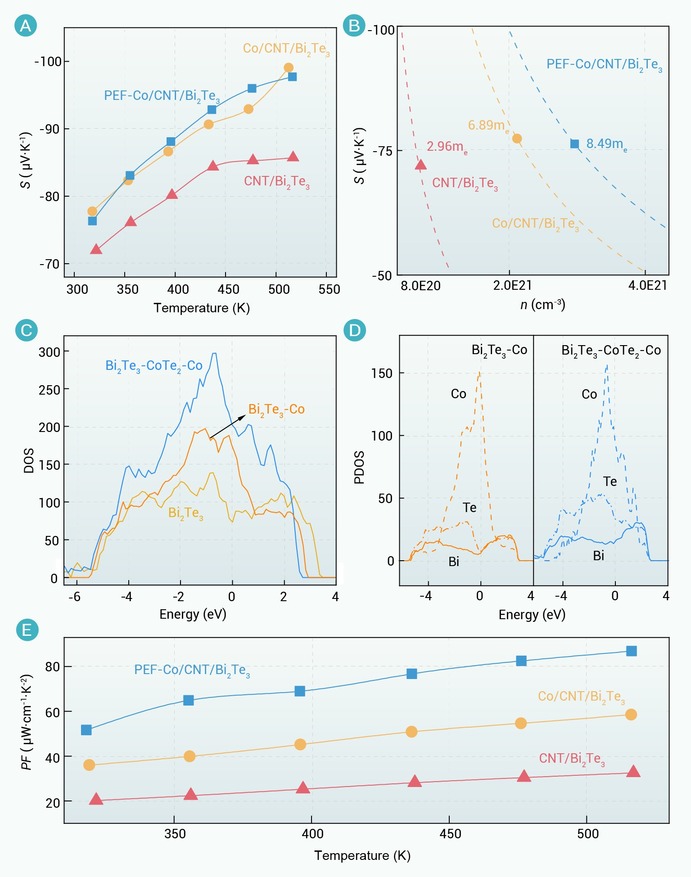
Figure 4.
Enhanced thermoelectric transport through carrier and electronic structure regulation
-
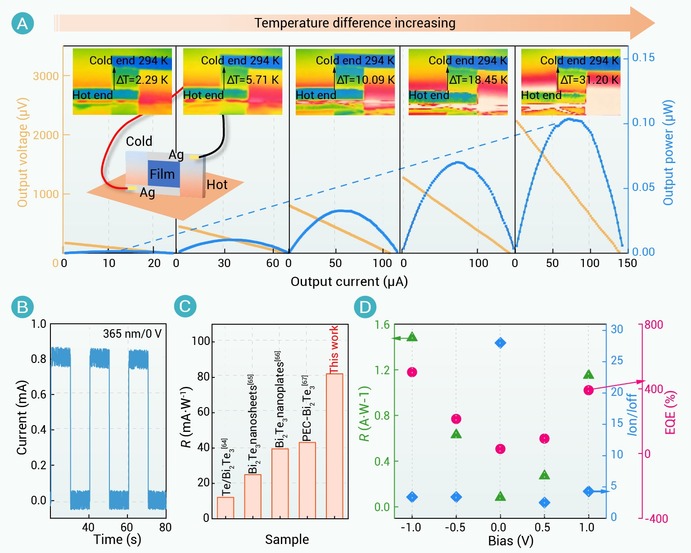
Figure 5.
hermoelectric energy conversion and photodetection erformance of the PEF-Co/CNT/Bi2Te3 device
