
Technological advances in computational neuroethology
-
GRAPHICAL ABSTRACT
 DownLoad:
Full size image
DownLoad:
Full size image
-
PUBLIC SUMMARY
-
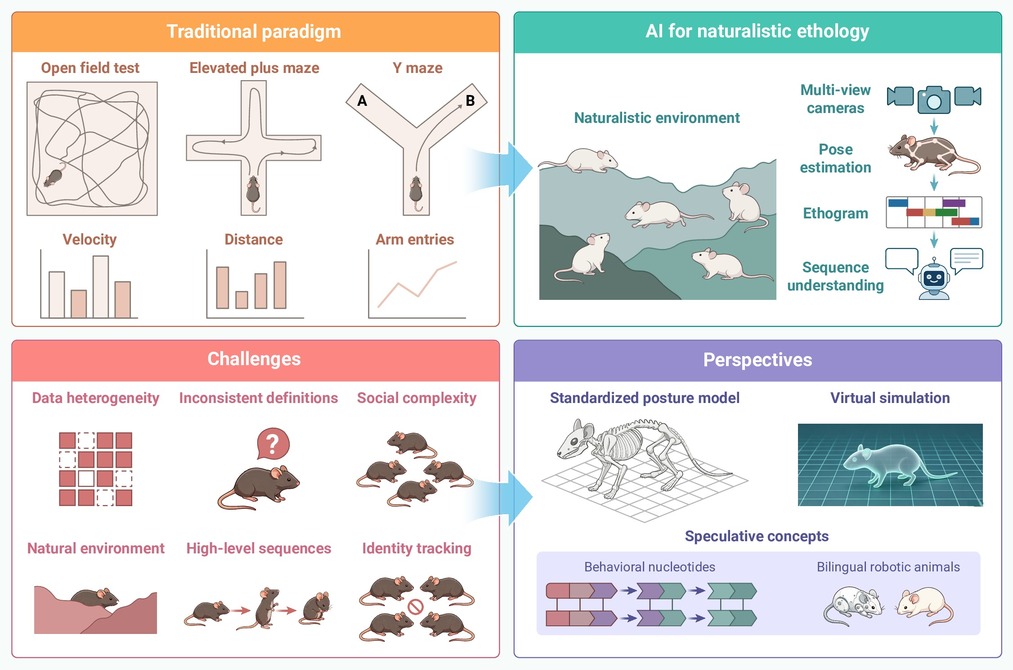
Traditional ethology often relies on task-constrained apparatuses, yielding low-dimensional behavioral measures.
Artificial Intelligence (AI) now enables the analysis of freely moving animals in more natural spaces.
AI drives pose estimation, action recognition, identity tracking, and body language understanding.
Ambiguous definitions, data heterogeneity, and social complexity remain major challenges.
Physical simulations and the forward-looking concept of "behavioral nucleotides" may inspire future research.
-
-
ABSTRACT
Animal behavior offers a critical window into brain function, yet its inherent spatiotemporal complexity has long posed a formidable challenge to objective and fine-grained quantification. This review systematically surveys how Artificial Intelligence (AI) is revolutionizing ethology. We first dissect the key advances in the AI-driven pipeline for behavioral quantification, from pixel-level pose estimation, to automated feature identification and classification, to identity tracking and social communication, and finally to semantic-level behavioral interpretation, achieving a new level of precision and objectivity compared to manual and traditional methods. Subsequently, we critically examine the persistent challenges, including the ambiguity of behavioral definitions, the lack of standardization across experimental paradigms, and the difficulty in understanding higher-order behavioral sequences. Finally, we discuss emerging directions such as virtual animals and speculative concepts, including "behavioral nucleotides". The advent of AI is not only refining experimental methodologies but also providing new conceptual and analytical tools for understanding animal behavior and strengthening its relevance to translational research. -

-
REFERENCES
[1] Tinbergen N. (1963). On aims and methods of ethology. Z. Tierpsychol. 20:410−433. DOI:10.1111/j.1439-0310.1963.tb01161.x [2] Datta S. R., Anderson D. J., Branson K., et al. (2019). Computational neuroethology: a call to action. Neuron 104:11−24. DOI:10.1016/j.neuron.2019.09.038 [3] Miller C. T., Gire D., Hoke K., et al. (2022). Natural behavior is the language of the brain. Curr. Biol. 32:R482−R493. DOI:10.1016/j.cub.2022.03.031 [4] Chen Y., Lin Y.C., Kuo T.W., et al. (2015). Sensory detection of food rapidly modulates arcuate feeding circuits. Cell 160:829−841. DOI:10.1016/j.cell.2015.01.033 [5] Yilmaz M. and Meister M. (2013). Rapid innate defensive responses of mice to looming visual stimuli. Curr. Biol. 23:2011−2015. DOI:10.1016/j.cub.2013.08.015 [6] Wei P., Liu N., Zhang Z., et al. (2015). Processing of visually evoked innate fear by a non-canonical thalamic pathway. Nat. Commun. 6:6756. DOI:10.1038/ncomms7756 [7] Krakauer J. W., Ghazanfar A. A., Gomez-Marin A., et al. (2017). Neuroscience needs behavior: correcting a reductionist bias. Neuron 93:480−490. DOI:10.1016/j.neuron.2016.12.041 [8] Wiltschko A. B., Johnson M. J., Iurilli G., et al. (2015). Mapping sub-second structure in mouse behavior. Neuron 88:1121−1135. DOI:10.1016/j.neuron.2015.11.031 [9] Pereira T. D., Shaevitz J. W. and Murthy M. (2020). Quantifying behavior to understand the brain. Nat. Neurosci. 23:1537−1549. DOI:10.1038/s41593-020-00734-z [10] Huang K., Han Y., Chen K., et al. (2021). A hierarchical 3D-motion learning framework for animal spontaneous behavior mapping. Nat. Commun. 12:2784. DOI:10.1038/s41467-021-22970-y [11] Anderson D. J. and Perona P. (2014). Toward a science of computational ethology. Neuron 84:18−31. DOI:10.1016/j.neuron.2014.09.005 [12] Gris K.V., Coutu J.P. and Gris D. (2017). Supervised and unsupervised learning technology in the study of rodent behavior. Front. Behav. Neurosci. 11:141. DOI:10.3389/fnbeh.2017.00141 [13] Dellu F., Mayo W., Cherkaoui J., et al. (1992). A two-trial memory task with automated recording: study in young and aged rats. Brain Res. 588:132−139. DOI:10.1016/0006-8993(92)91352-F [14] Moy S. S., Nadler J. J., Perez A., et al. (2004). Sociability and preference for social novelty in five inbred strains: an approach to assess autistic-like behavior in mice. Genes Brain Behav. 3:287−302. DOI:10.1111/j.1601-1848.2004.00076.x [15] LeCun Y., Bengio Y. and Hinton G. (2015). Deep learning. Nature 521:436−444. DOI:10.1038/nature14539 [16] Mathis A., Mamidanna P., Cury K. M., et al. (2018). DeepLabCut: markerless pose estimation of user-defined body parts with deep learning. Nat. Neurosci. 21:1281−1289. DOI:10.1038/s41593-018-0209-y [17] Nath T., Mathis A., Chen A. C., et al. (2019). Using DeepLabCut for 3D markerless pose estimation across species and behaviors. Nat. Protoc. 14:2152−2176. DOI:10.1038/s41596-019-0176-0 [18] Berman G. J., Choi D. M., Bialek W., et al. (2014). Mapping the stereotyped behaviour of freely moving fruit flies. J. R. Soc. Interface 11:20140672. DOI:10.1098/rsif.2014.0672 [19] Han Y., Chen K., Wang Y., et al. (2024). Multi-animal 3D social pose estimation, identification and behaviour embedding with a few-shot learning framework. Nat. Mach. Intell. 6:48−61. DOI:10.1038/s42256-023-00776-5 [20] Hsu A. I. and Yttri E. A. (2021). B-SOiD, an open-source unsupervised algorithm for identification and fast prediction of behaviors. Nat. Commun. 12:5188. DOI:10.1038/s41467-021-25420-x [21] Segalin C., Williams J., Karigo T., et al. (2021). The Mouse Action Recognition System (MARS) software pipeline for automated analysis of social behaviors in mice. eLife 10:e63720. DOI:10.7554/eLife.63720 [22] de Chaumont F., Ey E., Torquet N., et al. (2019). Real-time analysis of the behaviour of groups of mice via a depth-sensing camera and machine learning. Nat. Biomed. Eng. 3:930−942. DOI:10.1038/s41551-019-0396-1 [23] Vaswani A., Shazeer N., Parmar N., et al. (2017). Attention is all you need. Advances in Neural Information Processing Systems, pp:5998-6008. DOI:10.5555/3295222.3295349. [24] Ye S., Lauer J., Zhou M., et al. (2023). AmadeusGPT: a natural language interface for interactive animal behavioral analysis. Advances in Neural Information Processing Systems, pp:6297-6329. DOI:10.52202/075280-0276. [25] Xu T., Zhou T., Wang Y., et al. (2025). MouseGPT: a large-scale vision-language model for mouse behavior analysis. bioRxiv. DOI:10.1101/2025.03.27.645630. [26] Hurst J. L. and West R. S. (2010). Taming anxiety in laboratory mice. Nat. Methods 7:825−826. DOI:10.1038/nmeth.1500 [27] Ho H., Kejzar N., Sasaguri H., et al. (2023). A fully automated home cage for long-term continuous phenotyping of mouse cognition and behavior. Cell Rep. Methods 3:100532. DOI:10.1016/j.crmeth.2023.100532 [28] Kahnau P., Mieske P., Wilzopolski J., et al. (2023). A systematic review of the development and application of home cage monitoring in laboratory mice and rats. BMC Biol. 21:256. DOI:10.1186/s12915-023-01751-7 [29] Pereira T. D., Aldarondo D. E., Willmore L., et al. (2019). Fast animal pose estimation using deep neural networks. Nat. Methods 16:117−125. DOI:10.1038/s41592-018-0234-5 [30] Lv S., Wang J., Chen X., et al. (2024). STPoseNet: a real-time spatiotemporal network model for robust mouse pose estimation. iScience 27:109772. DOI:10.1016/j.isci.2024.109772 [31] Pereira T. D., Tabris N., Matsliah A., et al. (2022). SLEAP: a deep learning system for multi-animal pose tracking. Nat. Methods 19:486−495. DOI:10.1038/s41592-022-01426-1 [32] Cao Z., Simon T., Wei S. E., et al. (2017). Realtime multi-person 2D pose estimation using Part Affinity Fields. Proceedings of the IEEE Conference on Computer Vision and Pattern Recognition, pp: 1302-1310. DOI:10.1109/CVPR.2017.143. [33] Lauer J., Zhou M., Ye S., et al. (2022). Multi-animal pose estimation, identification and tracking with DeepLabCut. Nat. Methods 19:496−504. DOI:10.1038/s41592-022-01443-0 [34] Tang G., Han Y., Sun X., et al. (2025). Anti-drift pose tracker (ADPT), a transformer-based network for robust animal pose estimation cross-species. eLife 13:RP95709. DOI:10.7554/eLife.95709.3 [35] Chen Z., Zhang R., Fang H.S., et al. (2023). AlphaTracker: a multi-animal tracking and behavioral analysis tool. Front. Behav. Neurosci. 17:1111908. DOI:10.3389/fnbeh.2023.1111908 [36] Marks M., Jin Q., Sturman O., et al. (2022). Deep-learning-based identification, tracking, pose estimation and behaviour classification of interacting primates and mice in complex environments. Nat. Mach. Intell. 4:331−340. DOI:10.1038/s42256-022-00477-5 [37] Blau A., Gebhardt C., Bendesky A., et al. (2022). SemiMultiPose: a semi-supervised multi-animal pose estimation framework. arXiv. DOI:10.48550/arXiv.2204.07072. [38] Biderman D., Whiteway M. R., Hurwitz C., et al. (2024). Lightning Pose: improved animal pose estimation via semi-supervised learning, Bayesian ensembling and cloud-native open-source tools. Nat. Methods 21:1316−1328. DOI:10.1038/s41592-024-02319-1 [39] Ye S., Filippova A., Lauer J., et al. (2024). SuperAnimal pretrained pose estimation models for behavioral analysis. Nat. Commun. 15:5165. DOI:10.1038/s41467-024-48792-2 [40] Li C. and Lee G. H. (2021). From synthetic to real: unsupervised domain adaptation for animal pose estimation. Proceedings of the IEEE/CVF Conference on Computer Vision and Pattern Recognition, pp:1482-1491. DOI:10.1109/CVPR46437.2021.00153. [41] Yu H., Xu Y., Zhang J., et al. (2021). AP-10K: a benchmark for animal pose estimation in the wild. In Proceedings of the Neural Information Processing Systems Track on Datasets and Benchmarks. https://openreview.net/forum?id=rH8yliN6C83. [42] Marshall J. D., Klibaite U., Gellis A., et al. (2021). The PAIR-R24M dataset for multi-animal 3D pose estimation. In Proceedings of the Neural Information Processing Systems Track on Datasets and Benchmarks. https://openreview.net/forum?id=-wVVl_UPr8. [43] Ebbesen C. L. and Froemke R. C. (2022). Automatic mapping of multiplexed social receptive fields by deep learning and GPU-accelerated 3D videography. Nat. Commun. 13:593. DOI:10.1038/s41467-022-28153-7 [44] Zuffi S., Kanazawa A., Jacobs D. W., et al. (2017). 3D Menagerie: modeling the 3D shape and pose of animals. Proceedings of the IEEE Conference on Computer Vision and Pattern Recognition, pp:5524-5532. DOI:10.1109/CVPR.2017.586. [45] Han Y., Huang K., Chen K., et al. (2022). MouseVenue3D: a markerless three-dimension behavioral tracking system for matching two-photon brain imaging in free-moving mice. Neurosci. Bull. 38:303−317. DOI:10.1007/s12264-021-00778-6 [46] Dunn T. W., Marshall J. D., Severson K. S., et al. (2021). Geometric deep learning enables 3D kinematic profiling across species and environments. Nat. Methods 18:564−573. DOI:10.1038/s41592-021-01106-6 [47] Klibaite U., Li T., Aldarondo D., et al. (2025). Mapping the landscape of social behavior. Cell 188:2249−2266.e23. DOI:10.1016/j.cell.2025.01.044 [48] Stern U., He R. and Yang C.H. (2015). Analyzing animal behavior via classifying each video frame using convolutional neural networks. Sci. Rep. 5:14351. DOI:10.1038/srep14351 [49] Tang C., Zhou Y., Zhao S., et al. (2024). Segmentation tracking and clustering system enables accurate multi-animal tracking of social behaviors. Patterns 5:101057. DOI:10.1016/j.patter.2024.101057 [50] Weinreb C., Pearl J. E., Lin S., et al. (2024). Keypoint-MoSeq: parsing behavior by linking point tracking to pose dynamics. Nat. Methods 21:1329−1339. DOI:10.1038/s41592-024-02318-2 [51] von Ziegler L., Sturman O. and Bohacek J. (2021). Big behavior: challenges and opportunities in a new era of deep behavior profiling. Neuropsychopharmacology 46:33−44. DOI:10.1038/s41386-020-0751-7 [52] Markowitz J. E., Gillis W. F., Beron C. C., et al. (2018). The striatum organizes 3D behavior via moment-to-moment action selection. Cell 174:44−58.e17. DOI:10.1016/j.cell.2018.04.019 [53] Goodwin N. L., Choong J. J., Hwang S., et al. (2024). Simple Behavioral Analysis (SimBA) as a platform for explainable machine learning in behavioral neuroscience. Nat. Neurosci. 27:1411−1424. DOI:10.1038/s41593-024-01649-9 [54] Schneider S., Lee J. H. and Mathis M. W. (2023). Learnable latent embeddings for joint behavioural and neural analysis. Nature 617:360−368. DOI:10.1038/s41586-023-06031-6 [55] Pereira E., Araújo Í. and Silva L.F.V. (2023). RFID technology for animal tracking: a survey. IEEE J. Radio Freq. Identif. 7:609−620. DOI:10.1109/JRFID.2023.3334952 [56] Pérez-Escudero A., Vicente-Page J., Hinz R. C., et al. (2014). idTracker: tracking individuals in a group by automatic identification of unmarked animals. Nat. Methods 11:743−748. DOI:10.1038/nmeth.2994 [57] Romero-Ferrero F., Bergomi M. G., Hinz R. C., et al. (2019). idtracker.ai: tracking all individuals in small or large collectives of unmarked animals. Nat. Methods 16:179−182. DOI:10.1038/s41592-018-0295-5 [58] Robinson I., Glidden-Handgis G., Panchal N., et al. (2025). DIPLOMAT: multi-animal tracking with efficient manual editing. bioRxiv. DOI:10.1101/2025.08.11.669786. [59] Torrents J., Costa T. and de Polavieja G. (2026). New idtracker.ai rethinks multi-animal tracking as a representation learning problem to increase accuracy and reduce tracking time. eLife 14:RP107602. DOI:10.7554/eLife.107602.4 [60] Li Y., Zhang Q., Zhang Y., et al. (2026). Unsupervised transfer learning enables multi-animal tracking without training annotation. Nat. Methods 23:1058−1068. DOI:10.1038/s41592-026-03051-8 [61] Yin S., Fu C., Zhao S., et al. (2024). A survey on multimodal large language models. Natl. Sci. Rev. 11:nwae403. DOI:10.1093/nsr/nwae403 [62] Xi Z., Chen W., Guo X., et al. (2025). The rise and potential of large language model based agents: a survey. Sci. China Inf. Sci. 68:121101. DOI:10.1007/s11432-024-4222-0 [63] Wang Y., Li X., Yan Z., et al. (2025). InternVideo2.5: empowering video MLLMs with long and rich context modeling. arXiv. DOI:10.48550/arXiv.2501.12386 [64] Bai S., Cai Y., Chen R., et al. (2025). Qwen3-VL technical report. arXiv. DOI:10.48550/arXiv.2511.21631 [65] Crabbe J. C., Wahlsten D. and Dudek B. C. (1999). Genetics of mouse behavior: interactions with laboratory environment. Science 284:1670−1672. DOI:10.1126/science.284.5420.1670 [66] Qwen Team. (2026). Qwen3.5-Omni technical report. arXiv. DOI: 10.48550/arXiv.2604.15804 [67] Coffey K. R., Marx R. E. and Neumaier J. F. (2019). DeepSqueak: a deep learning-based system for detection and analysis of ultrasonic vocalizations. Neuropsychopharmacology 44:859−868. DOI:10.1038/s41386-018-0303-6 [68] Aljović A., Lin Z., Wang W., et al. (2025). An autonomous AI agent for universal behavior analysis. bioRxiv. DOI:10.1101/2025.05.15.653585 [69] Zhou M., Zhou S., Xiong B., et al. (2026). Humanoid animal behavior labeler: an interactive annotation agent to accelerate ethological applications in precision management of animals using large vision-language models. Comput. Electron. Agric. 241:111307. DOI:10.1016/j.compag.2025.111307 [70] Chen K., Chen Z., Zheng D., et al. (2026). EthoClaw: an integrated AI workflow platform for automated analysis in neuroethology. bioRxiv. DOI:10.64898/2026.03.25.714141 [71] Yang Y., Yang J., Xu Y., et al. (2022). APT-36K: a large-scale benchmark for animal pose estimation and tracking. Advances in Neural Information Processing Systems 35:17301−17313. DOI:10.52202/068431-1258 [72] Sun J. J., Karigo T., Chakraborty D., et al. (2021). The Multi-Agent Behavior Dataset: mouse dyadic social interactions. In Proceedings of the Neural Information Processing Systems Track on Datasets and Benchmarks 1:1−15. [73] Zhang L., Gao J., Xiao Z., et al. (2023). AnimalTrack: a benchmark for multi-animal tracking in the wild. Int. J. Comput. Vis. 131:496−513. DOI:10.1007/s11263-022-01711-8 [74] Duty S. and Jenner P. (2011). Animal models of Parkinson's disease: a source of novel treatments and clues to the cause of the disease. Br. J. Pharmacol. 164:1357−1391. DOI:10.1111/j.1476-5381.2011.01426.x [75] Rübel O., Tritt A., Ly R., et al. (2022). The Neurodata Without Borders ecosystem for neurophysiological data science. eLife 11:e78362. DOI:10.7554/eLife.78362 [76] Dodge S. and Karam L. (2016). Understanding how image quality affects deep neural networks. 2016 Eighth International Conference on Quality of Multimedia Experience (QoMEX), pp:1-6. DOI:10.1109/QoMEX.2016.7498955 [77] Ebbesen C. L. and Froemke R. C. (2021). Body language signals for rodent social communication. Curr. Opin. Neurobiol. 68:91−106. DOI:10.1016/j.conb.2021.01.008 [78] Quinn L. K., Schuster L. P., Aguilar-Rivera M., et al. (2018). When rats rescue robots. Anim. Behav. Cogn. 5:368−379. DOI:10.26451/abc.05.04.04.2018 [79] Jia G., Chen Z., Zhang Y., et al. (2024). Modulating emotional states of rats through a rat-like robot with learned interaction patterns. Nat. Mach. Intell. 6:1580−1593. DOI:10.1038/s42256-024-00939-y [80] Han Y., Jiang Z., Ju F., et al. (2025). BL-BERT: extracting body language from behavior sequences in freely moving mice. Human Brain and Artificial Intelligence: 4th International Workshop, HBAI 2024, Proceedings (Springer), pp:181-191. DOI:10.1007/978-981-96-4001-0_12 [81] Wynne C. D. L. (2007). What are animals? Why anthropomorphism is still not a scientific approach to behavior. Comp. Cogn. Behav. Rev. 2:125−135. DOI:10.3819/CCBR.2008.20008 [82] Botvinick M. M. (2008). Hierarchical models of behavior and prefrontal function. Trends Cogn. Sci. 12:201−208. DOI:10.1016/j.tics.2008.02.009 [83] Seyfarth R. M., Cheney D. L. and Marler P. (1980). Vervet monkey alarm calls: semantic communication in a free-ranging primate. Anim. Behav. 28:1070−1094. DOI:10.1016/S0003-3472(80)80097-2 [84] Festing M. F. W. and Altman D. G. (2002). Guidelines for the design and statistical analysis of experiments using laboratory animals. ILAR J. 43:244−258. DOI:10.1093/ilar.43.4.244 [85] Mathis M. W. and Mathis A. (2020). Deep learning tools for the measurement of animal behavior in neuroscience. Curr. Opin. Neurobiol. 60:1−11. DOI:10.1016/j.conb.2019.10.008 [86] Galoaa B., Amraee S. and Ostadabbas S. (2025). More than meets the eye: enhancing multi-object tracking even with prolonged occlusions. In Proceedings of the 42nd International Conference on Machine Learning(PMLR), pp:18132-18142. [87] Bolaños L. A., Xiao D., Ford N. L., et al. (2021). A three-dimensional virtual mouse generates synthetic training data for behavioral analysis. Nat. Methods 18:378−381. DOI:10.1038/s41592-021-01103-9 [88] Aldarondo D., Merel J., Marshall J. D., et al. (2024). A virtual rodent predicts the structure of neural activity across behaviours. Nature 632:594−602. DOI:10.1038/s41586-024-07633-4 [89] Zhang C. Y., Yang Y., Sirbu A., et al. (2025). MIMIC-MJX: neuromechanical emulation of animal behavior. arXiv. DOI:10.48550/arXiv.2511.20532 [90] National Institutes of Health. (2025). NIH to prioritize human-based research technologies. https://www.nih.gov/news-events/news-releases/nih-prioritize-human-based-research-technologies [91] Dosovitskiy A., Ros G., Codevilla F., et al. (2017). CARLA: an open urban driving simulator. In Proceedings of the 1st Annual Conference on Robot Learning(PMLR), pp:1-16. [92] Makoviychuk V., Wawrzyniak L., Guo Y., et al. (2021). Isaac Gym: high performance GPU based physics simulation for robot learning. In Proceedings of the Neural Information Processing Systems Track on Datasets and Benchmarks. https://datasets-benchmarks-proceedings.neurips.cc/paper/2021/hash/28dd2c7955ce926456240b2ff0100bde-Abstract-round2.html [93] DeWolf T., Schneider S., Soubiran P., et al. (2024). Neuro-musculoskeletal modeling reveals muscle-level neural dynamics of adaptive learning in sensorimotor cortex. bioRxiv. DOI:10.1101/2024.09.11.612513 [94] Simon H. A. (1962). The architecture of complexity. Proc. Am. Philos. Soc. 106:467−482. [95] Altschul S. F., Gish W., Miller W., et al. (1990). Basic local alignment search tool. J. Mol. Biol. 215:403−410. DOI:10.1016/S0022-2836(05)80360-2 [96] Bailey T. and Elkan C. (1994). Fitting a mixture model by expectation maximization to discover motifs in biopolymers. Proc. Int. Conf. Intell. Syst. Mol. Biol. 2:28−36. [97] Avsec Ž., Agarwal V., Visentin D., et al. (2021). Effective gene expression prediction from sequence by integrating long-range interactions. Nat. Methods 18:1196−1203. DOI:10.1038/s41592-021-01252-x [98] Clark H. H. and Brennan S. E. (1991). Grounding in communication. Resnick L. B., Levine J. M. and Teasley S. D. (eds). Perspectives on socially shared cognition (American Psychological Association), pp: 127-149. DOI: 10.1037/10096-006 [99] Halloy J., Sempo G., Caprari G., et al. (2007). Social integration of robots into groups of cockroaches to control self-organized choices. Science 318:1155−1158. DOI:10.1126/science.1144259 [100] Krause J., Winfield A. F. T. and Deneubourg J.L. (2011). Interactive robots in experimental biology. Trends Ecol. Evol. 26:369−375. DOI:10.1016/j.tree.2011.03.015 -
ABOUT THIS ARTICLE
Cite this article:
Chen K., Han Y., Huang K., et al. (2026). Technological advances in computational neuroethology. The Innovation Reviews 1:100012. https://doi.org/10.59717/j.tirv.2026.100012
Welcome!
To request copyright permission to republish or share portions of our works, please visit Copyright Clearance Center's (CCC) Marketplace website at marketplace.copyright.com.
Export File
Citation
Chen K., Han Y., Huang K., et al. (2026). Technological advances in computational neuroethology. The Innovation Reviews 1:100012. https://doi.org/10.59717/j.tirv.2026.100012

Format
Content
-
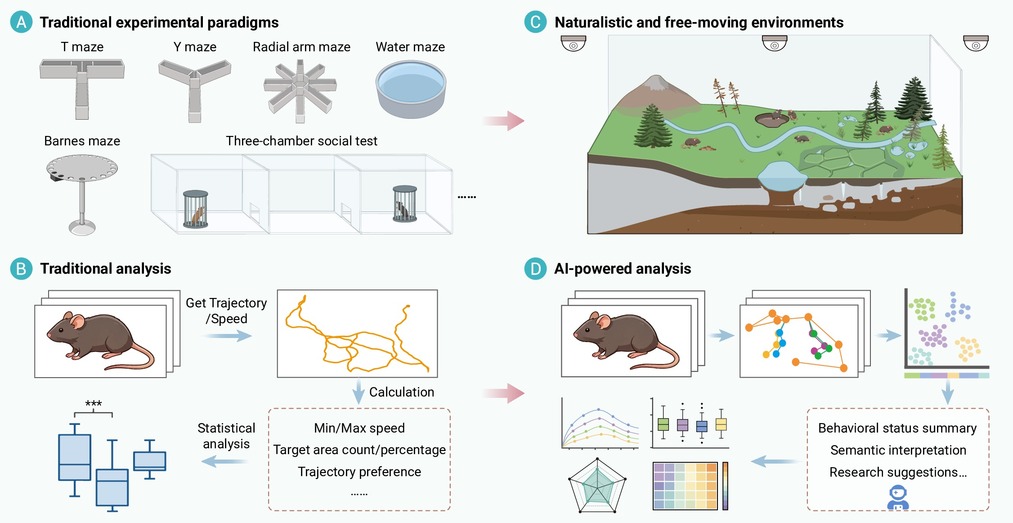
Figure 1.
Paradigm shift from traditional behavioral assays to AI-powered naturalistic animal behavior analysis
-
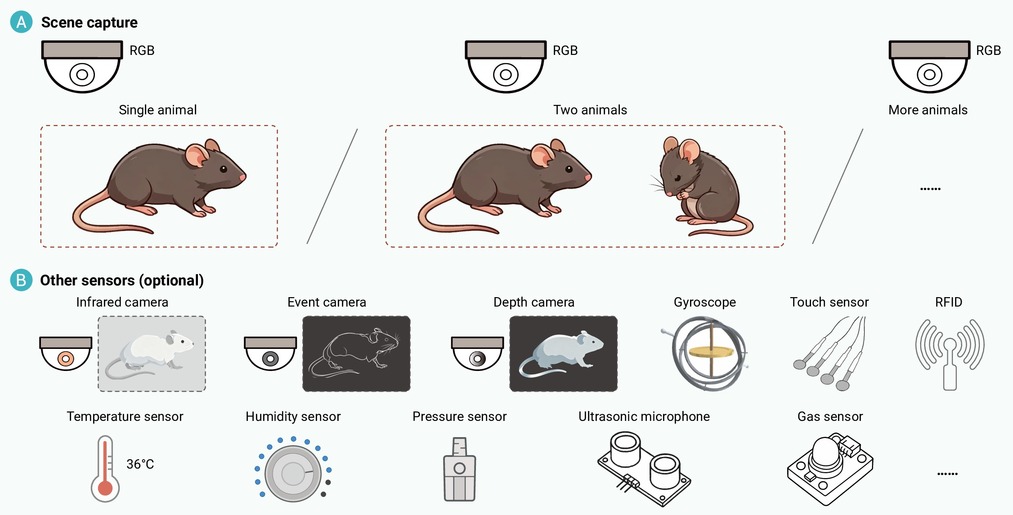
Figure 2.
The capture stage in a typical AI pipeline for animal behavior analysis
-
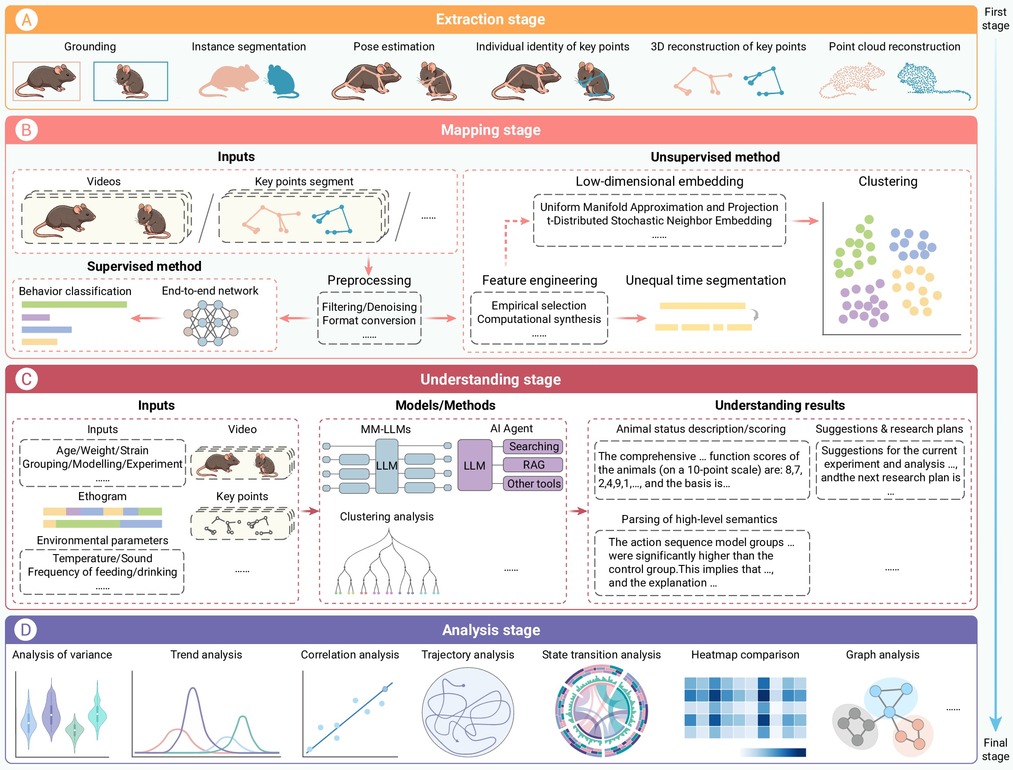
Figure 3.
The processing and analysis stages in a typical AI pipeline for animal behavior analysis
-
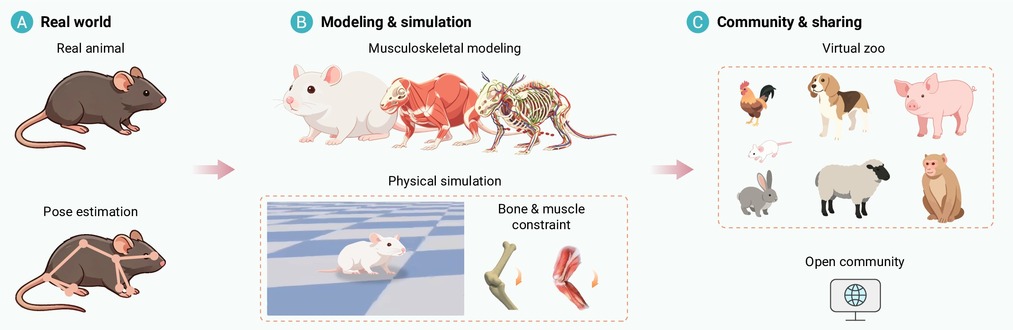
Figure 4.
The development of a multispecies standard posture physical model
-
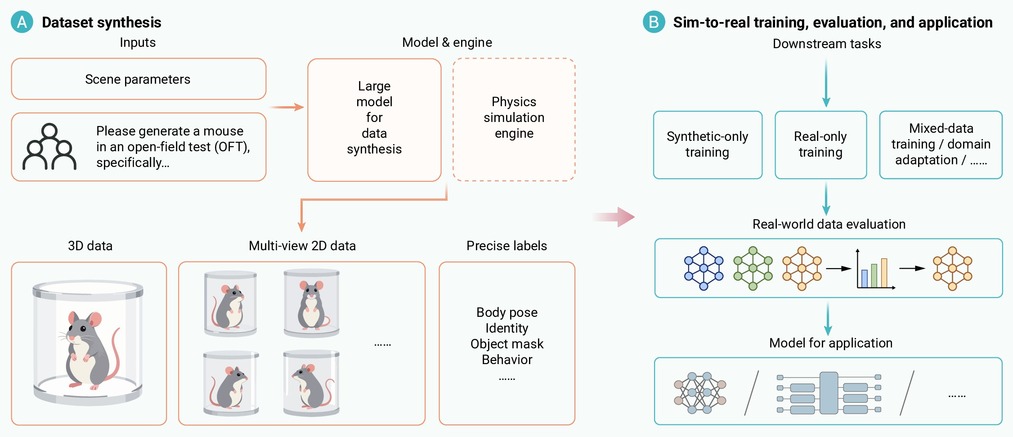
Figure 5.
Simulation-based data generation and sim-to-real training, evaluation, and application for animal behavior analysis
-
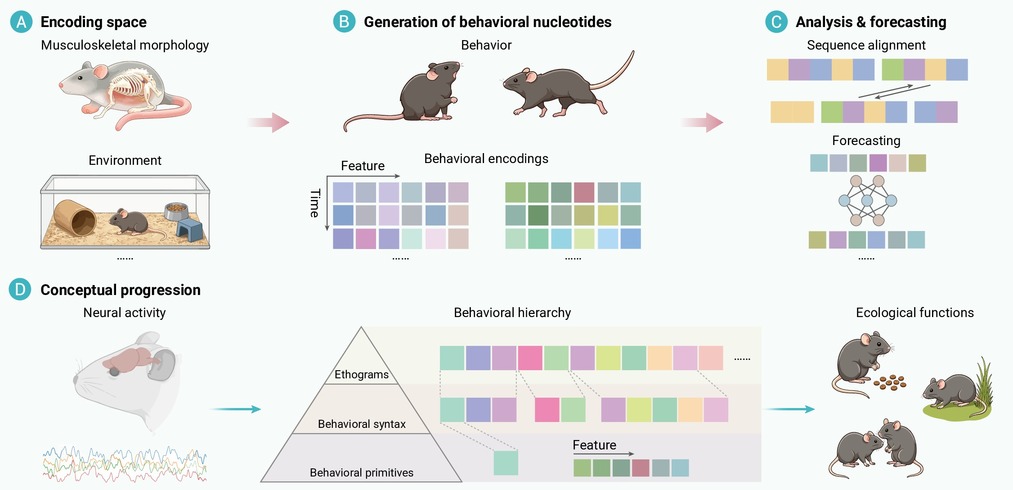
Figure 6.
Behavioral nucleotides as a speculative framework for behavioral encoding, sequence analysis, and hierarchical organization
-
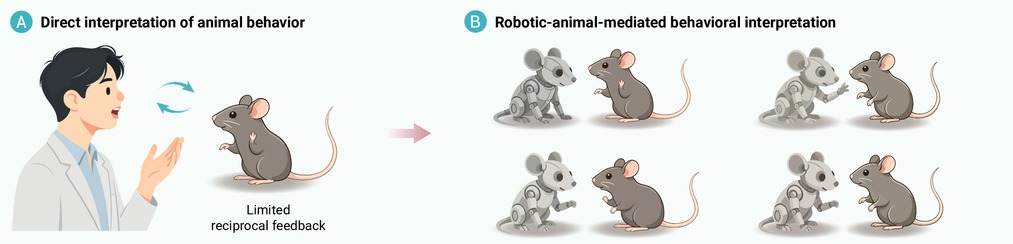
Figure 7.
Exploratory use of "bilingual robotic animals"
