
Giant-thermopower ionogels for multifunctional energy harvesting through molecularly selective ionic pairing and hydrogen bonding
-
GRAPHICAL ABSTRACT

 DownLoad:
Full size image
DownLoad:
Full size image
-
PUBLIC SUMMARY
-
Giant thermopowers in ionogels are achieved by synergistically modulating ionic pairing and hydrogen bonding.
Ion pairs by Coulombic and H-bonds by Lewis acid-base interactions are characterized by FTIR, NMR, and Raman.
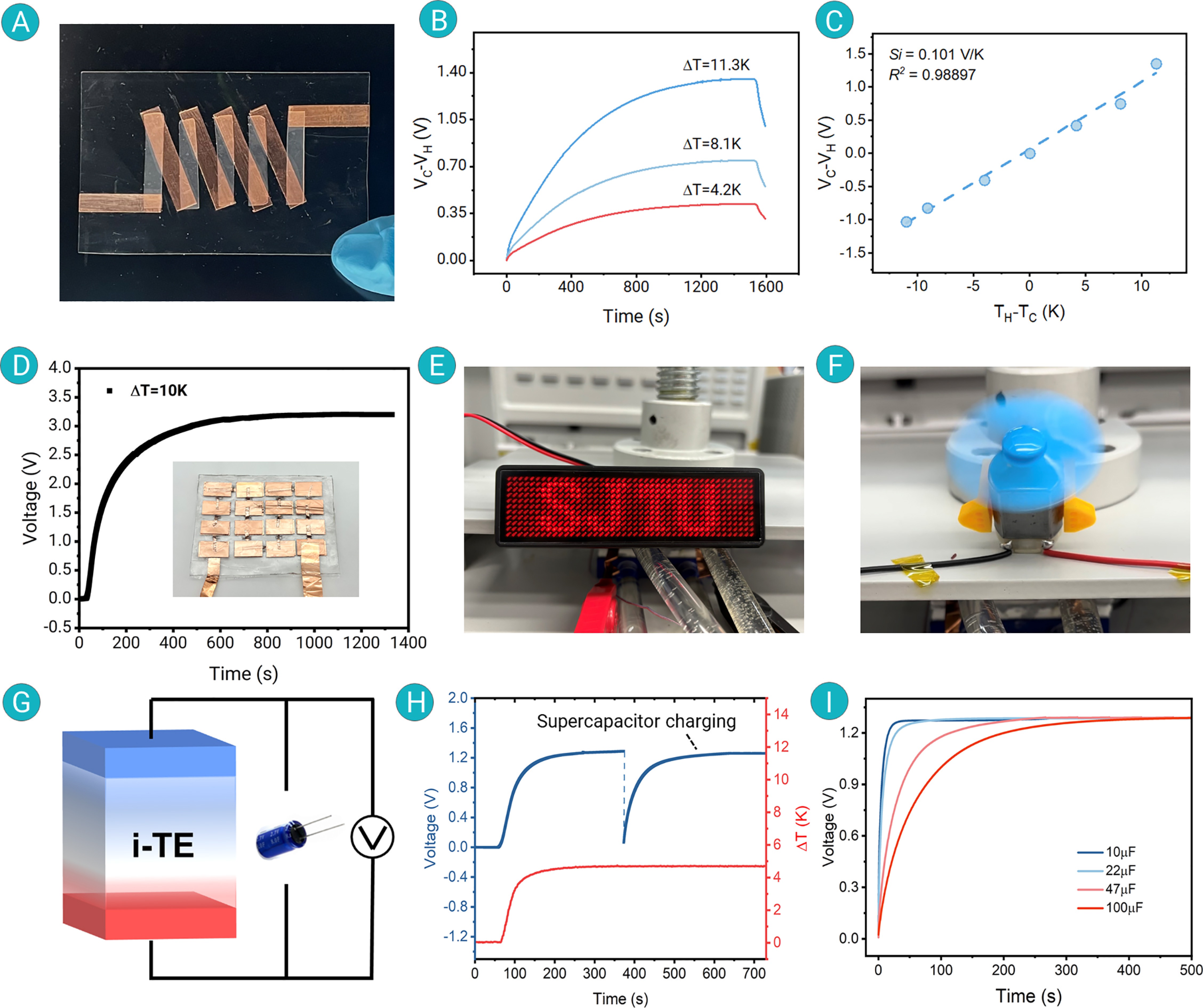
Ionogel thermoelectric supercapacitor is assembled for low-grade heat recovery with 101 mV/K thermopower.
A self-powered, highly sensitive and stable i-TE ionogel thermal sensor is demonstrated upon light-induced heating.
Thermoelectric ionogels yield 113% increase in the output voltage of a conventional triboelectric nanogenerator.
-
-
ABSTRACT
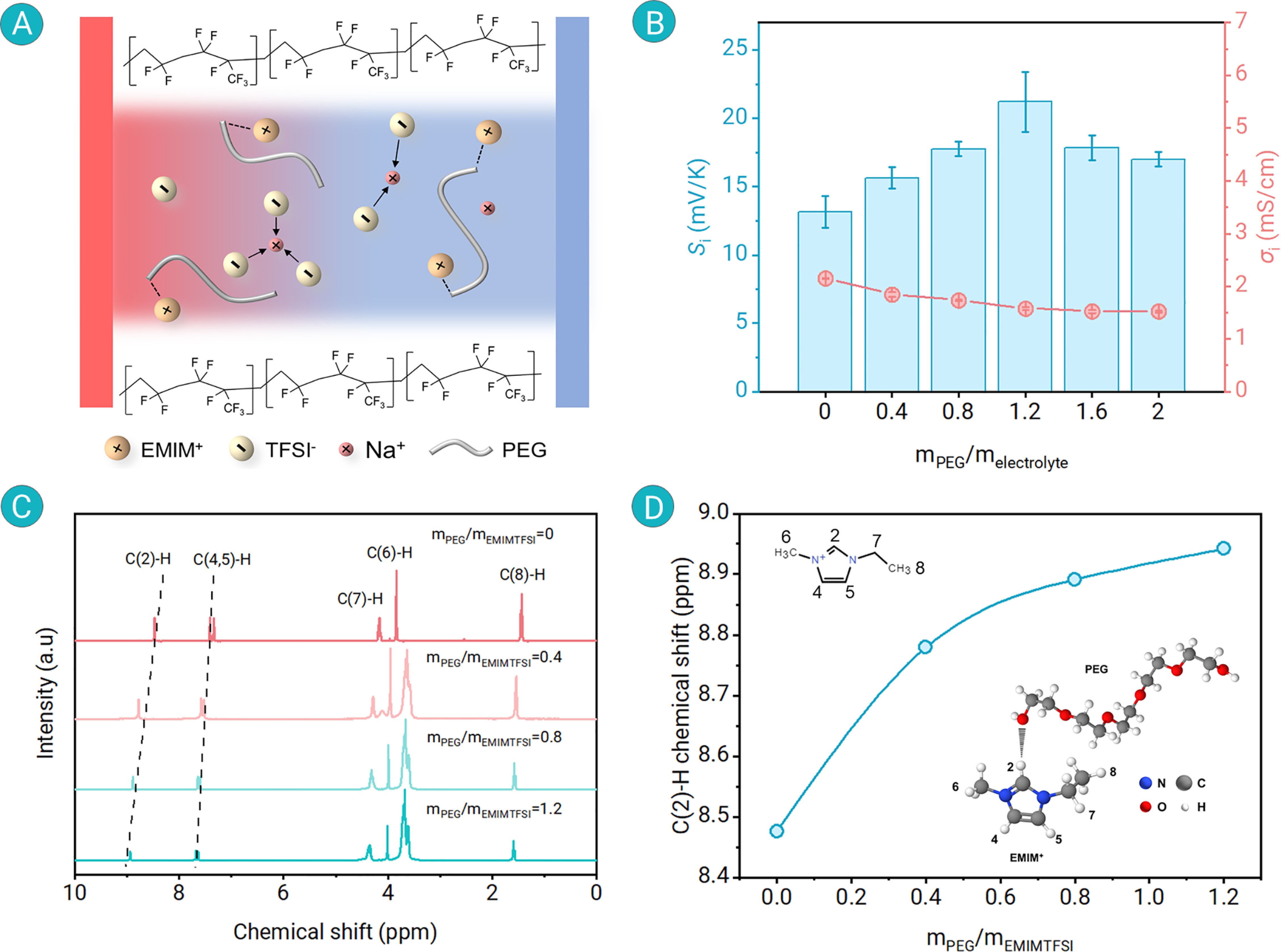
Ionogels are emerging multifunctional materials for low-grade energy conversion and storage due to their high thermopowers, low costs, and facile productions. However, the thermoelectric synergy between ion-ion and polymer-ion interactions at the molecular level remains unexplored. Here, thermopower of ionogels composed of PVDF-HFP and EMIM:TFSI are enhanced from 5.3 to 21.2 mV/K by molecularly tailoring Coulombic and Lewis acid-base interactions. First, doping the ionogels with sodium bis(trifluoro-methylsulfonyl) imide (Na:TFSI) can greatly improve the thermopower. This improvement is ascribed to the stronger Coulombic interactions between the doped Na+ and TFSI-, which selectively induces the formation of [Na:(TFSI)n]1–n contact ion pairs, blocks the migration of TFSI-, and increases the difference in mobilities between EMIM+ and TFSI–. Second, large amounts of hydrogen bonds are selectively formed between the terminal hydroxyl groups (-OH) in the added polyethylene glycol (PEG) and EMIM+. The Lewis acid-base interaction between the O˙ with lone-pair electrons in -OH of PEG and the acidic protons in EMIM+ is critical in promoting the heat of transport of EMIM+, which further increases the thermopower. In terms of applications, we demonstrate the potential of ionogels in multifunctional energy harvesting with high thermovoltages, including thermoelectric supercapacitors, highly sensitive thermal sensors, and thermoelectric ionogel-based triboelectric nanogenerators. Overall, this work offers molecular insights into Coulombic and Lewis acid-base interactions for enhancing thermopowers of ionogels, also broadening their applications in low-grade energy harvesting and self-powered electronic devices. -

-
REFERENCES
[1] Zhao, C., Ju, S., Xue, Y., et al. (2022). China’s energy transitions for carbon neutrality: challenges and opportunities. Carb. Neutrality 1(1): 7. DOI: 10.1007/s43979-022-00010-y. [2] Chen, X. (2024). Green and low-carbon energy-use. The Innovation Energy 1(1). DOI: 10.59717/j.xinn-energy.2024.100003. [3] Cheng, H., Le, Q., Liu, Z., et al. (2022). Ionic thermoelectrics: principles, materials and applications. J. Mater. Chem. C 10(2): 433−450. DOI: 10.1039/d1tc05242j. [4] Liu, W., Hu, J., Zhang, S., et al. (2017). New trends, strategies and opportunities in thermoelectric materials: A perspective. Mater. Today Phys. 1: 50−60. DOI: 10.1016/j.mtphys.2017.06.001. [5] Sun, M., Liu, T., Wang, X., et al. (2023). Roles of thermal energy storage technology for carbon neutrality. Carb. Neutrality 2(1): 12. DOI: 10.1007/s43979-023-00052-w. [6] Wang, Q., Dan, Y., Riffat, S., et al. (2024). Harvesting energy from the sun and space: A versatile collector for simultaneous production of electricity, heat, and cold energy. The Innovation Energy 1(1). DOI: 10.59717/j.xinn-energy.2024.100013. [7] Zhao, Y., Li, M., Long, R., et al. (2023). Techno-economic analysis of converting low-grade heat into electricity and hydrogen. Carb. Neutrality 2(1): 19. DOI: 10.1007/s43979-023-00059-3. [8] Liu, Z., Yuan, S., Yuan, Y., et al. (2021). A thermoelectric generator and water-cooling assisted high conversion efficiency polycrystalline silicon photovoltaic system. Front. Energy 15(2): 358−366. DOI: 10.1007/s11708-020-0712-1. [9] Yan, L., Zhao, L., Yang, G., et al. (2022). High performance solid-state thermoelectric energy conversion via inorganic metal halide perovskites under tailored mechanical deformation. Front.Energy 16(4): 581−594. DOI: 10.1007/s11708-022-0831-y. [10] Fan, Z., Li, P., Du, D., and Ouyang, J. (2017). Significantly Enhanced Thermoelectric Properties of PEDOT:PSS Films through Sequential Post-Treatments with Common Acids and Bases. Adv. Energy Mater. 7(8): 1602116. DOI: 10.1002/aenm.201602116. [11] Zheng, Z.H., Zhong, Y.M., Li, Y.L., et al. (2024). Ultrahigh thermoelectric properties of p‐type BixSb2−xTe3 thin films with exceptional flexibility for wearable energy harvesting. Carbon Energy 6(8). DOI: 10.1002/cey2.541. [12] Yu, Z., Cheng, P., Qiu, T., et al. (2024). Isotonic separation enabled efficient low-grade heat conversion with thermal-responsive ionic liquids. Mater. Today Energy 40. DOI: 10.1016/j.mtener.2024.101522. [13] Zhu, Z., Tiwari, J., Feng, T., et al. (2022). High thermoelectric properties with low thermal conductivity due to the porous structure induced by the dendritic branching in n-type PbS. Nano Research 15(5): 4739−4746. DOI: 10.1007/s12274-022-4117-9. [14] Shi, X.L., Cao, T., Chen, W., et al. (2023). Advances in flexible inorganic thermoelectrics. EcoEnergy 1(2): 296−343. DOI: 10.1002/ece2.17. [15] Xu, Z., Lin, S., Yin, Y., and Gu, X. (2024). Synergy between gelatin hydrogels and electrodes for adjustable and thermally stable ionic thermoelectric supercapacitors. J. Chem. Eng. 493: 152734. DOI: 10.1016/j.cej.2024.152734. [16] Massetti, M., Jiao, F., Ferguson, A.J., et al. (2021). Unconventional Thermoelectric Materials for Energy Harvesting and Sensing Applications. Chem. Rev. 121(20): 12465−12547. DOI: 10.1021/acs.chemrev.1c00218. [17] Liu, Z., Cheng, H., Le, Q., et al. (2022). Giant Thermoelectric Properties of Ionogels with Cationic Doping. Adv. Energy Mater. 12(22): 2200858. DOI: 10.1002/aenm.202200858. [18] Le, Q., Chen, Z., Cheng, H., and Ouyang, J. (2023). Giant Thermoelectric Performance of N-Type Ionogels by Synergistic Dopings of Cations and Anions. Adv. Energy Mater. 13(47): 2302472. DOI: 10.1002/aenm.202302472. [19] Chen, Y., He, J., Ye, C., and Tang, S. (2024). Achieving Ultrahigh Voltage Over 100 V and Remarkable Freshwater Harvesting Based on Thermodiffusion Enhanced Hydrovoltaic Generator. Adv. Energy Mater. 14(24). DOI: 10.1002/aenm.202400529. [20] Yu, B., Duan, J., Cong, H., et al. (2020). Thermosensitive crystallization–boosted liquid thermocells for low-grade heat harvesting. Science 370(6514): 342−346. DOI: 10.1126/science.abd6749. [21] Buckingham, M.A., Marken, F., and Aldous, L. (2018). The thermoelectrochemistry of the aqueous iron(ii)/iron(iii) redox couple: significance of the anion and pH in thermogalvanic thermal-to-electrical energy conversion. Sustain. Energy Fuels 2(12): 2717−2726. DOI: 10.1039/c8se00416a. [22] Al Maimani, M., Black, J.J., and Aldous, L. (2016). Achieving pseudo -‘n-type p-type’ in-series and parallel liquid thermoelectrics using all-iron thermoelectrochemical cells with opposite Seebeck coefficients. Electrochem. commun. 72: 181−185. DOI: 10.1016/j.elecom.2016.10.001. [23] Liu, X., Wang, T., Ye, H., et al. (2024). Boosting I–/I3− liquid state thermocells through solubility‐driven biphasic system optimization. EcoEnergy. DOI: 10.1002/ece2.52. [24] Liu, S., Yang, Y., Huang, H., et al. (2022). Giant and bidirectionally tunable thermopower in nonaqueous ionogels enabled by selective ion doping. Sci. Adv. 8(1): eabj3019. DOI: 10.1126/sciadv.abj3019. [25] Chi, C., An, M., Qi, X., et al. (2022). Selectively tuning ionic thermopower in all-solid-state flexible polymer composites for thermal sensing. Nat. Commun. 13(1): 221. DOI: 10.1038/s41467-021-27885-2. [26] Zhao, D., Martinelli, A., Willfahrt, A., et al. (2019). Polymer gels with tunable ionic Seebeck coefficient for ultra-sensitive printed thermopiles. Nat. Commun. 10(1): 1093. DOI: 10.1038/s41467-019-08930-7. [27] Liu, S., Yang, Y., Chen, S., et al. (2022). High p- and n-type thermopowers in stretchable self-healing ionogels. Nano Energy 100: 107542. DOI: 10.1016/j.nanoen.2022.107542. [28] Liu, L., Zhang, D., Bai, P., et al. (2023). Strong Tough Thermogalvanic Hydrogel Thermocell With Extraordinarily High Thermoelectric Performance. Adv. Mater. 35(32): 2300696. DOI: 10.1002/adma.202300696. [29] Zhang, D., Mao, Y., Ye, F., et al. (2022). Stretchable thermogalvanic hydrogel thermocell with record-high specific output power density enabled by ion-induced crystallization. Energy Environ. Sci. 15(7): 2974−2982. DOI: 10.1039/d2ee00738j. [30] Zhang, D., Fang, Y., Liu, L., et al. (2023). Boosting Thermoelectric Performance of Thermogalvanic Hydrogels by Structure Engineering Induced by Liquid Nitrogen Quenching. Adv. Energy Mater.14(10). DOI: 10.1002/aenm.202303358. [31] Han, C.-G., Qian, X., Li, Q., et al. (2020). Giant thermopower of ionic gelatin near room temperature. Science 368(6495): 1091−1098. DOI: 10.1126/science.aaz5045. [32] Eastman, E.D. (1928). THEORY OF THE SORET EFFECT. J. Am. Chem. Soc. 50: 283−291. DOI. DOI: 10.1021/ja01389a007. [33] Bin Chen, Q.C., Songhua Xiao, Jiansong Feng, Xu Zhang, Taihong Wang (2021). Giant negative thermopower of ionic hydrogel by synergistic coordination and hydration interactions. Sci. Adv. 7(48):eabi7233. DOI. [34] Zhao, D., Wang, H., Khan, Z.U., et al. (2016). Ionic thermoelectric supercapacitors. Energy Environ. Sci. 9(4): 1450−1457. DOI: 10.1039/c6ee00121a. [35] Li, T., Zhang, X., Lacey, S.D., et al. (2019). Cellulose ionic conductors with high differential thermal voltage for low-grade heat harvesting. Nat. Mater. 18(6): 608−613. DOI: 10.1038/s41563-019-0315-6. [36] Bandara, T.M.W.J., Dissanayake, M.A.K.L., Albinsson, I., and Mellander, B.E. (2011). Mobile charge carrier concentration and mobility of a polymer electrolyte containing PEO and Pr4N+I− using electrical and dielectric measurements. Solid State Ion. 189(1): 63−68. DOI: 10.1016/j.ssi.2011.03.004. [37] Kim, D.-H., Akbar, Z.A., Malik, Y.T., et al. (2023). Self-healable polymer complex with a giant ionic thermoelectric effect. Nat. Commun. 14(1): 3246. DOI: 10.1038/s41467-023-38830-w. [38] Zhan, W., Zhang, H., Lyu, X., et al. (2023). An ultra-tough and super-stretchable ionogel with multi functions towards flexible iontronics. Sci. China Mater. 66(4): 1539−1550. DOI: 10.1007/s40843-022-2286-5. [39] Zhai, C., Lin, S., Wang, M., et al. (2021). Conformational Freedom‐Enhanced Optomechanical Energy Conversion Efficiency in Bulk Azo‐Polyimides. Adv. Funct. Mater. 31(45). DOI: 10.1002/adfm.202104414. [40] Lin, S., Cai, Z., Wang, Y., et al. (2019). Tailored morphology and highly enhanced phonon transport in polymer fibers: a multiscale computational framework. npj Computational Materials 5(1): 126. DOI: 10.1038/s41524-019-0264-2. [41] Lin, S., Ryu, S., Tokareva, O., et al. (2015). Predictive Modelling-Based Design and Experiments for Synthesis and Spinning of Bioinspired Silk Fibres. Nat. Commun. 6: 6892. DOI: 10.1038/ncomms7892. [42] Cai, Z., Lin, S., and Zhao, C. (2024). Anomalous Diffuson and Locon-Dominated Wigner Multi-Channel Thermal Transport in Disordered and Shear-Aligned Polymers. Macromolecules. DOI: 10.1021/acs.macromol.4c00230. [43] Akbar, Z.A., Jeon, J.-W., and Jang, S.-Y. (2020). Intrinsically self-healable, stretchable thermoelectric materials with a large ionic Seebeck effect. Energy Environ. Sci. 13(9): 2915−2923. DOI: 10.1039/c9ee03861b. [44] Shamsuri, A.A., Daik, R., and Md. Jamil, S.N.A. (2021). A Succinct Review on the PVDF/Imidazolium-Based Ionic Liquid Blends and Composites: Preparations, Properties, and Applications. Processes 9(5): 761. DOI: 10.3390/pr9050761. [45] Li, L., Wang, M., Wang, J., et al. (2020). Asymmetric gel polymer electrolyte with high lithium ion conductivity for dendrite-free lithium metal batteries. J. Mater. Chem. A 8(16): 8033−8040. DOI: 10.1039/d0ta01883j. [46] Serra, J.P., Pinto, R.S., Barbosa, J.C., et al. (2020). Ionic liquid based Fluoropolymer solid electrolytes for Lithium-ion batteries. Sustain. Mater. Technol. 25: e00176. DOI: 10.1016/j.susmat.2020.e00176. [47] Cheng, H., He, X., Fan, Z., and Ouyang, J. (2019). Flexible Quasi-Solid State Ionogels with Remarkable Seebeck Coefficient and High Thermoelectric Properties. Adv. Energy Mater. 9(32): 1901085. DOI: 10.1002/aenm.201901085. [48] Das, S., and Ghosh, A. (2017). Charge Carrier Relaxation in Different Plasticized PEO/PVDF-HFP Blend Solid Polymer Electrolytes. J. Phys. Chem. B. 121(21): 5422−5432. DOI: 10.1021/acs.jpcb.7b02277. [49] Abdul Rahaman, M.H., Khandaker, M.U., Khan, Z.R., et al. (2014). Effect of gamma irradiation on poly(vinyledene difluoride)–lithium bis(oxalato)borate electrolyte. Phys. Chem. Chem. Phys. 16(23): 11527−11537. DOI: 10.1039/c4cp01233j. [50] Sim, L.N., Majid, S.R., and Arof, A.K. (2012). FTIR studies of PEMA/PVdF-HFP blend polymer electrolyte system incorporated with LiCF3SO3 salt. Vib. Spectrosc. 58: 57−66. DOI: 10.1016/j.vibspec.2011.11.005. [51] Shimizu, H., Arioka, Y., Ogawa, M., et al. (2011). Sol-gel transitions of poly(vinylidene fluoride) in organic solvents containing LiBF4. Polym. J. 43(6): 540−544. DOI: 10.1038/pj.2011.21. [52] Bormashenko, Y., Pogreb, R., Stanevsky, O., and Bormashenko, E. (2004). Vibrational spectrum of PVDF and its interpretation. Polym. T. 23(7): 791−796. DOI: 10.1016/j.polymertesting.2004.04.001. [53] Ruan, L., Yao, X., Chang, Y., et al. (2018). Properties and Applications of the β Phase Poly(vinylidene fluoride). Polymers 10(3): 228. DOI: 10.3390/polym10030228. [54] Agar, J.N., Mou, C.Y., and Lin, J.l. (1989). Single-ion heat of transport in electrolyte solutions: a hydrodynamic theory. J. Phys. Chem. 93: 2079−2082. DOI. DOI: 10.1021/j100342a073. [55] Tyrrell, H.J.V., Taylor, D.A., and Williams, C.M. (1956). The ‘Seebeck Effect’ in a Purely Ionic System. Nature 177(4510): 668−669. DOI: 10.1038/177668b0. [56] Zhai, C., Zhou, H., Gao, T., et al. (2018). Electrostatically Tuned Microdomain Morphology and Phase-Dependent Ion Transport Anisotropy in Single-Ion Conducting Block Copolyelectrolytes. Macromolecules 51(12): 4471−4483. DOI: 10.1021/acs.macromol.8b00451. [57] Park, T.H., Kim, B., Yu, S., et al. (2023). Ionoelastomer electrolytes for stretchable ionic thermoelectric supercapacitors. Nano Energy 114: 108643. DOI: 10.1016/j.nanoen.2023.108643. [58] Yamada, Y., Wang, J., Ko, S., et al. (2019). Advances and issues in developing salt-concentrated battery electrolytes. Nat. Energy 4(4): 269−280. DOI: 10.1038/s41560-019-0336-z. [59] Lin, S., Zhao, L., Liu, S., et al. (2023). Modeling the viscoelastic relaxation dynamics of soft particles via molecular dynamics simulation-informed multi-dimensional transition-state theory. Soft Matter 19(3): 502−511. DOI: 10.1039/d2sm00848c. [60] Hiroyuki Tokuda, S.T., Md. Abu Bin Hasan Susan, Kikuko Hayamizu, and Masayoshi Watanabe (2006). How ionic are room temperature ionic liquids an indicator of the physicochemical properties. J. Phy. Chem. B 110(39):19593–19600. DOI: 10.1021/jp064159v. [61] Haskins, J.B., Bennett, W.R., Wu, J.J., et al. (2014). Computational and Experimental Investigation of Li-Doped Ionic Liquid Electrolytes: [pyr14][TFSI], [pyr13][FSI], and [EMIM][BF4]. J. Phy. Chem. B 118(38): 11295−11309. DOI: 10.1021/jp5061705. [62] Würger, A. (2021). Thermoelectric Ratchet Effect for Charge Carriers with Hopping Dynamics. Phys. Rev. Lett. 126(6): 068001. DOI: 10.1103/PhysRevLett.126.068001. [63] Camper, D., Becker, C., Koval, C., and Noble, R. (2005). Low Pressure Hydrocarbon Solubility in Room Temperature Ionic Liquids Containing Imidazolium Rings Interpreted Using Regular Solution Theory. Ind. Eng. Chem. Res. 44(6): 1928−1933. DOI: 10.1021/ie049312r. [64] Monti, D., Jónsson, E., Palacín, M.R., and Johansson, P. (2014). Ionic liquid based electrolytes for sodium-ion batteries: Na+ solvation and ionic conductivity. J. Power Sources 245: 630−636. DOI: 10.1016/j.jpowsour.2013.06.153. [65] Boschin, A., and Johansson, P. (2015). Characterization of NaX (X: TFSI, FSI)-PEO based solid polymer electrolytes for sodium batteries. Electrochim. Acta 175: 124−133. DOI: 10.1016/j.electacta.2015.03.228. [66] Lassègues, J.-C., Grondin, J., Aupetit, C., and Johansson, P. (2009). Spectroscopic Identification of the Lithium Ion Transporting Species in LiTFSI-Doped Ionic Liquids. J. Phys. Chem. A 113(1): 305−314. DOI: 10.1021/jp806124w. [67] Geng, C., Buchholz, D., Kim, G.T., et al. (2018). Influence of Salt Concentration on the Properties of Sodium-Based Electrolytes. Small Methods 3(4): 1800208. DOI: 10.1002/smtd.201800208. [68] Bonetti, M., Nakamae, S., Roger, M., and Guenoun, P. (2011). Huge Seebeck coefficients in nonaqueous electrolytes. J. Chem. Phys. 134(11). DOI: 10.1063/1.3561735. [69] Wei Zhao, Y.Z., Meng Jiang, Tingting Sun, Aibin Huang, Lianjun Wang, Wan Jiang, Qihao Zhang (2023). Exceptional n-type thermoelectric ionogels enabled by metal coordination and ion-selective association. Sci. Adv. 9(43). DOI: 10.1126/sciadv.adk2098. [70] Asai, H., Fujii, K., Nishi, K., et al. (2013). Solvation Structure of Poly(ethylene glycol) in Ionic Liquids Studied by High-energy X-ray Diffraction and Molecular Dynamics Simulations. Macromolecules 46(6): 2369−2375. DOI: 10.1021/ma400218e. [71] Savoie, B.M., Webb, M.A., and Miller, T.F. (2017). Enhancing Cation Diffusion and Suppressing Anion Diffusion via Lewis-Acidic Polymer Electrolytes. J. Phys. Chem. Lett. 8(3): 641−646. DOI: 10.1021/acs.jpclett.6b02662. [72] D'Agostino, C., Mantle, M.D., Mullan, C.L., et al. (2018). Diffusion, Ion Pairing and Aggregation in 1-Ethyl-3-Methylimidazolium-Based Ionic Liquids Studied by 1H and 19F PFG NMR: Effect of Temperature, Anion and Glucose Dissolution. Chem. Phys. Chem. 19(9): 1081−1088. DOI: 10.1002/cphc.201701354. [73] Liu, C., Li, Q., Wang, S., et al. (2022). Ion regulation in double-network hydrogel module with ultrahigh thermopower for low-grade heat harvesting. Nano Energy 92: 106738. DOI: 10.1016/j.nanoen.2021.106738. [74] Cha, S., and Kim, D. (2015). Anion exchange in ionic liquid mixtures. Phys. Chem. Chem. Phys. 17(44): 29786−29792. DOI: 10.1039/c5cp04276c. [75] J Kiefer, J.F., A Leipertz (2007). Experimental Vibrational Study of Imidazolium-Based Ionic Liquids: Raman and Infrared Spectra of 1-Ethyl-3-methylimidazolium Bis(Trifluoromethylsulfonyl)imide and 1-Ethyl-3-methylimidazolium Ethylsulfate. Appl. spectroscopy 61(12):1306-1311. DOI: 10.1366/000370207783292000. [76] Han, Y., Wei, H., Du, Y., et al. (2023). Ultrasensitive Flexible Thermal Sensor Arrays based on High-Thermopower Ionic Thermoelectric Hydrogel. Adv. Sci. 10(25): 2302685. DOI: 10.1002/advs.202302685. [77] Sun, W., Zhang, P., Lin, X., et al. (2024). Heat source recognition sensor mimicking the thermosensation function of human skin. The Innovation 5(5). DOI: 10.1016/j.xinn.2024.100673. [78] Ding, Y., Liu, G., Long, Z., et al. (2022). Uncooled self-powered hemispherical biomimetic pit organ for mid- to long-infrared imaging. Sci. Adv. 8(35): eabq8432. DOI. DOI: 10.1126/sciadv.abq8432. [79] Shiran Chaharsoughi, M., Edberg, J., Andersson Ersman, P., et al. (2020). Ultrasensitive electrolyte-assisted temperature sensor. npj Flex. Electr. 4(1): 23. DOI: 10.1038/s41528-020-00086-5. [80] Luo, X., Zhu, L., Wang, Y.C., et al. (2021). A Flexible Multifunctional Triboelectric Nanogenerator Based on MXene/PVA Hydrogel. Adv. Funct. Mater. 31(38): 2104928. DOI: 10.1002/adfm.202104928. [81] Yang, C., and Suo, Z. (2018). Hydrogel ionotronics. Nature Reviews Materials 3(6): 125−142. DOI: 10.1038/s41578-018-0018-7. [82] Chen, Y., Shi, C., Zhang, J., et al. (2022). Ionic Thermoelectric Effect Inducing Cation-Enriched Surface of Hydrogel to Enhance Output Performance of Triboelectric Nanogenerator. Energy Tech. 10(5): 2200070. DOI: 10.1002/ente.202200070. -
ABOUT THIS ARTICLE
Cite this article:
Yin Y., Lin S., Xu Z., et al., (2024). Giant-thermopower ionogels for multifunctional energy harvesting through molecularly selective ionic pairing and hydrogen bonding. The Innovation Energy 1(4): 100048. https://doi.org/10.59717/j.xinn-energy.2024.100048
Welcome!
To request copyright permission to republish or share portions of our works, please visit Copyright Clearance Center's (CCC) Marketplace website at marketplace.copyright.com.
Article Metrics
Relative Articles
Cited by
Export File
Citation
Yin Y., Lin S., Xu Z., et al., (2024). Giant-thermopower ionogels for multifunctional energy harvesting through molecularly selective ionic pairing and hydrogen bonding. The Innovation Energy 1(4): 100048. https://doi.org/10.59717/j.xinn-energy.2024.100048

Format
Content

-
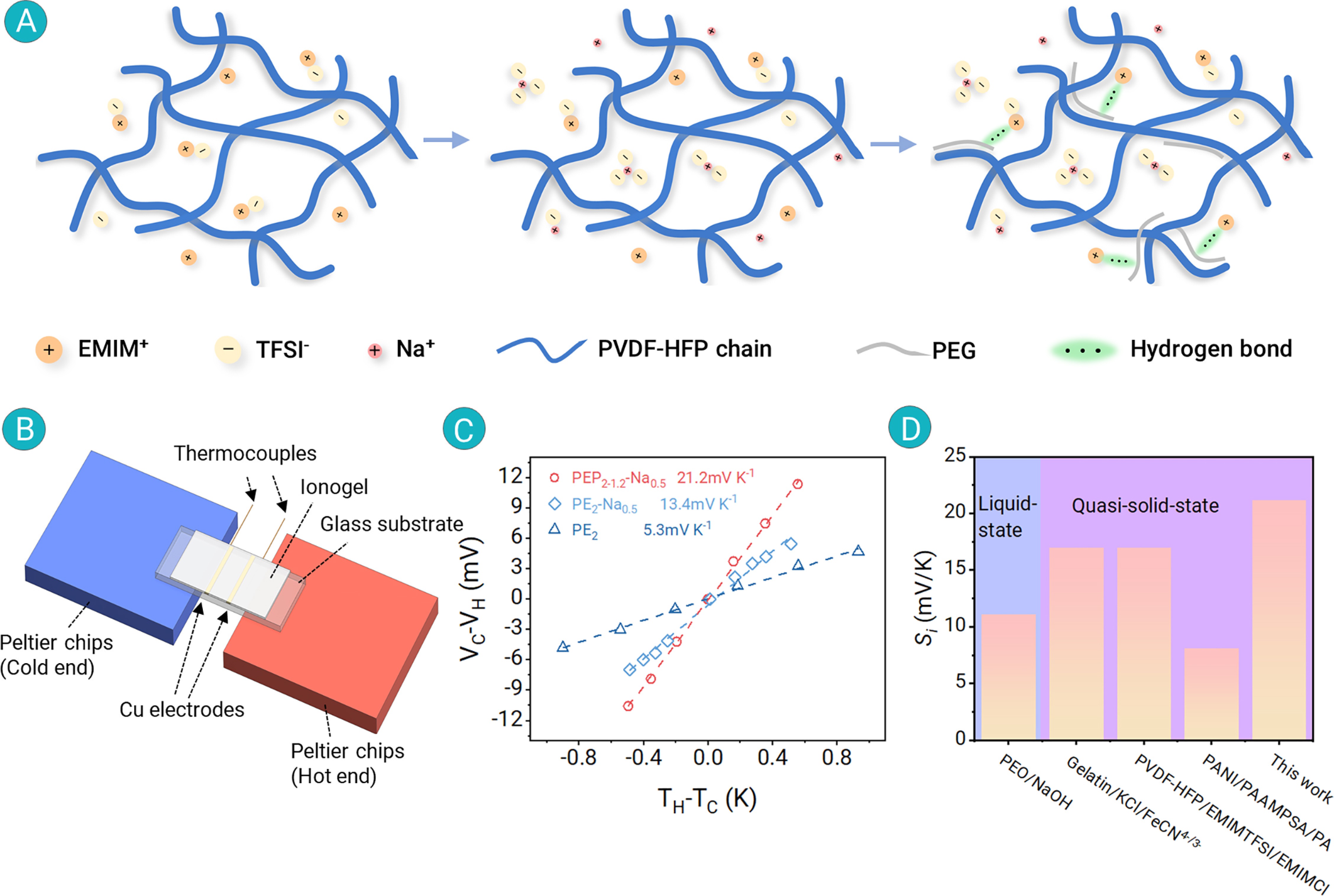
Figure 1.
Schematics and thermopowers of the thermoelectric ionogels studied in this work
-
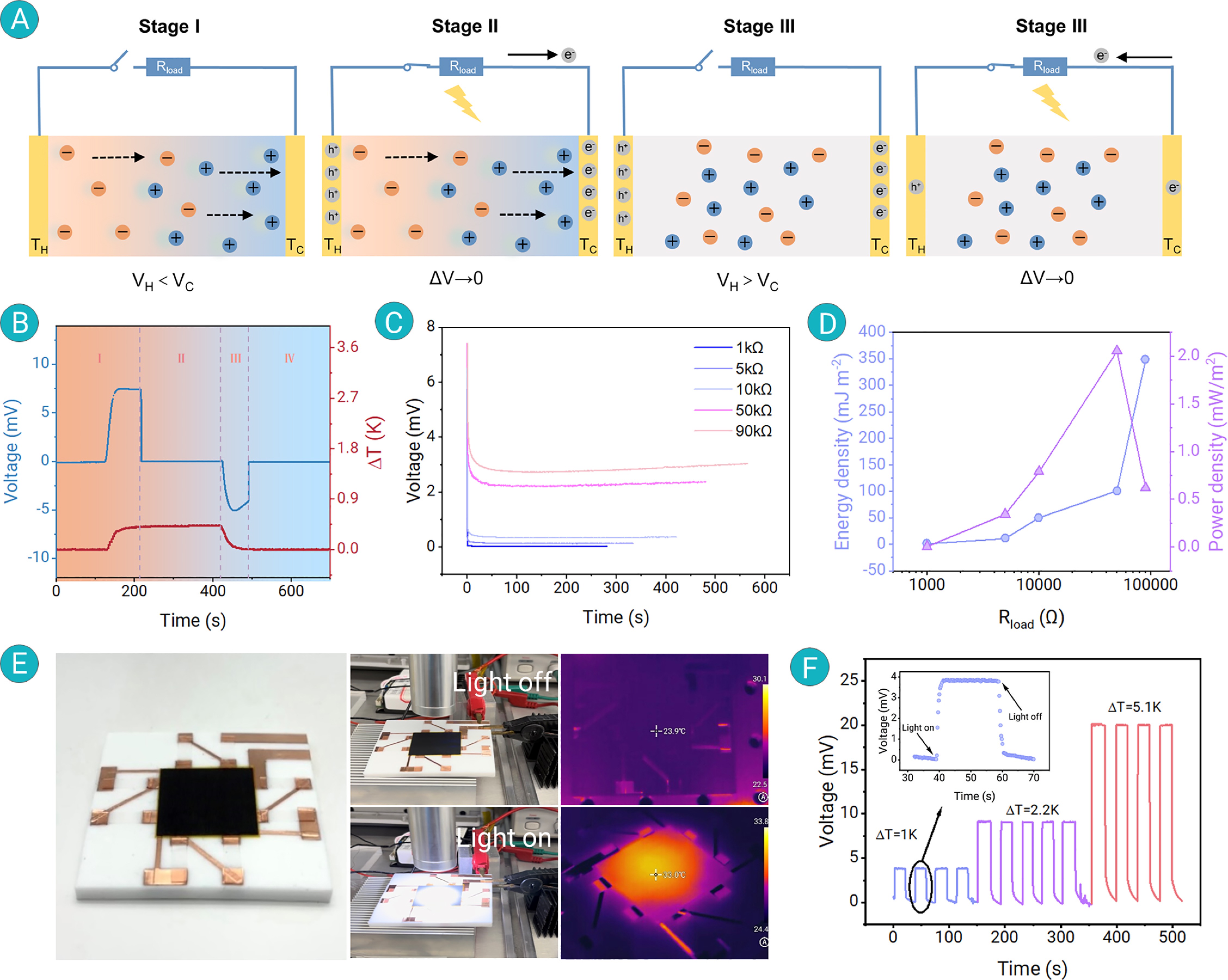
Figure 5.
Performance of i-TE devices composed of the PEP2-1.2-Na0.5 ionogel
-
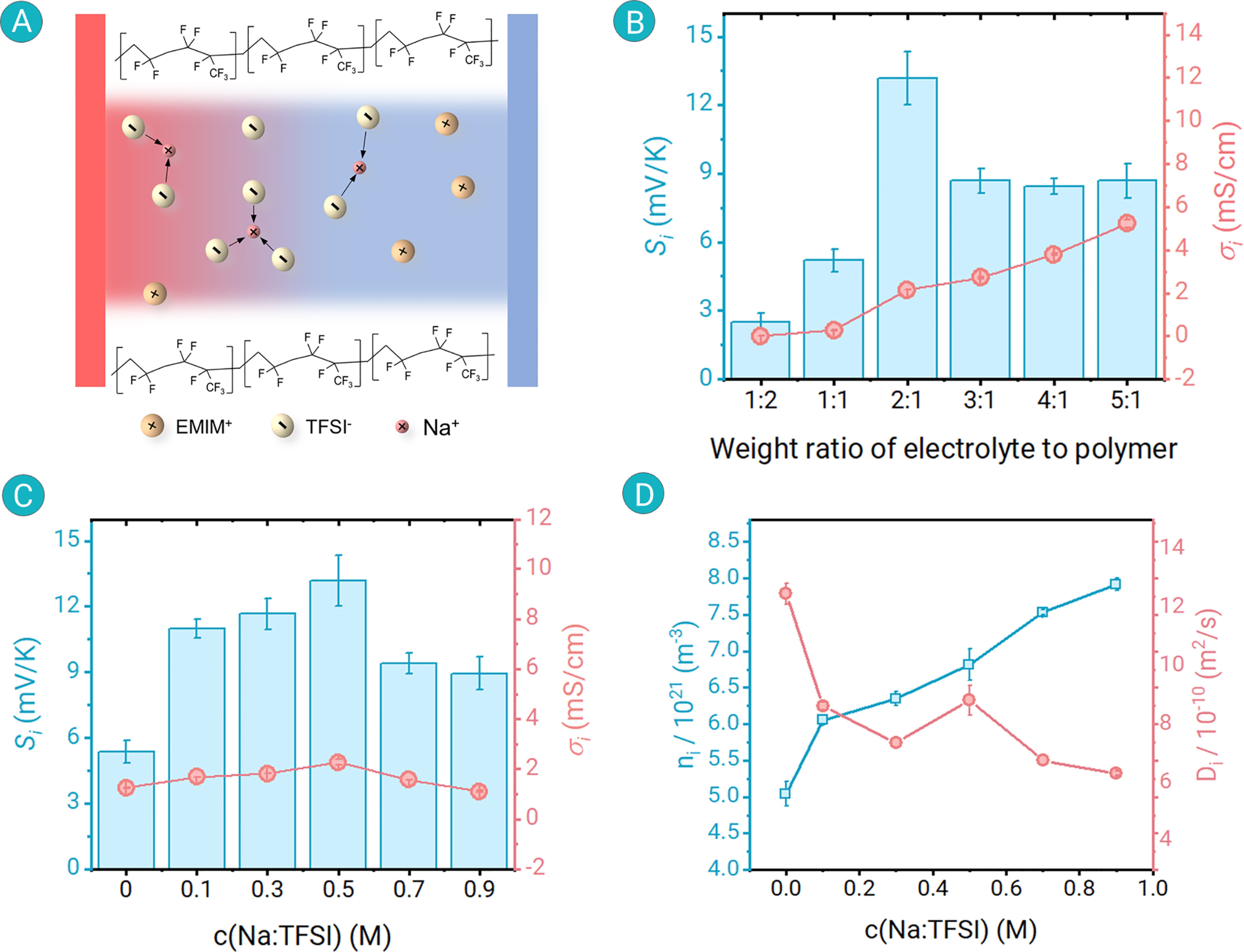
Figure 2.
Influence of the Na:TFSI concentration (Na+ doping level) on the thermoelectric properties of Na:TFSI/EMIM:TFSI/PVDF-HFP ionogels.
-
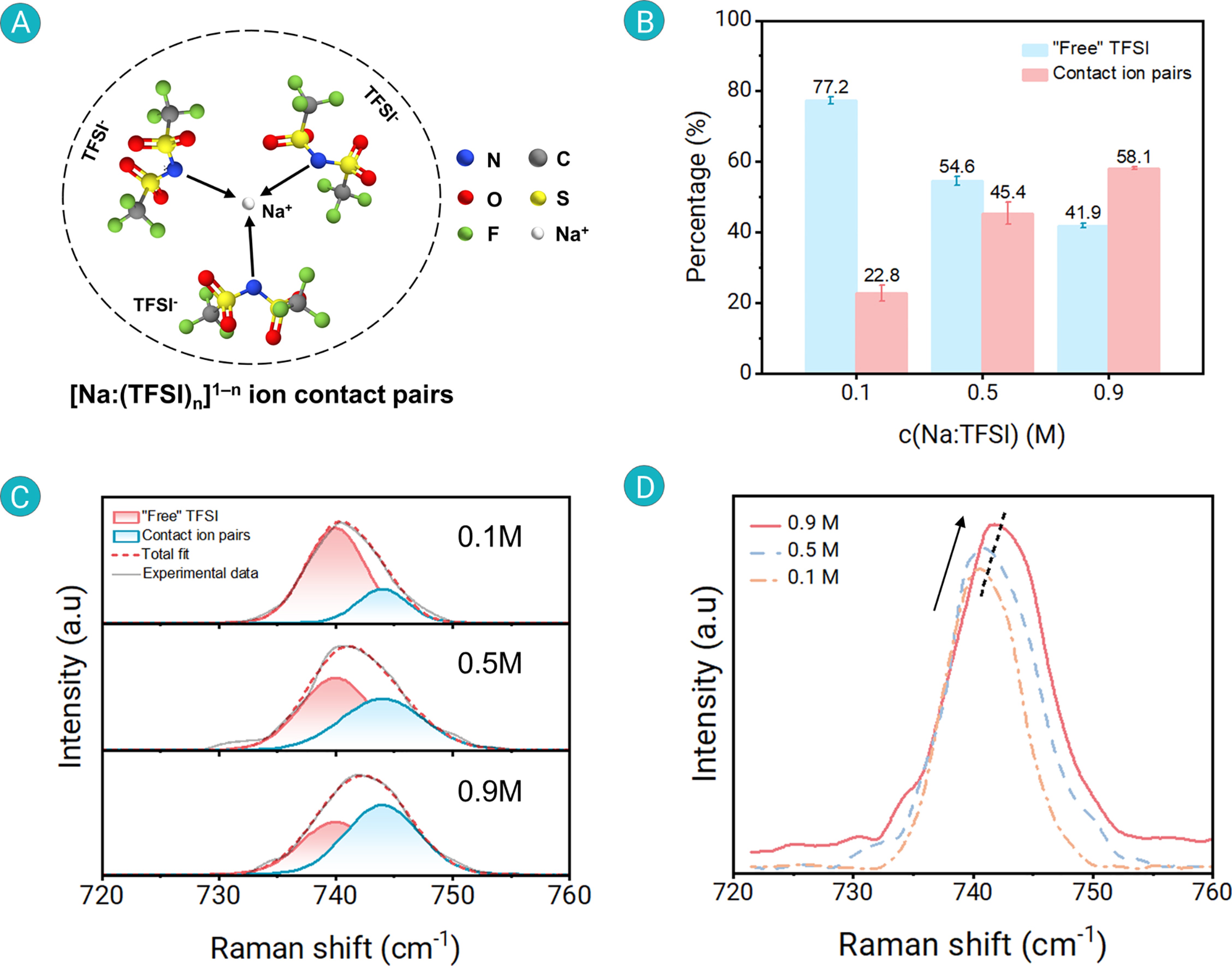
Figure 3.
The formation of [Na:(TFSI)n]1–n contact ion pairs in Na:TFSI/EMIM:TFSI/PVDF-HFP ionogels
-
Figure 4.
Influence of the PEG/electrolyte weight ratio on the thermoelectric properties of ionogels Na:TFSI/EMIM:TFSI/PVDF-HFP/PEG
-
Figure 6.
Applications of integrated i-TE modules composed of the PEP2-1.2-Na0.5 ionogel
-
Figure 7.
Enhanced performance of ionic thermoelectric ionogel-based TENG
