
Opportunities in crisis to decarbonize the energy system
-

-
REFERENCES
[1] Rogelj J., Den Elzen M., Höhne N., et al. (2016). Paris Agreement climate proposals need a boost to keep warming well below 2 °C. Nature 534 :631-639. DOI:10.1038/nature18307 [2] Meinshausen M., Lewis J., McGlade C., et al. (2022). Realization of Paris Agreement pledges may limit warming just below 2 °C. Nature 604:304-309. DOI:10.1038/s41586-022-04553-z [3] Armstrong McKay D. I., Staal A., Abrams J. F., et al. (2022). Exceeding 1.5 ℃ global warming could trigger multiple climate tipping points. Science 377 :eabn7950. DOI:10.1126/science.abn7950 [4] Shukla J. S. P.R., Slade R., Al Khourdajie A., et al. (2022). Climate Change 2022: Mitigation of Climate Change. Contribution of Working Group III to the Sixth Assessment Report of the Intergovernmental Panel on Climate Change. IPCC . DOI:ipcc.ch/report/ar6/wg3/ [5] Feng K., David S. J., Sun L., et al. (2015). Drivers of the US CO2 emissions 1997–2013. Nat. Commun. 6 :1-8. DOI:10.1038/ncomms8714 -
ABOUT THIS ARTICLE
Cite this article:
Peng X., Liang J. and You P. (2025). Opportunities in crisis to decarbonize the energy system. The Innovation Energy 2:100069. https://doi.org/10.59717/j.xinn-energy.2024.100069
Welcome!
To request copyright permission to republish or share portions of our works, please visit Copyright Clearance Center's (CCC) Marketplace website at marketplace.copyright.com.
Export File
Citation
Peng X., Liang J. and You P. (2025). Opportunities in crisis to decarbonize the energy system. The Innovation Energy 2:100069. https://doi.org/10.59717/j.xinn-energy.2024.100069

Format
Content
 DownLoad:
-
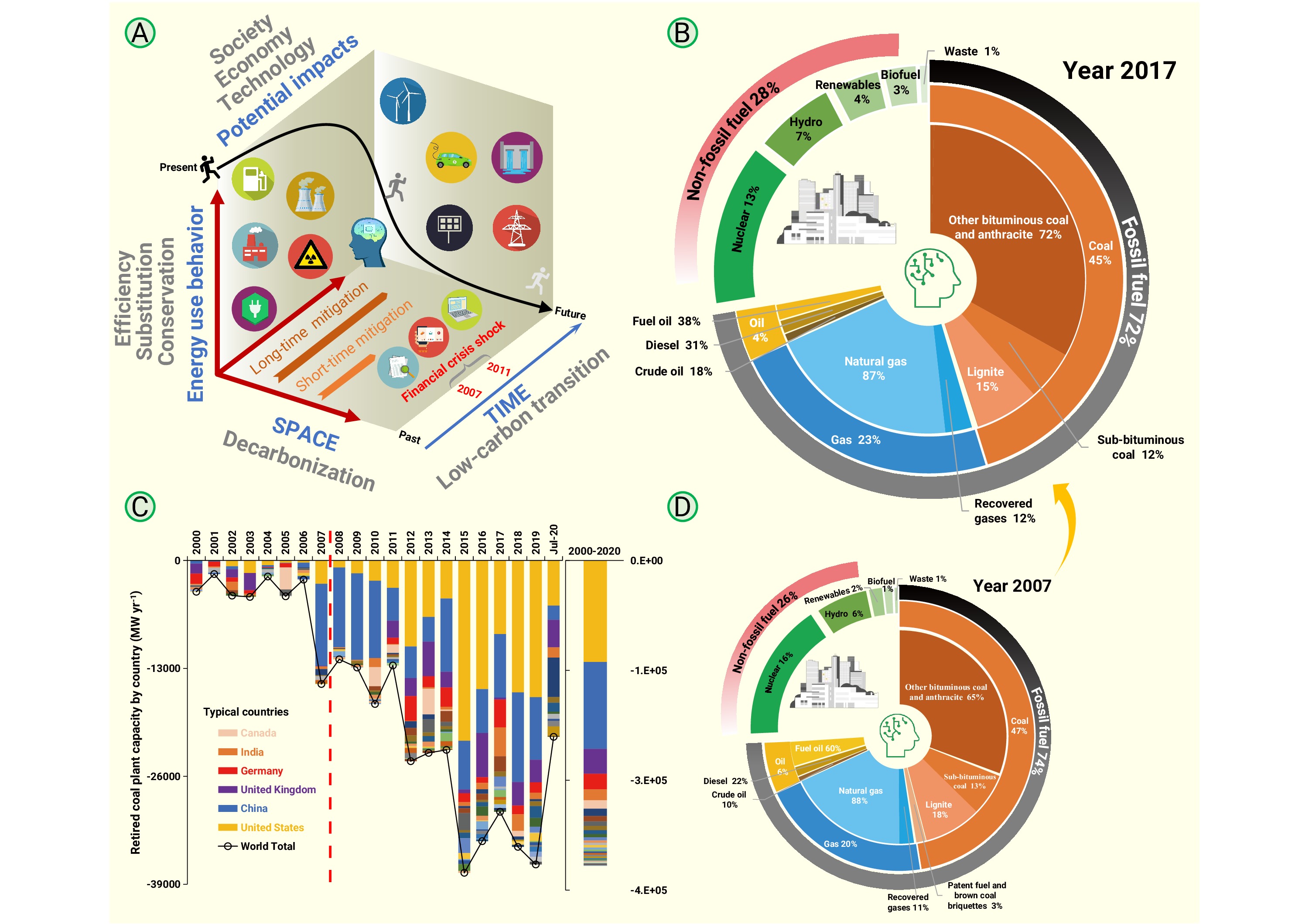
Figure 1.
Global changes in energy use patterns
