
Microfluidic synthesis enables highly dispersed Ru/ZrPO4 catalyst for hydrodeoxygenation of lignin-derived phenolic compounds
-
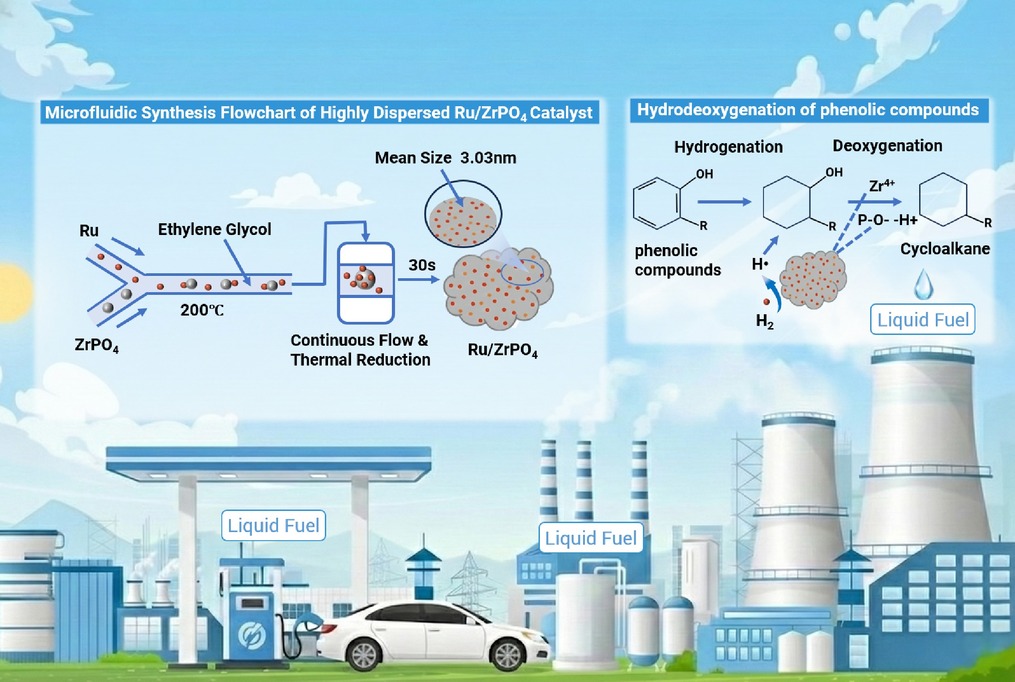
GRAPHICAL ABSTRACT
 DownLoad:
Full size image
DownLoad:
Full size image
-
PUBLIC SUMMARY
-
Highly dispersed Ru/ZrPO4 catalyst synthesized via microfluidic-assisted ethylene glycol reduction.
Ru/ZrPO4-MIC shows small Ru particle size (3.03 nm) with excellent dispersion and H2 activation.
Complete guaiacol conversion with 97.9% cyclohexane selectivity under mild conditions.
Superior activity and stability compared with impregnation and hydrothermal catalysts.
Microfluidic strategy enables low metal loading and is applicable to other noble metal catalysts.
-
-
ABSTRACT
To address the demand for efficient hydrodeoxygenation (HDO) of lignin-derived phenolic compounds into high-value hydrocarbon fuels, this study designed and synthesized highly dispersed Ru/ZrPO4 catalysts by employing a novel microfluidic technology coupled with ethylene glycol thermal reduction. The traditional impregnation (Ru/ZrPO4-IMP) and the hydrothermal method (Ru/ZrPO4-HYD) were also conducted to compare with the microfluidic method (Ru/ZrPO4-MIC). Comprehensive characterizations via XRD, TEM, XPS, H2-TPD and NH3-TPD reveal that Ru/ZrPO4-MIC presents superior properties of small average Ru particle size (3.03 nm), excellent metal dispersion, outstanding hydrogen dissociation capability and suitable acid strength, which improve the HDO performance significantly. Under mild reaction condition (240 °C, 1 MPa H2), the Ru/ZrPO4-MIC achieves complete conversion of guaiacol and 97.9% selectivity toward cyclohexane, significantly outperforming the Ru/ZrPO4-IMP (47.4%) and Ru/ZrPO4-HYD (79.7%) catalysts, as well as most of the reported catalysts. Comparative studies confirm that the microfluidic approach effectively prevents metal agglomeration and enhances metal dispersion. Ru/ZrPO4-MIC catalyst also presents a high stability after 5 recycles, with little catalytic activity loss. Moreover, in the HDO upgrading of lignin oil, hydrocarbon content increases from 10.5% to 91.8%. This novel microfluidic method is also suitable for the preparation of other highly dispersed noble metal-based catalysts, which enables to achieve high catalytic activity under the low metal loading.-
Keywords:
- HDO /
- Ru/ZrPO4 catalyst /
- Microfluidic technology /
- Guaiacol /
- High metal dispersion.
-

-
REFERENCES
[1] Corma A., Iborra S., Velty A. (2007). Chemical routes for the transformation of biomass into chemicals. Chem. Rev. 107:2411−2502. DOI:10.1021/cr050989d [2] Wong S.S., Shu R., Zhang J., Liu H., Yan N. (2020). Downstream processing of lignin derived feedstock into end products. Chem. Soc. Rev. 49:5510−5560. DOI:10.1039/D0CS00278F [3] Wang J., Fu J., Zhao Z., et al. (2023). Benefit analysis of multi-approach biomass energy utilization toward carbon neutrality. The Innovation 4:100423. DOI:10.1016/j.xinn.2023.100423 [4] Xie X.Y., Li L.F., Wang X.Y., et al. (2025). Fractionation of high-yield noncondensed lignin and glucan oligomers from lignocellulose in a novel biphasic system. J. Agric. Food Chem. 73:2880−2889. DOI:10.1021/acs.jafc.4c08261 [5] Diao X.Y. and Ji N. (2023). Rational design of MoS2-based catalysts toward lignin hydrodeoxygenation: Interplay of structure, catalysis, and stability. J. Energy Chem. 77:601−631. DOI:10.1016/j.jechem.2022.12.017 [6] Fang Z., Wen C., Zhang X., et al. (2025). Advance, challenge, and outlook of carbon-increasing strategies for producing sustainable high-energy-density jet fuels from lignocellulosic derivatives. Innov. Energy 2:100093. DOI:10.59717/j.xinn-energy.2025.100093 [7] Jiang S., Shu R., Wang A., et al. (2024). Efficient hydrodeoxygenation of lignin-derived phenolic compounds under acid-free conditions over carbon-supported NiMo catalysts. Green Chem. 26:9330−9345. DOI:10.1039/D4GC02111A [8] Lahijani P., Mohammadi M., Mohamed A.R., et al. (2022). Upgrading biomass-derived pyrolysis bio-oil to bio-jet fuel through catalytic cracking and hydrodeoxygenation: A review of recent progress. Energy Convers. Manage. 268:115956. DOI:10.1016/j.enconman.2022.115956 [9] Cui Y. and Xu Y. (2024). Sustainable aviation fuel: Biomass fostered future aviation. Innov. Energy 1:100007. DOI:10.59717/j.xinn-energy.2024.100007 [10] Lv W., Jiang Y.Y., Tian K.H., et al. (2025). Constructing Ni–MgO wrapped by carbon sphere to prepare a defect-rich catalyst for the conversion of lignin-derived oligomers into hydrocarbons under mild conditions. Chem. Eng. J. 509:161057. DOI:10.1016/j.cej.2024.161057 [11] Shi D., Fang W., Zhang A., et al. (2025). Selective hydrodeoxygenation of furfural to 2-methylfuran over Ni–Co/SiO2 bimetallic catalysts: Synergistic effect of metal and acid sites. J. Environ. Chem. Eng. 13:116252. DOI:10.1016/j.jece.2025.116252 [12] Wang X., Zhang Z., Yan Z., et al. (2023). Catalysts with metal–acid dual sites for selective hydrodeoxygenation of lignin derivatives: Progress in regulation strategies and applications. Appl. Catal. A Gen. 662:119266. DOI:10.1016/j.apcata.2023.119266 [13] Zhang X., Wu J.F., Li T., et al. (2022). Selective hydrodeoxygenation of lignin-derived phenolics to cycloalkanes over highly stable NiAl2O4 spinel-supported bifunctional catalysts. Chem. Eng. J. 429:132181. DOI:10.1016/j.cej.2021.132181 [14] Zhu Y., Ma Y., Sun Y., et al. (2024). Synchronous inverse valence modulation of Ni3+/Co2+ over metal/metal-oxide heterojunction catalyst to promote hydrodeoxygenation performance of lignin derivatives. J. Environ. Chem. Eng. 12:114758. DOI:10.1016/j.jece.2024.114758 [15] Diao X.Y., Hao L.E., Shi Y.W., et al. (2025). Boosted hydrodeoxygenation of lignin and its derivatives to cycloalkanes over Ni catalysts with surface decoration of AlPO4 species. J. Energy Chem. 104:360−371. DOI:10.1016/j.jechem.2024.12.019 [16] Chen Q., Tang D., Zhang Q., et al. (2025). Electron–metal support interactions enhanced by W–O–Zr interface in Pd–UiO-66 catalyst for efficient HDO of lignin derivatives at room temperature. Chem. Eng. J. 516:163903. DOI:10.1016/j.cej.2025.163903 [17] Wang H.L., Ruan H., Feng M.Q., et al. (2017). One-pot process for hydrodeoxygenation of lignin to alkanes using Ru-based bimetallic and bifunctional catalysts supported on zeolite Y. ChemSusChem 10:1846−1856. DOI:10.1002/cssc.201700137 [18] Kim H., Lee J., Kim Y., et al. (2024). Continuous flow upgrading of lignin pyrolysis oils to drop-in bio-hydrocarbon fuels over noble metal catalysts. Chem. Eng. J. 481:148328. DOI:10.1016/j.cej.2023.148328 [19] Chen L., Wang C., Shang N., et al. (2025). Highly dispersed Cu supported on urchin-like TiO2 for efficient hydrodeoxygenation of lignin derivatives. J. Catal. 448:116216. DOI:10.1016/j.jcat.2025.116216 [20] Lin C., Deng Y., Lin Y., et al. (2025). Hydrodeoxygenation of lignin-derived phenolic compounds over highly dispersed Pt/Al2O3–TiO2 composite catalyst. Ind. Eng. Chem. Res. 64:8170−8178. DOI:10.1021/acs.iecr.5c00481 [21] Newman C., Zhou X.B., Goundie B., et al. (2014). Effects of support identity and metal dispersion in supported ruthenium hydrodeoxygenation catalysts. Appl. Catal. A Gen. 477:64−74. DOI:10.1016/j.apcata.2014.03.012 [22] Yan P., Mensah J., Drewery M., et al. (2021). Role of metal support during Ru-catalysed hydrodeoxygenation of biocrude oil. Appl. Catal. B Environ. 281:119470. DOI:10.1016/j.apcatb.2020.119470 [23] Lin Y., Shu R., Yin T., et al. (2024). Catalytic hydrodeoxygenation of lignin-derived phenolic compounds with Ni-based aluminum phosphate catalyst. Mol. Catal. 567:114444. DOI:10.1016/j.mcat.2023.114444 [24] Han G.H., Lee M.W., Park S., et al. (2019). Revealing the factors determining the selectivity of guaiacol HDO reaction pathways using ZrP-supported Co and Ni catalysts. J. Catal. 377:343−357. DOI:10.1016/j.jcat.2019.08.018 [25] Khani Y., Kumar A., Hwang J., et al. (2025). Utilizing waste PET plastics derived metal–organic framework catalyst for the hydrodeoxygenation of lignin phenols. Chem. Eng. J. 517:164392. DOI:10.1016/j.cej.2025.164392 [26] Yin T., Ye Y.C., Jiang H., et al. (2025). Efficient hydrodeoxygenation of lignin-derived phenolic compounds over Ru-based catalyst with biochar and Al2O3 as composite support. ChemSusChem 18:e202401870. DOI:10.1002/cssc.202401870 [27] Lu X., Li Z.W., Zhao L., et al. (2025). Production of ethanol from cellulose in aqueous phase with Pt–Ni@C catalysts. J. Fuel Chem. Technol. 53:863−871. DOI:10.1016/S1872-5813(25)60073-2 [28] Qiu S.B., Xu Y., Weng Y.J., et al. (2016). Efficient hydrogenolysis of guaiacol over highly dispersed Ni/MCM-41 catalyst combined with HZSM-5. Catalysts 6:134. DOI:10.3390/catal6090134 [29] Ali H., Vandevyvere T., Lauwaert J., et al. (2023). Enhancing the anisole hydrodeoxygenation activity over Ni/Nb2O5-ₓ by tuning the oxophilicity of the support. Catal. Sci. Technol. 13:1140−1153. DOI:10.1039/D2CY01966A [30] Chen Y., Yang Y., Liu X., Jing F.M. (2024). O2–H2O2 high-efficient co-oxidation of carbohydrate biomass to formic acid via Co3O4/C nanocatalyst. Carb. Neutrality 3:23. DOI:10.1007/s43979-024-00023-7 [31] Hu H.C., Ma D.C., Yi M., et al. (2025). Unveiling the enhancement of catalytic activity and stability by single-atom Mo anchored to cationic vacancy for catalytic hydrodeoxygenation of lignin to naphthenes. Chem. Eng. J. 505:159303. DOI:10.1016/j.cej.2024.159303 [32] Wu X., Li H., Ge F., et al. (2024). N-doped MOF–lignin hybrid catalyst for highly selective hydrodeoxygenation of lignin-derived phenols. Chem. Eng. J. 495:153009. DOI:10.1016/j.cej.2024.153009 [33] Zhang D., Wu F., Peng M., et al. (2015). One-step, facile and ultrafast synthesis of phase- and size-controlled Pt–Bi intermetallic nanocatalysts through continuous-flow microfluidics. J. Am. Chem. Soc. 137:6263−6269. DOI:10.1021/jacs.5b03027 [34] Kunal P., Roberts E.J., Riche C.T., et al. (2017). Continuous flow synthesis of Rh and RhAg alloy nanoparticle catalysts enables scalable production and improved morphological control. Chem. Mater. 29:4341−4350. DOI:10.1021/acs.chemmater.7b00830 [35] Ma S., Zhang L., Zhu L., Zhu X. (2018). Preparation of multipurpose bio-oil from rice husk by pyrolysis and fractional condensation. J. Anal. Appl. Pyrolysis 131:113−119. DOI:10.1016/j.jaap.2018.01.017 [36] Shu R.Y., Li R.X., Lin B.Q., et al. (2020). High dispersed Ru/SiO2–ZrO2 catalyst prepared by polyol reduction method and its catalytic applications in hydrodeoxygenation of phenolic compounds and pyrolysis lignin-oil. Fuel 265:116962. DOI:10.1016/j.fuel.2019.116962 [37] Lee S., Kim C.U., Kim J.C., et al. (2022). Enhanced catalytic activity of phosphorus-modified SSZ-13 zeolite in ethylene-to-propylene reaction by controlling acidity and intracrystalline diffusivity. Chem. Eng. J. 446:137169. DOI:10.1016/j.cej.2022.137169 [38] Nan L., Zhang H., Weitz D.A., et al. (2024). Development and future of droplet microfluidics. Lab Chip 24:528−539. DOI:10.1039/D3LC00833A [39] Zhong Z., Luo B., Lin C., et al. (2023). Ultrafast microfluidic preparation of highly dispersed Ru/TiO2 catalyst for hydrodeoxygenation of lignin-derived phenolic compounds. Fuel 340:127567. DOI:10.1016/j.fuel.2022.127567 [40] Gong F., Cai H., Zhou B., et al. (2018). Synthesis and characterization of AlPO4 hollow microspheres and sorption properties for heavy metal ions. Colloids Surf. A 554:286−295. DOI:10.1016/j.colsurfa.2018.06.034 [41] Yan P., Mensah J., Drewery M., et al. (2021). Role of metal support during Ru-catalysed hydrodeoxygenation of biocrude oil. Appl. Catal. B Environ. 281:119470. DOI:10.1016/j.apcatb.2020.119470 [42] Deo S. and Janik M.J. (2021). Predicting an optimal oxide/metal catalytic interface for hydrodeoxygenation chemistry of biomass derivatives. Catal. Sci. Technol. 11:5606−5618. DOI:10.1039/D1CY00938E [43] Zou J., Liang G., Yuwono J.A., et al. (2024). Size-dependent effects of Ru nanoparticles on Li–CO2 batteries. ACS Energy Lett. 9:5145−5155. DOI:10.1021/acsenergylett.4c01867 [44] Yang Q., Qian H., Guo Y., et al. (2023). Rapid release of halocarbons from saline water by iron-based photochemistry. Environ. Sci. Technol. 57:20781−20791. DOI:10.1021/acs.est.3c05112 [45] Prabhudesai V.S., Yerrayya A., Gurrala L., Castaño P., Vinu R. (2024). Hydrodeoxygenation of mixtures of biomass-derived model compound oxygenates over Pt/HY catalysts. Chem. Eng. Sci. 288:119800. DOI:10.1016/j.ces.2024.119800 [46] Ju C., Li M., Fang Y., Tan T. (2018). Efficient hydro-deoxygenation of lignin-derived phenolic compounds over bifunctional catalysts with optimized acid/metal interactions. Green Chem. 20:4492−4499. DOI:10.1039/C8GC02227A [47] Shu R., Lin B., Wang C., et al. (2019). Upgrading phenolic compounds and bio-oil through hydrodeoxygenation using highly dispersed Pt/TiO2 catalyst. Fuel 239:1083−1090. DOI:10.1016/j.fuel.2018.11.107 [48] He Z., Hu M., Wang X. (2018). Highly effective hydrodeoxygenation of guaiacol on Pt/TiO2: Promoter effects. Catal. Today 302:136−145. DOI:10.1016/j.cattod.2017.06.036 [49] Lu M., Zhu J., Li M., et al. (2016). TiO2-modified Pd/SiO2 for catalytic hydrodeoxygenation of guaiacol. Energy Fuels 30:6671−6676. DOI:10.1021/acs.energyfuels.6b01267 [50] Yan P., Mensah J., Drewery M., et al. (2021). Role of metal support during Ru-catalysed hydrodeoxygenation of biocrude oil. Appl. Catal. B Environ. 281:119470. DOI:10.1016/j.apcatb.2020.119470 [51] Wang X., Wu P., Wang Z., et al. (2021). Chlorine-modified Ru/TiO2 catalyst for selective guaiacol hydrodeoxygenation. ACS Sustainable Chem. Eng. 9:3083−3094. DOI:10.1021/acssuschemeng.0c08334 [52] Shu R., Lin B., Zhang J., et al. (2019). Efficient catalytic hydrodeoxygenation of phenolic compounds and bio-oil over highly dispersed Ru/TiO2. Fuel Process. Technol. 184:12−18. DOI:10.1016/j.fuproc.2018.11.015 [53] Xu Q., Shi Y., Yang L., Fan G., Li F. (2020). The promotional effect of surface Ru decoration on the catalytic performance of Co-based nanocatalysts for guaiacol hydrodeoxygenation. Mol. Catal. 497:111224. DOI:10.1016/j.mcat.2020.111224 [54] Wang X., Zhu S., Wang S., et al. (2019). Low-temperature hydrodeoxygenation of guaiacol into cyclohexane over Ni/SiO2 catalyst combined with Hβ zeolite. RSC Adv. 9:3868−3876. DOI:10.1039/C8RA09874J [55] Shu R.Y., Zhong Z.J., You H.Y., et al. (2021). Hydrodeoxygenation of lignin-derived phenolic compounds over Ru/TiO2–CeO2 catalyst prepared by photochemical reduction method. J. Energy Inst. 99:1−8. DOI:10.1016/j.joei.2021.02.003 [56] Viljava T.R., Saari E.R.M., Krause A.O.I. (2001). Simultaneous hydrodesulfurization and hydrodeoxygenation: Interactions between mercapto and methoxy groups. Appl. Catal. A Gen. 209:33−43. DOI:10.1016/S0926-860X(00)00768-8 [57] Joseyphus R.J., Matsumoto T., Takahashi H., et al. (2007). Designed synthesis of cobalt and its alloys by polyol process. J. Solid State Chem. 180:3008−3018. DOI:10.1016/j.jssc.2007.07.035 [58] Matsumoto T., Urakawa K., Joseyphus R.J., et al. (2007). Evaluation of polyol reduction for wet synthesis of metal nanoparticles. Electrochemistry 75:969−975. DOI:10.5796/electrochemistry.75.969 -
ABOUT THIS ARTICLE
Cite this article:
Shu R., Liang G., Lin Y., et al. (2026). Microfluidic synthesis enables highly dispersed Ru/ZrPO4 catalyst for hydrodeoxygenation of lignin-derived phenolic compounds. The Innovation Energy 3:100130. https://doi.org/10.59717/j.xinn-energy.2026.100130
Welcome!
To request copyright permission to republish or share portions of our works, please visit Copyright Clearance Center's (CCC) Marketplace website at marketplace.copyright.com.
Article Metrics
Relative Articles
Cited by
Export File
Citation
Shu R., Liang G., Lin Y., et al. (2026). Microfluidic synthesis enables highly dispersed Ru/ZrPO4 catalyst for hydrodeoxygenation of lignin-derived phenolic compounds. The Innovation Energy 3:100130. https://doi.org/10.59717/j.xinn-energy.2026.100130

Format
Content
-
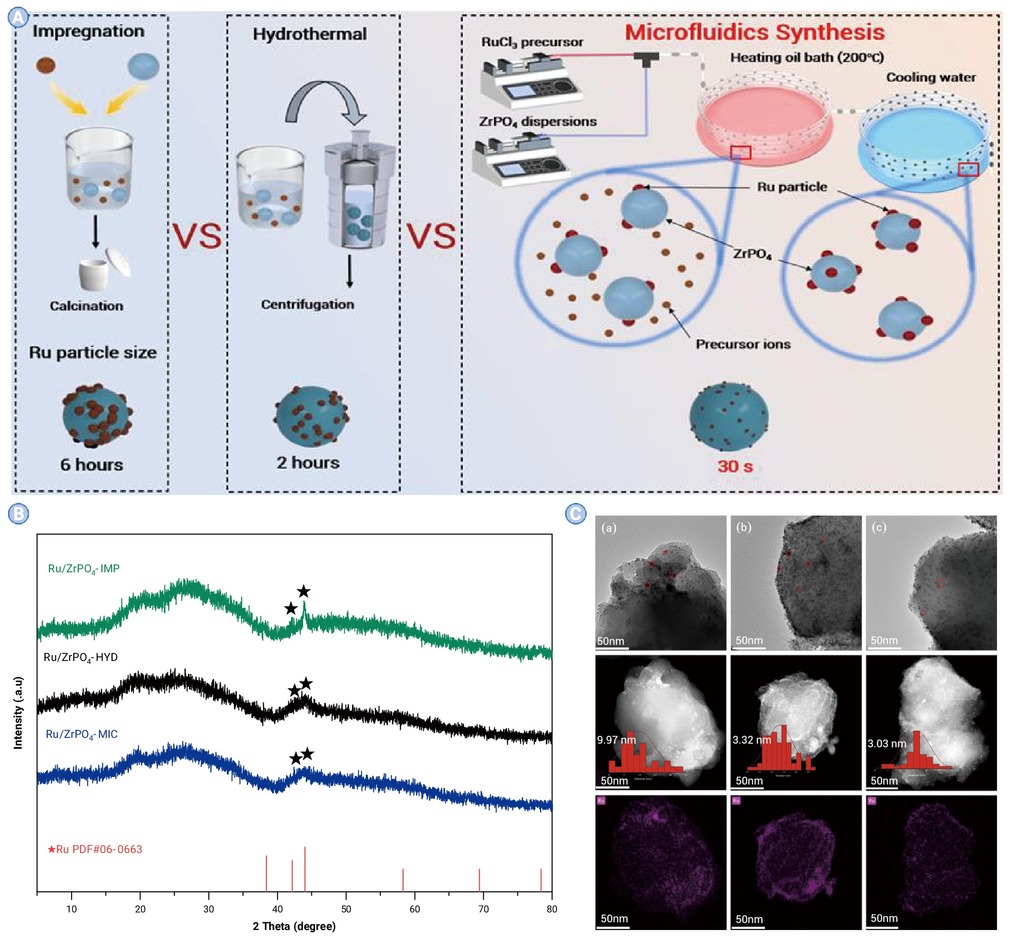
Figure 1.
(A) Schematic diagram of the microfluidic synthesis procedure of Ru/ZrPO4-MIC catalyst compared with traditional impregnation and hydrothermal methods. (B) XRD patterns of the different Ru/ZrPO4 catalysts. (C) TEM images and EDS energy spectra of (a) Ru/ZrPO4-IMP, (b) Ru/ZrPO4-HYD, and (c) Ru/ZrPO4-MIC catalysts.
-
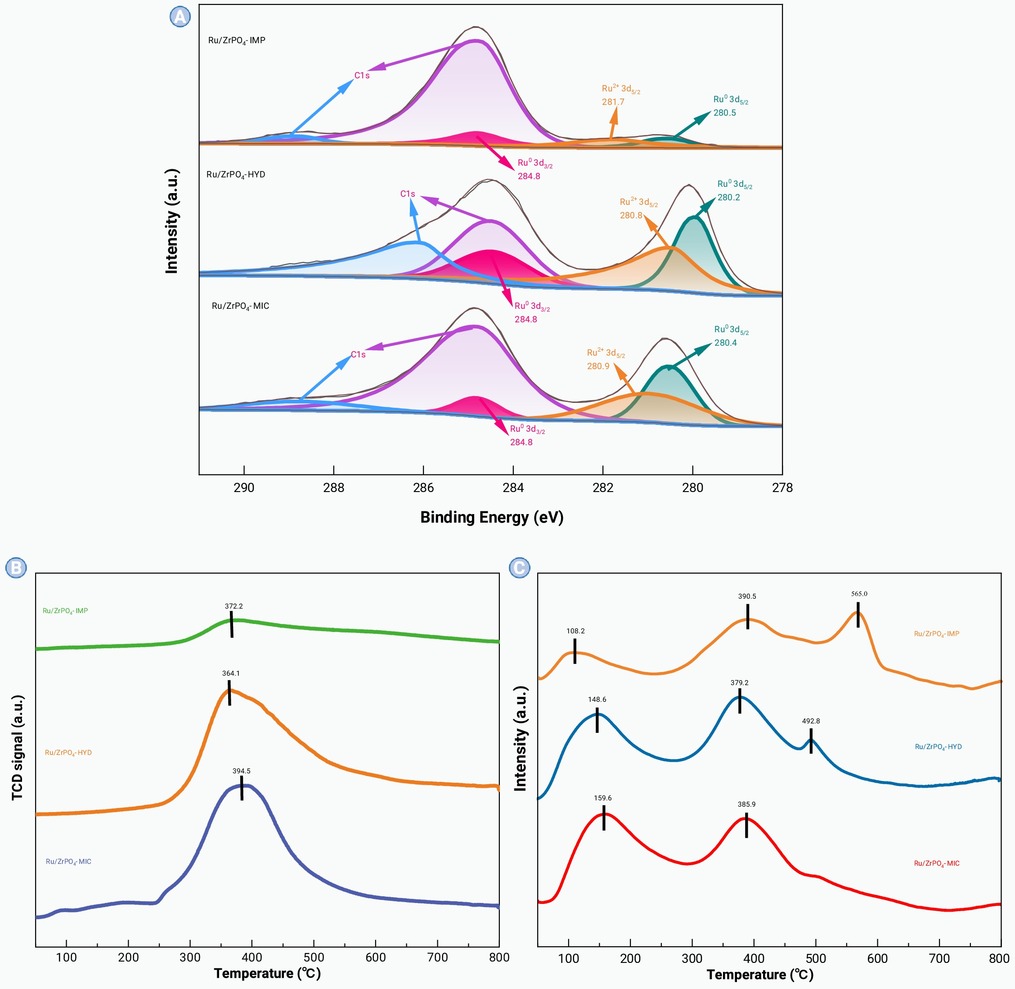
Figure 2.
(A) XPS profiles in the C 1s and Ru 3d regions of the different Ru/ZrPO4 catalysts. (B) H2-TPD spectra of different Ru/ZrPO4 catalysts. (C) NH3-TPD profiles of the Ru/ZrPO4 catalysts prepared by different methods.
-
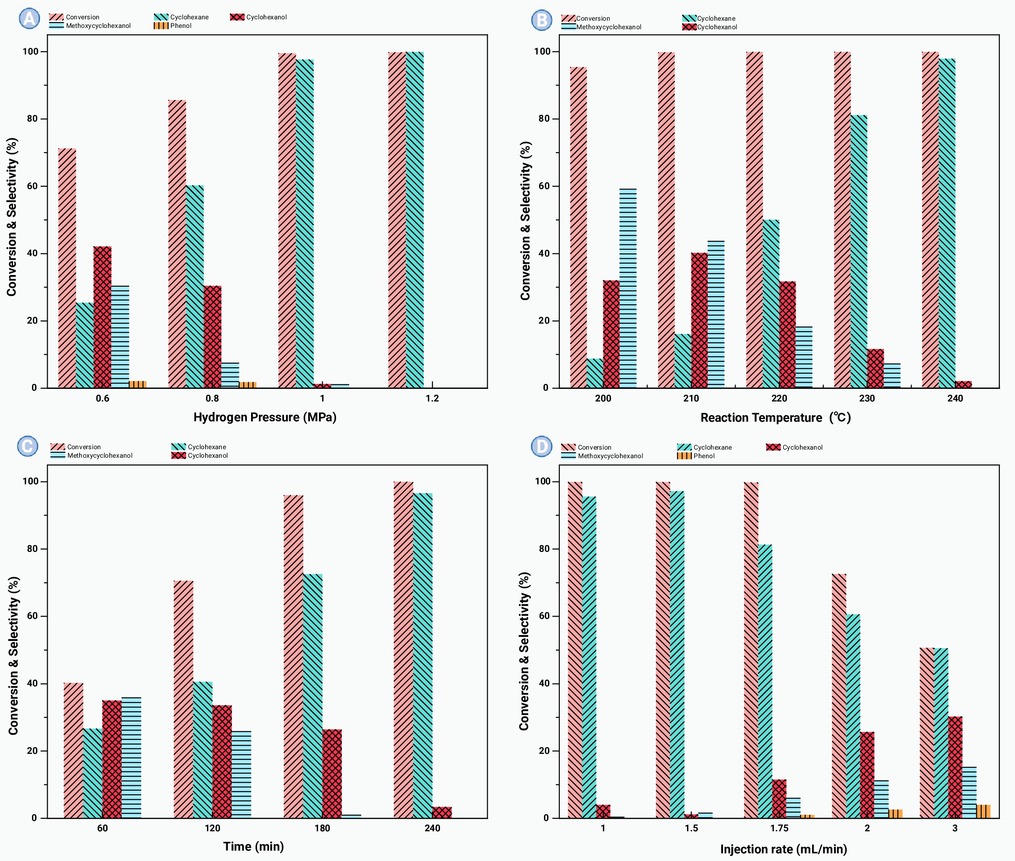
Figure 3.
Effects of (A) hydrogen pressure (B) reaction temperature (C) reaction time (D) injection flow rate on the HDO of guaiacol.
-
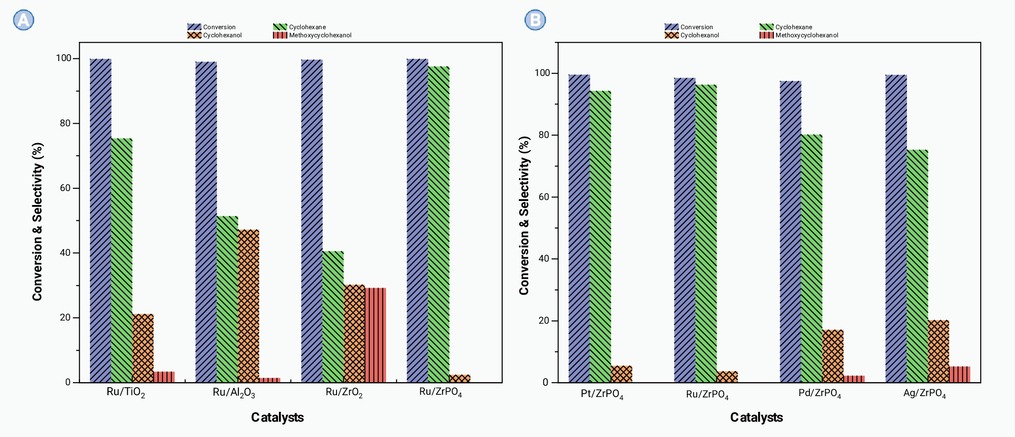
Figure 4.
Effects of (A) different supports (B) different metal-based catalysts on the HDO of guaiacol.
