
A new insight into hydrogen leakage phenomena: Visibly observable patterns of hydrogen leakage
-
GRAPHICAL ABSTRACT
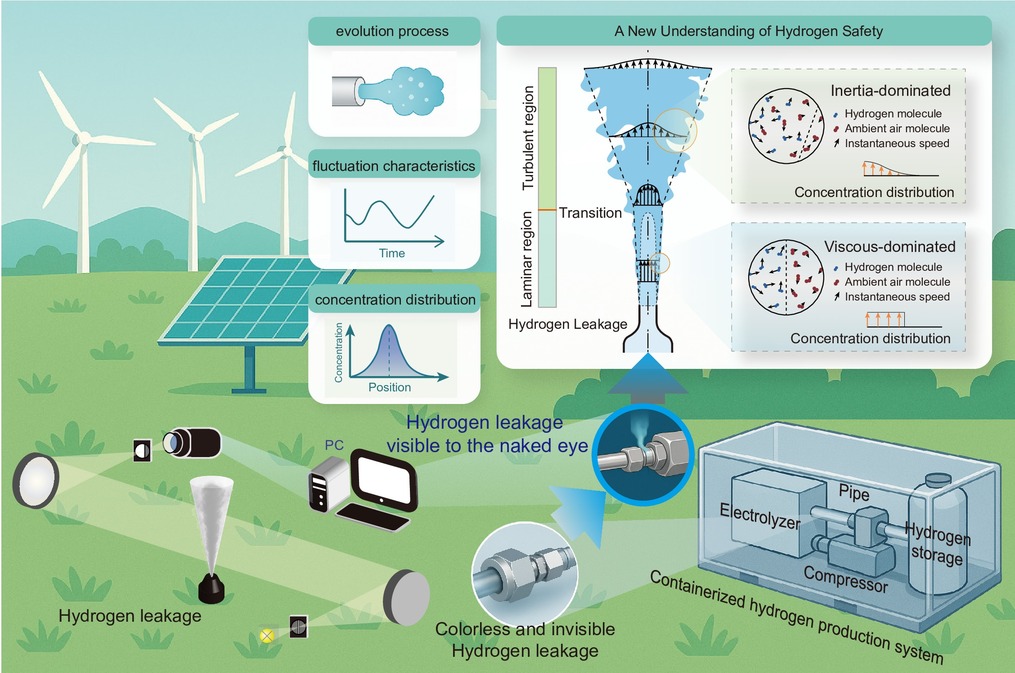
 DownLoad:
Full size image
DownLoad:
Full size image
-
PUBLIC SUMMARY
-
Flow characteristics of hydrogen leakage become visually observable.
Key transition dynamics are revealed through visualization.
Full-field concentration is constructed based on observed transition dynamics
A new insight and visual confirmation of hydrogen leakage patterns is presented.
-
-
ABSTRACT
As hydrogen energy systems move toward miniaturization and modularization, the low-pressure, low-flow hydrogen leakage problem, which is becoming more frequent and significantly harder to detect, leading to the formation of flammable or explosive hydrogen-air mixtures, is a key challenge, constraining the widespread deployment of hydrogen technologies. The concentration distribution directly determines the extent and severity of flammable zones, but its spatiotemporal evolution, governed by the laminar-to-turbulent transition of the leakage jet, remains elusive. In this study, a visualization method is employed to observe hydrogen leakage, enabling the first clear depiction of the transition point’s behavior in low-pressure hydrogen jets. The transition point is found to exhibit a dual nature, with a relatively certain average position accompanied by distinct spatial fluctuations. A full-field concentration distribution of hydrogen leakage is constructed based on the spatial characteristics and fluctuation patterns of the transition point, enabling an accurate description of the spatiotemporal variation in hydrogen concentration fields. This work provides new insight and visual confirmation of hydrogen leakage behavior, offering essential support for the transition of hydrogen’s societal role—from a hazardous chemical to a safe and manageable energy carrier.-
Keywords:
- Hydrogen safety /
- Hydrogen leakage /
- Laminar–turbulent transition /
- Visualization.
-

-
REFERENCES
[1] Yang X., Nielsen C.P., Song S., et al. (2022). Breaking the hard-to-abate bottleneck in china’s path to carbon neutrality with clean hydrogen. Nat. Energy 7:955−965. DOI:10.1038/s41560-022-01114-6 [2] Zhang M., Guan J., Tu Y., et al. (2021). Highly efficient conversion of surplus electricity to hydrogen energy via polysulfides redox. Innovation 2:100144. DOI:10.1016/j.xinn.2021.100144 [3] Davis S.J., Lewis N.S., Matthew S., et al. (2018). Net-zero emissions energy systems. Science 360:eaas9793. DOI:10.1126/science.aas9793 [4] Ueckerdt F., Bauer C., Dirnaichner A., et al. (2021). Potential and risks of hydrogen-based e-fuels in climate change mitigation. Nat. Clim. Chang. 2:384−393. DOI:10.1038/s41558-021-01032-7 [5] IEA (2024). Global hydrogen review 2024. IEA paris. [6] Odenweller A., Ueckerdt F., Nemet G.F., et al. (2022). Probabilistic feasibility space of scaling up green hydrogen supply. Nat. Energy 7:854−865. DOI:10.1038/s41560-022-01097-4 [7] Li J., Liu J., Dai H., et al. (2024). Rapid development of hydrogen in the energy sector raises safety regulatory concerns. Innov. Energy 2:100037. DOI:10.59717/j.xinn-energy.2024.100037 [8] Li H., Cao X., Liu Y., et al. (2022). Safety of hydrogen storage and transportation: an overview on mechanisms, techniques, and challenges. Energy Rep. 8:6258−6269. DOI:10.1016/j.egyr.2022.04.067 [9] European commission. HIAD 2.1, the hydrogen incident and accidents database. [10] Shu Z., Liang W., Zheng X., et al. (2021). Dispersion characteristics of hydrogen leakage: comparing the prediction model with the experiment. Energy 236:121420. DOI:10.1016/j.energy.2021.121420 [11] H2tools. lessons learned, hydrogen tools. [12] Li J., Liu J., Wang T., et al. (2024). Analysis of the evolution characteristics of hydrogen leakage and diffusion in a temperature stratified environment. Energy 293:130598. DOI:10.1016/j.energy.2024.130598 [13] Glenk G. and Reichelstein S. (2019). Economics of converting renewable power to hydrogen. Nat. Energy 4:216−222. DOI:10.1038/s41560-019-0326-1 [14] Liang Q., Huang Y., Guo Y., et al. (2024). Efficient osmosis-powered production of green hydrogen. Nat. Sustain. 7:628−639. DOI:10.1038/s41893-024-01317-7 [15] de Kleijne K., Huijbregts M., Knobloch F., et al. (2024). Worldwide greenhouse gas emissions of green hydrogen production and transport. Nat. Energy 9:1139−1152. DOI:10.1038/s41560-024-01563-1 [16] Jiang X., Xu C., Yang Z., et al. (2024). Equivalent notional nozzle model for high nozzle pressure ratio leakage of petrochemical high-pressure facility. Energy 295:131027. DOI:10.1016/j.energy.2024.131027 [17] Ra Y., Won H., Purushothaman A.K., et al. (2025). Numerical simulation of hollow-cone hydrogen underexpanded jet injection using a phenomenological barrel shock model. Fuel 390:134718. DOI:10.1016/j.fuel.2025.134718 [18] Sun X., Lv J., Han Y., et al. (2025). A global evolution of the downward jet flame behavior: from the laminar to the turbulent. Combust. Flame 272:113906. DOI:10.1016/j.combustflame.2024.113906 [19] Zhang G., Zhang Y., Shi P., et al. (2025). Near-field jet characteristics of a single-hole medium-/low-pressure hydrogen injector. Energy 314:134122. DOI:10.1016/j.energy.2024.134122 [20] Jeon D.S., Hwang G.J., Kim N.I. (2024). Lift-off characteristics of non-premixed jet flames of CH4 and cracked NH3 mixtures in laminar/turbulent transition. Combust. Flame 265:113462. DOI:10.1016/j.combustflame.2024.113462 [21] Oh J. and Yoon Y. (2012). Liftoff height behavior in a non-premixed turbulent hydrogen jet with coaxial air. Fuel 91:134−140. DOI:10.1016/j.fuel.2011.08.008 [22] Takahashi F., Mizomoto M. and Ikai S. (1982). Transition from laminar to turbulent free jet diffusion flames. Combust. Flame 48:85−95. DOI:10.1016/0010-2180(82)90117-1 [23] Hwang G.J., Jeon D.S. and Kim N.I. (2023). Stabilization criteria of laminar lifted propane flames and their transition to turbulent lifted flames under extended pressures. Fuel 343:127960. DOI:10.1016/j.fuel.2023.127960 [24] Tang Z., Wang Z. and Zhao K. (2023). Flame stabilization characteristics of turbulent hydrogen jet flame diluted by nitrogen. Energy 283:129100. DOI:10.1016/j.energy.2023.129100 [25] Guo X., Li T. and Huang S., et al. (2025). Characteristics of ignition, combustion and emission formation of premixed ammonia-hydrogen blends by hydrogen-fueled pre-chamber turbulent jets. Energy 322:135573. DOI:10.1016/j.energy.2025.135573 [26] Gomez-Lendinez D., Coenen W. and Sevilla A. (2024). Direct numerical simulation of the global transition in laminar low-density axisymmetric jets. Int. J. Heat Mass Transf. 229:125651. DOI:10.1016/j.ijheatmasstransfer.2024.125651 [27] Shu Z., Lei G., Liu Z., et al. (2022). Motion trajectory prediction model of hydrogen leak and diffusion in a stable thermally-stratified environment. Int. J. Hydrog. Energy 47:2040−2049. DOI:10.1016/j.ijhydene.2021.10.103 [28] Lyu S., Huang X., Peng S., et al. (2024). A novel method for analyzing the leakage and diffusion of hydrogen: first arrival time distribution. Renew. Sust. Energ. Rev. 198:114451. DOI:10.1016/j.rser.2024.114451 [29] Li Y., Wang Z., Shang Z., et al. (2024). The investigation of hydrogen released on the mixed jets with an axisymmetric jet and an asymmetric jet. Int. J. Hydrog. Energy 49:1108−1125. DOI:10.1016/j.ijhydene.2023.07.092 [30] Li D., Wen Y., Liu Y.C., et al. (2024). On the transition modes and mechanisms for laminar to turbulent lifted jet diffusion flames at normal- and micro-gravity. Combust. Flame 260:113269. DOI:10.1016/j.combustflame.2023.113269 [31] Kang Y., Ma S., Song B., et al. (2024). Study on the hydrogen leakage diffusion behavior by obstacles in confined spaces. Fuel 358:130110. DOI:10.1016/j.fuel.2023.130110 [32] Nugroho F.A.A., Bai P., Darmadi I., et al. (2022). Inverse designed plasmonic metasurface with parts per billion optical hydrogen detection. Nat. Commun. 13:5737. DOI:10.1038/s41467-022-33466-8 [33] Yao N., Lin W., Shi L., et al. (2025). Experimental study on the operating state of high-power vehicular fuel cell system hydrogen supply subsystem with an in-situ ultrasonic-based gas component monitoring equipment. Appl. Energy 388:125699. DOI:10.1016/j.apenergy.2025.125699 [34] Gong L., Yang S., Han Y., et al. (2022). Experimental investigation on the dispersion characteristics and concentration distribution of unignited low-temperature hydrogen release. Process Saf. Environ. Protect. 160:676−682. DOI:10.1016/j.psep.2022.02.055 [35] Li J., Tian Z., Yang Q., et al. (2023). A new visual approach with the concentration calibration method for the hydrogen leakage and distribution research. Fuel 346:128132. DOI:10.1016/j.fuel.2023.128132 [36] George W.K. (1989). The self-preservation of turbulent flows and its relation to initial conditions and coherent structures. Adv. Turb. 3973. [37] Pope S.B. (2000). Free shear flows (chapter 5) - turbulent flows (Cambridge University Press). -
ABOUT THIS ARTICLE
Cite this article:
Yao L., Li J., Yang Q., et al. (2026). A new insight into hydrogen leakage phenomena: Visibly observable patterns of hydrogen leakage. The Innovation Energy 3:100148. https://doi.org/10.59717/j.xinn-energy.2026.100148
Welcome!
To request copyright permission to republish or share portions of our works, please visit Copyright Clearance Center's (CCC) Marketplace website at marketplace.copyright.com.
Export File
Citation
Yao L., Li J., Yang Q., et al. (2026). A new insight into hydrogen leakage phenomena: Visibly observable patterns of hydrogen leakage. The Innovation Energy 3:100148. https://doi.org/10.59717/j.xinn-energy.2026.100148

Format
Content
-
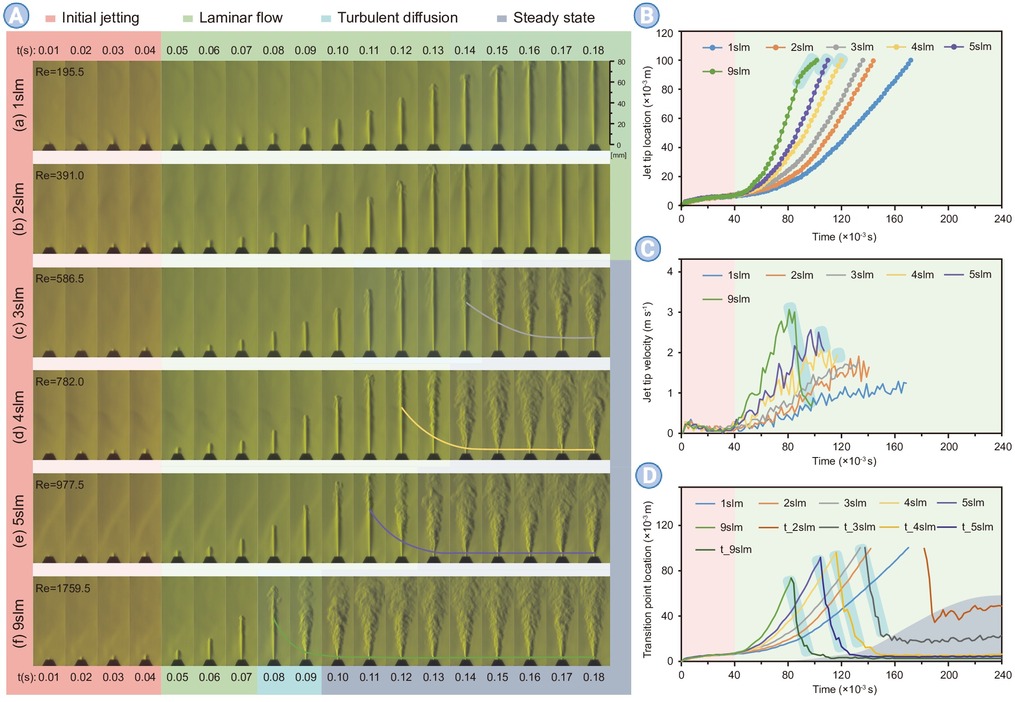
Figure 1.
Time-resolved Schlieren images depicting different jet evolution modes
-
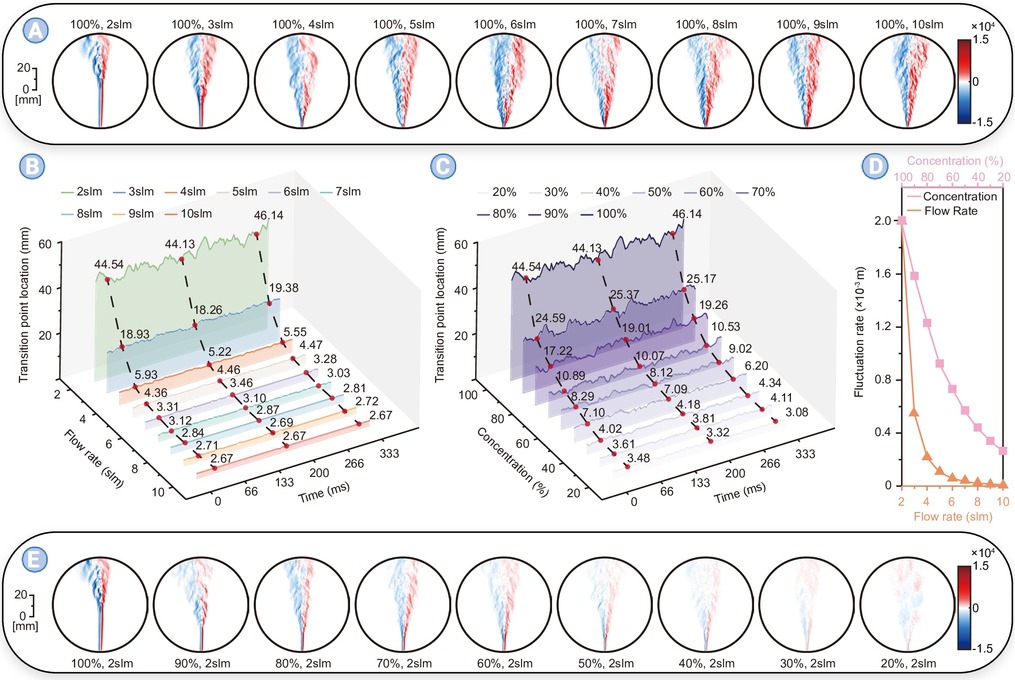
Figure 2.
Fluctuation characteristics of the laminar–turbulent boundary in HLJs
-
Figure 3.
Analysis of laminar–turbulent boundary fluctuations
-
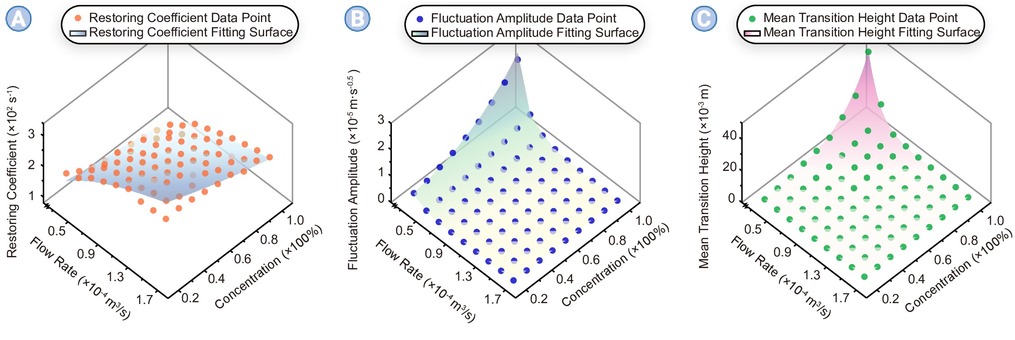
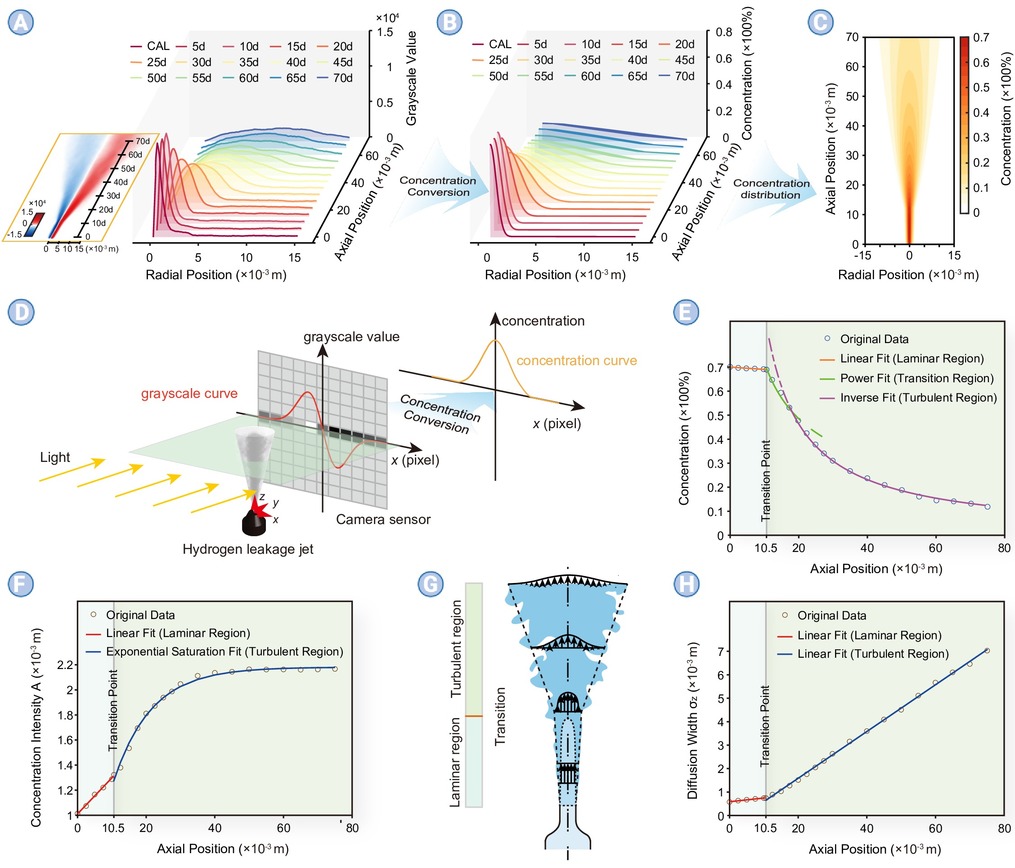
Figure 4.
Reconstruction of the full-field concentration distribution
