
CeO2 facet-directed interfacial engineering in Ru1/CeO2 catalysts for efficient 2-butanol production from levulinic acid
-
GRAPHICAL ABSTRACT
 DownLoad:
Full size image
DownLoad:
Full size image
-
PUBLIC SUMMARY
-
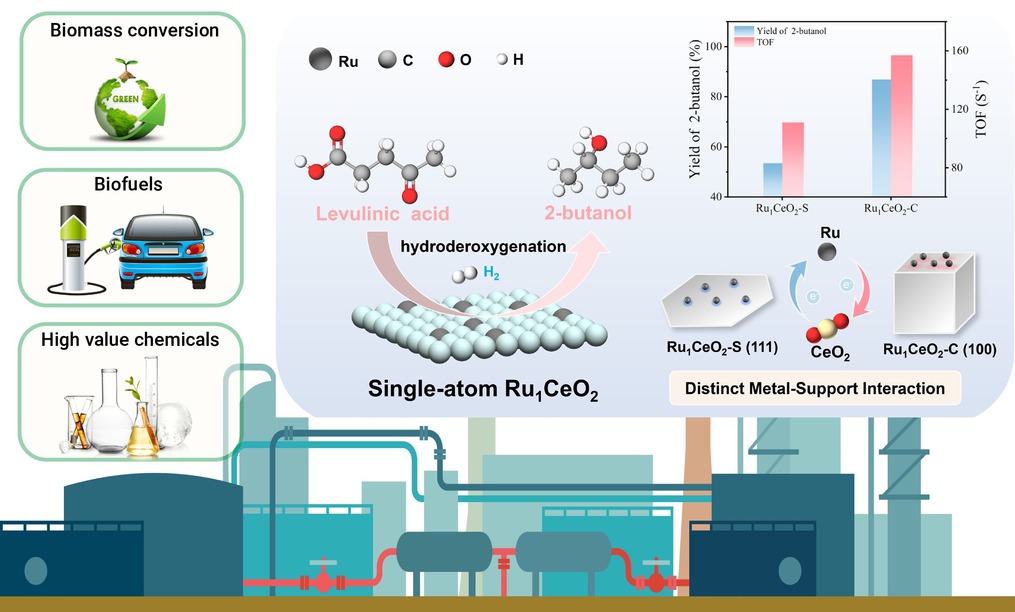
Facet-engineered CeO2 supports tune single-atom Ru catalysts for biomass conversion.
Ru1/CeO2-C achieves 86.9% yield of 2-butanol with high catalytic activity.
(100) facets create more oxygen vacancies and stronger metal–support interactions.
Enhanced hydrogen transfer and C–C cleavage improve reaction efficiency.
Provides a strategy to design high-performance catalysts for biomass upgrading.
-
-
ABSTRACT
Optimizing the selectivity of biomass-derived platform chemicals requires precise control over the geometric and electronic structures of catalytic active sites. Herein, we report the structural engineering of single-atom ruthenium (Ru1) supported on ceria (CeO2) nanocrystals with distinct crystal facets to regulate the hydrodeoxygenation of levulinic acid to 2-butanol. Using a facile photodeposition method, Ru1 species were anchored onto cubic (CeO2-C, exposing (1 0 0) facets) and sheet-like (CeO2-S, exposing (1 1 1) facets) supports. The Ru1CeO2-C catalyst exhibited superior catalytic performance, achieving an 86.9% yield of 2-butanol at 190 °C with a turnover frequency value of 157 s-1, surpassing the Ru1CeO2-S catalyst (53.5% and 111 s-1). Comprehensive characterization, including XPS, Raman spectroscopy, and EPR, revealed that the (1 0 0) facets of CeO2-C facilitate a higher concentration of surface oxygen vacancies and foster the electronic metal-support interaction. This interaction stabilizes Ru species and promotes the formation of Lewis acid sites, which are critical for the ring-opening of the key intermediate, γ-valerolactone. Kinetic studies, in situ DRIFTS, and theoretical calculations further confirmed that the facet-dependent electronic structure of Ru1CeO2-C significantly enhances hydrogen transfer capabilities and C-C bond cleavage efficiency. This work elucidates the structure-activity relationship in single-atom catalysis and offers a facet-engineering strategy for designing efficient biomass conversion catalysts.-
Keywords:
- photodeposition /
- ceria facet /
- electronic metal-support interaction /
- levulinic acid /
- 2-butanol
-

-
REFERENCES
[1] Liu Y., Chen L.A., Chen Y.B., et al. (2023). Pilot study on production of aviation fuel from catalytic conversion of corn stover. Bioresour. Technol. 372:128653. DOI:10.1016/j.biortech.2023.128653 [2] Liao Y., Koelewijn S.-F., Van den Bossche G., et al. (2020). A sustainable wood biorefinery for low–carbon footprint chemicals production. Science 367:1385−1390. DOI:10.1126/science.aau1567 [3] Singhawat K., Thubsuang U., Saramolee P., et al. (2025). Fractionation of palm oil empty fruit bunch using deep eutectic solvent for lignin recovery and cellulose conversion to levulinic acid. Biomass Bioenergy 202:108184. DOI:10.1016/j.biombioe.2025.108184 [4] Chen Z., Wu Y., Huang J.H., et al. (2015). Metabolic engineering of Klebsiella pneumoniae for the de novo production of 2-butanol as a potential biofuel. Bioresour. Technol. 197:260−265. DOI:10.1016/j.biortech.2015.08.086 [5] Rao T.U., Suchada S., Choi C., et al. (2022). Selective hydrogenation of furfural to tetrahydrofurfuryl alcohol in 2-butanol over Ni–Cu–Al catalyst. Energy Convers. Manage. 265:115736. DOI:10.1016/j.enconman.2022.115736 [6] Chen L.G., Liu Y., Gu C.S., et al. (2021). Selective production of 2-butanol from hydrogenolysis of levulinic acid catalyzed by NiMn bimetallic catalyst. ACS Sustain. Chem. Eng. 9:15603−15611. DOI:10.1021/acssuschemeng.1c05771 [7] Gao L.L., Long Y.W., Xiao Z.G., et al. (2025). Synergistic regulation of oxygen vacancy and Lewis acid sites by Ru loading for boosting 2-butanol production. J. Catal. 450:116302. DOI:10.1016/j.jcat.2025.116302 [8] Lv J.K., Rong Z.M., Sun L.M., et al. (2018). Catalytic conversion of biomass-derived levulinic acid into alcohols over nanoporous Ru catalyst. Catal. Sci. Technol. 8:975−979. DOI:10.1039/c7cy01838j [9] Mizugaki T., Togo K., Maeno Z., et al. (2017). New routes for refinery of biogenic platform chemicals catalyzed by CeO2-supported Ru nanoparticles. Sci. Rep. 7:14007. DOI:10.1038/s41598-017-14373-1 [10] Liu Y., Gu C.S., Chen L.G., et al. (2023). Ru–MnOx interaction for efficient hydrodeoxygenation of levulinic acid and derivatives. ACS Appl. Mater. Interfaces 15:4184−4193. DOI:10.1021/acsami.2c22045 [11] Zhang Y., Zhao S., Feng J., et al. (2021). Physical chemistry and materials science of CeO2-based nanostructures. Chem 7:2022−2059. DOI:10.1016/j.chempr.2021.02.015 [12] Grabchenko M.V., Mamontov G.V., Zaikovskii V.I., et al. (2020). Metal-support interaction in Ag/CeO2 catalysts. Appl. Catal. B: Environ. 260:118148. DOI:10.1016/j.apcatb.2019.118148 [13] Fang Y., He Y., Liu K., et al. (2025). Ceria facet engineering and Mo-modified acidity in Pt/CeO2 catalysts. J. Rare Earths. DOI:10.1016/j.jre.2025.12.017. [14] Mao L.T., Song Z.X., Fan J., et al. (2025). Role of oxygen vacancies on ceria crystal planes. Sep. Purif. Technol. 360:131131. DOI:10.1016/j.seppur.2024.131131 [15] Zhang L.J., Chen R.H., Tu Y., et al. (2023). Crystal facet effect of ceria in Pd/CeO2 catalysts. ACS Catal. 13:2202−2213. DOI:10.1021/acscatal.2c04252 [16] Trovarelli A. and Llorca J. (2017). Ceria catalysts at nanoscale. ACS Catal. 7:4716−4735. DOI:10.1021/acscatal.7b01246 [17] Tong T., Liu X.H., Guo Y., et al. (2018). Role of CeO2 crystal plane in controlling Pt states. J. Catal. 365:420−428. DOI:10.1016/j.jcat.2018.07.023 [18] Mai H.X., Sun L.D., Zhang Y.W., et al. (2005). Shape-selective synthesis and oxygen storage of ceria nanostructures. J. Phys. Chem. B 109:24380−24385. DOI:10.1021/jp055584b [19] Dai Q.G., Bai S.X., Li H., et al. (2014). Synthesis of CeO2 nanosheets via aqueous precipitation. CrystEngComm 16:9817−9827. DOI:10.1039/c4ce01436g [20] Esther Jeyanthi C., Karnan C., Kistan A., et al. (2023). Cobalt doping effects in CeO2 ceramics. Inorg. Chem. Commun. 153:110836. DOI:10.1016/j.inoche.2023.110836 [21] Gao Y.X., Zhang Z.H., Li Z.R., et al. (2020). Morphology-dependent CuOx–CeO2 interaction. Chin. J. Catal. 41:1006−1016. DOI:10.1016/S1872-2067(19)63503-5 [22] Xie X.L., Wang J.R., Guo X.C., et al. (2024). CeO2 catalysts with different morphologies for ozonation. J. Colloid Interface Sci. 673:847−859. DOI:10.1016/j.jcis.2024.06.119 [23] Busch I., Liu W.D., Chen C., et al. (2017). Ellipsometry for oxide layer measurement. Appl. Surf. Sci. 421:624−629. DOI:10.1016/j.apsusc.2017.01.125 [24] Caddeo F., Casu A., Loche D., et al. (2021). Thermally stable ceria nanocubes. J. Colloid Interface Sci. 583:376−384. DOI:10.1016/j.jcis.2020.09.044 [25] Ziemba M., Weyel J. and Hess C. (2022). Operando study on Cu/CeO2 catalysts. ACS Catal. 12:9503−9514. DOI:10.1021/acscatal.2c02216 [26] Fang Y.F., Han X.Y., Liu K.J., et al. (2026). Dual-atom catalyst for propane combustion. Nat. Chem. DOI:10.1038/s41557-025-02062-w. [27] Gao X., Huang G., Jing S., et al. (2025). Strategies for single-atom catalysts in ORR. Innov. Mater. 3:100141. DOI:10.59717/j.xinn-mater.2025.100141 [28] Long J.R., Mao Y.X., Long Y.W., et al. (2026). Ru/HZSM-5 for hydrodeoxygenation of lignin phenols. Bioresour. Technol. 439:133357. DOI:10.1016/j.biortech.2025.133357 [29] Wang Y.F. and Wang R.G. (2022). CeO2 nanorods supported Ru catalysts. J. Colloid Interface Sci. 613:836−846. DOI:10.1016/j.jcis.2022.01.062 [30] Li J.H., Liu Z.Q., Cullen D.A., et al. (2019). Distribution of Ru species on CeO2 supports. ACS Catal. 9:11088−11103. DOI:10.1021/acscatal.9b03113 [31] Ren G.M., Chen X.Y., Zhao Z.H., et al. (2025). Photocatalytic C–N coupling on Ru single atoms. Adv. Funct. Mater. 35:2506296. DOI:10.1002/adfm.202506296 [32] Zhu Y.C., Li C.T., Liang C.X., et al. (2023). CeO2 morphology and catalytic oxidation of toluene. J. Catal. 418:151−162. DOI:10.1016/j.jcat.2023.01.012 [33] Long G.C., Wang A.D., Liu X., et al. (2025). Oxygen vacancy clusters in CeO2 nanorods. Angew. Chem. Int. Ed. 64:e202508217. DOI:10.1002/anie.202508217 [34] Hu Z., Liu X.F., Meng D.M., et al. (2016). Effect of ceria crystal plane on Pd/CeO2. ACS Catal. 6:2265−2279. DOI:10.1021/acscatal.5b02617 [35] Nolan M., Parker S.C. and Watson G.W. (2005). Electronic structure of oxygen vacancy defects in ceria. Surf. Sci. 595:223−232. DOI:10.1016/j.susc.2005.08.015 [36] Huang M. and Fabris S. (2008). CO adsorption and oxidation on ceria surfaces. J. Phys. Chem. C 112:8643−8648. DOI:10.1021/jp709898r [37] Zhang K., Meng Q., Wu H., et al. (2022). Selective hydrodeoxygenation over Ru single atoms on CeO2. J. Am. Chem. Soc. 144:20834−20846. DOI:10.1021/jacs.2c08992 [38] Tao S.Y., Wang X., Rao C., et al. (2026). Pd–Ce diatomic interaction for methane oxidation. Adv. Funct. Mater. 36. DOI:10.1002/adfm.202519202. [39] Zhang X., Zhou Y. and Xing M. (2026). Environmental catalysts with high activity and stability. Innov. Mater. 4:100166. DOI:10.59717/j.xinn-mater.2025.100166 [40] Dai Q.G., Huang H., Zhu Y., et al. (2012). Catalytic oxidation over ceria nanocrystals. Appl. Catal. B: Environ. 117:360−368. DOI:10.1016/j.apcatb.2012.02.001 [41] Weber W.H., Hass K.C. and McBride J.R. (1993). Raman study of CeO2. Phys. Rev. B 48:178−185. DOI:10.1103/PhysRevB.48.178 [42] Zhang B.F., Yang J.W., Mu Y.B., et al. (2024). Highly dispersed Ru catalysts on CeO2. Environ. Sci. Technol. 58:19533−19544. DOI:10.1021/acs.est.4c07159 [43] Sivan S.E., Kang K.H., Han S.J., et al. (2022). MOF-derived Ru catalysts on CeO2. J. Catal. 408:316−328. DOI:10.1016/j.jcat.2022.03.019 [44] Liu Y., Long J.R., Huang Z.J., et al. (2024). Production of HMF and DMF from fructose. Biomass Bioenergy 190:107405. DOI:10.1016/j.biombioe.2024.107405 [45] Luo S., Mao M., Yu H., et al. (2024). Oxygen vacancy regulation for glucose conversion. Catal. Today 434:114709. DOI:10.1016/j.cattod.2024.114709 [46] Joshi N., Gawas P., Bora A., et al. (2023). Zeolite for gas sensing of VOCs. Surf. Interfaces 42:103364. DOI:10.1016/j.surfin.2023.103364 [47] Wang J.F., Lu X.B., Wang Y.Y., et al. (2025). Ru-based nanoreactors for biomass conversion. ACS Catal. 15:9266−9276. DOI:10.1021/acscatal.4c08089 [48] Ye S.J., Lian X.Y., Liu B.Y., et al. (2023). Deep oxidation of toluene. Appl. Catal. B: Environ. 334:122802. DOI:10.1016/j.apcatb.2023.122802 [49] Wang J.M., Zhu S.H., He Y., et al. (2024). Pt/Mg–Al catalysts for hydrogenation. Catal. Today 433:114647. DOI:10.1016/j.cattod.2024.114647 [50] Zhang P., Sui X.Y., Wang Y., et al. (2023). Ru-based nanohybrids for CO2 methanation. J. Am. Chem. Soc. 145:5769−5777. DOI:10.1021/jacs.2c12632 -
ABOUT THIS ARTICLE
Cite this article:
Zhang S., Liu F., Zhang Y., et al. (2026). CeO2 facet-directed interfacial engineering in Ru1/CeO2 catalysts for efficient 2-butanol production from levulinic acid. The Innovation Energy 3:100156. https://doi.org/10.59717/j.xinn-energy.2026.100156
Welcome!
To request copyright permission to republish or share portions of our works, please visit Copyright Clearance Center's (CCC) Marketplace website at marketplace.copyright.com.
Export File
Citation
Zhang S., Liu F., Zhang Y., et al. (2026). CeO2 facet-directed interfacial engineering in Ru1/CeO2 catalysts for efficient 2-butanol production from levulinic acid. The Innovation Energy 3:100156. https://doi.org/10.59717/j.xinn-energy.2026.100156

Format
Content
-
Figure 1.
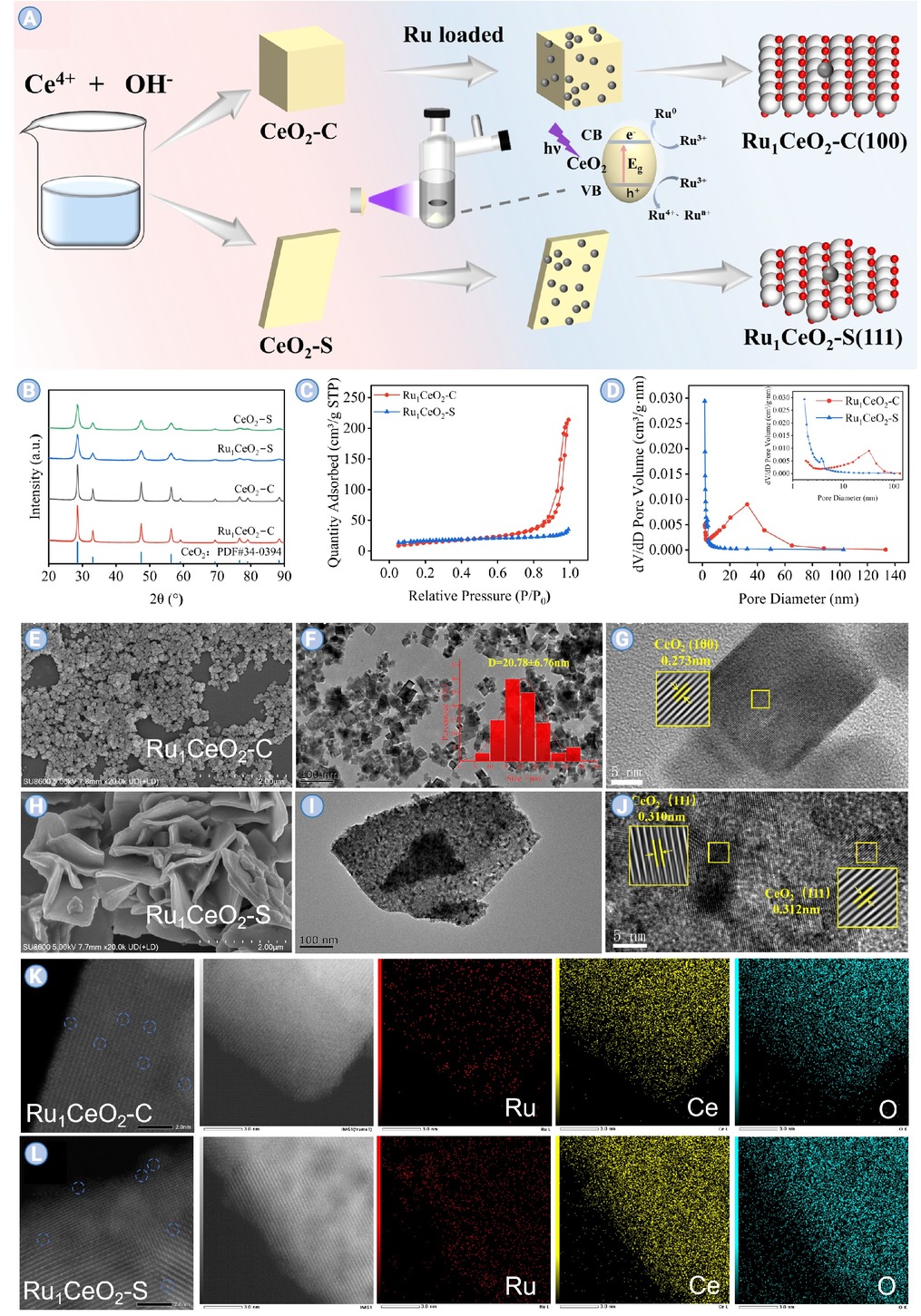
(A) Schematic illustration of the preparation process for Ru1CeO2 catalysts via facet engineering and photodeposition. (B) XRD patterns of CeO2 supports and Ru1CeO2 catalysts. (C) N2-sorption isotherms and (D) pore size distribution curves of catalysts. (E) SEM images, (F&G) TEM images, and (k) AC-HAADF-STEM image and elemental mapping of Ru1CeO2-C. (H) SEM images, (I&J) TEM images, and (l) AC-HAADF-STEM image and elemental mapping of Ru1CeO2-S.
-
Figure 2.
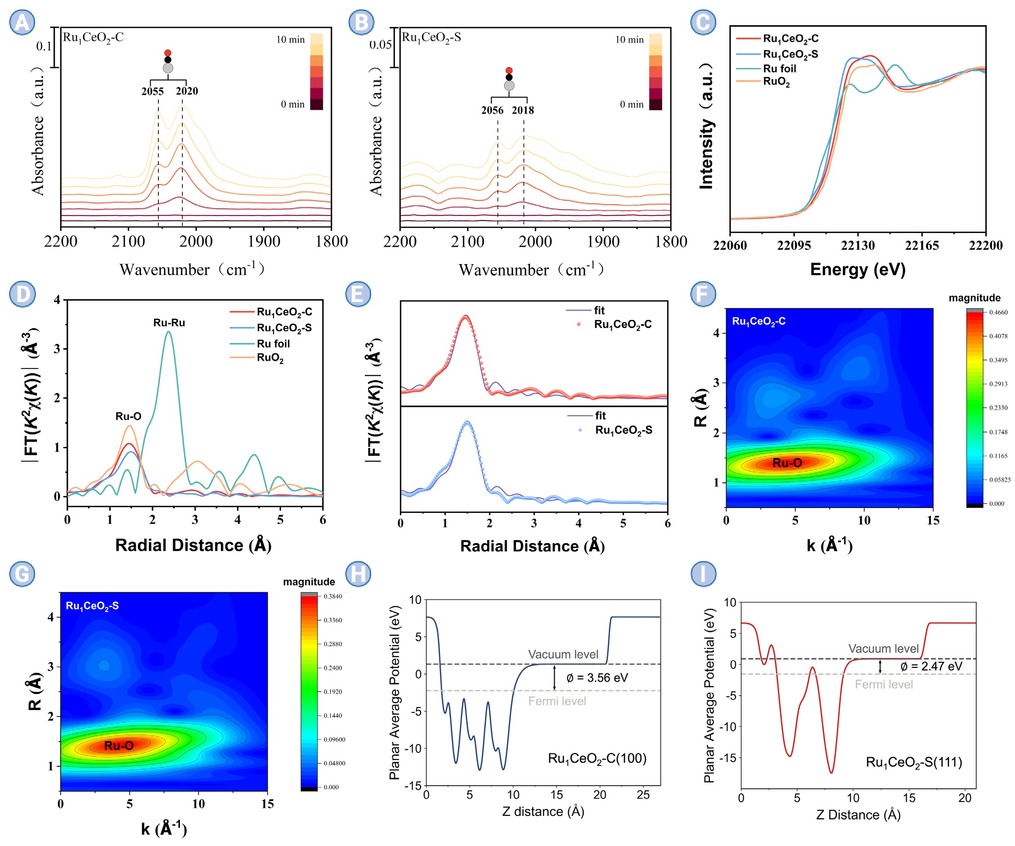
In situ CO-DRIFTS of (A) Ru1CeO2-C and (B) Ru1CeO2-S. (C) Ru K-edge XANES spectra and (D) FT-EXAFS spectra of Ru1CeO2-C and Ru1CeO2-S, with Ru foil and RuO2 provided as references. (E) EXAFS fitting curves at the Ru K-edge for both catalysts. R-space fitting results of the EXAFS spectra for (F) Ru1CeO2-C and (G) Ru1CeO2-S. Calculated work functions of (H) Ru1CeO2-C and (I) Ru1CeO2-S.
-
Figure 3.
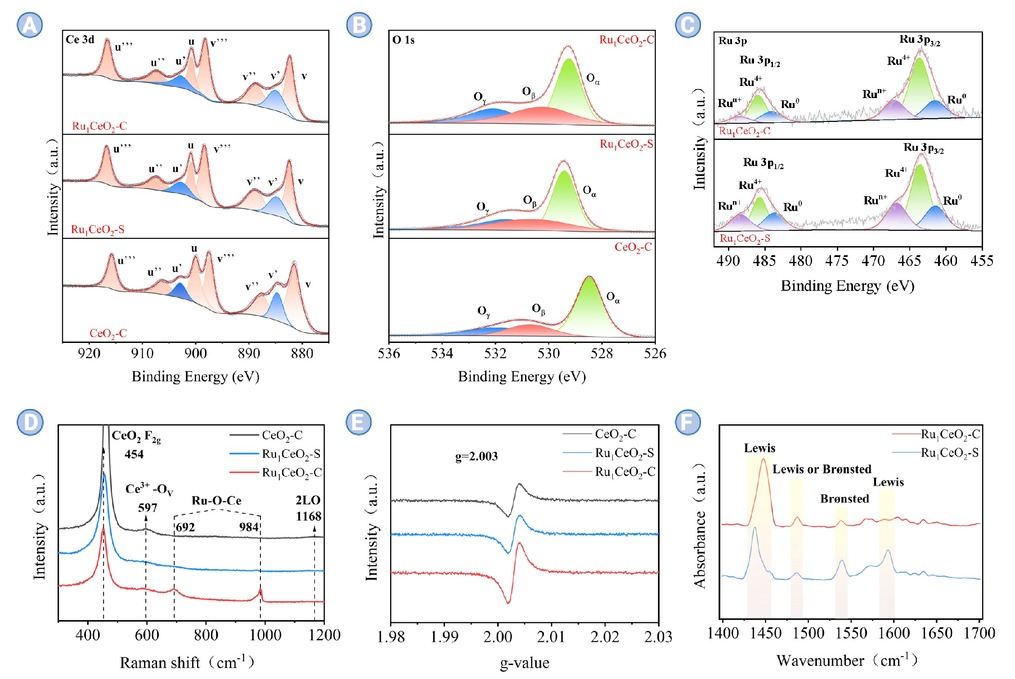
(A) Ce 3d XPS spectra, (B) O 1s XPS spectra, (C) Ru 3p XPS spectra, (D) Raman spectra, (E) EPR spectra, and (F) Py-FTIR spectra of samples.
-
Figure 4.
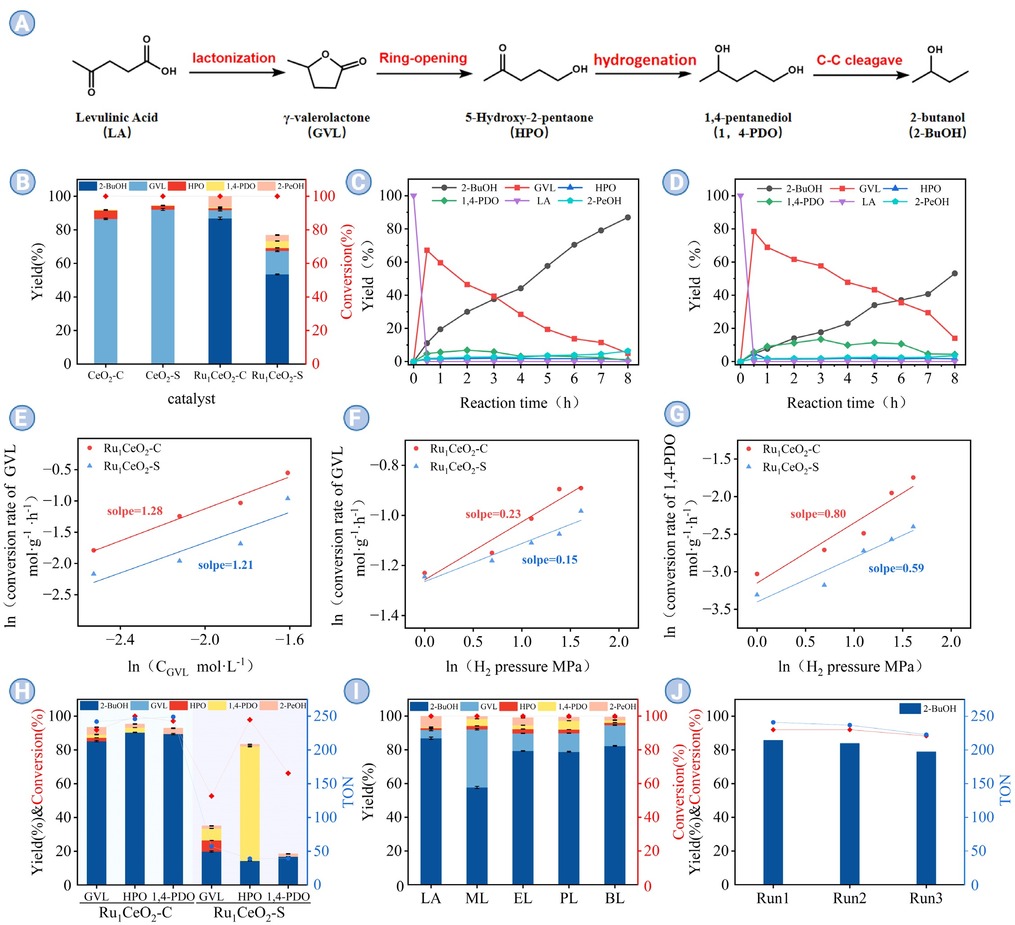
(A) Proposed reaction pathway for LA hydrodeoxygenation to 2-butanol. (B) Conversion of LA over different catalysts. Time evolution of product distributions in LA hydrodeoxygenation over (C) Ru1CeO2-C and (D) Ru1CeO2-S catalysts. Determination of apparent reaction orders with respect to (E) GVL concentration and (F) H2 pressure during GVL hydrodeoxygenation. (G) Apparent reaction orders with respect to H2 pressure in 1,4-PDO hydrodeoxygenation. (H) Catalytic activity of Ru1CeO2-C and Ru1CeO2-S for the conversion of key reaction intermediates. (I) Substrate scope evaluation: catalytic conversion of various levulinates over Ru1CeO2-C. (J) Recycling tests of Ru1CeO2-C in the catalytic GVL hydrodeoxygenation (Reaction conditions: 0.07 g catalyst, 0.14 g GVL, 8.65 mL IPA, 190 °C, 5 MPa H2, and 8 h).
-
Figure 5.
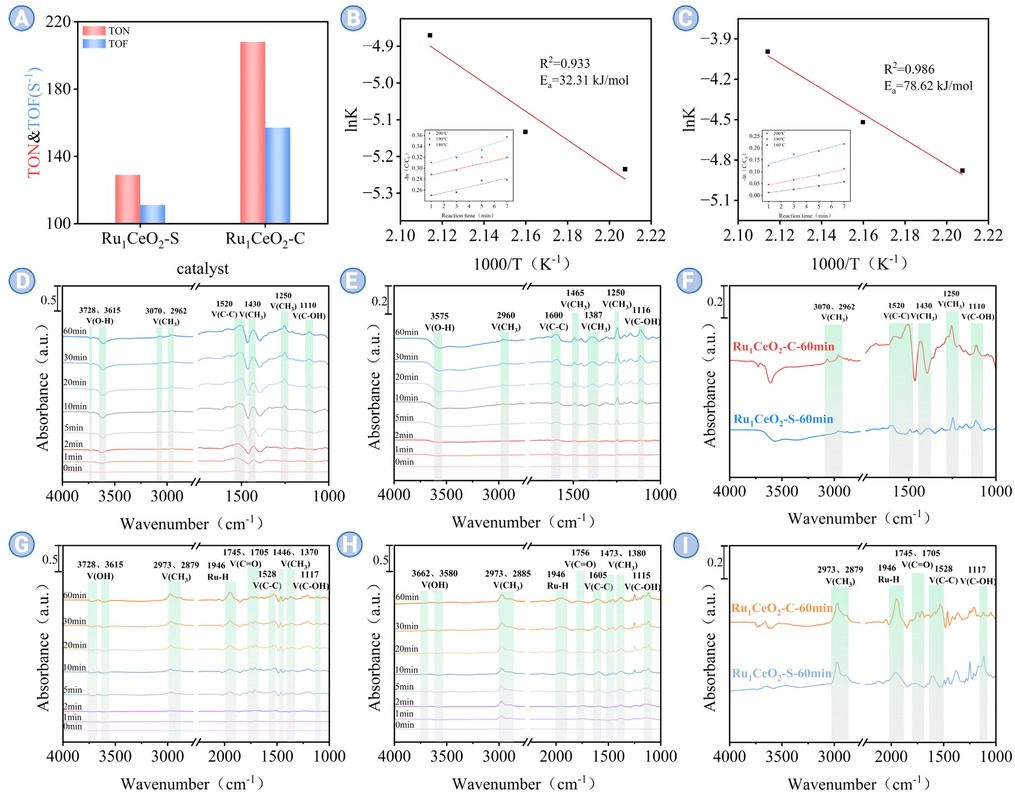
(A) Comparison of TON and TOF for Ru1CeO2-C and Ru1CeO2-S catalysts in LA hydrodeoxygenation. Apparent activation energy of (B) Ru1CeO2-C and (C) Ru1CeO2-S catalysts in GVL hydrodeoxygenation. In situ DRIFTS of the interaction/reaction (D) between Ru1CeO2-C and 1,4-PDO, (E) between Ru1CeO2-S and 1,4-PDO, (F) between catalysts and 1,4-PDO at 60 min, (Gg) between IPA and Ru1CeO2-C, (H) between IPA and Ru1CeO2-S, and (I) between catalysts and IPA at 60 min.
-
Figure 6.
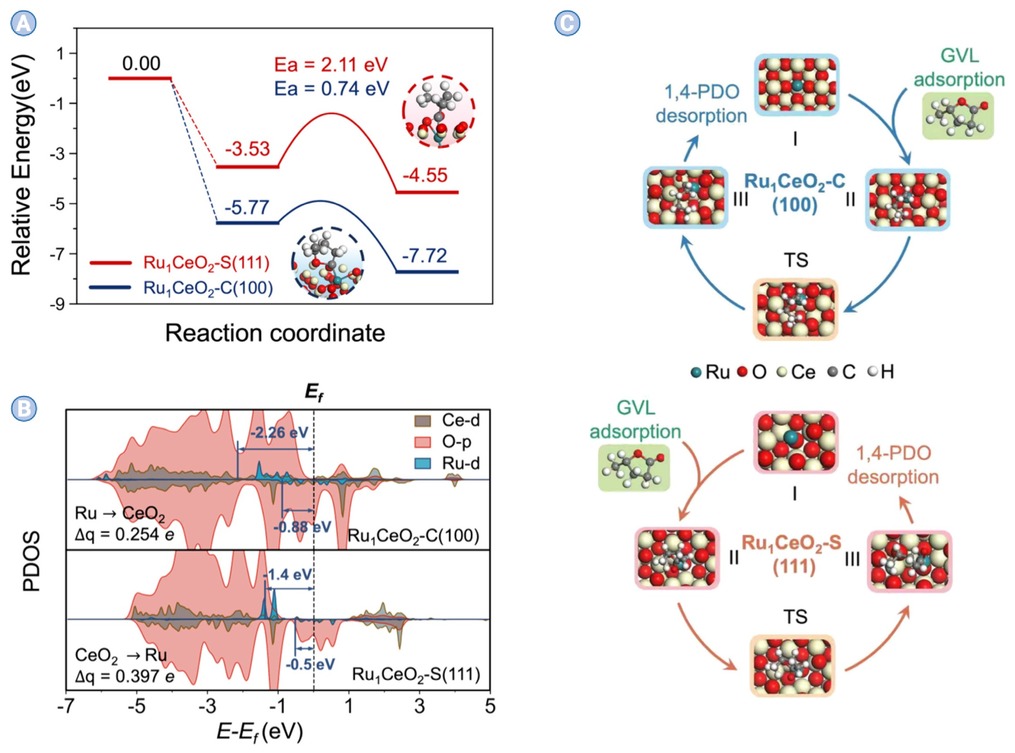
(A) Calculated energy profiles for GVL ring-opening reaction on Ru1CeO2-C (100) and Ru1CeO2-S (111) surfaces. (B) Projected density of state (PDOS) for Ru1CeO2 catalysts and electron transfer analysis. (C) Optimized geometric configurations for GVL-ring-opening reactions.
