
Sequential optical modulation in smart glazing: A hierarchical thermochromic strategy for climate-adaptive building envelopes
-
GRAPHICAL ABSTRACT
 DownLoad:
Full size image
DownLoad:
Full size image
-
PUBLIC SUMMARY
-
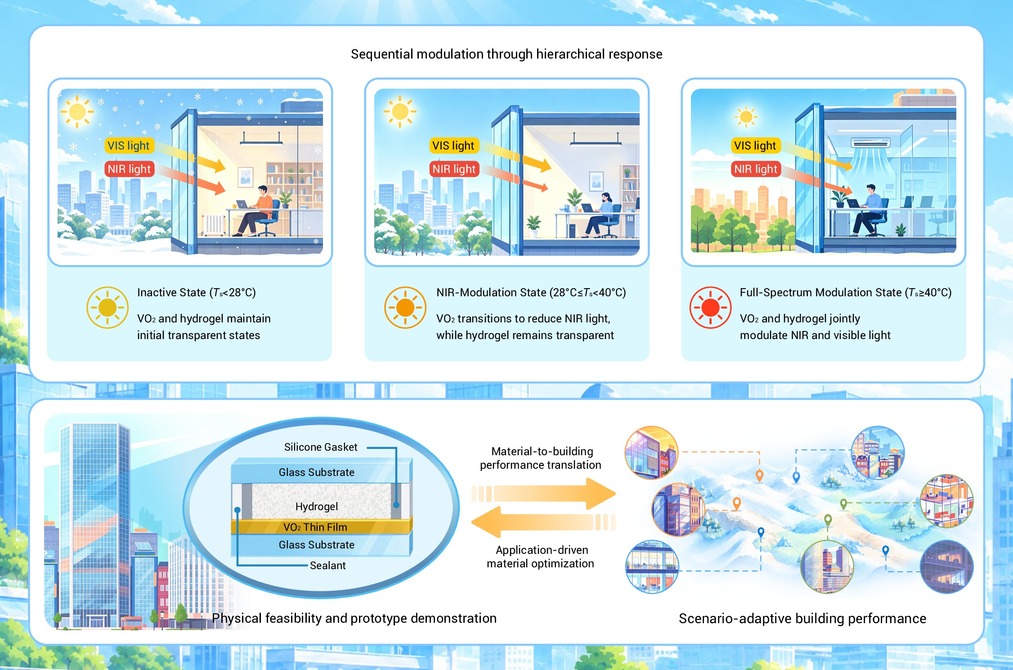
A hierarchical thermochromic window sequentially regulates near-infrared (NIR) and visible light.
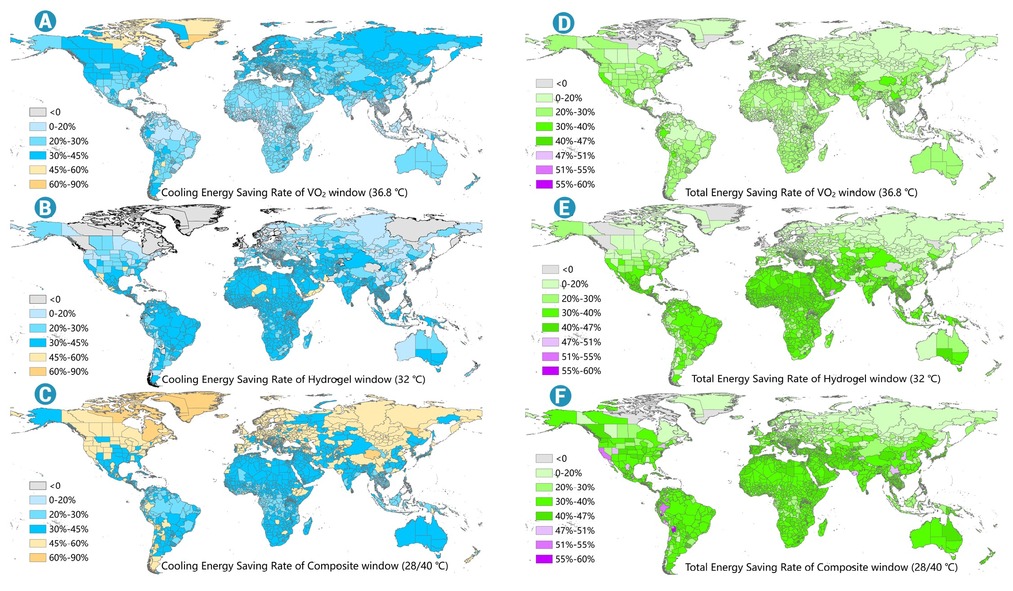
Across 3,600+ global administrative units, 96% and 79% exceeded 30% cooling and total energy savings.
Sequential switching balances cooling, heating, and lighting while keeping over-illumination below 10%.
A vanadium dioxide (VO2)-hydrogel prototype verified staged optical switching over 50 thermal cycles.
-
-
ABSTRACT
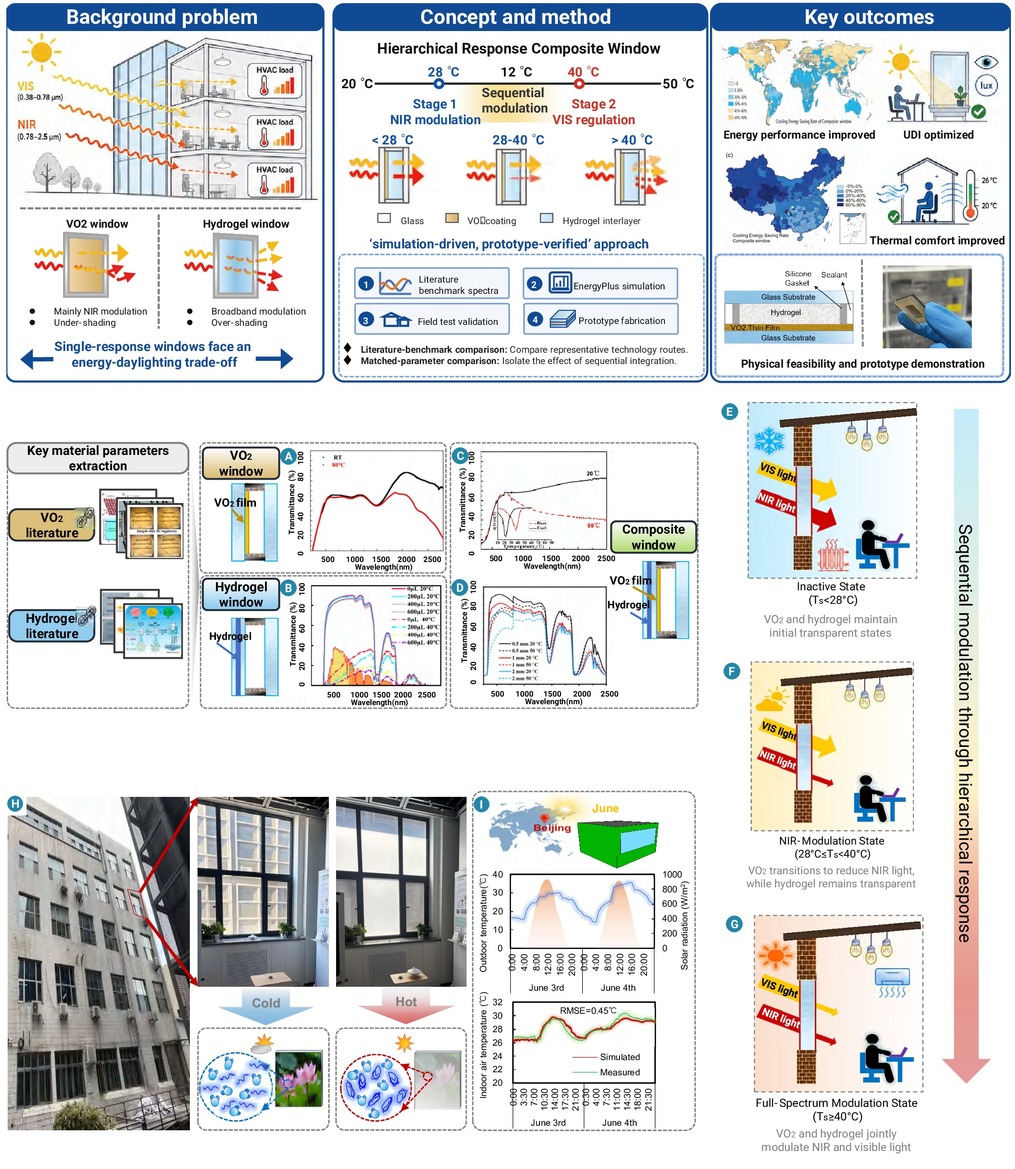
Thermochromic glazing can passively regulate solar gains, but single-response systems often trade solar-heat rejection against daylight preservation. Here we propose a hierarchical response composite window that sequentially activates near-infrared (NIR) and visible-light modulation: a 28 °C VO2 layer first limits NIR heat transmission, whereas a 40 °C hydrogel introduces stronger broadband attenuation only under intense solar thermal stress. Within a simulation-first, prototype-verified reverse-design framework, literature-derived optical spectra were implemented in EnergyPlus, validated against full-scale measurements (indoor-temperature RMSE = 0.45 °C), and assessed across more than3600 global administrative units, 370 Chinese municipal-level units, and representative hot, mixed, and cold climates. Globally, 96% and 79% of valid units achieved cooling and total energy saving rates above 30%, respectively. In China, the composite window delivered mean cooling and total energy saving rates of 32.18% and 11.45%, with 84.1% of units exceeding 20% cooling savings. Matched-parameter controls further showed that sequencing improves the annual balance among cooling, heating, and lighting rather than maximizing cooling savings alone. It also suppressed over illumination to below 10% and improved useful daylight availability. Prototype spectra verified a VO2-dominated NIR-first state followed by hydrogel-dominated broadband attenuation, while more than 50 thermal cycles confirmed short-term reversible operation. These results establish sequential thermochromic regulation as a climate-aware design principle for reconciling energy and daylighting demands in adaptive glazed façades. -

-
REFERENCES
[1] Lin C., Hur J., Chao C.Y.H., et al. (2022). All-weather thermochromic windows for synchronous solar and thermal radiation regulation. Sci. Adv. 8:eabn7359. DOI:10.1126/sciadv.abn7359 [2] Pérez-Lombard L., Ortiz J. and Pout C. (2008). A review on buildings energy consumption information. Energy Build. 40:394−398. DOI:10.1016/j.enbuild.2007.03.007 [3] Cuce E. and Riffat S.B. (2015). A state-of-the-art review on innovative glazing technologies. Renew. Sustain. Energy Rev. 41:695−714. DOI:10.1016/j.rser.2014.08.084 [4] Allouhi A., El Fouih Y., Kousksou T., et al. (2015). Energy consumption and efficiency in buildings: current status and future trends. J. Clean. Prod. 109:118−130. DOI:10.1016/j.jclepro.2015.05.139 [5] Evangelisti L., Guattari C., Asdrubali F., et al. (2020). An experimental investigation of the thermal performance of a building solar shading device. J. Build. Eng. 28:101089. DOI:10.1016/j.jobe.2019.101089 [6] Al-Masrani S.M., Al-Obaidi K.M., Zalin N.A., et al. (2018). Design optimisation of solar shading systems for tropical office buildings: Challenges and future trends. Sol. Energy 170:849−872. DOI:10.1016/j.solener.2018.04.047 [7] Mingotti N., Chenvidyakarn T. and Woods A.W. (2013). Combined impacts of climate and wall insulation on the energy benefit of an extra layer of glazing in the facade. Energy Build. 58:237−249. DOI:10.1016/j.enbuild.2012.11.033 [8] Joeng K.-Y., Kim I.-T. and Choi A.-S. (2014). Analysis on the Workplane Illuminance and Energy Consumption in a Daylight Responsive Dimming System Integrated with an Intelligent Automated Roller Shade System. KSLES 21:722. DOI:10.21086/ksles.2014.10.21.5.722 [9] Zhang J., Gao T., Liu S., et al. (2025). Design and photothermal coupling analysis of Kresling origami-based intelligent dynamic shading system. Thin-Walled Struct. 207:112739. DOI:10.1016/j.tws.2024.112739 [10] Mlyuka N.R., Niklasson G.A. and Granqvist C.G. (2009). Thermochromic multilayer films of VO2 and TiO2 with enhanced transmittance. Sol. Energy Mater. Sol. Cells 93:1685−1687. DOI:10.1016/j.solmat.2009.03.021 [11] Mustafa M.N., Mohd Abdah M.A.A., Numan A., et al. (2023). Smart window technology and its potential for net-zero buildings: A review. Renew. Sustain. Energy Rev. 181:113355. DOI:10.1016/j.rser.2023.113355 [12] Zhang Z., Zhang L., Zhou Y., et al. (2023). Thermochromic Energy Efficient Windows: Fundamentals, Recent Advances, and Perspectives. Chem. Rev. 123:7025−7080. DOI:10.1021/acs.chemrev.2c00762 [13] Wu S., Zhu P., Song J., et al. (2024). Design and application optimization of static and dynamic shading technologies in multi-climate based on parameter simulation. Renew. Energy 237:121846. DOI:10.1016/j.renene.2024.121846 [14] Duan Z., Wu S., Sun H., et al. (2024). Improvements in energy saving and thermal comfort for electric vehicles in summer through coupled electrochromic and radiative cooling smart windows. Build. Simul. 17:1231−1251. DOI:10.1007/s12273-024-1137-2 [15] Geng C., Chen Y., Wei H., et al. (2024). Adaptive Variable Emissivity Reflector for Seasonal and Daily Thermal Regulation in Regions with Significant Temperature Variations. Adv. Funct. Mater. 34:2410819. DOI:10.1002/adfm.202410819 [16] Qazilbash M.M., Brehm M., Chae B.-G., et al. (2007). Mott Transition in VO2 Revealed by Infrared Spectroscopy and Nano-Imaging. Science 318:1750−1753. DOI:10.1126/science.1150124 [17] Yang Z., Ko C. and Ramanathan S. (2011). Oxide Electronics Utilizing Ultrafast Metal-Insulator Transitions. Annu. Rev. Mater. Res. 41:337−367. DOI:10.1146/annurev-matsci-062910-100347 [18] Morin F.J. (1959). Oxides Which Show a Metal-to-Insulator Transition at the Neel Temperature. Phys. Rev. Lett. 3:34−36. DOI:10.1103/PhysRevLett.3.34 [19] Tian Y., Sun M., Sun H., et al. (2025). Cellulose-based hydrogel simultaneously possessing solar and evaporative cooling performances for energy-saving window and personal thermal management. Carbohydr. Polym. 352:123148. DOI:10.1016/j.carbpol.2024.123148 [20] Lei X., Sun H., Yuan X., et al. (2024). Enhanced phase transformation properties of VO2(M) powder by Ti doping. J. Mater. Sci. 59:15665−15675. DOI:10.1007/s10853-024-10134-4 [21] Piccirillo C., Binions R. and Parkin I.P. (2007). Synthesis and Functional Properties of Vanadium Oxides: V2O3, VO2, and V2O5 Deposited on Glass by Aerosol‐Assisted CVD. Chem. Vap. Depos. 13:145−151. DOI:10.1002/cvde.200606540 [22] Okimura K., Mian MdS., Yamaguchi I., et al. (2023). High luminous transmittance and solar modulation of VO2-based smart windows with SiO2 anti-reflection coatings. Sol. Energy Mater. Sol. Cells 251:112162. DOI:10.1016/j.solmat.2022.112162 [23] Zong H., Zhang S., Bian L., et al. (2023). Preparation and characterization of VO2/Cu-Zr NPs/VO2 composite films with enhanced thermochromic properties. J. Alloys Compd. 967:171654. DOI:10.1016/j.jallcom.2023.171654 [24] Jin P., Xu G., Tazawa M., et al. (2003). Design, formation and characterization of a novel multifunctional window with VO2 and TiO2 coatings. Appl. Phys. A 77:455−459. DOI:10.1007/s00339-002-1460-2 [25] Tian X., Huang Z., Zhang Q., et al. (2024). PNIPAm Thermo-Responsive Nanofibers Mats: Morphological Stability and Response Behavior under Cross-Linking. Acta Phys.-Chim. Sin. 40:2304037. DOI:10.3866/PKU.WHXB202304037 [26] Lei Q., Yu W., Xie G., et al. (2023). Novel Photothermochromic Smart Window Based on PNIPAm‐glass‐MXene/PAM with High Shield, Fast Response, and Excellent Stability. Sol. RRL 7:2200990. DOI:10.1002/solr.202200990 [27] Zhou Y., Cai Y., Hu X., et al. (2014). Temperature-responsive hydrogel with ultra-large solar modulation and high luminous transmission for “smart window” applications. J. Mater. Chem. A 2:13550−13555. DOI:10.1039/C4TA02287D [28] Zhao L.-L., Shi X.-L., Huang C.-H., et al. (2025). Temperature-sensitive ionic hydrogels for dual electric and thermal responsive smart window. Chem. Eng. J. 505:158937. DOI:10.1016/j.cej.2024.158937 [29] Zhang J., Liang W. and Lang M. (2023). Natural UCST hydrogel with long-term stability, recyclability, thermoplasticity, frost resistance and adhesive properties. Eur. Polym. J. 199:112414. DOI:10.1016/j.eurpolymj.2023.112414 [30] Li G., Chen J., Yan Z., et al. (2023). Physical crosslinked hydrogel-derived smart windows: anti-freezing and fast thermal responsive performance. Mater. Horiz. 10:2004−2012. DOI:10.1039/D3MH00057E [31] Vanti G., Wang M., Bergonzi M.C., et al. (2020). Hydroxypropyl methylcellulose hydrogel of berberine chloride-loaded escinosomes: Dermal absorption and biocompatibility. Int. J. Biol. Macromol. 164:232−241. DOI:10.1016/j.ijbiomac.2020.07.129 [32] Zheng J., Bao S. and Jin P. (2015). TiO2(R)/VO2(M)/TiO2(A) multilayer film as smart window: Combination of energy-saving, antifogging and self-cleaning functions. Nano Energy 11:136−145. DOI:10.1016/j.nanoen.2014.09.023 [33] Wu S., Sun H., Song J., et al. (2024). Comprehensive analysis on building performance enhancement based on selective split-band modulated adaptive thermochromic windows. Appl. Energy 372:123754. DOI:10.1016/j.apenergy.2024.123754 [34] Chen Y., Zhao T., Geng C., et al. (2025). Adaptive thermal radiation design for spacecraft heat dissipation. Results Eng. 27:106262. DOI:10.1016/j.rineng.2025.106262 [35] Zhou W., Fan H., Zhang H., et al. (2026). Penguin‐Inspired Janus Composite Film for Thermal Management Enabling Ultrahigh‐Dynamic Broadband Microwave Modulation. Adv. Funct. Mater. 36:e75426. DOI:10.1002/adfm.75426 [36] Fan H., Li L., Chen Y., et al. (2026). Colored temperature-adaptive radiative coating for all-season building thermal regulation. Sol. Energy Mater. Sol. Cells 301:114319. DOI:10.1016/j.solmat.2026.114319 [37] Wu S., Sun H., Duan M., et al. (2023). Applications of thermochromic and electrochromic smart windows: Materials to buildings. Cell Rep. Phys. Sci. 4:101370. DOI:10.1016/j.xcrp.2023.101370 [38] Houimi A., Basyooni-M. Kabatas M.A., et al. (2024). MoO3 nanowire growth on VO2 /WO3 for thermochromic applications. Phys. Chem. Chem. Phys. 26:5548−5557. DOI:10.1039/D3CP05942A [39] Guan H., Lu Y., You Y., et al. (2024). Toughness and Thermoresponsive Hydrogel for Sandwich Smart Window with Adaptive Solar Modulation and Energy Saving. ACS Appl. Mater. Interfaces 16:52997−53006. DOI:10.1021/acsami.4c13133 [40] Hu L., Tao H., et al. (2016). Porous W-doped VO2 films with simultaneously enhanced visible transparency and thermochromic properties. J. Sol-Gel Sci. Technol. 77:85−93. DOI:10.1007/s10971-015-3832-z [41] Feng Y., Yang M., Zhang Y., et al. (2022). Hybrid thermochromic hydrogels based on HPC/PVA for smart windows with enhanced solar modulation. J. Chem. Sci. 134:24. DOI:10.1007/s12039-021-02024-y [42] Wu C., Feng F. and Xie Y. (2013). Design of vanadium oxide structures with controllable electrical properties for energy applications. Chem. Soc. Rev. 42:5157. DOI:10.1039/c3cs35508j [43] Chen Y., Shao Z., Yang Y., et al. (2019). Electrons-Donating Derived Dual-Resistant Crust of VO2 Nano-Particles via Ascorbic Acid Treatment for Highly Stable Smart Windows Applications. ACS Appl. Mater. Interfaces 11:41229−41237. DOI:10.1021/acsami.9b11142 [44] ASTM International. (2019). ASTM E3119-19: Standard Test Method for Accelerated Aging of Environmentally Controlled Dynamic Glazing. ASTM Int. DOI:10.1520/E3119-19 [45] ASTM International. (2019). ASTM E3120-19: Standard Specification for Evaluating Accelerated Aging Performance of Environmentally Controlled Dynamic Glazings. ASTM Int. DOI:10.1520/E3120-19 -
ABOUT THIS ARTICLE
Cite this article:
Wu S., Ren B., Peng Y., et al. (2026). Sequential optical modulation in smart glazing: A hierarchical thermochromic strategy for climate-adaptive building envelopes. The Innovation Energy 3:100189. https://doi.org/10.59717/j.xinn-energy.2026.100189
Welcome!
To request copyright permission to republish or share portions of our works, please visit Copyright Clearance Center's (CCC) Marketplace website at marketplace.copyright.com.
Export File
Citation
Wu S., Ren B., Peng Y., et al. (2026). Sequential optical modulation in smart glazing: A hierarchical thermochromic strategy for climate-adaptive building envelopes. The Innovation Energy 3:100189. https://doi.org/10.59717/j.xinn-energy.2026.100189

Format
Content
-
Figure 1.
Research framework diagram. Literature datasets used to construct the thermochromic smart window models (lower)
-
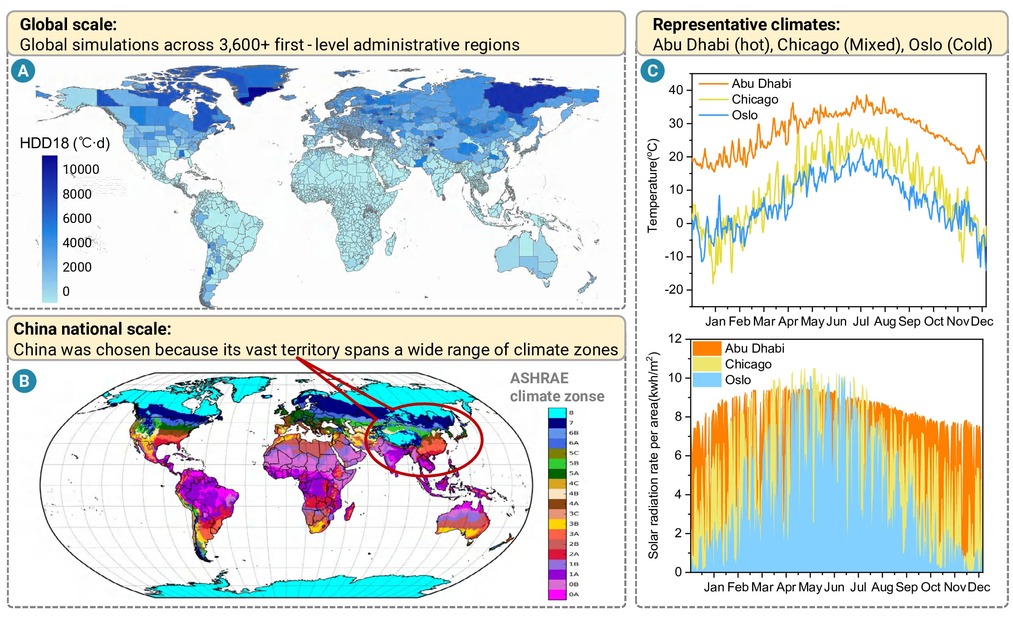
Figure 2.
Meteorological conditions in different climate zones
-
Figure 3.
Global-scale evaluation of energy saving potential
-
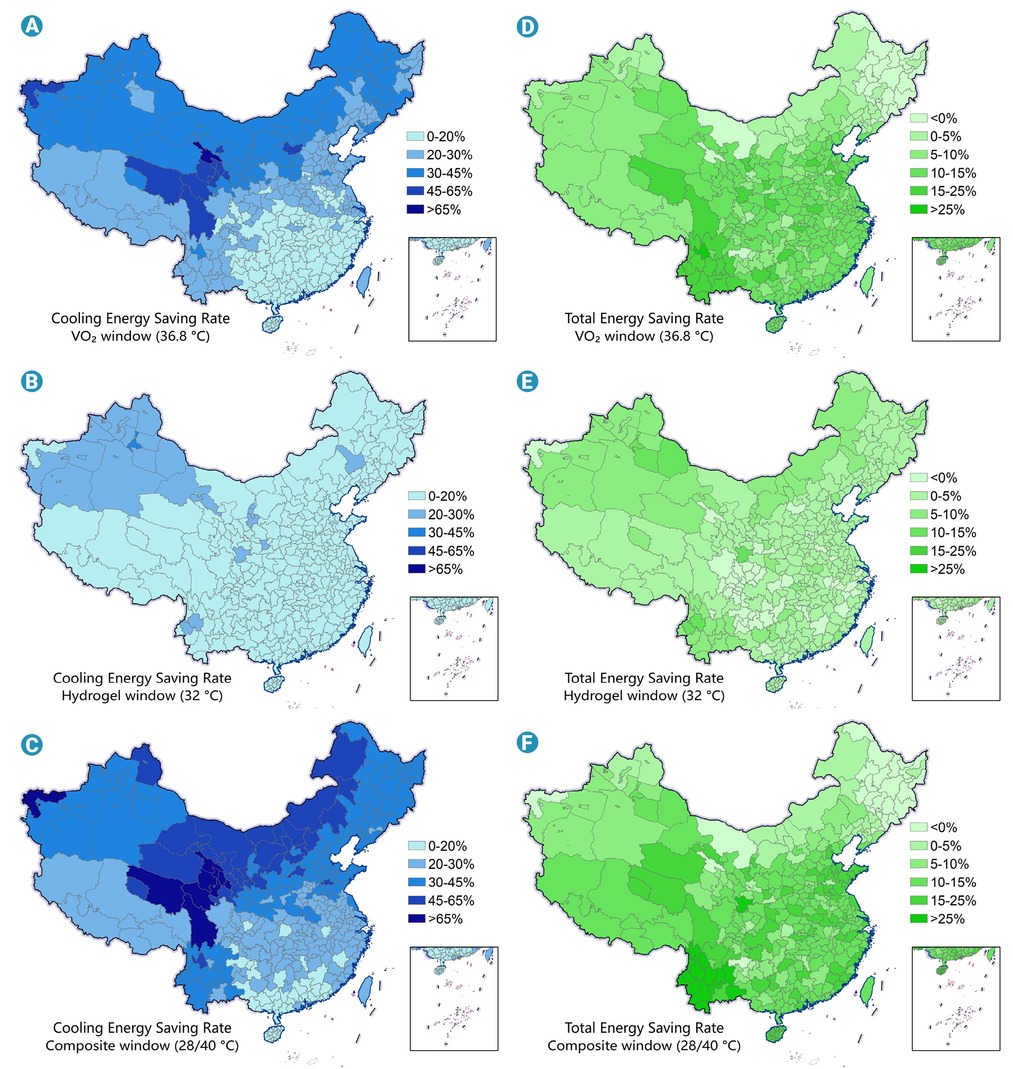
Figure 4.
China-wide energy performance of the literature-benchmark thermochromic configurations
-
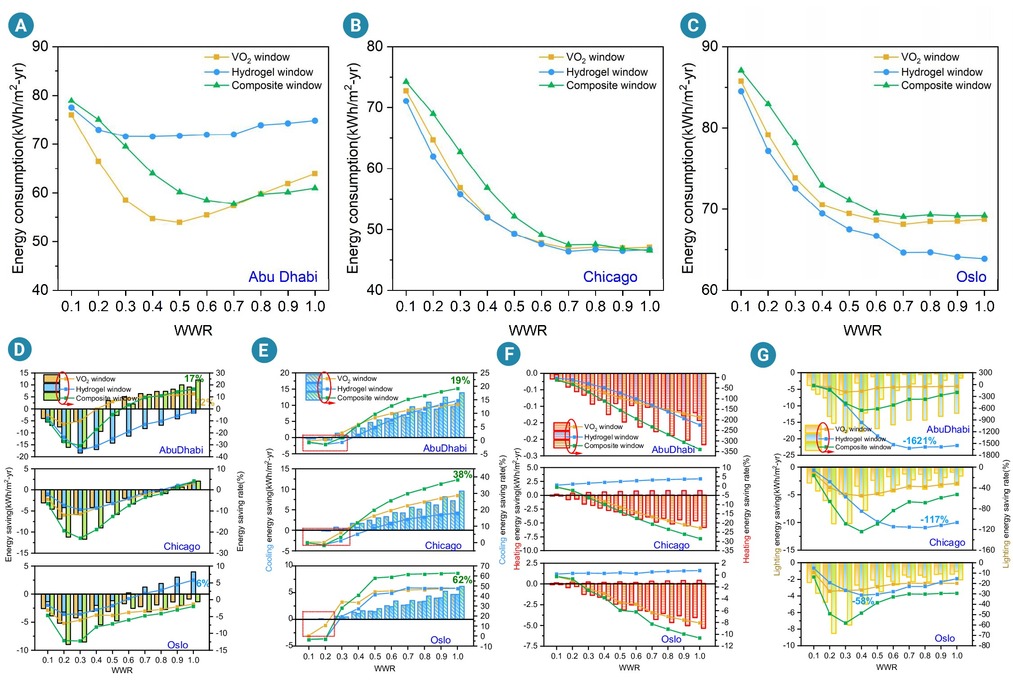
Figure 5.
Annual trend chart of absolute total energy consumption of various types of windows
-
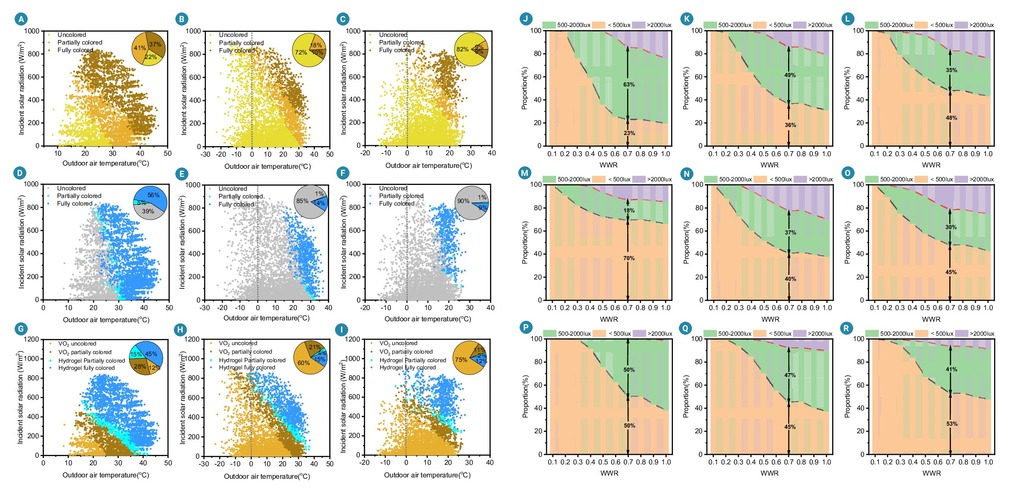
Figure 6.
Coloring conditions and annual occurrence of tinting states for three thermochromic smart windows in representative climates, and proportion of indoor illuminance ranges at different WWRs for three thermochromic smart windows in representative climates
-
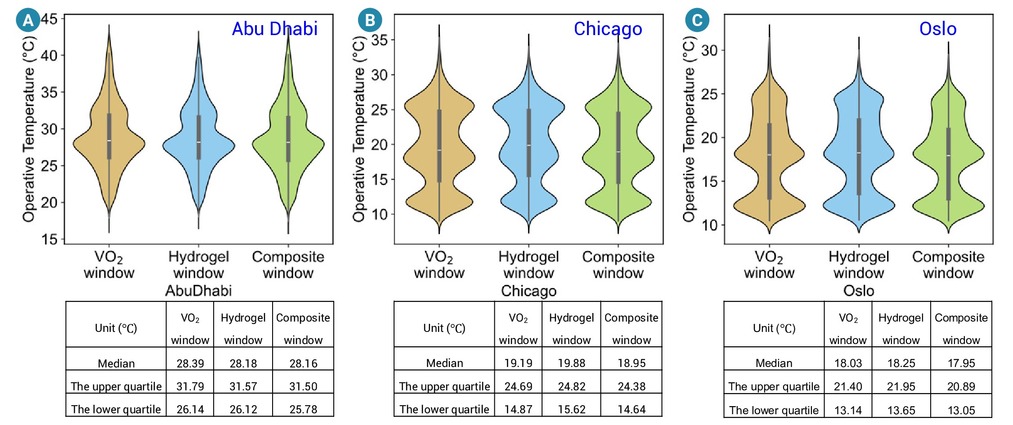
Figure 7.
Violin plot of the annual operating temperature probability density distribution
-
Figure 8.
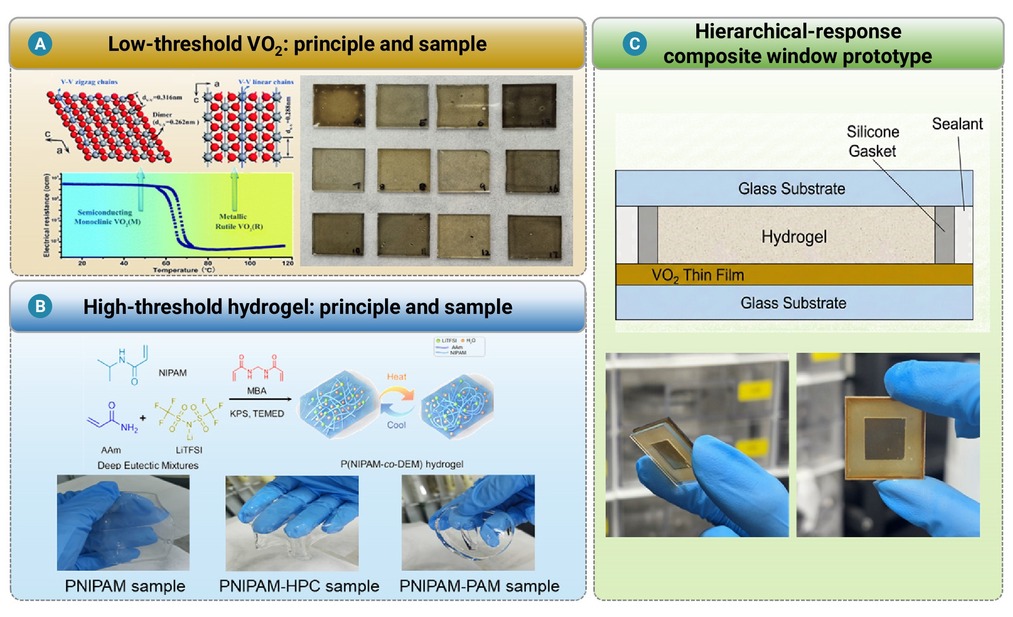
Schematic illustration of window prototypes
