
Crustal response to water loads and expansion of triggered seismicity around the Xiluodu Reservoir, Southwest China
-
GRAPHICAL ABSTRACT

 DownLoad:
Full size image
DownLoad:
Full size image
-
PUBLIC SUMMARY
-
The impoundment of the Xiluodu and Xiangjiaba Reservoirs results in crustal subsidence.
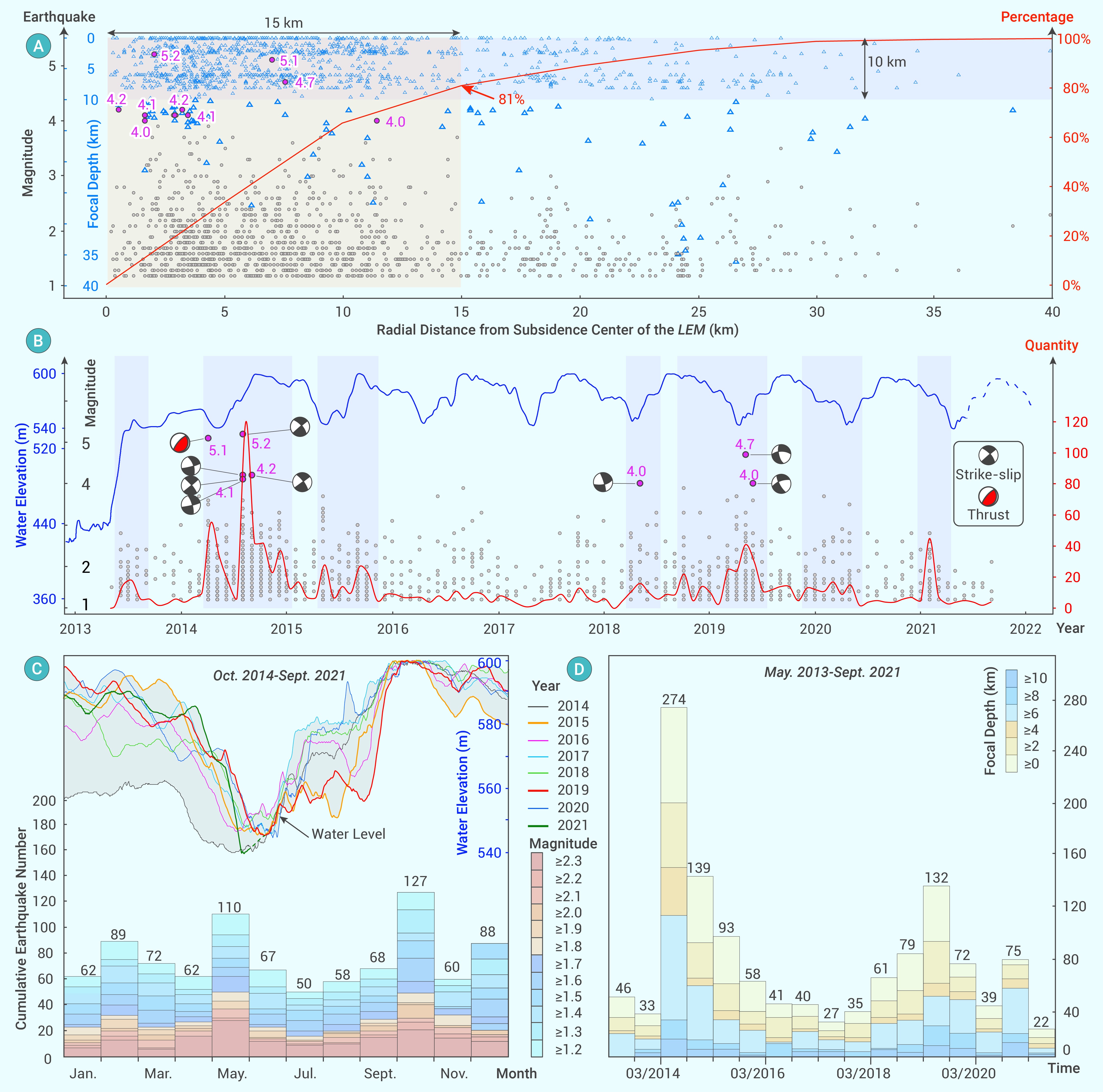
About 81% of triggered seismicity is located within 15 km of the subsidence center of rapid crustal response.
Triggered seismicity temporally relates to rapid hydrologic loading/unloading.
Viscous relaxation effect leads to the spatiotemporal migration of triggered earthquakes.
Enhanced geohazard monitoring efforts are urgently needed around subsidence centers.
-
-
ABSTRACT
The transition to low-carbon energy generation requires a diverse portfolio of energy sources. Large hydropower stations play a crucial role in providing eco-friendly energy but can lead to crustal deformation and seismic activity due to reservoir impoundment and discharge. The mechanism behind how impoundment-induced deformation influences reservoir-triggered seismicity remains unclear. We investigate this at the world’s 4th largest hydropower station in Xiluodu, China, using interdisciplinary analyses of relocated earthquakes, geodetic data, and numerical simulations. Geodetic observations confirm both a linear elastic response to hydrologic loading and the transition towards a relaxed and flexural response. Notably, approximately 81% of the earthquakes since impoundment occurred within ~15 km of the subsidence center. These events temporally relate to rapid hydrologic loading/unloading periods, with their spatiotemporal outward migration potentially caused by viscous relaxation of load stresses in the lower crust and upper mantle. The reservoir-induced flexural deformation and subsequent viscous relaxation may control the distribution and expansion of triggered seismicity. This research highlights the urgent need to enhance geohazard monitoring efforts around the subsidence center and emphasizes the vital importance of carefully considering this factor during the construction of large reservoirs to mitigate potential seismic risks. -

-
REFERENCES
[1] Hunt, J.D., Byers, E., Wada, Y., et al. (2020). Global resource potential of seasonal pumped hydropower storage for energy and water storage. Nature Communications 11 (1): 947. DOI: 10.1038/s41467-020-14555-y. [2] Moran, E.F., Lopez, M.C., Moore, N., et al. (2018). Sustainable hydropower in the 21st century. Proceedings of the National Academy of Sciences of the United States of America 115(47): 11891−11898. DOI: 10.1073/pnas.1809426115. [3] Hogeboom, R.J., Knook, L., and Hoekstra, A.Y. (2018). The blue water footprint of the world's artificial reservoirs for hydroelectricity, irrigation, residential and industrial water supply, flood protection, fishing and recreation. Advances in Water Resources 113: 285−294. DOI: 10.1016/j.advwatres.2018.01.028. [4] Foulger, G.R., Wilson, M.P., Gluyas, J.G., et al. (2018). Global review of human-induced earthquakes. Earth-Science Reviews 178: 438−514. DOI: 10.1016/j.earscirev.2017.07.008. [5] Narain, H., and Gupta, H. (1968). Koyna earthquake. Nature 217(5134): 1138−1139. DOI: 10.1038/2171138a0. [6] Iqbal, J., Dai, F., Hong, M., et al. (2018). Failure mechanism and stability analysis of an active landslide in the Xiangjiaba Reservoir area, Southwest China. Journal of Earth Science 29(3): 646−661. DOI: 10.1007/s12583-017-0753-5. [7] Li, L., Yao, X., Yao, J., et al. (2019). Analysis of deformation characteristics for a reservoir landslide before and after impoundment by multiple D-InSAR observations at Jinshajiang River, China. Natural Hazards 98(2): 719−733. DOI: 10.1007/s11069-019-03726-w. [8] Tang, H., Wasowski, J., and Juang, C.H. (2019). Geohazards in the three Gorges Reservoir Area, China-Lessons learned from decades of research. Engineering Geology 261 : 105267. DOI: 10.1016/j.enggeo.2019.105267. [9] Gupta, H.K. (2002). A review of recent studies of triggered earthquakes by artificial water reservoirs with special emphasis on earthquakes in Koyna, India. Earth-Science Reviews 58(3-4): 279−310. DOI: 10.1016/s0012-8252(02)00063-6. [10] Guo, W., and Zhao, C. (2023). Focal Mechanisms and Stress Field Characteristics of Microearthquakes in Baihetan Reservoir in the Downstream Area of Jinsha River. Water 15 (4): 709. DOI: 10.3390/w15040709. [11] Talwani, P. (1997). On the nature of reservoir-induced seismicity. Pure and Applied Geophysics 150(3-4): 473−492. DOI: 10.1007/s000240050089. [12] Zhang, L., Li, J., Sun, X., et al. (2018). A Possible Mechanism of Reservoir-Induced Earthquakes in the Three Gorges Reservoir, Central China. Bulletin of the Seismological Society of America 108(5B): 3016−3028. DOI: 10.1785/0120180015. [13] Zhang, M., Ge, S., Yang, Q., and Ma, X. (2021). Impoundment-associated hydro-mechanical changes and regional seismicity near the Xiluodu Reservoir, southwestern China. Journal of Geophysical Research-Solid Earth 126 (9): e2020JB021590. DOI: 10.1029/2020jb021590. [14] Li, M., Zhou, Z., Zhuang, C., et al. (2020). The cause and statistical analysis of the river valley contractions at the Xiluodu Hydropower Station, China. Water 12 (3): 791.DOI: 10.3390/w12030791. [15] Wu, A., Lu, B., Xu, D., et al. (2021). A hydro-mechanical coupling study with DDA numerical method to valley deformation mechanism of Xiluodu hydro-power station. IOP Conference Series: Earth and Environmental Science 861 : 072092. DOI: 10.1088/1755-1315/861/7/072092. [16] Gahalaut, V.K., Gahalaut, K., Catherine, J.K., et al. (2018). Geodetic constraints on tectonic and anthropogenic deformation and seismogenesis of Koyna-Warna region, India. Bulletin of the Seismological Society of America 108(5B): 2933−2942. DOI: 10.1785/0120170373. [17] Li, L., and Luo, G. (2022). What causes the spatiotemporal patterns of seismicity in the Three Gorges Reservoir area, central China. Earth and Planetary Science Letters 592 : 117618. DOI: 10.1016/j.jpgl.2022.117618. [18] Shen, C., Dong, L., Wang, Y., et al. (2015). Effect of reservoir’s initial impoundment and climatic conditions on the dissolved oxygen in downstream reaches: A case study on Xiangjiaba and Xiluodu Reservoirs. Fresenius Environmental Bulletin 24(8A): 2575−2586. [19] Qin, L., Liu, Y., Wu, D., et al. (2003). The features and analysis of joints in Xiluodu area. Journal of Mineral Petrol 23(01): 51−54. DOI: 10.19719/j.cnki.1001-6872.2003.01.010. (in Chinese with English abstract [20] Su, S., Han, L., and Guo, X. (2020). Study on focal mechanism and stress field before and after the impoundment in the vicinity of the Xiluodu reservoir. Journal of Seismological Research 43 (02):402-411+418. (in Chinese with English abstract [21] Wang, M., and Shen, Z. (2020). Present-Day Crustal Deformation of Continental China Derived From GPS and Its Tectonic Implications. Journal of Geophysical Research-Solid Earth 125 (2): e2019JB018774. DOI: 10.1029/2019jb018774. [22] Xu, Z., Huang, Z., Wang, L., et al. (2016). Crustal stress field in Yunnan: implication for crust-mantle coupling. Earthquake Science 29(2): 105−115. DOI: 10.1007/s11589-016-0146-3. [23] He, X., Xu, C., Qi, W., et al. (2021). Landslides Triggered by the 2020 Qiaojia Mw 5.1, w is the subscript Earthquake, Yunnan, China: Distribution, Influence Factors and Tectonic Significance. Journal of Earth Science 32 (5):1056-1068. DOI: 10.1007/s12583-021-1492-1. [24] Chen, X.L., Zhou, Q., Ran, H., and Dong, R. (2012). Earthquake-triggered landslides in southwest China. Natural Hazards and Earth System Sciences 12(2): 351−363. DOI: 10.5194/nhess-12-351-2012. [25] Liu, Q.Y., van der Hilst, R.D., Li, Y., et al. (2014). Eastward expansion of the Tibetan Plateau by crustal flow and strain partitioning across faults. Nature Geoscience 7(5): 361−365. DOI: 10.1038/ngeo2130. [26] Wang, M., Shen, Z., Wang, Y., et al. (2021). Postseismic Deformation of the 2008 Wenchuan Earthquake Illuminates Lithospheric Rheological Structure and Dynamics of Eastern Tibet. Journal of Geophysical Research-Solid Earth 126 (9): e2021JB022399. DOI: 10.1029/2021jb022399. [27] Chen, Q., Zhang, H., Xu, B., et al. (2023). Accessing the Time-Series Two-Dimensional Displacements around a Reservoir Using Multi-Orbit SAR Datasets: A Case Study of Xiluodu Hydropower Station. Remote Sensing 15 (1): 168. DOI: 10.3390/rs15010168. [28] Yin, T., Li, Q., Hu, Y., et al. (2020). Coupled Thermo-Hydro-Mechanical Analysis of Valley Narrowing Deformation of High Arch Dam: A Case Study of the Xiluodu Project in China. Applied Sciences-Basel 10 (2): 524. DOI: 10.3390/app10020524. [29] He, N., and Li, X. (2021). Analysis of the evolution and resurgence sliding mechanism of landslides in the eastern part of Yongshan County. Journal of Engineering Geology 29(S): 152−159. DOI: 10.13544/j.cnki.jeg.2021-0386. [30] Wu, Y., Zheng, Z., Nie, J., et al. (2022). High-precision vertical movement and three-dimensional deformation pattern of the Tibetan Plateau. Journal of Geophysical Research-Solid Earth 127 (4): e2021JB023202. DOI: 10.1029/2021jb023202. [31] Dutilleul, P., Johnson, C.W., and Bürgmann, R. (2021). Periodicity analysis of earthquake occurrence and hypocenter depth near Parkfield, California, 1994–2002 versus 2006–2014. Geophysical Research Letters 48 (3): e2020GL089673.DOI: 10.1029/2020GL089673. [32] Ueda, T., and Kato, A. (2019). Seasonal variations in crustal seismicity in San‐in district, southwest Japan. Geophysical Research Letters 46(6): 3172−3179. DOI: 10.1029/2018GL081789. [33] Cochran, E.S., Vidale, J.E., and Tanaka, S. (2004). Earth tides can trigger shallow thrust fault earthquakes. Science 306(5699): 1164−1166. DOI: 10.1126/science.1103961. [34] Harris, R.A. (1998). Introduction to special section: Stress triggers, stress shadows, and implications for seismic hazard. Journal of Geophysical Research-Solid Earth 103(B10): 24347−24358. DOI: 10.1029/98jb01576. [35] Lei, H., Wang, Q., Zhao, C., et al. (2022). Seismic analysis of the Xiluodu reservoir area and insights into the geometry of seismogenic faults. Earthquake Science 35(5): 371−386. DOI: 10.1016/j.eqs.2022.10.005. [36] Huang, M.H., Buergmann, R., and Freed, A.M. (2014). Probing the lithospheric rheology across the eastern margin of the Tibetan Plateau. Earth and Planetary Science Letters 396: 88−96. DOI: 10.1016/j.jpgl.2014.04.003. [37] Shapiro, S.A., and Dinske, C. (2009). Fluid-induced seismicity: Pressure diffusion and hydraulic fracturing. Geophysical Prospecting 57(2): 301−310. DOI: 10.1111/j.1365-2478.2008.00770.x. [38] Talwani, P., Chen, L., and Gahalaut, K. (2007). Seismogenic permeability, ks. Journal of Geophysical Research-Solid Earth 112 (B7): B07309. DOI: 10.1029/2006jb004665. [39] King, V.M., Block, L.V., and Wood, C.K. (2016). Pressure/flow modeling and induced seismicity resulting from two decades of high-pressure deep-well brine injection, Paradox Valley, Colorado. Geophysics 81(5): B119−B134. DOI: 10.1190/geo2015-0414.1. [40] Hampel, A., Hetzel, R., and Maniatis, G. (2010). Response of faults to climate-driven changes in ice and water volumes on Earth's surface. Philosophical Transactions of the Royal Society a-Mathematical Physical and Engineering Sciences 368(1919): 2501−2517. DOI: 10.1098/rsta.2010.0031. [41] Turpeinen, H., Hampel, A., Karow, T., and Maniatis, G. (2008). Effect of ice sheet growth and melting on the slip evolution of thrust faults. Earth and Planetary Science Letters 269(1-2): 230−241. DOI: 10.1016/j.jpgl.2008.02.017. [42] Bell, M.L., and Nur, A. (1978). Strength changes due to reservoir-induced pore pressure and stresses and application to Lake Oroville. Journal of Geophysical Research 83(NB9): 4469−4483. DOI: 10.1029/JB083iB09p04469. [43] Scholz, C., Molnar, P., and Johnson, T. (1972). Detailed studies of frictional sliding of granite and implications for earthquake mechanism. Journal of Geophysical Research 77(32): 6392−6406. DOI: 10.1029/JB077i032p06392. [44] Morrow, C.A., Shi, L.Q., and Byerlee, J.D. (1984). Permeability of fault gouge under confining pressure and shear stress. Journal of Geophysical Research 89(NB5): 3193−3200. DOI: 10.1029/JB089iB05p03193. [45] Tembe, S., Lockner, D.A., and Wong, T.F. (2010). Effect of clay content and mineralogy on frictional sliding behavior of simulated gouges: Binary and ternary mixtures of quartz, illite, and montmorillonite. Journal of Geophysical Research-Solid Earth 115 : B03416. DOI: 10.1029/2009jb006383. [46] Simpson, D.W., Leith, W.S., and Scholz, C.H. (1988). Two types of reservoir-induced seismicity. Bulletin of the Seismological Society of America 78(6): 2025−2040. DOI: 10.1785/BSSA0780062025. [47] Carder, D.S. (1945). Seismic investigations in the Boulder Dam area, 1940-1944, and the influence of reservoir loading on local earthquake activity. Bulletin of the Seismological Society of America 35(4): 175−192. DOI: 10.1785/BSSA0350040175. [48] Farrell, W.E. (1972). Deformation of the Earth by surface loads. Reviews of Geophysics 10(3): 761−797. DOI: 10.1029/RG010i003p00761. [49] Guo, J.Y., Li, Y.B., Huang, Y., et al. (2004). Green's function of the deformation of the Earth as a result of atmospheric loading. Geophysical Journal International 159(1): 53−68. DOI: 10.1111/j.1365-246X.2004.02410.x. [50] Xie, L., Xu, W., Bürgmann, R., et al. (2021). Tehri Reservoir Operation Modulates Seasonal Elastic Crustal Deformation in the Himalaya. Journal of Geophysical Research: Solid Earth 126 (8): e2020JB021122. DOI: 10.1029/2020JB021122. [51] Feng, Z., Jin, B., Lei, H., and Liu, D. (2021). Spatiotemporal Characteristics of Reservoir-Induced Earthquakes Using P-Wave Velocity Structures. Shock and Vibration. 2021 : 6250086. DOI: 10.1155/2021/6250086. [52] Watts, A.B. (2023). Isostasy and Flexure of the Lithosphere (Cambridge University Press). DOI: 10.1017/9781139027748. [53] Shi, X., Kirby, E., Furlong, K.P., et al. (2015). Crustal strength in central Tibet determined from Holocene shoreline deflection around Siling Co. Earth and Planetary Science Letters 423: 145−154. DOI: 10.1016/j.jpgl.2015.05.002. [54] Shi, X., Furlong, K.P., Kirby, E., et al. (2017). Evaluating the size and extent of paleolakes in central Tibet during the late Pleistocene. Geophysical Research Letters 44(11): 5476−5485. DOI: 10.1002/2017gl072686. [55] Jiang, H., Feng, G., Wang, T., and Burgmann, R. (2017). Toward full exploitation of coherent and incoherent information in Sentinel-1 TOPS data for retrieving surface displacement: Application to the 2016 Kumamoto (Japan) earthquake. Geophysical Research Letters 44(4): 1758−1767. DOI: 10.1002/2016gl072253. [56] Morishita, Y., Lazecky, M., Wright, T.J., et al. (2020). LiCSBAS: An open-source InSAR time series analysis package integrated with the LiCSAR automated Sentinel-1 InSAR processor. Remote Sensing 12 (3): 424. DOI: 10.3390/rs12030424. [57] Zhang, H., and Thurber, C.H. (2003). Double-difference tomography: The method and its application to the Hayward Fault, California. Bulletin of the Seismological Society of America 93(5): 1875−1889. DOI: 10.1785/0120020190. [58] Klein, F.W. (2002). User's guide to HYPOINVERSE-2000, a Fortran program to solve for earthquake locations and magnitudes. US Geological Survey. DOI: 10.3133/ofr02171. [59] Gardner, J.K., and Knopoff, L. (1974). Is the sequence of earthquakes in Southern California, with aftershocks removed, Poissonian. Bulletin of theSeismological Society of America 64(5): 1363−1367. DOI: 10.1785/BSSA0640051363. [60] Wiemer, S., and Wyss, M. (2000). Minimum magnitude of completeness in earthquake catalogs: Examples from Alaska, the western United States, and Japan. Bulletin of the Seismological Society of America 90(4): 859−869. DOI: 10.1785/0119990114. [61] Wyss, M., Hasegawa, A., Wiemer, S., and Umino, N. (1999). Quantitative mapping of precursory seismic quiescence before the 1989, M 7.1 off-Sanriku earthquake, Japan. Annals of Geophysics 42 (5):851-869. [62] Jaeger, J.C., Cook, N.G.W., and Zimmerman, R.W. (2007). Fundamentals of rock mechanics (Blackwell Publishing Ltd.). -
ABOUT THIS ARTICLE
Cite this article:
Shi X., Shu Y., Bürgmann R., et al., (2024). Crustal response to water loads and expansion of triggered seismicity around the Xiluodu Reservoir, Southwest China. The Innovation Geoscience 2(1): 100047. https://doi.org/10.59717/j.xinn-geo.2024.100047
Welcome!
To request copyright permission to republish or share portions of our works, please visit Copyright Clearance Center's (CCC) Marketplace website at marketplace.copyright.com.

Supplementary Information
-
download_supplementary
Movie&Data(S1-S2)
Article Metrics
Relative Articles
Cited by
Export File
Citation
Shi X., Shu Y., Bürgmann R., et al., (2024). Crustal response to water loads and expansion of triggered seismicity around the Xiluodu Reservoir, Southwest China. The Innovation Geoscience 2(1): 100047. https://doi.org/10.59717/j.xinn-geo.2024.100047

Format
Content


-
Figure 1.
The geographical setting and water level history for the Xiluodu and Xiangjiaba Reservoirs on the upper Yangtze River
-
Figure 2.
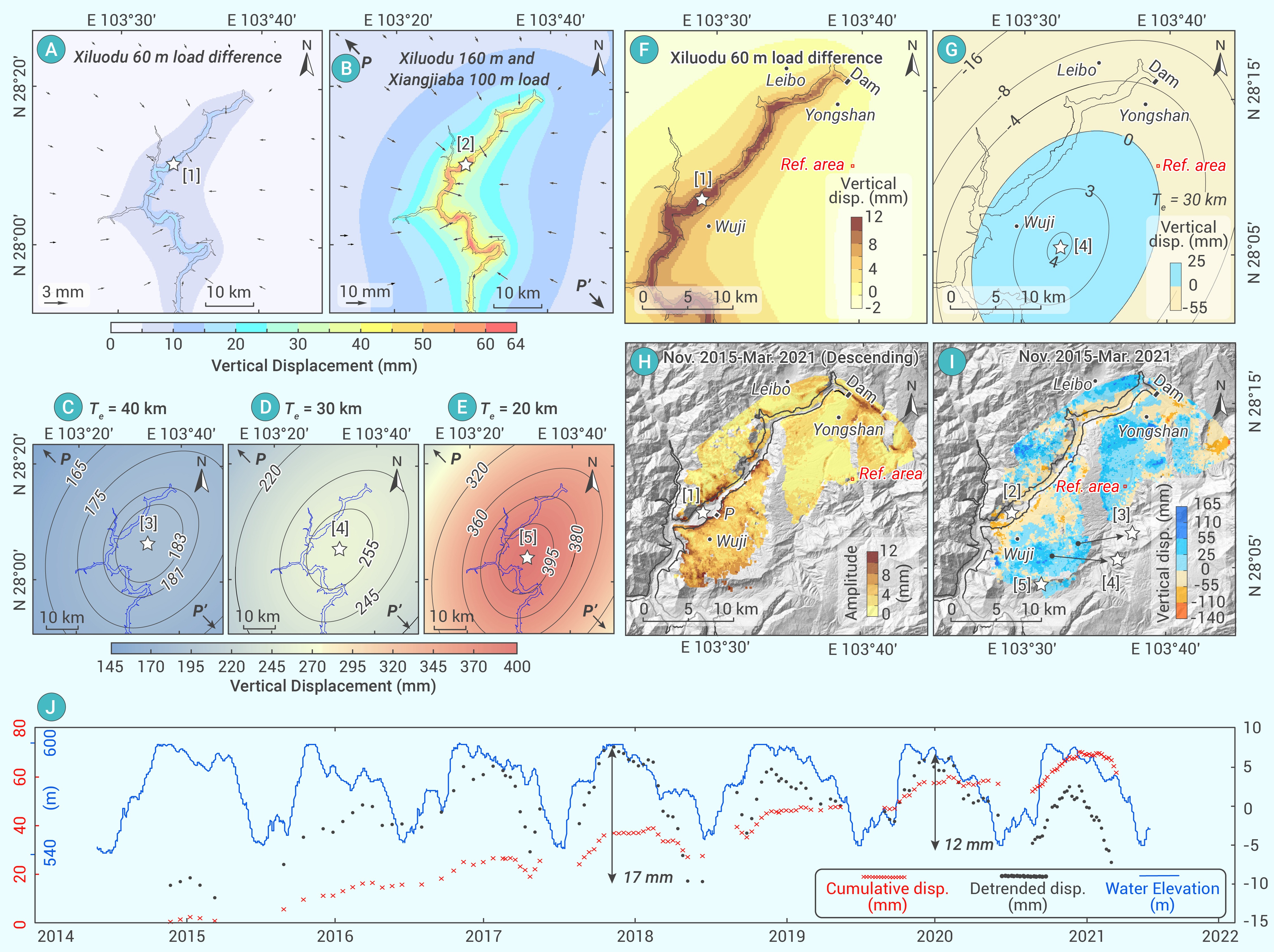
Modeled and observed crustal deformation in the Xiluodu area
-
Figure 3.
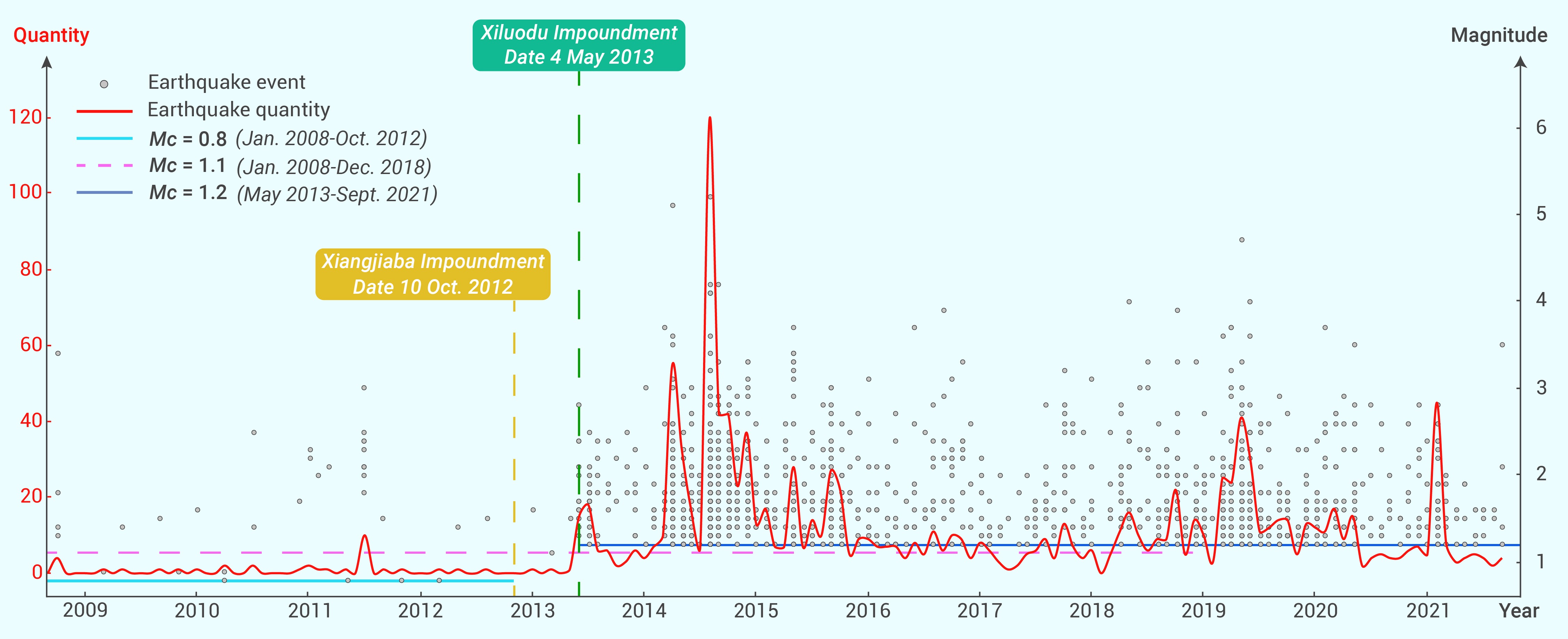
Comparison of earthquake number and magnitude before and after impoundment of the Xiluodu Reservoir
-
Figure 4.
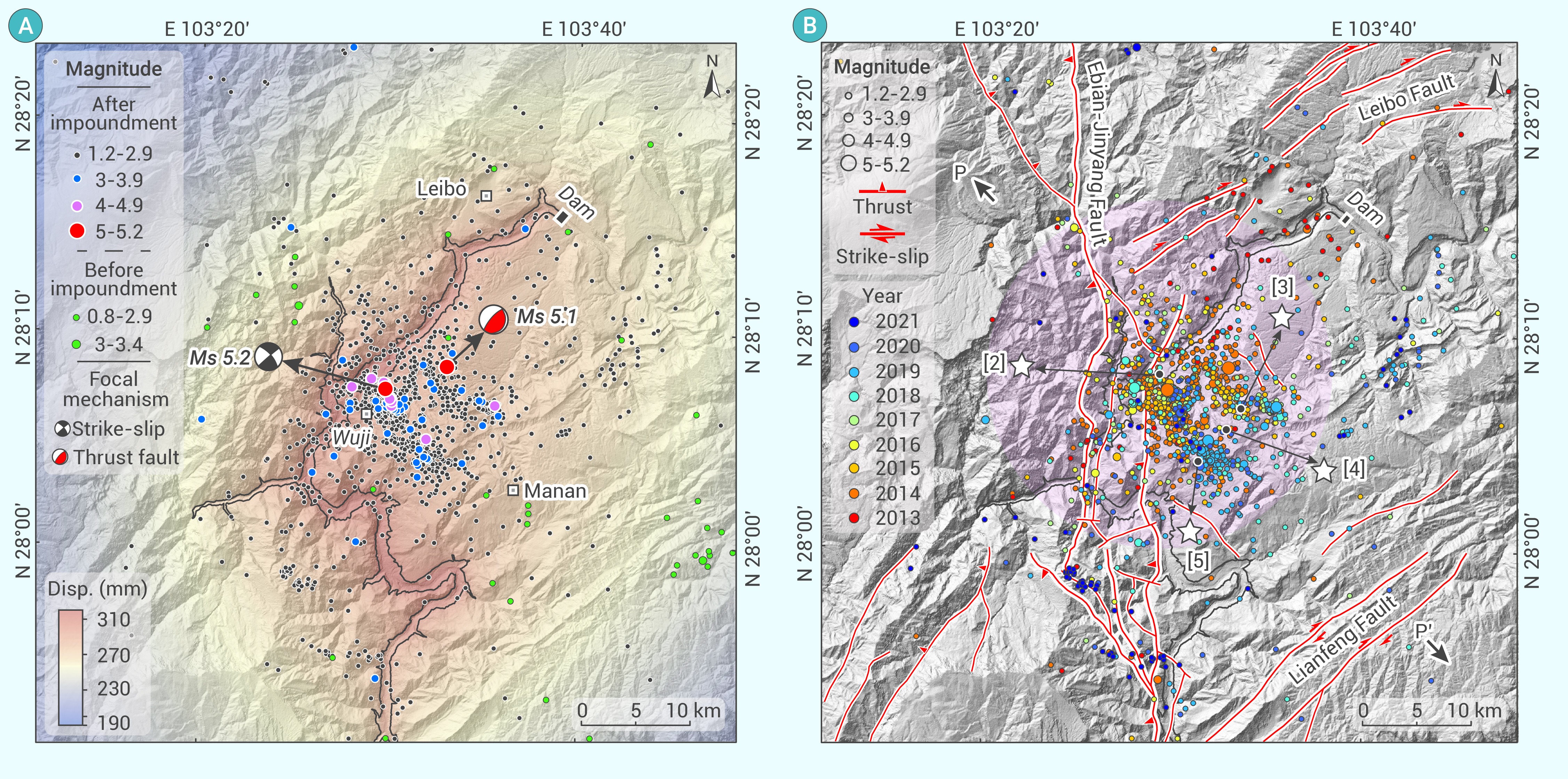
Spatiotemporal distribution of earthquakes in the Xiluodu area
-
Figure 5.
Spatiotemporal correlation between the impoundment of Xiluodu Reservoir and seismicity
-
Figure 6.
The migration of modeled subsidence centers calculated by the LEM and EPM models (A) and seismic clusters (B-C), inferred to be caused by the viscous relaxation effect
-
Figure 7.
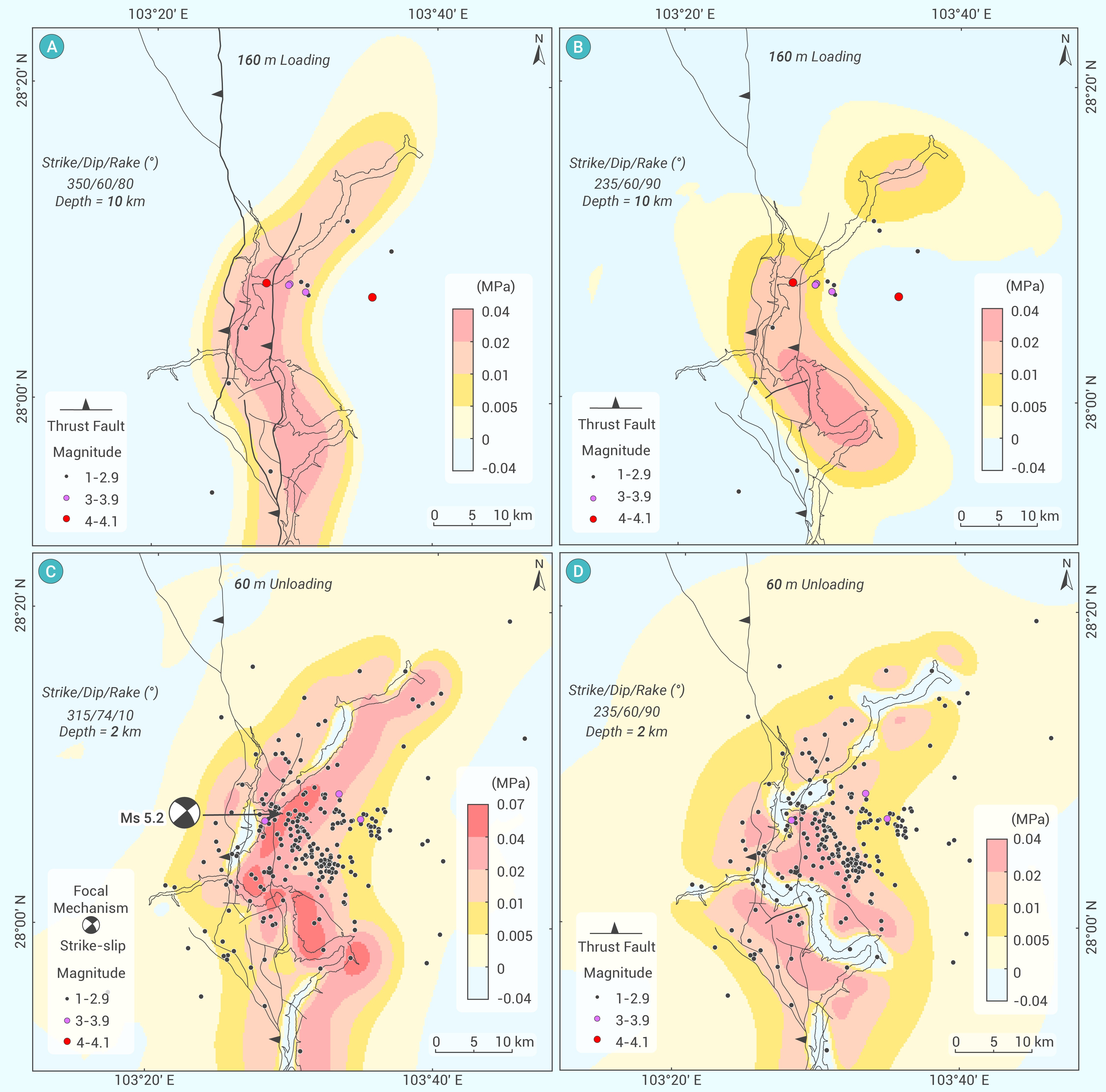
Spatial distribution of modeled Coulomb failure stress changes in the head area of the Xiluodu Reservoir
-
Figure 8.
A simple schematic illustration and Mohr diagrams highlighting changes in the crustal stress field around the Xiluodu Reservoir, without considering the pore pressure diffusion effect
