
Enhancing the engineering design of diversion routes to safeguard water quality: New insights from a carbon cycling perspective
-
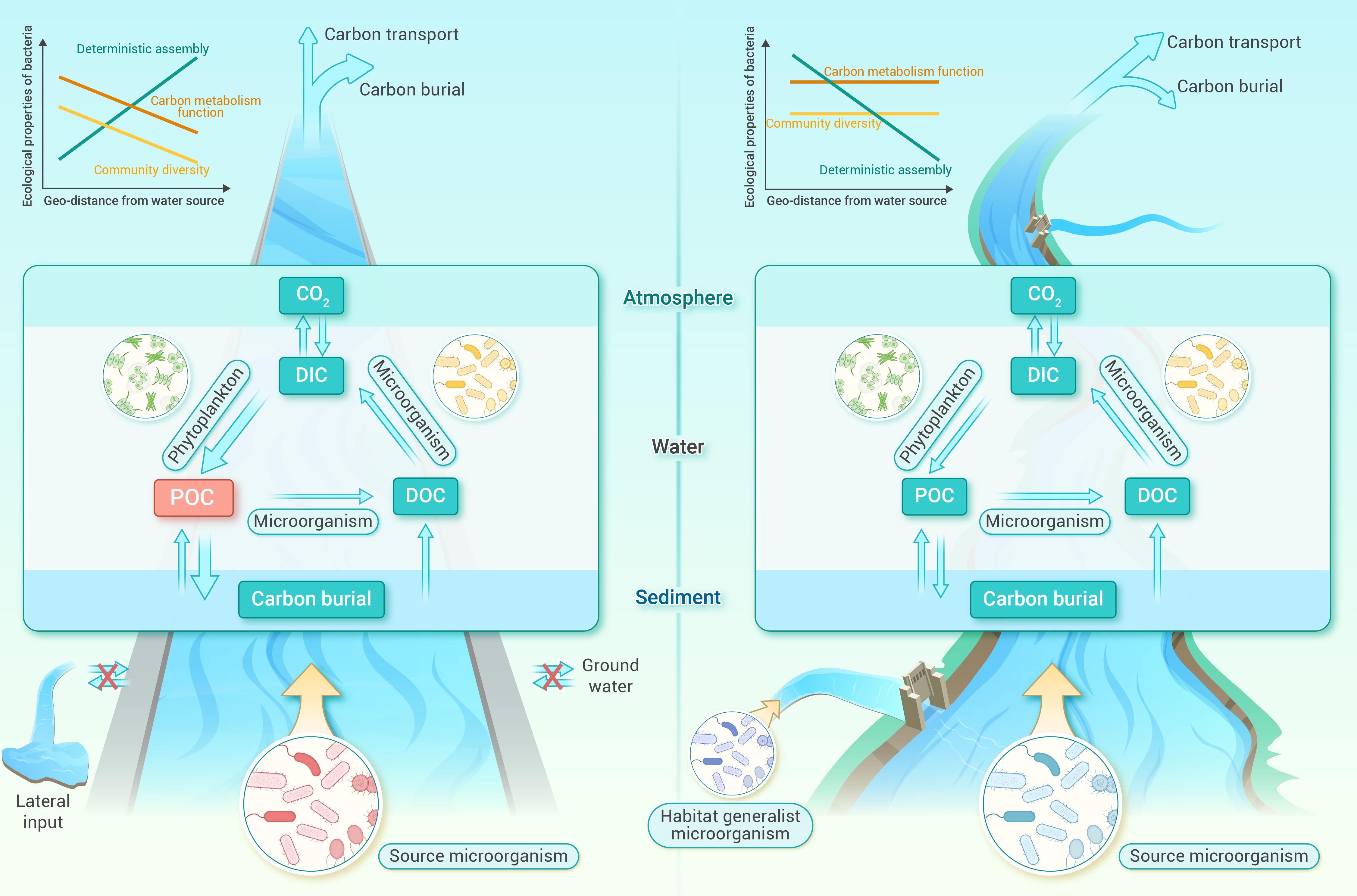
GRAPHICAL ABSTRACT
 DownLoad:
Full size image
DownLoad:
Full size image
-
PUBLIC SUMMARY
-
Water diversion channel type and route layout markedly shape the assembly of aquatic microbial communities.
Isolated and concrete channels lead to vulnerable bacterial community with reduced carbon metabolism ability.
Emphasize algae-microbe interaction in water diversion channels to prevent detrital organic matter buildup.
-
-
ABSTRACT
Conserving the quality of transferred water ensures the success and sustainability of interbasin water diversion works, which are increasingly crucial for global water security. Despite intensive scientific and engineering efforts, carbon dynamics in these artificial rivers have been overlooked. The accumulation of organic mud in some water transfer canals, for example, in the Middle Route of the South-to-North Water Diversion (SNWT) in China, poses multifaceted risks, including jeopardized water quality, disrupted water supply, and surging mud removal expenses. In contrast, natural channels for water delivery, such as the parallel East Route of the SNWT, do not experience mud accumulation challenges. Our study reveals that the open concrete canal of the Middle Route, devoid of connections to local water bodies, compromises hydrological connectivity, contrasting with the East Route, which enhances it. This, in turn, undermines microbial stochastic assembly processes, impedes the introduction of habitat-generalist microbial species, and facilitates detrital carbon accumulation within the ecosystem, presumably due to constraints on bacterial community functions. These findings can improve future engineering designs of water transfer schemes, including water diversion approaches and channel construction, for preserving transferred water quality.-
Keywords:
- water transfer /
- algal growth /
- organic matter /
- carbon cycling /
- engineering design.
-

-
REFERENCES
[1] Gupta, J., and Van der Zaag, P. (2008). Interbasin water transfers and integrated water resources management: Where engineering, science and politics interlock. Physics and Chemistry of the Earth, Parts A/B/C 33(1-2): 28−40. DOI: 10.1016/j.pce.2007.04.003. [2] Shumilova, O., Tockner, K., Thieme, M., et al. (2018). Global water transfer megaprojects: a potential solution for the water-food-energy nexus. Frontiers in Environmental Science 6: 150. DOI: 10.3389/fenvs.2018.00150. [3] International Commission on Irrigation and Drainage (ICID). (2005) Experiences in inter-basin water transfers for irrigation, drainage or flood management (3rd draft 15 August 2005).Unpublished report. New Delhi. http://www.icid.org/ibwt_draft_aug05.pdf. [4] Barnett, J., Rogers, S., Webber, M., et al. (2015). Sustainability: transfer project cannot meet China's water needs. Nature 527(7578): 295−297. DOI: 10.1038/527295a. [5] Ma, Y., Chang, J., Guo, A., et al. (2020). Optimizing Inter-basin water transfers from multiple sources among interconnected River basins. Journal of Hydrology 590: 125461. DOI: 10.1016/j.jhydrol.2020.125461. [6] Liu, Y., Li, H., Luo, C., et al. (2014). In situ stress measurements by hydraulic fracturing in the western route of south to north water transfer project in China. Engineering Geology 168: 114−119. DOI: 10.1016/j.enggeo.2013.11.008. [7] Rani, D., Srivastava, D., and Gulati, T. (2016). A set of linked optimization models for an inter-basin water transfer. Hydrological Sciences Journal 61(2): 371−392. DOI: 10.1080/02626667.2014.986484. [8] Li, S., Li, J., and Zhang, Q. (2011). Water quality assessment in the rivers along the water conveyance system of the Middle Route of the South to North Water Transfer Project (China) using multivariate statistical techniques and receptor modeling. Journal of hazardous materials 195: 306−317. DOI: 10.1016/j.jhazmat.2011.08.043. [9] Tang, C., Yi, Y., Yang, Z., et al. (2014). Water pollution risk simulation and prediction in the main canal of the South-to-North Water Transfer Project. Journal of Hydrology 519: 2111−2120. DOI: 10.1016/J.JHYDROL.2014.10.010. [10] Salerno, L., Vezza, P., and Perona, P. (2023). Eco-morphodynamic carbon pumping by the largest rivers in the Neotropics. Scientific Reports 13(1): 5591. DOI: 10.1038/s41598-023-32511-w. [11] Solano, V., Duvert, C., Birkel, C., et al. (2023). Stream respiration exceeds CO2 evasion in a low-energy, oligotrophic tropical stream. Limnology and Oceanography 68(5): 1132−1146. DOI: 10.1002/lno.12334. [12] Zhu, J., Lei, X., Quan, J., et al. (2019). Algae growth distribution and key prevention and control positions for the Middle Route of the South-to-North Water Diversion Project. Water 11(9): 1851. DOI: 10.3390/w11091851. [13] Zhang, L., Yin, W., Wang, C., et al. (2021). Untangling microbiota diversity and assembly patterns in the world's largest water diversion canal. Water Research 204: 117617. DOI: 10.1007/s10661-023-11593-z. [14] Zhu, Y., Mi, W., Tu, X., et al. (2022). Environmental factors drive periphytic algal community assembly in the largest long-distance water diversion channel. Water 14(6): 914. DOI: 10.3390/w14060914. [15] Wang, Y., Zhang, C., Bi, Y., Z et al. (2022). Spatio-temporal pattern of odorous compounds and its influencing factors in the canal of the midle-route of south-to-north water diversion project. Acta Hydrobiologica Sinica 46(2): 149−159. DOI: 10.7541/2022.2020.206. [16] Oksiyuk, O., and Stolberg, F. (1980). Biological pollution and pollution control in canals diverting flow from one river basin to another [USSR]. Hydrobiological Journal. 16. [17] Snaddon, C. D., Davies, B. R., Wishart, M., et al. (1999). A global overview of inter-basin water transfer schemes, with an appraisal of their ecological, socio-economic and socio-political implications, and recommendations for their management. Water Research Commission Report No. TT120/00. Pretoria: Water Research Commission. https://www.wrc.org.za/wp-content/uploads/mdocs/TT120-00.pdf. [18] Hecky, R., and Guildford, S. (1984). Primary productivity of Southern Indian Lake before, during, and after impoundment and Churchill River diversion. Can J Fish Aquat Sci 41(4): 591−604. DOI: 10.1139/f84-072. [19] Drapun, I., Anufriieva, E., Shadrin, N., et al. (2017). Ostracods in the plankton of the Sivash Bay (the Sea of Azov) during its transformation from brackish to hypersaline state. Ecologica Montenegrina 14: 102−108. DOI: 10.37828/em.2017.14.11. [20] Jiang, M., Xiao, Q., Deng, J., et al. (2024). Ecological water diversion activity changes the fate of carbon in a eutrophic lake. Environmental Research 245: 117959. DOI: 10.1016/j.envres.2023.117959. [21] Amin, S. A., Parker, M. S., and Armbrust, E. V. (2012). Interactions between diatoms and bacteria. Microbiol Mol Biol Rev 76(3): 667−684. DOI: 10.1128/MMBR.00007-12. [22] Williams, T. J., Wilkins, D., Long, E., et al. (2013). The role of planktonic F lavobacteria in processing algal organic matter in coastal E ast A ntarctica revealed using metagenomics and metaproteomics. Environ. Microbiol. 15(5): 1302−1317. DOI: 10.1111/1462-2920.12017. [23] Teeling, H., Fuchs, B. M., Becher, D., et al. (2012). Substrate-controlled succession of marine bacterioplankton populations induced by a phytoplankton bloom. Science 336(6081): 608−611. DOI: 10.1126/science.1218344. [24] Wang, Z., Yu, S., Nie, Y., et al. (2024). Effect of acetochlor on the symbiotic relationship between microalgae and bacteria. Journal of Hazardous Materials 463: 132848. DOI: 10.1016/j.jhazmat.2023.132848. [25] Gweon, H. S., Bowes, M. J., Moorhouse, H. L., et al. (2021). Contrasting community assembly processes structure lotic bacteria metacommunities along the river continuum. Environmental microbiology 23(1): 484−498. DOI: 10.1111/1462-2920.15337. [26] Nemergut, D. R., Schmidt, S. K., Fukami, T., et al. (2013). Patterns and processes of microbial community assembly. Microbiology and Molecular Biology Reviews 77(3): 342−356. DOI: 10.1128/MMBR.00051-12. [27] Yan, H., Lin, Y., Chen, Q., et al. (2023). A review of the eco-environmental impacts of the South-to-North Water Diversion: Implications for interbasin water transfers. Engineering. DOI: 10.1016/j.eng.2023.05.012. [28] Tang, J., Xiao, X., Wang, Y., et al. (2020). Ecosystem structure and function of the main channel of the middle route of south-north water diversion project. China Environ Sci 40(12): 5391−5401. DOI: 10.19674/j.cnki.issn1000-6923.2020.0596. [29] Heymans, J. J., Coll, M., Link, J. S., et al. (2016). Best practice in Ecopath with Ecosim food-web models for ecosystem-based management. Ecological modelling 331: 173−184. DOI: 10.1016/j.ecolmodel.2015.12.007. [30] Guo, C., Chen, Y., Li, W., et al. (2018). Food web structure and ecosystem properties of the largest impounded lake along the eastern route of China's South-to-North Water Diversion Project. Ecological Informatics 43: 174−184. DOI: 10.1016/j.ecoinf.2017.12.003. [31] Nong, X., Shao, D., Shang, Y., et al. (2021). Analysis of spatio-temporal variation in phytoplankton and its relationship with water quality parameters in the South-to-North Water Diversion Project of China. Environmental Monitoring and Assessment 193(9): 593. DOI: 10.1007/s10661-021-09391-6. [32] Long, Y., Feng, M., Li, Y., et al. (2022). Comprehensive risk assessment of algae and shellfish in the middle route of South-to-North Water Diversion Project. Environmental Science and Pollution Research 29(52): 79320−79330. DOI: 10.1007/s11356-022-21210-0. [33] Zhou, Y., Chen, L., Zhou, L., et al. (2023). Key factors driving dissolved organic matter composition and bioavailability in lakes situated along the Eastern Route of the South-to-North Water Diversion Project, China. Water Research 233: 119782. DOI: 10.1016/j.watres.2023.119782. [34] Fan, A., Wang, Z., Wang, C., et al. (2020). The characteristics and cause analysis of oxygen consumption substances for the waterbody in the main channel of the Middle Route of South-to-North Water Diversion Project. Acta Sci Circum (in Chinese) 40: 871−879. DOI: 10.13671/j.hjkxxb.2019.0423. [35] Hou, W., Sun, S., Wang, M., et al. (2020). Variations in stable carbon and nitrogen isotopes of particulate organic matter in surface waters of water-receiving area of Eastern Route of South-to-North Water Transfer Project, China. Environmental Science and Pollution Research 27: 2805−2818. DOI: 10.1007/s11356-019-07040-7. [36] Chen, J., Xu, S., Zhao, L., et al. (2021). Concentration and source identification of particulate organic matter in the Miyun eservoir Watershed (Beijing) in summer. Earth and Environment 49(2): 157−163. DOI: 10.14050/j.cnki.1672-9250.2020.48.110. [37] Kendall, C., Silva, S. R., and Kelly, V. J. (2001). Carbon and nitrogen isotopic compositions of particulate organic matter in four large river systems across the United States. Hydrological Processes 15(7): 1301−1346. DOI: 10.1002/hyp.216. [38] Bi, Y., Zhang, C., and Song, G. (2023). Atlas of algae in the Middle route of south-to-north water diversion project. Science Press. (in Chinese) [39] SNWD research report for water quality improvement of the eastern route of the South to North Water Diversion Project (Phase I); China South-to-North Water Diversion eastern route corporation limited: Beijing, 2018. [40] Piao, H. (2017). Distribution and source analysis of pharmaceutical and personal care products in the grand canal and related areas (Ph.D thesis in Chinese). Chinese Academy of Geological Sciences. [41] Zhang, Y., Huang, C., and Zhang, W. (2021). The concept, approach, and future research of hydrological connectivity and its assessment at multiscales. Environmental Science and Pollution Research 28: 52724−52743. DOI: 10.1007/S11356-021-16148-8. [42] Yang, N., Hou, X., Li, Y., et al. (2023). Inter-basin water diversion homogenizes microbial communities mainly through stochastic assembly processes. Environmental Research 223: 115473. DOI: 10.1016/j.envres.2023.115473. [43] Gionchetta, G., Oliva, F., Romaní, A., et al. (2020). Hydrological variations shape diversity and functional responses of streambed microbes. Science of the Total Environment 714: 136838. DOI: 10.1016/j.scitotenv.2020.136838. [44] Luan, L., Jiang, Y., Cheng, M., et al. (2020). Organism body size structures the soil microbial and nematode community assembly at a continental and global scale. Nature communications 11(1): 1−11. DOI: 10.1038/s41467-020-20271-4. [45] Chen, L., and Tang, T. (2014).The responses from experts about the questions on the Middle route of South-to-north Water Diversion. http://www.chinanews.com/ny/2014/12-25/6912469.html. [46] Van Loosdrecht, M., Lyklema, J., Norde, W., et al. (1987). The role of bacterial cell wall hydrophobicity in adhesion. Appl Environ Microbiol 53(8): 1893−1897. DOI: 10.1590/S1519-566X2007000100008. [47] Morgan, T., and Wilson, M. (2001). The effects of surface roughness and type of denture acrylic on biofilm formation by Streptococcus oralis in a constant depth film fermentor. Journal of Applied Microbiology 91(1): 47−53. DOI: 10.1046/j.1365-2672.2001.01338.x. [48] Li, S., Cheng, X., Xu, Z., et al. (2009). Spatial and temporal patterns of the water quality in the Danjiangkou Reservoir, China. Hydrological Sciences Journal 54(1): 124−134. DOI: 10.1623/hysj.54.1.124. [49] Tan, H., He, W., Han, H., et al. (2015). Monitoring and analysis of Danjiangkou Reservoir water quality. Water Technology 9(06): 1−5. DOI: 10.3969/j.issn.1673-9353.2015.06.001. [50] Xun, W., Li, W., and Xiong, W. (2019). Diversity-triggered deterministic bacterial assembly constrains community functions. Nature Communications 10 (1): 3833. DOI: 10.1038/s41467-019-11787-5. [51] Philippot, L., Griffiths, B. S., and Langenheder, S. (2021). Microbial community resilience across ecosystems and multiple disturbances. Microbiol Mol Biol Rev 85 (2):e00026-20. DOI: 10.1128/mmbr.00026-20. [52] Zheng, X., Han, B., Thavamani, P., et al. (2015). Composition, source identification and ecological risk assessment of polycyclic aromatic hydrocarbons in surface sediments of the Subei Grand Canal, China. Environmental Earth Sciences 74(3): 2669−2677. DOI: 10.1007/s12665-015-4287-9. [53] Zhou, J., Ning, D. (2017). Stochastic community assembly: Does it matter in microbial ecology. Microbiology and Molecular Biology Reviews 81(4): e00002−17. DOI: 10.1128/mmbr.00002-17. [54] Graham, E. B., Crump, A. R., Resch, C. T., et al. (2016). Coupling spatiotemporal community assembly processes to changes in microbial metabolism. Frontiers in Microbiology 7: 1949. DOI: 10.7287/PEERJ.PREPRINTS.2102V2. [55] Guo, Y., Gu, S., Wu, K., et al. (2023). Temperature‐mediated microbial carbon utilization in China's lakes. Global Change Biology. DOI: 10.1111/gcb.16840. [56] Cottrell, M. T., and Kirchman, D. L. (2000). Natural assemblages of marine proteobacteria and members of the Cytophaga-Flavobacter cluster consuming low-and high-molecular-weight dissolved organic matter. Applied and Environmental Microbiology 66(4): 1692−1697. DOI: 10.1128/AEM.66.4.1692-1697.2000. [57] Knelman, J. E., and Nemergut, D. R. (2014). Changes in community assembly may shift the relationship between biodiversity and ecosystem function. Frontiers in Microbiology 5: 424. DOI: 10.3389/fmicb.2014.00424. [58] Yu, H., Shi, X., Zhao, S., et al. (2022). Primary productivity of phytoplankton and its influencing factors in cold and arid regions: A case study of Wuliangsuhai Lake, China. Ecological Indicators 144: 109545. DOI: 10.1016/j.ecolind.2022.109545. [59] Nam, K.-H., Hwang, G.-S., Kim, K.-S., et al. (2001). Primary productivity of phytoplankton at the Eutrophic down reach of a regulated river (the Han River, Korea). Korean Journal of Ecology and Environment 34(4): 267−276. https://koreascience.kr/article/JAKO200118317178624.pdf. [60] Battin, T. J., Kaplan, L. A., Denis Newbold, J., et al. (2003). Contributions of microbial biofilms to ecosystem processes in stream mesocosms. Nature 426(6965): 439−442. DOI: 10.1038/nature02152. [61] Benner, R., Opsahl, S., Chin-Leo, G., et al. (1995). Bacterial carbon metabolism in the Amazon River system. Limnology and Oceanography 40(7): 1262−1270. DOI: 10.4319/lo.1995.40.7.1262. [62] Robertson, A., Bunn, S., Boon, P., et al. (1999). Sources, sinks and transformations of organic carbon in Australian floodplain rivers. Marine and Freshwater Research 50(8): 813−829. DOI: 10.1071/MF99112. [63] Zhang, T., G. Y., Zhang, J., et al. (2022). Changes in the quality of water flowing through the first phase of the eastern route of the South-to-North Water Transfer Project. Journal of Hydroecology 43(1): 8−15. DOI: 10.15928/j.1674-3075.202106290208. [64] Qu, X., Chen, Y., Liu, H., et al. (2020). A holistic assessment of water quality condition and spatiotemporal patterns in impounded lakes along the eastern route of China's South-to-North water diversion project. Water research 185: 116275. DOI: 10.1016/j.watres.2020.116275. -
ABOUT THIS ARTICLE
Cite this article:
Yan H., Chen Q., Lin Y., et al., (2024). Enhancing the engineering design of diversion routes to safeguard water quality: New insights from a carbon cycling perspective. The Innovation Geoscience 2(2): 100075. https://doi.org/10.59717/j.xinn-geo.2024.100075
Welcome!
To request copyright permission to republish or share portions of our works, please visit Copyright Clearance Center's (CCC) Marketplace website at marketplace.copyright.com.
Article Metrics
Relative Articles
Cited by
Export File
Citation
Yan H., Chen Q., Lin Y., et al., (2024). Enhancing the engineering design of diversion routes to safeguard water quality: New insights from a carbon cycling perspective. The Innovation Geoscience 2(2): 100075. https://doi.org/10.59717/j.xinn-geo.2024.100075

Format
Content

-
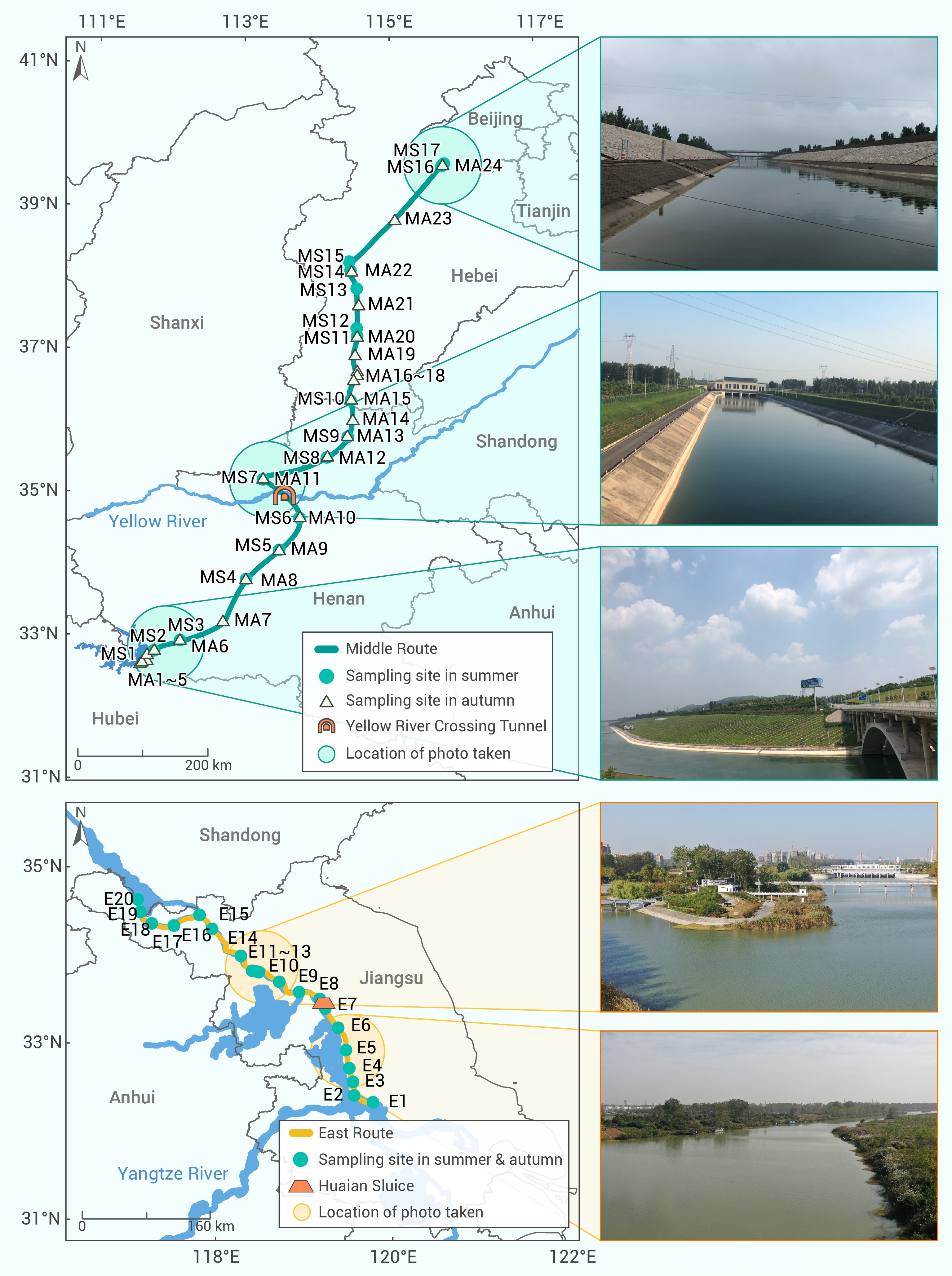
Figure 1.
The two water transfer routes and locations of sampling sites
-
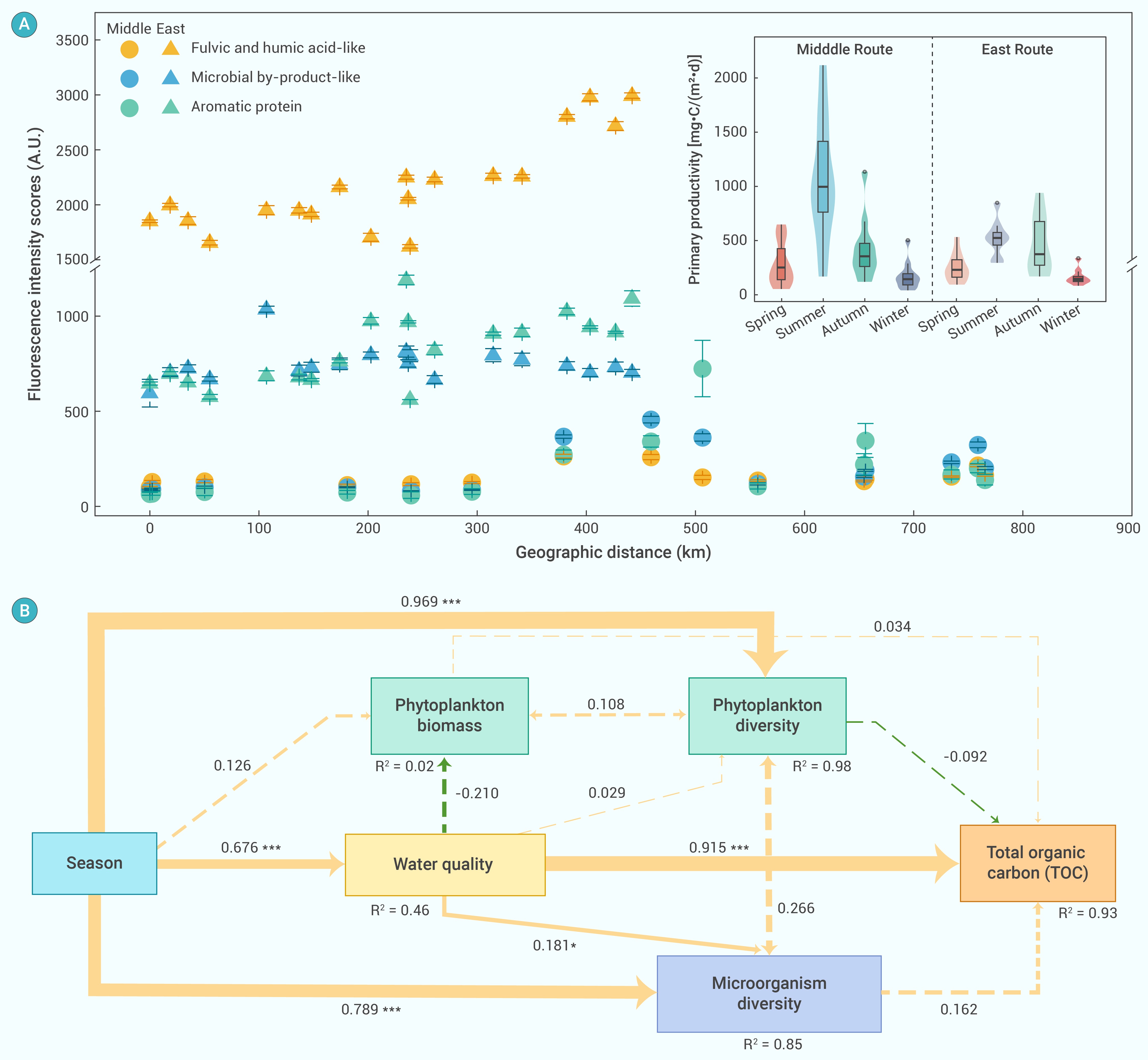
Figure 2.
Analysis of key processes in the carbon cycle for the Middle and East Routes
-
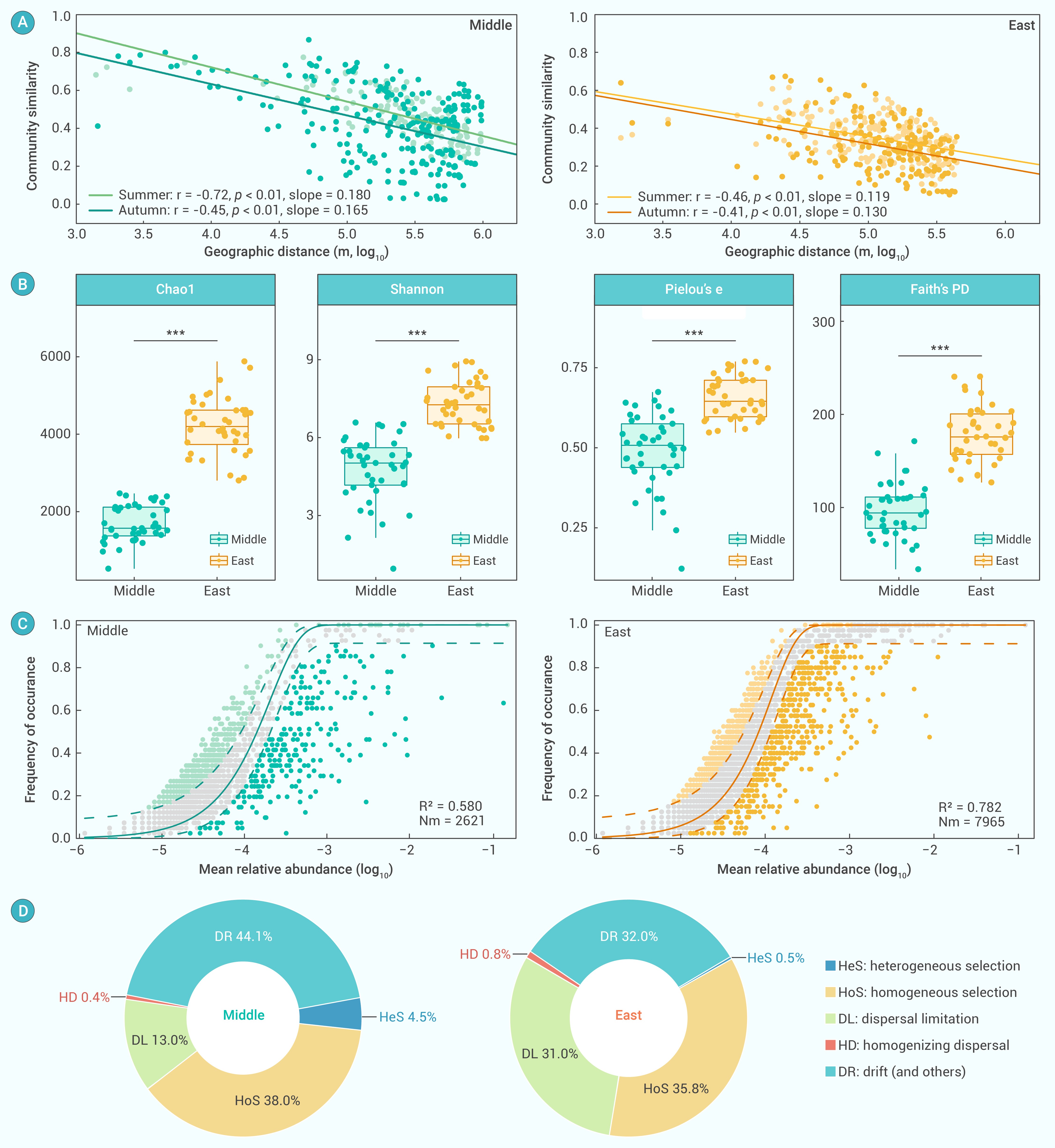
Figure 3.
Diversity of bacterial communities and their correlation to geographic distance. Assembly patterns of bacterial communities in two studied water diversion routes
-
Figure 4.
Significant differences in PICRUSt-predicted KEGG pathways between upstream and downstream groups in two studied water diversion routes
