
Profiling mobility patterns and driving behaviors of individual drivers via trajectory trait
-
GRAPHICAL ABSTRACT
 DownLoad:
Full size image
DownLoad:
Full size image
-
PUBLIC SUMMARY
-
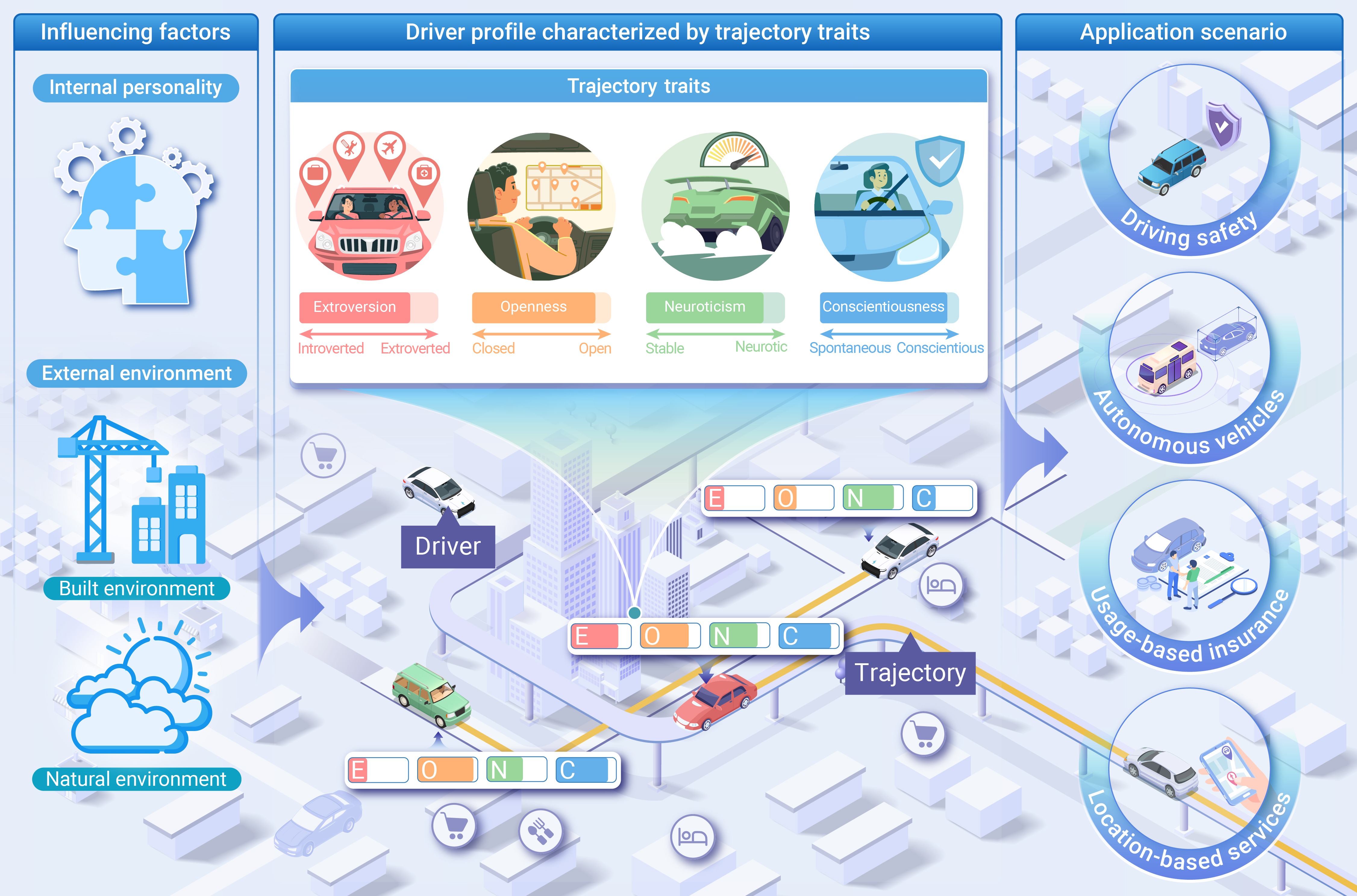
Four trajectory traits are proposed to model driver profile: extroversion, openness, neuroticism, and conscientiousness.
The consistency between the trajectory traits and external behavior observations is validated by experiments.
Trajectory integrity, seasonal changes, and traffic conditions exert small but noteworthy impacts on profile stability.
The proposed driver profile has broader potential for driving safety, advertising and marketing, sustainable transport.
-
-
ABSTRACT
Driver profiling can provide a human-centered approach to portraying individual travel behavior and revealing their motivation, objectives, and needs, thereby contributing to driving safety analysis, location-based service, and intelligent transportation. However, existing trajectory-based methods are limited to measuring low-level features, such as average speed and radius of gyration. Although these features can characterize specific observable behaviors, such as driving operation and movement range, they fail to depict stable traits underlying individual travel behavior. In this study, inspired by the Big Five Personality Traits, we model the driver profile through four fundamental trajectory traits: extroversion, openness, neuroticism, and conscientiousness, and quantify these traits by developing a Trajectory Trait Scale (TTS). Experiments on more than one million trajectories from 2,051 anonymized private vehicle volunteers over eight months demonstrate that our method can provide a valid representation of individual drivers’ mobility patterns and driving behaviors. Specifically, we validate the consistency between trajectory traits and vehicle customer service records of drivers, including life rescue, navigation service, violation query, and fatigue companion. Besides, we find that trajectory integrity, seasonal changes, and traffic conditions exert small but non-negligible impacts on the stability of trajectory traits. These findings can enhance the understanding of human behavior in various spatiotemporal contexts, and illuminate the relations between trajectory traits and personality traits. -

-
REFERENCES
[1] Dioha M. O., Lukuyu J., Virgüez E., et al. (2022). Guiding the deployment of electric vehicles in the developing world. Environ. Res. Lett. 17:071001. DOI:10.1088/1748-9326/ac765b [2] Zhang Y., Wang L., Sun T., et al. (2024). Vehicle-based monitoring and AI unravel patterns of on-road carbon and pollutant emissions. Innov. Geosci. 2:100085. DOI:10.59717/j.xinn-geo.2024.100085 [3] Zheng Y., Capra L., Wolfson O., et al. (2014). Urban computing: Concepts, methodologies, and applications. ACM Trans. Intell. Syst. Technol. 5:1−55. DOI:10.1145/2629592 [4] Nouvellet P., Bhatia S., Cori A., et al. (2021). Reduction in mobility and COVID-19 transmission. Nat. Commun. 12:1−9. DOI:10.1038/s41467-021-21358-2 [5] Li F., Gui Z., Zhang Z., et al. (2020). A hierarchical temporal attention-based LSTM encoder-decoder model for individual mobility prediction. Neurocomputing 403:153−166. DOI:10.1016/j.neucom.2020.03.080 [6] Händel P., Ohlsson J., Ohlsson M., et al. (2014). Smartphone-based measurement systems for road vehicle traffic monitoring and usage-based insurance. IEEE Syst. J. 8:1238−1248. DOI:10.1109/JSYST.2013.2292721 [7] Fazeen M., Gozick B., Dantu R., et al. (2012). Safe driving using mobile phones. IEEE Trans. Intell. Transp. Syst. 13:1462−1468. DOI:10.1109/tits.2012.2187640 [8] Júnior J. F., Carvalho E., Ferreira B. V., et al. (2017). Driver behavior profiling: An investigation with different smartphone sensors and machine learning. PLoS One 12:e0174959. DOI:10.1371/journal.pone.0174959 [9] Gui Z., Sun Y., Yang L., et al. (2021). LSI-LSTM: An attention-aware LSTM for real-time driving destination prediction by considering location semantics and location importance of trajectory points. Neurocomputing 440:72−88. DOI:10.1016/j.neucom.2021.01.067 [10] Singh H. and Kathuria A. (2021). Profiling drivers to assess safe and eco-driving behavior – A systematic review of naturalistic driving studies. Accid. Anal. Prev. 161:106349. DOI:10.1016/j.aap.2021.106349 [11] Chen Y., Chen X. and Gao Z. (2024). Toward equitable, transparent, and collaborative human mobility computing for smart cities. The Innovation 5 . DOI:10.1016/j.xinn.2024.100672 [12] Ouaftouh S., Zellou A. and Idri A. (2015). User profile model: A user dimension based classification. 2015 10th International Conference on Intelligent Systems: Theories and Applications. DOI: 10.1109/SITA.2015.7358378. [13] Alonso F., Esteban C., Montoro L., et al. (2019). Conceptualization of aggressive driving behaviors through a perception of aggressive driving scale (PAD). Transp. Res. F: Traffic Psychol. Behav. 60:415−426. DOI:10.1016/j.trf.2018.10.032 [14] Spano G., Caffò A. O., Lopez A., et al. (2019). Validating Driver Behavior and Attitude Measure for Older Italian Drivers and Investigating Their Link to Rare Collision Events. Front. Psychol. 10 . DOI:10.3389/fpsyg.2019.00368. [15] Taubman-Ben-Ari O., Mikulincer M. and Gillath O. (2004). The multidimensional driving style inventory - Scale construct and validation. Accid. Anal. Prev. 36:323−332. DOI:10.1016/S0001-4575(03)00010-1 [16] Banerjee T., Chowdhury A., Chakravarty T., et al. (2020). Driver authentication by quantifying driving style using GPS only. 2020 IEEE International Conference on Pervasive Computing and Communications Workshops. DOI: 10.1109/PerComWorkshops48775.2020.9156080. [17] Kashevnik A., Lashkov I. and Gurtov A. (2020). Methodology and mobile application for driver behavior analysis and accident prevention. IEEE Trans. Intell. Transp. Syst. 21:2427−2436. DOI:10.1109/TITS.2019.2918328 [18] Fugiglando U., Santi P., Milardo S., et al. (2017). Characterizing the "Driver DNA" through CAN bus data analysis. Proceedings of the 2nd ACM International workshop on smart, autonomous, and connected vehicular systems and services. DOI: 10.1145/3131944.3133939. [19] Tempelaar D., Rienties B. and Nguyen Q. (2020). Subjective data, objective data and the role of bias in predictive modelling: Lessons from a dispositional learning analytics application. PLoS One 15:e0233977. DOI:10.1371/journal.pone.0233977 [20] Ellison A. B., Greaves S. P. and Bliemer M. C. J. (2015). Driver behaviour profiles for road safety analysis. Accid. Anal. Prev. 76:118−132. DOI:10.1016/j.aap.2015.01.009 [21] Li Y., Zhao L. and Rilett L. R. (2019). Driving performances assessment based on speed variation using dedicated route truck GPS data. IEEE Access 7:51002−51013. DOI:10.1109/ACCESS.2019.2909572 [22] González M. C., Hidalgo C. A. and Barabási A. L. (2008). Understanding individual human mobility patterns. Nature 453:779−782. DOI:10.1038/nature06958 [23] Pappalardo L., Simini F., Rinzivillo S., et al. (2015). Returners and explorers dichotomy in human mobility. Nat. Commun. 6:1−8. DOI:10.1038/ncomms9166 [24] Schneider C. M., Belik V., Couronné T., et al. (2013). Unravelling daily human mobility motifs. J. R. Soc. Interface. 10:20130246. DOI:10.1098/rsif.2013.0246 [25] Iqbal M. S., Choudhury C. F., Wang P., et al. (2014). Development of origin-destination matrices using mobile phone call data. Transp. Res. C: Emerg. Technol. 40:63−74. DOI:10.1016/j.trc.2014.01.002 [26] Song C., Qu Z., Blumm N., et al. (2010). Limits of predictability in human mobility. Science 327:1018−1021. DOI:10.1126/science.1177170 [27] Wu L., Yang L., Huang Z., et al. (2019). Inferring demographics from human trajectories and geographical context. Comput. Environ. Urban Syst. 77:101368. DOI:10.1016/j.compenvurbsys.2019.101368 [28] Xiong Q., Liu Y., Xie P., et al. (2021). Revealing correlation patterns of individual location activity motifs between workdays and day-offs using massive mobile phone data. Comput. Environ. Urban Syst. 89:101682. DOI:10.1016/j.compenvurbsys.2021.101682 [29] McCann S. J. H. (2015). Big five personality and residential mobility: A state-level analysis of the USA. J. Soc. Psychol. 155:274−291. DOI:10.1080/00224545.2015.1007027 [30] Kim D. Y. and Song H. Y. (2018). Method of predicting human mobility patterns using deep learning. Neurocomputing 280:56−64. DOI:10.1016/j.neucom.2017.07.069 [31] Alessandretti L., Sapiezynski P., Sekara V., et al. (2018). Evidence for a conserved quantity in human mobility. Nat. Hum. Behav. 2:485−491. DOI:10.1038/s41562-018-0364-x [32] Moro E., Calacci D., Dong X., et al. (2021). Mobility patterns are associated with experienced income segregation in large US cities. Nat. Commun. 12 :4633. DOI:10.1038/s41467-021-24899-8. [33] Canzian L. and Musolesi M. (2015). Trajectories of depression: unobtrusive monitoring of depressive states by means of smartphone mobility traces analysis. Proceedings of the 2015 ACM International Joint Conference on Pervasive and Ubiquitous Computing. DOI: 10.1145/2750858.2805845. [34] McCrae R. R. and John O. P. (1992). An Introduction to the Five‐Factor Model and Its Applications. J. Pers. 60:175−215. DOI:10.1111/j.1467-6494.1992.tb00970.x [35] Jovanović D., Lipovac K., Stanojević P., et al. (2011). The effects of personality traits on driving-related anger and aggressive behaviour in traffic among Serbian drivers. Transp. Res. F: Traffic Psychol. Behav. 14:43−53. DOI:10.1016/j.trf.2010.09.005 [36] Goldberg L. R., Johnson J. A., Eber H. W., et al. (2006). The international personality item pool and the future of public-domain personality measures. J. Res. Pers. 40:84−96. DOI:10.1016/j.jrp.2005.08.007 [37] McNeish D. and Wolf M. G. (2020). Thinking twice about sum scores. Behav. Res. Methods 52:2287−2305. DOI:10.3758/s13428-020-01398-0 [38] Rza, cedil, dkowski G., et al. (2020). A Generalized Logistic Function and its Applications. Found. Manag. 12:85−92. DOI:10.2478/fman-2020-0007 [39] DeYoung C. G., Quilty L. C. and Peterson J. B. (2007). Between Facets and Domains: 10 Aspects of the Big Five. J. Pers. Soc. Psychol. 93:880−896. DOI:10.1037/0022-3514.93.5.880 [40] Ester M., Kriegel H.-P., Sander J., et al. (1996). A density-based algorithm for discovering clusters in large spatial databases with noise. Proceedings of the Second International Conference on Knowledge Discovery and Data Mining. DOI: 10.5555/3001460.3001507. [41] van der waerden P., Timmermans H. and de Bruin-Verhoeven M. (2015). Car drivers’ characteristics and the maximum walking distance between parking facility and final destination. J. Transp. Land Use. 10 . DOI:10.5198/jtlu.2015.568. [42] De Champlain A. F. (2010). A primer on classical test theory and item response theory for assessments in medical education. Med. Educ. 44:109−117. DOI:10.1111/j.1365-2923.2009.03425.x [43] Kimberlin C. L. and Winterstein A. G. (2008). Validity and reliability of measurement instruments used in research. Am. J. Health-Syst. Pharm. 65:2276−2284. DOI:10.2146/ajhp070364 [44] Streiner D. L. (2003). Starting at the beginning: An introduction to coefficient alpha and internal consistency. J. Pers. Assess. 80:99−103. DOI:10.1207/S15327752JPA8001_18 [45] Taber K. S. (2018). The use of cronbach’s alpha when developing and reporting research instruments in science education. Res. Sci. Educ. 48:1273−1296. DOI:10.1007/s11165-016-9602-2 [46] Dahlen E. R., Martin R. C., Ragan K., et al. (2005). Driving anger, sensation seeking, impulsiveness, and boredom proneness in the prediction of unsafe driving. Accid. Anal. Prev. 37:341−348. DOI:10.1016/j.aap.2004.10.006 [47] Yared T., Patterson P. and All E. S. A. (2020). Are safety and performance affected by navigation system display size, environmental illumination, and gender when driving in both urban and rural areas. Accid. Anal. Prev. 142:105585. DOI:10.1016/j.aap.2020.105585 [48] Ting P. H., Hwang J. R., Doong J. L., et al. (2008). Driver fatigue and highway driving: A simulator study. Physiol. Behav. 94:448−453. DOI:10.1016/j.physbeh.2008.02.015 [49] Arumugam S. and Bhargavi R. (2019). A survey on driving behavior analysis in usage based insurance using big data. J. Big Data 6:1−21. DOI:10.1186/s40537-019-0249-5 [50] Chorley M. J., Whitaker R. M. and Allen S. M. (2015). Personality and location-based social networks. Comput. Hum. Behav. 46:45−56. DOI:10.1016/j.chb.2014.12.038 [51] Noë N., Whitaker R. M., Chorley M. J., et al. (2016). Birds of a feather locate together. Foursquare checkins and personality homophily. Comput. Hum. Behav. 58:343−353. DOI:10.1016/j.chb.2016.01.009 [52] Feng Z., Ji N., Luo Y., et al. (2021). Exploring the influencing factors of public traffic safety awareness in China. Cogn. Technol. Work. 23:731−742. DOI:10.1007/s10111-020-00655-8 -
ABOUT THIS ARTICLE
Cite this article:
Liu Y., Gui Z., Xu Y., et al. (2025). Profiling mobility patterns and driving behaviors of individual drivers via trajectory trait. The Innovation Geoscience 3:100114. https://doi.org/10.59717/j.xinn-geo.2024.100114
Welcome!
To request copyright permission to republish or share portions of our works, please visit Copyright Clearance Center's (CCC) Marketplace website at marketplace.copyright.com.
Article Metrics
Relative Articles
Cited by
Export File
Citation
Liu Y., Gui Z., Xu Y., et al. (2025). Profiling mobility patterns and driving behaviors of individual drivers via trajectory trait. The Innovation Geoscience 3:100114. https://doi.org/10.59717/j.xinn-geo.2024.100114

Format
Content


-
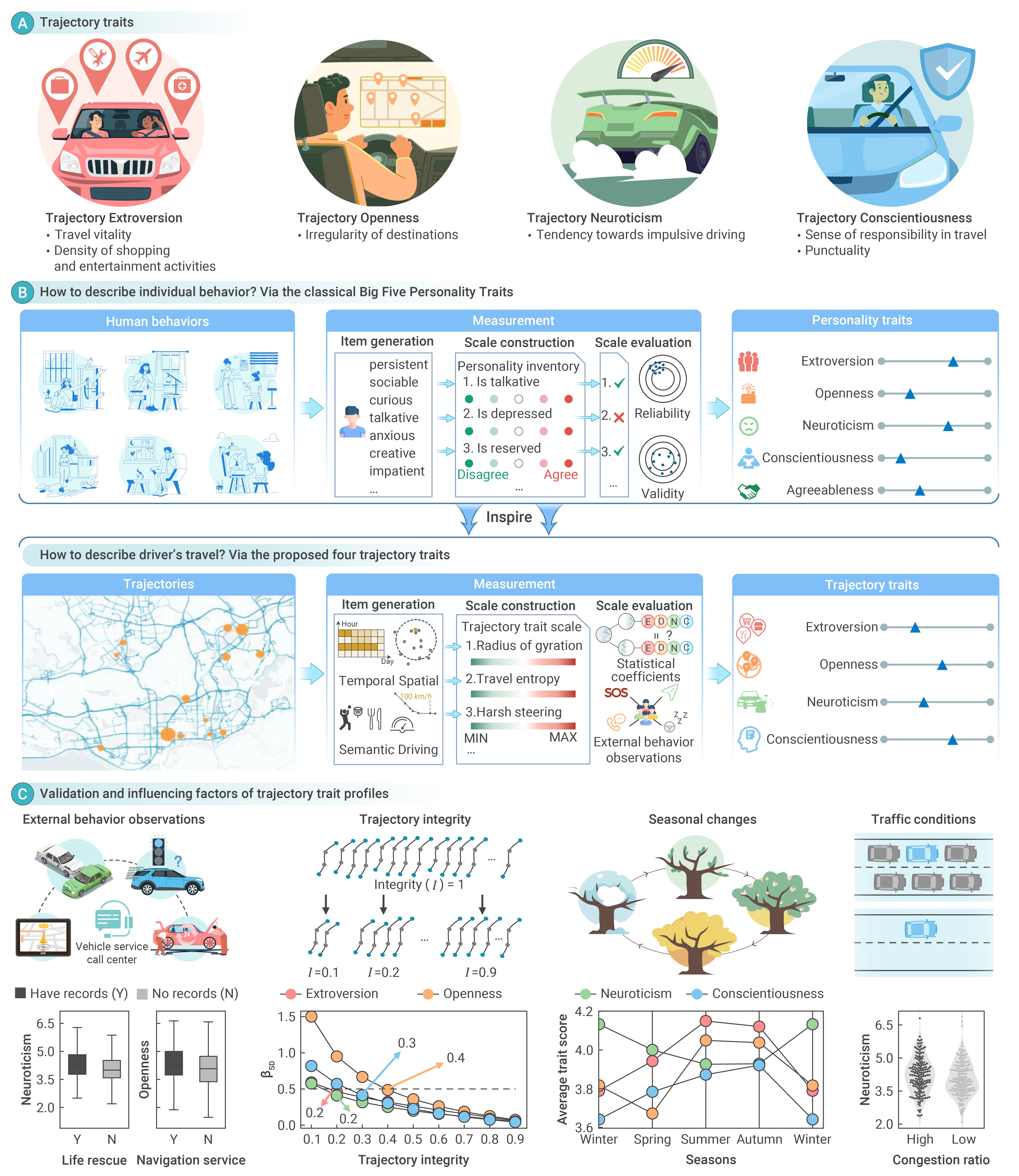
Figure 1.
Methodology and results of trajectory profiling
-
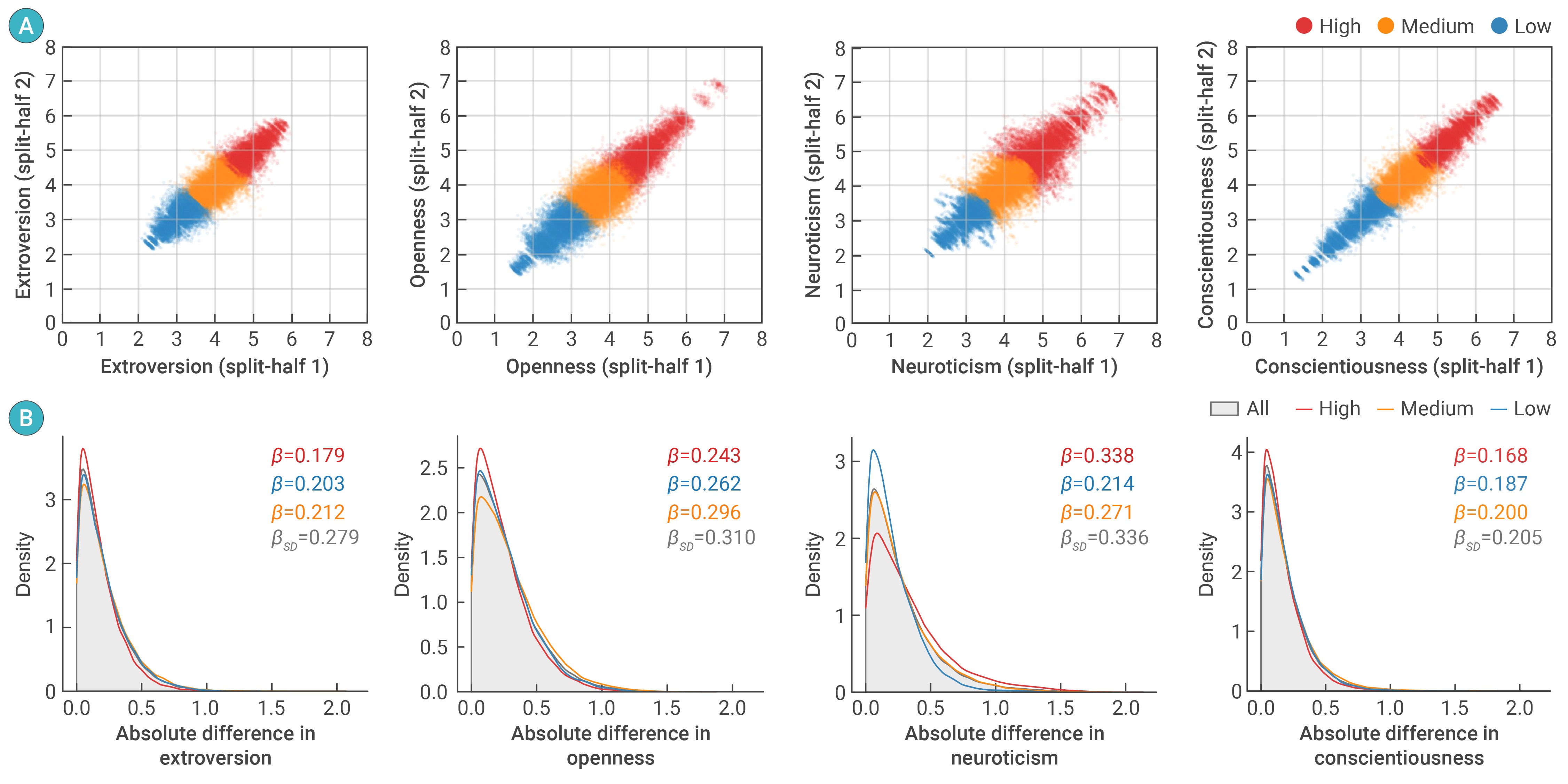
Figure 3.
Data split-half reliability of the four subscales in TTS
-
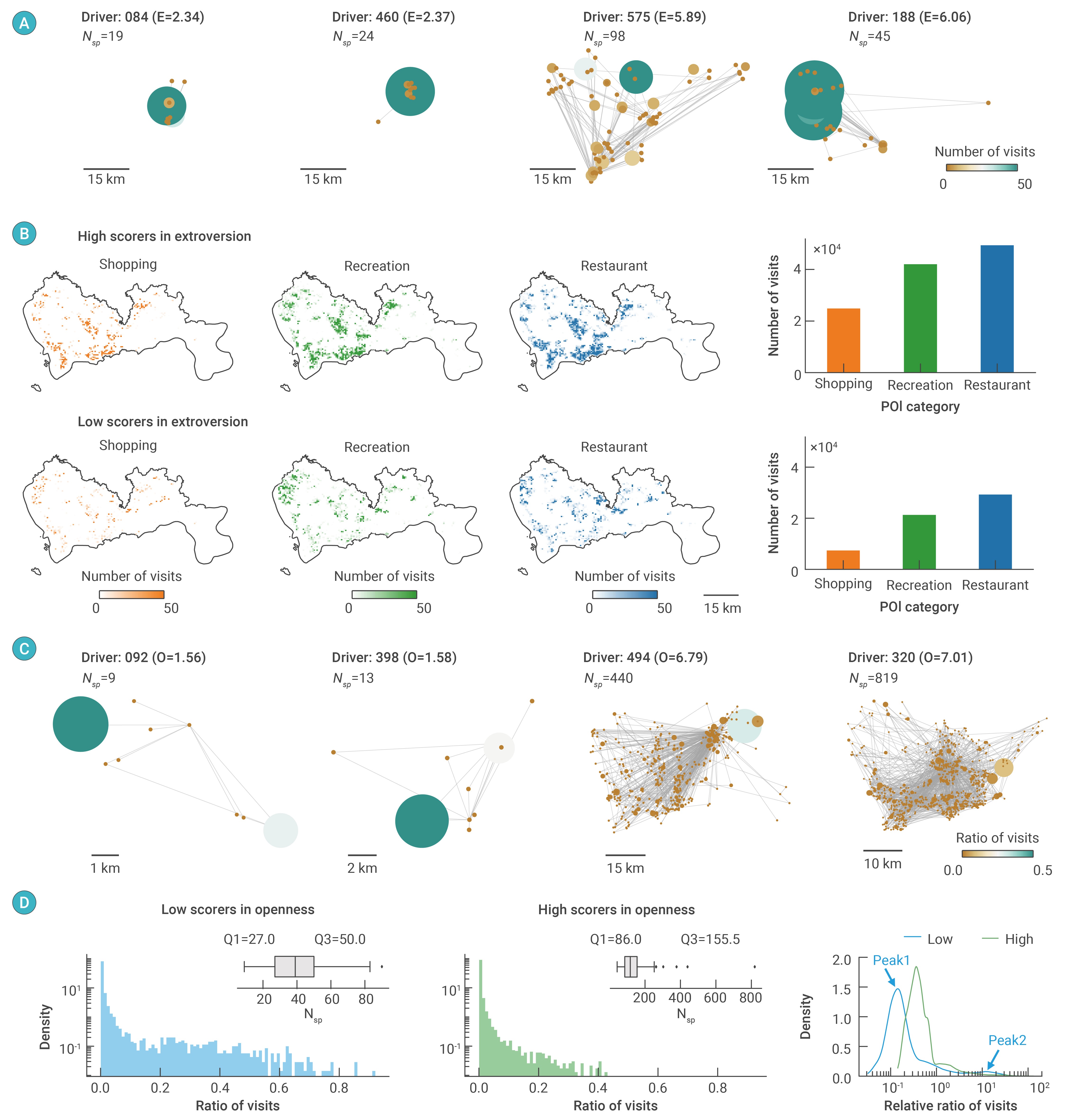
Figure 4.
Validity of extroversion and openness subscales
-
Figure 5.
Validity of neuroticism and conscientiousness subscales
-
Figure 6.
Differences in trajectory traits between drivers with and without vehicle customer service records
-
Figure 7.
The impact of trajectory integrity on trajectory trait profile
-
Figure 8.
The impact of seasonal changes on trajectory trait profile
