
Satellite observations characterize the impacts of climate change and human activities on permafrost along Qinghai–Tibet Railway
-
GRAPHICAL ABSTRACT
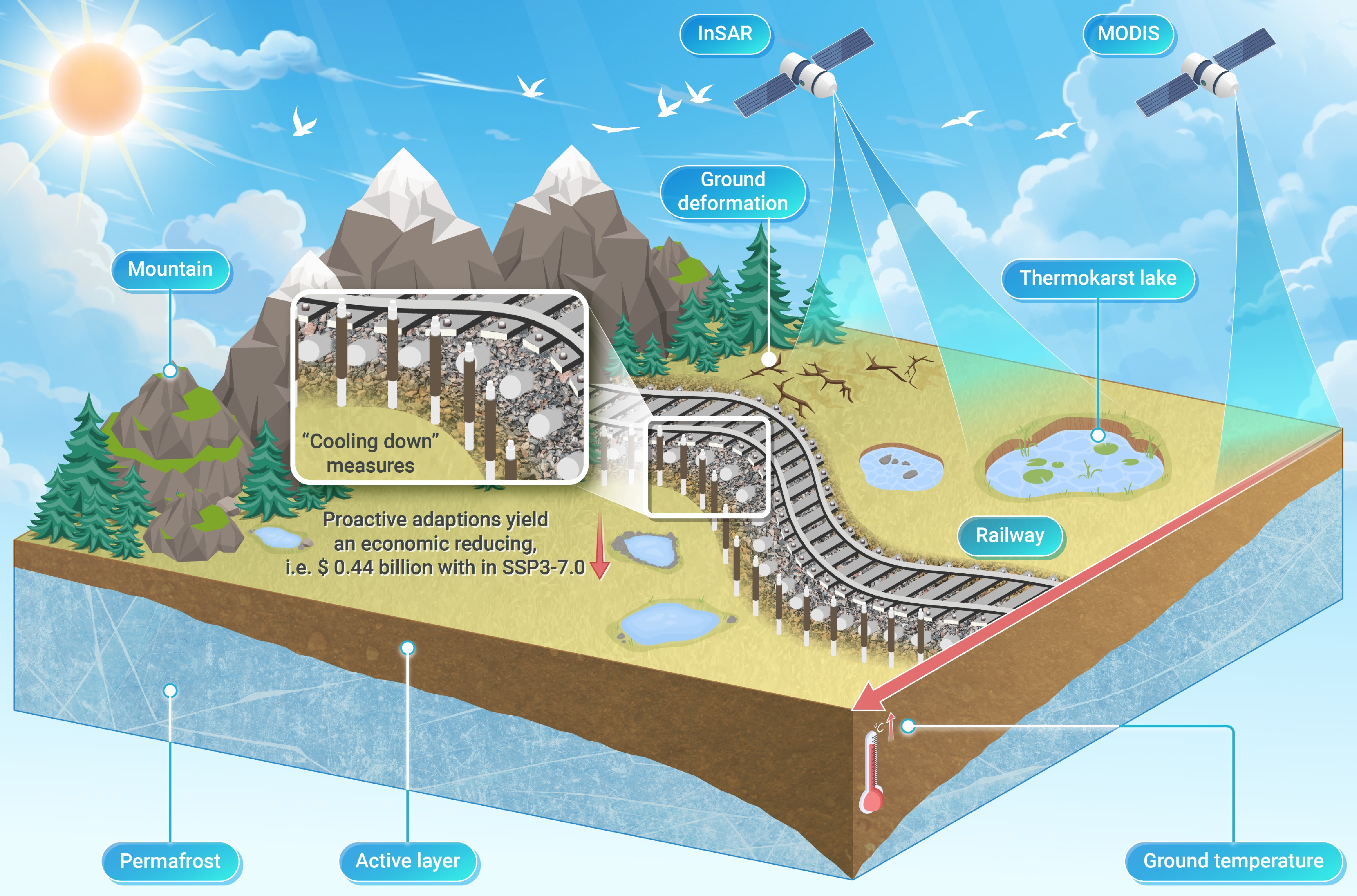
 DownLoad:
Full size image
DownLoad:
Full size image
-
PUBLIC SUMMARY
-
Satellite observations and models were used to assess the stability of permafrost.
Global climate change had resulted in significant effects on the permafrost region.
Human disturbance intensifies the instability of permafrost within the 500 m zone.
The economic cost of proactive adaptation for Qinghai–Tibet Railway under global warming has estimated.
-
-
ABSTRACT
Climate change poses new challenges to the safe operation of large-scale infrastructure in frozen soil regions worldwide. However, climate change feedback of engineering infrastructure in fragile permafrost regions remains unclear. Here, we developed a model combining the temperature at the top of the permafrost (TTOP) and time-series interferometric synthetic aperture radar (InSAR) using multisource remote sensing data to generate the key information (ground temperature, deformation, and frozen soil type) about permafrost along the QTR (Qinghai–Tibet Railway) using two pre-defined buffer zones. We quantitatively characterized the permafrost degradation using spatiotemporal deformations along the 5-km corridor from 2017 to 2018. Over 5% permafrost along QTR (1,142 km) show evident settlement (> 20 mm/year) under global warming. However, the coupled anthropogenic disturbance is also noteworthy as proven by the intensified instability of permafrost within the 500-m buffer zone, although “cooling down” measures are prominent particularly for vulnerable regions. We found that proactive adaptations yield an economic reducing, i.e. $ 0.44 billion under the climate scenario of SSP3-7.0 in 2020-2069. New findings presented here are insightful for the infrastructure engineering in other permafrost regions.-
Keywords:
- Climate change /
- infrastructure /
- permafrost /
- human activities
-

-
REFERENCES
[1] Griggs D. J., Nilsson M., Stevance A., et al. (2017). A guide to SDG interactions: from science to implementation. International Council for Science, Paris [2] Bodansky D. (2016). The legal character of the Paris Agreement. Review of European, Comparative & International Environmental Law. 25:142−150. DOI:10.1111/reel.12154 [3] Fuso Nerini, F., Sovacool B., Hughes, N., et al. (2019). Connecting climate action with other Sustainable Development Goals. Nat. Sustain. 2:674−680. DOI:10.1038/s41893-019-0334-y [4] Obu J., Westermann S., Bartsch A., et al. (2019). Northern Hemisphere permafrost map based on TTOP modelling for 2000–2016 at 1 km2 scale. Earth-Sci. Rev. 193:299−316. DOI:10.1016/j.earscirev.2019.04.023 [5] Biskaborn B. K., Smith S. L., Noetzli J., et al. (2019). Permafrost is warming at a global scale. Nat. Commun. 10:1−11. DOI:10.1038/s41467-018-08240-4 [6] Gruber S. (2012). Derivation and analysis of a high-resolution estimate of global permafrost zonation. Cryosphere 6:221−233. DOI:10.5194/tc-6-221-2012 [7] Schuur E. A., McGuire A. D., Schädel C., et al. (2015). Climate change and the permafrost carbon feedback. Nature 520: 171-179. DOI:https://doi.org/10.1038/nature14338 [8] Yang R., Zhu L., Wang J., et al. (2017). Spatiotemporal variations in volume of closed lakes on the Tibetan Plateau and their climatic responses from 1976 to 2013. Climatic Change 140:621−633. DOI:10.1007/s10584-016-1877-9 [9] Wu Y., Zhong Y., Liu S. et al. (2025). Hydrogeodesy Facilitates the Accurate Assessment of Extreme Drought Events. J. Earth Sci. 36:347−350. DOI:10.1007/s12583-024-0123-z [10] Wu Q., Zhang T. and Liu Y. (2011). Thermal state of the active layer and permafrost along the Qinghai-Xizang (Tibet) railway from 2006 to 2010. Cryosphere 6:607−612. DOI:10.5194/tc-6-607-2012 [11] Shukla P. R., Skeg J., Buendia E. C., et al. (2019). Climate Change and Land: An IPCC special report on climate change, desertification, land degradation, sustainable land management, food security, and greenhouse gas fluxes in terrestrial ecosystems [12] Pepin N., Bradley R. S., Diaz H. F., et al. (2015). Elevation-dependent warming in mountain regions of the world. Nat. Clim. Change 5:424−430. DOI:10.1038/NCLIMATE2563 [13] Melvin A. M., Larsen P., Boehlert B., et al. (2017). Climate change damages to Alaska public infrastructure and the economics of proactive adaptation. Proc. Natl. Acad. Sci. USA 114:E122−E131. DOI:10.1073/pnas.1611056113 [14] Hjort J., Karjalainen O., Aalto J., et al. (2018). Degrading permafrost puts Arctic infrastructure at risk by mid-century. Nat. Commun., 9. DOI:10.1038/s41467-018-07557-4 [15] Fondahl G., and Sirina A. (2006). Rights and risks: Evenki concerns regarding the proposed Eastern Siberia-Pacific Ocean pipeline. Sibirica 5:115−138. DOI: https://api.semanticscholar.org/CorpusID:143626002 [16] Li H., Lai Y., Wang L., et al. (2019). Review of the state of the art: interactions between a buried pipeline and frozen soil. Cold Reg. Sci. Technol. 157:171−186. DOI:10.1016/j.coldregions.2018.10.014 [17] Niu F., Lin Z., Lu J., et al. (2011). Characteristics of roadbed settlement in embankment–bridge transition section along the Qinghai-Tibet Railway in permafrost regions. Cold Reg. Sci. Technol. 65:437−445. DOI:10.1016/j.coldregions.2010.10.014 [18] Jin H., Zhao L., Wang S., et al. (2006). Thermal regimes and degradation modes of permafrost along the Qinghai-Tibet Highway. Sci. China Ser. D. 49:1170−1183. DOI:10.1007/s11430-006-2003-z [19] Duan W., Maskey S., Chaffe P. L., et al. (2021). Recent advancement in remote sensing technology for hydrology analysis and water resources management. Remote Sens. 13:1097. DOI:10.3390/rs13061097 [20] Li D., Tong Q., Li R., et al. (2012). Current issues in high-resolution earth observation technology. Science China earth sciences 55:1043−1051. DOI:10.1007/s11430-012-4445-9 [21] Kuenzer C., Ottinger M., Wegmann M., et al. (2014). Earth observation satellite sensors for biodiversity monitoring: potentials and bottlenecks. Int. J. Remote Sens. 35:6599−6647. DOI:10.1080/01431161.2014.964349 [22] Chen F., Lin H., Zhou W., et al. (2013). Surface deformation detected by ALOS PALSAR small baseline SAR interferometry over permafrost environment of Beiluhe section, Tibet Plateau, China. Remote Sens. Environ. 138:10−18. DOI:10.1016/j.rse.2013.07.006 [23] Daout S., Dini B., Haeberli W., et al. (2020). Ice loss in the Northeastern Tibetan Plateau permafrost as seen by 16 yr of ESA SAR missions. Earth Planet. Sci Lett. 545:116404. DOI:10.1016/j.jpgl.2020.116404 [24] Jorgenson M. T., and Grosse G. (2016). Remote sensing of landscape change in permafrost regions. Permafr. Periglac. Process. 27:324−338. DOI:10.1002/ppp.1914 [25] Chen F., Lin H., Li Z., et al. (2012). Interaction between permafrost and infrastructure along the Qinghai–Tibet Railway detected via jointly analysis of C-and L-band small baseline SAR interferometry. Remote Sens. Environ. 123:532−540. DOI:10.1016/j.rse.2012.04.020 [26] Zhao L., Zou D., Hu G., et al. (2021). A synthesis dataset of permafrost thermal state for the Qinghai–Tibet (Xizang) Plateau, China. Earth System Science Data, 13:4207−4218. DOI:10.5194/essd-13-4207-2021 [27] Zhang Z., Wang M., Liu X., et al. (2019). Deformation feature analysis of Qinghai–Tibet railway using TerraSAR-X and Sentinel-1A time-series interferometry. IEEE J. Sel. Topics Appl. Earth Observ. Remote Sens. 12:5199−5212. DOI:10.1109/JSTARS.2019.2954104 [28] Chang L. and Hanssen R. F. (2015). Detection of permafrost sensitivity of the Qinghai–Tibet railway using satellite radar interferometry. Int. J. Remote Sens. 36:691−700. DOI:10.1080/01431161.2014.999886 [29] Luo L., Ma W., Zhao W., et al. (2018). UAV-based spatiotemporal thermal patterns of permafrost slopes along the Qinghai–Tibet Engineering Corridor. Landslides 15:2161−2172. DOI:10.1007/s10346-018-1028-7 [30] Ran Y., Cheng G., Dong Y., et al. (2022). Permafrost degradation increases risk and large future costs of infrastructure on the Third Pole. Communications Earth & Environment 3:238. DOI:10.1038/s43247-022-00568-6 [31] Streletskiy D. A., Clemens S., Lanckman J. P., et al. (2023). The costs of Arctic infrastructure damages due to permafrost degradation. Environ. Res. Lett. 18:015006. DOI:10.1088/1748-9326/acab18 [32] Zhang Z., Lin H., Wang M., et al. (2022). A review of satellite synthetic aperture radar interferometry applications in permafrost regions: Current status, challenges, and trends. IEEE Geoscience and Remote Sensing Magazine 10:93−114. DOI:10.1109/MGRS.2022.3170350 [33] Liu, D. and Xu, H. (2021). A rational policy decision or political deal. A multiple streams' examination of the Russia-China natural gas pipeline. Energy Policy 148:111973. DOI:10.1016/j.enpol.2020.111973 [34] Bennett M. M. (2016). The silk road goes north: Russia’s role within China’s Belt and Road Initiative. Area Development and Policy 1:341−351. DOI: 10.1080 /23792949.2016.1239508 DOI:10.1080/23792949.2016.1239508 [35] Goldstein R. M. and Werner C. L. (1998). Radar interferogram filtering for geophysical applications. Geophys. Res. Lett. 25:4035−4038. DOI:10.1029/1998GL900033 [36] Costantini M., Malvarosa F., and Minati F. (2012). A general formulation for redundant integration of finite differences and phase unwrapping on a sparse multidimensional domain. IEEE Trans. Geosci. Remote Sens. 50:758−768. DOI:10.1109/TGRS.2011.2162630 [37] Smith, M.W. and Riseborough, D. W. (1996). Permafrost monitoring and detection of climate change. Permafr. Periglac. Process. 7:301−309. DOI:3.0.CO;2-R">10.1002/(SICI)1099-1530(199610)7:4<301::AID-PPP231>3.0.CO;2-R [38] Kokelj S. V., Lacelle D., Lantz T. C., et al. (2013). Thawing of massive ground ice in mega slumps drives increases in stream sediment and solute flux across a range of watershed scales. J. Geophys. Res. Earth 118:681−692. DOI:10.1002/jgrf.20063 [39] Larsen P. H., Goldsmith S., Smith O., et al. (2008). Estimating future costs for Alaska public infrastructure at risk from climate change. Global Environ. Change 18:442−457. DOI:10.1016/j.gloenvcha.2008.03.005 [40] ISO 15686-1, Buildings and constructed assets- Service life planning- Part 1: General principles and framework, International Standard Organisation, Geneva (2011 [41] Hoeve T. E., Zhou F., and Zhang A. (2006). Potential cost impacts for adaptation of building foundations in the Northwest Territories. In 2006 IEEE EIC Climate Change Conference (pp. 1-9). DOI: 10.1109/EICCCC.2006.277258 [42] Nelson F. E., Anisimov O. A., and Shiklomanov N. I. (2001). Subsidence risk from thawing permafrost. Nature 410:889−890. DOI:10.1038/35073746 [43] Xu, X. and Wu, Q. (2021). Active layer thickness variation on the Qinghai‐Tibetan Plateau: Historical and projected trends. Journal of Geophysical Research: Atmospheres 126:e2021JD034841. DOI:10.1029/2021JD034841 [44] Hong E. (2012). Permafrost settlement caused by climate warming in Alaska and the estimation of its damage costs for public infrastructure. University of Alaska Fairbanks. DOI: http://hdl.handle.net/11122/9144 [45] Zou D., Zhao L., Sheng Y., et al. (2017). A new map of permafrost distribution on the Tibetan Plateau. The Cryosphere 11:2527−2542. DOI:10.5194/tc-11-2527-2017 [46] Hong Z., and JinS. (2021). Permafrost deformation in Qinghai-Tibet Plateau time-series PS-InSAR. Bull. Surv. Mapp. 1: 35–40. (In Chinese) DOI: 10.13474/j.cnki.11-2246.2021.0007 [47] Wagner A. M., Lindsey N. J., Dou S., et al. (2018). Permafrost degradation and subsidence observations during a controlled warming experiment. Sci. Rep. 8:10908. DOI:10.1038/s41598-018-29292-y [48] Wu Q., Zhang T., and Liu Y. (2010). Permafrost temperatures and thickness on the Qinghai-Tibet Plateau. Global Planet. Change 72:32−38. DOI:10.1016/j.gloplacha.2010.03.001 [49] Ferretti A., Prati C., and Rocca F. (2000). Nonlinear subsidence rate estimation using permanent scatterers in differential SAR interferometry. IEEE Trans. Geosci. Remote Sens. 38:2202−2212. DOI:10.1109/36.868878 [50] Mora O., Mallorqui J. J., and Broquetas A. (2003). Linear and nonlinear terrain deformation maps from a reduced set of interferometric SAR images. IEEE Trans. Geosci. Remote Sens. 41:2243−2253. DOI:10.1109/TGRS.2003.814657 [51] Rignot E., Echelmeyer K., and Krabill W. (2001). Penetration depth of interferometric synthetic aperture radar signals in snow and ice. Geophys. Res. Lett. 28:3501−3504. DOI:10.1029/2000GL012484 [52] Ahmed R., Siqueira P., Hensley S., et al. (2011). A survey of temporal decorrelation from spaceborne L-Band repeat-pass InSAR. Remote Sens. Environ. 115:2887−2896. DOI:10.1016/j.rse.2010.03.017 [53] Ma W., Mu Y., Wu, Q., et al. (2011). Characteristics and mechanisms of embankment deformation along the Qinghai–Tibet Railway in permafrost regions. Cold Reg. Sci. Technol. 67:178−186. DOI:10.1016/j.coldregions.2011.02.010 [54] Sun Z., Ma W., Zhang S., et al. (2018). Embankment stability of the Qinghai–Tibet railway in permafrost regions. J. Cold Reg. Engin. 32:04018001. DOI:10.1061/(ASCE)CR.1943-5495.0000153 [55] Hjort J., Streletskiy D., Doré G., et al. (2022). Impacts of permafrost degradation on infrastructure. Nature Rev. Earth Environ. 3:24−38. DOI:10.1038/s43017-021-00247-8 [56] Lin Z., Gao Z., Fan X., et al. (2020). Factors controlling near surface ground-ice characteristics in a region of warm permafrost, Beiluhe Basin, Qinghai-Tibet Plateau. Geoderma 376:114540. DOI:10.1016/j.geoderma.2020.114540 [57] Chen L., Fortier D., McKenzie J. M., et al. (2020). Impact of heat advection on the thermal regime of roads built on permafrost. Hydrol. Process. 34:1647−1664. DOI:10.1002/hyp.13688 [58] Lu P., Han J., Li Z., et al. (2020). Lake outburst accelerated permafrost degradation on qinghai-tibet plateau. Remote Sens. Environ. 249:112011. DOI:10.1016/j.rse.2020.112011 [59] Chen J., Liu L., Zhang T., et al. (2018). Using persistent scatterer interferometry to map and quantify permafrost thaw subsidence: A case study of Eboling Mountain on the Qinghai‐Tibet Plateau. J. Geophys. Res. Earth 123:2663−2676. DOI:10.1029/2018JF004618 [60] Zhang Z., Jin Q., Liu L., et al. (2025). Improved ALT retrieval in the Yellow River source region using time-series InSAR and multilayer soil moisture modeling. J. Hydrol. 654:132847. DOI:10.1016/j.jhydrol.2025.132847 [61] Evans S. G., and Ge S. (2017). Contrasting hydrogeologic responses to warming in permafrost and seasonally frozen ground hillslopes. Geophys. Res. Lett. 44:1803−1813. DOI:10.1002/2016GL072009 [62] Ireson A. M., Van Der Kamp G., Ferguson G., et al. (2013). Hydrogeological process es in seasonally frozen northern latitudes: Understanding, gaps and challenges. Hydrogeol. J. 21:53−66. DOI:10.1007/s10040-012-0916-5 [63] Niu, F., Lin, Z., Lu, J., et al. (2015). Assessment of terrain susceptibility to thermokarst lake development along the Qinghai–Tibet engineering corridor, China. Environmental earth sciences 73:5631−5642. DOI:10.1007/s12665-014-3818-0 [64] Smith S. L., O’Neill H. B., Isaksen K., et al. (2022). The changing thermal state of permafrost. Nat. Rev. Earth Env. 3:10−23. DOI:10.1038/s43017-021-00240-1 [65] Schneider von Deimling T., Lee H., Ingeman-Nielsen T., et al. (2021). Consequences of permafrost degradation for Arctic infrastructure–bridging the model gap between regional and engineering scales. Cryosphere 15:2451−2471. DOI:10.5194/tc-15-2451-2021 [66] Rouyet L., Lauknes T. R., Christiansen H. H., et al. (2019). Seasonal dynamics of a permafrost landscape, Adventdalen, Svalbard, investigated by InSAR. Remote Sens. Environ. 231:111236. DOI:10.1016/j.rse.2019.111236 [67] Burke E. J., Zhang Y., and Krinner G. (2020). Evaluating permafrost physics in the Coupled Model Intercomparison Project 6 (CMIP6) models and their sensitivity to climate change. Cryosphere 14:3155−3174. DOI:10.5194/tc-14-3155-2020 [68] Eyring V., Bony S., Meehl G. A., et al. (2016). Overview of the Coupled Model Intercomparison Project Phase 6 (CMIP6) experimental design and organization. Geosci. Model Dev. 9:1937−1958. DOI:10.5194/gmd-9-1937-2016 [69] Wu T., Lu Y., Fang Y., et al. (2019). The Beijing Climate Center climate system model (BCC-CSM): the main progress from CMIP5 to CMIP6. Geosci. Model Dev. 12:1573−1600. DOI:10.5194/gmd-12-1573-2019 -
ABOUT THIS ARTICLE
Cite this article:
Zhang Z., Chen F., Lin H., et al. (2025). Satellite observations characterize the impacts of climate change and human activities on permafrost along Qinghai–Tibet Railway. The Innovation Geoscience 3:100127. https://doi.org/10.59717/j.xinn-geo.2024.100127
Welcome!
To request copyright permission to republish or share portions of our works, please visit Copyright Clearance Center's (CCC) Marketplace website at marketplace.copyright.com.
Article Metrics
Relative Articles
Cited by
Export File
Citation
Zhang Z., Chen F., Lin H., et al. (2025). Satellite observations characterize the impacts of climate change and human activities on permafrost along Qinghai–Tibet Railway. The Innovation Geoscience 3:100127. https://doi.org/10.59717/j.xinn-geo.2024.100127

Format
Content
-
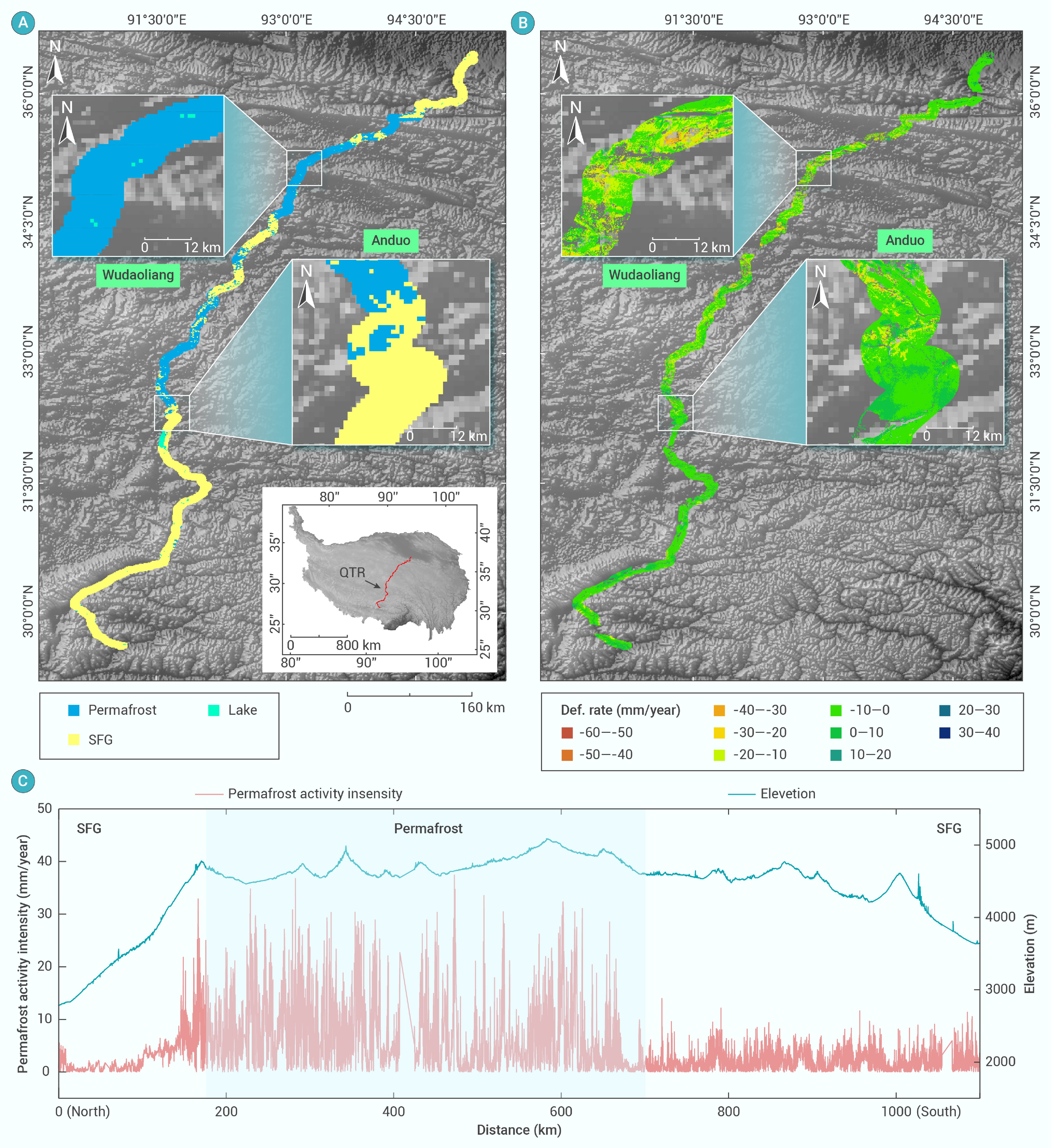
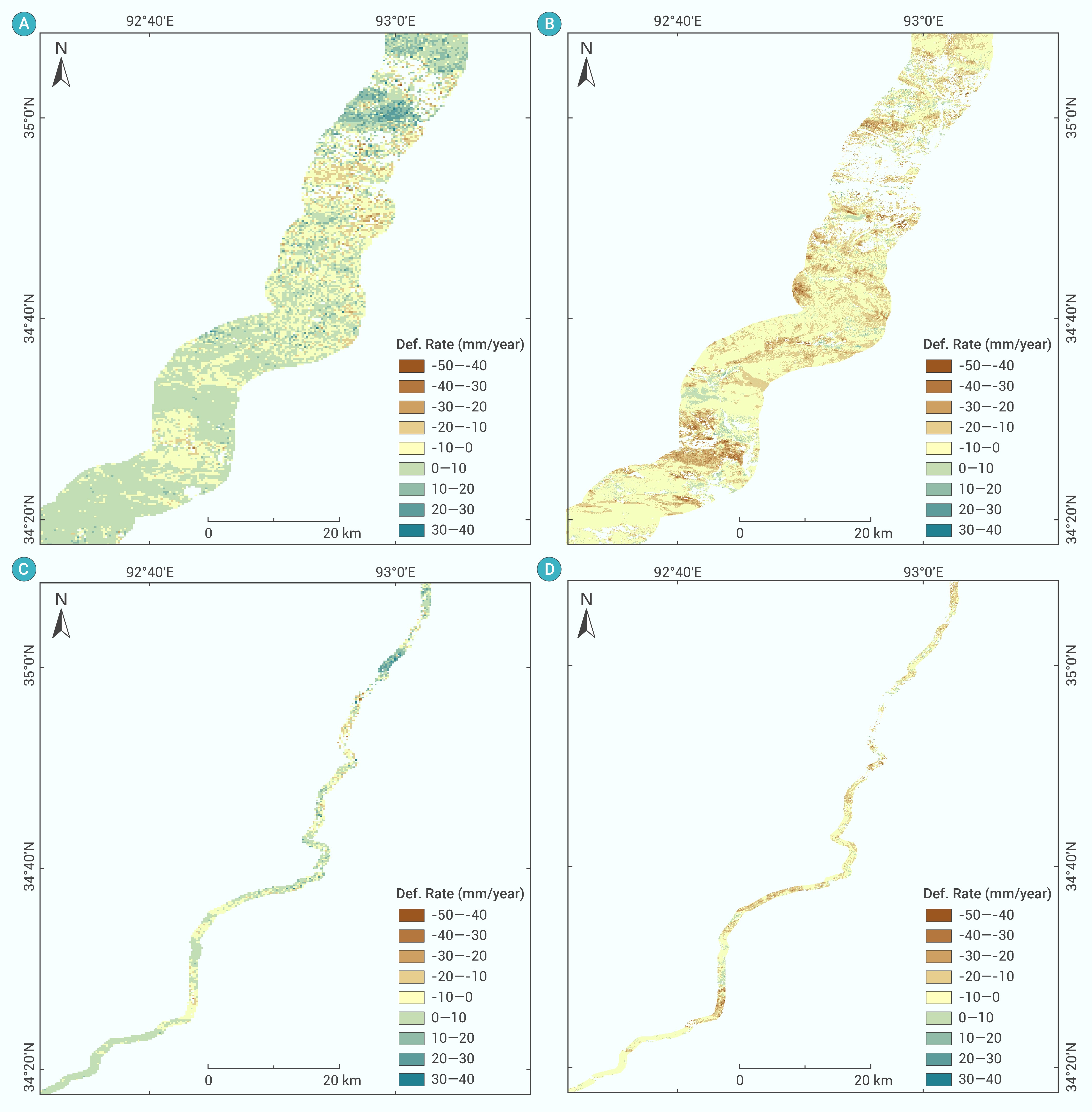
Figure 1.
Relationship between the frozen ground deformation and frozen ground types along QTEC
-
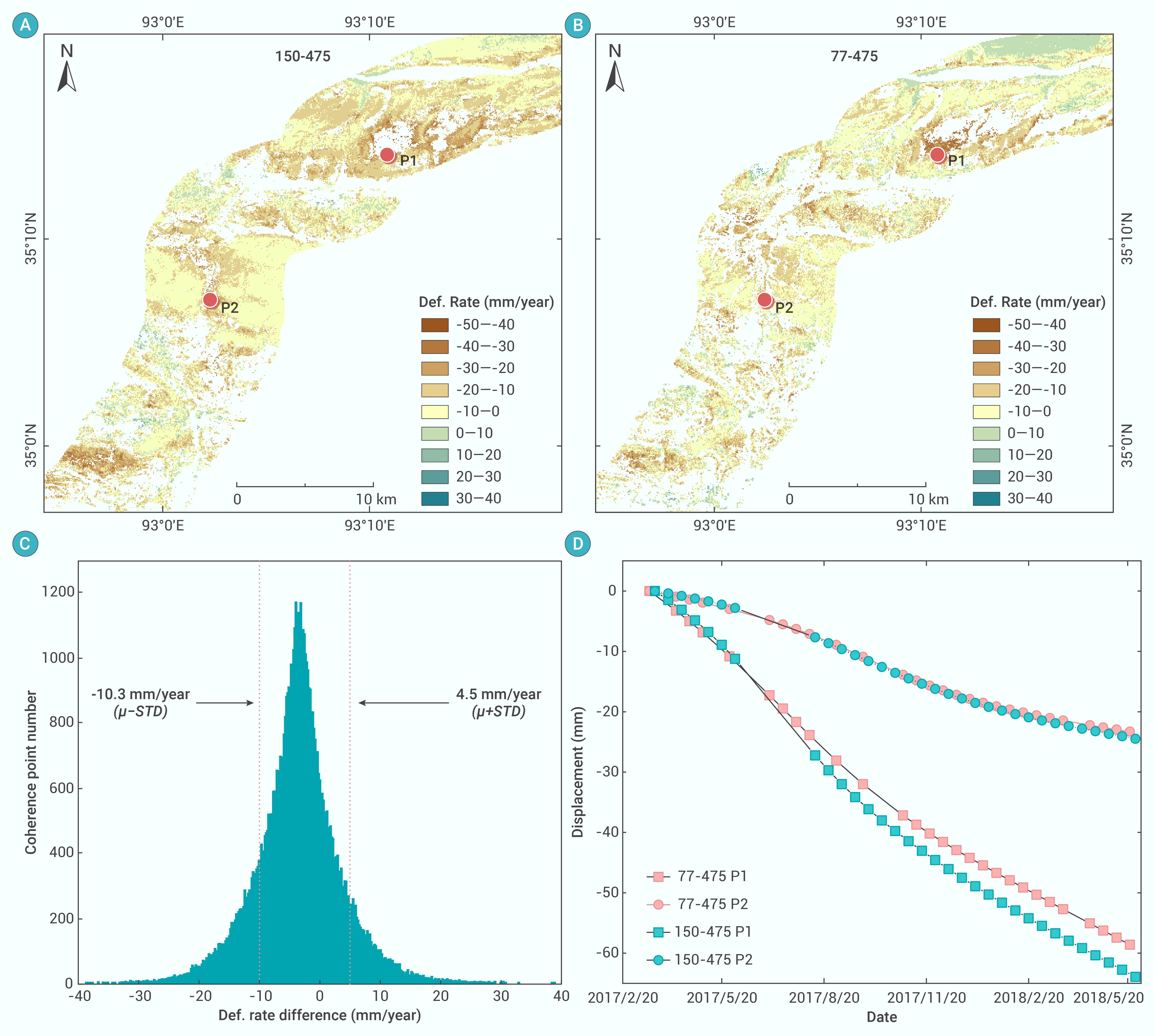
Figure 2.
Comparison of the deformation rate within the same overlap from different SAR imaging tracks
-
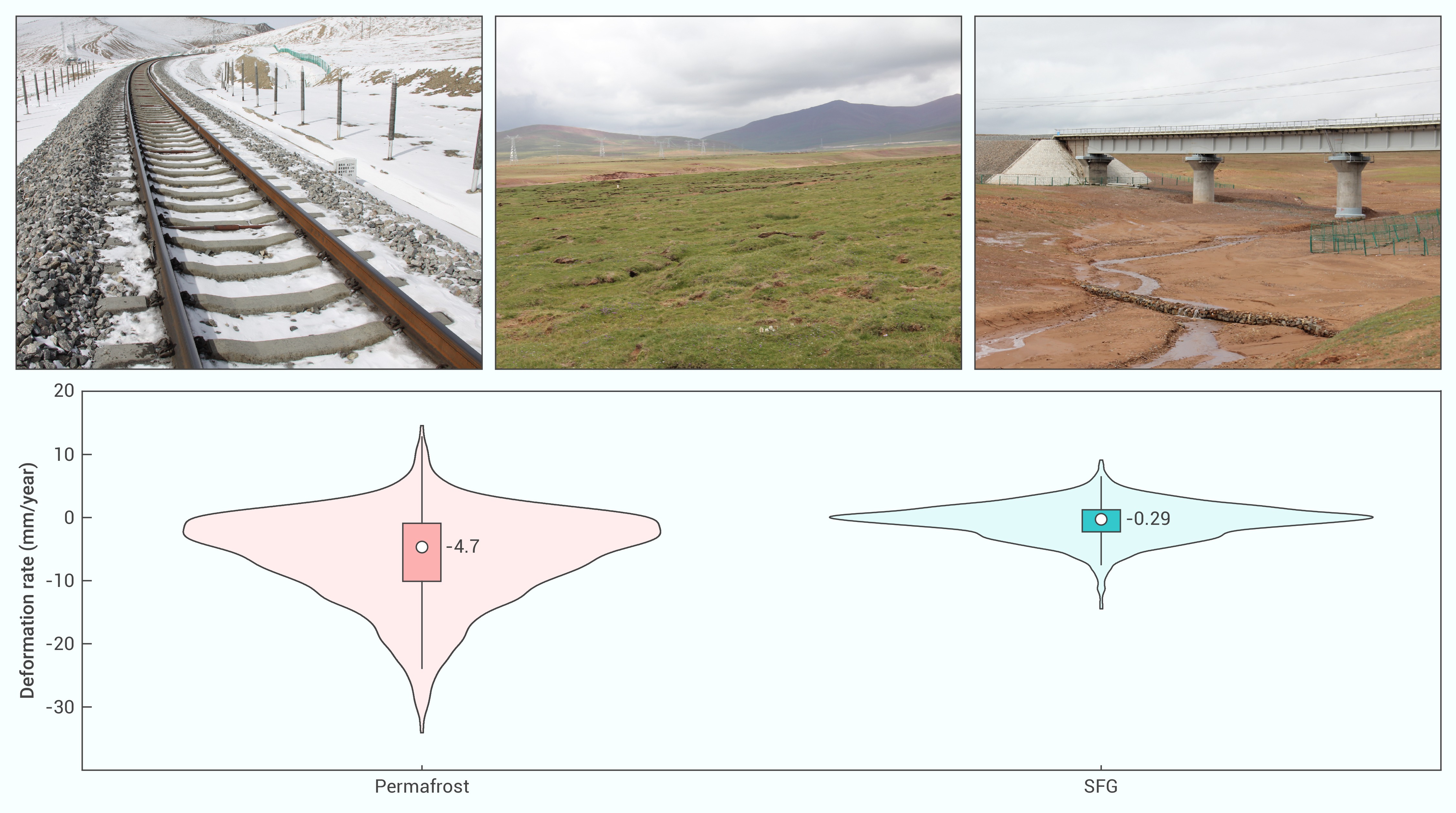
Figure 3.
Ground deformation statistics and error analysis of permafrost and seasonally frozen ground (SFG)
-
Figure 4.
Permafrost thawing-related deformation along QTR before and after its operation
-
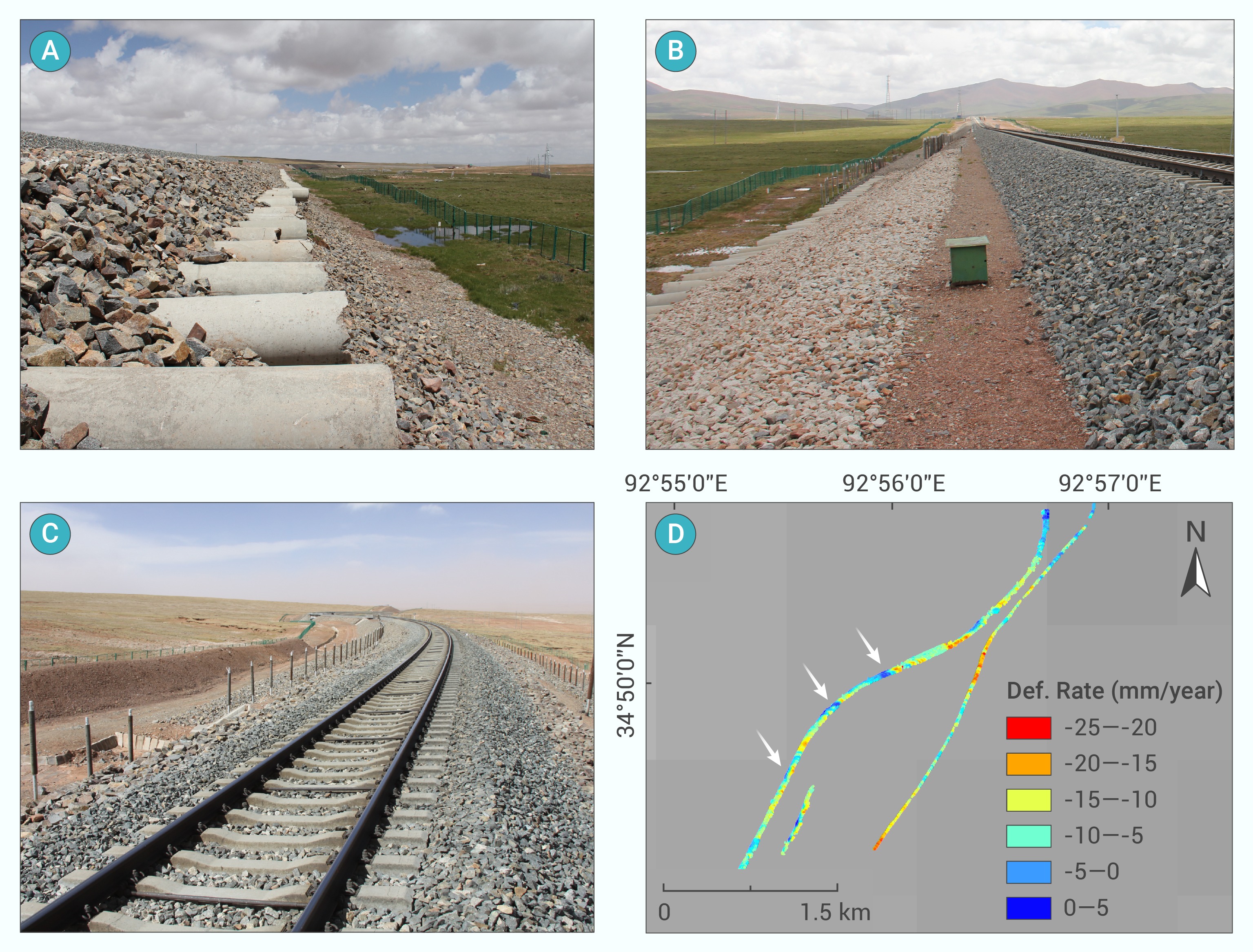
Figure 5.
Typical “cooling down” measures along the Qinghai-Tibet Railway (QTR) embankment
-
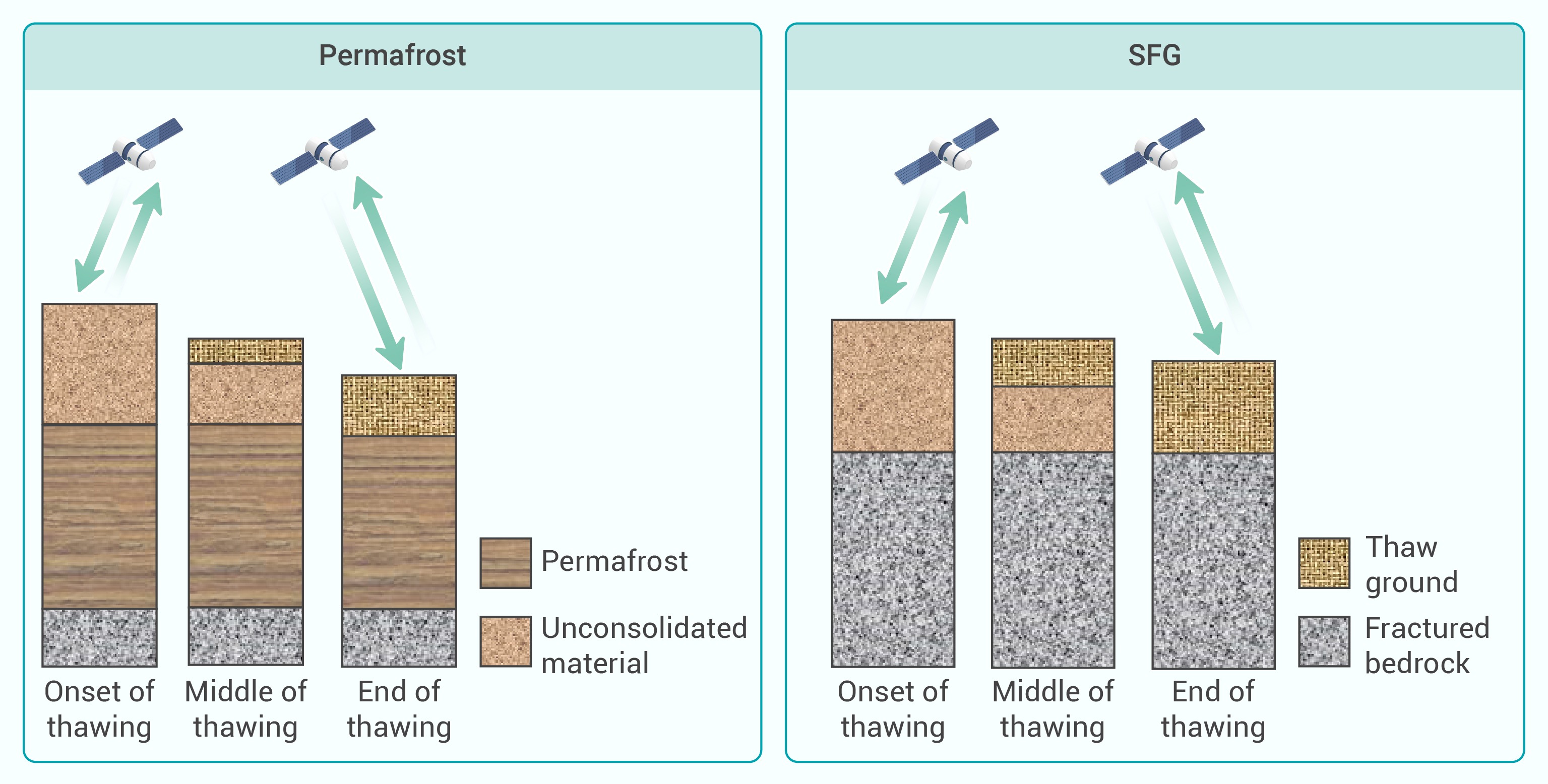
Figure 6.
Deformation mechanism analysis of permafrost and seasonally frozen ground (SFG).
-
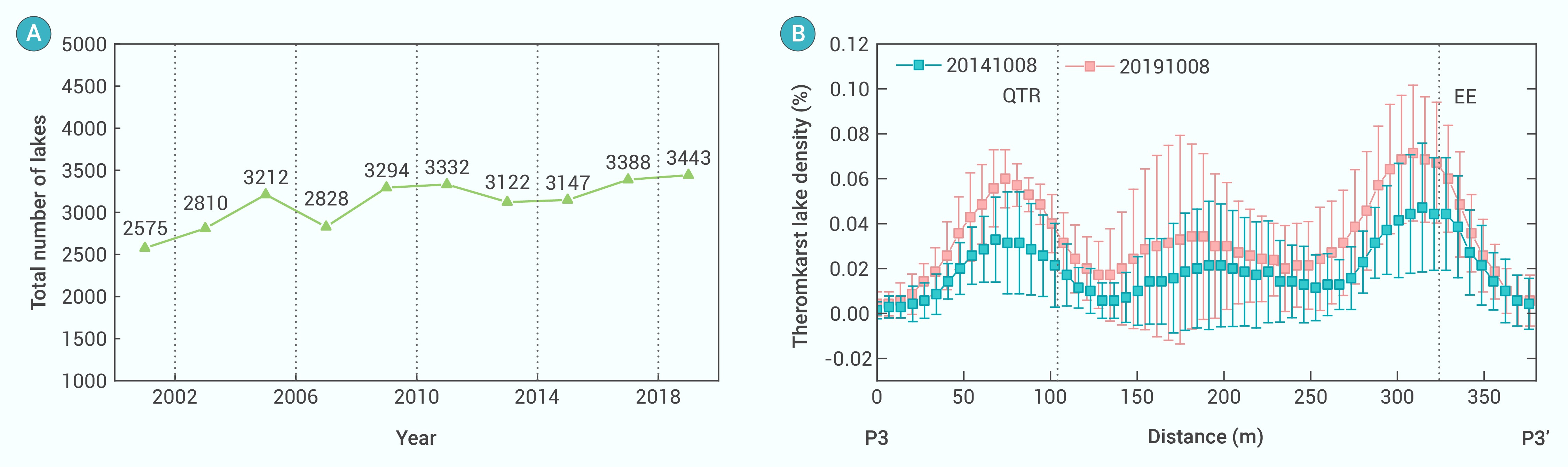
Figure 7.
Thermokarst lakes along QTR
