
Integrated meta-omics reveals organic matter processing by bacteria in the dark ocean
-
GRAPHICAL ABSTRACT
 DownLoad:
Full size image
DownLoad:
Full size image
-
PUBLIC SUMMARY
-
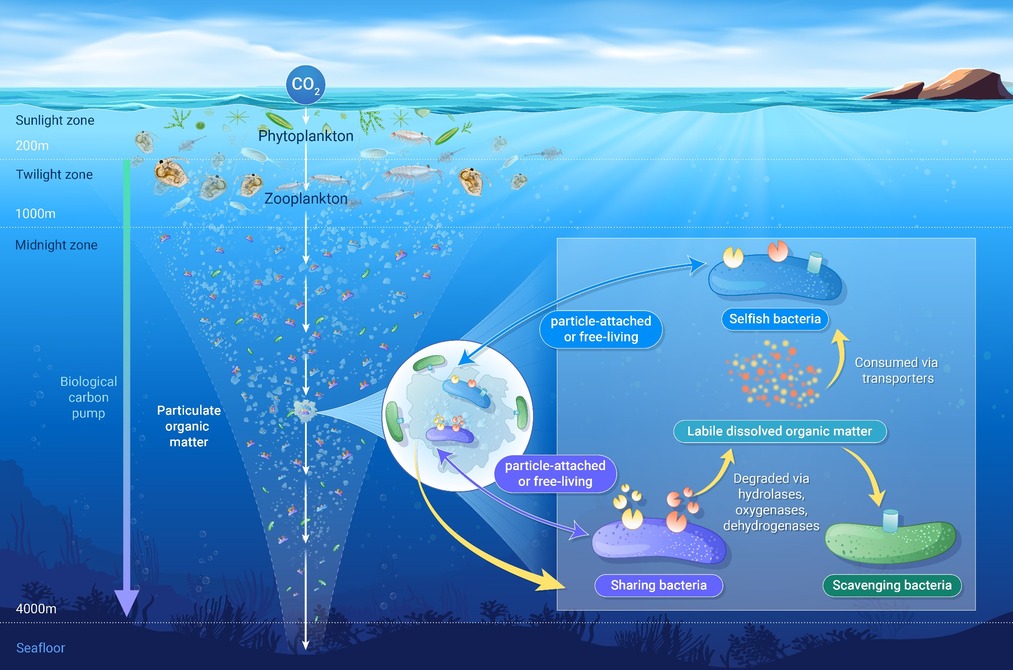
Bacterial metabolisms for processing deep-sea organic matter are uncovered through integrated meta-omics.
Dominant bacteria have different lifestyle preferences and metabolic niches in the deep sea.
Alteromonadales, Oceanospirillales and Sphingomonadales are the major sharing bacteria.
Rhodobacterales and Pelagibacterales are representative selfish and scavenging bacteria, respectively.
Lifestyle and nutritive mode play key roles in bacteria-mediated organic matter processes in deep sea.
-
-
ABSTRACT
The dark ocean plays a critical role in organic matter cycling and global carbon sequestration; however, a detailed mechanistic understanding of the bacteria-mediated organic matter processes is still in its infancy. Here, we characterized the functional diversity, metabolic potential, and activities of particle-attached (PA, 1.6-200 µm) and free-living (FL, 0.2-1.6 µm) bacterial communities collected from a depth of 3,000 m at two sites with contrasting environments in the South China Sea using a combined metaproteomic and metagenomic approach. The taxonomic composition of the microbial communities varied between the two size fractions. Prominent bacterial groups exhibited distinct lifestyle preferences. Oceanospirillales preferred a PA lifestyle while Pelagibacterales favored an FL lifestyle. Moreover, the dominant bacterial groups occupied distinct metabolic niches in the remineralization of organic carbon. Alteromonadales, Oceanospirillales, and Sphingomonadales adopted a ‘sharing’ mode by expressing peptidases, non-proteolytic hydrolases, oxygenases, and dehydrogenases to cleave particulate organic matter into labile organic substrates presumably taken up by the enzyme-producing bacteria or by co-occurring bacteria. Rhodobacterales, however, exhibited a ‘selfish’ mode, and Pelagibacterales adopted a ‘scavenging’ mode, expressing only low and even no extracellular enzymes but abundant transporters to take up different ranges of available substrates. Role allocation among bacteria with varying life strategies and nutritive modes effectively drives organic matter processing in the dark ocean. Our results provide insights into the metabolic features, lifestyles, and nutritional strategies of deep-sea bacteria, thereby advancing our understanding of the biogeochemistry of organic matter driven by bacteria in the dark ocean.-
Keywords:
- dark ocean /
- organic matter processing /
- bacteria /
- metaproteomics /
- metagenomics
-

-
REFERENCES
[1] Salazar G., Cornejo-Castillo F.M., Benitez-Barrios V., et al. (2016). Global diversity and biogeography of deep-sea pelagic prokaryotes. ISME J. 10:596−608. DOI:10.1038/ismej.2015.137 [2] Arístegui J., Agustí S., Middelburg J.J., et al. (2005). Respiration in the mesopelagic and bathypelagic zones of the oceans. Del Giorgio P.A. and Williams P.J. le B. (eds). Respiration in Aquatic Ecosystems (Oxford University Press), pp.181-205. DOI: 10.1093/acprof:oso/9780198527084.003.0010 [3] Del Giorgio P.A. and Duarte C.M. (2002). Respiration in the open ocean. Nature 420:379−384. DOI:10.1038/nature01165 [4] Herndl G.J. and Reinthaler T. (2013). Microbial control of the dark end of the biological pump. Nat. Geosci. 6:718−724. DOI:10.1038/NGEO1921 [5] Herndl G.J., Bayer B., Baltar F., et al. (2023). Prokaryotic life in the deep ocean's water column. Ann. Rev. Mar. Sci. 15:461−483. DOI:10.1146/annurev-marine-032122-115655 [6] Jiao N., Herndl G.J., Hansell D.A., et al. (2010). Microbial production of recalcitrant dissolved organic matter: long-term carbon storage in the global ocean. Nat. Rev. Microbiol. 8:593−599. DOI:10.1038/nrmicro2386 [7] Arrieta J.M., Mayol E., Hansman R.L., et al. (2015). Dilution limits dissolved organic carbon utilization in the deep ocean. Science 348:331−333. DOI:10.1126/science.1258955 [8] Druffel E.R. and Williams P.M. (1990). Identification of a deep marine source of particulate organic carbon using bomb 14C. Nature 347:172−174. DOI:10.1038/347172A0 [9] Bergauer K., Fernandez-Guerra A., Garcia J.A.L., et al. (2018). Organic matter processing by microbial communities throughout the Atlantic water column as revealed by metaproteomics. Proc. Natl. Acad. Sci. USA 115:E400−E408. DOI:10.1073/pnas.1708779115 [10] Ganesh S., Parris D.J., DeLong E.F., et al. (2014). Metagenomic analysis of size-fractionated picoplankton in a marine oxygen minimum zone. ISME J. 8:187−211. DOI:10.1038/ismej.2013.144 [11] Hansell D.A., Carlson C.A. and Schlitzer R. (2012). Net removal of major marine dissolved organic carbon fractions in the subsurface ocean. Global Biogeochem. Cycles 26:GB1016. DOI:10.1029/2011gb004069 [12] Salazar G., Cornejo-Castillo F.M., Borrull E., et al. (2015). Particle-association lifestyle is a phylogenetically conserved trait in bathypelagic prokaryotes. Mol. Ecol. 24:5692−5706. DOI:10.1111/mec.13419 [13] Zhao Z., Baltar F. and Herndl G.J. (2020). Linking extracellular enzymes to phylogeny indicates a predominantly particle-associated lifestyle of deep-sea prokaryotes. Sci. Adv. 6:eaaz4354. DOI:10.1126/sciadv.aaz4354 [14] Kong L.F., Yan K.Q., Xie Z.X., et al. (2021). Metaproteomics reveals similar vertical distribution of microbial transport proteins in particulate organic matter throughout the water column in the northwest Pacific Ocean. Front. Microbiol. 12:629802. DOI:10.3389/fmicb.2021.629802 [15] Liu Y., Liu X., Long Y., et al. (2023). Variations in dissolved organic matter chemistry on a vertical scale in the eastern Indian Ocean. Water Res. 232:119674. DOI:10.1016/j.watres.2023.119674 [16] Sala M.M., Ruiz-Gonzalez C., Borrull E., et al. (2020). Prokaryotic capability to use organic substrates across the global tropical and subtropical ocean. Front. Microbiol. 11:918. DOI:10.3389/fmicb.2020.00918 [17] Reintjes G., Arnosti C., Fuchs B., et al. (2019). Selfish, sharing and scavenging bacteria in the Atlantic Ocean: a biogeographical study of bacterial substrate utilisation. ISME J. 13:1119−1132. DOI:10.1038/s41396-018-0326-3 [18] Giljan G., Brown S., Lloyd C.C., et al. (2023). Selfish bacteria are active throughout the water column of the ocean. ISME Commun. 3:11. DOI:10.1038/s43705-023-00219-7 [19] Kong L.F., He Y.B., Xie Z.X., et al. (2021). Illuminating key microbial players and metabolic processes involved in the remineralization of particulate organic carbon in the ocean’s twilight zone by metaproteomics. Appl. Environ. Microbiol. 87:e00986−00921. DOI:10.1128/AEM.00986-21 [20] Wong G.T.F., Ku T.-L., Mulholland M., et al. (2007). The SouthEast Asian Time-series Study (SEATS) and the biogeochemistry of the South China Sea—An overview. Deep Sea Res. PT. II 54:1434−1447. DOI:10.1016/j.dsr2.2007.05.012 [21] Dai M., Li X., Zhang Y., et al. (2024). Dissolved organic carbon in the South China Sea. Hansell D.A. and Carlson C.A. (eds). Biogeochemistry of marine dissolved organic matter (Elsevier), pp. 739-767. DOI: 10.1016/b978-0-443-13858-4.00002-2 [22] Li J., Gu L., Bai S., et al. (2021). Characterization of particle-associated and free-living bacterial and archaeal communities along the water columns of the South China Sea. Biogeosciences 18:113−133. DOI:10.5194/bg-18-113-2021 [23] Zhang Y., Zhao Z., Dai M., et al. (2014). Drivers shaping the diversity and biogeography of total and active bacterial communities in the South China Sea. Mol. Ecol. 23:2260−2274. DOI:10.1111/mec.12739 [24] Ma W., Chai F., Xiu P., et al. (2014). Simulation of export production and biological pump structure in the South China Sea. Geo-Marine Letters 34:541−554. DOI:10.1007/s00367-014-0384-0 [25] Ma Y., Zhou K., Chen W., et al. (2023). Partitioning of carbon export in the euphotic zone of the oligotrophic South China Sea. Biogeosciences 20:2013−2030. DOI:10.5194/bg-20-2013-2023 [26] Chen S., He Y.B., Xie Z.X., et al. (2021). Metaproteomics reveals nutrient availability shaping distinct microbial community and metabolic niche in the nutrient-depleted and replete layers of an oligotrophic euphotic zone. Sci. Total Environ. 774:145123. DOI:10.1016/j.scitotenv.2021.145123 [27] Gordon L.I., Jennings Jr J.C., Ross A.A., et al. (1993). A suggested protocol for continuous flow automated analysis of seawater nutrients (phosphate, nitrate, nitrite and silicic acid) in the WOCE Hydrographic Program and the Joint Global Ocean Fluxes Study. WOCE hydrographic program office, methods manual WHPO1-52 [28] Hingamp P., Grimsley N., Acinas S.G., et al. (2013). Exploring nucleo-cytoplasmic large DNA viruses in Tara Oceans microbial metagenomes. ISME J. 7:1678−1695. DOI:10.1038/ismej.2013.59 [29] Dong H.P., Wang D.Z., Dai M., et al. (2010). Characterization of particulate organic matter in the water column of the South China Sea using a shotgun proteomic approach. Limnol. Oceanogr. 55:1565−1578. DOI:10.4319/lo.2010.55.4.1565 [30] Chen S., Xie Z.X., Yan K.Q., et al. (2024). Functional vertical connectivity of microbial communities in the ocean. Sci. Adv. 10:eadj8184. DOI:10.1126/sciadv.adj8184 [31] Huson D.H., Mitra S., Ruscheweyh H.-J., et al. (2011). Integrative analysis of environmental sequences using MEGAN4. Genome Res. 21:1552−1560. DOI:10.1101/gr.120618.111 [32] Kanehisa M., Furumichi M., Tanabe M., et al. (2017). KEGG: New perspectives on genomes, pathways, diseases and drugs. Nucleic Acids Res. 45:D353−D361. DOI:10.1093/nar/gkw1092 [33] Zhang H., Wang D.Z., Xie Z.X., et al. (2015). Comparative proteomics reveals highly and differentially expressed proteins in field-collected and laboratory-cultured blooming cells of the diatom Skeletonema costatum. Environ. Microbiol. 17:3976−3991. DOI:10.1111/1462-2920.12914 [34] Zhang X., Ning Z., Mayne J., et al. (2016). MetaPro-IQ: A universal metaproteomic approach to studying human and mouse gut microbiota. Microbiome 4:31. DOI:10.1186/s40168-016-0176-z [35] Cox J. and Mann M. (2008). MaxQuant enables high peptide identification rates, individualized ppb-range mass accuracies and proteome-wide protein quantification. Nat. Biotechnol. 26:1367−1372. DOI:10.1038/nbt.1511 [36] Nakai K. and Horton P. (1999). PSORT: A program for detecting sorting signals in proteins and predicting their subcellular localization. Trends Biochem. Sci. 24:34−36. DOI:10.1016/S0968-0004(98)01336-X [37] Suter E.A., Pachiadaki M., Taylor G.T., et al. (2018). Free‐living chemoautotrophic and particle‐attached heterotrophic prokaryotes dominate microbial assemblages along a pelagic redox gradient. Environ. Microbiol. 20:693−712. DOI:10.1111/1462-2920.13997 [38] Acinas S.G., Sanchez P., Salazar G., et al. (2021). Deep ocean metagenomes provide insight into the metabolic architecture of bathypelagic microbial communities. Commun. Biol. 4:604. DOI:10.1038/s42003-021-02112-2 [39] Dong C., Lai Q., Liu X., et al. (2021). Alcanivorax profundimaris sp. nov., a novel marine hydrocarbonoclastic bacterium isolated from seawater and deep-sea sediment. Curr. Microbiol. 78:1053−1060. DOI:10.1007/s00284-020-02322-7 [40] Dong C., Wei L., Wang J., et al. (2022). Genome-based taxonomic rearrangement of Oceanobacter-related bacteria including the description of Thalassolituus hydrocarbonoclasticus sp. nov. and Thalassolituus pacificus sp. nov. and emended description of the genusThalassolituus.Front. Microbiol. 13:1051202. DOI:10.3389/fmicb.2022.1051202 [41] Giovannoni S.J., Tripp H.J., Givan S., et al. (2005). Genome streamlining in a cosmopolitan oceanic bacterium. Science 309:1242−1245. DOI:10.1126/science.1114057 [42] Zhao X., Schwartz C.L., Pierson J., et al. (2017). Three-dimensional structure of the ultraoligotrophic marine bacterium "Candidatus Pelagibacter ubique". Appl. Environ. Microbiol. 83:e02807−02816. DOI:10.1128/AEM.02807-16 View in Article CrossRef Candidatus Pelagibacter ubique"" target="_blank">Google Scholar
[43] Padilla C.C., Ganesh S., Gantt S., et al. (2015). Standard filtration practices may significantly distort planktonic microbial diversity estimates. Front. Microbiol. 6:547. DOI:10.3389/fmicb.2015.00547 [44] Shen Y., Benner R., Broek T.A., et al. (2025). Special delivery of proteinaceous matter to deep-sea microbes. Sci. Adv. 11:eadr0736. DOI:10.1126/sciadv.adr0736 [45] Dang Y.R., Cha Q.Q., Liu S.S., et al. (2024). Phytoplankton-derived polysaccharides and microbial peptidoglycans are key nutrients for deep-sea microbes in the Mariana Trench. Microbiome 12:77. DOI:10.1186/s40168-024-01789-x [46] Leu A.O., Eppley J.M., Burger A., et al. (2022). Diverse genomic traits differentiate sinking-particle-associated versus free-living microbes throughout the oligotrophic open ocean water column. mBio 13:e01569−01522. DOI:10.1128/mbio.01569-22 [47] Smith D.C., Simon M., Alldredge A.L., et al. (1992). Intense hydrolytic enzyme activity on marine aggregates and implications for rapid particle dissolution. Nature 359:139−142. DOI:10.1038/359139a0 [48] Hou L., Zhao Z., Steger-Mahnert B., et al. (2025). Microbial metabolism in laboratory reared marine snow as revealed by a multi-omics approach. Microbiome 13:114. DOI:10.1186/s40168-025-02097-8 [49] Liu Q., Fang J., Li J., et al. (2018). Depth-resolved variations of cultivable bacteria and their extracellular enzymes in the water column of the New Britain Trench. Front. Microbiol. 9:135. DOI:10.3389/fmicb.2018.00135 [50] Phale P.S., Basu A., Majhi P.D., et al. (2007). Metabolic diversity in bacterial degradation of aromatic compounds. Omics 11:252−279. DOI:10.1089/omi.2007.0004 [51] Landry Z., Swan B.K., Herndl G.J., et al. (2017). SAR202 genomes from the dark ocean predict pathways for the oxidation of recalcitrant dissolved organic matter. mBio 8:e00413−00417. DOI:10.1128/mBio.00413-17 [52] Cafaro V., Izzo V., Notomista E., et al. (2013). Marine hydrocarbonoclastic bacteria. Trincone A. (ed). Marine enzymes for biocatalysis (Woodhead Publishing), pp.373-402. DOI: 10.1533/9781908818355.3.373. [53] Moore E.R., Weaver A.J., Davis E.W., et al. (2022). Metabolism of key atmospheric volatile organic compounds by the marine heterotrophic bacterium Pelagibacter HTCC1062 (SAR11). Environ. Microbiol. 24:212−222. DOI:10.1111/1462-2920.15837 [54] Ehrt S., Schirmer F. and Hillen W. (1995). Genetic organization, nucleotide sequence and regulation of expression of genes encoding phenol hydroxylase and catechol 1, 2‐dioxygenase in Acinetobacter calcoaceticus NCIB8250. Mol. Microbiol. 18:13−20. DOI:10.1111/j.1365-2958.1995.mmi_18010013.x [55] Kita A., Kita S.-i., Fujisawa I., et al. (1999). An archetypical extradiol-cleaving catecholic dioxygenase: the crystal structure of catechol 2, 3-dioxygenase (metapyrocatechase) from Pseudomonas putida mt-2. Structure 7:25−34. DOI:10.1016/S0969-2126(99)80006-9 [56] Rosas-Diaz J., Escobar-Zepeda A., Adaya L., et al. (2021). Paenarthrobacter sp. GOM3 is a novel marine species with monoaromatic degradation relevance. Front. Microbiol. 12:713702. DOI: 10.3389/fmicb.2021.713702 [57] Campbell J.W., Morgan‐Kiss R.M. and Cronan Jr J.E. (2003). A new Escherichia coli metabolic competency: Growth on fatty acids by a novel anaerobic β‐oxidation pathway. Mol. Microbiol. 47:793−805. DOI:10.1046/j.1365-2958.2003.03341.x [58] Ivars-Martinez E., Martin-Cuadrado A.-B., D'auria G., et al. (2008). Comparative genomics of two ecotypes of the marine planktonic copiotroph Alteromonas macleodii suggests alternative lifestyles associated with different kinds of particulate organic matter. ISME J. 2:1194−1212. DOI:10.1038/ismej.2008.74 [59] Guibert L.M., Loviso C.L., Marcos M.S., et al. (2012). Alkane biodegradation genes from chronically polluted subantarctic coastal sediments and their shifts in response to oil exposure. Microb. Ecol. 64:605−616. DOI:10.1007/s00248-012-0051-9 [60] Teramoto M., Suzuki M., Okazaki F., et al. (2009). Oceanobacter-related bacteria are important for the degradation of petroleum aliphatic hydrocarbons in the tropical marine environment. Microbiology 155:3362−3370. DOI:10.1099/mic.0.030411-0 -
ABOUT THIS ARTICLE
Cite this article:
Chen S., Xie Z., Yan K., et al. (2026). Integrated meta-omics reveals organic matter processing by bacteria in the dark ocean. The Innovation Geoscience 4:100184. https://doi.org/10.59717/j.xinn-geo.2026.100184
Welcome!
To request copyright permission to republish or share portions of our works, please visit Copyright Clearance Center's (CCC) Marketplace website at marketplace.copyright.com.
Article Metrics
Relative Articles
Cited by
Export File
Citation
Chen S., Xie Z., Yan K., et al. (2026). Integrated meta-omics reveals organic matter processing by bacteria in the dark ocean. The Innovation Geoscience 4:100184. https://doi.org/10.59717/j.xinn-geo.2026.100184

Format
Content
-
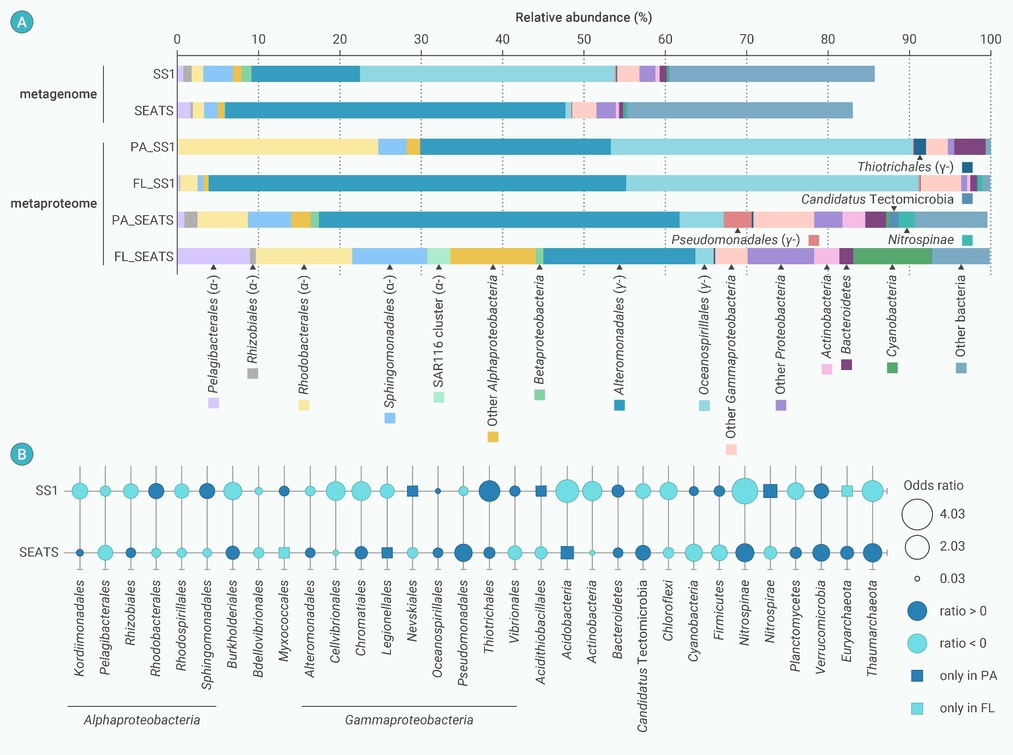
Figure 1.
Microbial composition in the bathypelagic South China Sea (SCS)
-
Figure 2.
Molecular function categories of metaproteome-identified proteins based on gene ontology (GO) annotation
-
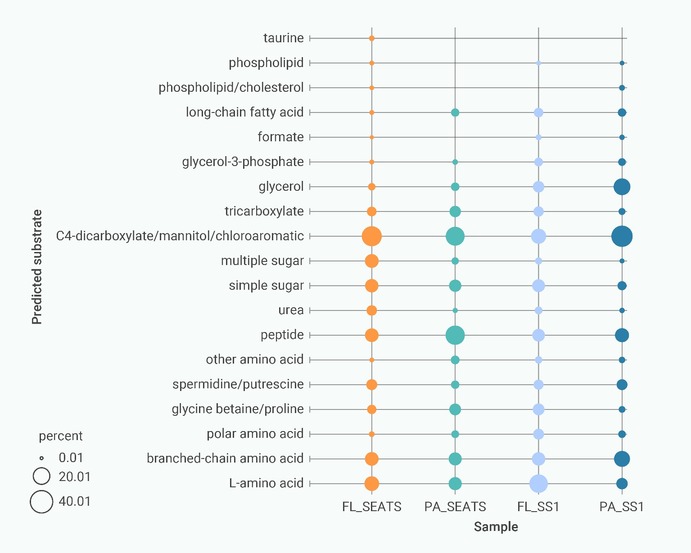
Figure 3.
The distribution of transporters in the metaproteome samples from the deep SCS
-
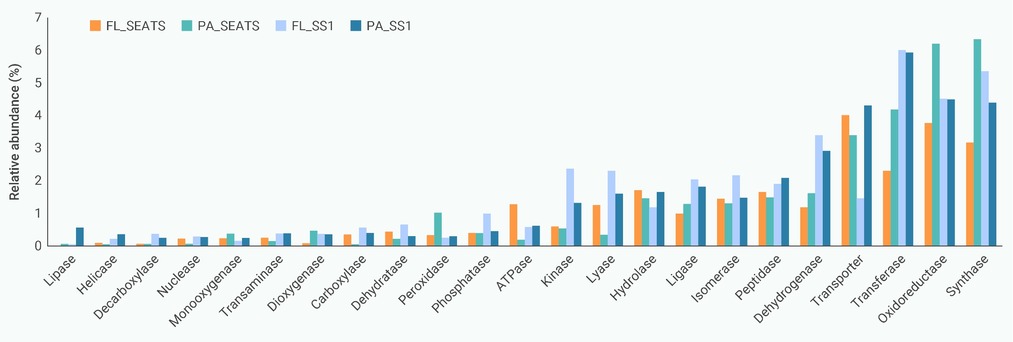
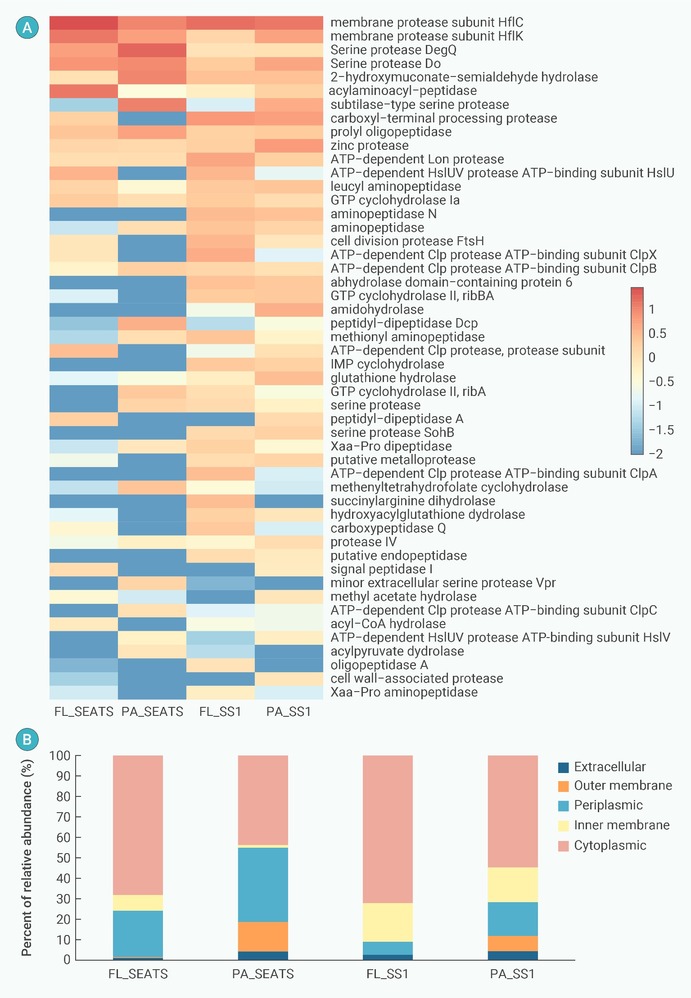
Figure 4.
The distribution of hydrolytic enzymes in the metaproteome samples from the deep SCS
-
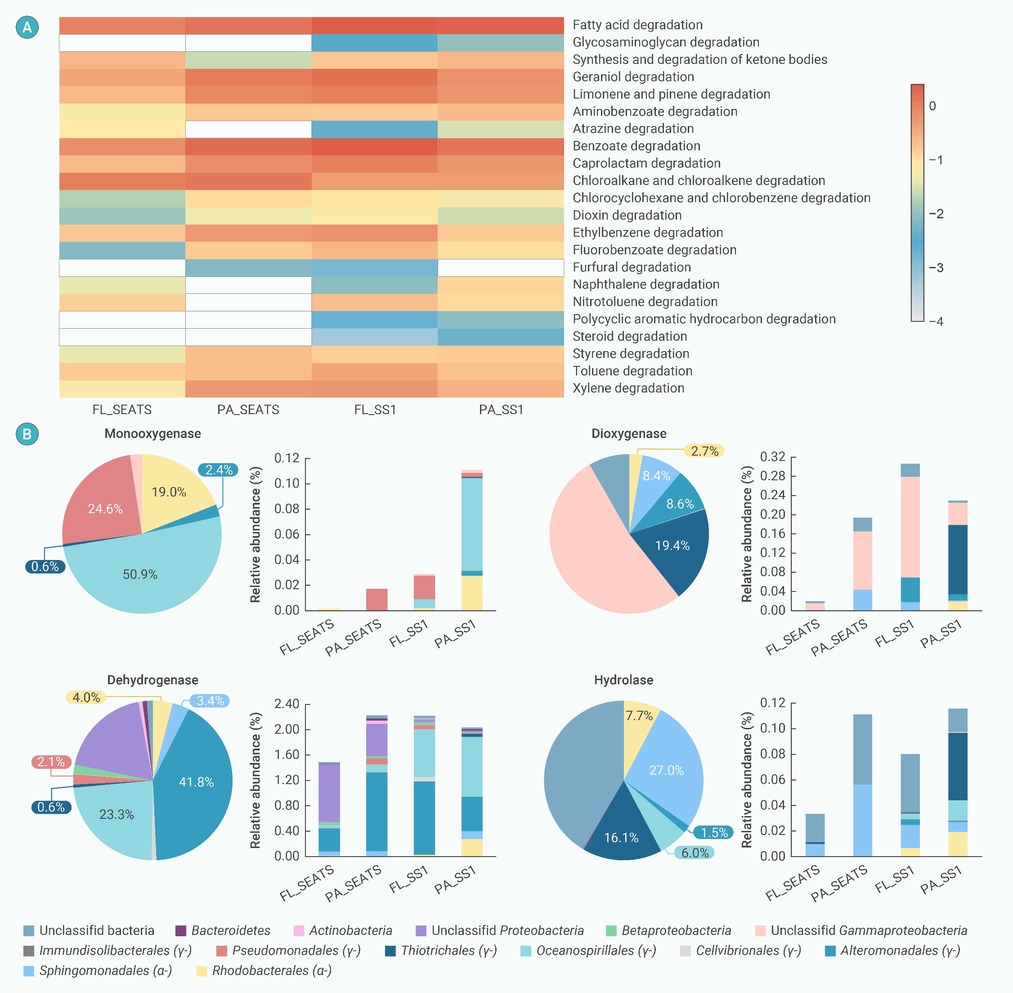
Figure 5.
Metaproteome-identified proteins involved in the degradation of low-bioactive organic compounds
-
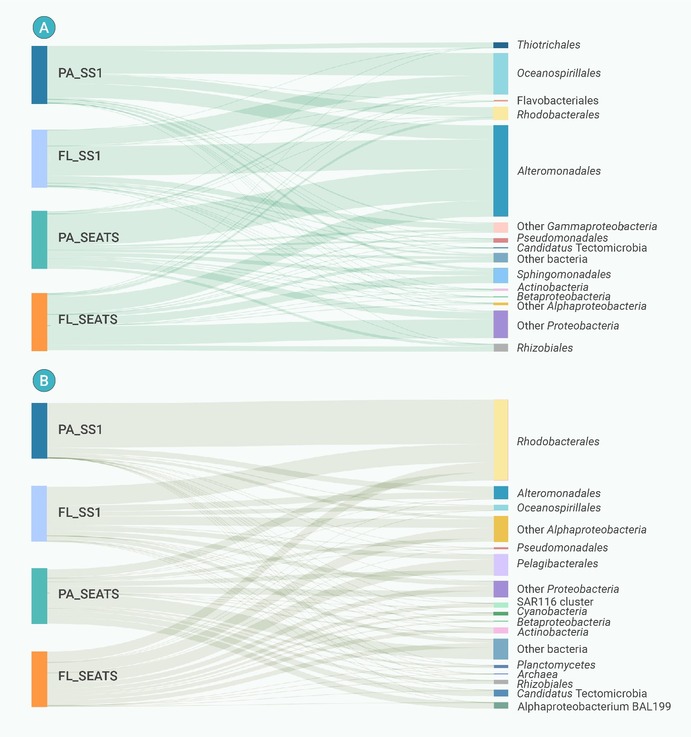
Figure 6.
Sankey plots show the taxonomic composition of degradation enzymes (A) and transporters (B) among metaproteomic samples
-
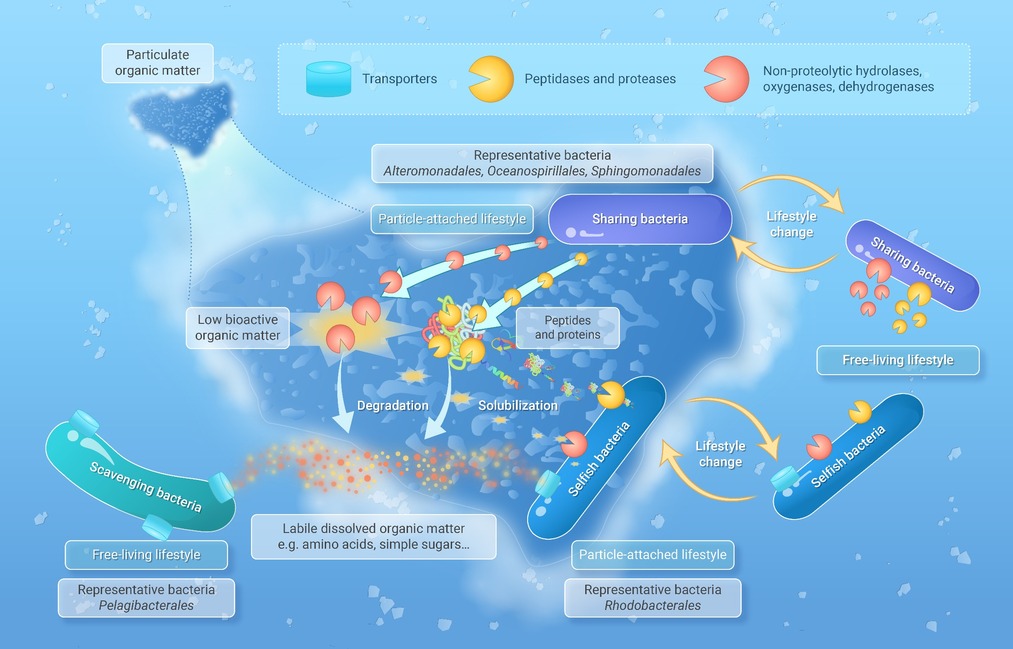
Figure 7.
Conceptual model of organic matter processing by bacteria in the SCS
