
Global warming driving increased winter CO2 emissions in the Northern Hemisphere permafrost region
-
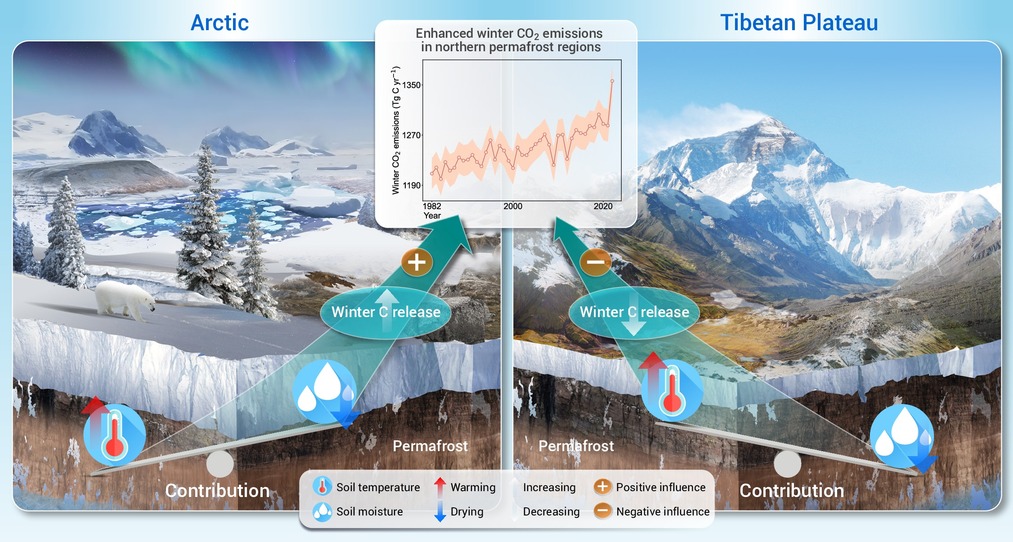
GRAPHICAL ABSTRACT
 DownLoad:
Full size image
DownLoad:
Full size image
-
PUBLIC SUMMARY
-
We estimate the winter CO2 emissions of 1,289 ± 25 Tg C yr−1 from the Northern Hemisphere permafrost region.
Since the 2000s, winter CO2 emissions in the Arctic increased, but those on the Tibetan Plateau (TP) declined.
Soil temperature and moisture dominated the trends of winter CO2 emissions in the Arctic and TP, respectively.
-
-
ABSTRACT
Global warming accelerates the breakdown of carbon stored in permafrost regions, releasing it into the atmosphere and amplifying climate change, particularly during winter when photosynthesis ceases. The Northern Hemisphere's permafrost is primarily concentrated in two key regions — the Arctic and the Tibetan Plateau — each with distinct environmental characteristics. However, previous studies often treat these regions separately, missing the opportunity to compare their winter CO2 emissions within a unified framework. Here, we synthesized 2,487 monthly CO2 flux measurements from 166 in-situ sites to quantify the spatial and temporal variations and key drivers of winter CO2 emissions in these two regions. Our analysis reveals that combined winter emissions from the Arctic and Tibetan Plateau are estimated to be 1,289 ± 25 Tg C yr-1. From 1982 to 2022, winter CO2 emissions increased by 2.10 ± 0.23 Tg C yr-1. Notably, since 2001, winter CO2 emissions have surged in the Arctic while declining in the Tibetan Plateau. The driving factors also differ: soil temperature dominates in the Arctic (51%), whereas soil moisture plays the most significant role on the Tibetan Plateau (33%). These findings highlight the contrasting mechanisms governing winter carbon emissions in these regions and underscore the importance of incorporating region-specific factors when predicting permafrost-carbon feedbacks in a warming world.-
Keywords:
- Arctic /
- Tibetan Plateau /
- Permafrost /
- Climate change /
- Winter CO2 emissions
-

-
REFERENCES
[1] Obu J., Westermann S., Bartsch A., et al. (2019). Northern Hemisphere permafrost map based on TTOP modelling for 2000-2016 at 1 km2 scale. Earth-Sci. Rev. 193:299−316. DOI:10.1016/j.earscirev.2019.04.023 [2] Ran Y., Li X., Cheng G., et al. (2022). New high-resolution estimates of the permafrost thermal state and hydrothermal conditions over the Northern Hemisphere. Earth Syst. Sci. Data 14:865−884. DOI:10.5194/essd-14-865-2022 [3] Wang X., Ran Y., Pang G., et al. (2022). Contrasting characteristics, changes, and linkages of permafrost between the Arctic and the Third Pole. Earth-Sci. Rev. 230:104042. DOI:10.1016/j.earscirev.2022.104042 [4] Wang X., Hu G., Peng X., et al. (2024). Mountain permafrost status and changes. Elsevier. DOI:10.1016/B978-0-323-85242-5.00014-2 [5] Schuur E. A. G., Abbott B. W., Commane R., et al. (2022). Permafrost and climate change: Carbon cycle feedbacks from the warming Arctic. Annu. Rev. Environ. Resour 47:343−371. DOI:10.1146/annurev-environ-012220-011847 [6] Gao T., Kang S., Yao T., et al. (2024). Carbon dynamics shift in changing cryosphere and hydrosphere of the Third Pole. Earth-Sci. Rev. 250:104717. DOI:10.1016/j.earscirev.2024.104717 [7] Schädel C., Bader M. K. F., Schuur E. A. G., et al. (2016). Potential carbon emissions dominated by carbon dioxide from thawed permafrost soils. Nat. Clim. Chang. 6:950−953. DOI:10.1038/nclimate3054 [8] Schuur E. A. G., Mcguire A. D., Schädel C., et al. (2015). Climate change and the permafrost carbon feedback. Nature 520:171−179. DOI:10.1038/nature14338 [9] Miner K. R., Turetsky M. R., Malina E., et al. (2022). Permafrost carbon emissions in a changing Arctic. Nat. Rev. Earth Environ. 3:55−67. DOI:10.1038/s43017-021-00230-3 [10] Natali S. M., Holdren J. P., Rogers B. M., et al. (2021). Permafrost carbon feedbacks threaten global climate goals. Proc. Natl. Acad. Sci. USA 118:e2100163118. DOI:10.1073/pnas.2100163118 [11] Zhu Y., Wang K., Jiao W. X., et al. (2024). Revisiting permafrost carbon feedback and economic impacts. Environ. Res. Lett. 19:34040. DOI:10.1088/1748-9326/ad2b2b [12] Mccrystall M. R., Stroeve J., Serreze M., et al. (2021). New climate models reveal faster and larger increases in Arctic precipitation than previously projected. Nat. Commun. 12:6765. DOI:10.1038/s41467-021-27031-y [13] Rantanen M., Karpechko A. Y., Lipponen A., et al. (2022). The Arctic has warmed nearly four times faster than the globe since 1979. Commun. Earth Environ. 3:168. DOI:10.1038/s43247-022-00498-3 [14] Hu G., Zhao L., Wu T., et al. (2021). Spatiotemporal variations and regional differences in air temperature in the permafrost regions in the Northern Hemisphere during 1980-2018. Sci. Total Environ. 791:148358. DOI:10.1016/j.scitotenv.2021.148358 [15] Mu C., Abbott B. W., Norris A. J., et al. (2020). The status and stability of permafrost carbon on the Tibetan Plateau. Earth-Sci. Rev. 211:103433. DOI:10.1016/j.earscirev.2020.103433 [16] Yang M., Wang X., Pang G., et al. (2019). The Tibetan Plateau cryosphere: Observations and model simulations for current status and recent changes. Earth-Sci. Rev. 190:353−369. DOI:10.1016/j.earscirev.2018.12.018 [17] Moon T. A., Druckenmiller M. L., Thoman R. L., et al. (2024). Arctic Report Card 2024. DOI:10.25923/b7c7-6431 [18] Peng Y., Duan A., Hu W., et al. (2022). Observational constraint on the future projection of temperature in winter over the Tibetan Plateau in CMIP6 models. Environ. Res. Lett. 17:34023. DOI:10.1088/1748-9326/ac541c [19] Cui J., Zheng M., Bian Z., et al. (2024). Elevated CO2 levels promote both carbon and nitrogen cycling in global forests. Nat. Clim. Chang. 14:511−517. DOI:10.1038/s41558-024-01973-9 [20] Piao S., Wang X., Park T., et al. (2020). Characteristics, drivers and feedbacks of global greening. Nat. Rev. Earth Environ. 1:14−27. DOI:10.1038/s43017-019-0001-x [21] Xu C., Mcdowell N. G., Fisher R. A., et al. (2019). Increasing impacts of extreme droughts on vegetation productivity under climate change. Nat. Clim. Chang. 9:948−953. DOI:10.1038/s41558-019-0630-6 [22] Maes S. L., Dietrich J., Midolo G., et al. (2024). Environmental drivers of increased ecosystem respiration in a warming tundra. Nature 629:105−113. DOI:10.1038/s41586-024-07274-7 [23] Niu S., Chen W., Liáng L. L., et al. (2024). Temperature responses of ecosystem respiration. Nat. Rev. Earth Environ. 5:559−571. DOI:10.1038/s43017-024-00569-3 [24] Li Q., Liu Y., Kou D., et al. (2022). Substantial non-growing season carbon dioxide loss across Tibetan alpine permafrost region. Glob. Change Biol. 28:5200−5210. DOI:10.1111/gcb.16315 [25] Natali S. M., Watts J. D., Rogers B. M., et al. (2019). Large loss of CO2 in winter observed across the northern permafrost region. Nat. Clim. Chang. 9:852−857. DOI:10.1038/s41558-019-0592-8 [26] See C. R., Virkkala A., Natali S. M., et al. (2024). Decadal increases in carbon uptake offset by respiratory losses across northern permafrost ecosystems. Nat. Clim. Chang. 14:853−862. DOI:10.1038/s41558-024-02057-4 [27] Friedlingstein P., O'Sullivan M., Jones M. W., et al. (2023). Global Carbon Budget 2023. Earth Syst. Sci. Data 15:5301−5369. DOI:10.5194/essd-15-5301-2023 [28] Sitch S., Friedlingstein P., Gruber N., et al. (2015). Recent trends and drivers of regional sources and sinks of carbon dioxide. Biogeosciences 12:653−679. DOI:10.5194/bg-12-653-2015 [29] Hu G., Zhao L., Zou D., et al. (2024). Large variability in permafrost degradation over the Northern Hemisphere. Catena 246:108440. DOI:10.1016/j.catena.2024.108440 [30] Li T., Chen Y., Han L., et al. (2021). Shortened duration and reduced area of frozen soil in the Northern Hemisphere. The Innovation 2:100146. DOI:10.1016/j.xinn.2021.100146 [31] Chen S., Gu Y., Liu E., et al. (2024). Freeze-thaw strength increases microbial stability to enhance diversity-soil multifunctionality relationship. Commun. Earth Environ. 5:578. DOI:10.1038/s43247-024-01765-1 [32] Mu C., Zhang T., Zhao Q., et al. (2017). Permafrost affects carbon exchange and its response to experimental warming on the northern Qinghai-Tibetan Plateau. Agric. For. Meteorol. 247:252−259. DOI:10.1016/j.agrformet.2017.08.009 [33] Li Z., Mu C., Chen X., et al. (2021). Changes in net ecosystem exchange of CO2 in Arctic and their relationships with climate change during 2002-2017. Adv. Clim. Chang. Res. 12:475−481. DOI:10.1016/j.accre.2021.06.004 [34] Pongracz A., Wårlind D., Miller P. A., et al. (2024). Warming-induced contrasts in snow depth drive the future trajectory of soil carbon loss across the Arctic-Boreal region. Commun. Earth Environ. 5:684. DOI:10.1038/s43247-024-01838-1 [35] Watts J. D., Natali S. M., Minions C., et al. (2021). Soil respiration strongly offsets carbon uptake in Alaska and Northwest Canada. Environ. Res. Lett. 16:84051. DOI:10.1088/1748-9326/ac1222 [36] Yun H., Tang J., D Imperio L., et al. (2022). Warming and increased respiration have transformed an alpine steppe ecosystem on the Tibetan Plateau from a carbon dioxide sink into a source. J. Geophys. Res.-Biogeosci. 127:e2021JG006406. DOI:10.1029/2021JG006406 [37] Fewster R. E., Morris P. J., Ivanovic R. F., et al. (2022). Imminent loss of climate space for permafrost peatlands in Europe and Western Siberia. Nat. Clim. Chang. 12:373−379. DOI:10.1038/s41558-022-01296-7 [38] Hugelius G., Loisel J., Chadburn S., et al. (2020). Large stocks of peatland carbon and nitrogen are vulnerable to permafrost thaw. Proc. Natl. Acad. Sci. USA 117:20438−20446. DOI:10.1073/pnas.1916387117 [39] Wu T., Wang D., Mu C., et al. (2022). Storage, patterns, and environmental controls of soil organic carbon stocks in the permafrost regions of the Northern Hemisphere. Sci. Total Environ. 828:154464. DOI:10.1016/j.scitotenv.2022.154464 [40] Peng X., Zhang T., Frauenfeld O. W., et al. (2023). Active layer thickness and permafrost area projections for the 21st century. Earth's Future 11:e2023EF003573. DOI:10.1029/2023EF003573 [41] Belshe E. F., Schuur E. A. G., Bolker B. M. (2013). Tundra ecosystems observed to be CO2 sources due to differential amplification of the carbon cycle. Ecol. Lett. 16:1307−1315. DOI:10.1111/ele.12164 [42] Mcguire A. D., Christensen T. R., Hayes D., et al. (2012). An assessment of the carbon balance of Arctic tundra: Comparisons among observations, process models, and atmospheric inversions. Biogeosciences 9:3185−3204. DOI:10.5194/bg-9-3185-2012 [43] Pan X., Chen D., Pan B., et al. (2025). Evolution and prospects of Earth system models: Challenges and opportunities. Earth-Sci. Rev. 260:104986. DOI:10.1016/j.earscirev.2024.104986 [44] Schädel C., Rogers B. M., Lawrence D. M., et al. (2024). Earth system models must include permafrost carbon processes. Nat. Clim. Chang. 14:114−116. DOI:10.1038/s41558-023-01909-9 [45] Commane R., Lindaas J., Benmergui J., et al. (2017). Carbon dioxide sources from Alaska driven by increasing early winter respiration from Arctic tundra. Proc. Natl. Acad. Sci. USA 114:5361−5366. DOI:10.1073/pnas.1618567114 [46] Fisher J. B., Sikka M., Oechel W. C., et al. (2014). Carbon cycle uncertainty in the Alaskan Arctic. Biogeosciences 11:4271−4288. DOI:10.5194/bg-11-4271-2014 [47] Treat C. C., Virkkala A. M., Burke E., et al. (2024). Permafrost carbon: Progress on understanding stocks and fluxes across northern terrestrial ecosystems. J. Geophys. Res.-Biogeosci. 129:e2023JG007638. DOI:10.1029/2023JG007638 [48] Burke E. J., Zhang Y., Krinner G. (2020). Evaluating permafrost physics in the Coupled Model Intercomparison Project 6 (CMIP6) models and their sensitivity to climate change. The cryosphere 14:3155−3174. DOI:10.5194/tc-14-3155-2020 [49] Pastorello G., Trotta C., Canfora E., et al. (2020). The FLUXNET2015 dataset and the ONEFlux processing pipeline for eddy covariance data. Sci. Data 7:225. DOI:10.1038/s41597-020-0534-3 [50] Virkkala A., Natali S. M., Rogers B. M., et al. (2022). The ABCflux database: Arctic-boreal CO2 flux observations and ancillary information aggregated to monthly time steps across terrestrial ecosystems. Earth Syst. Sci. Data 14:179−208. DOI:10.5194/essd-14-179-2022 [51] Wei D., Qi Y., Ma Y., et al. (2021). Plant uptake of CO2 outpaces losses from permafrost and plant respiration on the Tibetan Plateau. Proc. Natl. Acad. Sci. USA 118:e2015283118. DOI:10.1073/pnas.2015283118 [52] Sitch S., O Sullivan M., Robertson E., et al. (2024). Trends and drivers of terrestrial sources and sinks of carbon dioxide: An overview of the TRENDY project. Glob. Biogeochem. Cycle 38:e2024GB008102. DOI:10.1029/2024GB008102 [53] Yuan K., Li F., Mcnicol G., et al. (2024). Boreal-Arctic wetland methane emissions modulated by warming and vegetation activity. Nat. Clim. Chang. 14:282−288. DOI:10.1038/s41558-024-01933-3 [54] Virkkala A., Rogers B. M., Watts J. D., et al. (2025). Wildfires offset the increasing but spatially heterogeneous Arctic-boreal CO2 uptake. Nat. Clim. Chang. 15:188−195. DOI:10.1038/s41558-024-02234-5 [55] Mu C., Mo X., Qiao Y., et al. (2023). Ecosystem CO2 emissions and its economic implications in northern permafrost regions in the 21st century. Glob. Biogeochem. Cycle 37:e2023GB007750. DOI:10.1029/2023GB007750 [56] Muñoz Sabater J. (2019). ERA5-Land monthly averaged data from 1950 to present. Copernicus climate change service (C3S) climate data store (CDS). DOI:10.24381/cds.68d2bb30 [57] Eyring V., Bony S., Meehl G. A., et al. (2016). Overview of the Coupled Model Intercomparison Project Phase 6 (CMIP6) experimental design and organization. Geosci. Model Dev. 9:1937−1958. DOI:10.5194/gmd-9-1937-2016 [58] Juckes M., Taylor K. E., Durack P. J., et al. (2020). The CMIP6 Data Request (DREQ, version 01.00.31). Geosci. Model Dev. 13:201-224. DOI:10.5194/gmd-13-201-2020. [59] Peng X., Tingjun Z., Oliver W. F., et al. (2018). Spatiotemporal changes in active layer thickness under contemporary and projected climate in the Northern Hemisphere. J. Clim. 31:251−266. DOI:10.1175/JCLI-D-16-0721.1 [60] Palmtag J., Obu J., Kuhry P., et al. (2022). A high spatial resolution soil carbon and nitrogen dataset for the northern permafrost region based on circumpolar land cover upscaling. Earth Syst. Sci. Data 14:4095−4110. DOI:10.5194/essd-14-4095-2022 [61] Wang D., Wu T., Zhao L., et al. (2021). A 1 km resolution soil organic carbon dataset for frozen ground in the Third Pole. Earth Syst. Sci. Data 13:3453−3465. DOI:10.5194/essd-13-3453-2021 [62] UNEP (2022). Global Peatlands Assessment - The State of the World's Peatlands: Evidence for action toward the conservation, restoration, and sustainable management of peatlands. DOI:10.59117/20.500.11822/41222 [63] Wei D., Tao J., Wang Z., et al. (2024). Elevation-dependent pattern of net CO2 uptake across China. Nat. Commun. 15:2489. DOI:10.1038/s41467-024-46930-4 [64] Li H., Terrer C., Berdugo M., et al. (2023). Nitrogen addition delays the emergence of an aridity-induced threshold for plant biomass. Natl. Sci. Rev. 10:nwad242. DOI:10.1093/nsr/nwad242 [65] Fong Y., Huang Y., Gilbert P. B., et al. (2017). chngpt: Threshold regression model estimation and inference. BMC Bioinformatics 18:454. DOI:10.1186/s12859-017-1863-x [66] Lai J., Zou Y., Zhang J., et al. (2022). Generalizing hierarchical and variation partitioning in multiple regression and canonical analyses using the rdacca. hp R package. Methods Ecol. Evol. 13:782−788. DOI:10.1111/2041-210X.13800 [67] Wang Y., Xiao J., Ma Y., et al. (2023). Persistent and enhanced carbon sequestration capacity of alpine grasslands on Earth's Third Pole. Sci. Adv. 9:eade6875. DOI:10.1126/sciadv.ade6875 [68] Wang C., Shen Y., Fang X., et al. (2024). Reducing soil nitrogen losses from fertilizer use in global maize and wheat production. Nat. Geosci. 17:1008−1015. DOI:10.1038/s41561-024-01542-x [69] Hugelius G., Ramage J., Burke E., et al. (2024). Permafrost region greenhouse gas budgets suggest a weak CO2 sink and CH4 and N2O sources, but magnitudes differ between Top-Down and Bottom-Up methods. Glob. Biogeochem. Cycle 38:e2023GB007969. DOI:10.1029/2023GB007969 [70] Wang K., Bastos A., Ciais P., et al. (2022). Regional and seasonal partitioning of water and temperature controls on global land carbon uptake variability. Nat. Commun. 13:3469. DOI:10.1038/s41467-022-31175-w [71] Shen M., Wang S., Jiang N., et al. (2022). Plant phenology changes and drivers on the Qinghai-Tibetan Plateau. Nat. Rev. Earth Environ. 3:633−651. DOI:10.1038/s43017-022-00317-5 [72] Piao S., Nan H., Huntingford C., et al. (2014). Evidence for a weakening relationship between interannual temperature variability and northern vegetation activity. Nat. Commun. 5:5018. DOI:10.1038/ncomms6018 [73] Mishra U., Hugelius G., Shelef E., et al. (2021). Spatial heterogeneity and environmental predictors of permafrost region soil organic carbon stocks. Sci. Adv. 7:eaaz5236. DOI:10.1126/sciadv.aaz5236 [74] Bond-Lamberty B., Ballantyne A., Berryman E., et al. (2024). Twenty years of progress, challenges, and opportunities in measuring and understanding soil respiration. J. Geophys. Res.-Biogeosci. 129:e2023JG007637. DOI:10.1029/2023JG007637 [75] Li J., Wu C., Zhang Y., et al. (2024). Weakening warming on spring freeze-thaw cycle caused greening Earth's third pole. Proc. Natl. Acad. Sci. USA 121:e1975386175. DOI:10.1073/pnas.2319581121 [76] Zhang G., Zhang Y., Dong J., et al. (2013). Green-up dates in the Tibetan Plateau have continuously advanced from 1982 to 2011. Proc. Natl. Acad. Sci. USA 110:4309−4314. DOI:10.1073/pnas.1210423110 [77] Yan Z., Bond-Lamberty B., Todd-Brown K. E., et al. (2018). A moisture function of soil heterotrophic respiration that incorporates microscale processes. Nat. Commun. 9:2562. DOI:10.1038/s41467-018-04971-6 [78] Parmentier F. J. W., Nilsen L., Tømmervik H., et al. (2024). Rapid ice-wedge collapse and permafrost carbon loss triggered by increased snow depth and surface runoff. Geophys. Res. Lett. 51:e2023GL108020. DOI:10.1029/2023GL108020 [79] Jiang Y., Yang K., Qi Y., et al. (2023). TPHiPr: A long-term (1979-2020) high-accuracy precipitation dataset (1/30°, daily) for the Third Pole region based on high-resolution atmospheric modeling and dense observations. Earth Syst. Sci. Data 15:621−638. DOI:10.5194/essd-15-621-2023 [80] Karjalainen O., Aalto J., Kanevskiy M. Z., et al. (2022). High-resolution predictions of ground ice content for the Northern Hemisphere permafrost region. Earth Syst. Sci. Data Discuss. 2022:1−40. DOI:10.5194/essd-2022-144 [81] Chen H., Ju P., Zhu Q., et al. (2022). Carbon and nitrogen cycling on the Qinghai-Tibetan Plateau. Nat. Rev. Earth Environ. 3:701−716. DOI:10.1038/s43017-022-00344-2 [82] Hao Y., Mao J., Bachmann C. M., et al. (2025). Soil moisture controls over carbon sequestration and greenhouse gas emissions: A review. npj Clim. Atmos. Sci. 8:16. DOI:10.1038/s41612-024-00888-8 [83] Mauritz M., Bracho R., Celis G., et al. (2017). Nonlinear CO2 flux response to 7 years of experimentally induced permafrost thaw. Glob. Change Biol. 23:3646−3666. DOI:10.1111/gcb.13661 [84] Natali S. M., Schuur E. A. G., Trucco C., et al. (2011). Effects of experimental warming of air, soil and permafrost on carbon balance in Alaskan tundra. Glob. Change Biol. 17:1394−1407. DOI:10.1111/j.1365-2486.2010.02303.x [85] Ramage J., Kuhn M., Virkkala A. M., et al. (2024). The net GHG balance and budget of the permafrost region (2000-2020) from ecosystem flux upscaling. Glob. Biogeochem. Cycle 38:e2023GB007953. DOI:10.1029/2023GB007953 [86] Wu T., Ma W., Wu X., et al. (2022). Weakening of carbon sink on the Qinghai-Tibet Plateau. Geoderma 412:115707. DOI:10.1016/j.geoderma.2022.115707 [87] Elberling B., Brandt K. K. (2003). Uncoupling of microbial CO2 production and release in frozen soil and its implications for field studies of arctic C cycling. Soil Boil. Biochem. 35:263−272. DOI:10.1016/S0038-0717(02)00258-4 [88] Mu M., Mu C., Liu H., et al. (2024). Decline of CO2 release during the evolution of the thaw slump on the northern Qinghai-Tibet Plateau. J. Geophys. Res.-Biogeosci. 129:e2024JG008162. DOI:10.1029/2024JG008162 [89] Pallandt M. M. T. A., Kumar J., Mauritz M., et al. (2022). Representativeness assessment of the pan-Arctic eddy covariance site network and optimized future enhancements. Biogeosciences 19:559−583. DOI:10.5194/bg-19-559-2022 [90] Turetsky M. R., Abbott B. W., Jones M. C., et al. (2020). Carbon release through abrupt permafrost thaw. Nat. Geosci. 13:138−143. DOI:10.1038/s41561-019-0526-0 [91] Wang K., Zhang T., Clow G. D. (2023). Permafrost thermal responses to asymmetrical climate changes: an integrated perspective. Geophys. Res. Lett. 50:e2022GL100327. DOI:10.1029/2022GL100327 [92] Nissan A., Alcolombri U., Peleg N., et al. (2023). Global warming accelerates soil heterotrophic respiration. Nat. Commun. 14:3452. DOI:10.1038/s41467-023-38981-w [93] Li N., Cuo L., Zhang Y., et al. (2024). The synthesis of potential factors contributing to the asynchronous warming between air and shallow ground since the 2000s on the Tibetan Plateau. Geoderma 441:116753. DOI:10.1016/j.geoderma.2023.116753 [94] Mcguire A. D., Koven C., Lawrence D. M., et al. (2016). Variability in the sensitivity among model simulations of permafrost and carbon dynamics in the permafrost region between 1960 and 2009. Glob. Biogeochem. Cycle 30:1015−1037. DOI:10.1002/2016GB005405 [95] Peng X., Frauenfeld O. W., Huang Y., et al. (2024). The thermal effect of snow cover on ground surface temperature in the Northern Hemisphere. Environ. Res. Lett. 19:44015. DOI:10.1088/1748-9326/ad30a5 [96] Zona D., Lafleur P. M., Hufkens K., et al. (2023). Pan-Arctic soil moisture control on tundra carbon sequestration and plant productivity. Glob. Change Biol. 29:1267−1281. DOI:10.1111/gcb.16487 [97] Liu L., Gudmundsson L., Hauser M., et al. (2020). Soil moisture dominates dryness stress on ecosystem production globally. Nat. Commun. 11:4892. DOI:10.1038/s41467-020-18631-1 [98] Wang Y., Xiao J., Ma Y., et al. (2021). Carbon fluxes and environmental controls across different alpine grassland types on the Tibetan Plateau. Agric. For. Meteorol. 311:108694. DOI:10.1016/j.agrformet.2021.108694 [99] Ziteng F., Qingbai W., Anping C., et al. (2025). Non-temperature environmental drivers modulate warming-induced 21st-century permafrost degradation on the Tibetan Plateau. Nat. Commun. 16:7556. DOI:10.1038/s41467-025-63032-x [100] Wang G., Li F., Peng Y., et al. (2019). Responses of soil respiration to experimental warming in an alpine steppe on the Tibetan Plateau. Environ. Res. Lett. 14:94015. DOI:10.1088/1748-9326/ab3bbc [101] IPCC. (2021). Climate Change 2021: The Physical Science Basis. Contribution of Working Group I to the Sixth Assessment Report of the Intergovernmental Panel on Climate Change. Masson-Delmotte, V., P. Zhai, A. Pirani, S.L. Connors, C. Péan, S. Berger, N. Caud, Y. Chen, L. Goldfarb, M.I. Gomis, M. Huang, K. Leitzell, E. Lonnoy, J.B.R. Matthews, T.K. Maycock, T. Waterfield, O. Yelekçi, R. Yu, and B. Zhou (eds.) (Cambridge University). DOI:10.1017/9781009157896 [102] He T., Ding W., Cheng X., et al. (2024). Meta-analysis shows the impacts of ecological restoration on greenhouse gas emissions. Nat. Commun. 15:2668. DOI:10.1038/s41467-024-46991-5 [103] Mu C., Mu M., Wu X., et al. (2023). High carbon emissions from thermokarst lakes and their determinants in the Tibet Plateau. Glob. Change Biol. 27:2732−2745. DOI:10.1111/gcb.16658 [104] Wang G., Peng Y., Chen L., et al. (2024). Enhanced response of soil respiration to experimental warming upon thermokarst formation. Nat. Geosci. 17:532−538. DOI:10.1038/s41561-024-01440-2 [105] Virkkala A. M., Aalto J., Rogers B. M., et al. (2021). Statistical upscaling of ecosystem CO2 fluxes across the terrestrial tundra and boreal domain: Regional patterns and uncertainties. Glob. Change Biol. 27:4040−4059. DOI:10.1111/gcb.15659 -
ABOUT THIS ARTICLE
Cite this article:
Wei Y., Mu C., Chen D., et al. (2026). Global warming driving increased winter CO2 emissions in the Northern Hemisphere permafrost region. The Innovation Geoscience 4:100185. https://doi.org/10.59717/j.xinn-geo.2026.100185
Welcome!
To request copyright permission to republish or share portions of our works, please visit Copyright Clearance Center's (CCC) Marketplace website at marketplace.copyright.com.
Article Metrics
Relative Articles
Cited by
Export File
Citation
Wei Y., Mu C., Chen D., et al. (2026). Global warming driving increased winter CO2 emissions in the Northern Hemisphere permafrost region. The Innovation Geoscience 4:100185. https://doi.org/10.59717/j.xinn-geo.2026.100185

Format
Content
-
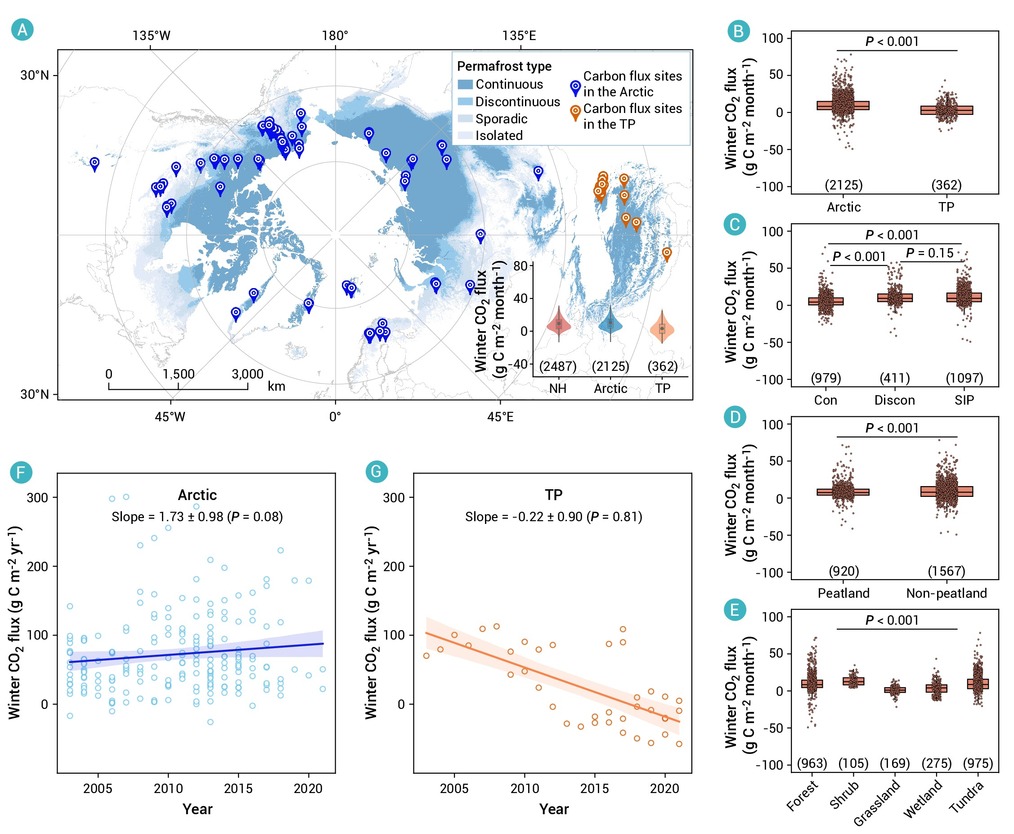
Figure 1.
Distribution of winter CO2 flux sites and temporal trends of winter CO2 emissions in the Northern Hemisphere (NH) permafrost regions
-
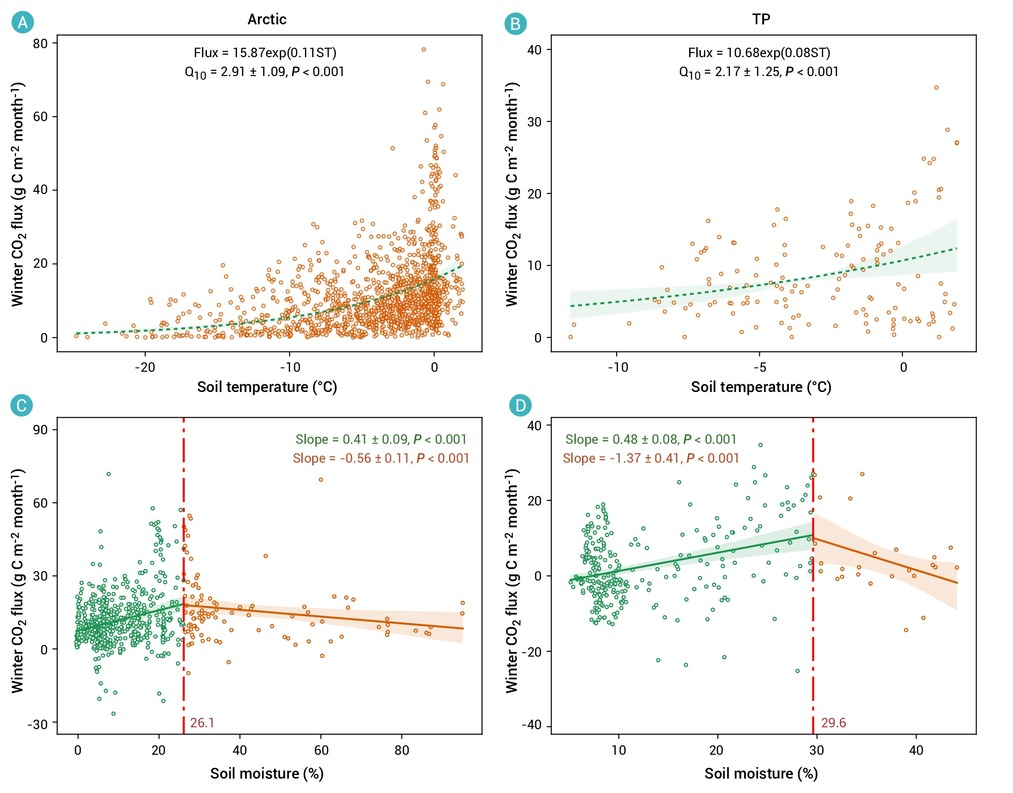
Figure 2.
Relationships between winter CO2 emissions and soil hydrothermal conditions
-
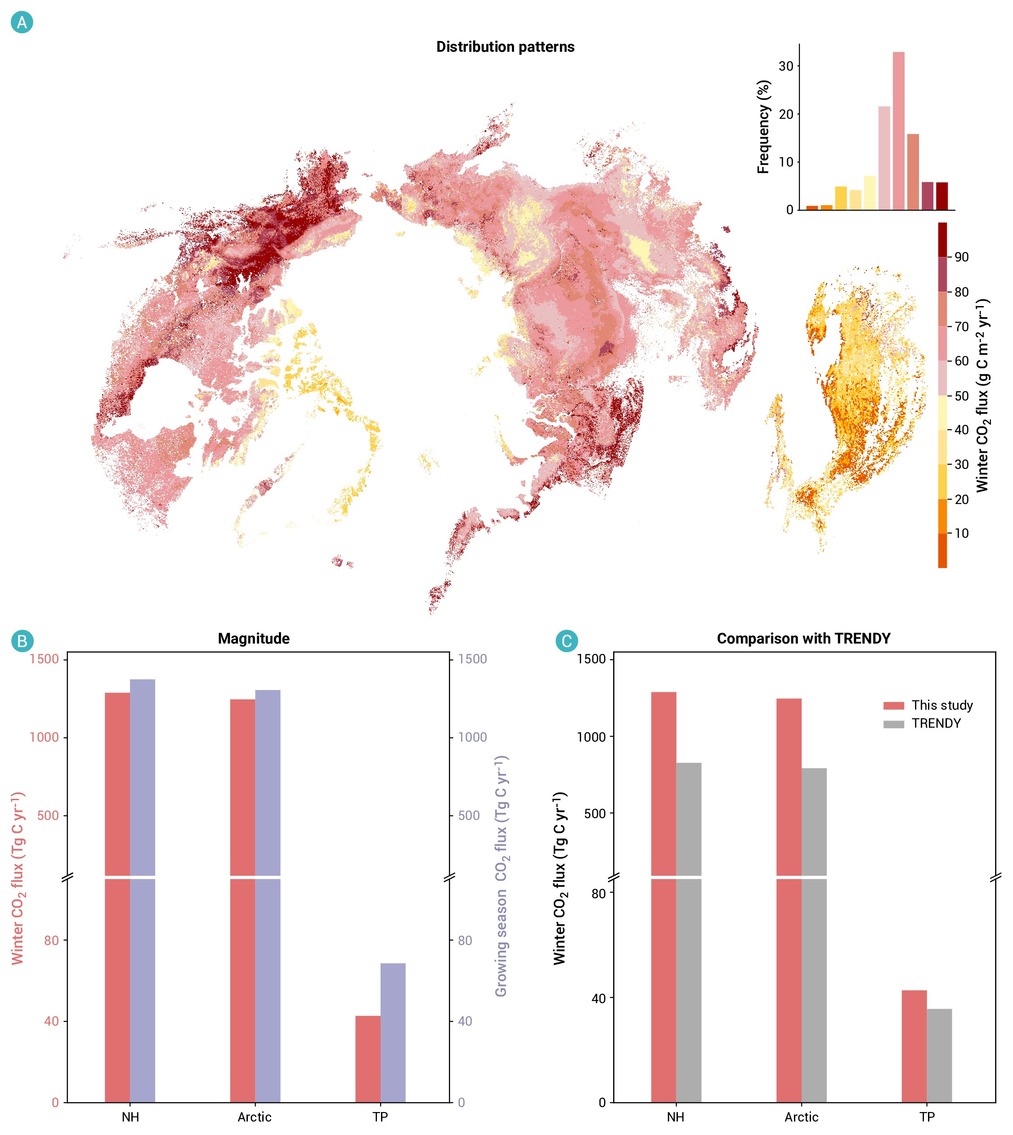
Figure 3.
Hemispherical scale estimation of current winter CO2 emissions from the permafrost regions
-
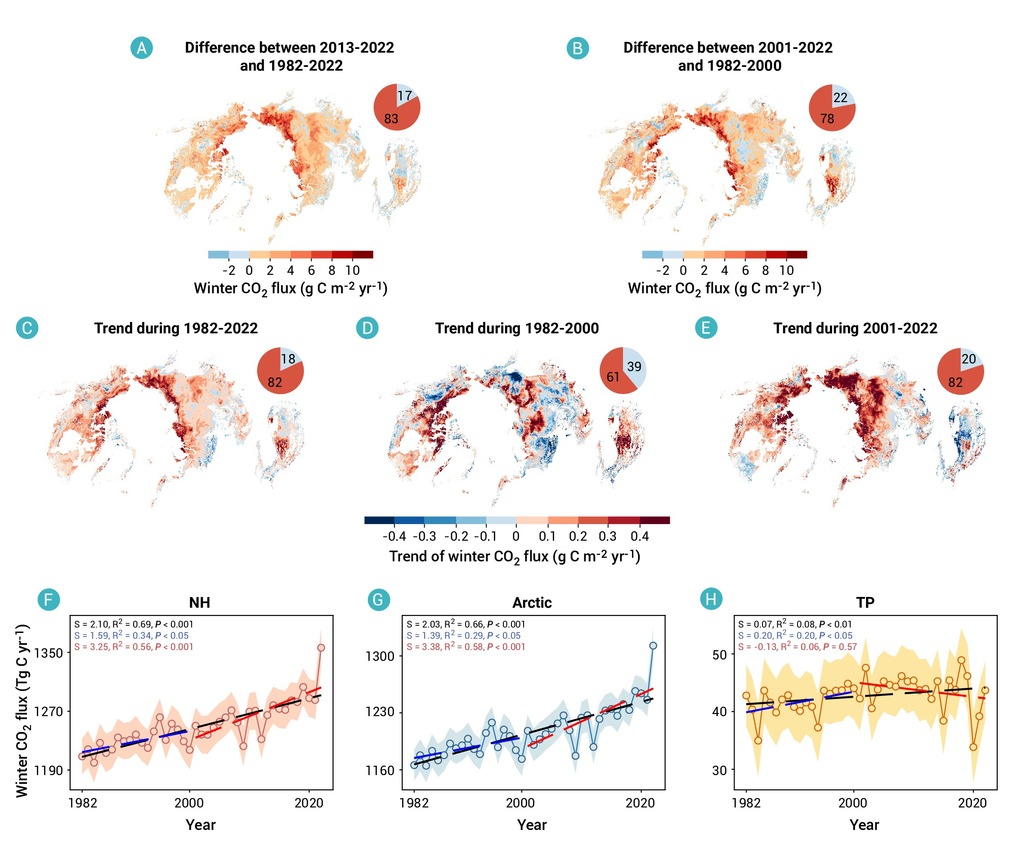
Figure 4.
Changes in winter CO2 emissions during 1982-2022
-
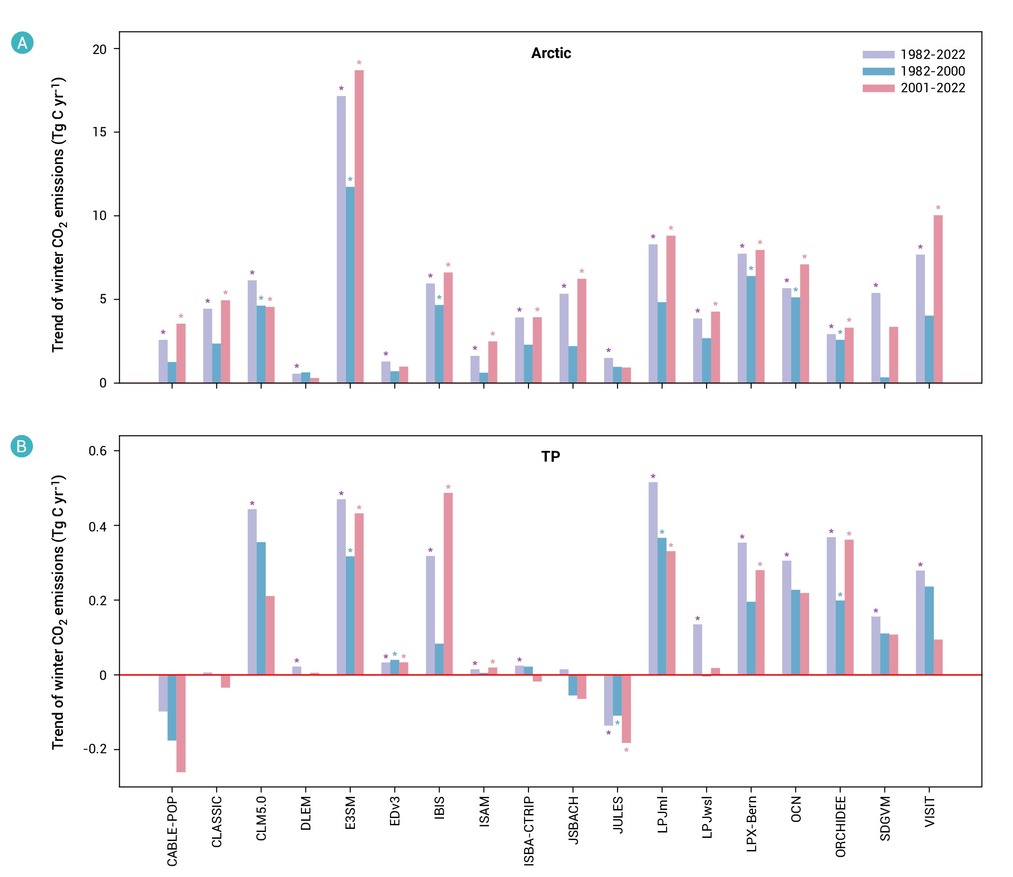
Figure 5.
Temporal trends of winter CO2 emissions from DGVMs during different time periods
-
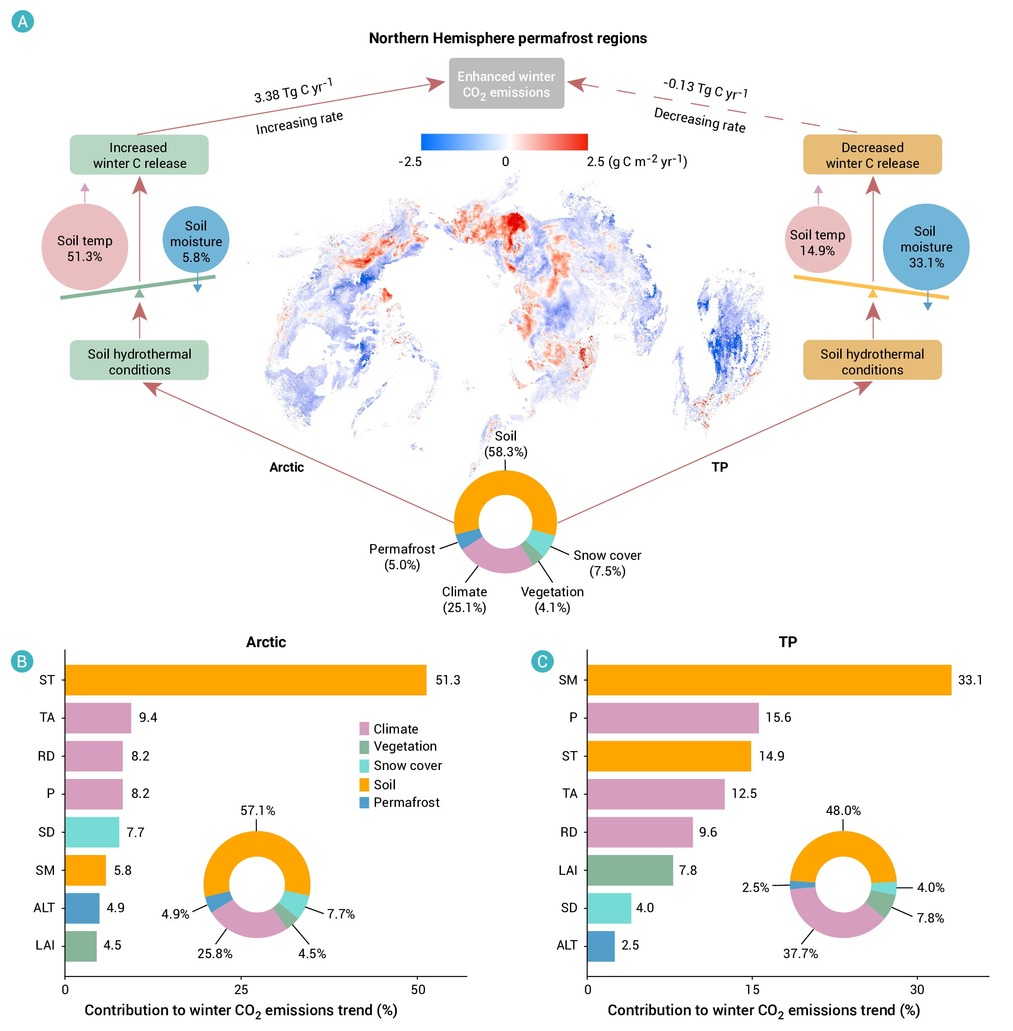
Figure 6.
The driving mechanisms and contributions of environmental factors to winter CO2 emissions trend during 2001-2022
