
Soluble organic matter evolution during aqueous alteration in carbonaceous chondrites
-
GRAPHICAL ABSTRACT

 DownLoad:
Full size image
DownLoad:
Full size image
-
PUBLIC SUMMARY
-
We analyzed the composition, abundance and distribution of soluble organic matter (SOM) in meteorites.
Desorption electrospray ionization mass spectrometry imaging mapped SOM at ~10 μm resolution.
SOM is distributed in phyllosilicates and concentrated in fine-grained rims of chondrules.
Parent-body source and aqueous alteration jointly shape SOM synthesis and preservation.
-
-
ABSTRACT
Soluble organic matter (SOM) in meteorites has been suggested to play a significant role in the emergence of early life on Earth. However, the mechanisms that govern its evolution remain unclear. Here, we employed an integrated analytical approach encompassing desorption electrospray ionization high-resolution mass spectrometry (DESI-HRMS) imaging and ultra-high-performance liquid chromatography–high-resolution mass spectrometry (UHPLC-HRMS) to comprehensively analyze the composition, abundance, and spatial distribution of methanol-extractable SOM in nine meteorites with different alteration histories. The results show that SOM is preferentially associated with phyllosilicates but depleted in carbonate phases. A positive correlation is observed between the abundance of SOM and the degree of aqueous alteration in CM2 chondrites, although highly altered CI1 chondrites deviate from this trend. Additionally, the composition of SOM appears to be modulated by fluid redox conditions and heliocentric distance, as indicated by systematic differences in molecular features among chondrites from different parent bodies. The findings suggest that the evolution of SOM is governed by the coupled influences of the Solar System environment, parent-body processes, and microscale mineral phases, with aqueous alteration and fluid activity serving as the central driving forces. -

-
REFERENCES
[1] Schmitt-Kopplin P., Gabelica Z., Gougeon R. D., et al. (2010). High molecular diversity of extraterrestrial organic matter in Murchison meteorite revealed 40 years after its fall. Proc. Natl. Acad. Sci. USA. 107:2763−2768. DOI:10.1073/pnas.0912157107 [2] Chan Q. H. S., Nomura H., Kebukawa Y., et al. (2025). Organic matter - From birth in the interstellar medium and beyond to incorporation and processing in planetary building blocks. In Reference Module in Earth Systems and Environmental Sciences (Elsevier), pp:147-202. DOI:10.1016/b978-0-323-99762-1.00145-5 [3] Naraoka H., Takano Y., Dworkin J. P., et al. (2023). Soluble organic molecules in samples of the carbonaceous asteroid (162173) Ryugu. Science 379:1−11. DOI:10.1126/science.abn9033 [4] Glavin D. P., Dworkin J. P., Alexander C. M. O., et al. (2025). Abundant ammonia and nitrogen-rich soluble organic matter in samples from asteroid (101955) Bennu. Nat. Astron. 9:199−210. DOI:10.1038/s41550-024-02472-9 [5] Yabuta H., Cody G. D., Engrand C., et al. (2023). Macromolecular organic matter in samples of the asteroid (162173) Ryugu. Science 379:1−13. DOI:10.1126/science.abn9057 [6] Pizzarello S., Davidowski S. K., Holland G. P., et al. (2013). Processing of meteoritic organic materials as a possible analog of early molecular evolution in planetary environments. Proc. Natl. Acad. Sci. USA 110:15614−15619. DOI:10.1073/pnas.1309113110 [7] Ehrenfreund P. and Cami J. (2010). Cosmic carbon chemistry: From the interstellar medium to the early Earth. Cold Spring Harb. Perspect. Biol. 2:a002097. DOI:10.1101/cshperspect.a002097 [8] Oba Y., Takano Y., Furukawa Y., et al. (2022). Identifying the wide diversity of extraterrestrial purine and pyrimidine nucleobases in carbonaceous meteorites. Nat. Commun. 13:1−10. DOI:10.1038/s41467-022-29612-x [9] Herd C. D., Blinova A., Simkus D. N., et al. (2011). Origin and evolution of prebiotic organic matter as inferred from the Tagish Lake meteorite. Science 332:1304−1307. DOI:10.1126/science.1203290 [10] Ehrenfreund P., Glavin D. P., Botta O., et al. (2001). Extraterrestrial amino acids in Orgueil and Ivuna: tracing the parent body of CI type carbonaceous chondrites. Proc. Natl. Acad. Sci. USA 98:2138−2141. DOI:10.1073/pnas.051502898 [11] Cooper G., Kimmich N., Belisle W., et al. (2001). Carbonaceous meteorites as a source of sugar-related organic compounds for the early Earth. Nature 414:879−883. DOI:10.1038/414879a [12] Furukawa Y., Chikaraishi Y., Ohkouchi N., et al. (2019). Extraterrestrial ribose and other sugars in primitive meteorites. Proc. Natl. Acad. Sci. USA 116:24440−24445. DOI:10.1073/pnas.1907169116 [13] Furukawa Y., Sunami S., Takano Y., et al. (2025). Bio-essential sugars in samples from asteroid Bennu. Nat. Geosci. 19:19−24. DOI:10.1038/s41561-025-01838-6 [14] Potiszil C., Yamanaka M., Sakaguchi C., et al. (2023). Organic matter in the asteroid Ryugu: What we know so far. Life (Basel) 13:1−13. DOI:10.3390/life13071448 [15] Bernstein M. P., Dworkin J. P., Sandford S. A., et al. (2002). Racemic amino acids from the ultraviolet photolysis of interstellar ice analogues. Nature 416:401−403. DOI:10.1038/416401a [16] Javelle T., Ruf A., Bouquet A., et al. (2024). Impact of environmental conditions on organic matter in astrophysical ice analogues. Mon. Not. Roy. Astron. Soc. 534:2305−2313. DOI:10.1093/mnras/stae2186 [17] Danger G., Vinogradoff V., Matzka M., et al. (2021). Exploring the link between molecular cloud ices and chondritic organic matter in laboratory. Nat. Commun. 12:1−9. DOI:10.1038/s41467-021-23895-2 [18] Taniguchi K., Gorai P. and Tan J. C. (2024). Carbon-chain chemistry in the interstellar medium. Astrophys. Space Sci. 369:1−41. DOI:10.1007/s10509-024-04292-9 [19] Ligterink N. F. W., Pinilla P., van der Marel N., et al. (2024). The rapid formation of macromolecules in irradiated ice of protoplanetary disk dust traps. Nat. Astron. 8:1257−1263. DOI:10.1038/s41550-024-02334-4 [20] Stalport F., Rouquette L., Poch O., et al. (2019). The photochemistry on space station (PSS) experiment: Organic matter under Mars-like surface UV radiation conditions in low Earth orbit. Astrobiology 19:1037−1052. DOI:10.1089/ast.2018.2001 [21] Portugal W., Pilling S., Boduch P., et al. (2014). Radiolysis of amino acids by heavy and energetic cosmic ray analogues in simulated space environments: α-glycine zwitterion form. Mon. Not. Roy. Astron. Soc. 441:3209−3225. DOI:10.1093/mnras/stu656 [22] Micelotta E. R., Jones A. P. and Tielens A. G. G. M. (2010). Polycyclic aromatic hydrocarbon processing in interstellar shocks. Astron. Astrophys. 510:1−19. DOI:10.1051/0004-6361/200911682 [23] Peterson E., Horz F. and Chang S. (1997). Modification of amino acids at shock pressures of 3.5 to 32 GPa. Geochim. Cosmochim. Acta 61:3937-3950. DOI:10.1016/s0016-7037(97)00192-0 [24] Laurent B., Maillard J., Afonso C., et al. (2022). Diversity of chondritic organic matter probed by ultra-high resolution mass spectrometry. Geochem. Perspect. Lett. 22:31−35. DOI:10.7185/geochemlet.2224 [25] Potiszil C., Tanaka R., Ota T., et al. (2020). Concentration of meteoritic free organic matter by fluid transport and adsorption. Geochem. Perspect. Lett. 13:30−35. DOI:10.7185/geochemlet.2010 [26] Schmitt-Kopplin P., Hertkorn N., Harir M., et al. (2023). Soluble organic matter Molecular atlas of Ryugu reveals cold hydrothermalism on C-type asteroid parent body. Nat. Commun. 14:1−9. DOI:10.1038/s41467-023-42075-y [27] Hashiguchi M. and Naraoka H. (2018). High‐mass resolution molecular imaging of organic compounds on the surface of Murchison meteorite. Meteorit. Planet. Sci. 54:452−468. DOI:10.1111/maps.13211 [28] Hashiguchi M., Aoki D., Fukushima K., et al. (2023). The spatial distribution of soluble organic matter and their relationship to minerals in the asteroid (162173) Ryugu. Earth Planets. Space. 75:1−25. DOI:10.1186/s40623-023-01792-w [29] Naraoka H. and Hashiguchi M. (2018). In situ organic compound analysis on a meteorite surface by desorption electrospray ionization coupled with an Orbitrap mass spectrometer. Rapid Commun. Mass Spectrom. 32:959−964. DOI:10.1002/rcm.8121 [30] Nakamura E., Kobayashi K., Tanaka R., et al. (2022). On the origin and evolution of the asteroid Ryugu: A comprehensive geochemical perspective. Proc. Jpn. Acad. Ser. B Phys. Biol. Sci. 98:227−282. DOI:10.2183/pjab.98.015 [31] Dong M., Yang W., Hao J., et al. (2025). Cross-scale multimodal imaging for organic matter in extraterrestrial samples. Anal. Chem. 97:8258−8267. DOI:10.1021/acs.analchem.4c05804 [32] Perez de Souza L., Alseekh S., Scossa F., et al. (2021). Ultra-high-performance liquid chromatography high-resolution mass spectrometry variants for metabolomics research. Nat. Methods 18:733−746. DOI:10.1038/s41592-021-01116-4 [33] Alseekh S., Aharoni A., Brotman Y., et al. (2021). Mass spectrometry-based metabolomics: A guide for annotation, quantification and best reporting practices. Nat. Methods 18:747−756. DOI:10.1038/s41592-021-01197-1 [34] Johnson C. H., Ivanisevic J. and Siuzdak G. (2016). Metabolomics: Beyond biomarkers and towards mechanisms. Nat. Rev. Mol. Cell Biol. 17:451−459. DOI:10.1038/nrm.2016.25 [35] Naraoka H., Yamashita Y., Yamaguchi M., et al. (2017). Molecular evolution of N-containing cyclic compounds in the parent body of the Murchison meteorite. ACS Earth Space Chem. 1:540−550. DOI:10.1021/acsearthspacechem.7b00058 [36] Wolters C., Vuitton V., Orthous-Daunay F.-R., et al. (2023). Molecular screening with liquid chromatography coupled to utra-high-resolution Mass spectrometry: Chromatographic methods and data treatment for application to complex organic matter in astrophysical materials. ACS Earth Space Chem. 7:1661−1674. DOI:10.1021/acsearthspacechem.3c00069 [37] DiDonato N., Rivas-Ubach A., Kew W., et al. (2024). Improved characterization of soil organic matter by integrating FT-ICR MS, liquid xhromatography tandem Mass spectrometry, and molecular networking: A case study of root litter decay under drought conditions. Anal. Chem. 96:11699−11706. DOI:10.1021/acs.analchem.4c00184 [38] Pieczonka S. A., Thomas M. J., Schmitt-Kopplin P., et al. (2025). Harmonization of FT-ICR-MS instruments for interoperable multi-laboratory comprehensive compositional profiling. Anal. Chem. 97:8491−8498. DOI:10.1021/acs.analchem.5c00488 [39] Chan Q. H. S., Zolensky M. E., Kebukawa Y., et al. (2018). Organic matter in extraterrestrial water-bearing salt crystals. Sci. Adv. 4:1−10. DOI:10.1126/sciadv.aao3521 [40] Jones C. L. and Brearley A. J. (2006). Experimental aqueous alteration of the Allende meteorite under oxidizing conditions: Constraints on asteroidal alteration. Geochim. Cosmochim. Acta 70:1040−1058. DOI:10.1016/j.gca.2005.10.029 [41] Wang Y. and Hsu W. (2010). Petrology and mineralogy of the Ningqiang carbonaceous chondrite. Meteorit. Planet. Sci. 44:763−780. DOI:10.1111/j.1945-5100.2009.tb00767.x [42] Rubin A. E., Trigo-Rodríguez J. M., Huber H., et al. (2007). Progressive aqueous alteration of CM carbonaceous chondrites. Geochim. Cosmochim. Acta 71:2361−2382. DOI:10.1016/j.gca.2007.02.008 [43] Lee M. R., Daly L., Floyd C., et al. (2021). CM carbonaceous chondrite falls and their terrestrial alteration. Meteorit. Planet. Sci. 56:34−48. DOI:10.1111/maps.13607 [44] Rudraswami N. G., Naik A. K., Tripathi R. P., et al. (2019). Chemical, isotopic and amino acid composition of Mukundpura CM2.0 (CM1) chondrite: Evidence of parent body aqueous alteration. Geosci. Front. 10:495-504. DOI:10.1016/j.gsf.2018.02.001. [45] Schrader D. L., Davidson J., McCoy T. J., et al. (2021). The Fe/S ratio of pyrrhotite group sulfides in chondrites: An indicator of oxidation and implications for return samples from asteroids Ryugu and Bennu. Geochim. Cosmochim. Acta 303:66−91. DOI:10.1016/j.gca.2021.03.019 [46] Marrocchi Y., Avice G. and Barrat J.-A. (2021). The Tarda meteorite: A window into the formation of D-type asteroids. Astrophys. J. Lett. 913:1−19. DOI:10.3847/2041-8213/abfaa3 [47] Schrader D. L., Cloutis E. A., Applin D. M., et al. (2024). Tarda and Tagish lake: Samples from the same outer solar system asteroid and implications for D- and P-type asteroids. Geochim. Cosmochim. Acta 380:48−70. DOI:10.1016/j.gca.2024.07.007 [48] Lee M. R. and Nicholson K. (2009). Ca-carbonate in the Orgueil (CI) carbonaceous chondrite: Mineralogy, microstructure and implications for parent body history. Earth Planet. Sci. Lett. 280:268−275. DOI:10.1016/j.jpgl.2009.01.038 [49] Gounelle M. and Zolensky M. E. (2014). The Orgueil meteorite: 150 years of history. Meteorit. Planet. Sci. 49:1769−1794. DOI:10.1111/maps.12351 [50] Jenkins L. E., Lee M. R., Daly L., et al. (2023). Winchcombe: An example of rapid terrestrial alteration of a CM chondrite. Meteorit. Planet. Sci. 59:988−1005. DOI:10.1111/maps.13949 [51] Kebukawa Y., Mathurin J., Dartois E., et al. (2023). Complex mixture of organic matter in a xenolithic clast from the Zag meteorite revealed by coordinated analyses using AFM-IR, NanoSIMS and STXM/XANES. Icarus 400:1−12. DOI:10.1016/j.icarus.2023.115582 [52] Towers M. W., DeHoog R. J., Godfrey T. M., et al. (2026). Development of low-flow high-resolution desorption eectrospray ionization Mass spectrometry imaging. J. Am. Soc. Mass Spectrom. 37:152−162. DOI:10.1021/jasms.5c00279 [53] Johnson W. J., Palmer M. E., Claude E., et al. (2024). Combining enhanced resolving power with duty cycle Iimprovements on a multi-reflecting time-of-Flight Mass spectrometer. J. Am. Soc. Mass Spectrom. 35:2073−2081. DOI:10.1021/jasms.4c00122 [54] Liu H., Huang S., Yang L., et al. (2026). The application of desorption electrospray ionization mass spectrometry and mass spectrometry imaging in metabolomics, lipidomics and proteomics analysis. Talanta 297:128611. DOI:10.1016/j.talanta.2025.128611 [55] Pereira I., Ramalho R. R. F., Maciel L. I. L., et al. (2022). Directly mapping the spatial distribution of organic compounds on mineral rock surfaces by DESI and LAESI Mass spectrometry imaging. Anal. Chem. 94:13691−13699. DOI:10.1021/acs.analchem.2c01154 [56] Iqfath M., Wali S. N., Amer S., et al. (2024). Nanospray desorption electrospray ionization Mass spectrometry imaging (nano-DESI MSI): A Tutorial Review. ACS Meas. Sci. Au 4:475−487. DOI:10.1021/acsmeasuresciau.4c00028 [57] Guo J. and Huan T. (2020). Comparison of full-scan, data-dependent, and data-independent acquisition modes in liquid chromatography-Mass spectrometry based untargeted metabolomics. Anal. Chem. 92:8072−8080. DOI:10.1021/acs.analchem.9b05135 [58] Broeckling C. D., Beger R. D., Cheng L. L., et al. (2023). Current practices in LC-MS untargeted metabolomics: A scoping review on the use of pooled quality control samples. Anal. Chem. 95:18645−18654. DOI:10.1021/acs.analchem.3c02924 [59] Merel S. (2023). Critical assessment of the Kendrick mass defect analysis as an innovative approach to process high resolution mass spectrometry data for environmental applications. Chemosphere 313:137443. DOI:10.1016/j.chemosphere.2022.137443 [60] Wolf S., Schmidt S., Muller-Hannemann M., et al. (2010). In silico fragmentation for computer assisted identification of metabolite mass spectra. BMC Bioinformatics 11:148. DOI:10.1186/1471-2105-11-148 [61] Miller M. J., Kennedy A. D., Eckhart A. D., et al. (2015). Untargeted metabolomic analysis for the clinical screening of inborn errors of metabolism. J. Inherit. Metab. Dis. 38:1029−1039. DOI:10.1007/s10545-015-9843-7 [62] Garvie L. A. J., Trif L., Cotto-Figueroa D., et al. (2024). High surface area and interconnected nanoporosity of clay-rich astromaterials. Sci. Rep. 14:1−11. DOI:10.1038/s41598-024-61114-2 [63] Suttle M. D., King A. J., Schofield P. F., et al. (2021). The aqueous alteration of CM chondrites, a review. Geochim. Cosmochim. Acta 299:219−256. DOI:10.1016/j.gca.2021.01.014 [64] Milesi V., McCollom T. M. and Guyot F. (2016). Thermodynamic constraints on the formation of condensed carbon from serpentinization fluids. Geochim. Cosmochim. Acta 189:391−403. DOI:10.1016/j.gca.2016.06.006 [65] Kleber M., Bourg I. C., Coward E. K., et al. (2021). Dynamic interactions at the mineral–organic matter interface. Nat. Rev. Earth Environ. 2:402−421. DOI:10.1038/s43017-021-00162-y [66] Erastova V., Degiacomi M. T., G. Fraser, D., et al. (2017). Mineral surface chemistry control for origin of prebiotic peptides. Nat. Commun. 8:1−9. DOI:10.1038/s41467-017-02248-y [67] Viennet J. C., Roskosz M., Nakamura T., et al. (2023). Interaction between clay minerals and organics in asteroid Ryugu. Geochem. Perspect. Lett. 25:8−12. DOI:10.7185/geochemlet.2307 [68] Vinogradoff V., Le Guillou C., Bernard S., et al. (2020). Influence of phyllosilicates on the hydrothermal alteration of organic matter in asteroids: Experimental perspectives. Geochim. Cosmochim. Acta 269:150−166. DOI:10.1016/j.gca.2019.10.029 [69] He Y. Y., Bernard S., Lecasble M., et al. (2024). The evolution of amino acids under asteroidal aqueous alteration. Geochim. Cosmochim. Acta 387:98−110. DOI:10.1016/j.gca.2024.09.035 [70] Zanetta P. M., Le Guillou C., Leroux H., et al. (2022). Processes and temperatures of FGR formation in chondrites. Geochim. Cosmochim. Acta 319:94−117. DOI:10.1016/j.gca.2021.11.019 [71] Hanna R. D. and Ketcham R. A. (2018). Evidence for accretion of fine-grained rims in a turbulent nebula for CM Murchison. Earth Planet. Sci. Lett. 481:201−211. DOI:10.1016/j.jpgl.2017.10.029 [72] Pinto G. A., Marrocchi Y., Jacquet E., et al. (2022). Formation of chondrule fine‐grained rims from local nebular reservoirs. Meteorit. Planet. Sci. 57:1004−1017. DOI:10.1111/maps.13812 [73] Mouti Al‐Hashimi X., Davidson J., Schrader D. L., et al. (2023). Fine‐grained chondrule rims in Mighei‐like carbonaceous chondrites: Evidence for a nebular origin and modification by impacts and recurrent solar radiation heating. Meteorit. Planet. Sci. 59:789−808. DOI:10.1111/maps.14076 [74] Zanetta P. M., Leroux H., Le Guillou C., et al. (2021). Nebular thermal processing of accretionary fine-grained rims in the Paris CM chondrite. Geochim. Cosmochim. Acta 295:135−154. DOI:10.1016/j.gca.2020.12.015 [75] Bland P. A. and Travis B. J. (2017). Giant convecting mud balls of the early solar system. Sci. Adv. 3:1−10. DOI:10.1126/sciadv.1602514 [76] Bland P. A., Jackson M. D., Coker R. F., et al. (2009). Why aqueous alteration in asteroids was isochemical: High porosity ≠ high permeability. Earth Planet. Sci. Lett. 287:559−568. DOI:10.1016/j.jpgl.2009.09.004 [77] Muneishi K. and Naraoka H. (2021). Interactions between organic compounds and olivine under aqueous conditions: A potential role for organic distribution in carbonaceous chondrites. Meteorit. Planet. Sci. 56:195−205. DOI:10.1111/maps.13614 [78] Fujiya W., Sugiura N., Hotta H., et al. (2012). Evidence for the late formation of hydrous asteroids from young meteoritic carbonates. Nat. Commun. 3:1−6. DOI:10.1038/ncomms1635 [79] Yamaguchi A., Tomioka N., Ito M., et al. (2023). Insight into multi-step geological evolution of C-type asteroids from Ryugu particles. Nat. Astron. 7:398−405. DOI:10.1038/s41550-023-01925-x [80] Tyra M. A., Farquhar J., Guan Y., et al. (2012). An oxygen isotope dichotomy in CM2 chondritic carbonates—A SIMS approach. Geochim. Cosmochim. Acta 77:383−395. DOI:10.1016/j.gca.2011.10.003 [81] Naraoka H., Hashiguchi M. and Okazaki R. (2022). Soluble Sulfur-Bearing Organic Compounds in Carbonaceous Meteorites: Implications for Chemical Evolution in Primitive Asteroids. ACS Earth Space Chem. 7:41−48. DOI:10.1021/acsearthspacechem.2c00157 [82] Zherebker A., Kostyukevich Y., Volkov D. S., et al. (2021). Speciation of organosulfur compounds in carbonaceous chondrites. Sci. Rep. 11:1−13. DOI:10.1038/s41598-021-86576-6 [83] Eberlin L. S., Ferreira C. R., Dill A. L., et al. (2011). Desorption electrospray ionization mass spectrometry for lipid characterization and biological tissue imaging. Biochim. Biophys. Acta. 1811:946−960. DOI:10.1016/j.bbalip.2011.05.006 [84] Lee M. R., Alexander C. M. O., Bischoff A., et al. (2025). Low-Temperature Aqueous Alteration of Chondrites. Space. Sci. Rev. 221:1−59. DOI:10.1007/s11214-024-01132-8 [85] Greenwood R. C., Franchi I. A., Findlay R., et al. (2022). Oxygen isotope evidence from Ryugu samples for early water delivery to Earth by CI chondrites. Nat. Astron. 7:29−38. DOI:10.1038/s41550-022-01824-7 [86] Sutton S., Alexander C. M. O. D., Bryant A., et al. (2017). The bulk valence state of Fe and the origin of water in chondrites. Geochim. Cosmochim. Acta 211:115−132. DOI:10.1016/j.gca.2017.05.021 [87] Tanaka R., Ratnayake D. M., Ota T., et al. (2024). Unraveling the Cr Isotopes of Ryugu: An Accurate Aqueous Alteration Age and the Least Thermally Processed Solar System Material. Astrophys. J. 965:1−11. DOI:10.3847/1538-4357/ad276a [88] Shollenberger Q. R., Render J., Wimpenny J., et al. (2025). Elemental and isotopic signatures of Asteroid Ryugu support three early Solar System reservoirs. Earth Planet. Sci. Lett. 664:1−8. DOI:10.1016/j.jpgl.2025.119443 [89] Yokoyama T., Wadhwa M., Iizuka T., et al. (2023). Water circulation in Ryugu asteroid affected the distribution of nucleosynthetic isotope anomalies in returned sample. Sci. Adv. 9:1−11. DOI:10.1126/sciadv.adi7048 [90] Potiszil C., Ota T., Yamanaka M., et al. (2025). Meteoritic and asteroidal amino acid heterogeneity: Implications for planetesimal alteration conditions and sample return missions. Earth Planet. Sci. Lett. 653:1−12. DOI:10.1016/j.jpgl.2025.119205 [91] Naraoka H. and Hashiguchi M. (2019). Distinct distribution of soluble N-heterocyclic compounds between CM and CR chondrites. Geochem. J. 53:33−40. DOI:10.2343/geochemj.2.0546 [92] Li Y., Kurokawa H., Sekine Y., et al. (2023). Aqueous breakdown of aspartate and glutamate to n-omega-amino acids on the parent bodies of carbonaceous chondrites and asteroid Ryugu. Sci. Adv. 9:1−15. DOI:10.1126/sciadv.adh7845 [93] Amano K., Viennet J.-C., Beck P., et al. (2025). Updating the Urey-Craig diagram: The iron redox states of the building blocks of the outer solar system. Earth Planet. Sci. Lett. 669:1−13. DOI:10.1016/j.jpgl.2025.119587 [94] Choi B.-G. and Wasson J. T. (2003). Microscale oxygen isotopic exchange and magnetite formation in the Ningqiang anomalous carbonaceous chondrite. Geochim. Cosmochim. Acta 67:4655−4660. DOI:10.1016/s0016-7037(03)00390-9 [95] DeMeo F. E. and Carry B. (2014). Solar system evolution from compositional mapping of the asteroid belt. Nature 505:629−634. DOI:10.1038/nature12908 [96] Fujiya W., Hoppe P., Ushikubo T., et al. (2019). Migration of D-type asteroids from the outer solar system inferred from carbonate in meteorites. Nat. Astron. 3:910−915. DOI:10.1038/s41550-019-0801-4 [97] DeMeo F. E., Binzel R. P., Slivan S. M., et al. (2009). An extension of the Bus asteroid taxonomy into the near-infrared. Icarus 202:160−180. DOI:10.1016/j.icarus.2009.02.005 [98] Vilas F. and Smith B. A. (1985). Reflectance spectrophotometry (~0.5–1.0 μm) of outer-belt asteroids: Implications for primitive, organic solar system material. Icarus 64:503-516. DOI:10.1016/0019-1035(85)90071-5 [99] Mimura K., Okumura F. and Harada N. (2020). Constraints on the thermal history of the Allende (CV3) meteorite by gradual and stepwise pyrolyses of insoluble organic matter. Geochem. J. 54:255−265. DOI:10.2343/geochemj.2.0589 [100] Cronin J. R. and Moore C. B. (1971). Amino Acid analyses of the murchison, murray, and allende carbonaceous chondrites. Science 172:1327−1329. DOI:10.1126/science.172.3990.1327 [101] Nakamura T., Matsumoto M., Amano K., et al. (2023). Formation and evolution of carbonaceous asteroid Ryugu: Direct evidence from returned samples. Science 379:1−15. DOI:10.1126/science.abn8671 [102] Furukawa Y., Saigusa D., Kano K., et al. (2023). Distributions of CHN compounds in meteorites record organic syntheses in the early solar system. Sci. Rep. 13:1−12. DOI:10.1038/s41598-023-33595-0 [103] McCollom T. M. (2013). The influence of minerals on decomposition of the n-alkyl-α-amino acid norvaline under hydrothermal conditions. Geochim. Cosmochim. Acta 104:330−357. DOI:10.1016/j.gca.2012.11.008 [104] He Y., Rémusat L., Lecasble M., et al. (2024). Evolution of Nucleobases under asteroidal aqueous alteration. ACS Earth Space Chem. 8:1820−1831. DOI:10.1021/acsearthspacechem.4c00132 [105] Fujiya W., Kawasaki N., Nagashima K., et al. (2023). Carbonate record of temporal change in oxygen fugacity and gaseous species in asteroid Ryugu. Nat. Geosci. 16:675−682. DOI:10.1038/s41561-023-01226-y [106] Munoz Caro G. M., Carrascosa de Lucas H. and Martin-Domenech R. (2025). Photochemistry of interstellar ice forming complex organic molecules. Nat. Rev. Chem. 9:537−552. DOI:10.1038/s41570-025-00729-z [107] Bose M., Root R. A. and Pizzarello S. (2017). A XANES and Raman investigation of sulfur speciation and structural order in Murchison and Allende meteorites. Meteorit. Planet. Sci. 52:546−559. DOI:10.1111/maps.12811 [108] Yabuta H., Williams L. B., Cody G. D., et al. (2010). The insoluble carbonaceous material of CM chondrites: A possible source of discrete organic compounds under hydrothermal conditions. Meteorit. Planet. Sci. 42:37−48. DOI:10.1111/j.1945-5100.2007.tb00216.x [109] Isa J., Orthous-Daunay F.-r., Beck P., et al. (2021). Aqueous alteration on asteroids simplifies soluble organic matter mixtures. Astrophys. J. Lett. 920:1−14. DOI:10.3847/2041-8213/ac2b34 [110] Chan Q. H. S., Nakato A., Kebukawa Y., et al. (2018). Heating experiments of the Tagish lake meteorite: Investigation of the effects of short‐term heating on chondritic organics. Meteorit. Planet. Sci. 54:104−125. DOI:10.1111/maps.13193 [111] Danger G., Ruf A., Javelle T., et al. (2022). The transition from soluble to insoluble organic matter in interstellar ice analogs and meteorites. Astron. Astrophys. 667:1−15. DOI:10.1051/0004-6361/202244191 [112] Kipfer K. A., Ligterink N. F. W., Riebe M. E. I., et al. (2025). The formation of organic macromolecular matter from the electron irradiation of simple carbon-containing ices. Astron. Astrophys. 702:1−12. DOI:10.1051/0004-6361/202555840 [113] Schuepfer D. B., Badaczewski F., Guerra-Castro J. M., et al. (2020). Assessing the structural properties of graphitic and non-graphitic carbons by Raman spectroscopy. Carbon 161:359−372. DOI:10.1016/j.carbon.2019.12.094 -
ABOUT THIS ARTICLE
Cite this article:
Dong M., Yang W., Hao J., et al. (2026). Soluble organic matter evolution during aqueous alteration in carbonaceous chondrites. The Innovation Geoscience 4:100199. https://doi.org/10.59717/j.xinn-geo.2026.100199
Welcome!
To request copyright permission to republish or share portions of our works, please visit Copyright Clearance Center's (CCC) Marketplace website at marketplace.copyright.com.
Export File
Citation
Dong M., Yang W., Hao J., et al. (2026). Soluble organic matter evolution during aqueous alteration in carbonaceous chondrites. The Innovation Geoscience 4:100199. https://doi.org/10.59717/j.xinn-geo.2026.100199

Format
Content
-
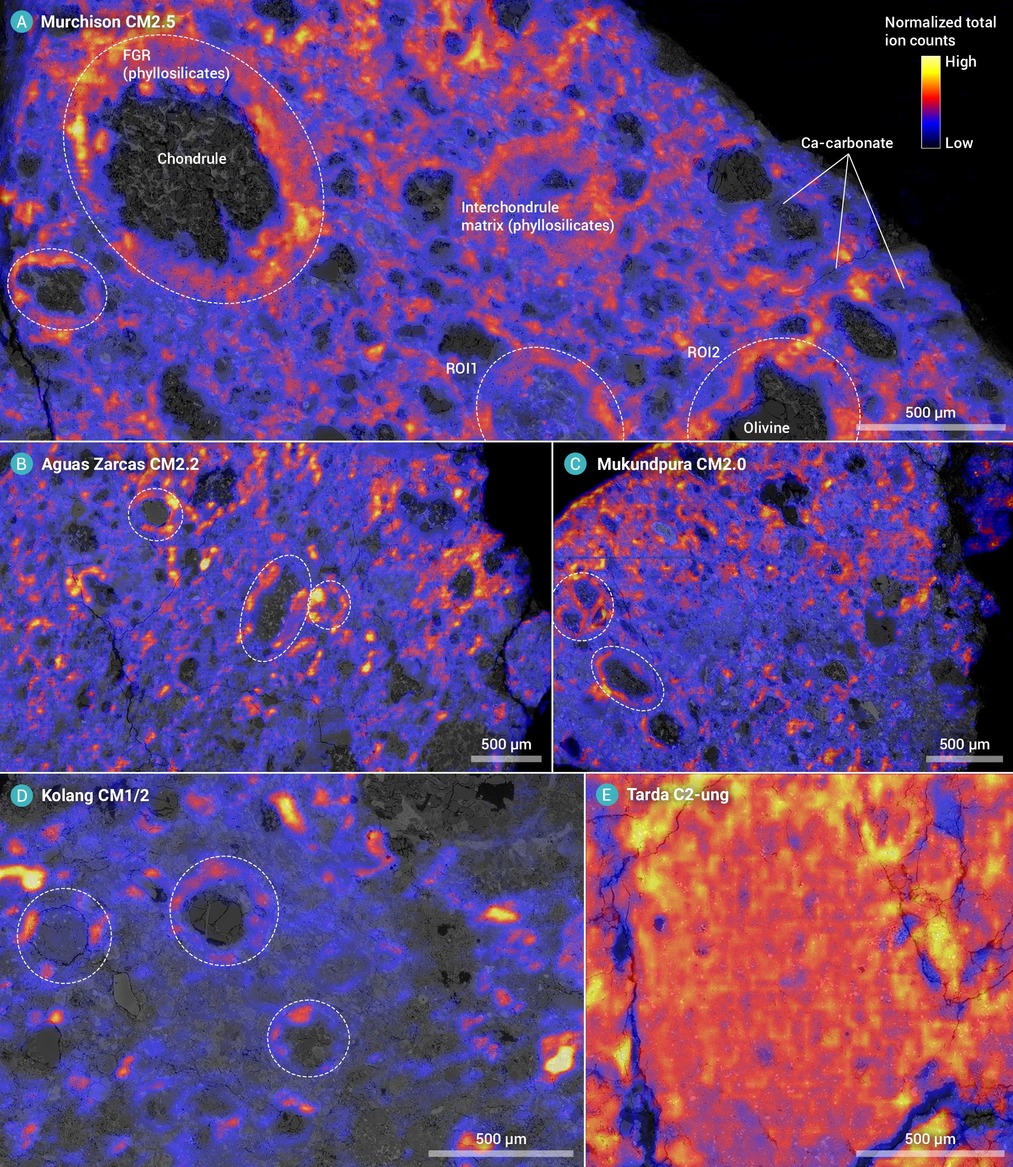
Figure 1.
Spatial distribution of SOM in CM chondrites and Tarda (C2-ung)
-
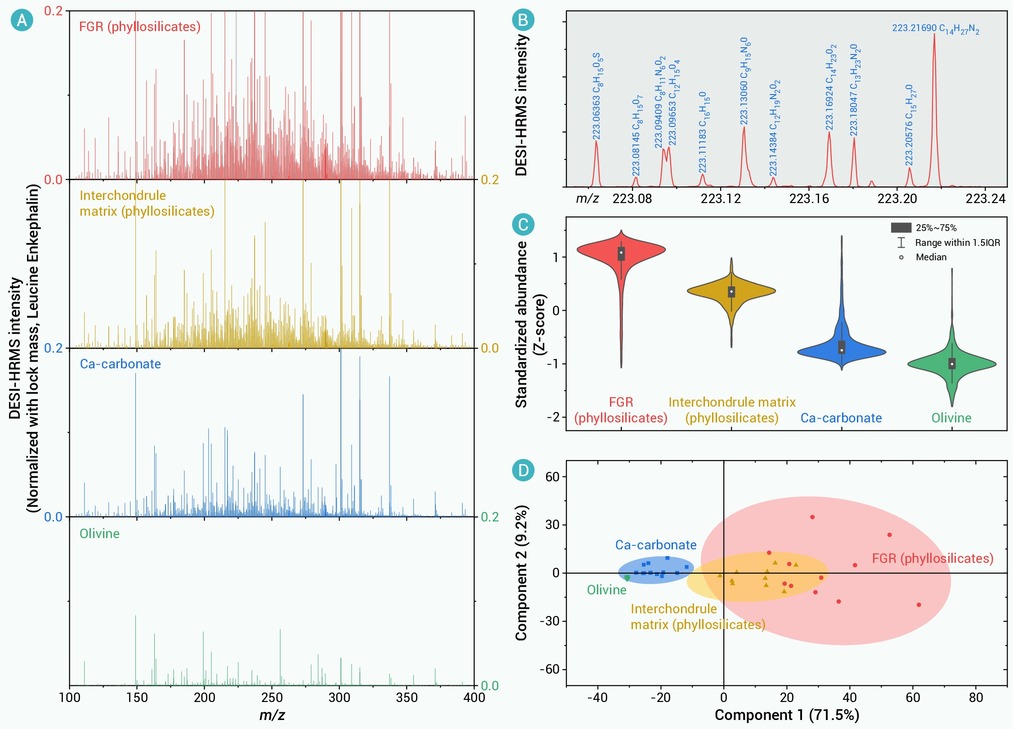
Figure 2.
Mineral- and structure-specific differences in SOM within the Murchison (CM2.5) meteorite revealed by DESI-HRMS imaging
-
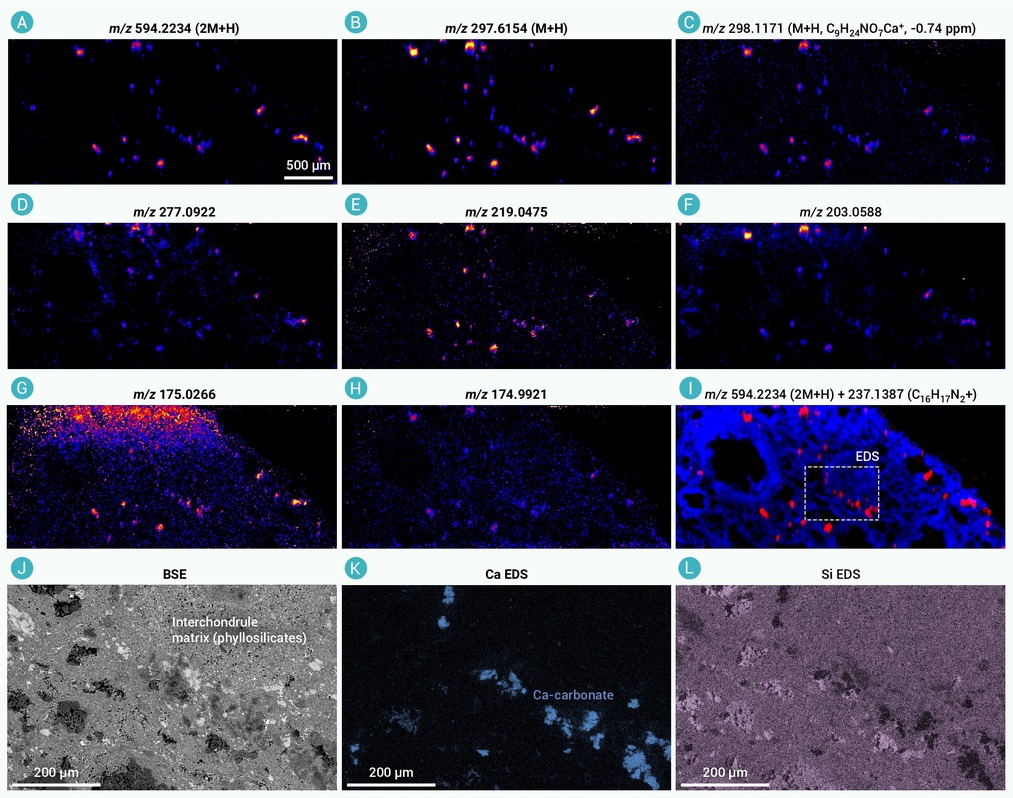
Figure 3.
The DESI-HRMS imaging of molecules related to carbonates in the Murchison meteorite
-
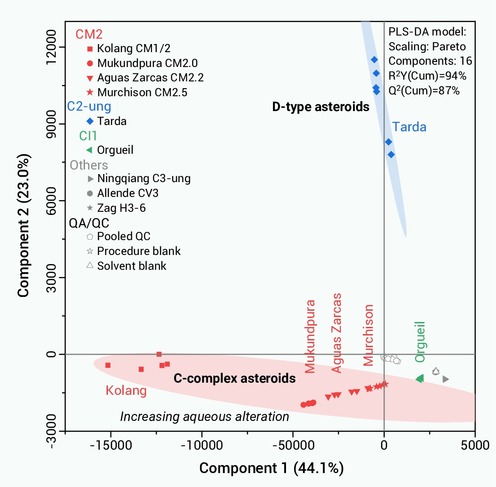
Figure 4.
Partial least squares-discriminant analysis (PLS-DA) of 2,809 SOM compounds detected by UHPLC-HRMS
-
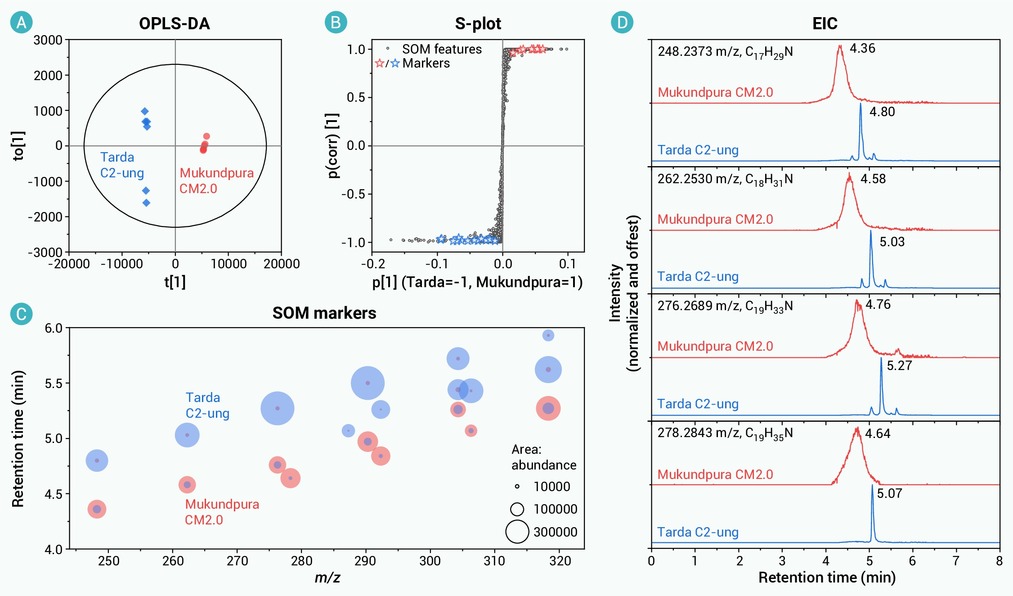
Figure 6.
SOM differences between the Tarda C2-ung and Mukundpura CM2.0 meteorites revealed by UHPLC–HRMS
-
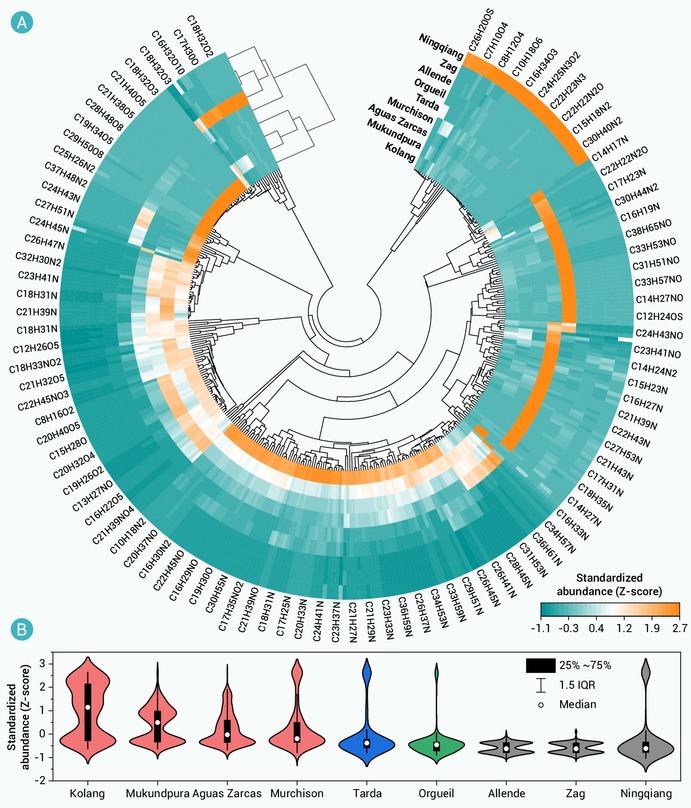
Figure 5.
Differential SOM markers across meteorites
-
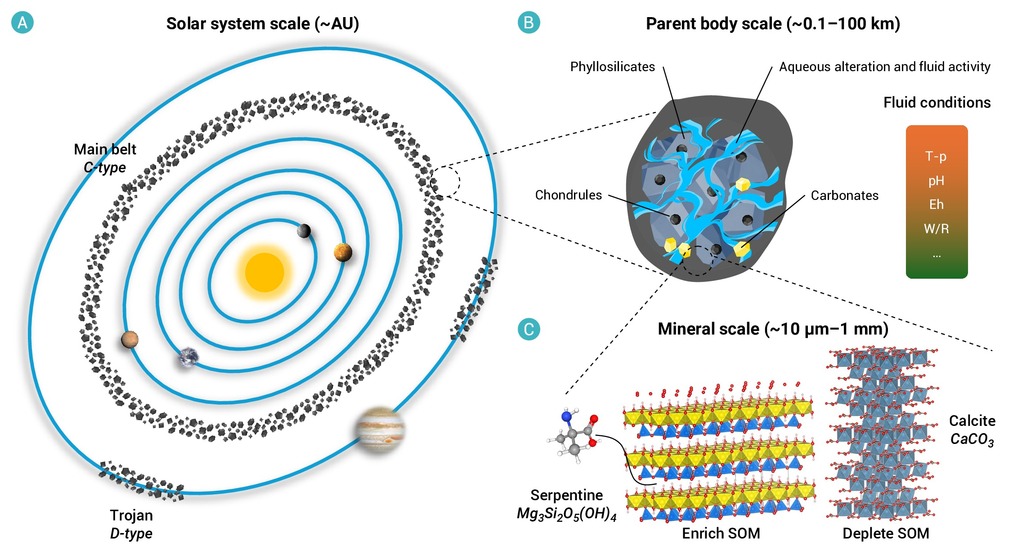
Figure 7.
Multiscale controls on the evolution of SOM in carbonaceous chondrites
