
A dual-role solid calibration strategy for Chang’E-7 LUWA: Onboard CO2 referencing and ground-based H2O/δD validation
-
GRAPHICAL ABSTRACT
 DownLoad:
Full size image
DownLoad:
Full size image
-
PUBLIC SUMMARY
-
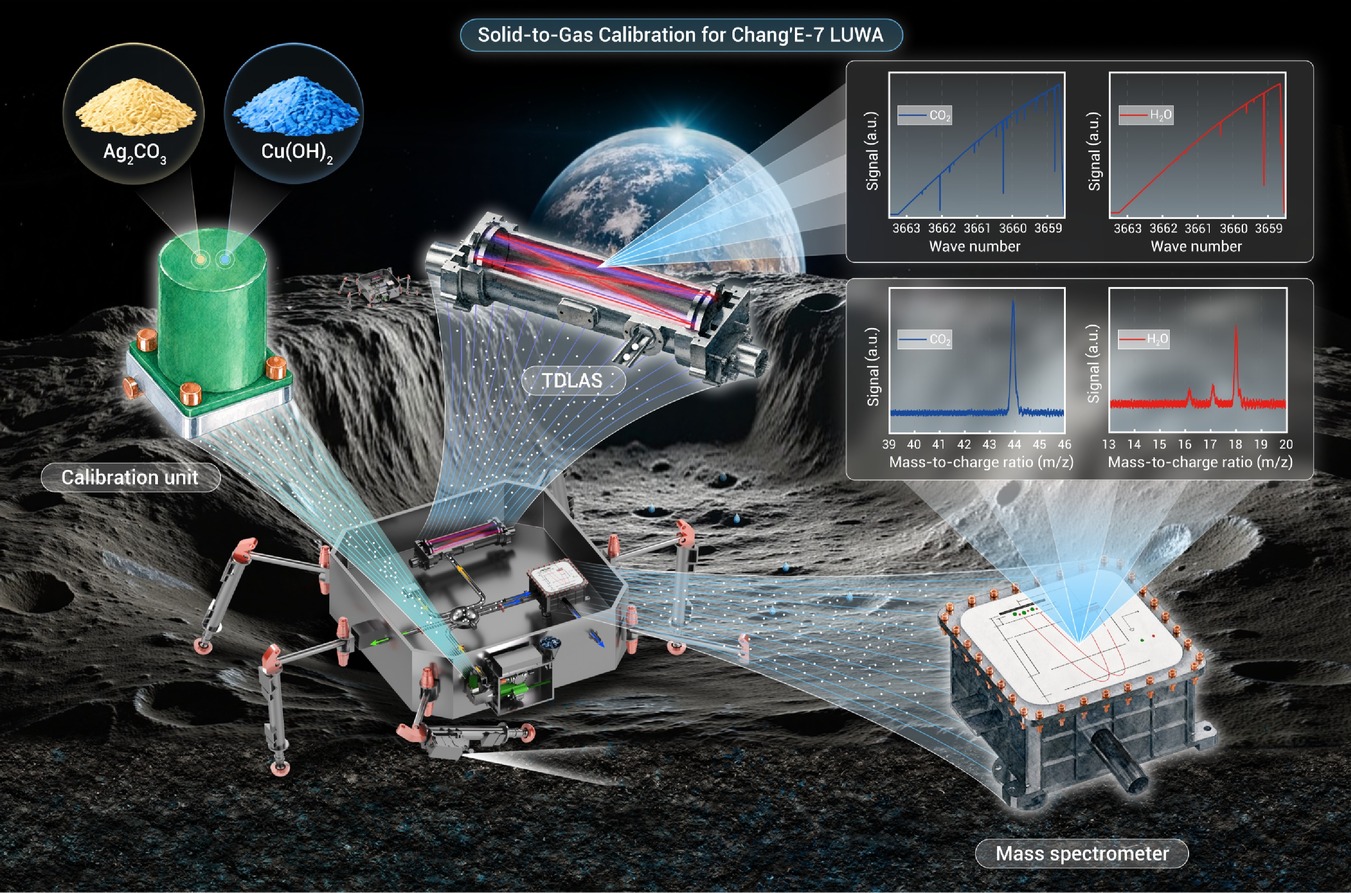
Chang’E-7’s LUnar soil Water molecule Analyzer (LUWA) will measure lunar polar water and hydrogen isotopes.
Solid materials were developed to release CO2 or H2O under vacuum with modest heating.
Ag2CO3 enables repeated onboard CO2 referencing through controlled partial gas release.
Traceable Cu(OH)2 provides an H2O and hydrogen-isotope reference for ground calibration.
These solid references support calibration of LUWA water and hydrogen-isotope measurements.
-
-
ABSTRACT
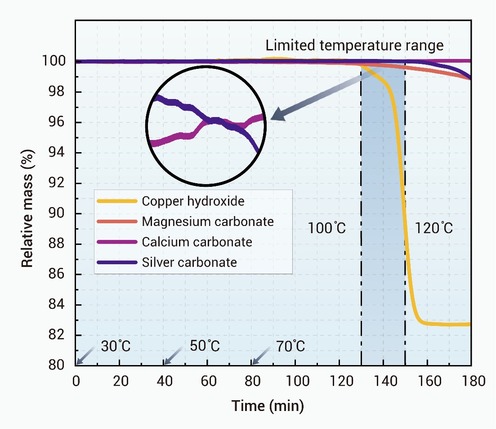
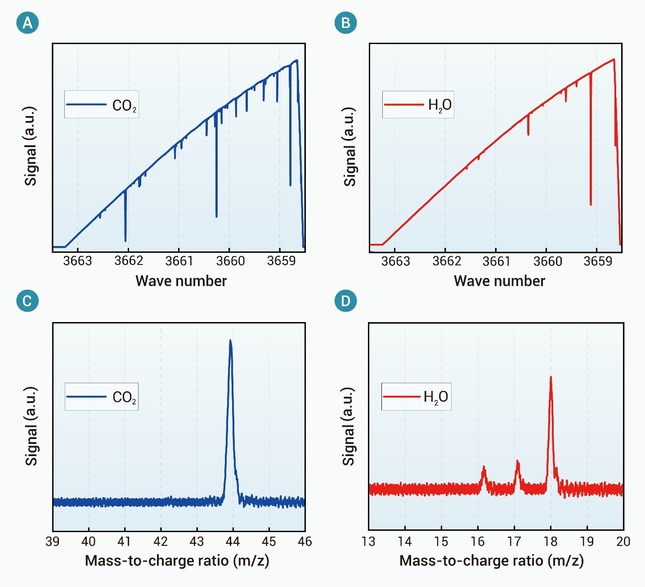
Lunar polar water ice is a key target of the Chang’E-7 mission because its abundance, physical state, and origin remain insufficiently constrained. Within the Chang’E-7 multi-payload framework, the LUnar soil Water molecule Analyzer (LUWA) is designed to measure H2O abundance and hydrogen isotopic composition in permanently shadowed regions. Reliable measurements require calibration compatible with high vacuum, low power consumption, limited sealing capability, and restricted heating temperatures, conditions under which conventional gas- and liquid-phase standards are poorly suited. Here, we develop and validate two complementary solid reference materials for LUWA. Vacuum thermogravimetric analysis showed that Ag2CO3 and Cu(OH)2 decompose at approximately 100-120 °C, releasing CO2 and H2O, respectively. Spectroscopic and mass-spectrometric measurements identified the expected dominant signals, with no obvious interfering gaseous species detected within the measured ranges. In the current LUWA implementation, Ag2CO3 was selected as the onboard CO2 reference material for in situ calibration, whereas traceable Cu(OH)2 was developed primarily for ground-based H2O and δD calibration, prototype testing, end-to-end validation, and controlled regolith-simulant experiments. Cu(OH)2 synthesized from precursor waters with known δD values preserved the mean isotopic information of the water source, with absolute differences between precursor-water and solid-derived vapor means within 10‰. Independent Cr-EA/IRMS measurements further supported the isotope-measurement workflow. Beyond its current role, traceable Cu(OH)2 can serve as a solid isotope standard for validating heating, gas release, transfer, pressure measurement, and spectroscopic or mass-spectrometric detection. It also provides a controllable H2O and δD source for regolith simulants with known water contents and for future characterization of adsorption–desorption memory effects, baseline drift, and pressure-dependent isotope response. With further storage, contamination-control, and flight-qualification studies, Cu(OH)2-type materials may support future planetary payloads requiring controlled H2O and hydrogen-isotope references. Together, these results establish a dual-role solid calibration strategy for LUWA. -

-
REFERENCES
[1] Nakajima M. and Stevenson D.J. (2018). Inefficient volatile loss from the Moon-forming disk: Reconciling the giant impact hypothesis and a wet Moon. Earth Planet. Sci. Lett. 487:117−126. DOI:10.1016/j.epsl.2018.01.026 [2] Arnold J.R. (1979). Ice in the lunar polar regions. J. Geophys. Res. Solid Earth 84:5659−5668. DOI:10.1029/JB084iB10p05659 [3] Watson K., Murray B. and Brown H. (1961). On the possible presence of ice on the Moon. J. Geophys. Res. 66:1598−1600. DOI:10.1029/JZ066i005p01598 [4] Paige D.A., Siegler M.A., Zhang J.A., et al. (2010). Diviner lunar radiometer observations of cold traps in the Moon's south polar region. Science 330:479−482. DOI:10.1126/science.1187726 [5] Nozette S., Lichtenberg C.L., Spudis P.D., et al. (1996). The Clementine bistatic radar experiment. Science 274:1495−1498. DOI:10.1126/science.274.5292.1495 [6] Fa W. and Cai Y. (2013). Circular polarization ratio characteristics of impact craters from Mini-RF observations and implications for ice detection at the polar regions of the Moon. J. Geophys. Res. Planets 118:1582−1608. DOI:10.1002/jgre.20110 [7] Sanin A.B., Mitrofanov I.G., Litvak M.L., et al. (2017). Hydrogen distribution in the lunar polar regions. Icarus 283:20−30. DOI:10.1016/j.icarus.2016.06.002 [8] Li S. and Milliken R.E. (2017). Water on the surface of the Moon as seen by the Moon Mineralogy Mapper: Distribution, abundance, and origins. Sci. Adv. 3:e1701471. DOI:10.1126/sciadv.1701471 [9] Li S., Lucey P.G., Milliken R.E., et al. (2018). Direct evidence of surface exposed water ice in the lunar polar regions. Proc. Natl. Acad. Sci. USA 115:8907−8912. DOI:10.1073/pnas.1802345115 [10] Honniball C.I., Lucey P.G., Li S., et al. (2021). Molecular water detected on the sunlit Moon by SOFIA. Nat. Astron. 5:121−127. DOI:10.1038/s41550-020-01222-x [11] Colaprete A., Schultz P.H., Heldmann J.L., et al. (2010). Detection of water in the LCROSS ejecta plume. Science 330:463−468. DOI:10.1126/science.1186986 [12] Spudis P.D., Bussey D.B.J., Baloga S.M., et al. (2013). Evidence for water ice on the Moon: Results for anomalous polar craters from the LRO Mini-RF imaging radar. J. Geophys. Res. Planets 118:2016−2029. DOI:10.1002/jgre.20156 [13] Mo L., Xu J., Dong Z., et al. (2025). Water ice and the shallow regolith structure of the Shackleton Crater, the Moon: Implications for future Chang'E-7 in situ radar observation. Space Sci. Technol. 5:0225. DOI:10.34133/space.0225 [14] Saal A.E., Hauri E.H., Van Orman J.A., et al. (2013). Hydrogen isotopes in lunar volcanic glasses and melt inclusions reveal a carbonaceous chondrite heritage. Science 340:1317−1320. DOI:10.1126/science.1235142 [15] Barnes J.J., Kring D.A., Tartèse R., et al. (2016). An asteroidal origin for water in the Moon. Nat. Commun. 7:11684. DOI:10.1038/ncomms11684 [16] Greenwood J.P., Itoh S., Sakamoto N., et al. (2011). Hydrogen isotope ratios in lunar rocks indicate delivery of cometary water to the Moon. Nat. Geosci. 4:79−82. DOI:10.1038/ngeo1050 [17] Liu Y., Guan Y., Zhang Y., et al. (2012). Direct measurement of hydroxyl in the lunar regolith and the origin of lunar surface water. Nat. Geosci. 5:779−782. DOI:10.1038/ngeo1601 [18] Hallis L.J. (2017). D/H ratios of the inner Solar System. Philos. Trans. R. Soc. A 375:20150390. DOI:10.1098/rsta.2015.0390 [19] Piani L., Nagashima K., Kawasaki N., et al. (2023). Hydrogen isotopic composition of hydrous minerals in asteroid Ryugu. Astrophys. J. Lett. 946:L43. DOI:10.3847/2041-8213/acc393 [20] Wiens R.C., Bochsler P., Burnett D.S., et al. (2004). Solar and solar wind isotopic compositions. Earth Planet. Sci. Lett. 226:549−565. DOI:10.1016/j.epsl.2004.07.011 [21] Moine B., Bolfan-Casanova N., Radu I., et al. (2020). Molecular hydrogen in minerals as a clue to interpret D variations in the mantle. Nat. Commun. 11:3604. DOI:10.1038/s41467-020-17442-8 [22] Li Y., Shen S., Lu W., et al. (2026). Calibration method and implementation for the Lunar Penetrating Radar on Chang'E-7 mission (in Chinese). Chin. J. Space Sci. 46:507−519. DOI:10.11728/cjss2026.02.2025-0102 [23] Wang C., Jia Y., Xue C., et al. (2024). Scientific objectives and payload configuration of the Chang'E-7 mission. Natl. Sci. Rev. 11:nwad329. DOI:10.1093/nsr/nwad329 [24] Shen S., Tang C., Li Y., et al. (2025). The Lunar Penetrating Radar on the Chang'E-7 Rover. Space Sci. Rev. 221:98. DOI:10.1007/s11214-025-01223-0 [25] Feng J., Siegler M.A. and White M.N. (2022). Dielectric properties and stratigraphy of regolith in the lunar South Pole-Aitken basin: Observations from the Lunar Penetrating Radar. Astron. Astrophys. 661:A47. DOI:10.1051/0004-6361/202143015 [26] Li X., Cao N.L., Kan R.F., et al. (2025). Miniaturized tunable laser spectrometer for the simultaneous detection of water ice and hydrogen-oxygen isotopes for the Chang'E-7 Lunar Soil Water Molecule Analyzer. ACS Sens. 10:4679−4686. DOI:10.1021/acssensors.5c01115 [27] Pfeiffer Vacuum. (2008). The Vacuum Technology Book. Pfeiffer Vacuum.https://www.pfeiffervacuum.com/global/en/knowledge/vacuum-technology/knowledge-book/table_of_content/ [28] Cappa C.D., Hendricks M.B., DePaolo D.J., et al. (2003). Isotopic fractionation of water during evaporation. J. Geophys. Res. Atmos. 108:4525. DOI:10.1029/2003JD003597 [29] Repplinger C., Sellen S., Kedziora S., et al. (2024). Material modeling for numerical simulation of elastomer O-rings with experimental verification at low temperatures. Int. J. Hydrogen Energy 80:1046−1061. DOI:10.1016/j.ijhydene.2024.06.427 [30] Li X., Wang X., Lu W., et al. (2023). Design for in-situ water ice analysis in the lunar polar region. J. Deep Space Explor. 10:618−630. DOI:10.15982/j.issn.2096-9287.2023.20230106 [31] Roush T.L., Colaprete A., Cook A., et al. (2021). The Volatiles Investigating Polar Exploration Rover (VIPER) Near Infrared Volatile Spectrometer System (NIRVSS). 52nd Lunar Planet. Sci. Conf. 2021:1678. https://ntrs.nasa.gov/citations/20210000168 [32] Baldridge A.M., Hook S.J., Grove C.I., et al. (2009). The ASTER spectral library version 2.0. Remote Sens. Environ. 113:711-715. DOI:10.1016/j.rse.2008.11.007 [33] Aguilar Ayala R., Captain J. E., Smith J. T., et al. (2025). VIPER's Mass Spectrometer Observing Lunar Operations (MSolo). Planet. Sci. J. 6:277. DOI:10.3847/PSJ/ae0a4e [34] Colaprete A. (2021). Volatiles Investigating Polar Exploration Rover (VIPER). NASA Technical Reports Server Document ID 20210015009. https://ntrs.nasa.gov/citations/20210015009 [35] Chumikov A.E., Cheptsov V.S., Wurz P., et al. (2021). Design, characteristics and scientific tasks of the LASMA-LR laser ionization mass spectrometer onboard Luna-25 and Luna-27 space missions. Int. J. Mass Spectrom. 469:116676. DOI:10.1016/j.ijms.2021.116676 [36] Meshcherinov V., Gazizov I., Kazakov V., et al. (2024). Spectrometer to explore isotopologues of lunar volatiles on Luna-27 lander. Planet. Space Sci. 248:105935. DOI:10.1016/j.pss.2024.105935 [37] Verchovsky A.B., Anand M., Barber S.J., et al. (2020). A quantitative evolved gas analysis for extra-terrestrial samples. Planet. Space Sci. 181:104830. DOI:10.1016/j.pss.2019.104830 [38] Straus S. and Madorsky S.L. (1956). Thermal degradation of unvulcanized and vulcanized rubber in vacuum. Ind. Eng. Chem. 48:1212−1219. DOI:10.1021/ie50559a036 [39] Losekamm M.J., Barber S., Biswas J., et al. (2021). LUVMI-X: A versatile platform for resource prospecting on the Moon. In Earth and Space 2021:289−299. DOI:10.1061/9780784483374.029 [40] Morse A., Mousis O., Sheridan S., et al. (2015). Low CO/CO2 ratios of comet 67P measured at the Abydos landing site by the Ptolemy mass spectrometer. Astron. Astrophys. 583:A42. DOI:10.1051/0004-6361/201526624 [41] Chen R., Lu W., Li X., et al. (2024). Chang'E-7 Lunar Soil Water Molecule Analyzer (LSWMA) prototype for high-precision measurement of water content and hydrogen isotope ratio. J. Earth Sci. 35:2180−2182. DOI:10.1007/s12583-024-2023-7 [42] Li X., Lu W., Qiu Z., et al. (2026). Ground calibration test method for Chang'E-7 Lunar Soil Water Molecule Analyzer (in Chinese). Chin. J. Space Sci. 46:465−474. DOI:10.11728/cjss2026.02.2025-0151 [43] Chen R., Lu W., Li X., et al. (2026). A high-precision lunar soil water content estimation method designed for the Chang'E-7 Lunar Soil Water Molecule Analyzer (LSWMA). Planet 2:26011. DOI:10.15302/planet.2026.26011 [44] Vorholz J., Harismiadis V.I., Rumpf B., et al. (2000). Vapor-liquid equilibrium of water, carbon dioxide, and the binary system water-carbon dioxide, from molecular simulation. Fluid Phase Equilib. 170:203−234. DOI:10.1016/S0378-3812(00)00315-0 [45] L'vov B.V. (2002). Mechanism and kinetics of thermal decomposition of carbonates. Thermochim. Acta 386:1−16. DOI:10.1016/S0040-6031(01)00757-2 [46] Jurczyk J., Glessi C., Madajska K., et al. (2022). Vacuum versus ambient pressure inert gas thermogravimetry: A study of silver carboxylates. J. Therm. Anal. Calorim. 147:2187−2195. DOI:10.1007/s10973-021-10616-6 [47] Shamsipur M., Pourmortazavi S.M., Hajimirsadeghi S.S., et al. (2013). Facile synthesis of zinc carbonate and zinc oxide nanoparticles via direct carbonation and thermal decomposition. Ceram. Int. 39:819−827. DOI:10.1016/j.ceramint.2012.07.003 [48] Genchi G., Sinicropi M.S., Lauria G., et al. (2020). The effects of cadmium toxicity. Int. J. Environ. Res. Public Health 17:3782. DOI:10.3390/ijerph17113782 [49] Paustenbach D.J., Tvermoes B.E., Unice K.M., et al. (2013). A review of the health hazards posed by cobalt. Crit. Rev. Toxicol. 43:316−362. DOI:10.3109/10408444.2013.779633 [50] Cheng L., Li W., Li Y., et al. (2019). Thermal analysis and decomposition kinetics of the dehydration of copper sulfate pentahydrate. J. Therm. Anal. Calorim. 135:2697−2703. DOI:10.1007/s10973-018-7595-y [51] Paulik F., Paulik J. and Arnold M. (1992). Thermal decomposition of gypsum. Thermochim. Acta 200:195−204. DOI:10.1016/0040-6031(92)85115-C [52] Fukuda M., Favergeon L. and Koga N. (2019). Universal kinetic description for thermal decomposition of copper(II) hydroxide over different water vapor pressures. J. Phys. Chem. C 123:20903−20915. DOI:10.1021/acs.jpcc.9b04704 [53] Kan R.F., Cao N.L., Chen R., et al. (2025). A solid calibration material for hydrogen isotopes and its preparation method. China Patent CN 119935668 B, September 30, 2025. [54] Hynes J.T. (1985). Chemical reaction dynamics in solution. Annu. Rev. Phys. Chem. 36:573−597. DOI:10.1146/annurev.pc.36.100185.003041 [55] Kendall C. and Caldwell E.A. (1998). Fundamentals of isotope geochemistry. In Isotope Tracers in Catchment Hydrology, Kendall C. and McDonnell J.J., eds. (Elsevier), pp. 51-86. DOI:10.1016/B978-0-444-81546-0.50009-4 [56] Cole D.R. and Chakraborty S. (2001). Rates and mechanisms of isotopic exchange. Rev. Mineral. Geochem. 43:83−224. DOI:10.2138/rmg.2001.43.2 [57] Schmidt M., Maseyk K., Lett C., et al. (2010). Concentration effects on laser-based δ18O and δ2H measurements and implications for the calibration of vapour measurements with liquid standards. Rapid Commun. Mass Spectrom. 24:3553−3561. DOI:10.1002/rcm.4813 [58] Tremoy G., Vimeux F., Cattani O., et al. (2011). Measurements of water vapor isotope ratios with wavelength-scanned cavity ring-down spectroscopy technology: New insights and important caveats for deuterium excess measurements in tropical areas in comparison with isotope-ratio mass spectrometry. Rapid Commun. Mass Spectrom. 25:3469−3480. DOI:10.1002/rcm.5252 [59] Li H. and Feng L. (2019). A rapid method for determination of the hydrogen isotopes of H2O in micro-inclusions by chromium-filled elemental analyzer/isotope ratio mass spectrometry. Rapid Commun. Mass Spectrom. 33:946−950. DOI:10.1002/rcm.8430 [60] Zhao C., Zhang L., Lu S., et al. (2025). Research and prospect of ground-penetrating radar on the Moon. J. Geophys. Eng. 22:1431−1447. DOI:10.1093/jge/gxaf084 -
ABOUT THIS ARTICLE
Cite this article:
Chen R., Li X., Lu W., et al. (2026). A dual-role solid calibration strategy for Chang’E-7 LUWA: Onboard CO2 referencing and ground-based H2O/δD validation. The Innovation Informatics 2:100062. https://doi.org/10.59717/j.xinn-inform.2026.100062
Welcome!
To request copyright permission to republish or share portions of our works, please visit Copyright Clearance Center's (CCC) Marketplace website at marketplace.copyright.com.
Export File
Citation
Chen R., Li X., Lu W., et al. (2026). A dual-role solid calibration strategy for Chang’E-7 LUWA: Onboard CO2 referencing and ground-based H2O/δD validation. The Innovation Informatics 2:100062. https://doi.org/10.59717/j.xinn-inform.2026.100062

Format
Content
-
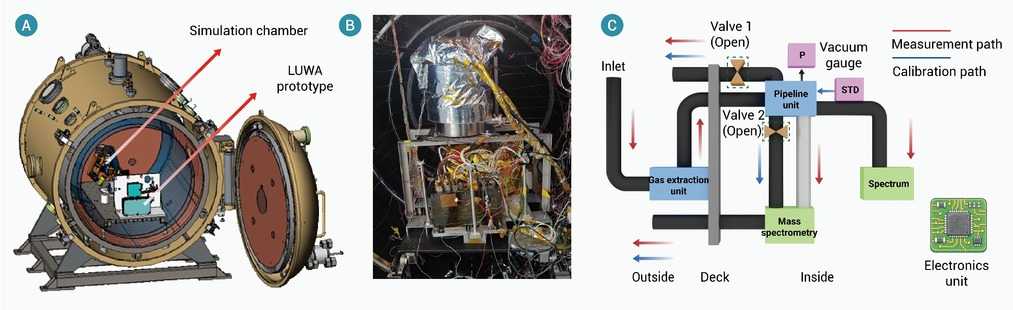
Figure 1.
Ground calibration platform and LUWA prototype
-
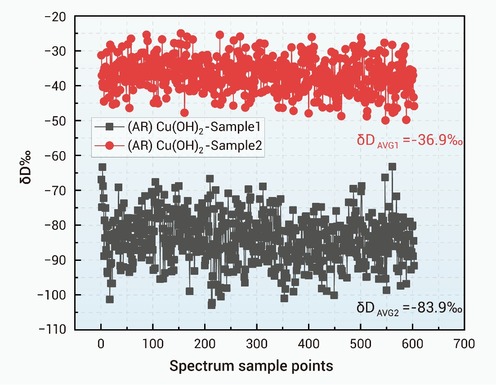
Figure 2.
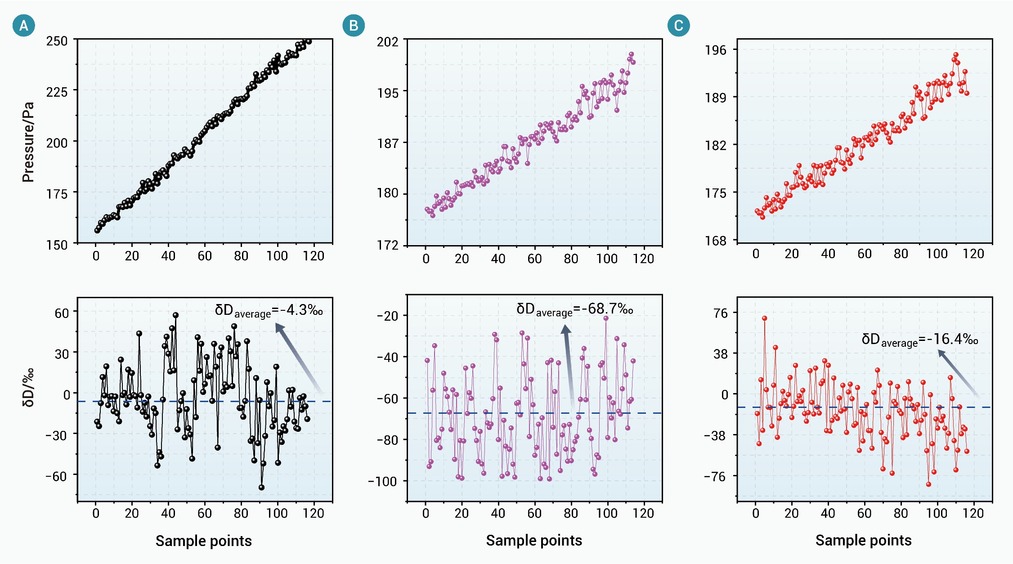
Time-resolved δD measurements of H2O released from two commercial analytical-grade Cu(OH)2 samples obtained from the same batch.
-
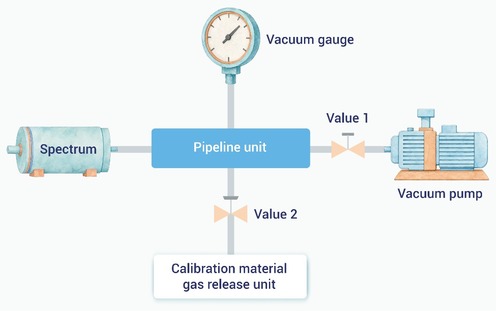
Figure 3.
Solid-isotope measurement platform based on the LUWA prototype.
-
Figure 4.
Averaged vacuum thermogravimetric curves obtained from two independent measurements of CaCO3, MgCO3, Ag2CO3, and Cu(OH)2.
-
Figure 5.
Spectroscopic and mass-spectrometric signals of gases evolved from Ag2CO3 and Cu(OH)2
-
Figure 6.
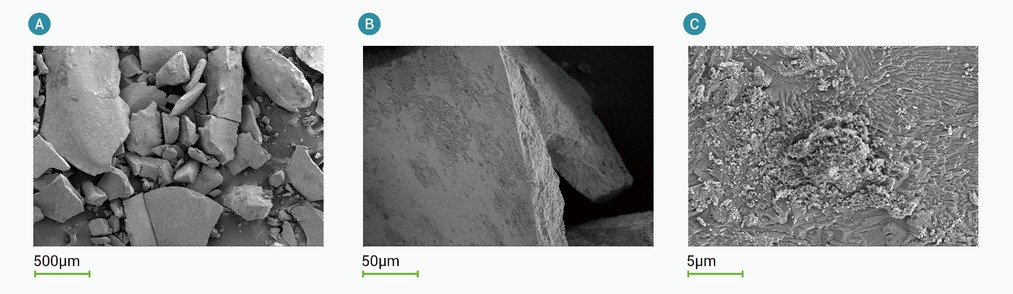
SEM images of synthesized Cu(OH)2 at scale bars of (A) 100 μm, (B) 10 μm, and (C) 2 μm.
-
Figure 7.
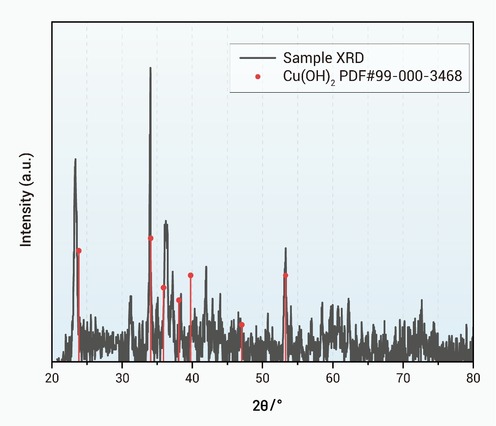
XRD pattern of the synthesized material compared with the reference diffraction pattern of Cu(OH)2 (PDF#99-000-
3468 ). -
Figure 8.
Time-resolved δD measurements of H2O released from synthesized Cu(OH)2 samples prepared using three precursor waters with different hydrogen isotopic compositions.
