
Terahertz technology: A new frontier in Alzheimer’s disease therapy
-
GRAPHICAL ABSTRACT
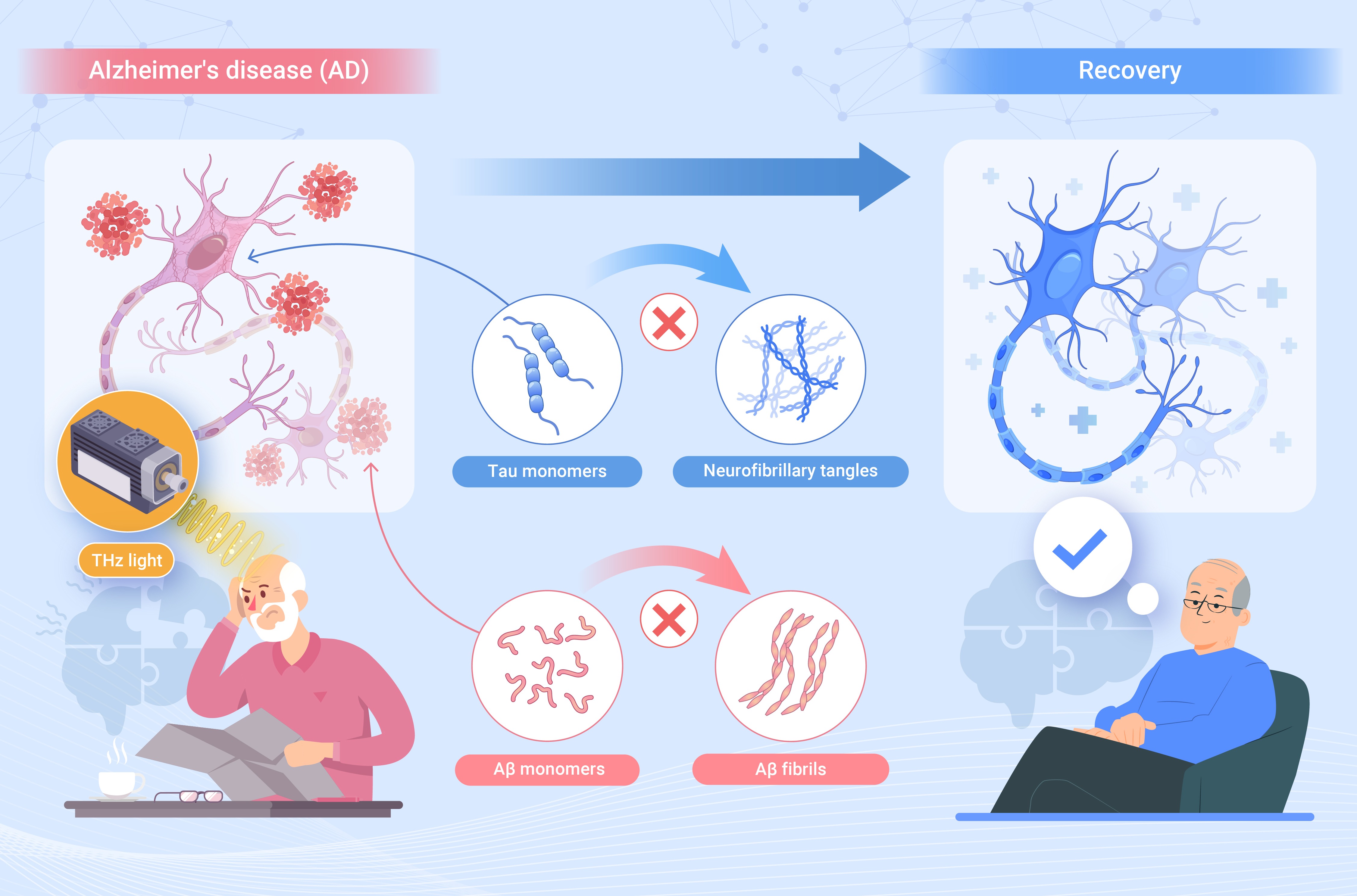
 DownLoad:
Full size image
DownLoad:
Full size image
-
PUBLIC SUMMARY
-
Summarize the neurobiological effects of Terahertz (THz) waves on the pathology of AD.
Discuss the biological mechanism and molecular basis of THz therapy on AD.
Introduce the application and biosafety of THz technology in neuroscience.
-
-
ABSTRACT
The vibrational and rotational energy levels of many biomacromolecules fall within the Terahertz (THz) frequency range, indicating that THz waves, under specific conditions, can interact with and affect the structure and functionality of various biological systems, including the brain. Increasing evidence suggests that the overproduction or inadequate elimination of amyloid beta (Aβ), leading to the accumulation of senile plaques (SPs) in the brain, is a key factor in the development of Alzheimer's disease (AD). The AD-affected brain exhibits several pathological hallmarks, such as hyperphosphorylation of tau protein, which leads to the formation of neurofibrillary tangles (NFTs), neuroinflammation, and degeneration of neurites and synapses. All of these may play important roles in the onset and progression of the disease. Current research primarily focuses on utilizing THz technology for biomonitoring and imaging, with less exploration into the biological effects of THz irradiation on AD. This review aims to examine the neurobiological effects of THz irradiation on AD pathology, including its impacts on neurons, mitochondria, blood vessels, and inflammation, and to provide an update on the current status of THz technology research in AD. It is designed to provide a new perspective for researchers in neuroscience, THz technology, and biomedicine. -

-
REFERENCES
[1] Zhang, J., Li, S., and Le, W. (2021). Advances of terahertz technology in neuroscience: Current status and a future perspective. iScience 24: 103548. DOI: 10.1016/j.isci.2021.103548. [2] Shaoqing, M., Zhiwei, L., Shixiang, G., et al. (2023). The laws and effects of terahertz wave interactions with neurons. Front. Bioeng. Biotechnol. 11: 1147684. DOI: 10.3389/fbioe.2023.1147684. [3] Liu, M., Liu, J., Liang, W., et al. (2023). Recent advances and research progress on microsystems and bioeffects of terahertz neuromodulation. Microsyst. Nanoeng. 9: 143. DOI: 10.1038/s41378-023-00612-1. [4] Kirichuk, V.F., Efimova, N.V., and Andronov, E.V. (2009). Effect of high power terahertz irradiation on platelet aggregation and behavioral reactions of albino rats. Bull. Exp. Biol. Med. 148: 746−749. DOI: 10.1007/s10517-010-0807-5. [5] Kirichuk, V.F., Antipova, O.N., and Krylova, Y.A. (2014). Effect of continuous irradiation with terahertz electromagnetic waves of the no frequency range on behavioral reactions of male albino rats under stress conditions. Bull. Exp. Biol. Med. 157: 184−189. DOI: 10.1007/s10517-014-2521-1. [6] Bondar, N.P., Kovalenko, I.L., Avgustinovich, D.F., et al. (2008). Behavioral effect of terahertz waves in male mice. Bull. Exp. Biol. Med. 145: 401−405. DOI: 10.1007/s10517-008-0102-x. [7] Kirichuk, V.F. and Ivanov, A.N. (2013). Regulatory effects of terahertz waves. Russ. Open. Med. J. 2: 0402. DOI: 10.15275/rusomj.2013.0402. [8] Zhang, J., Chen, Y., Zhao, Y., et al. (2023). Terahertz irradiation improves cognitive impairments and attenuates Alzheimer's neuropathology in the APPSWE/PS1DE9 mouse: A novel therapeutic intervention for Alzheimer's disease. Neurosci. Bull. 40 : 857-871. DOI: 10.1007/s12264-023-01145-3. [9] Wang, M., Cao, J., Amakye, W.K., et al. (2020). Mid infrared light treatment attenuates cognitive decline and alters the gut microbiota community in APP/PS1 mouse model. Biochem. Biophys. Res. Commun. 523: 60−65. DOI: 10.1016/j.bbrc.2019.12.015. [10] Tsurkan, M., Smolyanskaya, O., Bespalov, V., et al. (2012). Changing growth of neurites of sensory ganglion by terahertz radiation. Proc. SPIE. Int. Soc. Opt. Eng. 8261: 23. DOI: 10.1117/12.909350. [11] Cherkasova, O.P., Serdyukov, D.S., Ratushnyak, A.S., et al. (2020). Effects of terahertz radiation on living cells: A review. Opt. Spectrosc. 128: 855−866. DOI: 10.1134/s0030400x20060041. [12] Alexandrov, B.S., Gelev, V., Bishop, A.R., et al. (2010). DNA breathing dynamics in the presence of a terahertz field. Phys. Lett. A 374: 1214−1217. DOI: 10.1016/j.physleta.2009.12.077. [13] Dobson, C.M., Knowles, T.P.J., and Vendruscolo, M. (2020). The amyloid phenomenon and its significance in biology and medicine. Cold Spring Harb. Perspect. Biol. 12: a033878. DOI: 10.1101/cshperspect.a033878. [14] Peng, W., Zhu, Z., Lou, J., et al. (2023). High-frequency terahertz waves disrupt Alzheimer’s β-amyloid fibril formation. eLight 3: 18. DOI: 10.1186/s43593-023-00048-0. [15] Hardy, J.A. and Higgins, G.A. (1992). Alzheimer's disease: The amyloid cascade hypothesis. Science 256: 184−185. DOI: 10.1126/science.1566067. [16] Mawuenyega, K.G., Sigurdson, W., Ovod, V., et al. (2010). Decreased clearance of CNS beta-amyloid in Alzheimer's disease. Science 330: 1774. DOI: 10.1126/science.1197623. [17] Mucke, L. and Selkoe, D.J. (2012). Neurotoxicity of amyloid β-protein: Synaptic and network dysfunction. Cold Spring Harb. Perspect. Med. 2: a006338. DOI: 10.1101/cshperspect.a006338. [18] Walsh, D.M. and Selkoe, D.J. (2004). Deciphering the molecular basis of memory failure in Alzheimer's disease. Neuron 44: 181−193. DOI: 10.1016/j.neuron.2004.09.010. [19] Zhang, F., Zhong, R.J., Cheng, C., et al. (2021). New therapeutics beyond amyloid-β and tau for the treatment of Alzheimer's disease. Acta. Pharmacol. Sin. 42: 1382−1389. DOI: 10.1038/s41401-020-00565-5. [20] Govorun, V.M., Tretiakov, V.E., Tulyakov, N.N., et al. (1991). Far-infrared radiation effect on the structure and properties of proteins. Int. J. Infrared Milli. Waves 12: 1469−1474. DOI: 10.1007/BF01883879. [21] Wilmink, G.J. and Grundt, J.E. (2011). Invited review article: Current state of research on biological effects of terahertz radiation. J. Infrared Milli. Terahz. Waves 32: 1074−1122. DOI: 10.1007/s10762-011-9794-5. [22] Liu, G. (2018). The conjectures on physical mechanism of vertebrate nervous system. Chin. Sci. Bull. 63: 3864−3865. DOI: 10.1360/N972018-01143. [23] Kawasaki, T., Man, V.H., Sugimoto, Y., et al. (2020). Infrared laser-induced amyloid fibril dissociation: A joint experimental/theoretical study on the GNNQQNY peptide. J. Phys. Chem. B 124: 6266−6277. DOI: 10.1021/acs.jpcb.0c05385. [24] Qi, M., Liu, R., Li, B., et al. (2022). Behavioral effect of terahertz waves in C57BL/6 mice. Biosensors 12: 79. DOI: 10.3390/bios12020079. [25] Wang, L., Cheng, Y., Wang, W., et al. (2023). Effects of terahertz radiation on the aggregation of Alzheimer’s Aβ42 peptide. Int. J. Mol. Sci. 24: 5039. DOI: 10.3390/ijms24055039. [26] Baxter, J.B. and Guglietta, G.W. (2011). Terahertz spectroscopy. Anal. Chem. 83: 4342−4368. DOI: 10.1021/ac200907z. [27] Lu Y.H., Chen C.C., Gao P., et al. (2020). Terahertz radiation exposure results in altered gene expression profile in mouse retina. J. Third. Mil. Med. Univ. 42: 2273−2281. DOI: 10.16016/j.1000-5404.202008140. [28] Shang, S., Wu, X., Zhang, Q., et al. (2021). 0.1 THz exposure affects primary hippocampus neuron gene expression via alternating transcription factor binding. Biomed. Opt. Express. 12 : 3729-3742. DOI: 10.1364/BOE.426928. [29] Ma, Q., Chen, C., Lin, M., et al. (2020). Non-thermal effects of 0.22 terahertz electromagnetic radiation exposure-induced injury in Neuro-2a cells. J. Third. Mil. Med. Univ. 42 : 2267-2273. DOI: 10.16016/j.1000-5404.202008145. [30] Wu, K., Qi, C., Zhu, Z., et al. (2020). Terahertz wave accelerates DNA unwinding: A molecular dynamics simulation study. J. Phys. Chem. Lett. 11: 7002−7008. DOI: 10.1021/acs.jpclett.0c01850. [31] Zhang, C., Yuan, Y., Wu, K., et al. (2022). Driving DNA origami assembly with a terahertz wave. Nano Lett. 22: 468−475. DOI: 10.1021/acs.nanolett.1c04369. [32] Zhang, Q., Yang, L., Wang, K., et al. (2023). Terahertz waves regulate the mechanical unfolding of tau pre-mRNA hairpins. iScience 26: 107572. DOI: 10.1016/j.isci.2023.107572. [33] Tan, J., Yang, L., Ong, A.A.L., et al. (2019). A disease-causing intronic point mutation C19G alters tau exon 10 splicing via RNA secondary structure rearrangement. Biochemistry 58: 1565−1578. DOI: 10.1021/acs.biochem.9b00001. [34] Zhao, L.N., Long, H.W., Mu, Y., et al. (2012). The toxicity of amyloid β oligomers. Int. J. Mol. Sci. 13: 7303−7327. DOI: 10.3390/ijms13067303. [35] Hauser, P.S. and Ryan, R.O. (2013). Impact of apolipoprotein E on Alzheimer's disease. Curr. Alzheimer Res. 10: 809−817. DOI: 10.2174/15672050113109990156. [36] Rayman, J.B. (2023). Focusing on oligomeric tau as a therapeutic target in Alzheimer's disease and other tauopathies. Expert Opin. Ther. Targets 27: 269−279. DOI: 10.1080/14728222.2023.2206561. [37] Wegmann, S., Biernat, J., and Mandelkow, E. (2021). A current view on tau protein phosphorylation in Alzheimer's disease. Curr. Opin. Neurobiol. 69: 131−138. DOI: 10.1016/j.conb.2021.03.003. [38] Sawaya, M.R., Hughes, M.P., Rodriguez, J.A., et al. (2021). The expanding amyloid family: Structure, stability, function, and pathogenesis. Cell 184: 4857−4873. DOI: 10.1016/j.cell.2021.08.013. [39] Pereira, C., Agostinho, P., Moreira, P.I., et al. (2005). Alzheimer's disease-associated neurotoxic mechanisms and neuroprotective strategies. Curr. Drug. Targets. CNS. Neurol. Disord. 4: 383−403. DOI: 10.2174/1568007054546117. [40] Marcello, E., Epis, R., and Di Luca, M. (2008). Amyloid flirting with synaptic failure: Towards a comprehensive view of Alzheimer's disease pathogenesis. Eur. J. Pharmacol. 585: 109−118. DOI: 10.1016/j.ejphar.2007.11.083. [41] Robbins, M., Clayton, E., and Kaminski Schierle, G.S. (2021). Synaptic tau: A pathological or physiological phenomenon. Acta. Neuropathol. Commun. 9: 149. DOI: 10.1186/s40478-021-01246-y. [42] Ribeiro, F.F. and Xapelli, S. (2021). An overview of adult neurogenesis. Adv. Exp. Med. Biol. 1331: 77−94. DOI: 10.1007/978-3-030-74046-7_7. [43] Romanenko, S., Appadoo, D., Lawler, N., et al. (2020). Terahertz radiation stimulates neurite growth in PC12 derived neurons during development phase: Preliminary study. 2020 45th International Conference on Infrared, Millimeter, and Terahertz Waves (IRMMW-THz). IEEE. DOI: 10.1109/IRMMW-THz46771.2020.9370420. [44] Tan, S.Z., Tan, P.C., Luo, L.Q., et al. (2019). Exposure effects of terahertz waves on primary neurons and neuron-like cells under nonthermal conditions. Biomed. Environ. Sci. 32: 739−754. DOI: 10.3967/bes2019.094. [45] Ol'shevskaia Iu, S., Kozlov, A.S., Petrov, A.K., et al. (2009). Influence of terahertz (submillimeter) laser radiation on neurons in vitro. Zh. Vyssh. Nerv. Deiat. Im. I. P. Pavlova. 59: 342−348. [46] Bock, J., Fukuyo, Y., Kang, S., et al. (2010). Mammalian stem cells reprogramming in response to terahertz radiation. PLoS One 5: e15806. DOI: 10.1371/journal.pone.0015806. [47] Xu, D., Liu, R., Li, B., et al. (2023). Effect and mechanism of terahertz irradiation in repairing spinal cord injury in mice. Gene 860: 147218. DOI: 10.1016/j.gene.2023.147218. [48] Tachizaki, T., Sakaguchi, R., Terada, S., et al. (2020). Terahertz pulse-altered gene networks in human induced pluripotent stem cells. Opt. Lett. 45: 6078−6081. DOI: 10.1364/OL.402815. [49] Zhao, X., Zhang, M., Liu, Y., et al. (2021). Terahertz exposure enhances neuronal synaptic transmission and oligodendrocyte differentiation in vitro. iScience 24: 103485. DOI: 10.1016/j.isci.2021.103485. [50] Kratochvil, H.T., Carr, J.K., Matulef, K., et al. (2016). Instantaneous ion configurations in the K+ ion channel selectivity filter revealed by 2D IR spectroscopy. Science 353: 1040−1044. DOI: 10.1126/science.aag1447. [51] Zhang, X., He, M., Zhao, J., et al. (2020). Effect of 0.1 THz radiation on excitability of hippocampal neurons in sprague dawley rats. Chin. J. Lasers. 47 : 0207023. DOI: 10.3788/CJL202047.0207023. [52] Malone, M., Gary, D., Yang, I.H., et al. (2013). Neuronal activity promotes myelination via a cAMP pathway. Glia 61: 843−854. DOI: 10.1002/glia.22476. [53] Wang, W., Zhao, F., Ma, X., et al. (2020). Mitochondria dysfunction in the pathogenesis of alzheimer's disease: Recent advances. Mol. Neurodegener. 15: 30. DOI: 10.1186/s13024-020-00376-6. [54] Tan, X., Gao, M., and Chang, C. (2023). A new means of energy supply driven by terahertz photons recovers related neural activity. iScience 26: 105979. DOI: 10.1016/j.isci.2023.105979. [55] Abufadda, M.H., Erdélyi, A., Pollák, E., et al. (2021). Terahertz pulses induce segment renewal via cell proliferation and differentiation overriding the endogenous regeneration program of the earthworm eisenia andrei. Biomed. Opt. Express. 12: 1947−1961. DOI: 10.1364/boe.416158. [56] Reukov, A.S., Naymushin, A.V., Simakov, K.V., et al. (2016). Use of the infrared radiation modulated by terahertz frequencies in complex therapy of patients with acute ischemic stroke. Arter. Gipertenz. 22: 94−102. DOI: 10.18705/1607-419x-2016-22-1-94-102. [57] Kirichuk, V.F., Andronov, E.V., Mamontova, N.V., et al. (2008). Use of terahertz electromagnetic radiation for correction of blood rheology parameters in patients with unstable angina under conditions of treatment with isoket, an no donor. Bull. Exp. Biol. Med. 146: 293−296. DOI: 10.1007/s10517-008-0277-1. [58] Klohs, J. (2019). An integrated view on vascular dysfunction in Alzheimer's disease. Neurodegener. Dis. 19: 109−127. DOI: 10.1159/000505625. [59] Kapasi, A. and Schneider, J.A. (2016). Vascular contributions to cognitive impairment, clinical Alzheimer's disease, and dementia in older persons. Biochim. Biophys. Acta. 1862: 878−886. DOI: 10.1016/j.bbadis.2015.12.023. [60] Andrabi, S.M., Sharma, N.S., Karan, A., et al. (2023). Nitric oxide: Physiological functions, delivery, and biomedical applications. Adv. Sci. 10: e2303259. DOI: 10.1002/advs.202303259. [61] Kirichuck, V.F., Ivanov, A.N., Kulapina, E.G., et al. (2010). Effect of terahertz electromagnetic irradiation at nitric oxide frequencies on concentration of nitrites in blood serum of albino rats under conditions of immobilization stress. Bull. Exp. Biol. Med. 149: 174−176. DOI: 10.1007/s10517-010-0900-9. [62] Kirichuk, V.F. and Tsymbal, A.A. (2012). Effects of terahertz radiation at atmospheric oxygen frequency of 129 GHz on blood nitrite concentrations under conditions of different types of stress against the background of administration of nonselective inhibitor of constitutive NO-synthases. Bull. Exp. Biol. Med. 152: 435−438. DOI: 10.1007/s10517-012-1547-5. [63] Lee, H.I., Lee, S.-W., Kim, S.Y., et al. (2017). Pretreatment with light-emitting diode therapy reduces ischemic brain injury in mice through endothelial nitric oxide synthase-dependent mechanisms. Biochem. Biophys. Res. Commun. 486: 945−950. DOI: 10.1016/j.bbrc.2017.03.131. [64] Grundt, J.E., Cerna, C., Roth, C.C., et al. (2011). Terahertz radiation triggers a signature gene expression profile in human cells. 2011 International Conference on Infrared, Millimeter, and Terahertz Waves. DOI: 10.1109/irmmw-THz.2011.6104967. [65] Yu, Lukin, Yu, et al. (2018). The complex correction of the pathophysiological disorders in the patients presenting with orthopedic and traumatological problems with the application of the electromagnetic waves of the terahertz range at the radiation frequencies of nitric oxide. Vopr. Kurortol. Fizioter. Lech. Fiz. Kult. 95: 58−66. DOI: 10.17116/kurort20189506158. [66] Oberstein, T.J., Spitzer, P., Klafki, H.W., et al. (2015). Astrocytes and microglia but not neurons preferentially generate N-terminally truncated Aβ peptides. Neurobiol. Dis. 73: 24−35. DOI: 10.1016/j.nbd.2014.08.031. [67] Tang, Y. and Le, W. (2016). Differential roles of M1 and M2 microglia in neurodegenerative diseases. Mol. Neurobiol. 53: 1181−1194. DOI: 10.1007/s12035-014-9070-5. [68] Hu, J., Chen, Q., Zhu, H., et al. (2023). Microglial Piezo1 senses Aβ fibril stiffness to restrict alzheimer's disease. Neuron 111: 15−29.e18. DOI: 10.1016/j.neuron.2022.10.021. [69] Hansen, D.V., Hanson, J.E., and Sheng, M. (2018). Microglia in Alzheimer's disease. J. Cell. Biol. 217: 459−472. DOI: 10.1083/jcb.201709069. [70] Jäntti, H., Sitnikova, V., Ishchenko, Y., et al. (2022). Microglial amyloid beta clearance is driven by PIEZO1 channels. J. Neuroinflammation 19: 147. DOI: 10.1186/s12974-022-02486-y. [71] Chu, F., Tan, R., Wang, X., et al. (2023). Transcranial magneto-acoustic stimulation attenuates synaptic plasticity impairment through the activation of Piezo1 in Alzheimer's disease mouse model. Research 6: 0130. DOI: 10.34133/research.0130. [72] Koch, G. and Spampinato, D. (2022). Alzheimer disease and neuroplasticity. Handb. Clin. Neurol. 184: 473−479. DOI: 10.1016/b978-0-12-819410-2.00027-8. [73] Luo, Y., Yang, F.Y., and Lo, R.Y. (2023). Application of transcranial brain stimulation in dementia. Tzu. Chi. Med. J. 35: 300−305. DOI: 10.4103/tcmj.tcmj_91_23. [74] Aldehri, M., Temel, Y., Alnaami, I., et al. (2018). Deep brain stimulation for Alzheimer's disease: An update. Surg. Neurol. Int. 9: 58. DOI: 10.4103/sni.sni_342_17. [75] Lorenzo, A. and Yankner, B.A. (1994). Beta-amyloid neurotoxicity requires fibril formation and is inhibited by congo red. Proc. Natl. Acad. Sci. USA. 91: 12243−12247. DOI: 10.1073/pnas.91.25.12243. [76] Shi, L., Shumyatsky, P., Rodríguez-Contreras, A., et al. (2016). Terahertz spectroscopy of brain tissue from a mouse model of Alzheimer's disease. J. Biomed. Opt. 21: 15014. DOI: 10.1117/1.Jbo.21.1.015014. [77] Png, G.M., Flook, R., Ng, B.W.H., et al. (2009). Terahertz spectroscopy of snap-frozen human brain tissue: An initial study. Electron. Lett. 45: 343−345. DOI: 10.1049/el.2009.3413. [78] Heo, C., Ha, T., You, C., et al. (2020). Identifying fibrillization state of Aβ protein via near-field THz conductance measurement. ACS Nano 14: 6548−6558. DOI: 10.1021/acsnano.9b08572. [79] Chen, Q., Wu, J., Wang, Y., et al. (2024). Terahertz anti-resonant fiber biosensor for protein detection. J. Infrared. Millimeter. Terahertz. Waves. 45: 76−96. DOI: 10.1007/s10762-023-00960-z. -
ABOUT THIS ARTICLE
Cite this article:
Zhang J., Liu C., Lü J., et al., (2024). Terahertz technology: A new frontier in Alzheimer’s disease therapy. The Innovation Life 2(3): 100084. https://doi.org/10.59717/j.xinn-life.2024.100084
Welcome!
To request copyright permission to republish or share portions of our works, please visit Copyright Clearance Center's (CCC) Marketplace website at marketplace.copyright.com.
Export File
Citation
Zhang J., Liu C., Lü J., et al., (2024). Terahertz technology: A new frontier in Alzheimer’s disease therapy. The Innovation Life 2(3): 100084. https://doi.org/10.59717/j.xinn-life.2024.100084

Format
Content
-
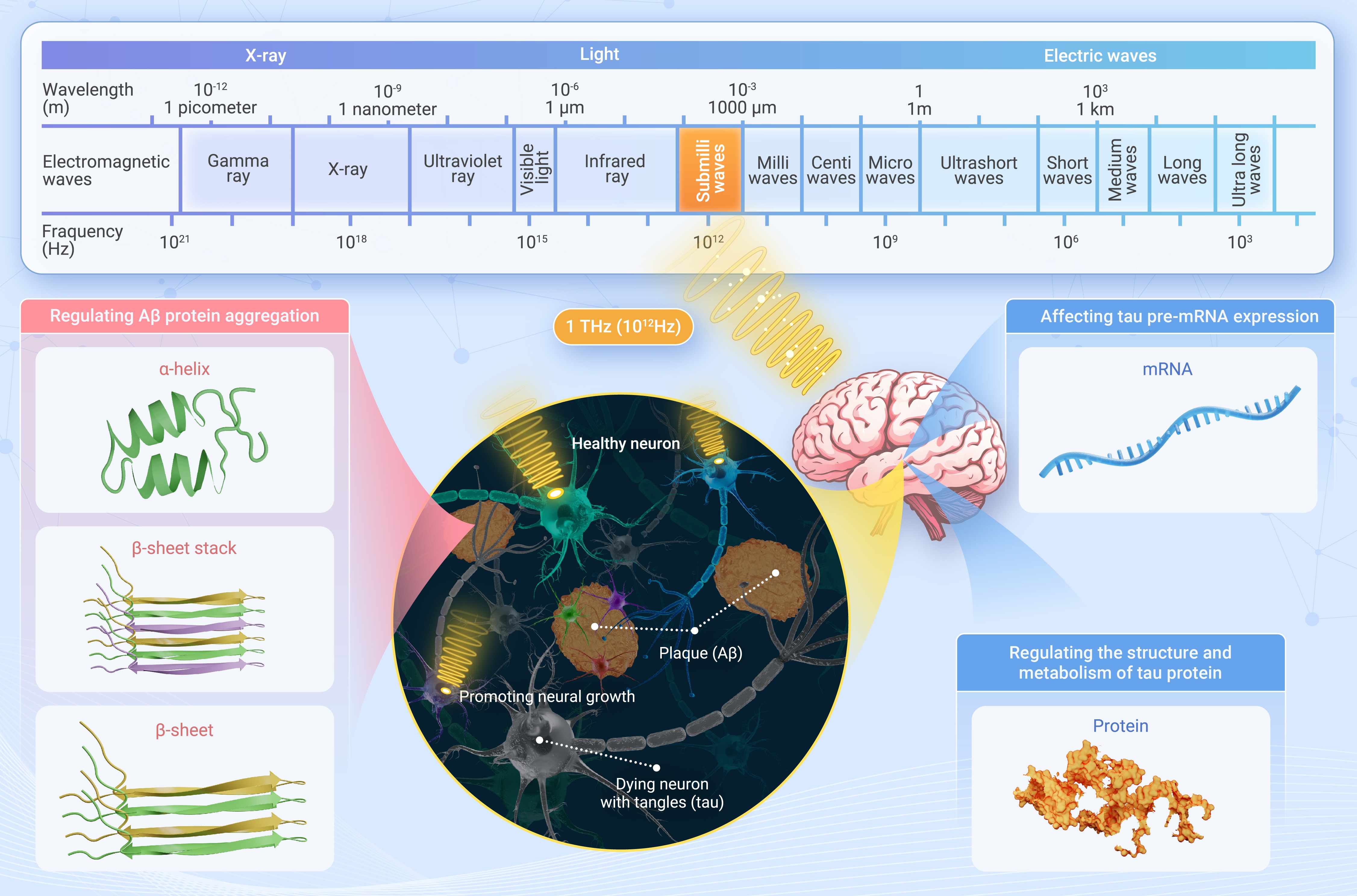
Figure 1.
The terahertz band of the electromagnetic spectrum and its associated biological effects
-
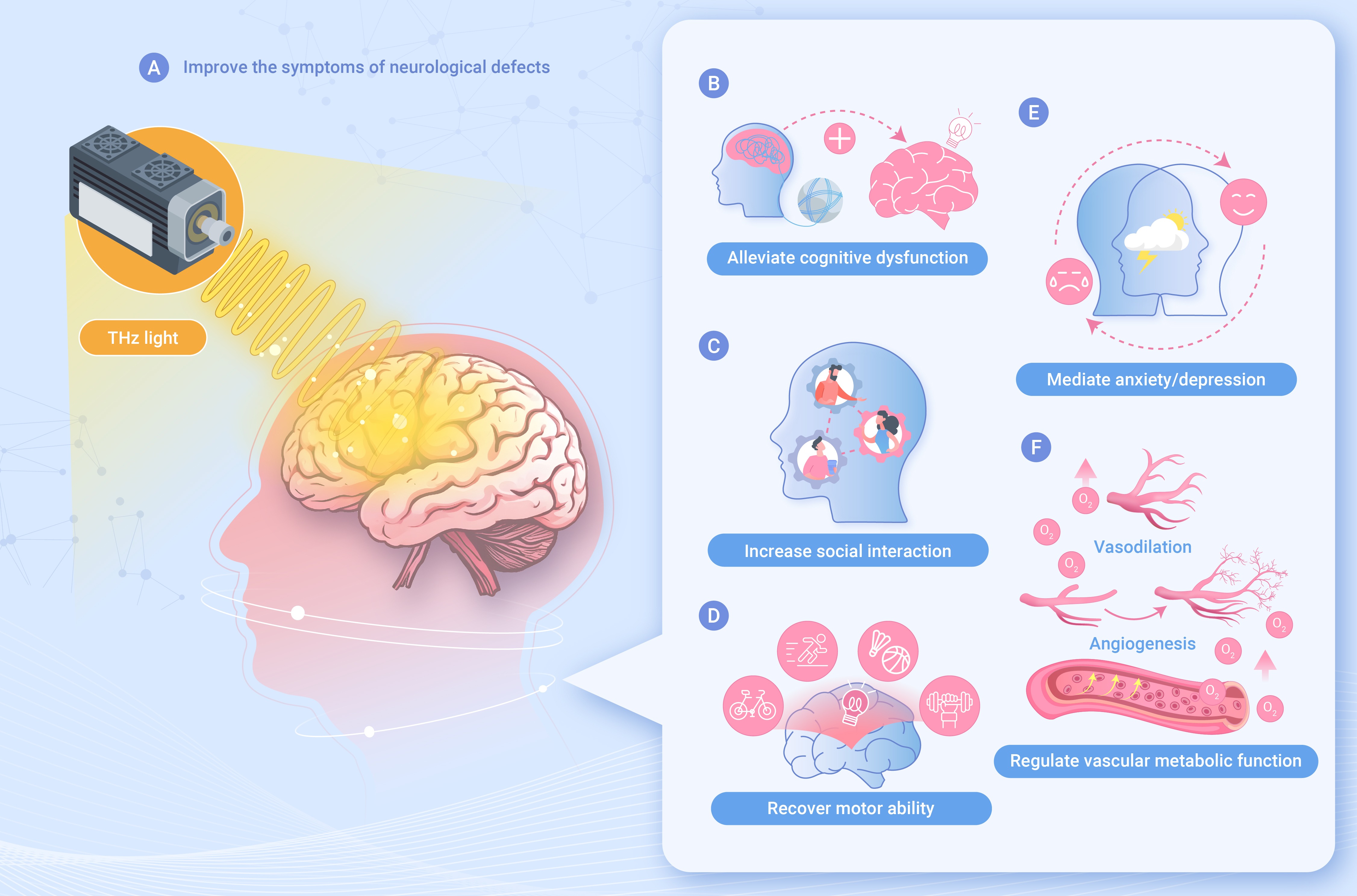
Figure 2.
Bioeffects of THz therapy on living organisms in vivo
