
Gut microbiota-mucosal immunity crosstalk in the IBD microenvironment: Mechanistic insights into disease progression and intervention strategies
-
GRAPHICAL ABSTRACT
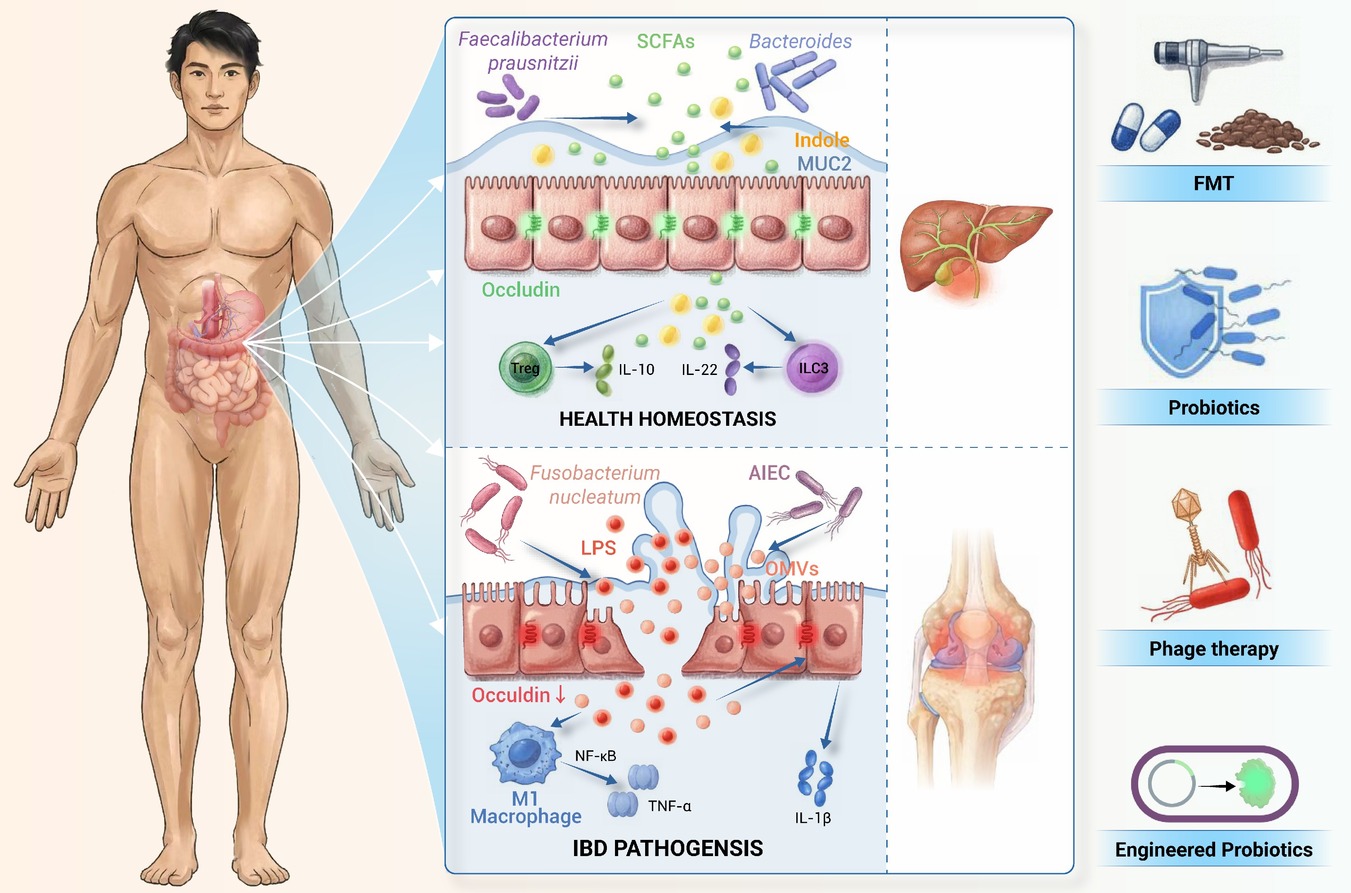
 DownLoad:
Full size image
DownLoad:
Full size image
-
PUBLIC SUMMARY
-
Gut microbiota–immune crosstalk maintains homeostasis; disruption drives inflammatory bowel disease (IBD).
Microbiota–immune interactions coordinate immune balance and contribute to IBD pathogenesis.
Microbial components and metabolites reshape immune responses, promoting barrier damage.
Microbiota-targeted strategies enable precision immunomodulation and improved disease control in IBD.
-
-
ABSTRACT
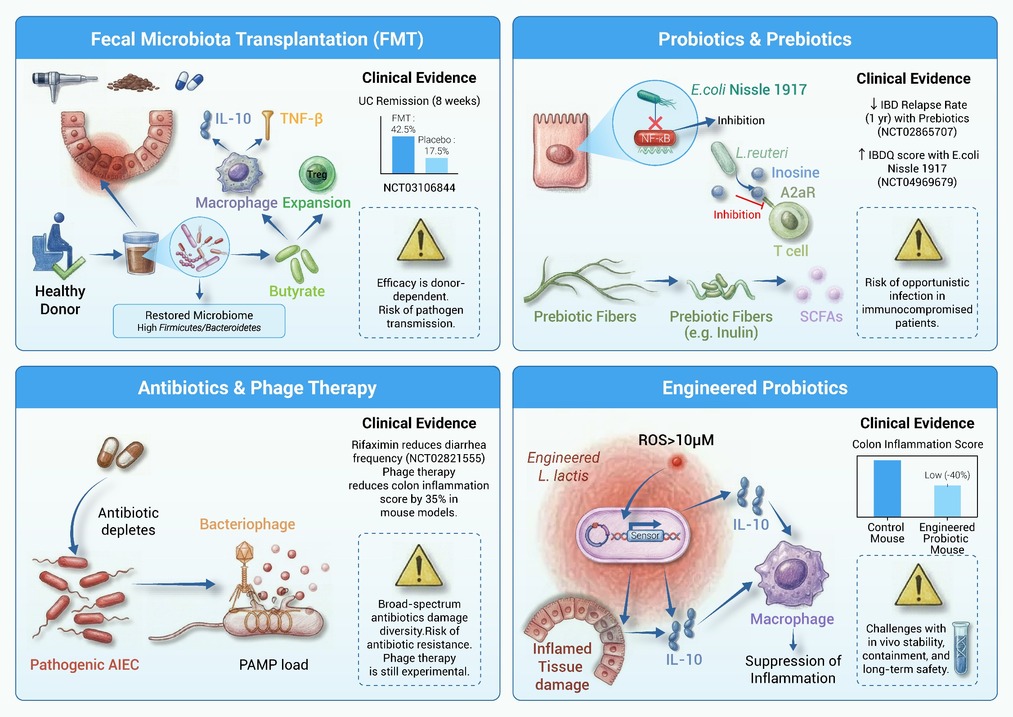
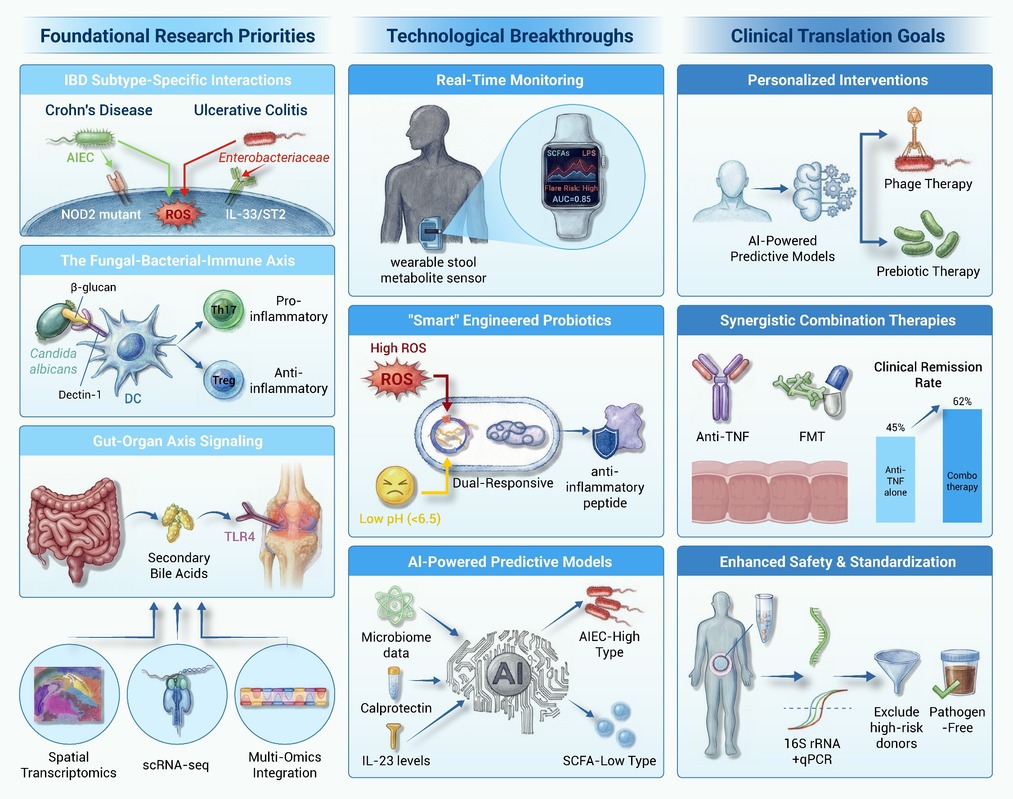
The gut microbiota forms a highly dynamic and multilayered ecological system that plays a pivotal role in maintaining mucosal immune homeostasis. When the “microbiota-immune regulatory” axis is perturbed in genetically susceptible individuals, antigen recognition and effector responses at the mucosal surface may be reshaped, thereby driving the onset and persistent progression of IBD. This review highlights the distinct patterns of microbe-immune interactions under physiological and pathological conditions, with particular focus on the key immunoregulatory events at different disease stages. In the early phase of IBD, adhesive and invasive bacterial strains and microbial dysbiosis can disrupt epithelial barriers, trigger aberrant innate immune activation, and induce chronic local inflammation. As the disease advances, T-cell polarization, tissue remodeling, and extraintestinal manifestations collectively sustain the inflammatory network and promote systemic damage. We further summarize emerging microbiota-based immunotherapeutic strategies-such as fecal microbiota transplantation, probiotics/prebiotics, targeted manipulation of specific bacterial taxa, bacteriophage therapy, and engineered probiotics-and their potential value and remaining clinical challenges in IBD management. Future work should integrate gut microbiota-immune crosstalk to identify clinically actionable targets and validate their biological and therapeutic significance through well-designed prospective studies. -

-
REFERENCES
[1] Schoultz I., Claesson MJ., Dominguez-Bello M.G., et al. (2025). Gut microbiota development across the lifespan: Disease links and health-promoting interventions. J. Intern. Med. 297:560−583. DOI:10.1111/joim.20089 [2] Yersin S. and Vonaesch P. (2024). Small intestinal microbiota: From taxonomic composition to metabolism. Trends. Microbiol. 32:970−983. DOI:10.1016/j.tim.2024.02.013 [3] Mukhopadhya I. and Louis P. (2025). Gut microbiota-derived short-chain fatty acids and their role in human health and disease. Nat. Rev. Microbiol. 23:635−651. DOI:10.1038/s41579-025-01183-w [4] Thulasinathan B., Suvilesh KN., Maram S., et al. (2025). The impact of gut microbial short-chain fatty acids on colorectal cancer development and prevention. Gut. Microbes. 17:2483780. DOI:10.1080/19490976.2025.2483780 [5] Melo-Marques I., Cardoso S.M. and Empadinhas N. (2024). Bacterial extracellular vesicles at the interface of gut microbiota and immunity. Gut. Microbes. 16:2396494. DOI:10.1080/19490976.2024.2396494 [6] Perdijk O., Azzoni R. and Marsland B.J. (2024). The microbiome: An integral player in immune homeostasis and inflammation in the respiratory tract. Physiol. Rev. 104:835−879. DOI:10.1152/physrev.00020.2023 [7] Shen Y., Fan N., Ma S., et al. (2025). Gut microbiota dysbiosis: Pathogenesis, diseases, prevention, and therapy. MedComm (2020). 6:e70168. DOI:10.1002/mco2.70168 [8] Kunath BJ., De Rudder C., Laczny C.C., et al. (2024). The oral-gut microbiome axis in health and disease. Nat. Rev. Microbiol. 22:791−805. DOI:10.1038/s41579-024-01075-5 [9] Kuang H.F., Jiang X.Y., Tie S.Y., et al. (2026). Global research trends in bacteriophage and gut microbiota: A bibliometric and visual analysis from 2012 to 2025. Front. Microbiol. 16:1738456. DOI:10.3389/fmicb.2025.1738456 [10] Yang K., Li G., Li Q., et al. (2025). Distribution of gut microbiota across intestinal segments and their impact on human physiological and pathological processes. Cell. Biosci. 15:47. DOI:10.1186/s13578-025-01385-y [11] Losol P., Wolska M., Wypych T.P., et al. (2024). A cross talk between microbial metabolites and host immunity: Its relevance for allergic diseases. Clin. Transl. Allergy. 14:e12339. DOI:10.1002/clt2.12339 [12] Zeng L., Qian Y., Cui X., et al. (2025). Immunomodulatory role of gut microbial metabolites: Mechanistic insights and therapeutic frontiers. Front. Microbiol. 16:1675065. DOI:10.3389/fmicb.2025.1675065 [13] Du Y., He C., An Y., et al. (2024). The role of short chain fatty acids in inflammation and body health. Int. J. Mol. Sci. 25:7379. DOI:10.3390/ijms25137379 [14] Zhang Y., Thomas JP., Korcsmaros T., et al.(2024). Integrating multi-omics to unravel host-microbiome interactions in inflammatory bowel disease. Cell Rep. Med. 5:101738. DOI:10.1016/j.xcrm.2024.101738 [15] Ding T., Liu C. and Li Z. (2025). The mycobiome in human cancer: Analytical challenges molecular mechanisms, and therapeutic implications. Mol. Cancer. 24:18. DOI:10.1186/s12943-025-02227-8 [16] Zhang S., Zhong R., Tang S., et al. (2024). Metabolic regulation of the Th17/Treg balance in inflammatory bowel disease. Pharmacol Res. 203:107184. DOI:10.1016/j.phrs.2024.107184 [17] Wu Q., Yuan LW., Yang LC., et al. (2024). Role of gut microbiota in Crohn's disease pathogenesis: Insights from fecal microbiota transplantation in mouse model. World J. Gastroenterol. 30:3689−3704. DOI:10.3748/wjg.v30.i31.3689 [18] Appiah J.K., Hayat U., Garg N., et al. (2025). Emerging therapies in inflammatory bowel disease: A comprehensive review. J. Clin. Med. 14:6119. DOI:10.3390/jcm14176119 [19] Lei C., Wang T., Wang J., et al. (2025). Commensal bacterial glycosylation at the interface of host-bacteria interactions. Gut. Microbes. 17:2545421. DOI:10.1080/19490976.2025.2545421 [20] Qu Y., Li X., Xu F., et al. (2021). Kaempferol alleviates murine experimental colitis by restoring gut microbiota and inhibiting the LPS-TLR4-NF-κB axis. Front. Immunol. 12:679897. DOI:10.3389/fimmu.2021.679897 [21] Neurath M.F. (2024). Strategies for targeting cytokines in inflammatory bowel disease. Nat. Rev. Immunol. 24:559−576. DOI:10.1038/s41577-024-01008-6 [22] Shi Y.J., Gong H.F., Zhao Q.Q., et al. (2019). Critical role of toll-like receptor 4 (TLR4) in dextran sulfate sodium (DSS)-induced intestinal injury and repair. Toxicol. Lett. 315:23−30. DOI:10.1016/j.toxlet.2019.08.012 [23] Almusallam D. and Alhabardi S. (2025). A systematic review on the dynamic interplay between the immune system and gut microbiome in inflammatory bowel disease patients. Futur. J. Pharm. Sci. 11:129. DOI:10.1186/s43094-025-00891-7 [24] Kim D.V., Chen A., Ng C., et al. (2025). Ecoli-activated cellular circuit restrains intestinal inflammatory microbiota-specific T cells and protects against colitis. Cell Rep. 44:116332. DOI:10.1016/j.celrep.2025.116332 [25] Bernardi F., D'Amico F., Bencardino S., et al. (2024). Gut microbiota metabolites: Unveiling their role in inflammatory bowel diseases and fibrosis. Pharmaceuticals (Basel). 17:347. DOI:10.3390/ph17030347 [26] Zhang S., Elbs-Glatz Y., Tao S., et al. (2025). Probiotics promote cellular wound healing responses by modulating the PI3K and TGF-β/Smad signaling pathways. Cell Commun. Signal. 23:195. DOI:10.1186/s12964-025-02179-y [27] Hu C., Xu B., Wang X., et al. (2023). Gut microbiota-derived short-chain fatty acids regulate group 3 innate lymphoid cells in HCC. Hepatology. 77:48−64. DOI:10.1002/hep.32449 [28] Mårtensson J., Björkman L., Lind S., et al. (2023). The ketone body acetoacetate activates human neutrophils through FFAR2. J. Leukoc. Biol. 113:577−587. DOI:10.1093/jleuko/qiad035 [29] Liu H., Xi Q., Tan S., et al. (2023). The metabolite butyrate produced by gut microbiota inhibits cachexia-associated skeletal muscle atrophy by regulating intestinal barrier function and macrophage polarization. Int. Immunopharmacol. 124:111001. DOI:10.1016/j.intimp.2023.111001 [30] Chen C.N., Hajji N., Yeh F.C., et al. (2023). Restoration of Foxp3+ regulatory T cells by HDAC-dependent epigenetic modulation plays a pivotal role in resolving pulmonary arterial hypertension pathology. Am. J. Respir. Crit. Care. Med. 208:879−895. DOI:10.1164/rccm.202301-0181OC [31] Luo M., Zhao F., Cheng H., et al. (2024). Macrophage polarization: An important role in inflammatory diseases. Front. Immunol. 15:1352946. DOI:10.3389/fimmu.2024.1352946 [32] Kim C.H. (2021). Control of lymphocyte functions by gut microbiota-derived short-chain fatty acids. Cell. Mol. Immunol. 18:1161−1171. DOI:10.1038/s41423-020-00625-0 [33] Jin C., Liu J., Jin R., et al. (2022). Linarin ameliorates dextran sulfate sodium-induced colitis in C57BL/6J mice via improvement of intestinal barrier, suppression of inflammatory responses and modulation of gut microbiota. Food Funct. 13:10574−10586. DOI:10.1039/d2fo02128e [34] Romero-Figueroa M.D.S., Ramírez-Durán N., Montiel-Jarquín A.J., et al. (2023). Gut-joint axis: Gut dysbiosis can contribute to the onset of rheumatoid arthritis via multiple pathways. Front. Cell. Infect. Microbiol. 13:1092118. DOI:10.3389/fcimb.2023.1092118 [35] Kiriyama Y. and Nochi H. (2023). The role of gut microbiota-derived lithocholic acid, deoxycholic acid and their derivatives on the function and differentiation of immune cells. Microorganisms. 11:2730. DOI:10.3390/microorganisms11112730 [36] Zhang Y., Gao X., Gao S., et al. (2023). Effect of gut flora mediated-bile acid metabolism on intestinal immune microenvironment. Immunology. 170:301−318. DOI:10.1111/imm.13672 [37] Gou H., Liu S., Liu L., et al. (2022). Obeticholic acid and 5β-cholanic acid 3 exhibit anti-tumor effects on liver cancer through CXCL16/CXCR6 pathway. Front. Immunol. 13:1095915. DOI:10.3389/fimmu.2022.1095915 [38] Gao R., Meng X., Xue Y., et al. (2022). Bile acids-gut microbiota crosstalk contributes to the improvement of type 2 diabetes mellitus. Front. Pharmacol. 13:1027212. DOI:10.3389/fphar.2022.1027212 [39] Bao-Anh N., Yang X., Hang H., et al. (2025). Bile acid modulation of host immunity. Ann. N Y. Acad. Sci. 1551:63−83. DOI:10.1111/nyas.70014 [40] Cheung K.C.P., Ma J., Loiola R.A., et al. (2023). Bile acid-activated receptors in innate and adaptive immunity: Targeted drugs and biological agents. Eur. J. Immunol. 53:e2250299. DOI:10.1002/eji.202250299 [41] Chen Y., Wu L., Ma R., et al. (2025). Commentary: Tauroursodeoxycholic acid regulates macrophage/monocyte distribution and improves spinal microenvironment to promote nerve regeneration through inhibiting NF-κB signaling pathway in spinal cord injury. Front. Pharmacol. 16:1620107. DOI:10.3389/fphar.2025.1620107 [42] Galot-Linaldi J., Hernández-Sánchez K.M., Estrada-Muñiz E., et al. (2021). Anacardic acids from amphipterygium adstringens confer cytoprotection against 5-fluorouracil and carboplatin induced blood cell toxicity while increasing antitumoral activity and survival in an animal model of breast cancer. Molecules. 26:3241. DOI:10.3390/molecules26113241 [43] Cheng X., Ning J., Xu X., et al. (2022). The role of bacterial cyclic di-adenosine monophosphate in the host immune response. Front. Microbiol. 13:958133. DOI:10.3389/fmicb.2022.958133 [44] Chen L., Ruan G., Cheng Y., et al. (2023). The role of Th17 cells in inflammatory bowel disease and the research progress. Front. Immunol. 13:1055914. DOI:10.3389/fimmu.2022.1055914 [45] Zhang M., Li X., Zhang Q., et al. (2023). Roles of macrophages on ulcerative colitis and colitis-associated colorectal cancer. Front Immunol. 14:1103617. DOI:10.3389/fimmu.2023.1103617 [46] D'Amore T., Zolfanelli C., Lauciello V., et al. (2025). Using postbiotics from functional foods for managing colorectal cancer: Mechanisms, sources, therapeutic potential, and clinical perspectives. Microorganisms. 13:1335. DOI:10.3390/microorganisms13061335 [47] Xiao M., Li G., Yang H., et al. (2023). Microbe-host interactions: Structure and functions of gram-negative bacterial membrane vesicles. Front. Microbiol. 14:1225513. DOI:10.3389/fmicb.2023.1225513 [48] Chen L., Huang C.F., Li Y.C., et al. (2018). Blockage of the NLRP3 inflammasome by MCC950 improves anti-tumor immune responses in head and neck squamous cell carcinoma. Cell. Mol. Life. Sci. 75:2045−2058. DOI:10.1007/s00018-017-2720-9 [49] Zhang L., Zhang D., Liu C., et al. (2024). Outer membrane vesicles derived from Fusobacterium nucleatum trigger periodontitis through host overimmunity. Adv. Sci. (Weinh). 11:e2400882. DOI:10.1002/advs.202400882 [50] Jiang S.S., Chen Y.X., Fang J.Y., et al. (2025). Fusobacterium nucleatum: Ecology, pathogenesis and clinical implications. Nat. Rev. Microbiol. 24:197−214. DOI:10.1038/s41579-025-01237-z [51] Nouari W. and Aribi M. (2025). Innate lymphoid cells, immune functional dynamics, epithelial parallels, and therapeutic frontiers in infections. Int. Rev. Immunol. 44:245−272. DOI:10.1080/08830185.2025.2490233 [52] Zhao Z., Li Z., Gu Y., et al. (2025). Therapeutic effect of membrane vesicle drug delivery systems in inflammatory bowel disease. Pharmaceutics. 17:1127. DOI:10.3390/pharmaceutics17091127 [53] Li J., Liao T., Chua EG., et al. (2024). Helicobacter pylori outer membrane vesicles: Biogenesis, composition, and biological functions. Int. J. Biol. Sci. 20:4029−4043. DOI:10.7150/ijbs.94156 [54] Margutti P., D'Ambrosio A., Zamboni S., et al. (2024). Microbiota-derived extracellular vesicle as emerging actors in host interactions. Int. J. Mol. Sci. 25:8722. DOI:10.3390/ijms25168722 [55] Jasemi S., Molicotti P., Fais M., et al. (2025). Biological mechanisms of enterotoxigenic Bacteroides fragilis toxin: Linking inflammation, colorectal cancer, and clinical implications. Toxins.(Basel). 17:305. DOI:10.3390/toxins17060305 [56] Cui H., Wang N., Li H., et al. (2024). The dynamic shifts of IL-10-producing Th17 and IL-17-producing Treg in health and disease: A crosstalk between ancient "Yin-Yang" theory and modern immunology. Cell Commun. Signal. 22:99. DOI:10.1186/s12964-024-01505-0 [57] Chang Y., Liu Y., Zou Y., et al. (2025). Recent advances in studies of serum amyloid A: Implications in inflammation, immunity and tumor metastasis. Int. J. Mol. Sci. 26:987. DOI:10.3390/ijms26030987 [58] Silva de Oliveira R., Shupe A., Krause T., et al. (2025). Bifidobacteria-derived exopolysaccharide promotes anti-tumor immunity. Cell Rep. 44:116223. DOI:10.1016/j.celrep.2025.116223 [59] Gan Y., Zhao G., Wang Z., et al. (2023). Bacterial membrane vesicles: Physiological roles, infection immunology, and applications. Adv. Sci. (Weinh). 10:e2301357. DOI:10.1002/advs.202301357 [60] Li S., Xie Y., Yu C., et al. (2024). The battle between host antiviral innate immunity and immune evasion by cytomegalovirus. Cell. Mol. Life. Sci. 81:341. DOI:10.1007/s00018-024-05369-y [61] Gallucci S. (2024). DNA at the center of mammalian innate immune recognition of bacterial biofilms. Trends Immunol. 45:103−112. DOI:10.1016/j.it.2023.12.004 [62] Barreira-Silva P., Lian Y., Kaufmann S.H.E., et al. (2025). The role of the AHR in host-pathogen interactions. Nat. Rev. Immunol. 25:178−194. DOI:10.1038/s41577-024-01088-4 [63] Xiao Y., Zou H., Li J., et al. (2022). Impact of quorum sensing signaling molecules in gram-negative bacteria on host cells: Current understanding and future perspectives. Gut Microbes. 14:2039048. DOI:10.1080/19490976.2022.2039048 [64] Caba L., Florea A., Cianga P., et al. (2025). Genetic and epigenetic factors in ulcerative colitis: A narrative literature review. Genes (Basel). 16:1085. DOI:10.3390/genes16091085 [65] Guo X., Li J., Xu J., et al. (2025). Gut microbiota and epigenetic inheritance: Implications for the development of IBD. Gut Microbes. 17:2490207. DOI:10.1080/19490976.2025.2490207 [66] Saleki K., Alijanizadeh P., Javanmehr N., et al. (2024). The role of toll-like receptors in neuropsychiatric disorders: Immunopathology, treatment, and management. Med. Res. Rev. 44:1267−1325. DOI:10.1002/med.22012 [67] Roszak K., Roy K., Sobocińska J., et al. (2025). Endotoxin's impact on organism: From immune activation to tolerance and beyond. J. Clin. Med. 14:6478. DOI:10.3390/jcm14186478 [68] Rezabakhsh A., Habtemariam S., Parvizi R., et al. (2025). The gut-heart axis: A correlation between Paneth cells' dysfunction, microbiome dysbiosis, and cardiovascular diseases. Cell Commun. Signal. 23:347. DOI:10.1186/s12964-025-02335-4 [69] Wang Y., Mi Z., Liu H., et al. (2025). Nucleotide-binding oligomerization domain 2 in signaling, immunity, and mycobacterial infection. Immun. Inflamm. Dis. 13:e70272. DOI:10.1002/iid3.70272 [70] Wang R., Li J., Li X., et al. (2025). Exercise-induced modulation of miRNAs and gut microbiome: A holistic approach to neuroprotection in Alzheimer's disease. Rev. Neurosci. 36:717−747. DOI:10.1515/revneuro-2025-0013 [71] Włodarczyk M., Maryńczak K., Burzyński J., et al. (2025). The role of miRNAs in the pathogenesis, diagnosis, and treatment of colorectal cancer and colitis-associated cancer. Clin. Exp. Med. 25:86. DOI:10.1007/s10238-025-01582-6 [72] Fang Y., Li Z., Yang L., et al. (2024). Emerging roles of lactate in acute and chronic inflammation. Cell Commun. Signal. 22:276. DOI:10.1186/s12964-024-01624-8 [73] Xu B., Liu Y., Li N., et al. (2024). Lactate and lactylation in macrophage metabolic reprogramming: Current progress and outstanding issues. Front. Immunol. 15:1395786. DOI:10.3389/fimmu.2024.1395786 [74] Wang S., El-Fahmawi A., Christian D.A., et al. (2019). Infection-induced intestinal dysbiosis is mediated by macrophage activation and nitrate production. mBio. 10:e00935−19. DOI:10.1128/mBio.00935-19 [75] Franchi L., Kamada N., Nakamura Y., et al. (2012). NLRC4-driven production of IL-1β discriminates between pathogenic and commensal bacteria and promotes host intestinal defense. Nat. Immunol. 13:449−456. DOI:10.1038/ni.2263 [76] Molloy M.J., Grainger J.R., Bouladoux N., et al. (2013). Intraluminal containment of commensal outgrowth in the gut during infection-induced dysbiosis. Cell Host Microbe. 14:318−328. DOI:10.1016/j.chom.2013.08.003 [77] Ren D., Zhang Z., Zheng X., et al. (2024). TLR5 expression marks brain boarder associated macrophages and protects neonatal mice from bacterial meningitis. hLife. 2:371−376. DOI:10.1016/j.hlife.2024.04.007 [78] Triner D., Devenport S.N., Ramakrishnan S.K., et al. (2019). Neutrophils restrict tumor-associated microbiota to reduce growth and invasion of colon tumors in mice. Gastroenterology 156:1467−1482. DOI:10.1053/j.gastro.2018.12.003 [79] Kjer-Nielsen L., Patel O., Corbett A.J., et al. (2012). MR1 presents microbial vitamin B metabolites to MAIT cells. Nature 491:717−723. DOI:10.1038/nature11605 [80] Benveniste J., Lespinats G., Salomon J., et al. (1971). Serum and secretory IgA in axenic and holoxenic mice. J. Immunol. 107:1656−1662. DOI:10.4049/jimmunol.107.6.1656 [81] Treiner E., Duban L., Bahram S., et al. (2003). Selection of evolutionarily conserved mucosal-associated invariant T cells by MR1. Nature 422:164−169. DOI:10.1038/nature01433 [82] Zhang Y., Bailey J.T., Xu E., et al. (2022). Mucosal-associated invariant T cells restrict reactive oxidative damage and preserve meningeal barrier integrity and cognitive function. Nat. Immunol. 23:1714−1725. DOI:10.1038/s41590-022-01349-1 [83] Kim S.M., Park S., Hwang S.H., et al. (2023). Secreted Akkermansia muciniphila threonyl-tRNA synthetase functions to monitor and modulate immune homeostasis. Cell.Host Microbe. 31:1021−1037.e10. DOI:10.1016/j.chom.2023.05.007 [84] Viladomiu M., Metz M.L., Lima S.F., et al. (2021). Adherent-invasive E.coli metabolism of propanediol in Crohn's disease regulates phagocytes to drive intestinal inflammation. Cell Host Microbe. 29:607−619.e8. DOI:10.1016/j.chom.2021.01.002 [85] Eaves-Pyles T., Allen C.A., Taormina J., et al. (2008). Escherichia coli isolated from a Crohn's disease patient adheres, invades, and induces inflammatory responses in polarized intestinal epithelial cells. Int. J. Med. Microbiol. 298:397−409. DOI:10.1016/j.ijmm.2007.05.011 [86] Javaheri A., Kruse T., Moonens K., et al. (2017). Helicobacter pylori adhesin HopQ engages in a virulence-enhancing interaction with human CEACAMs. Nat. Microbiol. 2:16189. DOI:10.1038/nmicrobiol.2016.189 [87] Hamway Y., Taxauer K., Moonens K., et al. (2020). Cysteine residues in helicobacter pylori adhesin HopQ are required for CEACAM-HopQ interaction and subsequent CagA translocation. Microorganisms 8:465. DOI:10.3390/microorganisms8040465 [88] Odenbreit S., Puls J., Sedlmaier B., et al. (2000). Translocation of Helicobacter pylori CagA into gastric epithelial cells by type IV secretion. Science 287:1497−1500. DOI:10.1126/science.287.5457.1497 [89] Lu R., Bosland M., Xia Y., et al. (2017). Presence of salmonella avrA in colorectal tumor and its precursor lesions in mouse intestine and human specimens. Oncotarget. 8:55104−55115. DOI:10.18632/oncotarget.19052 [90] Abed J., Emgård J.E.M., Zamir G., et al. (2016). Fap2 mediates fusobacterium nucleatum colorectal adenocarcinoma enrichment by binding to tumor-expressed Gal-GalNAc. Cell. Host. Microbe. 20:215−225. DOI:10.1016/j.chom.2016.07.006 [91] Chen Y., Hu M., Wang L., et al. (2020). Macrophage M1/M2 polarization. Eur. J. Pharmacol. 877:173090. DOI:10.1016/j.ejphar.2020.173090 [92] Bashir S., Sharma Y., Elahi A., et al. (2016). Macrophage polarization: The link between inflammation and related diseases. Inflamm. Res. 65:1−11. DOI:10.1007/s00011-015-0874-1 [93] Davis M.J., Tsang T.M., Qiu Y., et al. (2013). Macrophage M1/M2 polarization dynamically adapts to changes in cytokine microenvironments in Cryptococcus neoformans infection. mBio. 4:e00264−13. DOI:10.1128/mBio.00264-13 [94] Sanjaya P.R., Gokul S., Gururaj Patil B., et al. (2011). Candida in oral pre-cancer and oral cancer. Med. Hypotheses. 77:1125−1128. DOI:10.1016/j.mehy.2011.09.018 [95] Machiels K., Joossens M., Sabino J., et al. (2014). A decrease of the butyrate-producing species roseburia hominis and faecalibacterium prausnitzii defines dysbiosis in patients with ulcerative colitis. Gut. 63:1275−1283. DOI:10.1136/gutjnl-2013-304833 [96] Ma H., Yang L., Liang Y., et al. (2024). B. the taiotaomicron-derived acetic acid modulate immune microenvironment and tumor growth in hepatocellular carcinoma. Gut Microbes. 16:2297846. DOI:10.1080/19490976.2023.2297846 [97] Ma Y., Chen H., Li H., et al. (2024). Intratumor microbiome-derived butyrate promotes lung cancer metastasis. Cell Rep. Med. 5:101488. DOI:10.1016/j.xcrm.2024.101488 [98] Cassetta L. and Pollard JW. (2020). Tumor-associated macrophages. Curr. Biol. 30:R246−R248. DOI:10.1016/j.cub.2020.01.031 [99] Pan X., Raaijmakers J.M. and Carrión V.J. (2023). Importance of Bacteroidetes in host-microbe interactions and ecosystem functioning. Trends Microbiol. 31:959−971. DOI:10.1016/j.tim.2023.03.018 [100] Lv Y., Zhou Y., Lu H., et al. (2025). Determinants of piglet gut microbiome colonization: Roles of genetics, nutrition, therapeutics, and the impact of enteric pathogens like PEDV. Front. Cell Infect. Microbiol. 15:1626239. DOI:10.3389/fcimb.2025.1626239 [101] Singh V., Lee G., Son H., et al. (2023) Butyrate producers, "The sentinel of gut": Their intestinal significance with and beyond butyrate, and prospective use as microbial therapeutics. Front. Microbiol. 13:1103836. DOI:10.3389/fmicb.2022.1103836 [102] Fu L., Wang M., Li D., et al. (2025). Microbial metabolites short chain fatty acids, tight junction, gap junction, and reproduction: A review. Front. Cell Dev. Biol. 13:1624415. DOI:10.3389/fcell.2025.1624415 [103] Liu Z., Jiang Y., Fan Q., et al. (2025). The role of butyric acid and microorganisms in chronic inflammatory diseases and microbiome-based therapeutics. J. Inflamm. Res. 18:13465−13487. DOI:10.2147/JIR.S540163 [104] Xiang M., Wu S., Liu M., et al. (2025). Iota-carrageenan oligosaccharide ameliorates DSS-induced colitis in mice by mediating gut microbiota dysbiosis and modulating SCFAs-PI3K-AKT pathway. Inflammopharmacology 33:3443−3460. DOI:10.1007/s10787-025-01718-w [105] Yang B., Wu J., Hou X., et al. (2025). Memory in misfire: The gut microbiome-trained immunity circuit in inflammatory bowel diseases. Int. J. Mol. Sci. 26:9663. DOI:10.3390/ijms26199663 [106] Hao L., Ge Y., Chen Z., et al. (2025). Interaction between group 3 Innate lymphoid cells, microbiota, and intestinal diseases: Mechanisms and therapeutic potential. J. Innate Immun. 17:341−353. DOI:10.1159/000546972 [107] Su X., Gao Y. and Yang R. (2022). Gut microbiota-derived tryptophan metabolites maintain gut and systemic homeostasis. Cells 11:2296. DOI:10.3390/cells11152296 [108] Fuchs C.D. and Trauner M. (2022). Role of bile acids and their receptors in gastrointestinal and hepatic pathophysiology. Nat. Rev. Gastroenterol. Hepatol. 19:432−450. DOI:10.1038/s41575-021-00566-7 [109] Huang Y.C., Lu H.Y., Zhang L., et al. (2025). Dietary selenium deficiency accelerates the onset of aging-related gut microbial changes in aged telomere-humanized mice., with akkermansia muciniphila being the most prominent and alleviating selenium deficiency-induced type 2 diabetes. Aging Cell. 24:e70130. DOI:10.1111/acel.70130 [110] Chen W., Zhou T., Liu Y., et al. (2025). Genetically engineered bacteria expressing IL-34 alleviate DSS-induced experimental colitis by promoting tight junction protein expression in intestinal mucosal epithelial cells. Mol. Immunol. 178:64−75. DOI:10.1016/j.molimm.2025.01.008 [111] Fanizzi F., D'Amico F., Zanotelli Bombassaro I., et al. (2024). The role of fecal microbiota transplantation in IBD. Microorganisms. 12:1755. DOI:10.3390/microorganisms12091755 [112] Iqbal N.T., Khan H., Khalid A., et al. (2025). Chronic inflammation in post-acute sequelae of COVID-19 modulates gut microbiome: A review of literature on COVID-19 sequelae and gut dysbiosis. Mol. Med. 31:22. DOI:10.1186/s10020-024-00986-6 [113] Hu D., Chen D., Zhang A., et al. (2025). Oral multifunctional gel beads for the targeted treatment of inflammatory bowel disease. J. Control Release. 387:114240. DOI:10.1016/j.jconrel.2025.114240 [114] Kang H., Chen Z., Wang B., et al. (2025). The AhR/IL-22 axis in chronic gut inflammation: Unraveling mechanisms and therapeutic prospects. Front. Immunol. 16:1668173. DOI:10.3389/fimmu.2025.1668173 [115] Benedé-Ubieto R., Cubero F.J. and Nevzorova Y.A. (2024). Breaking the barriers: The role of gut homeostasis in metabolic-associated steatotic liver disease (MASLD). Gut Microbes. 16:2331460. DOI:10.1080/19490976.2024.2331460 [116] Bahman F., Choudhry K., Al-Rashed F., et al. (2024). Aryl hydrocarbon receptor: Current perspectives on key signaling partners and immunoregulatory role in inflammatory diseases. Front. Immunol. 15:1421346. DOI:10.3389/fimmu.2024.1421346 [117] Liu Y., Li F., Wang J., et al. (2025). Exploring effects of gut microbiota on tertiary lymphoid structure formation for tumor immunotherapy. Front. Immunol. 15:1518779. DOI:10.3389/fimmu.2024.1518779 [118] Su X., Gao Y., Yang R. (2023). Gut microbiota derived bile acid metabolites maintain the homeostasis of gut and systemic immunity. Front. Immunol. 14:1127743. DOI:10.3389/fimmu.2023.1127743 [119] Maggi L., Mazzoni A., Capone M., et al. (2021). The dual function of ILC2: From host protection to pathogenic players in type 2 asthma. Mol. Aspects. Med. 80:100981. DOI:10.1016/j.mam.2021.100981 [120] Arnold I.C. and Munitz A. (2024). Spatial adaptation of eosinophils and their emerging roles in homeostasis, infection and disease. Nat. Rev. Immunol. 24:858−877. DOI:10.1038/s41577-024-01048-y [121] Sharma A., Sharma G. and Im S.H. (2025). Gut microbiota in regulatory T cell generation and function: mechanisms and health implications. Gut Microbes. 17:2516702. DOI:10.1080/19490976.2025.2516702 [122] Shi N., Li N., Duan X., et al. (2017). Interaction between the gut microbiome and mucosal immune system. Mil. Med. Res. 4:14. DOI:10.1186/s40779-017-0122-9 [123] Bayón-Gil Á., Martinez-Picado J. and Puertas M.C. (2025). Viremic non-progression in HIV/SIV infection: A tied game between virus and host. Cell. Rep. Med. 6:101921. DOI:10.1016/j.xcrm.2024.101921 [124] Chen N., Hong L., Liang H., et al. (2025). Anti-interferon-γ autoantibodies syndrome and opportunistic infections: Systematic literature review. Front. Immunol. 16:1615091. DOI:10.3389/fimmu.2025.1615091 [125] Herro R. and Grimes H.L. (2024). The diverse roles of neutrophils from protection to pathogenesis. Nat. Immunol. 25:2209−2219. DOI:10.1038/s41590-024-02006-5 [126] Shu L.Z., Zhang X.L., Ding Y.D., et al. (2024). From inflammation to bone formation: The intricate role of neutrophils in skeletal muscle injury and traumatic heterotopic ossification. Exp. Mol. Med. 56:1523−1530. DOI:10.1038/s12276-024-01270-7 [127] Giri A.K., Subramanian P., Periyasamy L., et al. (2025). Microbiome in neuroblastoma: A virgin island in the world of onco-microbiome. Cells 14:1218. DOI:10.3390/cells14151218 [128] Liu B., Wang Y., Han G., et al. (2024). Tolerogenic dendritic cells in radiation-induced lung injury. Front. Immunol. 14:1323676. DOI:10.3389/fimmu.2023.1323676 [129] Okumura R. and Takeda K. (2017). Roles of intestinal epithelial cells in the maintenance of gut homeostasis. Exp. Mol. Med. 49:e338. DOI:10.1038/emm.2017.20 [130] Woelfel S., Silva M.S. and Stecher B. (2024). Intestinal colonization resistance in the context of environmental, host, and microbial determinants. Cell Host Microbe. 32:820−836. DOI:10.1016/j.chom.2024.05.002 [131] Delaroque C. and Chassaing B. (2025). Microbiome in heritage: How maternal microbiome transmission impacts next generation health. Microbiome. 13:196. DOI:10.1186/s40168-025-02186-8 [132] Hong L., Liang H., Man W., et al. (2025). Estrogen and bacterial infection. Front. Immunol. 16:1556683. DOI:10.3389/fimmu.2025.1556683 [133] Vancolen S., Sébire G., Robaire B., et al. (2023). Influence of androgens on the innate immune system. Andrology. 11:1237−1244. DOI:10.1111/andr.13416 [134] Kowsarkhizi A.S., Yousefi B., Rahimi A., et al. (2025). Targeting fusobacterium nucleatum in colorectal cancer: Therapeutic strategies and future directions. Infect. Agent. Cancer. 20:70. DOI:10.1186/s13027-025-00676-w [135] Chiang M.K., Hsiao P.Y., Liu Y.Y., et al. (2021). Two ST11 klebsiella pneumoniae strains exacerbate colorectal tumorigenesis in a colitis-associated mouse model. Gut Microbes. 13:1980348. DOI:10.1080/19490976.2021.1980348 [136] Li B., Xi P., Wang Z., et al. (2018). PI3K/Akt/mTOR signaling pathway participates in streptococcus uberis-induced inflammation in mammary epithelial cells in concert with the classical TLRs/NF-ĸB pathway. Vet. Microbiol. 227:103−111. DOI:10.1016/j.vetmic.2018.10.031 [137] Huang Y., Wang Y., Huang X., et al. (2024). Unveiling the overlooked fungi: The vital role of gut fungi in inflammatory bowel disease and colorectal cancer. Gut Pathog. 16:59. DOI:10.1186/s13099-024-00651-7 [138] Li C., Peng K., Xiao S., et al. (2023). The role of Lactobacillus in inflammatory bowel disease: From actualities to prospects. Cell Death Discov. 9:361. DOI:10.1038/s41420-023-01666-w [139] Zheng M., Han R., Yuan Y., et al. (2023). The role of Akkermansia muciniphila in inflammatory bowel disease: Current knowledge and perspectives. Front. Immunol. 13:1089600. DOI:10.3389/fimmu.2022.1089600 [140] Meng Y., Qiu X., Tang Z., et al. (2023). Lactobacillus paracasei L9 affects disease progression in experimental autoimmune neuritis by regulating intestinal flora structure and arginine metabolism. J. Neuroinflammation. 20:122. DOI:10.1186/s12974-023-02808-8 [141] Chen Z., Guan D., Wang Z., et al. (2023). Microbiota in cancer: Molecular mechanisms and therapeutic interventions. MedComm. 4:e417. DOI:10.1002/mco2.417 [142] Ou L., Ye B., Sun M., et al. (2024). Mechanisms of intestinal epithelial cell damage by Clostridium perfringens. Anaerobe. 87:102856. DOI:10.1016/j.anaerobe.2024.102856 [143] Archambaud C., Nunez N., da Silva RAG., et al. (2024). Enterococcus faecalis: An overlooked cell invader. Microbiol. Mol. Biol. Rev. 88:e00069−24. DOI:10.1128/mmbr.00069-24 [144] Cyster J.G. and Wilson P.C. (2024). Antibody modulation of B cell responses-incorporating positive and negative feedback. Immunity. 57:1466−1481. DOI:10.1016/j.immuni.2024.06.009 [145] Wang J., Gong R., Zhao C., et al. (2023). Human FOXP3 and tumour microenvironment. Immunology. 168:248−255. DOI:10.1111/imm.13520 [146] Chalalai T., Kamiyama N., Saechue B., et al. (2023). TRAF6 signaling in dendritic cells plays protective role against infectious colitis by limiting C. rodentium infection through the induction of Th1 and Th17 responses. Biochem. Biophys. Res. Commun. 669:103-112. DOI:10.1016/j.bbrc.2023.05.059 [147] Saito A., Omura I., Imaizumi K., et al. (2024). CREB3L1/OASIS: Cell cycle regulator and tumor suppressor. FEBS. J. 291:4853−4866. DOI:10.1111/febs.17052 [148] Deng G., Guo M., Fan J., et al. (2026). Interleukin-17 family in health and immune diseases: From origin to clinical implications. Neural. Regen. Res. 21:1809−1833. DOI:10.4103/NRR.NRR-D-25-00026 [149] Sanfeliu-Redondo D., Gibert-Ramos A., Gracia-Sancho J., et al. (2024). Cell senescence in liver diseases: Pathological mechanism and theranostic opportunity. Nat. Rev. Gastroenterol. Hepatol. 21:477−492. DOI:10.1038/s41575-024-00913-4 [150] Bars-Cortina D., Ramon E., Rius-Sansalvador B., et al. (2024). Comparison between 16S rRNA and shotgun sequencing in colorectal cancer, advanced colorectal lesions., and healthy human gut microbiota. BMC. Genomics. 25:730. DOI:10.1186/s12864-024-10621-7 [151] Yao L., Li L., Chen J., et al. (2025). Multi-omics profiling reveals key microbial and metabolic variations in ischemic stroke: Insights into gut and oral microbiota. Arch. Microbiol. 207:291. DOI:10.1007/s00203-025-04494-x [152] Park M.A., Park M., Jang H.J., et al. (2024). Anti-inflammatory potential via the MAPK signaling pathway of Lactobacillus spp. isolated from canine feces. PLoS. One. 19:e0299792. DOI:10.1371/journal.pone.0299792 [153] Denny J.E., Flores J.N., Mdluli N.V., et al. (2025). Standard mouse diets lead to differences in severity in infectious and non-infectious colitis. mBio. 16:e0330224. DOI:10.1128/mbio.03302-24 [154] Neamțu M., Bild V., Vasincu A., et al. (2024). Inflammasome molecular insights in autoimmune diseases. Curr. Issues. Mol. Biol. 46:3502−3532. DOI:10.3390/cimb46040220 [155] Chen H., Wang Y., Zippi M., et al. (2025). Oxidative stress, DAMPs, and immune cells in acute pancreatitis: Molecular mechanisms and therapeutic prospects. Front. Immunol. 16:1608618. DOI:10.3389/fimmu.2025.1608618 [156] Panier S., Wang S., Schumacher B., et al. (2024). Genome instability and DNA repair in somatic and reproductive aging. Annu. Rev. Pathol. 19:261−290. DOI:10.1146/annurev-pathmechdis-051122-093128 [157] Li Q., Lin L., Zhang C., et al. (2024). The progression of inorganic nanoparticles and natural products for inflammatory bowel disease. J. Nanobiotechnology. 22:17. DOI:10.1186/s12951-023-02246-x [158] Lam K.C., Araya R.E., Huang A., et al. (2021). Microbiota triggers STING-type I IFN-dependent monocyte reprogramming of the tumor microenvironment. Cell. 184:5338−5356.e21. DOI:10.1016/j.cell.2021.09.019 [159] Neurath M.F., Artis D., Becker C., et al. (2025). The intestinal barrier: A pivotal role in health, inflammation, and cancer. Lancet. Gastroenterol. Hepatol. 10:573−592. DOI:10.1016/S2468-1253(24)00390-X [160] Lamouille S., Xu J., Derynck R., et al. (2014). Molecular mechanisms of epithelial-mesenchymal transition. Nat. Rev. Mol. Cell. Biol. 15:178−196. DOI:10.1038/nrm3758 [161] Sputa-Grzegrzolka P., Socha-Banasiak A., Dziegiel P., et al. (2025). Molecular basis of chronic intestinal wall fibrosis in inflammatory bowel diseases. Int. J. Mol. Sci. 26:5754. DOI:10.3390/ijms26125754 [162] Zhang Y., Wang J., Sun H., et al. (2024). TWIST1+FAP+ fibroblasts in the pathogenesis of intestinal fibrosis in Crohn's disease. J. Clin. Invest. 134:e179472. DOI:10.1172/JCI179472 [163] Lovisa S., Genovese G., Danese S., et al. (2019). Role of epithelial-to-mesenchymal transition in inflammatory bowel disease. J. Crohns. Colitis. 13:659−668. DOI:10.1093/ecco-jcc/jjy201 [164] Boros É. and Nagy I. (2019). The role of microRNAs upon epithelial-to-mesenchymal transition in inflammatory bowel disease. Cells 8:1461. DOI:10.3390/cells8111461 [165] Zhang L., Liu Q., Yang X., et al. (2025). Mechanosensitive ion channel PIEZO1 as a key regulator of intestinal fibrosis in Crohn's disease. Inflamm. Bowel. Dis. 31:1772−1788. DOI:10.1093/ibd/izaf041 [166] Gieryńska M., Szulc-Dąbrowska L., Struzik J., et al. (2022). Integrity of the intestinal barrier: The involvement of epithelial cells and microbiota-a mutual relationship. Animals. (Basel). 12:145. DOI:10.3390/ani12020145 [167] Seo K., Seo J., Yeun J., et al. (2021). The role of mucosal barriers in human gut health. Arch. Pharm. Res. 44:325−341. DOI:10.1007/s12272-021-01327-5 [168] Liang B., Wu C., Wang C., et al. (2022). New insights into bacterial mechanisms and potential intestinal epithelial cell therapeutic targets of inflammatory bowel disease. Front. Microbiol. 13:1065608. DOI:10.3389/fmicb.2022.1065608 [169] Yang Q., Wang B., Zheng Q., et al. (2023). A review of gut microbiota-derived metabolites in tumor progression and cancer therapy. Adv. Sci. (Weinh). 10:e2207366. DOI:10.1002/advs.202207366 [170] Wahnou H., El Kebbaj R., Hba S., et al. (2025). Neutrophils and neutrophil-based drug delivery systems in anti-cancer therapy. Cancers. (Basel). 17:1232. DOI:10.3390/cancers17071232 [171] Sarrand J. and Soyfoo M.S. (2023). Involvement of epithelial-mesenchymal transition (EMT) in autoimmune diseases. Int. J. Mol. Sci. 24:14481. DOI:10.3390/ijms241914481 [172] Chalkidi N., Paraskeva C., Koliaraki V., et al. (2022). Fibroblasts in intestinal homeostasis, damage, and repair. Front. Immunol. 13:924866. DOI:10.3389/fimmu.2022.924866 [173] Kalafateli M., Tourkochristou E., Tsounis E.P., et al. (2025). New insights into the pathogenesis of intestinal fibrosis in inflammatory bowel diseases: Focusing on intestinal smooth muscle cells. Inflamm. Bowel. Dis. 31:579−592. DOI:10.1093/ibd/izae292 [174] Di Vincenzo F., Del Gaudio A., Petito V., et al. (2024). Gut microbiota, intestinal permeability, and systemic inflammation: A narrative review. Intern. Emerg. Med. 19:275−293. DOI:10.1007/s11739-023-03374-w [175] Li Y., Manna A.C., Ibrahim S., et al. (2025). Prophage-encoded virulence factor, Gp05, contributes to endothelial cell dysfunction and immune evasion to promote persistent methicillin-resistant Staphylococcus aureus endovascular infections. mBio. 16:e0168525. DOI:10.1128/mbio.01685-25 [176] Pouresmaeil M. and Azizi-Dargahlou S. (2023). Factors involved in heterologous expression of proteins in E. coli host. Arch. Microbiol. 205:212. DOI:10.1007/s00203-023-03541-9 [177] Panwar S., Sharma S., Tripathi P., et al. (2021). Role of barrier integrity and dysfunctions in maintaining the healthy gut and their health outcomes. Front. Physiol. 12:715611. DOI:10.3389/fphys.2021.715611 [178] Moonwiriyakit A., Pathomthongtaweechai N., Steinhagen P.R., et al. (2023). Tight junctions: From molecules to gastrointestinal diseases. Tissue. Barriers. 11:2077620. DOI:10.1080/21688370.2022.2077620 [179] Yue N., Hu P., Tian C., et al. (2024). Dissecting innate and adaptive immunity in inflammatory bowel disease: Immune compartmentalization, microbiota crosstalk, and emerging therapies. J. Inflamm. Res. 17:9987−10014. DOI:10.2147/JIR.S492079 [180] Kumar V. (2021). Innate lymphoid cells and adaptive immune cells cross-talk: A secret talk revealed in immune homeostasis and different inflammatory conditions. Int. Rev. Immunol. 40:217−251. DOI:10.1080/08830185.2021.1895145 [181] Wu J., Qian Y., Yang K., et al. (2025). Innate immune cells in vascular lesions: Mechanism and significance of diversified immune regulation. Ann. Med. 57:2453826. DOI:10.1080/07853890.2025.2453826 [182] Zhao Y., Yu B., Wang Y., et al. (2025). Ang-1 and VEGF: Central regulators of angiogenesis. Mol. Cell. Biochem. 480:621−637. DOI:10.1007/s11010-024-05010-3 [183] Klaus T., Hieber C., Bros M., et al. (2024). Integrins in health and disease-suitable targets for treatment. Cells 13:212. DOI:10.3390/cells13030212 [184] An Q., Gu X., Jiang Y., et al. (2025). The role of interleukin-24 and downstream pathways in inflammatory and autoimmune diseases. Cell Biochem. Biophys. 83:1333−1345. DOI:10.1007/s12013-024-01576-3 [185] Xie L. and Lin W. (2025). The role of gut microbiota dysbiosis in the inflammatory pathogenesis of diabetic retinopathy. Front. Immunol. 16:1604315. DOI:10.3389/fimmu.2025.1604315 [186] Chen N., Li L., Han Y., et al. (2025). The role of gut microbiota in the modulation of pulmonary immune response to viral infection through the gut-lung axis. J. Inflamm. Res. 18:11755−11781. DOI:10.2147/JIR.S525880 [187] Dinarello C.A. (2018). Overview of the IL-1 family in innate inflammation and acquired immunity. Immunol. Rev. 281:8−27. DOI:10.1111/imr.12621 [188] Wang J., Zhu N., Su X., et al. (2023). Gut-microbiota-derived metabolites maintain gut and systemic immune homeostasis. Cells. 12:793. DOI:10.3390/cells12050793 [189] Liao X., Liu J., Guo X., et al. (2024). Origin and function of monocytes in inflammatory bowel disease. J. Inflamm. Res. 17:2897−2914. DOI:10.2147/JIR.S450801 [190] Mei L., Wang J., Hao Y., et al. (2025). A comprehensive update on the immunoregulatory mechanisms of Akkermansia muciniphila: Insights into active ingredients, metabolites, and nutrient-driven modulation. Crit. Rev. Food. Sci. Nutr. 65:5487−5504. DOI:10.1080/10408398.2024.2416481 [191] Jiang F., Zhao H., Zhang P., et al. (2024). Challenges in tendon-bone healing: Emphasizing inflammatory modulation mechanisms and treatment. Front. Endocrinol. (Lausanne). 15:1485876. DOI:10.3389/fendo.2024.1485876 [192] Guerra-Espinosa C., Jiménez-Fernández M., Sánchez-Madrid F., et al. (2024). ICAMs in immunity, intercellular adhesion and communication. Cells 13:339. DOI:10.3390/cells13040339 [193] Chang M.H., Fuhlbrigge R.C., Nigrovic P.A., et al. (2024). Joint-specific memory, resident memory T cells and the rolling window of opportunity in arthritis. Nat. Rev. Rheumatol. 20:258−271. DOI:10.1038/s41584-024-01107-7 [194] Fertitta V., Varano B., Del Cornò M., et al. (2024). Akkermansia muciniphila- and pathogenic bacteria-derived endotoxins differently regulate human dendritic cell generation and γδ T lymphocyte activation. Biomolecules 14:1571. DOI:10.3390/biom14121571 [195] Meadows V., Antonio J.M., Ferraris R.P., et al. (2025). Ruminococcus gnavus in the gut: driver, contributor, or innocent bystander in steatotic liver disease? FEBS. J. 292:1252−1264. DOI:10.1111/febs.17327 [196] Tavakoli P., Vollmer-Conna U., Hadzi-Pavlovic D., et al. (2021). A review of inflammatory bowel disease: A model of microbial, immune and neuropsychological integration. Public Health Rev. 42:1603990. DOI:10.3389/phrs.2021.1603990 [197] Tang Y., Fu A., Wang L., et al. (2025). Microbiota-dependent metabolites-new engine for T cell warriors. Gut Microbes. 17:2523815. DOI:10.1080/19490976.2025.2523815 [198] Calvo-Barreiro L., Zhang L., Abdel-Rahman S.A., et al. (2023). Gut microbial-derived metabolites as immune modulators of T helper 17 and regulatory T cells. Int. J. Mol. Sci. 24:1806. DOI:10.3390/ijms24021806 [199] Zheng L., Duan S.L., Dai Y.C., et al. (2022). Role of adherent invasive Escherichia coli in pathogenesis of inflammatory bowel disease. World J. Clin. Cases. 10:11671−11689. DOI:10.12998/wjcc.v10.i32.11671 [200] Mukherjee T., Kumar N., Chawla M., et al. (2024). The NF-κB signaling system in the immunopathogenesis of inflammatory bowel disease. Sci. Signal. 17:eadh1641. DOI:10.1126/scisignal.adh1641 [201] Erturk-Hasdemir D., Ochoa-Repáraz J., Kasper D.L., et al. (2021). Exploring the gut-brain axis for the control of CNS inflammatory demyelination: Immunomodulation by Bacteroides fragilis' polysaccharide A. Front. Immunol. 12:662807. DOI:10.3389/fimmu.2021.662807 [202] Alkushi A.G., Elazab S.T., Abdelfattah-Hassan A., et al. (2022). Multi-strain-probiotic-loaded nanoparticles reduced colon inflammation and orchestrated the expressions of tight junction, NLRP3 inflammasome and caspase-1 genes in DSS-induced colitis model. Pharmaceutics 14:1183. DOI:10.3390/pharmaceutics14061183. [203] Rodriguez-Flores J.L., Khalid S., Parikshak N., et al. (2024). NOTCH3 p.Arg1231Cys is markedly enriched in South Asians and associated with stroke. Nat. Commun. 15:8029. DOI:10.1038/s41467-024-51819-3 [204] Zikou E., Koliaki C., Makrilakis K., et al. (2024). The role of fecal microbiota transplantation (FMT) in the management of metabolic diseases in humans: A narrative review. Biomedicines. 12:1871. DOI:10.3390/biomedicines12081871 [205] Zhang C., Geng H., Tan Y., et al. (2025). Multidimensional regulation of the microbe-TLR4 signaling axis in colorectal cancer: From molecular mechanisms to microbe-targeted therapies. Biochim. Biophys. Acta Rev. Cancer. 1880:189397. DOI:10.1016/j.bbcan.2025.189397 [206] Zhang W., Zhou Q., Liu H., et al. (2023). Bacteroides fragilis strain ZY-312 facilitates colonic mucosa regeneration in colitis via motivating STAT3 signaling pathway induced by IL-22 from ILC3 secretion. Front. Immunol. 14:1156762. DOI:10.3389/fimmu.2023.1156762 [207] Zhang Z., Wang H.M., Xu Z.X., et al. (2025). Application of single-cell sequencing in the study of immune cell infiltration in inflammatory bowel disease and colorectal cancer. World J. Gastrointest. Oncol. 17:107382. DOI:10.4251/wjgo.v17.i6.107382 [208] Christofides A., Konstantinidou E., Jani C., et al. (2021). The role of peroxisome proliferator-activated receptors (PPAR) in immune responses. Metabolism. 114:154338. DOI:10.1016/j.metabol.2020.154338 [209] Gu C., Sha G., Zeng B., et al. (2025). Therapeutic potential of fecal microbiota transplantation in colorectal cancer based on gut microbiota regulation: From pathogenesis to efficacy. Therap. Adv. Gastroenterol. 18:17562848251327167. DOI:10.1177/17562848251327167 [210] Yu J., Yang Y.N., Chen W., et al. (2025). Role of gut microbiota and derived metabolites in cardiovascular diseases. iScience. 28:113247. DOI:10.1016/j.isci.2025.113247 [211] Leser T., Baker A., et al. (2024). Molecular mechanisms of Lacticaseibacillus rhamnosus, LGG® probiotic function. Microorganisms. 12:794. DOI:10.3390/microorganisms12040794 [212] Almansour N., Al-Rashed F., Choudhry K., et al. (2025). Gut microbiota: A promising new target in immune tolerance. Front. Immunol. 16:1607388. DOI:10.3389/fimmu.2025.1607388 [213] Krawczyk A., Sladowska G.E., Strzalka-Mrozik B., et al. (2025). The role of the gut microbiota in modulating signaling pathways and oxidative stress in glioma therapies. Cancers. (Basel). 17:719. DOI:10.3390/cancers17050719 [214] Vasconcelos J.A., Mota A.S., Olímpio F., et al. (2025). Lactobacillus rhamnosus modulates lung inflammation and mitigates gut dysbiosis in a murine model of asthma-COPD overlap syndrome. Probiotics Antimicrob Proteins. 17:588−605. DOI:10.1007/s12602-023-10167-2 [215] Moshiri M., Faghih M., Gholami M., et al. (2024). Evaluation of the immunomodulatory activity of probiotics mixture and sulfasalazine against acetic acid-induced colitis in a murine model. Mol. Biol. Rep. 51:1059. DOI:10.1007/s11033-024-10008-7 [216] Zhou P., Chen C., Patil S., et al. (2024). Unveiling the therapeutic symphony of probiotics, prebiotics, and postbiotics in gut-immune harmony. Front. Nutr. 11:1355542. DOI:10.3389/fnut.2024.1355542 [217] Zou J., Reddivari L., Shi Z., et al. (2021). Inulin fermentable fiber ameliorates type I diabetes via IL22 and short-chain fatty acids in experimental models. Cell Mol. Gastroenterol. Hepatol. 12:983−1000. DOI:10.1016/j.jcmgh.2021.04.014 [218] Cusumano G., Flores G.A., Venanzoni R., et al. (2025). The impact of antibiotic therapy on intestinal microbiota: Dysbiosis, antibiotic resistance, and restoration strategies. Antibiotics. (Basel). 14:371. DOI:10.3390/antibiotics14040371 [219] Redondo-Cuevas L., Belloch L., Martín-Carbonell V., et al. (2024). Do herbal supplements and probiotics complement antibiotics and diet in the management of SIBO. A randomized clinical trial. Nutrients. 16:1083. DOI:10.3390/nu16071083 [220] Hou X., Ding H., Wang H., et al. (2025). Gut bacteriophages induce specific-reprogramming of macrophages to generate a protective innate immunity response to lipopolysaccharide exposure. Gut Microbes. 17:2524540. DOI:10.1080/19490976.2025.2524540 [221] Subbarayudu S., Namasivayam S.K.R., Arockiaraj J., et al. (2024). Immunomodulation in non-traditional therapies for methicillin-resistant Staphylococcus aureus (MRSA) management. Curr. Microbiol. 81:346. DOI:10.1007/s00284-024-03875-7 [222] Lai X., Huang J., Li Y., et al. (2025). Symbiotic bacteria-mediated imbalance and repair of immune homeostasis: Exploring novel mechanisms of microbiome-host interactions in atopic dermatitis. Front. Immunol. 16:1649857. DOI:10.3389/fimmu.2025.1649857 [223] Yue H., Li Y., Yang T., et al. (2025). Filamentous phages as tumour-targeting immunotherapeutic bionanofibres. Nat. Nanotechnol. 20:167−176. DOI:10.1038/s41565-024-01800-4 [224] Volovat C.C., Cosovanu M.A., Ostafe M.R., et al. (2025). Bacteriophages, antibiotics and probiotics: Exploring the microbial battlefield of colorectal cancer. Int. J. Mol. Sci. 26:7837. DOI:10.3390/ijms26167837 [225] Sang G., Wang B., Xie Y., et al. (2025). Engineered probiotic-based biomaterials for inflammatory bowel disease treatment. Theranostics. 15:3289−3315. DOI:10.7150/thno.103983 [226] Levit R., de Moreno de LeBlanc A., Gontier S., et al. (2025). Production of human elafin by genetically modified lactococcus lactis: Evaluation of its anti-inflammatory effects in a murine model of intestinal mucositis. Benef. Microbes. 17:95−107. DOI:10.1163/18762891-bja00078 [227] Zhao N., Chen J., Shi J., et al. (2024). Research and application of intelligent diagnosis and treatment engineering bacteria. Front. Bioeng. Biotechnol. 12:1524376. DOI:10.3389/fbioe.2024.1524376 [228] Goswami S., Pauken K.E., Wang L., et al. (2024). Next-generation combination approaches for immune checkpoint therapy. Nat. Immunol. 25:2186−2199. DOI:10.1038/s41590-024-02015-4 [229] Wang Y., Shi Y., Peng X., et al. (2024). Biochemotaxis-oriented engineering bacteria expressing GLP-1 enhance diabetes therapy by regulating the balance of immune. Adv. Healthc. Mater. 13:e2303958. DOI:10.1002/adhm.202303958 [230] Pribyl A.L., Hugenholtz P., Cooper M.A., et al. (2025). A decade of advances in human gut microbiome-derived biotherapeutics. Nat. Microbiol. 10:301−312. DOI:10.1038/s41564-024-01896-3 [231] Zhang S., Lu G., Wang W., et al. (2024). A predictive machine-learning model for clinical decision-making in washed microbiota transplantation on ulcerative colitis. Comput. Struct. Biotechnol. J. 24:583−592. DOI:10.1016/j.csbj.2024.08.021 [232] Rossi F., Santonicola S., Amadoro C., et al. (2023). Recent records on bacterial opportunistic infections via the dietary route. Microorganisms 12:69. DOI:10.3390/microorganisms12010069 [233] de Nies L., Kobras C.M., Stracy M., et al. (2023). Antibiotic-induced collateral damage to the microbiota and associated infections. Nat. Rev. Microbiol. 21:789−804. DOI:10.1038/s41579-023-00936-9 [234] Karimi M., Shirsalimi N., Hashempour Z., et al. (2024). Safety and efficacy of fecal microbiota transplantation (FMT) as a modern adjuvant therapy in various diseases and disorders: A comprehensive literature review. Front. Immunol. 15:1439176. DOI:10.3389/fimmu.2024.1439176 -
ABOUT THIS ARTICLE
Cite this article:
Zhang T., Ren Z., Feng F., et al. (2026). Gut microbiota-mucosal immunity crosstalk in the IBD microenvironment: Mechanistic insights into disease progression and intervention strategies. The Innovation Life 4:100179. https://doi.org/10.59717/j.xinn-life.2026.100179
Welcome!
To request copyright permission to republish or share portions of our works, please visit Copyright Clearance Center's (CCC) Marketplace website at marketplace.copyright.com.
Export File
Citation
Zhang T., Ren Z., Feng F., et al. (2026). Gut microbiota-mucosal immunity crosstalk in the IBD microenvironment: Mechanistic insights into disease progression and intervention strategies. The Innovation Life 4:100179. https://doi.org/10.59717/j.xinn-life.2026.100179

Format
Content
-
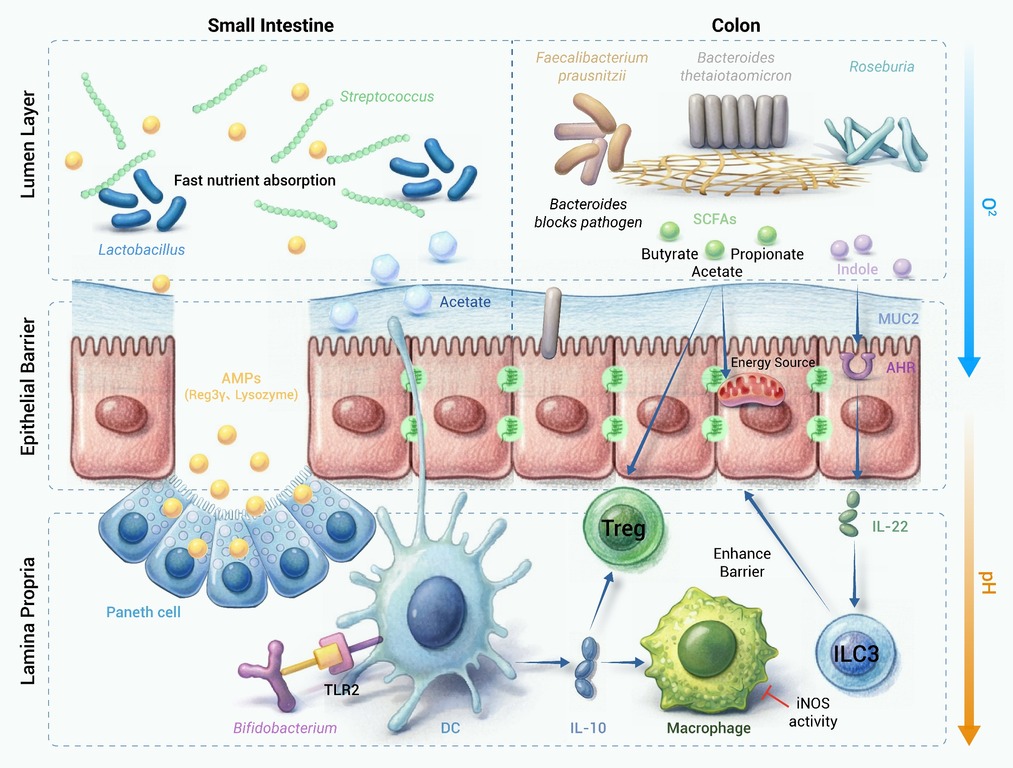
Figure 1.
Region-specific interactions between gut microbiota and mucosal immunity in the small intestine and colon
-
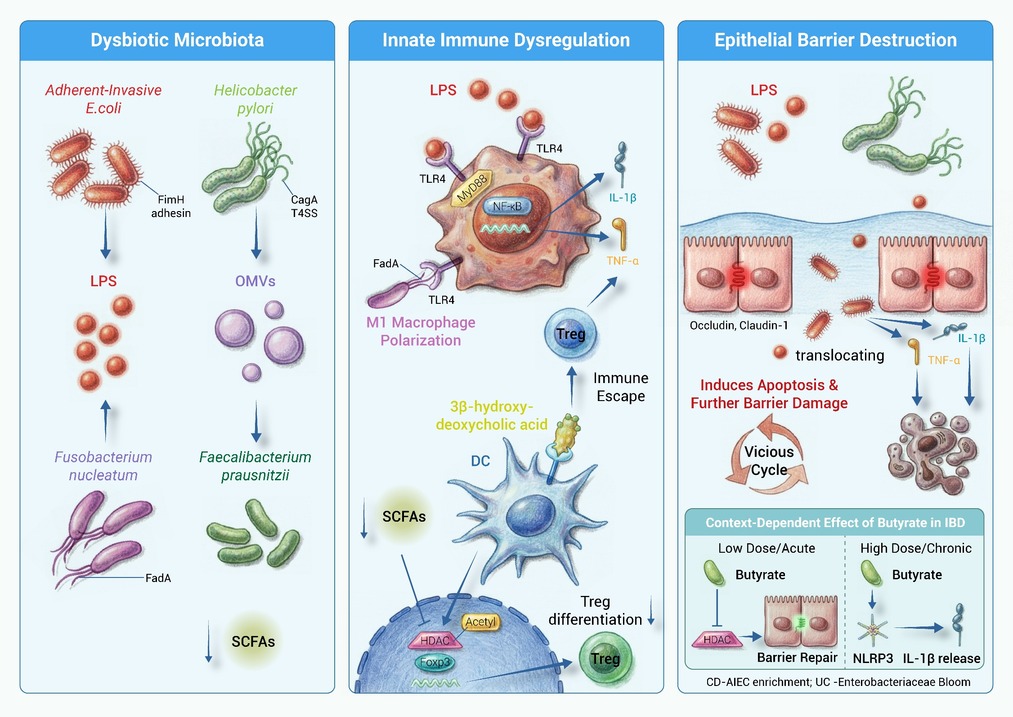
Figure 2.
Microbiota dysbiosis-driven innate immune dysregulation and epithelial barrier destruction in IBD
-
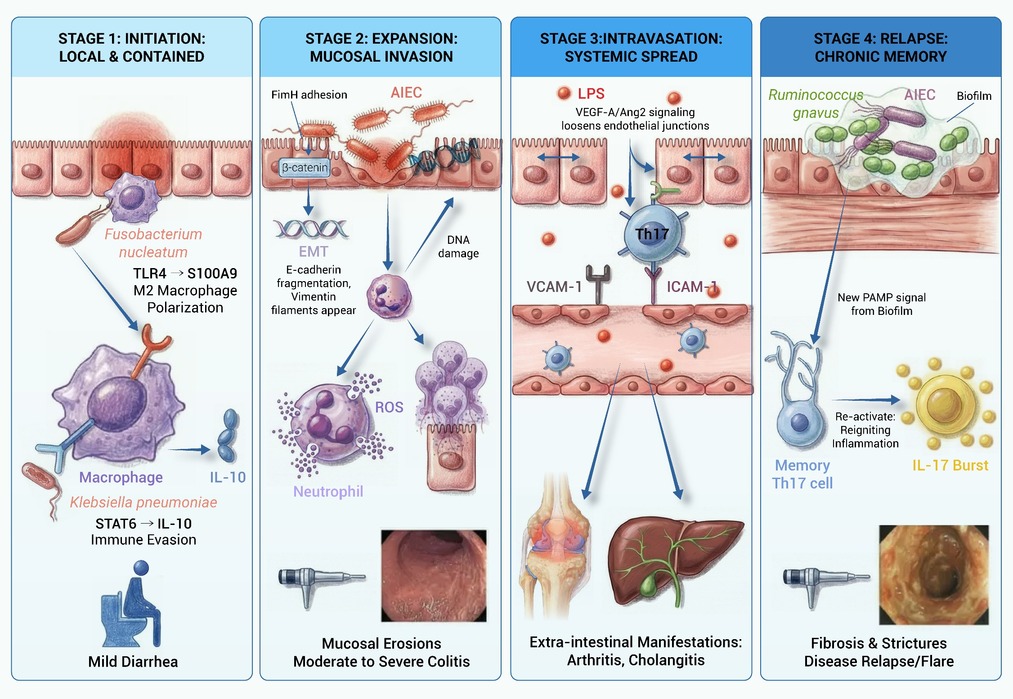
Figure 3.
Sequential progression of inflammatory bowel disease from local initiation to systemic spread and chronic relapse
-
Figure 4.
Microbiota-targeted therapeutic strategies and clinical evidence in IBD
-
Figure 5.
Future research priorities, technological innovations, and clinical translation goals for microbiota-immune regulatory strategies in IBD
