
Nutrient supply drives concurrent K-to-r strategist shifts and competitive intensification in biocrust bacterial communities
-
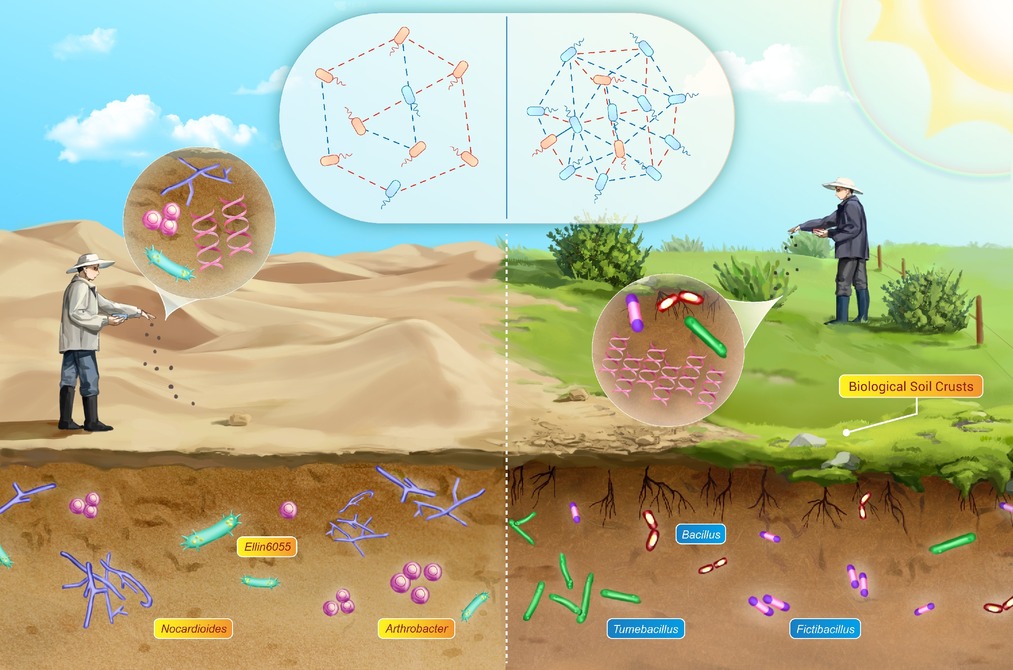
GRAPHICAL ABSTRACT
 DownLoad:
Full size image
DownLoad:
Full size image
-
PUBLIC SUMMARY
-
Increased nutrient supply favored fast-growing, resource-exploiting bacteria.
Biocrust bacterial complexity and interactions increased with nutrient supply.
Negative interactions among biocrust bacteria intensified with nutrient supply.
Six keystone species with different responses to nutrient supply were identified.
Targeted nutrient and keystone taxa management aids dryland restoration.
-
-
ABSTRACT
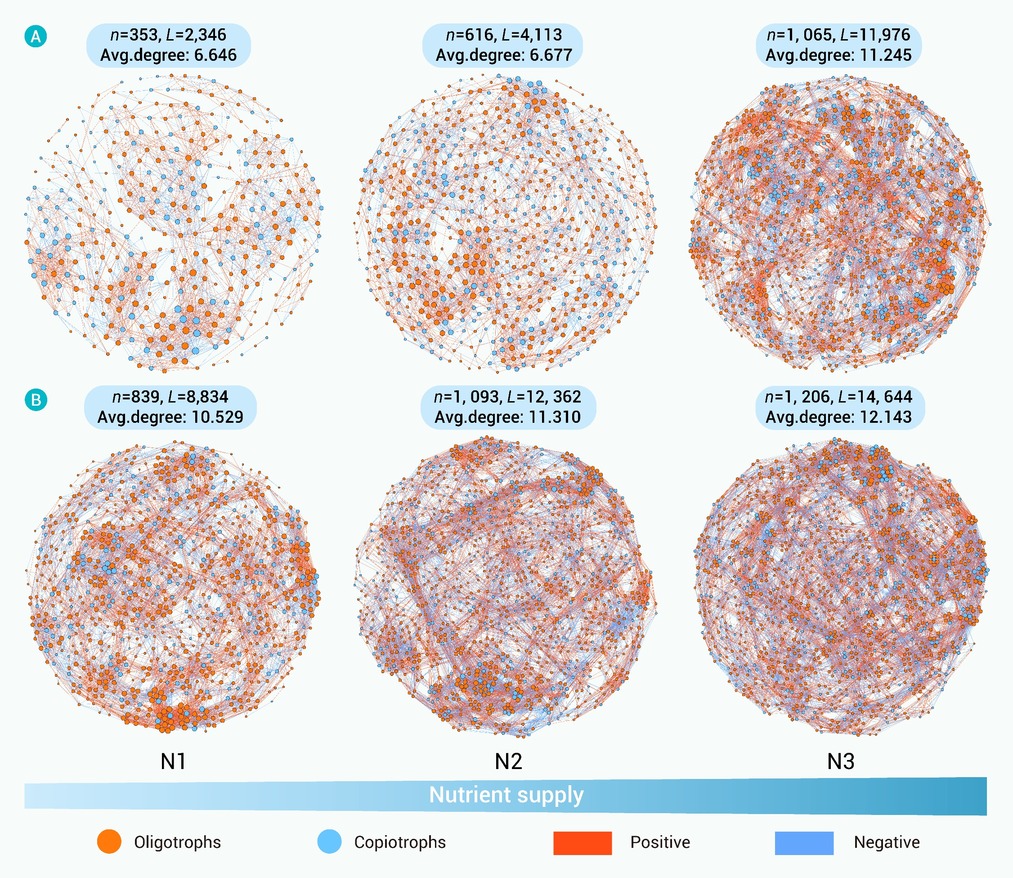
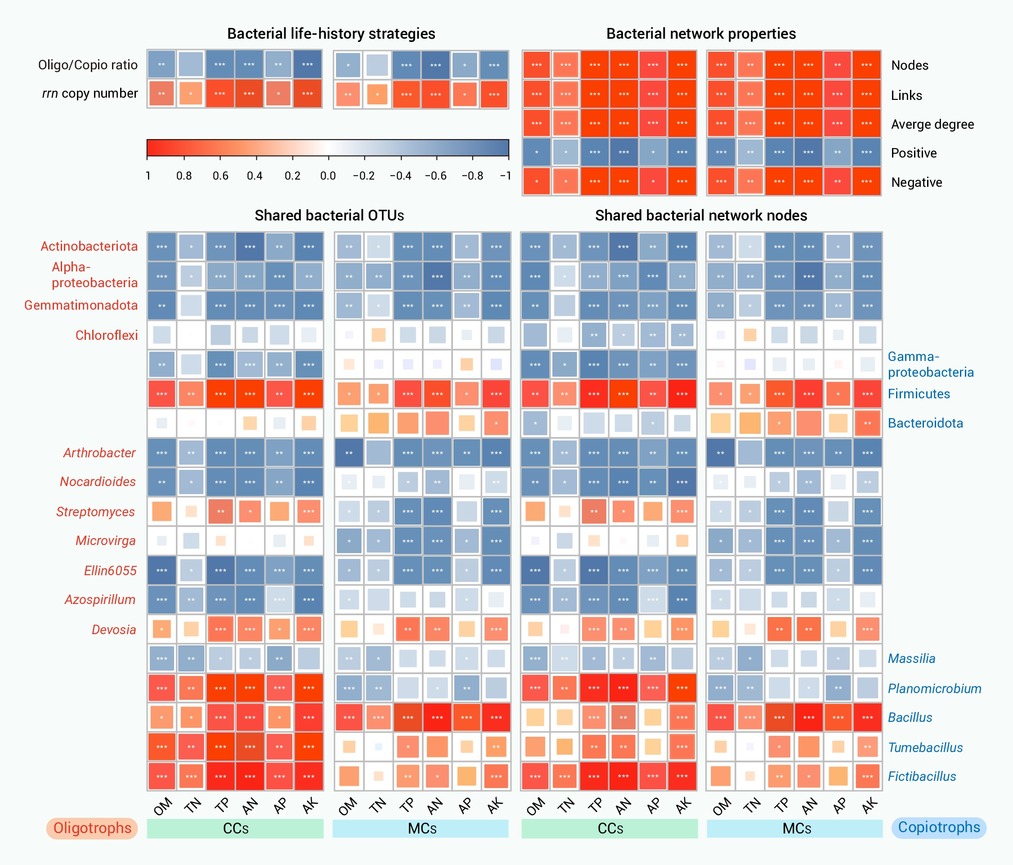
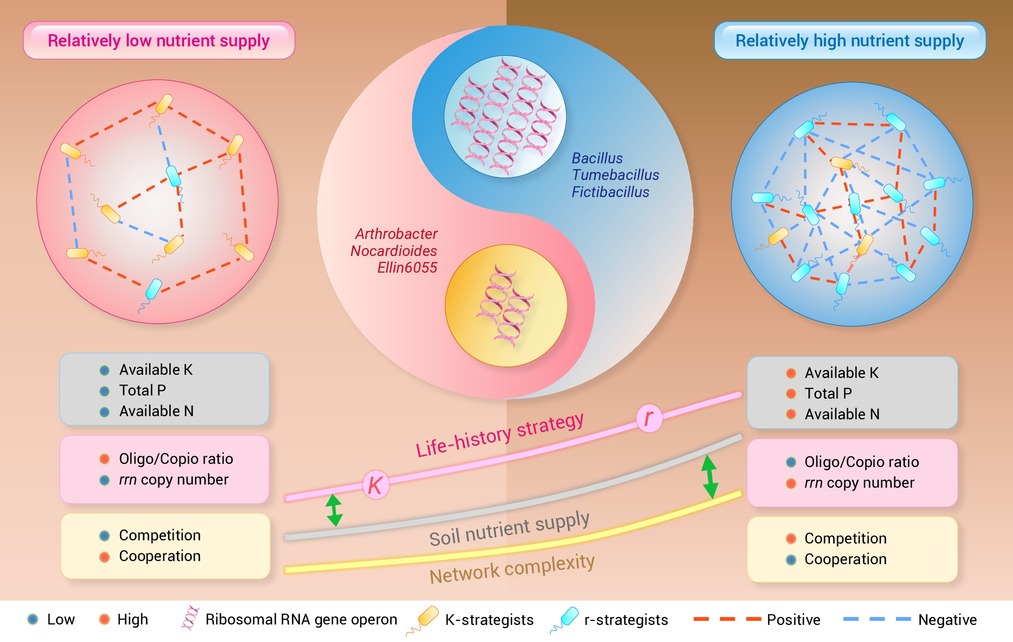
Biological soil crusts (biocrusts) cover ~30% of global drylands and regulate biogeochemical cycles through bacterial metabolic activities. Although nutrient scarcity profoundly influences biocrust bacterial communities, the general principles governing their nutrient response dynamics remain unclear. Here, we employed controlled microcosms to investigate how differential nutrient supply reshaped bacterial life-history traits and interspecies interactions in both cyanobacteria- and moss-dominated biocrusts. Our findings revealed that with increased nutrient supply, the ribosomal RNA gene operon (rrn) copy numbers in bacterial communities significantly increased, while the ratio of oligotrophs to copiotrophs decreased, indicating a shift from K-strategists to r-strategists. Network analysis showed that nutrient supply increased node number, link number, average degree, and negative correlations, indicating stronger interactions within the bacterial community. Keystone taxa analysis identified six keystone taxa, with Arthrobacter, Nocardioides, and Ellin6055 responding negatively, and Bacillus, Tumebacillus, and Fictibacillus responding positively to nutrient supply. Furthermore, bacterial community structure, including life-history strategies, network topology, and keystone taxa, was strongly correlated with soil properties, particularly the contents of available nitrogen and potassium and total phosphorus. Our study establishes a mechanistic framework for nutrient-driven bacterial assembly in dryland ecosystems, providing practical strategies for ecological stabilization through optimized nutrient management and targeted manipulation of bacterial keystone taxa. -

-
REFERENCES
[1] Belnap J. and Büdel B. (2016). Biological soil crusts as soil stabilizers. Weber B., Büdel B., Belnap J. (eds). Biological soil crusts: An organizing principle in drylands (Springer International Publishing), pp: 305-320. DOI:10.1007/978-3-319-30214-0_16 [2] Rodriguez-Caballero E., Belnap J., Büdel B., et al. (2018). Dryland photoautotrophic soil surface communities endangered by global change. Nat. Geosci. 11:185−189. DOI:10.1038/s41561-018-0072-1 [3] Wang Y., Hong Y., Tian Y., et al. (2022). Changes in bacterial community composition and soil properties altered the response of soil respiration to rain addition in desert biological soil crusts. Geoderma 409:115635. DOI:10.1016/j.geoderma.2021.115635 [4] Sun F., Xiao B. and Tuller M. (2024). Multifaceted impacts of moss-dominated biocrusts on dryland soils: From soil pore structure to aeration and water infiltration. Catena 236:107755. DOI:10.1016/j.catena.2023.107755 [5] Lan S., Wu L., Zhang D., et al. (2012). Successional stages of biological soil crusts and their microstructure variability in Shapotou region (China). Environ. Earth Sci. 65:77−88. DOI:10.1007/s12665-011-1066-0 [6] Li X. R., Zhang P., Su Y. G., et al. (2012). Carbon fixation by biological soil crusts following revegetation of sand dunes in arid desert regions of China: A four-year field study. Catena 97:119−126. DOI:10.1016/j.catena.2012.05.009 [7] Maier S., Tamm A., Wu D., et al. (2018). Photoautotrophic organisms control microbial abundance, diversity, and physiology in different types of biological soil crusts. ISME J. 12:1032−1046. DOI:10.1038/s41396-018-0062-8 [8] Zhang B., Kong W., Wu N., et al. (2016). Bacterial diversity and community along the succession of biological soil crusts in the Gurbantunggut Desert, Northern China. J. Basic Microbiol. 56:670−679. DOI:10.1002/jobm.201500751 [9] Liu L., Liu Y., Zhang P., et al. (2017). Development of bacterial communities in biological soil crusts along a revegetation chronosequence in the Tengger Desert, northwest China. Biogeosciences 14:3801−3814. DOI:10.5194/bg-14-3801-2017 [10] Zhao L., Yuan S., Jia R., et al. (2024). Unveiling hidden bacterial players: A closer look at the succession characteristics and co-occurrence patterns of abundant, intermediate and rare bacteria in biological soil crusts. Catena 243:108223. DOI:10.1016/j.catena.2024.108223 [11] Chen Y., Neilson J. W., Kushwaha P., et al. (2021). Life-history strategies of soil microbial communities in an arid ecosystem. ISME J. 15:649−657. DOI:10.1038/s41396-020-00803-y [12] MacArthur R. H. and Wilson E. O. (2001). The theory of island biogeography (Princeton University Press). DOI:10.1515/9781400881376 [13] Koch A. L. (2001). Oligotrophs versus copiotrophs. BioEssays 23:657−661. DOI:10.1002/bies.1091 [14] Li H., Yang S., Semenov M. V., et al. (2021). Temperature sensitivity of SOM decomposition is linked with a K-selected microbial community. Global Change Biol. 27:2763−2779. DOI:10.1111/gcb.15593 [15] Liu J., Peng Z., Tu H., et al. (2024). Oligotrophic microbes are recruited to resist multiple global change factors in agricultural subsoils. Environ. Int. 183:108429. DOI:10.1016/j.envint.2024.108429 [16] Sinsabaugh R. L., Hill B. H. and Follstad Shah J. J. (2009). Ecoenzymatic stoichiometry of microbial organic nutrient acquisition in soil and sediment. Nature 462:795−798. DOI:10.1038/nature08632 [17] de Menezes A. B., Prendergast-Miller M. T., Richardson A. E., et al. (2015). Network analysis reveals that bacteria and fungi form modules that correlate independently with soil parameters. Environ. Microbiol. 17:2677−2689. DOI:10.1111/1462-2920.12559 [18] Molenaar D., van Berlo R., de Ridder D., et al. (2009). Shifts in growth strategies reflect tradeoffs in cellular economics. Mol. Syst. Biol. 5:323. DOI:10.1038/msb.2009.82 [19] Roller B. R. K., Stoddard S. F. and Schmidt T. M. (2016). Exploiting rRNA operon copy number to investigate bacterial reproductive strategies. Nat. Microbiol. 1:16160. DOI:10.1038/nmicrobiol.2016.160 [20] Dai T., Wen D., Bates C. T., et al. (2022). Nutrient supply controls the linkage between species abundance and ecological interactions in marine bacterial communities. Nat. Commun. 13:175. DOI:10.1038/s41467-021-27857-6 [21] Lin R., Wu H., Kong X., et al. (2023). Ribosomal RNA gene operon copy number, a functional trait indicating the hydrocarbon degradation level of bacterial communities. J. Hazard. Mater. 459:132100. DOI:10.1016/j.jhazmat.2023.132100 [22] Jing J., Garbeva P., Raaijmakers J. M., et al. (2024). Strategies for tailoring functional microbial synthetic communities. ISME J. 18:wrae049. DOI:10.1093/ismejo/wrae049 [23] Wang C., Shi Z., Li A., et al. (2024). Long-term nitrogen input reduces soil bacterial network complexity by shifts in life history strategy in temperate grassland. iMeta 3:e194. DOI:10.1002/imt2.194 [24] Ma B., Wang H., Dsouza M., et al. (2016). Geographic patterns of co-occurrence network topological features for soil microbiota at continental scale in eastern China. ISME J. 10:1891−1901. DOI:10.1038/ismej.2015.261 [25] Qi G., Ma G., Chen S., et al. (2019). Microbial network and soil properties are changed in bacterial wilt-susceptible soil. Appl. Environ. Microbiol. 85:e00162−00119. DOI:10.1128/AEM.00162-19 [26] Liu Y., Yang Y., Deng Y., et al. (2025). Long-term ammonium nitrate addition strengthens soil microbial cross-trophic interactions in a Tibetan alpine steppe. Ecology 106:e70057. DOI:10.1002/ecy.70057 [27] Chen X., Tian J., Liu S., et al. (2022). The complexity of the bacterial community in response to fertilization determines forage production in a semiarid grassland. Ecol. Indic. 139:108918. DOI:10.1016/j.ecolind.2022.108918 [28] Huang R., McGrath S. P., Hirsch P. R., et al. (2019). Plant–microbe networks in soil are weakened by century-long use of inorganic fertilizers. Microb. Biotechnol. 12:1464−1475. DOI:10.1111/1751-7915.13487 [29] Ma X.T., Wang Z., Shi N.R., et al. (2022). Long-term nitrogen deposition enhances microbial capacities in soil carbon stabilization but reduces network complexity. Microbiome 10:112. DOI:10.1186/s40168-022-01309-9 [30] Goberna M. and Verdú M. (2022). Cautionary notes on the use of co-occurrence networks in soil ecology. Soil Biol. Biochem. 166:108534. DOI:10.1016/j.soilbio.2021.108534 [31] Guseva K., Darcy S., Simon E., et al. (2022). From diversity to complexity: Microbial networks in soils. Soil Biol. Biochem. 169:108604. DOI:10.1016/j.soilbio.2022.108604 [32] Gobbie K. G., Pietrasiak N., Jusko B. M., et al. (2025). Climate and gypsum parent material shape biocrust communities and moss ecology in the Chihuahuan and Mojave Deserts. Geoderma 453:117131. DOI:10.1016/j.geoderma.2024.117131 [33] Li X. R., Jia R. L., Zhang Z. S., et al. (2018). Hydrological response of biological soil crusts to global warming: A ten-year simulative study. Global Change Biol. 24:4960−4971. DOI:10.1111/gcb.14378 [34] He M., Dijkstra F. A., Zhang K., et al. (2016). Influence of life form, taxonomy, climate, and soil properties on shoot and root concentrations of 11 elements in herbaceous plants in a temperate desert. Plant Soil 398:339−350. DOI:10.1007/s11104-015-2669-0 [35] Li X. R., He M. Z., Duan Z. H., et al. (2007). Recovery of topsoil physicochemical properties in revegetated sites in the sand-burial ecosystems of the Tengger Desert, northern China. Geomorphology 88:254−265. DOI:10.1016/j.geomorph.2006.11.009 [36] Li X. R., He M. Z., Zerbe S., et al. (2010). Micro-geomorphology determines community structure of biological soil crusts at small scales. Earth Surf. Process. Landf. 35:932−940. DOI:10.1002/esp.1963 [37] Li Y., Wang J., Shen C., et al. (2024). Microbial diversity losses constrain the capacity of soils to mitigate climate change. Glob Chang Biol. 30:e17601. DOI:10.1111/gcb.17601 [38] Yang G., Ryo M., Roy J., et al. (2021). Plant and soil biodiversity have non-substitutable stabilising effects on biomass production. Ecol. Lett. 24:1582−1593. DOI:10.1111/ele.13769 [39] Walkley A. and Black I. A. (1934). An examination of the degtjareff method for determining soil organic matter, and a proposed modification of the chromic acid titration method. Soil Sci. 37:29−38. DOI:10.1097/00010694-193401000-00003 [40] Kuo S. (1996). Phosphorus. Sparks D.L., Page A.L., Helmke P.A., et al. (eds). Methods of soil analysis, part 3: Chemical methods (John Wiley & Sons), pp: 869-919. DOI:10.2136/sssabookser5.3.c32 [41] Mulvaney R.L. and Khan S.A. (2001). Diffusion methods to determine different forms of nitrogen in soil hydrolysates. Soil Sci. Soc. Am. J. 65:1284−1292. DOI:10.2136/sssaj2001.6541284x [42] Hald P. M. and Mason W. B. (1958). Sodium and potassium by flame photometry. Seligson D. (eds). Standard methods of clinical chemistry (Elsevier), pp:165-185. DOI:10.1016/B978-1-4831-9683-1.50023-X [43] Bastian M., Heymann S. and Jacomy M. (2009). Gephi: An open source software for exploring and manipulating networks. Proc. Int. AAAI Conf. Web Soc. Media 3:361−362. DOI:10.1609/icwsm.v3i1.13937 [44] Bardgett R. D. and van der Putten W. H. (2014). Belowground biodiversity and ecosystem functioning. Nature 515:505−511. DOI:10.1038/nature13855 [45] Hu P., Zhang W., Kuzyakov Y., et al. (2023). Linking bacterial life strategies with soil organic matter accrual by karst vegetation restoration. Soil Biol. Biochem. 177:108925. DOI:10.1016/j.soilbio.2022.108925 [46] Evans S. E. and Wallenstein M. D. (2014). Climate change alters ecological strategies of soil bacteria. Ecol. Lett. 17:155−164. DOI:10.1111/ele.12206 [47] Nemergut D. R., Knelman J. E., Ferrenberg S., et al. (2016). Decreases in average bacterial community rRNA operon copy number during succession. ISME J. 10:1147−1156. DOI:10.1038/ismej.2015.191 [48] Wu L., Yang Y., Chen S., et al. (2017). Microbial functional trait of rRNA operon copy numbers increases with organic levels in anaerobic digesters. ISME J. 11:2874−2878. DOI:10.1038/ismej.2017.135 [49] Polz M. F. and Cordero O. X. (2016). Bacterial evolution: Genomics of metabolic trade-offs. Nat. Microbiol. 1:16181. DOI:10.1038/nmicrobiol.2016.181 [50] Klappenbach J. A., Dunbar J. M. and Schmidt T. M. (2000). rRNA operon copy number reflects ecological strategies of bacteria. Appl. Environ. Microbiol. 66:1328−1333. DOI:10.1128/AEM.66.4.1328-1333.2000 [51] Lee Z. M.-P., Bussema III C. and Schmidt T. M. (2009). rrnDB: Documenting the number of rRNA and tRNA genes in bacteria and archaea. Nucleic Acids Res. 37:D489−D493. DOI:10.1093/nar/gkn689 [52] Fierer N. and Jackson R. B. (2006). The diversity and biogeography of soil bacterial communities. Proc. Natl. Acad. Sci. USA 103:626−631. DOI:10.1073/pnas.0507535103 [53] Kost C., Patil K. R., Friedman J., et al. (2023). Metabolic exchanges are ubiquitous in natural microbial communities. Nat. Microbiol. 8:2244−2252. DOI:10.1038/s41564-023-01511-x [54] Frey E. (2010). Evolutionary game theory: Theoretical concepts and applications to microbial communities. Physica A 389:4265−4298. DOI:10.1016/j.physa.2010.02.047 [55] Vellend M. (2010). Conceptual synthesis in community ecology. Q. Rev. Biol. 85:183−206. DOI:10.1086/652373 [56] Laland K., Matthews B. and Feldman M. W. (2016). An introduction to niche construction theory. Evol. Ecol. 30:191−202. DOI:10.1007/s10682-016-9821-z [57] Eldridge D. J., Bowker M. A., Maestre F. T., et al. (2011). Impacts of shrub encroachment on ecosystem structure and functioning: Towards a global synthesis. Ecol. Lett. 14:709−722. DOI:10.1111/j.1461-0248.2011.01630.x [58] Guo Q., Liu L., Liu J., et al. (2022). Plant sex affects plant-microbiome assemblies of dioecious Populus cathayana trees under different soil nitrogen conditions. Microbiome 10:191. DOI:10.1186/s40168-022-01387-9 [59] Zhou Y., Liu D., Li F., et al. (2024). Superiority of native soil core microbiomes in supporting plant growth. Nat. Commun. 15:6599. DOI:10.1038/s41467-024-50685-3 [60] Bennur T., Kumar A. R., Zinjarde S., et al. (2015). Nocardiopsis species: Incidence, ecological roles and adaptations. Microbiol. Res. 174:33−47. DOI:10.1016/j.micres.2015.03.010 [61] Olofintila Oluwakemisola E. and Noel Zachary A. (2023). Soybean and cotton spermosphere soil microbiome shows dominance of soilborne copiotrophs. Microbiol. Spectr. 11:e00377−00323. DOI:10.1128/spectrum.00377-23 [62] Xia X., Wei Q., Wu H., et al. (2024). Bacillus species are core microbiota of resistant maize cultivars that induce host metabolic defense against corn stalk rot. Microbiome 12:156. DOI:10.1186/s40168-024-01887-w [63] Zheng C., Song J., Shan M., et al. (2024). Key bacterial taxa with specific metabolisms and life history strategies sustain soil microbial network stability exposed to carbendazim and deoxynivalenol. Sci. Total Environ. 954:176680. DOI:10.1016/j.scitotenv.2024.176680 [64] Liu J., Pan Z., Sun K., et al. (2022). The preferential preservation of both different minerals and polyethylene microplastics on aromatic or aliphatic carbon fractions within low or high pyrolysis temperature biochar under mineralization. Renew. Sust. Energ. Rev. 170:112963. DOI:10.1016/j.rser.2022.112963 -
ABOUT THIS ARTICLE
Cite this article:
Zhao L., Zhang W., Chen N., et al. (2026). Nutrient supply drives concurrent K-to-r strategist shifts and competitive intensification in biocrust bacterial communities. The Innovation Life 4:100195. https://doi.org/10.59717/j.xinn-life.2026.100195
Welcome!
To request copyright permission to republish or share portions of our works, please visit Copyright Clearance Center's (CCC) Marketplace website at marketplace.copyright.com.
Article Metrics
Relative Articles
Cited by
Export File
Citation
Zhao L., Zhang W., Chen N., et al. (2026). Nutrient supply drives concurrent K-to-r strategist shifts and competitive intensification in biocrust bacterial communities. The Innovation Life 4:100195. https://doi.org/10.59717/j.xinn-life.2026.100195

Format
Content
-
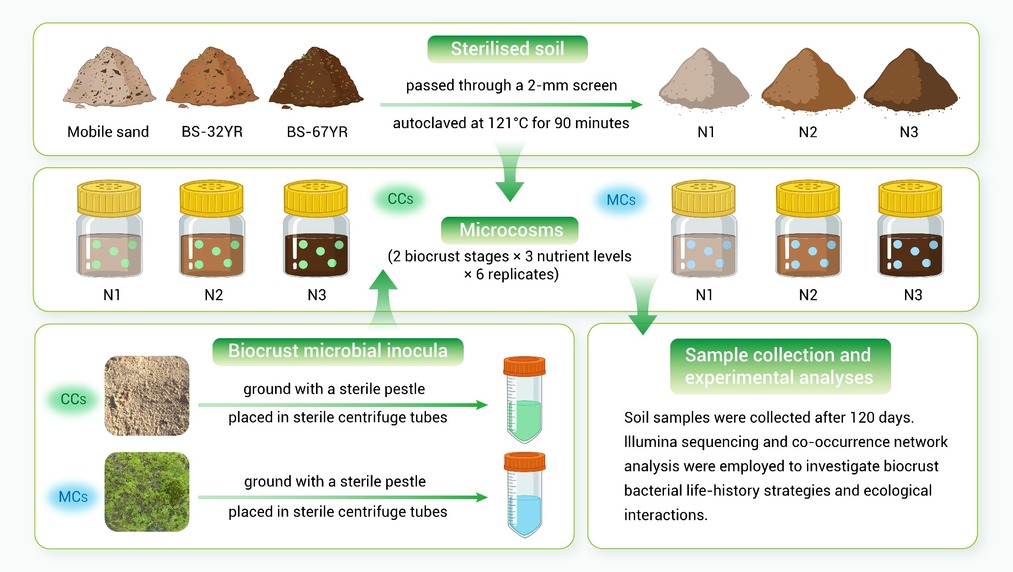
Figure 1.
Schematic of the experimental design
-
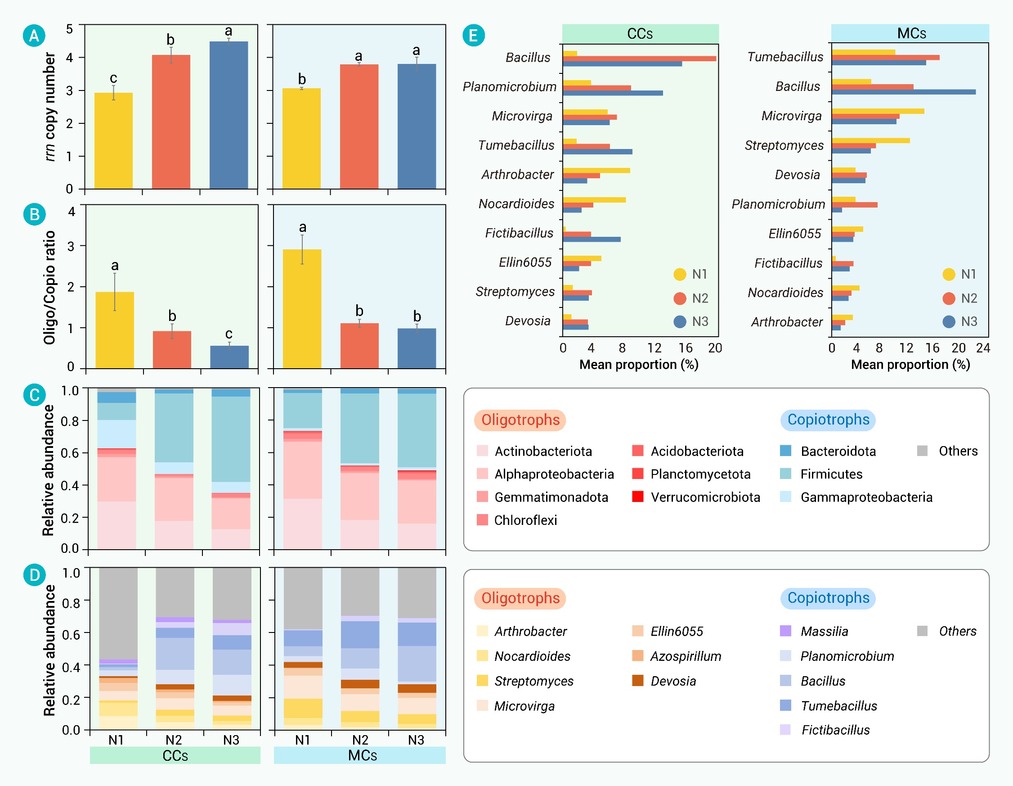
Figure 2.
Biocrust bacterial life-history strategies and taxonomic compositions in soil microcosms under different nutrient levels (n = 6 per treatment)
-
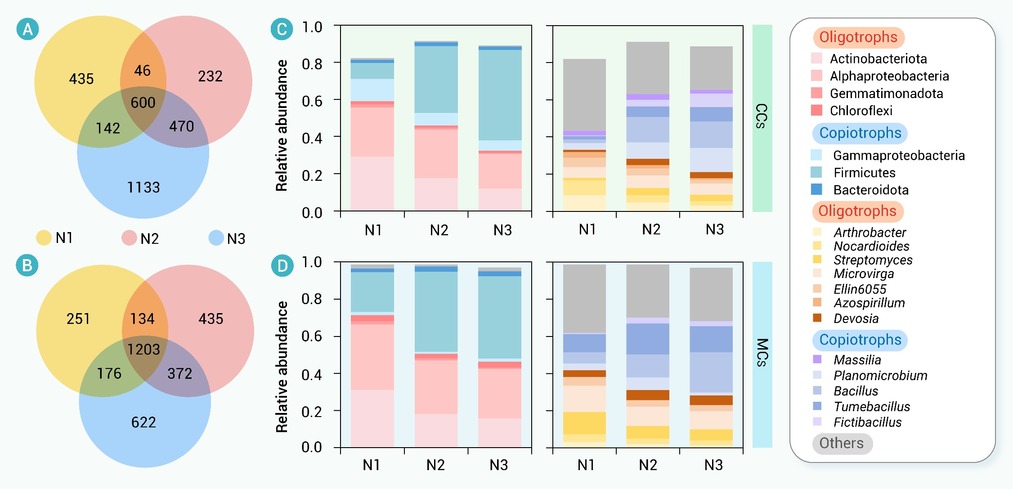
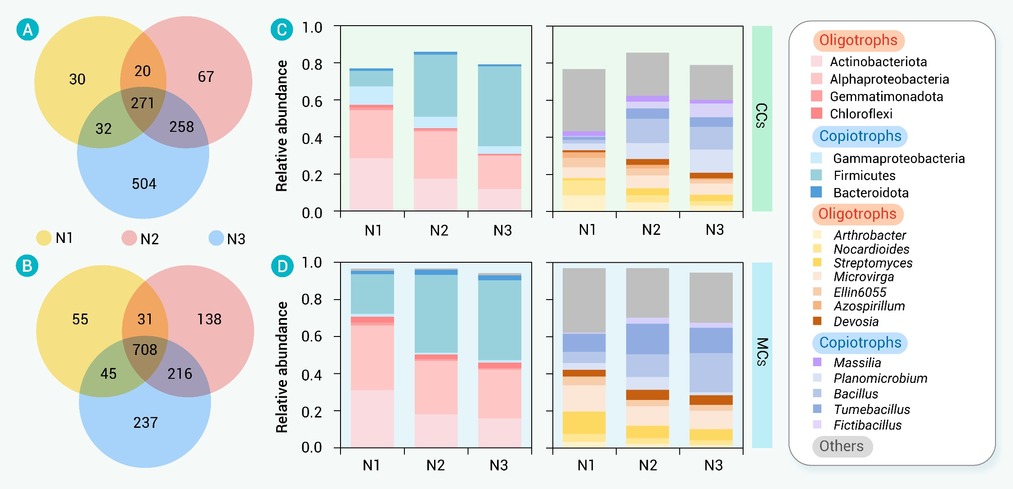
Figure 3.
Overview of biocrust bacterial OTUs in soil microcosms under different nutrient levels
-
Figure 4.
Network associations of biocrust bacterial OTUs in soil microcosms under different nutrient levels (n = 6 per treatment)
-
Figure 5.
Overview of biocrust bacterial network nodes in soil microcosms under different nutrient levels
-
Figure 6.
Spearman correlation analysis between bacterial community structures and soil properties
-
Figure 7.
Conceptual model of nutrient-driven shifts in biocrust bacterial life-history strategies and ecological interactions
