
Ultra-low-energy CO2 capture by planar-stacked solid amine sorbent with pulsed microwave regeneration
-
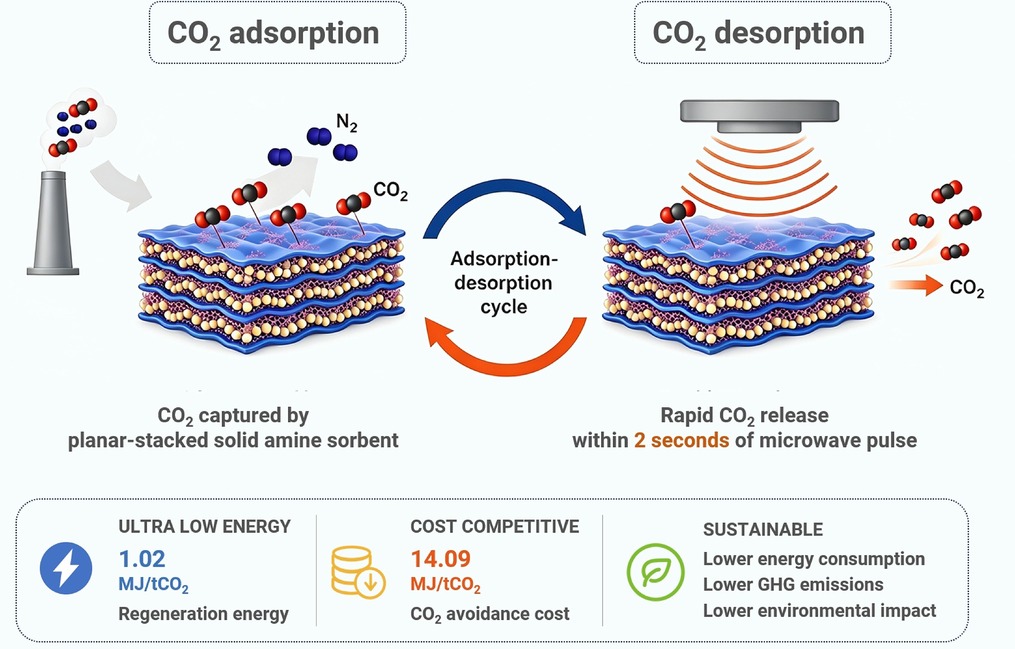
GRAPHICAL ABSTRACT
 DownLoad:
Full size image
DownLoad:
Full size image
-
PUBLIC SUMMARY
-
Microwave-responsive PEI-based solid sorbent developed for efficient CO2 capture.
Pulsed microwave regeneration achieves ultra-low energy use of 1.02 MJ/tCO2.
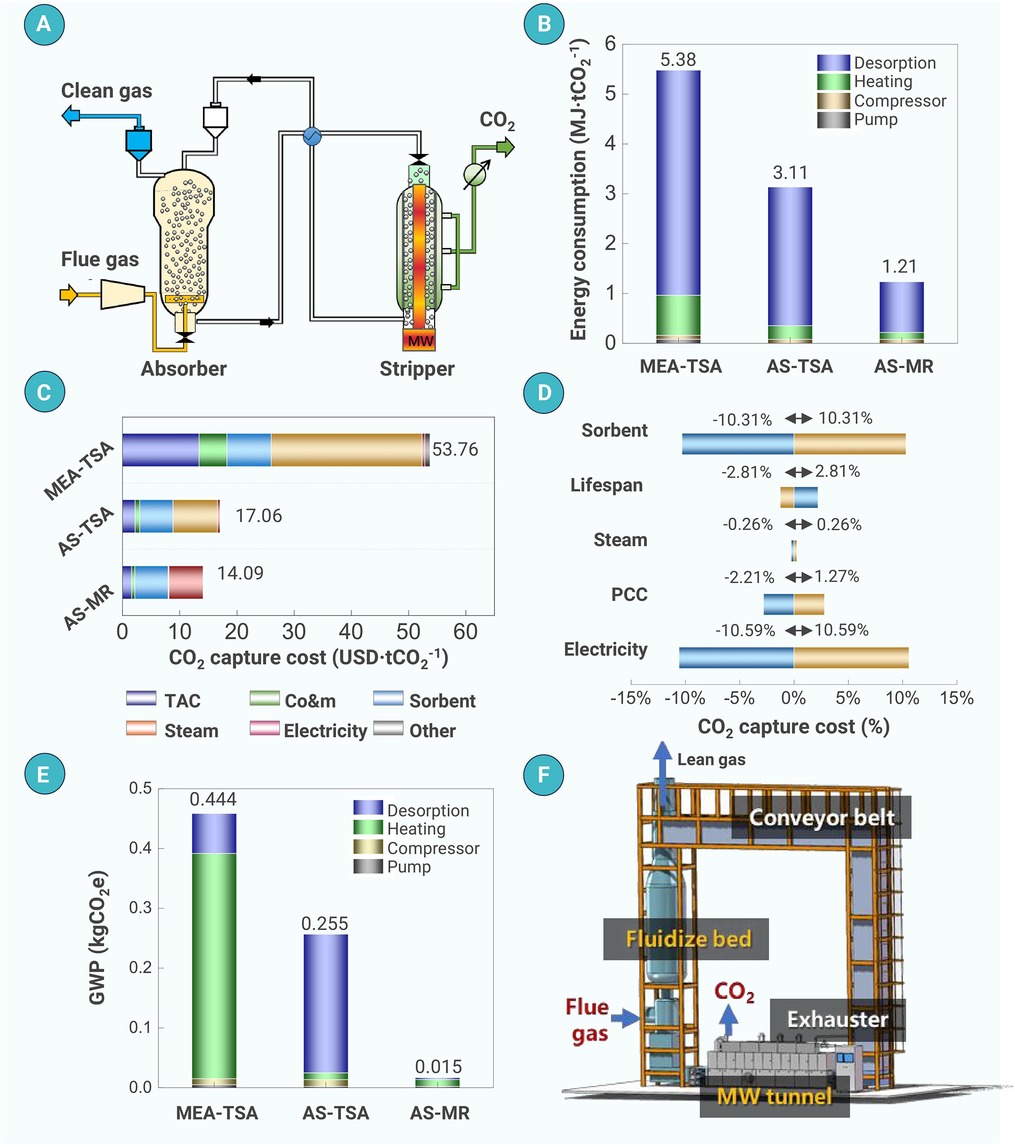
Techno-economic analysis shows CO2 avoidance cost reduced to 14.09 USD/tCO2.
-
-
ABSTRACT
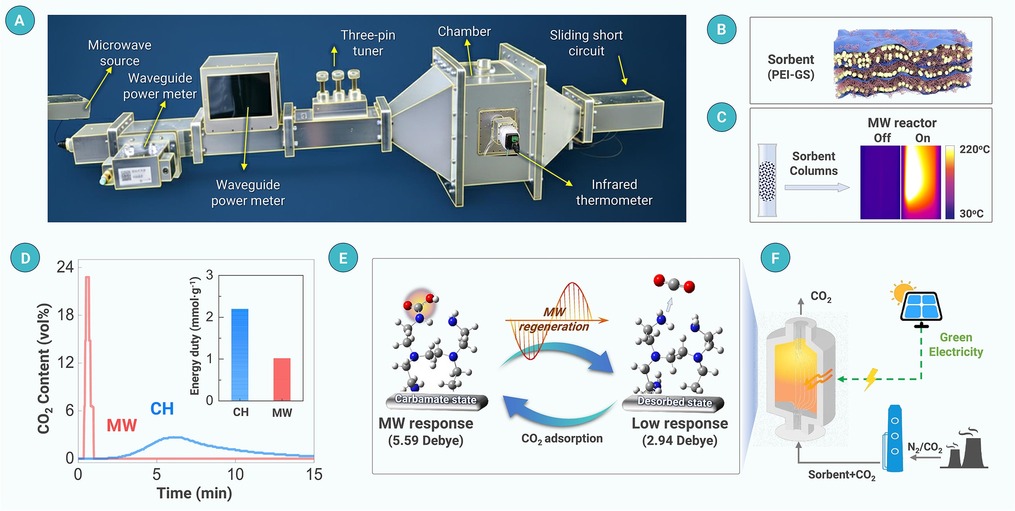
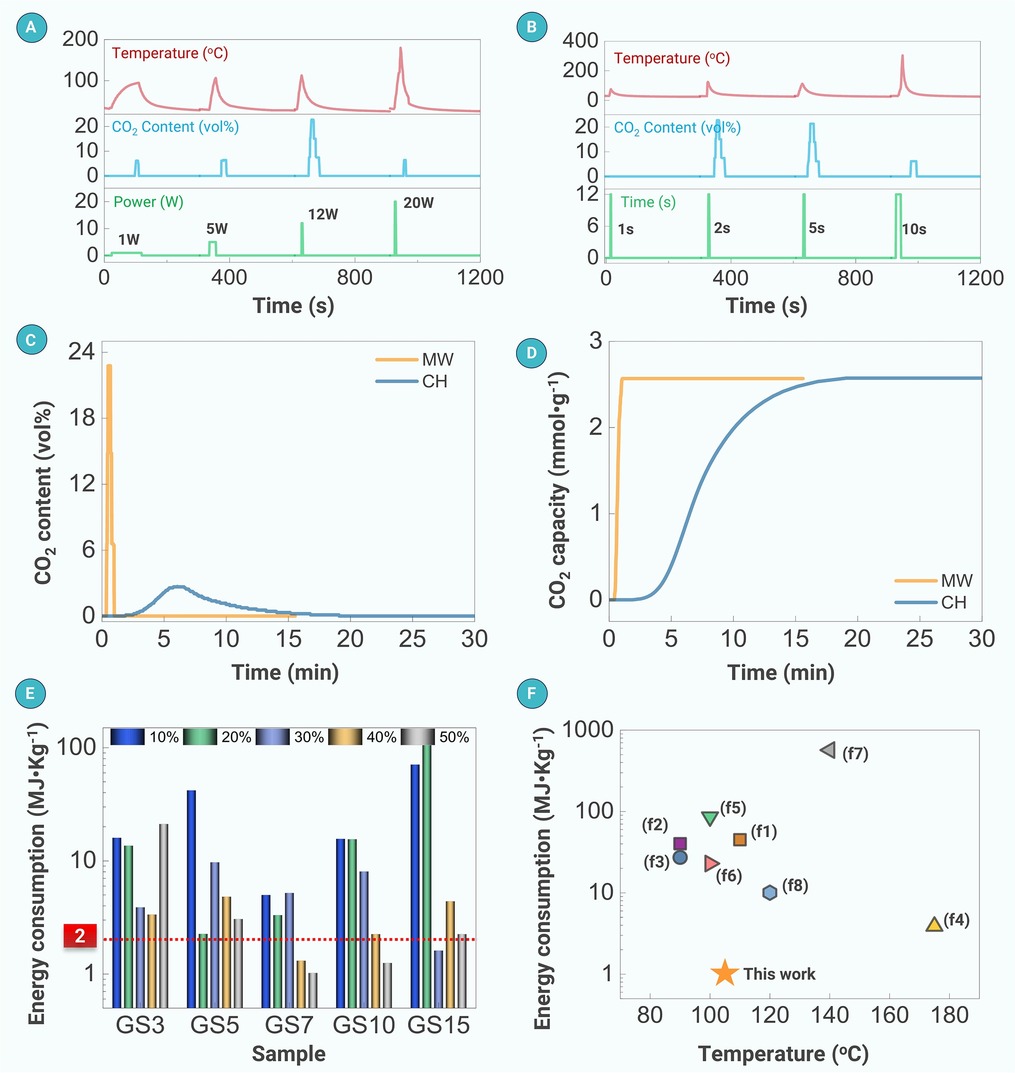
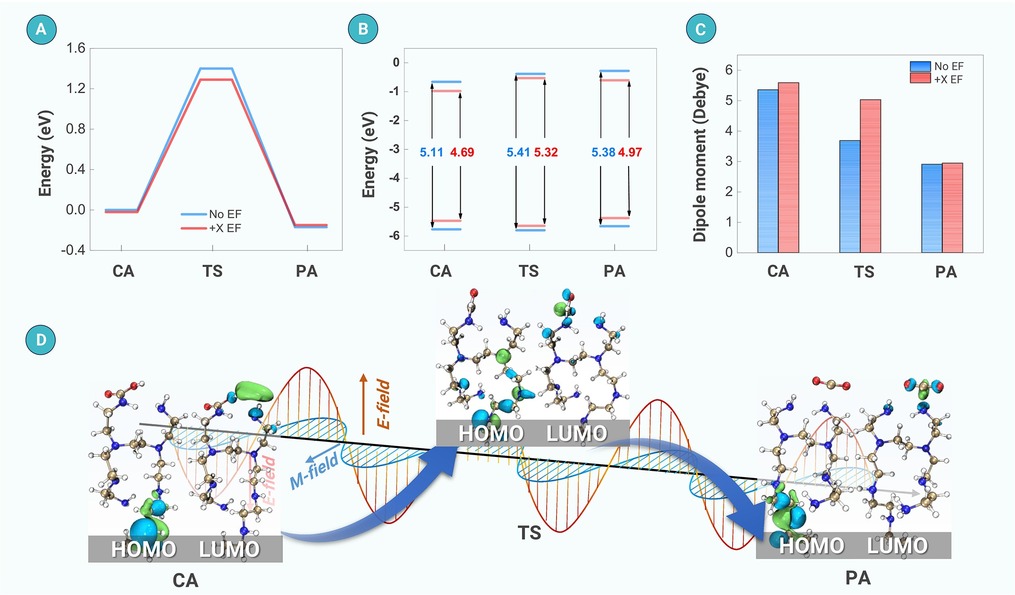
Carbon dioxide (CO2) capture with energy duty of below 2.0 MJ·kg−1 CO2 is the global prospect in the decarbonization process. Herein, we present a microwave-responsive amine sorbent coupled with a pulsed microwave regeneration (AS-MR) process that achieves rapid and fully regeneration of amine sorbent within 2 seconds of microwave pulse. By matching the energy input with the desorption rate, ultra-low energy duty of 1.02 MJ·kg−1 CO2 can be achieved for sorbent regeneration and 1.21 MJ·kg−1 CO2 for the AS-MR system during an adsorption-desorption cycle. Insights into the mechanism indicate that the directional electric field aids the CO2 desorption process by weakening and polarizing the C-N bond in the carbamate acid state. Techno-economic analysis and life cycle assessment demonstrate the sustainability of this technology with costs below $20·tonne−1, directly responding to the pressing demand for economically viable decarbonization technologies in challenging industrial sectors.-
Keywords:
- Adsorption /
- Microwave chemistry /
- Solid amine sorbent /
- Carbon capture /
- Regeneration
-

-
REFERENCES
[1] Service R. F. (2021). Carbon capture marches toward practical use. Science 371:1300. DOI:10.1126/science.371.6536.1300 [2] Li S., Feng Y., Li Y., et al. (2024). Critical review on mobile direct air capture: Concept expansion, characteristic description, and performance evaluation. Matter 7:889−933. DOI:10.1016/j.matt.2024.01.003 [3] Meinshausen M., Lewis J., McGlade C., et al. (2022). Realization of Paris agreement pledges may limit warming just below 2 °C. Nature 604:304. DOI:10.1038/s41586-022-04553-z [4] Rochelle G. T. (2009). Amine scrubbing for CO2 capture. Science 325:1652−1654. DOI:10.1126/science.1176731 [5] Min K., Choi W., Kim C., et al. (2018). Oxidation-stable amine-containing adsorbents for carbon dioxide capture. Nat. Commun. 9:726. DOI:10.1038/s41467-018-03123-0 [6] Aghel B., Janati S., Wongwises S., et al. (2022). Review on CO2 capture by blended amine solutions. Int. J. Greenhouse Gas Control 119:103715. DOI:10.1016/j.ijggc.2022.103715 [7] Zhao F., Cui C., Dong S., et al. (2023). An overview on the corrosion mechanisms and inhibition techniques for amine-based post-combustion carbon capture process. Sep. Purif. Technol. 304:122091. DOI:10.1016/j.seppur.2022.122091 [8] Zhou T., Wen Y., Wu Z., et al. (2024). Dual-bonded polyethyleneimine network with electron-withdrawing groups at α, β-sites for ultra-stable and low-energy CO2 capture in harsh environments. Green Energy Environ. 10:1039−1049. DOI:10.1016/j.gee.2024.10.005 [9] Zhou T., Wu Z., Wen Y., et al. (2024). Networking SiO2-Al2O3 and amines into robust and long-lasting molded sorbents for continuous CO2 capture. Chem. Eng. J. 499:156446. DOI:10.1016/j.cej.2024.156446 [10] Siegelman R. L., Kim E. J. and Long J. R. (2021). Porous materials for carbon dioxide separations. Nat. Mater. 20:1060−1072. DOI:10.1038/s41563-021-01054-8 [11] Naeem M. A., Armutlulu A., Imtiaz Q., et al. (2018). Optimization of the structural characteristics of CaO and its effective stabilization yield high-capacity CO2 sorbents. Nat. Commun. 9:2408. DOI:10.1038/s41467-018-04794-5 [12] Yoo C.-J., Park S. J. and Jones C. W. (2020). CO2 adsorption and oxidative degradation of silica-supported branched and linear aminosilanes. Ind. Eng. Chem. Res. 59:7061−7071. DOI:10.1021/acs.iecr.9b04205 [13] Liu H., Wang X., Chen S., et al. (2024). Sponge-like polyethyleneimine adsorbents with interconnected open channels enabling ultra-high CO2 adsorption and separation capacity. Sep. Purif. Technol. 330:125528. DOI:10.1016/j.seppur.2023.125528 [14] Lai Q., Toan S., Assiri M. A., et al. (2018). Catalyst-TiO(OH)2 could drastically reduce the energy consumption of CO2 capture. Nat. Commun. 9:2672. DOI:10.1038/s41467-018-05145-0 [15] Ai Y., Xing R., Ren N., et al. (2025). Biomass-derived hierarchical carbon frameworks enable robust microwave absorption. Matter 8:102289. DOI:10.1016/j.matt.2025.102289 [16] Bougie F. and Fan X. (2018). Microwave regeneration of monoethanolamine aqueous solutions used for CO2 capture. Int. J. Greenhouse Gas Control 79:165−172. DOI:10.1016/j.ijggc.2018.10.008 [17] McGurk S. J., Martin C. F., Brandani S., et al. (2017). Microwave swing regeneration of aqueous monoethanolamine for post-crossmark combustion CO2 capture. Appl. Energy 192:126−133. DOI:10.1016/j.apenergy.2017.02.012 [18] Gomez-Rueda Y., Verougstraete B., Ranga C., et al. (2022). Rapid temperature swing adsorption using microwave regeneration for carbon capture. Chem. Eng. J. 446:137345. DOI:10.1016/j.cej.2022.137345 [19] Yang J., Tan H. Y., Low Q. X., et al. (2015). CO2 capture by dry alkanolamines and an efficient microwave regeneration process. J. Mater. Chem. A 3:6440−6446. DOI:10.1039/c4ta06273f [20] Erguvan M. and Amini S. (2024). Experimental microwave assisted CO2 desorption of a solid sorbent in a fluidized bed reactor. Sep. Purif. Technol. 343:127062. DOI:10.1016/j.seppur.2024.127062 [21] Qi G., Fu, L., Choi B. H., et al. (2012). Efficient CO2 sorbents based on silica foam with ultra-large mesopores. Energy Environ. Sci. 5:7368−7375. DOI:10.1039/C2EE21394J [22] Frisch M. J., Trucks G. W., Schlegel H. B., et al. (2016). Gaussian, Version 16, Revision A. 03; Gaussian. Inc.: Wallingford, CT, USA. https://gaussian.com/relnotes_a03/ [23] Becke, A. D. (1993). Density‐functional thermochemistry. III. The role of exact exchange. J. Chem. Phys. 98:5648−5652. DOI:10.1063/1.464913 [24] Grimme S., Antony J., Ehrlich S., et al. (2010). A consistent and accurate ab initio parametrization of density functional dispersion correction (DFT-D) for the 94 elements H-Pu. J. Chem. Phys. 132:154104. DOI:10.1063/1.3382344 [25] Hariharan P. C. and Pople J. A. (1973). The influence of polarization functions on molecular orbital hydrogenation energies. Theor. Chim. Acta 28:213−222. DOI:10.1007/BF00533485 [26] Yang F., Meerman J. and Faaij A. (2021). Carbon capture and biomass in industry: A techno-economic analysis and comparison of negative emission options. Renewable Sustainable Energy Rev. 144:111028. DOI:10.1016/j.rser.2021.111028 [27] Mevawala C., Bai X., Hu J., et al. (2023). Plant-wide modeling and techno-economic analysis of a direct non-oxidative methane dehydroaromatization process via conventional and microwave-assisted catalysis. Appl. Energy 336:120795. DOI:10.1016/j.apenergy.2023.120795 [28] Jiao X., Qiu Y., Zhang L., et al. (2017). Comparison of the characteristic properties of reduced graphene oxides synthesized from natural graphites with different graphitization degrees. RSC Adv. 7:52337−52344. DOI:10.1039/c7ra10809e [29] Wang M., Ma L., Li B., et al. (2020). One-step generation of silica particles onto graphene oxide sheets for superior mechanical properties of epoxy composite and scale application. Compos. Commun. 22:100514. DOI:10.1016/j.coco.2020.100514 [30] Guo Y., Luo L., Zheng Y., et al. (2020). Optimization of CO2 adsorption on solid-supported amines and thermal regeneration mode comparison. ACS Omega 5:9641−9648. DOI:10.1021/acsomega.9b03374 [31] Li Y., Gao J., Li J., et al. (2020). Screening and performance evaluation of triethylenetetramine nonaqueous solutions for CO2 capture with microwave regeneration. Energy Fuels 34:11270−11281. DOI:10.1021/acs.energyfuels.0c02006 [32] Bougie F., Pokras D. and Fan X. (2019). Novel non-aqueous MEA solutions for CO2 capture. Int. J. Greenhouse Gas Control 86:34−42. DOI:10.1016/j.ijggc.2019.04.013 [33] Balraj A., Premalalitha P. P., Ramamoorthy S. V., et al. (2022). Experimental investigation of microwave-assisted regeneration of carbon-rich aqueous solutions. Chem Eng. Process. 177:109000. DOI:10.1016/j.cep.2022.109000 [34] Premalalitha P. P. and Balraj A. (2024). Low-temperature dielectric heating-assisted CO2 stripping/solvent regeneration of aqueous carbon-rich monoethanolamine, piperazine, and 2-amino-2-methyl-1-propanol solvents. Ind. Eng. Chem. Res. 63:1975−1987. DOI:10.1021/acs.iecr.3c03671 [35] Nigar H., Garcia-Banos B., P enaranda-Foix F. L., et al. (2016). Amine-functionalized mesoporous silica: A material capable of CO2 adsorption and fast regeneration by microwave heating. AlChE J. 62:547−555. DOI:10.1002/aic.15118. DOI:10.1002/aic.15118 [36] Jang G. G., Kasturi A., Stamberga D., et al. (2023). Ultra-fast microwave regeneration of CO2 solid sorbents for energy-efficient direct air capture. Sep. Purif. Technol. 309:123053. DOI:10.1016/j.seppur.2022.123053 [37] Wu Y., Chen X., Ma J., et al. (2020). System integration for coal-fired power plant with post combustion CO2 capture: Comparative study for different solid dry sorbents. Fuel 280:118561. DOI:10.1016/j.fuel.2020.118561 [38] Tao Y., Teng C., Musho T. D., et al. (2021). Direct measurement of the selective microwave-induced heating of agglomerates of dipolar molecules: the origin of and parameters controlling a microwave specific superheating effect. J. Phys. Chem. B 125:2146−2156. DOI:10.1021/acs.jpcb.0c10291 [39] Jaffar M., Brandoni C., Martinez J., et al. (2023). Comparative techno-economic analysis of the integration of MEA-based scrubbing and silica PEI adsorbent-based CO2 capture processes into cement plants. J. Cleaner Prod. 414:137666. DOI:10.1016/j.jclepro.2023.137666 [40] De Luna P., Hahn C., Higgins D., et al. (2019). What would it take for renewably powered electrosynthesis to displace petrochemical processes. Science 364:eaav3506. DOI:10.1126/science.aav3506 [41] Grant T., Anderson C. and Hooper B. (2014). Comparative life cycle assessment of potassium carbonate and monoethanolamine solvents for CO2 capture from post combustion flue gases. Int. J. Greenhouse Gas Control 28:35−44. DOI:10.1016/j.ijggc.2014.06.020 [42] von der Assen N., Voll P., Peters M., et al. (2014). Life cycle assessment of CO2 capture and utilization: a tutorial review. Chem. Soc. Rev. 43:7982−7994. DOI:10.1039/C3CS60373C -
ABOUT THIS ARTICLE
Cite this article:
Wen Y., Jiang P., Zhou M., et al. (2026). Ultra-low-energy CO2 capture by planar-stacked solid amine sorbent with pulsed microwave regeneration. The Innovation Materials 4:100224. https://doi.org/10.59717/j.xinn-mater.2026.100224
Welcome!
To request copyright permission to republish or share portions of our works, please visit Copyright Clearance Center's (CCC) Marketplace website at marketplace.copyright.com.
Export File
Citation
Wen Y., Jiang P., Zhou M., et al. (2026). Ultra-low-energy CO2 capture by planar-stacked solid amine sorbent with pulsed microwave regeneration. The Innovation Materials 4:100224. https://doi.org/10.59717/j.xinn-mater.2026.100224

Format
Content
-
Figure 1.
Planar-stacked microwave-responsive sorbents enable rapid and energy-efficient CO2 regeneration in the AS–MR system
-
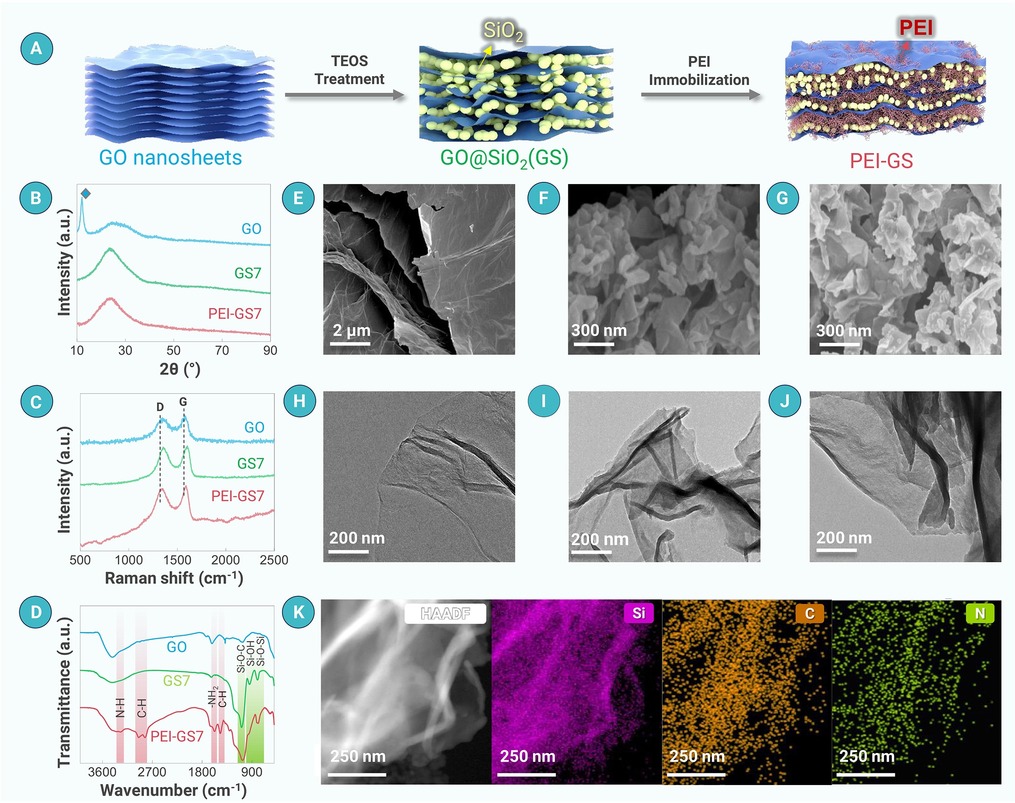
Figure 2.
Catalyst characterization
-
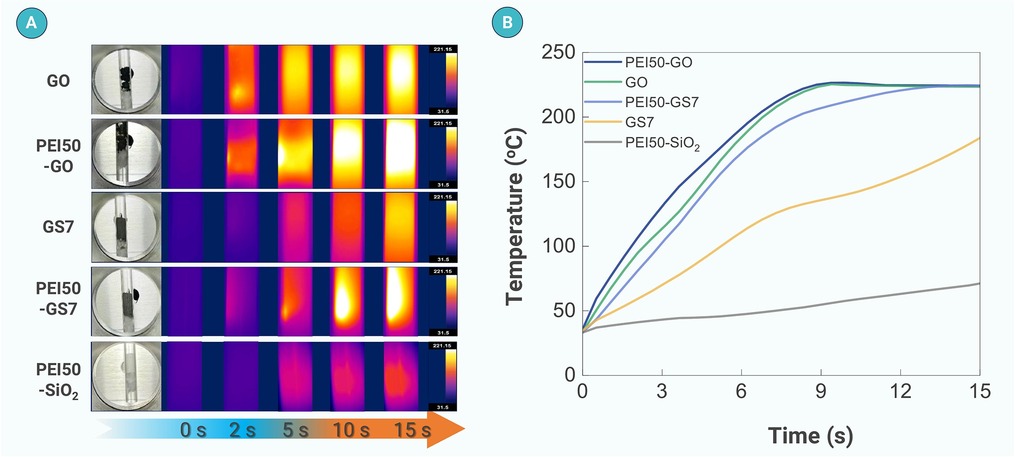
Figure 3.
Microwave heating performance analysis
-
Figure 4.
Microwave regeneration at different
-
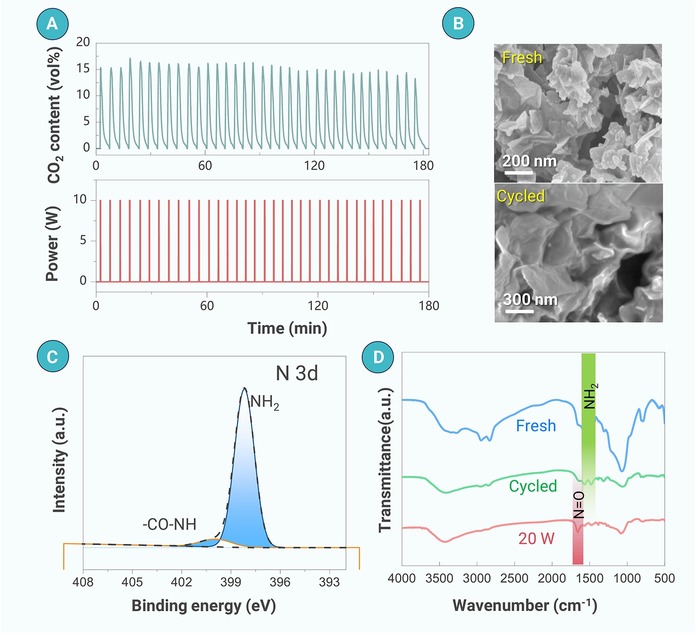
Figure 5.
Stability assessment of the sorbent
-
Figure 6.
The DFT calculation of microwave regeneration
-
Figure 7.
Comparison of three CO2 capture technologies: MEA-TSA, AS-TSA, and AS-MR.
