
Long-term marine ω-3 polyunsaturated fatty acids intake in relation to incidence of colorectal cancer subclassified by macrophage infiltrates
-
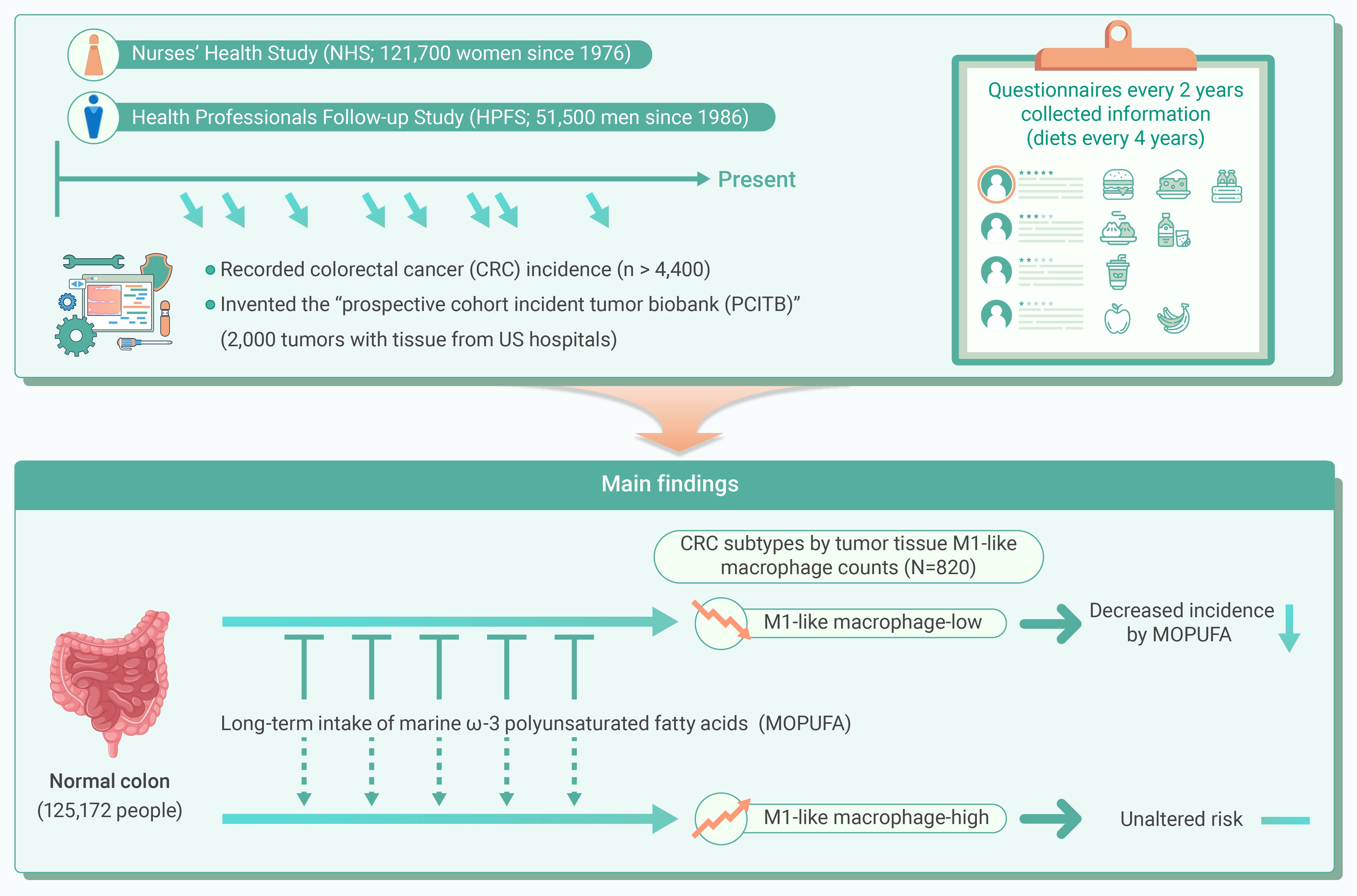
GRAPHICAL ABSTRACT
 DownLoad:
Full size image
DownLoad:
Full size image
-
PUBLIC SUMMARY
-
We assessed long-term intake of marine ω-3 polyunsaturated fatty acid (MOPUFA) and colorectal cancer (CRC) incidence.
Higher MOPUFA intake correlated with lower incidence of CRC with scanty M1 macrophages (but not CRC with abundant M1 macrophages).
The inverse association of MOPUFA intake with CRC incidence was stronger for tumors containing fewer M1 macrophages.
MOPUFA may influence tumor-associated macrophages and CRC development.
Dietary MOPUFA intake modifications may be used to improve cancer prevention.
-
-
ABSTRACT
Evidence indicates that marine omega-3 polyunsaturated fatty acid (MOPUFA) intake exerts an immunomodulatory effect to suppress the development of colorectal cancer (CRC). We hypothesized that the association of MOPUFA intake with the incidence of CRC might differ by macrophage infiltrates in tumor tissue. We utilized the Prospective Cohort Incident Tumor Biobank within the Nurses' Health Study and Health Professionals Follow-up Study, both of which repeatedly assessed diets for decades of the follow-up of 125,172 participants, among whom 2,959 developed incident CRC. To spatially identify and count M1-polarized and M2-polarized macrophages in tumor tissue, we conducted in situ single-cell digital image analyses using multispectral immunofluorescence [for MRC1 (CD206), MAF, IRF5, CD86, and CD68] combined with machine learning algorithms. Using the 2,959 CRC cases, inverse probability weighting was integrated into the Cox proportional hazards models to adjust for tissue macrophage data availability in 820 cases. The multivariable-adjusted hazard ratio (with 95% confidence interval) for long-term MOPUFA intake of ≥0.25 g/day (vs. <0.15 g/day) were 0.56 (0.38-0.82; Ptrend = 0.004) for the incidence of CRC with the lowest-quartile M1-like macrophage density. There was no significant association of MOPUFA intake with the incidence of CRC with the second to fourth quartile M1-like macrophage densities (Ptrend > 0.20). The association of MOPUFA intake with CRC incidence differed by M1-like macrophages (Pheterogeneity = 0.01), but not by M2-like macrophages. Our findings of the link between MOPUFA intake and lower incidence of CRC containing low M1-like macrophage counts provide evidence for differential influence of MOPUFAs on colorectal tumors with varying immune microenvironmental features. -

-
REFERENCES
[1] Tojjari, A., Choucair, K., Sadeghipour, A., et al. (2023). Anti-inflammatory and immune properties of polyunsaturated fatty acids (pufas) and their impact on colorectal cancer (crc) prevention and treatment. Cancers (Basel) 15 : 4294. DOI: 10.3390/cancers15174294. [2] Dong, J., Qian, Y., Zhang, G., et al. (2022). Can natural products be used to overcome the limitations of colorectal cancer immunotherapy. Front. Oncol. 12: 884423. DOI: 10.3389/fonc.2022.884423. [3] Manson, J.E., Cook, N.R., Lee, I.M., et al. (2019). Marine n-3 fatty acids and prevention of cardiovascular disease and cancer. N. Engl. J. Med. 380: 23−32. DOI: 10.1056/NEJMoa1811403. [4] Song, M., Nishihara, R., Wu, K., et al. (2015). Marine omega-3 polyunsaturated fatty acids and risk of colorectal cancer according to microsatellite instability. J. Natl. Cancer Inst. 107: djv007. DOI: 10.1093/jnci/djv007. [5] Singh, M.P., Rai, S., Pandey, A., et al. (2021). Molecular subtypes of colorectal cancer: An emerging therapeutic opportunity for personalized medicine. Genes Dis. 8: 133−145. DOI: 10.1016/j.gendis.2019.10.013. [6] Bai, J., Chen, H., and Bai, X. (2021). Relationship between microsatellite status and immune microenvironment of colorectal cancer and its application to diagnosis and treatment. J. Clin. Lab. Anal. 35: e23810. DOI: 10.1002/jcla.23810. [7] Li, Y., Chen, Z., Han, J., et al. (2022). Functional and therapeutic significance of tumor-associated macrophages in colorectal cancer. Front. Oncol. 12: 781233. DOI: 10.3389/fonc.2022.781233. [8] Perez-Romero, K., Rodriguez, R.M., Amedei, A., et al. (2020). Immune landscape in tumor microenvironment: Implications for biomarker development and immunotherapy. Int. J. Mol. Sci. 21 : 5521. DOI: 10.3390/ijms21155521. [9] Ma, R.Y., Black, A., and Qian, B.Z. (2022). Macrophage diversity in cancer revisited in the era of single-cell omics. Trends Immunol. 43: 546−563. DOI: 10.1016/j.it.2022.04.008. [10] Cassetta, L., and Pollard, J.W. (2023). A timeline of tumour-associated macrophage biology. Nat. Rev. Cancer 23: 238−257. DOI: 10.1038/s41568-022-00547-1. [11] Vayrynen, J.P., Haruki, K., Lau, M.C., et al. (2021). The prognostic role of macrophage polarization in the colorectal cancer microenvironment. Cancer Immunol. Res. 9: 8−19. DOI: 10.1158/2326-6066.CIR-20-0527. [12] Locati, M., Curtale, G., and Mantovani, A. (2020). Diversity, mechanisms, and significance of macrophage plasticity. Ann. Review Paleopathol. Mech. Disease 15: 123−147. DOI: 10.1146/annurev-pathmechdis-012418-012718. [13] Pittet, M.J., Michielin, O., and Migliorini, D. (2022). Clinical relevance of tumour-associated macrophages. Nat. Rev. Clin. Oncol. 19: 402−421. DOI: 10.1038/s41571-022-00620-6. [14] Norton, S.E., Dunn, E.T., McCall, J.L., et al. (2016). Gut macrophage phenotype is dependent on the tumor microenvironment in colorectal cancer. Clin. Transl. Immunol. 5: e76. DOI: 10.1038/cti.2016.21. [15] Pinto, M.L., Rios, E., Duraes, C., et al. (2019). The two faces of tumor-associated macrophages and their clinical significance in colorectal cancer. Front. Immunol. 10: 1875. DOI: 10.3389/fimmu.2019.01875. [16] Kumari, N., and Choi, S.H. (2022). Tumor-associated macrophages in cancer: Recent advancements in cancer nanoimmunotherapies. J. Exp. Clin. Cancer Res. 41: 68. DOI: 10.1186/s13046-022-02272-x. [17] Nishihara, R., Wu, K., Lochhead, P., et al. (2013). Long-term colorectal-cancer incidence and mortality after lower endoscopy. N. Engl. J. Med. 369: 1095−1105. DOI: 10.1056/NEJMoa1301969. [18] Yuan, C., Spiegelman, D., Rimm, E.B., et al. (2018). Relative validity of nutrient intakes assessed by questionnaire, 24-hour recalls, and diet records as compared with urinary recovery and plasma concentration biomarkers: Findings for women. Am. J. Epidemiol. 187: 1051−1063. DOI: 10.1093/aje/kwx328. [19] Al-Shaar, L., Yuan, C., Rosner, B., et al. (2021). Reproducibility and validity of a semiquantitative food frequency questionnaire in men assessed by multiple methods. Am. J. Epidemiol. 190: 1122−1132. DOI: 10.1093/aje/kwaa280. [20] Willett, W.C., Howe, G.R., and Kushi, L.H. (1997). Adjustment for total energy intake in epidemiologic studies. Am. J. Clin. Nutr. 65 :1220S-1228S; discussion 1229S-1231S. DOI: 10.1093/ajcn/65.4.1220S. [21] Fujiyoshi, K., Bruford, E.A., Mroz, P., et al. (2021). Opinion: Standardizing gene product nomenclature-a call to action. Proc. Natl. Acad. Sci. U.S.A. 118: e2025207118. DOI: 10.1073/pnas.2025207118. [22] Liao, X., Lochhead, P., Nishihara, R., et al. (2012). Aspirin use, tumor pik3ca mutation, and colorectal-cancer survival. N. Engl. J. Med. 367: 1596−1606. DOI: 10.1056/NEJMoa1207756. [23] Lunn, M., and McNeil, D. (1995). Applying cox regression to competing risks. Biometrics 51: 524−532. DOI. [24] Liu, L., Nevo, D., Nishihara, R., et al. (2018). Utility of inverse probability weighting in molecular pathological epidemiology. Eur. J. Epidemiol. 33: 381−392. DOI: 10.1007/s10654-017-0346-8. [25] Wang, M., Spiegelman, D., Kuchiba, A., et al. (2016). Statistical methods for studying disease subtype heterogeneity. Stat. Med. 35: 782−800. DOI: 10.1002/sim.6793. [26] Benjamin, D.J., Berger, J.O., Johannesson, M., et al. (2018). Redefine statistical significance. Nat. Hum. Behav. 2: 6−10. DOI: 10.1038/s41562-017-0189-z. [27] Ogino, S., Chan, A.T., Fuchs, C.S., et al. (2011). Molecular pathological epidemiology of colorectal neoplasia: An emerging transdisciplinary and interdisciplinary field. Gut 60: 397−411. DOI: 10.1136/gut.2010.217182. [28] Inamura, K., Hamada, T., Bullman, S., et al. (2022). Cancer as microenvironmental, systemic and environmental diseases: Opportunity for transdisciplinary microbiomics science. Gut 71: 2107−2122. DOI: 10.1136/gutjnl-2022-327209. [29] Ogino, S., Nowak, J.A., Hamada, T., et al. (2019). Insights into pathogenic interactions among environment, host, and tumor at the crossroads of molecular pathology and epidemiology. Ann. Review Paleopathol. Mech. Disease 14: 83−103. DOI: 10.1146/annurev-pathmechdis-012418-012818. [30] Wang, S.T., Cui, W.Q., Pan, D., et al. (2020). Tea polyphenols and their chemopreventive and therapeutic effects on colorectal cancer. World J. Gastroenterol. 26: 562−597. DOI: 10.3748/wjg.v26.i6.562. [31] Kamal, Y., Schmit, S.L., Frost, H.R., et al. (2020). The tumor microenvironment of colorectal cancer metastases: Opportunities in cancer immunotherapy. Immunotherapy 12: 1083−1100. DOI: 10.2217/imt-2020-0026. [32] Forssell, J., Oberg, A., Henriksson, M.L., et al. (2007). High macrophage infiltration along the tumor front correlates with improved survival in colon cancer. Clin. Cancer Res. 13: 1472−1479. DOI: 10.1158/1078-0432.CCR-06-2073. [33] Koelzer, V.H., Canonica, K., Dawson, H., et al. (2016). Phenotyping of tumor-associated macrophages in colorectal cancer: Impact on single cell invasion (tumor budding) and clinicopathological outcome. Oncoimmunology 5: e1106677. DOI: 10.1080/2162402X.2015.1106677. [34] Malesci, A., Bianchi, P., Celesti, G., et al. (2017). Tumor-associated macrophages and response to 5-fluorouracil adjuvant therapy in stage iii colorectal cancer. Oncoimmunology 6: e1342918. DOI: 10.1080/2162402X.2017.1342918. [35] Kim, Y., Wen, X., Bae, J.M., et al. (2018). The distribution of intratumoral macrophages correlates with molecular phenotypes and impacts prognosis in colorectal carcinoma. Histopathology 73: 663−671. DOI: 10.1111/his.13674. [36] Herrera, M., Herrera, A., Dominguez, G., et al. (2013). Cancer-associated fibroblast and m2 macrophage markers together predict outcome in colorectal cancer patients. Cancer Sci. 104: 437−444. DOI: 10.1111/cas.12096. [37] Feng, Q., Chang, W., Mao, Y., et al. (2019). Tumor-associated macrophages as prognostic and predictive biomarkers for postoperative adjuvant chemotherapy in patients with stage ii colon cancer. Clin. Cancer Res. 25: 3896−3907. DOI: 10.1158/1078-0432.CCR-18-2076. [38] Murray, P.J., Allen, J.E., Biswas, S.K., et al. (2014). Macrophage activation and polarization: Nomenclature and experimental guidelines. Immunity 41: 14−20. DOI: 10.1016/j.immuni.2014.06.008. [39] Lee, K.H., Seong, H.J., Kim, G., et al. (2020). Consumption of fish and omega-3 fatty acids and cancer risk: An umbrella review of meta-analyses of observational studies. Adv. Nutr. 11: 1134−1149. DOI: 10.1093/advances/nmaa055. [40] Allam-Ndoul, B., Guenard, F., Barbier, O., et al. (2017). A study of the differential effects of eicosapentaenoic acid (epa) and docosahexaenoic acid (dha) on gene expression profiles of stimulated thp-1 macrophages. Nutrients 9: 424. DOI: 10.3390/nu9050424. [41] Gutierrez, S., Svahn, S.L., and Johansson, M.E. (2019). Effects of omega-3 fatty acids on immune cells. Int. J. Mol. Sci. 20: 5028. DOI: 10.3390/ijms20205028. [42] Liu, Y., Chen, L.Y., Sokolowska, M., et al. (2014). The fish oil ingredient, docosahexaenoic acid, activates cytosolic phospholipase A2 via gpr120 receptor to produce prostaglandin E2 and plays an anti-inflammatory role in macrophages. Immunology 143: 81−95. DOI: 10.1111/imm.12296. [43] Adolph, S., Fuhrmann, H., and Schumann, J. (2012). Unsaturated fatty acids promote the phagocytosis of p. Aeruginosa and r. Equi by raw264.7 macrophages. Curr. Microbiol. 65:649-655. DOI: 10.1007/s00284-012-0207-3. [44] Chang, H.Y., Lee, H.N., Kim, W., et al. (2015). Docosahexaenoic acid induces m2 macrophage polarization through peroxisome proliferator-activated receptor gamma activation. Life Sci. 120: 39−47. DOI: 10.1016/j.lfs.2014.10.014. [45] Liang, P., Henning, S.M., Guan, J., et al. (2020). Effect of dietary omega-3 fatty acids on castrate-resistant prostate cancer and tumor-associated macrophages. Prostate Cancer Prostatic Dis. 23: 127−135. DOI: 10.1038/s41391-019-0168-8. [46] Tang, H., Zhu, X., Gong, C., et al. (2019). Protective effects and mechanisms of omega-3 polyunsaturated fatty acid on intestinal injury and macrophage polarization in peritoneal dialysis rats. Nephrology 24: 1081−1089. DOI: 10.1111/nep.13587. [47] Giannakis, M., Mu, X.J., Shukla, S.A., et al. (2016). Genomic correlates of immune-cell infiltrates in colorectal carcinoma. Cell Rep. 17: 1206. DOI: 10.1016/j.celrep.2016.10.009. [48] Hu, L.F., Lan, H.R., Huang, D., et al. (2021). Personalized immunotherapy in colorectal cancers: Where do we stand. Front. Oncol. 11: 769305. DOI: 10.3389/fonc.2021.769305. [49] Tanaka, I., Yano, Y., Mori, M., et al. (2024). Impact of serum eicosapentaenoic acid/arachidonic acid ratio on overall survival in lung cancer patients treated with pembrolizumab: A pilot study. Sci. Rep. 14: 1384. DOI: 10.1038/s41598-024-51967-y. [50] Van Blarigan, E.L., Fuchs, C.S., Niedzwiecki, D., et al. (2018). Marine omega-3 polyunsaturated fatty acid and fish intake after colon cancer diagnosis and survival: Calgb 89803 (alliance). Cancer Epidemiol Biomarkers Prev. 27: 438−445. DOI: 10.1158/1055-9965.EPI-17-0689. [51] Song, M., Zhang, X., Meyerhardt, J.A., et al. (2017). Marine omega-3 polyunsaturated fatty acid intake and survival after colorectal cancer diagnosis. Gut 66: 1790−1796. DOI: 10.1136/gutjnl-2016-311990. -
ABOUT THIS ARTICLE
Cite this article:
Ugai T., Väyrynen J., Ugai S., et al., (2024). Long-term marine ω-3 polyunsaturated fatty acids intake in relation to incidence of colorectal cancer subclassified by macrophage infiltrates. The Innovation Medicine 2(3): 100082. https://doi.org/10.59717/j.xinn-med.2024.100082
Welcome!
To request copyright permission to republish or share portions of our works, please visit Copyright Clearance Center's (CCC) Marketplace website at marketplace.copyright.com.
Article Metrics
Relative Articles
Cited by
Export File
Citation
Ugai T., Väyrynen J., Ugai S., et al., (2024). Long-term marine ω-3 polyunsaturated fatty acids intake in relation to incidence of colorectal cancer subclassified by macrophage infiltrates. The Innovation Medicine 2(3): 100082. https://doi.org/10.59717/j.xinn-med.2024.100082

Format
Content
-
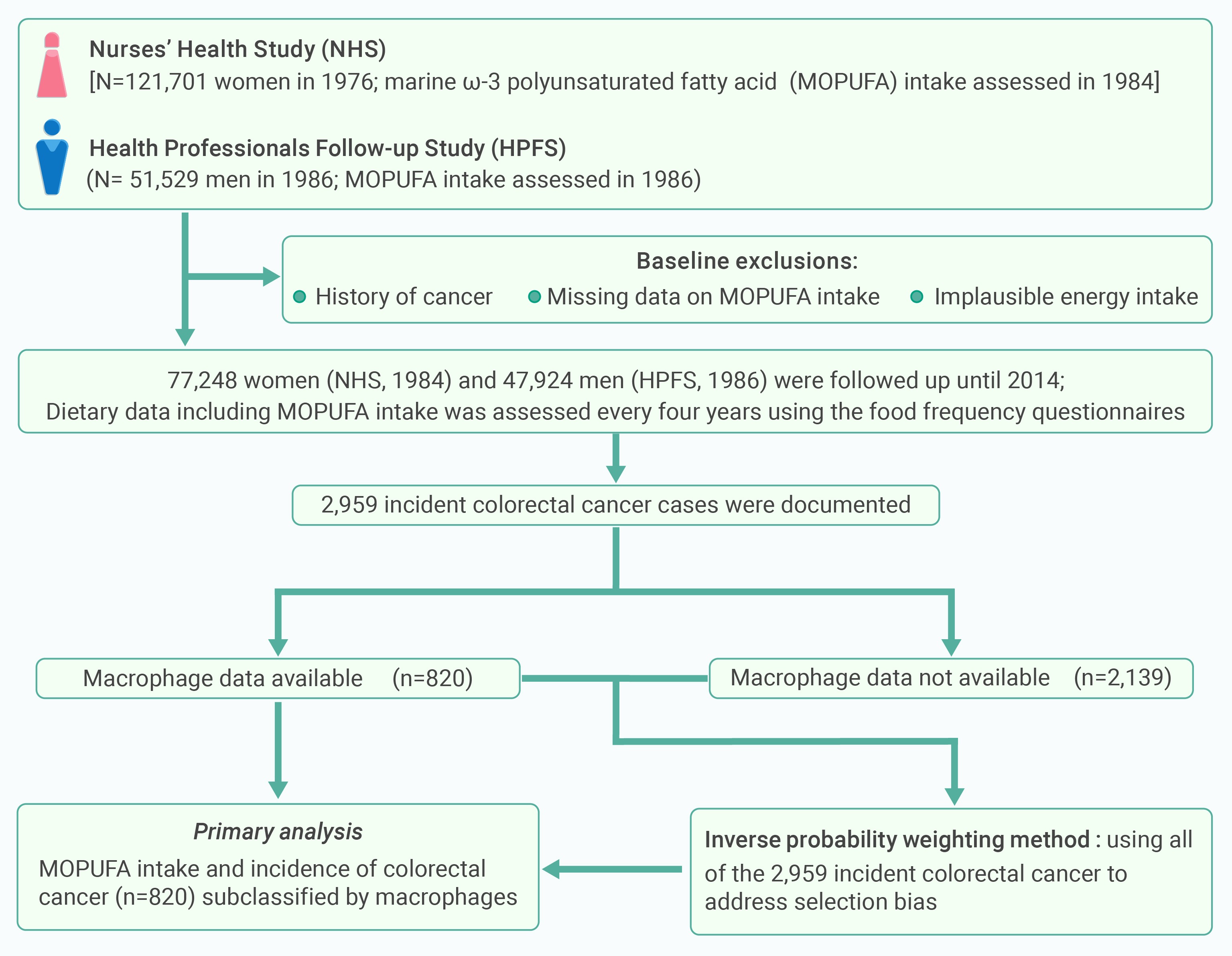
Figure 1.
Flow chart of the study population
-
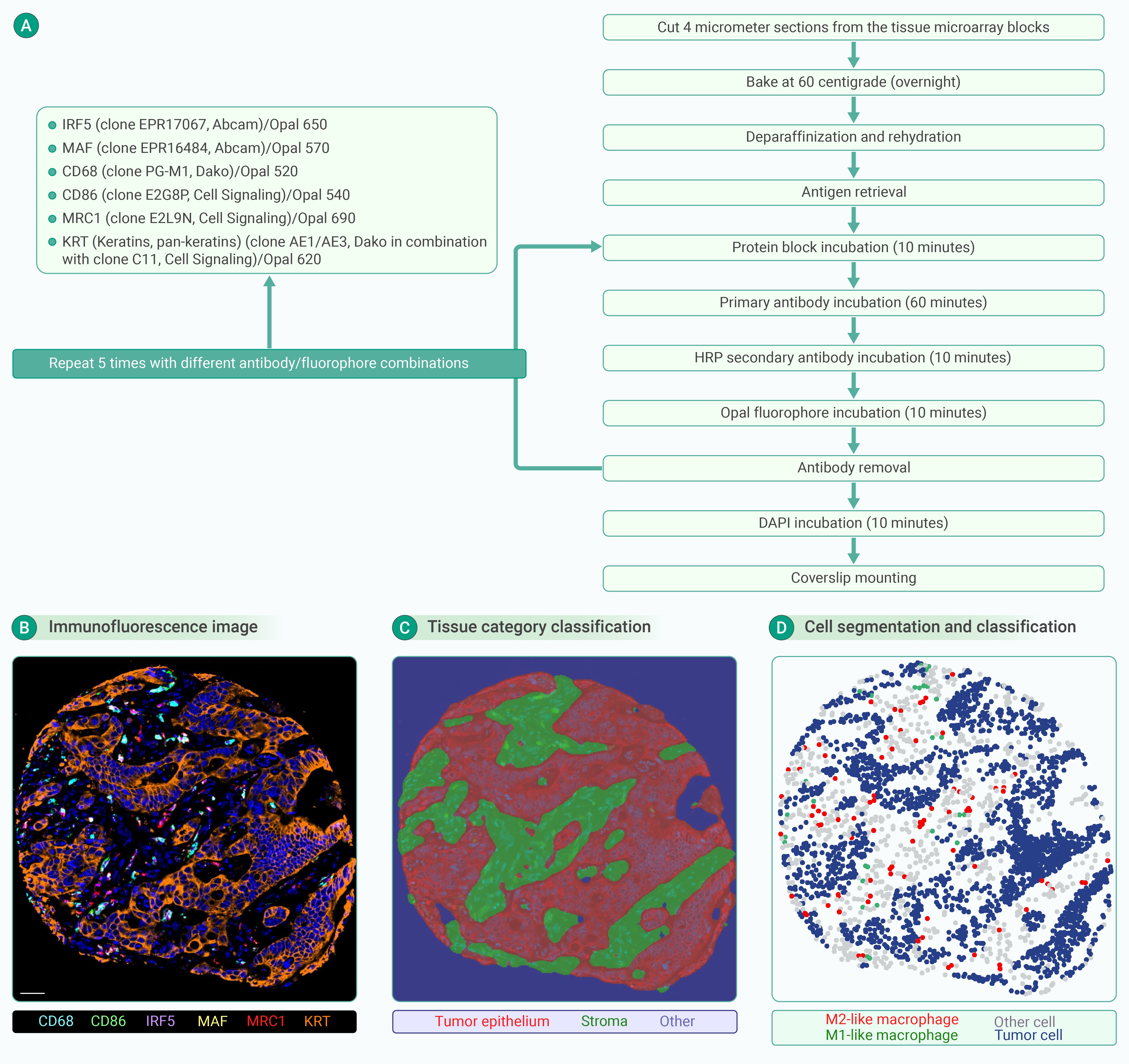
Figure 2.
Evaluation of M1-like and M2-like macrophage infiltrates in CRC
-
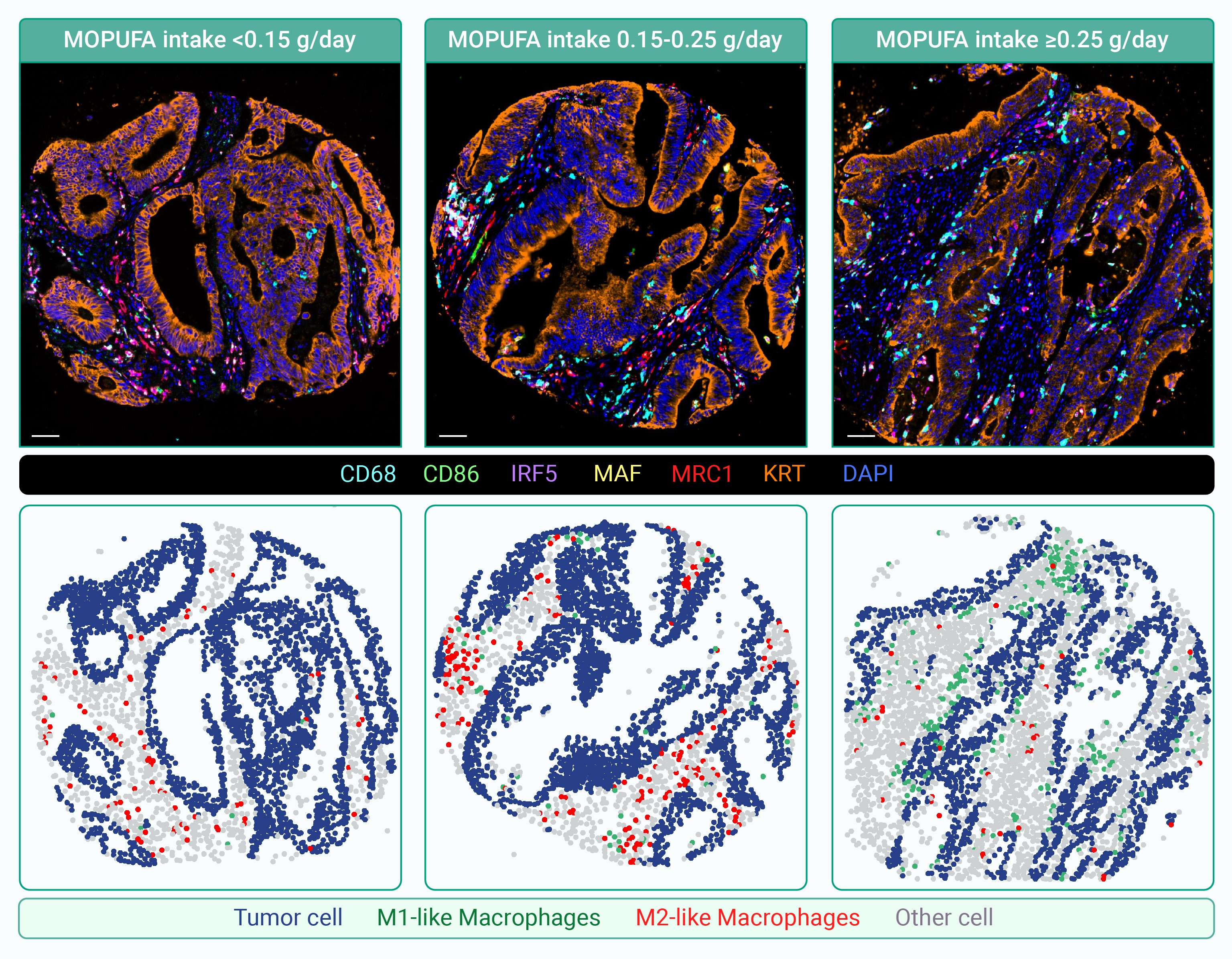
Figure 3.
Quantitative, multispectral evaluation of M1-like and M2-like macrophage markers in the colorectal cancer microenvironment
