
Greenspace in relation to childhood undernutrition: A cross-sectional study in 49 low- and middle-income countries
-
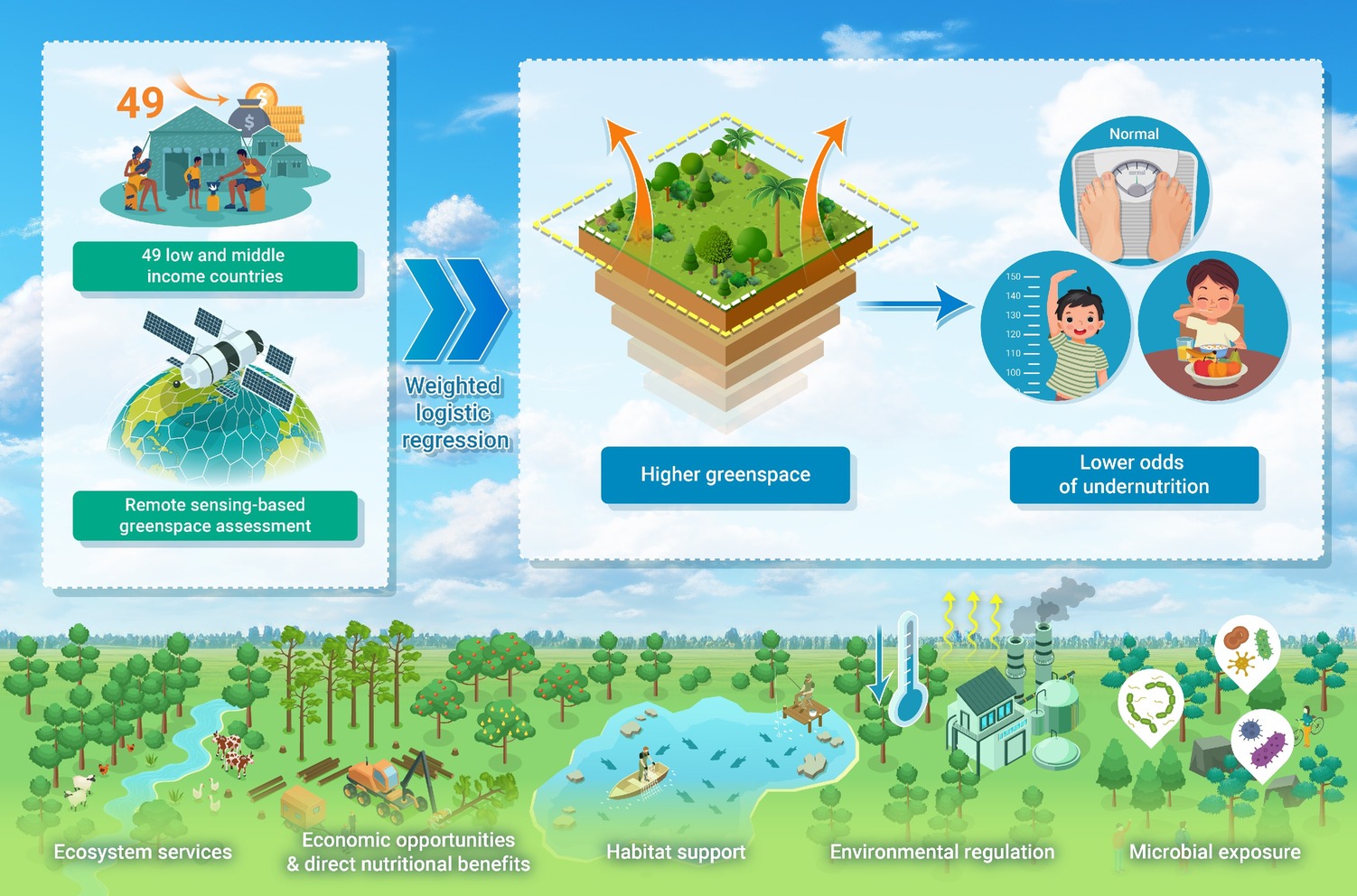
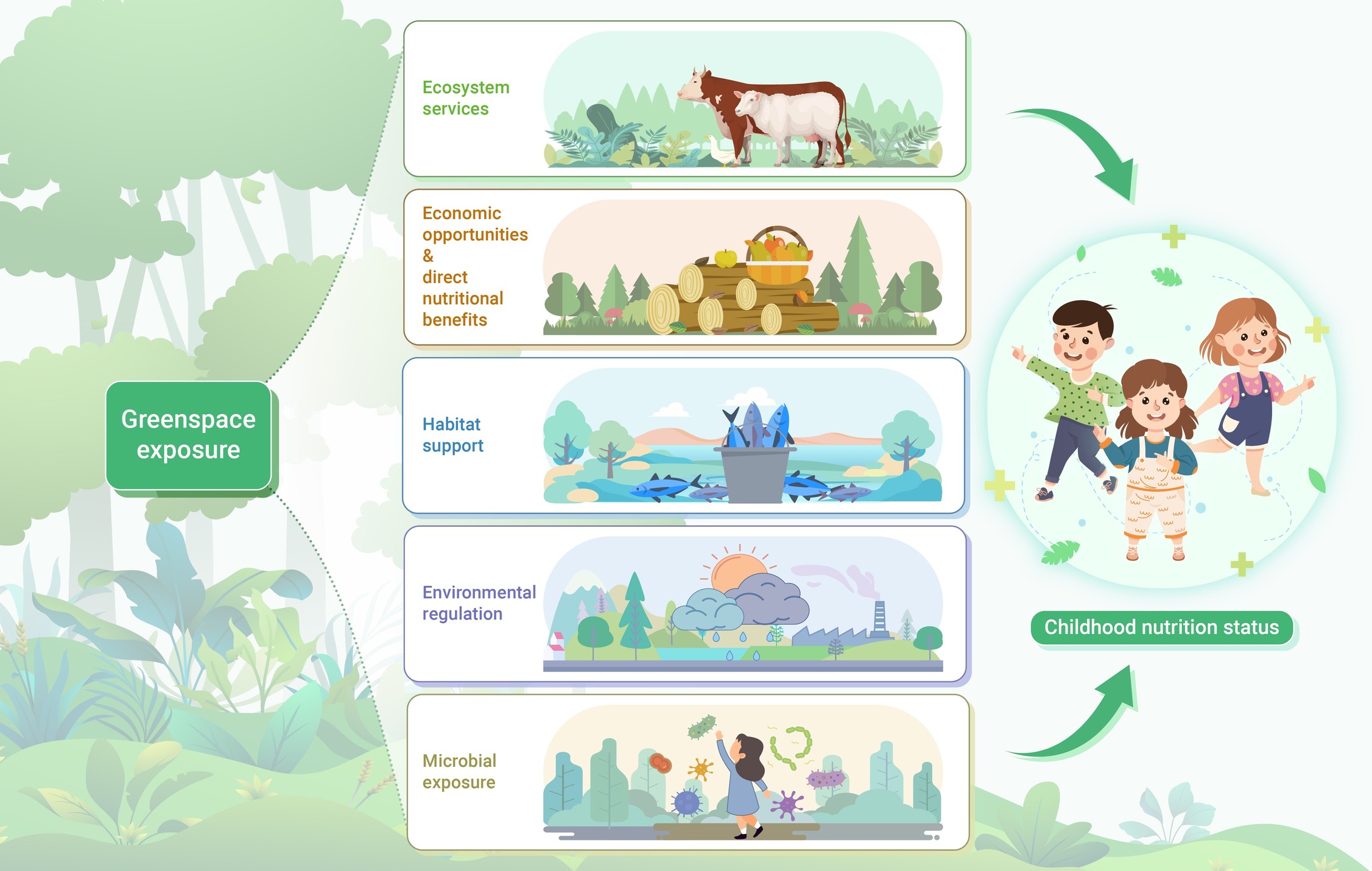
GRAPHICAL ABSTRACT
 DownLoad:
Full size image
DownLoad:
Full size image
-
PUBLIC SUMMARY
-
The large and multiple-country study estimates the effects of greenspace on childhood undernutrition.
Living in greenner areas may lower the odds of childhood undernutrition in less developed countries.
Findings indicate greenspace may protect child health, supporting greener policies to fight undernutrition.
-
-
ABSTRACT
Evidence suggests greenspace may support child nutrition by increasing food availability, reducing environmental hazards, and enhancing microbial diversity, but evidence on the topic is scarce. We used Demographic and Health Surveys (DHS) data from 49 low- and middle-income countries (LMICs) to study the association between greenspace and undernutrition among children aged <5 years. Undernutrition included stunting, underweight and wasting, as determined by z-scores of World Health Organization (WHO) thresholds. A total of 512,013, 509,012, and 507,546 children were included for stunting, underweight, and wasting analysis, respectively. Greenspace was assessed using annual maximum and average values of normalized difference vegetation index (NDVI) as well as proportions of different green land covers, including forest, shrubland, grassland, wetland, and these four combined. Weighted logistic models were constructed to examine the association between greenspace and childhood undernutrition. After adjusting for confounders, we observed that all greenspace indicators were significantly associated with reduced odds of childhood undernutrition. For example, participants in the highest tertile of NDVImax and greenland levels had 17% (95% confidence interval (CI): 13-20%) and 26% (95% CI: 23-28%) lower odds of stunting, respectively, compared to the lowest tertile. The child’s sex, age, place of residence, household wealth level, and maternal education modified the associations, but the pattern was mixed. In summary, the study indicates that children living in greener areas may have lower odds of developing undernutrition. Enhancing greenspace may improve children’s nutrition status in less developed countries. -

-
REFERENCES
[1] Wells J.C., Sawaya A.L., Wibaek R., et al. (2020). The double burden of malnutrition: Aetiological pathways and consequences for health. Lancet 395:75−88. DOI:10.1016/s0140-6736(19)32472-9 [2] Joint Child Malnutrition Estimates (JME) group. (2021). Levels and trands in child malnutrition. https://www.who.int/publications/i/item/9789240025257, assessed 14 Dec 2023. [3] World Health Organzation. (2023). Malnutrition. https://www.who.int/news-room/fact-sheets/detail/malnutrition, assessed 14 Dec 2023. [4] Victora C.G., Adair L., Fall C., et al. (2008). Maternal and child undernutrition: Consequences for adult health and human capital. Lancet 371:340−357. DOI:10.1016/s0140-6736(07)61692-4 [5] Ye T., Yu P., Wen B., et al. (2022). Greenness and health outcomes in children and adolescents: A systematic review. Environ. Pollut. 314:120193. DOI:10.1016/j.envpol.2022.120193 [6] Luo Y.N., Huang W.Z., Liu X.X., et al. (2020). Greenness with overweight and obesity: A systematic review and meta-analysis of epidemiological studies up to. Obes. Rev. 21:e13078. DOI:10.1111/obr.13078 [7] Olesen R.S., Hall C.M., Rasmussen L.V. (2022). Forests support people’s food and nutrition security through multiple pathways in low- and middle-income countries. One Earth 5:1342−1353. DOI:10.1016/j.oneear.2022.11.005 [8] Boval M., Dixon R.M. (2012). The importance of grasslands for animal production and other functions: A review on management and methodological progress in the tropics. Animal 6:748−762. DOI:10.1017/S1751731112000304 [9] Bruijnzeel L.A. (2004). Hydrological functions of tropical forests: not seeing the soil for the trees. Agr. Ecosyst. Environ. 104:185−228. DOI:10.1016/j.agee.2004.01.015 [10] Takahashi S., Liang L. 2016. Roles of Forests in Food Security based on Case Studies in Yunnan, China. Int. Forest. Rev. 18:123-132. DOI:10.1505/146554816818206131 [11] Gbetnkom, D. (2008). Forest depletion and food security of poor rural populations in Africa: Evidence from Cameroon. J. Afr. Econ. 18:261−286. DOI:10.1093/jae/ejn012 [12] Rahman M.H., Roy B., Islam M.S. (2021). Contribution of non-timber forest products to the livelihoods of the forest-dependent communities around the Khadimnagar National Park in northeastern Bangladesh. Reg. Sustain. 2:280−295. DOI:10.1016/j.regsus.2021.11.001 [13] Newton P., Miller D.C., Byenkya M.A.A., et al. (2016). Who are forest-dependent people. A taxonomy to aid livelihood and land use decision-making in forested regions. Land Use Policy 57:388−395. DOI:10.1016/j.landusepol.2016.05.032 [14] Boedecker J., Termote C., Assogbadjo A.E. (2014). Dietary contribution of Wild Edible Plants to women’s diets in the buffer zone around the Lama forest, Benin - an underutilized potential. Food Secur. 6:833−849. DOI:10.1007/s12571-014-0396-7 [15] Fa J.E., Olivero J., Real R., et al. (2015). Disentangling the relative effects of bushmeat availability on human nutrition in central Africa. Sci. Rep. 5:8168. DOI:10.1038/srep08168 [16] Sunderland T. (2023). Wild foods' role in human diets. Nat. Food 4:456−457. DOI:10.1038/s43016-023-00776-z [17] Markevych I., Schoierer J., Hartig T., et al. 2017. Exploring pathways linking greenness to health: Theoretical and methodological guidance. Environ. Res. 158:301-317. DOI:10.1016/j.envres.2017.06.028 [18] Zhang Y.D., Zhou G.L., Wang L., et al. (2024). Greenness and human microbiota: A systematic review. Environ. Int. 187:108662. DOI:10.1016/j.envint.2024.108662 [19] Fontaine F., Turjeman S., Callens K., et al. (2023). The intersection of undernutrition, microbiome, and child development in the first years of life. Nat. Commun. 14:3554. DOI:10.1038/s41467-023-39285-9 [20] Amegbor P.M., Sabel C.E., Mortensen L.H., et al. (2023). Early-life air pollution and green space exposures as determinants of stunting among children under age five in sub-saharan africa. J. Expo. Sci. Environ. Epidemiol. 34:787−801. DOI:10.1038/s41370-023-00572-8 [21] Baker R., Anttila-Hughes J. (2020). Characterizing the contribution of high temperatures to child undernourishment in Sub-Saharan Africa. Sci. Rep. 10:18796. DOI:10.1038/s41598-020-74942-9 [22] Kinyoki D.K., Berkley J.A., Moloney G.M., et al. (2016). Environmental predictors of stunting among children under-five in Somalia: Cross-sectional studies from 2007 to 2010. BMC Public Health 16:654. DOI:10.1186/s12889-016-3320-6 [23] Khan J.R., Hossain M.B., Awan N. (2022). Community-level environmental characteristics predictive of childhood stunting in bangladesh - a study based on the repeated cross-sectional surveys. Int. J. Environ. Health Res. 32:473−486. DOI:10.1080/09603123.2020.1777947 [24] The DHS program. https://dhsprogram.com/ (2023), assessed 14 Dec 2023. [25] ICF International. Demographic and Health Survey Sampling and Household Listing Manual. https://dhsprogram.com/pubs/pdf/DHSM4/DHS6_Sampling_Manual_Sept2012_DHSM4.pdf (2012), assessed 14 Dec 2023. [26] ICF International. Demographic and health survey interviewer’s manual https://dhsprogram.com/pubs/pdf/DHSM1/DHS8-Interviewer's-Manual-EN-25Sep2020-DHSM1.pdf (2020), assessed 14 Dec 2023. [27] WHO Multicentre Growth Reference Study Group. (2006). WHO Child Growth Standards based on length/height, weight and age. Acta. Paediatr. Suppl. 450:76−85. DOI:10.1111/j.1651-2227.2006.tb02378.x [28] Weier, J. & Herring, D. Measuring Vegetation (NDVI & EVI) http://earthobservatory.nass.gov/Features/Measuring Vegetation/ (2011), assessed 14 Dec 2023. [29] Pettorelli N., Vik J.O., Mysterud A., (2005). Using the satellite-derived NDVI to assess ecological responses to environmental change. Trends Ecol. Evol. 20:503–510. DOI:10.1016/j.tree.2005.05.011 [30] United States Geological Survey. (2025). Landsat Enhanced Vegetation Index.https://www.usgs.gov/landsat-missions/landsat-enhanced-vegetation-index, assessed 23 April 2025. [31] United States Geological Survey. (2025). Landsat Soil Adjusted Vegetation Index. https://www.usgs.gov/landsat-missions/landsat-soil-adjusted-vegetation-index,assessed 23 April 2025. [32] Chen J., Chen J. (2018). GlobeLand30: Operational global land cover mapping and big-data analysis. Sci. China Earth Sci. 61:1533−1534. DOI:10.1007/s11430-018-9255-3 [33] Wang Y., Zhang J., Liu D., et al. (2018). Accuracy assessment of GlobeLand30 2010 land cover over China based on geographically and categorically stratified validation sample data. Remote Sens. 10:1213. DOI:10.3390/rs10081213 [34] Gong P., Liu H., Zhang M., et al. (2019). Stable classification with limited sample: Transferring a 30-m resolution sample set collected in 2015 to mapping 10-m resolution global land cover in 2017. Sci. Bull. (Beijing) 64:370−373. DOI:10.1016/j.scib.2019.03.002 [35] Assaf S., Gomez A., Juan C., et al. (2018). The association of deforestation and other environmental variables with child health and mortality. DHS Analytical Studies No. 66. https://www.dhsprogram.com/pubs/pdf/as66/as66.pdf. [36] Perez-Haydrich C., Warren J.L., Burgert C.R., et al. (2013). Guidelines On The Use Of DHS GPS Data. Spatial Analysis Reports No. 8. https://dhsprogram.com/pubs/pdf/SAR8/SAR8.pdf. [37] Bendavid, E. (2014). Is health aid reaching the poor. Analysis of household data from aid recipient countries. PLOS ONE 9:e84025. DOI:10.1371/journal.pone.0084025 [38] Beck H.E., Zimmermann N.E., McVicar T.R., et al. (2018). Present and future köppen-geiger climate classification maps at 1-km resolution. Sci. Data 5:180214. DOI:10.1038/sdata.2018.214 [39] Textor J., Hardt J., Knüppel S. (2011). DAGitty: A graphical tool for analyzing causal diagrams. Epidemiology 22:745. DOI:10.1097/EDE.0b013e318225c2be [40] Rutstein S.O., Rojas G. (2006). Guide to DHS statistics. ORC macro. assessed 14 Dec 2023. http://dhsprogram.com/pubs/pdf/DHSG1/Guide_to_DHS_Statistics_29Oct2012_DHSG1.pdf. [41] The DHS Program. (2018). Best practices for quality anthropometric data collection. assessed 11 Dec 2024. https://dhsprogram.com/pubs/pdf/OD77/OD77.pdf. [42] Wang R., Gamon J.A., Montgomery R.A., et al. (2016). Seasonal variation in the NDVI–species richness relationship in a prairie grassland experiment (Cedar Creek). Remote Sens. 8:128. DOI:10.3390/rs8020128 [43] Mears M., Brindley P., Baxter I., et al. (2020). Neighbourhood greenness influences on childhood obesity in Sheffield, UK. Pediatr. Obes. 15:e12629. DOI:10.1111/ijpo.12629 [44] Bont J., Hughes R., Tilling K., et al. (2020). Early life exposure to air pollution, green spaces and built environment, and body mass index growth trajectories during the first 5 years of life: A large longitudinal study. Environ. Pollut. 266:115266. DOI:10.1016/j.envpol.2020.115266 [45] Salem M., Ravetz J., Sareen S., et al. (2025). Managing the urban-rural transition: A review of approaches and policies for peri-urban land use. J. Urban Manag. DOI:10.1016/j.jum.2025.04.006. [46] Baudron F., Tomscha S.A., Powell B., (2019). Testing the various pathways linking forest cover to dietary diversity in tropical landscapes. Front. Sustain. Food Syst. 3:97. DOI:10.3389/fsufs.2019.00097 [47] Castello L., Hess L.L., Thapa R., et al. (2019). Fishery yields vary with land cover on the Amazon River floodplain. Fish Fish (Oxf) 9:16684. DOI:10.1111/faf.12261 [48] Vashist M., Kumar T.V., Singh S.K. (2024). A comprehensive review of urban vegetation as a Nature-based Solution for sustainable management of particulate matter in ambient air. Environ. Sci. Pollut. Res. Int. 31:26480−26496. DOI:10.1007/s11356-024-33089-0 [49] Sinharoy S.S., Clasen T., Martorell R. (2020). Air pollution and stunting: a missing link. Lancet Glob. Health 8:e472−e475. DOI:10.1016/S2214-109X(20)30063-2 [50] Yu Z., Chen J., Chen J., et al. (2024). Enhanced observations from an optimized soil-canopy-photosynthesis and energy flux model revealed evapotranspiration-shading cooling dynamics of urban vegetation during extreme heat. Remote Sens. Environ. 305:114098. DOI:10.1016/j.rse.2024.114098 [51] Levy K., Smith S.M., Carlton E.J. (2018). Climate change impacts on waterborne diseases: Moving toward designing interventions. Curr. Environ. Health Rep. 5:272−282. DOI:10.1007/s40572-018-0199-7 [52] Xu Z., Liu Y. Ma Z., et al. (2014). Assessment of the temperature effect on childhood diarrhea using satellite imagery. Sci. Rep. 4:5389. DOI:10.1038/srep05389 [53] Petri W.A., Miller M., Binder H.J., et al. (2008). Enteric infections, diarrhea, and their impact on function and development. J. Clin. Investig. 118:1277−1290. DOI:10.1172/JCI34005 [54] Schlenker W., Roberts M.J. (2009). Nonlinear temperature effects indicate severe damages to us crop yields under climate change. Proc. Natl. Acad. Sci. 106:15594−15598. DOI:10.1073/pnas.0906865106 [55] Zhao C., Liu B., Piao S., et al. (2017). Temperature increase reduces global yields of major crops in four independent estimates. Proc. Natl. Acad. Sci. 114:9326−9331. DOI:10.1073/pnas.1701762114 [56] Thiede B.C., Strube J. (2020). Climate variability and child nutrition: Findings from sub-Saharan Africa. Glob. Environ. Change 65:102192. DOI:10.1016/j.gloenvcha.2020.102192 [57] Barnett M.J., Doroudgar S., Khosraviani V., et al. (2021). Multiple comparisons: To compare or not to compare, that is the question. Res. Social Adm. Pharm. 18:2331−2334. DOI:10.1016/j.sapharm.2021.07.006 [58] Donovan J., Larsen K., McWhinnie J. (2011). Food-sensitive planning and urban design (FSPUD): A conceptual framework for achieving a sustainable and healthy food system. Melbourne: National Heart Foundation of Australia (Victorian Division). https://www.vichealth.vic.gov.au/sites/default/files/FoodSensitivePlanning_UrbanDesign_Summary.pdf. [59] Prefeitura da Cidade do Rio de Janeiro. (2023). Programa Hortas Cariocas. Escritório de Planejamento - PCRJ. https://escritorio-de-planejamento-pcrj.hub.arcgis.com/pages/programa-rio-mais-hortas-cariocas. [60] Smith J., Lee A. (2019). Urban agriculture, poverty, and food security: Empirical evidence from a sample of developing countries. Food Policy 35:265−273. DOI:10.1016/j.foodpol.2010.04.007 [61] Hutcheon J.A., Chiolero A., Hanley J.A. (2010). Random measurement error and regression dilution bias. BMJ 340:c2289. DOI:10.1136/bmj.c2289 [62] Liu H., Xiao P., Zhang X., et al. (2023). Winter snow cover influences growing-season vegetation productivity non-uniformly in the Northern Hemisphere. Commun. Earth Environ. 4:487. DOI:10.1038/s43247-023-01167-9 -
ABOUT THIS ARTICLE
Cite this article:
Li J., Odo D., Browning M., et al. (2025). Greenspace in relation to childhood undernutrition: A cross-sectional study in 49 low- and middle-income countries. The Innovation Medicine 3:100141. https://doi.org/10.59717/j.xinn-med.2025.100141
Welcome!
To request copyright permission to republish or share portions of our works, please visit Copyright Clearance Center's (CCC) Marketplace website at marketplace.copyright.com.
Supplementary Information
-
download_supplementary
Excel_Table
Article Metrics
Relative Articles
Cited by
Export File
Citation
Li J., Odo D., Browning M., et al. (2025). Greenspace in relation to childhood undernutrition: A cross-sectional study in 49 low- and middle-income countries. The Innovation Medicine 3:100141. https://doi.org/10.59717/j.xinn-med.2025.100141

Format
Content
-
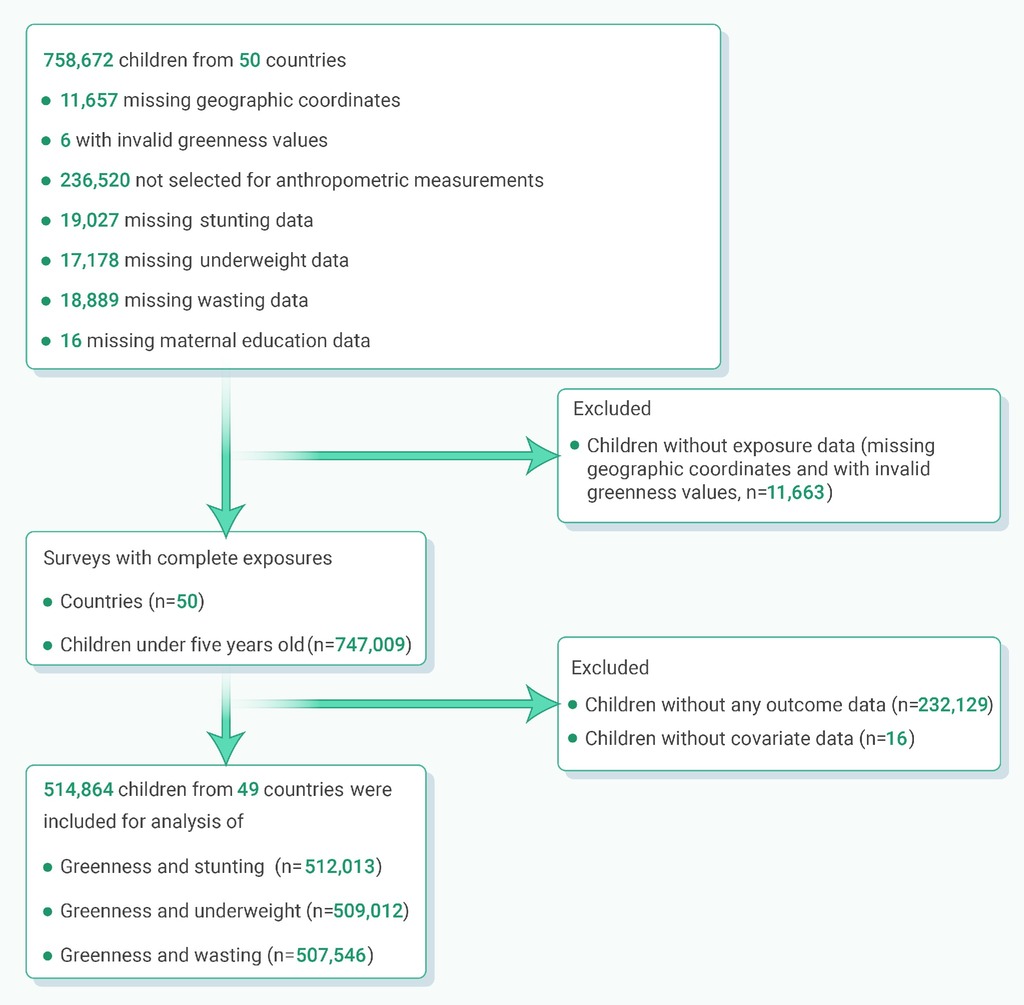
Figure 1.
Flowchart showing the selection of samples included in the analysis of children under five years old participating the Demographic and Health Surveys (DHS) program, 2008-2018.
-
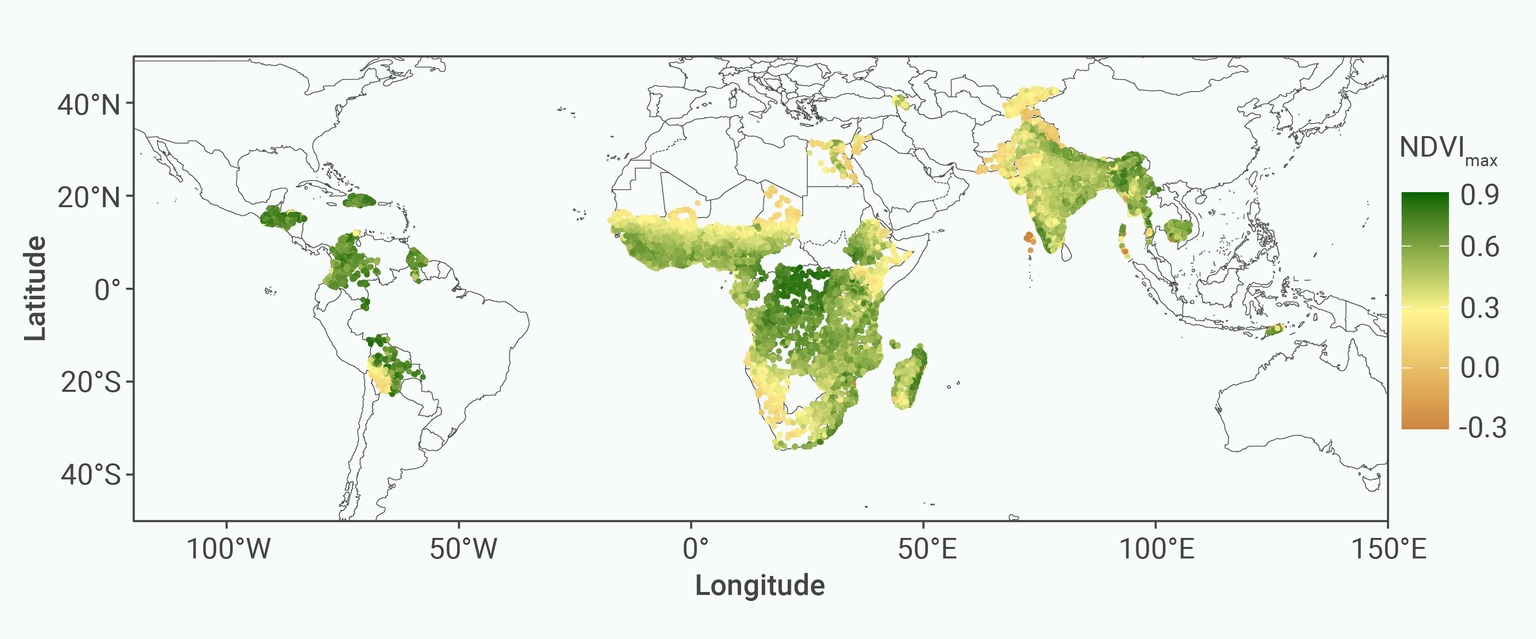
Figure 2.
World map showing cluster locations by greenness level among participants in the Demographic and Health Surveys (DHS) program, 2008-2018
-
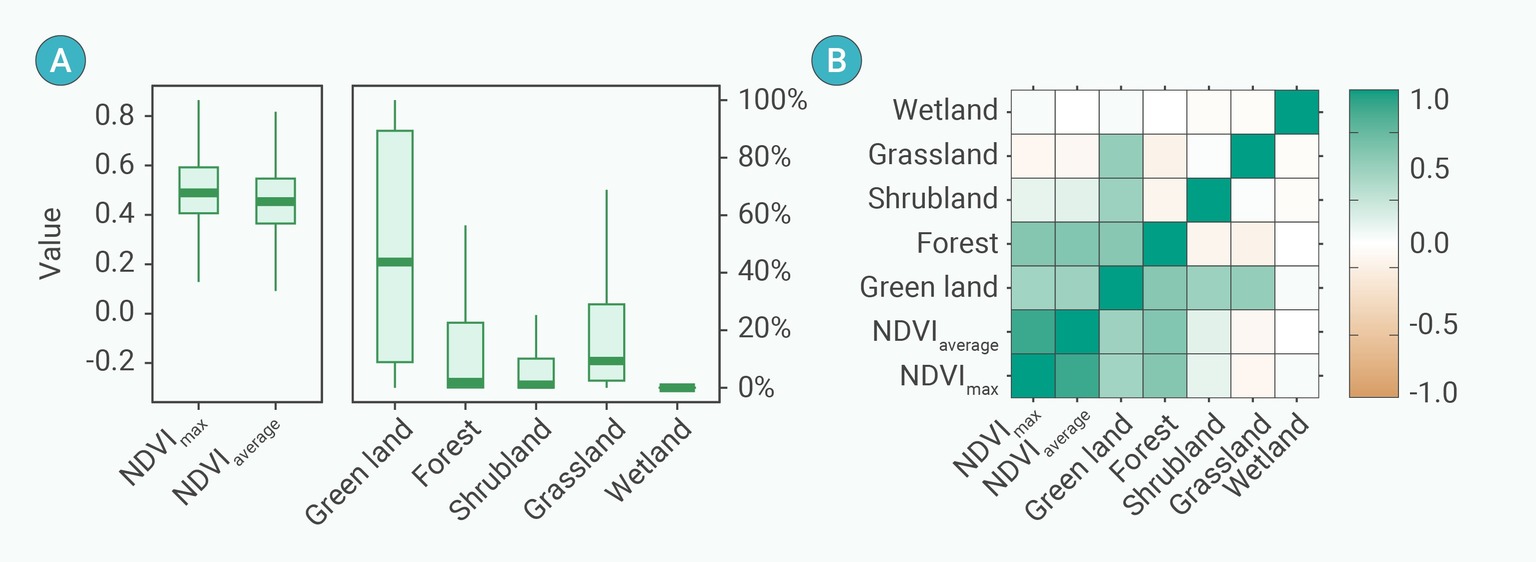
Figure 3.
Box and whisker plot (A) and correlation plot (B) of greenness indicators for residences of children under five years old participating in the Demographic and Health Surveys (DHS) program, 2008-2018
-
Figure 4.
Potential pathways linking greenspace to reduced odds of childhood undernutrition.
