
Human-AI collaboration versus expert intuition: a head-to-head comparison in patient classification
-

-
REFERENCES
[1] Basubrin M. (2025). Current status and future of Artificial Intelligence in medicine. Cureus 17:e77561. DOI:10.7759/cureus.77561 [2] Heinrichs H., Kies A., Nagel S.K., et al. (2025). Physicians' attitudes toward Artificial Intelligence in medicine: mixed methods survey and interview study. J. Med. Internet Res. 27:e74187. DOI:10.2196/74187 [3] Beam A.L. and Kohane I.S. (2018). Big data and machine learning in health care. JAMA 319:1317−1318. DOI:10.1001/jama.2017.18391 [4] Rajpurkar P., Chen E., Banerjee O., et al. (2022). AI in health and medicine. Nat. Med. 28:31−38. DOI:10.1038/s41591-021-01614-0 [5] Symons J.A., Young P.R. and Duff G.W. (1995). Soluble type II interleukin 1 (IL-1) receptor binds and blocks processing of IL-1 beta precursor and loses affinity for IL-1 receptor antagonist. Proc. Natl. Acad. Sci. U. S. A. 92:1714−1718. DOI:10.1073/PNAS.92.5.1714 [6] Vaccaro M., Almaatouq A. and Malone T. (2024). When combinations of humans and AI are useful: a systematic review and meta-analysis. Nat. Hum. Behav. 8:2293−2303. DOI:10.1038/s41562-024-02024-1 [7] Labkoff S., Oladimeji B., Kannry J., et al. (2024). Toward a responsible future: recommendations for AI-enabled clinical decision support. J. Am. Med. Inform. Assoc. 31:2730−2739. DOI:10.1093/jamia/ocae209 -
ABOUT THIS ARTICLE
Cite this article:
Manca M.L., Migliorini P., Boraschi D (2026). Human-AI collaboration versus expert intuition: a head-to-head comparison in patient classification. The Innovation Medicine 4:100182. https://doi.org/10.59717/j.xinn-med.2026.100182
Welcome!
To request copyright permission to republish or share portions of our works, please visit Copyright Clearance Center's (CCC) Marketplace website at marketplace.copyright.com.
Export File
Citation
Manca M.L., Migliorini P., Boraschi D (2026). Human-AI collaboration versus expert intuition: a head-to-head comparison in patient classification. The Innovation Medicine 4:100182. https://doi.org/10.59717/j.xinn-med.2026.100182

Format
Content
 DownLoad:
-
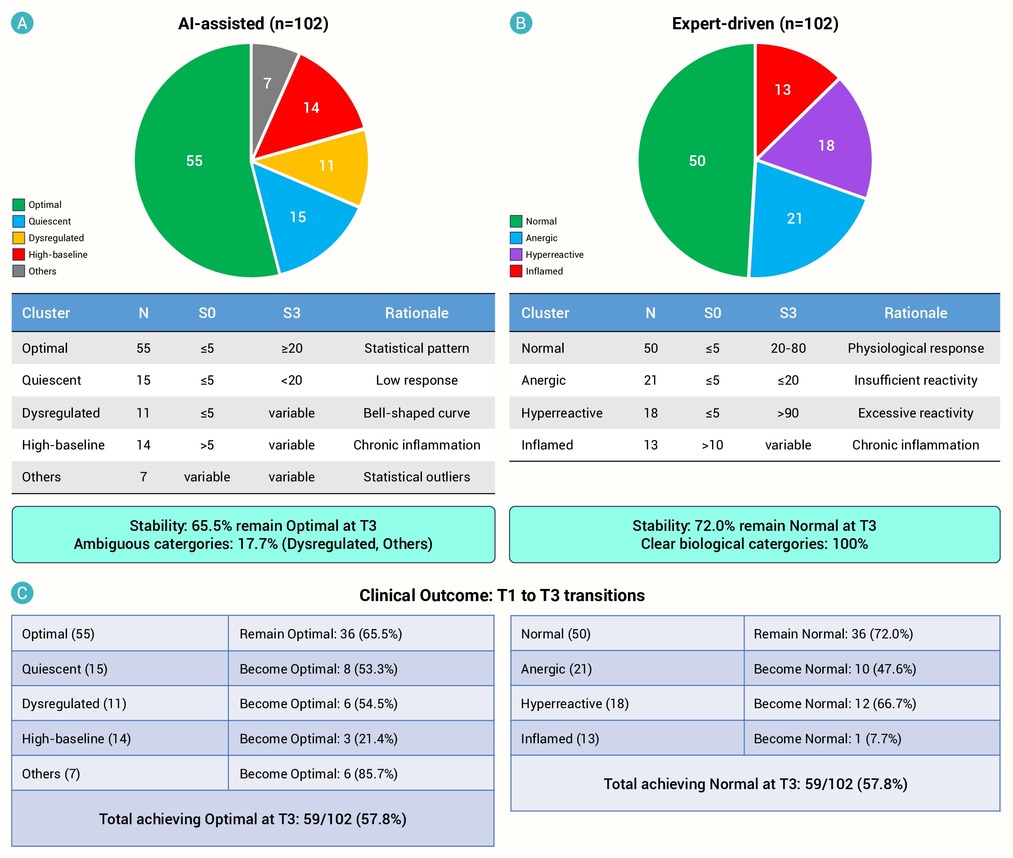
Figure 1.
Comparative analysis of AI-assisted versus expert-driven patient classification
