
The role of interleukin-6 receptor in cardiovascular and cerebrovascular diseases
-
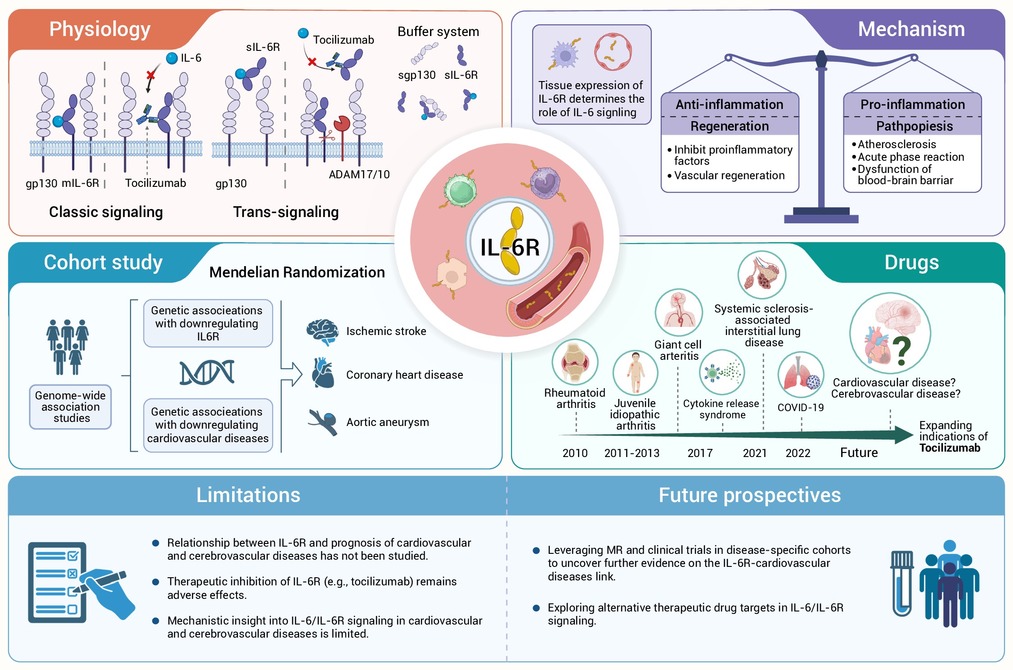
GRAPHICAL ABSTRACT
 DownLoad:
Full size image
DownLoad:
Full size image
-
PUBLIC SUMMARY
-
Interleukin-6 receptor (IL-6R) plays a pivotal role in pathogenesis of cardiovascular and cerebrovascular diseases.
IL-6R is associated with cardiovascular and cerebrovascular diseases in cohort studies.
IL-6R will be a promising drug target in cardiovascular and cerebrovascular diseases.
-
-
ABSTRACT
Interleukin-6 receptor (IL-6R) plays a pivotal role in Interleukin-6 (IL-6) signaling, which is an important pathogenic mechanism of cardiovascular and cerebrovascular diseases. IL-6R exists as membrane-bound and soluble forms and signals through classic, trans-, and cluster signaling that converge on JAK–STAT3, MAPK/ERK and PI3K–Akt pathways, while the IL-6 buffer system modulates signal intensity. Experimental studies show that IL-6 signaling drives acute-phase responses, dyslipidemia, endothelial activation, leukocyte recruitment, blood–brain barrier disruption, angiogenesis, and vascular remodeling. IL-6R is an important therapeutic target in inflammation, as evidenced by the approval of monoclonal antibodies like tocilizumab, sarilumab, and satralizumab. In addition, other emerging IL-6R-directed biologics and trans-signaling-selective approaches show promising anti-inflammatory activity in immune-mediated diseases. Mendelian randomization (MR) analyses using IL-6R variants as instruments indicate that partial lifelong downregulation of IL-6 signaling causally reduces the risk of coronary heart disease, ischemic stroke, abdominal aortic aneurysm, and other vascular phenotypes. Early clinical trials suggest tocilizumab has acceptable cardiovascular safety and improvements in acute inflammatory response, myocardial injury, and salvage. We propose that IL-6R might be a promising biomarker and therapeutic target for cardiovascular prevention and treatment. This review will summarize the role of IL-6R in cardiovascular and cerebrovascular diseases with reference to historical literature and discuss its potential clinical applications. Future studies should build large scale specific disease cohorts and further explore novel interventions targeting IL-6R signaling to advance the implementation of anti-inflammatory therapeutic strategies in this field. -

-
REFERENCES
[1] Hirano T., Yasukawa K., Harada H., et al. (1986). Complementary DNA for a novel human interleukin (BSF-2) that induces B lymphocytes to produce immunoglobulin. Nature 324:73−76. DOI:10.1038/324073a0 [2] Yamasaki K., Taga T., Hirata Y., et al. (1988). Cloning and expression of the human interleukin-6 (BSF-2/IFN beta 2) receptor. Science 241:825−828. DOI:10.1126/science.3136546 [3] Rose-John S. (2012). IL-6 trans-signaling via the soluble IL-6 receptor: importance for the pro-inflammatory activities of IL-6. Int J Biol Sci 8:1237−1247. DOI:10.7150/ijbs.4989 [4] Grebenciucova E. and VanHaerents S. (2023). Interleukin 6: at the interface of human health and disease. Front Immunol 14:1255533. DOI:10.3389/fimmu.2023.1255533 [5] Murakami M., Kamimura D. and Hirano T. (2019). Pleiotropy and Specificity: Insights from the Interleukin 6 Family of Cytokines. Immunity 50:812−831. DOI:10.1016/j.immuni.2019.03.027 [6] Ross R. (1999). Atherosclerosis--an inflammatory disease. N Engl J Med 340:115–126. DOI:10.1056/nejm199901143400207. [7] Baran P., Nitz R., Grötzinger J., et al. (2013). Minimal interleukin 6 (IL-6) receptor stalk composition for IL-6 receptor shedding and IL-6 classic signaling. J Biol Chem 288:14756−14768. DOI:10.1074/jbc.M113.466169 [8] Varghese J. N., Moritz R. L., Lou M. Z., et al. (2002). Structure of the extracellular domains of the human interleukin-6 receptor alpha -chain. Proc Natl Acad Sci U S A 99:15959−15964. DOI:10.1073/pnas.232432399 [9] Kalai M., Montero-Julian F. A., Grötzinger J., et al. (1997). Analysis of the human interleukin-6/human interleukin-6 receptor binding interface at the amino acid level: proposed mechanism of interaction. Blood 89:1319−1333. [10] Vollmer P., Oppmann B., Voltz N., et al. (1999). A role for the immunoglobulin-like domain of the human IL-6 receptor. Intracellular protein transport and shedding. Eur J Biochem 263:438−446. DOI:10.1046/j.1432-1327.1999.00511.x [11] Lust J. A., Donovan K. A., Kline M. P., et al. (1992). Isolation of an mRNA encoding a soluble form of the human interleukin-6 receptor. Cytokine 4:96−100. DOI:10.1016/1043-4666(92)90043-q [12] Nakajima T., Yamamoto S., Cheng M., et al. (1992). Soluble interleukin-6 receptor is released from receptor-bearing cell lines in vitro. Jpn J Cancer Res 83:373−378. DOI:10.1111/j.1349-7006.1992.tb00117.x [13] Bauer J., Lengyel G., Bauer T. M., et al. (1989). Regulation of interleukin-6 receptor expression in human monocytes and hepatocytes. FEBS Lett 249:27−30. DOI:10.1016/0014-5793(89)80008-0 [14] Schmidt-Arras D. and Rose-John S. (2016). IL-6 pathway in the liver: From physiopathology to therapy. J Hepatol 64:1403−1415. DOI:10.1016/j.jhep.2016.02.004 [15] Bauer J., Bauer T. M., Kalb T., et al. (1989). Regulation of interleukin 6 receptor expression in human monocytes and monocyte-derived macrophages. Comparison with the expression in human hepatocytes. J Exp Med 170:1537−1549. DOI:10.1084/jem.170.5.1537 [16] Hirata Y., Taga T., Hibi M., et al. (1989). Characterization of IL-6 receptor expression by monoclonal and polyclonal antibodies. J Immunol 143:2900−2906. [17] Keller C., Steensberg A., Hansen A. K., et al. (2005). Effect of exercise, training, and glycogen availability on IL-6 receptor expression in human skeletal muscle. J Appl Physiol (1985) 99:2075–2079. DOI:10.1152/japplphysiol.00590.2005. [18] Modur V., Li Y., Zimmerman G. A., et al. (1997). Retrograde inflammatory signaling from neutrophils to endothelial cells by soluble interleukin-6 receptor alpha. J Clin Invest 100:2752−2756. DOI:10.1172/jci119821 [19] Eskilsson A., Mirrasekhian E., Dufour S., et al. (2014). Immune-induced fever is mediated by IL-6 receptors on brain endothelial cells coupled to STAT3-dependent induction of brain endothelial prostaglandin synthesis. J Neurosci 34:15957−15961. DOI:10.1523/jneurosci.3520-14.2014 [20] Ferreira L. B., Ashander L. M., Appukuttan B., et al. (2023). Human retinal endothelial cells express functional interleukin-6 receptor. J Ophthalmic Inflamm Infect 13:21. DOI:10.1186/s12348-023-00341-6 [21] Zegeye M. M., Lindkvist M., Fälker K., et al. (2018). Activation of the JAK/STAT3 and PI3K/AKT pathways are crucial for IL-6 trans-signaling-mediated pro-inflammatory response in human vascular endothelial cells. Cell Commun Signal 16:55. DOI:10.1186/s12964-018-0268-4 [22] Frieling J. T., Sauerwein R. W., Wijdenes J., et al. (1994). Soluble interleukin 6 receptor in biological fluids from human origin. Cytokine 6:376−381. DOI:10.1016/1043-4666(94)90061-2 [23] Müller-Newen G., Köhne C., Keul R., et al. (1996). Purification and characterization of the soluble interleukin-6 receptor from human plasma and identification of an isoform generated through alternative splicing. Eur J Biochem 236:837−842. DOI:10.1111/j.1432-1033.1996.00837.x [24] Müllberg J., Oberthür W., Lottspeich F., et al. (1994). The soluble human IL-6 receptor. Mutational characterization of the proteolytic cleavage site. J Immunol 152:4958−4968. [25] Riethmueller S., Ehlers J. C., Lokau J., et al. (2016). Cleavage Site Localization Differentially Controls Interleukin-6 Receptor Proteolysis by ADAM10 and ADAM17. Sci Rep 6:25550. DOI:10.1038/srep25550 [26] Oh J. W., Revel M. and Chebath J. (1996). A soluble interleukin 6 receptor isolated from conditioned medium of human breast cancer cells is encoded by a differentially spliced mRNA. Cytokine 8:401−409. DOI:10.1006/cyto.1996.0055 [27] Jones S. A., Horiuchi S., Novick D., et al. (1998). Shedding of the soluble IL-6 receptor is triggered by Ca2+ mobilization, while basal release is predominantly the product of differential mRNA splicing in THP-1 cells. Eur J Immunol 28:3514−3522. DOI:3.0.Co;2-t">10.1002/(sici)1521-4141(199811)28:11<3514::Aid-immu3514>3.0.Co;2-t [28] Thabard W., Barillé S., Collette M., et al. (1999). Myeloma cells release soluble interleukin-6Ralpha in relation to disease progression by two distinct mechanisms: alternative splicing and proteolytic cleavage. Clin Cancer Res 5:2693−2697. [29] Schumacher N., Meyer D., Mauermann A., et al. (2015). Shedding of Endogenous Interleukin-6 Receptor (IL-6R) Is Governed by A Disintegrin and Metalloproteinase (ADAM) Proteases while a Full-length IL-6R Isoform Localizes to Circulating Microvesicles. J Biol Chem 290:26059−26071. DOI:10.1074/jbc.M115.649509 [30] Lokau J. and Garbers C. (2020). Biological functions and therapeutic opportunities of soluble cytokine receptors. Cytokine Growth Factor Rev 55:94−108. DOI:10.1016/j.cytogfr.2020.04.003 [31] Hoge J., Yan I., Jänner N., et al. (2013). IL-6 controls the innate immune response against Listeria monocytogenes via classical IL-6 signaling. J Immunol 190:703−711. DOI:10.4049/jimmunol.1201044 [32] Bettelli E., Carrier Y., Gao W., et al. (2006). Reciprocal developmental pathways for the generation of pathogenic effector TH17 and regulatory T cells. Nature 441:235−238. DOI:10.1038/nature04753 [33] Conti H. R., Shen F., Nayyar N., et al. (2009). Th17 cells and IL-17 receptor signaling are essential for mucosal host defense against oral candidiasis. J Exp Med 206:299−311. DOI:10.1084/jem.20081463 [34] Dienz O., Eaton S. M., Bond J. P., et al. (2009). The induction of antibody production by IL-6 is indirectly mediated by IL-21 produced by CD4+ T cells. J Exp Med 206:69−78. DOI:10.1084/jem.20081571 [35] Serrano A. L., Baeza-Raja B., Perdiguero E., et al. (2008). Interleukin-6 is an essential regulator of satellite cell-mediated skeletal muscle hypertrophy. Cell Metab 7:33−44. DOI:10.1016/j.cmet.2007.11.011 [36] McNeilly A. D., Yianakas A., Gallagher J. G., et al. (2022). Central deficiency of IL-6Ra in mice impairs glucose-stimulated insulin secretion. Mol Metab 61:101488. DOI:10.1016/j.molmet.2022.101488 [37] Sui X., Tsuji K., Ebihara Y., et al. (1999). Soluble interleukin-6 (IL-6) receptor with IL-6 stimulates megakaryopoiesis from human CD34(+) cells through glycoprotein (gp)130 signaling. Blood 93:2525−2532. [38] Spencer S., Köstel Bal S., Egner W., et al. (2019). Loss of the interleukin-6 receptor causes immunodeficiency, atopy, and abnormal inflammatory responses. J Exp Med 216:1986−1998. DOI:10.1084/jem.20190344 [39] Schumertl T., Lokau J., Rose-John S., et al. (2022). Function and proteolytic generation of the soluble interleukin-6 receptor in health and disease. Biochim Biophys Acta Mol Cell Res 1869:119143. DOI:10.1016/j.bbamcr.2021.119143 [40] Rose-John S. and Heinrich P. C. (1994). Soluble receptors for cytokines and growth factors: generation and biological function. Biochem J 300 ( Pt 2):281–290. DOI:10.1042/bj3000281. [41] Boulanger M. J., Chow D. C., Brevnova E. E., et al. (2003). Hexameric structure and assembly of the interleukin-6/IL-6 alpha-receptor/gp130 complex. Science 300:2101−2104. DOI:10.1126/science.1083901 [42] Starr R., Willson T. A., Viney E. M., et al. (1997). A family of cytokine-inducible inhibitors of signalling. Nature 387:917−921. DOI:10.1038/43206 [43] Steensberg A., Fischer C. P., Keller C., et al. (2003). IL-6 enhances plasma IL-1ra, IL-10, and cortisol in humans. Am J Physiol Endocrinol Metab 285:E433−437. DOI:10.1152/ajpendo.00074.2003 [44] Heink S., Yogev N., Garbers C., et al. (2017). Trans-presentation of IL-6 by dendritic cells is required for the priming of pathogenic T(H)17 cells. Nat Immunol 18:74−85. DOI:10.1038/ni.3632 [45] Stahl N., Boulton T. G., Farruggella T., et al. (1994). Association and activation of Jak-Tyk kinases by CNTF-LIF-OSM-IL-6 beta receptor components. Science 263:92−95. DOI:10.1126/science.8272873 [46] Eulenfeld R., Dittrich A., Khouri C., et al. (2012). Interleukin-6 signalling: more than Jaks and STATs. Eur J Cell Biol 91:486−495. DOI:10.1016/j.ejcb.2011.09.010 [47] Taniguchi K., Wu L. W., Grivennikov S. I., et al. (2015). A gp130-Src-YAP module links inflammation to epithelial regeneration. Nature 519:57−62. DOI:10.1038/nature14228 [48] Song M., Wang Y., Annex B. H., et al. (2023). Experiment-based computational model predicts that IL-6 classic and trans-signaling exhibit similar potency in inducing downstream signaling in endothelial cells. NPJ Syst Biol Appl 9:45. DOI:10.1038/s41540-023-00308-2 [49] Reeh H., Rudolph N., Billing U., et al. (2019). Response to IL-6 trans- and IL-6 classic signalling is determined by the ratio of the IL-6 receptor α to gp130 expression: fusing experimental insights and dynamic modelling. Cell Commun Signal 17:46. DOI:10.1186/s12964-019-0356-0 [50] Rose-John S. (2018). Interleukin-6 Family Cytokines. Cold Spring Harb Perspect Biol 10. DOI:10.1101/cshperspect.a028415. [51] Rose-John S., Jenkins B. J., Garbers C., et al. (2023). Targeting IL-6 trans-signalling: past, present and future prospects. Nat Rev Immunol 23:666−681. DOI:10.1038/s41577-023-00856-y [52] Narazaki M., Yasukawa K., Saito T., et al. (1993). Soluble forms of the interleukin-6 signal-transducing receptor component gp130 in human serum possessing a potential to inhibit signals through membrane-anchored gp130. Blood 82:1120−1126. [53] Rodríguez-Hernández M., Carneros D., Núñez-Núñez M., et al. (2022). Identification of IL-6 Signalling Components as Predictors of Severity and Outcome in COVID-19. Front Immunol 13:891456. DOI:10.3389/fimmu.2022.891456 [54] Lokau J., Garbers Y., Vicente M. M., et al. (2024). Long-term increase in soluble interleukin-6 receptor levels in convalescents after mild COVID-19 infection. Front Immunol 15:1488745. DOI:10.3389/fimmu.2024.1488745 [55] Heinrich P. C., Castell J. V. and Andus T. (1990). Interleukin-6 and the acute phase response. Biochem J 265:621−636. DOI:10.1042/bj2650621 [56] Siewert E., Bort R., Kluge R., et al. (2000). Hepatic cytochrome P450 down-regulation during aseptic inflammation in the mouse is interleukin 6 dependent. Hepatology 32:49−55. DOI:10.1053/jhep.2000.8532 [57] Kang S. and Kishimoto T. (2021). Interplay between interleukin-6 signaling and the vascular endothelium in cytokine storms. Exp Mol Med 53:1116−1123. DOI:10.1038/s12276-021-00649-0 [58] Niu J. and Kolattukudy P. E. (2009). Role of MCP-1 in cardiovascular disease: molecular mechanisms and clinical implications. Clin Sci (Lond) 117:95−109. DOI:10.1042/cs20080581 [59] Zohlnhöfer D., Brand K., Schipek K., et al. (2000). Adhesion of monocyte very late antigen-4 to endothelial vascular cell adhesion molecule-1 induces interleukin-1beta-dependent expression of interleukin-6 in endothelial cells. Arterioscler Thromb Vasc Biol 20:353−359. DOI:10.1161/01.atv.20.2.353 [60] Dansky H. M., Barlow C. B., Lominska C., et al. (2001). Adhesion of monocytes to arterial endothelium and initiation of atherosclerosis are critically dependent on vascular cell adhesion molecule-1 gene dosage. Arterioscler Thromb Vasc Biol 21:1662−1667. DOI:10.1161/hq1001.096625 [61] Li N., Yang H., Wang M., et al. (2018). Ligand-specific binding forces of LFA-1 and Mac-1 in neutrophil adhesion and crawling. Mol Biol Cell 29:408−418. DOI:10.1091/mbc.E16-12-0827 [62] Luo P., Wang Y., Zhao C., et al. (2021). Bazedoxifene exhibits anti-inflammation and anti-atherosclerotic effects via inhibition of IL-6/IL-6R/STAT3 signaling. Eur J Pharmacol 893:173822. DOI:10.1016/j.ejphar.2020.173822 [63] Ley K., Laudanna C., Cybulsky M. I., et al. (2007). Getting to the site of inflammation: the leukocyte adhesion cascade updated. Nat Rev Immunol 7:678−689. DOI:10.1038/nri2156 [64] Newby A. C. (2016). Metalloproteinase production from macrophages - a perfect storm leading to atherosclerotic plaque rupture and myocardial infarction. Exp Physiol 101:1327−1337. DOI:10.1113/ep085567 [65] Kowara M., Cudnoch-Jedrzejewska A., Opolski G., et al. (2017). MicroRNA regulation of extracellular matrix components in the process of atherosclerotic plaque destabilization. Clin Exp Pharmacol Physiol 44:711−718. DOI:10.1111/1440-1681.12772 [66] Olejarz W., Łacheta D. and Kubiak-Tomaszewska G. (2020). Matrix Metalloproteinases as Biomarkers of Atherosclerotic Plaque Instability. Int J Mol Sci 21. DOI:10.3390/ijms21113946. [67] Libby P. (2013). Collagenases and cracks in the plaque. J Clin Invest 123:3201−3203. DOI:10.1172/jci67526 [68] Sparks J. D., Cianci J., Jokinen J., et al. (2010). Interleukin-6 mediates hepatic hypersecretion of apolipoprotein B. Am J Physiol Gastrointest Liver Physiol 299:G980−989. DOI:10.1152/ajpgi.00080.2010 [69] Dzobo K. E., Kraaijenhof J. M., Stroes E. S. G., et al. (2022). Lipoprotein(a): An underestimated inflammatory mastermind. Atherosclerosis 349:101−109. DOI:10.1016/j.atherosclerosis.2022.04.004 [70] Poon M., Zhang X., Dunsky K. G., et al. (1997). Apolipoprotein(a) induces monocyte chemotactic activity in human vascular endothelial cells. Circulation 96:2514−2519. DOI:10.1161/01.cir.96.8.2514 [71] Ronsein G. E. and Vaisar T. (2017). Inflammation, remodeling, and other factors affecting HDL cholesterol efflux. Curr Opin Lipidol 28:52−59. DOI:10.1097/mol.0000000000000382 [72] Blecharz-Lang K. G., Wagner J., Fries A., et al. (2018). Interleukin 6-Mediated Endothelial Barrier Disturbances Can Be Attenuated by Blockade of the IL6 Receptor Expressed in Brain Microvascular Endothelial Cells. Transl Stroke Res 9:631−642. DOI:10.1007/s12975-018-0614-2 [73] Jiang S., Shi D., Bai L., et al. (2023). Inhibition of interleukin-6 trans-signaling improves survival and prevents cognitive impairment in a mouse model of sepsis. Int Immunopharmacol 119:110169. DOI:10.1016/j.intimp.2023.110169 [74] Yang J., Ran M., Li H., et al. (2022). New insight into neurological degeneration: Inflammatory cytokines and blood-brain barrier. Front Mol Neurosci 15:1013933. DOI:10.3389/fnmol.2022.1013933 [75] Patel A., Zhu Y., Kuzhikandathil E. V., et al. (2012). Soluble interleukin-6 receptor induces motor stereotypies and co-localizes with gp130 in regions linked to cortico-striato-thalamo-cortical circuits. PLoS One 7:e41623. DOI:10.1371/journal.pone.0041623 [76] Willis E. F., MacDonald K. P. A., Nguyen Q. H., et al. (2020). Repopulating Microglia Promote Brain Repair in an IL-6-Dependent Manner. Cell 180:833−846.e816. DOI:10.1016/j.cell.2020.02.013 [77] Choi B. R., Johnson K. R., Maric D., et al. (2023). Monocyte-derived IL-6 programs microglia to rebuild damaged brain vasculature. Nat Immunol 24:1110−1123. DOI:10.1038/s41590-023-01521-1 [78] Maguida G. and Shuaib A. (2023). Collateral Circulation in Ischemic Stroke: An Updated Review. J Stroke 25:179−198. DOI:10.5853/jos.2022.02936 [79] Hoffmann C. J., Harms U., Rex A., et al. (2015). Vascular signal transducer and activator of transcription-3 promotes angiogenesis and neuroplasticity long-term after stroke. Circulation 131:1772−1782. DOI:10.1161/circulationaha.114.013003 [80] Gertz K., Kronenberg G., Kälin R. E., et al. (2012). Essential role of interleukin-6 in post-stroke angiogenesis. Brain 135:1964−1980. DOI:10.1093/brain/aws075 [81] Hashizume M., Hayakawa N., Suzuki M., et al. (2009). IL-6/sIL-6R trans-signalling, but not TNF-alpha induced angiogenesis in a HUVEC and synovial cell co-culture system. Rheumatol Int 29:1449−1454. DOI:10.1007/s00296-009-0885-8 [82] Droho S., Cuda C. M., Perlman H., et al. (2021). Macrophage-derived interleukin-6 is necessary and sufficient for choroidal angiogenesis. Sci Rep 11:18084. DOI:10.1038/s41598-021-97522-x [83] Xu J., Lin H., Wu G., et al. (2021). IL-6/STAT3 Is a Promising Therapeutic Target for Hepatocellular Carcinoma. Front Oncol 11:760971. DOI:10.3389/fonc.2021.760971 [84] Zhang X., Sun Y., Pireddu R., et al. (2013). A novel inhibitor of STAT3 homodimerization selectively suppresses STAT3 activity and malignant transformation. Cancer Res 73:1922−1933. DOI:10.1158/0008-5472.Can-12-3175 [85] Wang M., Zhang W., Crisostomo P., et al. (2007). STAT3 mediates bone marrow mesenchymal stem cell VEGF production. J Mol Cell Cardiol 42:1009−1015. DOI:10.1016/j.yjmcc.2007.04.010 [86] Catar R., Witowski J., Zhu N., et al. (2017). IL-6 Trans-Signaling Links Inflammation with Angiogenesis in the Peritoneal Membrane. J Am Soc Nephrol 28:1188−1199. DOI:10.1681/asn.2015101169 [87] Zhu N., Guan H., Wang X., et al. (2023). EZH2 promotes angiogenesis in peritoneal dialysis by epigenetically activating SP4 expression in the IL-6/sIL-6R signalling pathway. Int J Med Sci 20:114−124. DOI:10.7150/ijms.78428 [88] Oh J., Takahashi R., Kondo S., et al. (2001). The membrane-anchored MMP inhibitor RECK is a key regulator of extracellular matrix integrity and angiogenesis. Cell 107:789−800. DOI:10.1016/s0092-8674(01)00597-9 [89] Hong K. J., Wu D. C., Cheng K. H., et al. (2014). RECK inhibits stemness gene expression and tumorigenicity of gastric cancer cells by suppressing ADAM-mediated Notch1 activation. J Cell Physiol 229:191−201. DOI:10.1002/jcp.24434 [90] Russell J. J., Grisanti L. A., Brown S. M., et al. (2021). Reversion inducing cysteine rich protein with Kazal motifs and cardiovascular diseases: The RECKlessness of adverse remodeling. Cell Signal 83:109993. DOI:10.1016/j.cellsig.2021.109993 [91] Camilli C., Hoeh A. E., De Rossi G., et al. (2022). LRG1: an emerging player in disease pathogenesis. J Biomed Sci 29:6. DOI:10.1186/s12929-022-00790-6 [92] Dritsoula A., Camilli C., Moss S. E., et al. (2024). The disruptive role of LRG1 on the vasculature and perivascular microenvironment. Front Cardiovasc Med 11:1386177. DOI:10.3389/fcvm.2024.1386177 [93] Wang X., Abraham S., McKenzie J. A. G., et al. (2013). LRG1 promotes angiogenesis by modulating endothelial TGF-β signalling. Nature 499:306−311. DOI:10.1038/nature12345 [94] Alwarawrah Y., Nichols A. G., Patel I., et al. (2025). Targeting IL-6 receptor mediated metabolic pathways to control Th17 cell differentiation and inflammatory responses. Front Immunol 16:1568514. DOI:10.3389/fimmu.2025.1568514 [95] Zhang H., Watanabe R., Berry G. J., et al. (2018). Inhibition of JAK-STAT Signaling Suppresses Pathogenic Immune Responses in Medium and Large Vessel Vasculitis. Circulation 137:1934−1948. DOI:10.1161/circulationaha.117.030423 [96] Coles B., Fielding C. A., Rose-John S., et al. (2007). Classic interleukin-6 receptor signaling and interleukin-6 trans-signaling differentially control angiotensin II-dependent hypertension, cardiac signal transducer and activator of transcription-3 activation, and vascular hypertrophy in vivo. Am J Pathol 171:315−325. DOI:10.2353/ajpath.2007.061078 [97] Senchenkova E. Y., Russell J., Yildirim A., et al. (2019). Novel Role of T Cells and IL-6 (Interleukin-6) in Angiotensin II-Induced Microvascular Dysfunction. Hypertension 73:829−838. DOI:10.1161/hypertensionaha.118.12286 [98] Edsfeldt A., Gonçalves I., Vigren I., et al. (2023). Circulating soluble IL-6 receptor associates with plaque inflammation but not with atherosclerosis severity and cardiovascular risk. Vascul Pharmacol 152:107214. DOI:10.1016/j.vph.2023.107214 [99] Ziegler L., Gajulapuri A., Frumento P., et al. (2019). Interleukin 6 trans-signalling and risk of future cardiovascular events. Cardiovasc Res 115:213−221. DOI:10.1093/cvr/cvy191 [100] Ritschel V. N., Seljeflot I., Arnesen H., et al. (2016). Circulating Levels of IL-6 Receptor and gp130 and Long-Term Clinical Outcomes in ST-Elevation Myocardial Infarction. J Am Heart Assoc 5. DOI:10.1161/jaha.115.003014. [101] Zhang Y., Liu Y., Yang Y., et al. (2026). The prognostic value of circulating soluble ST2 in patients with chronic heart failure. J Int Med Res 54:3000605251406969. DOI:10.1177/03000605251406969. [102] Numan L., Aarts E., Ramjankhan F., et al. (2024). Soluble Suppression of Tumorigenicity-2 Predicts Mortality and Right Heart Failure in Patients With a Left Ventricular Assist Device. J Am Heart Assoc 13:e029827. DOI:10.1161/jaha.123.029827 [103] Rose-John S., Waetzig G. H., Scheller J., et al. (2007). The IL-6/sIL-6R complex as a novel target for therapeutic approaches. Expert Opin Ther Targets 11:613−624. DOI:10.1517/14728222.11.5.613 [104] Galicia J. C., Tai H., Komatsu Y., et al. (2004). Polymorphisms in the IL-6 receptor (IL-6R) gene: strong evidence that serum levels of soluble IL-6R are genetically influenced. Genes Immun 5:513−516. DOI:10.1038/sj.gene.6364120 [105] Lawlor D. A., Harbord R. M., Sterne J. A., et al. (2008). Mendelian randomization: using genes as instruments for making causal inferences in epidemiology. Stat Med 27:1133−1163. DOI:10.1002/sim.3034 [106] Skrivankova V. W., Richmond R. C., Woolf B. A. R., et al. (2021). Strengthening the Reporting of Observational Studies in Epidemiology Using Mendelian Randomization: The STROBE-MR Statement. Jama 326:1614−1621. DOI:10.1001/jama.2021.18236 [107] Garbers C., Monhasery N., Aparicio-Siegmund S., et al. (2014). The interleukin-6 receptor Asp358Ala single nucleotide polymorphism rs2228145 confers increased proteolytic conversion rates by ADAM proteases. Biochim Biophys Acta 1842:1485−1494. DOI:10.1016/j.bbadis.2014.05.018 [108] Daghlas I. and Gill D. (2023). Mendelian randomization as a tool to inform drug development using human genetics. Camb Prism Precis Med 1:e16. DOI:10.1017/pcm.2023.5 [109] Davey Smith G. and Hemani G. (2014). Mendelian randomization: genetic anchors for causal inference in epidemiological studies. Hum Mol Genet 23:R89−98. DOI:10.1093/hmg/ddu328 [110] Swerdlow D. I., Holmes M. V., Kuchenbaecker K. B., et al. (2012). The interleukin-6 receptor as a target for prevention of coronary heart disease: a mendelian randomisation analysis. Lancet 379:1214−1224. DOI:10.1016/s0140-6736(12)60110-x [111] Ou G., Cai H., Yao K., et al. (2024). Exploring the therapeutic potential of interleukin-6 receptor blockade in cardiovascular disease treatment through Mendelian randomization. Sci Rep 14:21452. DOI:10.1038/s41598-024-72195-4 [112] Rosa M., Chignon A., Li Z., et al. (2019). A Mendelian randomization study of IL6 signaling in cardiovascular diseases, immune-related disorders and longevity. NPJ Genom Med 4:23. DOI:10.1038/s41525-019-0097-4 [113] Ciofani J. L., Han D., Nazarzadeh M., et al. (2023). The effect of immunomodulatory drugs on aortic stenosis: a Mendelian randomisation analysis. Sci Rep 13:18810. DOI:10.1038/s41598-023-44387-x [114] Georgakis M. K., Malik R., Gill D., et al. (2020). Interleukin-6 Signaling Effects on Ischemic Stroke and Other Cardiovascular Outcomes: A Mendelian Randomization Study. Circ Genom Precis Med 13:e002872. DOI:10.1161/circgen.119.002872 [115] Tchuisseu-Kwangoua L. A., Omarov M., Shatunov A., et al. (2025). Genetic Downregulation of Interleukin-6 Signaling and Arteriolosclerotic Cerebral Small Vessel Disease: A Drug Target Mendelian Randomization Analysis. J Am Heart Assoc 14:e041814. DOI:10.1161/jaha.124.041814 [116] Lv Y. (2024). The effects of immunomodulatory drugs on cerebral small vessel disease: A mediation Mendelian randomization analysis. Int Immunopharmacol 140:112786. DOI:10.1016/j.intimp.2024.112786 [117] Levin M. G., Klarin D., Georgakis M. K., et al. (2021). A Missense Variant in the IL-6 Receptor and Protection From Peripheral Artery Disease. Circ Res 129:968−970. DOI:10.1161/circresaha.121.319589 [118] Burgess S., Cronjé H. T., deGoma E., et al. (2025). Human Genetic Evidence to Inform Clinical Development of IL-6 Signaling Inhibition for Abdominal Aortic Aneurysm. Arterioscler Thromb Vasc Biol 45:323−331. DOI:10.1161/atvbaha.124.321988 [119] Wang M., Teng T., Mo D., et al. (2025). sIL-6R impact on aortic aneurysm: Genetic evidence from FinnGen and GWAS. Int J Cardiol 441:133786. DOI:10.1016/j.ijcard.2025.133786 [120] Georgakis M. K., Malik R., Richardson T. G., et al. (2022). Associations of genetically predicted IL-6 signaling with cardiovascular disease risk across population subgroups. BMC Med 20:245. DOI:10.1186/s12916-022-02446-6 [121] Georgakis M. K., Malik R., Burgess S., et al. (2022). Additive Effects of Genetic Interleukin-6 Signaling Downregulation and Low-Density Lipoprotein Cholesterol Lowering on Cardiovascular Disease: A 2×2 Factorial Mendelian Randomization Analysis. J Am Heart Assoc 11:e023277. DOI:10.1161/jaha.121.023277 [122] Cai T., Zhang Y., Ho Y. L., et al. (2018). Association of Interleukin 6 Receptor Variant With Cardiovascular Disease Effects of Interleukin 6 Receptor Blocking Therapy: A Phenome-Wide Association Study. JAMA Cardiol 3:849−857. DOI:10.1001/jamacardio.2018.2287 [123] Gill D., Georgakis M. K., Walker V. M., et al. (2021). Mendelian randomization for studying the effects of perturbing drug targets. Wellcome Open Res 6:16. DOI:10.12688/wellcomeopenres.16544.2 [124] Sirugo G., Williams S. M. and Tishkoff S. A. (2019). The Missing Diversity in Human Genetic Studies. Cell 177:26−31. DOI:10.1016/j.cell.2019.02.048 [125] Sun B. B., Maranville J. C., Peters J. E., et al. (2018). Genomic atlas of the human plasma proteome. Nature 558:73−79. DOI:10.1038/s41586-018-0175-2 [126] Alten R. (2011). Tocilizumab: a novel humanized anti-interleukin 6 receptor antibody for the treatment of patients with rheumatoid arthritis. Ther Adv Musculoskelet Dis 3:133−149. DOI:10.1177/1759720x11407540 [127] Stone J. H., Tuckwell K., Dimonaco S., et al. (2017). Trial of Tocilizumab in Giant-Cell Arteritis. N Engl J Med 377:317−328. DOI:10.1056/NEJMoa1613849 [128] De Benedetti F., Brunner H. I., Ruperto N., et al. (2012). Randomized trial of tocilizumab in systemic juvenile idiopathic arthritis. N Engl J Med 367:2385−2395. DOI:10.1056/NEJMoa1112802 [129] Brunner H. I., Ruperto N., Zuber Z., et al. (2015). Efficacy and safety of tocilizumab in patients with polyarticular-course juvenile idiopathic arthritis: results from a phase 3, randomised, double-blind withdrawal trial. Ann Rheum Dis 74:1110−1117. DOI:10.1136/annrheumdis-2014-205351 [130] Khanna D., Lin C. J. F., Furst D. E., et al. (2020). Tocilizumab in systemic sclerosis: a randomised, double-blind, placebo-controlled, phase 3 trial. Lancet Respir Med 8:963−974. DOI:10.1016/s2213-2600(20)30318-0 [131] Tocilizumab in patients admitted to hospital with COVID-19 (RECOVERY): a randomised, controlled, open-label, platform trial. (2021). Lancet 397:1637–1645. DOI:10.1016/s0140-6736(21)00676-0. [132] Liu Y., Xie J., Li Z., et al. (2025). Comparative Structure Activity Relationship Characterization of the Biosimilar BAT1806/BIIB800 to Reference Tocilizumab. BioDrugs 39:307−320. DOI:10.1007/s40259-024-00698-7 [133] Schwabe C., Illes A., Ullmann M., et al. (2022). Pharmacokinetics and pharmacodynamics of a proposed tocilizumab biosimilar MSB11456 versus both the US-licensed and EU-approved products: a randomized, double-blind trial. Expert Rev Clin Immunol 18:533−543. DOI:10.1080/1744666x.2022.2060204 [134] Liu Y., Xie J., Li Z., et al. (2024). Correction to: Demonstration of Physicochemical and Functional Similarity of the Biosimilar BAT1806/BIIB800 to Reference Tocilizumab. BioDrugs 38:725. DOI:10.1007/s40259-024-00672-3 [135] Onishi A., Tanaka M., Fujii T., et al. (2025). Comparative effectiveness of subcutaneous sarilumab 200 mg biweekly, subcutaneous Tocilizumab 162 mg biweekly, and intravenous Tocilizumab 8 mg/kg every 4 weeks in patients with rheumatoid arthritis: a prospective cohort study. Arthritis Res Ther 27:52. DOI:10.1186/s13075-025-03514-x [136] Fleischmann R., van Adelsberg J., Lin Y., et al. (2017). Sarilumab and Nonbiologic Disease-Modifying Antirheumatic Drugs in Patients With Active Rheumatoid Arthritis and Inadequate Response or Intolerance to Tumor Necrosis Factor Inhibitors. Arthritis Rheumatol 69:277−290. DOI:10.1002/art.39944 [137] Spiera R. F., Unizony S., Warrington K. J., et al. (2023). Sarilumab for Relapse of Polymyalgia Rheumatica during Glucocorticoid Taper. N Engl J Med 389:1263−1272. DOI:10.1056/NEJMoa2303452 [138] De Benedetti F., Penadés I. C., Nikishina I., et al. (2025). Sarilumab in Polyarticular-Course Juvenile Idiopathic Arthritis: Dose-Finding and One-Year Analysis of a Phase 2b, Open-Label, Multicenter Study. Arthritis Care Res (Hoboken). DOI:10.1002/acr.25692. [139] Paton D. M. (2021). Satralizumab: an interleukin-6 (IL-6) receptor antagonist for the treatment of neuromyelitis optica spectrum disorders. Drugs Today (Barc) 57:209−218. DOI:10.1358/dot.2021.57.3.3251715 [140] Traboulsee A., Greenberg B. M., Bennett J. L., et al. (2020). Safety and efficacy of satralizumab monotherapy in neuromyelitis optica spectrum disorder: a randomised, double-blind, multicentre, placebo-controlled phase 3 trial. Lancet Neurol 19:402−412. DOI:10.1016/s1474-4422(20)30078-8 [141] Heo Y. A. (2020). Satralizumab: First Approval. Drugs 80:1477−1482. DOI:10.1007/s40265-020-01380-2 [142] Jiang X., Lin P., Sun F., et al. (2023). Tolerability, safety, and pharmacokinetics of a single intravenous administration of a novel recombinant humanized anti-interleukin-6 receptor monoclonal antibody in healthy Chinese volunteers. Front Pharmacol 14:1267178. DOI:10.3389/fphar.2023.1267178 [143] Miao S., Fan L., Zhao L., et al. (2017). Physicochemical and Biological Characterization of the Proposed Biosimilar Tocilizumab. Biomed Res Int 2017:4926168. DOI:10.1155/2017/4926168 [144] Qian H., Cheng J., Gui Y., et al. (2023). A phase I study comparing the pharmacokinetics and safety of HS628 (tocilizumab biosimilar) and reference tocilizumab in healthy male subjects. Clin Transl Sci 16:1704−1712. DOI:10.1111/cts.13584 [145] Van Roy M., Ververken C., Beirnaert E., et al. (2015). The preclinical pharmacology of the high affinity anti-IL-6R Nanobody® ALX-0061 supports its clinical development in rheumatoid arthritis. Arthritis Res Ther 17:135. DOI:10.1186/s13075-015-0651-0 [146] Mazurov V. I., Nasonov E. L., Lila A. M., et al. (2024). Efficacy and Safety of Levilimab in Combination with Methotrexate in Patients with Active Rheumatoid Arthritis: 56-Week Results of Phase III Randomized Double-Blind Placebo-Controlled Trial SOLAR. Dokl Biochem Biophys 518:403−416. DOI:10.1134/s1607672924701072 [147] Lomakin N. V., Bakirov B. A., Protsenko D. N., et al. (2021). The efficacy and safety of levilimab in severely ill COVID-19 patients not requiring mechanical ventilation: results of a multicenter randomized double-blind placebo-controlled phase III CORONA clinical study. Inflamm Res 70:1233−1246. DOI:10.1007/s00011-021-01507-5 [148] Wagner F. D., Schreiber S., Bagger Y., et al. (2024). Safety, tolerability, and pharmacokinetics of single- and multiple-ascending doses of olamkicept: Results from randomized, placebo-controlled, first-in-human phase I trials. Clin Transl Sci 17:e13832. DOI:10.1111/cts.13832 [149] Zhang S., Chen B., Wang B., et al. (2023). Effect of Induction Therapy With Olamkicept vs Placebo on Clinical Response in Patients With Active Ulcerative Colitis: A Randomized Clinical Trial. Jama 329:725−734. DOI:10.1001/jama.2023.1084 [150] Schulte D. M., Waetzig G. H., Schuett H., et al. (2022). Case Report: Arterial Wall Inflammation in Atherosclerotic Cardiovascular Disease is Reduced by Olamkicept (sgp130Fc). Front Pharmacol 13:758233. DOI:10.3389/fphar.2022.758233 [151] McInnes I. B., Thompson L., Giles J. T., et al. (2015). Effect of interleukin-6 receptor blockade on surrogates of vascular risk in rheumatoid arthritis: MEASURE, a randomised, placebo-controlled study. Ann Rheum Dis 74:694−702. DOI:10.1136/annrheumdis-2013-204345 [152] Jones G., Sebba A., Gu J., et al. (2010). Comparison of tocilizumab monotherapy versus methotrexate monotherapy in patients with moderate to severe rheumatoid arthritis: the AMBITION study. Ann Rheum Dis 69:88−96. DOI:10.1136/ard.2008.105197 [153] Smolen J. S., Beaulieu A., Rubbert-Roth A., et al. (2008). Effect of interleukin-6 receptor inhibition with tocilizumab in patients with rheumatoid arthritis (OPTION study): a double-blind, placebo-controlled, randomised trial. Lancet 371:987−997. DOI:10.1016/s0140-6736(08)60453-5 [154] Barnabe C., Martin B. J. and Ghali W. A. (2011). Systematic review and meta-analysis: anti-tumor necrosis factor α therapy and cardiovascular events in rheumatoid arthritis. Arthritis Care Res (Hoboken) 63:522−529. DOI:10.1002/acr.20371 [155] Greenberg J. D., Kremer J. M., Curtis J. R., et al. (2011). Tumour necrosis factor antagonist use and associated risk reduction of cardiovascular events among patients with rheumatoid arthritis. Ann Rheum Dis 70:576−582. DOI:10.1136/ard.2010.129916 [156] Solomon D. H., Curtis J. R., Saag K. G., et al. (2013). Cardiovascular risk in rheumatoid arthritis: comparing TNF-α blockade with nonbiologic DMARDs. Am J Med 126:730.e739−730.e717. DOI:10.1016/j.amjmed.2013.02.016 [157] Giles J. T., Sattar N., Gabriel S., et al. (2020). Cardiovascular Safety of Tocilizumab Versus Etanercept in Rheumatoid Arthritis: A Randomized Controlled Trial. Arthritis Rheumatol 72:31−40. DOI:10.1002/art.41095 [158] Rao V. U., Pavlov A., Klearman M., et al. (2015). An evaluation of risk factors for major adverse cardiovascular events during tocilizumab therapy. Arthritis Rheumatol 67:372−380. DOI:10.1002/art.38920 [159] Kim S. C., Solomon D. H., Rogers J. R., et al. (2017). Cardiovascular Safety of Tocilizumab Versus Tumor Necrosis Factor Inhibitors in Patients With Rheumatoid Arthritis: A Multi-Database Cohort Study. Arthritis Rheumatol 69:1154−1164. DOI:10.1002/art.40084 [160] Kim S. C. and Schneeweiss S. (2020). When Randomized Clinical Trials and Real-World Evidence Say the Same: Tocilizumab and Its Cardiovascular Safety. Arthritis Rheumatol 72:4−6. DOI:10.1002/art.41092 [161] Kleveland O., Kunszt G., Bratlie M., et al. (2016). Effect of a single dose of the interleukin-6 receptor antagonist tocilizumab on inflammation and troponin T release in patients with non-ST-elevation myocardial infarction: a double-blind, randomized, placebo-controlled phase 2 trial. Eur Heart J 37:2406−2413. DOI:10.1093/eurheartj/ehw171 [162] Broch K., Anstensrud A. K., Woxholt S., et al. (2021). Randomized Trial of Interleukin-6 Receptor Inhibition in Patients With Acute ST-Segment Elevation Myocardial Infarction. J Am Coll Cardiol 77:1845−1855. DOI:10.1016/j.jacc.2021.02.049 [163] Chu X., Lan J., Ma Z., et al. (2026). Effect of IL-6 receptor inhibition on infarct volume after endovascular treatment for ischaemic stroke: a phase 2, randomised, placebo-controlled trial. EBioMedicine 125:106167. DOI:10.1016/j.ebiom.2026.106167 [164] Ridker P. M., Everett B. M., Thuren T., et al. (2017). Antiinflammatory Therapy with Canakinumab for Atherosclerotic Disease. N Engl J Med 377:1119−1131. DOI:10.1056/NEJMoa1707914 [165] Baylis R. A., Gomez D., Mallat Z., et al. (2017). The CANTOS Trial: One Important Step for Clinical Cardiology but a Giant Leap for Vascular Biology. Arterioscler Thromb Vasc Biol 37:e174−e177. DOI:10.1161/atvbaha.117.310097 [166] Ibañez B. and Fuster V. (2017). CANTOS: A Gigantic Proof-of-Concept Trial. Circ Res 121:1320−1322. DOI:10.1161/circresaha.117.312200 [167] Ridker P. M., Devalaraja M., Baeres F. M. M., et al. (2021). IL-6 inhibition with ziltivekimab in patients at high atherosclerotic risk (RESCUE): a double-blind, randomised, placebo-controlled, phase 2 trial. Lancet 397:2060−2069. DOI:10.1016/s0140-6736(21)00520-1 [168] Fernández-Ruiz I. (2021). Promising anti-IL-6 therapy for atherosclerosis. Nat Rev Cardiol 18:544. DOI:10.1038/s41569-021-00575-8 [169] Ridker P. M. (2021). From RESCUE to ZEUS: will interleukin-6 inhibition with ziltivekimab prove effective for cardiovascular event reduction. Cardiovasc Res 117:e138−e140. DOI:10.1093/cvr/cvab231 [170] Prapiadou S., Živković L., Thorand B., et al. (2024). Proteogenomic Data Integration Reveals CXCL10 as a Potentially Downstream Causal Mediator for IL-6 Signaling on Atherosclerosis. Circulation 149:669−683. DOI:10.1161/circulationaha.123.064974 [171] Chen Q. S., Björck H. M., Bergman O., et al. (2025). A multi-omics approach uncovers causality of IL6R on endotypes of subclinical carotid atherosclerosis and the possible role of the IL6R/OSMR pathway. Cardiovasc Res. DOI:10.1093/cvr/cvaf177. [172] Schuett H., Oestreich R., Waetzig G. H., et al. (2012). Transsignaling of interleukin-6 crucially contributes to atherosclerosis in mice. Arterioscler Thromb Vasc Biol 32:281−290. DOI:10.1161/atvbaha.111.229435 -
ABOUT THIS ARTICLE
Cite this article:
Zou J., Wang Z., Jiang M., et al. (2026). The role of interleukin-6 receptor in cardiovascular and cerebrovascular diseases. The Innovation Medicine 4:100239. https://doi.org/10.59717/j.xinn-med.2026.100239
Welcome!
To request copyright permission to republish or share portions of our works, please visit Copyright Clearance Center's (CCC) Marketplace website at marketplace.copyright.com.
Export File
Citation
Zou J., Wang Z., Jiang M., et al. (2026). The role of interleukin-6 receptor in cardiovascular and cerebrovascular diseases. The Innovation Medicine 4:100239. https://doi.org/10.59717/j.xinn-med.2026.100239

Format
Content
-
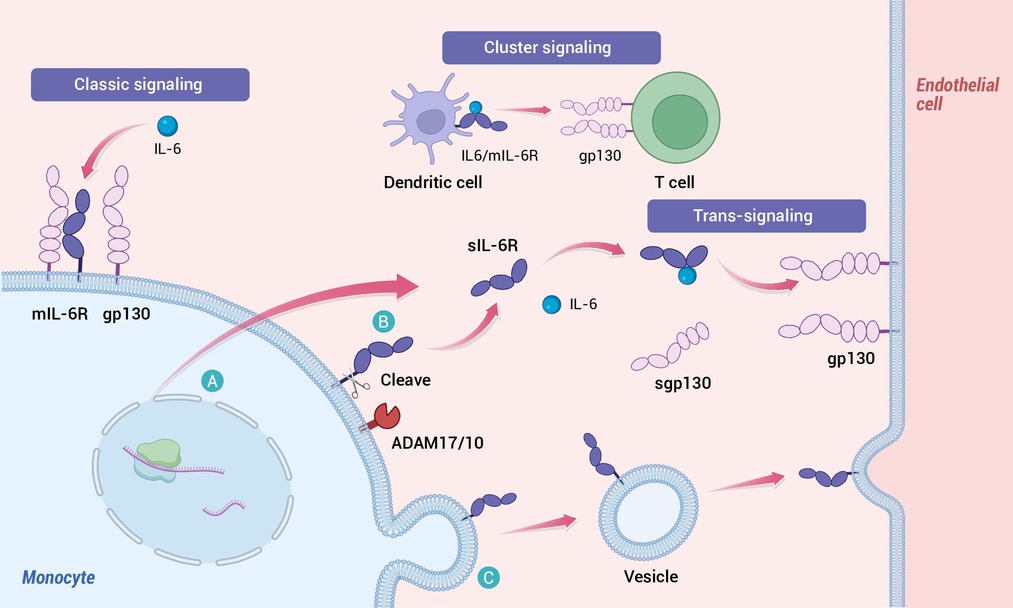
Figure 1.
The three signaling modes of IL-6 and the three production mechanisms of sIL-6R.
-
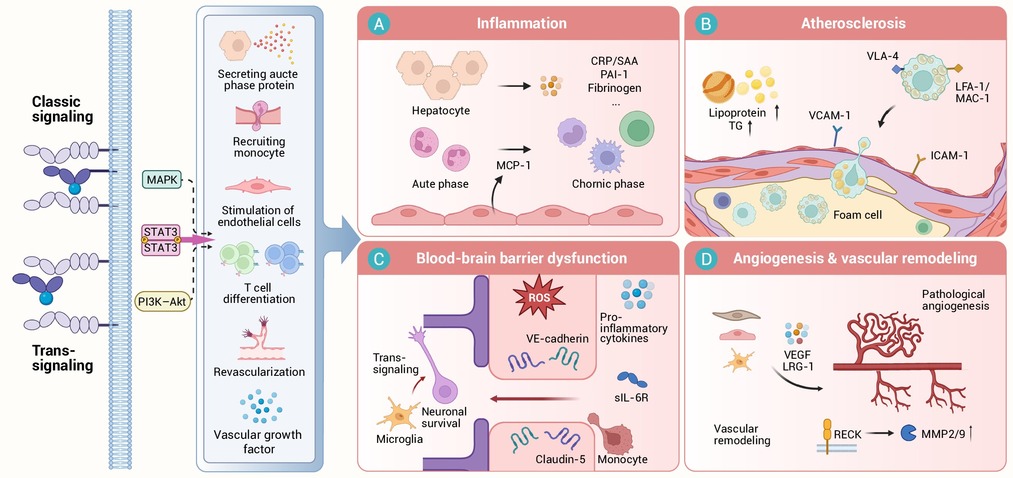
Figure 2.
IL-6R mediated pathological mechanisms in cardiovascular and cerebrovascular disease
