
Global patterns, temporal trends, and inequalities in micronutrient intake inadequacy among women of reproductive age: A modelling analysis
-
GRAPHICAL ABSTRACT
 DownLoad:
Full size image
-
PUBLIC SUMMARY
-
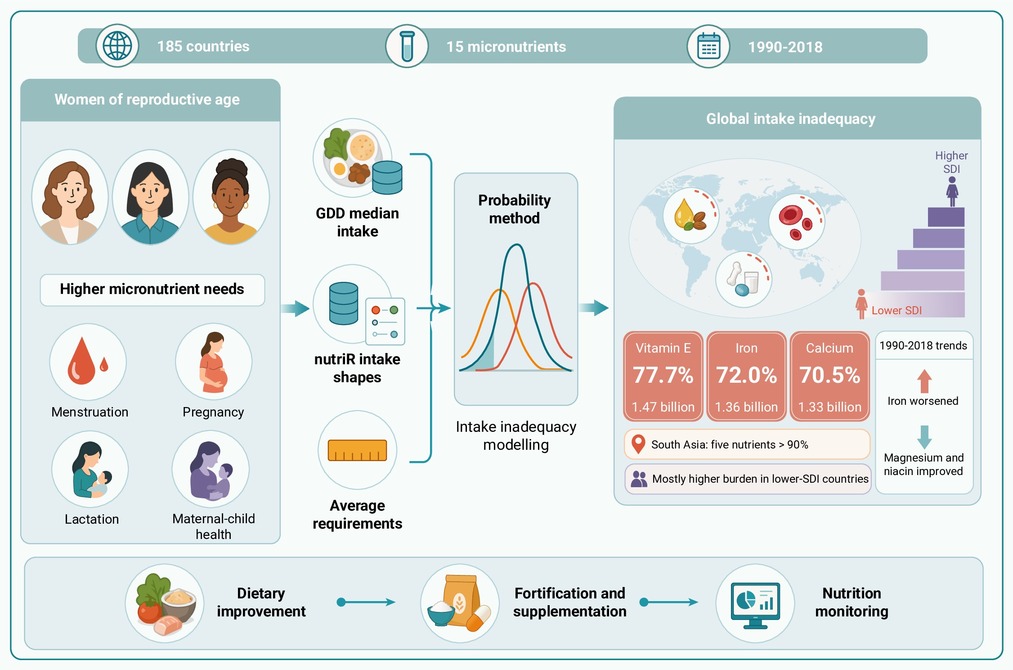
Women of reproductive age (WRA, 15-49 years) often do not get enough key micronutrients.
We estimated inadequate intake of 15 micronutrients among WRA.
In 2018, vitamin E, iron, and calcium inadequacy were the most common worldwide.
South Asia had the greatest burden, with high inadequacy for several nutrients.
The findings can help guide nutrition policies and global monitoring efforts.
-
-
ABSTRACT
Women of reproductive age (WRA, 15-49 years) have elevated micronutrient requirements because of menstruation, pregnancy, and lactation and their central role in maternal and child health; however, globally comparable evidence on inadequate micronutrient intake in this population remains limited. We therefore estimated the prevalence of inadequate intake of 15 essential micronutrients among WRA across countries, regions, and time and assessed inequalities according to the sociodemographic index (SDI). Using an established probabilistic dietary modelling framework, we estimated micronutrient intake inadequacy among WRA in 185 countries from 1990 to 2018 by combining median intake estimates from the Global Dietary Database with distribution-shape estimates from nutriR and applying harmonised age- and sex-specific average requirements. Absolute and relative inequalities were assessed using the slope index of inequality and the concentration index. In 2018, vitamin E had the highest estimated prevalence of inadequate intake among WRA (77.7%; 95% UI: 38.3%, 95.0%), followed by iron (72.0%; 95% UI: 53.0%, 85.1%) and calcium (70.5%; 95% UI: 61.8%, 77.1%). More than 90% of WRA in South Asia had estimated inadequate intakes of five micronutrients. Iron inadequacy worsened between 1990 and 2018, whereas magnesium and niacin inadequacy declined. Most micronutrients had a higher prevalence of inadequate intake in lower-SDI countries, although magnesium showed the opposite pattern in 2018. These findings suggest that micronutrient intake inadequacy among WRA is widespread globally, with marked regional variation, temporal change, and substantial SDI-related inequalities, and may inform nutrition policy, intervention prioritisation, and global monitoring efforts. -

-
REFERENCES
[1] GBD 2017 Diet Collaborators. (2019). Health effects of dietary risks in 195 countries, 1990-2017: A systematic analysis for the global burden of disease study 2017. Lancet 393:1958−1972. DOI:10.1016/s0140-6736(19)30041-8 [2] Camaschella C. (2019). Iron deficiency. Blood 133:30−39. DOI:10.1182/blood-2018-05-815944 [3] Gernand A.D., Schulze K.J., Stewart C.P., et al. (2016). Micronutrient deficiencies in pregnancy worldwide: Health effects and prevention. Nat. Rev. Endocrinol. 12:274−289. DOI:10.1038/nrendo.2016.37 [4] Victora C.G., Christian P., Vidaletti L.P., et al. (2021). Revisiting maternal and child undernutrition in low-income and middle-income countries: Variable progress towards an unfinished agenda. Lancet 397:1388−1399. DOI:10.1016/s0140-6736(21)00394-9 [5] Pharoah P.O., Buttfield I.H. and Hetzel B.S. (1971). Neurological damage to the fetus resulting from severe iodine deficiency during pregnancy. Lancet 1:308−310. DOI:10.1016/s0140-6736(71)91040-3 [6] Gannon B.M., Huey S.L., Mehta N.H., et al. (2025). Selected laboratory-based biomarkers for assessing vitamin a deficiency in at-risk individuals. Cochrane Database Syst. Rev. 5:Cd013742. DOI:10.1002/14651858.CD013742.pub2 [7] Wessels I., Fischer H.J. and Rink L. (2021). Dietary and physiological effects of zinc on the immune system. Annu. Rev. Nutr. 41:133−175. DOI:10.1146/annurev-nutr-122019-120635 [8] Black R.E., Victora C.G., Walker S.P., et al. (2013). Maternal and child undernutrition and overweight in low-income and middle-income countries. Lancet 382:427−451. DOI:10.1016/s0140-6736(13)60937-x [9] Shinde S., Yelverton C.A., Yussuf M., et al. (2025). Effects of vitamin and multiple micronutrient supplementation for pregnant and/or lactating women on maternal and infant nutritional status in low- and middle-income countries: A systematic review and meta-analysis. Adv. Nutr. 16:100487. DOI:10.1016/j.advnut.2025.100487 [10] Munro M.G., Mast A.E., Powers J.M., et al. (2023). The relationship between heavy menstrual bleeding, iron deficiency, and iron deficiency anemia. Am. J. Obstet. Gynecol. 229:1−9. DOI:10.1016/j.ajog.2023.01.017 [11] Wang J., Wang H., Wang M., et al. (2026). In utero adverse exposures and cardiovascular health in the offspring. Innov. Med. 4:100194. DOI:10.59717/j.xinn-med.2026.100194 [12] Bhutta Z.A., Das J.K., Rizvi A., et al. (2013). Evidence-based interventions for improvement of maternal and child nutrition: What can be done and at what cost. Lancet 382:452−477. DOI:10.1016/s0140-6736(13)60996-4 [13] Brown K.H., Moore S.E., Hess S.Y., et al. (2021). Increasing the availability and utilization of reliable data on population micronutrient (mn) status globally: The mn data generation initiative. Am. J. Clin. Nutr. 114:862−870. DOI:10.1093/ajcn/nqab173 [14] Stevens G.A., Beal T., Mbuya M.N.N., et al. (2022). Micronutrient deficiencies among preschool-aged children and women of reproductive age worldwide: A pooled analysis of individual-level data from population-representative surveys. Lancet Glob. Health 10:e1590−e1599. DOI:10.1016/s2214-109x(22)00367-9 [15] Thar C.M., Jackson R., Swinburn B., et al. (2020). A review of the uses and reliability of food balance sheets in health research. Nutr. Rev. 78:989−1000. DOI:10.1093/nutrit/nuaa023 [16] Hess S.Y., McLain A.C., Frongillo E.A., et al. (2021). Challenges for estimating the global prevalence of micronutrient deficiencies and related disease burden: A case study of the global burden of disease study. Curr. Dev. Nutr. 5:nzab141. DOI:10.1093/cdn/nzab141 [17] Passarelli S., Free C.M., Shepon A., et al. (2024). Global estimation of dietary micronutrient inadequacies: A modelling analysis. Lancet Glob. Health 12:e1590−e1599. DOI:10.1016/s2214-109x(24)00276-6 [18] Passarelli S., Free C.M., Allen L.H., et al. (2022). Estimating national and subnational nutrient intake distributions of global diets. Am. J. Clin. Nutr. 116:551−560. DOI:10.1093/ajcn/nqac108 [19] Allen L.H., Carriquiry A.L. and Murphy S.P. (2020). Perspective: Proposed harmonized nutrient reference values for populations. Adv. Nutr. 11:469−483. DOI:10.1093/advances/nmz096 [20] National Research Council (US) Subcommittee on Criteria for Dietary Evaluation. (1986). Nutrient adequacy: Assessment using food consumption surveys. National Academies Press (US). DOI:10.17226/618 [21] World Bank Group. (2025). Population, total. https://data.worldbank.org/indicator/SP.POP.TOTL. [22] World Health Organization. (2013). Handbook on health inequality monitoring with a special focus on low- and middle-income countries. https://www.who.int/publications/i/item/9789241548632. [23] Song Y., Wang X., Shen Y., et al. (2025). Trends and cross-country inequality in the incidence of gi cancers among the working-age population from 1990 to 2021: A global burden of disease 2021 analysis. Gut 74:948−959. DOI:10.1136/gutjnl-2024-333932 [24] GBD 2019 Adolescent Mortality Collaborators. (2021). Global, regional, and national mortality among young people aged 10-24 years, 1950-2019: A systematic analysis for the global burden of disease study 2019. Lancet 398:1593-1618. DOI:10.1016/s0140-6736(21)01546-4 [25] Lara-Castor L., Micha R., Cudhea F., et al. (2024). Intake of sugar sweetened beverages among children and adolescents in 185 countries between 1990 and 2018: Population based study. BMJ 386:e079234. DOI:10.1136/bmj-2024-079234 [26] Global Dietary Database. (2018). Available gdd 2018 estimates and datafiles. https://globaldietarydatabase.org/available-gdd-2018-estimates-datafiles. [27] Lips P., van Schoor N.M. and de Jongh R.T. (2014). Diet, sun, and lifestyle as determinants of vitamin d status. Ann. N. Y. Acad. Sci. 1317:92−98. DOI:10.1111/nyas.12443 [28] Institute of Medicine (2000). Dietary reference intakes: Applications in dietary assessment. The National Academies Press. DOI:10.17226/9956 [29] World Health Organization. (2009). Calcium and magnesium in drinking-water. https://www.who.int/publications/i/item/9789241563550. [30] Renwick A., Flynn A., Fletcher R., et al. (2004). Risk–benefit analysis of micronutrients. Food Chem. Toxicol. 42:1903−1922. [31] Wessells K.R. and Brown K.H. (2012). Estimating the global prevalence of zinc deficiency: Results based on zinc availability in national food supplies and the prevalence of stunting. PLoS One 7:e50568. DOI:10.1371/journal.pone.0050568 [32] Miller L.V., Krebs N.F. and Hambidge K.M. (2007). A mathematical model of zinc absorption in humans as a function of dietary zinc and phytate. J. Nutr. 137:135−141. DOI:10.1093/jn/137.1.135 [33] Beal T., Massiot E., Arsenault J.E., et al. (2017). Global trends in dietary micronutrient supplies and estimated prevalence of inadequate intakes. PLoS One 12:e0175554. DOI:10.1371/journal.pone.0175554 [34] Hurrell R.F., Reddy M.B., Juillerat M., et al. (2006). Meat protein fractions enhance nonheme iron absorption in humans. J. Nutr. 136:2808−2812. DOI:10.1093/jn/136.11.2808 [35] Busso D., David A., Penailillo R., et al. (2021). Intake of vitamin e and c in women of reproductive age: Results from the latin american study of nutrition and health (elans). Nutrients 13. DOI:10.3390/nu13061954 [36] Maras J.E., Bermudez O.I., Qiao N., et al. (2004). Intake of alpha-tocopherol is limited among us adults. J. Am. Diet. Assoc. 104:567−575. DOI:10.1016/j.jada.2004.01.004 [37] Amorim N.C.M., Silva A., Rebouças A.S., et al. (2022). Dietary share of ultra-processed foods and its association with vitamin e biomarkers in brazilian lactating women. Br. J. Nutr. 127:1224−1231. DOI:10.1017/s0007114521001963 [38] Fisher A.L. and Nemeth E. (2017). Iron homeostasis during pregnancy. Am. J. Clin. Nutr. 106:1567s−1574s. DOI:10.3945/ajcn.117.155812 [39] Thankachan P., Walczyk T., Muthayya S., et al. (2008). Iron absorption in young indian women: The interaction of iron status with the influence of tea and ascorbic acid. Am. J. Clin. Nutr. 87:881−886. DOI:10.1093/ajcn/87.4.881 [40] Stevens G.A., Finucane M.M., De-Regil L.M., et al. (2013). Global, regional, and national trends in haemoglobin concentration and prevalence of total and severe anaemia in children and pregnant and non-pregnant women for 1995-2011: A systematic analysis of population-representative data. Lancet Glob. Health 1:e16−25. DOI:10.1016/s2214-109x(13)70001-9 [41] Haider B.A., Olofin I., Wang M., et al. (2013). Anaemia, prenatal iron use, and risk of adverse pregnancy outcomes: Systematic review and meta-analysis. BMJ 346:f3443. DOI:10.1136/bmj.f3443 [42] Kumssa D.B., Joy E.J., Ander E.L., et al. (2015). Dietary calcium and zinc deficiency risks are decreasing but remain prevalent. Sci. Rep. 5:10974. DOI:10.1038/srep10974 [43] Balk E.M., Adam G.P., Langberg V.N., et al. (2017). Global dietary calcium intake among adults: A systematic review. Osteoporos. Int. 28:3315−3324. DOI:10.1007/s00198-017-4230-x [44] Lee S.E., Talegawkar S.A., Merialdi M., et al. (2013). Dietary intakes of women during pregnancy in low- and middle-income countries. Public Health Nutr. 16:1340−1353. DOI:10.1017/s1368980012004417 [45] Kennefick S. and Cashman K.D. (2000). Inhibitory effect of wheat fibre extract on calcium absorption in caco-2 cells: Evidence for a role of associated phytate rather than fibre per se. Eur. J. Nutr. 39:12−17. DOI:10.1007/s003940050071 [46] Ti G., He Y., Xiao Y., et al. (2024). Global prevalence of diet low in calcium and the disease burden: Results from the global burden of disease study 2019. Nutr. Diabetes 14:59. DOI:10.1038/s41387-024-00321-2 [47] Li J., Odo D.B., Browning M.H.E.M., et al. (2025). Greenspace in relation to childhood undernutrition: A cross-sectional study in 49 low- and middle-income countries. Innov. Med. 3:100141. DOI:10.59717/j.xinn-med.2025.100141 [48] Stoffaneller R. and Morse N.L. (2015). A review of dietary selenium intake and selenium status in europe and the middle east. Nutrients 7:1494−1537. DOI:10.3390/nu7031494 [49] Navarro-Alarcon M. and Cabrera-Vique C. (2008). Selenium in food and the human body: A review. Sci. Total Environ. 400:115−141. DOI:10.1016/j.scitotenv.2008.06.024 [50] Vora R.M., Alappattu M.J., Zarkar A.D., et al. (2021). Potential for elimination of folate and vitamin b(12) deficiency in india using vitamin-fortified tea: A preliminary study. BMJ Nutr. Prev. Health 4:293−306. DOI:10.1136/bmjnph-2020-000209 [51] Antony A.C. (2003). Vegetarianism and vitamin b-12 (cobalamin) deficiency. Am. J. Clin. Nutr. 78:3−6. DOI:10.1093/ajcn/78.1.3 [52] Torheim L.E., Ferguson E.L., Penrose K., et al. (2010). Women in resource-poor settings are at risk of inadequate intakes of multiple micronutrients. J. Nutr. 140:2051s−2058s. DOI:10.3945/jn.110.123463 [53] Silva D.L.F., Crispim S.P., Almeida C.C.B., et al. (2023). Improving pregnant women's iodine intake estimates and its prevalence of inadequacy through the use of salt and seasoning covariates. Nutrients 15. DOI:10.3390/nu15040846 [54] Bhutta Z.A., Ahmed T., Black R.E., et al. (2008). What works. Interventions for maternal and child undernutrition and survival. Lancet 371:417−440. DOI:10.1016/s0140-6736(07)61693-6 [55] Baker P., Machado P., Santos T., et al. (2020). Ultra-processed foods and the nutrition transition: Global, regional and national trends, food systems transformations and political economy drivers. Obes. Rev. 21:e13126. DOI:10.1111/obr.13126 [56] Louzada M.L., Martins A.P., Canella D.S., et al. (2015). Impact of ultra-processed foods on micronutrient content in the brazilian diet. Rev. Saude Publica 49:45. DOI:10.1590/s0034-8910.2015049006211 [57] Özen A.E., Bibiloni Mdel M., Pons A., et al. (2015). Fluid intake from beverages across age groups: A systematic review. J. Hum. Nutr. Diet. 28:417−442. DOI:10.1111/jhn.12250 [58] Zijp I.M., Korver O. and Tijburg L.B. (2000). Effect of tea and other dietary factors on iron absorption. Crit. Rev. Food Sci. Nutr. 40:371−398. DOI:10.1080/10408690091189194 [59] Atkinson S.H., Suchdev P.S., Bode M., et al. (2025). Getting back on track to meet global anaemia reduction targets: A lancet haematology commission. Lancet Haematol. 12:e717−e767. DOI:10.1016/s2352-3026(25)00146-2 [60] Lentz E., Baylis K., Michelson H., et al. (2025). Official estimates of global food insecurity undercount acute hunger. Nat. Food 6:1196−1208. DOI:10.1038/s43016-025-01267-z [61] Lane M.M., Gamage E., Du S., et al. (2024). Ultra-processed food exposure and adverse health outcomes: Umbrella review of epidemiological meta-analyses. BMJ 384:e077310. DOI:10.1136/bmj-2023-077310 [62] Miketinas D., Luo H., Firth J.A., et al. (2024). Macronutrient and micronutrient intake among us women aged 20 to 44 years. JAMA Netw. Open 7:e2438460. DOI:10.1001/jamanetworkopen.2024.38460 [63] Gómez G., Nogueira Previdelli Á., Fisberg R.M., et al. (2020). Dietary diversity and micronutrients adequacy in women of childbearing age: Results from elans study. Nutrients 12. DOI:10.3390/nu12071994 [64] Darmon N. and Drewnowski A. (2008). Does social class predict diet quality. Am. J. Clin. Nutr. 87:1107−1117. DOI:10.1093/ajcn/87.5.1107 [65] DiNicolantonio J.J., O'Keefe J.H. and Wilson W. (2018). Subclinical magnesium deficiency: A principal driver of cardiovascular disease and a public health crisis. Open Heart 5:e000668. DOI:10.1136/openhrt-2017-000668 [66] Barbagallo M., Veronese N. and Dominguez L.J. (2021). Magnesium in aging, health and diseases. Nutrients 13. DOI:10.3390/nu13020463 [67] Fiorentini D., Cappadone C., Farruggia G., et al. (2021). Magnesium: Biochemistry, nutrition, detection, and social impact of diseases linked to its deficiency. Nutrients 13. DOI:10.3390/nu13041136 [68] Li Z., Song Y., Huang X., et al. (2025). Adherence to the modified planetary health diet among the working-age population in 185 countries from 1990 to 2018: A population-based study. Am. J. Clin. Nutr. 122:744−754. DOI:10.1016/j.ajcnut.2025.06.016 -
ABOUT THIS ARTICLE
Cite this article:
Li Z., Lin X., Song Y., et al. (2026). Global patterns, temporal trends, and inequalities in micronutrient intake inadequacy among women of reproductive age: A modelling analysis. The Innovation Medicine 4:100252. https://doi.org/10.59717/j.xinn-med.2026.100252
Welcome!
To request copyright permission to republish or share portions of our works, please visit Copyright Clearance Center's (CCC) Marketplace website at marketplace.copyright.com.
Export File
Citation
Li Z., Lin X., Song Y., et al. (2026). Global patterns, temporal trends, and inequalities in micronutrient intake inadequacy among women of reproductive age: A modelling analysis. The Innovation Medicine 4:100252. https://doi.org/10.59717/j.xinn-med.2026.100252

Format
Content
-
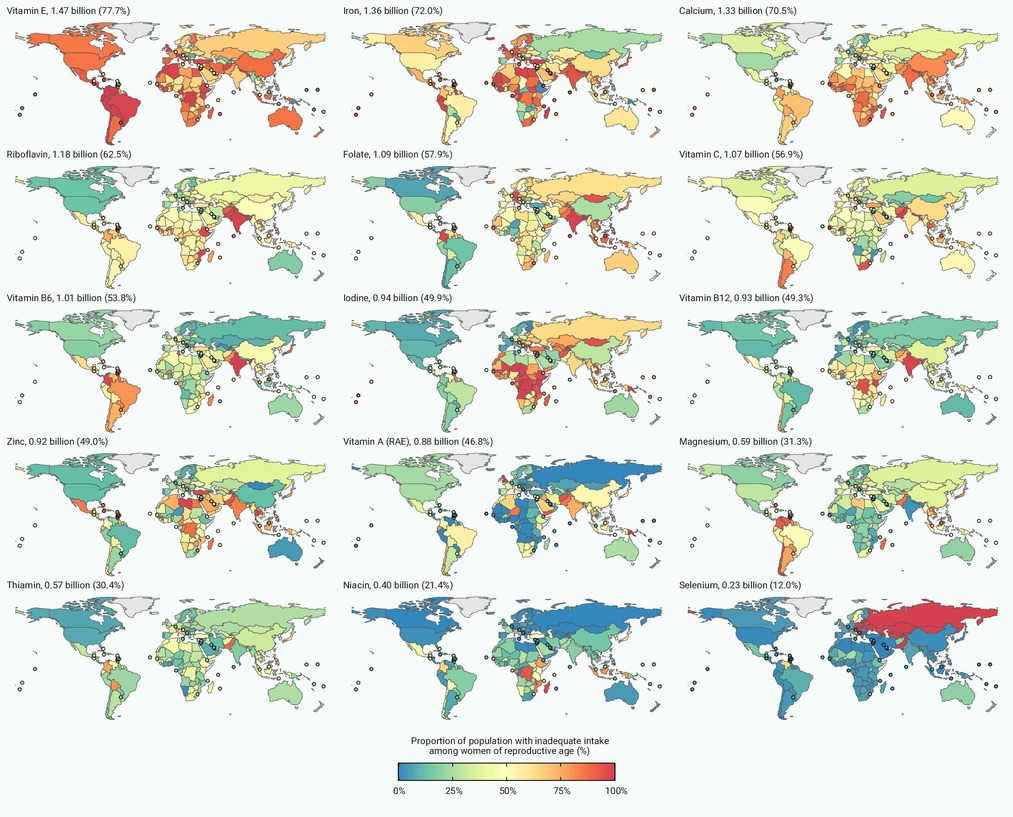
Figure 1.
Estimated prevalence of intake inadequacies by country and micronutrient among WRA in 2018
-
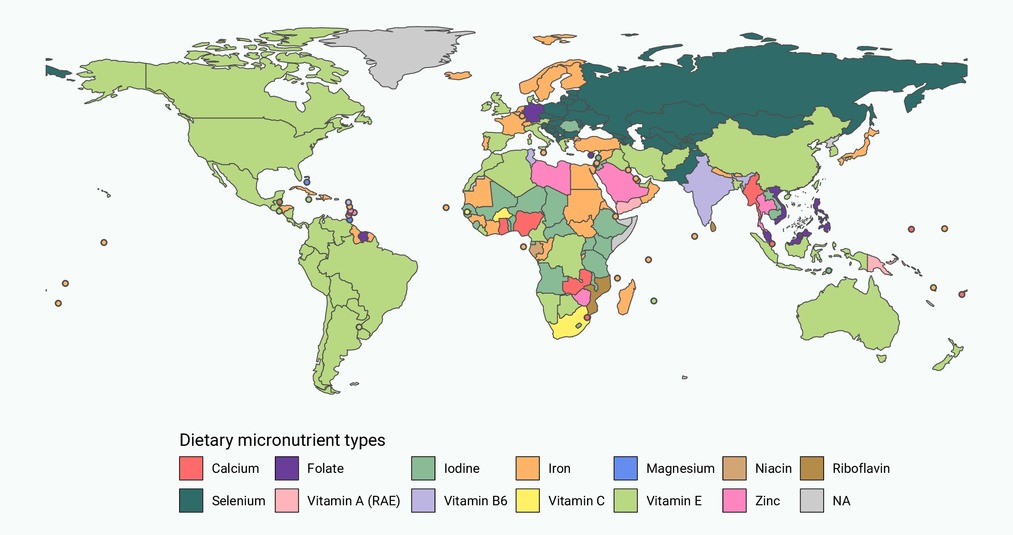
Figure 2.
The micronutrient types with the highest prevalence of intake inadequacies among WRA in 2018
-
Figure 3.
Prevalence of intake inadequacies by World Bank region among WRA in 2018
-
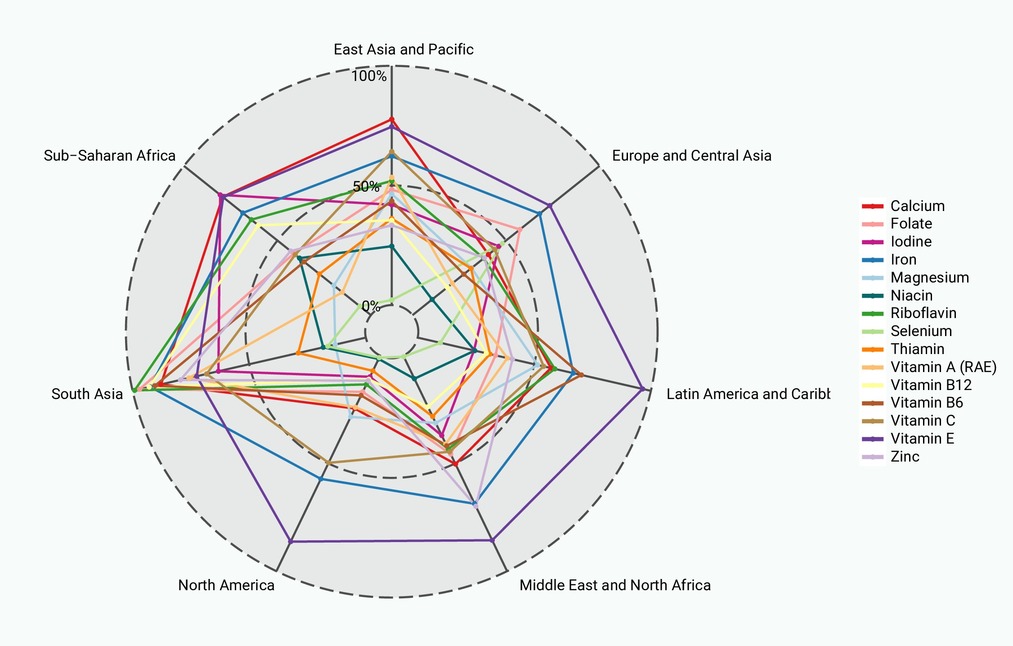
Figure 4.
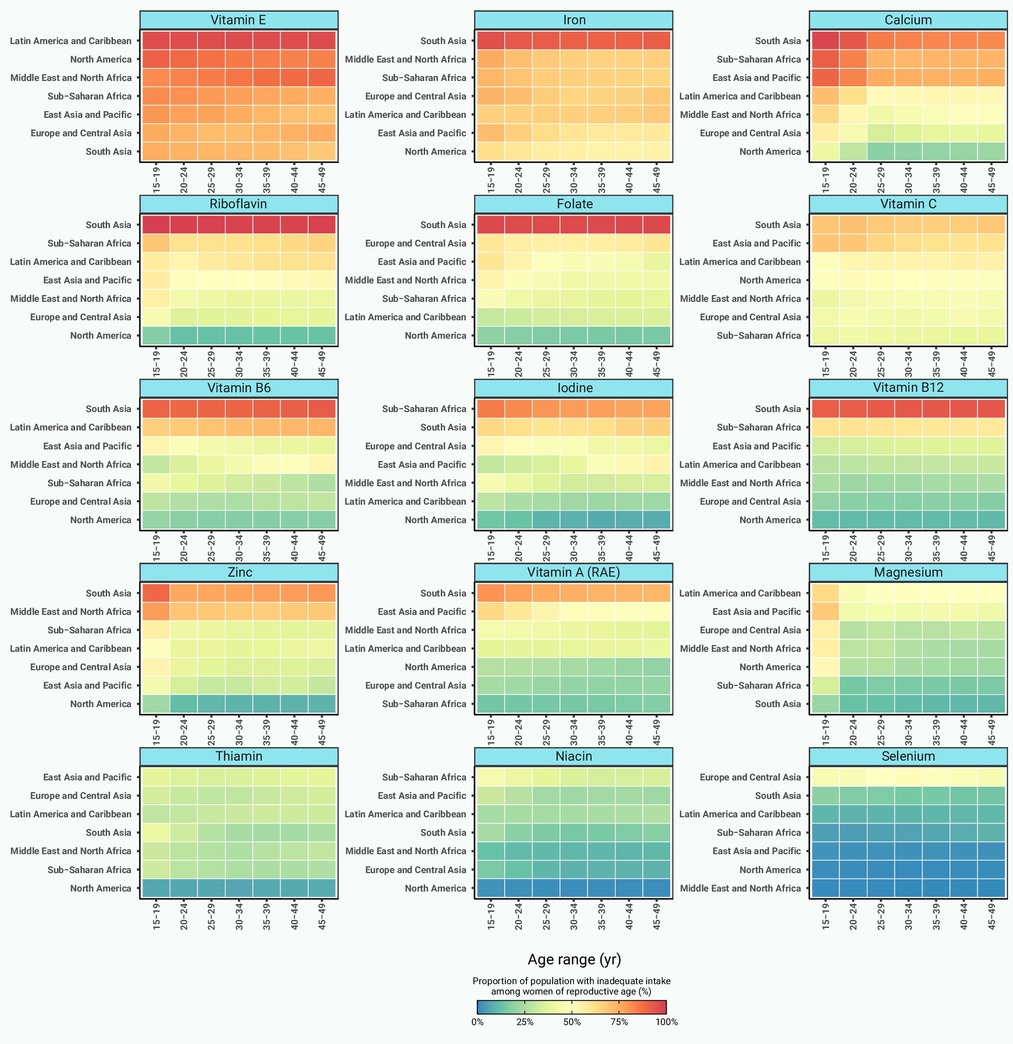
Prevalence of intake inadequacies by World Bank region and micronutrient among WRA in 2018
-
Figure 5.
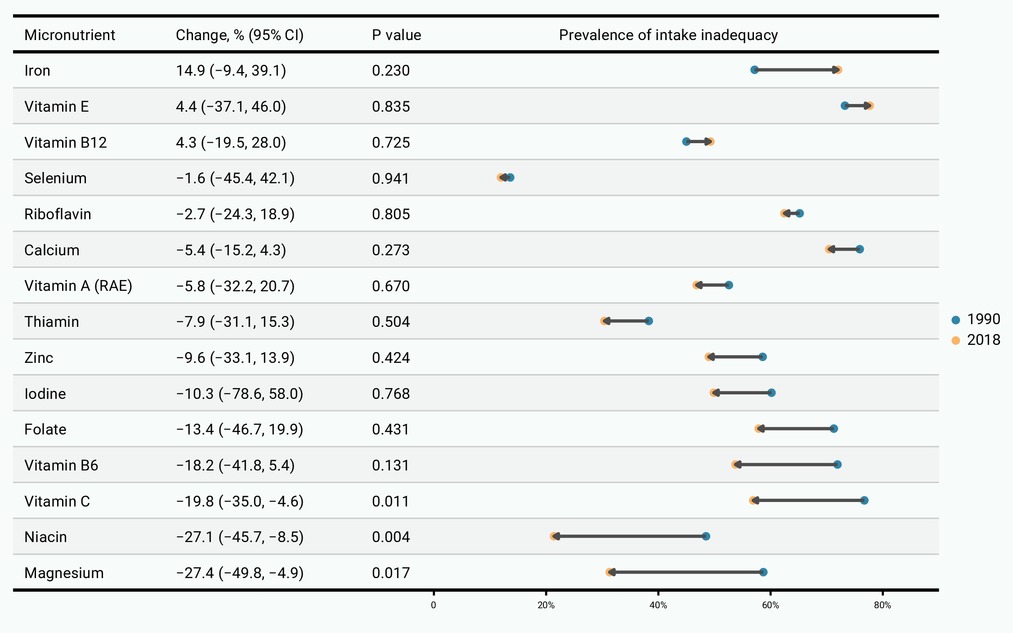
Changes in the prevalence of intake inadequacies among WRA between 1990 and 2018
