
Microbiome-derived bile acids link elevated antigenic response and bone erosion in rheumatoid arthritis
-
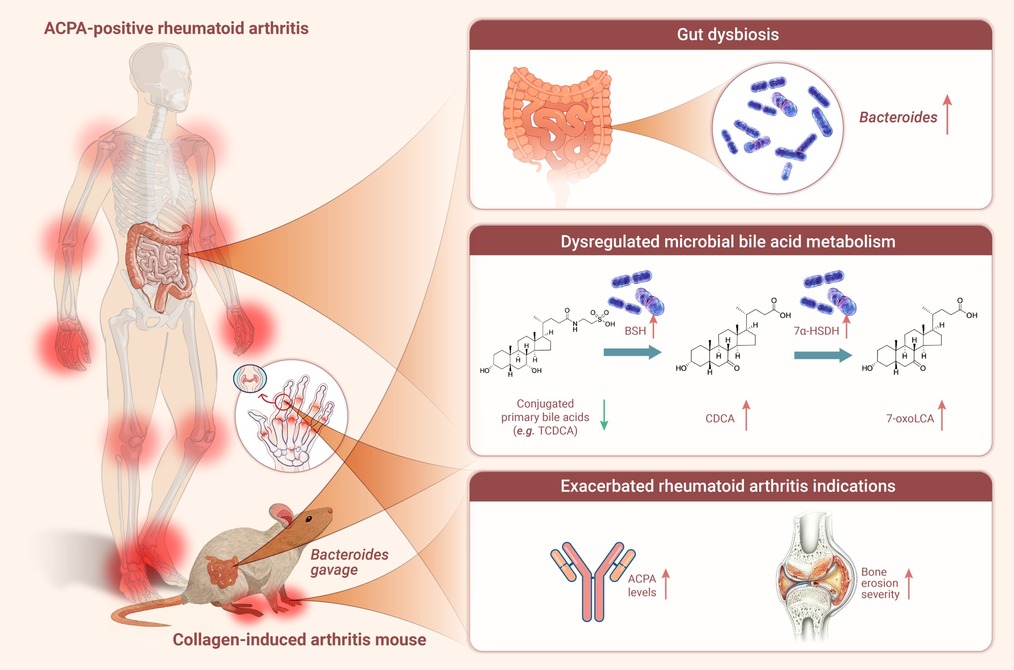
GRAPHICAL ABSTRACT
 DownLoad:
Full size image
-
PUBLIC SUMMARY
-
Bacteroides enrichment characterizes the gut microbiome of rheumatoid arthritis (RA) patients.
Gut microbiome alterations are associated with microbial and circulating metabolic shifts.
Altered bile acid metabolism links the gut microbiome to immune responses and bone erosion in RA.
Bacteroides enrichment remodels bile acid metabolism and promotes inflammation and bone erosion.
-
-
ABSTRACT
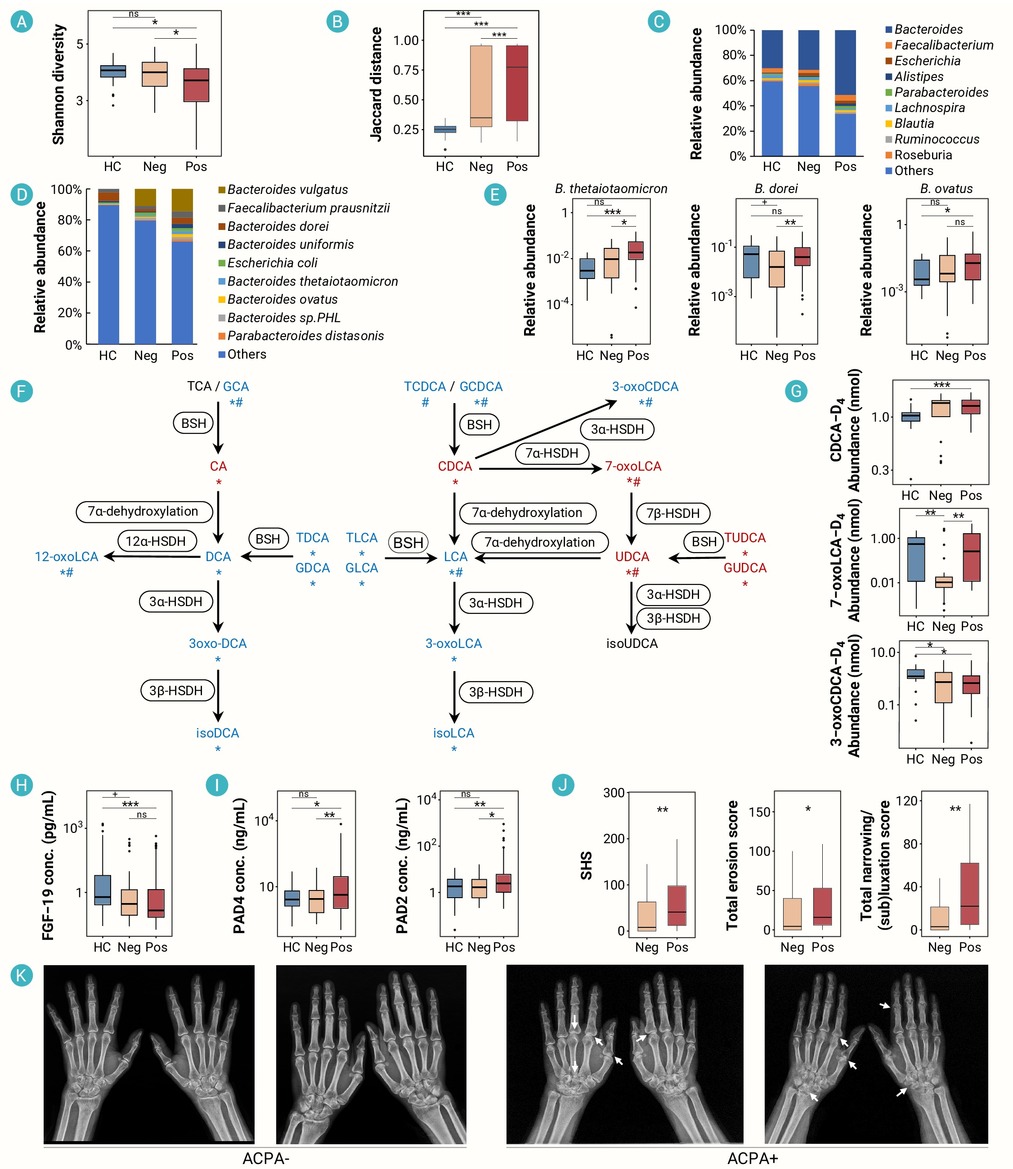
Rheumatoid arthritis (RA) is a systemic autoimmune disease characterized by chronic inflammation and progressive bone erosion. It has been widely recognized that gut microbial dysbiosis is an important contributor to the pathogenesis of RA. Yet, the metabolites that mediate the impacts of the gut microbiome on RA are less well understood. This study investigates the gut microbiota-bile acid axis as a critical contributor to RA pathogenesis. Analysis of fecal and serum samples from a discovery set revealed profound yet diverse gut dysbiosis and metabolic perturbations in RA patients. In those Bacteroides-dominated RA patients, Bacteroides species expressing bile salt hydrolase (BSH) and 7α-hydroxysteroid dehydrogenase (HSDH) were elevated, leading to increased secondary bile acid production. This gut microbiota-bile acid axis was strongly correlated with elevated anti-citrullinated peptide antibody (ACPA) levels and enhanced bone erosion severity in this subgroup of RA patients. The observations were also supported by the patients from a validation set in which ACPA-positive patients had more abundant bacteria expressing BSH and 7α-HSDH, together with dysregulated microbial bile acid metabolism and more severe bone erosion as compared with ACPA-negative ones. Bacteroides treatment in collagen-induced arthritis mice significantly aggravated arthritis severity and bone erosion, increased pro-inflammatory cytokine levels, and disturbed microbial bile acid metabolism in a manner that disrupted FXR-FGF15 signaling, mirroring the findings in human cohorts. These results provide insights into the role of gut dysbiosis in RA in a manifestation-specific manner, as well as the functions of bile acids in this gut-joint axis, which may be a potential intervention target for controlling RA conditions. -

-
REFERENCES
[1] Finckh A., Gilbert B., Hodkinson B., et al. (2022). Global epidemiology of rheumatoid arthritis. Nat. Rev. Rheumatol. 18:591−602. DOI:10.1038/s41584-022-00827-y [2] Malmström V., Catrina A. I. and Klareskog L. (2017). The immunopathogenesis of seropositive rheumatoid arthritis: From triggering to targeting. Nat. Rev. Immunol. 17:60−75. DOI:10.1038/nri.2016.124 [3] Curran A. M., Naik P., Giles J. T., et al. (2020). PAD enzymes in rheumatoid arthritis: Pathogenic effectors and autoimmune targets. Nat. Rev. Rheumatol. 16:301−315. DOI:10.1038/s41584-020-0409-1 [4] Zhang X., Zhang D., Jia H., et al. (2015). The oral and gut microbiomes are perturbed in rheumatoid arthritis and partly normalized after treatment. Nat. Med. 21:895−905. DOI:10.1038/nm.3914 [5] Wells P. M., Adebayo A. S., Bowyer R. C. E., et al. (2020). Associations between gut microbiota and genetic risk for rheumatoid arthritis in the absence of disease: A cross-sectional study. Lancet Rheumatol. 2:e418−e427. DOI:10.1016/S2665-9913(20)30064-3 [6] Lucas S., Omata Y., Hofmann J., et al. (2018). Short-chain fatty acids regulate systemic bone mass and protect from pathological bone loss. Nat. Commun. 9:55. DOI:10.1038/s41467-017-02490-4 [7] Hong M., Li Z., Liu H., et al. (2023). Fusobacterium nucleatum aggravates rheumatoid arthritis through FadA-containing outer membrane vesicles. Cell Host Microbe 31:798−810.e797. DOI:10.1016/j.chom.2023.03.018 [8] Huang H.-J., Liu C., Sun X.-W., et al. (2024). The rheumatoid arthritis gut microbial biobank reveals core microbial species that associate and effect on host inflammation and autoimmune responses. iMeta 3:e242. DOI:10.1002/imt2.242 [9] Maeda Y., Kurakawa T., Umemoto E., et al. (2016). Dysbiosis contributes to arthritis development via activation of autoreactive T cells in the intestine. Arthritis Rheumatol. 68:2646−2661. DOI:10.1002/art.39783 [10] Asquith M., Sternes P. R., Costello M. E., et al. (2019). HLA alleles associated with risk of ankylosing spondylitis and rheumatoid arthritis influence the gut microbiome. Arthritis Rheumatol. 71:1642−1650. DOI:10.1002/art.40917 [11] Qi X.-Y., Liu M.-X., Jiang X.-J., et al. (2025). Gut microbiota in rheumatoid arthritis: Mechanistic insights, clinical biomarkers, and translational perspectives. Autoimmun. Rev. 24:103912. DOI:10.1016/j.autrev.2025.103912 [12] Gupta V. K., Cunningham K. Y., Hur B., et al. (2021). Gut microbial determinants of clinically important improvement in patients with rheumatoid arthritis. Genome Med. 13:149. DOI:10.1186/s13073-021-00957-0 [13] Thompson K. N., Bonham K. S., Ilott N. E., et al. (2023). Alterations in the gut microbiome implicate key taxa and metabolic pathways across inflammatory arthritis phenotypes. Sci. Transl. Med. 15:eabn4722. DOI:10.1126/scitranslmed.abn4722 [14] You Y., Xiang T., Yang C., et al. (2025). Interactions between the gut microbiota and immune cell dynamics: Novel insights into the gut-bone axis. Gut Microbes 17:2545417. DOI:10.1080/19490976.2025.2545417 [15] Sun Y., Chen Q., Lin P., et al. (2019). Characteristics of gut microbiota in patients with rheumatoid arthritis in Shanghai, China. Front. Cell. Infect. Microbiol. 9:369. DOI:10.3389/fcimb.2019.00369 [16] Wang Q. and Xu R. (2019). Data-driven multiple-level analysis of gut-microbiome-immune-joint interactions in rheumatoid arthritis. BMC Genomics 20:124. DOI:10.1186/s12864-019-5510-y [17] Miyauchi E., Shimokawa C., Steimle A., et al. (2023). The impact of the gut microbiome on extra-intestinal autoimmune diseases. Nat. Rev. Immunol. 23:9−23. DOI:10.1038/s41577-022-00727-y [18] Zierer J., Jackson M. A., Kastenmüller G., et al. (2018). The fecal metabolome as a functional readout of the gut microbiome. Nat. Genet. 50:790−795. DOI:10.1038/s41588-018-0135-7 [19] Dodd D., Spitzer M. H., Treuren W. V., et al. (2017). A gut bacterial pathway metabolizes aromatic amino acids into nine circulating metabolites. Nature 3:648–652. DOI:10.1038/nature24661 [20] Liu X., Tong X., Zou Y., et al. (2022). Mendelian randomization analyses support causal relationships between blood metabolites and the gut microbiome. Nat. Genet. 54:52−61. DOI:10.1038/s41588-021-00968-y [21] Brand D. D., Latham K. A. and Rosloniec E. F. (2007). Collagen-induced arthritis. Nat. Protoc. 2:1269−1275. DOI:10.1038/nprot.2007.173 [22] Lu Y., Gao K., Li X., et al. (2019). Mass spectrometry-based metabolomics reveals occupational exposure to per-and polyfluoroalkyl substances relates to oxidative stress, fatty acid β-oxidation disorder, and kidney injury in a manufactory in China. Environ. Sci. Technol. 53:9800−9809. DOI:10.1021/acs.est.9b01608 [23] Su X., Cheung C. Y. Y., Zhong J., et al. (2024). Ten metabolites-based algorithm predicts the future development of type 2 diabetes in Chinese. J. Adv. Res. 64:131−142. DOI:10.1016/j.jare.2023.11.026 [24] Viant M. R., Kurland I. J., Jones M. R., et al. (2017). How close are we to complete annotation of metabolomes. Curr. Opin. Chem. Biol. 36:64−69. DOI:10.1016/j.cbpa.2017.01.001 [25] Liang C., Li J., Lu C., et al. (2019). HIF1α inhibition facilitates Leflunomide-AHR-CRP signaling to attenuate bone erosion in CRP-aberrant rheumatoid arthritis. Nat. Commun. 10:4579. DOI:10.1038/s41467-019-12163-z [26] Youlten S. E., Kemp J. P., Logan J. G., et al. (2021). Osteocyte transcriptome mapping identifies a molecular landscape controlling skeletal homeostasis and susceptibility to skeletal disease. Nat. Commun. 12:2444. DOI:10.1038/s41467-021-22517-1 [27] Jeong Y., Kim J.-W., You H. J., et al. (2019). Gut microbial composition and function are altered in patients with early rheumatoid arthritis. J. Clin. Med. 8:693. DOI:10.3390/jcm8050693 [28] Li Y., Zhang S.-X., Yin X.-F., et al. (2021). The gut microbiota and its relevance to peripheral lymphocyte subpopulations and cytokines in patients with rheumatoid arthritis. J Immunol. Res. 2021:6665563. DOI:10.1155/2021/6665563 [29] Costea P. I., Hildebrand F., Arumugam M., et al. (2018). Enterotypes in the landscape of gut microbial community composition. Nat. Microbiol 3:8−16. DOI:10.1038/s41564-017-0072-8 [30] Manor O., Dai C. L., Kornilov S. A., et al. (2020). Health and disease markers correlate with gut microbiome composition across thousands of people. Nat. Commun. 11:5206. DOI:10.1038/s41467-020-18871-1 [31] Scher J. U., Sczesnak A., Longman R. S., et al. (2013). Expansion of intestinal Prevotella copri correlates with enhanced susceptibility to arthritis. eLife 2:e01202. DOI:10.7554/eLife.01202 [32] Scher J. U., Ubeda C., Artacho A., et al. (2015). Decreased bacterial diversity characterizes the altered gut microbiota in patients with psoriatic arthritis, resembling dysbiosis in inflammatory bowel disease. Arthritis Rheumatol. 67:128−139. DOI:10.1002/art.38892 [33] Rosser E. C., Piper C. J. M., Matei D. E., et al. (2020). Microbiota-derived metabolites suppress arthritis by amplifying aryl-hydrocarbon receptor activation in regulatory B cells. Cell Metab. 31:837−851. DOI:10.1016/j.cmet.2020.03.003 [34] Machiels K., Joossens M., Sabino J., et al. (2014). A decrease of the butyrate-producing species Roseburia hominis and Faecalibacterium prausnitzii defines dysbiosis in patients with ulcerative colitis. Gut 63:1275−1283. DOI:10.1136/gutjnl-2013-304833 [35] Pang Z., Lu Y., Zhou G., et al. (2024). MetaboAnalyst 6.0: Towards a unified platform for metabolomics data processing, analysis and interpretation. Nucleic Acids Res. 52:W398-W406. DOI:10.1093/nar/gkae253. [36] Roager H. M. and Licht T. R. (2018). Microbial tryptophan catabolites in health and disease. Nat. Commun. 9:3294. DOI:10.1038/s41467-018-05470-4 [37] Jia W., Xie G. and Jia W. (2018). Bile acid-microbiota crosstalk in gastrointestinal inflammation and carcinogenesis. Nat. Rev. Gastroenterol. Hepatol. 15:111−128. DOI:10.1038/nrgastro.2017.119 [38] Jiao N., Baker S. S., Chapa-Rodriguez A., et al. (2018). Suppressed hepatic bile acid signalling despite elevated production of primary and secondary bile acids in NAFLD. Gut 67:1881−1891. DOI:10.1136/gutjnl-2017-314307 [39] Bar N., Korem T., Weissbrod O., et al. (2020). A reference map of potential determinants for the human serum metabolome. Nature 588:135−140. DOI:10.1038/s41586-020-2896-2 [40] Ridlon J. M., Kang D.-J. and Hylemon P. B. (2006). Bile salt biotransformations by human intestinal bacteria. J. Lipid Res. 47:241−259. DOI:10.1194/jlr.R500013-JLR200 [41] Gong Y., Li K., Qin Y., et al. (2021). Norcholic acid promotes tumor progression and immune escape by regulating Farnesoid X Receptor in hepatocellular carcinoma. Front. Oncol. 11:711448. DOI:10.3389/fonc.2021.711448 [42] Deshuai L., Xi L. and Jun T. (2021). An overview of 7α- and 7β-hydroxysteroid dehydrogenases: Structure, specificity and practical application. Protein Peptide Lett. 28:1206−1219. DOI:10.2174/0929866528666210816114032 [43] Takahashi D., Hoshina N., Kabumoto Y., et al. (2020). Microbiota-derived butyrate limits the autoimmune response by promoting the differentiation of follicular regulatory T cells. EBioMedicine 58:102913. DOI:10.1016/j.ebiom.2020.102913 [44] Rodrigues G. S. P., Cayres L. C. F., Gonçalves F. P., et al. (2019). Detection of increased relative expression units of Bacteroides and Prevotella, and decreased Clostridium leptum in stool samples from Brazilian rheumatoid arthritis patients: A pilot study. Microorganisms 7:413. DOI:10.3390/microorganisms7100413 [45] Kishikawa T., Maeda Y., Nii T., et al. (2020). Metagenome-wide association study of gut microbiome revealed novel aetiology of rheumatoid arthritis in the Japanese population. Ann. Rheum. Dis. 79:103−111. DOI:10.1136/annrheumdis-2019-215743 [46] Levy R., Magis A. T., Earls J. C., et al. (2020). Longitudinal analysis reveals transition barriers between dominant ecological states in the gut microbiome. Proc. Natl. Acad. Sci. 117:13839−13845. DOI:10.1073/pnas.1922498117 [47] Vieira-Silva S., Falony G., Darzi Y., et al. (2016). Species–function relationships shape ecological properties of the human gut microbiome. Nat. Microbiol 1:16088. DOI:10.1038/nmicrobiol.2016.88 [48] Liu R., Hong J., Xu X., et al. (2017). Gut microbiome and serum metabolome alterations in obesity and after weight-loss intervention. Nat. Med. 23:859−868. DOI:10.1038/nm.4358 [49] Qi X., Yun C., Sun L., et al. (2019). Gut microbiota-bile acid-interleukin-22 axis orchestrates polycystic ovary syndrome. Nat. Med. 25:1225−1233. DOI:10.1038/s41591-019-0509-0 [50] Gil-Cruz C., Perez-Shibayama C., De Martin A., et al. (2019). Microbiota-derived peptide mimics drive lethal inflammatory cardiomyopathy. Science 366:881−886. DOI:10.1126/science.aav3487 [51] Dejea C. M., Fathi P., Craig J. M., et al. (2018). Patients with familial adenomatous polyposis harbor colonic biofilms containing tumorigenic bacteria. Science 359:592−597. DOI:10.1126/science.aah3648 [52] Luo Y., Tong Y., Wu L., et al. (2023). Alteration of gut microbiota in individuals at high‐risk for rheumatoid arthritis associated with disturbed metabolome and the initiation of arthritis through the triggering of mucosal immunity imbalance. Arthritis Rheumatol. 75:1736−1748. DOI:10.1002/art.42616 [53] Rooney C. M., Mankia K., Mitra S., et al. (2021). Perturbations of the gut microbiome in anti-CCP positive individuals at risk of developing rheumatoid arthritis. Rheumatology 60:3380-3387. DOI:10.1093/rheumatology/keaa792 [54] Tong Y., Marion T., Schett G., et al. (2020). Microbiota and metabolites in rheumatic diseases. Autoimmun. Rev. 19:102530. DOI:10.1016/j.autrev.2020.102530 [55] Guma M., Tiziani S. and Firestein G. S. (2016). Metabolomics in rheumatic diseases: Desperately seeking biomarkers. Nat. Rev. Rheumatol. 12:269−281. DOI:10.1038/nrrheum.2016.1 [56] Shen Y., Lu C., Song Z., et al. (2022). Ursodeoxycholic acid reduces antitumor immunosuppression by inducing CHIP-mediated TGF-β degradation. Nat. Commun. 13:3419. DOI:10.1038/s41467-022-31141-6 [57] Hang S., Paik D., Yao L., et al. (2019). Bile acid metabolites control TH17 and Treg cell differentiation. Nature 576:143−148. DOI:10.1038/s41586-019-1785-z [58] Song X., Sun X., Oh S. F., et al. (2020). Microbial bile acid metabolites modulate gut RORγ+ regulatory T cell homeostasis. Nature 577:410−415. DOI:10.1038/s41586-019-1865-0 [59] Yang Y., Hao C., Jiao T., et al. (2025). Osteoarthritis treatment via the GLP-1–mediated gut-joint axis targets intestinal FXR signaling. Science 388:eadt0548. DOI:10.1126/science.adt0548 [60] Hayer S., Halilbasic E., Niederreiter B., et al. (2013). Effects of cholic acid and its derivatives in experimental arthritis. Ann. Rheum. Dis. 72:A818−A818. DOI:10.1136/annrheumdis-2013-eular.2431 [61] Sun H., Guo Y., Wang H., et al. (2023). Gut commensal Parabacteroides distasonis alleviates inflammatory arthritis. Gut 72:1664−1677. DOI:10.1136/gutjnl-2022-327756 [62] Lee M. H., Nuccio S.-P., Mohanty I., et al. (2024). How bile acids and the microbiota interact to shape host immunity. Nat. Rev. Immunol. 24:798−809. DOI:10.1038/s41577-024-01057-x [63] Wei M., Li C., Dai Y., et al. (2021). High-throughput absolute quantification sequencing revealed osteoporosis-related gut microbiota alterations in Han Chinese elderly. Front. Cell. Infect. Microbiol. 11:630372. DOI:10.3389/fcimb.2021.630372 [64] Ling C.-w., Miao Z., Xiao M.-l., et al. (2021). The association of gut microbiota with osteoporosis is mediated by amino acid metabolism: multiomics in a large cohort. J. Clin. Endocrinol. Metab. 106:e3852−e3864. DOI:10.1210/clinem/dgab492 [65] Li Z., Huang J., Wang F., et al. (2019). Dual targeting of bile acid receptor-1 (TGR5) and farnesoid X receptor (FXR) prevents estrogen-dependent bone loss in mice. J. Bone Miner. Res. 34:765−776. DOI:10.1002/jbmr.3652 [66] Tao C., Lin S., Shi Y., et al. (2026). TNF/TNFR modulates the Traf2-Gαs axis to promote aging-related bone loss and impair PTH (1-34) efficacy. Innov. Med. 4:100237. DOI:10.59717/j.xinn-med.2026.100237 [67] Cao C., Zhao W., Guo J., et al. (2025). Leveraging artificial intelligence and machine learning for unraveling pathogenesis and advancing precision medicine in autoimmune diseases. Innov. Med. 3:100154. DOI:10.59717/j.xinn-med.2025.100154 -
ABOUT THIS ARTICLE
Cite this article:
Su X., Li X., Bian Y., et al. (2026). Microbiome-derived bile acids link elevated antigenic response and bone erosion in rheumatoid arthritis. The Innovation Medicine 4:100265. https://doi.org/10.59717/j.xinn-med.2026.100265
Welcome!
To request copyright permission to republish or share portions of our works, please visit Copyright Clearance Center's (CCC) Marketplace website at marketplace.copyright.com.
Export File
Citation
Su X., Li X., Bian Y., et al. (2026). Microbiome-derived bile acids link elevated antigenic response and bone erosion in rheumatoid arthritis. The Innovation Medicine 4:100265. https://doi.org/10.59717/j.xinn-med.2026.100265

Format
Content
-
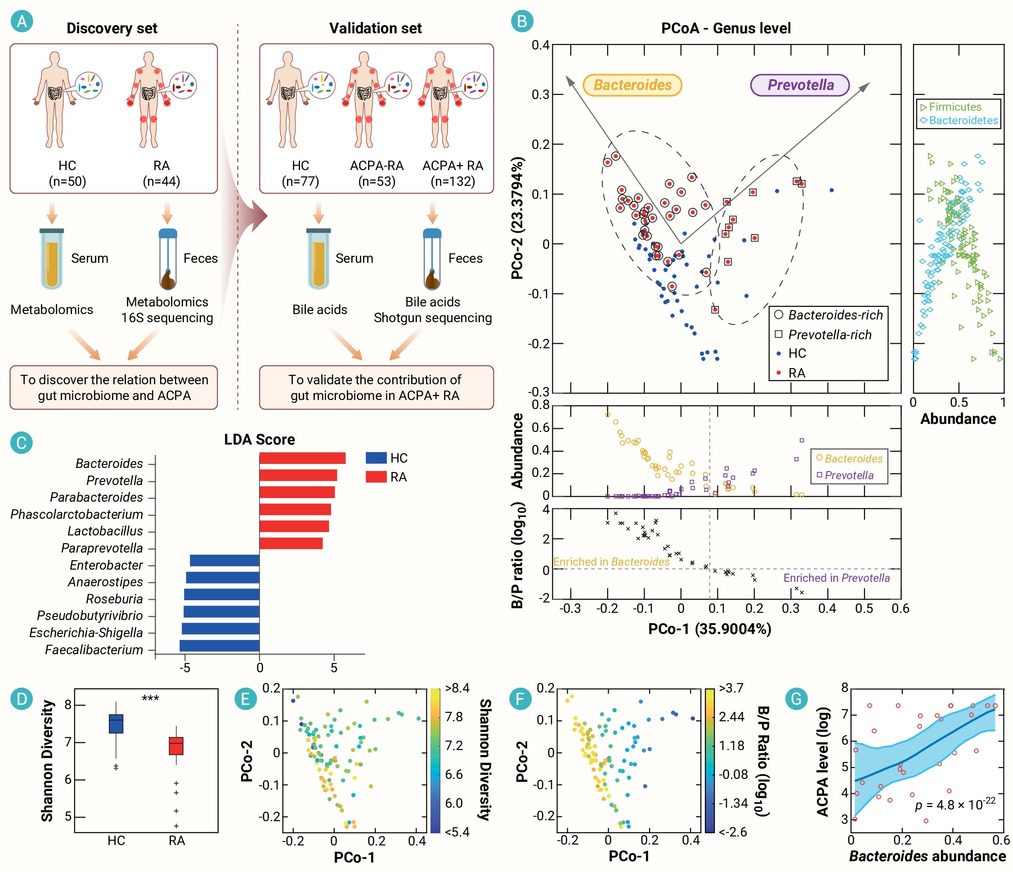
Figure 1.
Gut microbial alterations between rheumatoid arthritis (RA) and healthy control (HC) groups
-
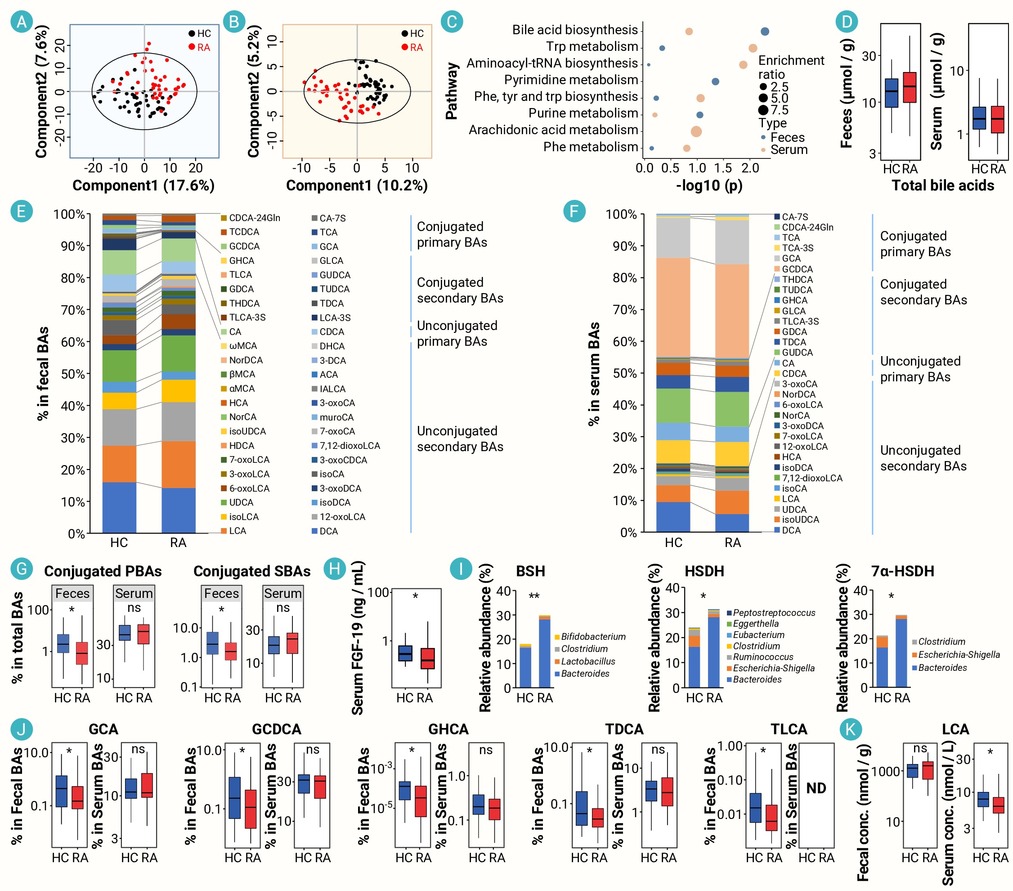
Figure 2.
Metabolic shifts relate to the gut microbiome
-
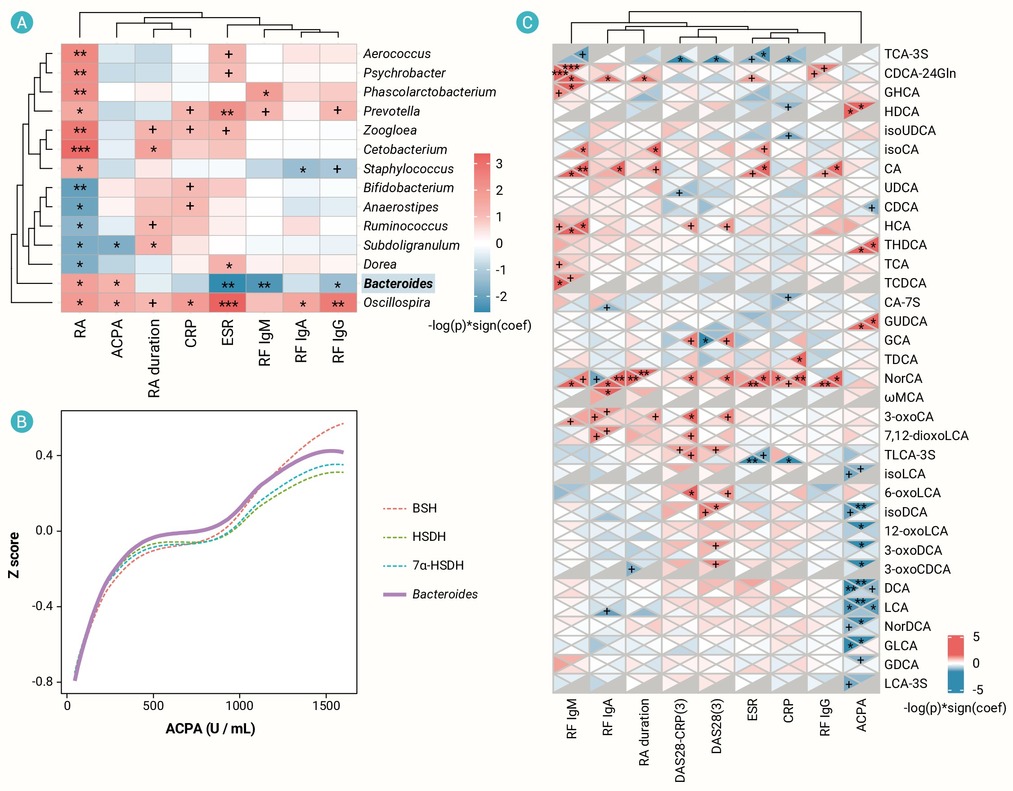
Figure 3.
Gut microbiome and microbial bile acid shifts reflect antigenic response in RA patients
-
Figure 4.
Gut commensal Bacteroides and bile acids contribute to elevated ACPA expression and bone erosion in RA
-
Figure 5.
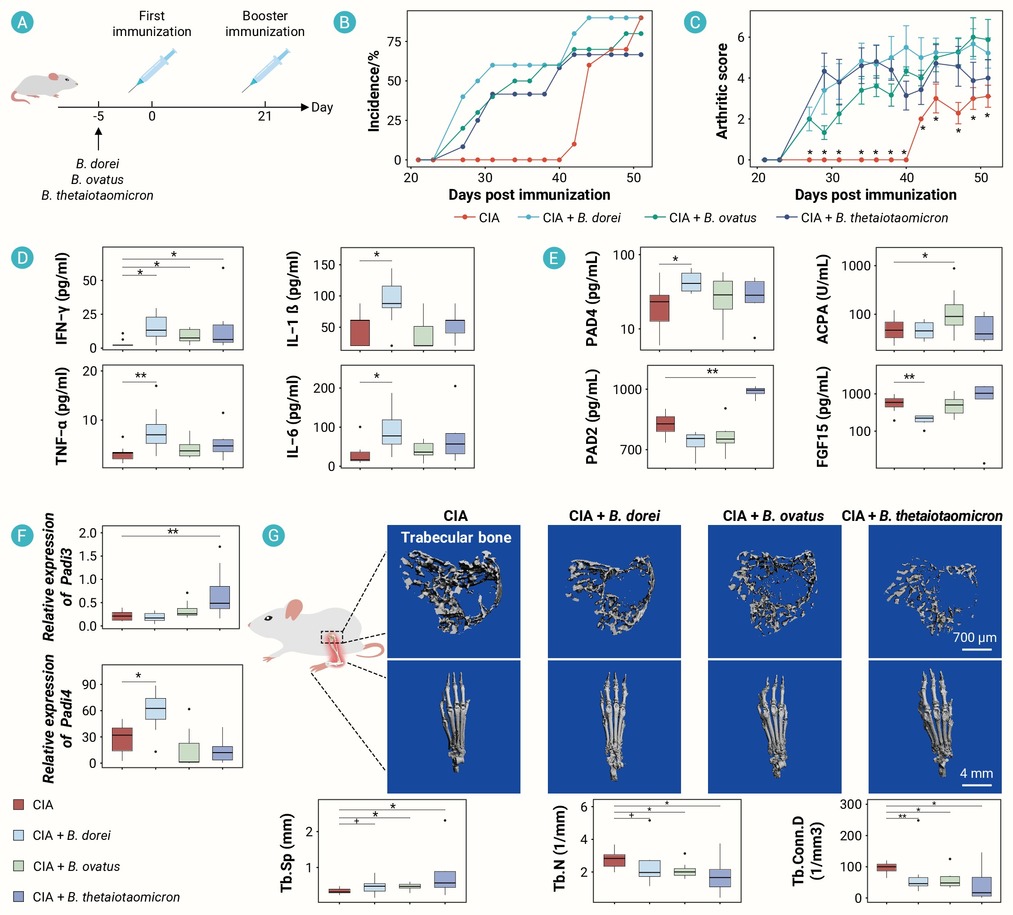
Oral administration of Bacteroides species aggravates arthritis in CIA mice
-
Figure 6.
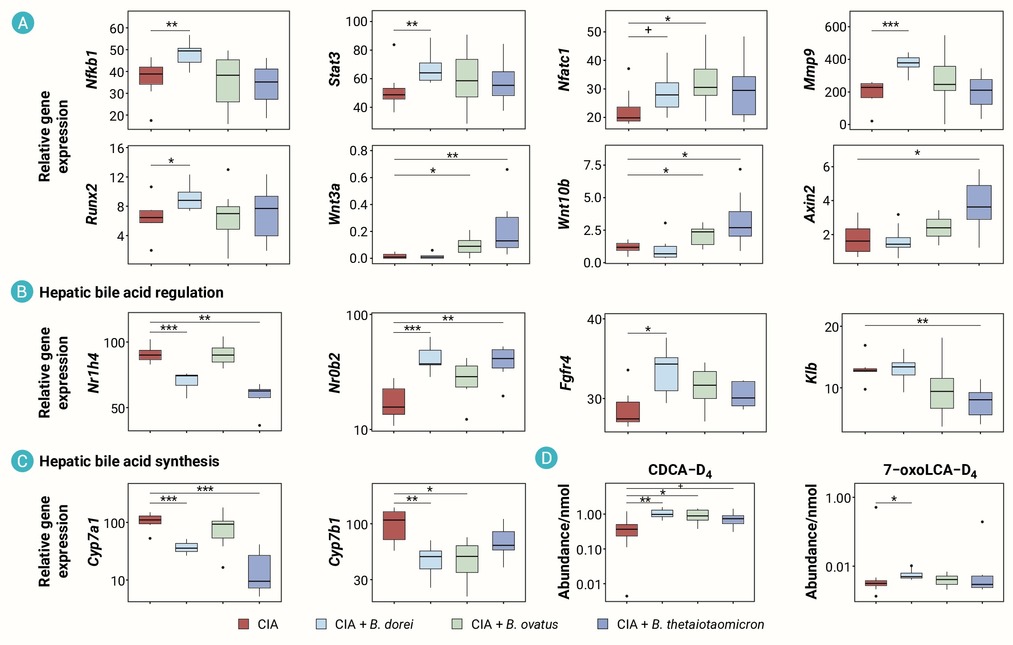
Skeletal and hepatic gene expression in CIA mice administered Bacteroides species
