
Beyond dietary restriction: Towards next-generation precision diets for healthy aging
-
GRAPHICAL ABSTRACT
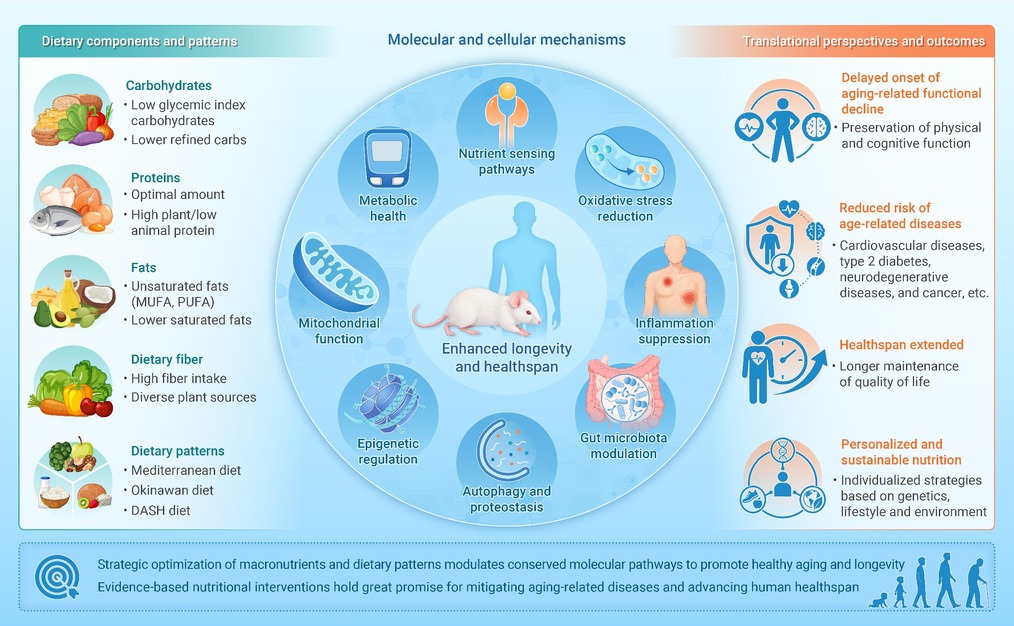
 DownLoad:
Full size image
DownLoad:
Full size image
-
PUBLIC SUMMARY
-
Diet shapes aging through both the amount of food eaten and the balance and quality of nutrients.
Evidence from animals and human populations shows that nutrition can influence lifespan and healthspan.
Younger adults need enough protein, while older adults may benefit from more plant foods and fiber.
Future diets may be personalized using genes, gut microbes, glucose patterns, and digital monitoring data.
-
-
ABSTRACT
Longevity is governed by complex interactions between genes and environment, in which diet is among the most powerful modifiable determinants. Although classical dietary restriction reliably extends lifespan, evidence from more than thirty large prospective cohorts and meta-analyses summarized in this review indicates that meaningful longevity benefits can be achieved without caloric restriction by optimizing macronutrient composition. This precision-nutrition strategy targets carbohydrate quality, protein sources and specific amino acids, lipid class, and dietary fiber, and adapts these choices to age, sex, genetic background, metabolic phenotype, and gut microbiome composition. This review integrates findings from model organisms, mechanistic investigations, and large-scale prospective cohorts to describe how macronutrients and their combinations modulate lifespan-associated nutrient-sensing pathways. An age-stratified macronutrient framework and a longevity dietary pyramid are proposed, both of which address how nutritional recommendations should evolve from young adulthood through old age. The framework is further situated within a broader precision-nutrition paradigm that incorporates continuous glucose monitoring, multi-omics profiling, microbiome-guided personalization, time-restricted eating, and emerging digital tools such as wearable monitoring and artificial-intelligence-assisted diet design. Together, these elements bridge mechanistic insight and population-level evidence, and provide a foundation for precision diets aimed at extending healthspan and promoting healthy longevity.-
Keywords:
- Precision nutrition /
- Macronutrient optimization /
- Carbohydrate /
- Protein /
- Fat /
- Dietary fiber /
- Healthspan /
- Longevity dietary pyramid
-

-
REFERENCES
[1] Zhang Z. D., Milman S., Lin J. R., et al. (2020). Genetics of extreme human longevity to guide drug discovery for healthy ageing. Nat. Metab. 2:663−672. DOI:10.1038/s42255-020-0247-0 [2] Partridge L., Deelen J., and Slagboom P. E. (2018). Facing up to the global challenges of ageing. Nature 561:45−56. DOI:10.1038/s41586-018-0457-8 [3] Barnett K., Mercer S. W., Norbury M., et al. (2012). Epidemiology of multimorbidity and implications for health care, research, and medical education: A cross-sectional study. Lancet 380:37−43. DOI:10.1016/S0140-6736(12)60240-2 [4] Skou S. T., Mair F. S., Fortin M., et al. (2022). Multimorbidity. Nat. Rev. Dis. Primers 8:48. DOI:10.1038/s41572-022-00376-4 [5] Di Francesco A., Deighan A. G., Litichevskiy L., et al. (2024). Dietary restriction impacts health and lifespan of genetically diverse mice. Nature 634:684−692. DOI:10.1038/s41586-024-08026-3 [6] McCay C. M., Crowell M. F. and Maynard L. A. (1935). The effect of retarded growth upon the length of life span and upon the ultimate body size. J. Nutr. 10:63−79. DOI:10.1093/jn/10.1.63 [7] Schmauck-Medina T., Lautrup S., Di Francesco A., et al. (2026). Dietary restriction in aging and longevity. Nat. Aging 6:485−505. DOI:10.1038/s43587-026-01091-5 [8] Angelidi A. M., Stefanakis K., Chou S. H., et al. (2024). Relative energy deficiency in sport (REDs): Endocrine manifestations, pathophysiology and treatments. Endocr. Rev. 45:676−708. DOI:10.1210/endrev/bnae011 [9] Solon-Biet S. M., McMahon A. C., Ballard J. W. O., et al. (2014). The ratio of macronutrients, not caloric intake, dictates cardiometabolic health, aging, and longevity in ad libitum-fed mice. Cell Metab. 19:418−430. DOI:10.1016/j.cmet.2014.02.009 [10] Lin S. J., Kaeberlein M., Andalis A. A., et al. (2002). Calorie restriction extends Saccharomyces cerevisiae lifespan by increasing respiration. Nature 418:344−348. DOI:10.1038/nature00829 [11] Lakowski B. and Hekimi S. (1998). The genetics of caloric restriction in Caenorhabditis elegans. Proc. Natl. Acad. Sci. U. S. A. 95:13091−13096. DOI:10.1073/pnas.95.22.13091 [12] Partridge L., Piper M. D., and Mair W. (2005). Dietary restriction in Drosophila. Mech. Ageing Dev. 126:938−950. DOI:10.1016/j.mad.2005.03.023 [13] Heymsfield S. B. and Shapses S. A. (2024). Guidance on energy and macronutrients across the life span. N. Engl. J. Med. 390:1299−1310. DOI:10.1056/NEJMra2214275 [14] López-Otín C., Blasco M. A., Partridge L., et al. (2023). Hallmarks of aging: An expanding universe. Cell 186:243−278. DOI:10.1016/j.cell.2022.11.001 [15] López-Otín C., Blasco M. A., Partridge L., et al. (2013). The hallmarks of aging. Cell 153:1194−1217. DOI:10.1016/j.cell.2013.05.039 [16] Dehghan M., Mente A., Zhang X., et al. (2017). Associations of fats and carbohydrate intake with cardiovascular disease and mortality in 18 countries from five continents (PURE): A prospective cohort study. Lancet 390:2050−2062. DOI:10.1016/S0140-6736(17)32252-3 [17] Seidelmann S. B., Claggett B., Cheng S., et al. (2018). Dietary carbohydrate intake and mortality: A prospective cohort study and meta-analysis. Lancet Public Health 3:e419−e428. DOI:10.1016/S2468-2667(18)30135-X [18] Ardisson Korat A. V., Duscova E., Shea M. K., et al. (2025). Dietary carbohydrate intake, carbohydrate quality, and healthy aging in women. JAMA Netw. Open 8:e2511056. DOI:10.1001/jamanetworkopen.2025.11056 [19] Khan J., Pernicova I., Nisar K., et al. (2023). Mechanisms of ageing: growth hormone, dietary restriction, and metformin. Lancet Diabetes Endocrinol. 11:261−281. DOI:10.1016/S2213-8587(23)00001-3 [20] González A., Hall M. N., Lin S. C., et al. (2020). AMPK and TOR: The yin and yang of cellular nutrient sensing and growth control. Cell Metab. 31:472−492. DOI:10.1016/j.cmet.2020.01.015 [21] Burkewitz K., Zhang Y., and Mair W. B. (2014). AMPK at the nexus of energetics and aging. Cell Metab. 20:10−25. DOI:10.1016/j.cmet.2014.03.002 [22] Green C. L., Lamming D. W., and Fontana L. (2022). Molecular mechanisms of dietary restriction promoting health and longevity. Nat. Rev. Mol. Cell Biol. 23:56−73. DOI:10.1038/s41580-021-00411-4 [23] Fung T. T., van Dam R. M., Hankinson S. E., et al. (2010). Low-carbohydrate diets and all-cause and cause-specific mortality: two cohort studies. Ann. Intern. Med. 153:289−298. DOI:10.7326/0003-4819-153-5-201009070-00003 [24] Mazidi M., Katsiki N., Mikhailidis D. P., et al. (2019). Lower carbohydrate diets and all-cause and cause-specific mortality: A population-based cohort study and pooling of prospective studies. Eur. Heart J. 40:2870−2879. DOI:10.1093/eurheartj/ehz174 [25] Ho F. K., Gray S. R., Welsh P., et al. (2020). Associations of fat and carbohydrate intake with cardiovascular disease and mortality: prospective cohort study of UK Biobank participants. BMJ 368:m688. DOI:10.1136/bmj.m688 [26] Kwon Y. J., Lee H. S., Park J. Y., et al. (2020). Associating intake proportion of carbohydrate, fat, and protein with all-cause mortality in korean adults. Nutrients 12:3208. DOI:10.3390/nu12103208 [27] Shan Z., Guo Y., Hu F. B., et al. (2020). Association of low-carbohydrate and low-fat diets with mortality among us adults. JAMA Intern. Med. 180:513−523. DOI:10.1001/jamainternmed.2019.6980 [28] Akter S., Mizoue T., Nanri A., et al. (2021). Low carbohydrate diet and all cause and cause-specific mortality. Clin. Nutr. 40:2016−2024. DOI:10.1016/j.clnu.2020.09.022 [29] Ghorbani Z., Kazemi A., Shoaibinobarian N., et al. (2023). Overall, plant-based, or animal-based low carbohydrate diets and all-cause and cause-specific mortality: A systematic review and dose-response meta-analysis of prospective cohort studies. Ageing Res. Rev. 90:101997. DOI:10.1016/j.arr.2023.101997 [30] Tamura T., Wakai K., Kato Y., et al. (2023). Dietary carbohydrate and fat intakes and risk of mortality in the japanese population: The japan multi-institutional collaborative cohort study. J. Nutr. 153:2352−2368. DOI:10.1016/j.tjnut.2023.06.001 [31] Park Y. H., Lee H. S., Yang J., et al. (2024). Difference in association of carbohydrate intake with all-cause mortality between middle-aged and older Korean adults with and without diabetes mellitus: A prospective study. Clin. Nutr. 43:1117−1124. DOI:10.1016/j.clnu.2024.03.024 [32] Cho H. J., Shin W. K., Song Y., et al. (2026). A reverse J-shaped association between carbohydrate intake and mortality among populations with high carbohydrate diets. Clin. Nutr. 57:106549. DOI:10.1016/j.clnu.2025.106549 [33] Roberts M. N., Wallace M. A., Tomilov A. A., et al. (2017). A ketogenic diet extends longevity and healthspan in adult mice. Cell Metab. 26:539−546.e5. DOI:10.1016/j.cmet.2017.08.005 [34] Rajendran J., Tomašić N., Kotarsky H., et al. (2016). Effect of high-carbohydrate diet on plasma metabolome in mice with mitochondrial respiratory chain complex III deficiency. Int. J. Mol. Sci. 17:1824. DOI:10.3390/ijms17111824 [35] Ruff J. S., Hugentobler S. A., Suchy A. K., et al. (2015). Compared to sucrose, previous consumption of fructose and glucose monosaccharides reduces survival and fitness of female mice. J. Nutr. 145:434−441. DOI:10.3945/jn.114.202531 [36] Yang K., Hou R., Zhao J., et al. (2023). Lifestyle effects on aging and CVD: A spotlight on the nutrient-sensing network. Ageing Res. Rev. 92:102121. DOI:10.1016/j.arr.2023.102121 [37] Nankervis S. A., Mitchell J. M., Charchar F. J., et al. (2013). Consumption of a low glycaemic index diet in late life extends lifespan of Balb/c mice with differential effects on DNA damage. Longev. Healthspan 2:4. DOI:10.1186/2046-2395-2-4 [38] Garber A., Csizmadi I., Friedenreich C. M., et al. (2018). Association between glycemic load and cognitive function in community-dwelling older adults: Results from the brain in motion study. Clin. Nutr. 37:1690−1699 DOI:10.1016/j.clnu.2017.07.011 [39] Solon-Biet S. M., Cogger V. C., Pulpitel T., et al. (2019). Branched-chain amino acids impact health and lifespan indirectly via amino acid balance and appetite control. Nat. Metab. 1:532−545. DOI:10.1038/s42255-019-0059-2 [40] Hill C. M., Berthoud H. R., Münzberg H., et al. (2018). Homeostatic sensing of dietary protein restriction: A case for FGF21. Front. Neuroendocrinol. 51:125−131. DOI:10.1016/j.yfrne.2018.06.002 [41] Wilson K. A., Chamoli M., Hilsabeck T. A., et al. (2021). Evaluating the beneficial effects of dietary restrictions: A framework for precision nutrigeroscience. Cell Metab. 33:2142−2173. DOI:10.1016/j.cmet.2021.08.018 [42] Levine M. E., Suarez J. A., Brandhorst S., et al. (2014). Low protein intake is associated with a major reduction in IGF-1, cancer, and overall mortality in the 65 and younger but not older population. Cell Metab. 19:407−417. DOI:10.1016/j.cmet.2014.02.006 [43] Song M., Fung T. T., Hu F. B., et al. (2016). Association of animal and plant protein intake with all-cause and cause-specific mortality. JAMA Intern. Med. 176:1453−1463. DOI:10.1001/jamainternmed.2016.4182 [44] Budhathoki S., Sawada N., Iwasaki M., et al. (2019). Association of animal and plant protein intake with all-cause and cause-specific mortality in a Japanese cohort. JAMA Intern. Med. 179:1509−1518. DOI:10.1001/jamainternmed.2019.2806 [45] Naghshi S., Sadeghi O., Willett W. C., et al. (2020). Dietary intake of total, animal, and plant proteins and risk of all cause, cardiovascular, and cancer mortality: Systematic review and dose-response meta-analysis of prospective cohort studies. BMJ 370:m2412. DOI:10.1136/bmj.m2412 [46] Chen Z., Glisic M., Song M., et al. (2020). Dietary protein intake and all-cause and cause-specific mortality: Results from the Rotterdam Study and a meta-analysis of prospective cohort studies. Eur. J. Epidemiol. 35:411−429. DOI:10.1007/s10654-020-00607-6 [47] Huang J., Liao L. M., Weinstein S. J., et al. (2020). Association between plant and animal protein intake and overall mortality in the nih-aarp diet and health study. JAMA Intern. Med. 180:1173−1184. DOI:10.1001/jamainternmed.2020.2790 [48] Xu B., Wang M., Pu L., et al. (2021). Association of dietary intake of branched-chain amino acids with long-term risks of CVD, cancer and all-cause mortality. Public Health Nutr. 25:3390−3400. DOI:10.1017/s1368980021004948 [49] Hirani V., Naganathan V., Blyth F., et al. (2017). Higher protein intake and protein-energy malnutrition were associated with all-cause mortality in older men: The concord health and ageing in men project (CHAMP). Eur. J. Clin. Nutr. 71:1366−1372. DOI:10.1038/ejcn.2017.69 [50] Tanaka T., Talegawkar S. A., Jin Y., et al. (2019). Adequate intake of protein is associated with reduced mortality risk in the very old: the kawasaki aging and wellbeing project. J. Nutr. Health Aging 23:715−721. DOI:10.1007/s12603-019-1221-y [51] Wallerer S., Papakonstantinou T., Morze J., et al. (2024). Association between substituting macronutrients and all-cause mortality: a network meta-analysis of prospective observational studies. eClinicalMedicine 75:102807. DOI:10.1016/j.eclinm.2024.102807 [52] Papanikolaou Y., Phillips S., and Fulgoni V. (2025). Animal and plant protein usual intakes are not adversely associated with all-cause, cardiovascular disease-, or cancer-related mortality risk: An NHANES III analysis. Appl. Physiol. Nutr. Metab. 50:1−8. DOI:10.1139/apnm-2024-0124 [53] Orentreich N., Matias J. R., DeFelice A., et al. (1993). Low methionine ingestion by rats extends life span. J. Nutr. 123:269−274. DOI:10.1093/jn/123.2.269 [54] Miller R. A., Buehner G., Chang Y., et al. (2005). Methionine-deficient diet extends mouse lifespan, slows immune and lens aging, alters glucose, T4, IGF-I and insulin levels, and increases hepatocyte MIF levels and stress resistance. Aging Cell 4:119−125. DOI:10.1111/j.1474-9726.2005.00152.x [55] Hernández-Arciga U., Stamenkovic C., Yadav S., et al. (2025). Dietary methionine restriction started late in life promotes healthy aging in a sex-specific manner. Sci. Adv. 11:eads1532. DOI:10.1126/sciadv.ads1532 [56] Bárcena C., Quirós P. M., Durand S., et al. (2018). Methionine restriction extends lifespan in progeroid mice and alters lipid and bile acid metabolism. Cell Rep. 24:2392−2403. DOI:10.1016/j.celrep.2018.07.089 [57] De Marte M. L. and Enesco H. E. (1986). Influence of low tryptophan diet on survival and organ growth in mice. Mech. Ageing Dev. 36:161−171. DOI:10.1016/0047-6374(86)90017-5 [58] Brind J., Malloy V., Augie I., et al. (2011). Dietary glycine supplementation mimics lifespan extension by dietary methionine restriction in Fisher 344 rats. FASEB J. 25:528.2. DOI:10.1096/fasebj.25.1_supplement.528.2 [59] Miller R. A., Harrison D. E., Astle C. M., et al. (2019). Glycine supplementation extends lifespan of male and female mice. Aging Cell 18:e12953. DOI:10.1111/acel.12953 [60] Hafidi M., Pérez I., Zamora J., et al. (2004). Glycine intake decreases plasma free fatty acids, adipose cell size, and blood pressure in sucrose-fed rats. Am. J. Physiol. Regul. Integr. Comp. Physiol. 287:R1387−R1393. DOI:10.1152/ajpregu.00159.2004 [61] Cruz M., Maldonado-Bernal C., Mondragón-González R., et al. (2008). Glycine treatment decreases proinflammatory cytokines and increases interferon-γ in patients with Type 2 diabetes. J. Endocrinol. Invest. 31:694−699. DOI:10.1007/BF03346417 [62] D’Antona G., Ragni M., Cardile A., et al. (2010). Branched-chain amino acid supplementation promotes survival and supports cardiac and skeletal muscle mitochondrial biogenesis in middle-aged mice. Cell Metab. 12:362−372. DOI:10.1016/j.cmet.2010.08.016 [63] Green C. L., Trautman M. E., Chaiyakul K., et al. (2023). Dietary restriction of isoleucine increases healthspan and lifespan of genetically heterogeneous mice. Cell Metab. 35:1976−1995.e6. DOI:10.1016/j.cmet.2023.10.005 [64] Mirzaei H., Suarez J. A., and Longo V. D. (2014). Protein and amino acid restriction, aging and disease: from yeast to humans. Trends Endocrinol. Metab. 25:558−566. DOI:10.1016/j.tem.2014.07.002 [65] Mutlu A. S., Duffy J., and Wang M. C. (2021). Lipid metabolism and lipid signals in aging and longevity. Dev. Cell 56:1394−1407. DOI:10.1016/j.devcel.2021.03.034 [66] Berryman D. E., Christiansen J. S., Johannsson G., et al. (2008). Role of the GH/IGF-1 axis in lifespan and healthspan: lessons from animal models. Growth Horm. IGF Res. 18:455−471. DOI:10.1016/j.ghir.2008.05.005 [67] Global BMI Mortality Collaboration. (2016). Body-mass index and all-cause mortality: Individual-participant-data meta-analysis of 239 prospective studies in four continents. Lancet 388:776−786. DOI:10.1016/S0140-6736(16)30175-1 [68] Powell-Wiley T. M., Poirier P., Burke L. E., et al. (2021). Obesity and cardiovascular disease: A scientific statement from the American heart association. Circulation 143:e984−e1010. DOI:10.1161/CIR.0000000000000973 [69] Wang D. D., Li Y., Chiuve S. E., et al. (2016). Association of specific dietary fats with total and cause-specific mortality. JAMA Intern. Med. 176:1134−1145. DOI:10.1001/jamainternmed.2016.2417 [70] Zhuang P., Zhang Y., He W., et al. (2019). Dietary fats in relation to total and cause-specific mortality in a prospective cohort of 521 120 individuals with 16 years of follow-up. Circ. Res. 124:757−768. DOI:10.1161/CIRCRESAHA.118.314038 [71] Mazidi M., Mikhailidis D. P., Sattar N., et al. (2020). Association of types of dietary fats and all-cause and cause-specific mortality: A prospective cohort study and meta-analysis of prospective studies with 1,164,029 participants. Clin. Nutr. 39:3677−3686. DOI:10.1016/j.clnu.2020.03.028 [72] Kim Y., Je Y., and Giovannucci E. L. (2021). Association between dietary fat intake and mortality from all-causes, cardiovascular disease, and cancer: A systematic review and meta-analysis of prospective cohort studies. Clin. Nutr. 40:1060−1070. DOI:10.1016/j.clnu.2020.07.007 [73] Zhao B., Gan L., Graubard B. I., et al. (2024). Plant and animal fat intake and overall and cardiovascular disease mortality. JAMA Intern. Med. 184:1234−1245. DOI:10.1001/jamainternmed.2024.3799 [74] Kennedy B. S., Richeson R. P., and Houde A. J. (2025). Saturated fatty acid intake and all-cause mortality: Chain length matters. Precis. Nutr. 4:e00108. DOI:10.1097/PN9.0000000000000108 [75] Liu Y., Gu X., Li Y., et al. (2025). Changes in fatty acid intake and subsequent risk of all-cause and cause-specific mortality in males and females: A prospective cohort study. Am. J. Clin. Nutr. 121:141−150. DOI:10.1016/j.ajcnut.2024.11.012 [76] Ma Y., Zheng Z., Zhuang L., et al. (2024). Dietary macronutrient intake and cardiovascular disease risk and mortality: A systematic review and dose-response meta-analysis of prospective cohort studies. Nutrients. 16:152. DOI:10.3390/nu16010152 [77] Zhang Z., Ding L., and Liang Y., et al. (2025). The association of dietary fatty acids intake with overall and cause-specific mortality: A prospective cohort study from 1999-2018 cycles of the NHANES. Front Nutr. 12:1468513. DOI:10.3389/fnut.2025.1468513 [78] Shi D., Han T., Chu X., et al. (2021). An isocaloric moderately high-fat diet extends lifespan in male rats and Drosophila. Cell Metab. 33:581−597.e9. DOI:10.1016/j.cmet.2020.12.017 [79] Dalderup L. M. and Visser W. (1971). Influence of extra sucrose, fats, protein and of cyclamate in daily food on life-span of rats. Experientia 27:519−521. DOI:10.1007/BF02147574 [80] Harris W. S., Tintle N. L., Imamura F., et al. (2021). Blood n-3 fatty acid levels and total and cause-specific mortality from 17 prospective studies. Nat. Commun. 12:2329. DOI:10.1038/s41467-021-22370-2 [81] Moore T. D., Martin-Creuzburg D., and Yampolsky L. Y. (2023). Diet effects on longevity, heat tolerance, lipid peroxidation and mitochondrial membrane potential in. Daphnia. Oecologia 202:151−163. DOI:10.1007/s00442-023-05382-1 [82] O’Rourke E. J., Kuballa P., Xavier R., et al. (2013). ω-6 Polyunsaturated fatty acids extend life span through the activation of autophagy. Genes Dev. 27:429−440. DOI:10.1101/gad.205294.112 [83] Nehra D., Le H. D., Fallon E. M., et al. (2012). Prolonging the female reproductive lifespan and improving egg quality with dietary omega-3 fatty acids. Aging Cell 11:1046−1054. DOI:10.1111/acel.12006 [84] Honda Y., Fujita Y., Maruyama H., et al. (2011). Lifespan-extending effects of royal jelly and its related substances on the nematode Caenorhabditis elegans. PLoS One 6:e23527. DOI:10.1371/journal.pone.0023527 [85] Johnson A. A. and Stolzing A. (2019). The role of lipid metabolism in aging, lifespan regulation, and age-related disease. Aging Cell 18:e13048. DOI:10.1111/acel.13048 [86] Han S., Schroeder E. A., Silva-García C. G., et al. (2017). Mono-unsaturated fatty acids link H3K4me3 modifiers to C. elegans lifespan. Nature 544:185−190. DOI:10.1038/nature21686 [87] Hulbert A. J. (2011). Longevity, lipids and C. elegans. Aging (Albany NY) 3:81−82. DOI:10.18632/aging.100288 [88] Streeper R. S., Grueter C. A., Salomonis N., et al. (2012). Deficiency of the lipid synthesis enzyme, DGAT1, extends longevity in mice. Aging (Albany NY) 4:13−27. DOI:10.18632/aging.100424 [89] Harrison D. E., Strong R., Allison D. B., et al. (2014). Acarbose, 17-α-estradiol, and nordihydroguaiaretic acid extend mouse lifespan preferentially in males. Aging Cell 13:273−282. DOI:10.1111/acel.12170 [90] Blüher M. (2008). Fat tissue and long life. Obes. Facts 1:176−182. DOI:10.1159/000145930 [91] Darcy J., McFadden S., and Bartke A. (2017). Altered structure and function of adipose tissue in long-lived mice with growth hormone-related mutations. Adipocyte 6:69−75. DOI:10.1080/21623945.2017.1308990 [92] Liao C. Y., Rikke B. A., Johnson T. E., et al. (2011). Fat maintenance is a predictor of the murine lifespan response to dietary restriction. Aging Cell 10:629−639. DOI:10.1111/j.1474-9726.2011.00702.x [93] Muzumdar R., Allison D. B., Huffman D. M., et al. (2008). Visceral adipose tissue modulates mammalian longevity. Aging Cell 7:438−440. DOI:10.1111/j.1474-9726.2008.00391.x [94] Silberberg M. and Silberberg R. (1954). Factors modifying the lifespan of mice. Am. J. Physiol. 177:23−26. DOI:10.1152/ajplegacy.1954.177.1.23 [95] Li J., Lin Y. C., Zuo H. L., et al. (2025). Dietary omega-3 PUFAS in metabolic disease research: A decade of omics-enabled insights (2014−2024). Nutrients 17:1836. DOI:10.3390/nu17111836 [96] Sacks F. M., Lichtenstein A. H., Wu J. H. Y., et al. (2017). Dietary fats and cardiovascular disease: a presidential advisory from the american heart association. Circulation 136:e1−e23. DOI:10.1161/CIR.0000000000000510 [97] Slavin J. L. (2005). Dietary fiber and body weight. Nutrition 21:411−418. DOI:10.1016/j.nut.2004.08.018 [98] Park Y., Subar A. F., Hollenbeck A., et al. (2011). Dietary fiber intake and mortality in the NIH-AARP diet and health study. Arch. Intern. Med. 171:1061−1068. DOI:10.1001/archinternmed.2011.18 [99] Kim Y. and Je Y. (2014). Dietary fibre intake and mortality from cardiovascular disease and all cancers: A meta-analysis of prospective cohort studies. Arch. Cardiovasc. Dis. 107:622−633. DOI:10.1016/j.acvd.2014.10.001 [100] Yang Y., Zhao L. G., Wu Q. J., et al. (2015). Association between dietary fiber and lower risk of all-cause mortality: a meta-analysis of cohort studies. Am. J. Epidemiol. 181:83−91. DOI:10.1093/aje/kwu257 [101] Veronese N., Solmi M., Caruso M. G., et al. (2018). Dietary fiber and health outcomes: An umbrella review of systematic reviews and meta-analyses. Am. J. Clin. Nutr. 107:436−444. DOI:10.1093/ajcn/nqx082 [102] Katagiri R., Goto A., Sawada N., et al. (2020). Dietary fiber intake and total and cause-specific mortality: The Japan public health center-based prospective study. Am. J. Clin. Nutr. 111:1027−1035. DOI:10.1093/ajcn/nqaa002 [103] Kwon Y. J., Lee H. S., Park G., et al. (2022). Association of dietary fiber intake with all-cause mortality and cardiovascular disease mortality: A 10-year prospective cohort study. Nutrients 14:3089. DOI:10.3390/nu14153089 [104] Mirrafiei A., Jayedi A., and Shab-Bidar S. (2023). Total and different dietary fiber subtypes and the risk of all-cause, cardiovascular, and cancer mortality: A dose-response meta-analysis of prospective cohort studies. Food Funct. 14:10667−10680. DOI:10.1039/d3fo03143h [105] Ramezani F., Pourghazi F., Eslami M., et al. (2024). Dietary fiber intake and all-cause and cause-specific mortality: An updated systematic review and meta-analysis of prospective cohort studies. Clin. Nutr. 43:65−83. DOI:10.1016/j.clnu.2023.11.005 [106] Reynolds A., Mann J., Cummings J., et al. (2019). Carbohydrate quality and human health: A series of systematic reviews and meta-analyses. Lancet 393:434−445. DOI:10.1016/S0140-6736(18)31809-9 [107] Guo Y., Li M., and Huang Y. (2025). Association of dietary fiber intake with all-cause and cardiovascular mortality in U. S. adults with metabolic syndrome. Front. Nutr. 12:1659000. DOI:10.3389/fnut.2025.1659000 [108] Beghelli D., Giusti L., Zallocco L., et al. (2024). Dietary fiber supplementation increases Drosophila melanogaster lifespan and gut microbiota diversity. Food Funct. 15:7468−7477. DOI:10.1039/d4fo00879k [109] Dong Y., Sun H., Yang W., et al. (2019). The effect of inulin on lifespan, related gene expression and gut microbiota in InR p5545/TM3 mutant Drosophila melanogaster. Nutrients 11:636. DOI:10.3390/nu11030636 [110] Hu F., Yu L., Tu X., et al. (2025). A high-fiber diet mimics aging-related signatures of caloric restriction in mammals. Nat. Commun. 16:5917. DOI:10.1038/s41467-025-61046-z [111] Kokkonen G. C. and Barrows C. H. (1988). The effect of dietary cellulose on life-span and biochemical variables of male-mice. Age 11:7−9. DOI:10.1007/BF02431758 [112] Gabandé-Rodríguez E., Gómez de Las Heras M. M., Ramírez-Ruiz de Erenchun P., et al. (2026). Butyrate extends health and lifespan in mice with mitochondrial deficiency. Nat. Commun. 17:3909. DOI:10.1038/s41467-026-70547-4 [113] Senior A. M., Nakagawa S., Raubenheimer D., et al. (2020). Global associations between macronutrient supply and age-specific mortality. Proc. Natl. Acad. Sci. U. S. A. 117:30824−30835. DOI:10.1073/pnas.2015058117 [114] Senior A. M., Solon-Biet S. M., Cogger V. C., et al. (2019). Dietary macronutrient content, age-specific mortality and lifespan. Proc. Biol. Sci. 286:20190393. DOI:10.1098/rspb.2019.0393 [115] Solon-Biet S. M., Walters K. A., Simanainen U. K., et al. (2015). Macronutrient balance, reproductive function, and lifespan in aging mice. Proc. Natl. Acad. Sci. U. S. A. 112:3481−3486. DOI:10.1073/pnas.1422041112 [116] Le Couteur D. G., Solon-Biet S., Cogger V. C., et al. (2016). The impact of low-protein high-carbohydrate diets on aging and lifespan. Cell. Mol. Life Sci. 73:1237−1252. DOI:10.1007/s00018-015-2120-y [117] Rapkin J., Archer C. R., Grant C. E., et al. (2017). Little evidence for intralocus sexual conflict over the optimal intake of nutrients for life span and reproduction in the black field cricket Teleogryllus commodus. Evolution 71:2159−2177. DOI:10.1111/evo.13299 [118] Simpson S. J., Raubenheimer D., Cogger V. C., et al. (2018). The nutritional geometry of liver disease including non-alcoholic fatty liver disease. J. Hepatol. 68:316−325. DOI:10.1016/j.jhep.2017.10.005 [119] Simpson S. J. and Raubenheimer D. (2011). The nature of nutrition: A unifying framework. Aust. J. Zool. 59:350−368. DOI:10.1071/ZO11068 [120] Buettner D. and Skemp S. (2016). Blue zones: lessons from the world’s longest lived. Am. J. Lifestyle Med. 10:318−321. DOI:10.1177/1559827616637066 [121] Willcox D. C., Willcox B. J., Todoriki H., et al. (2009). The Okinawan diet: Health implications of a low-calorie, nutrient-dense, antioxidant-rich dietary pattern low in glycemic load. J. Am. Coll. Nutr. 28:500S−516S. DOI:10.1080/07315724.2009.10718117 [122] Willcox B. J. and Willcox D. C. (2014). Caloric restriction, caloric restriction mimetics, and healthy aging in Okinawa: Controversies and clinical implications. Curr. Opin. Clin. Nutr. Metab. Care 17:51−58. DOI:10.1097/MCO.0000000000000019 [123] Duan H., Li J., Yu L., et al. (2024). The road ahead of dietary restriction on anti-aging: Focusing on personalized nutrition. Crit. Rev. Food Sci. Nutr. 64:891−908. DOI:10.1080/10408398.2022.2110034 [124] Soltani S., Jayedi A., Shab-Bidar S., et al. (2019). Adherence to the Mediterranean diet in relation to all-cause mortality: A systematic review and dose-response meta-analysis of prospective cohort studies. Adv. Nutr. 10:1029−1039. DOI:10.1093/advances/nmz041 [125] Soltani S., Arablou T., Jayedi A., et al. (2020). Adherence to the dietary approaches to stop hypertension (DASH) diet in relation to all-cause and cause-specific mortality: A systematic review and dose-response meta-analysis of prospective cohort studies. Nutr. J. 19:37. DOI:10.1186/s12937-020-00554-8 [126] English L. K., Ard J. D., Bailey R. L., et al. (2021). Evaluation of dietary patterns and all-cause mortality: A systematic review. JAMA Netw. Open 4:e2122277. DOI:10.1001/jamanetworkopen.2021.22277 [127] Matsuyama S., Sawada N., Tomata Y., et al. (2021). Association between adherence to the Japanese diet and all-cause and cause-specific mortality: The Japan public health center-based prospective study. Eur. J. Nutr. 60:1327−1336. DOI:10.1007/s00394-020-02330-0 [128] Ahmad S., Moorthy M. V., Lee I. M., et al. (2024). Mediterranean diet adherence and risk of all-cause mortality in women. JAMA Netw. Open 7:e2414322. DOI:10.1001/jamanetworkopen.2024.14322 [129] Tan J., Zhang S., Jiang Y., et al. (2024). Plant-based diet and risk of all-cause mortality: A systematic review and meta-analysis. Front. Nutr. 11:1481363. DOI:10.3389/fnut.2024.1481363 [130] Karam G., Agarwal A., Sadeghirad B., et al. (2023). Comparison of seven popular structured dietary programmes and risk of mortality and major cardiovascular events in patients at increased cardiovascular risk: Systematic review and network meta-analysis. BMJ 380:e072003. DOI:10.1136/bmj-2022-072003 [131] Mo Q., Wu J., Lu Y., et al. (2025). Plant-based diets and total and cause-specific mortality: A meta-analysis of prospective studies. Front. Nutr. 12:1518519. DOI:10.3389/fnut.2025.1518519 [132] Murai U., Ishihara J., Takachi R., et al. (2025). Japanese diet index score and cause-specific mortality in japanese men and women: The Japan public health center-based prospective study. J. Nutr. 155:3726−3736. DOI:10.1016/j.tjnut.2025.09.003 [133] Lăcătușu C. M., Grigorescu E. D., Floria M., et al. (2019). The Mediterranean diet: From an environment-driven food culture to an emerging medical prescription. Int. J. Environ. Res. Public Health 16:942. DOI:10.3390/ijerph16060942 [134] Martinez-Gonzalez M. A. and Martin-Calvo N. (2016). Mediterranean diet and life expectancy; beyond olive oil, fruits, and vegetables. Curr. Opin. Clin. Nutr. Metab. Care 19:401−407. DOI:10.1097/MCO.0000000000000316 [135] Dominguez L. J., Barbagallo M., Muñoz-García M., et al. (2019). Dietary patterns and cognitive decline: Key features for prevention. Curr. Pharm. Des. 25:2428−2442. DOI:10.2174/1381612825666190722110458 [136] Morze J., Danielewicz A., Przybyłowicz K., et al. (2021). An updated systematic review and meta-analysis on adherence to mediterranean diet and risk of cancer. Eur. J. Nutr. 60:1561−1586. DOI:10.1007/s00394-020-02346-6 [137] Fiorito G., Caini S., Palli D., et al. (2021). DNA methylation-based biomarkers of aging were slowed down in a two-year diet and physical activity intervention trial: The DAMA study. Aging Cell 20:e13439. DOI:10.1111/acel.13439 [138] Kim Y., Huan T., Joehanes R., et al. (2022). Higher diet quality relates to decelerated epigenetic aging. Am. J. Clin. Nutr. 115:163−170. DOI:10.1093/ajcn/nqab201 [139] Drabińska N., Wiczkowski W., and Piskuła M. K. (2021). Recent advances in the application of a ketogenic diet for obesity management. Trends Food Sci. Technol. 110:28−38. DOI:10.1016/j.tifs.2021.01.080 [140] Wei S. J., Schell J. R., Chocron E. S., et al. (2022). Ketogenic diet induces p53-dependent cellular senescence in multiple organs. Sci. Adv. 10:eado1463. DOI:10.1126/sciadv.ado1463 [141] Berry S. E., Valdes A. M., Drew D. A., et al. (2020). Human postprandial responses to food and potential for precision nutrition. Nat. Med. 26:964−973. DOI:10.1038/s41591-020-0934-0 [142] Livingstone K. M., Ramos-Lopez O., Pérusse L., et al. (2022). Precision nutrition: A review of current approaches and future endeavours. Trends Food Sci. Technol. 128:253−264. DOI:10.1016/j.tifs.2022.08.017 [143] Bermingham K. M., Linenberg I., Polidori L., et al. (2024). Effects of a personalized nutrition program on cardiometabolic health: A randomized controlled trial. Nat. Med. 30:1888−1897. DOI:10.1038/s41591-024-02951-6 [144] Asnicar F., Berry S. E., Valdes A. M., et al. (2021). Microbiome connections with host metabolism and habitual diet from 1,098 deeply phenotyped individuals. Nat. Med. 27:321−332. DOI:10.1038/s41591-020-01183-8 [145] Pang S., Chen X., Lu Z., et al. (2023). Longevity of centenarians is reflected by the gut microbiome with youth-associated signatures. Nat. Aging 3:436−449. DOI:10.1038/s43587-023-00389-y [146] Manoogian E. N. C., Chow L. S., Taub P. R., et al. (2022). Time-restricted eating for the prevention and management of metabolic diseases. Endocr. Rev. 43:405−436. DOI:10.1210/endrev/bnab027 [147] Wilkinson M. J., Manoogian E. N. C., Zadourian A., et al. (2020). Ten-hour time-restricted eating reduces weight, blood pressure, and atherogenic lipids in patients with metabolic syndrome. Cell Metab. 31:92−104.e5. DOI:10.1016/j.cmet.2019.11.004 [148] Monteiro C. A., Cannon G., Lawrence M., et al. (2019). Ultra-processed foods, diet quality, and health using the NOVA classification system. Rome: Food and Agriculture Organization of the United Nations (FAO). https://openknowledge.fao.org/handle/20.500.14283/ca5644en [149] Lane M. M., Gamage E., Du S., et al. (2024). Ultra-processed food exposure and adverse health outcomes: umbrella review of epidemiological meta-analyses. BMJ 384:e077310. DOI:10.1136/bmj-2023-077310 [150] Fang Z., Rossato S. L., Hang D., et al. (2024). Association of ultra-processed food consumption with all cause and cause specific mortality: Population based cohort study. BMJ 385:e078476. DOI:10.1136/bmj-2023-078476 -
ABOUT THIS ARTICLE
Cite this article:
Huang J., Huang D. and Wu Z. (2026). Beyond dietary restriction: Towards next-generation precision diets for healthy aging. The Innovation Nutrition 1:100034. https://doi.org/10.59717/j.xinn-nutri.2026.100034
Welcome!
To request copyright permission to republish or share portions of our works, please visit Copyright Clearance Center's (CCC) Marketplace website at marketplace.copyright.com.
Export File
Citation
Huang J., Huang D. and Wu Z. (2026). Beyond dietary restriction: Towards next-generation precision diets for healthy aging. The Innovation Nutrition 1:100034. https://doi.org/10.59717/j.xinn-nutri.2026.100034

Format
Content
-
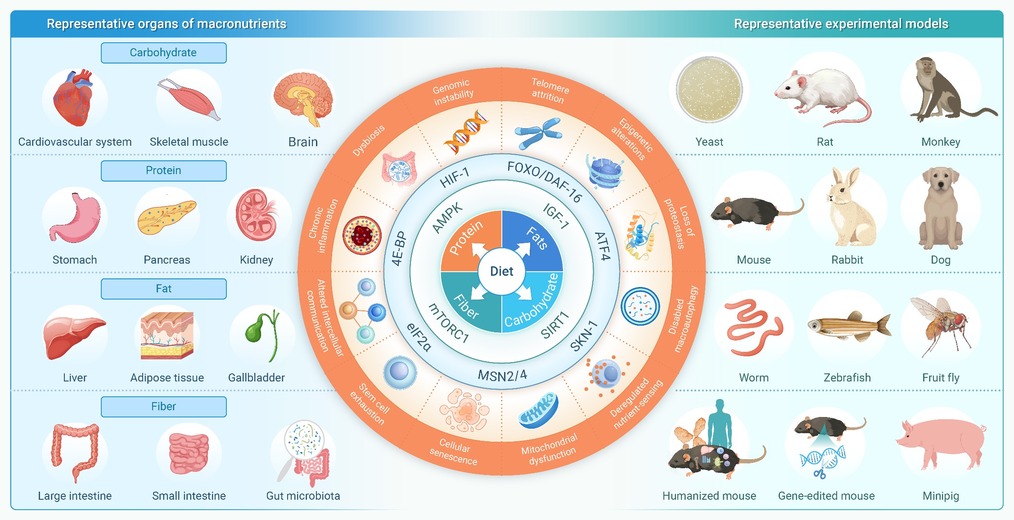
Figure 1.
Nutritional signaling pathways involved in macronutrient regulation of aging
-
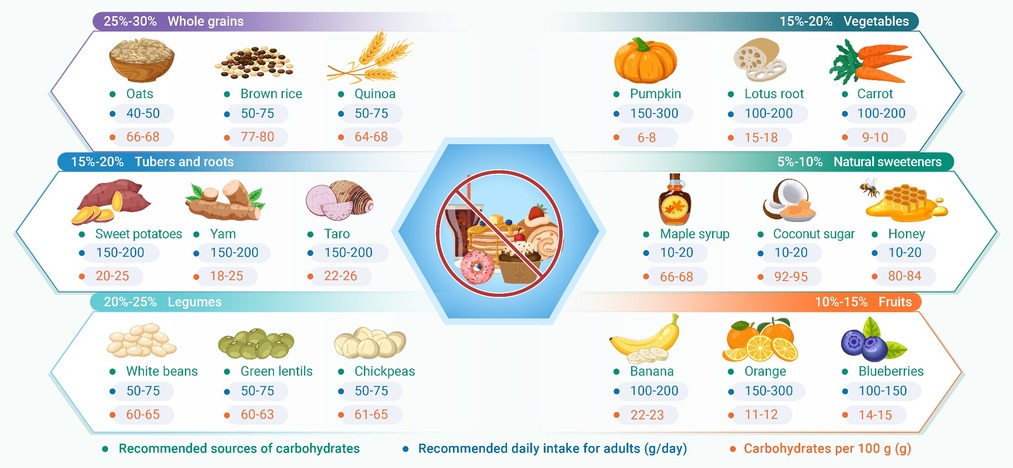
Figure 2.
Recommended carbohydrate sources for a longevity diet
-
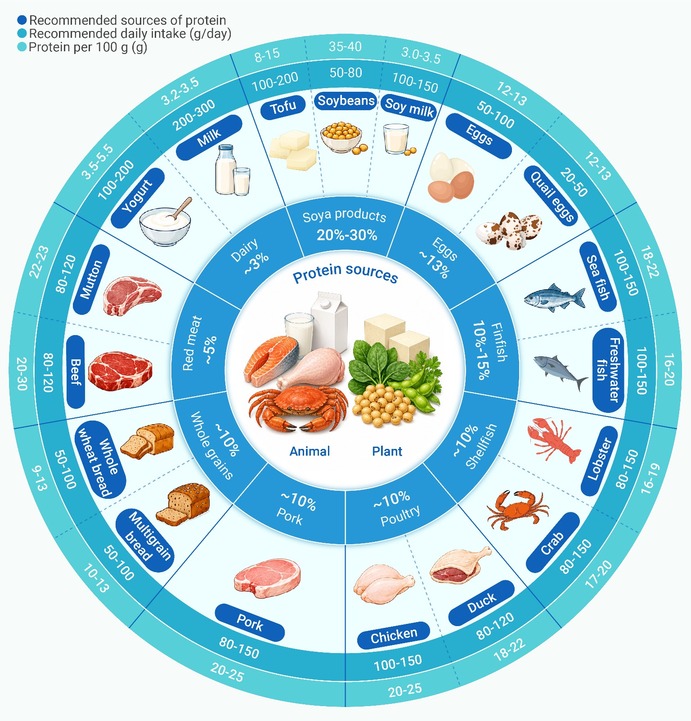
Figure 3.
Recommended protein sources for a longevity diet
-
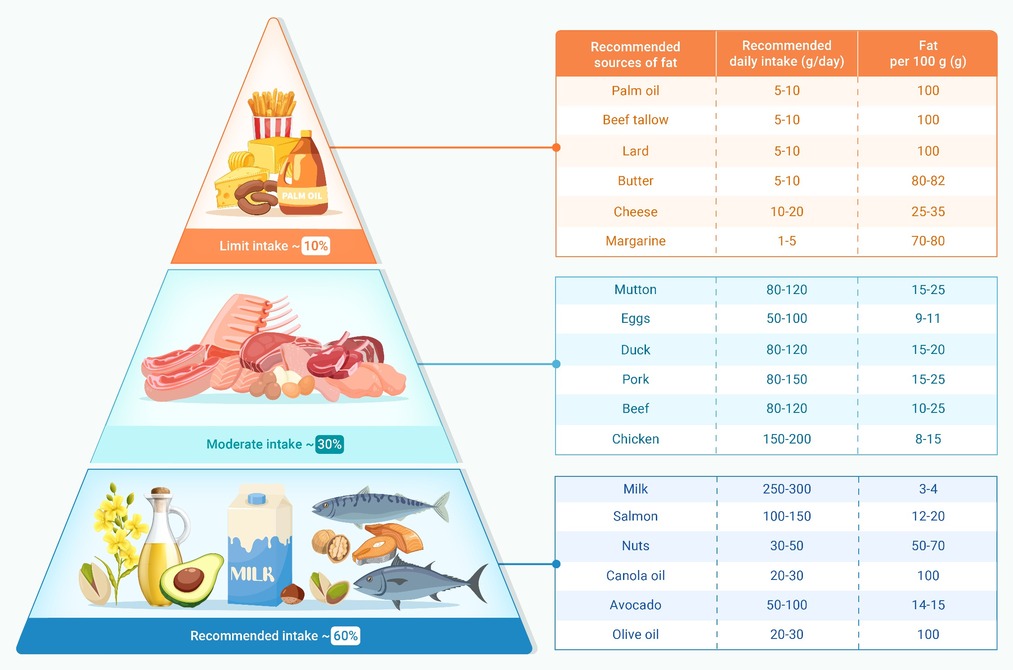
Figure 4.
Recommended fat sources for a longevity diet
-
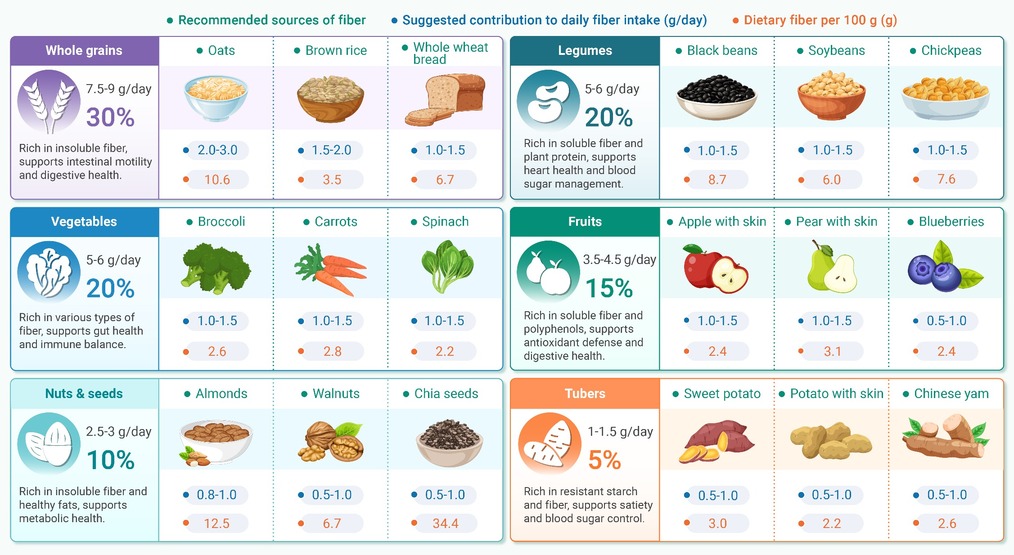
Figure 5.
Recommended fiber sources for a longevity diet
-
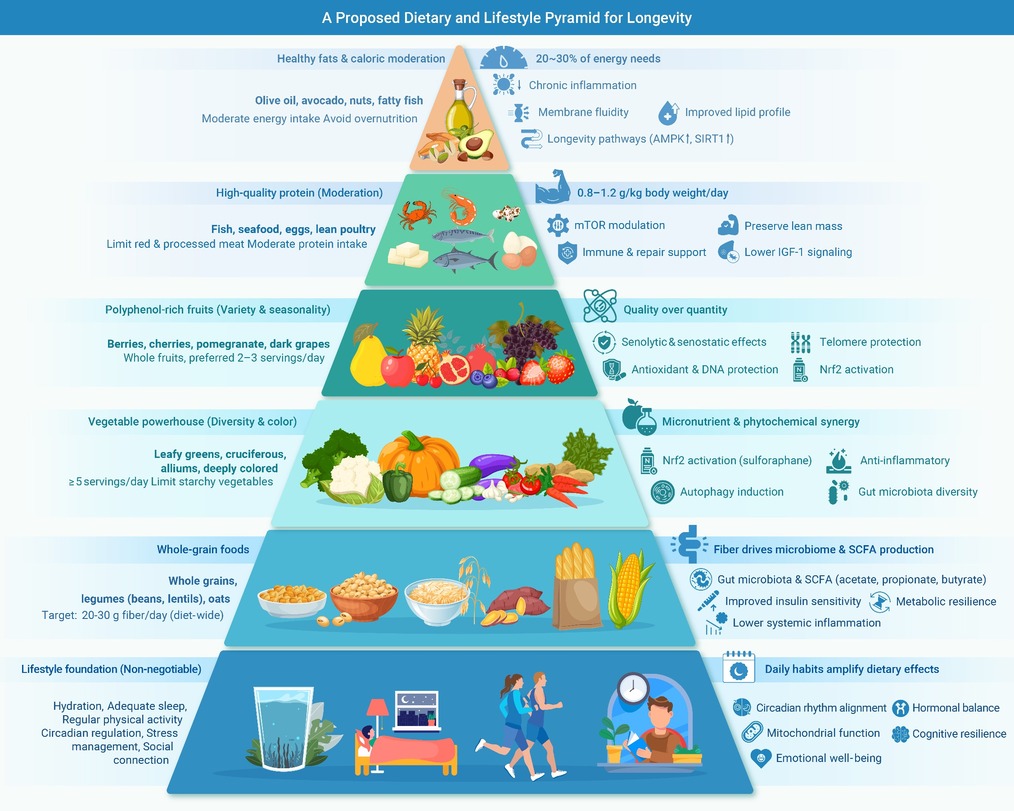
Figure 6.
A proposed dietary and lifestyle pyramid for longevity
