
Nano-targeted protein degradation: Ushering in a new era of protein degradation therapeutics
-
GRAPHICAL ABSTRACT
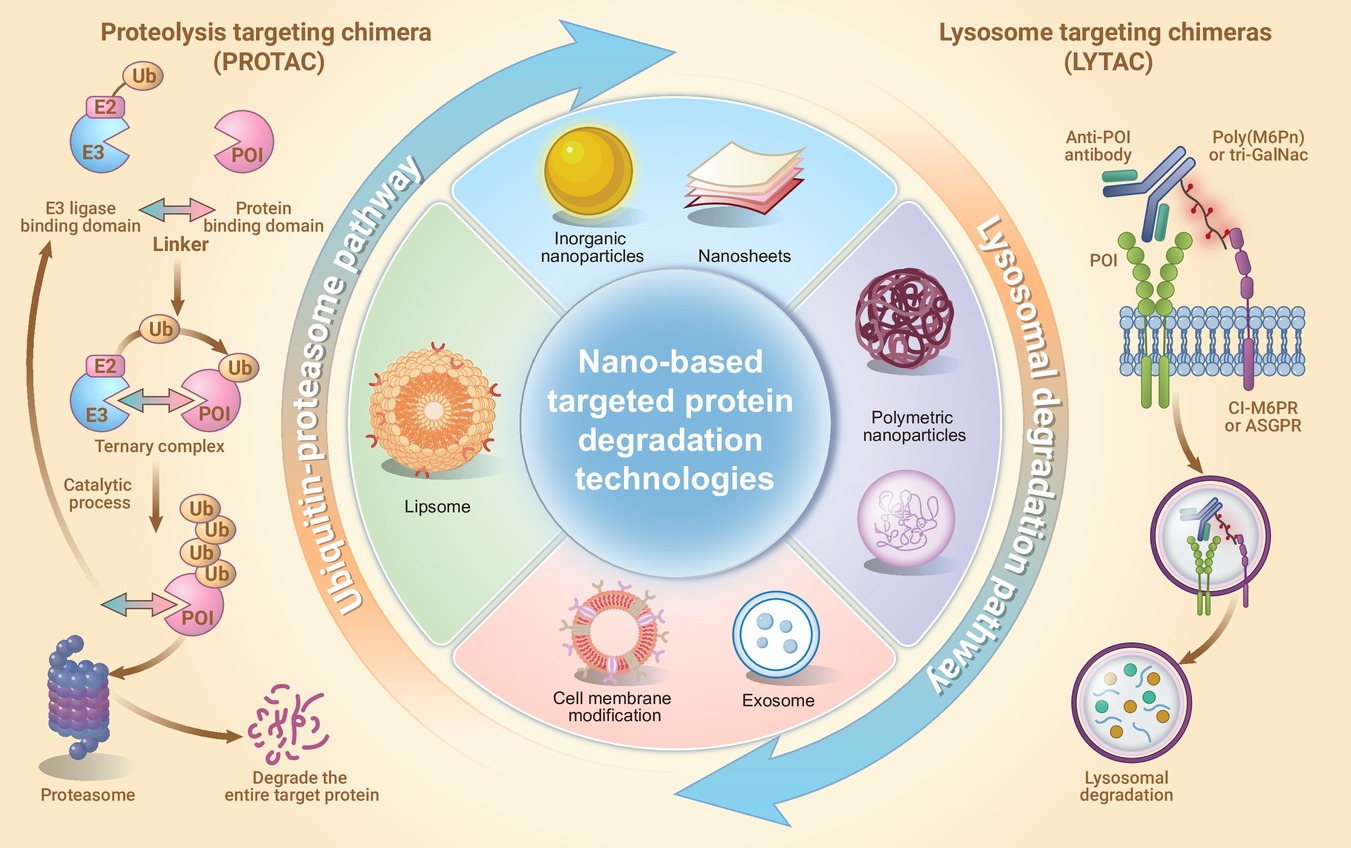
 DownLoad:
Full size image
DownLoad:
Full size image
-
PUBLIC SUMMARY
-
Targeted protein degradation (TPD) has emerged as a transformative therapeutic strategy.
This review provides a comprehensive overview of Nano-TPD.
Nano-TPD is a next-generation therapeutic strategy with broad applicability.
-
-
ABSTRACT
Targeted protein degradation (TPD) has emerged as a transformative therapeutic strategy that overcomes the limitations of conventional small-molecule inhibitors (SMIs) by harnessing the degradation machinery, including the ubiquitin-proteasome system (UPS) and lysosomal pathway. However, traditional TPD agents face substantial challenges in clinical translation, such as poor solubility, low bioavailability, insufficient targeting specificity, and limited tissue penetration. To address these limitations, the integration of nanotechnology has given rise to Nano-TPD as a new generation therapeutic platform that revolutionizes TPD delivery. We first summarize the recent advances in TPD technology for the treatment of common clinical diseases, highlighting key molecular targets and representative degraders. Then, we focus on the design of Nano-TPD platforms, including lipid-based, polymeric, inorganic, and biomimetic nanocarriers, as well as innovative strategies. The core mechanisms of Nano-TPD, encompassing targeted delivery, intracellular trafficking, stimuli-triggered release, and enhanced protein degradation via UPS or lysosomal pathways, are systematically elaborated. Furthermore, we discuss the challenges and future perspectives of Nano-TPD. This review provides a comprehensive overview of Nano-TPD, emphasizing its role in advancing TPD toward clinical utility and expanding its therapeutic scope across various diseases.-
Keywords:
- Targeted protein degradation /
- Nanoparticles /
- Drug delivery /
- PROTACs
-

-
REFERENCES
[1] Deng Y. T., You J., He Y., et al. (2025). Atlas of the plasma proteome in health and disease in 53,026 adults. Cell 188:253−271.e257. DOI:10.1016/j.cell.2024.10.045 [2] R M. and P L. (2022). The role of cellular proteostasis in antitumor immunity. J. Biol. Chem. 298:101930. DOI:10.1016/j.jbc.2022.101930 [3] Jiang Y., Xia Y., Sitarik I., et al. (2025). Protein misfolding involving entanglements provides a structural explanation for the origin of stretched-exponential refolding kinetics. Sci. Adv. 11:eads7379. DOI:10.1126/sciadv.ads7379 [4] Su H., Rong G., Li L., et al. (2024). Subcellular targeting strategies for protein and peptide delivery. Adv. Drug Delivery Rev. 212:115387. DOI:10.1016/j.addr.2024.115387 [5] B L., KR F., LJ L., et al. (2023). Protein-protein interactions: developing small-molecule inhibitors/stabilizers. Trends Pharmacol. Sci. 44:474−488. DOI:10.1016/j.tips.2023.04.007 [6] W W., JW C., JJ Q., et al. (2019). MDM2-NFAT1 dual inhibitor, MA242: Effective against hepatocellular carcinoma. Cancer Lett. 459:156−167. DOI:10.1016/j.canlet.2019.114429 [7] Santos R., Ursu O., Gaulton A., et al. (2017). A comprehensive map of molecular drug targets. Nat. Rev. Drug Discovery 16:34. DOI:10.1038/nrd.2016.230 [8] Zhong G., Chang X., Xie W., et al. (2024). Targeted protein degradation: advances in drug discovery and clinical practice. Signal Transduction Targeted Ther. 9:308. DOI:10.1038/s41392-024-02004-x [9] Huang X., Wu F., Ye J., et al. (2024). Expanding the horizons of targeted protein degradation: A non-small molecule perspective. Acta Pharm. Sin. B 14:2402−2427. DOI:10.1016/j.apsb.2024.01.010 [10] C Z., Y L., G L., et al. (2024). Targeting the undruggables-the power of protein degraders. Sci. Bull. 69:1776−1797. DOI:10.1016/j.scib.2024.03.056 [11] KM S., KB K., A K., et al. (2001). Protacs: chimeric molecules that target proteins to the Skp1-Cullin-F box complex. Proc. Natl. Acad. Sci. U. S. A. 98:8554−8559. DOI:10.1073/pnas.141230798 [12] SB A. and CM C. (2021). Major advances in targeted protein degradation: PROTACs, LYTACs, and MADTACs. J. Biol. Chem. 296:100647. DOI:10.1016/j.jbc.2021.100647 [13] Hou M., Zhao R., Wang S., et al. (2025). Targeted protein degradation technologies: Emerging mechanisms and nano-based innovations. Nano Res. 18:94907983. DOI:10.26599/NR.2025.94907983 [14] Dey K., Erwin N., Molina N., et al. (2025). Nano-TPD: Using nanoparticle-based systems to improve the delivery and therapeutic effect of targeted protein degraders. Med. Chem. Res. 34:2227. DOI:10.1007/s00044-025-03454-w [15] Dong G., Ding Y., He S., et al. (2021). Molecular Glues for Targeted Protein Degradation: From Serendipity to Rational Discovery. J. Med. Chem. 64:10620. DOI:10.1021/acs.jmedchem.1c00895 [16] Banik S. M., Pedram K., Wisnovsky S., et al. (2020). Lysosome-targeting chimaeras for degradation of extracellular proteins. Nature 584:297. DOI:10.1038/s41586-020-2545-9 [17] AG B., APT H., LS I., et al. (2025). Nanoparticle-Mediated Targeted Protein Degradation: An Emerging Therapeutics. Angew. Chem., Int. Ed. Engl. 64:e202503958. DOI:10.1002/anie.202503958 [18] Yang L., Yang Y., Zhang J., et al. (2024). Sequential responsive nano-PROTACs for precise intracellular delivery and enhanced degradation efficacy in colorectal cancer therapy. Signal Transduction Targeted Ther. 9:275. DOI:10.1038/s41392-024-01983-1 [19] Liu Y., Liu R., Dong J., et al. (2025). Targeted protein degradation via cellular trafficking of nanoparticles. Nat. Nanotechnol. 20:296−302. DOI:10.1038/s41565-024-01801-3 [20] Behan F. M., Iorio F., Picco G., et al. (2019). Prioritization of cancer therapeutic targets using CRISPR-Cas9 screens. Nature 568:511−516. DOI:10.1038/s41586-019-1103-9 [21] B D., Id O., M C., et al. (2021). Advancing targeted protein degradation for cancer therapy. Nat. Rev. Cancer 24:638−654. DOI:10.1038/s41568-021-00365-x [22] Sharma N., Sarkar S., Ko T., et al. (2025). Photocontrolled trimethoprim PROTACs targeting the eDHFR protein tag. Nat. Commun. DOI:10.1038/s41467-025-67527-5. [23] Tsai J. M., Nowak R. P., Ebert B. L., et al. (2024). Targeted protein degradation: from mechanisms to clinic. Nat. Rev. Mol. Cell Biol. 5:757. DOI:10.1038/s41580-024-00729-9 [24] Hu M., Zhou W., Wang Y., et al. (2020). Discovery of the first potent proteolysis targeting chimera (PROTAC) degrader of indoleamine 2,3-dioxygenase 1. Acta Pharm. Sin. B 10:1943−1953. DOI:10.1016/j.apsb.2020.02.010 [25] Yamanaka S., Furihata H., Yanagihara Y., et al. (2023). Lenalidomide derivatives and proteolysis-targeting chimeras for controlling neosubstrate degradation. Nat. Commun. 14:4683. DOI:10.1038/s41467-023-40385-9 [26] Z H., K Z., Y J., et al. (2024). Molecular glue triggers degradation of PHGDH by enhancing the interaction between. Acta Pharm. Sin. B 14:4001−4013. DOI:10.1016/j.apsb.2024.06.001 [27] G A., Id O., NM R., et al. (2023). Elucidating the cellular determinants of targeted membrane protein degradation by lysosome-targeting chimeras. Science 382:eadf6249. DOI:10.1126/science.adf6249 [28] LY S., Y T., Q Z., et al. (2024). Anti-tumor immunotherapy using engineered bacterial outer membrane vesicles fused to lysosome-targeting chimeras mediated by transferrin receptor. Cell Chem. Biol. 31:1219−1230.e1215. DOI:10.1016/j.chembiol.2024.12.008 [29] K W., K W., C W., et al. (2025). Development of Dual-Receptor Lysosome-Targeting Chimeras for Protein Degradation. J. Am. Chem. Soc. 147:40751−40762. DOI:10.1021/jacs.5c13695 [30] Wyss-Coray T. (2016). Ageing, neurodegeneration and brain rejuvenation. Nature 539:180−186. DOI:10.1038/nature20411 [31] Mehta V., Dwivedi A. R., Ludhiadch A., et al. (2024). A decade of USFDA-approved small molecules as anti-inflammatory agents: Recent trends and Commentaries on the “industrial” perspective. Eur. J. Med. Chem. 263:115942. DOI:10.1016/j.ejmech.2023.115942 [32] Wilson D. M., Cookson M. R., Van Den Bosch L., et al. (2023). Hallmarks of neurodegenerative diseases. Cell 186:693−714. DOI:10.1016/j.cell.2022.12.032 [33] Zbinden A., Pérez-Berlanga M., De Rossi P., et al. (2020). Phase Separation and Neurodegenerative Diseases: A Disturbance in the Force. Dev. Cell 55:45−68. DOI:10.1016/j.devcel.2020.09.014 [34] Zhu W., Zhang W., Chen J., et al. (2024). Discovery of Effective Dual PROTAC Degraders for Neurodegenerative Disease-Associated Aggregates. J. Med. Chem. 67:3448−3466. DOI:10.1021/acs.jmedchem.3c01719 [35] Yao D., Li T., Yu L., et al. (2024). Selective degradation of hyperphosphorylated tau by proteolysis-targeting chimeras ameliorates cognitive function in Alzheimer’s disease model mice. Front. Pharmacol. 15 DOI:10.3389/fphar.2024.1351792. [36] Kumar G., Thakur V., Sardana S., et al. (2025). Contemporary trends in targeted protein degradation for neurodegenerative diseases. Eur. J. Med. Chem. 300:118110. DOI:10.1016/j.ejmech.2025.118110 [37] Fugger L., Jensen L. T. and Rossjohn J. (2020). Challenges, Progress, and Prospects of Developing Therapies to Treat Autoimmune Diseases. Cell 181:63−80. DOI:10.1016/j.cell.2020.03.007 [38] Song Y., Zhou B., Long J., et al. (2025). Targeted protein degradation in autoimmune diseases: from mechanisms to therapeutic breakthroughs. J. Autoimmun. 156:103475. DOI:10.1016/j.jaut.2025.103475 [39] Chen Y., Ning Y., Bai G., et al. (2021). Design, Synthesis, and Biological Evaluation of IRAK4-Targeting PROTACs. ACS Med. Chem. Lett. 12:82−87. DOI:10.1021/acsmedchemlett.0c00474 [40] Ackerman L., Acloque G., Bacchelli S., et al. (2023). IRAK4 degrader in hidradenitis suppurativa and atopic dermatitis: a phase 1 trial. Nat. Med. 29:3127−3136. DOI:10.1038/s41591-023-02635-7 [41] Pal Singh S., Dammeijer F. and Hendriks R. W. (2018). Role of Bruton's tyrosine kinase in B cells and malignancies. Mol. Cancer 17:57. DOI:10.1186/s12943-018-0779-z [42] Zhu C., Yang Z., Zhang Y., et al. (2024). PROTAC for Bruton’s tyrosine kinase degradation alleviates inflammation in autoimmune diseases. Cell Discovery 10:82. DOI:10.1038/s41421-024-00711-x [43] Mares A., Miah A. H., Smith I. E. D., et al. (2020). Extended pharmacodynamic responses observed upon PROTAC-mediated degradation of RIPK2. Commun. Biol. 3:140. DOI:10.1038/s42003-020-0868-6 [44] Wang C., Zheng C., Wang H., et al. (2022). The state of the art of PROTAC technologies for drug discovery. Eur. J. Med. Chem. 235:114290. DOI:10.1016/j.ejmech.2022.114290 [45] Gao J., Yang L., Lei S., et al. (2023). Stimuli-activatable PROTACs for precise protein degradation and cancer therapy. Sci. Bull. 68:1069−1085. DOI:10.1016/j.scib.2023.04.028 [46] Lv M. Y., Hou D. Y., Liu S. W., et al. (2025). Strategy and Design of In Situ Activated Protein Hydrolysis Targeted Chimeras. ACS Nano 19:101−119. DOI:10.1021/acsnano.4c11903 [47] Zhao W., Jiang Y., Li X., et al. (2024). Nanotechnology-Enabled Targeted Protein Degradation for Cancer Therapeutics. WIREs Nanomed. Nanobiotechnol. 16:e2020. DOI:10.1002/wnan.2020 [48] Huang D., Zou Y., Huang H., et al. (2024). A PROTAC Augmenter for Photo-Driven Pyroptosis in Breast Cancer. Adv. Mater. 36:e2313460. DOI:10.1002/adma.202313460 [49] Song H., Huang W., Jia F., et al. (2024). Targeted Degradation of Signal Transduction and Activator of Transcription 3 by Chaperone-Mediated Autophagy Targeting Chimeric Nanoplatform. ACS Nano 18:1599−1610. DOI:10.1021/acsnano.3c09536 [50] Xie S., Zhu J., Peng Y., et al. (2025). In Vivo Self-Assembly of PROTACs by Bioorthogonal Chemistry for Precision Cancer Therapy. Angew. Chem., Int. Ed. Engl. 64:e202421713. DOI:10.1002/anie.202421713 [51] Lu Q., Yu H., Zhao T., et al. (2023). Nanoparticles with transformable physicochemical properties for overcoming biological barriers. Nanoscale 15:13202−13223. DOI:10.1039/d3nr01332d [52] Liu Q., Kim Y.-J., Im G.-B., et al. (2021). Inorganic Nanoparticles Applied as Functional Therapeutics. Adv. Funct. Mater. 31:2008171. DOI:10.1002/adfm.202008171 [53] Wang Z., Tan M., Su W., et al. (2023). Persistent Degradation of HER2 Protein by Hybrid nanoPROTAC for Programmed Cell Death. J. Med. Chem. 66:6263−6273. DOI:10.1021/acs.jmedchem.3c00013 [54] Wang Y., Han L., Liu F., et al. (2020). Targeted degradation of anaplastic lymphoma kinase by gold nanoparticle-based multi-headed proteolysis targeting chimeras. Colloids Surf., B 188:110795. DOI:10.1016/j.colsurfb.2020.110795 [55] Lu W., Chen J., Guo Z., et al. (2023). Targeted degradation of ABCG2 for reversing multidrug resistance by hypervalent bispecific gold nanoparticle-anchored aptamer chimeras. Chem. Commun. 59:3118−3121. DOI:10.1039/d3cc00168g [56] Pan X., Wang Z., Tan M., et al. (2025). Nanoinducer-mediated mitochondria-selective degradation enhances T cell immunotherapy against multiple cancers. Nat. Nanotechnol. 20:947−958. DOI:10.1038/s41565-025-01909-0 [57] Su W., Tan M., Wang Z., et al. (2023). Targeted Degradation of PD-L1 and Activation of the STING Pathway by Carbon-Dot-Based PROTACs for Cancer Immunotherapy. Angew. Chem., Int. Ed. Engl. 62:e202218128. DOI:10.1002/anie.202218128 [58] Liu H., Chen C., Chen H., et al. (2022). 2D-PROTACs with augmented protein degradation for super-resolution photothermal optical coherence tomography guided momentary multimodal therapy. Chem. Eng. J. 446:137039. DOI:10.1016/j.cej.2022.137039 [59] He Q., Zhou L., Yu D., et al. (2023). Near-Infrared-Activatable PROTAC Nanocages for Controllable Target Protein Degradation and On-Demand Antitumor Therapy. J. Med. Chem. 66:10458−10472. DOI:10.1021/acs.jmedchem.3c00587 [60] Zhao Q., Gong Z., Li Z., et al. (2021). Target Reprogramming Lysosomes of CD8+ T Cells by a Mineralized Metal-Organic Framework for Cancer Immunotherapy. Adv. Mater. 33:e2100616. DOI:10.1002/adma.202100616 [61] Li L., Su S., Wang Z., et al. (2026). Disruption of iron homeostasis sensitizes pancreatic cancer to irreversible electroporation. Nat. Commun. 17:1866. DOI:10.1038/s41467-026-68585-z [62] Mohammadpour R., Dobrovolskaia M. A., Cheney D. L., et al. (2019). Subchronic and chronic toxicity evaluation of inorganic nanoparticles for delivery applications. Adv. Drug Delivery Rev. 144:112−132. DOI:10.1016/j.addr.2019.07.006 [63] Saker R., Regdon G. and Sovány T. (2024). Pharmacokinetics and toxicity of inorganic nanoparticles and the physicochemical properties/factors affecting them. J. Drug Delivery Sci. Technol. 99:105979. DOI:10.1016/j.jddst.2024.105979 [64] Li Y., Zhang Y., Wang J., et al. (2025). Modular Nanoassemblies Mimicking p62 Aggregates for Targeted Organelle Sequestration and Degradation against Breast Cancer. ACS Nano 19:36478−36495. DOI:10.1021/acsnano.5c10801 [65] Li Y., Wang J., Yu R., et al. (2024). Leveraging chemotherapy-induced PD-L1 upregulation to potentiate targeted PD-L1 degradation using nanoparticle-based targeting chimeras. Chem. Eng. J. 499:155708. DOI:10.1016/j.cej.2024.155708 [66] Xu M., Hu Y., Wu J., et al. (2024). Sonodynamic Nano-LYTACs Reverse Tumor Immunosuppressive Microenvironment for Cancer Immunotherapy. J. Am. Chem. Soc. 146:34669−34680. DOI:10.1021/jacs.4c13022 [67] Liu Z., Deng Q., Qin G., et al. (2023). Biomarker-activated multifunctional lysosome-targeting chimeras mediated selective degradation of extracellular amyloid fibrils. Chem 9:2016−2038. DOI:10.1016/j.chempr.2023.06.003 [68] Wang Q., Yang X., Yuan R., et al. (2024). A co-assembly platform engaging macrophage scavenger receptor A for lysosome-targeting protein degradation. Nat. Commun. 15:1663. DOI:10.1038/s41467-024-46130-0 [69] Wang K., Yu A., Liu K., et al. (2023). Nano-LYTACs for Degradation of Membrane Proteins and Inhibition of CD24/Siglec-10 Signaling Pathway. Adv. Sci. 10:e2300288. DOI:10.1002/advs.202300288 [70] Huang X., Cao Z., Qian J., et al. (2024). Nanoreceptors promote mutant p53 protein degradation by mimicking selective autophagy receptors. Nat. Nanotechnol. 19:545−553. DOI:10.1038/s41565-023-01562-5 [71] Wang X., Chen S., Xia X., et al. (2025). Lysosome-Targeting Protein Degradation Through Endocytosis Pathway Triggered by Polyvalent Nano-Chimera for AD Therapy. Adv. Mater. 37:e2411061. DOI:10.1002/adma.202411061 [72] Yao S., Wang Y., Tang Q., et al. (2024). A plug-and-play monofunctional platform for targeted degradation of extracellular proteins and vesicles. Nat. Commun. 15:7237. DOI:10.1038/s41467-024-51720-z [73] Li Z., Ren G., Wang X., et al. (2025). Tumor microenvironment responsive nano-PROTAC for BRD4 degradation enhanced cancer photo-immunotherapy. Biomaterials 322:123387. DOI:10.1016/j.biomaterials.2025.123387 [74] Wang Y., Yang L., Yan C., et al. (2024). Supramolecular artificial Nano-AUTACs enable tumor-specific metabolism protein degradation for synergistic immunotherapy. Sci. Adv. 10:eadn8079. DOI:10.1126/sciadv.adn8079 [75] Choi J., Park B., Park J. Y., et al. (2024). Light-Triggered PROTAC Nanoassemblies for Photodynamic IDO Proteolysis in Cancer Immunotherapy. Adv. Mater. 36:e2405475. DOI:10.1002/adma.202405475 [76] Zhang C., Zeng Z., Cui D., et al. (2021). Semiconducting polymer nano-PROTACs for activatable photo-immunometabolic cancer therapy. Nat. Commun. 12:2934. DOI:10.1038/s41467-021-23194-w [77] Zhang C., He S., Zeng Z., et al. (2022). Smart Nano-PROTACs Reprogram Tumor Microenvironment for Activatable Photo-metabolic Cancer Immunotherapy. Angew. Chem., Int. Ed. Engl. 61:e202114957. DOI:10.1002/anie.202114957 [78] Xu M., Chen J., Wang S., et al. (2025). Autophagy-Activating Nanoautophagosome-Tethering Compounds for Targeted Protein Degradation Specifically in Tumor Cells. ACS Macro Lett. 14:250−257. DOI:10.1021/acsmacrolett.4c00789 [79] Xing Y., Li J., Wang L., et al. (2025). A Bifunctional Lysosome-Targeting Chimera Nanoplatform for Tumor-Selective Protein Degradation and Enhanced Cancer Immunotherapy. Adv. Mater. 37:e2417942. DOI:10.1002/adma.202417942 [80] Liu H. J., Chen W., Wu G., et al. (2023). Glutathione-Scavenging Nanoparticle-Mediated PROTACs Delivery for Targeted Protein Degradation and Amplified Antitumor Effects. Adv. Sci. 10:e2207439. DOI:10.1002/advs.202207439 [81] Yan S., Yan J., Liu D., et al. (2021). A nano-predator of pathological MDMX construct by clearable supramolecular gold(I)-thiol-peptide complexes achieves safe and potent anti-tumor activity. Theranostics 11:6833−6846. DOI:10.7150/thno.59020 [82] Zhang N. Y., Hou D. Y., Hu X. J., et al. (2023). Nano Proteolysis Targeting Chimeras (PROTACs) with Anti-Hook Effect for Tumor Therapy. Angew. Chem., Int. Ed. Engl. 62:e202308049. DOI:10.1002/anie.202308049 [83] Sun J., Gu M., Peng L., et al. (2025). A Self-Assembled Nano-Molecular Glue (Nano-mGlu) Enables GSH/H(2)O(2)-Triggered Targeted Protein Degradation in Cancer Therapy. J. Am. Chem. Soc. 147:372−383. DOI:10.1021/jacs.4c11003 [84] Zhang H. T., Peng R., Chen S., et al. (2022). Versatile Nano-PROTAC-Induced Epigenetic Reader Degradation for Efficient Lung Cancer Therapy. Adv. Sci. 9:e2202039. DOI:10.1002/advs.202202039 [85] Wang W., Zhu C., Zhang B., et al. (2023). Self-Assembled Nano-PROTAC Enables Near-Infrared Photodynamic Proteolysis for Cancer Therapy. J. Am. Chem. Soc. 145:16642−16649. DOI:10.1021/jacs.3c04109 [86] Zhang C., Xu M., He S., et al. (2023). Checkpoint Nano-PROTACs for Activatable Cancer Photo-Immunotherapy. Adv. Mater. 35:e2208553. DOI:10.1002/adma.202208553 [87] Zhao L. P., Zheng R. R., Rao X. N., et al. (2024). Chemotherapy-Enabled Colorectal Cancer Immunotherapy of Self-Delivery Nano-PROTACs by Inhibiting Tumor Glycolysis and Avoiding Adaptive Immune Resistance. Adv. Sci. 11:e2309204. DOI:10.1002/advs.202309204 [88] Yang F., Luo Q., Wang Y., et al. (2023). Targeted Biomolecule Regulation Platform: A Split-and-Mix PROTAC Approach. J. Am. Chem. Soc. 145:7879−7887. DOI:10.1021/jacs.2c12824 [89] Zhang H., Han Y., Yang Y., et al. (2021). Covalently Engineered Nanobody Chimeras for Targeted Membrane Protein Degradation. J. Am. Chem. Soc. 143:16377−16382. DOI:10.1021/jacs.1c08521 [90] Fu Y., Chen N., Wang Z., et al. (2021). Degradation of lipid droplets by chimeric autophagy-tethering compounds. Cell Res. 31:965−979. DOI:10.1038/s41422-021-00532-7 [91] Li H., Zhang W., Meng Q., et al. (2024). Advancements of prodrug technologies for enhanced drug selectivity in pharmacotherapies. Invest. New Drugs 42:590−600. DOI:10.1007/s10637-024-01460-0 [92] Zhou L., Yu B., Gao M., et al. (2023). DNA framework-engineered chimeras platform enables selectively targeted protein degradation. Nat. Commun. 14:4510. DOI:10.1038/s41467-023-40244-7 [93] Wang T., Sun L., Ren T., et al. (2023). Targeted Protein Degradation Mediated by Genetically Engineered Lysosome-Targeting Exosomes. Nano Lett. 23:9571−9578. DOI:10.1021/acs.nanolett.3c03148 [94] Gao J., Pang Z., Wang Q., et al. (2024). Biomimetic Nano-Degrader Based CD47-SIRPα Immune Checkpoint Inhibition Promotes Macrophage Efferocytosis for Cardiac Repair. Adv. Sci. 11:e2306388. DOI:10.1002/advs.202306388 [95] Ahn G., Banik S. M., Miller C. L., et al. (2021). LYTACs that engage the asialoglycoprotein receptor for targeted protein degradation. Nat. Chem. Biol. 17:937−946. DOI:10.1038/s41589-021-00770-1 [96] Li Y., Liu X., Yu L., et al. (2023). Covalent LYTAC Enabled by DNA Aptamers for Immune Checkpoint Degradation Therapy. J. Am. Chem. Soc. 145:24506−24521. DOI:10.1021/jacs.3c03899 [97] Cui M., Zhang D., Zheng X., et al. (2024). Intelligent Modular DNA Lysosome-Targeting Chimera Nanodevice for Precision Tumor Therapy. J. Am. Chem. Soc. 146:29609−29620. DOI:10.1021/jacs.4c10010 [98] Shang Y. Z., Zhu L. Y., Xiao Y., et al. (2024). Logic Gate Activated Lysosome Targeting DNA Nanodevice for Controlled Proteins Degradation. Adv. Funct. Mater. 34. DOI:10.1002/adfm.202311722. [99] Luo M., Zhang Y., He S., et al. (2025). Effervescent Microneedles for the Codelivery of Chitosan Nanoparticles and Indocyanine Green To Enhance the Treatment of Diet-Induced Obesity in Mice. ACS Nano 19:11792−11806. DOI:10.1021/acsnano.4c13609 [100] Wu Y., Chang X., Yang G., et al. (2023). A Physiologically Responsive Nanocomposite Hydrogel for Treatment of Head and Neck Squamous Cell Carcinoma via Proteolysis-Targeting Chimeras Enhanced Immunotherapy. Adv. Mater. 35:e2210787. DOI:10.1002/adma.202210787 [101] Younis M. A., Tawfeek H. M., Abdellatif A. A. H., et al. (2022). Clinical translation of nanomedicines: Challenges, opportunities, and keys. Adv. Drug Delivery Rev. 181:114083. DOI:10.1016/j.addr.2021.114083 [102] Herrmann I., Li Z. A., Bahal R., et al. (2025). Translating nanomedicines from the lab to the clinic. Cell Rep. Phys. Sci. 6:102357. DOI:10.1016/j.xcrp.2024.102357 [103] Wu X., Shu Y., Zheng Y., et al. (2025). Recent Advances in Nanomedicine: Cutting-Edge Research on Nano-PROTAC Delivery Systems for Cancer Therapy. Pharmaceutics 17:1037. DOI:10.3390/pharmaceutics17081037 [104] Peng J., Yang Q., Shi K., et al. (2019). Intratumoral fate of functional nanoparticles in response to microenvironment factor: Implications on cancer diagnosis and therapy. Adv. Drug Delivery Rev. 143:37−67. DOI:10.1016/j.addr.2019.06.007 [105] He Y., Ju Y., Hu Y., et al. (2023). Brd4 proteolysis-targeting chimera nanoparticles sensitized colorectal cancer chemotherapy. J. Controlled Release 354:155−166. DOI:10.1016/j.jconrel.2022.12.035 [106] Chen J., Qiu M., Ma F., et al. (2021). Enhanced protein degradation by intracellular delivery of pre-fused PROTACs using lipid-like nanoparticles. J. Controlled Release 330:1244−1249. DOI:10.1016/j.jconrel.2020.11.032 [107] Lei T., Yang Z., Li H., et al. (2024). Interactions between nanoparticles and pathological changes of vascular in Alzheimer’s disease. Adv. Drug Delivery Rev. 207:115219. DOI:10.1016/j.addr.2024.115219 [108] Gong B., Zhang W., Cong W., et al. (2024). Systemic Administration of Neurotransmitter-Derived Lipidoids-PROTACs-DNA Nanocomplex Promotes Tau Clearance and Cognitive Recovery for Alzheimer's Disease Therapy. Adv. Healthc. Mater. 13:e2400149. DOI:10.1002/adhm.202400149 [109] Liu J., Ma T., Yao R., et al. (2026). Multimodal supramolecular targeting chimeras enable spatiotemporally resolved protein degradation in vivo. Cell 189:1108−1123. DOI:10.1016/j.cell.2025.12.007 [110] Liu J., Cabral H. and Mi P. (2024). Nanocarriers address intracellular barriers for efficient drug delivery, overcoming drug resistance, subcellular targeting and controlled release. Adv. Drug Delivery Rev. 207:115239. DOI:10.1016/j.addr.2024.115239 [111] Cabral H., Li J., Miyata K., et al. (2024). Controlling the biodistribution and clearance of nanomedicines. Nat. Rev. Bioeng. 2:214−232. DOI:10.1038/s44222-023-00138-1 [112] Shi J., Kantoff P. W., Wooster R., et al. (2017). Cancer nanomedicine: progress, challenges and opportunities. Nat. Rev. Cancer 17:20−37. DOI:10.1038/nrc.2016.108 [113] Wu L., Shan W., Zhang Z., et al. (2018). Engineering nanomaterials to overcome the mucosal barrier by modulating surface properties. Adv. Drug Delivery Rev. 124:150−163. DOI:10.1016/j.addr.2017.10.001 [114] Li W., Jiang Y. and Lu J. (2023). Nanotechnology-enabled immunogenic cell death for improved cancer immunotherapy. Int. J. Pharm. 634:122655. DOI:10.1016/j.ijpharm.2023.122655 [115] Bertrand N., Grenier P., Mahmoudi M., et al. (2017). Mechanistic understanding of in vivo protein corona formation on polymeric nanoparticles and impact on pharmacokinetics. Nat. Commun. 8:777. DOI:10.1038/s41467-017-00600-w [116] Li S., Cortez-Jugo C., Ju Y., et al. (2024). Approaching Two Decades: Biomolecular Coronas and Bio–Nano Interactions. ACS Nano 18:33257−33263. DOI:10.1021/acsnano.4c13214 [117] Nemati M., Bani F., Sepasi T., et al. (2021). Unraveling the Effect of Breast Cancer Patients’ Plasma on the Targeting Ability of Folic Acid-Modified Chitosan Nanoparticles. Mol. Pharmaceutics 18:4341−4353. DOI:10.1021/acs.molpharmaceut.1c00525 [118] Hong S., Park J., Oh Y., et al. (2024). Nanotechnology-Based Strategies for Safe and Effective Immunotherapy. Molecules 29:5855. DOI:10.3390/molecules29245855 [119] Feng Y., Fu H., Zhang X., et al. (2024). Lysosome toxicities induced by nanoparticle exposure and related mechanisms. Ecotoxicol. Environ. Saf. 286:117215. DOI:10.1016/j.ecoenv.2024.117215 [120] Gilleron J., Querbes W., Zeigerer A., et al. (2013). Image-based analysis of lipid nanoparticle-mediated siRNA delivery, intracellular trafficking and endosomal escape. Nat. Biotechnol. 31:638−646. DOI:10.1038/nbt.2612 [121] Ahn J., Ryu K., Kim H., et al. (2025). Polystyrene Nanoplastics Exacerbate HFD-induced MASLD by Reducing Cathepsin Activity and Triggering Large Vacuole Formation via Impaired Lysosomal Acidification. Int. J. Biol. Sci. 21:3867−3885. DOI:10.7150/ijbs.108268 -
ABOUT THIS ARTICLE
Cite this article:
Luo M., Ma J., Hu C., et al. (2026). Nano-targeted protein degradation: Ushering in a new era of protein degradation therapeutics. The Innovation Drug Discovery 1:100005. https://doi.org/10.59717/j.xinn-drugdisc.2026.100005
Welcome!
To request copyright permission to republish or share portions of our works, please visit Copyright Clearance Center's (CCC) Marketplace website at marketplace.copyright.com.
Export File
Citation
Luo M., Ma J., Hu C., et al. (2026). Nano-targeted protein degradation: Ushering in a new era of protein degradation therapeutics. The Innovation Drug Discovery 1:100005. https://doi.org/10.59717/j.xinn-drugdisc.2026.100005

Format
Content
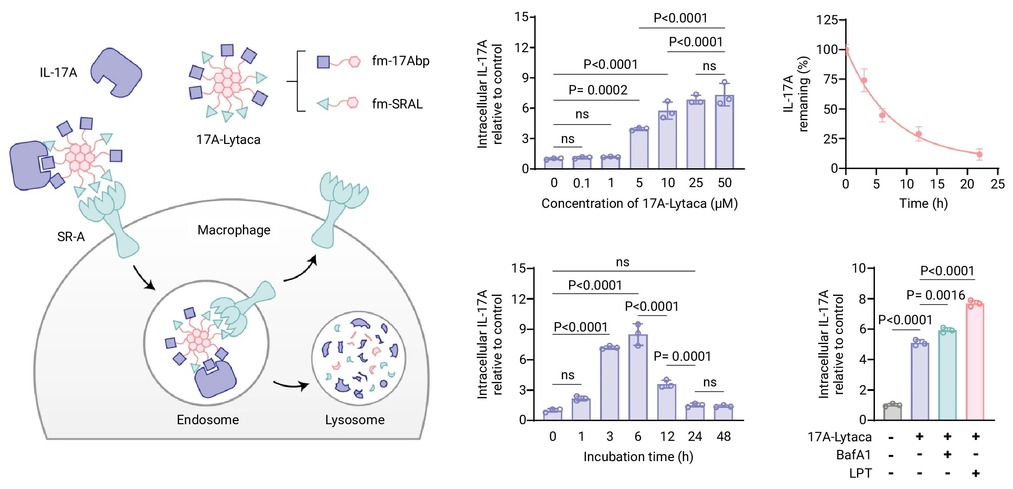
-
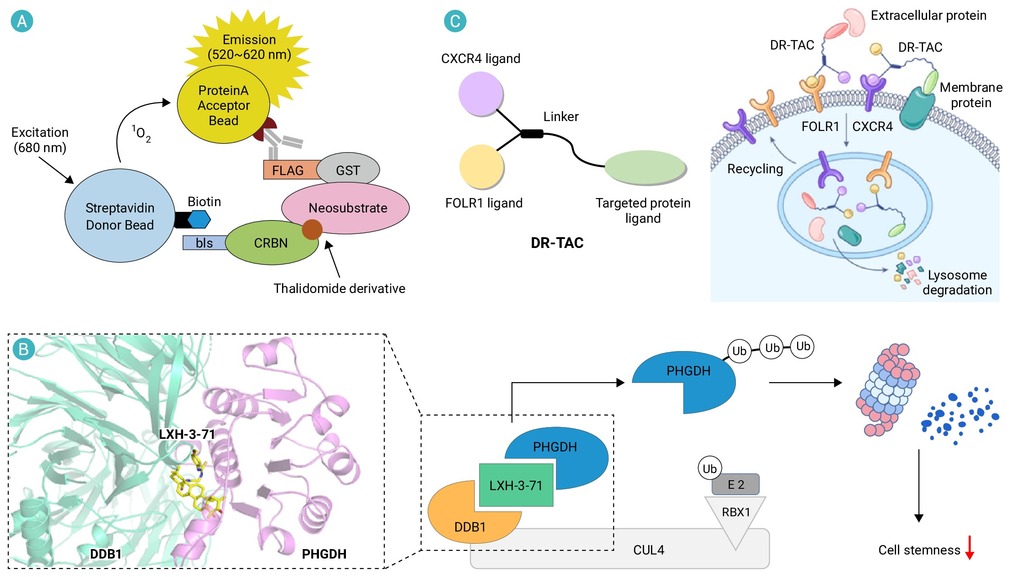
Figure 1.
TPD for cancer therapy
-
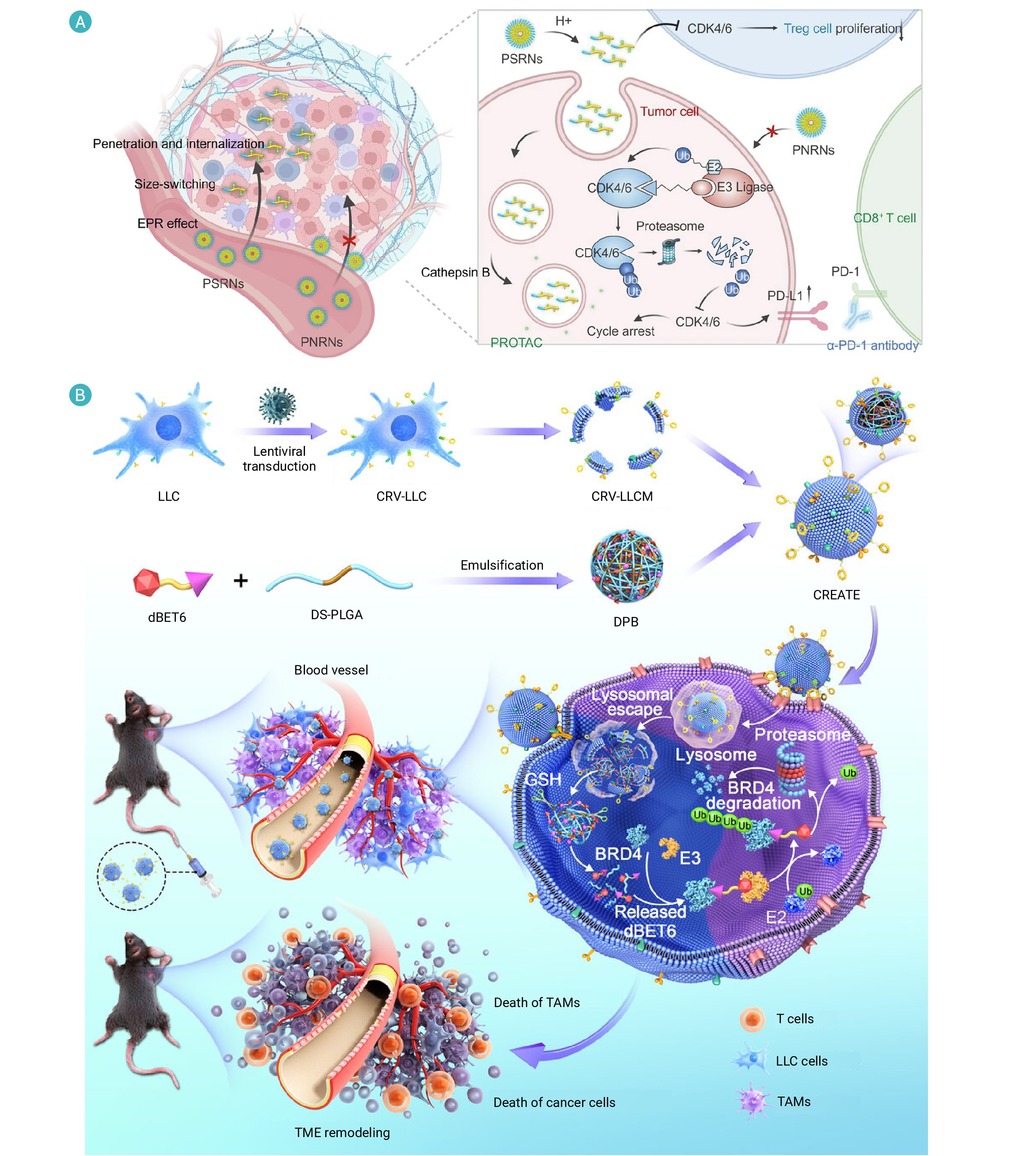
Figure 2.
Polymeric nanocarriers
-
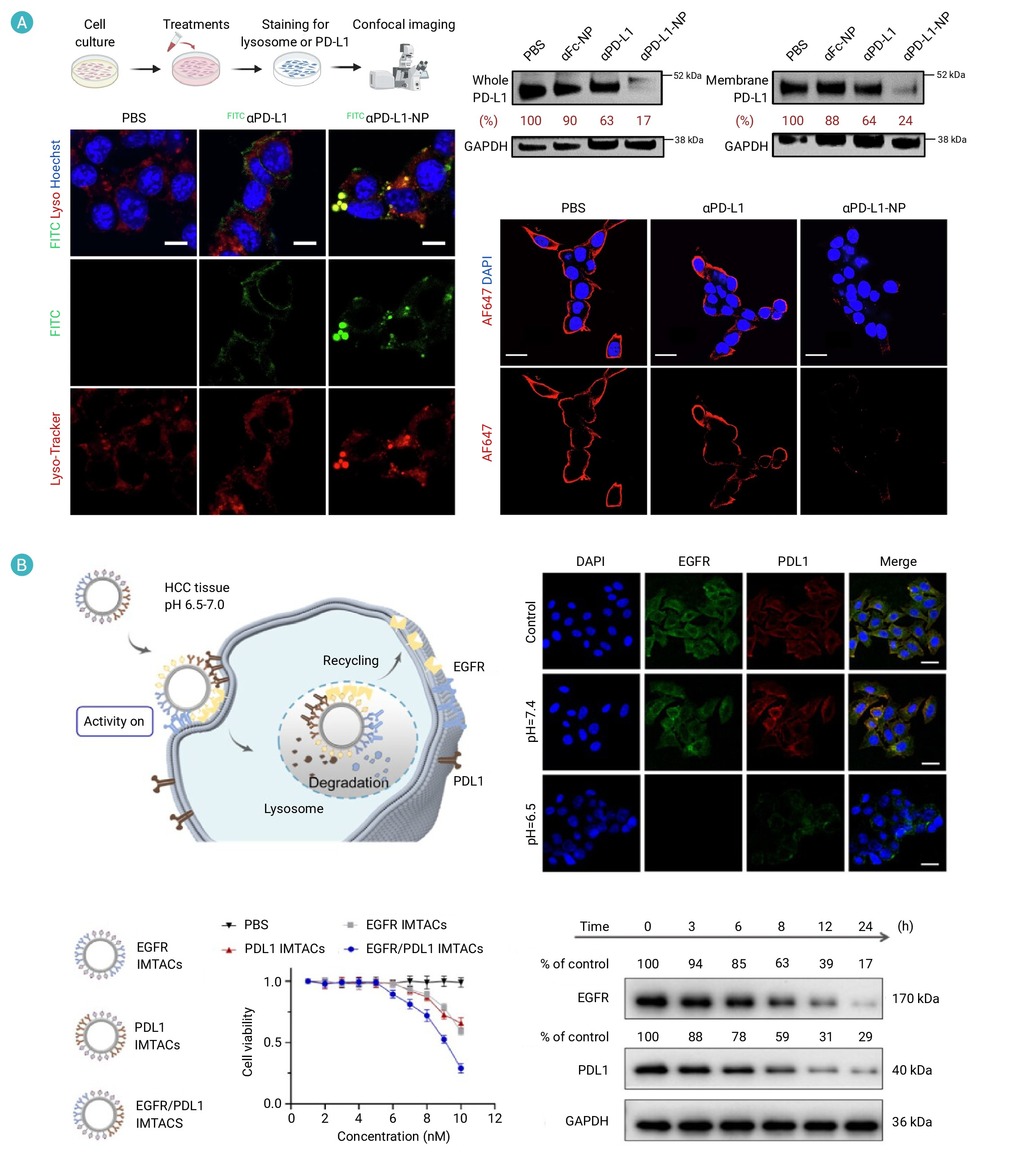
Figure 3.
Reprogramming the immunosuppressive tumor microenvironment
-
Figure 4.
Inflammatory diseases
