
Artificial intelligence in the rational design of lipid nanoparticles for mRNA therapeutics
-
GRAPHICAL ABSTRACT
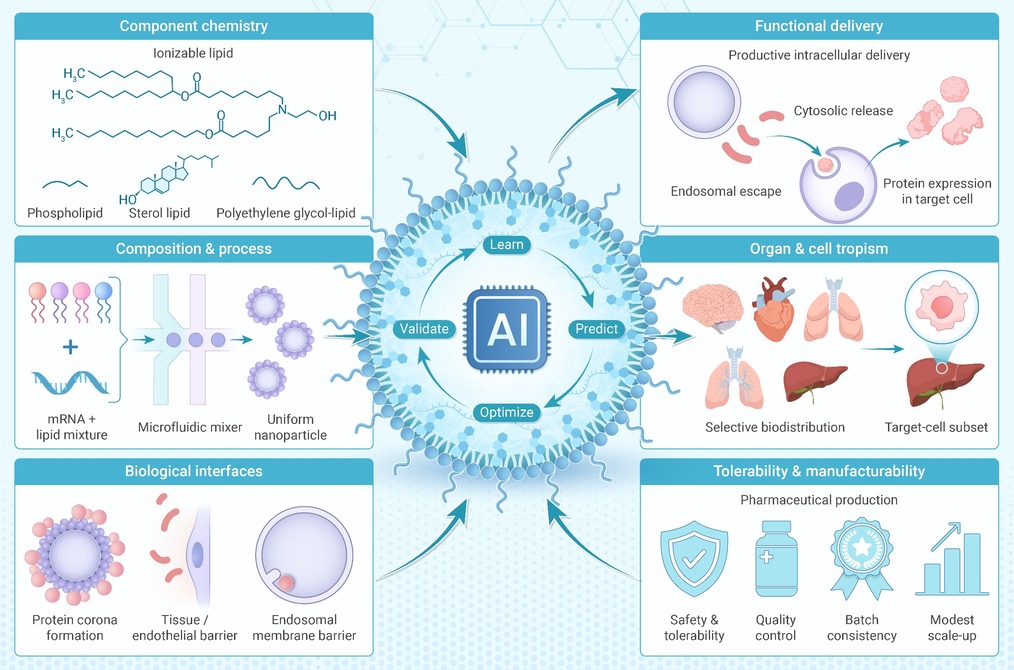
 DownLoad:
Full size image
DownLoad:
Full size image
-
PUBLIC SUMMARY
-
Lipid nanoparticles (LNPs) are not passive carriers; they shape where messenger RNA (mRNA) reaches.
This review explains how lipid chemistry, formulation, and manufacturing jointly control delivery.
Artificial intelligence (AI) can learn these linked factors and accelerate safer, more targeted LNP design.
Progress now depends on shared data, better assays, and models built for real-world manufacturing.
-
-
ABSTRACT
Lipid nanoparticles (LNPs) have made RNA therapeutics clinically viable, yet delivery remains the dominant constraint on efficacy and safety as applications expand beyond the liver. Performance is emergent: it reflects coupled choices in ionizable-lipid chemistry, multi-component formulation, and process history, and is further reshaped by biological interfaces including protein corona remodeling, tissue transport barriers, endocytic trafficking, and low-probability endosomal escape. This review surveys how artificial intelligence is converting this nonlinear design space from empirical iteration into data-efficient, multi-objective optimization. We highlight (i) structure-activity learning and synthesis-aware generative modeling for ionizable lipid discovery; (ii) formulation- and process-conditioned architectures that treat LNPs as composite, process-defined materials; and (iii) pooled in vivo barcoding and single-cell readouts that enable prediction and tuning of organ and cell-type tropism. We conclude by outlining three priorities for translation: standardized data and metadata, mechanistic endpoints for escape and immunogenicity, and CMC-aware optimization. Progress on these fronts will be necessary for potent, safe, and manufacturable mRNA-LNP medicines. -

-
REFERENCES
[1] Karikó K. et al. (2005). Suppression of RNA recognition by Toll-like receptors: the impact of nucleoside modification and the evolutionary origin of RNA. Immunity 23:165−175. DOI:10.1016/j.immuni.2005.06.008 [2] Karikó K. et al. (2008). Incorporation of pseudouridine into mRNA yields superior nonimmunogenic vector with increased translational capacity and biological stability. Mol. Ther. 16:1833−1840. DOI:10.1038/mt.2008.200 [3] Cullis P.R. and Hope M.J. (2017). Lipid nanoparticle systems for enabling gene therapies. Mol. Ther. 25:1467−1475. DOI:10.1016/j.ymthe.2017.03.013 [4] Semple S.C. et al. (2010). Rational design of cationic lipids for siRNA delivery. Nat. Biotechnol. 28:172−176. DOI:10.1038/nbt.1602 [5] Akinc A. et al. (2019). The Onpattro story and the clinical translation of nanomedicines. Nat. Nanotechnol. 14:1084−1087. DOI:10.1038/s41565-019-0591-y [6] Adams D. et al. (2018). Patisiran, an RNAi Therapeutic, for Hereditary Transthyretin Amyloidosis. N. Engl. J. Med. 379:11−21. DOI:10.1056/NEJMoa1716153 [7] Polack F.P. et al. (2020). Safety and Efficacy of the BNT162b2 mRNA Covid-19 Vaccine. N. Engl. J. Med. 383:2603−2615. DOI:10.1056/NEJMoa2034577 [8] Baden L.R. et al. (2021). Efficacy and Safety of the mRNA-1273 SARS-CoV-2 Vaccine. N. Engl. J. Med. 384:403−416. DOI:10.1056/NEJMoa2035389 [9] Pardi N. et al. (2018). mRNA vaccines—a new era in vaccinology. Nat. Rev. Drug Discov. 17:261−279. DOI:10.1038/nrd.2017.243 [10] Alameh M.-G. et al. (2021). Lipid nanoparticles enhance the efficacy of mRNA and protein subunit vaccines by inducing robust T follicular helper cell and humoral responses. Immunity 54:2877−2892.e7. DOI:10.1016/j.immuni.2021.11.001 [11] Hou X. et al. (2021). Lipid nanoparticles for mRNA delivery. Nat. Rev. Mater. 6:1078−1094. DOI:10.1038/s41578-021-00358-0 [12] Chaudhary N., Weissman D. and Whitehead K.A. (2021). mRNA vaccines for infectious diseases: principles, delivery and clinical translation. Nat. Rev. Drug Discov. 20:817−838. DOI:10.1038/s41573-021-00283-5 [13] Patel S. et al. (2020). Naturally-occurring cholesterol analogues in lipid nanoparticles induce polymorphic shape and enhance intracellular delivery of mRNA. Nat. Commun. 11:983. DOI:10.1038/s41467-020-14527-2 [14] Ball R.L. et al. (2018). Lipid nanoparticle formulations for enhanced co-delivery of siRNA and mRNA. Nano Lett. 18:3814−3822. DOI:10.1021/acs.nanolett.8b01101 [15] Maeki M. et al. (2018). Advances in microfluidics for lipid nanoparticles and extracellular vesicles and applications in drug delivery systems. Adv. Drug Deliv. Rev. 128:84−100. DOI:10.1016/j.addr.2018.03.008 [16] Sahin U., Karikó K. and Türeci Ö. (2014). mRNA-based therapeutics—developing a new class of drugs. Nat. Rev. Drug Discov. 13:759−780. DOI:10.1038/nrd4278 [17] Hajj K.A. and Whitehead K.A. (2017). Tools for translation: non-viral materials for therapeutic mRNA delivery. Nat. Rev. Mater. 2:17056. DOI:10.1038/natrevmats.2017.56 [18] Gillmore J.D. et al. (2021). CRISPR-Cas9 In Vivo Gene Editing for Transthyretin Amyloidosis. N. Engl. J. Med. 385:493−502. DOI:10.1056/NEJMoa2107454 [19] Cheng Q. et al. (2020). Selective organ targeting (SORT) nanoparticles for tissue-specific mRNA delivery and CRISPR–Cas gene editing. Nat. Nanotechnol. 15:313−320. DOI:10.1038/s41565-020-0669-6 [20] Han X. et al. (2024). Fast and facile synthesis of amidine-incorporated degradable lipids for versatile mRNA delivery in vivo. Nat. Chem. 16:1687−1697. DOI:10.1038/s41557-024-01557-2 [21] Ndeupen S. et al. (2021). The mRNA-LNP platform's lipid nanoparticle component used in preclinical vaccine studies is highly inflammatory. iScience 24:103479. DOI:10.1016/j.isci.2021.103479 [22] Gilleron J. et al. (2013). Image-based analysis of lipid nanoparticle-mediated siRNA delivery, intracellular trafficking and endosomal escape. Nat. Biotechnol. 31:638−646. DOI:10.1038/nbt.2612 [23] Sahay G. et al. (2013). Efficiency of siRNA delivery by lipid nanoparticles is limited by endocytic recycling. Nat. Biotechnol. 31:653−658. DOI:10.1038/nbt.2614 [24] Akinc A. et al. (2010). Targeted delivery of RNAi therapeutics with endogenous and exogenous ligand-based mechanisms. Mol. Ther. 18:1357−1364. DOI:10.1038/mt.2010.85 [25] Mitchell M.J. et al. (2021). Engineering precision nanoparticles for drug delivery. Nat. Rev. Drug Discov. 20:101−124. DOI:10.1038/s41573-020-0090-8 [26] Monopoli M.P. et al. (2012). Biomolecular coronas provide the biological identity of nanosized materials. Nat. Nanotechnol. 7:779−786. DOI:10.1038/nnano.2012.207 [27] Wittrup A. et al. (2015). Visualizing lipid-formulated siRNA release from endosomes and target gene knockdown. Nat. Biotechnol. 33:870−876. DOI:10.1038/nbt.3298 [28] Jayaraman M. et al. (2012). Maximizing the potency of siRNA lipid nanoparticles for hepatic gene silencing in vivo. Angew. Chem. Int. Ed. 51:8529−8533. DOI:10.1002/anie.201203263 [29] Whitehead K.A. et al. (2014). Degradable lipid nanoparticles with predictable in vivo siRNA delivery activity. Nat. Commun. 5:4277. DOI:10.1038/ncomms5277 [30] Dong Y. et al. (2014). Lipopeptide nanoparticles for potent and selective siRNA delivery in rodents and nonhuman primates. Proc. Natl. Acad. Sci. U.S.A. 111:3955−3960. DOI:10.1073/pnas.1322937111 [31] Kauffman K.J. et al. (2015). Optimization of lipid nanoparticle formulations for mRNA delivery in vivo with definitive screening designs. Nano Lett. 15:7300−7306. DOI:10.1021/acs.nanolett.5b02497 [32] Dahlman J.E. et al. (2017). Barcoded nanoparticles for high throughput in vivo discovery of targeted therapeutics. Proc. Natl. Acad. Sci. U.S.A. 114:2060−2065. DOI:10.1073/pnas.1620874114 [33] Hamilton A.G. et al. (2026). High-throughput in vivo screening using barcoded mRNA identifies lipid nanoparticles with extrahepatic tropism for in situ immunoengineering. Adv. Mater. 38:e14370. DOI:10.1002/adma.202514370 [34] Xu Y. et al. (2024). AGILE platform: a deep learning powered approach to accelerate LNP development for mRNA delivery. Nat. Commun. 15:6305. DOI:10.1038/s41467-024-50619-z [35] Witten J. et al. (2025). Artificial intelligence-guided design of lipid nanoparticles for pulmonary gene therapy. Nat. Biotechnol. 43:1790−1799. DOI:10.1038/s41587-024-02490-y [36] Chan A. et al. (2025). Designing lipid nanoparticles using a transformer-based neural network. Nat. Nanotechnol. 20:1491−1501. DOI:10.1038/s41565-025-01975-4 [37] Xu Y. et al. (2026). LUMI-lab: A foundation model-driven autonomous platform enabling discovery of ionizable lipid designs for mRNA delivery. Cell 189:1620−1635.e25. DOI:10.1016/j.cell.2026.01.012 [38] Wu K. et al. (2025). TransMA: an explainable multi-modal deep learning model for predicting properties of ionizable lipid nanoparticles in mRNA delivery. Brief. Bioinform. 26:bbaf307. DOI:10.1093/bib/bbaf307 [39] Zhang Z. et al. (2025). TuNa-AI: a hybrid kernel machine to design tunable nanoparticles for drug delivery. ACS Nano 19:33288−33296. DOI:10.1021/acsnano.5c09066 [40] Deng J., Yang Z., Wang H., et al. (2023). A systematic study of key elements underlying molecular property prediction. Nat. Commun. 14:6395. DOI:10.1038/s41467-023-41948-6 [41] Butler K.T., Davies D.W., Cartwright H., et al. (2018). Machine learning for molecular and materials science. Nature 559:547−555. DOI:10.1038/s41586-018-0337-2 [42] Wang Y. et al. (2022). Molecular contrastive learning of representations via graph neural networks. Nat. Mach. Intell. 4:279−287. DOI:10.1038/s42256-022-00447-x [43] Li B. et al. (2024). Accelerating ionizable lipid discovery for mRNA delivery using machine learning and combinatorial chemistry. Nat. Mater. 23:1002−1008. DOI:10.1038/s41563-024-01867-3 [44] Han X. et al. (2024). In situ combinatorial synthesis of degradable branched lipidoids for systemic delivery of mRNA therapeutics and gene editors. Nat. Commun. 15:1762. DOI:10.1038/s41467-024-45537-z [45] Han X. et al. (2025). Plug-and-play assembly of biodegradable ionizable lipids for potent mRNA delivery and gene editing in vivo. bioRxiv preprint 2025.02.25.640222. DOI:10.1101/2025.02.25.640222. [46] Wang W. et al. (2024). Artificial intelligence-driven rational design of ionizable lipids for mRNA delivery. Nat. Commun. 15:10804. DOI:10.1038/s41467-024-55072-6 [47] Wu K. et al. (2024). Data-balanced transformer for accelerated ionizable lipid nanoparticles screening in mRNA delivery. Brief. Bioinform. 25:bbae186. DOI:10.1093/bib/bbae186 [48] Sela M. et al. (2025). AI-validated brain-targeted mRNA lipid nanoparticles with neuronal tropism. ACS Nano 19:36106−36128. DOI:10.1021/acsnano.4c15013 [49] Rafiei M., Shojaei A. and Chau Y. (2025). Machine learning-assisted design of immunomodulatory lipid nanoparticles for delivery of mRNA to repolarize hyperactivated microglia. Drug Deliv. 32:2465909. DOI:10.1080/10717544.2025.2465909 [50] Segler M.H.S. et al. (2018). Planning chemical syntheses with deep neural networks and symbolic AI. Nature 555:604−610. DOI:10.1038/nature25978 [51] Yang X. et al. (2017). ChemTS: an efficient Python library for de novo molecular generation. Sci. Technol. Adv. Mater. 18:972−976. DOI:10.1080/14686996.2017.1401424 [52] Jensen J.H. (2019). A graph-based genetic algorithm and generative model/Monte Carlo tree search for the exploration of chemical space. Chem. Sci. 10:3567−3572. DOI:10.1039/C8SC05372C [53] Iwata H. et al. (2023). VGAE-MCTS: A New Molecular Generative Model Combining the Variational Graph Auto-Encoder and Monte Carlo Tree Search. J. Chem. Inf. Model. 63:7392−7400. DOI:10.1021/acs.jcim.3c01220 [54] Yu T. et al. (2024). LipidBERT: A Lipid Language Model Pre-trained on METiS de novo Lipid Library. arXiv preprint arXiv:2408.06150. DOI:10.48550/arXiv.2408.06150. [55] Zeng J. et al. (2026). High-throughput, AI-assisted design and optimization of lipid nanoparticles for drug delivery. J. Control. Release 391:114573. DOI:10.1016/j.jconrel.2025.114573 [56] Hanna A.R., Issadore D.A. and Mitchell M.J. (2026). High-throughput platforms for machine learning-guided lipid nanoparticle design. Nat. Rev. Mater. 11:50−64. DOI:10.1038/s41578-025-00831-0 [57] Bae S.-H. et al. (2025). Rational Design of Lipid Nanoparticles for Enhanced mRNA Vaccine Delivery via Machine Learning. Small 21:e2405618. DOI:10.1002/smll.202405618 [58] Dilliard S.A. et al. (2021). On the mechanism of tissue-specific mRNA delivery by selective organ targeting nanoparticles. Proc. Natl. Acad. Sci. U.S.A. 118:e2109256118. DOI:10.1073/pnas.2109256118 [59] Liu S. et al. (2021). Membrane-destabilizing ionizable phospholipids for organ-selective mRNA delivery and CRISPR–Cas gene editing. Nat. Mater. 20:701−710. DOI:10.1038/s41563-020-00886-0 [60] Su K. et al. (2024). Reformulating lipid nanoparticles for organ-targeted mRNA accumulation and translation. Nat. Commun. 15:5659. DOI:10.1038/s41467-024-50093-7 [61] Lin Y. et al. (2026). Tissue-specific mRNA delivery and prime editing with peptide–ionizable lipid nanoparticles. Nat. Mater. 25:133−145. DOI:10.1038/s41563-025-02320-9 [62] Sago C.D. et al. (2018). High-throughput in vivo screen of functional mRNA delivery identifies nanoparticles for endothelial cell gene editing. Proc. Natl. Acad. Sci. U.S.A. 115:E9944−E9952. DOI:10.1073/pnas.1811276115 [63] Dobrowolski C. et al. (2022). Nanoparticle single-cell multiomic readouts reveal that cell heterogeneity influences lipid nanoparticle-mediated messenger RNA delivery. Nat. Nanotechnol. 17:871−879. DOI:10.1038/s41565-022-01146-9 [64] Peer D. et al. (2008). Systemic leukocyte-directed siRNA delivery revealing cyclin D1 as an anti-inflammatory target. Science 319:627−630. DOI:10.1126/science.1149859 [65] Ni H. et al. (2022). Piperazine-derived lipid nanoparticles deliver mRNA to immune cells in vivo. Nat. Commun. 13:4766. DOI:10.1038/s41467-022-32281-5 [66] Chen M.Z. et al. (2025). A versatile antibody capture system drives specific in vivo delivery of mRNA-loaded lipid nanoparticles. Nat. Nanotechnol. 20:1273−1284. DOI:10.1038/s41565-025-01954-9 [67] Hunter T.L. et al. (2025). In vivo CAR T cell generation to treat cancer and autoimmune disease. Science 388:1311−1317. DOI:10.1126/science.ads8473 [68] Kranz L.M. et al. (2016). Systemic RNA delivery to dendritic cells exploits antiviral defence for cancer immunotherapy. Nature 534:396−401. DOI:10.1038/nature18300 [69] Lei J. et al. (2024). Development of Mannosylated Lipid Nanoparticles for mRNA Cancer Vaccine with High Antigen Presentation Efficiency and Immunomodulatory Capability. Angew. Chem. Int. Ed. 63:e202318515. DOI:10.1002/anie.202318515 [70] Wang Q. et al. (2025). In vivo CD19 CAR T-cell therapy for refractory systemic lupus erythematosus. N. Engl. J. Med. 393:1542−1544. DOI:10.1056/NEJMc2509522 [71] Zhu Y. et al. (2024). Screening for lipid nanoparticles that modulate the immune activity of helper T cells towards enhanced antitumour activity. Nat. Biomed. Eng. 8:544−560. DOI:10.1038/s41551-023-01131-0 [72] Cao D. et al. (2025). Lipid nanoparticles for mRNA delivery in brain via systemic administration. Sci. Adv. 11:eadw0730. DOI:10.1126/sciadv.adw0730 [73] Ghosh S. et al. (2026). Multiplex screening of transferrin receptor-targeted lipid nanoparticles for systemic brain delivery using DNA barcodes. Cell Biomaterials 2:100303. DOI:10.1016/j.celbio.2025.100303 [74] You L. et al. (2018). Targeted brain delivery of rabies virus glycoprotein 29-modified deferoxamine-loaded nanoparticles reverses functional deficits in Parkinsonian mice. ACS Nano 12:4123−4139. DOI:10.1021/acsnano.7b08172 [75] Ogawa K. et al. (2022). Focused ultrasound/microbubbles-assisted BBB opening enhances LNP-mediated mRNA delivery to brain. J. Control. Release 348:34−41. DOI:10.1016/j.jconrel.2022.05.042 [76] Xu K. et al. (2024). Nose-to-brain delivery of nanotherapeutics: transport mechanisms and applications. Wiley Interdiscip. Rev. Nanomed Nanobiotechnol. 16:e1956. DOI:10.1002/wnan.1956 [77] Paunovska K. et al. (2019). Nanoparticles containing oxidized cholesterol deliver mRNA to the liver microenvironment at clinically relevant doses. Adv. Mater. 31:e1807748. DOI:10.1002/adma.201807748 [78] Shin J.E. et al. (2025). Transition temperature-guided design of lipid nanoparticles for effective mRNA delivery. ACS Appl. Mater. Interfaces 17:28012−28024. DOI:10.1021/acsami.5c06464 [79] Kim J.G. et al. (2026). Comprehensive engineering of ionizable lipid nanoparticles and mRNA elements for next-generation vaccines. ACS Nano 20:7022−7045. DOI:10.1021/acsnano.5c19036 [80] Zhang H. et al. (2025). Deep generative models design mRNA sequences with enhanced translational capacity and stability. Science 390:eadr8470. DOI:10.1126/science.adr8470 [81] Tang X. et al. (2024). A novel deep generative model for mRNA vaccine development: Designing 5' UTRs with N1-methyl-pseudouridine modification. Acta Pharm. Sin. B 14:1814−1826. DOI:10.1016/j.apsb.2023.11.003 [82] Castillo-Hair S. et al. (2024). Optimizing 5′UTRs for mRNA-delivered gene editing using deep learning. Nat. Commun. 15:5284. DOI:10.1038/s41467-024-49508-2 [83] Chu Y. et al. (2024). A 5′ UTR language model for decoding untranslated regions of mRNA and function predictions. Nat. Mach. Intell. 6:449−460. DOI:10.1038/s42256-024-00823-9 [84] Xiong Y. et al. (2025). mRNABERT: advancing mRNA sequence design with a universal language model and comprehensive dataset. Nat. Commun. 16:10371. DOI:10.1038/s41467-025-65340-8 [85] Vadovics M. et al. (2025). Tailoring the adjuvanticity of lipid nanoparticles by PEG lipid ratio and phospholipid modifications. Nat. Nanotechnol. 20:1312−1322. DOI:10.1038/s41565-025-01958-5 [86] Han X. et al. (2023). Adjuvant lipidoid-substituted lipid nanoparticles augment the immunogenicity of SARS-CoV-2 mRNA vaccines. Nat. Nanotechnol. 18:1105−1114. DOI:10.1038/s41565-023-01404-4 [87] Chaudhary N. et al. (2024). Amine headgroups in ionizable lipids drive immune responses to lipid nanoparticles by binding to the receptors TLR4 and CD1d. Nat. Biomed. Eng. 8:1483−1498. DOI:10.1038/s41551-024-01256-w [88] Zelkoski A.E. et al. (2025). Ionizable lipid nanoparticles of mRNA vaccines elicit NF-κB and IRF responses through toll-like receptor 4. npj Vaccines 10:73. DOI:10.1038/s41541-025-01124-x [89] Ju Y. et al. (2022). Anti-PEG antibodies boosted in humans by SARS-CoV-2 lipid nanoparticle mRNA vaccine. ACS Nano 16:11769−11780. DOI:10.1021/acsnano.2c04543 [90] Paunovska K. et al. (2018). A direct comparison of in vitro and in vivo nucleic acid delivery reveals a weak correlation. Nano Lett. 18:2148−2157. DOI:10.1021/acs.nanolett.8b00432 [91] Faria M. et al. (2018). Minimum information reporting in bio–nano experimental literature. Nat. Nanotechnol. 13:777−785. DOI:10.1038/s41565-018-0246-4 [92] Song S., Baek J. and Seo S. (2026). A Comprehensive Dataset of Lipid Nanoparticle Compositions and Properties for Nucleic Acid Delivery. Sci. Data 13:139. DOI:10.1038/s41597-025-06456-w [93] Collins E. et al. (2026). Lipid Nanoparticle Database towards structure-function modeling and data-driven design for nucleic acid delivery. Nat. Commun. 17:2464. DOI:10.1038/s41467-026-68818-1 [94] Stegmann J.U. et al. (2023). Trustworthy AI for safe medicines. Nat. Rev. Drug Discov. 22:855−856. DOI:10.1038/s41573-023-00769-4 [95] Dikpati A. et al. (2020). Residual Solvents in Nanomedicine and Lipid-Based Drug Delivery Systems: a Case Study to Better Understand Processes. Pharm. Res. 37:149. DOI:10.1007/s11095-020-02877-x [96] Shepherd S.J. et al. (2023). Throughput-scalable manufacturing of SARS-CoV-2 mRNA lipid nanoparticle vaccines. Proc. Natl. Acad. Sci. U.S.A. 120:e2303567120. DOI:10.1073/pnas.2303567120 -
ABOUT THIS ARTICLE
Cite this article:
Zhao H., Xu J., Gao X., et al. (2026). Artificial intelligence in the rational design of lipid nanoparticles for mRNA therapeutics. The Innovation Drug Discovery 1:100006. https://doi.org/10.59717/j.xinn-drugdisc.2026.100006
Welcome!
To request copyright permission to republish or share portions of our works, please visit Copyright Clearance Center's (CCC) Marketplace website at marketplace.copyright.com.
Export File
Citation
Zhao H., Xu J., Gao X., et al. (2026). Artificial intelligence in the rational design of lipid nanoparticles for mRNA therapeutics. The Innovation Drug Discovery 1:100006. https://doi.org/10.59717/j.xinn-drugdisc.2026.100006

Format
Content
-
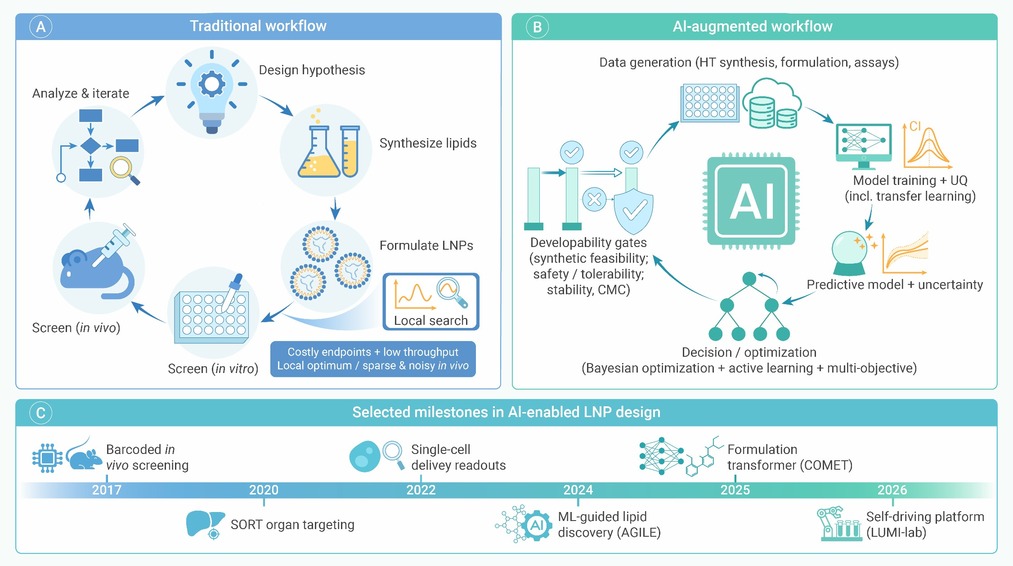
Figure 1.
From empirical iteration to AI-augmented LNP engineering
-
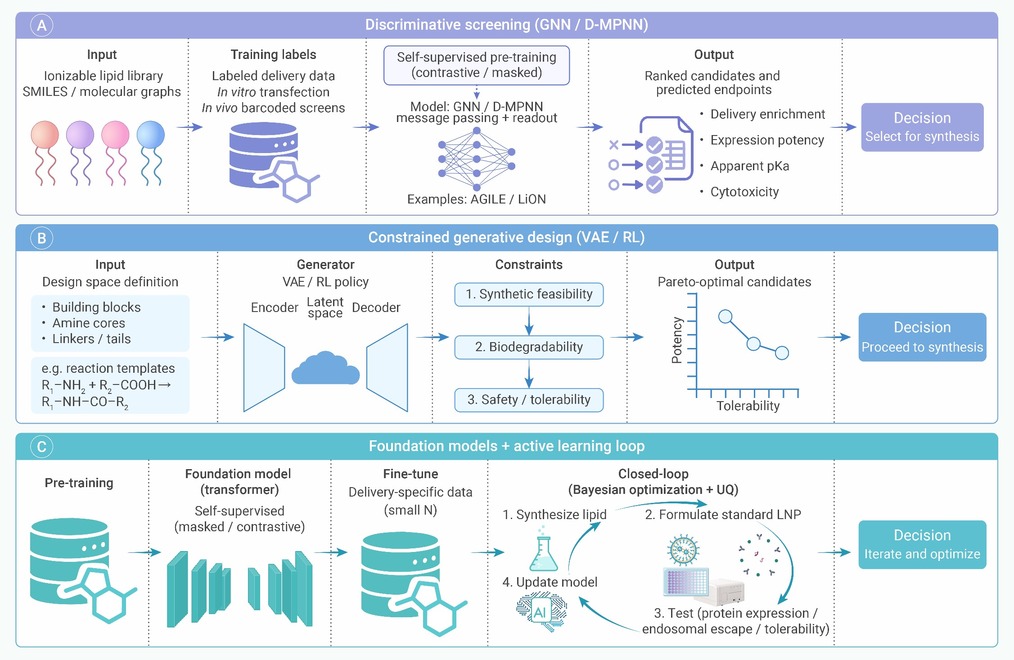
Figure 2.
AI workflows for ionizable lipid discovery and optimization
-
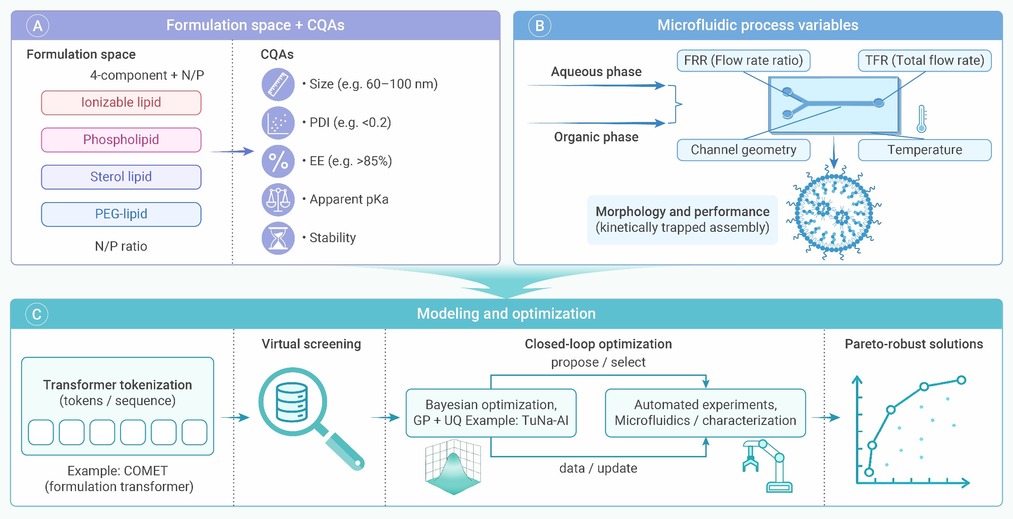
Figure 3.
LNPs as composite materials: joint modeling of composition and process history
-
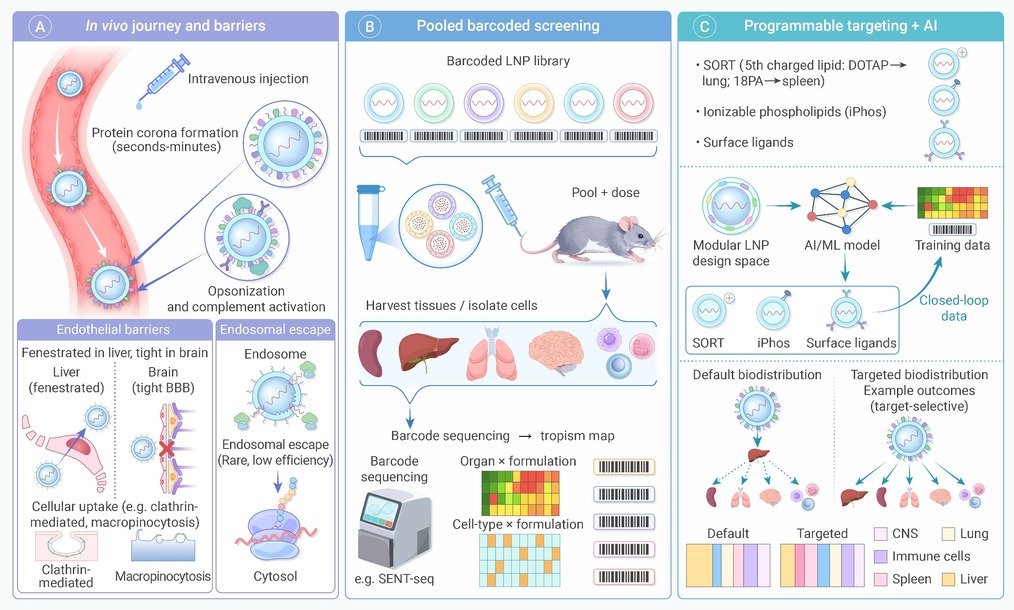
Figure 4.
Learning organism-level targeting from pooled in vivo experiments
