
The evolution of computation-driven paradigms in targeted peptide drug design: From predictive modeling to generative AI and clinical translation
-
GRAPHICAL ABSTRACT

 DownLoad:
Full size image
DownLoad:
Full size image
-
PUBLIC SUMMARY
-
Targeted peptides tackle undruggable targets but face in vivo instability.
Peptide design shifts from empirical screening to artificial intelligence (AI).
Generative AI creates novel sequences, bypassing limits of natural databases.
Integrating AI with physics validation accelerates clinical peptide development.
-
-
ABSTRACT
Targeted peptide therapeutics offer a potent solution for undruggable intracellular targets yet their clinical translation remains hampered by poor membrane permeability and metabolic instability. The integration of high-performance computing and artificial intelligence is currently driving a fundamental transition from empirical screening to rational de novo design. This review moves beyond a conventional enumeration of tools to construct a strategic framework that integrates physics-based validation with generative deep learning. We critically analyze the synergistic application of molecular dynamics and docking for thermodynamic verification while simultaneously evaluating how diffusion models and protein language models accelerate the exploration of vast chemical spaces. By delineating a closed-loop workflow that incorporates pharmacokinetic constraints into generative algorithms this review not only synthesizes current advancements but also provides a strategic roadmap for seamlessly integrating generative AI with physics-based validation, thereby accelerating the transition of computationally designed peptides from in silico blueprints to viable clinical candidates. -

-
REFERENCES
[1] Sharma K., Sharma K. K., Sharma A., et al. (2023). Peptide-based drug discovery: Current status and recent advances. Drug Discov Today 28:103464. DOI:10.1016/j.drudis.2022.103464 [2] Muttenthaler M., King G. F., Adams D. J., et al. (2021). Trends in peptide drug discovery. Nat Rev Drug Discov 20:309−325. DOI:10.1038/s41573-020-00135-8 [3] Wang L., Wang N., Zhang W., et al. (2022). Therapeutic peptides: current applications and future directions. Signal Transduct Target Ther 7:48. DOI:10.1038/s41392-022-00904-4 [4] Nhàn N. T. T., Yamada T. and Yamada K. H. (2023). Peptide-Based Agents for Cancer Treatment: Current Applications and Future Directions. Int J Mol Sci 24. DOI:10.3390/ijms241612931. [5] Afonso A. L., Cavaleiro C. T., Castanho M., et al. (2025). The Potential of Peptide-Based Inhibitors in Disrupting Protein-Protein Interactions for Targeted Cancer Therapy. Int J Mol Sci 26. DOI:10.3390/ijms26073117. [6] Rivera-Jiménez J., Berraquero-García C., Pérez-Gálvez R., et al. (2022). Peptides and protein hydrolysates exhibiting anti-inflammatory activity: sources, structural features and modulation mechanisms. Food Funct 13:12510−12540. DOI:10.1039/d2fo02223k [7] Yang N. J. and Hinner M. J. (2015). Getting across the cell membrane: an overview for small molecules, peptides, and proteins. Methods Mol Biol 1266:29−53. DOI:10.1007/978-1-4939-2272-7_3 [8] Müller T. D., Blüher M., Tschöp M. H., et al. (2022). Anti-obesity drug discovery: advances and challenges. Nat Rev Drug Discov 21:201−223. DOI:10.1038/s41573-021-00337-8 [9] Drucker D. J. (2025). GLP-1-based therapies for diabetes, obesity and beyond. Nat Rev Drug Discov 24:631−650. DOI:10.1038/s41573-025-01183-8 [10] Drucker D. J. (2024). Prevention of cardiorenal complications in people with type 2 diabetes and obesity. Cell Metab 36:338−353. DOI:10.1016/j.cmet.2023.12.018 [11] Lau J., Bloch P., Schäffer L., et al. (2015). Discovery of the Once-Weekly Glucagon-Like Peptide-1 (GLP-1) Analogue Semaglutide. J Med Chem 58:7370−7380. DOI:10.1021/acs.jmedchem.5b00726 [12] Pei J., Gao X., Pan D., et al. (2022). Advances in the stability challenges of bioactive peptides and improvement strategies. Curr Res Food Sci 5:2162−2170. DOI:10.1016/j.crfs.2022.10.031 [13] Drucker D. J. (2020). Advances in oral peptide therapeutics. Nat Rev Drug Discov 19:277−289. DOI:10.1038/s41573-019-0053-0 [14] Agoni C., Fernández-Díaz R., Timmons P. B., et al. (2025). Molecular Modelling in Bioactive Peptide Discovery and Characterisation. Biomolecules 15. DOI:10.3390/biom15040524. [15] Yao J. F., Yang H., Zhao Y. Z., et al. (2018). Metabolism of Peptide Drugs and Strategies to Improve their Metabolic Stability. Curr Drug Metab 19:892−901. DOI:10.2174/1389200219666180628171531 [16] Tan H., Su W., Zhang W., et al. (2018). Recent Advances in Half-life Extension Strategies for Therapeutic Peptides and Proteins. Curr Pharm Des 24:4932−4946. DOI:10.2174/1381612825666190206105232 [17] Parida P., Prusty A. K., Patro S. K., et al. (2024). Current Advancements on Oral Protein and Peptide Drug Delivery Approaches to Bioavailability: Extensive Review on Patents. Recent Adv Drug Deliv Formul 18:227−246. DOI:10.2174/0126673878299775240719061653 [18] Haddadzadegan S., Dorkoosh F. and Bernkop-Schnürch A. (2022). Oral delivery of therapeutic peptides and proteins: Technology landscape of lipid-based nanocarriers. Adv Drug Deliv Rev 182:114097. DOI:10.1016/j.addr.2021.114097 [19] Chan L. Y., Zhang V. M., Huang Y. H., et al. (2013). Cyclization of the antimicrobial peptide gomesin with native chemical ligation: influences on stability and bioactivity. Chembiochem 14:617−624. DOI:10.1002/cbic.201300034 [20] Costa L., Sousa E. and Fernandes C. (2023). Cyclic Peptides in Pipeline: What Future for These Great Molecules? Pharmaceuticals (Basel) 16. DOI:10.3390/ph16070996. [21] Adessi C. and Soto C. (2002). Converting a peptide into a drug: strategies to improve stability and bioavailability. Curr Med Chem 9:963−978. DOI:10.2174/0929867024606731 [22] Gentilucci L., De Marco R. and Cerisoli L. (2010). Chemical modifications designed to improve peptide stability: incorporation of non-natural amino acids, pseudo-peptide bonds, and cyclization. Curr Pharm Des 16:3185−3203. DOI:10.2174/138161210793292555 [23] Fosgerau K. and Hoffmann T. (2015). Peptide therapeutics: current status and future directions. Drug Discov Today 20:122−128. DOI:10.1016/j.drudis.2014.10.003 [24] Schneider P., Walters W. P., Plowright A. T., et al. (2020). Rethinking drug design in the artificial intelligence era. Nat Rev Drug Discov 19:353−364. DOI:10.1038/s41573-019-0050-3 [25] Hashemi Z. S., Zarei M., Fath M. K., et al. (2021). In silico Approaches for the Design and Optimization of Interfering Peptides Against Protein-Protein Interactions. Front Mol Biosci 8:669431. DOI:10.3389/fmolb.2021.669431 [26] Vidal-Limon A., Aguilar-Toalá J. E. and Liceaga A. M. (2022). Integration of Molecular Docking Analysis and Molecular Dynamics Simulations for Studying Food Proteins and Bioactive Peptides. J Agric Food Chem 70:934−943. DOI:10.1021/acs.jafc.1c06110 [27] Wang Y., Stebe K. J., de la Fuente-Nunez C., et al. (2024). Computational Design of Peptides for Biomaterials Applications. ACS Appl Bio Mater 7:617−625. DOI:10.1021/acsabm.2c01023 [28] Kazmirchuk T. D. D., Bradbury-Jost C., Withey T. A., et al. (2023). Peptides of a Feather: How Computation Is Taking Peptide Therapeutics under Its Wing. Genes (Basel) 14. DOI:10.3390/genes14061194. [29] Allison J. R. (2020). Computational methods for exploring protein conformations. Biochem Soc Trans 48:1707−1724. DOI:10.1042/bst20200193 [30] Mondal A., Chang L. and Perez A. (2022). Modelling peptide-protein complexes: docking, simulations and machine learning. QRB Discov 3:e17. DOI:10.1017/qrd.2022.14 [31] Geng H., Chen F., Ye J., et al. (2019). Applications of Molecular Dynamics Simulation in Structure Prediction of Peptides and Proteins. Comput Struct Biotechnol J 17:1162−1170. DOI:10.1016/j.csbj.2019.07.010 [32] Muhammed M. T. and Aki-Yalcin E. (2019). Homology modeling in drug discovery: Overview, current applications, and future perspectives. Chem Biol Drug Des 93:12−20. DOI:10.1111/cbdd.13388 [33] Jumper J., Evans R., Pritzel A., et al. (2021). Highly accurate protein structure prediction with AlphaFold. Nature 596:583−589. DOI:10.1038/s41586-021-03819-2 [34] Baek M., DiMaio F., Anishchenko I., et al. (2021). Accurate prediction of protein structures and interactions using a three-track neural network. Science 373:871−876. DOI:10.1126/science.abj8754 [35] John B. and Sali A. (2003). Comparative protein structure modeling by iterative alignment, model building and model assessment. Nucleic Acids Res 31:3982−3992. DOI:10.1093/nar/gkg460 [36] MacCallum J. L., Pérez A., Schnieders M. J., et al. (2011). Assessment of protein structure refinement in CASP9. Proteins 79 Suppl 10:74-90. DOI:10.1002/prot.23131. [37] Schmidt T., Bergner A. and Schwede T. (2014). Modelling three-dimensional protein structures for applications in drug design. Drug Discov Today 19:890−897. DOI:10.1016/j.drudis.2013.10.027 [38] Floudas C. A. (2007). Computational methods in protein structure prediction. Biotechnol Bioeng 97:207−213. DOI:10.1002/bit.21411 [39] Fiser A. (2010). Template-based protein structure modeling. Methods Mol Biol 673:73−94. DOI:10.1007/978-1-60761-842-3_6 [40] Xiang Z. (2006). Advances in homology protein structure modeling. Curr Protein Pept Sci 7:217−227. DOI:10.2174/138920306777452312 [41] Anighoro A. (2022). Deep Learning in Structure-Based Drug Design. Methods Mol Biol 2390:261−271. DOI:10.1007/978-1-0716-1787-8_11 [42] Rodrigues J. P., Melquiond A. S., Karaca E., et al. (2013). Defining the limits of homology modeling in information-driven protein docking. Proteins 81:2119−2128. DOI:10.1002/prot.24382 [43] Haddad Y., Adam V. and Heger Z. (2020). Ten quick tips for homology modeling of high-resolution protein 3D structures. PLoS Comput Biol 16:e1007449. DOI:10.1371/journal.pcbi.1007449 [44] Baeza J., Bedoya M., Cruz P., et al. (2025). Main methods and tools for peptide development based on protein-protein interactions (PPIs). Biochem Biophys Res Commun 758:151623. DOI:10.1016/j.bbrc.2025.151623 [45] Gupta V. A., Ackley J., Kaufman J. L., et al. (2021). BCL2 Family Inhibitors in the Biology and Treatment of Multiple Myeloma. Blood Lymphat Cancer 11:11−24. DOI:10.2147/blctt.S245191 [46] Shuli Z., Linlin L., Li G., et al. (2022). Bioinformatics and Computer Simulation Approaches to the Discovery and Analysis of Bioactive Peptides. Curr Pharm Biotechnol 23:1541−1555. DOI:10.2174/1389201023666220106161016 [47] Hetényi C. and van der Spoel D. (2002). Efficient docking of peptides to proteins without prior knowledge of the binding site. Protein Sci 11:1729−1737. DOI:10.1110/ps.0202302 [48] Audie J. and Swanson J. (2012). Recent work in the development and application of protein-peptide docking. Future Med Chem 4:1619−1644. DOI:10.4155/fmc.12.99 [49] Kellenberger E., Rodrigo J., Muller P., et al. (2004). Comparative evaluation of eight docking tools for docking and virtual screening accuracy. Proteins 57:225−242. DOI:10.1002/prot.20149 [50] Weng G., Gao J., Wang Z., et al. (2020). Comprehensive Evaluation of Fourteen Docking Programs on Protein-Peptide Complexes. J Chem Theory Comput 16:3959−3969. DOI:10.1021/acs.jctc.9b01208 [51] Zhao H., Jiang D., Shen C., et al. (2024). Comprehensive Evaluation of 10 Docking Programs on a Diverse Set of Protein-Cyclic Peptide Complexes. J Chem Inf Model 64:2112−2124. DOI:10.1021/acs.jcim.3c01921 [52] Agrawal P., Singh H., Srivastava H. K., et al. (2019). Benchmarking of different molecular docking methods for protein-peptide docking. BMC Bioinformatics 19:426. DOI:10.1186/s12859-018-2449-y [53] Kundrotas P. J., Zhu Z., Janin J., et al. (2012). Templates are available to model nearly all complexes of structurally characterized proteins. Proc Natl Acad Sci U S A 109:9438−9441. DOI:10.1073/pnas.1200678109 [54] Ciemny M., Kurcinski M., Kamel K., et al. (2018). Protein-peptide docking: opportunities and challenges. Drug Discov Today 23:1530−1537. DOI:10.1016/j.drudis.2018.05.006 [55] Sadybekov A. V. and Katritch V. (2023). Computational approaches streamlining drug discovery. Nature 616:673−685. DOI:10.1038/s41586-023-05905-z [56] Zhou P., Jin B., Li H., et al. (2018). HPEPDOCK: a web server for blind peptide-protein docking based on a hierarchical algorithm. Nucleic Acids Res 46:W443−w450. DOI:10.1093/nar/gky357 [57] Kurcinski M., Badaczewska-Dawid A., Kolinski M., et al. (2020). Flexible docking of peptides to proteins using CABS-dock. Protein Sci 29:211−222. DOI:10.1002/pro.3771 [58] Zhang Y. and Sanner M. F. (2019). AutoDock CrankPep: combining folding and docking to predict protein-peptide complexes. Bioinformatics 35:5121−5127. DOI:10.1093/bioinformatics/btz459 [59] Lee H., Heo L., Lee M. S., et al. (2015). GalaxyPepDock: a protein-peptide docking tool based on interaction similarity and energy optimization. Nucleic Acids Res 43:W431−435. DOI:10.1093/nar/gkv495 [60] London N., Raveh B., Cohen E., et al. (2011). Rosetta FlexPepDock web server--high resolution modeling of peptide-protein interactions. Nucleic Acids Res 39:W249-253. DOI:10.1093/nar/gkr431. [61] Donsky E. and Wolfson H. J. (2011). PepCrawler: a fast RRT-based algorithm for high-resolution refinement and binding affinity estimation of peptide inhibitors. Bioinformatics 27:2836−2842. DOI:10.1093/bioinformatics/btr498 [62] Dominguez C., Boelens R. and Bonvin A. M. (2003). HADDOCK: a protein-protein docking approach based on biochemical or biophysical information. J Am Chem Soc 125:1731−1737. DOI:10.1021/ja026939x [63] de Vries S. J., Rey J., Schindler C. E. M., et al. (2017). The pepATTRACT web server for blind, large-scale peptide-protein docking. Nucleic Acids Res 45:W361−w364. DOI:10.1093/nar/gkx335 [64] Alam N., Goldstein O., Xia B., et al. (2017). High-resolution global peptide-protein docking using fragments-based PIPER-FlexPepDock. PLoS Comput Biol 13:e1005905. DOI:10.1371/journal.pcbi.1005905 [65] Porter K. A., Xia B., Beglov D., et al. (2017). ClusPro PeptiDock: efficient global docking of peptide recognition motifs using FFT. Bioinformatics 33:3299−3301. DOI:10.1093/bioinformatics/btx216 [66] Antes I. (2010). DynaDock: A new molecular dynamics-based algorithm for protein-peptide docking including receptor flexibility. Proteins 78:1084−1104. DOI:10.1002/prot.22629 [67] Ben-Shimon A. and Niv M. Y. (2015). AnchorDock: Blind and Flexible Anchor-Driven Peptide Docking. Structure 23:929−940. DOI:10.1016/j.str.2015.03.010 [68] Xu X., Yan C. and Zou X. (2018). MDockPeP: An ab-initio protein-peptide docking server. J Comput Chem 39:2409−2413. DOI:10.1002/jcc.25555 [69] Lamiable A., Thévenet P., Rey J., et al. (2016). PEP-FOLD3: faster de novo structure prediction for linear peptides in solution and in complex. Nucleic Acids Res 44:W449−454. DOI:10.1093/nar/gkw329 [70] Antunes D. A., Moll M., Devaurs D., et al. (2017). DINC 2.0: A New Protein-Peptide Docking Webserver Using an Incremental Approach. Cancer Res 77:e55-e57. DOI:10.1158/0008-5472.Can-17-0511. [71] Jones G., Willett P., Glen R. C., et al. (1997). Development and validation of a genetic algorithm for flexible docking. J Mol Biol 267:727−748. DOI:10.1006/jmbi.1996.0897 [72] Raveh B., London N., Zimmerman L., et al. (2011). Rosetta FlexPepDock ab-initio: simultaneous folding, docking and refinement of peptides onto their receptors. PLoS One 6:e18934. DOI:10.1371/journal.pone.0018934 [73] Li H., Lu L., Chen R., et al. (2014). PaFlexPepDock: parallel ab-initio docking of peptides onto their receptors with full flexibility based on Rosetta. PLoS One 9:e94769. DOI:10.1371/journal.pone.0094769 [74] London N., Raveh B. and Schueler-Furman O. (2012). Modeling peptide-protein interactions. Methods Mol Biol 857:375−398. DOI:10.1007/978-1-61779-588-6_17 [75] Tucker T. J., Embrey M. W., Alleyne C., et al. (2021). A Series of Novel, Highly Potent, and Orally Bioavailable Next-Generation Tricyclic Peptide PCSK9 Inhibitors. J Med Chem 64:16770−16800. DOI:10.1021/acs.jmedchem.1c01599 [76] Rentzsch R. and Renard B. Y. (2015). Docking small peptides remains a great challenge: an assessment using AutoDock Vina. Brief Bioinform 16:1045−1056. DOI:10.1093/bib/bbv008 [77] Huang S. Y. (2015). Exploring the potential of global protein-protein docking: an overview and critical assessment of current programs for automatic ab initio docking. Drug Discov Today 20:969−977. DOI:10.1016/j.drudis.2015.03.007 [78] Yan C., Xu X. and Zou X. (2016). Fully Blind Docking at the Atomic Level for Protein-Peptide Complex Structure Prediction. Structure 24:1842−1853. DOI:10.1016/j.str.2016.07.021 [79] Koshland D. E., Jr., Némethy G. and Filmer D. (1966). Comparison of experimental binding data and theoretical models in proteins containing subunits. Biochemistry 5:365−385. DOI:10.1021/bi00865a047 [80] Antunes D. A., Devaurs D. and Kavraki L. E. (2015). Understanding the challenges of protein flexibility in drug design. Expert Opin Drug Discov 10:1301−1313. DOI:10.1517/17460441.2015.1094458 [81] Buonfiglio R., Recanatini M. and Masetti M. (2015). Protein Flexibility in Drug Discovery: From Theory to Computation. ChemMedChem 10:1141−1148. DOI:10.1002/cmdc.201500086 [82] Miller E. B., Murphy R. B., Sindhikara D., et al. (2021). Reliable and Accurate Solution to the Induced Fit Docking Problem for Protein-Ligand Binding. J Chem Theory Comput 17:2630−2639. DOI:10.1021/acs.jctc.1c00136 [83] Zhao H., Zhang O., Jiang D., et al. (2025). Protein–peptide docking with a rational and accurate diffusion generative model. Nature Machine Intelligence 7:1308−1321. DOI:10.1038/s42256-025-01077-9 [84] Ciemny M. P., Debinski A., Paczkowska M., et al. (2016). Protein-peptide molecular docking with large-scale conformational changes: the p53-MDM2 interaction. Sci Rep 6:37532. DOI:10.1038/srep37532 [85] De Vivo M., Masetti M., Bottegoni G., et al. (2016). Role of Molecular Dynamics and Related Methods in Drug Discovery. J Med Chem 59:4035−4061. DOI:10.1021/acs.jmedchem.5b01684 [86] Jephthah S., Pesce F., Lindorff-Larsen K., et al. (2021). Force Field Effects in Simulations of Flexible Peptides with Varying Polyproline II Propensity. J Chem Theory Comput 17:6634−6646. DOI:10.1021/acs.jctc.1c00408 [87] Salmaso V. and Moro S. (2018). Bridging Molecular Docking to Molecular Dynamics in Exploring Ligand-Protein Recognition Process: An Overview. Front Pharmacol 9:923. DOI:10.3389/fphar.2018.00923 [88] Chen C. H., Melo M. C., Berglund N., et al. (2020). Understanding and modelling the interactions of peptides with membranes: from partitioning to self-assembly. Curr Opin Struct Biol 61:160−166. DOI:10.1016/j.sbi.2019.12.021 [89] Zhang S., Lv S., Fu X., et al. (2021). Molecular Dynamics Simulations Study of the Interactions between Human Dipeptidyl-Peptidase III and Two Substrates. Molecules 26. DOI:10.3390/molecules26216492. [90] Florová P., Sklenovský P., Banáš P., et al. (2010). Explicit Water Models Affect the Specific Solvation and Dynamics of Unfolded Peptides While the Conformational Behavior and Flexibility of Folded Peptides Remain Intact. J Chem Theory Comput 6:3569−3579. DOI:10.1021/ct1003687 [91] Zhang J., Zhang H., Wu T., et al. (2017). Comparison of Implicit and Explicit Solvent Models for the Calculation of Solvation Free Energy in Organic Solvents. J Chem Theory Comput 13:1034−1043. DOI:10.1021/acs.jctc.7b00169 [92] Turner M., Mutter S. T., Kennedy-Britten O. D., et al. (2019). Replica exchange molecular dynamics simulation of the coordination of Pt(ii)-Phenanthroline to amyloid-β. RSC Adv 9:35089−35097. DOI:10.1039/c9ra04637b [93] Clayton J., Baweja L. and Wereszczynski J. (2022). Peptide Dynamics and Metadynamics: Leveraging Enhanced Sampling Molecular Dynamics to Robustly Model Long-Timescale Transitions. Methods Mol Biol 2405:151−167. DOI:10.1007/978-1-0716-1855-4_8 [94] Weber J. K., Morrone J. A., Kang S. G., et al. (2023). Unsupervised and supervised AI on molecular dynamics simulations reveals complex characteristics of HLA-A2-peptide immunogenicity. Brief Bioinform 25. DOI:10.1093/bib/bbad504. [95] Perpetuo L., Klein J., Ferreira R., et al. (2021). How can artificial intelligence be used for peptidomics. Expert Rev Proteomics 18:527−556. DOI:10.1080/14789450.2021.1962303 [96] Chen Z., Wang R., Guo J., et al. (2024). The role and future prospects of artificial intelligence algorithms in peptide drug development. Biomed Pharmacother 175:116709. DOI:10.1016/j.biopha.2024.116709 [97] Goles M., Daza A., Cabas-Mora G., et al. (2024). Peptide-based drug discovery through artificial intelligence: towards an autonomous design of therapeutic peptides. Brief Bioinform 25. DOI:10.1093/bib/bbae275. [98] Tsaban T., Varga J. K., Avraham O., et al. (2022). Harnessing protein folding neural networks for peptide-protein docking. Nat Commun 13:176. DOI:10.1038/s41467-021-27838-9 [99] McDonald E. F., Jones T., Plate L., et al. (2023). Benchmarking AlphaFold2 on peptide structure prediction. Structure 31:111−119.e112. DOI:10.1016/j.str.2022.11.012 [100] Lin Z., Akin H., Rao R., et al. (2023). Evolutionary-scale prediction of atomic-level protein structure with a language model. Science 379:1123−1130. DOI:10.1126/science.ade2574 [101] Cordoves-Delgado G. and García-Jacas C. R. (2024). Predicting Antimicrobial Peptides Using ESMFold-Predicted Structures and ESM-2-Based Amino Acid Features with Graph Deep Learning. J Chem Inf Model 64:4310−4321. DOI:10.1021/acs.jcim.3c02061 [102] Mirdita M., Schütze K., Moriwaki Y., et al. (2022). ColabFold: making protein folding accessible to all. Nat Methods 19:679−682. DOI:10.1038/s41592-022-01488-1 [103] Zhang C., Zhang C., Shang T., et al. (2024). HighFold: accurately predicting structures of cyclic peptides and complexes with head-to-tail and disulfide bridge constraints. Brief Bioinform 25. DOI:10.1093/bib/bbae215. [104] Rettie S. A., Campbell K. V., Bera A. K., et al. (2023). Cyclic peptide structure prediction and design using AlphaFold. bioRxiv. DOI:10.1101/2023.02.25.529956. [105] Lee J. S. (2025). Design of peptides with non-canonical amino acids using flow matching. the preprint server for biology. DOI:10.1101/2025.07.31.667780. [106] Mao J., Guan S., Chen Y., et al. (2023). Application of a deep generative model produces novel and diverse functional peptides against microbial resistance. Comput Struct Biotechnol J 21:463−471. DOI:10.1016/j.csbj.2022.12.029 [107] Watson J. L., Juergens D., Bennett N. R., et al. (2023). De novo design of protein structure and function with RFdiffusion. Nature 620:1089−1100. DOI:10.1038/s41586-023-06415-8 [108] Wan F., Kontogiorgos-Heintz D. and de la Fuente-Nunez C. (2022). Deep generative models for peptide design. Digit Discov 1:195−208. DOI:10.1039/d1dd00024a [109] Zhang O., Zhang X., Lin H., et al. (2025). ODesign: A World Model for Biomolecular Interaction Design. [110] Pacesa M., Nickel L., Schellhaas C., et al. (2025). One-shot design of functional protein binders with BindCraft. Nature 646:483−492. DOI:10.1038/s41586-025-09429-6 [111] Chen T., Dumas M., Watson R., et al. (2024). PepMLM: Target Sequence-Conditioned Generation of Therapeutic Peptide Binders via Span Masked Language Modeling. ArXiv. [112] Nijkamp E., Ruffolo J. A., Weinstein E. N., et al. (2023). ProGen2: Exploring the boundaries of protein language models. Cell Syst 14:968−978.e963. DOI:10.1016/j.cels.2023.10.002 [113] Alamdari S., Thakkar N., van den Berg R., et al. (2023). Protein generation with evolutionary diffusion: sequence is all you need. bioRxiv:2023.2009.2011.556673. DOI:10.1101/2023.09.11.556673. [114] Dauparas J., Anishchenko I., Bennett N., et al. (2022). Robust deep learning-based protein sequence design using ProteinMPNN. Science 378:49−56. DOI:10.1126/science.add2187 [115] Hsu C., Verkuil R., Liu J., et al. (2022). Learning inverse folding from millions of predicted structures. bioRxiv:2022.2004.2010.487779. DOI:10.1101/2022.04.10.487779. [116] Dauparas J., Lee G. R., Pecoraro R., et al. (2025). Atomic context-conditioned protein sequence design using LigandMPNN. Nat Methods 22:717−723. DOI:10.1038/s41592-025-02626-1 [117] Butcher J., Krishna R., Mitra R., et al. (2025). De novo Design of All-atom Biomolecular Interactions with RFdiffusion3. bioRxiv. DOI:10.1101/2025.09.18.676967. [118] Cao L., Goreshnik I., Coventry B., et al. (2020). De novo design of picomolar SARS-CoV-2 miniprotein inhibitors. Science 370:426−431. DOI:10.1126/science.abd9909 [119] Gautam A., Chaudhary K., Kumar R., et al. (2013). In silico approaches for designing highly effective cell penetrating peptides. J Transl Med 11:74. DOI:10.1186/1479-5876-11-74 [120] Manavalan B., Subramaniyam S., Shin T. H., et al. (2018). Machine-Learning-Based Prediction of Cell-Penetrating Peptides and Their Uptake Efficiency with Improved Accuracy. J Proteome Res 17:2715−2726. DOI:10.1021/acs.jproteome.8b00148 [121] Mathur D., Singh S., Mehta A., et al. (2018). In silico approaches for predicting the half-life of natural and modified peptides in blood. PLoS One 13:e0196829. DOI:10.1371/journal.pone.0196829 [122] Gupta S., Kapoor P., Chaudhary K., et al. (2013). In silico approach for predicting toxicity of peptides and proteins. PLoS One 8:e73957. DOI:10.1371/journal.pone.0073957 [123] Abraham M. J., Murtola T., Schulz R., et al. (2015). GROMACS: High performance molecular simulations through multi-level parallelism from laptops to supercomputers. SoftwareX 1-2:19-25. DOI:https://doi.org/10.1016/j.softx.2015.06.001. [124] Ding X., Chen X., Sullivan E. E., et al. (2024). Fast, accurate ranking of engineered proteins by target-binding propensity using structure modeling. Mol Ther 32:1687−1700. DOI:10.1016/j.ymthe.2024.04.003 [125] Chang L. and Perez A. (2023). Ranking Peptide Binders by Affinity with AlphaFold. Angew Chem Int Ed Engl 62:e202213362. DOI:10.1002/anie.202213362 [126] Abramson J., Adler J., Dunger J., et al. (2024). Accurate structure prediction of biomolecular interactions with AlphaFold 3. Nature 630:493−500. DOI:10.1038/s41586-024-07487-w [127] Feller A. L. and Wilke C. O. (2024). Peptide-specific chemical language model successfully predicts membrane diffusion of cyclic peptides. bioRxiv:2024.2008.2009.607221. DOI:10.1101/2024.08.09.607221. [128] Liu Y., Wen W., Xu B., et al. (2025). Molecular dynamics insights into the binding interactions of semaglutide with human serum albumin. J Biomol Struct Dyn:1-18. DOI:10.1080/07391102.2025.2532848. [129] Knudsen L. B. and Lau J. (2019). The Discovery and Development of Liraglutide and Semaglutide. Front Endocrinol (Lausanne) 10:155. DOI:10.3389/fendo.2019.00155 [130] Johns D. G., Campeau L. C., Banka P., et al. (2023). Orally Bioavailable Macrocyclic Peptide That Inhibits Binding of PCSK9 to the Low Density Lipoprotein Receptor. Circulation 148:144−158. DOI:10.1161/circulationaha.122.063372 [131] Fang P., Pang W. K., Xuan S., et al. (2024). Recent advances in peptide macrocyclization strategies. Chem Soc Rev 53:11725−11771. DOI:10.1039/d3cs01066j -
ABOUT THIS ARTICLE
Cite this article:
Hu W., Sun Y., Li T., et al. (2026). The evolution of computation-driven paradigms in targeted peptide drug design: From predictive modeling to generative AI and clinical translation. The Innovation Drug Discovery 1:100009. https://doi.org/10.59717/j.xinn-drugdisc.2026.100009
Welcome!
To request copyright permission to republish or share portions of our works, please visit Copyright Clearance Center's (CCC) Marketplace website at marketplace.copyright.com.
Export File
Citation
Hu W., Sun Y., Li T., et al. (2026). The evolution of computation-driven paradigms in targeted peptide drug design: From predictive modeling to generative AI and clinical translation. The Innovation Drug Discovery 1:100009. https://doi.org/10.59717/j.xinn-drugdisc.2026.100009

Format
Content


-
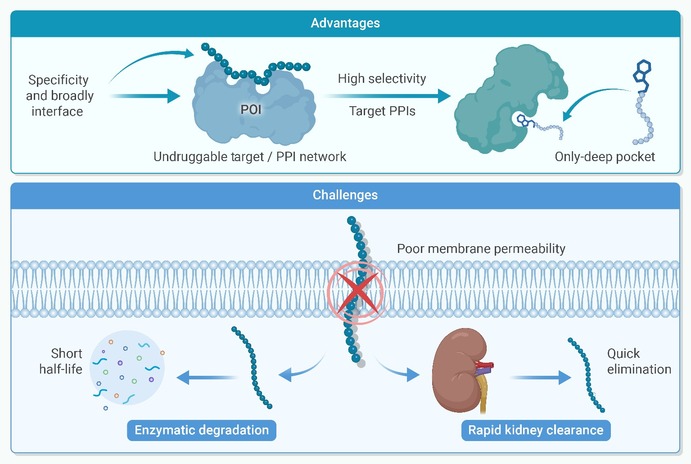
Figure 1.
Overview of Peptide Therapeutics
-
Figure 2.
Integrated AI and physics-based workflow for targeted peptide drug design
-
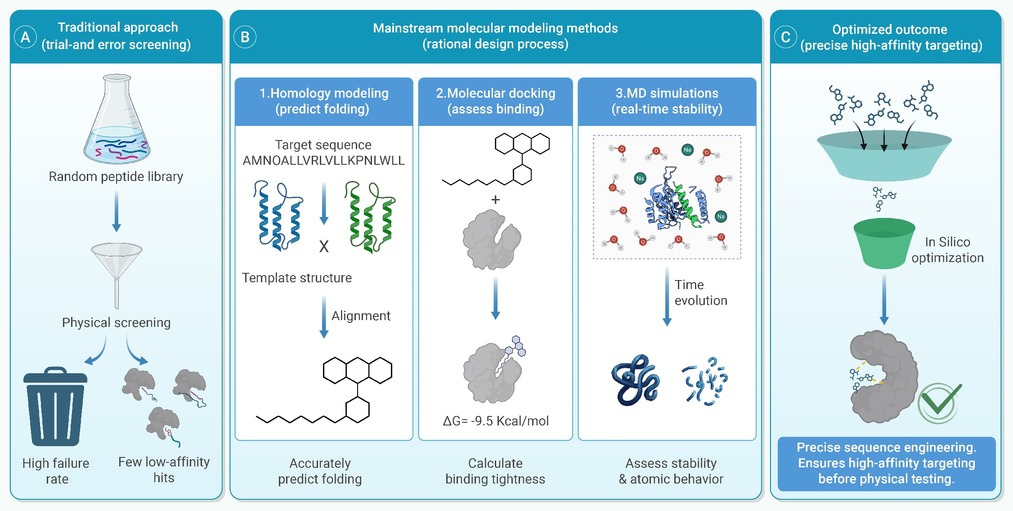
Figure 3.
Workflow illustrating the transition from traditional trial-and-error to rational peptide drug design
-
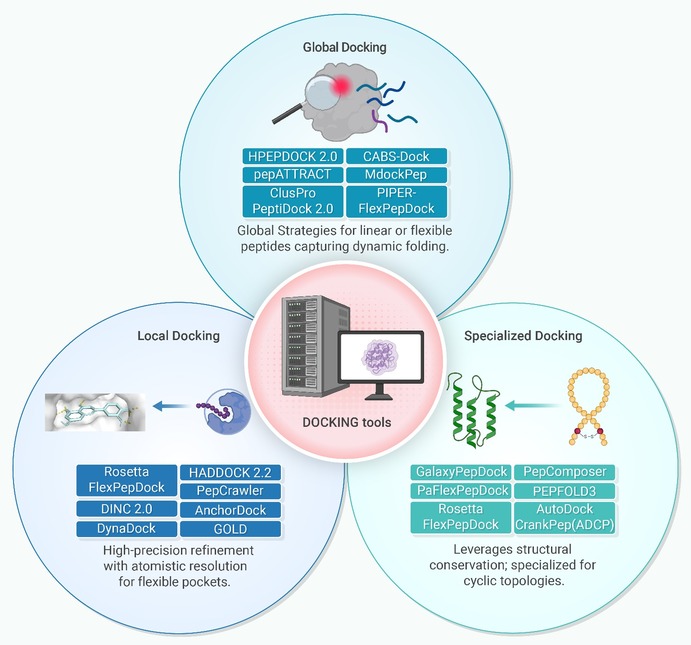
Figure 4.
Classification of strategies and commonly used tools for peptide-protein molecular docking
-
Figure 5.
AI-driven workflow for peptide discovery
-
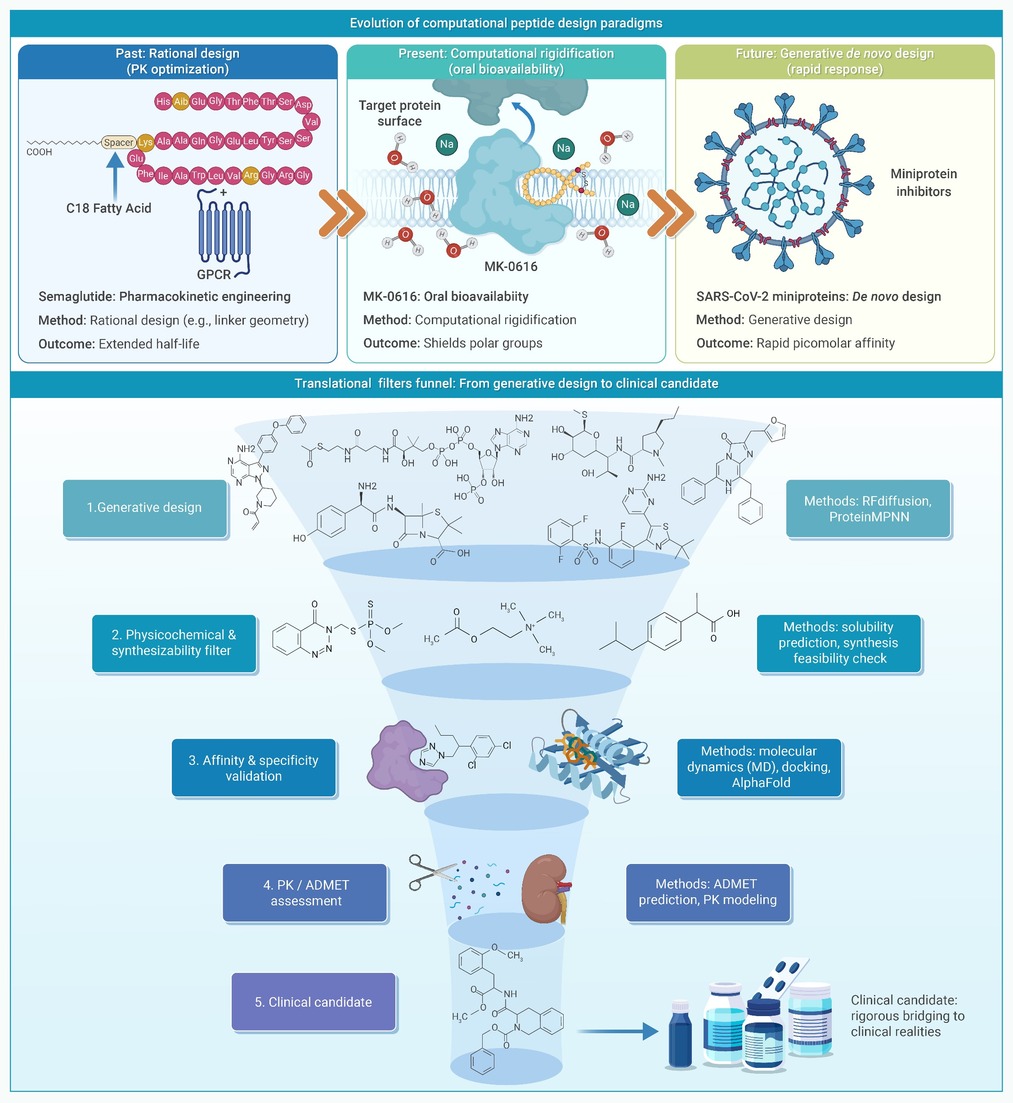
Figure 6.
Evolution of computational peptide drug design paradigms and the multi-level translational validation framework
