
Extracellular and membrane-targeted protein degradation (emTPD): Mechanisms, design frameworks, and therapeutic opportunities
-
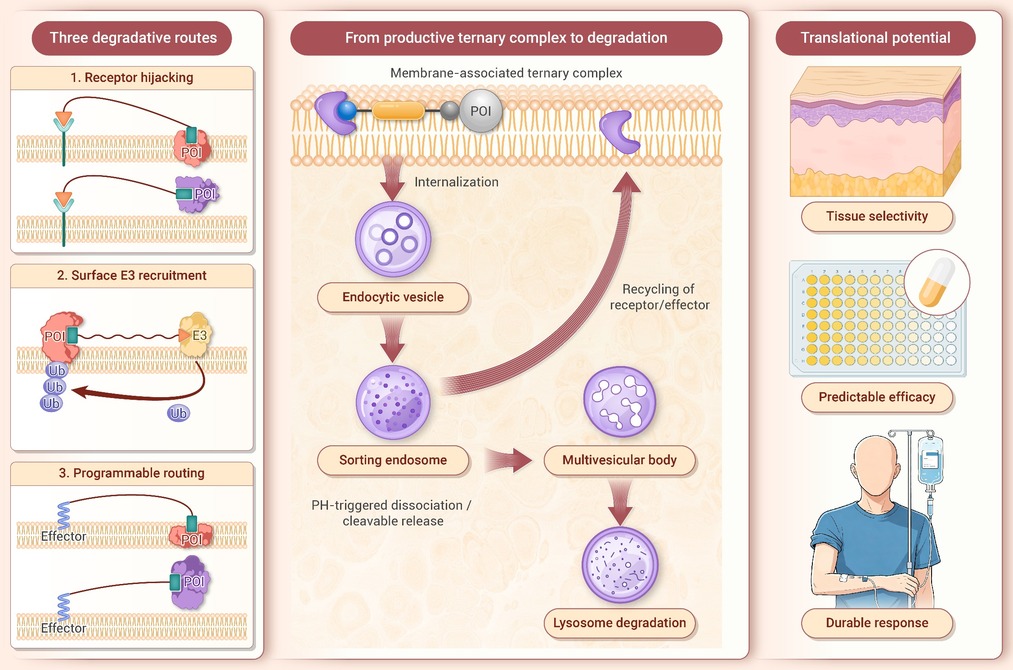
GRAPHICAL ABSTRACT
 DownLoad:
Full size image
DownLoad:
Full size image
-
PUBLIC SUMMARY
-
Extracellular and membrane proteins are key disease targets but remain hard to remove.
This review summarizes emTPD, which routes targets to lysosomes by receptors, E3s, or programs.
We identify endolysosomal routing as key to predictable, tissue-selective, and durable degradation.
-
-
ABSTRACT
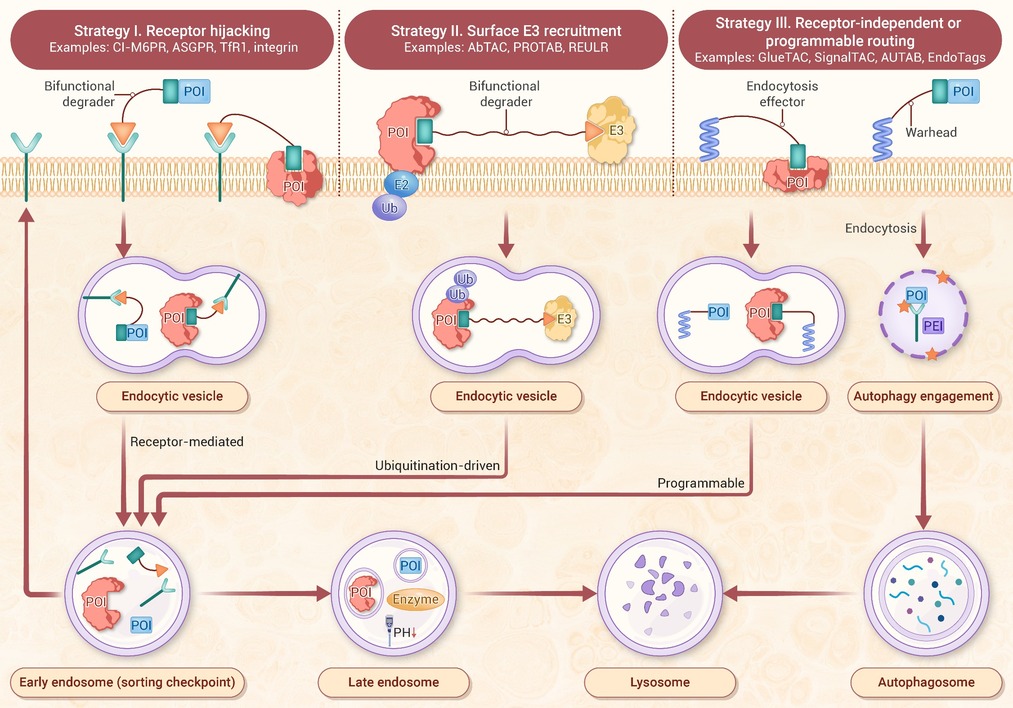
Over the past five years, the field of extracellular and membrane-targeted protein degradation (emTPD) has reoriented target proteins toward endolysosomal degradation, providing an alternative to traditional inhibitors. Here, we classify current emTPD strategies according to the primary fate-determining module that commits cargo to degradation: (1) Receptor hijacking, in which endogenous receptors drive uptake and lysosomal routing; (2) Surface E3 ligase recruitment, in which ubiquitin serves as the internalization and sorting signal; (3) Receptor-independent or programmable routing mechanisms, which do not rely on canonical lysosomal shuttle receptors but instead encode degradative fate through alternative endocytic, sorting, or autophagy-linked cues. We synthesize shared mechanistic principles—membrane ternary-complex biophysics, endocytic flux, and condition-triggered dissociation—into a unified design framework that guides molecular engineering, tissue selectivity, and rational combination strategies. Major translational challenges include PK/PD modeling, tissue penetration, immunogenicity and safety window. With the emergence of early clinical evaluations (e.g., BHV-1400 entering early clinical evaluation), emTPD is gradually shifting towards clinical validation. In the future, the combination of artificial intelligence-driven design and pathway engineering will expand its therapeutic applications across tumors, autoimmune diseases, neurodegenerative disorders, and metabolic diseases. -

-
REFERENCES
[1] Wells J. A. and Kumru O. S. (2024). Extracellular targeted protein degradation: an emerging modality for drug discovery. Nature Reviews Drug Discovery 23:126−140. DOI:10.1038/s41573-023-00833-z [2] Uhlén M. and Karlsson M. J. (2019). The human secretome. Science Signaling 12:eaaz0274. DOI:10.1126/scisignal.aaz0274 [3] Uhlén M., Fagerberg L., Hallström B. M., et al. (2015). Proteomics. Tissue-based map of the human proteome. Science 347:1260419. DOI:10.1126/science.1260419 [4] Santos R., Ursu O., Gaulton A., et al. (2017). A comprehensive map of molecular drug targets. Nat Rev Drug Discov 16:19−34. DOI:10.1038/nrd.2016.230 [5] Banik S. M., Pedram K., Wisnovsky S., et al. (2020). Lysosome-targeting chimaeras for degradation of extracellular proteins. Nature 584:291−297. DOI:10.1038/s41586-020-2545-9 [6] Heppner F. L., Ransohoff R. M. and Becher B. (2015). Immune attack: the role of inflammation in Alzheimer disease. Nat Rev Neurosci 16:358−372. DOI:10.1038/nrn3880 [7] You M., Xie Z., Zhang N., et al. (2023). Signaling pathways in cancer metabolism: mechanisms and therapeutic targets. Signal Transduct Target Ther 8:196. DOI:10.1038/s41392-023-01442-3 [8] Long Y., Wang P., Lei J., et al. (2025). Mechanical Signaling: Molecular Mechanisms, Biological Functions, Diseases, and Therapeutic Targets. MedComm (2020) 6:e70523. DOI:10.1002/mco2.70523. [9] Sriram K. and Insel P. A. (2018). G Protein-Coupled Receptors as Targets for Approved Drugs: How Many Targets and How Many Drugs. Mol Pharmacol 93:251−258. DOI:10.1124/mol.117.111062 [10] Lazar T., Connor A., DeLisle C. F., et al. (2025). Targeting protein disorder: the next hurdle in drug discovery. Nat Rev Drug Discov 24:743−763. DOI:10.1038/s41573-025-01220-6 [11] Arkin M. R. and Wells J. A. (2004). Small-molecule inhibitors of protein-protein interactions: progressing towards the dream. Nat Rev Drug Discov 3:301−317. DOI:10.1038/nrd1343 [12] Schapira M., Tyers M., Torrent M., et al. (2017). WD40 repeat domain proteins: a novel target class. Nat Rev Drug Discov 16:773−786. DOI:10.1038/nrd.2017.179 [13] Dang C. V., Reddy E. P., Shokat K. M., et al. (2017). Drugging the 'undruggable' cancer targets. Nat Rev Cancer 17:502−508. DOI:10.1038/nrc.2017.36 [14] Xie X., Yu T., Li X., et al. (2023). Recent advances in targeting the "undruggable" proteins: from drug discovery to clinical trials. Signal Transduct Target Ther 8:335. DOI:10.1038/s41392-023-01589-z [15] Rodríguez-Nava C., Ortuño-Pineda C., Illades-Aguiar B., et al. (2023). Mechanisms of Action and Limitations of Monoclonal Antibodies and Single Chain Fragment Variable (scFv) in the Treatment of Cancer. Biomedicines 11. DOI:10.3390/biomedicines11061610. [16] Mekala J. R., Nalluri H. P., Reddy P. N., et al. (2024). Emerging trends and therapeutic applications of monoclonal antibodies. Gene 925:148607. DOI:10.1016/j.gene.2024.148607 [17] Zhao L., Zhao J., Zhong K., et al. (2022). Targeted protein degradation: mechanisms, strategies and application. Signal Transduct Target Ther 7:113. DOI:10.1038/s41392-022-00966-4 [18] Wang S., He F., Tian C., et al. (2024). From PROTAC to TPD: Advances and Opportunities in Targeted Protein Degradation. Pharmaceuticals (Basel) 17. DOI:10.3390/ph17010100 [19] Yang N., Kong B., Zhu Z., et al. (2024). Recent advances in targeted protein degraders as potential therapeutic agents. Mol Divers 28:309−333. DOI:10.1007/s11030-023-10606-w [20] Qin L., Dai H. and Wang J. (2022). Key Considerations in Targeted Protein Degradation Drug Discovery and Development. Front Chem 10:934337. DOI:10.3389/fchem.2022.934337 [21] Zhu R., Zhang H. and Chen P. R. (2025). Targeted protein degradation in the transmembrane and extracellular space. Science 390:eadx5094. DOI:10.1126/science.adx5094 [22] Eladl O. (2025). Molecular glues and PROTACs in targeted protein degradation: mechanisms, advances, and therapeutic potential. Biochem Pharmacol 242:117297. DOI:10.1016/j.bcp.2025.117297 [23] Kannt A. and Đikić I. (2021). Expanding the arsenal of E3 ubiquitin ligases for proximity-induced protein degradation. Cell Chem Biol 28:1014−1031. DOI:10.1016/j.chembiol.2021.04.007 [24] Liu Y., Bai J., Li D., et al. (2025). Routes to molecular glue degrader discovery. Trends Biochem Sci 50:134−142. DOI:10.1016/j.tibs.2024.12.006 [25] Sakamoto K. M., Kim K. B., Kumagai A., et al. (2001). Protacs: chimeric molecules that target proteins to the Skp1-Cullin-F box complex for ubiquitination and degradation. Proc Natl Acad Sci U S A 98:8554−8559. DOI:10.1073/pnas.141230798 [26] Schapira M., Calabrese M. F., Bullock A. N., et al. (2019). Targeted protein degradation: expanding the toolbox. Nat Rev Drug Discov 18:949−963. DOI:10.1038/s41573-019-0047-y [27] Chen X., Zhou Y., Zhao Y., et al. (2023). Targeted degradation of extracellular secreted and membrane proteins. Trends Pharmacol Sci 44:762−775. DOI:10.1016/j.tips.2023.08.013 [28] Mamun M. A. A., Bakunts A. G. and Chernorudskiy A. L. (2025). Targeted degradation of extracellular proteins: state of the art and diversity of degrader designs. J Hematol Oncol 18:52. DOI:10.1186/s13045-025-01703-4 [29] Ahn G., Banik S. M. and Bertozzi C. R. (2021). Degradation from the outside in: Targeting extracellular and membrane proteins for degradation through the endolysosomal pathway. Cell Chem Biol 28:1072−1080. DOI:10.1016/j.chembiol.2021.02.024 [30] Li Y. Y., Yang Y., Zhang R. S., et al. (2025). Targeted degradation of membrane and extracellular proteins with LYTACs. Acta Pharmacol Sin 46:1−7. DOI:10.1038/s41401-024-01364-y [31] Ahn G., Banik S. M., Miller C. L., et al. (2021). LYTACs that engage the asialoglycoprotein receptor for targeted protein degradation. Nat Chem Biol 17:937−946. DOI:10.1038/s41589-021-00770-1 [32] Ahn G., Riley N. M., Kamber R. A., et al. (2023). Elucidating the cellular determinants of targeted membrane protein degradation by lysosome-targeting chimeras. Science 382:eadf6249. DOI:10.1126/science.adf6249 [33] Ramírez-Cortés F. and Ménová P. (2025). Hepatocyte targeting via the asialoglycoprotein receptor. RSC Med Chem 16:525−544. DOI:10.1039/d4md00652f [34] Cotton A. D., Nguyen D. P., Gramespacher J. A., et al. (2021). Development of Antibody-Based PROTACs for the Degradation of the Cell-Surface Immune Checkpoint Protein PD-L1. J Am Chem Soc 143:593−598. DOI:10.1021/jacs.0c10008 [35] Monroy M. F., Krumpoch M., McTeague T. A., et al. (2025). Bi-functional integrin degraders cause stronger anti-proliferative effects than a blocking antibody by modulating distinct downstream signaling. MAbs 17:2575849. DOI:10.1080/19420862.2025.2575849 [36] Chen S., Cui J., Chen H., et al. (2023). Recent progress in degradation of membrane proteins by PROTACs and alternative targeted protein degradation techniques. Eur J Med Chem 262:115911. DOI:10.1016/j.ejmech.2023.115911 [37] Wang H., Zhou R., Xu F., et al. (2023). Beyond canonical PROTAC: biological targeted protein degradation (bioTPD). Biomater Res 27:72. DOI:10.1186/s40824-023-00385-8 [38] Cheng B., Li M., Zheng J., et al. (2025). Chemically engineered antibodies for autophagy-based receptor degradation. Nat Chem Biol 21:855−866. DOI:10.1038/s41589-024-01803-1 [39] Zhou Z., Liang J., Cheng B., et al. (2025). Targeted Degradation Technologies Utilizing Autophagy. Int J Mol Sci 26. DOI:10.3390/ijms26146576 [40] Zhang H., Han Y., Yang Y., et al. (2021). Covalently Engineered Nanobody Chimeras for Targeted Membrane Protein Degradation. J Am Chem Soc 143:16377−16382. DOI:10.1021/jacs.1c08521 [41] Fang T., Zheng Z., Li N., et al. (2024). Lysosome-targeting chimeras containing an endocytic signaling motif trigger endocytosis and lysosomal degradation of cell-surface proteins. Chem Sci 15:17652−17662. DOI:10.1039/d4sc05093b [42] Yu J., Li H., Fang T., et al. (2023). Harnessing the Lysosomal Sorting Signals of the Cation-Independent Mannose-6-Phosphate Receptor for Targeted Degradation of Membrane Proteins. J Am Chem Soc 145:19107−19119. DOI:10.1021/jacs.3c07687 [43] Grohmann C., Marapana D. S. and Ebert G. (2022). Targeted protein degradation at the host-pathogen interface. Mol Microbiol 117:670−681. DOI:10.1111/mmi.14849 [44] Alam M. M., Wasim S. and Lee S. Y. (2025). Emerging Concepts of Targeted Protein Degrader Technologies via Lysosomal Pathways. Int J Mol Sci 26. DOI:10.3390/ijms26125582 [45] Mikitiuk M., Barczyński J., Bielski P., et al. (2023). IGF2 Peptide-Based LYTACs for Targeted Degradation of Extracellular and Transmembrane Proteins. Molecules 28. DOI:10.3390/molecules28227519. [46] Niebel B., Chen W., Mukai K., et al. (2026). LYTACs and other extracellular targeted protein degradation TACnologies: guiding principles and potential clinical prospects. Drug Discov Today 31:104601. DOI:10.1016/j.drudis.2026.104601 [47] Kim J., Byun I., Kim D. Y., et al. (2024). Targeted protein degradation directly engaging lysosomes or proteasomes. Chem Soc Rev 53:3253−3272. DOI:10.1039/d3cs00344b [48] Erlendsson S. and Teilum K. (2020). Binding Revisited-Avidity in Cellular Function and Signaling. Front Mol Biosci 7:615565. DOI:10.3389/fmolb.2020.615565 [49] Weikl T. R., Hu J., Xu G. K., et al. (2016). Binding equilibrium and kinetics of membrane-anchored receptors and ligands in cell adhesion: Insights from computational model systems and theory. Cell Adh Migr 10:576−589. DOI:10.1080/19336918.2016.1180487 [50] Li L., Hu J., Li L., et al. (2019). Binding constant of membrane-anchored receptors and ligands that induce membrane curvatures. Soft Matter 15:3507−3514. DOI:10.1039/c8sm02504e [51] Murray D., Ben-Tal N., Honig B., et al. (1997). Electrostatic interaction of myristoylated proteins with membranes: simple physics, complicated biology. Structure 5:985−989. DOI:10.1016/s0969-2126(97)00251-7 [52] Lv Y., Li Y., Fu Q., et al. (2025). Controllable multivalent LYTACs enhance targeted protein degradation. Chem Commun (Camb) 61:580−583. DOI:10.1039/d4cc04842c [53] Woythe L., Tito N. B. and Albertazzi L. (2021). A quantitative view on multivalent nanomedicine targeting. Adv Drug Deliv Rev 169:1−21. DOI:10.1016/j.addr.2020.11.010 [54] Roy R. D., Rosenmund C. and Stefan M. I. (2017). Cooperative binding mitigates the high-dose hook effect. BMC Syst Biol 11:74. DOI:10.1186/s12918-017-0447-8 [55] Sonawane S. J., Kalhapure R. S. and Govender T. (2017). Hydrazone linkages in pH responsive drug delivery systems. Eur J Pharm Sci 99:45−65. DOI:10.1016/j.ejps.2016.12.011 [56] Ding H., Tan P., Fu S., et al. (2022). Preparation and application of pH-responsive drug delivery systems. J Control Release 348:206−238. DOI:10.1016/j.jconrel.2022.05.056 [57] Ahn G., Coventry B., Haefner E., et al. (2025). Computational design of pH-sensitive binders. bioRxiv. DOI:10.1101/2025.09.29.678932. [58] Klaus T. and Deshmukh S. (2021). pH-responsive antibodies for therapeutic applications. J Biomed Sci 28:11. DOI:10.1186/s12929-021-00709-7 [59] Paulk J. (2021). Lysosome-targeting chimeras evolve. Nat Chem Biol 17:931−933. DOI:10.1038/s41589-021-00835-1 [60] Kaksonen M. and Roux A. (2018). Mechanisms of clathrin-mediated endocytosis. Nat Rev Mol Cell Biol 19:313−326. DOI:10.1038/nrm.2017.132 [61] Gauthier C., El Cheikh K., Basile I., et al. (2024). Cation-independent mannose 6-phosphate receptor: From roles and functions to targeted therapies. J Control Release 365:759−772. DOI:10.1016/j.jconrel.2023.12.014 [62] Orofiamma L. A., Delos Santos R. C., Mehrabi A., et al. (2025). Cargo-selective regulation of clathrin-mediated endocytosis by AMP-activated protein kinase. iScience 28:113131. DOI:10.1016/j.isci.2025.113131 [63] Hong S. H., Cortesio C. L. and Drubin D. G. (2015). Machine-Learning-Based Analysis in Genome-Edited Cells Reveals the Efficiency of Clathrin-Mediated Endocytosis. Cell Rep 12:2121−2130. DOI:10.1016/j.celrep.2015.08.048 [64] Arpino G., Somasundaram A., Shin W., et al. (2022). Clathrin-mediated endocytosis cooperates with bulk endocytosis to generate vesicles. iScience 25:103809. DOI:10.1016/j.isci.2022.103809 [65] Marei H., Tsai W. K., Kee Y. S., et al. (2022). Antibody targeting of E3 ubiquitin ligases for receptor degradation. Nature 610:182−189. DOI:10.1038/s41586-022-05235-6 [66] Siepe D. H., Picton L. K. and Garcia K. C. (2023). Receptor Elimination by E3 Ubiquitin Ligase Recruitment (REULR): A Targeted Protein Degradation Toolbox. ACS Synth Biol 12:1081−1093. DOI:10.1021/acssynbio.2c00587 [67] Li Y., Yu W., Wang X., et al. (2026). Antibody-based targeted protein degradation: Mechanisms, challenges and future directions. Int J Biol Macromol 337:149426. DOI:10.1016/j.ijbiomac.2025.149426 [68] Wollert T. and Hurley J. H. (2010). Molecular mechanism of multivesicular body biogenesis by ESCRT complexes. Nature 464:864−869. DOI:10.1038/nature08849 [69] Katzmann D. J., Babst M. and Emr S. D. (2001). Ubiquitin-dependent sorting into the multivesicular body pathway requires the function of a conserved endosomal protein sorting complex, ESCRT-I. Cell 106:145−155. DOI:10.1016/s0092-8674(01)00434-2 [70] Sun R., Meng Z., Lee H., et al. (2023). ROTACs leverage signaling-incompetent R-spondin for targeted protein degradation. Cell Chem Biol 30:739−752.e738. DOI:10.1016/j.chembiol.2023.05.010 [71] Ghosh P., Dahms N. M. and Kornfeld S. (2003). Mannose 6-phosphate receptors: new twists in the tale. Nat Rev Mol Cell Biol 4:202−212. DOI:10.1038/nrm1050 [72] Miller J. J., Bohnsack R. N., Olson L. J., et al. (2021). Tissue plasminogen activator is a ligand of cation-independent mannose 6-phosphate receptor and consists of glycoforms that contain mannose 6-phosphate. Sci Rep 11:8213. DOI:10.1038/s41598-021-87579-z [73] Sung Y., Choi Y., Kim E. S., et al. (2025). Receptor-ligand interactions for optimized endocytosis in targeted therapies. J Control Release 380:524−538. DOI:10.1016/j.jconrel.2025.01.060 [74] Kim S., Kang J., An D., et al. (2025). Lysosome-Targeting Chimera Using Mannose-6-Phosphate Glycans Derived from Glyco-Engineered Yeast. Bioconjug Chem 36:424−436. DOI:10.1021/acs.bioconjchem.4c00512 [75] Sedighi M., Mahmoudi Z., Ghasempour A., et al. (2023). Nanostructured multifunctional stimuli-responsive glycopolypeptide-based copolymers for biomedical applications. J Control Release 354:128−145. DOI:10.1016/j.jconrel.2022.12.058 [76] Kang J. Y., Shin K. K., Kim H. H., et al. (2018). Lysosomal Targeting Enhancement by Conjugation of Glycopeptides Containing Mannose-6-phosphate Glycans Derived from Glyco-engineered Yeast. Sci Rep 8:8730. DOI:10.1038/s41598-018-26913-4 [77] Debacker A. J., Voutila J., Catley M., et al. (2020). Delivery of Oligonucleotides to the Liver with GalNAc: From Research to Registered Therapeutic Drug. Mol Ther 28:1759−1771. DOI:10.1016/j.ymthe.2020.06.015 [78] Prakash T. P., Graham M. J., Yu J., et al. (2014). Targeted delivery of antisense oligonucleotides to hepatocytes using triantennary N-acetyl galactosamine improves potency 10-fold in mice. Nucleic Acids Res 42:8796−8807. DOI:10.1093/nar/gku531 [79] D'Souza A. A. and Devarajan P. V. (2015). Asialoglycoprotein receptor mediated hepatocyte targeting - strategies and applications. J Control Release 203:126−139. DOI:10.1016/j.jconrel.2015.02.022 [80] Salim E. L., Kristensen K. and Sjögren E. (2025). Whole-Body Physiologically Based Pharmacokinetic Modeling of GalNAc-Conjugated siRNAs. Pharmaceutics 17. DOI:10.3390/pharmaceutics17010069 [81] Svecla M., Da Dalt L., Moregola A., et al. (2024). ASGR1 deficiency diverts lipids toward adipose tissue but results in liver damage during obesity. Cardiovasc Diabetol 23:42. DOI:10.1186/s12933-023-02099-6 [82] Zhang Z., Leng X. K., Zhai Y. Y., et al. (2024). Deficiency of ASGR1 promotes liver injury by increasing GP73-mediated hepatic endoplasmic reticulum stress. Nat Commun 15:1908. DOI:10.1038/s41467-024-46135-9 [83] Zhang D., Duque-Jimenez J., Facchinetti F., et al. (2025). Transferrin receptor targeting chimeras for membrane protein degradation. Nature 638:787−795. DOI:10.1038/s41586-024-07947-3 [84] Harding C., Heuser J. and Stahl P. (1983). Receptor-mediated endocytosis of transferrin and recycling of the transferrin receptor in rat reticulocytes. J Cell Biol 97:329−339. DOI:10.1083/jcb.97.2.329 [85] Caculitan N. G., Dela Cruz Chuh J., Ma Y., et al. (2017). Cathepsin B Is Dispensable for Cellular Processing of Cathepsin B-Cleavable Antibody-Drug Conjugates. Cancer Res 77:7027−7037. DOI:10.1158/0008-5472.Can-17-2391 [86] Testi C., Boffi A. and Montemiglio L. C. (2019). Structural analysis of the transferrin receptor multifaceted ligand(s) interface. Biophys Chem 254:106242. DOI:10.1016/j.bpc.2019.106242 [87] Niewoehner J., Bohrmann B., Collin L., et al. (2014). Increased brain penetration and potency of a therapeutic antibody using a monovalent molecular shuttle. Neuron 81:49−60. DOI:10.1016/j.neuron.2013.10.061 [88] Bonvicini G., Singh S., Sandersjöö L., et al. (2025). The effects of dose, valency, and affinity on TfR-mediated brain delivery in vivo. Fluids Barriers CNS 22:36. DOI:10.1186/s12987-025-00643-y [89] Zheng J., He W., Li J., et al. (2022). Bifunctional Compounds as Molecular Degraders for Integrin-Facilitated Targeted Protein Degradation. J Am Chem Soc 144:21831−21836. DOI:10.1021/jacs.2c08367 [90] He W., Chen C., Cai R., et al. (2025). Bifunctional compounds for targeted degradation of carbonic anhydrase IX through integrin-facilitated lysosome degradation. J Biol Chem 301:108482. DOI:10.1016/j.jbc.2025.108482 [91] Chastney M. R., Kaivola J., Leppänen V. M., et al. (2025). The role and regulation of integrins in cell migration and invasion. Nat Rev Mol Cell Biol 26:147−167. DOI:10.1038/s41580-024-00777-1 [92] Molnár M., Sőth Á. and Simon-Vecsei Z. (2022). Pathways of integrins in the endo-lysosomal system. Biol Futur 73:171−185. DOI:10.1007/s42977-022-00120-9 [93] Hynes R. O. (2002). Integrins: bidirectional, allosteric signaling machines. Cell 110:673−687. DOI:10.1016/s0092-8674(02)00971-6 [94] Pance K., Gramespacher J. A., Byrnes J. R., et al. (2023). Modular cytokine receptor-targeting chimeras for targeted degradation of cell surface and extracellular proteins. Nat Biotechnol 41:273−281. DOI:10.1038/s41587-022-01456-2 [95] Korona B. and Itzhaki L. S. (2024). How to target membrane proteins for degradation: Bringing GPCRs into the TPD fold. J Biol Chem 300:107926. DOI:10.1016/j.jbc.2024.107926 [96] Jones B., Buenaventura T., Kanda N., et al. (2018). Targeting GLP-1 receptor trafficking to improve agonist efficacy. Nat Commun 9:1602. DOI:10.1038/s41467-018-03941-2 [97] Zhu L., Zhou Y., Zhang B., et al. (2023). Conjugation with glucagon like peptide-1 enables targeted protein degradation. Bioorg Chem 141:106908. DOI:10.1016/j.bioorg.2023.106908 [98] He S., Huang W., Zhu Y., et al. (2025). HerTACs Enable Tumor-Selective Lysosomal Degradation of Membrane and Extracellular Proteins via HER2 Trafficking. Angew Chem Int Ed Engl 64:e202511467. DOI:10.1002/anie.202511467 [99] Li B. T., Michelini F., Misale S., et al. (2020). HER2-Mediated Internalization of Cytotoxic Agents in ERBB2 Amplified or Mutant Lung Cancers. Cancer Discov 10:674−687. DOI:10.1158/2159-8290.Cd-20-0215 [100] Yang Z., Jiang J., Cao Y., et al. (2025). Cell-Selective Targeting Chimeras (SelecTAC(B)) for Membrane Protein Degradation on B Cells. J Am Chem Soc 147:36301−36309. DOI:10.1021/jacs.5c09630 [101] Shan D. and Press O. W. (1995). Constitutive endocytosis and degradation of CD22 by human B cells. J Immunol 154:4466−4475. DOI:10.4049/jimmunol.154.9.4466 [102] Foot N., Henshall T. and Kumar S. (2017). Ubiquitination and the Regulation of Membrane Proteins. Physiological Reviews 97:253−281. DOI:10.1152/physrev.00012.2016 [103] Spit M., Fenderico N., Jordens I., et al. (2020). RNF43 truncations trap CK1 to drive niche-independent self-renewal in cancer. Embo j 39:e103932. DOI:10.15252/embj.2019103932 [104] Hao H. X., Xie Y., Zhang Y., et al. (2012). ZNRF3 promotes Wnt receptor turnover in an R-spondin-sensitive manner. Nature 485:195−200. DOI:10.1038/nature11019 [105] Colozza G. and Koo B. K. (2021). Ub and Dub of RNF43/ZNRF3 in the WNT signalling pathway. EMBO Rep 22:e52970. DOI:10.15252/embr.202152970 [106] Gramespacher J. A., Cotton A. D., Burroughs P. W. W., et al. (2022). Roadmap for Optimizing and Broadening Antibody-Based PROTACs for Degradation of Cell Surface Proteins. ACS Chem Biol 17:1259−1268. DOI:10.1021/acschembio.2c00185 [107] Branigan E., Carlos Penedo J. and Hay R. T. (2020). Ubiquitin transfer by a RING E3 ligase occurs from a closed E2~ubiquitin conformation. Nat Commun 11:2846. DOI:10.1038/s41467-020-16666-y [108] Crunkhorn S. (2022). Developing antibody-based PROTACs. Nat Rev Drug Discov 21:795. DOI:10.1038/d41573-022-00159-2 [109] Li S., Niu J. and Smits R. (2024). RNF43 and ZNRF3: Versatile regulators at the membrane and their role in cancer. Biochim Biophys Acta Rev Cancer 1879:189217. DOI:10.1016/j.bbcan.2024.189217 [110] Ter Steege E. J. and Bakker E. R. M. (2021). The role of R-spondin proteins in cancer biology. Oncogene 40:6469−6478. DOI:10.1038/s41388-021-02059-y [111] Koo B. K., Spit M., Jordens I., et al. (2012). Tumour suppressor RNF43 is a stem-cell E3 ligase that induces endocytosis of Wnt receptors. Nature 488:665−669. DOI:10.1038/nature11308 [112] Erickson A. H. (2011). PA-TM-RING proteins: a new family of endosomal membrane proteins. Febs j 278:46. DOI:10.1111/j.1742-4658.2010.07921.x [113] Till N. A., Ramanathan M. and Bertozzi C. R. (2025). Induced proximity at the cell surface. Nat Biotechnol 43:702−711. DOI:10.1038/s41587-025-02592-1 [114] Sardana R. and Emr S. D. (2021). Membrane Protein Quality Control Mechanisms in the Endo-Lysosome System. Trends Cell Biol 31:269−283. DOI:10.1016/j.tcb.2020.11.011 [115] Raiborg C. and Stenmark H. (2009). The ESCRT machinery in endosomal sorting of ubiquitylated membrane proteins. Nature 458:445−452. DOI:10.1038/nature07961 [116] Paik H., Oh C., Hussain S., et al. (2024). ELiAH: the atlas of E3 ligases in human tissues for targeted protein degradation with reduced off-target effect. Database (Oxford) 2024. DOI:10.1093/database/baae111 [117] Shao J., Xie S., Hong S., et al. (2025). Autophagy-Mediated Targeted Protein Degradation. ChemMedChem 20:e202400866. DOI:10.1002/cmdc.202400866 [118] Ji C. H., Kim H. Y., Lee M. J., et al. (2022). The AUTOTAC chemical biology platform for targeted protein degradation via the autophagy-lysosome system. Nat Commun 13:904. DOI:10.1038/s41467-022-28520-4 [119] Huang B., Abedi M., Ahn G., et al. (2025). Designed endocytosis-inducing proteins degrade targets and amplify signals. Nature 638:796−804. DOI:10.1038/s41586-024-07948-2 [120] He W., Chen C., Zheng J., et al. (2025). Targeted degradation of cell surface proteins through endocytosis triggered by cell-penetrating peptide-small molecule conjugates. Nat Commun 16:7575. DOI:10.1038/s41467-025-62776-w [121] Derakhshankhah H. and Jafari S. (2018). Cell penetrating peptides: A concise review with emphasis on biomedical applications. Biomed Pharmacother 108:1090−1096. DOI:10.1016/j.biopha.2018.09.097 [122] Coelho P. P., Hesketh G. G., Pedersen A., et al. (2022). Endosomal LC3C-pathway selectively targets plasma membrane cargo for autophagic degradation. Nat Commun 13:3812. DOI:10.1038/s41467-022-31465-3 [123] Adriaenssens E., Ferrari L. and Martens S. (2022). Orchestration of selective autophagy by cargo receptors. Curr Biol 32:R1357−r1371. DOI:10.1016/j.cub.2022.11.002 [124] North B. J., Fracchiolla D., Ragusa M. J., et al. (2025). The rapidly expanding role of LC3-interacting regions in autophagy. J Cell Biol 224. DOI:10.1083/jcb.202504076. [125] Lőrincz P. and Juhász G. (2020). Autophagosome-Lysosome Fusion. J Mol Biol 432:2462−2482. DOI:10.1016/j.jmb.2019.10.028 [126] Klionsky D. J., Abdel-Aziz A. K., Abdelfatah S., et al. (2021). Guidelines for the use and interpretation of assays for monitoring autophagy (4th edition)(1). Autophagy 17:1−382. DOI:10.1080/15548627.2020.1797280 [127] Zhao Y. G., Codogno P. and Zhang H. (2021). Machinery, regulation and pathophysiological implications of autophagosome maturation. Nat Rev Mol Cell Biol 22:733−750. DOI:10.1038/s41580-021-00392-4 [128] Ben W. B. and Pirjo A. M. (2025). ATG8 in single membranes: Fresh players of endocytosis and acidic organelle quality control in cancer, neurodegeneration, and inflammation. Biochem Biophys Res Commun 749:151384. DOI:10.1016/j.bbrc.2025.151384 [129] Gatica D., Lahiri V. and Klionsky D. J. (2018). Cargo recognition and degradation by selective autophagy. Nat Cell Biol 20:233−242. DOI:10.1038/s41556-018-0037-z [130] Takahashi D., Moriyama J., Nakamura T., et al. (2019). AUTACs: Cargo-Specific Degraders Using Selective Autophagy. Mol Cell 76:797−810.e710. DOI:10.1016/j.molcel.2019.09.009 [131] Shen Q. (2023). Research Progress in Targeted ProteinDegradation Technology ofAutophagy-Lysosome System. Hans Journal of Medicinal Chemistry 11:262−272. [132] Casper J., Schenk S. H., Parhizkar E., et al. (2023). Polyethylenimine (PEI) in gene therapy: Current status and clinical applications. J Control Release 362:667−691. DOI:10.1016/j.jconrel.2023.09.001 [133] Hoyer M. J., Swarup S. and Harper J. W. (2022). Mechanisms Controlling Selective Elimination of Damaged Lysosomes. Curr Opin Physiol 29. DOI:10.1016/j.cophys.2022.100590 [134] Li X., He S. and Ma B. (2020). Autophagy and autophagy-related proteins in cancer. Mol Cancer 19:12. DOI:10.1186/s12943-020-1138-4 [135] Singh S., Carosi J. M., Dang L., et al. (2025). Autophagy does not always decline with ageing. Nat Cell Biol 27:712−715. DOI:10.1038/s41556-025-01654-5 [136] Xiao S., Yu Y., Liao M., et al. (2025). Post-Translational Modification of p62: Roles and Regulations in Autophagy. Cells 14. DOI:10.3390/cells14131016 [137] King K. E., Losier T. T. and Russell R. C. (2021). Regulation of Autophagy Enzymes by Nutrient Signaling. Trends Biochem Sci 46:687−700. DOI:10.1016/j.tibs.2021.01.006 [138] Wu Y., Lin B., Lu Y., et al. (2023). Aptamer-LYTACs for Targeted Degradation of Extracellular and Membrane Proteins. Angew Chem Int Ed Engl 62:e202218106. DOI:10.1002/anie.202218106 [139] Qiu F., Feng Z., Chen H., et al. (2025). Development of LYTACs via incorporating a nucleolin-targeting and lysosome-directed aptamer. bioRxiv:2025.2008.2029.672993. DOI:10.1101/2025.08.29.672993 [140] Fallah A., Imani Fooladi A. A., Havaei S. A., et al. (2024). Recent advances in aptamer discovery, modification and improving performance. Biochem Biophys Rep 40:101852. DOI:10.1016/j.bbrep.2024.101852 [141] Zhang Y., Zhang H., Chan D. W. H., et al. (2022). Strategies for developing long-lasting therapeutic nucleic acid aptamer targeting circulating protein: The present and the future. Front Cell Dev Biol 10:1048148. DOI:10.3389/fcell.2022.1048148 [142] Lu R. H., Krishna J., Alp Y., et al. (2026). Polymeric Lysosome-Targeting Chimeras (PolyTACs): Extracellular Targeted Protein Degradation without Co-Opting Lysosome-Targeting Receptors. J Am Chem Soc. DOI:10.1021/jacs.5c17519 [143] Békés M., Langley D. R. and Crews C. M. (2022). PROTAC targeted protein degraders: the past is prologue. Nat Rev Drug Discov 21:181−200. DOI:10.1038/s41573-021-00371-6 [144] Lai A. C. and Crews C. M. (2017). Induced protein degradation: an emerging drug discovery paradigm. Nat Rev Drug Discov 16:101−114. DOI:10.1038/nrd.2016.211 [145] Li B., Li Y., Zhang J., et al. (2026). Lysosome-targeting chimeras enable targeted protein degradation. Cell Chem Biol. DOI:10.1016/j.chembiol.2026.01.008 [146] Ebrahimi S. B. and Samanta D. (2023). Engineering protein-based therapeutics through structural and chemical design. Nat Commun 14:2411. DOI:10.1038/s41467-023-38039-x [147] Zhang W., Li S., Yuan H., et al. (2026). Advances in light-activated PROTACs and phototherapy-combined approaches for cancer treatment. Eur J Med Chem 302:118310. DOI:10.1016/j.ejmech.2025.118310 [148] Reynders M. and Trauner D. (2021). Optical control of targeted protein degradation. Cell Chem Biol 28:969−986. DOI:10.1016/j.chembiol.2021.05.010 [149] Liu H., Ren C., Sun R., et al. (2022). Reactive oxygen species-responsive Pre-PROTAC for tumor-specific protein degradation. Chem Commun (Camb) 58:10072−10075. DOI:10.1039/d2cc03367d [150] Lei K., Li J., Tu Z., et al. (2024). Endosome-microautophagy targeting chimera (eMIATAC) for targeted proteins degradation and enhance CAR-T cell anti-tumor therapy. Theranostics 14:4481−4498. DOI:10.7150/thno.98574 [151] Grimm H. P. (2009). Gaining insights into the consequences of target-mediated drug disposition of monoclonal antibodies using quasi-steady-state approximations. J Pharmacokinet Pharmacodyn 36:407−420. DOI:10.1007/s10928-009-9129-5 [152] Sheehan K., Jeon H., Corr S. C., et al. (2025). Antibody Aggregation: A Problem Within the Biopharmaceutical Industry and Its Role in AL Amyloidosis Disease. Protein J 44:1−20. DOI:10.1007/s10930-024-10237-6 [153] Zhang Y., Liu H., Zhen W., et al. (2025). Advancement of drugs conjugated with GalNAc in the targeted delivery to hepatocytes based on asialoglycoprotein receptor. Carbohydr Res 552:109426. DOI:10.1016/j.carres.2025.109426 [154] Bochel A. J., Williams C., McCoy A. J., et al. (2020). Structure of the Human Cation-Independent Mannose 6-Phosphate/IGF2 Receptor Domains 7-11 Uncovers the Mannose 6-Phosphate Binding Site of Domain 9. Structure 28:1300−1312.e1305. DOI:10.1016/j.str.2020.08.002 [155] Fu Z., Pan M., Yang C., et al. (2026). Rational modification of PROTACs for tumor-selective protein degradation. Adv Drug Deliv Rev 230:115775. DOI:10.1016/j.addr.2026.115775 [156] Liu L. (2018). Pharmacokinetics of monoclonal antibodies and Fc-fusion proteins. Protein Cell 9:15−32. DOI:10.1007/s13238-017-0408-4 [157] Fujimori K., Covell D. G., Fletcher J. E., et al. (1990). A modeling analysis of monoclonal antibody percolation through tumors: a binding-site barrier. J Nucl Med 31:1191−1198 [158] Thurber G. M., Schmidt M. M. and Wittrup K. D. (2008). Antibody tumor penetration: transport opposed by systemic and antigen-mediated clearance. Adv Drug Deliv Rev 60:1421−1434. DOI:10.1016/j.addr.2008.04.012 [159] Dai H. I., Vugmeyster Y. and Mangal N. (2020). Characterizing Exposure-Response Relationship for Therapeutic Monoclonal Antibodies in Immuno-Oncology and Beyond: Challenges, Perspectives, and Prospects. Clin Pharmacol Ther 108:1156−1170. DOI:10.1002/cpt.1953 [160] Proctor J. R. and Wong H. (2024). Time-dependent clearance can confound exposure-response analysis of therapeutic antibodies: A comprehensive review of the current literature. Clin Transl Sci 17:e13676. DOI:10.1111/cts.13676 [161] Kawakatsu S., Bruno R., Kågedal M., et al. (2021). Confounding factors in exposure-response analyses and mitigation strategies for monoclonal antibodies in oncology. Br J Clin Pharmacol 87:2493−2501. DOI:10.1111/bcp.14662 [162] Han B. (2020). A suite of mathematical solutions to describe ternary complex formation and their application to targeted protein degradation by heterobifunctional ligands. J Biol Chem 295:15280−15291. DOI:10.1074/jbc.RA120.014715 [163] Haid R. T. U. and Reichel A. (2025). PK/PD modeling of targeted protein degraders: Charting new waters and navigating the shallows. Drug Discov Today 30:104311. DOI:10.1016/j.drudis.2025.104311 [164] Yang J. L., Yamada-Hunter S. A., Labanieh L., et al. (2024). Directed evolution of genetically encoded LYTACs for cell-mediated delivery. Proc Natl Acad Sci U S A 121:e2320053121. DOI:10.1073/pnas.2320053121 [165] Barrow J. C. and Lindsley C. W. (2023). The Importance of PK-PD. J Med Chem 66:4273−4274. DOI:10.1021/acs.jmedchem.3c00514 [166] Bon C., Hofer T., Bousquet-Mélou A., et al. (2017). Capacity limits of asialoglycoprotein receptor-mediated liver targeting. MAbs 9:1360−1369. DOI:10.1080/19420862.2017.1373924 [167] Ayyar V. S. and Song D. (2024). Mechanistic Pharmacokinetics and Pharmacodynamics of GalNAc-siRNA: Translational Model Involving Competitive Receptor-Mediated Disposition and RISC-Dependent Gene Silencing Applied to Givosiran. J Pharm Sci 113:176−190. DOI:10.1016/j.xphs.2023.10.026 [168] Ayyar V. S., Song D., Zheng S., et al. (2021). Minimal Physiologically Based Pharmacokinetic-Pharmacodynamic (mPBPK-PD) Model of N-Acetylgalactosamine-Conjugated Small Interfering RNA Disposition and Gene Silencing in Preclinical Species and Humans. J Pharmacol Exp Ther 379:134−146. DOI:10.1124/jpet.121.000805 [169] Gadd M. S., Testa A., Lucas X., et al. (2017). Structural basis of PROTAC cooperative recognition for selective protein degradation. Nat Chem Biol 13:514−521. DOI:10.1038/nchembio.2329 [170] van Osdol W., Fujimori K. and Weinstein J. N. (1991). An analysis of monoclonal antibody distribution in microscopic tumor nodules: consequences of a "binding site barrier". Cancer Res 51:4776−4784 [171] Crook Z. R., Sevilla G. P., Young P., et al. (2024). CYpHER: catalytic extracellular targeted protein degradation with high potency and durable effect. Nat Commun 15:8731. DOI:10.1038/s41467-024-52975-2 [172] Haraya K., Tachibana T., Iwayanagi Y., et al. (2016). PK/PD analysis of a novel pH-dependent antigen-binding antibody using a dynamic antibody-antigen binding model. Drug Metab Pharmacokinet 31:123−132. DOI:10.1016/j.dmpk.2015.12.007 [173] Sheyi R., de la Torre B. G. and Albericio F. (2022). Linkers: An Assurance for Controlled Delivery of Antibody-Drug Conjugate. Pharmaceutics 14. DOI:10.3390/pharmaceutics14020396 [174] Zhao S., Yu N., Han H., et al. (2025). Advances in acid-degradable and enzyme-cleavable linkers for drug delivery. Curr Opin Chem Biol 84:102552. DOI:10.1016/j.cbpa.2024.102552 [175] Giri A., Shin Y., Ha J., et al. (2025). Design of cathepsin-sensitive linkers for tumor-selective bioconjugate drug delivery. J Control Release 387:114197. DOI:10.1016/j.jconrel.2025.114197 [176] Knisely J. M., Lee J. and Bu G. (2008). Measurement of receptor endocytosis and recycling. Methods Mol Biol 457:319−332. DOI:10.1007/978-1-59745-261-8_24 [177] Wurz R. P., Rui H., Dellamaggiore K., et al. (2023). Affinity and cooperativity modulate ternary complex formation to drive targeted protein degradation. Nat Commun 14:4177. DOI:10.1038/s41467-023-39904-5 [178] Nowak R. P., Yue H., Park E. Y., et al. (2021). Methods for Quantitative Assessment of Protein Degradation. Methods Mol Biol 2365:247−263. DOI:10.1007/978-1-0716-1665-9_13 [179] Schwalm M. P., Krämer A., Dölle A., et al. (2023). Tracking the PROTAC degradation pathway in living cells highlights the importance of ternary complex measurement for PROTAC optimization. Cell Chem Biol 30:753−765.e758. DOI:10.1016/j.chembiol.2023.06.002 [180] Xu J., Coughlin J. E., Szyjka M., et al. (2024). Evaluation of the impact of antibody fragments on aggregation of intact molecules via size exclusion chromatography coupled with native mass spectrometry. MAbs 16:2334783. DOI:10.1080/19420862.2024.2334783 [181] Pang K. T., Yang Y. S., Zhang W., et al. (2023). Understanding and controlling the molecular mechanisms of protein aggregation in mAb therapeutics. Biotechnol Adv 67:108192. DOI:10.1016/j.biotechadv.2023.108192 [182] Lopatnikova J. A. and Sennikov S. V. (2025). Bispecific immunotherapy based on antibodies, T-cell receptors, and aptamers: mechanisms of action, adverse effects, and future perspectives. Front Immunol 16:1679092. DOI:10.3389/fimmu.2025.1679092 [183] Fu S., Zhu X., Huang F., et al. (2025). Anti-PEG Antibodies and Their Biological Impact on PEGylated Drugs: Challenges and Strategies for Optimization. Pharmaceutics 17. DOI:10.3390/pharmaceutics17081074 [184] Kozma G. T., Shimizu T., Ishida T., et al. (2020). Anti-PEG antibodies: Properties, formation, testing and role in adverse immune reactions to PEGylated nano-biopharmaceuticals. Adv Drug Deliv Rev 154-155:163–175. DOI:10.1016/j.addr.2020.07.024 [185] Freire Haddad H., Burke J. A., Scott E. A., et al. (2022). Clinical Relevance of Pre-Existing and Treatment-Induced Anti-Poly(Ethylene Glycol) Antibodies. Regen Eng Transl Med 8:32−42. DOI:10.1007/s40883-021-00198-y [186] Bechtold-Peters K., Ruggiero A., Vriezen N., et al. (2023). CMC Regulatory Considerations for Antibody-Drug Conjugates. J Pharm Sci 112:2965−2980. DOI:10.1016/j.xphs.2023.09.007 [187] Agarwal P. and Bertozzi C. R. (2015). Site-specific antibody-drug conjugates: the nexus of bioorthogonal chemistry, protein engineering, and drug development. Bioconjug Chem 26:176−192. DOI:10.1021/bc5004982 [188] Fu Z., Li S., Han S., et al. (2022). Antibody drug conjugate: the "biological missile" for targeted cancer therapy. Signal Transduct Target Ther 7:93. DOI:10.1038/s41392-022-00947-7 [189] Cromm P. M. and Crews C. M. (2017). Targeted Protein Degradation: from Chemical Biology to Drug Discovery. Cell Chem Biol 24:1181−1190. DOI:10.1016/j.chembiol.2017.05.024 [190] Li H., Ma X., Shi D., et al. (2025). Proximity Ligation Assay: From a Foundational Principle to a Versatile Platform for Molecular and Translational Research. Biomolecules 15. DOI:10.3390/biom15101468 [191] Riching K. M., Mahan S. D., Urh M., et al. (2020). High-Throughput Cellular Profiling of Targeted Protein Degradation Compounds using HiBiT CRISPR Cell Lines. J Vis Exp. DOI:10.3791/61787 [192] Zhong G., Chang X., Xie W., et al. (2024). Targeted protein degradation: advances in drug discovery and clinical practice. Signal Transduct Target Ther 9:308. DOI:10.1038/s41392-024-02004-x [193] Strop P., Delaria K., Foletti D., et al. (2015). Site-specific conjugation improves therapeutic index of antibody drug conjugates with high drug loading. Nat Biotechnol 33:694−696. DOI:10.1038/nbt.3274 [194] Beck A., Goetsch L., Dumontet C., et al. (2017). Strategies and challenges for the next generation of antibody-drug conjugates. Nat Rev Drug Discov 16:315−337. DOI:10.1038/nrd.2016.268 [195] Qin Q. and Gong L. (2022). Current Analytical Strategies for Antibody-Drug Conjugates in Biomatrices. Molecules 27. DOI:10.3390/molecules27196299. [196] Delaine C., Alvino C. L., McNeil K. A., et al. (2007). A novel binding site for the human insulin-like growth factor-II (IGF-II)/mannose 6-phosphate receptor on IGF-II. J Biol Chem 282:18886−18894. DOI:10.1074/jbc.M700531200 [197] Zhou X., Xiao Y. and Gao Y. (2025). Challenges and opportunities for lysosome-targeting chimeras. Cell Reports Physical Science 6. DOI:10.1016/j.xcrp.2025.102778 [198] Rosenberg A. S. and Sauna Z. E. (2018). Immunogenicity assessment during the development of protein therapeutics. J Pharm Pharmacol 70:584−594. DOI:10.1111/jphp.12810 [199] Sathe G. and Sapkota G. P. (2023). Proteomic approaches advancing targeted protein degradation. Trends Pharmacol Sci 44:786−801. DOI:10.1016/j.tips.2023.08.007 [200] Cho S. C. and Park H. W. (2026). Methods for detecting protein-protein interactions. Mol Cells 49:100301. DOI:10.1016/j.mocell.2025.100301 [201] Jonker C. T. H., Deo C., Zager P. J., et al. (2020). Accurate measurement of fast endocytic recycling kinetics in real time. J Cell Sci 133. DOI:10.1242/jcs.231225. [202] Fan Q., Chen H., Wei G., et al. (2025). A review of conjugation technologies for antibody drug conjugates. Antib Ther 8:157−170. DOI:10.1093/abt/tbaf010 [203] Walsh S. J., Bargh J. D., Dannheim F. M., et al. (2021). Site-selective modification strategies in antibody-drug conjugates. Chem Soc Rev 50:1305−1353. DOI:10.1039/d0cs00310g [204] Scholes N. S., Bertoni M., Comajuncosa-Creus A., et al. (2026). Inhibitors supercharge kinase turnover through native proteolytic circuits. Nature 649:1032−1041. DOI:10.1038/s41586-025-09763-9 [205] Lin C. T., Shiau Y. P. and Lin C. C. (2026). Machine learning in targeted protein degradation drug design: a technical review of PROTACs and molecular glues. Drug Discov Today 31:104563. DOI:10.1016/j.drudis.2025.104563 [206] Farley K., Bhattacharya S., Cleland J., et al. (2025). The targeted protein degradation landscape. Nat Rev Drug Discov 24:164−165. DOI:10.1038/d41573-024-00187-0 [207] Jang H. and Chang J. E. (2025). Strategic Combinations of Antibody-Drug Conjugates from 2023 to 2025: From Dual Therapies to Innovative ADC-Based Regimens. Pharmaceutics 17. DOI:10.3390/pharmaceutics17121581 [208] Zhou X., Han Y., Fang Y., et al. (2025). Antibody-drug conjugates: Current challenges and innovative solutions for precision cancer therapy. Med 6:100849. DOI:10.1016/j.medj.2025.100849 [209] Double whammy: drugs that inhibit kinase enzymes also speed up their disposal. (2025). Nature. DOI:10.1038/d41586-025-03816-9 [210] Słabicki M., Yoon H., Koeppel J., et al. (2020). Small-molecule-induced polymerization triggers degradation of BCL6. Nature 588:164−168. DOI:10.1038/s41586-020-2925-1 [211] Wang Y., Mouli M., Ma M., et al. (2024). Making transient complexes stick. Nat Chem Biol 20:1557−1558. DOI:10.1038/s41589-024-01649-7 [212] Pettersson M. and Crews C. M. (2019). PROteolysis TArgeting Chimeras (PROTACs) - Past, present and future. Drug Discov Today Technol 31:15−27. DOI:10.1016/j.ddtec.2019.01.002 [213] Zhou R., Wang H., Zhang G. M., et al. (2025). Targeted degradation of endogenous YAP by nanobody bioPROTAC inhibits tumor progression. Nat Commun 16:9374. DOI:10.1038/s41467-025-64426-7 [214] Sui Y., Hou X., Zhang J., et al. (2025). Lipid nanoparticle-mediated targeted mRNA delivery and its application in cancer therapy. J Mater Chem B 13:10085−10117. DOI:10.1039/d5tb01556a [215] Wei P. S., Thota N., John G., et al. (2024). Enhancing RNA-lipid nanoparticle delivery: Organ- and cell-specificity and barcoding strategies. J Control Release 375:366−388. DOI:10.1016/j.jconrel.2024.08.030 [216] Haghighi E., Abolmaali S. S., Dehshahri A., et al. (2024). Navigating the intricate in-vivo journey of lipid nanoparticles tailored for the targeted delivery of RNA therapeutics: a quality-by-design approach. J Nanobiotechnology 22:710. DOI:10.1186/s12951-024-02972-w [217] Zhang T., Yin H., Li Y., et al. (2024). Optimized lipid nanoparticles (LNPs) for organ-selective nucleic acids delivery in vivo. iScience 27:109804. DOI:10.1016/j.isci.2024.109804 [218] van Dongen G. (2021). Improving Tumor Penetration of Antibodies and Antibody-Drug Conjugates: Taking Away the Barriers for Trojan Horses. Cancer Res 81:3956−3957. DOI:10.1158/0008-5472.Can-21-0952 [219] Wang J., Giragossian C. and Hansel S. (2021). Analyze impact of tumor-associated kinetics on antibody delivery in solid tumors with a physiologically based pharmacokinetics/pharmacodynamics model. Eur J Pharm Biopharm 168:110−121. DOI:10.1016/j.ejpb.2021.08.019 [220] Harkins A. L., Ambegaokar P. P. and Keeler A. M. (2024). Immune responses to central nervous system directed adeno-associated virus gene therapy: Does direct CNS delivery make a difference. Neurotherapeutics 21:e00435. DOI:10.1016/j.neurot.2024.e00435 [221] Chornyy S., Herstine J. A., Holaway C., et al. (2025). Comparative analysis of cell-specific promoters in AAV9-mediated gene therapy targeting the central nervous system. Mol Ther Methods Clin Dev 33:101588. DOI:10.1016/j.omtm.2025.101588 [222] Fàbrega C., Gallisà-Suñé N., Zuin A., et al. (2024). Aptamer-Hytac Chimeras for Targeted Degradation of SARS-CoV-2 Spike-1. Cells 13. DOI:10.3390/cells13211767 [223] Bazzacco A., Mercorelli B. and Loregian A. (2025). PROteolysis TArgeting Chimeras (PROTACs) and beyond: targeted degradation as a new path to fight microbial pathogens. FEMS Microbiol Rev 49. DOI:10.1093/femsre/fuaf046. [224] Zhu W., Shenoy A., Kundrotas P., et al. (2023). Evaluation of AlphaFold-Multimer prediction on multi-chain protein complexes. Bioinformatics 39. DOI:10.1093/bioinformatics/btad424 [225] Jumper J., Evans R., Pritzel A., et al. (2021). Highly accurate protein structure prediction with AlphaFold. Nature 596:583−589. DOI:10.1038/s41586-021-03819-2 [226] Cui X., Ge L., Chen X., et al. (2025). Beyond static structures: protein dynamic conformations modeling in the post-AlphaFold era. Brief Bioinform 26. DOI:10.1093/bib/bbaf340 [227] Wang L., Zhou Z., Yang X., et al. (2024). The present state and challenges of active learning in drug discovery. Drug Discov Today 29:103985. DOI:10.1016/j.drudis.2024.103985 [228] Pike A., Lee E. C. Y., Michaelides I. N., et al. (2026). Lessons learned in linking PROTACs from discovery to the clinic. Nat Rev Chem 10:117−132. DOI:10.1038/s41570-025-00784-6 [229] Li B., Ran T. and Chen H. (2023). 3D based generative PROTAC linker design with reinforcement learning. Brief Bioinform 24. DOI:10.1093/bib/bbad323. [230] Watson J. L., Juergens D., Bennett N. R., et al. (2023). De novo design of protein structure and function with RFdiffusion. Nature 620:1089−1100. DOI:10.1038/s41586-023-06415-8 [231] Cullen P. J. and Steinberg F. (2018). To degrade or not to degrade: mechanisms and significance of endocytic recycling. Nat Rev Mol Cell Biol 19:679−696. DOI:10.1038/s41580-018-0053-7 [232] Li J. Y., Perry S. R., Muniz-Medina V., et al. (2016). A Biparatopic HER2-Targeting Antibody-Drug Conjugate Induces Tumor Regression in Primary Models Refractory to or Ineligible for HER2-Targeted Therapy. Cancer Cell 29:117−129. DOI:10.1016/j.ccell.2015.12.008 [233] Hoff S., Sen S. and Bonomi M. (2025). BPS2025 - Expanding the chemical space of ligands for virtual screening using cryo-EM structural ensembles. Biophysical Journal 124:506a. DOI:10.1016/j.bpj.2024.11.2658 [234] Hopf T. A., Colwell L. J., Sheridan R., et al. (2012). Three-dimensional structures of membrane proteins from genomic sequencing. Cell 149:1607−1621. DOI:10.1016/j.cell.2012.04.012 [235] Dauparas J., Anishchenko I., Bennett N., et al. (2022). Robust deep learning-based protein sequence design using ProteinMPNN. Science 378:49−56. DOI:10.1126/science.add2187 [236] Dixon T., MacPherson D., Mostofian B., et al. (2022). Predicting the structural basis of targeted protein degradation by integrating molecular dynamics simulations with structural mass spectrometry. Nat Commun 13:5884. DOI:10.1038/s41467-022-33575-4 [237] Xue F., Zhang M., Li S., et al. (2025). SE(3)-equivariant ternary complex prediction towards target protein degradation. Nat Commun 16:5514. DOI:10.1038/s41467-025-61272-5 [238] An Open-Label Biomarker Study of BHV-1400 in IgA Nephropathy. (2025). [239] Yanagihara T., Brown R., Hall S., et al. (2012). In vitro-generated immune complexes containing galactose-deficient IgA1 stimulate proliferation of mesangial cells. Results Immunol 2:166−172. DOI:10.1016/j.rinim.2012.08.002 [240] Mullard A. (2024). Extracellular targeted protein degrader removes antibodies in first test in humans. Nat Rev Drug Discov 23:483−486. DOI:10.1038/d41573-024-00103-6 [241] Su L. Y., Tian Y., Zheng Q., et al. (2024). Anti-tumor immunotherapy using engineered bacterial outer membrane vesicles fused to lysosome-targeting chimeras mediated by transferrin receptor. Cell Chem Biol 31:1219−1230.e1215. DOI:10.1016/j.chembiol.2024.01.002 [242] Du J., Han S., Zhou H., et al. (2024). Targeted protein degradation combined with PET imaging reveals the role of host PD-L1 in determining anti-PD-1 therapy efficacy. Eur J Nucl Med Mol Imaging 51:3559−3571. DOI:10.1007/s00259-024-06804-9 [243] Cai L., Li Y., Tan J., et al. (2023). Targeting LAG-3, TIM-3, and TIGIT for cancer immunotherapy. J Hematol Oncol 16:101. DOI:10.1186/s13045-023-01499-1 [244] Collins D. M., Bossenmaier B., Kollmorgen G., et al. (2019). Acquired Resistance to Antibody-Drug Conjugates. Cancers (Basel) 11. DOI:10.3390/cancers11030394 [245] Parrett B. J., Yamaoka S. and Barry M. A. (2025). Reducing off-target expression of mRNA therapeutics and vaccines in the liver with microRNA binding sites. Mol Ther Methods Clin Dev 33:101402. DOI:10.1016/j.omtm.2024.101402 [246] Di Trani C. A., Cirella A., Arrizabalaga L., et al. (2023). Intratumoral injection of IL-12-encoding mRNA targeted to CSFR1 and PD-L1 exerts potent anti-tumor effects without substantial systemic exposure. Mol Ther Nucleic Acids 33:599−616. DOI:10.1016/j.omtn.2023.07.020 [247] Zhang K., Yang X., Wang Y., et al. (2025). Artificial intelligence in drug development. Nat Med 31:45−59. DOI:10.1038/s41591-024-03434-4 [248] Huber C., Friede T., Stingl J., et al. (2022). Classification of Companion Diagnostics: A New Framework for Biomarker-Driven Patient Selection. Ther Innov Regul Sci 56:244−254. DOI:10.1007/s43441-021-00352-2 [249] Fernández-Quintero M. L., Ljungars A., Waibl F., et al. (2023). Assessing developability early in the discovery process for novel biologics. MAbs 15:2171248. DOI:10.1080/19420862.2023.2171248 [250] Liu J., Ma T., Yao R., et al. (2026). Multimodal supramolecular targeting chimeras enable spatiotemporally resolved protein degradation in vivo. Cell 189:1108−1123.e1120. DOI:10.1016/j.cell.2025.12.007 -
ABOUT THIS ARTICLE
Cite this article:
Zhang K., Qiu F., Lyu A., et al. (2026). Extracellular and membrane-targeted protein degradation (emTPD): Mechanisms, design frameworks, and therapeutic opportunities. The Innovation Drug Discovery 1:100024. https://doi.org/10.59717/j.xinn-drugdisc.2026.100024
Welcome!
To request copyright permission to republish or share portions of our works, please visit Copyright Clearance Center's (CCC) Marketplace website at marketplace.copyright.com.
Export File
Citation
Zhang K., Qiu F., Lyu A., et al. (2026). Extracellular and membrane-targeted protein degradation (emTPD): Mechanisms, design frameworks, and therapeutic opportunities. The Innovation Drug Discovery 1:100024. https://doi.org/10.59717/j.xinn-drugdisc.2026.100024

Format
Content
-
Figure 1.
Mechanism classification of emTPD platforms
-
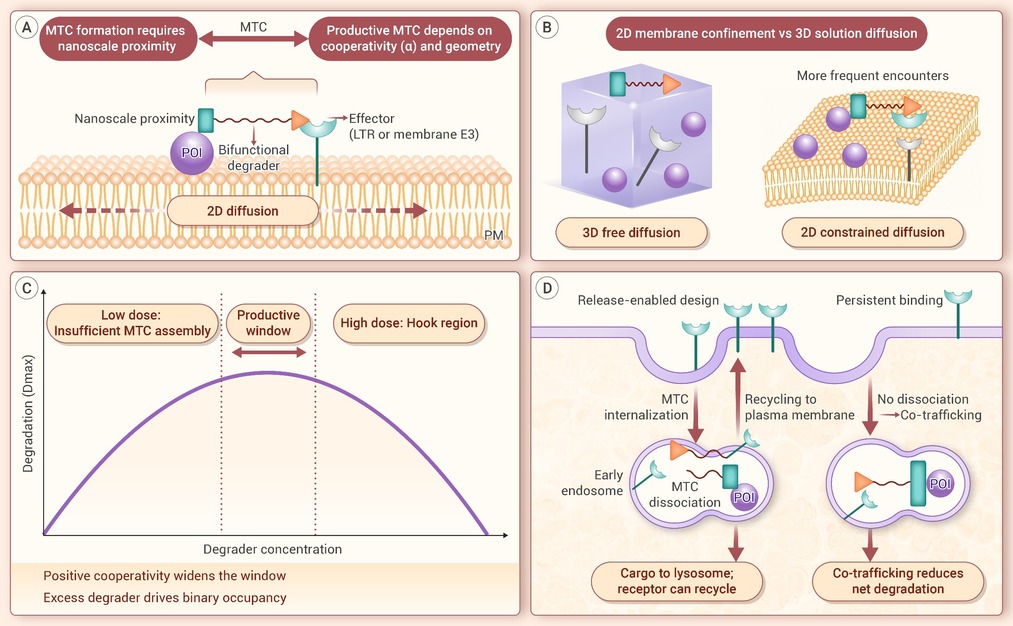
Figure 2.
MTC is the central control point that determines emTPD efficiency
-
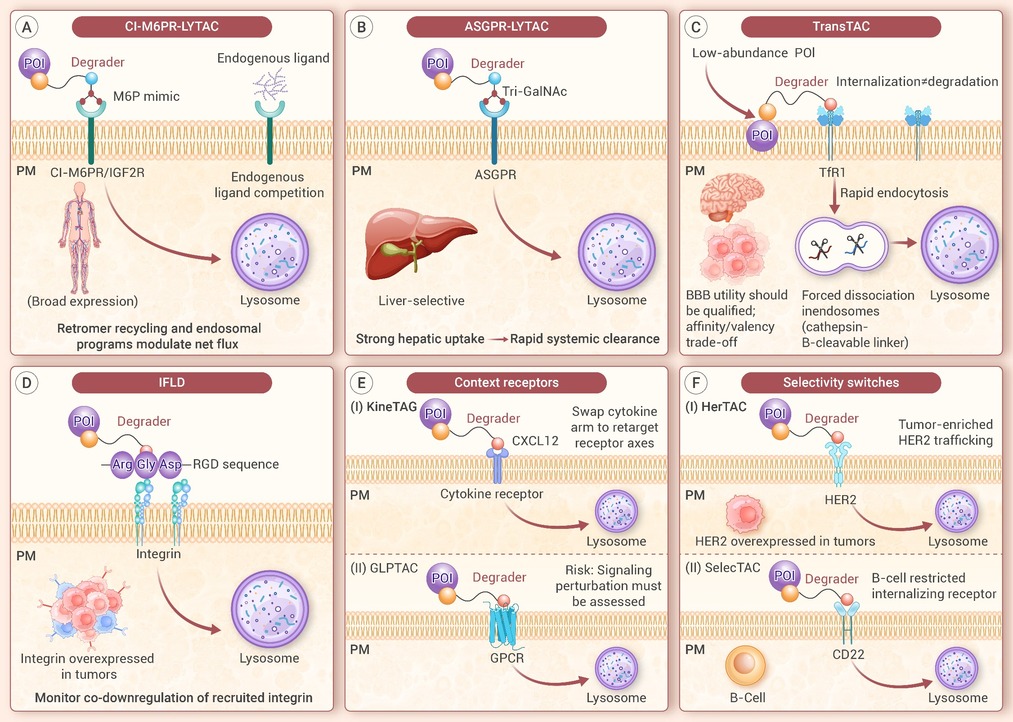
Figure 3.
Receptor-hijacking strategies in emTPD
-
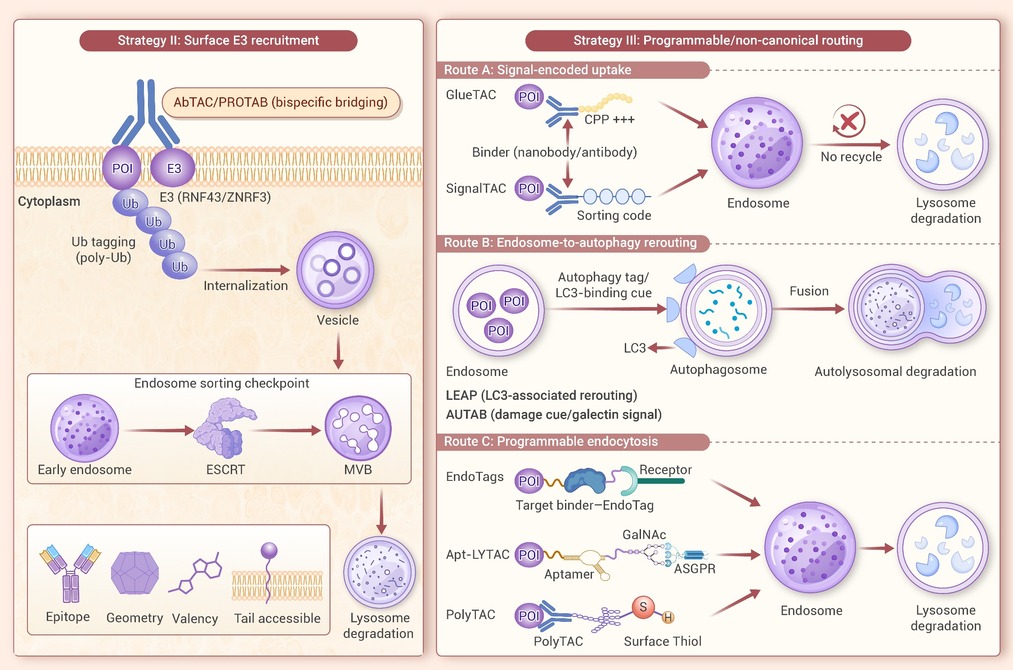
Figure 4.
Cell-surface E3 recruitment and programmable/non-canonical routing modalities
-
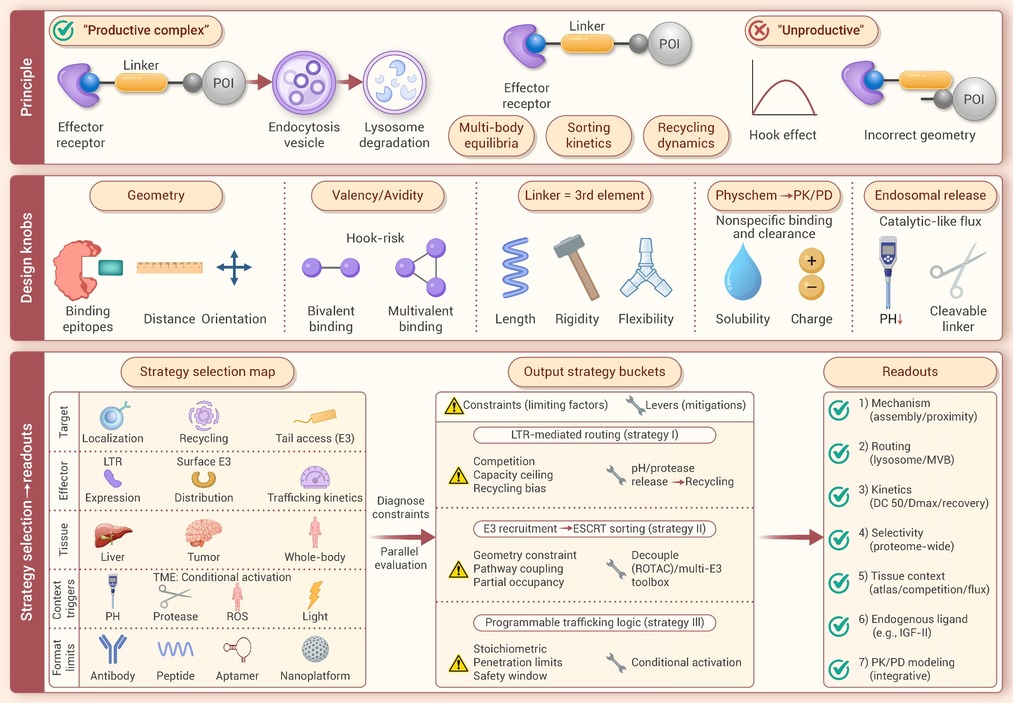
Figure 5.
Rational design framework for emTPD
-
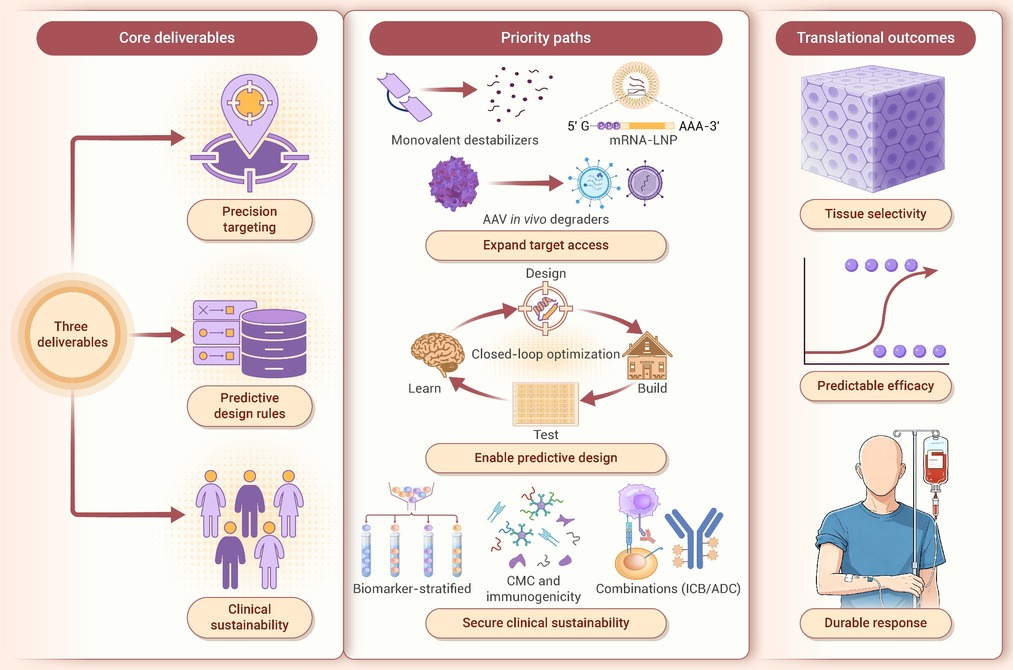
Figure 6.
Translational priorities for the future development of emTPD
