
From liver organoids to regulatory platforms for precision hepatology: Advances and challenges
-
GRAPHICAL ABSTRACT
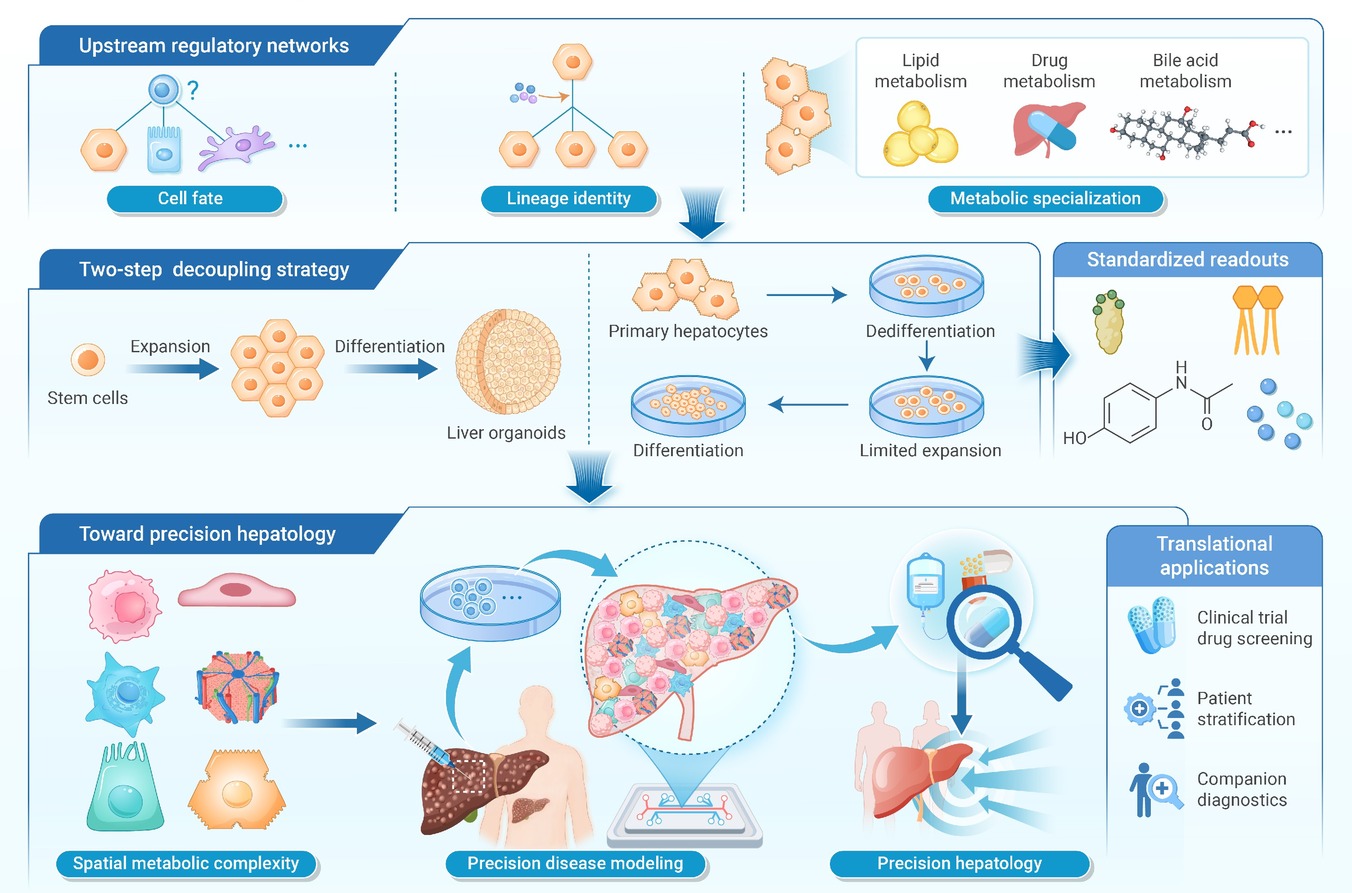
 DownLoad:
Full size image
DownLoad:
Full size image
-
PUBLIC SUMMARY
-
Liver organoids are evolving into regulatory platforms that better mimic liver metabolism and organization.
A two-step expansion-differentiation strategy enables scalable organoid production while preserving function.
Reconstructing upstream regulatory programs may improve mechanistic evaluation of liver organoid quality.
Advanced liver organoids support disease modeling, drug screening, and precision hepatology research.
Future organoids may integrate multicellular complexity and spatial metabolism to improve translation.
-
-
ABSTRACT
Liver organoids have rapidly advanced as human-relevant systems for modeling liver development, metabolic disease, and drug responses. Recent studies have established expandable adult hepatocyte organoids with sustained proliferative capacity, engineered induced pluripotent stem cell-derived organoids exhibiting metabolic zonation through controlled signaling gradients, and constructed multicellular assembloids that incorporate non-parenchymal cell types to recapitulate physiological periportal architecture and model cholestatic fibrotic microenvironments. These developments have enhanced scalability, structural organization, and disease modeling fidelity, supporting applications in translational research. Despite these advances, several challenges remain. Current evaluation of liver organoids largely relies on terminal functional outputs, while the upstream regulatory hierarchies that specify hepatic identity, zonation, and metabolic competence remain insufficiently reconstructed and validated. Limitations in long-term stability, spatial precision, and standardization further constrain predictive performance. This Review summarizes recent technological progress, discusses strategies to improve regulatory fidelity and functional benchmarking, and outlines future directions toward developing liver organoids as more reliable platforms for disease modeling and precision hepatology. -

-
REFERENCES
[1] Ben-Moshe S. and Itzkovitz S. (2019). Spatial heterogeneity in the mammalian liver. Nat Rev Gastroenterol Hepatol 16:395−410. DOI:10.1038/s41575-019-0134-x [2] Xu X., Fang Y., Zhang Y., et al. (2025). Targeting the peroxisomal FASN-ACOX2 axis to modulate energy homeostasis: therapeutic potential and challenges. Targetome 1:e006. DOI:10.48130/targetome-0025-0006 [3] Brosch M., Kattler K., Herrmann A., et al. (2018). Epigenomic map of human liver reveals principles of zonated morphogenic and metabolic control. Nat Commun 9:4150. DOI:10.1038/s41467-018-06611-5 [4] Nie L., Yan N., Gonzalez F. J., et al. (2025). Role of metabolic nuclear receptors in acute liver injury and drug-induced hepatotoxicity. Pharmacol Res 220:107942. DOI:10.1016/j.phrs.2025.107942 [5] Devarbhavi H., Asrani S. K., Arab J. P., et al. (2023). Global burden of liver disease: 2023 update. J Hepatol 79:516−537. DOI:10.1016/j.jhep.2023.03.017 [6] Dunn J. C., Tompkins R. G. and Yarmush M. L. (1991). Long-term in vitro function of adult hepatocytes in a collagen sandwich configuration. Biotechnol Prog 7:237−245. DOI:10.1021/bp00009a007 [7] Marshall L. J., Bailey J., Cassotta M., et al. (2023). Poor translatability of biomedical research using animals - a narrative review. Altern Lab Anim 51:102−135. DOI:10.1177/02611929231157756 [8] Mun S. J., Ryu J. S., Lee M. O., et al. (2019). Generation of expandable human pluripotent stem cell-derived hepatocyte-like liver organoids. J Hepatol 71:970−985. DOI:10.1016/j.jhep.2019.06.030 [9] Kim Y., Kang M., Mamo M. G., et al. (2025). Liver organoids: current advances and future applications for hepatology. Clin Mol Hepatol 31:S327−s348. DOI:10.3350/cmh.2024.1040 [10] Hu Y., Hu X., Luo J., et al. (2023). Liver organoid culture methods. Cell Biosci 13:197. DOI:10.1186/s13578-023-01136-x [11] Wang D., Villenave R., Stokar-Regenscheit N. and Clevers H. (2025). Human organoids as 3D in vitro platforms for drug discovery: opportunities and challenges. Nat Rev Drug Discov 21:541-557. DOI:10.1038/s41573-025-01317-y [12] Administration U. S. F. a. D. (2025). Implementing alternative methods. https://www.fda.gov/science-research/advancing-alternative-methods-fda/implementing-alternative-methods [13] Administration U. S. F. a. D. (2025). Roadmap to reducing animal testing in preclinical safety studies. U.S. Food and Drug Administration [14] Health N. I. o. (2025). NIH establishes nation’s first dedicated organoid development center to reduce reliance on animal modeling. https://www.nih.gov/news-events/news-releases/nih-establishes-nations-first-dedicated-organoid-development-center-reduce-reliance-animal-modeling [15] Inc. Q. (2025). Qureator’s historic FDA IND approval based on human-relevant organoid efficacy data. https://qureator.com/qureators-historic-fda-approval-based-on-human-relevant-data-highlighted-in-the-bio/ [16] Sljukic A., Green Jenkinson J., Niksic A., et al. (2025). Advances in liver and pancreas organoids: how far we have come and where we go next. Nat Rev Gastroenterol Hepatol 23:44-64. DOI:10.1038/s41575-025-01116-1 [17] Huch M., Dorrell C., Boj S. F., et al. (2013). In vitro expansion of single Lgr5+ liver stem cells induced by Wnt-driven regeneration. Nature 494:247−250. DOI:10.1038/nature11826 [18] Hu H., Gehart H., Artegiani B., et al. (2018). Long-term expansion of functional mouse and human hepatocytes as 3D organoids. Cell 175:1591−1606.e1519. DOI:10.1016/j.cell.2018.11.013 [19] Peng W. C., Logan C. Y., Fish M., et al. (2018). Inflammatory cytokine TNFα promotes the long-term expansion of primary hepatocytes in 3D culture. Cell 175:1607-1619 e1615. DOI:10.1016/j.cell.2018.11.012. [20] Takebe T., Sekine K., Enomura M., et al. (2013). Vascularized and functional human liver from an iPSC-derived organ bud transplant. Nature 499:481−484. DOI:10.1038/nature12271 [21] Harrison S. P., Baumgarten S. F., Verma R., et al. (2021). Liver organoids: recent developments, limitations and potential. Front Med (Lausanne) 8:574047. DOI:10.3389/fmed.2021.574047 [22] Zeilinger K., Freyer N., Damm G., et al. (2016). Cell sources for in vitro human liver cell culture models. Exp Biol Med (Maywood) 241:1684−1698. DOI:10.1177/1535370216657448 [23] Lancaster M. A. and Huch M. (2019). Disease modelling in human organoids. Dis Model Mech 12. DOI:10.1242/dmm.039347 [24] Yan T., Yan N., Xia Y., et al. (2024). Hepatocyte-specific CCAAT/enhancer binding protein α restricts liver fibrosis progression. J Clin Invest 134. DOI:10.1172/jci166731 [25] Martini T., Naef F. and Tchorz J. S. (2023). Spatiotemporal metabolic liverzonation and consequences on pathophysiology. Annu Rev Pathol 18:439−466. DOI:10.1146/annurev-pathmechdis-031521-024831 [26] Igarashi R., Oda M., Okada R., et al. (2025). Generation of human adult hepatocyte organoids with metabolic functions. Nature 641:1248−1257. DOI:10.1038/s41586-025-08861-y [27] Reza H. A., Santangelo C., Iwasawa K., et al. (2025). Multi-zonal liver organoids from human pluripotent stem cells. Nature 641:1258−1267. DOI:10.1038/s41586-025-08850-1 [28] Dowbaj A. M., Sljukic A., Niksic A., et al. (2025). Mouse liver assembloids model periportal architecture and biliary fibrosis. Nature 644:473−482. DOI:10.1038/s41586-025-09183-9 [29] Yuan L., Dawka S., Kim Y., et al. (2026). Human assembloids recapitulate periportal liver tissue in vitro. Nature 650:438-449. DOI:10.1038/s41586-025-09884-1 [30] Carson M. D. and Nejak-Bowen K. (2025). Wnt/β-catenin signaling in liver pathobiology. Annu Rev Pathol 20:59−86. DOI:10.1146/annurev-pathmechdis-111523-023535 [31] Kiuchi N., Nakajima K., Ichiba M., et al. (1999). STAT3 is required for the gp130-mediated full activation of the c-myc gene. J Exp Med 189:63−73. DOI:10.1084/jem.189.1.63 [32] Liu Y., Zhuo S., Zhou Y., et al. (2022). Yap-Sox9 signaling determines hepatocyte plasticity and lineage-specific hepatocarcinogenesis. J Hepatol 76:652−664. DOI:10.1016/j.jhep.2021.11.010 [33] Xiang C., Du Y., Meng G., et al. (2019). Long-term functional maintenance of primary human hepatocytes in vitro. Science 364:399−402. DOI:10.1126/science.aau7307 [34] Kamiya A., Kinoshita T. and Miyajima A. (2001). Oncostatin M and hepatocyte growth factor induce hepatic maturation via distinct signaling pathways. FEBS Lett 492:90−94. DOI:10.1016/s0014-5793(01)02140-8 [35] Halpern K. B., Shenhav R., Matcovitch-Natan O., et al. (2017). Single-cell spatial reconstruction reveals global division of labour in the mammalian liver. Nature 542:352−356. DOI:10.1038/nature21065 [36] Nejak-Bowen K. N., Zeng G., Tan X., et al. (2009). Beta-catenin regulates vitamin C biosynthesis and cell survival in murine liver. J Biol Chem 284:28115−28127. DOI:10.1074/jbc.M109.047258 [37] Creeden J. F., Gordon D. M., Stec D. E. and Hinds T. D., Jr. (2021). Bilirubin as a metabolic hormone: the physiological relevance of low levels. Am J Physiol Endocrinol Metab 320:E191−e207. DOI:10.1152/ajpendo.00405.2020 [38] Arany Z., Huang L. E., Eckner R., et al. (1996). An essential role for p300/CBP in the cellular response to hypoxia. Proc Natl Acad Sci U S A 93:12969−12973. DOI:10.1073/pnas.93.23.12969 [39] Kietzmann T. (2019). Liver zonation in health and disease: hypoxia and hypoxia-inducible transcription factors as concert masters. Int J Mol Sci 20:2347. DOI:10.3390/ijms20092347 [40] Gonzalez F. J., Xie C. and Jiang C. (2018). The role of hypoxia-inducible factors in metabolic diseases. Nat Rev Endocrinol 15:21−32. DOI:10.1038/s41574-018-0096-z [41] Nuciforo S. and Heim M. H. (2021). Organoids to model liver disease. JHEP Rep 3:100198. DOI:10.1016/j.jhepr.2020.100198 [42] Zieve L., Anderson W. R., Lyftogt C. and Draves K. (1986). Hepatic regenerative enzyme activity after pericentral and periportal lobular toxic injury. Toxicol Appl Pharmacol 86:147−158. DOI:10.1016/0041-008x(86)90045-1 [43] Hinson J. A., Roberts D. W. and James L. P. (2010). Mechanisms of acetaminophen-induced liver necrosis. Handb Exp Pharmacol 196:369-405. DOI:10.1007/978-3-642-00663-0_12 [44] Penttilä K. E., Mäkinen J. and Lindros K. O. (1987). Allyl alcohol liver injury: suppression by ethanol and relation to transient glutathione depletion. Pharmacol Toxicol 60:340−344. DOI:10.1111/j.1600-0773.1987.tb01523.x [45] Zheng X., Cai X. and Hao H. (2022). Emerging targetome and signalome landscape of gut microbial metabolites. Cell Metab 34:35−58. DOI:10.1016/j.cmet.2021.12.011 [46] Si-Tayeb K., Noto F. K., Nagaoka M., et al. (2010). Highly efficient generation of human hepatocyte-like cells from induced pluripotent stem cells. Hepatology 51:297−305. DOI:10.1002/hep.23354 [47] Abilez O. J., Yang H., Guan Y., et al. (2025). Gastruloids enable modeling of the earliest stages of human cardiac and hepatic vascularization. Science 388:eadu9375. DOI:10.1126/science.adu9375 [48] Rezania V., Coombe D. and Tuszynski J. (2020). Liver bioreactor design issues of fluid flow and zonation, fibrosis, and mechanics: a computational perspective. J Funct Biomater 11:13. DOI:10.3390/jfb11010013 [49] Mahdavi R., Hashemi-Najafabadi S., Ghiass M. A., et al. (2025). Design, fabrication, and characterization of a user-friendly microfluidic device for studying liver zonation-on-chip (ZoC). Biomed Microdevices 27:8. DOI:10.1007/s10544-025-00738-1 [50] Liu Y., Sheng J. Y., Yang C. F., et al. (2023). A decade of liver organoids: advances in disease modeling. Clin Mol Hepatol 29:643−669. DOI:10.3350/cmh.2022.0428 [51] Liu Y., Zhou Y., Ahodantin J., et al. (2024). Generation and characterization of mature hepatocyte organoids for liver metabolic studies. J Cell Sci 137:jcs261961. DOI:10.1242/jcs.261961 [52] Cotovio J. P. and Fernandes T. G. (2020). Production of human pluripotent stem cell-derived hepatic cell lineages and liver organoids: current status and potential applications. Bioengineering (Basel) 7:36. DOI:10.3390/bioengineering7020036 [53] Yoon Y., Gong S. C., Kim M. Y., et al. (2023). Generation of fibrotic liver organoids using hepatocytes, primary liver sinusoidal endothelial cells, hepatic stellate cells, and macrophages. Cells 12:2514. DOI:10.3390/cells12212514 [54] Sato K., Marzioni M., Meng F., et al. (2019). Ductular reaction in liver diseases: pathological mechanisms and translational significances. Hepatology 69:420−430. DOI:10.1002/hep.30150 [55] Islam D., Israr I., Taleb M. A. B., et al. (2024). A novel model to study mechanisms of cholestasis in human cholangiocytes reveals a role for the SIPR2 pathway. Hepatol Commun 12:2514. DOI:10.1097/hc9.0000000000000389. [56] Rezvani M. (2025). Human liver immunology: from in vitro models to new insights. Cell Mol Immunol 22:1226−1236. DOI:10.1038/s41423-025-01312-8 [57] Dixon L. J., Barnes M., Tang H., et al. (2013). Kupffer cells in the liver. Compr Physiol 3:785−797. DOI:10.1002/cphy.c120026 [58] Schwabe R. F. and Brenner D. A. (2025). Hepatic stellate cells: balancing homeostasis, hepatoprotection and fibrogenesis in health and disease. Nat Rev Gastroenterol Hepatol 22:481−499. DOI:10.1038/s41575-025-01068-6 [59] Wells R. G. (2014). The portal fibroblast: not just a poor man's stellate cell. Gastroenterology 147:41−47. DOI:10.1053/j.gastro.2014.05.001 [60] Kretzschmar K. and Clevers H. (2016). Organoids: modeling development and the stem cell niche in a dish. Dev Cell 38:590−600. DOI:10.1016/j.devcel.2016.08.014 [61] Peng W. C., Kraaier L. J. and Kluiver T. A. (2021). Hepatocyte organoids and cell transplantation: What the future holds. Exp Mol Med 53:1512−1528. DOI:10.1038/s12276-021-00579-x [62] Fu G. B., Huang W. J., Zeng M., et al. (2019). Expansion and differentiation of human hepatocyte-derived liver progenitor-like cells and their use for the study of hepatotropic pathogens. Cell Res 29:8−22. DOI:10.1038/s41422-018-0103-x [63] Hendriks D., Artegiani B., Margaritis T., et al. (2024). Mapping of mitogen and metabolic sensitivity in organoids defines requirements for human hepatocyte growth. Nat Commun 15:4034. DOI:10.1038/s41467-024-48550-4 [64] McCracken K. W., Howell J. C., Wells J. M. and Spence J. R. (2011). Generating human intestinal tissue from pluripotent stem cells in vitro. Nat Protoc 6:1920−1928. DOI:10.1038/nprot.2011.410 [65] Wang D., Wang J., Bai L., et al. (2020). Long-Term expansion of pancreatic Islet organoids from resident procr(+) progenitors. Cell 180:1198−1211.e1119. DOI:10.1016/j.cell.2020.02.048 [66] Sachs N., Papaspyropoulos A., Zomer-van Ommen D. D., et al. (2019). Long-term expanding human airway organoids for disease modeling. Embo j 38:e100300. DOI:10.15252/embj.2018100300 [67] Chen Y. F., Tseng C. Y., Wang H. W., et al. (2012). Rapid generation of mature hepatocyte-like cells from human induced pluripotent stem cells by an efficient three-step protocol. Hepatology 55:1193−1203. DOI:10.1002/hep.24790 [68] Cai J., Zhao Y., Liu Y., et al. (2007). Directed differentiation of human embryonic stem cells into functional hepatic cells. Hepatology 45:1229−1239. DOI:10.1002/hep.21582 [69] Hay D. C., Zhao D., Fletcher J., et al. (2008). Efficient differentiation of hepatocytes from human embryonic stem cells exhibiting markers recapitulating liver development in vivo. Stem Cells 26:894−902. DOI:10.1634/stemcells.2007-0718 [70] Afonso M. B., Marques V., van Mil S. W. C. and Rodrigues C. M. P. (2024). Human liver organoids: From generation to applications. Hepatology 79:1432−1451. DOI:10.1097/hep.0000000000000343 [71] Xie H., Li G., Fu Y., et al. (2024). A two-step strategy to expand primary human hepatocytes in vitro with efficient metabolic and regenerative capacities. Stem Cell Res Ther 15:281. DOI:10.1186/s13287-024-03911-0 [72] Shimizu T., Miyoshi M., Kakinuma S., et al. (2025). Bile acid-FXR signaling facilitates the long-term maintenance of hepatic characteristics in human iPSC-derived organoids. Cell Rep 44:115675. DOI:10.1016/j.celrep.2025.115675 [73] Nell P., Kattler K., Feuerborn D., et al. (2022). Identification of an FXR-modulated liver-intestine hybrid state in iPSC-derived hepatocyte-like cells. J Hepatol 77:1386−1398. DOI:10.1016/j.jhep.2022.07.009 [74] Velazquez J. J., LeGraw R., Moghadam F., et al. (2021). Gene regulatory network analysis and engineering directs development and vascularization of multilineage human liver organoids. Cell Syst 12:41−55.e11. DOI:10.1016/j.cels.2020.11.002 [75] Trefts E., Gannon M. and Wasserman D. H. (2017). The liver. Curr Biol 27:R1147−r1151. DOI:10.1016/j.cub.2017.09.019 [76] Unagolla J. M. and Jayasuriya A. C. (2022). Recent advances in organoid engineering: A comprehensive review. Appl Mater Today 29:101582. DOI:10.1016/j.apmt.2022.101582. [77] Cai X., Young G. M. and Xie W. (2021). The xenobiotic receptors PXR and CAR in liver physiology, an update. Biochim Biophys Acta Mol Basis Dis 1867:166101. DOI:10.1016/j.bbadis.2021.166101 [78] Contreras A. V., Rangel-Escareño C., Torres N., et al. (2015). PPARα via HNF4α regulates the expression of genes encoding hepatic amino acid catabolizing enzymes to maintain metabolic homeostasis. Genes Nutr 10:452. DOI:10.1007/s12263-014-0452-0 [79] Hayhurst G. P., Lee Y. H., Lambert G., et al. (2001). Hepatocyte nuclear factor 4alpha (nuclear receptor 2A1) is essential for maintenance of hepatic gene expression and lipid homeostasis. Mol Cell Biol 21:1393−1403. DOI:10.1128/mcb.21.4.1393-1403.2001 [80] Zacharis E. D., Morell C. M., Tomaz R. A., et al. (2025). Wnt signalling maintains self-renewal of human hepatoblasts without blocking their differentiation. Development 29:101582. DOI:10.1242/dev.205026 [81] Miyamura N., Hata S., Itoh T., et al. (2017). YAP determines the cell fate of injured mouse hepatocytes in vivo. Nat Commun 8:16017. DOI:10.1038/ncomms16017 [82] Yimlamai D., Christodoulou C., Galli G. G., et al. (2014). Hippo pathway activity influences liver cell fate. Cell 157:1324−1338. DOI:10.1016/j.cell.2014.03.060 [83] Schrem H., Klempnauer J. and Borlak J. (2004). Liver-enriched transcription factors in liver function and development. Part II: the C/EBPs and D site-binding protein in cell cycle control, carcinogenesis, circadian gene regulation, liver regeneration, apoptosis, and liver-specific gene regulation. Pharmacol Rev 56:291−330. DOI:10.1124/pr.56.2.5 [84] DeLaForest A., Nagaoka M., Si-Tayeb K., et al. (2011). HNF4A is essential for specification of hepatic progenitors from human pluripotent stem cells. Development 138:4143−4153. DOI:10.1242/dev.062547 [85] Huck I., Gunewardena S., Espanol-Suner R., et al. (2019). Hepatocyte nuclear factor 4 alpha activation is essential for termination of liver regeneration in mice. Hepatology 70:666−681. DOI:10.1002/hep.30405 [86] Koschmieder S., Halmos B., Levantini E. and Tenen D. G. (2009). Dysregulation of the C/EBPα differentiation pathway in human cancer. J Clin Oncol 27:619−628. DOI:10.1200/jco.2008.17.9812 [87] Schrem H., Klempnauer J. and Borlak J. (2002). Liver-enriched transcription factors in liver function and development. Part I: the hepatocyte nuclear factor network and liver-specific gene expression. Pharmacol Rev 54:129−158. DOI:10.1124/pr.54.1.129 [88] Dubois V., Lefebvre P., Staels B. and Eeckhoute J. (2024). Nuclear receptors: pathophysiological mechanisms and drug targets in liver disease. Gut 73:1562−1569. DOI:10.1136/gutjnl-2023-331741 [89] Zhang S., Liu L., Li X., et al. (2024). Transcriptomic and proteomic sequencing unveils the role of vitamin D and metabolic flux shifts in the induction of human hepatic organoids. Stem Cell Res Ther 15:478. DOI:10.1186/s13287-024-04101-8 [90] Ju C., Colgan S. P. and Eltzschig H. K. (2016). Hypoxia-inducible factors as molecular targets for liver diseases. J Mol Med (Berl) 94:613−627. DOI:10.1007/s00109-016-1408-1 [91] Liu P., Huang F., Zheng X. and Hao H. (2025). Targetome-guided combination drug discovery as next-generation therapeutics. Targetome 1:e002. DOI:10.48130/targetome-0025-0002 [92] Ehle C., Iyer-Bierhoff A., Wu Y., et al. (2024). Downregulation of HNF4A enables transcriptomic reprogramming during the hepatic acute-phase response. Commun Biol 7:589. DOI:10.1038/s42003-024-06288-1 [93] Liang J., Wei J., Cao J., et al. (2023). In-organoid single-cell CRISPR screening reveals determinants of hepatocyte differentiation and maturation. Genome Biol 24:251. DOI:10.1186/s13059-023-03084-8 [94] Abbey D., Elwyn S., Hand N. J., et al. (2020). Self-organizing human induced pluripotent stem cell hepatocyte 3D organoids inform the biology of the pleiotropic TRIB1 gene. Hepatol Commun 4:1316−1331. DOI:10.1002/hep4.1538 [95] Scholtes C. and Giguère V. (2022). Transcriptional control of energy metabolism by nuclear receptors. Nat Rev Mol Cell Biol 23:750−770. DOI:10.1038/s41580-022-00486-7 [96] Ouchi R., Togo S., Kimura M., et al. (2019). Modeling steatohepatitis in humans with pluripotent stem cell-derived organoids. Cell Metab 30:374−384.e376. DOI:10.1016/j.cmet.2019.05.007 [97] Planas-Paz L., Sun T., Pikiolek M., et al. (2019). YAP, but not RSPO-LGR4/5, signaling in biliary epithelial cells promotes a ductular reaction in response to liver injury. Cell Stem Cell 25:39−53.e10. DOI:10.1016/j.stem.2019.04.005 [98] Liu Y., Zhu J., Jin Y., et al. (2025). Disrupting bile acid metabolism by suppressing Fxr causes hepatocellular carcinoma induced by YAP activation. Nat Commun 16:3583. DOI:10.1038/s41467-025-58809-z [99] Wang Y. M., Ong S. S., Chai S. C. and Chen T. (2012). Role of CAR and PXR in xenobiotic sensing and metabolism. Expert Opin Drug Metab Toxicol 8:803−817. DOI:10.1517/17425255.2012.685237 [100] Tirona R. G., Lee W., Leake B. F., et al. (2003). The orphan nuclear receptor HNF4α determines PXR- and CAR-mediated xenobiotic induction of CYP3A4. Nat Med 9:220−224. DOI:10.1038/nm815 [101] Wang Y., Nakajima T., Gonzalez F. J. and Tanaka N. (2020). PPARs as metabolic regulators in the liver: lessons from liver-specific PPAR-null mice. Int J Mol Sci 21(6)2061. DOI:10.3390/ijms21062061 [102] Kuchay M. S., Choudhary N. S. and Ramos-Molina B. (2025). Pathophysiological underpinnings of metabolic dysfunction-associated steatotic liver disease. Am J Physiol Cell Physiol 328:C1637−c1666. DOI:10.1152/ajpcell.00951.2024 [103] Kruitwagen H. S., Oosterhoff L. A., Vernooij I., et al. (2017). Long-term adult feline liver organoid cultures for disease modeling of hepatic steatosis. Stem Cell Reports 8:822−830. DOI:10.1016/j.stemcr.2017.02.015 [104] Haaker M. W., Kruitwagen H. S., Vaandrager A. B., et al. (2020). Identification of potential drugs for treatment of hepatic lipidosis in cats using an in vitro feline liver organoid system. J Vet Intern Med 34:132−138. DOI:10.1111/jvim.15670 [105] Wu X., Jiang D., Wang Y., et al. (2024). Modeling metabolic-associated steatohepatitis with human pluripotent stem cell-derived liver organoids. Hepatol Commun 8:e0585. DOI:10.1097/hc9.0000000000000585 [106] Ramli M. N. B., Lim Y. S., Koe C. T., et al. (2020). Human pluripotent stem cell-derived organoids as models of liver disease. Gastroenterology 159:1471−1486.e1412. DOI:10.1053/j.gastro.2020.06.010 [107] Hess A., Gentile S. D., Ben Saad A., et al. (2023). Single-cell transcriptomics stratifies organoid models of metabolic dysfunction-associated steatotic liver disease. Embo j 42:e113898. DOI:10.15252/embj.2023113898 [108] Wang Y., Wang H., Deng P., et al. (2020). Modeling human nonalcoholic fatty liver disease (NAFLD) with an organoids-on-a-chip system. ACS Biomater Sci Eng 6:5734−5743. DOI:10.1021/acsbiomaterials.0c00682 [109] Hendriks D., Brouwers J. F., Hamer K., et al. (2023). Engineered human hepatocyte organoids enable CRISPR-based target discovery and drug screening for steatosis. Nat Biotechnol 41:1567−1581. DOI:10.1038/s41587-023-01680-4 [110] Chen W. L. K., Edington C., Suter E., et al. (2017). Integrated gut/liver microphysiological systems elucidates inflammatory inter-tissue crosstalk. Biotechnol Bioeng 114:2648−2659. DOI:10.1002/bit.26370 [111] Seitz H. K., Bataller R., Cortez-Pinto H., et al. (2018). Alcoholic liver disease. Nat Rev Dis Primers 4:16. DOI:10.1038/s41572-018-0014-7 [112] Wang S., Wang X., Tan Z., et al. (2019). Human ESC-derived expandable hepatic organoids enable therapeutic liver repopulation and pathophysiological modeling of alcoholic liver injury. Cell Res 29:1009−1026. DOI:10.1038/s41422-019-0242-8 [113] Angireddy R., Chowdhury A. R., Zielonka J., et al. (2020). Alcohol-induced CYP2E1, mitochondrial dynamics and retrograde signaling in human hepatic 3D organoids. Free Radic Biol Med 159:1−14. DOI:10.1016/j.freeradbiomed.2020.06.030 [114] Bi G., Zhang X., Li W., et al. (2024). Modeling alcohol-associated liver disease in humans using adipose stromal or stem cell-derived organoids. Cell Rep Methods 4:100778. DOI:10.1016/j.crmeth.2024.100778 [115] Mirahmad M., Sabourian R., Mahdavi M., et al. (2022). In vitro cell-based models of drug-induced hepatotoxicity screening: progress and limitation. Drug Metab Rev 54:161−193. DOI:10.1080/03602532.2022.2064487 [116] Zhang C. J., Meyer S. R., O'Meara M. J., et al. (2023). A human liver organoid screening platform for DILI risk prediction. J Hepatol 78:998−1006. DOI:10.1016/j.jhep.2023.01.019 [117] Meyer S. R., Zhang C. J., Garcia M. A., et al. (2024). A high-throughput microphysiological liver chip system to model drug-induced liver injury using human liver organoids. Gastro Hep Adv 3:1045−1053. DOI:10.1016/j.gastha.2024.08.004 [118] Wu X., Jiang D., Yang Y., et al. (2023). Modeling drug-induced liver injury and screening for anti-hepatofibrotic compounds using human PSC-derived organoids. Cell Regen 12:6. DOI:10.1186/s13619-022-00148-1 [119] Noh H., Choi S., Park K. W., et al. (2025). Amino acid hepatotoxicity biomarkers in human hepatic prganoids: promising standardization of drug toxicity evaluation. ACS Pharmacol Transl Sci 8:510−521. DOI:10.1021/acsptsci.4c00612 [120] Nie Y. Z., Zheng Y. W., Miyakawa K., et al. (2018). Recapitulation of hepatitis B virus-host interactions in liver organoids from human induced pluripotent stem cells. EBioMedicine 35:114−123. DOI:10.1016/j.ebiom.2018.08.014 [121] De Crignis E., Hossain T., Romal S., et al. (2021). Application of human liver organoids as a patient-derived primary model for HBV infection and related hepatocellular carcinoma. Elife 10:e60747. DOI:10.7554/eLife.60747 [122] Natarajan V., Simoneau C. R., Erickson A. L., et al. (2022). Modelling T-cell immunity against hepatitis C virus with liver organoids in a microfluidic coculture system. Open Biol 12:210320. DOI:10.1098/rsob.210320 [123] Chen J., Shen L., Guo Q., et al. (2024). The downregulation of Tapasin in dendritic cell regulates CD8(+) T cell autophagy to hamper hepatitis B viral clearance in the induced pluripotent stem cell-derived hepatocyte organoid. J Med Virol 96:e29546. DOI:10.1002/jmv.29546 [124] Liu F., Liu T., Wu X., et al. (2025). iPSC-induced multilineage liver organoids, small intestinal organoids and brain organoids sustain pangenotype hepatitis E virus propagation. Gut 75:787-800. DOI:10.1136/gutjnl-2025-336105 [125] Komuta M. (2021). Histological heterogeneity of primary liver cancers: Clinical relevance, diagnostic pitfalls and the pathologist's role. Cancers (Basel) 13(12):2871. DOI:10.3390/cancers13122871 [126] Broutier L., Mastrogiovanni G., Verstegen M. M., et al. (2017). Human primary liver cancer-derived organoid cultures for disease modeling and drug screening. Nat Med 23:1424−1435. DOI:10.1038/nm.4438 [127] Nuciforo S., Fofana I., Matter M. S., et al. (2018). Organoid models of human liver cancers derived from tumor needle biopsies. Cell Rep 24:1363−1376. DOI:10.1016/j.celrep.2018.07.001 [128] Li L., Knutsdottir H., Hui K., et al. (2019). Human primary liver cancer organoids reveal intratumor and interpatient drug response heterogeneity. JCI Insight 4:e121490. DOI:10.1172/jci.insight.121490 [129] Guo Y., Xu M., Xue H., et al. (2025). Genome-wide CRISPR screen identifies splicing factor SF3B4 in driving hepatocellular carcinoma. Sci Adv 11:eadw7181. DOI:10.1126/sciadv.adw7181 [130] Artegiani B., van Voorthuijsen L., Lindeboom R. G. H., et al. (2019). Probing the tumor suppressor function of BAP1 in CRISPR-engineered human liver organoids. Cell Stem Cell 24:927−943.e926. DOI:10.1016/j.stem.2019.04.017 [131] Sun L., Wang Y., Cen J., et al. (2019). Modelling liver cancer initiation with organoids derived from directly reprogrammed human hepatocytes. Nat Cell Biol 21:1015−1026. DOI:10.1038/s41556-019-0359-5 [132] Kim S., Jeong N., Park J., et al. (2024). Establishment and characterization of mouse metabolic dysfunction-associated steatohepatitis-related hepatocellular carcinoma organoids. Sci Rep 14:27460. DOI:10.1038/s41598-024-78963-6 [133] McCarron S., Bathon B., Conlon D. M., et al. (2021). Functional characterization of organoids derived from lrreversibly damaged liver of patients with NASH. Hepatology 74:1825−1844. DOI:10.1002/hep.31857 [134] Harrison S. A., Bedossa P., Guy C. D., et al. (2024). A phase 3, randomized, controlled trial of resmetirom in NASH with liver fibrosis. N Engl J Med 390:497−509. DOI:10.1056/NEJMoa2309000 [135] Tiriac H., Belleau P., Engle D. D., et al. (2018). Organoid profiling identifies common responders to chemotherapy in pancreatic cancer. Cancer Discov 8:1112−1129. DOI:10.1158/2159-8290.Cd-18-0349 [136] Guan Y., Xu D., Garfin P. M., et al. (2017). Human hepatic organoids for the analysis of human genetic diseases. JCI Insight 2:94954. DOI:10.1172/jci.insight.94954 [137] Qureshi A. A., Wehrle C. J., Ferreira-Gonzalez S., et al. (2024). Tumor organoids for primary liver cancers: A systematic review of current applications in diagnostics, disease modeling, and drug screening. JHEP Rep 6:101164. DOI:10.1016/j.jhepr.2024.101164 [138] Shi H., Kowalczewski A., Vu D., et al. (2024). Organoid intelligence: Integration of organoid technology and artificial intelligence in the new era of in vitro models. Med Nov Technol Devices 21:100276. DOI:10.1016/j.medntd.2023.100276 [139] Maramraju S., Kowalczewski A., Kaza A., et al. (2024). AI-organoid integrated systems for biomedical studies and applications. Bioeng Transl Med 9:e10641. DOI:10.1002/btm2.10641 [140] Bai L., Wu Y., Li G., et al. (2024). AI-enabled organoids: Construction, analysis, and application. Bioact Mater 31:525−548. DOI:10.1016/j.bioactmat.2023.09.005 [141] Kaur S., Kidambi S., Ortega-Ribera M., et al. (2023). In vitro models for the study of liver biology and diseases: advances and limitations. Cell Mol Gastroenterol Hepatol 15:559−571. DOI:10.1016/j.jcmgh.2022.11.008 [142] Jensen K. B. and Little M. H. (2023). Organoids are not organs: Sources of variation and misinformation in organoid biology. Stem Cell Reports 18:1255−1270. DOI:10.1016/j.stemcr.2023.05.009 [143] Zhao Z., Chen X., Dowbaj A. M., et al. (2022). Organoids. Nat Rev Methods Primers 2:94. DOI:10.1038/s43586-022-00174-y [144] Brandenberg N., Hoehnel S., Kuttler F., et al. (2020). High-throughput automated organoid culture via stem-cell aggregation in microcavity arrays. Nat Biomed Eng 4:863−874. DOI:10.1038/s41551-020-0565-2 [145] Tan S., Ding Y., Wang W., et al. (2025). Development of an AI model for DILI-level prediction using liver organoid brightfield images. Commun Biol 8:886. DOI:10.1038/s42003-025-08205-6 [146] Qin Y., Li J., Heng Y., et al. (2025). A knowledge-driven deep learning framework for organoid morphological segmentation and characterization. BMC Biol 23:313. DOI:10.1186/s12915-025-02411-8 [147] de Medeiros G., Ortiz R., Strnad P., et al. (2022). Multiscale light-sheet organoid imaging framework. Nat Commun 13:4864. DOI:10.1038/s41467-022-32465-z [148] Balkhair O. and Albalushi H. (2025). Artificial intelligence in organoid-based disease modeling: a new frontier in precision medicine. Biomimetics (Basel) 10:845. DOI:10.3390/biomimetics10120845 [149] Carreras-Puigvert J. and Spjuth O. (2024). Artificial intelligence for high content imaging in drug discovery. Curr Opin Struct Biol 87:102842. DOI:10.1016/j.sbi.2024.102842 [150] Shan W., Xu J. and Assaraf Y. G. (2026). Data-driven targetome discovery and database requirements: insights from the therapeutic target database. Targetome 2:e003. DOI:10.48130/targetome-0026-0001 [151] Zhang Y. and Rouault T. A. (2026). An iron sensor-based approach discovers a role for epigenetic regulation in iron homeostasis. Targetome 2:e007. DOI:10.48130/targetome-0026-0008 [152] Leung C. M., de Haan P., Ronaldson-Bouchard K., et al. (2022). A guide to the organ-on-a-chip. Nature Reviews Methods Primers 2:33. DOI:10.1038/s43586-022-00118-6 -
ABOUT THIS ARTICLE
Cite this article:
Xu X., Zhuang C., Liu Y., et al. (2026). From liver organoids to regulatory platforms for precision hepatology: Advances and challenges. The Innovation Drug Discovery 1:100026. https://doi.org/10.59717/j.xinn-drugdisc.2026.100026
Welcome!
To request copyright permission to republish or share portions of our works, please visit Copyright Clearance Center's (CCC) Marketplace website at marketplace.copyright.com.
Export File
Citation
Xu X., Zhuang C., Liu Y., et al. (2026). From liver organoids to regulatory platforms for precision hepatology: Advances and challenges. The Innovation Drug Discovery 1:100026. https://doi.org/10.59717/j.xinn-drugdisc.2026.100026

Format
Content
-
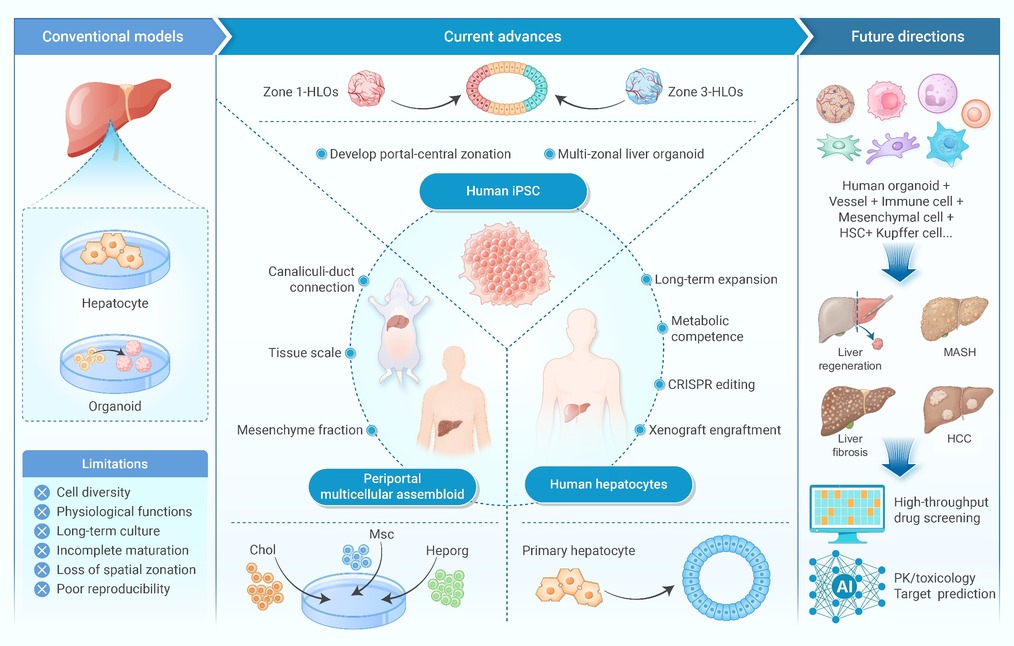
Figure 1.
Evolution of liver organoid systems from conventional models to advanced platforms for mechanistic interrogation and translational applications
-
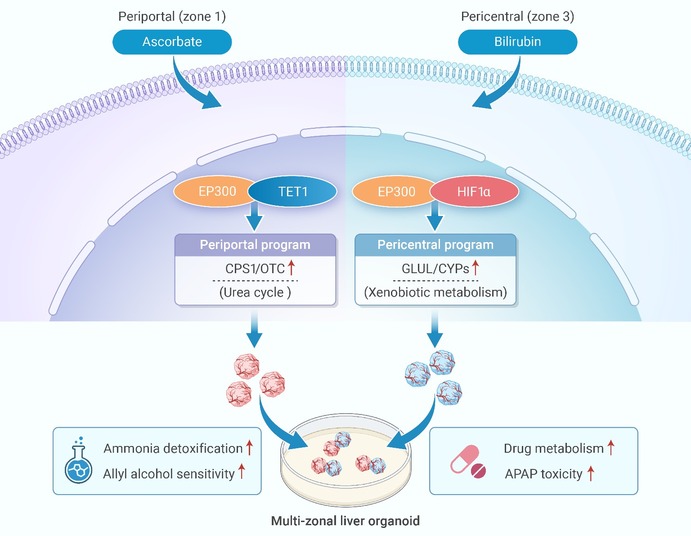
Figure 2.
Endogenous metabolites act as instructive cues to specify zonal identity in liver organoids
-
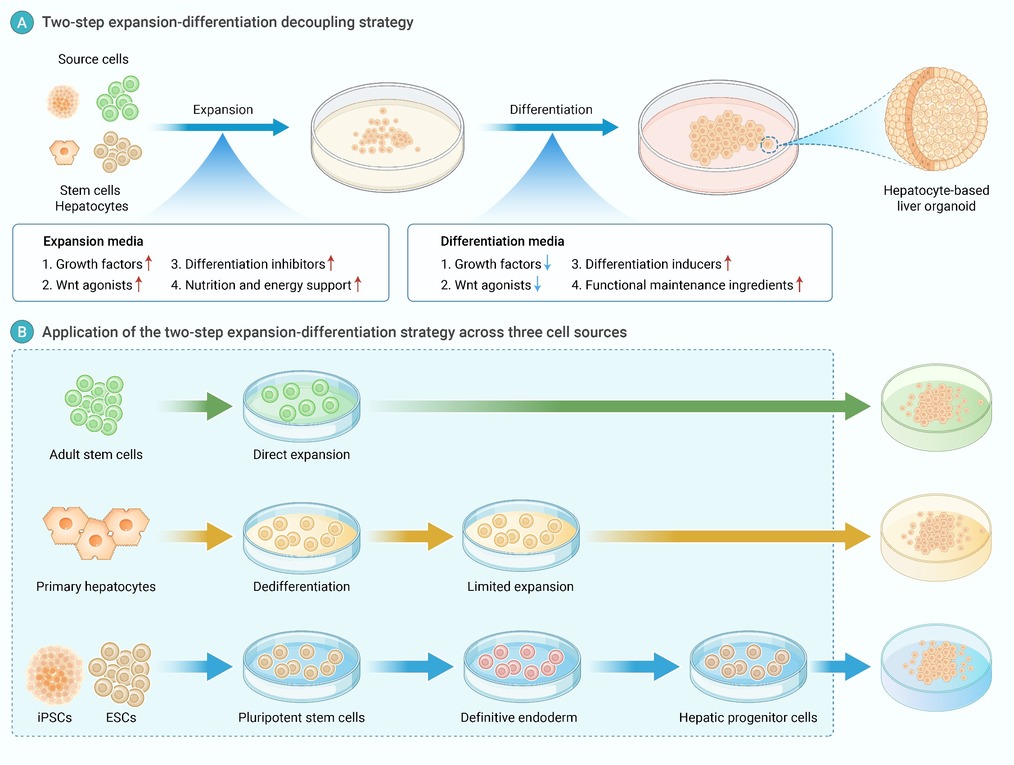
Figure 3.
Two-step expansion-differentiation decoupling strategy and its applicability across multiple cell sources
-
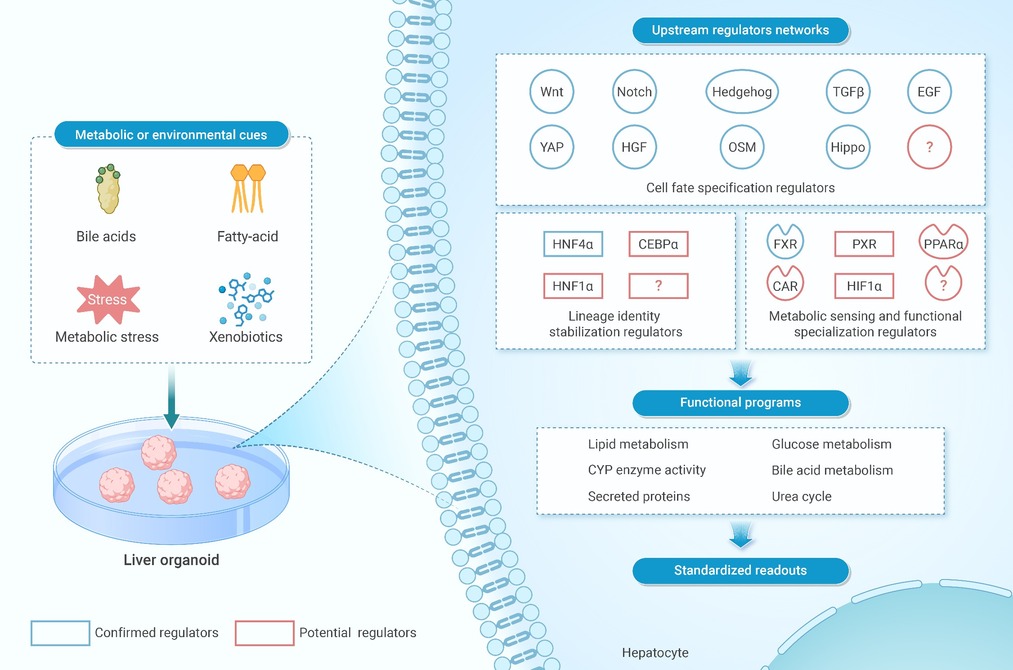
Figure 4.
Hierarchical framework for decoding upstream regulatory networks governing hepatic metabolic states in liver organoids
-
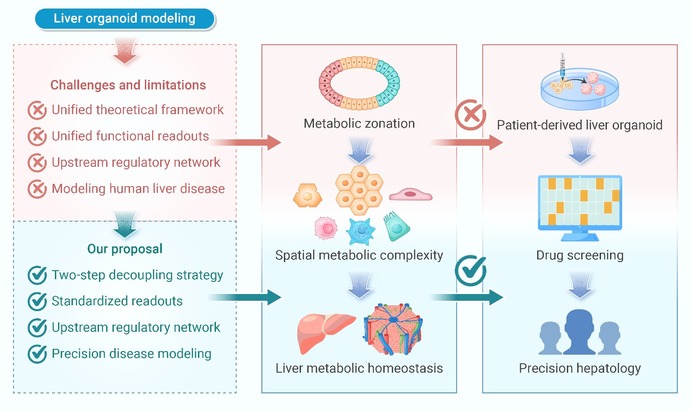
Figure 5.
A unified framework for decoding spatial metabolism toward precision hepatology
