
-
GRAPHICAL ABSTRACT

 DownLoad:
Full size image
DownLoad:
Full size image
-
PUBLIC SUMMARY
-
Data-driven approach identifies and quantifies bottlenecks in urban power networks (UPNs) due to electric vehicle adoption.
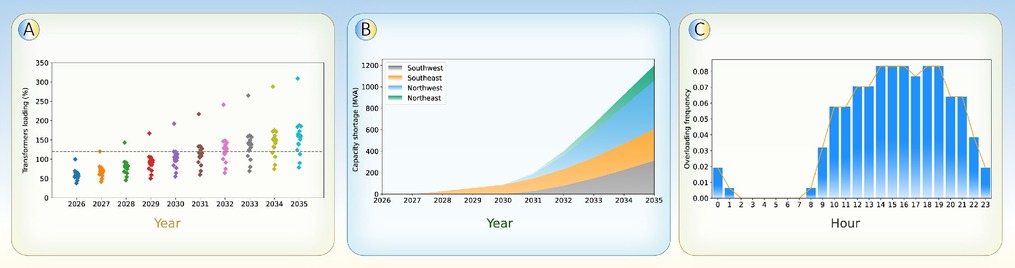
Finds UPN bottlenecks in Xi'an will emerge by 2026, with smart charging first applied to address them.
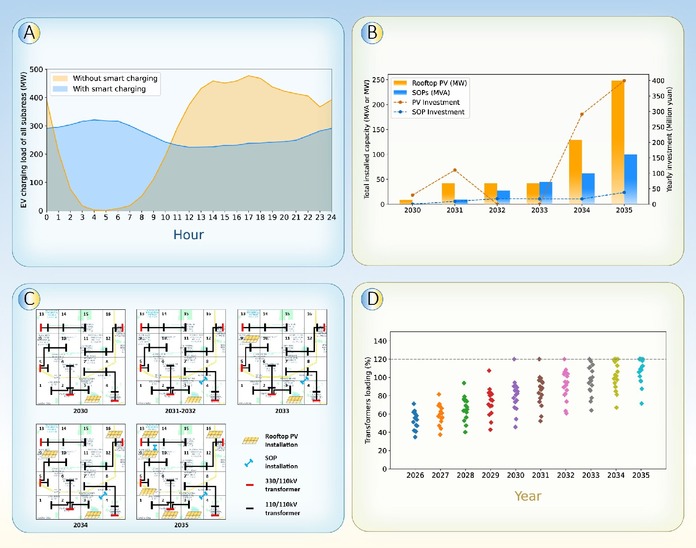
Proposes UPN evolution with rooftop photovoltaics (PVs) and soft open points (SOPs) starting in 2032.
Xi'an's UPNs can support China's EV integration target without large-scale network upgrades using the proposed measures.
Ensures sustainable co-evolution of UPNs and electric mobility through strategic interventions.
-
-
ABSTRACT
Urban power networks (UPNs) are crucial for decarbonization of urban transport sector through electrifying mobility. Serious concerns have been raised that a large-scale adoption of electric vehicles (EVs) may bring significant uncertainties and spatial imbalance to UPNs. Here, we present a data-driven approach to identify and quantify bottlenecks of UPNs with the development of electric mobility and further propose an effective solution to achieve sustainable co-evolution of the UPNs and electric mobility. Taking a megacity, Xi'an, China, as a representative case, we find that the earliest UPNs’ bottlenecks would emerge by 2026. EVs smart charging will be firstly applied to eliminate bottlenecks in 2026, followed by power networks evolution with rooftop photovoltaics (PVs) installation and soft open points (SOPs) starting from 2032. Based on those measures, UPNs in Xi'an city are able to support the achievement of China's EVs integration target even without large-scale urban electrical network upgrade. -

-
REFERENCES
[1] Popovich N. D., Rajagopal D., Tasar E., et al. (2021). Economic, environmental and grid-resilience benefits of converting diesel trains to battery-electric. Nat. Energy 6:1017−1025. DOI:10.1038/s41560-021-00915-5 [2] Chen X. Zhang H., Xu Z., et al. (2018). Impacts of fleet types and charging modes for electric vehicles on emissions under different penetrations of wind power. Nat. Energy 3:413−421. DOI:10.1038/s41560-018-0133-0 [3] Jenn, A. (2020). Emissions benefits of electric vehicles in Uber and Lyft ride-hailing services. Nat. Energy 5:520−525. DOI:10.1038/s41560-020-0632-7 [4] Yu X. and Zhou Y. (2025). Free autonomy renewable trade markets for government independence and carbon neutrality transitions with grid-demand-storage synergies. Innov. Energy 2:100062. DOI:10.59717/j.xinn-energy.2024.100062 [5] Isik M., Dodder R. and Kaplan P. O. (2021). Transportation emissions scenarios for New York City under different carbon intensities of electricity and electric vehicle adoption rates. Nat. Energy 6:92−104. DOI:10.1038/s41560-020-00740-2 [6] Analysis of Production and Sales in the Automotive Industry in July 2025. (2025). China Association of Automobile Manufacturers. http://www.auto-stats.org.cn/ReadArticle.asp?NewsID=11348. [7] Yun Z. (2025). The Pattern and Ecological Evolution of Intelligent Connected Vehicle Industry. China Automotive Engineering Research Institute. https://www.199it.com/archives/1772928.html. [8] Wei W., Wu L., Wang J., et al. (2017). Expansion Planning of Urban Electrified Transportation Networks: A Mixed-Integer Convex Programming Approach. IEEE TTE 3:210−224. DOI:10.1109/TTE.2017.2651071 [9] Yin Z., Lu X., Chen S., et al. (2023). Implication of electrification and power decarbonization in low-carbon transition pathways for China, the US. and the EU. Renew. Sustain. Energy Rev. 183:113493. DOI:10.1016/j.rser.2023.113493 [10] Luo Y., Zeng B., Zhang W., et al. (2024). Coordinative Planning of Public Transport Electrification, RESs and Energy Networks for Decarbonization of Urban Multi-Energy Systems: A Government-Market Dual-Driven Framework. IEEE TSE 15:538−555. DOI:10.1109/TSTE.2023.3306912 [11] Zenhom Z., Aleem S., Zobaa A., et al. (2024). A Comprehensive Review of Renewables and Electric Vehicles Hosting Capacity in Active Distribution Networks. IEEE Access 12:3672−3699. DOI:10.1109/ACCESS.2023.3349235 [12] Zhang W., Su J. and Li Y. (2024). Flexible Scheduling of the Electric–Hydrogen Coupling System Based on EV–HFEV Mixed Traffic Flow. IEEE TTE 10:5921−5935. DOI:10.1109/TTE.2023.3323354 [13] Liu J., Lin G., Huang S., et al. (2022). Collaborative EV Routing and Charging Scheduling With Power Distribution and Traffic Networks Interaction. IEEE TPS 37:3923−3936. DOI:10.1109/TPWRS.2022.3142256 [14] Williams B., Bishop D., Hooper G., et al. (2024). Driving change: Electric vehicle charging behavior and peak loading. Renew. Sustain. Energy Rev. 189:113953. DOI:10.1016/j.rser.2023.113953 [15] Nimalsiri N., Ratnam E., Smith D., et al. (2021). Coordinated Charge and Discharge Scheduling of Electric Vehicles for Load Curve Shaping. IEEE TITS 23:7653−7665. DOI:10.1109/TITS.2021.3071686 [16] Fischer D., Harbrecht A., Surmann A., et al. (2019). Electric vehicles’ impacts on residential electric local profiles – A stochastic modelling approach considering socio-economic, behavioural and spatial factors. Appl. Energy 233–234:644-658. DOI:10.1016/J.APENERGY.2018.10.010. [17] Engel H., Hensley R., Knupfer S., et al. (2018). The Potential Impact of Electric Vehicles on Global Energy Systems. 1–8. https://www.mckinsey.com/industries/automotive-and-assembly/our-insights/the-potential-impact-of-electric-vehicles-on-global-energy-systems. [18] Muratori, M. (2018). Impact of uncoordinated plug-in electric vehicle charging on residential power demand. Nat. Energy 3:193−201. DOI:10.1038/s41560-017-0074-z [19] Mu Y., Wu J., Jenkins N., et al. (2014). A Spatial–Temporal model for grid impact analysis of plug-in electric vehicles. Appl. Energy 114:456−465. DOI:10.1016/j.apenergy.2013.10.006 [20] Xu Y., Çolak S., Kara E. C., et al. (2018). Planning for electric vehicle needs by coupling charging profiles with urban mobility. Nat.Energy 3:484−493. DOI:10.1038/s41560-018-0136-x [21] Liu K. and Liu Y. (2023). Stochastic user equilibrium based spatial-temporal distribution prediction of electric vehicle charging load. Appl. Energy 339:120943. DOI:10.1016/j.apenergy.2023.120943 [22] Yan J., Zhang J., Liu Y., et al. (2020). EV charging load simulation and forecasting considering traffic jam and weather to support the integration of renewables and EVs. Renew. Energy 159:623−641. DOI:10.1016/j.renene.2020.03.175 [23] Calearo L., Thingvad A., Suzuki K., et al. (2019). Grid Loading Due to EV Charging Profiles Based on Pseudo-Real Driving Pattern and User Behavior. IEEE TTE 5:683−694. DOI:10.1109/TTE.2019.2921854 [24] Garrow L., German B., and Leonard C. (2021). Urban air mobility: A comprehensive review and comparative analysis with autonomous and electric ground transportation for informing future research. Transport. Res. C Emerg. Techn. 132:103377. DOI:10.1016/j.trc.2021.103377 [25] Wei W., Mei S., Wu L., et al. (2017). Optimal Traffic-Power Flow in Urban Electrified Transportation Networks. IEEE TSG 8:84−95. DOI:10.1109/TSG.2016.2612239 [26] Hamedmoghadam H., Jalili M., Vu H., et al. (2021). Percolation of heterogeneous flows uncovers the bottlenecks of infrastructure networks. Nat. Commun. 12:1254. DOI:10.1038/s41467-021-21483-y [27] Crozier C., Morstyn T. and McCulloch M. (2020). The opportunity for smart charging to mitigate the impact of electric vehicles on transmission and distribution systems. Appl. Energy 268:114973. DOI:10.1016/j.apenergy.2020.114973 [28] García-Villalobos J., Zamora I., San Martín, J. I., et al. (2014). Plug-in electric vehicles in electric distribution networks: A review of smart charging approaches. Renew. Sustain. Energy Rev. 38:717−731. DOI:10.1016/j.rser.2014.07.040 [29] Daina, N. (2018). Modelling the user variable. Nat.Energy 3:88−89. DOI:10.1038/s41560-018-0091-6 [30] Wolinetz M., Axsen J., Peters J., et al. (2018). Simulating the value of electric-vehicle–grid integration using a behaviourally realistic model. Nat. Energy 3:132−139. DOI:10.1038/s41560-017-0077-9 [31] Wei, W., Ramakrishnan, S., Needell, Z. A., et al. (2021). Personal vehicle electrification and charging solutions for high-energy days. Nat.Energy 6:105−114. DOI:10.1038/s41560-020-00752-y [32] Shao C. Wang X., Wang X., et al. (2014). Cooperative Dispatch of Wind Generation and Electric Vehicles With Battery Storage Capacity Constraints in SCUC. IEEE TSG 5:2219−2226. DOI:10.1109/TSG.2014.2316911 [33] Weckx S. and Driesen J. (2015). Load Balancing With EV Chargers and PV Inverters in Unbalanced Distribution Grids. IEEE TSE 6:635−643. DOI:10.1109/TSTE.2015.2402834 [34] Qian T., Shao C., Li X., et al. (2020). Enhanced Coordinated Operations of Electric Power and Transportation Networks via EV Charging Services. IEEE TSG 1:3019−3030. DOI:10.1109/TSG.2020.2969650 [35] Heptonstall P. J. and Gross R. J. K. (2021). A systematic review of the costs and impacts of integrating variable renewables into power grids. Nat. Energy 6:72−83. DOI:10.1038/s41560-020-00695-4 [36] Grunewald P. (2017). Renewable deployment: Model for a fairer distribution. Nat. Energy 2:17130. DOI:10.1038/nenergy.2017.130 [37] Jabr R. A. (2013). Polyhedral Formulations and Loop Elimination Constraints for Distribution Network Expansion Planning. IEEE TPS 28:1888−1897. DOI:10.1109/TPWRS.2012.2230652 [38] Franco J. F., Rider M. J. and Romero, R. (2016). Robust Multi-Stage Substation Expansion Planning Considering Stochastic Demand. IEEE TPS 31:2125−2134. DOI:10.1109/TPWRS.2015.2443175 [39] Shen X., Shahidehpour M., Zhu S., et al. (2018). Multi-Stage Planning of Active Distribution Networks Considering the Co-Optimization of Operation Strategies. IEEE TSG 9:1425−1433. DOI:10.1109/TSG.2016.2591586 [40] Morvaj B., Evins R. and Carmeliet J. (2017). Decarbonizing the electricity grid: The impact on urban energy systems, distribution grids and district heating potential. Appl. Energy 191:125−140. DOI:10.1016/j.apenergy.2017.01.058 [41] Shao C., Yang K., Zhang X., et al. (2025). Land constraint makes solar trackers less effective for photovoltaic power generation. Innov. Energy 2:100103. DOI:10.59717/j.xinn-energy.2025.100103 [42] Bolinger M. and Bolinger G. (2022). Land Requirements for Utility-Scale PV: An Empirical Update on Power and Energy Density. IEEE J. Photovolt. 12:589−594. DOI:10.1109/jphotov.2021.3136805 [43] Liang S., Zheng H., Wang Y., et al., (2024). Advancements and development pathway of a nascent domain: Underwater solar energy utilization. Innov. Energy 1: 100025. https://doi.org/10.59717/j.xinn-energy.2024.100025. [44] Kafka J. and Miller M. A. (2020). The dual angle solar harvest (DASH) method: An alternative method for organizing large solar panel arrays that optimizes incident solar energy in conjunction with land use. Renew. Energy 155:531−546. DOI:10.1016/j.renene.2020.03.025 [45] Zhou S., Han Y., Yang P., et al. (2022). An optimal network constraint-based joint expansion planning model for modern distribution networks with multi-types intermittent RERs. Renew. Energy 194:137−151. DOI:10.1016/j.renene.2022.05.068 [46] Rajabi A., Elphick S., David J., et al. (2022). Innovative approaches for assessing and enhancing the hosting capacity of PV-rich distribution networks: An Australian perspective. Renew. Sustain. Energy Rev. 161:112365. DOI:10.1016/j.rser.2022.112365 [47] Dong S., Esmalian A., Farahmand H., et al. (2020). An integrated physical-social analysis of disrupted access to critical facilities and community service-loss tolerance in urban flooding. Comput. Environ. Urban Sys. 80:101443. DOI:10.1016/j.compenvurbsys.2019.101443 [48] Fang Y., Fang C., Zio E., et al. (2019). Resilient Critical Infrastructure Planning Under Disruptions Considering Recovery Scheduling. IEEE TEM 68:452−466. DOI:10.1109/TEM.2019.2902916 [49] Mühlhofer E., Bresch D. and Koks E. (2024). Infrastructure failure cascades quintuple risk of storm and flood-induced service disruptions across the globe. One Earth 7:714−729. DOI:10.1016/j.oneear.2024.03.010 [50] Cao W., Wu J., Jenkins N., et al. (2016). Operating principle of Soft Open Points for electrical distribution network operation. Appl. Energy 164:245−257. DOI:10.1016/j.apenergy.2015.12.005 [51] Cao W., Wu J., Jenkins N., et al. (2016). Benefits analysis of Soft Open Points for electrical distribution network operation. Appl. Energy 165:36−47. DOI:10.1016/j.apenergy.2015.12.022 [52] Qi Q., Wu J., Long C. (2017). Multi-objective operation optimization of an electrical distribution network with soft open point. Appl. Energy 208:734−744. DOI:10.1016/j.apenergy.2017.09.075 [53] Long C., Wu J., Thomas L., et al. (2016). Optimal operation of soft open points in medium voltage electrical distribution networks with distributed generation. Appl. Energy 184:427−437. DOI:10.1016/j.apenergy.2016.10.031 [54] Li P., Ji H., Yu H., et al. (2019). Combined decentralized and local voltage control strategy of soft open points in active distribution networks. Appl. Energy 241:613−624. DOI:10.1016/j.apenergy.2019.03.031 [55] Ji H., Wang C., Li P., et al. (2017). An enhanced SOCP-based method for feeder load balancing using the multi-terminal soft open point in active distribution networks. Appl. Energy 208:986−995. DOI:10.1016/j.apenergy.2017.09.051 [56] Sun F., Ma J., Yu M., et al. (2021). Optimized Two-Time Scale Robust Dispatching Method for the Multi-Terminal Soft Open Point in Unbalanced Active Distribution Networks. IEEE TSE 12:587−598. DOI:10.1109/TSTE.2020.3013386 [57] Ji H., Wang C., Li P., et al. (2019). Robust Operation of Soft Open Points in Active Distribution Networks With High Penetration of Photovoltaic Integration. IEEE TSE 10:280−289. DOI:10.1109/TSTE.2018.2833545 [58] Li P., Ji H., Wang C., et al. (2019). Optimal Operation of Soft Open Points in Active Distribution Networks Under Three-Phase Unbalanced Conditions. IEEE TSG 10:380−391. DOI:10.1109/TSG.2017.2739999 [59] Cambini, C. (2016). Electricity distribution networks: Changing regulatory approaches. Nat. Energy 1:16139. DOI:10.1038/nenergy.2016.139 [60] Santos G., Zancul E., Manassero G., et al. (2024). From conventional to smart substations: A classification model. Electr. Power Sys. Res. 226:109887. DOI:10.1016/j.jpgr.2023.109887 [61] Arias N., Tabares A., Franco J., et al. (2018). Robust Joint Expansion Planning of Electrical Distribution Systems and EV Charging Stations. IEEE TSE 9:884−894. DOI:10.1109/TSTE.2017.2764080 [62] Jiang X., Zhou Y., Ming W., et al. (2022). An Overview of Soft Open Points in Electricity Distribution Networks. IEEE TSG 13:1899−1910. DOI:10.1109/tsg.2022.3148599 [63] Deakin M., Sarantakos I., Greenwood D., et al. (2023). Comparative analysis of services from soft open points using cost–benefit analysis. Appl. Energy 333:120618. DOI:10.1016/j.apenergy.2022.120618 [64] Cao W., Wu J., Jenkins N., et al. (2016). Operating principle of Soft Open Points for electrical distribution network operation. Appl. Energy 164:245−257. DOI:10.1016/J.APENERGY.2015.12.005 [65] Liimatainen, H. (2021). Truck electrification has minor grid impacts. Nat. Energy 6:580−581. DOI:10.1038/s41560-021-00857-y [66] Kinsella L., Stefaniec A., Foley A., et al. (2023). Pathways to decarbonising the transport sector: The impacts of electrifying taxi fleets. Renew. Sustain. Energy Rev. 174:113160. DOI:10.1016/j.rser.2023.113160 [67] Tian X., Waygood E., An C., et al. (2023). Achieving urban net-zero targets through regionalized electric bus penetration and energy transition. Transport. Res. D Trans. Environ. 120:103797. DOI:10.1016/j.trd.2023.103797 [68] Borlaug B., Muratori M., Gilleran M., et al. (2021). Heavy-duty truck electrification and the impacts of depot charging on electricity distribution systems. Nat. Energy 6:673−682. DOI:10.1038/s41560-021-00855-0 [69] Taalbi J. and Nielsen H. (2021). The role of energy infrastructure in shaping early adoption of electric and gasoline cars. Nat. Energy 6:970−976. DOI:10.1038/s41560-021-00898-3 [70] Safdarian F., Wallison D., Wert J., et al. (2025). Technical Impacts of Light-Duty and Heavy-Duty Transportation Electrification on a Coordinated Transmission and Distribution System. IEEE TTE 11:3404−3417. DOI:10.1109/TTE.2024.3440334 [71] Cui Q., Weng Y. and Tan C. (2018). Electric Vehicle Charging Station Placement Method for Urban Areas. IEEE TSG 10:6552−6565. DOI:10.1109/TSG.2019.2907262 [72] Bakker, G. (2021). Infrastructure killed the electric car. Nat. Energy 6:947−948. DOI:10.1038/s41560-021-00902-w [73] Fu B., Zhang J., Wang S., et al. (2020). Classification–coordination–collaboration: a systems approach for advancing Sustainable Development Goals. Nation. Sci. Rev. 7:838−840. DOI:10.1093/nsr/nwaa048 [74] Statistical Bulletin on National Economic and Social Development of Xi'an City in 2024. (2025). Xi'an Municipal Bureau of Statistics. https://tjj.shaanxi.gov.cn/tjsj/ndsj/tjgb/gs/202506/P020250616389699615236.pdf [75] 2018 Annual Report on Urban Transportation Development in Xi'an City. (2020). Xi'an Natural Resources and Planning Bureau. https://zygh.xa.gov.cn/zwgk/ghjh/61555f89f8fd1c0bdc56b9d7.html. [76] DiDi. Theme-Based Research Scheme. https://outreach.didichuxing.com/app-outreach/ThematicResearchProgramsEn. [77] Xing Y., Li F., Sun K., et al. (2022). Multi-type electric vehicle load prediction based on Monte Carlo simulation. Energy Rep. 8:966−972. DOI:10.1016/j.egyr.2022.05.264 [78] Su J., Lie T. and Zamora R. (2019). Modelling of large-scale electric vehicles charging demand: A New Zealand case study. Electr. Power Syst. Res. 167:171−182. DOI:10.1016/J.EPSR.2018.10.030 [79] Wang H., Zhao D., Cai Y., et al. (2021). Taxi trajectory data based fast-charging facility planning for urban electric taxi systems. Appl. Energy 286:116515. DOI:10.1016/j.apenergy.2021.116515 [80] Zhong T., Zhang Z., Chen M., et al. (2021). A city-scale estimation of rooftop solar photovoltaic potential based on deep learning. Appl. Energy 298:117132. DOI:10.1016/j.apenergy.2021.117132 [81] Mo Y., Wu Y., Yang X., et al. (2022). Review the state-of-the-art technologies of semantic segmentation based on deep learning. Neurocomputing 493:626−646. DOI:10.1016/j.neucom.2022.01.005 [82] Sohail A., Nawaz N. A., Shah A. A., et al. (2022). A Systematic Literature Review on Machine Learning and Deep Learning Methods for Semantic Segmentation. IEEE Access 10:134557−134570. DOI:10.1109/ACCESS.2022.3230983 [83] Bhatt N., Bhatt N., Prajapati P., et al. (2024). A Data-Centric Approach to improve performance of deep learning models. Sci. Rep. 14:22329. DOI:10.1038/s41598-024-73643-x [84] Bailly A., Blanc C., Francis É., et al. (2021). Effects of dataset size and interactions on the prediction performance of logistic regression and deep learning models. Comput. meth. prog. biomed. 213:106504. DOI:10.1016/j.cmpb.2021.106504 [85] Shen L., Sun Y., Yu Z., et al. (2024). On Efficient Training of Large-Scale Deep Learning Models. ACM Comput. Surv. 57:1−36. DOI:10.1145/3700439 [86] Ronneberger O., Fischer P., Brox T. (2015). U-Net: Convolutional Networks for Biomedical Image Segmentation. Medical Image Comput. Comput. Assis. Interv.. 9351. DOI:10.1007/978-3-319-24574-4_28. [87] Wu X., Hong D. and Chanussot J. (2023). UIU-Net: U-Net in U-Net for Infrared Small Object Detection. IEEE TIP 32:364−376. DOI:10.1109/TIP.2022.3228497 [88] Fan X., Zhang W., Zhang C., et al. (2022). SOC estimation of Li-ion battery using convolutional neural network with U-Net architecture. Energy 256:124612. DOI:10.1016/j.energy.2022.124612 [89] Rahman S., Khan I., Khan A., et al. (2022). Comprehensive review & impact analysis of integrating projected electric vehicle charging load to the existing low voltage distribution system. Renew. Sustain. Energy Rev. 153:111756. DOI:10.1016/j.rser.2021.111756 [90] Wu G., Yi C., Xiao H., et al. (2023). Multi-Objective Optimization of Integrated Energy Systems Considering Renewable Energy Uncertainty and Electric Vehicles. IEEE TSG 14:4322−4332. DOI:10.1109/TSG.2023.3250722 -
ABOUT THIS ARTICLE
Cite this article:
Qian T., Fang M., Jing R., et al. (2025). Co-evolution of urban power network and electric mobility. Energy Use 1:100006. https://doi.org/10.59717/ipj.energy-use.2025.100006
Welcome!
To request copyright permission to republish or share portions of our works, please visit Copyright Clearance Center's (CCC) Marketplace website at marketplace.copyright.com.

Export File
Citation
Qian T., Fang M., Jing R., et al. (2025). Co-evolution of urban power network and electric mobility. Energy Use 1:100006. https://doi.org/10.59717/ipj.energy-use.2025.100006

Format
Content
-
Figure 1.
The coevolution of urban power networks and electric mobility.
-
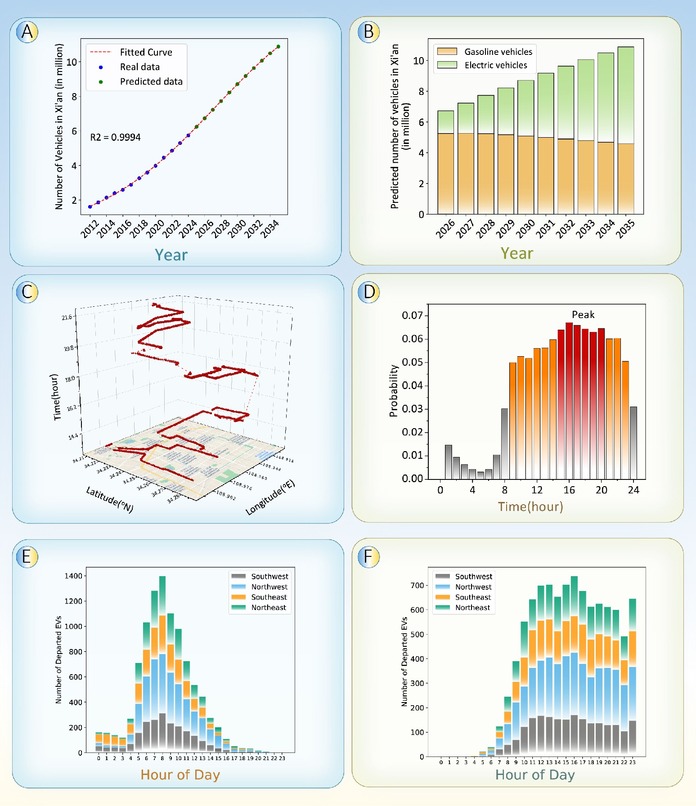
Figure 2.
Features of EVs in Xi’an city.
-
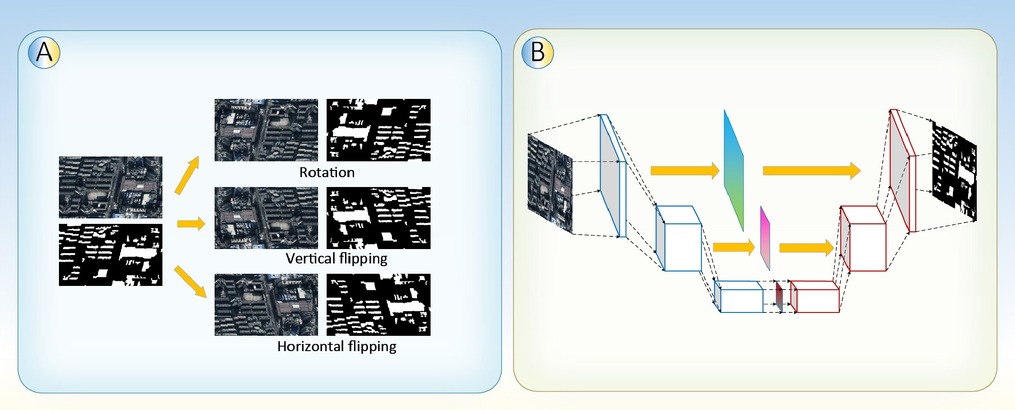
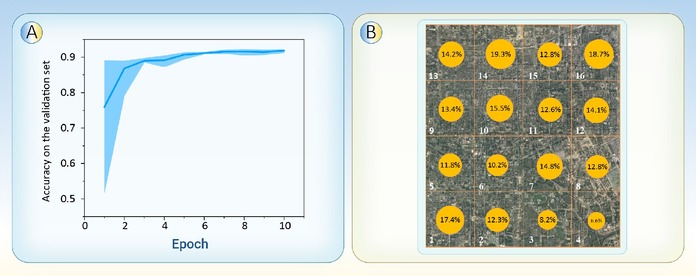
Figure 3.
Deep learning-based estimation of rooftop PV potential capacity in Xi’an city.
-
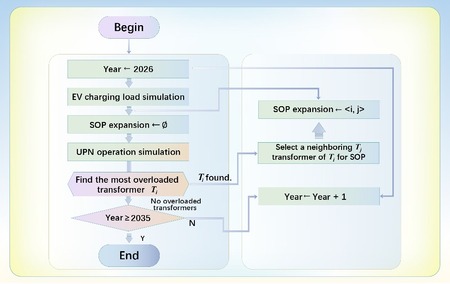
Figure 4.
Flow chart of the SOPs planning.
-
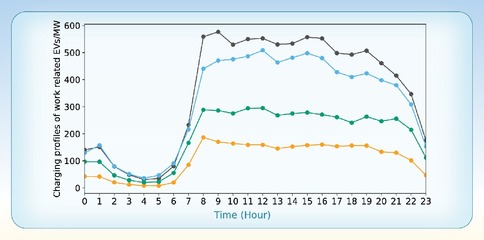
Figure 5.
Results of Monte Carlo simulation for charging demands.
-
Figure 6.
Results of rooftop PV potential analysis.
-
Figure 7.
Bottlenecks of city power networks with urban electric mobility.
-
Figure 8.
The results of coevolution of city power networks and urban electric mobility.