
Bridging Control and Deployment: A Cross-Layer Analysis of Scalable Building Cluster Control
-
GRAPHICAL ABSTRACT
 DownLoad:
Full size image
DownLoad:
Full size image
-
PUBLIC SUMMARY
-
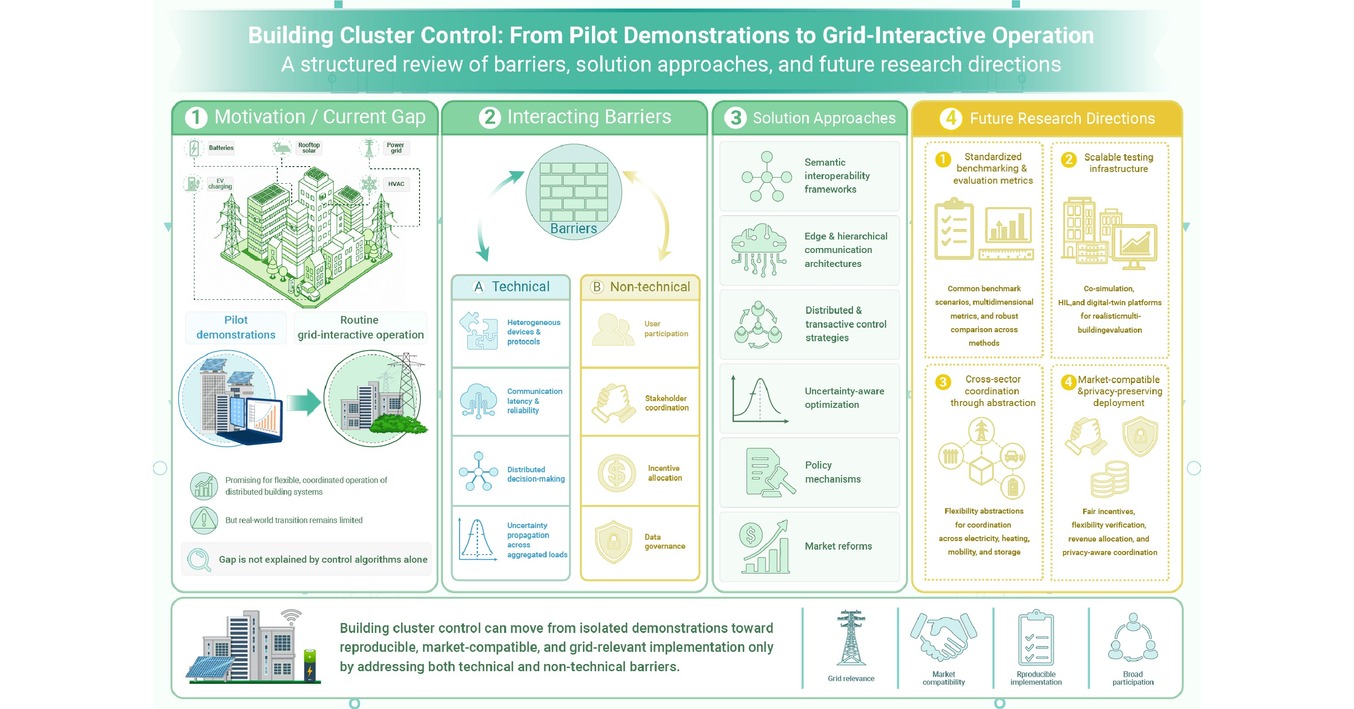
Building cluster control faces slow large-scale rollout, and the issue is not merely limited to control algorithms.
Barriers cover technical aspects like device heterogeneity and communication issues, plus non-technical ones such as stakeholder coordination and data governance.
The paper summarizes existing solutions including interoperability frameworks, distributed control and policy reforms.
Two core research directions are proposed: realistic test infrastructures and standardized flexibility abstraction methods.
This review offers a systematic reference for scaling up grid-friendly building cluster control.
-
-
ABSTRACT
Building cluster control has emerged as a promising approach for enabling flexible and coordinated operation of distributed building systems, yet its transition from pilot demonstrations to routine grid-interactive operation remains limited. This paper argues that this gap cannot be explained by control algorithms alone. Instead, it arises from interacting barriers in communication infrastructure, data and semantic interoperability, uncertainty management, stakeholder participation, market design, and policy support. Accordingly, the paper reviews both technical and non-technical barriers to building cluster control. Technical challenges include heterogeneous devices and protocols, communication latency and reliability, distributed decision-making, and uncertainty propagation across aggregated loads. Non-technical barriers include user participation, stakeholder coordination, incentive allocation, and data governance. Existing solution approaches are synthesized, including semantic interoperability frameworks, edge and hierarchical communication architectures, distributed and transactive control strategies, uncertainty-aware optimization, policy mechanisms, and market reforms. Based on this analysis, two research directions are identified: testing infrastructures that can evaluate control performance under realistic multi-building conditions, and abstraction methods that allow building clusters to interact with other energy sectors through standardized flexibility representations. Overall, the paper provides a structured review of how building cluster control can move from isolated demonstrations toward reproducible, market-compatible, and grid-relevant implementation. -

-
REFERENCES
[1] National Renewable Energy Laboratory. (2025). Solar Industry Update. DOI:https://docs.nrel.gov/docs/fy25osti/93310.pdf. [2] Shah R., Mithulananthan N., Bansal R., et al. (2015). A review of key power system stability challenges for large-scale PV integration. Renew. Sustain. Energy Rev. 41:1423−1436. DOI:10.1016/j.rser.2014.09.027 [3] Cole W., Ramasamy V. and Turan M. (2025). Cost Projections for Utility-Scale Battery Storage: 2025 Update. NREL. DOI:https://www.nrel.gov/docs/fy25osti/93281.pdf. [4] Huang S., Ye Y., Wu D. and Zuo W. (2021). An assessment of power flexibility from commercial building cooling systems in the United States. Energy 221:119571. DOI:10.1016/j.energy.2020.119571 [5] Reynders G., Diriken J. and Saelens D. (2017). Generic characterization method for energy flexibility: Applied to structural thermal storage in residential buildings. Appl. Energy 198:192−202. DOI:10.1016/j.apenergy.2017.04.061 [6] Finck C., Li R., Kramer R., et al. (2018). Quantifying demand flexibility of power-to-heat and thermal energy storage in the control of building heating systems. Appl. Energy 209:409−425. DOI:10.1016/j.apenergy.2017.11.036 [7] Biyik E. and Kahraman A. (2019). A predictive control strategy for optimal management of peak load, thermal comfort, energy storage and renewables in multi-zone buildings. J. Build. Eng. 25:100826. DOI:10.1016/j.jobe.2019.100826 [8] Mathieu J. L., Callaway D. S. and Kiliccote S. (2011). Variability in automated responses of commercial buildings and industrial facilities to dynamic electricity prices. Energy Build. 43:3322−3330. DOI:10.1016/j.enbuild.2011.08.020 [9] Dréau J. L. and Heiselberg P. (2016). Energy flexibility of residential buildings using short term heat storage in the thermal mass. Energy 111:991−1002. DOI:10.1016/j.energy.2016.05.076 [10] Hong T., Taylor-Lange S. C., DOca S., et al. (2016). Advances in research and applications of energy-related occupant behavior in buildings. Energy Build. 116:694−702. DOI:10.1016/j.enbuild.2015.11.052 [11] Li H., Wang Z., Hong T., et al. (2021). Energy flexibility of residential buildings: a systematic review of characterization and quantification methods and applications. Adv. Appl. Energy 3:100054. DOI:10.1016/j.adapen.2021.100054 [12] Amadeh A., Lee Z. E. and Zhang K. M. (2023). Building cluster demand flexibility: an innovative characterization framework and applications at the planning and operational levels. Energy Convers. Manag. 283:116884. DOI:10.1016/j.enconman.2023.116884 [13] Mugnini A., Polonara F. and Arteconi A. (2023). Quantification of the energy flexibility of residential building clusters: Impact of long-term refurbishment strategies of the italian building stock. Energy Build. 296:113416. DOI:10.1016/j.enbuild.2023.113416 [14] Pinto G., Piscitelli M. S., Vázquez-Canteli J. R., et al. (2021). Coordinated energy management for a cluster of buildings through deep reinforcement learning. Energy 229:120725. DOI:10.1016/j.energy.2021.120725 [15] Dong Z., Zhang X., Zhang L., et al. (2024). Flexibility enhancement of urban energy systems through coordinated space heating aggregation of numerous buildings. Appl. Energy 374:123971. DOI:10.1016/j.apenergy.2024.123971 [16] Yao J. (2020). Uncertainty of building energy performance at spatio-temporal scales: A comparison of aggregated and disaggregated behavior models of solar shade control. Energy 195:117079. DOI:10.1016/j.energy.2020.117079 [17] Hu M. and Xiao F. (2020). Quantifying uncertainty in the aggregate energy flexibility of high-rise residential building clusters considering stochastic occupancy and occupant behavior. Energy 194:116838. DOI:10.1016/j.energy.2019.116838 [18] Petrucci A., Vallianos C., Candanedo J. A., et al. (2025). Large-scale load profiling for energy flexibility in residential buildings: A data-driven approach for load aggregation through representative clusters. Energy Build. 346:116195. DOI:10.1016/j.enbuild.2025.116195 [19] Kaminski G. and Odonkor P. (2025). Characterizing effective building clusters: an extensive study on diverse cluster composition, distributed energy resource utilization, and energy performance. Appl. Energy 383:125376. DOI:10.1016/j.apenergy.2025.125376 [20] Lawrence Berkeley National Laboratory. (2021). Spokane Connected Communities Project. DOI:https://connectedcommunities.lbl.gov/spokane-connected-communities-project. [21] U.S. Department of Energy. (2023). PacifiCorp Combines Solar PV, Batteries, and Appliances in Buildings Across Utah into an Automated Grid Resource. DOE’s Connected Commun. DOI:https://www.energy.gov/cmei/buildings/articles/pacificorp-combines-solar-pv-batteries-and-appliances-buildings-across-utah. [22] Müller F. and Jansen B. (2019). Large-scale demonstration of precise demand response provided by residential heat pumps. Appl. Energy 239:836−845. DOI:10.1016/j.apenergy.2019.01.202 [23] Smart2B. (2024). Smart2B. DOI:https://smart2b-project.eu/. [24] Aalborg University. (2025). SERENE project. DOI:https://h2020serene.eu/. [25] State Grid News. (2025). The nation's first virtual power plant for building air conditioning resources with millisecond-level response was implemented in the Lingang New Area of Shanghai. DOI:https://news.bjx.com.cn/html/20250610/1445416.shtml. [26] Suzhou Industrial Park Administrative Committee. (2025). Suzhou Industrial Park virtual power plant management platform is launched to help the carbon peak pilot to add new explorations. DOI:https://www.sipac.gov.cn/szgyyq/dthg202512/202512/c4c869c87235488c9a4d9c8c935488c. [27] People's Daily Online. (2025). DOI:https://paper.people.com.cn/zgnyb/pc/content/202512/01/content_30118210.html. [28] Zipp A. (2017). The marketability of variable renewable energy in liberalized electricity markets–an empirical analysis. Renew. Energy 113:1111−1121. DOI:10.1016/j.renene.2017.06.072 [29] Torriti J., Hassan M. G. and Leach M. (2010). Demand response experience in Europe: Policies, programmes and implementation. Energy 35:1575−1583. DOI:10.1016/j.energy.2009.05.021 [30] Ton D. T. and Smith M. A. (2012). The US department of energy's microgrid initiative. Electr. J. 2012:84−94. DOI:10.1016/j.tej.2012.09.013 [31] Kim Y., Ha J., Lee S., et al. (2026). Ontology-based semantic modeling of HVAC systems in the office building: a foundation for scalable control and digital twin integration. ASHRAE Trans. 132:187−195. DOI:10.63044/w26kim20 [32] Suhaimy N., Radzi N. A. M., Ahmad W. S. H. M. W., et al. (2022). Current and future communication solutions for smart grids: A review. IEEE Access 10:43639−43668. DOI:10.1109/ACCESS.2022.3168740 [33] Michalakopoulos V., Sarmas E., Papias I., et al. (2024). A machine learning-based framework for clustering residential electricity load profiles to enhance demand response programs. Appl. Energy 361:122943. DOI:10.1016/j.apenergy.2024.122943 [34] Almassalkhi M. R., Madsen H., Dvorkin Y., et al. (2026). Cross-Atlantic research agenda for scalable grid architectures and distributed flexibility. Smart Energy 22:100236. DOI:10.1016/j.segy.2026.100236 [35] Zhou T., Luo X., Liu X., et al. (2025). Quantification of rural residents' willingness for electricity demand response: Insights from field simulation experiments. Appl. Energy 400:126589. DOI:10.1016/j.apenergy.2025.126589 [36] Yuan K., Zhang T., Xie S., et al. (2023). Exploration of low-cost green transition opportunities for China's power system under dual carbon goals. J. Clean. Prod. 414:137590. DOI:10.1016/j.jclepro.2023.137590 [37] Chen R., Xu P. and Yao H. (2023). Decarbonization of China's regional power grid by 2050 in the government development planning scenario. Environ. Impact Assess. Rev. 101:107129. DOI:10.1016/j.eiar.2023.107129 [38] Liu J., Li Y., Ma Y., et al. (2023). Coordinated energy management for integrated energy system incorporating multiple flexibility measures of supply and demand sides: A deep reinforcement learning approach. Energy Convers. Manag. 297:117728. DOI:10.1016/j.enconman.2023.117728 [39] Vijayalakshmi K., Vijayakumar K. and Nandhakumar K. (2023). An ensemble learning model for estimating the virtual energy storage capacity of aggregated air-conditioners. J. Energy Storage 59:106512. DOI:10.1016/j.est.2022.106512 [40] Guo X., Wang L. and Ren D. (2025). Optimal scheduling model for virtual power plant combining carbon trading and green certificate trading. Energy 318:134750. DOI:10.1016/j.energy.2025.134750 [41] Lawrence Berkeley National Laboratory. (2024). Connected Communities. DOI:https://connectedcommunities.lbl.gov/. [42] Shanghai Huangpu District Development and Reform Commission. (2025). Announcement Regarding the Performance Acceptance Results of Phase V of the National Demand-Side Management Demonstration Project of the Development and Reform Commission of Huangpu District, Shanghai (at the municipal level). DOI:https://sh.zhiliaobiaoxun.com/article/83595831. [43] Minoli D., Sohraby K. and Occhiogrosso B. (2017). IoT considerations, requirements, and architectures for smart buildings—energy optimization and next-generation building management systems. IEEE Internet Things J. 4:269−283. DOI:10.1109/JIOT.2017.2647881 [44] Wang D., Chen Y., Wang W., et al. (2023). Field test of Model Predictive Control in residential buildings for utility cost savings. Energy Build. 288:113026. DOI:10.1016/j.enbuild.2023.113026 [45] Imran, Iqbal N. and Kim D. H. (2022). IoT task management mechanism based on predictive optimization for efficient energy consumption in smart residential buildings. Energy Build. 257:111762. DOI:10.1016/j.enbuild.2021.111762 [46] Huang S., Lian J., Katipamula S., et al. (2025). Field evaluation of zone temperature response to control actions in cooling systems of small and medium-sized office buildings. Energy Build. 349:116511. DOI:10.1016/j.enbuild.2025.116511 [47] Sanchez-Sutil F. and Cano-Ortega A. (2023). Smart plug for monitoring and controlling electrical devices with a wireless communication system integrated in a LoRaWAN. Expert Syst. Appl. 213:118976. DOI:10.1016/j.eswa.2022.118976 Purchase PDF. DOI:10.1016/j.eswa.2022.118976PurchasePDF [48] Frei M., Deb C., Stadler R., et al. (2020). Wireless sensor network for estimating building performance. Autom. Constr. 111:103043. DOI:10.1016/j.autcon.2019.103043 [49] Ghiasi M., Wang Z., Mehrandezh M., et al. (2023). A Systematic Review of Optimal and Practical Methods in Design, Construction, Control, Energy Management and Operation of Smart Greenhouses. IEEE Access 12:2830−2853. DOI:10.1109/ACCESS.2023.3346436 [50] Hajialigol P., Papadopoulos P., Moazami A., et al. (2026). A hierarchical energy management system for a cluster of buildings: Reinforcement learning and model predictive control (RL-MPC) approach. Energy Build. 353:116879. DOI:10.1016/j.enbuild.2025.116879 [51] Huang P., Fan C., Zhang X., et al. (2019). A hierarchical coordinated demand response control for buildings with improved performances at building group. Appl. Energy 242:684−694. DOI:10.1016/j.apenergy.2019.03.148 [52] Weinberg D., Wang Q., Timoudas T. O., et al. (2023). A review of reinforcement learning for controlling building energy systems from a computer science perspective. Sustain. Cities Soc. 89:104351. DOI:10.1016/j.scs.2022.104351 [53] Dawes G., Kirant-Mitić T., Jiang Z., et al. (2025). Energy flexibility at multi-building scales: A review of the dominant factors and their uncertainties. Energy Build. 346:116157. DOI:10.1016/j.enbuild.2025.116157 [54] Langtry M., Wichitwechkarn V., Ward R., et al. (2024). Impact of data for forecasting on performance of model predictive control in buildings with smart energy storage. Energy Build. 320:114605. DOI:10.1016/j.enbuild.2024.114605 [55] Huang S. and Wu D. (2019). Validation on aggregate flexibility from residential air conditioning systems for building-to-grid integration. Energy Build. 200:58−67. DOI:10.1016/j.enbuild.2019.07.043 [56] Canet A. and Qadrdan M. (2023). Quantification of flexibility from the thermal mass of residential buildings in England and Wales. Appl. Energy 349:121616. DOI:10.1016/j.apenergy.2023.121616 [57] Parrish B., Heptonstall P., Gross R., et al. (2020). A systematic review of motivations, enablers and barriers for consumer engagement with residential demand response. Energy Policy 138:111221. DOI:10.1016/j.enpol.2019.111221 [58] Li L. (2026). Coordinated design of multi-stakeholder distributed energy systems with flexible demand resources from an energy-sharing perspective. Appl. Energy 404:127134. DOI:10.1016/j.apenergy.2025.127134 [59] Lashmar N., Wade B., Molyneaux L., et al. (2022). Motivations, barriers, and enablers for demand response programs: A commercial and industrial consumer perspective. Energy Res. Soc. Sci. 90:102667. DOI:10.1016/j.erss.2022.102667 [60] Singh A. R., Kumar R. S., Bajaj M., et al. (2025). A blockchain-enabled multi-agent deep reinforcement learning framework for real-time demand response in renewable energy grids. Energy Strategy Rev. 62:101905. DOI:10.1016/j.esr.2025.101905 [61] Lin G., Pritoni M., Chen Y., et al. (2023). Implementation and test of an automated control hunting fault correction algorithm in a fault detection and diagnostics tool. Energy Build. 283:112796. DOI:10.1016/j.enbuild.2023.112796 [62] Bushby S. and Newman H. (2002). BACnet today. ASHRAE J. 10:10−18. DOI:https://technologyportal.ashrae.org/journal/articledetail/441. [63] Thomas G. (2008). Introduction to the modbus protocol. Extension 4:1−4. DOI:https://www.ccontrols.com/pdf/Extv9n4.pdf. [64] Electric Power Research Institute. (2025). Distributed Energy Resources Non-Interoperability and How We Fix It: EPRI Findings and Action Plan. DOI:https://www.epri.com/research/products/000000003002031737. [65] Katipamula S., Haack J., Hernandez G., et al. (2016). VOLTTRON: An open-source software platform of the future. IEEE Electrif. Mag. 4:15−22. DOI:10.1109/MELE.2016.2614178 [66] Fierro G., Koh J., Nagare S., et al. (2020). Formalizing tag-based metadata with the brick ontology. Front. Built Environ. 6:558034. DOI:10.3389/fbuil.2020.558034 [67] Sharif Z., Jung L. T., Ayaz M., et al. (2022). Smart home automation by internet-of-things edge computing platform. Int. J. Adv. Comput. Sci. Appl. 13:474−484. DOI:10.14569/IJACSA.2022.0130455 [68] Qi J., Kim Y., Chen C., et al. (2017). Demand response and smart buildings: A survey of control, communication, and cyber-physical security. ACM Trans. Cyber-Phys. Syst. 1:1−25. DOI:10.1145/3009972 [69] Chamari L., Petrova E. and Pauwels P. (2023). An end-to-end implementation of a service-oriented architecture for data-driven smart buildings. IEEE Access 11:117261−117281. DOI:10.1109/ACCESS.2023.3325767 [70] Tang R., Wang S. and Yan C. (2018). A direct load control strategy of centralized air-conditioning systems for building fast demand response to urgent requests of smart grids. Autom. Constr. 87:74−83. DOI:10.1016/j.autcon.2017.12.012 [71] Xia M., Song Y. and Chen Q. (2019). Hierarchical control of thermostatically controlled loads oriented smart buildings. Appl. Energy 254:113493. DOI:10.1016/j.apenergy.2019.113493 [72] Shi M., Han Y. J., Wang C. L. Q. D. X. L. A., et al. (2024). An optimal regime of energy management for smart building clusters with electric vehicles. IEEE Trans. Ind. Inform. 5:7619−7629. DOI:10.1109/TII.2024.3363059 [73] Kim B.-Y. and Ahn H.-S. (2014). Consensus-based coordination and control for building automation systems. IEEE Trans. Control Syst. Technol. 1:364−371. DOI:10.1109/TCST.2014.2317793 [74] Huang S., Lian J., Katipamula S., et al. (2025). Transactive control for grid-interactive efficient commercial buildings. Appl. Energy 378:124675. DOI:10.1016/j.apenergy.2024.124675 [75] Xiong C., Sun Z., Meng Q., et al. (2022). A simplified improved transactive control of air-conditioning demand response for determining room set-point temperature: Experimental studies. Appl. Energy 323:119521. DOI:10.1016/j.apenergy.2022.119521 [76] Behboodi S., Chassin D. P., Djilali N., et al. (2018). Transactive control of fast-acting demand response based on thermostatic loads in real-time retail electricity markets. Appl. Energy 210:1310−1320. DOI:10.1016/j.apenergy.2017.07.058 [77] Mohammad N. and Rahman A. (2019). Transactive control of industrial heating–ventilation–air-conditioning units in cold-storage warehouses for demand response. Sustain. Energy Grids Netw. 18:100201. DOI:10.1016/j.segan.2019.100201 [78] Yu M. G. and Pavlak G. S. (2021). Assessing the performance of uncertainty-aware transactive controls for building thermal energy storage systems. Appl. Energy 282:116103. DOI:. DOI:10.1016/j.apenergy.2020.116103 [79] Mukherjee M., Marinovici L., Hardy T., et al. (2020). Framework for large-scale implementation of wholesale-retail transactive control mechanism. Int. J. Electr. Power Energy Syst. 115:105464. DOI:10.1016/j.ijepes.2019.105464 [80] Chandra R., Radhakrishnan K. K. and Panda S. K. (2022). Transactive control of air-conditioning systems in buildings for participation in Singapore’s Demand Response market through load curtailment. Sustain. Energy Grids Netw. 31:100742. DOI:10.1016/j.segan.2022.100742 [81] Katipamula S., Chassin D. P., Hatley D., et al. (2006). Transactive Controls: Market-Based GridWise Controls for Building Systems. Pacific Northwest National Laboratory. DOI:https://www.researchgate.net/publication/280684108_Transactive_Controls_Market-Based_GridWiseTM_Controls_for_Building_Systems. [82] Hammerstrom D. J. (2007). Pacific northwest gridwise™ testbed demonstration projects; part i. olympic peninsula project. Pacific Northwest National Laboratory. DOI:https://www.pnnl.gov/main/publications/external/technical_reports/pnnl-17167.pdf. [83] Katipamula S., Corbin C., Haack J., et al. (2017). Transactive campus energy systems. Pacific Northwest National Laboratory. DOI:https://www.pnnl.gov/main/publications/external/technical_reports/PNNL-26866.pdf. [84] Huang S., Huang B., Katipamula S., et al. (2023). Simulation-based assessment on stochastic load scheduling for building cooling systems. Sci. Technol. Built Environ. 29:212−222. DOI:10.1080/23744731.2022.2151271 [85] Chen Z., Wu L. and Fu Y. (2012). Real-time price-based demand response management for residential appliances via stochastic optimization and robust optimization. IEEE Trans. Smart Grid 3:1822−1831. DOI:10.1109/TSG.2012.2212729 [86] Cheng H. (2022). Cost-based modeling for optimal energy management of smart buildings with renewable energy resources and electric vehicles using a scenario-based algorithm. Adv. Eng. Intell. Syst. 1:14−30. DOI:10.22034/aeis.2022.366739.1045 [87] Saberi H., Zhang C. and Dong Z. Y. (2024). A multi-agent deep constrained Q-learning method for smart building energy management under uncertainties. IEEE Trans. Smart Grid 15:4649−4666. DOI:10.1109/TSG.2024.3386896 [88] Dantzig G. B. (1955). Linear programming under uncertainty. Manag. Sci. 1:197−206. DOI:10.1007/978-1-4419-1642-6_1 [89] Nguyen H. T., Nguyen D. T. and Le L. B. (2015). Energy management for households with solar assisted thermal load considering renewable energy and price uncertainty. IEEE Trans. Smart Grid 6:301−313. DOI:10.1109/TSG.2014.2350831 [90] Onishi V. C., Antunes C. H., Fraga E. S., et al. (2019). Stochastic optimization of trigeneration systems for decision-making under long-term uncertainty in energy demands and prices. Energy 175:781−797. DOI:10.1016/j.energy.2019.03.095 [91] Qiu S., Feng F., Zhang W., et al. (2019). Stochastic optimized chiller operation strategy based on multi-objective optimization considering measurement uncertainty. Energy Build. 195:149−160. DOI:10.1016/j.enbuild.2019.05.006 [92] Oldewurtel F., Jones C. N., Parisio A., et al. (2014). Stochastic model predictive control for building climate control. IEEE Trans. Control Syst. Technol. 22:1198−1205. DOI:10.1109/TCST.2013.2272178 [93] Tanner R. A. and Henze G. P. (2014). Stochastic control optimization for a mixed mode building considering occupant window opening behaviour. J. Build. Perform. Simul. 7:427−444. DOI:10.1080/19401493.2013.863384 [94] Wang S., Gangammanavar H., Ek¸sio˘glu S. D., et al. (2019). Stochastic optimization for energy management in power systems with multiple microgrids. IEEE Trans. Smart Grid 10:1068−1079. DOI:10.1109/TSG.2017.2759159 [95] Wu D., Ma X., Huang S., et al. (2020). Stochastic optimal sizing of distributed energy resources for a costeffective and resilient Microgrid. Energy 198:117284. DOI:10.1016/j.energy.2020.117284 [96] Golmohamadi H. (2021). Stochastic energy optimization of residential heat pumps in uncertain electricity markets. Appl. Energy 303:117629. DOI:10.1016/j.apenergy.2021.117629 [97] Huang B., Huang S., Ma X., et al. (2023). Stochastic scheduling for commercial building cooling systems: considering uncertainty in zone temperature prediction. Appl. Energy 346:121367. DOI:10.1016/j.apenergy.2023.121367 [98] Feng Y., Lin J., Song F., et al. (2025). Performance and challenges of power sector reform in China since 2015. iScience 28:113461. DOI:10.1016/j.isci.2025.113461 [99] Climate Cooperation China. (2026). China advances electricity market reform to support renewable energy integration. DOI:https://climatecooperation.cn/climate/china-advances-electricity-market-reform-to-support-renewable-energy-integration/?utm_source=chatgpt.com. [100] Katipamula S., Lutes R. and Huang S. (2023). Hardware specification and reference design for the low-cost, interoperable, user-centric, supervisory controller kit for small and medium size commercial buildings. Pacific Northwest National Laboratory. DOI:10.2172/2440732. [101] Tang R., Li H. and Wang S. (2019). A game theory-based decentralized control strategy for power demand management of building cluster using thermal mass and energy storage. Appl. Energy 242:809−820. DOI:10.1016/j.apenergy.2019.03.152 [102] Haapaniemi J., Haakana J., Räisänen O., et al. (2025). Quantification of implicit price flexibility of household customers’ load demand with machine learning and Shapley analysis. Energy 332:136980. DOI:10.1016/j.energy.2025.136980 [103] Covington H., Woo-Shem B., Wang C., et al. (2024). Method for evaluating fairness of electricity tariffs with regard to income level of residential buildings. Appl. Energy 353:122130. DOI:10.1016/j.apenergy.2023.122130 [104] Karjou P. F., Stupperich F., Stoffel P., et al. (2025). Human-in-the-loop control strategy for IoT-based smart thermostats with Deep Reinforcement Learning. Energy AI 20:100490. DOI:10.1016/j.egyai.2025.100490 [105] Saadatifar S. and Zhang Y. (2023). Balancing thermal comfort with energy consumption in buildings using digital twins, IoT sensors, and real-time dashboards to inform occupant decision making. ASHRAE Trans. 129:720–729. ISSN:0001-2505. [106] Li W., Cheng L., Sui W., et al. (2024). Incorporating Occupant cooling behaviors into novel thermal comfort models for residential demand response. Energy Build. 311:114173. DOI:10.1016/j.enbuild.2024.114173 [107] Raman G., Zhao B., Peng J. C.-H., et al. (2022). Adaptive incentive-based demand response with distributed non-compliance assessment. Appl. Energy 326:119998. DOI:10.1016/j.apenergy.2022.119998 [108] Boulemtafes A., Derhab A. and Challal Y. (2020). A review of privacy-preserving techniques for deep learning. Neurocomputing 384:21−45. DOI:10.1016/j.neucom.2019.11.041 [109] Ashaj S. J. and Erçelebi E. (2020). Energy saving data aggregation algorithms in building automation for health and security monitoring and privacy in medical internet of things. J. Med. Imaging Health Inform. 10:204−210. DOI:10.1166/jmihi.2020.2717 [110] Tepe B., Haberschusz D., Figgener J., et al. (2023). Feature-conserving gradual anonymization of load profiles and the impact on battery storage system. Appl. Energy 343:121191. DOI:10.1016/j.apenergy.2023.121191 [111] Fan C., Chen R., Mo J., et al. (2024). Personalized federated learning for cross-building energy knowledge sharing: Cost-effective strategies and model architectures. Appl. Energy 362:123016. DOI:10.1016/j.apenergy.2024.123016 [112] Qashlan A., Nanda P. and Mohanty M. (2024). Differential privacy model for blockchain based smart home architecture. Future Gener. Comput. Syst. 150:49−63. DOI:10.1016/j.future.2023.08.010 [113] Romero D. A. V., Laureano E. V., Betancourt R. O. J., et al. (2024). An open source IoT edge-computing system for monitoring energy consumption in buildings. Results Eng. 21:101875. DOI:10.1016/j.rineng.2024.101875 [114] Wu Y., Wu Y., Guerrero J. M., et al. (2022). Decentralized transactive energy community in edge grid with positive buildings and interactive electric vehicle. Int. J. Electr. Power Energy Syst. 135:107510. DOI:10.1016/j.ijepes.2021.107510 [115] Yu H., Zhang J., Ma J., et al. (2024). Privacy-preserving demand response of aggregated residential load. Appl. Energy 339:121018. DOI:10.1016/j.apenergy.2023.121018 [116] Meimand M. and Jazizadeh F. (2024). A personal touch to demand response: An occupant-centric control strategy for HVAC systems using personalized comfort models. Energy Build. 303:113769. DOI:10.1016/j.enbuild.2023.113769 [117] O’Connell S., Reynders G., Seri F., et al. (2020). A standardised flexibility assessment methodology for demand response. Int. J. Build. Pathol. Adapt. 38:20−37. DOI:10.1108/IJBPA-01-2019-0011 [118] Zhang L., Yuan X., Jia W., et al. (2025). A Conceptual Framework for Performance Evaluation and Classification of Multi-Agent Hybrid Game Problems Based on Reinforcement Learning: Impact Factors and Evaluation Metrics. Urban Build. Sci. 1:4. DOI:10.53941/ubs.2025.100004 [119] Huang S., Wang W., Brambley M. R., et al. (2018). An agent-based hardware-in-the-loop simulation framework for building controls. Energy Build. 181:26−37. DOI:10.1016/j.enbuild.2018.09.038 [120] U.S. Department of Energy. (2024). Prototype Building Models. DOI:https://www.energycodes.gov/prototype-building-models. [121] Georgescu M. and Mezić I. (2015). Building energy modeling: a systematic approach to zoning and model reduction using Koopman Mode Analysis. Energy Build. 86:794−802. DOI:10.1016/j.enbuild.2014.10.046 [122] Fjerbæk V., Seidenschnur M., Kücükavci A., et al. (2024). Coupling BIM and detailed modelica simulations of HVAC systems in a common data environment. J. Build. Perform. Simul. 3:306−321. DOI:10.1080/19401493.2023.2271441 [123] Hao H., Wu D., Lian J., et al. (2018). Optimal coordination of building loads and energy storage for power grid and end user services. IEEE Trans. Smart Grid 9:4335−4345. DOI:10.1109/TSG.2017.2655083 [124] Li R., Tang B.-J., Yu B., et al. (2022). Cost-optimal operation strategy for integrating large scale of renewable energy in China’s power system: From a multi-regional perspective. Appl. Energy 325:119780. DOI:10.1016/j.apenergy.2022.119780 -
ABOUT THIS ARTICLE
Cite this article:
Huang S. and Zuo W. (2026). Bridging Control and Deployment: A Cross-Layer Analysis of Scalable Building Cluster Control. Energy Use 2:100049. https://doi.org/10.59717/ipj.energy-use.2026.100049
Welcome!
To request copyright permission to republish or share portions of our works, please visit Copyright Clearance Center's (CCC) Marketplace website at marketplace.copyright.com.
Export File
Citation
Huang S. and Zuo W. (2026). Bridging Control and Deployment: A Cross-Layer Analysis of Scalable Building Cluster Control. Energy Use 2:100049. https://doi.org/10.59717/ipj.energy-use.2026.100049

Format
Content
-
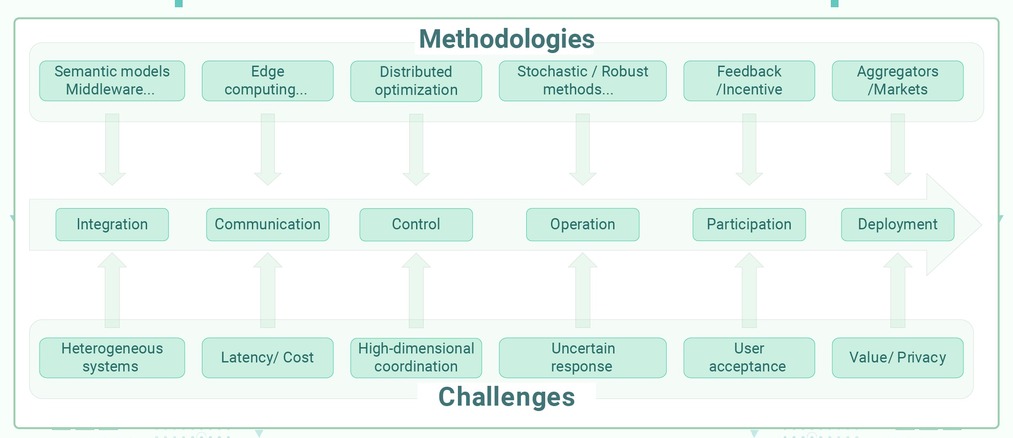
Figure 1.
Challenge–method mapping along the development-to-deployment pathway of building cluster control.
-
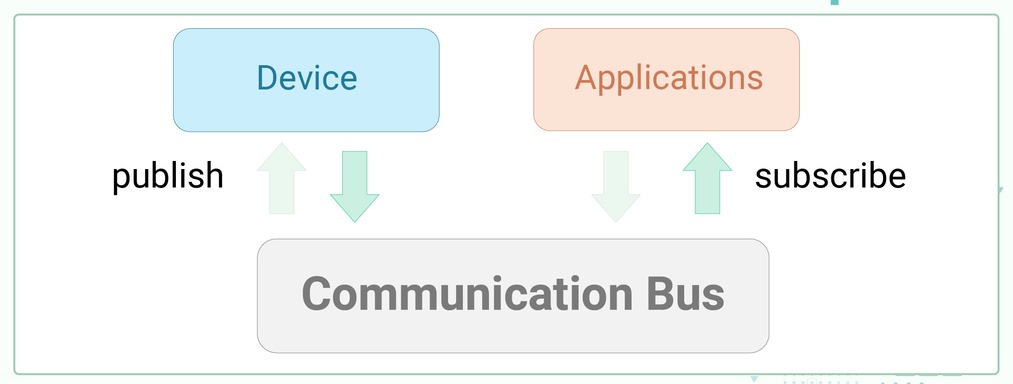
Figure 2.
Publish–subscribe communication
-
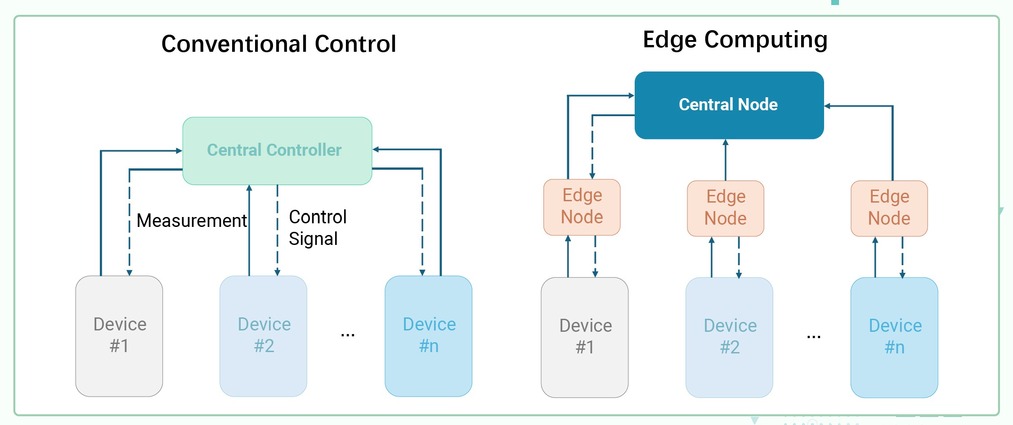
Figure 3.
Edge architecture for reducing communication burden in building cluster control
-
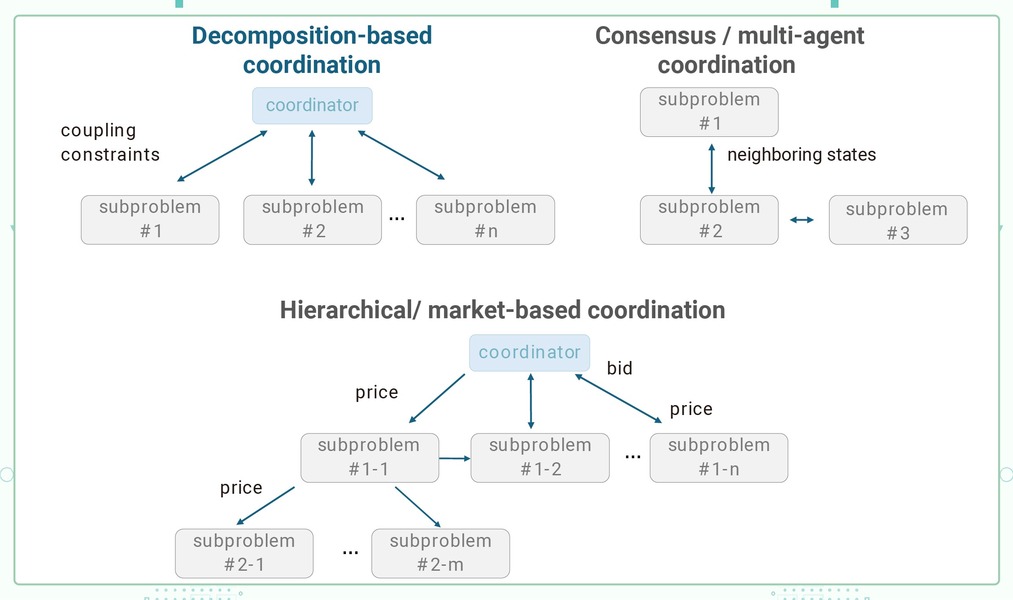
Figure 4.
Distributed control frameworks