
Settlement Mechanisms in The Day-Ahead Electricity Market: A Comparative Analysis of European Countries, The United States, and China
-
GRAPHICAL ABSTRACT
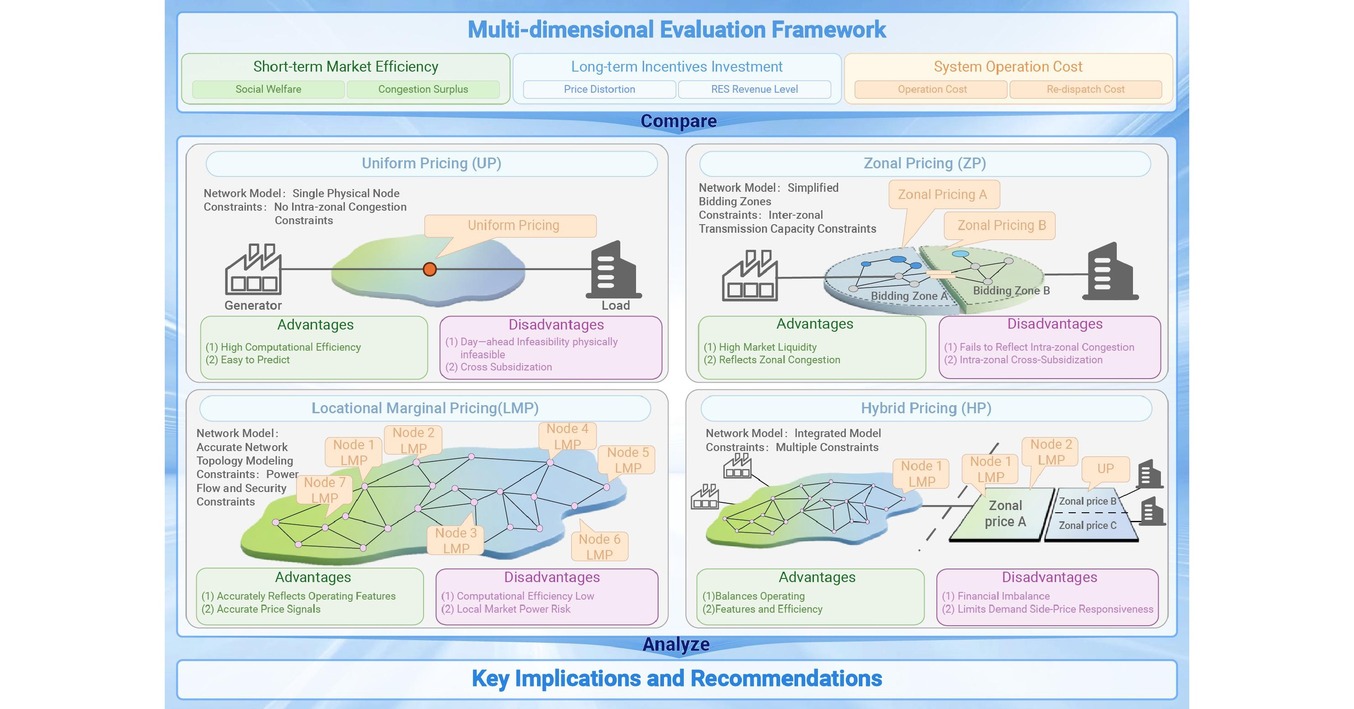
 DownLoad:
Full size image
DownLoad:
Full size image
-
PUBLIC SUMMARY
-
Deep RES integration demands rational DA settlement rules; a 3D framework evaluates UP, ZP, LMP, HP on efficiency, investment incentives and operation costs.
No universally optimal settlement mechanism; its performance relies heavily on specific power system physical conditions.
ZP boosts liquidity with adequate transmission capacity, but causes cross-subsidies and higher re-dispatch costs under high RES penetration.
LMP delivers granular grid constraint signals, reduces renewable curtailment and remarkably raises overall social welfare.
HP guarantees demand-side price stability for transitional markets; SM design must match grids, resources and market reform stages.
-
-
ABSTRACT
As the integration of renewable energy sources (RES) deepens, selecting an appropriate day-ahead (DA) market settlement mechanism (SM) becomes critical for balancing system efficiency and economic viability. This paper proposes a multi-dimensional quantitative evaluation framework to assess four typical SMs—Uniform Pricing (UP), Zonal Pricing (ZP), Locational Marginal Pricing (LMP), and Hybrid Pricing (HP)—across three core dimensions: short-term market efficiency, long-term investment incentives, and system operation costs. Through comparative analysis and numerical simulations in typical scenarios, the results show that no universally optimal SM exists independent of the physical system's conditions. Specifically, ZP enhances market liquidity in systems with sufficient transmission capacity but tends to obscure local bottlenecks under high-RES penetration, leading to implicit cross-subsidization and increased re-dispatch costs (RCs). In contrast, LMP internalizes network constraints through granular spatiotemporal price signals, effectively reducing RES curtailment and improving overall social welfare (SW). For transitioning markets requiring demand-side price stability, HP offers a practical compromise. Overall, SM design should be closely aligned with grid topology, resource endowments, and the stage of market reform.-
Keywords:
- RES /
- DA market /
- settlement mechanism /
- social welfare
-

-
REFERENCES
[1] Schweppe F. C., Caramanis M. C., Tabors R. D., et al. (2013). Spot pricing of electricity (Springer Science & Business Media). ISBN: 978-1-4612-8950-0. [2] Borenstein S. (2002). The trouble with electricity markets: understanding California's restructuring disaster. J. Eco. Perspect. 16:191−211. DOI:10.1257/0895330027175 [3] Kenis M., Dvorkin V., Schittekatte T., et al. (2024). Evaluating offshore electricity market design considering endogenous infrastructure investments: zonal or nodal. IEEE Trans. Energy Markets Policy Regul. 2:476−487. DOI:10.1109/TEMPR.2024.3399611 [4] Qin X., Xu B., Lestas I., et al. (2023). The role of electricity market design for energy storage in cost-efficient decarbonization. Joule 7:1227−1240. DOI:10.1016/j.joule.2023.05.014 [5] Mupazviriho M. K., Bekker B. and Dalton A. (2026). Electricity market design for power system reliability: Lessons for South Africa. Utilit. Policy 101:102204. DOI:10.1016/j.jup.2026.102204 [6] Levin T., Botterud A., Kwon J., et al. (2024). Planning and Operations in Electricity Markets Under System Transformation. DOI:10.2172/2434015. [7] IEA (2025). Electricity Market Design. [8] Dobos T., Bichler M. and Knoerr J. (2025). Challenges in finding stable price zones in European electricity markets: Aiming to square the circle. Appl. Energy 382:125315. DOI:10.1016/j.apenergy.2025.125315 [9] ENTSO-E Main Report (2025). Bidding Zone Review of the 2025 Target Year. [10] Chyong C. K. and Newbery D. (2025). Zonal pricing, transmission constraints, and their impact on marginal curtailment in a future GB electricity market. EPRG Working Paper. [11] Pollitt M. G. (2023). Locational marginal prices (LMPs) for electricity in Europe? The untold story. EPRG Working Paper. [12] Moretto M. and Pollitt M. G. (2026). How many zones should an electricity market have. A cross-country perspective on bidding zone design. Energy Policy 210:115030. DOI:10.1016/j.enpol.2025.115030 [13] Green R. (2007). Nodal pricing of electricity: how much does it cost to get it wrong. J. Reg. Eco. 31:125−149. DOI:10.1007/s11149-006-9019-3 [14] Thomassen G. and Fuhrmanek A. (2025). Locational Price Signals in Europe - Future-proofing the European power market. EPRG Working Paper. [15] Bucksteeg M., Voswinkel S. and Blumberg G. (2024). Improving flow-based market coupling by integrating redispatch potential―Evidence from a large-scale model. Energy Policy 188:114093. DOI:10.1016/j.enpol.2024.114093 [16] Triolo R. C. and Wolak F. A. (2022). Quantifying the benefits of a nodal market design in the Texas electricity market. Energy Eco. 112:106154. DOI:10.1016/j.eneco.2022.106154 [17] Nick H. (2024). Why it’s time to move on from zonal pricing. https://www.renewableuk.com/news-and-resources/blog/why-it-s-time-to-move-on-from-zonal-pricing/ [18] Kwag K., Shin H., Oh H., et al. (2025). Quantifying the Impact and Policy Implications of Transitioning to Zonal and Nodal Pricing in the Electricity Market: A South Korean Case Study. Applied Sciences 15:716. DOI:10.3390/app15020716 [19] Wolak F. A. (2021). Financing the Energy Transition in a Low-Cost Intermittent Renewable Energy Environment. Climate Change Mitigation:19. https://web.stanford.edu/group/fwolak/cgi-bin/sites/default/files/financing_renewables_abdi_v1.pdf [20] Eicke A. and Schittekatte T. (2022). Fighting the wrong battle. A critical assessment of arguments against nodal electricity prices in the European debate. Energy Policy 170:113220. DOI:10.1038/215337a0 [21] Li Y., Zhang L., Cong Y., et al. (2025). Designing a Clearing Model for the Regional Electricity Spot Market Based on the Construction of the Provincial Electricity Market: A Case Study of the Yangtze River Delta Regional Electricity Market in China. Processes 13:492. DOI:10.3390/pr13020492 [22] Ye Z., Liang D., Wang M., et al. (2024). An Assessment Method of Deviation Electricity Responsibility in China’s Forward Electricity Market Based on Time-Sharing Trading Prices. Sustainability 16:5130. DOI:10.3390/su16125130 [23] Zhang D., Collett M., Sharpe S., et al. (2025). Dynamics of the power sector transition in China. DOI:scurveeconomics.org/wp-content/uploads/2025/06/Dynamics-of-the-power-sector-transition-in-China-a-system-mapping-study-1.pdf [24] Lou Y., Wu J., Lei Z., et al. (2025). A mechanism framework for clearing prices in electricity market based on trusted capacity of power generation resources. Energies 18:223. DOI:10.3390/en18020223 [25] Chang W., Dong W. and Yang Q. (2023). Day-ahead bidding strategy of cloud energy storage serving multiple heterogeneous microgrids in the electricity market. Applied Energy 336:120827. DOI:10.1016/j.apenergy.2023.120827 [26] Stoft S. (2002). Power system economics. Journal of Energy Literature 8:94−99. [27] Graf C., Quaglia F. and Wolak F. A. (2020). Simplified Electricity Market Models with Significant Intermittent Renewable Capacity: Evidence from Italy. National Bureau of Economic Research. [28] Bjørndal E., Bjørndal M., Cai H., et al. (2018). Hybrid pricing in a coupled European power market with more wind power. European Journal of Operational Research 264:919−931. DOI:10.1016/j.ejor.2017.06.048 [29] Green R. J. and Newbery D. M. (1992). Competition in the British electricity spot market. Journal of political economy 100:929−953. DOI:10.2307/2950646 [30] Hirth L. and Schlecht I. (2020). Market-based redispatch in zonal electricity markets: the preconditions for and consequence of inc-dec gaming. ECOSTOR. https://www.econstor.eu/handle/10419/222925 [31] Jafarian M., Scherpen J. M. A., Loeff K., et al. (2020). A combined nodal and uniform pricing mechanism for congestion management in distribution power networks. Electric Power Systems Research 180:106088. DOI:10.1016/j.epsr.2019.106088 [32] Li Y., Xue W., Zhang Y., et al. (2025). Promoting the sustainable development of the provincial electricity spot market: supervision obstacle identification, analysis, and solutions based on the ISM-DEMATEL model. Frontiers in Energy Research 13:1544722. DOI:10.3389/fenrg.2025.1544722 [33] Zhang C. and Yan W. (2019). Spot market mechanism design for the electricity market in china considering the impact of a contract market. Energies 12:1064. DOI:10.3390/en12061064 [34] Economics F. (2022). An Assessment Framework for a Move to LMP in the GB Electricity Market. Front. Eco. DOI:https://www.frontier-economics.com/media/ekemhlz3/an-assessment-framework-for-a-move-to-lmp-in-the-gb-electricity-market.pdf [35] Gärtner C., Röger E. and Heller T. (2022). An Optimal Bidding Model to Market Flexibility on the Balancing Electricity Markets. Energy Proceed. 2004:2965. DOI:energy-proceedings.org/wp-content/uploads/icae2022/1667405745.pdf [36] Eicke A., Khanna T. and Hirth L. (2020). Locational investment signals: how to steer the siting of new generation capacity in power systems. The Energy Journal 41:281−304. DOI:10.5547/01956574.41.6.aeic [37] Sioshansi F. (2020). Variable generation, flexible demand. (Academic Press). [38] Akbari-Dibavar A., Mohammadi-Ivatloo B. and Zare K. (2020). Electricity market pricing: Uniform pricing vs. pay-as-bid pricing. In Electricity Markets: New Players and Pricing Uncertainties, (Springer), pp. 19-35. [39] Ehrhart K.-M., Eicke A., Hirth L., et al. (2026). Congestion management games in electricity markets. The Energy Journal 47:77−108. DOI:10.1177/01956574251365606 [40] Schmidt L. and Zinke J. (2023). One price fits all. on inefficient siting incentives for wind power expansion in germany under uniform pricing. The Energy Journal 44:21−52. DOI:10.5547/01956574.44.4.lsch [41] Kristiansen T. (2020). The flow based market coupling arrangement in Europe: Implications for traders. Energy Strategy Reviews 27:100444. DOI:10.1016/j.esr.2019.100444 [42] Finck R. (2021). Impact of flow based market coupling on the European electricity markets. Sustainability Management Forum| NachhaltigkeitsManagementForum. 2 ed. Springer. [43] ACER (2024). On the necessary developments for the fulfilment of the minimum cross-zonal capacity requirements. [44] Felling T., Felten B., Osinski P., et al. (2023). Assessing improved price zones in europe: Flow-based market coupling in central western europe in focus. The Energy Journal 44:71−112. DOI:10.5547/01956574.44.6.tfel [45] Brouhard T., Hennebel M., Petit M., et al. (2023). A clustering approach to the definition of robust, operational and market efficient delineations for European bidding zones. IET Generation, Transmission & Distribution 17:2687−2702. DOI:10.1049/gtd2.12810 [46] Cui H., Yang X., Cheng D., et al. (2022). A Dynamic Price Zone Partitioning Strategy for Cross-Regional Market Transaction. CEEPE. DOI:10.1109/CEEPE55110.2022.9783286 [47] Trang T. N. T. and Duc N. H. (2025). A proposed model for determing bidding zones in the electricity market using location marginal prices and clustering algorithms. Tạp chí Khoa học và Công nghệ-Đại học Đà Nẵng:1-6. [48] Bovo C., Ilea V., Carlini E. M., et al. (2021). Optimal Computation of Network Indicators for Electricity Market Bidding Zones Configuration Considering Explicit N-1 Security Constraints. Energies 14:4267. DOI:10.3390/en14144267 [49] Chicco G., Colella P., Griffone A., et al. (2019). Overview of the Clustering Algorithms for the Formation of the Bidding Zones. UPEC. DOI:10.1109/UPEC.2019.8893526 [50] Trinomics (2024). Advancing crosssystem solutions to address electricity network challenges. [51] Stöckl B., Werner Y. and Wogrin S. (2025). Congestion-sensitive grid aggregation for DC optimal power flow. IEEE Kiel PowerTech. DOI:10.1109/PowerTech59965.2025.11180585 [52] Mohammadi S., Hesamzadeh M. R. and Bunn D. W. (2023). Distribution Locational Marginal Pricing (DLMP) for Unbalanced Three-Phase Network, IEEE Transaction on Power Systems. IEEE PESGM. DOI:10.1109/TPWRS.2021.3138798 [53] Interconnection P. (2023). Formation of Locational Marginal Pricing and its System Energy Component During Reserve Shortage Events. [54] Hogan W. W. (1992). Contract networks for electric power transmission. Journal of Regulatory Economics 4:211−242. DOI:10.1007/BF00133621 [55] Yang Y., Chen Y., Yang M., et al. (2024). A dc optimal power flow model to improve the accuracy of dc power flow. IEEE ICCEPE. DOI:10.1109/ICCEPE62686.2024.10931577 [56] Ji P., Tao L., Xue Y., et al. (2025). Diffusion Neural Learning for Market Power Risk Assessment in the Electricity Spot Market. Energies 18:6542. DOI:10.3390/en18246542 [57] Yu N.-P., Liu C.-C. and Price J. (2009). Evaluation of market rules using a multi-agent system method. IEEE Transactions on Power Systems 25:470−479. DOI:10.1109/tpwrs.2009.2030379 [58] Joskow P. L. (2019). Challenges for wholesale electricity markets with intermittent renewable generation at scale: the US experience. Oxford Review of Economic Policy 35:291−331. DOI:10.1093/oxrep/grz001 [59] Schittekatte T., Momber I. and Meeus L. (2018). Future-proof tariff design: Recovering sunk grid costs in a world where consumers are pushing back. Energy Economics 70:484−498. DOI:10.1016/j.eneco.2018.01.028 [60] Cano-Martínez J., Quijano-López A. and Fuster-Roig V. (2025). A scoping review of flexibility markets in the power sector: Models, mechanisms, and business perspectives. Energies 18:5213. DOI:10.3390/en18195213 [61] Alessi D., Bonaldo C. and Fontini F. (2025). The impact of utility-scale RES power production on the Italian electricity prices: D. Alessi et al. Italian Economic Journal:1-35. [62] Rehnelt M. A Thesis in the Field of International Relations. [63] Ilea V. and Bovo C. (2018). A thorough comparison among various mathematical approaches to compute pun in Italy. IEEE EEM. DOI:10.1109/EEM.2018.8469818 [64] Liu Y., Jiang Z. and Guo B. (2022). Assessing China’s provincial electricity spot market pilot operations: Lessons from Guangdong province. Energy Policy 164:112917. DOI:10.1016/j.enpol.2022.112917 [65] Hosseini Imani M. (2024). Empirical Analysis of Inter-Zonal Congestion in the Italian Electricity Market Using Multinomial Logistic Regression. Energies 17:5901. DOI:10.3390/en17235901 [66] Hogan W. (2018). Best electricity market design practices: in my view. IEEE Power Energy Mag. DOI:10.1109/MPE.2018.2871736 [67] ARERA (2023). Electricity: more security, participation and efficiency at lower cost with new dispatching rules. https://www.arera.it/fileadmin/EN/PRESS/2023/230728eng.pdf [68] RSE (2024). Removing the PUN: details in the new issue of 'APE – Appunti di Energia'. https://www.rse-web.it/en/news/removing-the-pun-details-in-the-new-issue-of-ape-appunti-di-energia/. [69] Grimm V., Rückel B., Sölch C., et al. (2021). The impact of market design on transmission and generation investment in electricity markets. Energy Economics 93:104934. DOI:10.1016/j.eneco.2020.104934 [70] Levin T., Frew B., Moreira A., et al. (2024). Research Priorities and Opportunities in US Wholesale Electricity Markets: Market Design under Deep Decarbonization. [71] Wood A. J., Wollenberg B. F. and Sheblé G. B. (2013). Power generation, operation, and control (John wiley & sons). [72] Wu H., Huang T., Conti S., et al. (2024). A framework for assessing electricity market performance under different bidding zone configurations. Energies 17:2743. DOI:10.3390/en17112743 [73] Grimm V., Martin A., Schmidt M., et al. (2016). Transmission and generation investment in electricity markets: The effects of market splitting and network fee regimes. European Journal of Operational Research 254:493−509. DOI:10.1016/j.ejor.2016.03.044 [74] Hogan W. (1999). Restructuring the electricity market: Institutions for network systems. Harvard University, April. [75] Poplavskaya K., Lago J. and De Vries L. (2020). Effect of market design on strategic bidding behavior: Model-based analysis of European electricity balancing markets. Applied Energy 270:115130. DOI:10.1016/j.apenergy.2020.115130 [76] Ambrosius M., Grimm V., Kleinert T., et al. (2020). Endogenous price zones and investment incentives in electricity markets: An application of multilevel optimization with graph partitioning. Energy Economics 92:104879. DOI:10.1016/j.eneco.2020.104879 [77] Darudi A. and Weigt H. (2024). Review and assessment of decarbonized future electricity markets. Energies 17:4752. DOI:10.3390/en17184752 [78] Muñoz J. C., Sauma E., Muñoz F. D., et al. (2023). Analysis of generation investments under price controls in cross-border trade of electricity. Energy Economics 123:106722. DOI:10.1016/j.eneco.2023.106722 [79] Hirth L. (2013). The market value of variable renewables: The effect of solar wind power variability on their relative price. Energy Economics 38:218−236. [80] Fraunholz C., Hladik D., Keles D., et al. (2021). On the long-term efficiency of market splitting in Germany. Energy Policy 149:111833. DOI:10.1016/j.enpol.2020.111833 [81] Prol J. L., Steininger K. W. and Zilberman D. (2020). The cannibalization effect of wind and solar in the California wholesale electricity market. Energy Economics 85:104552. DOI:10.1016/j.eneco.2019.104552 [82] Simshauser P. (2021). Renewable energy zones in Australia's national electricity market. Energy Economics 101:105446. DOI:10.1016/j.eneco.2021.105446 [83] Reichenberg L., Ekholm T. and Boomsma T. (2023). Revenue and risk of variable renewable electricity investment: The cannibalization effect under high market penetration. Energy 284:128419. DOI:10.1016/j.energy.2023.128419 [84] Poplavskaya K., Totschnig G., Leimgruber F., et al. (2020). Integration of day-ahead market and redispatch to increase cross-border exchanges in the European electricity market. Applied Energy 278:115669. DOI:10.1016/j.apenergy.2020.115669 [85] Wholesale Electricity Market Design: Rationale and Choices. (2023). DOI:10.1596/39720. [86] Zhu J., Yin H., Ma Y., et al. (2023). Opinions on unbalanced funds in China’s electricity market. Frontiers in Energy Research 10:1040451. DOI:10.3389/fenrg.2022.1040451 [87] IEA (2024). Electricity 2024: Analysis and forecast to 2026. [88] Borenstein S. and Bushnell J. (2015). The US electricity industry after 20 years of restructuring. Annu. Rev. Econ. 7:437−463. DOI:10.1146/annurev-economics-080614-115630 [89] Cramton P. (2017). Electricity market design. Oxford Review of Economic Policy 33:589−612. DOI:10.1093/oxrep/grx041 [90] Commission F. E. R. (2024). Energy Primer: A Handbook of Energy Market Basics. [91] FERC) F. E. R. C. (2002). Remedying Undue Discrimination Through Open Access Transmission Service and Standard Electricity Market Design. [92] Operator C. I. S. (2023). CAISO Markets and Processes. [93] Commission F. E. R. (2025). State of the Markets Report 2024. [94] Ela E., Milligan M., Bloom A., et al. (2014). Evolution of wholesale electricity market design with increasing levels of renewable generation. [95] Interconnection P. (2026). Manual 27: Locational Marginal Pricing Methodology. [96] Ott A. L. (2003). Experience with PJM market operation, system design, and implementation. IEEE Transactions on Power Systems 18:528−534. DOI:10.1109/TPWRS.2003.810698 [97] Hogan W. W. (2014). Electricity market design and efficient pricing: Applications for New England and beyond. The Electricity Journal 27:23−49. DOI:10.1016/j.tej.2014.07.009 [98] Cornelius A. Uplift Cost Allocation and Transparency in Markets Operated by Regional Transmission Operators and Independent System Operators. [99] Inc. I. N. E. (2023). Competitive Offer Price Formulations for Day-Ahead Ancillary Services as Options – Revised Edition. [100] Cheung K. W. (2004). Standard market design for ISO New England wholesale electricity market: an overview. IEEE. DOI:10.1109/DRPT.2004.1338465 [101] Inc. I. N. E. (2025). 2024 Annual Markets Report. [102] Mehrtash M., Hobbs B. F. and Ela E. (2023). Reserve and energy scarcity pricing in United States power markets: A comparative review of principles and practices. Renewable and Sustainable Energy Reviews 183:113465. DOI:10.1016/j.rser.2023.113465 [103] Borenstein S., Bushnell J. B. and Wolak F. A. (2002). Measuring market inefficiencies in California's restructured wholesale electricity market. American Economic Review 92:1376−1405. DOI:10.1257/000282802762024557 [104] Jha A. and Wolak F. A. (2013). Testing for market efficiency with transactions costs: An application to convergence bidding in wholesale electricity markets. Industrial Organization Seminar, Yale University. [105] Navid N. and Rosenwald G. (2012). Market solutions for managing ramp flexibility with high penetration of renewable resource. IEEE Transactions on Sustainable Energy 3:784−790. DOI:10.1109/TSTE.2012.2203615 [106] Potomac Economics L. (2025). 2024 State of the Market Report for the MISO Electricity Markets. [107] Joskow P. L. (2008). Lessons learned from electricity market liberalization. The Energy Journal 29:9−42. DOI:10.5547/ISSN0195-6574-EJ-Vol29-NoSI2-3 [108] Sauer W. (2014). Uplift In RTO And ISO Markets. [109] Committee A. N. (2024). CACM Annual Report 2024. [110] Ovaere M., Kenis M., Van den Bergh K., et al. (2023). The effect of flow-based market coupling on cross-border exchange volumes and price convergence in Central Western European electricity markets. Energy Economics 118:106519. DOI:10.1016/j.eneco.2023.106519 [111] Oggioni G. and Smeers Y. (2010). Market Coupling and the organization of counter-trading: separating energy and transmission again. 17th Power Sys. Comput. Conf. [112] Aravena I. and Papavasiliou A. (2016). Renewable energy integration in zonal markets. IEEE Transactions on Power Systems 32:1334−1349. DOI:10.1109/ptc.2017.7980865 [113] ACER (2024). Transmission capacities for cross-zonal trade of electricity and congestion management in the EU. [114] Region C. E. C. C. (2024). Day-Ahead Capacity Calculation Methodology of the Central Europe Capacity Calculation Region. [115] Wang M. and Chen H. (2026). Multi-Scenario Assessment of Imbalance Settlement Mechanisms in a Provincial Dual-Track Electricity Market: An EMS-Oriented Framework. Energies 19:683. DOI:10.3390/en19030683 [116] Guo H., Davidson M. R., Chen Q., et al. (2020). Power market reform in China: Motivations, progress, and recommendations. Energy Policy 145:111717. DOI:10.1016/j.enpol.2020.111717 [117] Cheng D., Zhang X., Li Y., et al. (2022). Research on the Settlement Mechanism of Electricity Market Considering Imbalance Funds. IEEE. DOI:10.1109/IC2ECS57645.2022.10087989 [118] Zou P., Luo X., Cheng X., et al. (2026). Coordinated Energy–Reserve Market Clearing and Pricing Mechanism for Regional Power Systems with High Wind Penetration. Applied Sciences 16:2123. DOI:10.3390/app16042123 [119] RMI (2024). 2024 China Power Market Outlook: 10 Key Trends for Market Players. [120] Xu J., Su F., Yan J., et al. (2023). Design of Demand Response Pricing Mechanism Under the Trend of Sustainable Development: The Case of Gansu. Proceedings of the 2nd International Academic Conference on Blockchain, Information Technology and Smart Finance (ICBIS 2023). Springer Nature. [121] Long S., Wu Z., Li H., et al. (2024). Imbalance funds allocation mechanism design in China's dual track electricity market environment: An agent-based modeling approach. Energy Strategy Reviews 52:101344. DOI:10.1016/j.esr.2024.101344 [122] Feng Y., Lin J., Song F., et al. (2025). Performance and challenges of power sector reform in China since 2015. Iscience 28. DOI:10.1016/j.isci.2025.113461 -
ABOUT THIS ARTICLE
Cite this article:
Lin X., Wu X., Li Y., et al. (2026). Settlement Mechanisms in The Day-Ahead Electricity Market: A Comparative Analysis of European Countries, The United States, and China. Energy Use 2:100055. https://doi.org/10.59717/ipj.energy-use.2026.100055
Welcome!
To request copyright permission to republish or share portions of our works, please visit Copyright Clearance Center's (CCC) Marketplace website at marketplace.copyright.com.
Export File
Citation
Lin X., Wu X., Li Y., et al. (2026). Settlement Mechanisms in The Day-Ahead Electricity Market: A Comparative Analysis of European Countries, The United States, and China. Energy Use 2:100055. https://doi.org/10.59717/ipj.energy-use.2026.100055

Format
Content
-
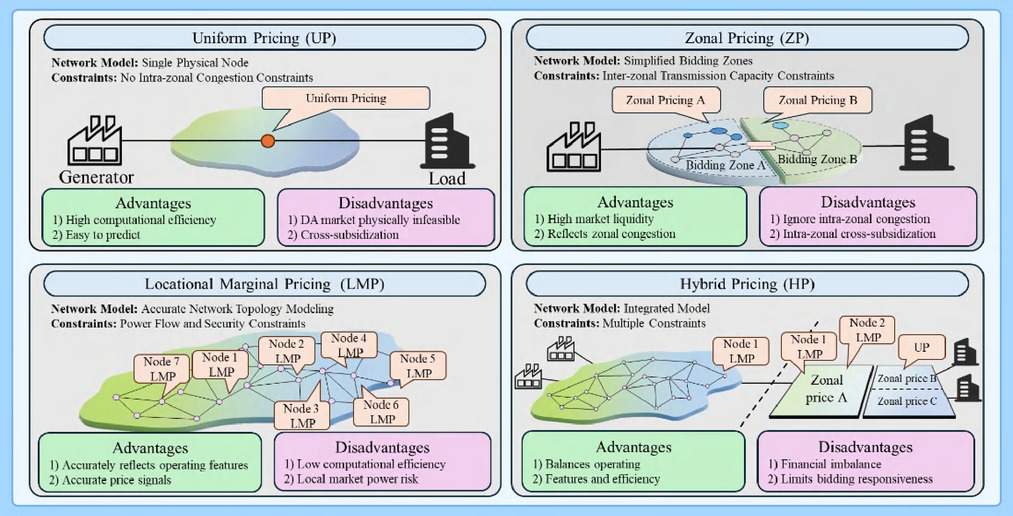
Figure 1.
The characteristics of different settlement mechanisms
-
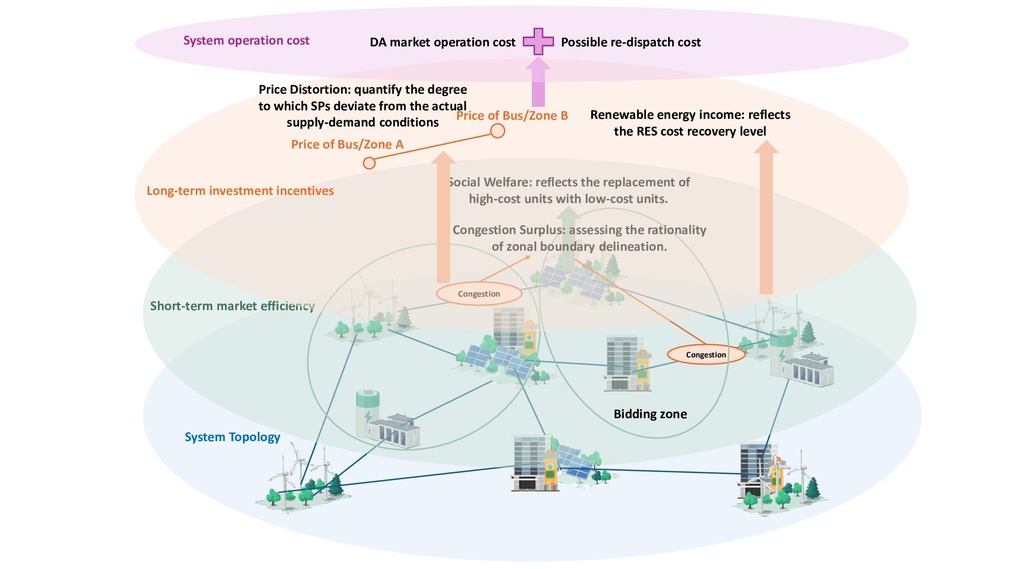
Figure 2.
The proposed evaluation framework, mapping economic dimensions to the underlying physical system topology.
-
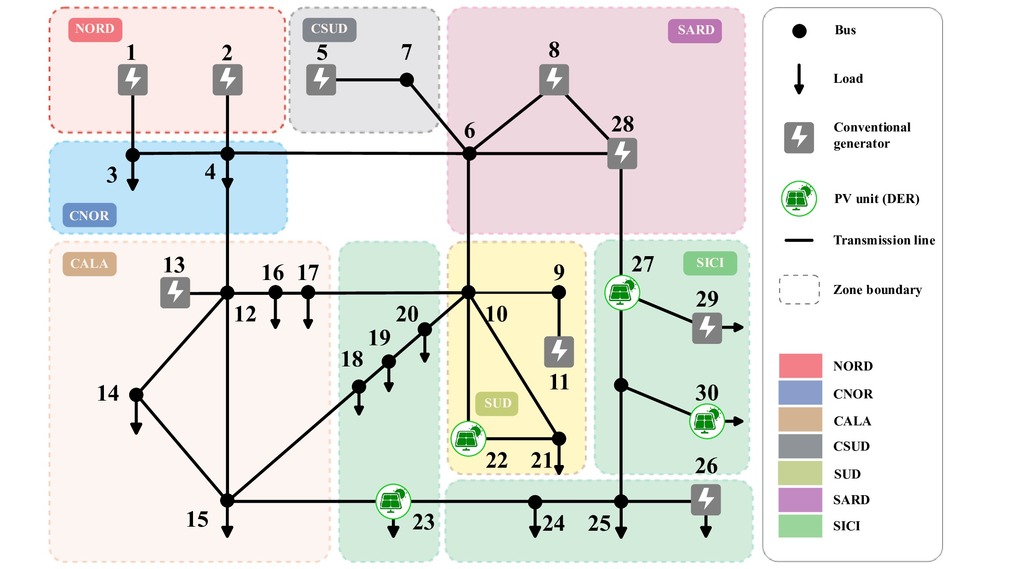
Figure 3.
Schematic of the 7-zone test system.
-
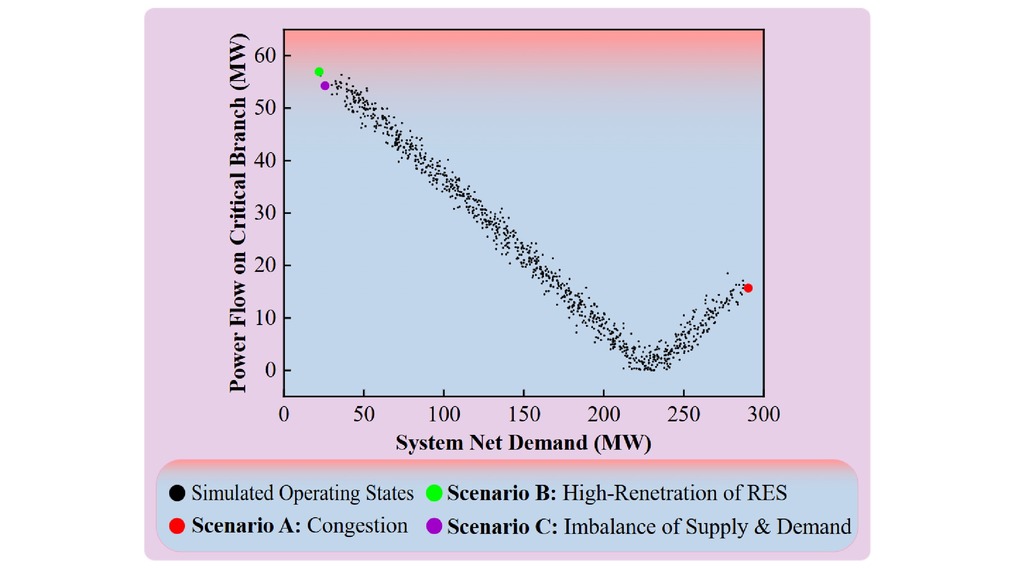
Figure 4.
Distribution of system operating states via Monte Carlo simulation and identification of representative scenarios.
-
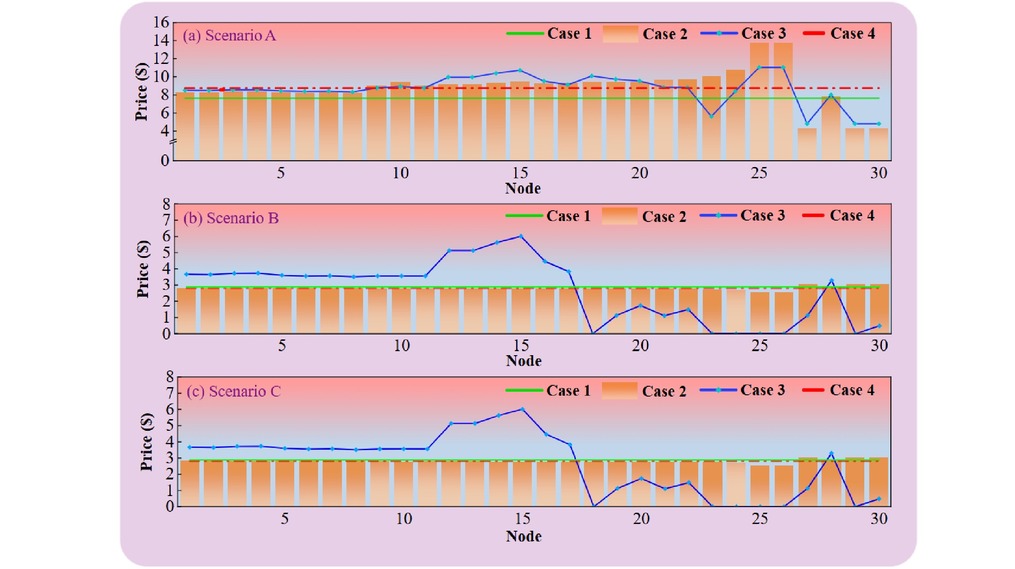
Figure 5.
Distribution of market-clearing price
-
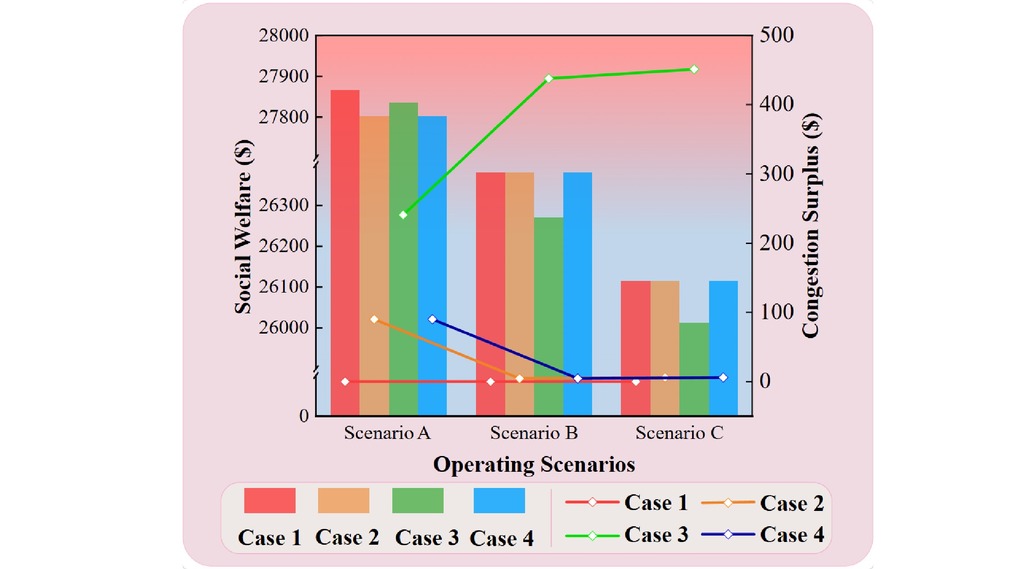
Figure 6.
Comparison of short-term market efficiency: SW and CS across different pricing mechanisms.
-
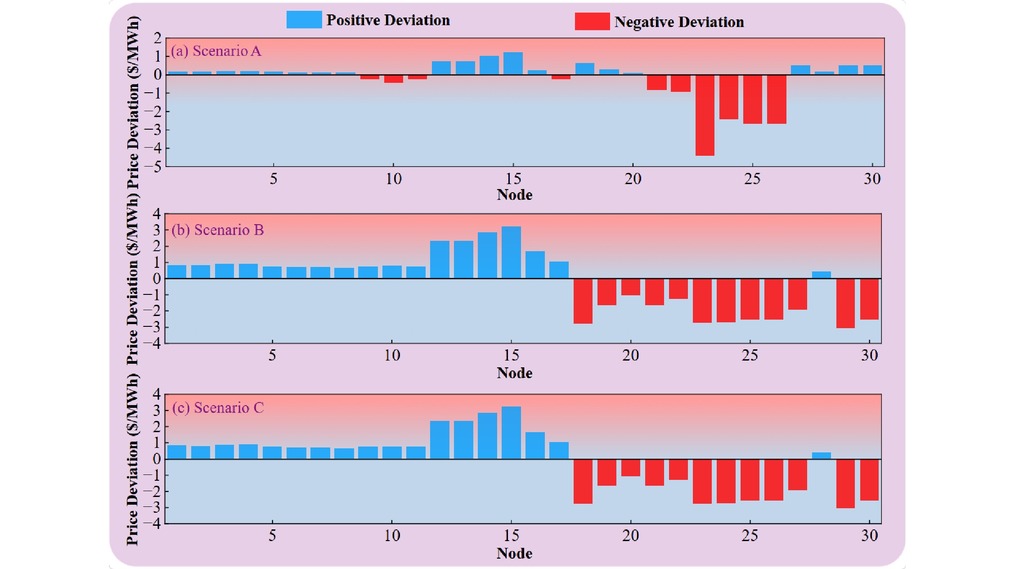
Figure 7.
Distribution of the price deviations
-
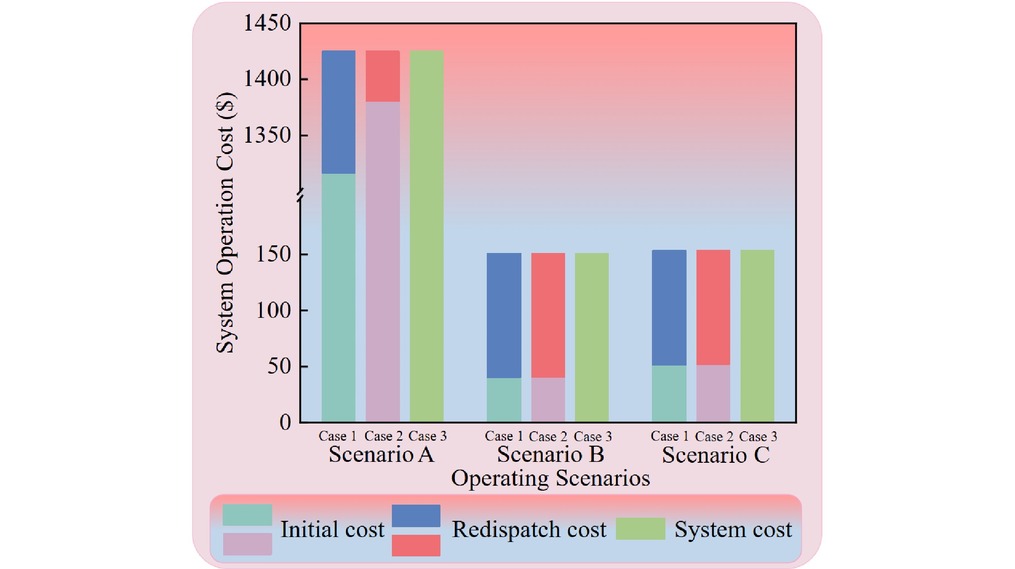
Figure 8.
Comparison of system operation costs and RCs under different scenarios.
-
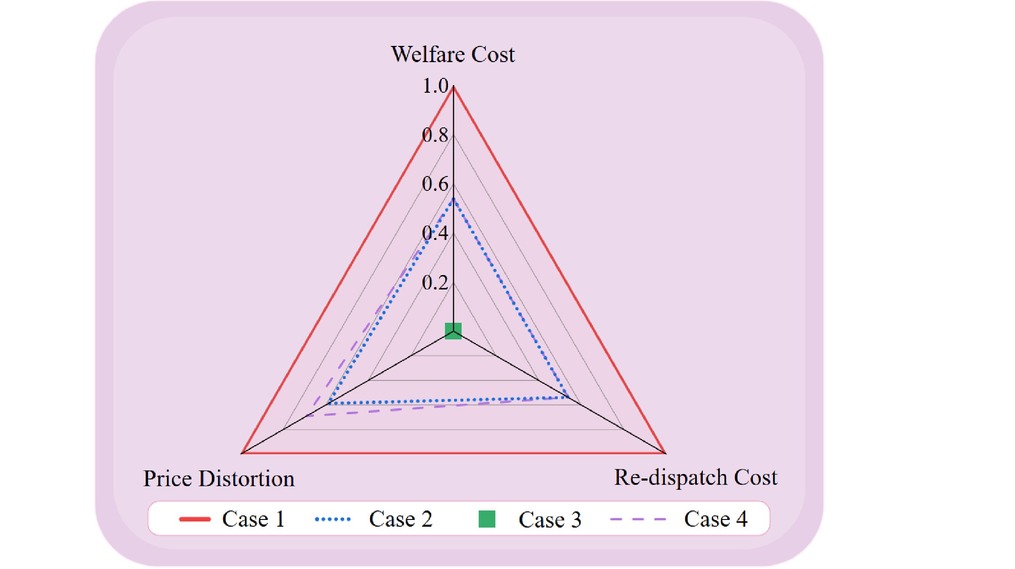
Figure 9.
Performance evaluation of Cases 1-4 under
1000 annual samples