
Privacy-Preserving Federated Learning for VRF System Energy Use Prediction with SMOGN Augmentation And GA-Based Aggregation
-
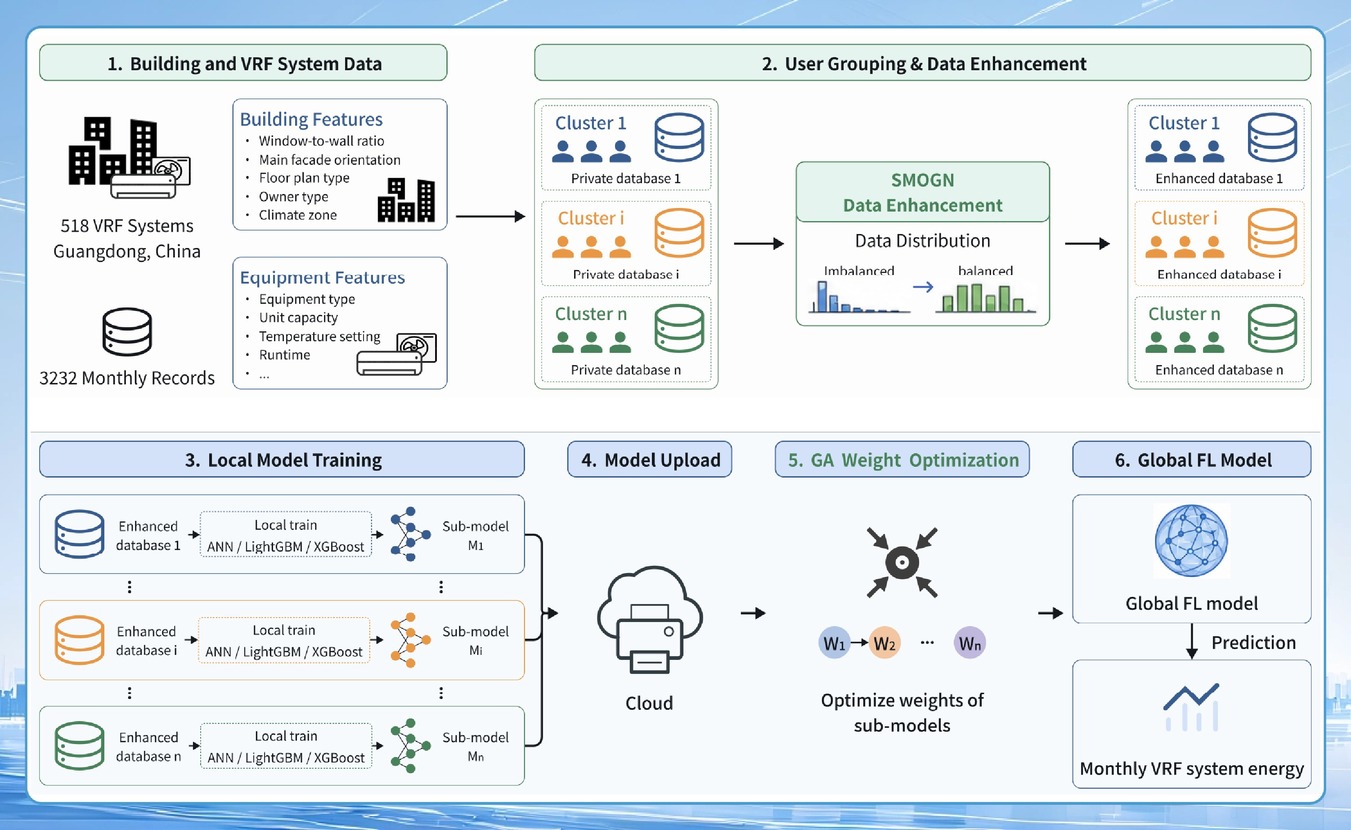
GRAPHICAL ABSTRACT
 DownLoad:
Full size image
DownLoad:
Full size image
-
PUBLIC SUMMARY
-
Precise VRF energy prediction guides equipment matching and operation; traditional centralized forecasting risks user data privacy, while federated learning trains global models with local raw data retained.
An improved federated learning framework combines client-side SMOGN data augmentation and GA weighted aggregation to solve VRF data imbalance and poor model fusion defects.
Dataset of 518 Chinese VRF systems (3232 monthly records) is expanded to 4500 samples via SMOGN; three ML models are tested with building and equipment characteristic inputs.
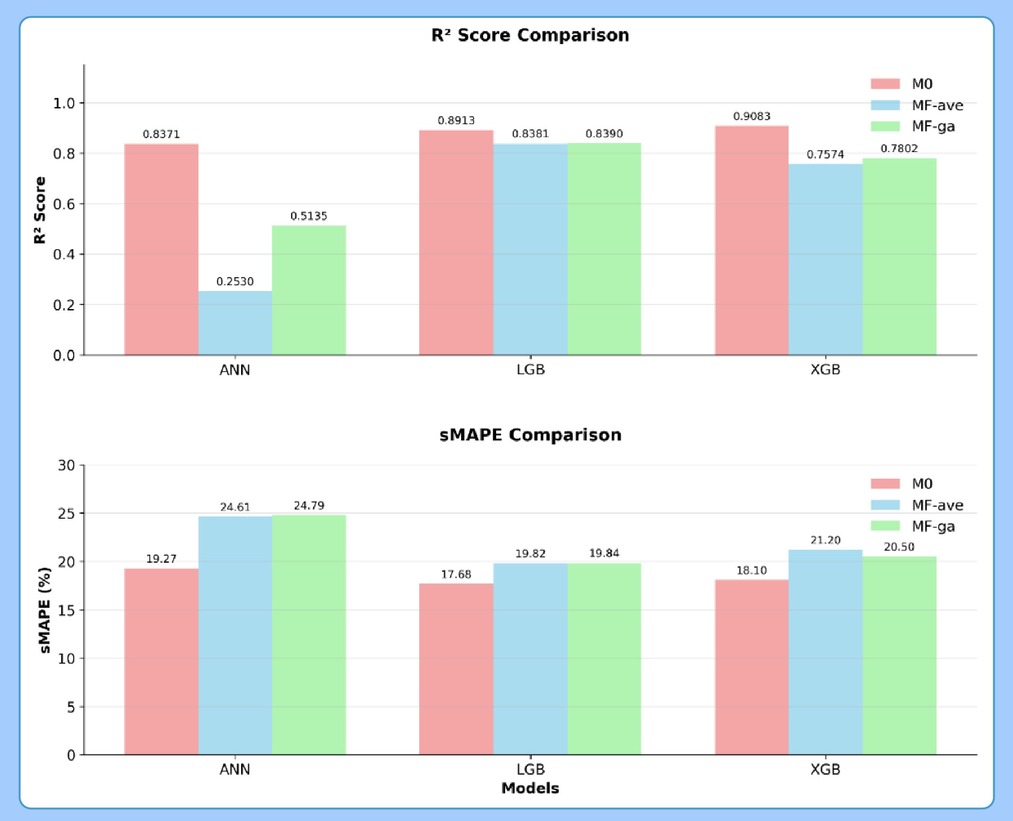
The proposed privacy-preserving FL framework reaches R=0.8390, approaching centralized benchmark R=0.8913, verifying its accuracy and scalability for VRF energy forecasting.
-
-
ABSTRACT
Accurate prediction of energy use for Variable Refrigerant Flow (VRF) systems is critical for optimizing equipment selection and efficient operation. Traditional prediction methods typically depend on centralized data collection, raising privacy concerns. Federated Learning (FL) provides a privacy-preserving alternative by enabling multiple clients to collaboratively train a global model while keeping raw data localized. However, practical FL applications for VRF systems face challenges of data imbalance and suboptimal model aggregation. To address these issues, this paper proposes an enhanced FL framework integrating Synthetic Minority Oversampling Technique for Regression with Gaussian Noise (SMOGN) and Genetic Algorithm (GA) to improve prediction accuracy while preserving privacy. SMOGN is employed at client level to augment local datasets and mitigate imbalance. A GA-based performance-weighted ensemble aggregation strategy is introduced to optimize model fusion in FL, replacing conventional uniform averaging and enabling better utilization of heterogeneous local models. The framework was evaluated using data from 518 VRF systems in China (3,232 monthly records, expanded to 4,500 samples via SMOGN). Three machine learning models, i.e. Artificial Neural Networks, Light Gradient Boosting Machine, and eXtreme Gradient Boosting, were implemented under centralized and federated settings, using five building features and nine equipment features as inputs to predict monthly energy consumption. Results show that the proposed FL framework achieves an R2 value of0.8390 , close to centralized model performance (R2 =0.8913 ), while preserving data privacy. These findings demonstrate the effectiveness of the proposed approach as a scalable and privacy-preserving solution for energy consumption prediction in VRF systems. -

-
REFERENCES
[1] Lin G., Casillas A., Sheng M., et al. (2023). Performance Evaluation of an Occupancy-Based HVAC Control System. Energies 16:7088. DOI:10.3390/en16207088 [2] United Nations Environment Programme. (2024). 2023 Global Status Report for Buildings and Construction: Beyond Foundations – Mainstreaming Sustainable Solutions to Cut Emissions from the Buildings Sector. UNEP. DOI:10.59117/20.500.11822/45095. [3] National Development and Reform Commission, Ministry of Housing and Urban-Rural Development. (2022). 14th Five-Year Plan for Building Energy Efficiency and Green Building Development. China Architecture & Building Press. [4] Shin M., Kim S., Kim Y., et al. (2024). Development of an HVAC system control method using deep reinforcement learning. Build. Environ. 248:111069. DOI:10.1016/j.buildenv.2024.111069 [5] Hagström F., Garg V., Oliveira F., et al. (2025). Employing federated learning for training autonomous HVAC systems. Energy Build. 340:115761. DOI:10.1016/j.enbuild.2025.115761 [6] Enteria N., Sawachi T., Saito K., et al. (2023). Variable refrigerant flow systems: advances and applications. Springer Nature Singapore. DOI:10.1007/978-981-99-4783-2. [7] Yesilyurt H., Dokuz Y., Dokuz A.S., et al. (2024). Data-driven energy consumption prediction of a university office building. Energy 310:133242. DOI:10.1016/j.energy.2024.133242 [8] Hsu P.C., Gao L., Hwang Y., et al. (2025). Comparative study of LSTM and ANN models for power consumption prediction of variable refrigerant flow (VRF) systems. Int. J. Refrig. 169:55−68. DOI:10.1016/j.ijrefrig.2025.02.014 [9] Oh K. and Kim E.J. (2024). Predicting the energy consumption of a VRF heat pump using manufacturer performance data. Energy Build. 303:113798. DOI:10.1016/j.enbuild.2024.113798 [10] Wang R., Bai L., Rayhana R., et al. (2024). Personalized federated learning for buildings energy consumption forecasting. Energy Build. 323:114762. DOI:10.1016/j.enbuild.2024.114762 [11] Liu H., Liu Y., Huang H., et al. (2024). Energy consumption dynamic prediction for HVAC systems based on feature clustering deconstruction. Build. Simul. 17:1439−1460. DOI:10.1007/s12273-024-00892-7 [12] Ali M., Kumar A. and Choi B.J. (2025). Privacy preserving federated learning for energy disaggregation of smart homes. IET Cyber-Phys. Syst.: Theory Appl. 10. DOI:10.1049/cps2.70013. [13] Mulik A., Mehta D., Mirgh R., et al. (2023). A federated learning approach to predict energy consumption. ICCCIS:187–192. DOI:10.1109/ICCCIS60361.2023.10344237. [14] Venkataramanan V., Kaza S., Annaswamy A.M., et al. (2023). DER forecast using privacy-preserving federated learning. IEEE Internet Things J. 10:2046−2055. DOI:10.1109/JIOT.2022.32280 [15] Khalil M., Esseghir M., Merghem-Boulahia L., et al. (2021). Federated learning for energy-efficient thermal comfort service. IEEE GLOBECOM:1–6. DOI:10.1109/GLOBECOM46548.2021.9685634. [16] Zhou X., Wang N., Zou J., et al. (2024). Analysis and prediction of energy consumption in office buildings with variable refrigerant flow systems. J. Build. Eng. 97:110936. DOI:10.1016/j.jobe.2024.110936 [17] Pachano J.E., Nuevo-Gallardo C. and Fernández Bandera C. (2025). An empirical comparison of a calibrated white-box versus multiple LSTM black-box building energy models. Energy Build. 333:115485. DOI:10.1016/j.enbuild.2025.115485 [18] Yue B., Wei Z., Zheng C., et al. (2023). Power consumption prediction of variable refrigerant flow system through data-physics hybrid approach. Energy 278:127826. DOI:10.1016/j.energy.2023.127826 [19] Liu Q., Yan Y., Jin Y., et al. (2024). Secure federated evolutionary optimization-a survey. Engineering 34:23−42. DOI:10.1016/j.eng.2024.02.004 [20] Li A., Xiao F., Fan C., et al. (2021). Development of an ANN-based building energy model using transfer learning. Build. Simul. 14:89−101. DOI:10.1007/s12273-020-00677-9 [21] Fan C., Lei Y., Sun Y., et al. (2022). Data-centric or algorithm-centric: Exploiting the performance of transfer learning for improving building energy predictions in data-scarce context. Energy 240:122775. DOI:10.1016/j.energy.2021.122775 [22] Mustaffa Z., Sulaiman M.H. (2025). Advanced forecasting of building energy loads with XGBoost and metaheuristic algorithms. Energy Storage Sav. DOI:10.1016/j.enss.2025.1000305. [23] McMahan H.B., Moore E., Ramage D., et al. (2016). Communication-efficient learning of deep networks from decentralized data. arXiv:1602.05629. DOI:10.48550/arXiv.1602.05629. [24] Gao J., Wang W., Liu Z., et al. (2021). Decentralized federated learning framework for the neighborhood: a case study on residential building load forecasting. 19th ACM Conf. Embed. Net. Sens. Sys.:453–459. DOI:10.1145/3460312.3482513. [25] Wang Z., Yu P. and Zhang H. (2023). Privacy-preserving regulation capacity evaluation for HVAC systems. IEEE Trans. Smart Grid 14:3535−3549. DOI:10.1109/TSG.2023.32422 [26] Lu Y., Cui L., Wang Y., et al. (2023). Residential energy consumption forecasting based on federated reinforcement learning. Comput. Model. Eng. Sci. 137:717−732. DOI:10.32604/cmes.2023.02876 [27] Tang L., Xie H., Wang X., et al. (2023). Privacy-preserving knowledge sharing for few-shot building energy prediction. Appl. Energy 337:120860. DOI:10.1016/j.apenergy.2023.120860 [28] Chaudhary R.K., Kumar R. and Saxena N. (2025). Ameliorating clustered federated learning using real-coded genetic algorithm. Cluster Comput. 28:415. DOI:10.1007/s10586-024-04867-1 [29] Wu J., Ji H., Yi J., et al. (2025). Optimizing client selection in federated learning base on genetic algorithm. Cluster Comput. 28:400. DOI:10.1007/s10586-024-04869-z [30] Zhai R., Chen X., Pei L., et al. (2023). A federated learning framework against data poisoning attacks. Electronics 12:560. DOI:10.3390/electronics12030560 [31] Branco P., Torgo L., Ribeiro R.P. (2017). SMOGN: a pre-processing approach for imbalanced regression. Int. Workshop Learn. Imba. Dom. PMLR:36–50. DOI:10.48550/arXiv.1704.03466. [32] Rad M., Rafiei A., Grunwell J., et al. (2025). Tackling the small imbalanced horizontal dataset regressions by stability selection and SMOGN. Int. J. Med. Inform. 196:105809. DOI:10.1016/j.ijmedinf.2024.105809 [33] Kocoglu Y., Gorell S.B., Emadi H., et al. (2024). Enhancing shale gas EUR predictions with TPE optimized SMOGN. Gas Sci. Eng. 131:205475. DOI:10.1016/j.gsxe.2024.205475 [34] Meyes R., Lu M., Puiseau C.W., et al. (2019). Ablation studies in artificial neural networks. arXiv:1909.00608. DOI:10.48550/arXiv.1909.00608. [35] Zhao Y., Chen W., Xu Z., et al. (2025). AbGen: evaluating large language models in ablation study design. arXiv:2504.09641. DOI:10.48550/arXiv.2504.09641. [36] Kamalov F., Moussa S., Reyes J.A. (2023). Data transformation in machine learning. 2023 Int. Conf. Innov. Intel. Inform. Comput. Tech.:115–120. DOI:10.1109/3ICT58783.2023.10330167. [37] Ji J., Pang W., Zhou C., et al. (2012). A fuzzy k-prototype clustering algorithm for mixed numeric and categorical data. Knowl.-Based Syst. 30:129−135. DOI:10.1016/j.knosys.2012.01.015 [38] Ji J., Bai T., Zhou C., et al. (2013). An improved k-prototypes clustering algorithm for mixed numeric and categorical data. Neurocomputing 120:590−596. DOI:10.1016/j.neucom.2013.04.011 -
ABOUT THIS ARTICLE
Cite this article:
Guo Z., Wang B., Jiang Y., et al. (2026). Privacy-Preserving Federated Learning for VRF System Energy Use Prediction with SMOGN Augmentation And GA-Based Aggregation. Energy Use 2:100060. https://doi.org/10.59717/ipj.energy-use.2026.100060
Welcome!
To request copyright permission to republish or share portions of our works, please visit Copyright Clearance Center's (CCC) Marketplace website at marketplace.copyright.com.
Export File
Citation
Guo Z., Wang B., Jiang Y., et al. (2026). Privacy-Preserving Federated Learning for VRF System Energy Use Prediction with SMOGN Augmentation And GA-Based Aggregation. Energy Use 2:100060. https://doi.org/10.59717/ipj.energy-use.2026.100060

Format
Content
-
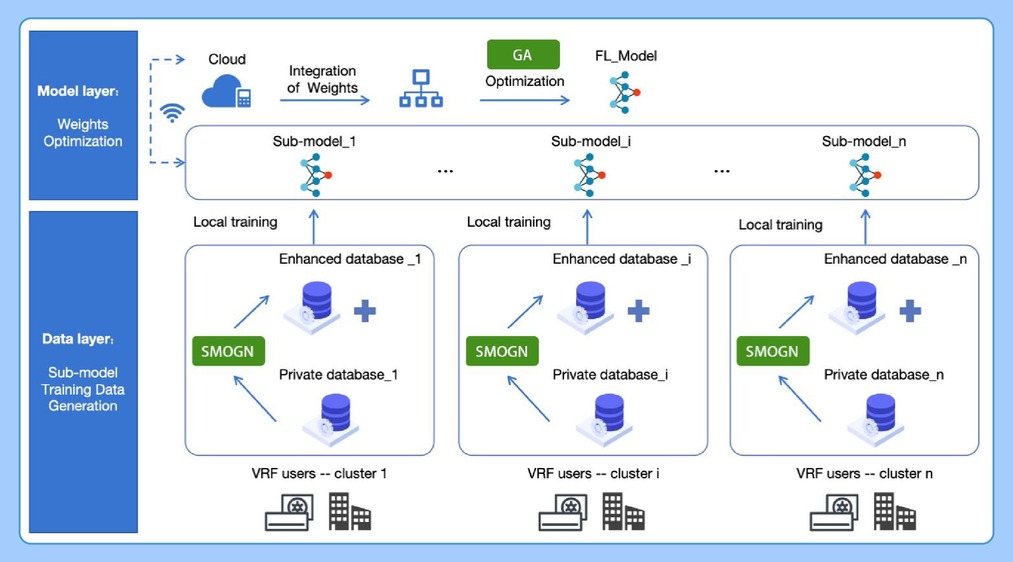
Figure 1.
Federated-learning-based VRF system energy prediction model architecture
-
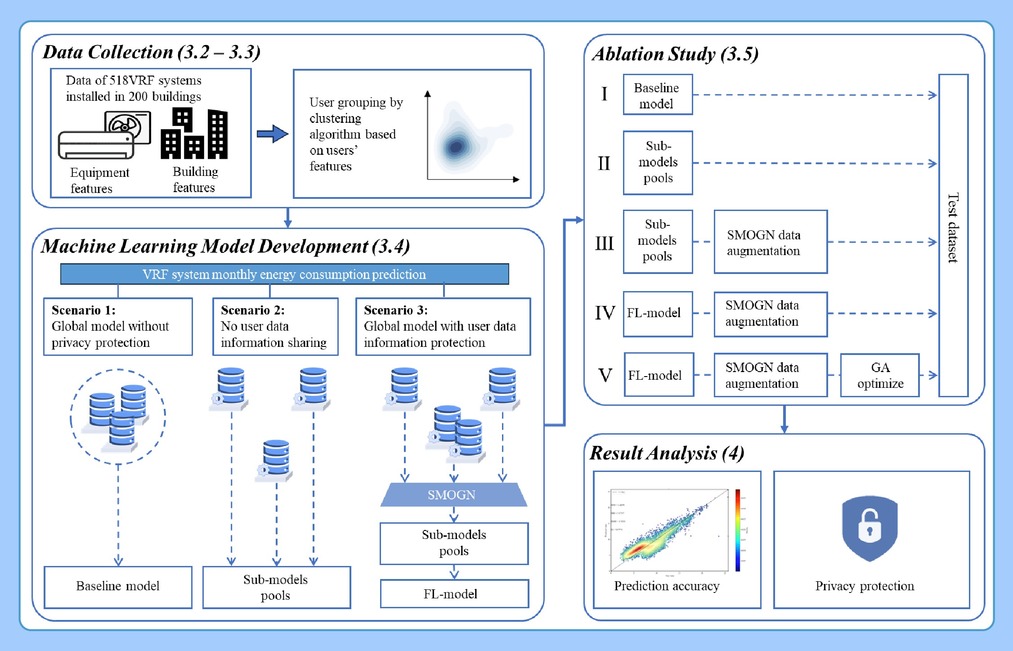
Figure 2.
Research framework of this study
-
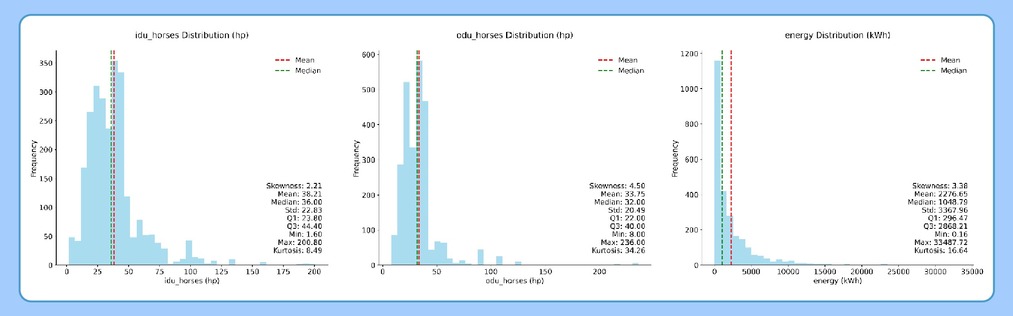
Figure 3.
Right-Skewed Distributions of total indoor/outdoor unit horsepower and monthly total energy consumption
-
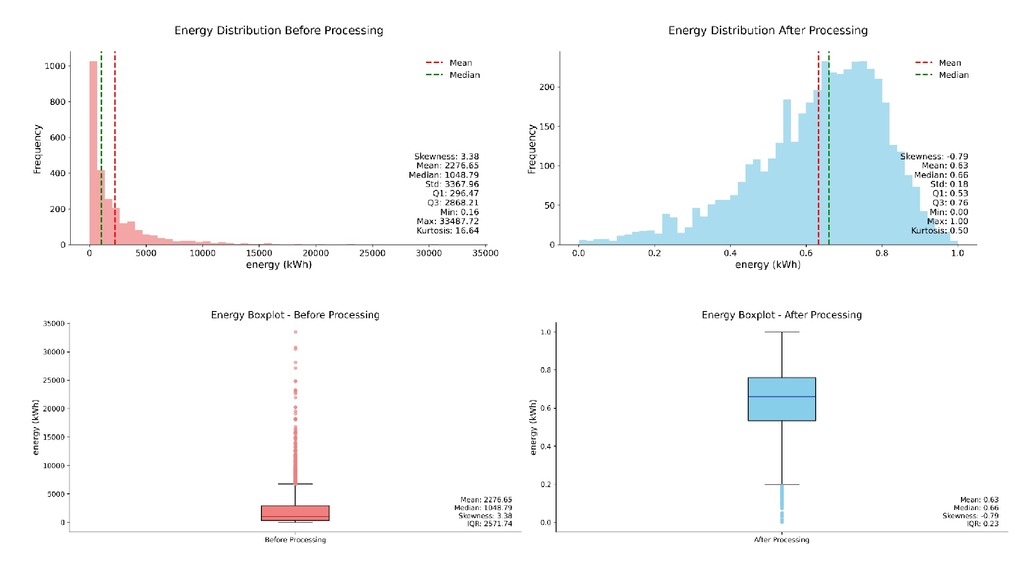
Figure 4.
Monthly total energy consumption distribution comparison histogram & monthly total energy consumption distribution comparison boxplot.
-
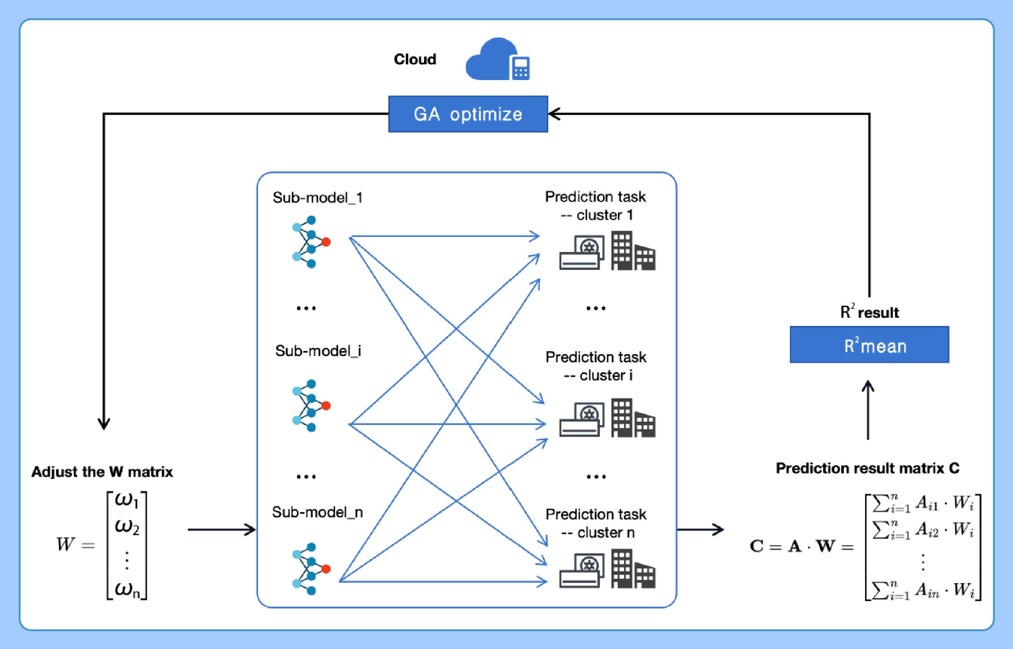
Figure 5.
Optimization of energy consumption prediction model based on genetic algorithm
-
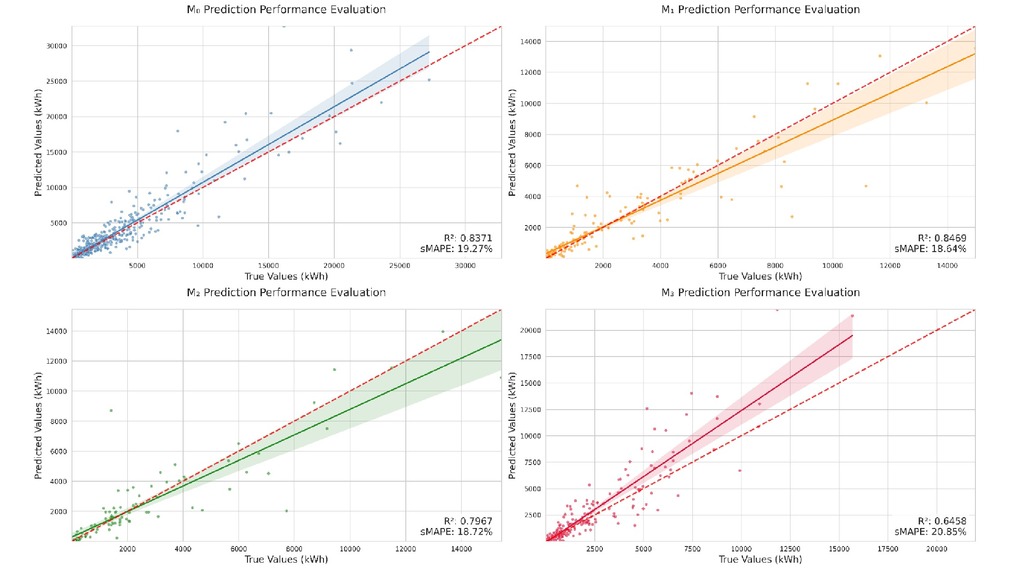
Figure 6.
Comparison of ANN model prediction performance evaluation for the testing data before data augmentation
-
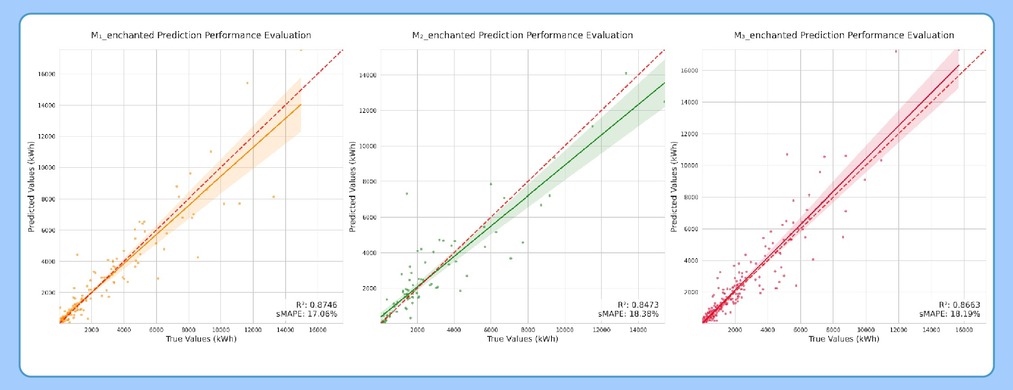
Figure 7.
Comparison chart of ANN model prediction performance evaluation for the testing data after data augmentation
-
Figure 8.
Comparison of the performance of centralized baseline model, simple weighted federated model, and genetic algorithm-optimized weighted ensemble federated model for the testing data