
Flexible solid-solid phase change material with zero leakage via in-situ preparation for battery thermal management
-
GRAPHICAL ABSTRACT
 DownLoad:
Full size image
DownLoad:
Full size image
-
PUBLIC SUMMARY
-
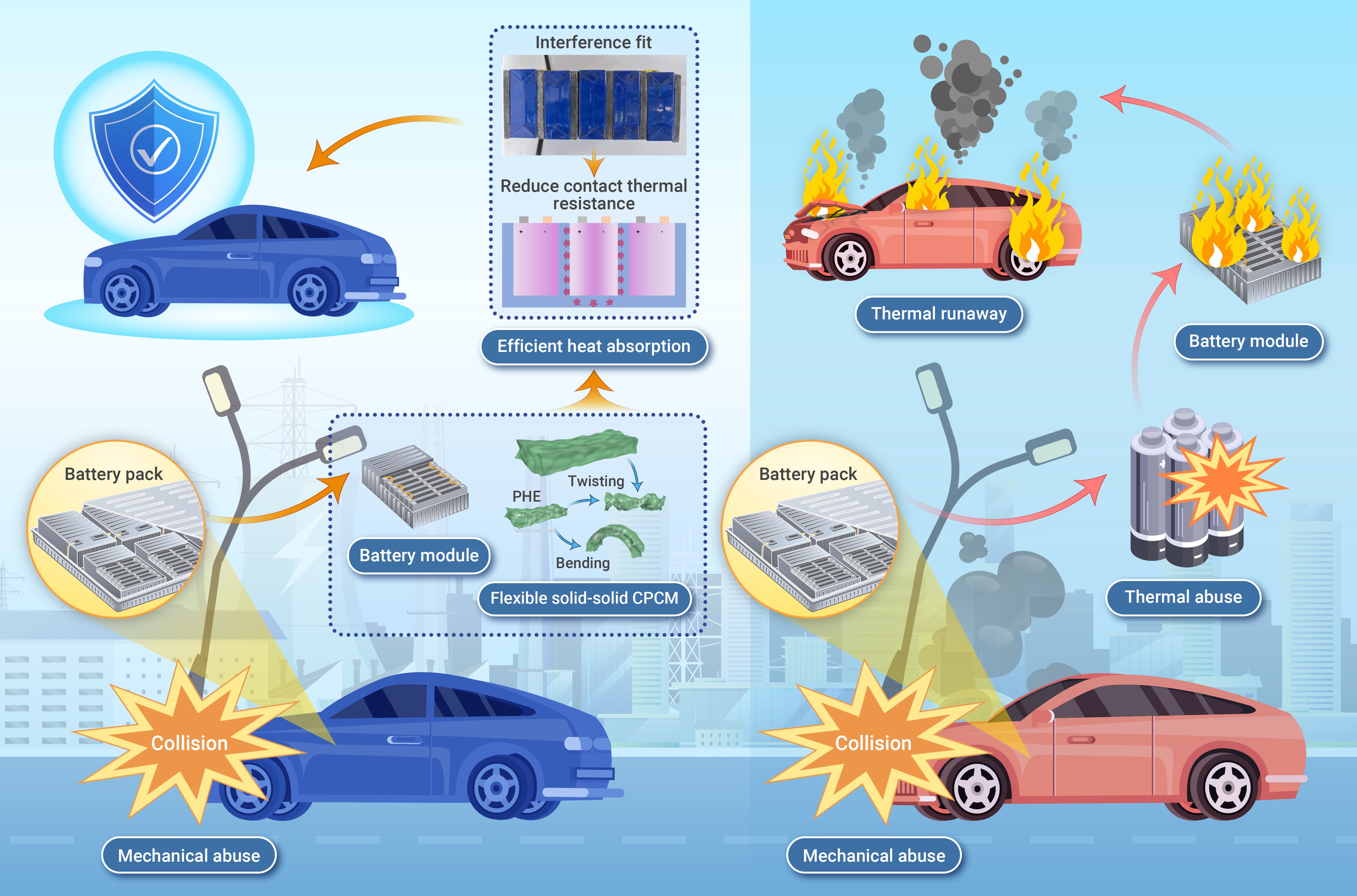
Polyurethane structured composite phase change material (CPCM) has been proposed and prepared via in-situ.
Solid-solid CPCM (PUPCM) with polyurethane structure can improve flexible and anti-leakage properties.
PUPCM sustain a constant mass with zero leakage even under 150°C heating condition.
Flexibility and temperature control capability of PUPCM can effectively dissipate heat in battery module.
The battery module with PUPCM can control the maximum temperature within 60°C at 3 C discharge rate.
-
-
ABSTRACT
Composite phase change material (CPCM) has great potential in addressing the challenges associated with thermal energy storage and thermal management. However, the flexibility and latent heat capacity of CPCM exist contradiction, hindering its wide application, especially in thermal management field. Herein, a novel solid-solid polyurethane structured phase change material including as chain segments PEG4000 and hexamethylene diisocyanate coupling with expanded graphite (PHE5) has been proposed and prepared via in-situ approach. Expand graphite is uniformly distributed and the carbamate group is produced by in-situ preparation, the high latent heat and anti-leakage characteristics of PHE5 are beneficial to sustain a constant mass with zero leakage even under 150℃ heating condition. At a 3 C discharge rate, the battery module with PHE5 can reduce the maximum temperature to 59℃, which is lower than the PE-based module. Additionally, the battery system can maintain the temperature difference below 4.5℃, ensuring uniform temperature within the battery module. The flexibility and controlling temperature capabilities of PHE5 can effectively dissipate heat during charge and discharge cycles, and the mechanistic analysis of PHE5 with anti-leakage property can enhance the battery thermal safety, achieving comprehensive protection throughout normal operating and extreme conditions. Thus, this research reveals that solid-solid CPCM with polyurethane structured can improve the flexible and anti-leakage properties via in-situ preparation, which will offer an effective thermal safety solution for battery module, substantially enhancing the safety of millions of drivers and passengers. -

-
REFERENCES
[1] Liu, Y., Zhu, Y., and Cui, Y. (2019). Challenges and opportunities towards fast-charging battery materials. Nat. Energy 4: 540−550. DOI: 10.1038/s41560-019-0405-3. [2] Xiang, M., Shen, Z., Zheng, J., et al. (2024). Gas-phase synthesis of Ti2CCl2 enables an efficient catalyst for lithium-sulfur batteries. The Innovation 5: 100540. DOI: 10.1016/j.xinn.2023.100540. [3] Heenan, T. M. M., Mombrini, I., Llewellyn, A., et al. (2023). Mapping internal temperatures during high-rate battery applications. Nature 617: 507−512. DOI: 10.1038/s41586-023-05913-z. [4] Huang, Q., Li, X., Zhang, G., et al. (2022). Flexible composite phase change material with anti-leakage and anti-vibration properties for battery thermal management. Appl. Energy 309: 118434. DOI: 10.1016/j.apenergy.2021.118434. [5] Yamada, Y., Wang, J., Ko, S., et al. (2019). Advances and issues in developing salt-concentrated battery electrolytes. Nat. Energy 4: 269-280. DOI: 10.1038/s41560-019-0336-z. [6] Finegan, D. P., Zhu, J., Feng, X., et al. (2021). The application of data-driven methods and physics-based learning for improving battery safety. Joule 5: 316−329. DOI: 10.1016/j.joule.2020.11.018. [7] Van Erp, R., Soleimanzadeh, R., Nela, L., et al. (2020). Co-designing electronics with microfluidics for more sustainable cooling. Nature 585: 211−216. DOI: 10.1038/s41586-020-2666-1. [8] Deng, J., Bae, C., Denlinger, A., et al. (2020). Electric vehicles batteries: requirements and challenges. Joule 4: 511−515. DOI: 10.1016/j.joule.2020.01.013. [9] Weng, J., Huang, Q., Li, X., et al. (2022). Safety issue on PCM-based battery thermal management: material thermal stability and system hazard mitigation. Energy Storage Mater. 53: 580−612. DOI: 10.1016/j.ensm.2022.09.007. [10] Seo, J. H., Patil, M. S., Panchal, S., et al. (2020). Numerical investigations on magnetohydrodynamic pump based microchannel cooling system for heat dissipating element. Symmetry 12: 1713. DOI: 10.3390/sym12101713. [11] Chen, K., Wu, W., Yuan, F., et al. (2019). Cooling efficiency improvement of air-cooled battery thermal management system through designing the flow pattern. Energy 167: 781−790. DOI: 10.1016/j.energy.2018.11.011. [12] Lai, Y., Wu, W., Chen, K., et al. (2019). A compact and lightweight liquid-cooled thermal management solution for cylindrical lithium-ion power battery pack. Int. J. Heat Mass Trans. 144: 118581. DOI: 10.1016/j.ijheatmasstransfer.2019.118581. [13] Wu, W., Wang, S., and Wu, W. (2019). A critical review of battery thermal performance and liquid based battery thermal management. Energy Convers. Manag. 182: 262−281. DOI: 10.1016/j.enconman.2018.12.051. [14] Wu, W., Xie, S., Zhang, W., et al. (2022). Role of natural convection and battery arrangement for phase change material based battery thermal management unit. J. Energy Storage 52: 104820. DOI: 10.1016/j.est.2022.104820. [15] Talele, V., Patil, M. S., Moralı, U., et al. (2023). Battery thermal runaway preventive time delay strategy using different melting point phase change materials. SAE Int. J. Electrified Vehicles 13: 030017. DOI: 10.4271/14-13-03-0017. [16] Jiang, Z., and Qu, Z. (2019). Lithium–ion battery thermal management using heat pipe and phase change material during discharge–charge cycle: A comprehensive numerical study. Appl. Energy 242: 378−392. DOI: 10.1016/j.apenergy.2019.03.043. [17] He, P., Lu, H., Fan, Y., et al. (2023). Numerical investigation on a lithium-ion battery thermal management system utilizing a double-layered I-shaped channel liquid cooling plate exchanger. Int. J. Therm. Sci. 187: 108200. DOI: 10.1016/j.ijthermalsci.2023.108200. [18] Tran, M. K., DaCosta, A., Mevawalla, A., et al. (2021). Comparative study of equivalent circuit models performance in four common lithium-ion batteries: LFP, NMC, LMO, NCA. Batteries 7: 51. DOI: 10.3390/batteries7030051. [19] Zhao, C., Guo, P., Sheng, N., et al. (2023). Cloth-derived anisotropic carbon scroll attached with 2D oriented graphite layers for supporting phase change material with efficient thermal storage. Chem. Eng. J. 454: 139999. DOI: 10.1016/j.cej.2022.139999. [20] Liu, C., Cao, H., Bao, Y., et al. (2022). Synthesis and characterization of microencapsulated phase change material with phenol-formaldehyde resin shell for thermal energy storage. Sol. Energy Mater. Sol. Cells 243: 111789. DOI: 10.1016/j.solmat.2022.111789. [21] Bhakre, S. S., Sawarkar, P. D., and Kalamkar, V. R. (2022). Experimental study on photovoltaic panel integrated with Polyethylene Glycol 1500 phase change material. J. Energy Storage 55: 105518. DOI: 10.1016/j.est.2022.105518. [22] Zhao, Y., Liu, T., Wei, Z., et al. (2023). Polymeric phase change material networks based on multi-telechelic polyethylene glycol-derived multimer structures for thermal energy storage. Chem. Eng. J. 462: 142164. DOI: 10.1016/j.cej.2023.142164. [23] Mohaisen, K. O., Zahir, M. H., and Maslehuddin, M. (2023). Shape-stabilized phase change material for thermal energy storage: Sr+2 doped BaCO3 matrix incorporating polyethylene glycol. J. Energy Storage 58: 106369. DOI: 10.1016/j.est.2022.106369. [24] Zeighampour, F., Khoddami, A., Hadadzadeh, H., et al. (2022). The molecular dynamics study of atomic compound and functional groups effects on the atomic/thermal behavior of polyethylene glycol/graphite-based matrixes. Int. Commun. Heat Mass Trans. 136: 106219. DOI: 10.1016/j.icheatmasstransfer.2022.106219. [25] Dong, Y., Liu, H., Zhang, N., et al. (2022). Photo-to-thermal conversion and energy storage of polyethylene glycol/copper sulfide composite PCMs. Sol. Energy Mater. Sol. Cells 238: 111583. DOI: 10.1016/j.solmat.2022.111583. [26] Sun, J., Zhao, J., Zhang, W., et al. (2023). Composites with a novel core–shell structural expanded perlite/polyethylene glycol composite PCM as novel green energy storage composites for building energy conservation. Appl. Energy 330: 120363. DOI: 10.1016/j.apenergy.2022.120363. [27] Zhang, J., Yan, Y., Zhang, C., et al. (2023). Properties improvement of composite layer of cryo-compressed hydrogen storage vessel by polyethylene glycol modified epoxy resin. Int. J. Hydro. Energy 48: 5576−5594. DOI: 10.1016/j.ijhydene.2022.11.138. [28] Feng, Q., Yang, J., Liu, Y., et al. (2014). Simultaneously enhanced cryogenic tensile strength, ductility and impact resistance of epoxy resins by polyethylene glycol. J. Materials Science & Technology 30: 90−96. DOI: 10.1016/j.jmst.2013.08.016. [29] Ren, T., Du, G., Li, Q., et al. (2022). A polyethylene glycol-based form-stable phase change material supported by nanoarray-modified metal foam. J. Energy Storage 47: 103592. DOI: 10.1016/j.est.2021.103592. [30] Lu, X., Huang, H., Zhang, X., et al. (2019). Novel light-driven and electro-driven polyethylene glycol/two-dimensional MXene form-stable phase change material with enhanced thermal conductivity and electrical conductivity for thermal energy storage. Compos. B Eng. 177: 107372. DOI: 10.1016/j.compositesb.2019.107372. [31] Deng, Y., He, M., and Li, J. (2019). Non-isothermal crystallization behavior of polyethylene glycol/expanded vermiculite form-stable composite phase change material. Mater. Lett. 234: 17−20. DOI: 10.1016/j.matlet.2018.09.040. [32] Fang, Y., Qu, Z., Zhang, J., et al. (2020). Charging performance of latent thermal energy storage system with microencapsulated phase-change material for domestic hot water. Energy Build. 224: 110237. DOI: 10.1016/j.enbuild.2020.110237. [33] Wu, W., Liu, J., Liu, M., et al. (2020). An innovative battery thermal management with thermally induced flexible phase change material. Energy Conver. Manag. 221: 113145. DOI: 10.1016/j.enconman.2020.113145. [34] Huang, Q., Li, X., Zhang, G., et al. (2021). Thermal management of Lithium-ion battery pack through the application of flexible form-stable composite phase change materials. Appl. Therm. Eng. 183: 116151. DOI: 10.1016/j.applthermaleng.2020.116151. [35] Wu, W., Ye, G., Zhang, G., et al. (2022). Composite phase change material with room-temperature-flexibility for battery thermal management. Chem. Eng. J. 428: 131116. DOI: 10.1016/j.cej.2021.131116. [36] Liu, X., Wang, C., Wu, T., et al. (2022). A novel stable and flexible composite phase change materials for battery thermal management. Appl. Therm. Eng. 212: 118510. DOI: 10.1016/j.applthermaleng.2022.118510. [37] Yang, X., Zhang, Z., Cai, Z., et al. (2022). Experimental investigation on room-temperature flexible composite phase change materials in thermal management of power battery pack. Appl. Therm. Eng. 213: 118748. DOI: 10.1016/j.applthermaleng.2022.118748. [38] Zhou, Y., Cao, Y., Chen, H., et al. (2023). Three-dimensional continuous network graphite nanosheets-based carbon foam supported stearic acid as effective shape-stabilized phase change material. J. Energy Storage 59: 106575. DOI: 10.1016/j.est.2022.106575. [39] Nguyen, G. T., Ly, T. N., Tran, N. T., et al. (2023). Glutaric acid/expanded graphite composites as highly efficient shape-stabilized phase change materials at medium-temperature. J. Energy Storage 63: 107038. DOI: 10.1016/j.est.2023.107038. [40] Wen, R., Wu, M., Chen, B., et al. (2023). Non-isothermal crystallization behavior of Ag nanoparticles modified expanded graphite/paraffin composite phase change material. J. Energy Storage 58: 106371. DOI: 10.1016/j.est.2022.106371. [41] Wang, L., Kong, X., Ren, J., et al. (2022). Novel hybrid composite phase change materials with high thermal performance based on aluminium nitride and nanocapsules. Energy 238: 121775. DOI: 10.1016/j.energy.2021.121775. [42] Qiao, X., Kong, X., and Wang. L. (2021). Thermal performance analysis of a thermal enhanced form-stable composite phase change material with aluminum nitride. Appl. Ther. Eng. 187: 116581. DOI: 10.1016/j.applthermaleng.2021.116581. [43] Li, C., Zhao, X., and Chen, J. (2020). Diversiform microstructure silicon carbides stabilized stearic acid as composite phase change materials. Sol. Energy 201: 92−101. DOI: 10.1016/j.solener.2020.02.102. [44] Huang, Q., Deng, J., Li, X., et al. (2020). Experimental investigation on thermally induced aluminum nitride based flexible composite phase change material for battery thermal management. J. Energy Storage 32: 101755. DOI: 10.1016/j.est.2020.101755. [45] Xu, X., Sun, T., Liu, W., et al. (2022). An experimental and numerical study on the leakage of molten phase change material through a micropore under gravity. Chem. Eng. Sci. 251: 117427. DOI: 10.1016/j.ces.2022.117427. [46] Xiao, C., Zhang, G., Li, Z., et al. (2020). Custom design of solid–solid phase change material with ultra-high thermal stability for battery thermal management. J. mater. chem. A 8: 14624−14633. DOI: 10.1039/D0TA05247G. [47] Du, X., Wang, H., Du, Z., et al. (2017). Synthesis and thermal properties of novel solid-solid phase change materials with comb-polyurethane block copolymer structure for thermal energy storage. Thermochim. Acta. 651: 58−64. DOI: 10.1016/j.tca.2017.02.012. [48] Liao, Y., Li, J., Li, S., et al. (2022). Super-elastic and shape-stable solid-solid phase change materials for thermal management of electronics. J. Energy Storage 52: 104751. DOI: 10.1016/j.est.2022.104751. [49] Tanwar, S., and Kaur, R. (2022). Fabrication and investigation on influence of metal oxide nanoparticles on thermal, flammability and UV characteristics of polyethylene glycol based phase change materials. J. Energy Storage 54: 105318. DOI: 10.1016/j.est.2022.105318. [50] Zhang, Q., Wen, Y., Liu, K., et al. (2021). Study of solid polyurethane electrolytes synthesized from HDI and PEO of different molecular weight. J. Electroanaly. Chem. 893: 115305. DOI: 10.1016/j.jelechem.2021.115305. [51] Sundararajan, S., Samui, A., Kulkarni, P. S. (2017). Versatility of polyethylene glycol (PEG) in designing solid–solid phase change materials (PCMs) for thermal management and their application to innovative technologies. J. Mater. Chem. A 5: 18379. DOI: 10.1039/C7TA04968D. [52] Huan, Y., Gu, M., Ni, Y., et al. (2023). Highly flexible, healable and degradable polyurethane phase change materials with exceptional mechanical properties for thermal regulation. Chem. Eng. J. 468: 143742. DOI: 10.1016/j.cej.2023.143742. [53] Shi, J., Aftab, W., Liang, Z., et al. (2020). Tuning the flexibility and thermal storage capacity of solid–solid phase change materials towards wearable applications. J. Mater. Chem. A 8: 20133−20140. DOI: 10.1039/C9TA13925G. -
ABOUT THIS ARTICLE
Cite this article:
Li X., Yang W., Li C., et al., (2024). Flexible solid-solid phase change material with zero leakage via in-situ preparation for battery thermal management. The Innovation Energy 1(3): 100034. https://doi.org/10.59717/j.xinn-energy.2024.100034
Welcome!
To request copyright permission to republish or share portions of our works, please visit Copyright Clearance Center's (CCC) Marketplace website at marketplace.copyright.com.

Article Metrics
Relative Articles
Cited by
Export File
Citation
Li X., Yang W., Li C., et al., (2024). Flexible solid-solid phase change material with zero leakage via in-situ preparation for battery thermal management. The Innovation Energy 1(3): 100034. https://doi.org/10.59717/j.xinn-energy.2024.100034

Format
Content



-
Figure 1.
The designation and various structures of different CPCMs
-
Figure 2.
The assembling and measuring platform of prismatic battery module
-
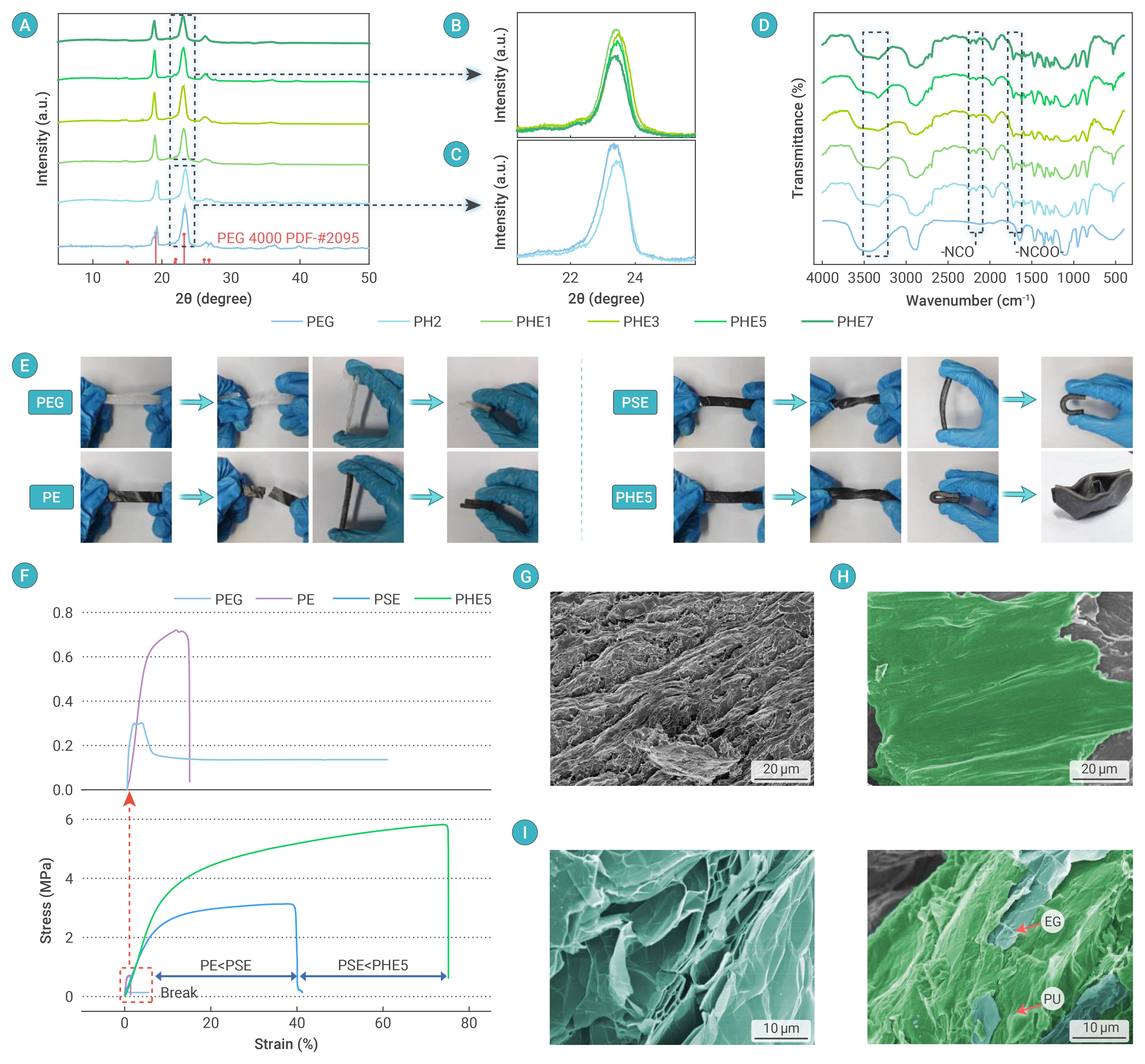
Figure 3.
The structure characterization of different CPCMs
-
Figure 4.
Characterization of PUPCM thermal stability under heating conditions
-
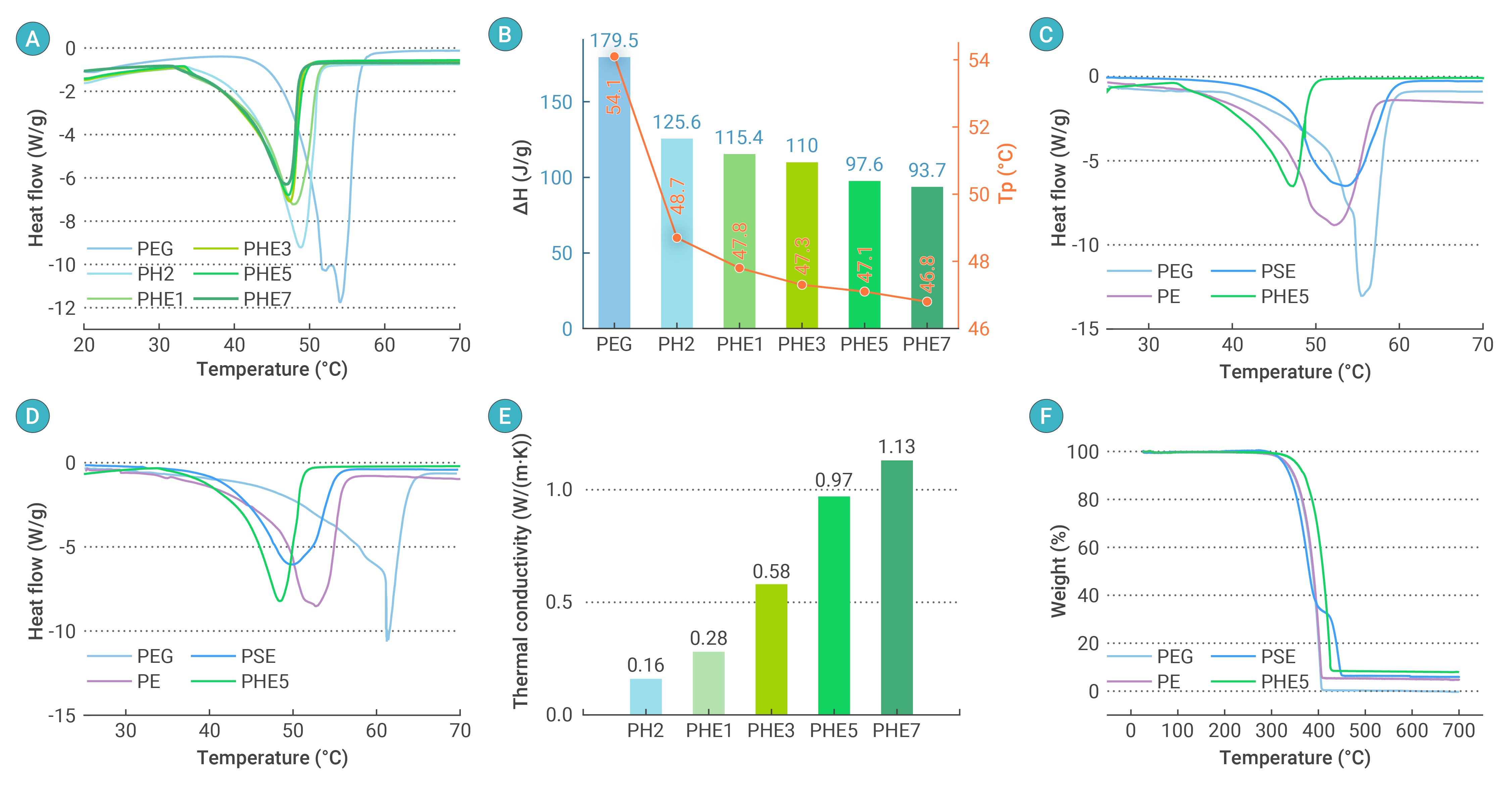
Figure 5.
The thermodynamic characterization of PUPCM
-
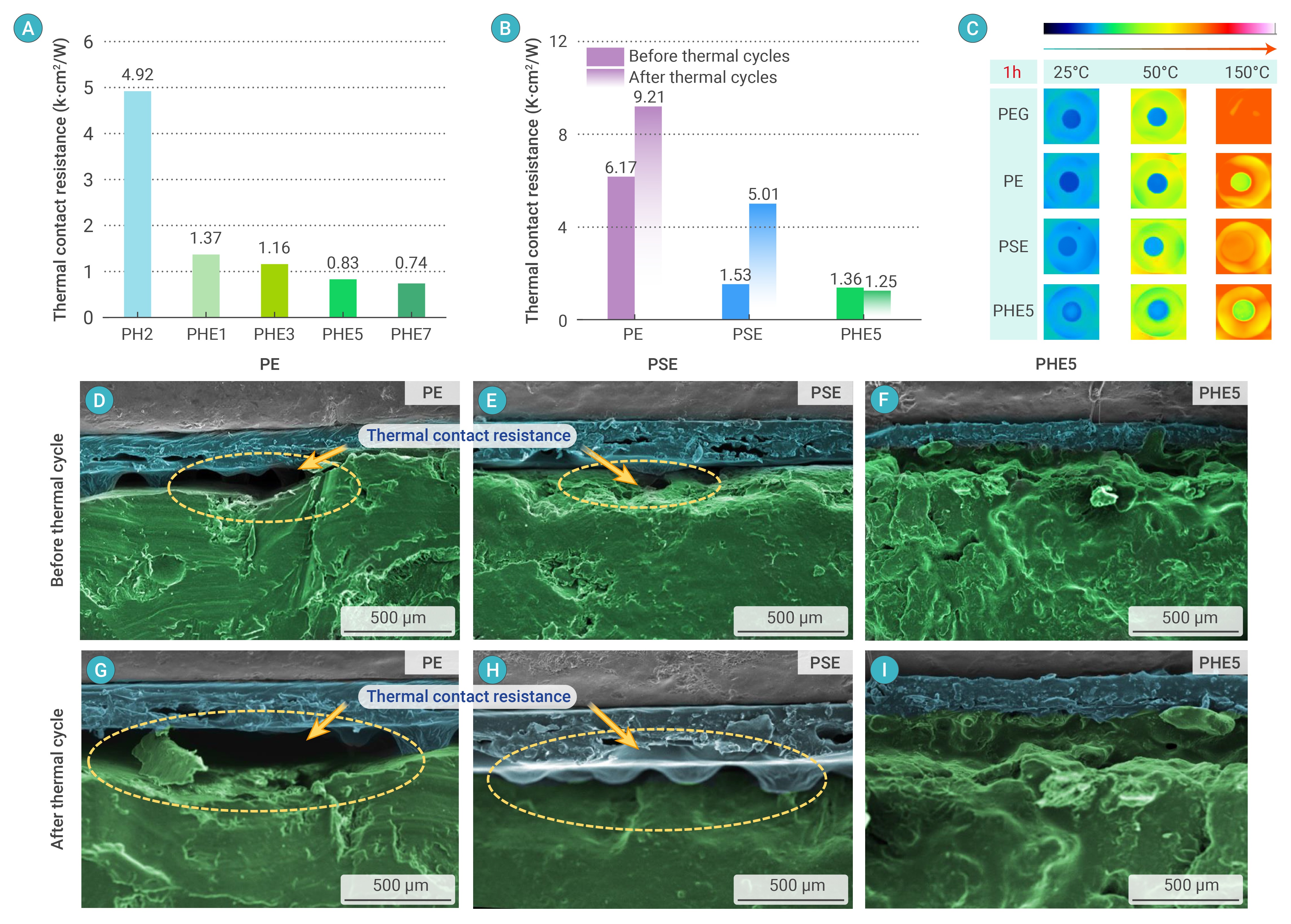
Figure 6.
Characterization of contact thermal resistance of different CPCM samples
-
Figure 7.
Characterization of PE, PSE and PHE5 Module
