
Investigation on topology optimization of cold plate for battery thermal management based on phase change slurry
-
GRAPHICAL ABSTRACT

 DownLoad:
Full size image
DownLoad:
Full size image
-
PUBLIC SUMMARY
-
Topology optimization of PCS-based cold plate for battery thermal management with multiple objectives is studied.
TCP shows significant improvements in cooling performance and flow resistance compared to conventional RCP.
PCS demonstrates superior cooling capabilities over pure water, enabling more uniform temperature distribution.
-
-
ABSTRACT
Addressing the issue that single liquid cooling/air cooling technology cannot meet the thermal management requirements of the battery under high power conditions, the topology optimization of the cold plate for battery thermal management based on phase change slurry (PCS) is numerically studied in this paper. The mathematical model of topology optimization is constructed with multi-objectives of minimizing both the average temperature of the cold plate surface and the power consumption of the fluid flow based on the variable density method. The numerical results of the topology optimization cold plate (TCP) are then compared with those of the conventional rectangular channel cold plate (RCP). Moreover, the effects of the PCS mass concentration, weight coefficient, volume fraction of the fluid domain, inlet velocity of coolant, heat source power on the cooling performance and flow characteristics of the cold plate are analyzed. The results indicate that the reduction of average temperature, root mean square temperature and flow resistance factor of TCP achieves 23.9%, 80.8%, 18.2%, respectively, compared with RCP by using PCS with 20% mass concentration. The PCS demonstrates superior cooling performance compared to pure water, resulting in a more uniform temperature distribution across the cold plate. Overall, this study offers a novel outlook on topology optimization of the cold plate based on PCS, providing an attainable approach for improving the cooling capabilities while reducing the pump power consumption of battery thermal management system (BTMS).-
Keywords:
- Phase change slurry /
- Battery thermal management /
- Cold plate /
- Topology optimization
-

-
REFERENCES
[1] Lebrouhi B.E., Khattari Y., Lamrani B., et al. (2021). M. Key challenges for a large-scale development of battery electric vehicles: A comprehensive review. J. Energy Storage 44: 103273. DOI:10.1016/j.est.2021.103273 [2] An Z.J., Li J., Ding Y., et al. (2017). A review on lithium-ion power battery thermal management technologies and thermal safety. J. Therm. Sci. 26: 391−412. DOI:10.1007/s11630-017-0955-2 [3] Mei W.X., Chen H., Sun J.H., et al. (2018). Numerical study on tab dimension optimization of lithium-ion battery from the thermal safety perspective. Appl. Therm. Eng. 142: 148−165. DOI:10.1016/j.applthermaleng.2018.06.075 [4] Choudhari V.G., Dhoble A.S., Sathe T.M., et al. (2020). A review on effect of heat generation and various thermal management systems for lithium-ion battery used for electric vehicle. J. Energy Storage 32: 101729. DOI:10.1016/j.est.2020.101729 [5] Jaewan K., Jinwoo O. and Hoseong L. (2019). Review on battery thermal management system for electric vehicles. Appl. Therm. Eng. 149: 192−212. DOI:10.1016/j.applthermaleng.2018.12.020 [6] Li W., Xiao M., Peng X.B., et al. (2019). A surrogate thermal modeling and parametric optimization of battery pack with air cooling for EVs. Appl. Therm. Eng. 147: 90−100. DOI:10.1016/j.applthermaleng.2018.10.060 [7] Lu H. and Tang X.L. (2023). A flexible optimization study on air-cooled battery thermal management system by considering of system volume and cooling performance. J. Energy Storage 72: 108527. DOI:10.1016/j.est.2023.108527 [8] Luo L.S., Liu Y.C., Liao Z.M., et al. (2023). Optimal structure design and heat transfer characteristic analysis of X-type air-cooled battery thermal management system. J. Energy Storage 67: 107681. DOI:10.1016/j.est.2023.107681 [9] Xu J., Chen Z.L., Qin J., et al. (2022). A lightweight and low-cost liquid-cooled thermal management solution for high energy density prismatic lithium-ion battery packs, Appl. Therm. Eng. 203: 117871. DOI:10.1016/j.applthermaleng.2021.117871 [10] Pu J., Ping X.F., Panchal S., et al. (2024). Structural optimization of a serpentine-channel cold plate for thermal management of Lithium-ion battery based on the field synergy principle. SSRN:4795285. https://papers.ssrn.com/sol3/papers.cfm?abstract_id=4928730 [11] Xiao H.X., E J.Q., Tian S.C., et al. (2024). Effect of composite cooling strategy including phase change material and liquid cooling on the thermal safety performance of a lithium-ion battery pack under thermal runaway propagation. Energy 295: 131093. DOI:10.1016/j.energy.2024.131093 [12] Li X., Yang W., Li C., et al., (2024). Flexible solid-solid phase change material with zero leakage via in-situ preparation for battery thermal management. Innov. Energy 1:100034. DOI:10.59717/j.xinn-energy.2024.100034 [13] E S.X., Cui Y.X., Liu Y.X., et al. (2023). Effects of the different phase change materials on heat dissipation performances of the ternary polymer Li-ion battery pack in hot climate. Energy 282: 128805. DOI:10.1016/j.energy.2023.128805 [14] E S.X., Liu Y.X., Cui Y.X., et al. (2023). Effects of composite cooling strategy including phase change material and cooling air on the heat dissipation performance improvement of lithium ion power batteries pack in hot climate and its catastrophe evaluation. Energy 283: 129074. DOI:10.1016/j.energy.2023.129074 [15] Ma Y., Wei R.R., Zuo H.Y., et al. (2024). N-doped EG@MOFs derived porous carbon composite phase change materials for thermal optimization of Li-ion batteries at low temperature. Energy 286: 129637. DOI:10.1016/j.energy.2023.129637 [16] Ma Y., Yang H., Zuo H.Y., et al. (2023). EG@Bi-MOF derived porous carbon/lauric acid composite phase change materials for thermal management of batteries. Energy 272: 127180. DOI:10.1016/j.energy.2023.127180 [17] Yi F., E J.Q., Zhang B., et al. (2022). Effects analysis on heat dissipation characteristics of lithium-ion battery thermal management system under the synergism of phase change material and liquid cooling method. Renew. Energy 181: 472−489. DOI:10.1016/j.renene.2021.09.073 [18] Huang H., Li W., Xiong S.S., et al. (2024). Single-phase static immersion-cooled battery thermal management system with finned heat pipes. Appl. Therm. Eng. 254: 123931. DOI:10.1016/j.applthermaleng.2024.123931 [19] Zhang Q., Cao G.L. and Zhang X.W. (2023). Study of wet cooling flat heat pipe for battery thermal management application. Appl. Therm. Eng. 219: 119407. DOI:10.1016/j.applthermaleng.2022.119407 [20] Li M., Ma S.M., Jin H., et al. (2023). Performance analysis of liquid cooling battery thermal management system in different cooling cases. J. Energy Storage 72: 108651. DOI:10.1016/j.est.2023.108651 [21] Wu N., Chen Y.S., Lin B.S., et al. (2023). Experimental assessment and comparison of single-phase versus two-phase liquid cooling battery thermal management systems. J. Energy Storage 72: 108727. DOI:10.1016/j.est.2023.108727 [22] Zhang Z.D., Zhu Z.H., Yang Z.Q., et al. (2023). Numerical-experimental method to devise a liquid-cooling test system for lithium-ion battery packs. J. Energy Storage 63: 107096. DOI:10.1016/j.est.2023.107096 [23] Amalesh T. and Narasimhan N.L. (2020). Introducing new designs of minichannel cold plates for the cooling of lithium-ion batteries. J. Power Sources 479: 228775. DOI:10.1016/j.jpowsour.2020.228775 [24] Chen K., Chen Y.M., Song M.X., et al. (2020). Multi‐parameter structure design of parallel mini‐channel cold plate for battery thermal management. Int. J. Energ. Res. 44: 4321−4334. DOI:10.1002/er.5200 [25] Fang Y.D., Shen J.L., Zhu Y., et al. (2021). Investigation on the transient thermal performance of a mini-channel cold plate for battery thermal management, J. Therm. Sci. 30: 914−925. DOI:10.1007/s11630-020-1280-8 [26] Zuo W., Zhang Y.T., E J.Q., et al. (2022). Performance comparison between single S-channel and double S-channel cold plate for thermal management of a prismatic LiFePO4 battery. Renew Energ. 192: 46−57. DOI:10.1016/j.renene.2022.04.116 [27] Patil M.S., Seo J.H., Panchal S., et al. (2020). Investigation on thermal performance of water-cooled Li-ion pouch cell and pack at high discharge rate with U-turn type microchannel cold plate. Int. J. Heat Mass Tran. 155: 119728. DOI:10.1016/j.ijheatmasstransfer.2020.119728 [28] Bendsoe M.P. and Kikuchi N. (1988). Generating optimal topologies in structural design using a homogenization method. Comput. Methods Appl. Mech. Eng. 71: 197−224. DOI:10.1016/0045-7825(88)90086-2 [29] Borrvall T. and Petersson J. (2003). Topology optimization of fluids in Stokes flow. Int. J. Numer, Meth. Fluids 41: 77−107. DOI:10.1002/fld.426 [30] Bruns T.E. (2007). Topology optimization of convection-dominated, steady-state heat transfer problems. Int. J. Heat Mass Tran. 50: 2859−2873. DOI:10.1016/j.ijheatmasstransfer.2007.01.039 [31] Li H., Ding X.H., Meng F.Z., et al. (2019). Optimal design and thermal modelling for liquid-cooled heat sink based on multi-objective topology optimization: An experimental and numerical study. Int. J. Heat Mass Tran. 144: 118638. DOI:10.1016/j.ijheatmasstransfer.2019.118638 [32] Lee J.S., Yoon S.Y., Kim B., et al. (2021). A topology optimization based design of a liquid-cooled heat sink with cylindrical pin fins having varying pitch. Int. J. Heat Mass Tran. 172: 121172. DOI:10.1016/j.ijheatmasstransfer.2021.121172 [33] Zhang B., Zhu J.H., Xiang G.X., et al. (2021). Design of nanofluid-cooled heat sink using topology optimization. Chinese J. Aeronaut. 34: 301−317. DOI:10.1016/j.cja.2020.05.023 [34] Ho J.Y., See Y.S., Leong K.C., et al. (2021). An experimental investigation of a PCM-based heat sink enhanced with a topology-optimized tree-like structure. Energ. Convers. Manage. 245: 114608. DOI:10.1016/j.enconman.2021.114608 [35] Praveen B. and Suresh S. (2019). Thermal performance of micro-encapsulated PCM with LMA thermal percolation in TES based heat sink application. Energy Convers. Manage. 185: 75−86. DOI:10.1016/j.enconman.2019.01.080 [36] Bai F.F., Chen M.B., Song W.J., et al. (2019). Investigation of thermal management for lithium-ion pouch battery module based on phase change slurry and mini channel cooling plate. Energy 167: 561−574. DOI:10.1016/j.energy.2018.10.137 [37] Li H., Xiao X.Y., Wang Y.N., et al. (2020). Performance investigation of a battery thermal management system with microencapsulated phase change material suspension. Appl. Therm. Eng. 180: 115795. DOI:10.1016/j.applthermaleng.2020.115795 [38] Chen R., Ge X., Zhong Y., et al. (2023). Experimental study of phase change microcapsule-based liquid cooling for battery thermal management. Int. Commun. Heat Mass 146: 106912. DOI:10.1016/j.icheatmasstransfer.2023.106912 [39] Li X., He F., Zhang G., et al. (2019). Experiment and simulation for pouch battery with silica cooling plates and copper mesh based air cooling thermal management system. Appl. Therm. Eng. 146: 866−880. DOI:10.1016/j.applthermaleng.2018.10.061 [40] Chen F., Wang J. and Yang X.L. (2022). Topology optimization design and numerical analysis on cold plates for lithium-ion battery thermal management. Int. J. Heat Mass Tran. 183: 122087. DOI:10.1016/j.ijheatmasstransfer.2021.122087 [41] Han X., Liu H. and Xie G. (2021). Topology optimization for spider web heat sinks for electronic cooling. Appl. Therm. Eng. 195: 117154. DOI:10.1016/j.applthermaleng.2021.117154 [42] Xie L.Y., He Z.W., Zhao Y.L., et al. (2024). Research on topology optimization of liquid-cooled plates based on multi-level optimization. Int. Commun. Heat Mass 155: 107495. DOI:10.1016/j.icheatmasstransfer.2024.107495 [43] Lv Y. and Liu S. (2018). Topology optimization and heat dissipation performance analysis of a micro-channel heat sink. Meccanica 53: 3693−3708. DOI:10.1007/s11012-018-0918-z [44] Zhou J.H., Lu M.X., Zhao Q., et al. (2022). Thermal design of microchannel heat sinks using a contour extraction based on topology optimization (CEBTO) method. Int. J. Heat Mass Tran. 189: 122703. DOI:10.1016/j.ijheatmasstransfer.2022.122703 [45] Rao Y. (2006). An experimental study of microencapsulated phase change material suspension flow and heat transfer in rectangular minichannels. PhD thesis. (Beihang University). [46] Chen B., Wang X., Zeng R., et al. An experimental study of convective heat transfer with microencapsulated phase change material suspension: Laminar flow in a circular tube under constant heat flux. Exp. Therm. Fluid Sci. 32:1638-1646. DOI:10.1016/j.expthermflusci.2008.05.008 [47] Ma Z.W. and Zhang P. (2013). Modeling the heat transfer characteristics of flow melting of phase change material slurries in the circular tubes. Int. J. Heat Mass Tran. 64: 874−881. DOI:10.1016/j.ijheatmasstransfer.2013.05.026 [48] Qian S., Wang W., Ge C., et al. (2018). Topology optimization of fluid flow channel in cold plate for active phased array antenna. Struct. Multidiscip. Optim. 57: 2223−2232. DOI:10.1007/s00158-017-1852-8 [49] Wanittansirichok V., Mongkholphan K., Chaowalitbumrung N., et al. (2022). Topology optimization for liquid-based battery thermal management system under varied charge rates. J. Energy Storage 55: 105703. DOI:10.1016/j.est.2022.105703 [50] Lazarov B. and Sigmund O. (2011). Filters in topology optimization based on Helmholtz‐type differential equations. Int. J. Numer. Meth. Eng. 86: 765−781. DOI:10.1002/nme.3072 [51] Wang F.W., Lazarov B.S. and Sigmund O. (2022). On projection methods, convergence and robust formulations in topology optimization. Struct. Multidiscipl. Optim. 43: 767−784. DOI:10.1007/s00158-010-0602-y [52] Zhan S., Cheng Z.L., Yin Y.L., et al. (2023). Effect of inlet and outlet positions on heat dissipation performance of lithium-ion battery cold plates: An analysis based on topology optimization. Int. J. Heat Mass Tran. 215: 124436. DOI:10.1016/j.ijheatmasstransfer.2023.124436 [53] Sun C., Wang W., Tian X.W., et al. (2023). Thermal design of composite cold plates by topology optimization. Int. J. Mech. Sci. 259: 108594. DOI:10.1016/j.ijmecsci.2023.108594 [54] Mashayekhi R., Eisapour A.H., Eisapour M., et al. (2022). Hydrothermal performance of twisted elliptical tube equipped with twisted tape insert. Int. J. Therm. Sci. 172: 107233. DOI:10.1016/j.ijthermalsci.2021.107233 -
ABOUT THIS ARTICLE
Cite this article:
Hou P., Ma F., Li Y., et al. (2025). Investigation on topology optimization of cold plate for battery thermal management based on phase change slurry. The Innovation Energy 2:100061. https://doi.org/10.59717/j.xinn-energy.2024.100061
Welcome!
To request copyright permission to republish or share portions of our works, please visit Copyright Clearance Center's (CCC) Marketplace website at marketplace.copyright.com.

Article Metrics
Relative Articles
Cited by
Export File
Citation
Hou P., Ma F., Li Y., et al. (2025). Investigation on topology optimization of cold plate for battery thermal management based on phase change slurry. The Innovation Energy 2:100061. https://doi.org/10.59717/j.xinn-energy.2024.100061

Format
Content



-
Figure 1.
Schematic diagram of the BTMS.
-
Figure 2.
Two-dimensional model diagram of cold plate.
-
Figure 3.
(A) Surface temperature distribution of RCP and TCP, (B) liquid phase volume fraction of PCS, (C) average temperature and root mean square temperature of TCP and RCP at different PCS concentrations.
-
Figure 4.
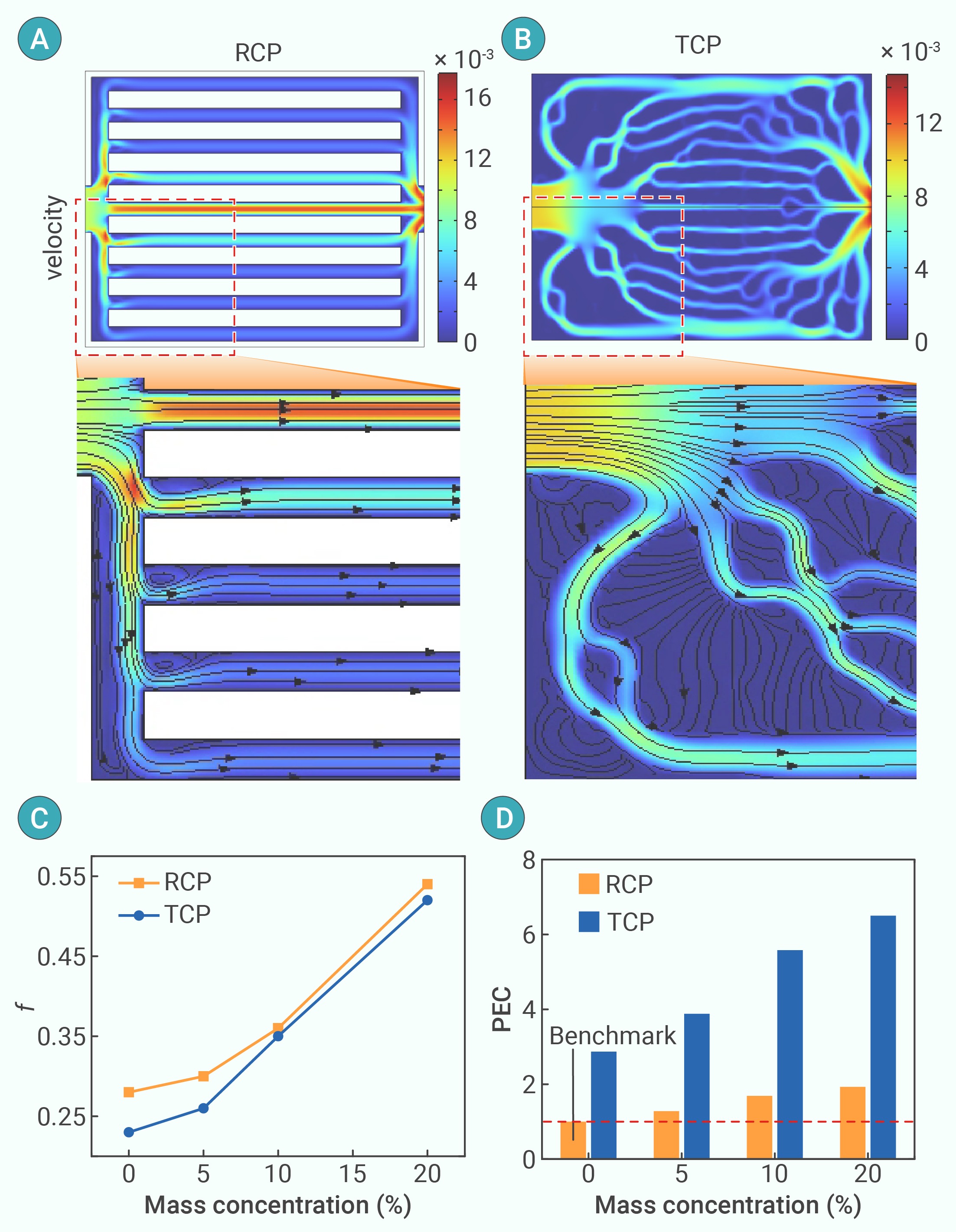
Numerical results of TCP and RCP at different PCS concentrations
-
Figure 5.
Numerical results of TCP with different weight coefficients
-
Figure 6.
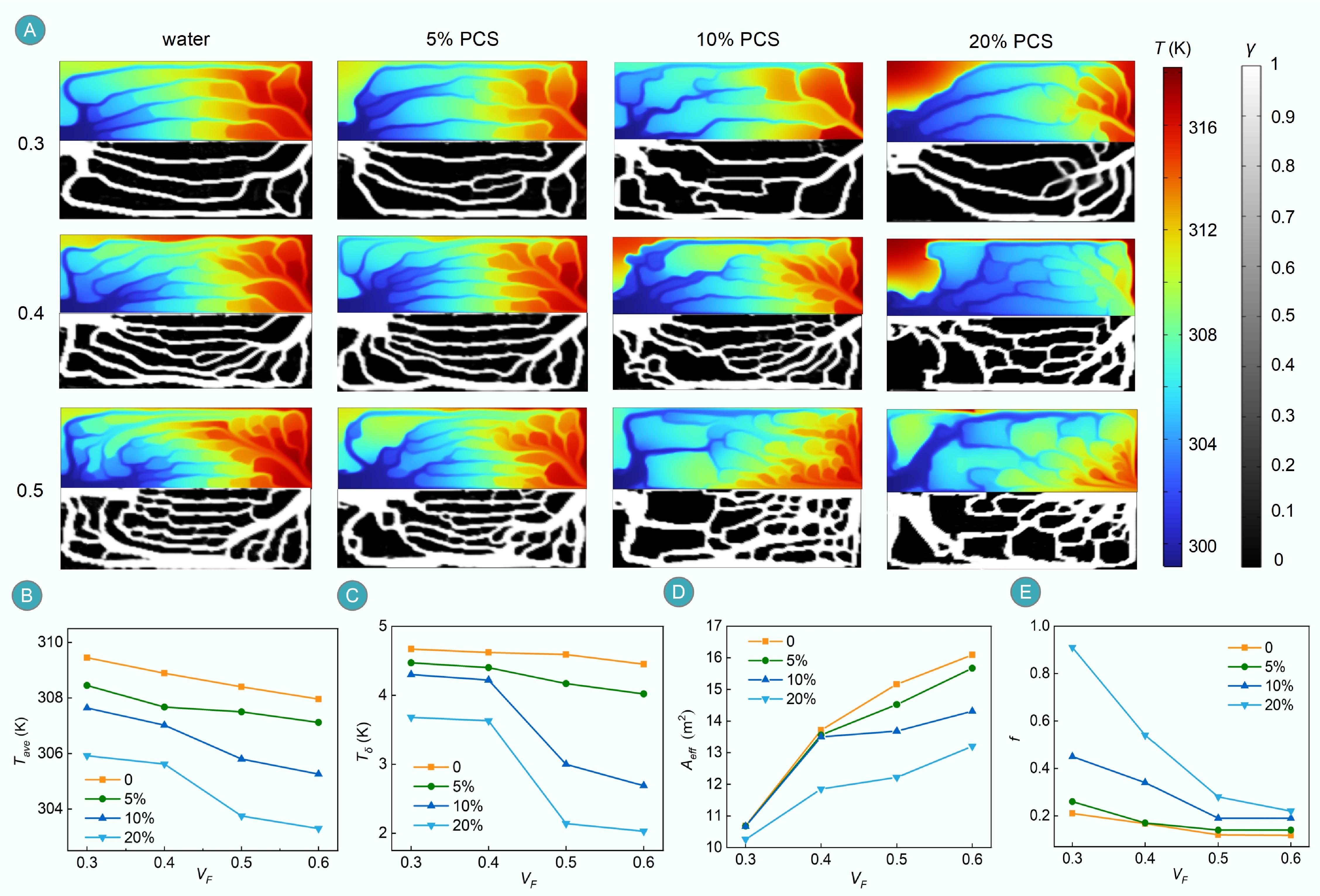
Numerical results of TCP at different volume fractions of fluid domain
-
Figure 7.
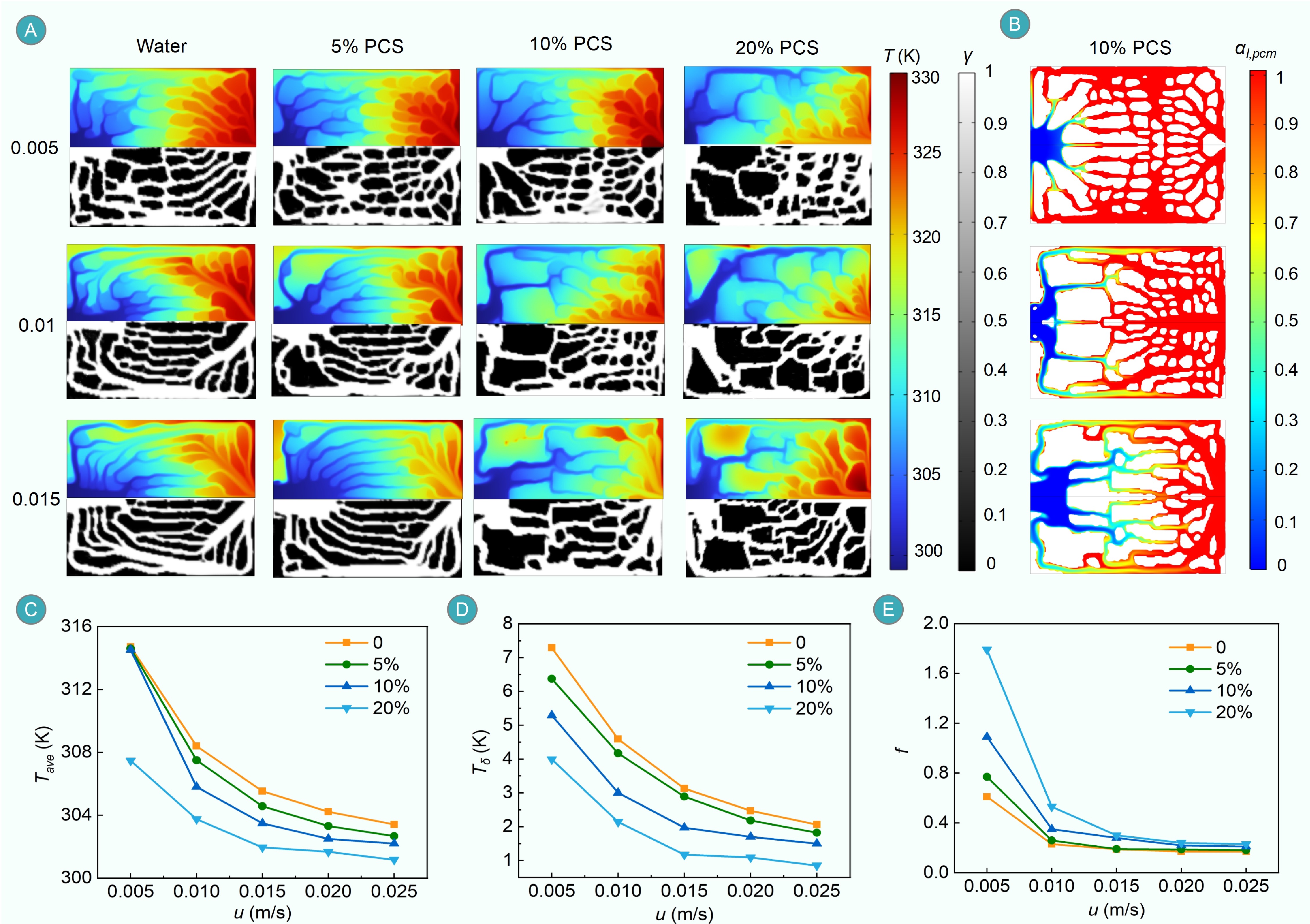
Numerical results of TCP at different inlet velocities
-
Figure 8.
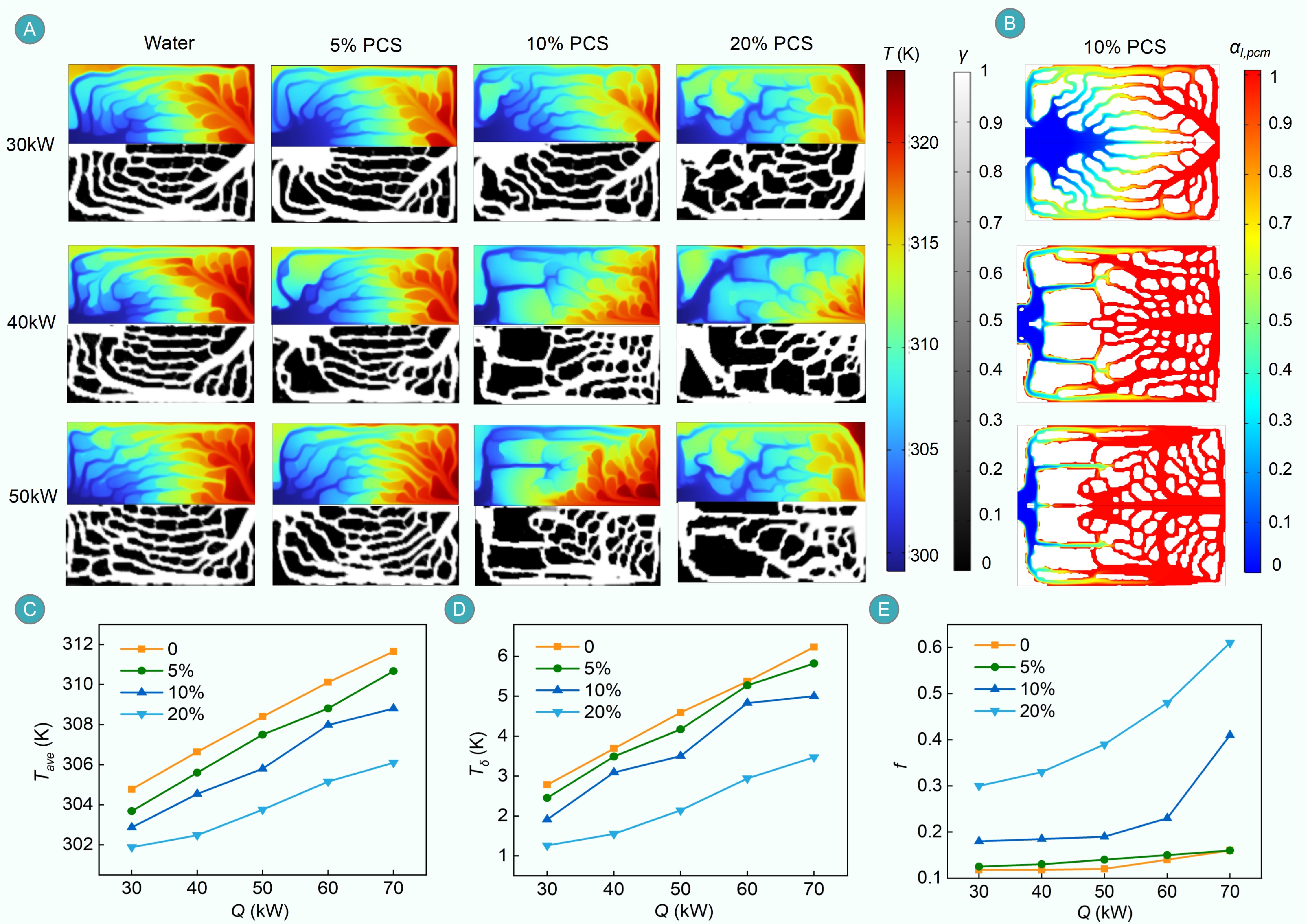
Numerical results of TCP at different heat source power
