
Compressed carbon dioxide energy storage in salt caverns holds promise for China's hard-to-abate sectors
-
GRAPHICAL ABSTRACT
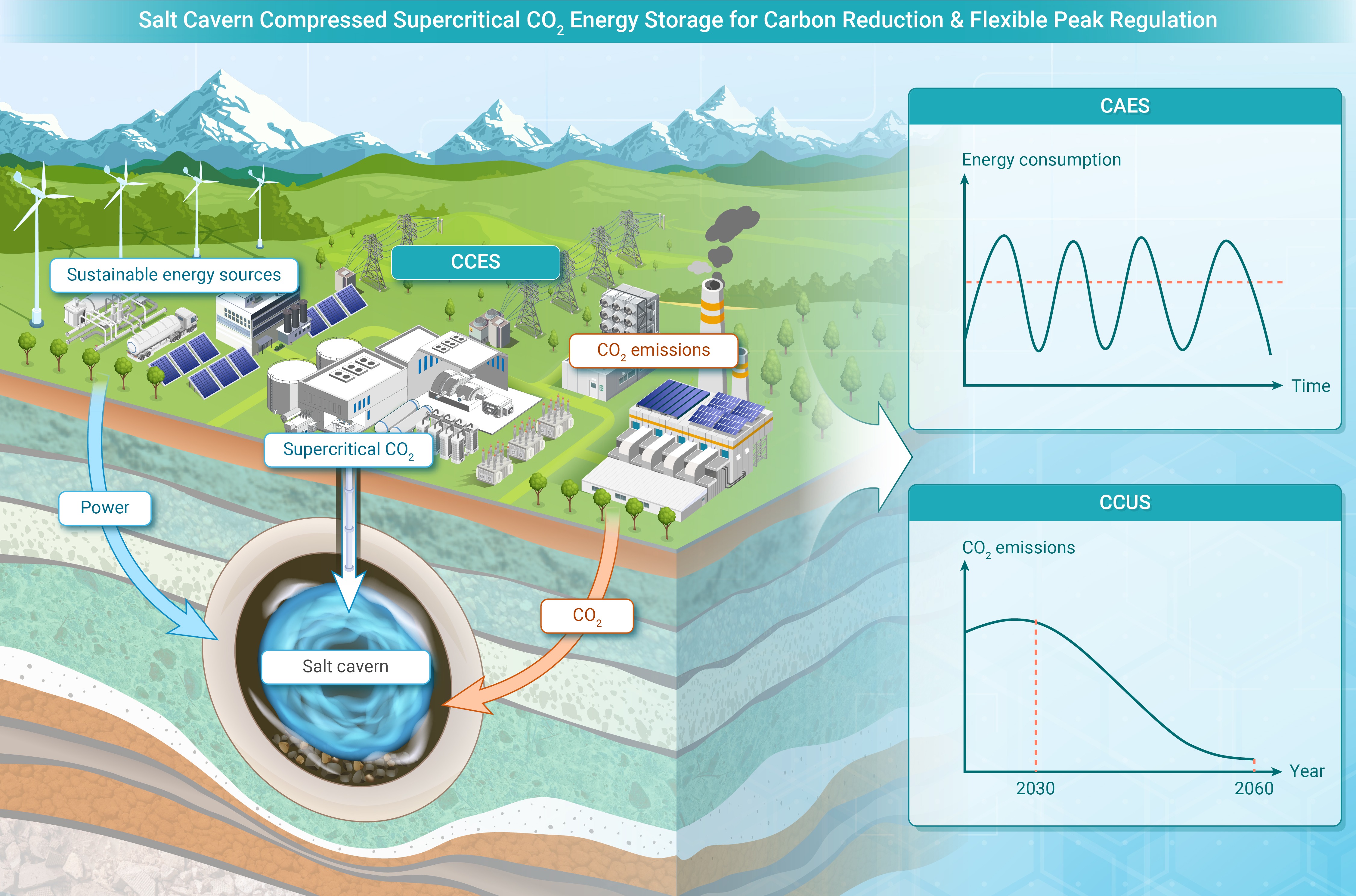
 DownLoad:
Full size image
DownLoad:
Full size image
-
PUBLIC SUMMARY
-
The concept of CCES is proposed by combining CCUS and CAES.
The feasibility of CCES was evaluated, including stability and tightness.
Site selection criteria and suggestions for CCES are proposed.
The installed capacity of CCES salt caverns in China can reach 46.62-69.93 GW.
-
-
ABSTRACT
Compressed Air Energy Storage (CAES) is an effective technology for grid-scale peak shaving, while Carbon Capture Utilization and Storage (CCUS) plays a crucial role in carbon reduction. As China strives to peaking carbon emissions by 2030 and achieve carbon neutrality by2060 faces significant challenges, especially for the hard-to-abate sectors pose significant challenges. Building on the principles of CAES and CCUS, this paper introduces a novel approach: Compressed Carbon Energy Storage (CCES), , which integrates CAES and CCUS. CCES uses salt caverns to store compressed supercritical CO2 instead of air. This study explores the feasibility of CCES in salt caverns, addressing stability, tightness, containment, site selection, and capacity potential in China. Key findings include: 1) CCES, an advanced version of CAES, offers doubles the installed capacity compared to traditional CAES by combining the benefits of both CAES and CCUS benefits. 2) CCES salt caverns in typical bedded salt formations can maintain stability and integrity for 100 years. 3) Optimal cavern depths for supercritical CO2 storage range 800-1500 m, with a minimum cavern volume of 25 × 104 m3 for a capacity of at least 300 MW. 4) CO2 storage in salt caverns offers better tightness compared to air, methane (CH4), and hydrogen (H2), with an interlayer permeability threshold of ≤ 1.0 × 10⁻¹⁸ m2 for adequate tightness. 5) Potential CCES sites in China have been identified, with preliminary estimates suggesting a total capacity of 46.62-69.93 GW and theoretical capacity of up to 280 million tons of CO2 for China’s hard-to-abate sectors. -

-
REFERENCES
[1] Li T.T., Zhang C., Ban J., et al. (2023). Projecting universal health risks under climate change to bridge mitigation and health adaptation objectives. The Innovation 4:100427. DOI:10.1016/j.xinn.2023.100427 [2] Wei X.X., Shi X.L., Li Y.P., et al. (2023). A comprehensive feasibility evaluation of salt cavern oil energy storage system in China. Appl. Energ. 351:121807. DOI:10.1016/j.apenergy.2023.121807 [3] Zhou K., Yang J., Yang T., et al. (2023). Spatial and temporal evolution characteristics and spillover effects of China's regional carbon emissions. J. Environ. Manage. 325:116423. DOI:10.1016/j.jenvman.2022.116423 [4] Li Q.H., Liu W., Jiang L.L., et al. (2024). Comprehensive safety assessment of two-well-horizontal caverns with sediment space for compressed air energy storage in low-grade salt rocks. J. Energy Storage. 103:1−20. DOI:10.1016/j.est.2024.114037 [5] Olabi A.G., Wilberforce T., Ramadan M., et al. (2021). Compressed air energy storage systems: Components and operating parameters - A review. J. Energy Storage. 34:102000. DOI:10. 1016/j.est.2020.102000. DOI:10.1016/j.est.2020.102000 [6] Jiang K. and Ashworth, P. (2020). The development of carbon capture utilization and storage (CCUS) research in China: a bibliometric perspective. Ren. Sust. Energy Rev. 138:1−16. DOI:10.1016/j.rser.2020.110521 [7] Liu G., Cai B., Li Q., et al. (2060). China’s pathways of CO2 capture, utilization and storage under carbon neutrality vision 2060. Carbon. Manag. 13:435−49. DOI:10.1080/17583004.2022.2117648 [8] Brouwer A.S., Broek M.V.D., Zappa W., et al. (2016). Least-cost options for integrating intermittent renewables in low-carbon power systems. Appl. Energ. 161:48−74. DOI:10.1016/j.apenergy. 2015.09.090. DOI:10.1016/j.apenergy.2015.09.090 [9] Xu W., Zhao P., Ma N., et al. (2024). Design and performance analysis of a combined cooling, heating and power system: Integration of an isobaric compressed CO2 energy storage and heat pump cycle. J. Energy Storage. 91:112146. DOI:10.1016/j.est.2024.112146 [10] Wang K., Cui Q., Liu Y., et al. (2024). Performance analysis of a novel isothermal compressed carbon dioxide energy storage system integrated with solar thermal storage. Energy 303:131978. DOI:10.1016/j.energy.2024.131978 [11] Lu M., Du Y., Yang C., et al. (2024). Performance analysis and multi-objective optimization of a combined system of Brayton cycle and compression energy storage based on supercritical carbon dioxide. Appl. Therm. Eng. 236:121837. DOI:10.1016/j.applthermaleng.2023.121837 [12] Liu W., Li Q.H., Jiang L.L., et al. (2024). Experimental investigation on the crystallization mechanism and mitigation strategies for gas injection and brine discharge pipes in salt caverns. Chem. Eng. J. 496:154277. DOI:10.1016/j.cej.2024.154277 [13] Wang Q.S., Sarkar A., Wang D., et al. (2019). Multi-anionic and -cationic compounds: new high entropy materials for advanced Li-ion batteries. Energ. Environ. Sci. 12:2433. DOI:10.1039/c9ee00368a [14] Liu W., Li Q.H., Yang C.H., et al. (2023). The role of underground salt caverns for large-scale energy storage: A review and prospects. Energy Storage Mater. 63:103045. DOI:10.1016/j.ensm.2023.103045 [15] Krevor S., Coninck H.D., Gasda S.E., et al. (2023). Subsurface CO2 and hydrogen storage for a sustainable energy future. Nat. Rev. Earth Env. 4:102−118. DOI:10.1038/s43017-022-00376-8 [16] Li Q., Chen L., Gadinski M.R., et al. (2015). Flexible high-temperature dielectric materials from polymer nanocomposites. Nature 523:576−579. DOI:10.1038/nature14647 [17] Heinemann N., Alcalde J., Miocic J.M., et al. (2021). Enabling large-scale hydrogen storage in porous media - the scientific challenges. Energ. Environ. Sci. 14:853−864. DOI:10.1039/d0ee03536j [18] Raad S.M.J., Leonenko Y. and Hassanzadeh H. (2022). Hydrogen storage in saline aquifers: Opportunities and challenges. Renew. Sust. Energ. Rev. 168:112846. DOI:10.1016/j.rser. 2022.112846. DOI:10.1016/j.rser.2022.112846 [19] Raju M. and Khaitan S.K. (2011). Modeling and simulation of compressed air storage in caverns: A case study of the Huntorf plant. Appl. Energ. 89:474−481. DOI:10.1016/j.apenergy.2011.08.019 [20] Chen H.S., Cong T., Yang W., et al. (2009). Progress in electrical energy storage system: A critical review. Prog. Nat. Sci. 19:291−312. DOI:10.1016/j.pnsc.2008.07.014 [21] Li H., Ma H.L., Zhao K., et al. (2024). Parameter design of the compressed air energy storage salt cavern in highly impure rock salt formations. Energy 286:129520. DOI:10.1016/j.energy.2023.129520 [22] Mou J.R., Shang H.L., Ji W.D., et al. (2023). Feasibility Analysis of Compressed Air Energy Storage in Salt Caverns in the Yunying Area. Energies 16:7171. DOI:10.3390/en1620 7171. DOI:10.3390/en16207171 [23] Liu W., Zhang X., Fan J.Y., et al. (2020). Evaluation of potential for salt cavern gas storage and integration of brine extraction: cavern utilization, Yangtze river delta region. Nat. Resour. Res. 29:3275−3290. DOI:10.1007/s11053-020-09640-4 [24] Alirahmi S.M., Razmi A.R. and Arabkoohsar A. (2021). Comprehensive assessment and multi- objective optimization of a green concept based on a combination of hydrogen and compressed air energy storage (CAES) systems. Renew. Sust. Energ. Rev. 142:110850. DOI:10.1016/j.rser. 2021.110850. DOI:10.1016/j.rser.2021.110850 [25] Liu W., Du J.W., Li Q.H., et al. (2024). Feasibility analysis on the utilization of TWH-caverns with sediment space for gas storage: A case study of Sanshui salt mine. J. Energy Storage. 75:109576. DOI:10.1016/j.est.2023.109576 [26] Li Q.H., Liu W., Shi X.L., et al. (2024). Stability evaluation of gas storage in salt cavern sediment space. Renew. Sust. Energ. Rev. 203:1‒17. Online ahead of print. [27] Zhang L., Cui G.D., Zhang Y., et al. (2016). Influence of pore water on the heat mining performance of supercritical CO2 injected for geothermal development. J. CO2. Util. 16:287‒300. DOI:10.1016/j.jcou.2016.08.008. [28] Tang H.T., Zhang S. and Chen W.Y. (2021). Assessing representative CCUS layouts for China's power sector toward carbon neutrality. Environ. Sci. Technol. 55:11225−11235. DOI:10.1021/acs.est.1c03401 [29] Liu W., Duan X.Y., Li Q.H., et al. (2023). Analysis of pressure interval/injection and production frequency on stability of large-scale supercritical CO2 storage in salt caverns. J. Clean. Prod. 433:139731. DOI:10.1016/j.jclepro.2023.139731 [30] Aubertin J.D., Aubertin M. and Jahanbakhshzadeh A. (2023). Numerical implementation and application of an internal state variable model to analyze the time-dependent behavior of mining excavations in rock salt. Can. Geotech. J. 60:917−935. DOI:10.1139/cgj-2021-0593 [31] Li X.S., Li Q.H., Wang Y.M., et al. (2024). Effect of slope angle on fractured rock masses under combined influence of variable rainfall infiltration and excavation unloading. J. Rock. Mech. Geotech. 16:1−20. DOI:10.1016/j.jrmge.2024.08.019 [32] Nazeri M., Maroto-Valer M.M. and Jukes E. (2018). Density of CO2 with impurities by Coriolis flow meter, oscillation-type densitometer and equations of state. Appl. Energ. 212:162−174. DOI:10.1016/j.apenergy.2017.12.024 [33] Rajabi M., Rahmannejad R., Rezaei M., et al. (2017). Evaluation of the maximum horizontal displacement around the power station caverns using artificial neural network. Tunn. Undergr. Sp. Tech. 64:51−60. DOI:10.1016/j.tust.2017.01.010 [34] Shabdirova A., Minh N.H. and Zhao Y. (2019). A sand production prediction model for weak sandstone reservoir in Kazakhstan. J. Rock Mech. Geotech. 11:760−769. DOI:10.1016/j. jrmge.2018.12.015. DOI:10.1016/j.jrmge.2018.12.015 [35] Bejarbaneh B.Y., Armaghani D.J. and Amin M.F.M. (2015). Strength characterisation of shale using Mohr-Coulomb and Hoek-Brown criteria. Measurement 63:269−281. DOI:10.1016/j. jrmge.2018.12.015. DOI:10.1016/j.jrmge.2018.12.015 [36] Huber M.L., Lemmon E.W., Bell I.H., et al. (2022). The NIST REFPROP database for highly accurate properties of industrially important fluids. Ind. Eng. Chem. Res. 61:15449−15472. DOI:10.1021/acs.iecr.2c01427 [37] Chabani I., Mebarek-Oudina F. and Ismail A.A.I. (2022). MHD flow of a hybrid nano-fluid in a triangular enclosure with Zigzags and an Elliptic Obstacle. Micromachines 13:224. DOI:10.3390/mi13020224 [38] Zhang Z.X., Liu W., Guo Q., et al. (2022). Tightness evaluation and countermeasures for hydrogen storage salt cavern contains various lithological interlayers. J. Energy Storage. 50:104454. DOI:10.1016/j.est.2022.104454 [39] Matos C.R., Silva P.P.D. and Carneiro J.F. (2023). Economic assessment for compressed air energy storage business model alternatives. Appl. Energ. 329:120273. DOI:10.1016/j.apenergy.20 22.120273. DOI:10.1016/j.apenergy.2022.120273 [40] Houssainy S., Janbozorgi M. and Kavehpour P. (2018). Thermodynamic performance and cost optimization of a novel hybrid thermal-compressed air energy storage system design. J. Energy Storage 18:206−217. DOI:10.1016/j.est.2018.05.004 [41] Bui T., Lee Y.D., Kim Y.S., et al. (2024). Performance analysis of high-efficiency supercritical CO2 power cycles using recompression. J. Energ. Resour-ASME. 146:4. DOI:10.1115/1.4064291 [42] Liu W., Zhang X., Fan J.Y., et al. (2024). Large-scale carbon dioxide storage in salt caverns: evaluation of operation, safety, and potential in China. Engineering-PRC. DOI:10.1016/j.eng.2024.06.013. [43] Gordeliy, E., and Berest, P. (2024). Characteristic features of salt-cavern behavior. Int. J. Rock Mech. Min. 173:105607. DOI:10.1016/j.ijrmms.2023.105607 [44] Li J.L., Zhang N., Xu W.J., et al. (2022). The influence of cavern length on deformation and barrier integrity around horizontal energy storage salt caverns. Energy 244:123148. DOI:10.1016/j.energy.2022.123148 [45] Wang T.T., Yang C.H., Chen J.S., et al. (2018). Geomechanical investigation of roof failure of China's first gas storage salt cavern. Eng. Geol. 243:59−69. DOI:10.1016/j.enggeo.2018.06.013 [46] Yan Z.W., Wang Z.H., Wu F., et al. (2022). Stability analysis of Pingdingshan pear-shaped multi- mudstone interbedded salt cavern gas storage. J. Energy Storage. 56:105963. DOI:10.1016/j.est.2022.105963 [47] Wang J., Feng L., Palmer P.I., et al. (2020). Large Chinese land carbon sink estimated from atmospheric CO2 data. Nature 586:720−723. DOI:10.1038/s41586-020- 2849-9. DOI:10.1038/s41586-020-2849-9 [48] Zhu T., Liu X.L., Wang X.D., et al. (2023). Technical Development and Prospect for Collaborative Reduction of Pollution and Carbon Emissions from Iron and Steel Industry in China. Engineering-PRC. 31:37−49. DOI:10.1016/j.eng.2023.02.014 -
ABOUT THIS ARTICLE
Cite this article:
Liu W., Duan X., Jiang L., et al. (2025). Compressed carbon dioxide energy storage in salt caverns holds promise for China's hard-to-abate sectors. The Innovation Energy 2:100065. https://doi.org/10.59717/j.xinn-energy.2024.100065
Welcome!
To request copyright permission to republish or share portions of our works, please visit Copyright Clearance Center's (CCC) Marketplace website at marketplace.copyright.com.

Article Metrics
Relative Articles
Cited by
Export File
Citation
Liu W., Duan X., Jiang L., et al. (2025). Compressed carbon dioxide energy storage in salt caverns holds promise for China's hard-to-abate sectors. The Innovation Energy 2:100065. https://doi.org/10.59717/j.xinn-energy.2024.100065

Format
Content
-
Figure 1.
Energy, CAES and CCUS distribution in China (2023)
-
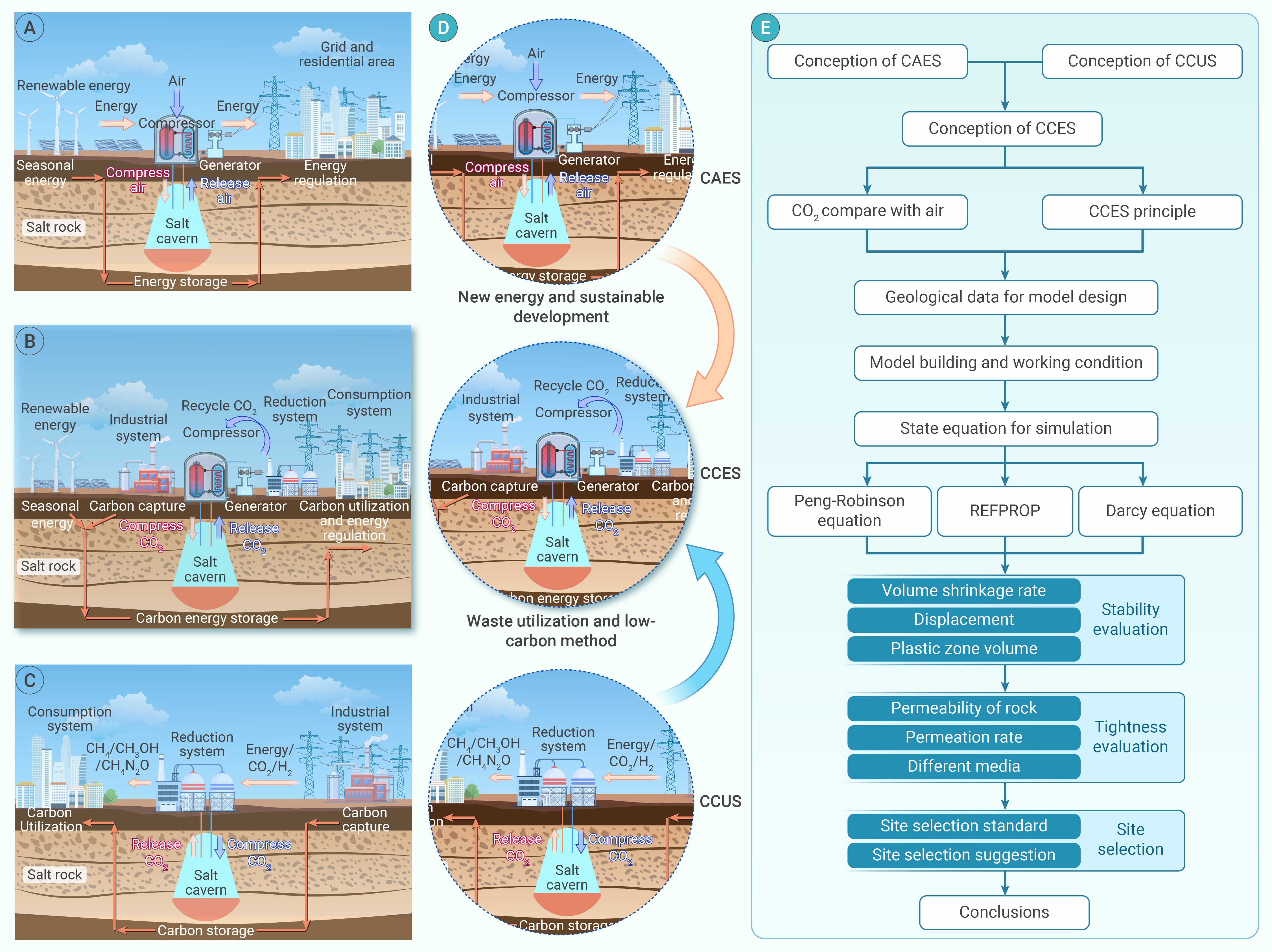
Figure 2.
CAES, CCUS and CCES related concept
-
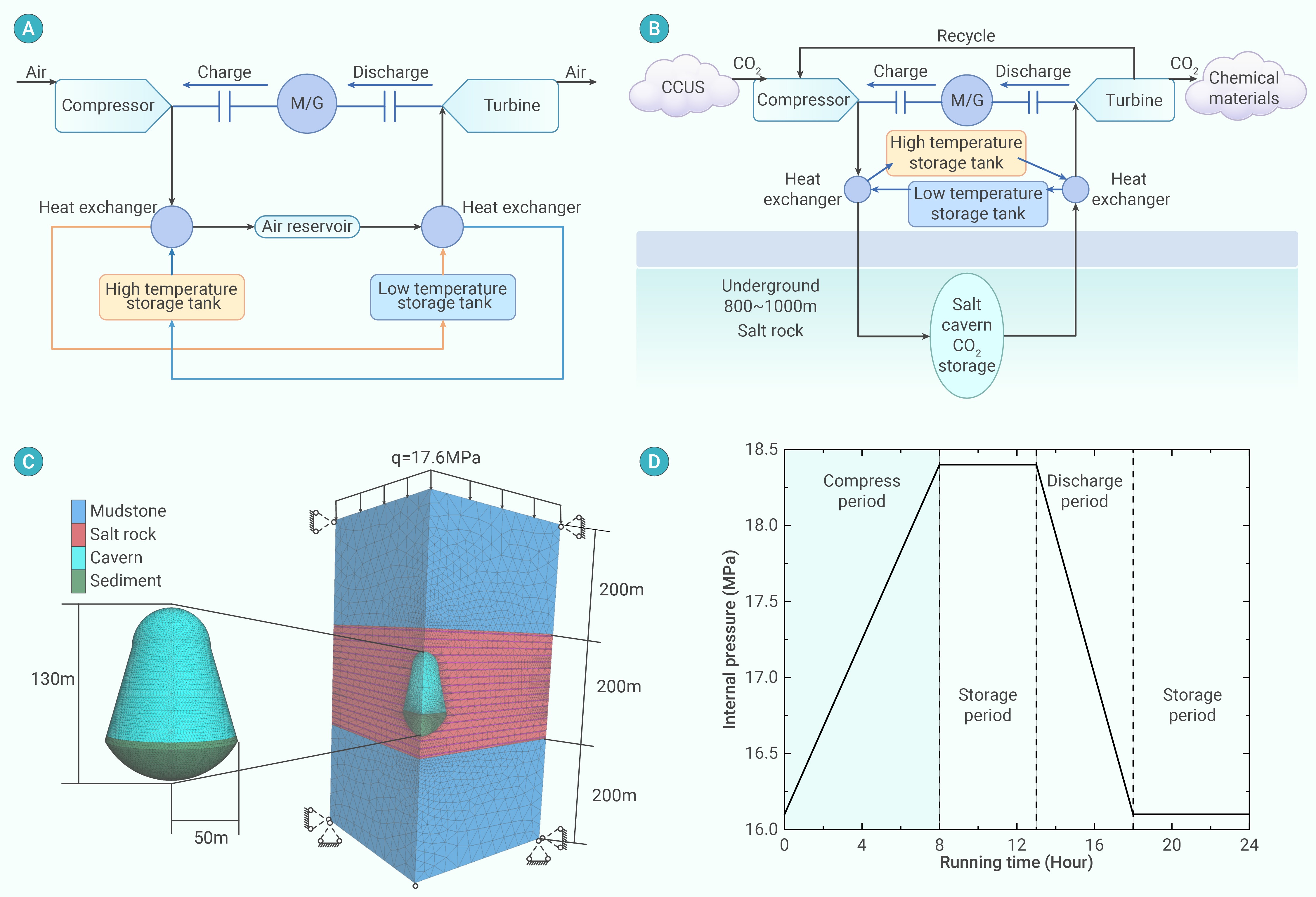
Figure 3.
CCES principle, model and working condition design
-
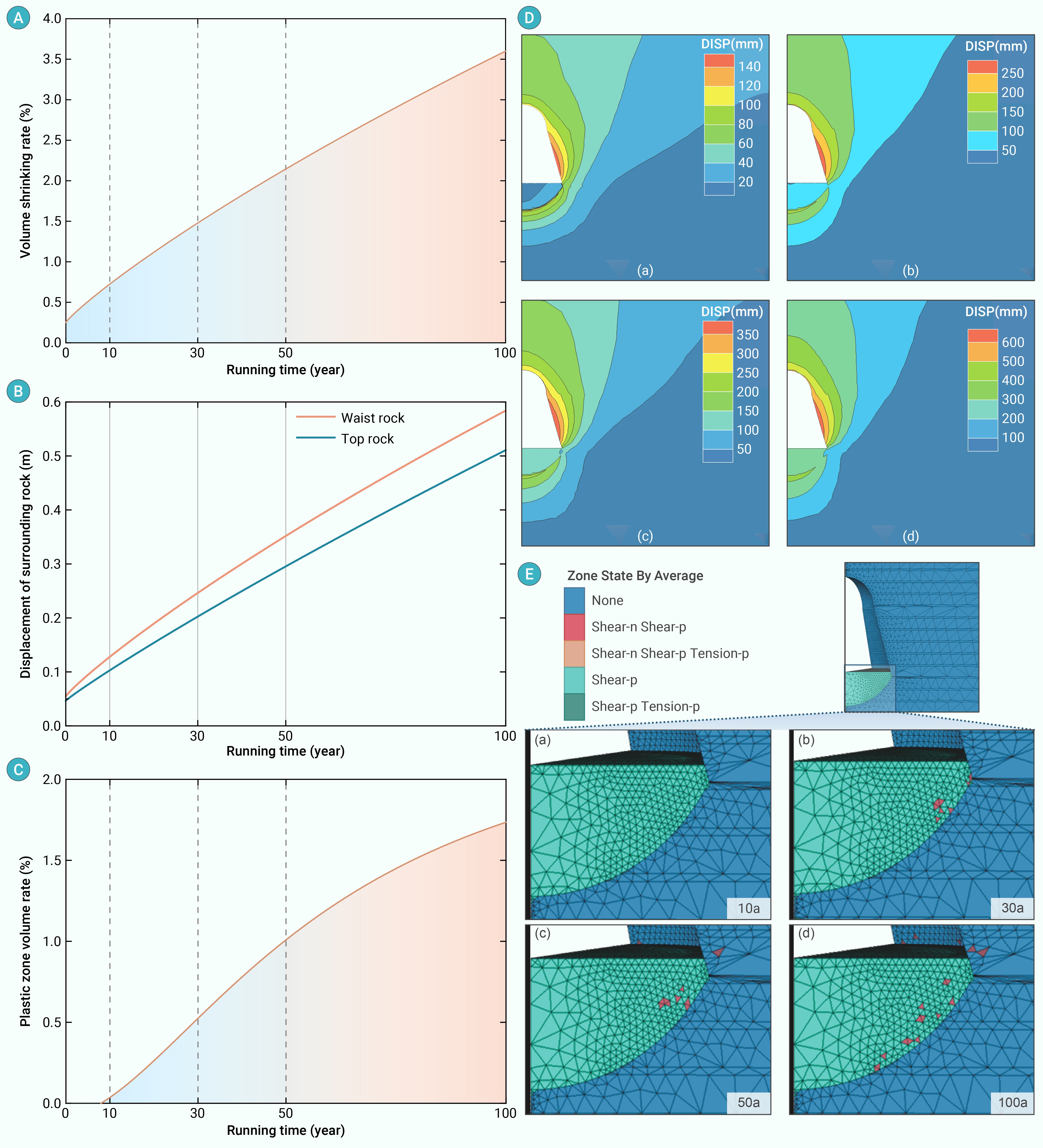
Figure 4.
Stability evaluation diagram
-
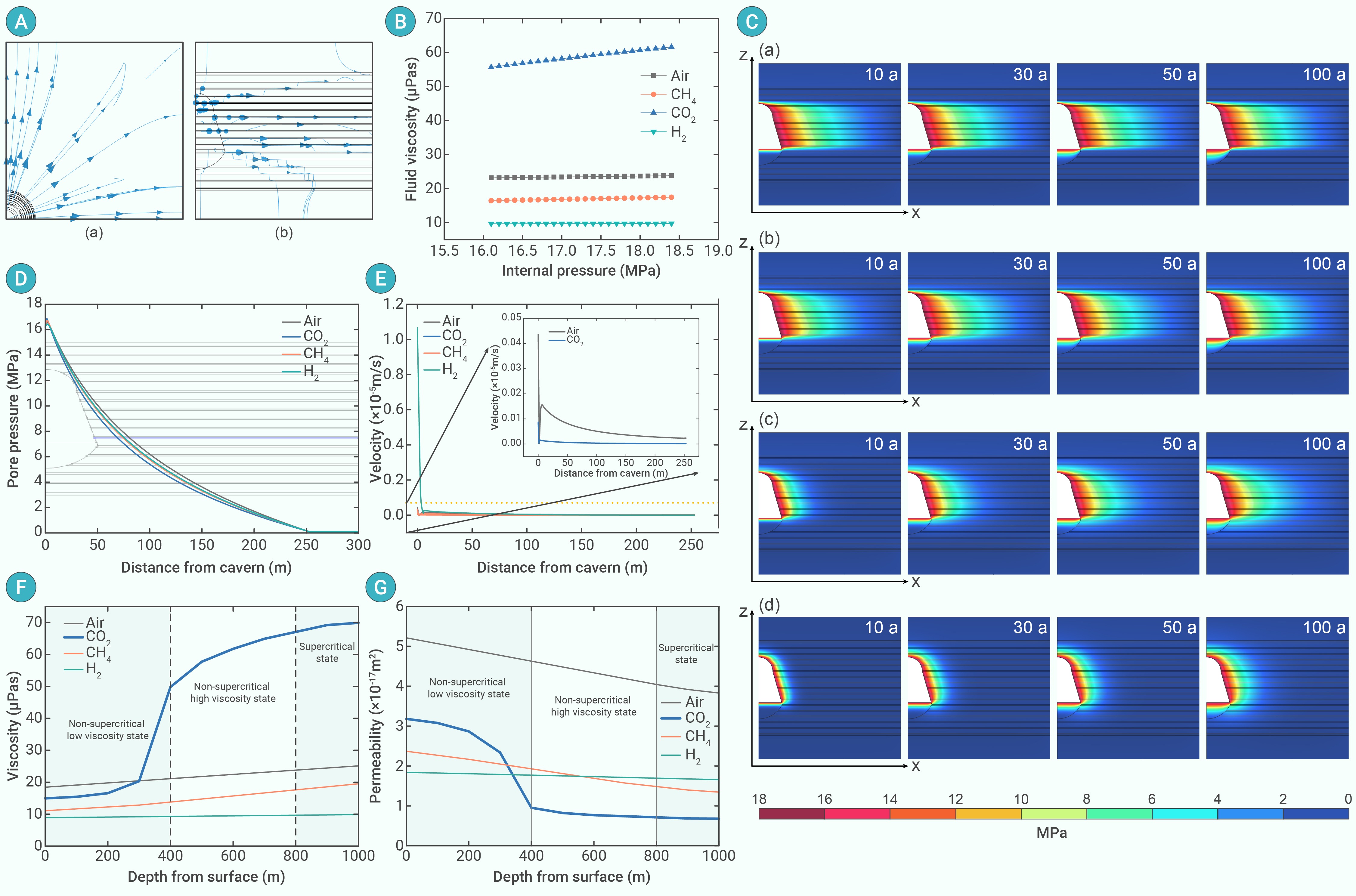
Figure 5.
Tightness evaluation diagram
-
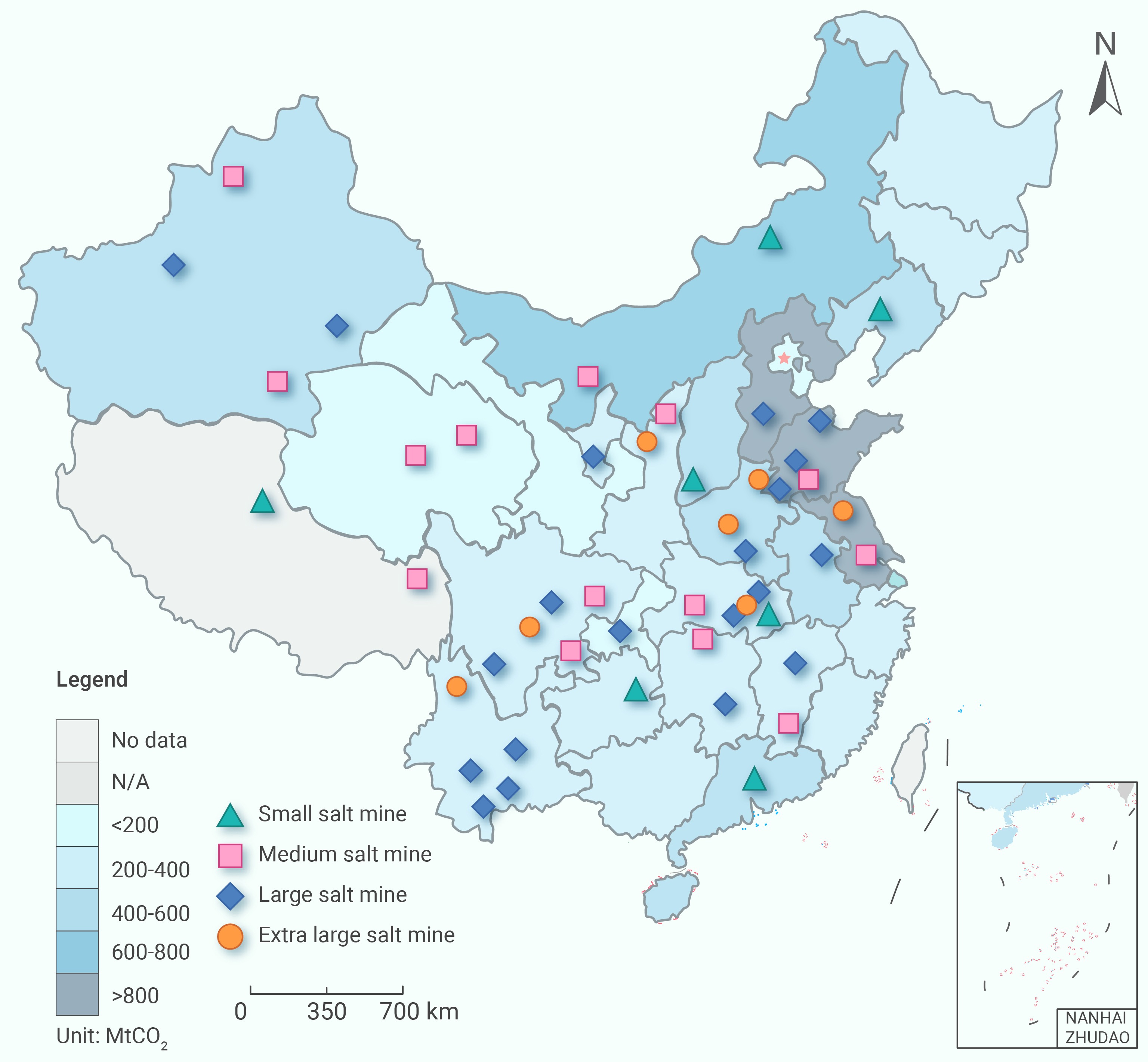
Figure 6.
Spatial distribution of CO2 emissions and salt mines in China in 2019.
