
Elevating gas turbine system efficiency by integration with super-high-temperature solid oxide fuel cells
-
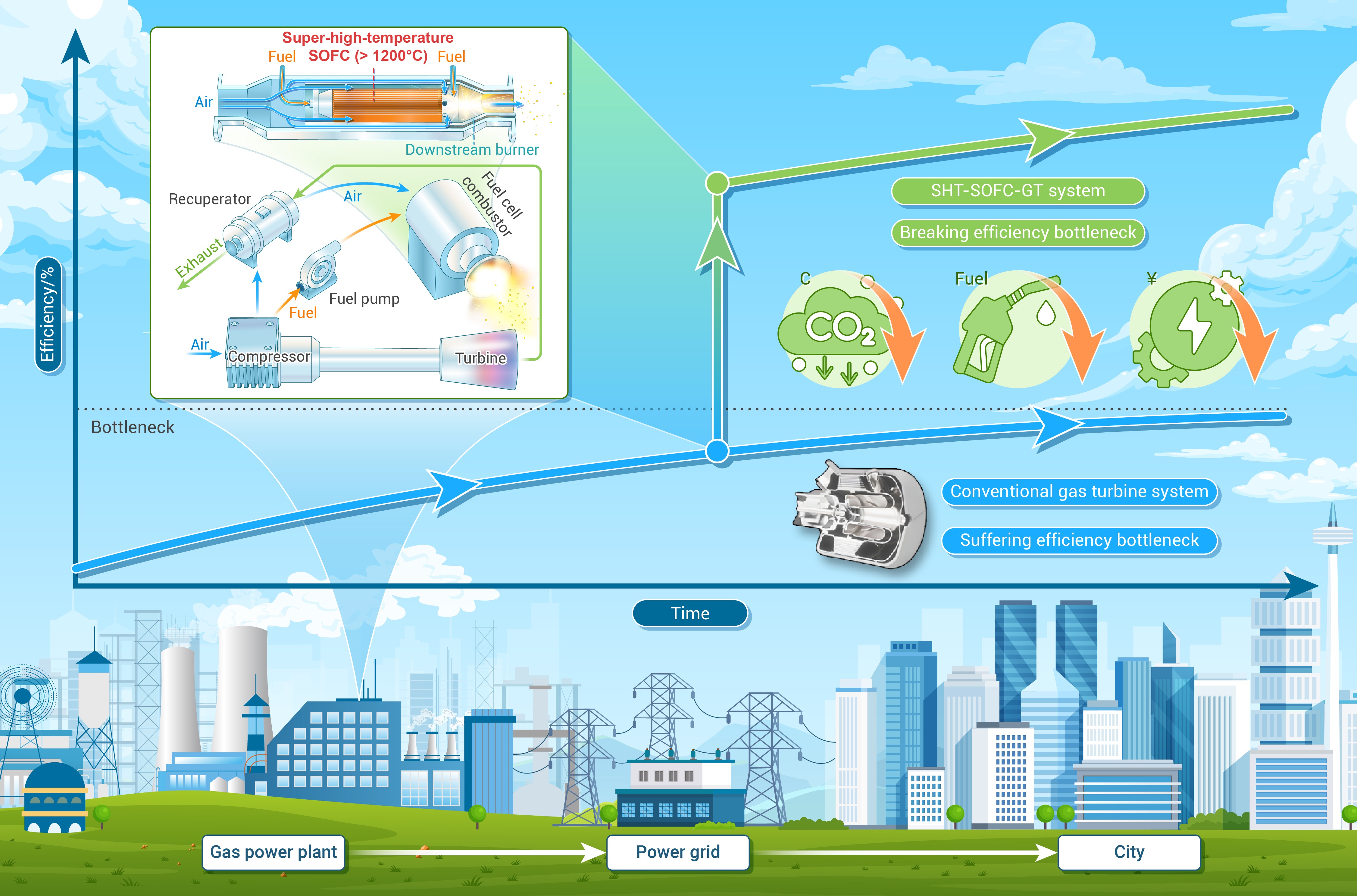
GRAPHICAL ABSTRACT
 DownLoad:
Full size image
DownLoad:
Full size image
-
PUBLIC SUMMARY
-
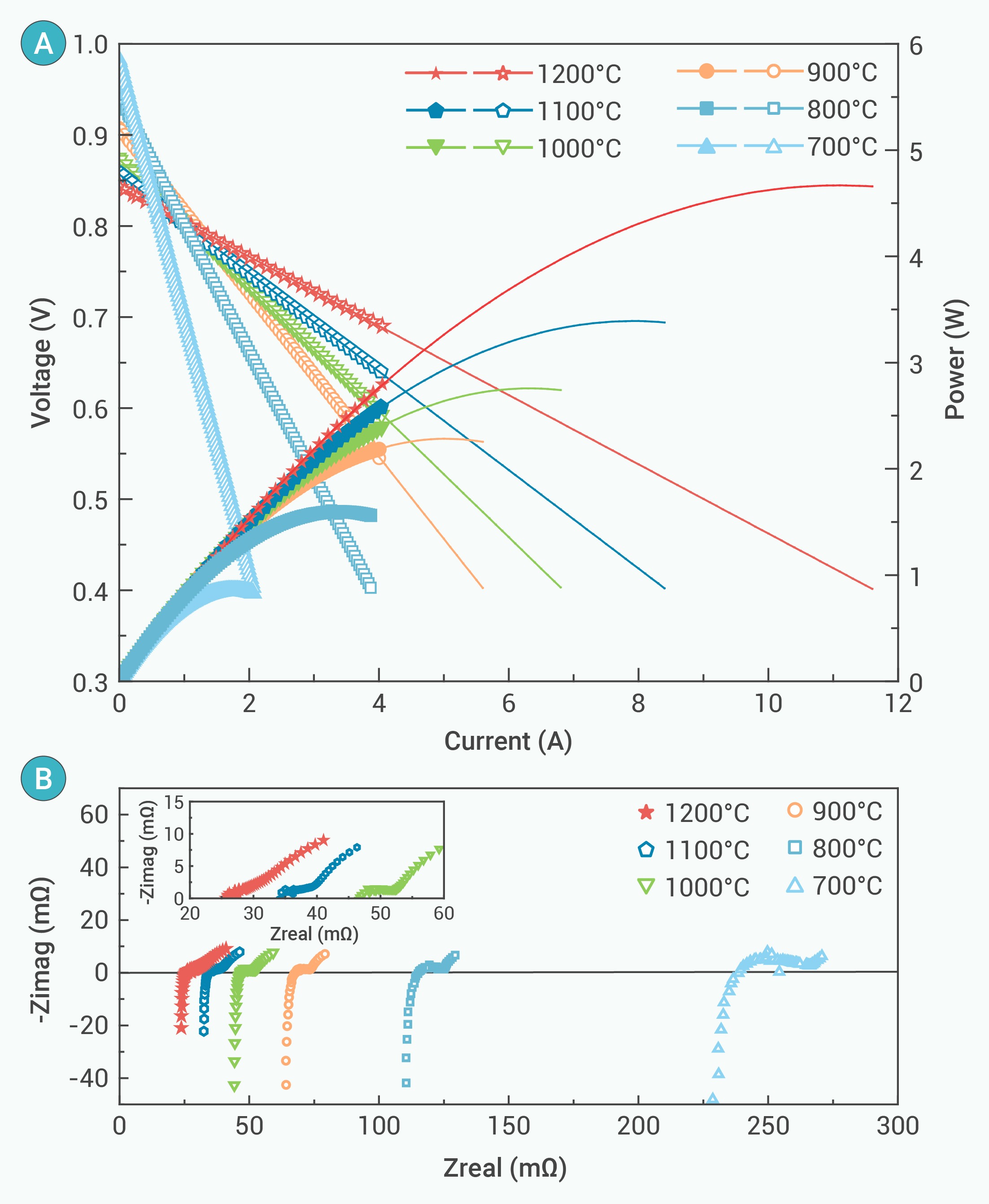
A tubular super-high-temperature solid oxide fuel cell (SHT-SOFC) achieved a peak power of 4.67 W at 1200°C .
The SHT-SOFC can achieve well temperature match with commercial hundred-MW-class gas turbine (GT).
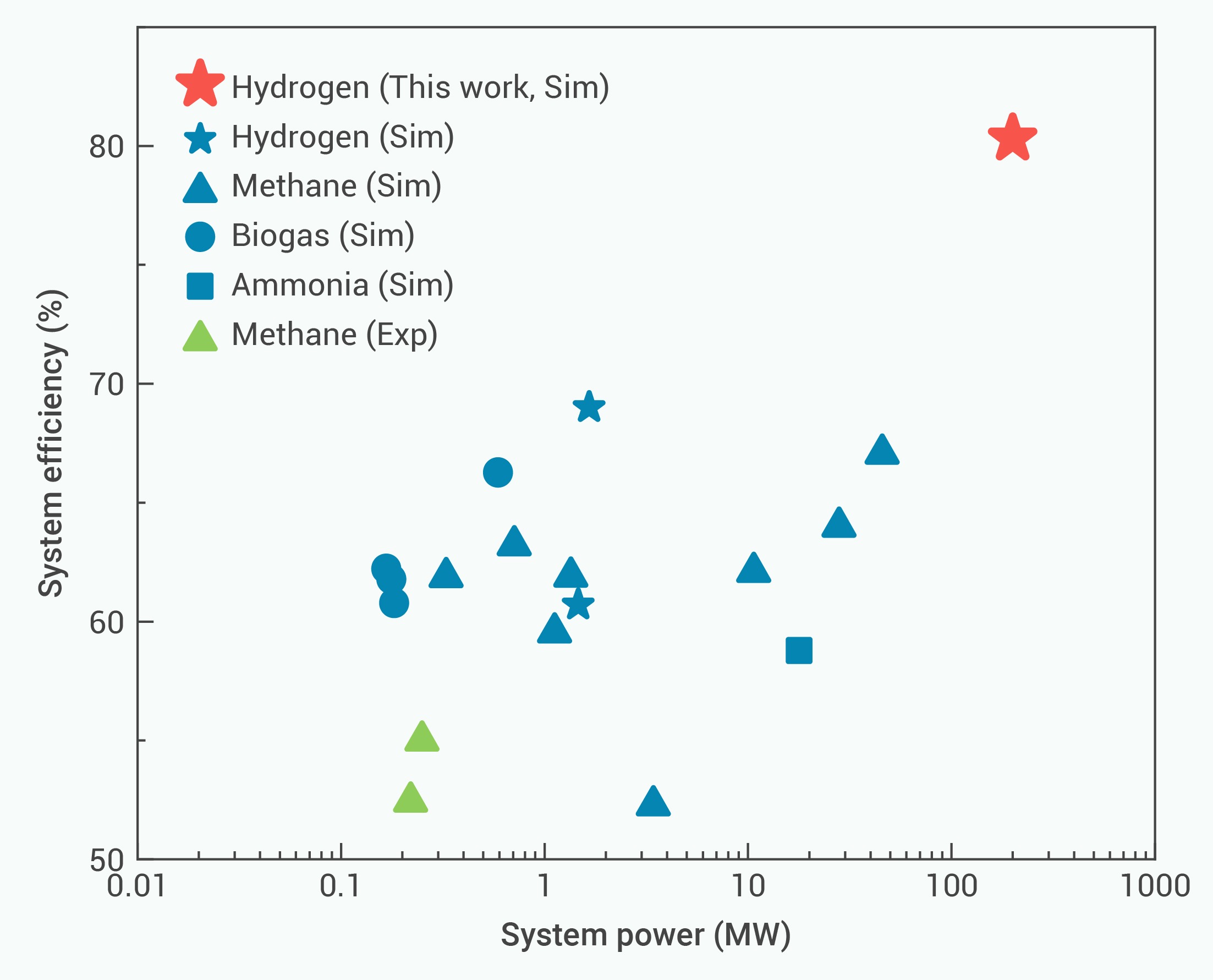
A super-high efficiency of 80.31% can be expected when SOFC temperature is further elevated to 1300°C.
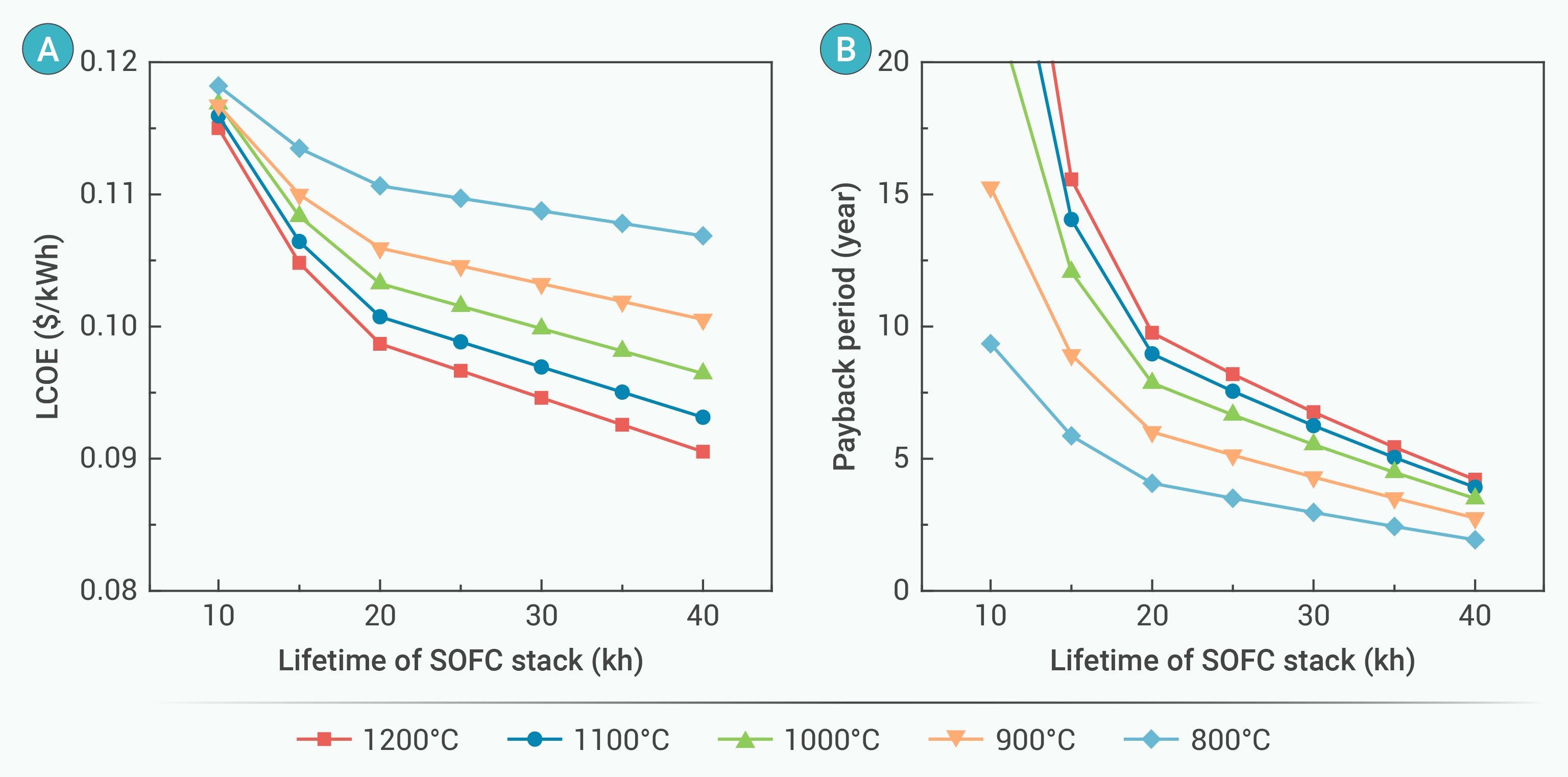
Extending the SHT-SOFCs lifespan is crucial for improving the techno-economic performance.
-
-
ABSTRACT
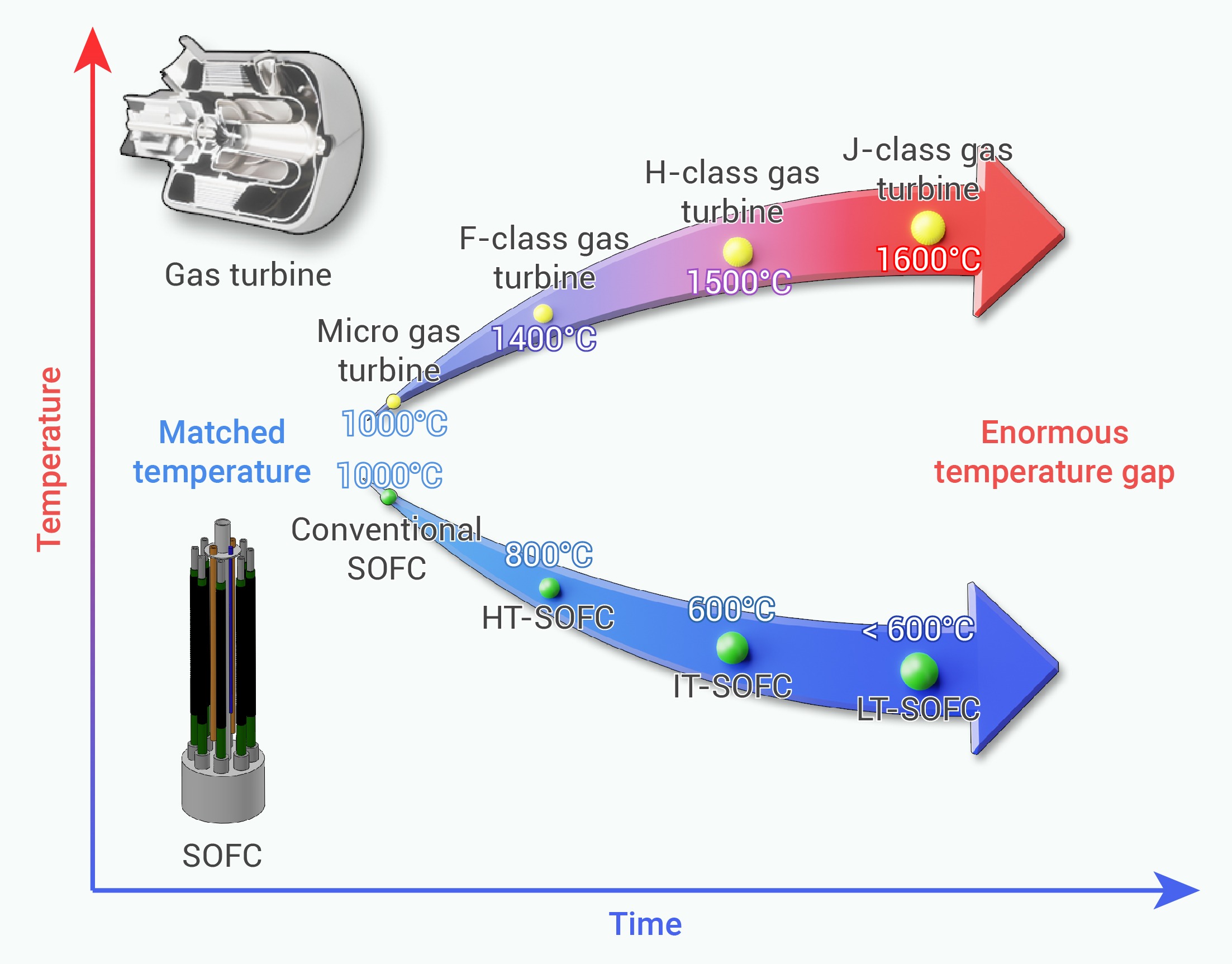
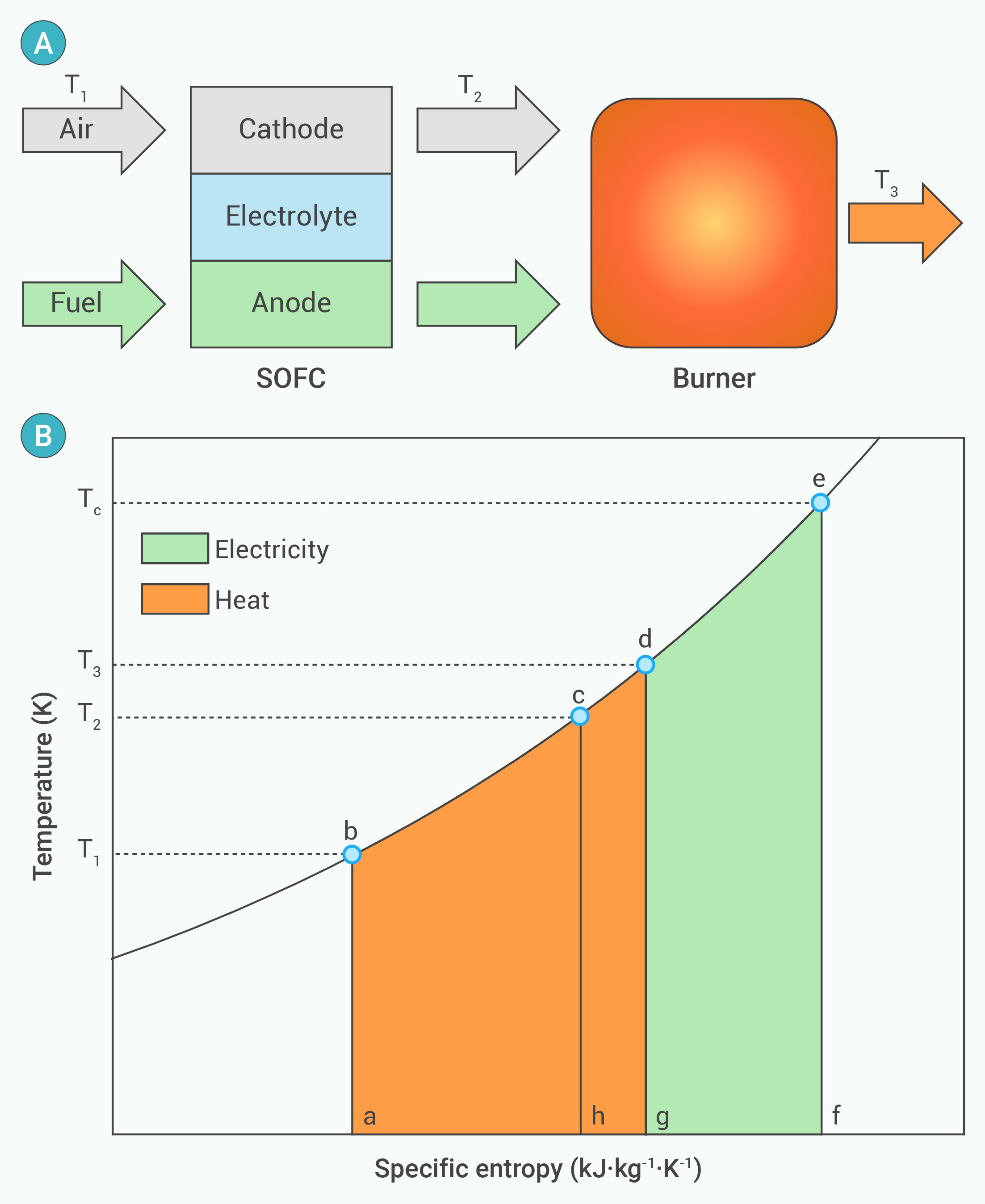
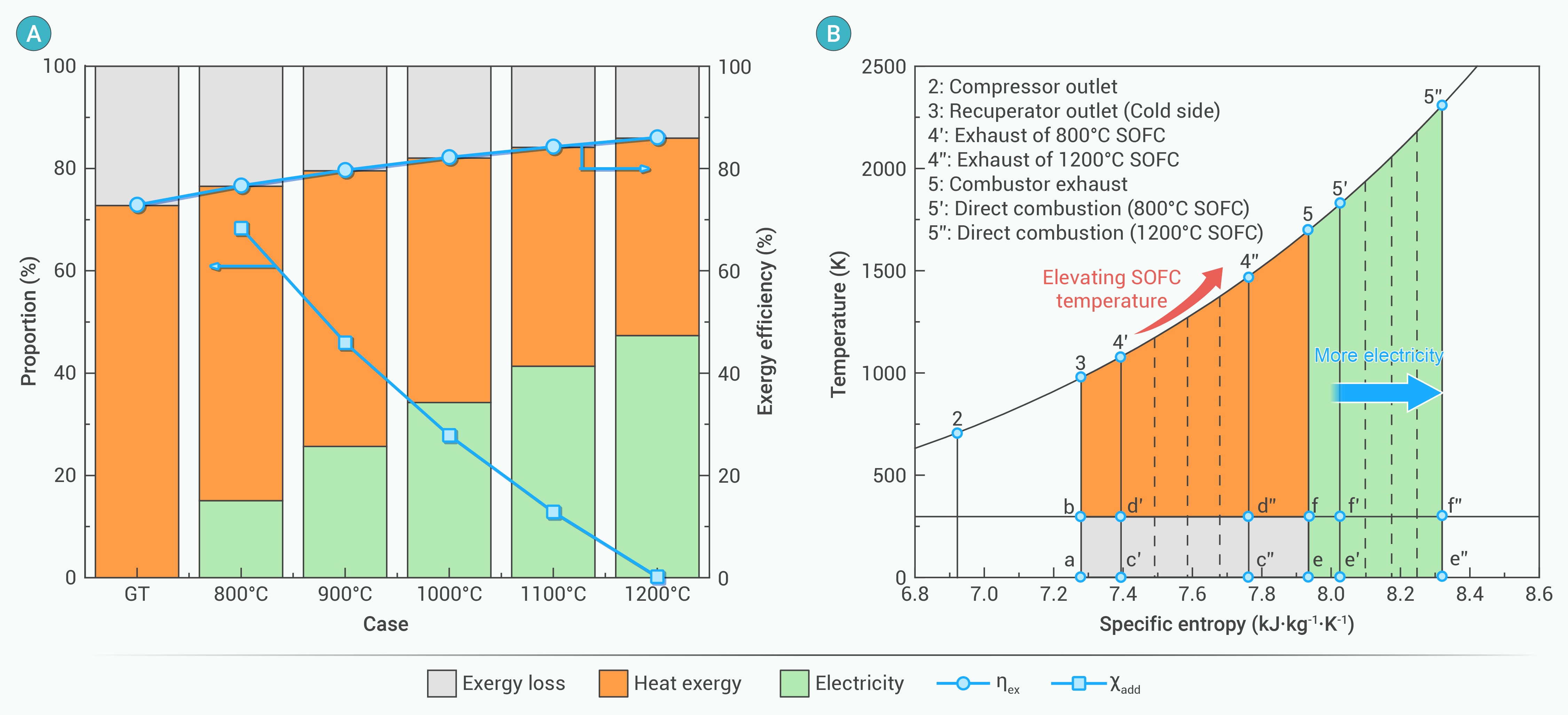
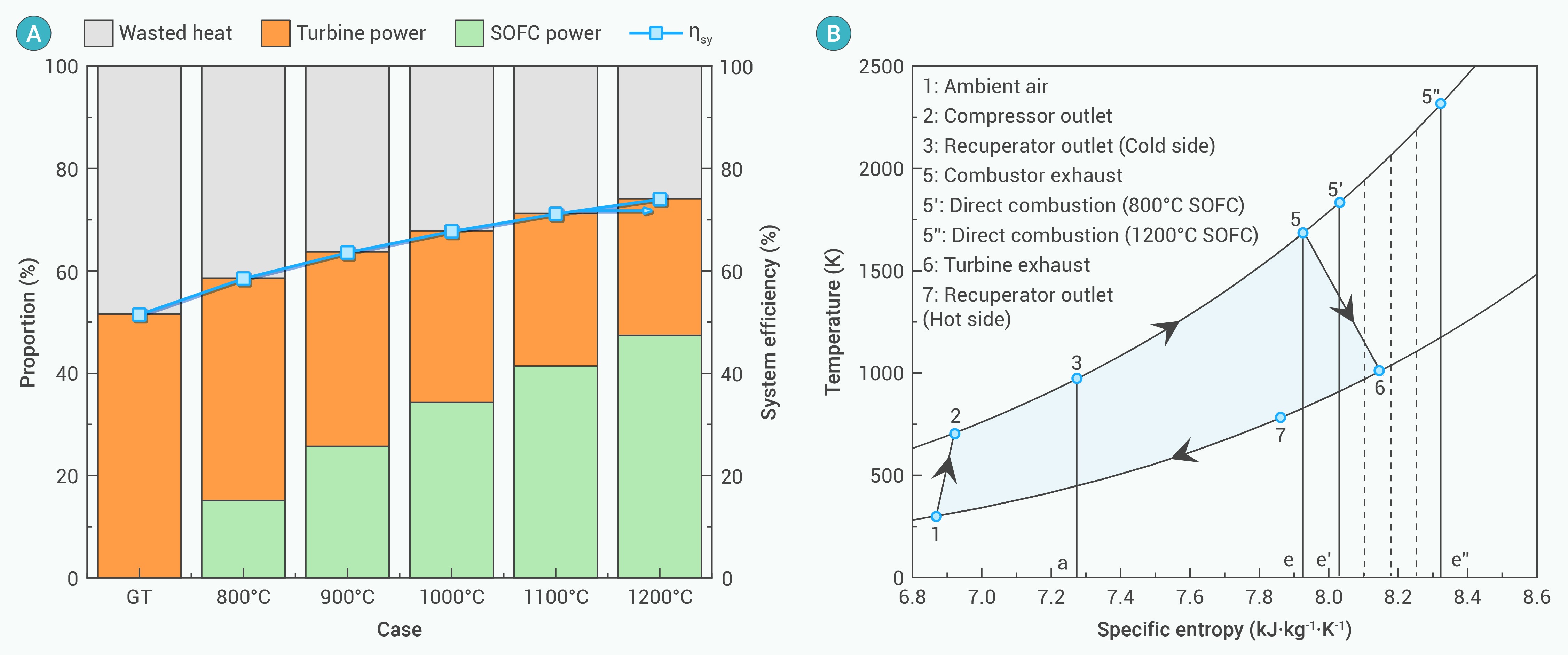
The solid oxide fuel cell-gas turbine (SOFC-GT) hybrid system is among the most efficient power generation technologies. However, the development of SOFCs has focused on lower operating temperatures, which is much lower than the turbine inlet temperature (TIT) of the advanced hundred-MW-class gas turbines (GTs) (>1400 oC), hindering their integration. Therefore, current large-scale GTs still primarily enhance power generation efficiency by increasing TIT, which approach has suffered from prominent marginal effects, leading to the bottleneck in efficiency enhancement. To address this, we propose a super-high-temperature SOFC operating at above1200 °C, which can be integrated with a commercial hundred-MW-class gas turbine to break the efficiency bottleneck. In our laboratory, a single tubular SOFC achieved a peak output power of 4.67 W at1200 °C, which is 5.5 times higher than that at 700°C. We simulated a hundred-MW-class hybrid system to demonstrate the necessity of the elevation of SOFCs temperature, analyzing it thermodynamically based on a T-s indicator diagram. When the SOFC operating temperature increases from 800°C to1200 °C, the temperature mismatch degree between the SOFC and the F-class gas turbine decreases significantly from 68.16% to 0%. This improvement is accompanied by an increase in fuel cell combustor (FCC) exergy efficiency from 76.52% to 85.93%, and an increase in system efficiency from 58.60% to 74.12%. Further elevating the SOFC operating temperature to approximately1300 °C could potentially yield a system efficiency of 80.31%. Considering these substantial thermodynamic advantages, we propose a new development route for SOFCs towards a super-high operating temperature of over1200 oC.-
Keywords:
- Super-high-temperature SOFC /
- SOFC-GT hybrid system /
- Energy efficiency /
- Exergy efficiency /
- 1200oC
-

-
REFERENCES
[1] Buonomano A., Calise F. and D Accadia M.D., et al. (2015). Hybrid solid oxide fuel cells–gas turbine systems for combined heat and power: A review. Appl. Energy 156:32−85. DOI:10.1016/j.apenergy.2015.06.027 [2] Choudhary T. and Sanjay (2017). Thermodynamic assessment of advanced SOFC-blade cooled gas turbine hybrid cycle. Int. J. Hydrog. Energy 42: 10248-10263. DOI: doi.org/10.1016/j.ijhydene.2017.02.178. [3] Pirkandi J. and Ommian M. (2019). Thermo-economic operation analysis of SOFC–GT combined hybrid system for application in power generation systems. J. Electrochem. Energy Convers. Storage 16:11001. DOI: doi.org/10.1115/1.4040056. [4] Yi Y., Smith T.P. and Brouwer J., et al. (2003). Simulation of a 220 kW hybrid SOFC gas turbine system and data comparison. ECS Proceedings Volumes 2003-07:1442−1454. DOI:10.1149/200307.1442PV [5] Kobayashi Y., Ando Y. and Kishizawa H., et al. (2013). Recent progress of SOFC-GT combined system with tubular type cell stack at MHI. ECS Transactions 51:79−86. DOI:10.1149/05101.0079ecst [6] Huang Y. and Turan A. (2019). Fuel sensitivity and parametric optimization of SOFC – GT hybrid system operational characteristics. Therm. Sci. Eng. Prog. 14:100407. DOI:10.1016/j.tsep.2019.100407 [7] Eisavi B., Chitsaz A. and Hosseinpour J., et al. (2018). Thermo-environmental and economic comparison of three different arrangements of solid oxide fuel cell-gas turbine (SOFC-GT) hybrid systems. Energy Conv. Manag. 168:343−356. DOI:10.1016/j.enconman.2018.04.088 [8] Hajabdollahi Z. and Fu P. (2017). Multi-objective based configuration optimization of SOFC-GT cogeneration plant. Appl. Therm. Eng. 112:549−559. DOI:10.1016/j.applthermaleng.2016.10.103 [9] Shamoushaki M., Ehyaei M.A. and Ghanatir F. (2017). Exergy, economic and environmental analysis and multi-objective optimization of a SOFC-GT power plant. Energy 134:515−531. DOI:10.1016/j.energy.2017.06.058 [10] Sghaier S.F., Khir T. and Ben Brahim A. (2018). Energetic and exergetic parametric study of a SOFC-GT hybrid power plant. Int. J. Hydrog. Energy 43:3542−3554. DOI:10.1016/j.ijhydene.2017.08.216 [11] Zhang S., Liu H. and Liu M., et al. (2017). An efficient integration strategy for a SOFC-GT-SORC combined system with performance simulation and parametric optimization. Appl. Therm. Eng. 121:314−324. DOI:10.1016/j.applthermaleng.2017.04.066 [12] Eveloy V., Karunkeyoon W. and Rodgers P., et al. (2016). Energy, exergy and economic analysis of an integrated solid oxide fuel cell – gas turbine – organic Rankine power generation system. Int. J. Hydrog. Energy 41:13843−13858. DOI:10.1016/j.ijhydene.2016.01.146 [13] Gogoi T.K., Sarmah P. and Deb Nath D. (2014). Energy and exergy based performance analyses of a solid oxide fuel cell integrated combined cycle power plant. Energy Conv. Manag. 86:507−519. DOI:10.1016/j.enconman.2014.06.006 [14] Turja A.I., Khan I.A. and Rahman S., et al. (2024). Machine learning-based multi-objective optimization and thermal assessment of supercritical CO2 Rankine cycles for gas turbine waste heat recovery. Energy and AI 16:100372. DOI:10.1016/j.egyai.2024.100372 [15] Ashraf W.M. and Dua V. (2024). Data Information integrated Neural Network (DINN) algorithm for modelling and interpretation performance analysis for energy systems. Energy and AI 16:100363. DOI:10.1016/j.egyai.2024.100363 [16] Dunn B., Kamath H. and Tarascon J. (2011). Lowering the temperature of solid oxide fuel cells. Science 334:928−935. DOI:10.1126/science.1212741 [17] Gao Z., Mogni L.V. and Miller E.C., et al. (2016). A perspective on low-temperature solid oxide fuel cells. Energy Environ. Sci. 9:1602−1644. DOI:10.1039/C5EE03858H [18] Duan C., Tong J. and Shang M., et al. (2015). Readily processed protonic ceramic fuel cells with high performance at low temperatures. Science 349:1321−1326. DOI:10.1126/science.aab3987 [19] Shin S.S., Kim J.H. and Bae K.T., et al. (2020). Multiscale structured low-temperature solid oxide fuel cells with 13 W power at 500 °C. Energy Environ. Sci. 13:3459−3468. DOI:10.1039/D0EE00870B [20] Gülen S.C. and Zachary J. (2022). Feasibility of achieving 62% combined cycle efficiency with a 200 MW gas turbine. Proceedings of ASME Turbo Expo 2022:V005T09A003. DOI: doi.org/10.1115/GT2022-81807. [21] Perna A., Minutillo M. and Jannelli E., et al. (2018). Performance assessment of a hybrid SOFC/MGT cogeneration power plant fed by syngas from a biomass down-draft gasifier. Appl. Energy 227:80−91. DOI:10.1016/j.apenergy.2017.08.077 [22] Barelli L., Bidini G. and Ottaviano A. (2017). Integration of SOFC/GT hybrid systems in Micro-Grids. Energy 118:716−728. DOI:10.1016/j.energy.2016.10.100 [23] Koç Y., Yağlı H. and Görgülü A., et al. (2020). Analysing the performance, fuel cost and emission parameters of the 50 MW simple and recuperative gas turbine cycles using natural gas and hydrogen as fuel. Int. J. Hydrog. Energy 45:22138−22147. DOI:10.1016/j.ijhydene.2020.05.267 [24] Yin F. and Rao A.G. (2020). A review of gas turbine engine with inter-stage turbine burner. Prog. Aeosp. Sci. 121:100695. DOI:10.1016/j.paerosci.2020.100695 [25] Li J. and Li Y. (2023). Micro gas turbine: Developments, applications, and key technologies on components. Propuls. Power Res. 12:1−43. DOI:10.1016/j.jppr.2023.01.002 [26] Ghotkar R. and Milcarek R.J. (2020). Investigation of flame-assisted fuel cells integrated with an auxiliary power unit gas turbine. Energy 204:117979. DOI:10.1016/j.energy.2020.117979 [27] Reyhani H.A., Meratizaman M. and Ebrahimi A., et al. (2016). Thermodynamic and economic optimization of SOFC-GT and its cogeneration opportunities using generated syngas from heavy fuel oil gasification. Energy 107:141−164. DOI:10.1016/j.energy.2016.04.010 [28] Maghsoudi P. and Sadeghi S. (2020). A novel economic analysis and multi-objective optimization of a 200-kW recuperated micro gas turbine considering cycle thermal efficiency and discounted payback period. Appl. Therm. Eng. 166:114644. DOI:10.1016/j.applthermaleng.2019.114644 [29] Bao C., Shi Y. and Li C., et al. (2010). Multi-level simulation platform of SOFC–GT hybrid generation system. Int. J. Hydrog. Energy 35:2894−2899. DOI:10.1016/j.ijhydene.2009.05.047 [30] Bao C., Shi Y. and Croiset E., et al. (2010). A multi-level simulation platform of natural gas internal reforming solid oxide fuel cell–gas turbine hybrid generation system: Part I. Solid oxide fuel cell model library. J. Power Sources 195:4871−4892. DOI: doi.org/10.1016/j.jpowsour.2010.01.078. [31] Bao C., Cai N. and Croiset E. (2011). A multi-level simulation platform of natural gas internal reforming solid oxide fuel cell–gas turbine hybrid generation system – Part II. Balancing units model library and system simulation. J. Power Sources 196:8424−8434. DOI: doi.org/10.1016/j.jpowsour.2011.05.032. [32] Li Q., Zuo W. and Zhang Y., et al. (2020). Effects of rectangular rib on exergy efficiency of a hydrogen-fueled micro combustor. Int. J. Hydrog. Energy 45:10155−10163. DOI:10.1016/j.ijhydene.2020.01.221 [33] Udomsilp D., Rechberger J. and Neubauer R., et al. (2020). Metal-supported solid oxide fuel cells with exceptionally high power density for range extender systems. Cell Rep. Phys. Sci. 1:100072. DOI:10.1016/j.xcrp.2020.100072 [34] Li C., Ning X. and Li C. (2005). Effect of densification processes on the properties of plasma-sprayed YSZ electrolyte coatings for solid oxide fuel cells. Surface and Coatings Technology 190:60−64. DOI:10.1016/j.surfcoat.2004.04.086 [35] Wang Y., Gao J. and Chen W., et al. (2020). Development of ScSZ electrolyte by very low pressure plasma spraying for high-performance metal-supported SOFCs. J. Therm. Spray Technol. 29:223. DOI:10.1007/s11666-019-00970-1 [36] Cui T., Li H. and Lyu Z., et al. (2022). Identification of electrode process in large-size solid oxide fuel cell. Acta Phys.-Chim. Sin. 38:2011009. DOI: doi.org/10.3866/PKU.WHXB202011009. [37] Chen J., Li Y. and Zhang H., et al. (2021). Comparison of different fuel cell temperature control systems in an anode and cathode ejector-based SOFC-GT hybrid system. Energy Conv. Manag. 243:114353. DOI:10.1016/j.enconman.2021.114353 [38] Beigzadeh M., Pourfayaz F. and Ghazvini M., et al. (2021). Energy and exergy analyses of solid oxide fuel cell-gas turbine hybrid systems fed by different renewable biofuels: A comparative study. J. Clean. Prod. 280:124383. DOI:10.1016/j.jclepro.2020.124383 [39] Leal E.M., Bortolaia L.A. and Leal Junior A.M. (2019). Technical analysis of a hybrid solid oxide fuel cell/gas turbine cycle. Energy Conv. Manag. 202:112195. DOI:10.1016/j.enconman.2019.112195 [40] Ezzat M.F. and Dincer I. (2020). Energy and exergy analyses of a novel ammonia combined power plant operating with gas turbine and solid oxide fuel cell systems. Energy 194:116750. DOI:10.1016/j.energy.2019.116750 [41] Wang X., Lv X. and Weng Y. (2020). Performance analysis of a biogas-fueled SOFC/GT hybrid system integrated with anode-combustor exhaust gas recirculation loops. Energy 197:117213. DOI:10.1016/j.energy.2020.117213 [42] Huang Y. and Turan A. (2021). Mechanical equilibrium operation integrated modelling of recuperative solid oxide fuel cell – gas turbine hybrid systems: Design conditions and off-design analysis. Appl. Energy 283:116237. DOI:10.1016/j.apenergy.2020.116237 [43] Soleymani E., Ghavami Gargari S. and Ghaebi H. (2021). Thermodynamic and thermoeconomic analysis of a novel power and hydrogen cogeneration cycle based on solid SOFC. Renew. Energy 177:495−518. DOI:10.1016/j.renene.2021.05.103 [44] Lv X., Liu X. and Gu C., et al. (2016). Determination of safe operation zone for an intermediate-temperature solid oxide fuel cell and gas turbine hybrid system. Energy 99:91−102. DOI:10.1016/j.energy.2016.01.047 [45] Ding X., Lv X. and Weng Y. (2019). Coupling effect of operating parameters on performance of a biogas-fueled solid oxide fuel cell/gas turbine hybrid system. Appl. Energy 254:113675. DOI:10.1016/j.apenergy.2019.113675 [46] Baranowski M., Bober M. and Kudyba A., et al. (2019). The effect of surface condition on wetting of HASTELLOY® X by brazing filler metal of Ni-Pd-Cr-B-Si system. J. Mater. Eng. Perform. 28:3950−3959. DOI:10.1007/s11665-019-03998-0 [47] https://www.hpalloy.com/Alloys/descriptions/HASTELLOY_X.aspx. [48] Gamanov S., Holzer J. and Roupcova P., et al. (2022). High temperature oxidation kinetics of Fe-10Al-4Cr-4Y2O3 ODS alloy at 1200–1400 °C. Corros. Sci. 206:110498. DOI:10.1016/j.corsci.2022.110498 [49] Wang Y., Ren J. and Shi Y., et al. (2019). Numerical model of direct internal reforming SOFC: A comparison between anode-support and metal-support. ECS transactions 91:2013−2022. DOI:10.1149/09101.2013ecst -
ABOUT THIS ARTICLE
Cite this article:
Gu X., Wang Y., Shi Y., et al. (2025). Elevating gas turbine system efficiency by integration with super-high-temperature solid oxide fuel cells. The Innovation Energy 2:100096. https://doi.org/10.59717/j.xinn-energy.2025.100096
Welcome!
To request copyright permission to republish or share portions of our works, please visit Copyright Clearance Center's (CCC) Marketplace website at marketplace.copyright.com.
Article Metrics
Relative Articles
Cited by
Export File
Citation
Gu X., Wang Y., Shi Y., et al. (2025). Elevating gas turbine system efficiency by integration with super-high-temperature solid oxide fuel cells. The Innovation Energy 2:100096. https://doi.org/10.59717/j.xinn-energy.2025.100096

Format
Content
-
Figure 1.
Comparison of the development trends between GTs and SOFCs.20,25 (Adapted with permission from Li et al.,25 Copyright 2023 Elsevier under CC BY-NC-ND 4.0)
-
Figure 2.
Thermodynamic analysis of FCC
-
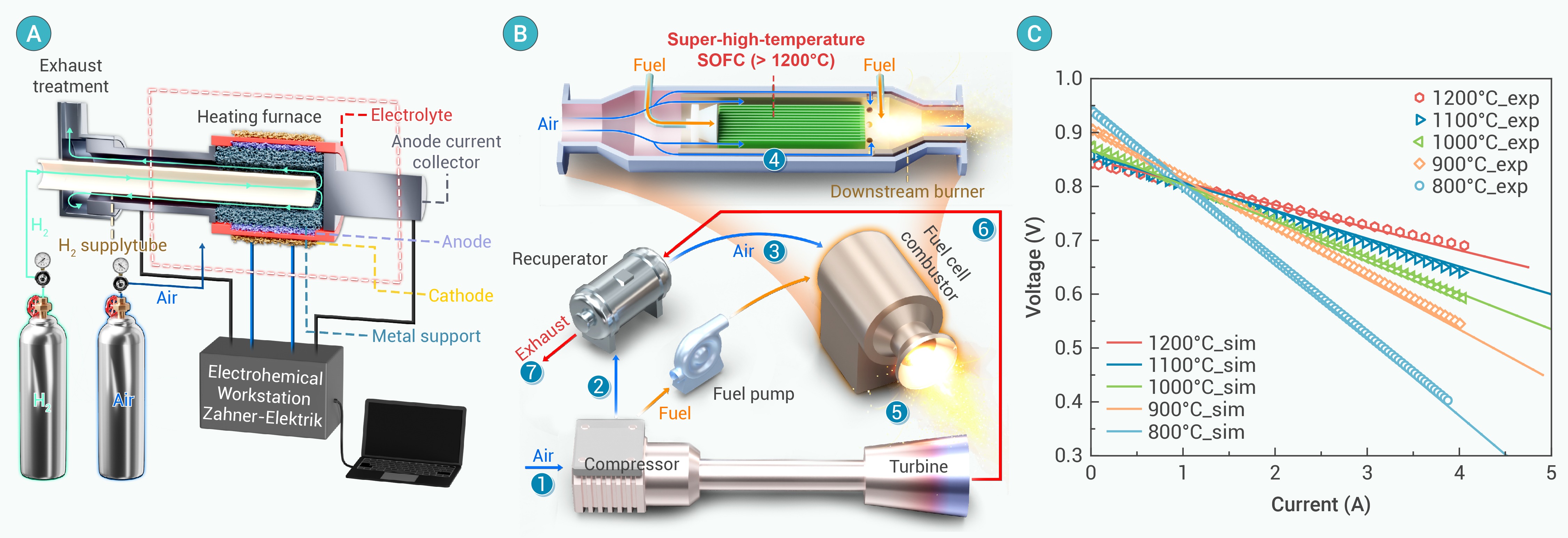
Figure 3.
Experimental and system modeling
-
Figure 4.
Electrochemical performance of the thermal-sprayed tubular SOFC under various operating temperatures
-
Figure 5.
Simulation results and thermodynamic analysis of FCC
-
Figure 6.
Simulation results and thermodynamic analysis of SOFC-GT hybrid system
-
Figure 7.
Comparison of the system efficiency and output power for SOFC-GT hybrid systems with different fuel types. 3-7,11-13,37-45
-
Figure 8.
Techno-economic analysis of SOFC-GT hybrid system with different SOFC operating temperature and SOFC stack lifetime
