
Future development trends in new energy vehicle thermal management technology in the context of carbon neutrality and global hydrofluorocarbon regulations
-
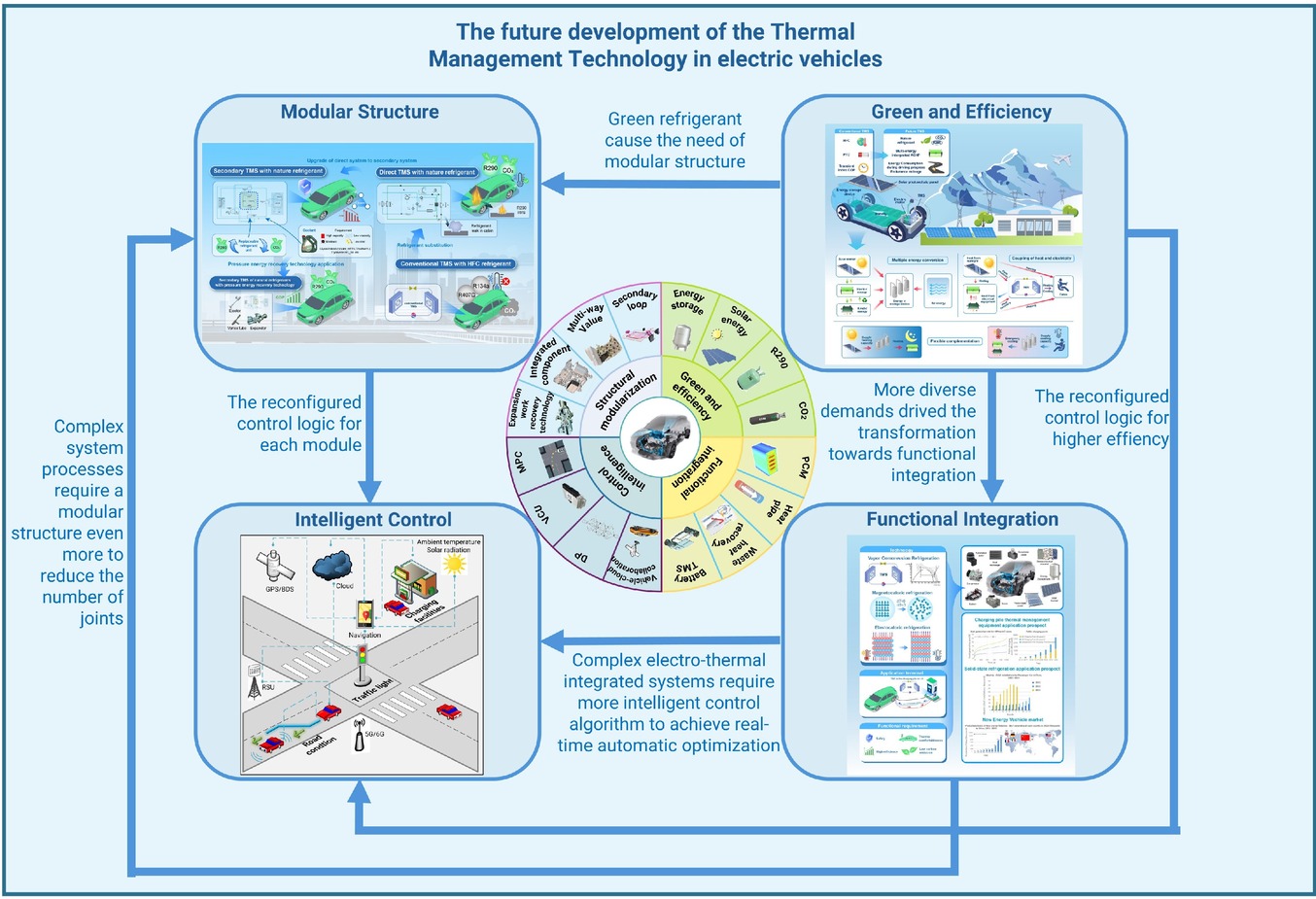
GRAPHICAL ABSTRACT
 DownLoad:
Full size image
DownLoad:
Full size image
-
PUBLIC SUMMARY
-
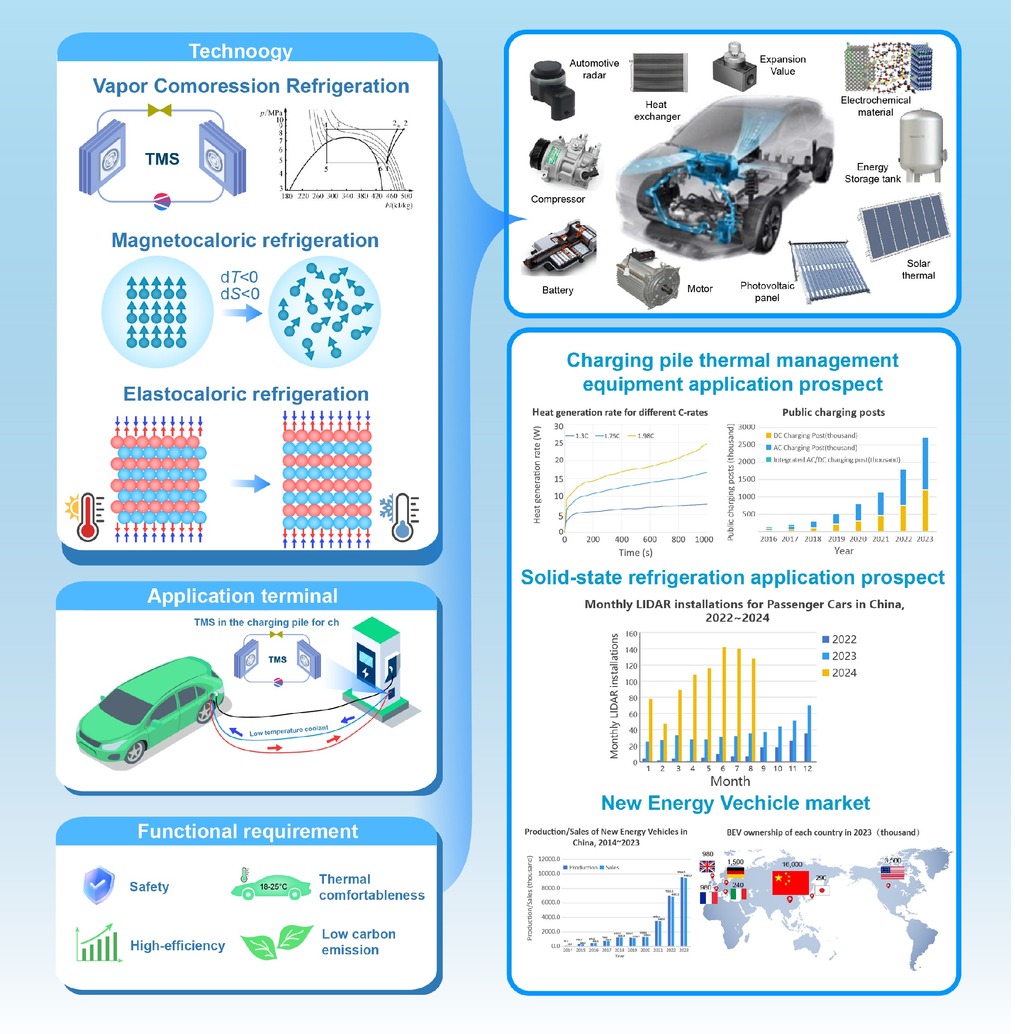
This study systematically explores the future of NEV TMS: green and efficiency, functional integration, modular structure, and intelligent control.
Natural refrigerants, and thermal storage are identified as pivotal green technologies for performance optimization and carbon emission.
Non-vapor compression, integrated temperature and humidity management, and interface with charging pile act as the future of system functions.
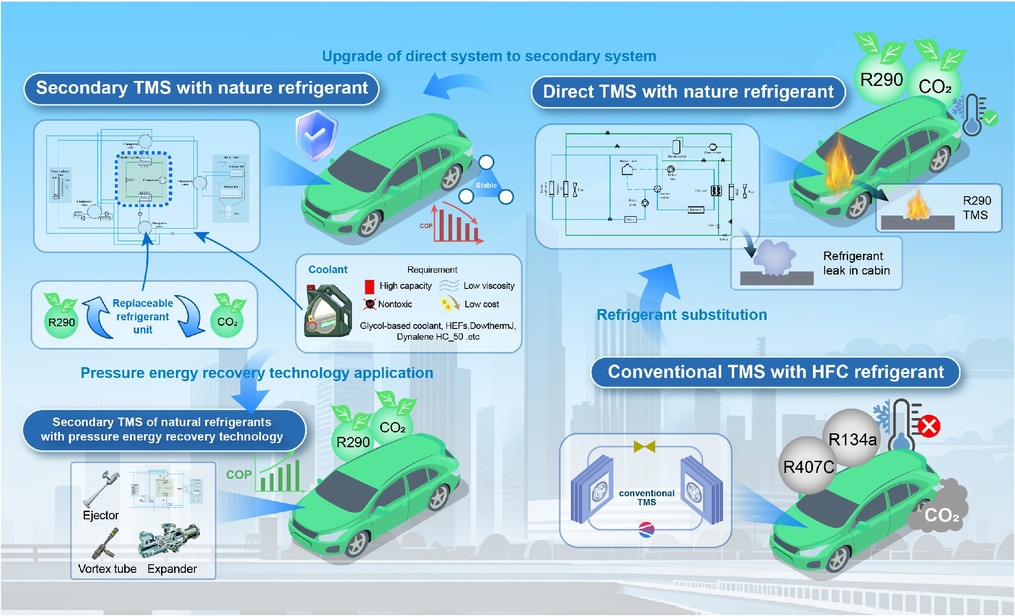
Modular secondary-loop systems are the dominant approach to improving versatility and enabling pressure energy recovery.
Intelligent thermal management solutions combined by vehicle-mounted thermal management energy hub with cloud information interaction are fatal parts of vehicle TMS.
-
-
ABSTRACT
With the rapid development of the new energy vehicle (NEV) industry, thermal management technology has emerged as a critical area of research and development. Effective thermal management is essential for addressing key challenges such as winter driven-range anxiety, battery thermal safety, energy saving and F-gas emission reductions. In the context of evolving global energy structures, environmental issues, and refrigerant substitution regulations, the future development of NEV thermal management industry is progressing toward the "new four modernizations": green and efficiency, functional integration, modular structure, and intelligent control. This paper explores these four aspects in detail. First, continuous performance optimization and the adoption of green technologies remain central themes of thermal management with emerging solutions such as thermal storage and CO2-based natural refrigerants expected to play a significant role. Second, more functional requirements, particular the integration of high-power on-board electronics are likely to be addressed through the non-vapor-compression refrigeration technologies. Third, the adoption of secondary-loop systems with modular structures will become the dominant approach to enhance the versatility, making pressure energy recovery technologies within thermodynamic cycle increasingly significant. Finally, the development of intelligent thermal management solutions such as model predictive control (MPC)-based energy hub framework will certainly become an indispensable part of vehicle thermal management system. Based on these considerations, this paper proposes two innovative evaluation factors and highlights the flexible applications of future NEV thermal management systems. The findings aim to provide valuable insights for scholars, practitioners, manufacturers and policymakers working toward the advancement of NEV thermal management technologies. -

-
REFERENCES
[1] IInternational Energy Agency, (2019). Global EV Outlook 2019. IEA publications:9–10. https://www. iea.org/re- 607 ports/global-ev-outlook-2019. [2] Liu J. (2011). Energy Saving Potential and Carbon Emissions Prediction for the Transportation Sector in China. Res. Sci. 33:640−646. DOI:1007-7588(2011)04-0640-07. [3] IPCC. (2018). Global Warming of 1.5 °C. https://www.ipcc.ch/sr15/. [4] Ma S., Guo S., Zheng D., et al. (2021). Roadmap towards clean and low carbon heating to 2035: A provincial analysis in northern China. Energy 225. DOI:10.1016/j.energy.2021.120164. [5] Bouckaert S., Pales, A.F., McGlade, C., et al. (2021). Net Zero by 2050: A Roadmap for the Global Energy Sector. https://www.iea.org/reports/net-zero-by-2050. [6] Chen X., Shuai C. Y., Wu Y., et al. (2020). Analysis on the carbon emission peaks of China's industrial, building, transport, and agricultural sectors. Sci. Total Environ. 709:135768. DOI:10.1016/j.scitotenv.2019.135768 [7] Li Y., Li X. and Jenn A. (2022). Evaluating the emission benefits of shared autonomous electric vehicle fleets: A case study in California. Applied Energy 323. [8] He H., Meng X., Wang Y., et al. (2024). Deep reinforcement learning based energy management strategies for electrified vehicles: Recent advances and perspectives. Renew. Sustain. Energy Rev. 192:114248. DOI:10.1016/j.rser.2023.114248 [9] EU agrees to end sales of combustion engine vehicles by 2035. (2020). https://www.france24. com/en/europe/20220629-eu-agrees-to-ending-sales-of-combustion-engine-vehicles-by-2035. [10] Asia N. China plans to phase out conventional gas-burning cars by 2035. https://asia.nikkei.com/Business/Automobiles/China-plans-to-phase-out-conventional-gas-burning-cars-by-2035. [11] WF M. Investing in the Middle Class Budget 2019. https://www.budget.gc.ca/2019/docs/plan/ budget-2019-en.pdf, 2019. [12] Zhang X., Zou Y., Fan J., et al. (2019). Usage pattern analysis of Beijing private electric vehicles based on real-world data. Energy 167:1074−1085. DOI:10.1016/j.energy.2018.10.123 [13] Kim J., Oh J. and Lee H. (2019). Review on battery thermal management system for electric vehicles. Appl. Thermal Eng. 149:192−212. DOI:10.1016/j.applthermaleng.2018.12.097 [14] Li X. and Wang R. (2025). Towards integrated thermal management systems in battery electric vehicles: A review. eTransportation 24:100396. DOI:10.1016/j.etran.2024.100396 [15] Ajanovic A., Glatt A. and Haas R. (2021). Prospects and impediments for hydrogen fuel cell buses. Energy 235. 121340. DOI:10.1016/j.energy.2021.121340. [16] Ministry of Public Security of the People’s Republic of China, In 2020, the Registered Motor Vehicles Is 33.28 Million and the New Energy Vehicle Is 4.92 Million. https://app.mps.gov.cn/gdnps/pc/content.jsp?id =7647257, 2021. [17] Watabe A. and Leaver J. (2021). Comparative economic and environmental benefits of ownership of both new and used light duty hydrogen fuel cell vehicles in Japan. Int. J. Hydro. Energy 46:26582−26593. DOI:10.1016/j.ijhydene.2021.05.008 [18] Mevawalla A., Shabeer Y., Tran M. K., et al. (2022). Thermal Modelling Utilizing Multiple Experimentally Measurable Parameters. Batteries-Basel 8:147. DOI:10.3390/batteries8040147 [19] Chen Y. Y., Zou H. M., Dong J. Q., et al. (2021). Experimental investigation on the heating performance of a CO2 heat pump system with intermediate cooling for electric vehicles. Appl. Thermal Eng. 182:116039. DOI:10.1016/j.applthermaleng.2020.116039 [20] Sun P. Y., Bisschop R., Niu H. H., et al. (2020). A Review of Battery Fires in Electric Vehicles. Fire Tech. 56:1361−1410. DOI:10.1007/s10694-020-01064-w [21] Moreno G., Narumanchi S., Feng X. H., et al. (2022). Electric-Drive Vehicle Power Electronics Thermal Management: Current Status, Challenges, and Future Directions. J. Electr. Pack. 144:011004. DOI:10.1115/1.4069830 [22] Ma J., Sun Y. F., Zhang S., et al. (2022). Experimental study on the performance of vehicle integrated thermal management system for pure electric vehicles. Energy Conver. Manag. 253:115183. DOI:10.1016/j.enconman.2022.115183 [23] Amini M. R., Wang H., Gong X., et al. (2020). Cabin and Battery Thermal Management of Connected and Automated HEVs for Improved Energy Efficiency Using Hierarchical Model Predictive Control. IEEE TCST 28:1711−1726. DOI:10.1109/TCST.2019.2942185 [24] Zhao Y. H., Dan D., Zheng S. Y., et al. (2023). A two-stage eco-cooling control strategy for electric vehicle thermal management system considering multi-source information fusion. Energy 267:126606. DOI:10.1016/j.energy.2023.126606 [25] Hao S., Han K., Wang Y., et al. (2024). Vapor compression cycle-based integrated thermal management systems for electric vehicles: A critical review. Energy Conver. Manag. 321:119072. DOI:10.1016/j.enconman.2024.119072 [26] Xu B. and Arjmandzadeh Z. (2023). Parametric study on thermal management system for the range of full (Tesla Model S)/ compact-size (Tesla Model 3) electric vehicles. Energy Conversion and Management 278:116753. DOI:10.1016/j.enconman.2023.116753 [27] Nic L. and Michael N. (2019). Update on electric vehicle costs in the United States through 2030. Int. Coun. Clean Trans. 12. DOI:10.2172/1564811. [28] “President Biden, USDOT and USDOE Announce $5 Billion over Five Years for National EV Charging Network, Made Possible by Bipartisan Infrastructure Law | FHWA.”. https://highways.dot.gov/newsroom/president -biden-usdot-and-usdoe-announce-5-billion-over-five-years-national-ev-charging. [29] Raj J., Asirvatham L. G., Angeline A. A., et al. (2024). Thermal management strategies and power ratings of electric vehicle motors. Renew. Sustain. Energy Rev. 189:113874. DOI:10.1016/j.rser.2024.113874 [30] Asim M., Baig T., Siddiqui F. R., et al. (2025). Advancements in thermal management solutions for electric vehicle high-power electronics: Innovations, cooling methods, and future perspectives. J. Energy Storage 111:115344. DOI:10.1016/j.est.2025.115344 [31] Molina M. J. and Rowland F. S. (1974). Stratospheric sink for chlorofluoromethanes: chlorine atom-catalysed destruction of ozone. Nature 249:810−812. DOI:10.1038/249810a0 [32] Vaghela J. K. (2017). Comparative Evaluation of an Automobile Air - Conditioning System Using R134a and Its Alternative Refrigerants. Energy Procedia 109:153−160. DOI:10.1016/j.egypro.2017.03.091 [33] Wang Y. B., Dong J. Q., Jia S. W., et al. (2021). Experimental comparison of R744 and R134a heat pump systems for electric vehicle application. Int. J. Refrig. 121:10−22. DOI:10.1016/j.ijrefrig.2020.12.008 [34] Wang Z., Wei M., Peng F., et al. (2016). Experimental evaluation of an integrated electric vehicle AC/HP system operating with R134a and R407C. Appl. Thermal Eng. 100:1179−1188. DOI:10.1016/j.applthermaleng.2016.02.082 [35] Zhang Z. Y., Wang J. Y., Feng X., et al. (2018). The solutions to electric vehicle air conditioning systems: A review. Renew. Sustain. Energy Rev. 91:443−463. DOI:10.1016/j.rser.2018.04.026 [36] Song Y. L., Wang H. D., Ma Y., et al. (2022). Energetic, economic, environmental investigation of carbon dioxide as the refrigeration alternative in new energy bus/railway vehicles' air conditioning systems. Appl. Energy 305:117830. DOI:10.1016/j.apenergy.2021.117830 [37] Hong S. H., Jang D. S., Yun S., et al. (2020). Performance improvement of heat pumps using novel microchannel heat exchangers with plain-louver fins during periodic frosting and defrosting cycles in electric vehicles. Energy Conver. Manag. 223:113306. DOI:10.1016/j.enconman.2020.113306 [38] Kwon C., Kim M. S., Choi Y., et al. (2017). Performance evaluation of a vapor injection heat pump system for electric vehicles. Int. J. Refrig. 74:138−150. DOI:10.1016/j.ijrefrig.2016.10.013 [39] Lee D. (2014). Experimental Study on the Heating Performance Improvement of R134a Heat Pump System for Zero Emission Vehicles. Kor. J. Air-Conditi. Refrig. Eng. 26:257−262. DOI:10.4208/jkaire.2014.26.257 [40] Feng L. and Hrnjak P. (2016). Experimental Study of an Air Conditioning-Heat Pump System for Electric Vehicles. SAE Int. J. Pass. Cars Mech. Sys. 9:68−74. DOI:10.4271/2016-01-2149 [41] Higuchi Y., Kobayashi H., Shan Z., et al. (2017). Efficient Heat Pump System for PHEV/BEV. SAE Int. DOI:10.4271/2017-01-0520. [42] Heredia-Aricapa Y., Belman-Flores J. M., Mota-Babiloni A., et al. (2020). Overview of low GWP mixtures for the replacement of HFC refrigerants: R134a, R404A and R410A. Int. J. Refrig. 111:113−123. DOI:10.1016/j.ijrefrig.2020.03.009 [43] Sieres J., Ortega I., Cerdeira F., et al. (2020). Influence of the refrigerant charge in an R407C liquid-to-water heat pump for space heating and domestic hot water production. Int. J. Refrig. 110:28−37. DOI:10.1016/j.ijrefrig.2019.10.013 [44] O. A. S. (1999). The Implications to the Montreal Protocol of the Inclusion of HFCs and PFCs in the Kyoto Protocol. Report of the TEAP HFC and PFC Task Force. [45] Clark E. and Wagner S. (2016). The Kigali Amendment to the Montreal Protocol: HFC Phase-down UN Environment Ozone Action. [46] “Registry of restriction intentions until outcome: Annex XV Restriction Report-Per-and polyfluoroalkyl substances (PFASs)”. https://echa.europa.eu/registry-of-restriction-intentions/-/dislist/details/0b0236e18663449b, 2023. [47] Yin X., Wang A., Fang J., et al. (2021). Coupled effect of operation conditions and refrigerant charge on the performance of a transcritical CO2 automotive air conditioning system. Int. J. Refrig. 123:72−80. DOI:10.1016/j.ijrefrig.2021.07.003 [48] Ma Y., Liu Z. and Tian H. (2013). A review of transcritical carbon dioxide heat pump and refrigeration cycles. Energy 55:156−172. DOI:10.1016/j.energy.2013.02.058 [49] Song Y., Cui C., Yin X., et al. (2022). Advanced development and application of transcritical CO2 refrigeration and heat pump technology—A review. Energy Rep. 8:7840−7869. DOI:10.1016/j.egyr.2022.08.160 [50] Song Y., Cui C., Li M., et al. (2020). Investigation on the effects of the optimal medium-temperature on the system performance in a transcritical CO2 system with a dedicated transcritical CO2 subcooler. Appl. Thermal Eng. 168:114846. DOI:10.1016/j.applthermaleng.2020.114846 [51] Song Y., Ye Z., Wang Y., et al. (2018). The experimental verification on the optimal discharge pressure in a subcooler-based transcritical CO2 system for space heating. Energy Build. 158:1442−1449. DOI:10.1016/j.enbuild.2017.11.031 [52] Lorentzen G. (1994). Revival of carbon dioxide as a refrigerant. Int. J. Refrig. 17:292−301. DOI:10.1016/0140-7007(94)90034-9 [53] Huang Y., Wu X. and Jing J. (2022). Research on the electric vehicle heat pump air conditioning system based on R290 refrigerant. Energy Rep. 8:447−455. DOI:10.1016/j.egyr.2022.02.063 [54] Morales M., Gonzalez-García S., Aroca G., et al. (2015). Life cycle assessment of gasoline production and use in Chile. Sci. Total Environ. 505:833−843. DOI:10.1016/j.scitotenv.2014.10.093 [55] Beijing, Standards press of China. (2017). Refrigerant numbering method and safety classification: GB/T 7778—2017. [56] Zhang Y., Liu C., Wang T., et al. (2020). Leakage analysis and concentration distribution of flammable refrigerant R290 in the automobile air conditioner system. Int. J Refrig. 110:286−294. DOI:10.1016/j.ijrefrig.2019.12.001 [57] Qin Y., Li N., Zhang H., et al. (2023). A thermodynamic analysis of the Linde-Hampson cycle using low-GWP R1234yf-blends. Case Stud. Thermal Eng. 49:103358. DOI:10.1016/j.csite.2023.103358 [58] Li J., Zhang X., Fu L., et al. (2017). Low Carbon Automotive and Powertrain Technology Innovation. Auto. Tech. 4:1−5. DOI:10.19622/j.cnki.1005-7033.2017.04.001 [59] Wallington T. J., Sulbaek Andersen M. P. and Nielsen O. J. (2015). Atmospheric chemistry of short-chain haloolefins: Photochemical ozone creation potentials (POCPs), global warming potentials (GWPs), and ozone depletion potentials (ODPs). Chemosphere 129:135−141. DOI:10.1016/j.chemosphere.2014.11.033 [60] Hansen C., Campbell J. and Kable S. (2021). Photodissociation of CF3CHO provides a new source of CHF3 (HFC-23) in the atmosphere: implications for new refrigerants. [61] Lemmon E. W., Huber M. L. and Mclinden M. O. (2010). NIST Standard Reference Database 23: Reference Fluid Thermodynamic and Transport Properties - REFPROP,Version 9.1. Stand. Ref. Data Prog. Nation. Ins. Stand. Tech. [62] Zhu Z., Zhang Y., Chen A., et al. (2025). Review of integrated thermal management system research for battery electrical vehicles. J. Energy Storage 106:114662. DOI:10.1016/j.est.2025.114662 [63] Hao X., Wang H., Lin Z., et al. (2020). Seasonal effects on electric vehicle energy consumption and driving range: A case study on personal, taxi, and ridesharing vehicles. J. Clean. Prod. 249:119403. DOI:10.1016/j.jclepro.2019.119403 [64] Manríquez F., Sauma E., Aguado J., et al. (2020). The impact of electric vehicle charging schemes in power system expansion planning. Appl. Energy 262:114527. DOI:10.1016/j.apenergy.2020.114527 [65] Wang A., Yin X., Jia F., et al. (2023). Driving range evaluation based on different cabin thermal management goals of CO2 heat pumps for electric vehicles. J. Clean. Prod. 382:135201. DOI:10.1016/j.jclepro.2022.135201 [66] Lian Y., Ling H., Zhu J., et al. (2023). Thermal management optimization strategy of electric vehicle based on dynamic programming. Control Eng. Pract. 137:105562. DOI:10.1016/j.conengprac.2023.105562 [67] Zhao R., Liu Y., Li C., et al. (2022). An energetic, economic and environmental evaluation of a dual-source heat pump water heater – A case study in Beijing. Energy Conver. Manag. 253:115190. DOI:10.1016/j.enconman.2022.115190 [68] Wang A., Cao F., Yin X., et al. (2022). Pseudo-optimal discharge pressure analysis of transcritical CO2 electric vehicle heat pumps due to temperature glide. Appl. Thermal Eng. 215:118856. DOI:10.1016/j.applthermaleng.2022.118856 [69] Zou H., Yang T., Tang M., et al. (2022). Ejector optimization and performance analysis of electric vehicle CO2 heat pump with dual ejectors. Energy 239:122452. DOI:10.1016/j.energy.2021.122452 [70] Yin X., Fang J., Wang A., et al. (2022). A novel CO2 thermal management system with battery two-phase (evaporative) cooling for electric vehicles. Result. Eng. 16:100735. DOI:10.1016/j.rineng.2022.100735 [71] Hao X., Chen Y., Wang H., et al. (2023). A V2G-oriented reinforcement learning framework and empirical study for heterogeneous electric vehicle charging management. Sustain. Cities Soc. 89:104345. DOI:10.1016/j.scs.2023.104345 [72] Li J., Wang G., Wang X., et al. (2023). Smart charging strategy for electric vehicles based on marginal carbon emission factors and time-of-use price. Sustain. Cities Soc. 96:104708. DOI:10.1016/j.scs.2023.104708 [73] Lei X., Yu H., Yu B., et al. (2023). Bridging electricity market and carbon emission market through electric vehicles: Optimal bidding strategy for distribution system operators to explore economic feasibility in China's low-carbon transitions. Sustain. Cities Soc. 94:104557. DOI:10.1016/j.scs.2023.104557 [74] Lander L., Kallitsis E., Hales A., et al. (2021). Cost and carbon footprint reduction of electric vehicle lithium-ion batteries through efficient thermal management. Appl. Energy 289:116737. DOI:10.1016/j.apenergy.2021.116737 [75] Tang Y. (2023). Optimal control study of home energy management with cooperative dispatch of electric vehicles and energy storage devices. Energy Rep. 9:550−557. DOI:10.1016/j.egyr.2023.03.048 [76] Zhang C., Wu S., An G., et al. (2022). Resorption thermal energy storage strategy based on CaCl2/MnCl2-NH3 working pair for battery electric vehicles. Chem. Eng. J. 441:136111. DOI:10.1016/j.cej.2022.136111 [77] Srithapon C. and Månsson D. (2023). Predictive control and coordination for energy community flexibility with electric vehicles, heat pumps and thermal energy storage. Appl. Energy 347:121500. DOI:10.1016/j.apenergy.2023.121500 [78] Mohammadkhani N., Sedighizadeh M. and Esmaili M. (2018). Energy and emission management of CCHPs with electric and thermal energy storage and electric vehicle. Thermal Sci. Eng. Prog. 8:494−508. DOI:10.1016/j.tsep.2018.03.002 [79] Zeynali S., Rostami N., Ahmadian A., et al. (2021). Robust multi-objective thermal and electrical energy hub management integrating hybrid battery-compressed air energy storage systems and plug-in-electric-vehicle-based demand response. J. Energy Storage 35:102265. DOI:10.1016/j.est.2021.102265 [80] Schreurs T., Madani H., Zottl A., et al. (2021). Techno-economic analysis of combined heat pump and solar PV system for multi-family houses: An Austrian case study. Energy Strategy Rev. 36:100666. DOI:10.1016/j.esr.2021.100666 [81] Zhang K., Prakash A., Paul L., et al. (2022). Model predictive control for demand flexibility: Real-world operation of a commercial building with photovoltaic and battery systems. Adv. Appl. Energy 7:100099. DOI:10.1016/j.adapen.2022.100099 [82] Zhao X., Yin J., Jiang J., et al. (2025). A review on thermal collection management and conversion performance enhancement of extended range electric vehicle exhaust thermoelectricity. Appl. Thermal Eng. 273:126476. DOI:10.1016/j.applthermaleng.2023.126476 [83] Vikram S., Vashisht S., Rakshit D., et al. (2025). Performance analysis of integrated battery and cabin thermal management system in Electric Vehicles for discharge under drive cycle. J. Energy Storage 114:115678. DOI:10.1016/j.est.2025.115678 [84] Budiman A. C., Azzopardi B., Sudirja, et al. (2023). Phase Change Material Composite Battery Module for Thermal Protection of Electric Vehicles: An Experimental Observation. Energies. DOI:10.3390/en16114118. [85] Choi H., Song J., Lee S., et al. (2025). Performance investigation of the cascade heat pump system with waste heat recovery for electric vehicle thermal management systems on energy, economic and environmental impact. eTransportation 24:100422. DOI:10.1016/j.etran.2025.100422 [86] Kaleybar H., Golnargesi M., Brenna M., et al. (2023). Hybrid Energy Storage System for Recovering Regenerative Braking Energy in Railway Station Taking Advantage of EV Batteries. Energies. DOI:10.3390/en16091783. [87] Song Y., Wang H., Ma Y., et al. (2022). Energetic, economic, environmental investigation of carbon dioxide as the refrigeration alternative in new energy bus/railway vehicles’ air conditioning systems. Appl. Energy 305:117830. DOI:10.1016/j.apenergy.2021.117830 [88] Wang H., Song Y., Qiao Y., et al. (2022). Rational assessment and selection of air source heat pump system operating with CO2 and R407C for electric bus. Renew. Energy 182:86−101. DOI:10.1016/j.renene.2021.11.031 [89] He K., Song Y., Xie H., et al. (2025). Winter driving range optimization of electric bus based on CO2 thermal management system and thermal energy cascade utilization. Energy 323:135668. DOI:10.1016/j.energy.2025.135668 [90] Wang W., Ren J., Qiao Y., et al. (2024). Evaluation of energy performance and environmental benefits for transcritical CO2 thermal system in high-speed trains. J. Cleaner Prod. 468:143027. DOI:10.1016/j.jclepro.2023.143027 [91] Yu B., Long J., Zhang Y., et al. (2024). Life cycle climate performance evaluation (LCCP) of electric vehicle heat pumps using low-GWP refrigerants towards China's carbon neutrality. Appl. Energy 353:122061. DOI:10.1016/j.apenergy.2023.122061 [92] Wang H., Cao F., Jia F., et al. (2023). Potential assessment of transcritical CO2 secondary loop heat pump for electric vehicles. Appl. Thermal Eng. 224:119921. DOI:10.1016/j.applthermaleng.2023.119921 [93] Kwon S., Lee D., Chung J. Y., et al. (2024). Performance comparison of a direct heat pump using R1234yf and indirect heat pumps using R1234yf and R290 designed for cabin heating of electric vehicles. Energy 297:131311. DOI:10.1016/j.energy.2024.131311 [94] Hou Z., Lyu J., Wu D., et al. (2024). Occupant-centric cabin thermal sensation assessment system based on low-cost thermal imaging. Build. Environ. 261:111692. DOI:10.1016/j.buildenv.2023.111692 [95] He L. E., Tong B. Q., Wu L. M., et al. (2024). Performance investigation of integrated thermal management system for electric vehicle with waste heat recovery of electric drive system. J. Energy Storage 102:114075. DOI:10.1016/j.est.2024.114075 [96] Lu Y. F., Guo D. X., Xiong G. A., et al. (2024). Towards real-world state of health estimation: Part 2, system level method using electric vehicle field data. etransportation 22:100361. DOI:10.1016/j.etran.2024.100361 [97] Xiong R., Sun X. J., Meng X. F., et al. (2024). Advancing fault diagnosis in next-generation smart battery with multidimensional sensors. Appl. Energy 364:123202. DOI:10.1016/j.apenergy.2024.123202 [98] Jaguemont J., Boulon L., Dubé Y., et al. (2016). Thermal Management of a Hybrid Electric Vehicle in Cold Weather. IEEE Trans. Energy Conver. 31:1110−1120. DOI:10.1109/TEC.2016.2520158 [99] Wang Y. Z., Liu Q., Hao S. L., et al. (2025). Low temperature heating methods for lithium-ion batteries: A state-of-art review based on knowledge graph. Renew. Sustain. Energy Rev. 213:115389. DOI:10.1016/j.rser.2025.115389 [100] Lajunen A., Yang Y. Y. and Emadi A. (2018). Recent Developments in Thermal Management of Electrified Powertrains. IEEE Trans. Vehic. Tech. 67:11486−11499. DOI:10.1109/TVT.2018.2876658 [101] Tang X., Guo Q., Li M., et al. (2021). Performance analysis on liquid-cooled battery thermal management for electric vehicles based on machine learning. J. Power Sour. 494:229727. DOI:10.1016/j.jpowsour.2021.229727 [102] Guo J. and Jiang F. (2021). A novel electric vehicle thermal management system based on cooling and heating of batteries by refrigerant. Energy Conver. Manag. 237:114145. DOI:10.1016/j.enconman.2021.114145 [103] Huo Y. T., Pang X. W. and Rao Z. H. (2020). Investigation on the effects of temperature equilibrium strategy in battery thermal management using phase change material. Int. J. Energy Res. 44:7660−7673. DOI:10.1002/er.5219 [104] Lyu Y., Siddique A. R. M., Majid S. H., et al. (2019). Electric vehicle battery thermal management system with thermoelectric cooling. Energy Rep. 5:822−827. DOI:10.1016/j.egyr.2019.10.003 [105] Bernagozzi M., Georgoulas A., Miché N., et al. (2021). Novel battery thermal management system for electric vehicles with a loop heat pipe and graphite sheet inserts. Appl. Thermal Eng. 194:117061. DOI:10.1016/j.applthermaleng.2021.117061 [106] Sundin D. W. and Sponholtz S. (2020). Thermal Management of Li-Ion Batteries With Single-Phase Liquid Immersion Cooling. IEEE Open J. Veh. Tech. 1:82−92. DOI:10.1109/OJVT.2020.2973985 [107] Wang Z. C. and Du C. Q. (2021). A comprehensive review on thermal management systems for power lithium-ion batteries. Renew. Sustain. Energy Rev. 139:110685. DOI:10.1016/j.rser.2020.110685 [108] Wang C. Y., Chen Z. X., Shen Y., et al. (2025). Simulation analysis of battery thermal management system for electric vehicles based on direct cooling cycle optimization. Appl. Thermal Eng. 268:125938. DOI:10.1016/j.applthermaleng.2024.125938 [109] Shen M. and Gao Q. (2020). System simulation on refrigerant-based battery thermal management technology for electric vehicles. Energy Conver. Manag. 203:112176. DOI:10.1016/j.enconman.2019.112176 [110] Yin X., Fang J. M., Wang A. C., et al. (2022). A novel CO2 thermal management system with battery two-phase (evaporative) cooling for electric vehicles. Result. Eng. 16:100735. DOI:10.1016/j.rineng.2022.100735 [111] Fang J. M., Yin X., Guan J. J., et al. (2025). Comparative study on the thermal performance of the battery two-phase direct CO2 cooling system with parallel and half-series configuration for electric vehicles. Renewable Energy 242:122461. DOI:10.1016/j.renene.2023.122461 [112] Fang Y. D., Ye F., Zhu Y., et al. (2020). Experimental investigation on system performances and transient response of a pumped two-phase battery cooling system using R1233zd. Energy Rep. 6:238−247. DOI:10.1016/j.egyr.2020.03.004 [113] Zhao R., Liu J. and Gu J. J. (2015). The effects of electrode thickness on the electrochemical and thermal characteristics of lithium ion battery. Appl. Energy 139:220−229. DOI:10.1016/j.apenergy.2014.11.073 [114] Kumar R. and Goel V. (2023). A study on thermal management system of lithium-ion batteries for electrical vehicles: A critical review. J. Energy Storage 71:108025. DOI:10.1016/j.est.2023.108025 [115] Ma J., Sun Y. F. and Zhang S. (2023). Experimental investigation on energy consumption of power battery integrated thermal management system. Energy 270:126860. DOI:10.1016/j.energy.2023.126860 [116] Adair D., Ismailov K. and Bakenov Z. (2014). Thermal Management of Li-ion Battery Packs. [117] Ma R. X., Xuan W. C., Jiang Z. K., et al. (2024). Natural convection characteristics of novel immersion liquid applied to battery thermal management in static mode. J. Energy Storage 101:113927. DOI:10.1016/j.est.2024.113927 [118] Huo Y., Rao Z., Liu X., et al. (2015). Investigation of power battery thermal management by using mini-channel cold plate. Energy Conver. Manag. 89:387−395. DOI:10.1016/j.enconman.2014.10.014 [119] He L. E., Jing H. D., Zhang Y., et al. (2023). Review of thermal management system for battery electric vehicle. J. Energy Storage 59:106443. DOI:10.1016/j.est.2023.106443 [120] Lv Y., Luo W., Li C., et al. (2023). Experimental and numerical simulation study on the integrated thermal management system for electric vehicles. J. Energy Storage 70:107895. DOI:10.1016/j.est.2023.107895 [121] Liu F., Wang J., Liu Y., et al. (2021). Performance analysis of phase change material in battery thermal management with biomimetic honeycomb fin. Appl. Thermal Eng. 196:117296. DOI:10.1016/j.applthermaleng.2021.117296 [122] Zhao J., Lv P. and Rao Z. (2017). Experimental study on the thermal management performance of phase change material coupled with heat pipe for cylindrical power battery pack. Exper. Thermal Fluid Sci. 82:182−188. DOI:10.1016/j.expthermflusci.2017.04.006 [123] Togun H., Basem A., Jweeg M. J., et al. (2025). Smart hybrid thermal management: Bridging innovation for sustainable electric and hybrid vehicles. Int. J. Thermal Sci. 215:110013. DOI:10.1016/j.ijthermalsci.2024.110013 [124] Mesbahi T., Sugrañes R. B., Bakri R., et al. (2021). Coupled electro-thermal modeling of lithium-ion batteries for electric vehicle application. J. Energy Storage 35:102260. DOI:10.1016/j.est.2021.102260 [125] Singirikonda S. and Obulesu Y. P. (2022). Adaptive secondary loop liquid cooling with refrigerant cabin active thermal management system for electric vehicle. J. Energy Storage 50:104624. DOI:10.1016/j.est.2022.104624 [126] Yang D., Huo Y., Zhang Q., et al. (2022). Recent advances on air heating system of cabin for pure electric vehicles: A review. Heliyon 8:e11032. DOI:10.1016/j.heliyon.2022.e11032 [127] Qian X., Chen X., Zhu L., et al. Fluoropolymer ferroelectrics: Multifunctional platform for polar-structured energy conversion. Science 380:eadg0902. DOI:10.1126/science.eadg0902. [128] Qian S., Catalini D., Muehlbauer J., et al. (2023). High-performance multimode elastocaloric cooling system. Science 380:722−727. DOI:10.1126/science.abn1212 [129] Khaleghizadeh S., Morad M. R., Jowkar S., et al. (2023). An ejector-assisted integrated thermal management of electric vehicles switchable between heating and cooling (reversible AC/HP). J. Energy Storage 68:107737. DOI:10.1016/j.est.2023.107737 [130] Wang R., Dong S., Jiang H., et al. (2022). Parameter-Matching Algorithm and Optimization of Integrated Thermal Management System of Aircraft. Aerospace 9:090109. DOI:10.3390/aerospace9090109 [131] Xu Y., Yan Z. and Xia W. (2022). A novel system for aircraft cabin heating based on a vapor compression system and heat recovery from engine lubricating oil. Appl. Thermal Eng. 212:118544. DOI:10.1016/j.applthermaleng.2022.118544 [132] Wang Y., Gao Q., Zhang T., et al. (2017). Advances in Integrated Vehicle Thermal Management and Numerical Simulation. Energies. DOI:10.3390/en10121862. [133] Yang Q., Zeng T., Zhang C., et al. (2023). Modeling and simulation of vehicle integrated thermal management system for a fuel cell hybrid vehicle. Energy Conver. Manag. 278:116745. DOI:10.1016/j.enconman.2023.116745 [134] Ma J., Sun Y., Zhang S., et al. (2022). Experimental study on the performance of vehicle integrated thermal management system for pure electric vehicles. Energy Conver. Manag. 253:115183. DOI:10.1016/j.enconman.2022.115183 [135] Tian Z., Gan W., Zhang X., et al. (2018). Investigation on an integrated thermal management system with battery cooling and motor waste heat recovery for electric vehicle. Appl. Thermal Eng. 136:16−27. DOI:10.1016/j.applthermaleng.2018.03.084 [136] Dawahdeh A. I. and Al-Nimr M. d. A. (2023). A novel energy harvesting and battery thermal management in hybrid vehicles using a thermally regenerative electrochemical device. Energy 270:126865. DOI:10.1016/j.energy.2023.126865 [137] Ning Q., He G., Xiong G., et al. (2021). Operation strategy and performance investigation of a high-efficiency multifunctional two-stage vapor compression heat pump air conditioning system for electric vehicles in severe cold regions. Sustain. Energy Tech. Assess. 48:101617. DOI:10.1016/j.seta.2021.101617 [138] Wang A., Li Q., Hu D., et al. (2025). Comprehensive performance analysis of electric vehicle advanced cabin moisture-thermal coupling management control strategies based on transcritical CO2 cycle. eTransportation 25:100423. DOI:10.1016/j.etran.2024.100423 [139] Lu Y., Li Y., Han X., et al. (2025). Optimal fast charging strategy for series-parallel configured lithium-ion battery packs without lithium plating. Appl. Energy 377:124747. DOI:10.1016/j.apenergy.2023.124747 [140] Saechan P. and Dhuchakallaya I. (2022). Numerical study on the air-cooled thermal management of Lithium-ion battery pack for electrical vehicles. Energy Rep. 8:1264−1270. DOI:10.1016/j.egyr.2022.02.009 [141] Liang G., Li J., He J., et al. (2022). Numerical investigation on a unitization-based thermal management for cylindrical lithium-ion batteries. Energy Rep. 8:4608−4621. DOI:10.1016/j.egyr.2022.07.009 [142] Huang R., Li Z., Hong W., et al. (2020). Experimental and numerical study of PCM thermophysical parameters on lithium-ion battery thermal management. Energy Rep. 6:8−19. DOI:10.1016/j.egyr.2020.01.001 [143] Liu X., Zhang Z., Wang F., et al. (2023). Transient thermal analysis of the thermal management of high-power fast charging module using phase change material. Energy Rep. 9:1333−1341. DOI:10.1016/j.egyr.2023.03.009 [144] Sun P., Zhang H., Jiang F.-C., et al. (2021). Self-driven liquid metal cooling connector for direct current high power charging to electric vehicle. eTransportation 10:100132. DOI:10.1016/j.etran.2021.100132 [145] Devahdhanush V. S., Lee S. and Mudawar I. (2021). Consolidated theoretical/empirical predictive method for subcooled flow boiling in annuli with reference to thermal management of ultra-fast electric vehicle charging cables. Int. J. Heat Mass Trans. 175:121224. DOI:10.1016/j.ijheatmasstransfer.2021.121224 [146] Devahdhanush V. S., Lee S. and Mudawar I. (2021). Experimental investigation of subcooled flow boiling in annuli with reference to thermal management of ultra-fast electric vehicle charging cables. Int. J. Heat Mass Trans. 172:121176. DOI:10.1016/j.ijheatmasstransfer.2021.121176 [147] Fayaz H., Afzal A., Samee A. D. M., et al. (2022). Optimization of Thermal and Structural Design in Lithium-Ion Batteries to Obtain Energy Efficient Battery Thermal Management System (BTMS): A Critical Review. Arch. Comput. Meth. Eng. 29:129−194. DOI:10.1007/s11831-021-09690-2 [148] Ashok B., Kannan C., Mason B., et al. (2022). Towards Safer and Smarter Design for Lithium-Ion-Battery-Powered Electric Vehicles: A Comprehensive Review on Control Strategy Architecture of Battery Management System. Energies. DOI:10.3390/en15093045. [149] Naresh G., Praveenkumar T. and Madheswaran D. K. (2024). Enhancement of heat transfer efficiency in Li-ion battery packs through response surface optimization of heat pipes. Next Energy 2:100081. DOI:10.1016/j.nen.2024.100081 [150] Qi Z. (2014). Advances on air conditioning and heat pump system in electric vehicles – A review. Renew. Sustain. Energy Rev. 38:754−764. DOI:10.1016/j.rser.2014.07.122 [151] Wang H., Ji Z., Wang C., et al. (2022). Experimental study of propane heat pump system with secondary loop and vapor injection for electric vehicle application in cold climate. Appl. Thermal Eng. 217:119196. DOI:10.1016/j.applthermaleng.2022.119196 [152] Zhang Y., Liu C., Lu D., et al. (2021). Heat recovery design and test for the secondary loop heat pump MAC system. Int. J. Refrig. 123:45−51. DOI:10.1016/j.ijrefrig.2020.08.003 [153] Wang D., Yu B., Hu J., et al. (2018). Heating performance characteristics of CO2 heat pump system for electrical vehicle in a cold climate. Int. J. Refrig. 85:27−41. DOI:10.1016/j.ijrefrig.2017.09.014 [154] Zong S., Yin X., Miao T., et al. (2023). Experimental investigation on the cooling performance of direct and secondary loop CO2 air conditioning systems for electric vehicles. Int. J. Refrig. 152:376−386. DOI:10.1016/j.ijrefrig.2023.02.004 [155] Liu X., Yu K., Wan X., et al. (2021). Conventional and advanced exergy analyses of transcritical CO2 ejector refrigeration system equipped with thermoelectric subcooler. Energy Rep. 7:1765−1779. DOI:10.1016/j.egyr.2021.03.027 [156] Expósito-Carrillo J. A., Sánchez-de La Flor F. J., Perís-Pérez B., et al. (2021). Thermodynamic analysis of the optimal operating conditions for a two-stage CO2 refrigeration unit in warm climates with and without ejector. Appl. Thermal Eng. 185:116284. DOI:10.1016/j.applthermaleng.2020.116284 [157] Kaern M., Song Y. and Markussen W. B. (2018). Comparison of a CO2 refrigeration and heat pump test system with and without ejector. 13th IIR Gustav Lorentzen Conference on Natural Refrigerants. [158] Li Y., Deng J., Ma L., et al. (2018). Visualization of two-phase flow in primary nozzle of a transcritical CO2 ejector. Energy Conver. Manag. 171:729−741. DOI:10.1016/j.enconman.2018.06.044 [159] Gullo P. (2021). Impact and quantification of various individual thermodynamic improvements for transcritical R744 supermarket refrigeration systems based on advanced exergy analysis. Energy Conver. Manag. 229:113684. DOI:10.1016/j.enconman.2020.113684 [160] He Y., Deng J., Li Y., et al. (2019). A numerical contrast on the adjustable and fixed transcritical CO2 ejector using exergy flux distribution analysis. Energy Conver. Manag. 196:729−738. DOI:10.1016/j.enconman.2019.06.017 [161] Ren Z., Song Y., Yin X., et al. (2025). Energetic and driving range investigation of the ejector enhanced CO2 thermal management system used in electric vehicles. Energy 324:135702. DOI:10.1016/j.energy.2024.135702 [162] Yu B., Yang J., Wang D., et al. (2019). An updated review of recent advances on modified technologies in transcritical CO2 refrigeration cycle. Energy 189:116147. DOI:10.1016/j.energy.2019.116147 [163] Tian H., Ma Y., Li M., et al. (2010). Study on expansion power recovery in CO2 trans-critical cycle. Energy Conver. Manag. 51:2516−2522. DOI:10.1016/j.enconman.2010.03.004 [164] Lu B., Shi L., Sun X., et al. (2023). Unlocking the multi-mode energy-saving potential of a novel integrated thermal management system for range-extended electric vehicle. Energy Conver. Manag. 293:117486. DOI:10.1016/j.enconman.2023.117486 [165] Sarkar J. (2009). Cycle parameter optimization of vortex tube expansion transcritical CO2 system. Int. J. Thermal Sci. 48:1823−1828. DOI:10.1016/j.ijthermalsci.2009.01.003 [166] Agrawal N., Naik S. S. and Gawale Y. P. (2014). Experimental investigation of vortex tube using natural substances. Int. Commun. Heat Mass Trans. 52:51−55. DOI:10.1016/j.icheatmasstransfer.2014.02.006 [167] Mendecka B. M., Chiappini D. and Bella G. (2021). Cooling Performance of an Modified R744 Air Conditioning System with Vortex Tube and Internal Heat Exchanger for an Electric Vehicle. SAE Technical Paper Series. [168] Youssef R., Kalogiannis T., Behi H., et al. (2023). A comprehensive review of novel cooling techniques and heat transfer coolant mediums investigated for battery thermal management systems in electric vehicles. Energy Rep. 10:1041−1068. DOI:10.1016/j.egyr.2023.01.002 [169] Liu L., Zhang X. and Lin X. (2022). Recent Developments of Thermal Management Strategies for Lithium-Ion Batteries: A State-of-The-Art Review. Energy Tech. 10:2101135. DOI:10.1002/ente.202101135 [170] Ateş A., Çelik S., Yağcı V., et al. (2023). Flow boiling of dielectric fluid HFE – 7000 in a minichannel with pin fin structured surfaces. Appl. Thermal Eng. 223:120045. DOI:10.1016/j.applthermaleng.2022.120045 [171] Wang J. and Ruan L. (2023). Performance investigation of integrated thermal management system based on a pumped two-phase cooling system for electric vehicles. J. Energy Storage 72:107922. DOI:10.1016/j.est.2023.107922 [172] Liu M.-S., Lin M. C.-C., Tsai C. Y., et al. (2006). Enhancement of thermal conductivity with Cu for nanofluids using chemical reduction method. Int. J. Heat Mass Trans. 49:3028−3033. DOI:10.1016/j.ijheatmasstransfer.2005.12.039 [173] Abdelkareem M. A., Maghrabie H. M., Abo-Khalil A. G., et al. (2022). Battery thermal management systems based on nanofluids for electric vehicles. J. Energy Storage 50:104385. DOI:10.1016/j.est.2022.104385 [174] Kumar P., Chaudhary D., Varshney P., et al. (2020). Critical review on battery thermal management and role of nanomaterial in heat transfer enhancement for electrical vehicle application. J. Energy Storage 32:102003. DOI:10.1016/j.est.2020.102003 [175] Qin Z., Yin C., Zhang W., et al. (2025). Research on cooperative thermal management of air conditioning system and battery liquid cooling system for pure electric vehicle. Case Studi. Thermal Eng. 72:106385. DOI:10.1016/j.csite.2023.106385 [176] Lin Y.-H. and Hung Y.-H. (2025). Integrated thermal and energy management systems using particle swarm optimization for energy optimization in electric vehicles. Case Studi. Thermal Eng. 71:106136. DOI:10.1016/j.csite.2023.106136 [177] Dong P., Zhao J., Liu X., et al. (2022). Practical application of energy management strategy for hybrid electric vehicles based on intelligent and connected technologies: Development stages, challenges, and future trends. Renew. Sustain. Energy Rev. 170:112947. DOI:10.1016/j.rser.2022.112947 [178] Polverino P., Arsie I. and Pianese C. (2021). Optimal Energy Management for Hybrid Electric Vehicles Based on Dynamic Programming and Receding Horizon. Energies. DOI:10.3390/en14103162. [179] He Y., Rios J., Chowdhury M., et al. (2012). Forward power-train energy management modeling for assessing benefits of integrating predictive traffic data into plug-in-hybrid electric vehicles. Trans. Res. D Trans. Environ. 17:201−207. DOI:10.1016/j.trd.2011.11.003 [180] Ramadan H. S., Becherif M. and Claude F. (2017). Energy Management Improvement of Hybrid Electric Vehicles via Combined GPS/Rule-Based Methodology. IEEE Trans. Auto. Sci. Eng. 14:586−597. DOI:10.1109/TASE.2017.2670846 [181] Chu H. Q., Guo L. L., Gao B. Z., et al. (2018). Predictive Cruise Control Using High-Definition Map and Real Vehicle Implementation. IEEE Trans. Vehi. Tech. 67:11377−11389. DOI:10.1109/TVT.2018.2865767 [182] Li D., Hu Q., Jiang W., et al. (2025). Integrated power and thermal management for enhancing energy efficiency and battery life in connected and automated electric vehicles. Appl. Energy 396:126213. DOI:10.1016/j.apenergy.2025.126213 [183] Sun Z., Guo R. and Luo M. (2025). Integrated energy-thermal management strategy for range extended electric vehicles based on soft actor-critic under low environment temperature. Energy 330:136868. DOI:10.1016/j.energy.2025.136868 [184] Liu S., Liu L., Tang J., et al. (2019). Edge Computing for Autonomous Driving: Opportunities and Challenges. Proceed. IEEE 107:1697−1716. DOI:10.1109/JPROC.2019.2927972 [185] Jhang M.-F. and Liao W. (2010). Cooperative and Opportunistic Channel Access for Vehicle to Roadside (V2R) Communications. Mob. Net. Appl. 15:13−19. DOI:10.1007/s11036-009-0216-4 [186] Zhang N., Cao C. and Yu H. (2016). The cycle recognition algorithm based on Daubechies wavelet and fuzzy C-means clustering. 35th Chinese Control Conference. [187] Ding X., Wang Z., Zhang L., et al. (2020). Longitudinal Vehicle Speed Estimation for Four-Wheel-Independently-Actuated Electric Vehicles Based on Multi-Sensor Fusion. IEEE Trans. Vehi. Tech. 69:12797−12806. DOI:10.1109/TVT.2020.2991361 [188] Zhao Y., Cai Y. and Song Q. (2021). Energy Control of Plug-In Hybrid Electric Vehicles Using Model Predictive Control With Route Preview. IEEE J. Auto . Sini. 8:1948−4854. DOI:10.1109/JAS.2021.1002784 [189] Abdelhamid S., Hassanein H. S. and Takahara G. (2015). Vehicle as a resource (VaaR). IEEE Network 29:12−17. DOI:10.1109/MNET.2015.7004134 [190] Sida Z., Zichao G., Honglei D., et al. (2024). Vehicle-cloud-collaborated prognosis and health management for lithium-ion batteries: Framework, technics and perspective. Energy Stor. Mater. 70:103531. DOI:10.1016/j.ensm.2023.103531 [191] EXCEEDDATA. EXD Vehicle-Cloud Integrated Data Engine Application Case: Intelligent Thermal Management http://www.smartsct.com/page10?article_id=152. [192] Yu X., Lin C., Xie P., et al. (2024). Electric-thermal collaborative control and multimode energy flow analysis of fuel cell hybrid electric vehicles in low-temperature regions. eTransportation 21:100341. DOI:10.1016/j.etran.2024.100341 [193] Jiao Z., Ran L., Zhang Y., et al. (2021). Robust vehicle-to-grid power dispatching operations amid sociotechnical complexities. Appl. Energy 281:115912. DOI:10.1016/j.apenergy.2020.115912 [194] Zhang T., Cao F., Song Y., et al. (2023). The model predictive control strategy of the transcritical CO2 air conditioning system used in railway vehicles. Appl. Thermal Eng. 218:119376. DOI:10.1016/j.applthermaleng.2023.119376 [195] Xie Y., Liu Z., Li K., et al. (2021). An improved intelligent model predictive controller for cooling system of electric vehicle. Appl. Thermal Eng. 182:116084. DOI:10.1016/j.applthermaleng.2020.116084 [196] Zhao Y., Dan D., Zheng S., et al. (2023). A two-stage eco-cooling control strategy for electric vehicle thermal management system considering multi-source information fusion. Energy 267:126606. DOI:10.1016/j.energy.2023.126606 [197] Wang W., Tian G., Sun Q. Z., et al. (2023). A Control Framework to Enable a Commercial Building HVAC System for Energy and Regulation Market Signal Tracking. IEEE Trans. Power Sys. 38:290−301. DOI:10.1109/TPWRS.2023.3234160 [198] Lopez-Sanz J., Ocampo-Martinez C., Álvarez-Flórez J., et al. (2017). Thermal Management in Plug-In Hybrid Electric Vehicles: A Real-Time Nonlinear Model Predictive Control Implementation. IEEE Trans. Vehi. Tech. 66:7751−7760. DOI:10.1109/TVT.2017.2685081 [199] Xie Y., Wang C., Hu X., et al. (2020). An MPC-Based Control Strategy for Electric Vehicle Battery Cooling Considering Energy Saving and Battery Lifespan. IEEE Trans. Vehi. Tech. 69:14657−14673. DOI:10.1109/TVT.2020.2974635 [200] Glos J., Otava L. and Václavek P. (2021). Non-Linear Model Predictive Control of Cabin Temperature and Air Quality in Fully Electric Vehicles. IEEE Trans. Vehi. Tech. 70:1216−1229. DOI:10.1109/TVT.2021.3050369 [201] Stewart M. (2018). Surface Production Operations: Volume IV: Pumps and Compressors. [202] Zhang X.-m., Qian Z. and Yang J.-x. (2023). Desiccant wheel air-conditioning system driven by gas engine cogeneration of heat and power: simulation and analysis by Dymola. Case Studi. Thermal Eng. 45:102983. DOI:10.1016/j.csite.2023.102983 [203] Wang W., Ren J., Yin X., et al. (2024). Energy-efficient operation of the thermal management system in electric vehicles via integrated model predictive control. J. Power Sour. 603:234415. DOI:10.1016/j.jpowsour.2023.234415 [204] Yu B., Yang J., Wang D., et al. (2019). Energy consumption and increased EV range evaluation through heat pump scenarios and low GWP refrigerants in the new test procedure WLTP. Int. J. Refrig. 100:284−294. DOI:10.1016/j.ijrefrig.2019.04.010 [205] Wang A., Li Q., Cao F., et al. (2024). Driving range evaluation of electric vehicle with transcritical CO2 thermal management system under different battery temperature controls. J. Clean. Product. 434:140208. DOI:10.1016/j.jclepro.2023.140208 [206] von Bülow F., Wassermann M. and Meisen T. (2023). State of health forecasting of Lithium-ion batteries operated in a battery electric vehicle fleet. J. Energy Stor. 72:108271. DOI:10.1016/j.est.2023.108271 [207] Tendera L., Wycisk D., Gonzalez C., et al. (2023). Influence of state of health and individual aging mechanisms on the thermal conductivity of lithium-ion cells. J. Energy Stor. 62:106940. DOI:10.1016/j.est.2023.106940 [208] CITIC KENTO Securities. New Energy Vehicle Thermal Management Technology Thematic Study: Iterative Insights from Tesla's Solution https://www.vzkoo.com/document/ 20220824306972d8b16cdd5311c32b43.html. [209] Auto.sohu. BYD seal thermal management system disassembly https://www.sohu.com/a/886030114_121124365?scm=10001.325_13-109000.0.0.5_32&spm=smpc.channel_248.block3_308_NDdFbm_1_fd.3.1744946355308FPbEUOm_324. [210] Automotive Thermal Management Open Course. Volkswagen ID.4 Carbon Dioxide (CO2) Heat Pump System Explained. https://auto.jgvogel.cn/c/2021-03-13/1087794.shtml. [211] Energy Saving and New Energy Vehicle Yearbook. China Chang'an thermal management products at Auto Shanghai 2025. http://www.gev.org.cn/news/9169.html. [212] Wang T., Wu J., Wu J., et al. (2025). Energy consumption analysis and performance evaluation of electric vehicle integrated thermal management system experiments. Appl. Thermal Eng. 269:126002. DOI:10.1016/j.applthermaleng.2025.126002 [213] Qin Y., Rao Y., Xu Z., et al. (2023). Toward flexibility of user side in China: Virtual power plant (VPP) and vehicle-to-grid (V2G) interaction. eTransportation 18:100291. DOI:10.1016/j.etran.2023.100291 [214] National Bureau of Statistics of China (2024). CHINA STATISTICAL YEARBOOK. Beijing, China: China Statistics Press. https://www.stats.gov.cn/english/Statisticaldata/yearbook/. [215] Action Plan for the High - Quality Development of the New Energy Storage Manufacturing Industry (2025). https://www.gov.cn/zhengce/zhengceku/202502 /content_7004135.htm. [216] Li Y., Wei Y., Zhu F., et al. (2023). The path enabling storage of renewable energy toward carbon neutralization in China. eTransportation 16:100226. DOI:10.1016/j.etran.2023.100226 [217] Sagaria S., van der Kam M. and Boström T. (2024). Conceptualization of a vehicle-to-grid assisted nation-wide renewable energy system – A case study with spain. Energy Conver. Manag. X 22:100545. DOI:10.1016/j.ecmx.2024.100545 [218] Niu Z., An K. and Ma W. (2024). Vehicle-to-grid enabled charging infrastructure planning and operations considering demand uncertainties. Trans. Res. D Trans. Environ. 127:103918. DOI:10.1016/j.trd.2024.103918 [219] Kumar Thakur A., Sathyamurthy R., Velraj R., et al. (2023). A state-of-the art review on advancing battery thermal management systems for fast-charging. Appl. Thermal Eng. 226:120303. DOI:10.1016/j.applthermaleng.2023.120303 -
ABOUT THIS ARTICLE
Cite this article:
Song Y., Yang M., Zheng Z., et al. (2025). Future development trends in new energy vehicle thermal management technology in the context of carbon neutrality and global hydrofluorocarbon regulations. The Innovation Energy 2:100116. https://doi.org/10.59717/j.xinn-energy.2025.100116
Welcome!
To request copyright permission to republish or share portions of our works, please visit Copyright Clearance Center's (CCC) Marketplace website at marketplace.copyright.com.
Article Metrics
Relative Articles
Cited by
Export File
Citation
Song Y., Yang M., Zheng Z., et al. (2025). Future development trends in new energy vehicle thermal management technology in the context of carbon neutrality and global hydrofluorocarbon regulations. The Innovation Energy 2:100116. https://doi.org/10.59717/j.xinn-energy.2025.100116

Format
Content
-
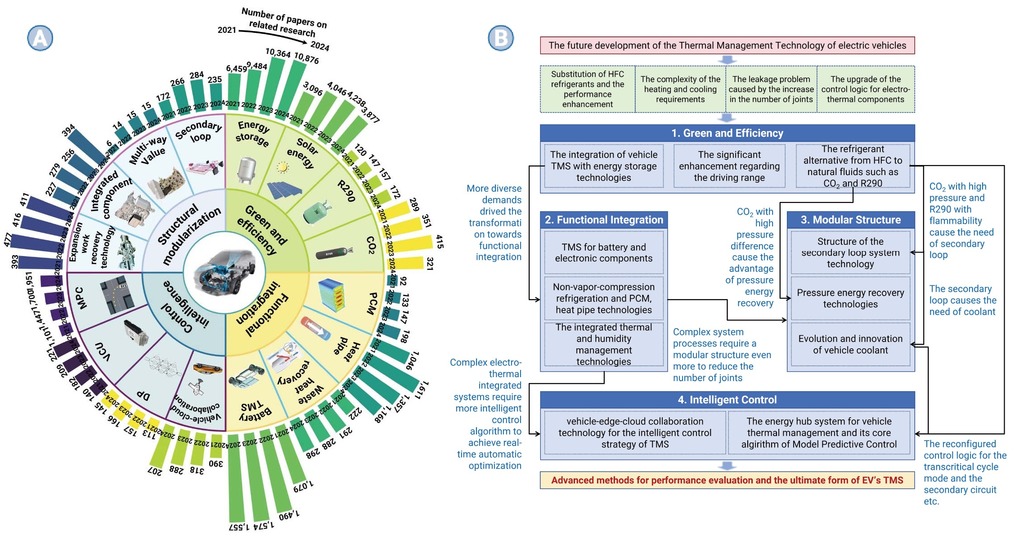
Figure 1.
(A) Research and development trend of thermal management technology for new energy vehicles. (B) Research idea diagram of the core relationship between the "new four modernizations".
-
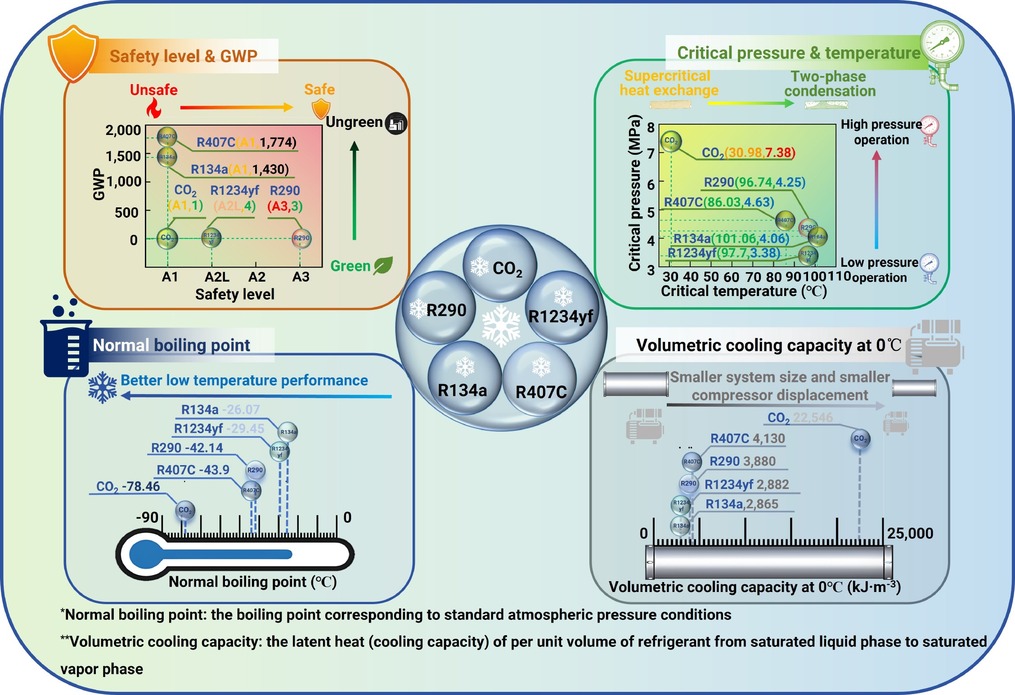
Figure 2.
Comprehensive evaluation of R134a, R407C, and their main alternatives.36-37,167-168
-
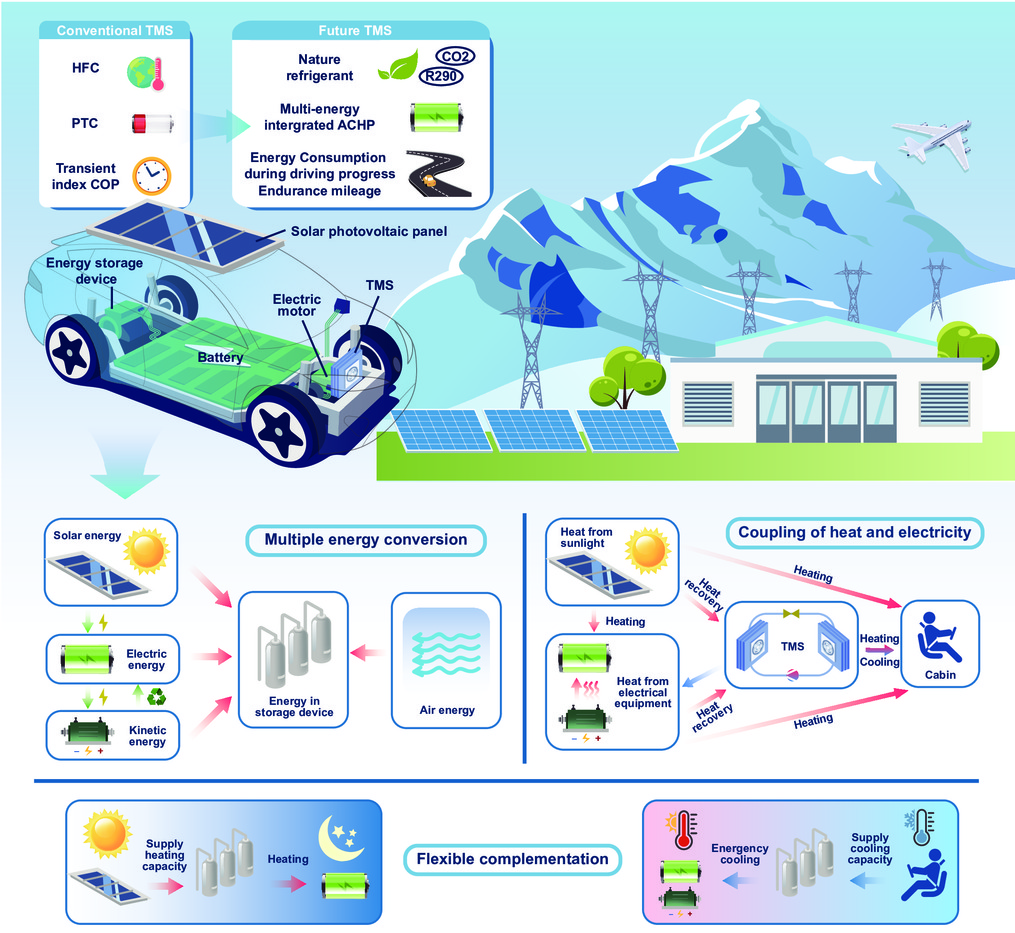
Figure 3.
The integration of thermal management, solar energy, and energy storage in EVs
-
Figure 4.
Future prospects of highly integrated vehicle TMS
-
Figure 5.
A conceptual framework for the potential of secondary loop with pressure energy recovery devices in TMS
-
Figure 6.
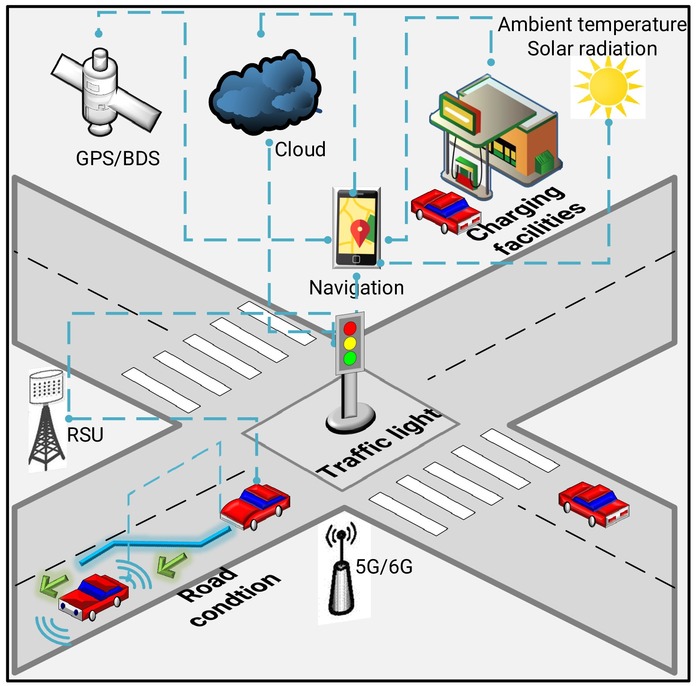
Schematic diagram of the vehicle-edge-cloud collaboration framework
-
Figure 7.
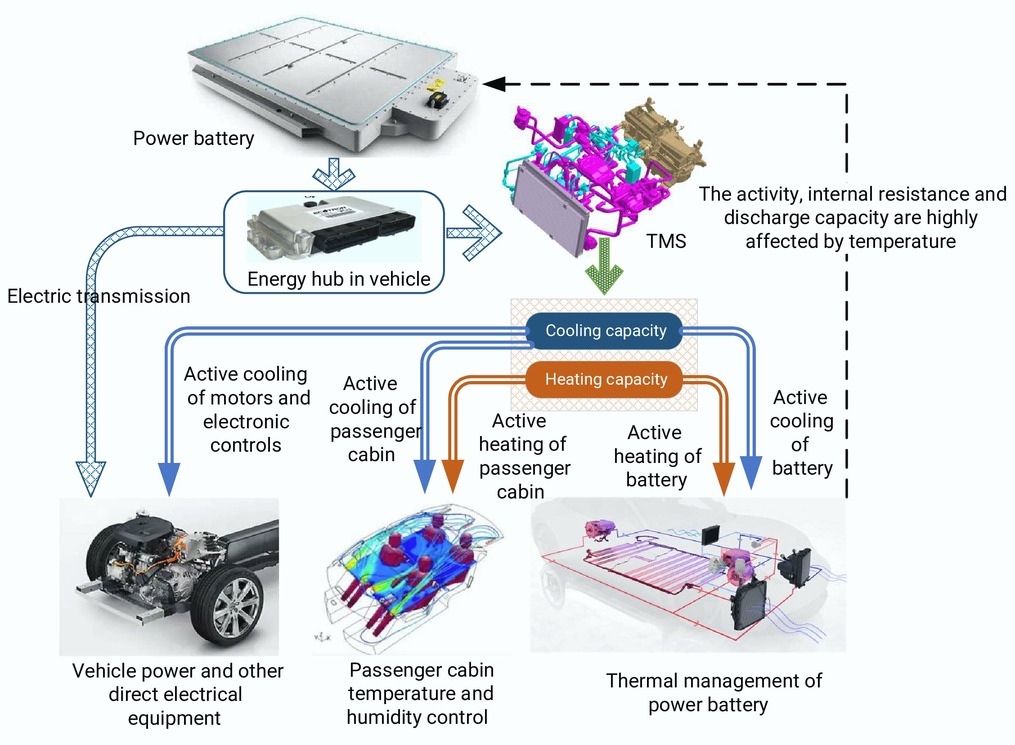
The energy hub system for vehicle thermal management
-
Figure 8.
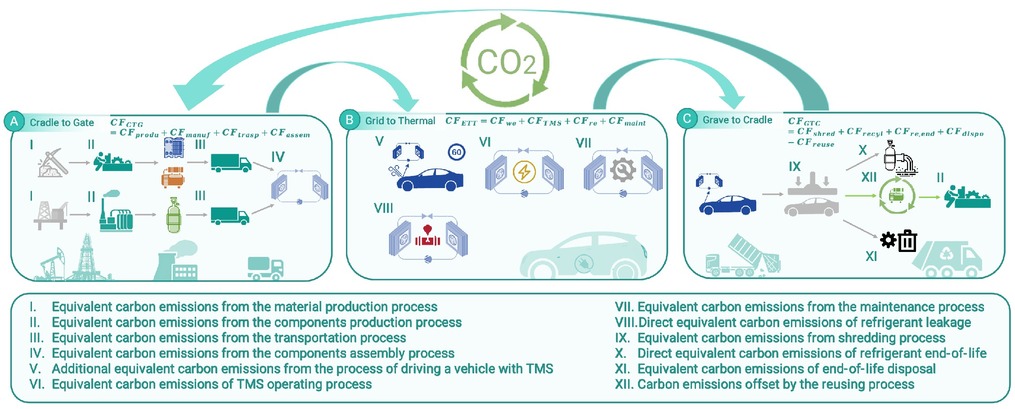
Equivalent carbon emission factors of the TMS
-
Figure 9.
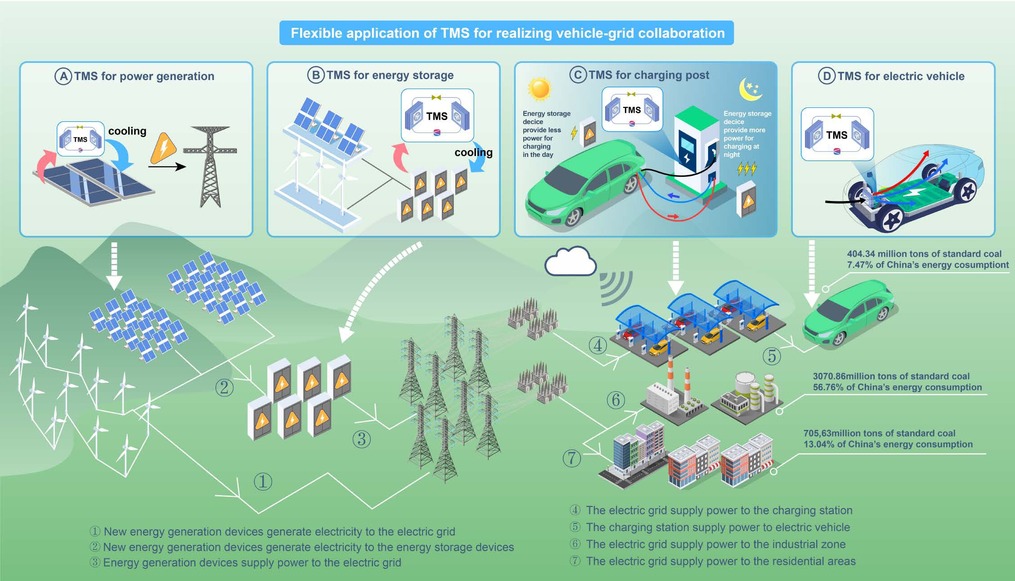
Flexible application of the future vehicle TMS for realizing vehicle-grid integration
